

15 Small Living Room Ideas With Layered Rugs Over Carpet
Wall to wall carpet can leave a small living room looking flat and hard to change. The color came with the apartment, the pile shows chair leg marks, and new flooring is not an option for most renters.
That is where small living room ideas with layered rugs over carpet help most in daily life. A well chosen rug on top gives the seating area its own shape, color, and softer feel underfoot, without any permanent work at all.
The ideas below focus on size, placement, and texture, so each layer sits flat and looks planned from the doorway. Start with the rug you already own, then add only what the room still needs to feel finished and calm.
Every idea here keeps the guidance simple and hands on, with no fixed work and no damage to the carpet below. Work through the list in order, and stop as soon as your room feels right for how you live.
This post contains affiliate links. If you buy through them, we may earn a small commission at no extra cost to you. See our Affiliate Disclosure.
1. Anchor the Seating With One Large Low Pile Rug
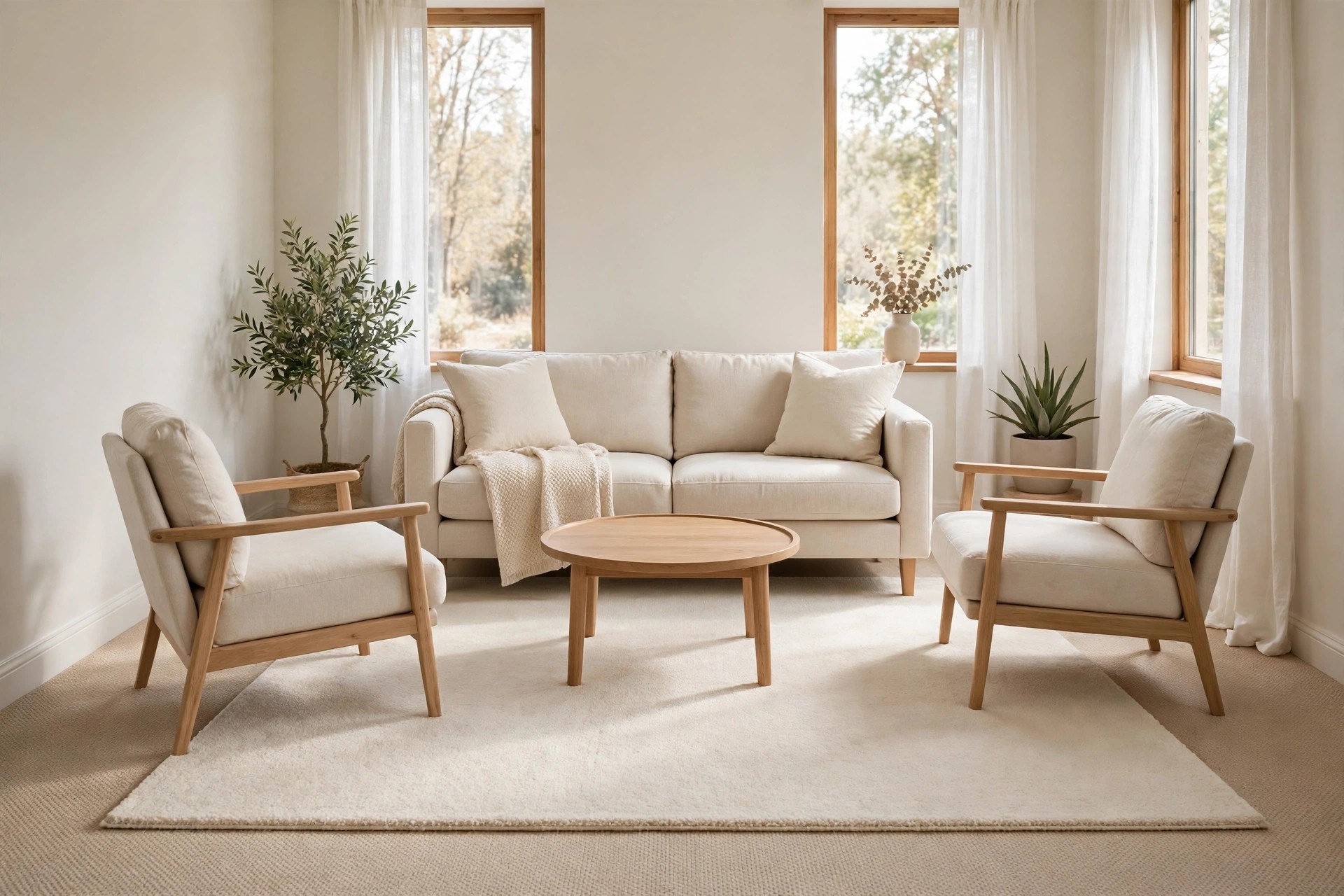
Start with the biggest change first: one large, low pile rug under the front legs of the sofa and chairs. That single edge ties separate pieces into one group, so the room reads as a seating area instead of loose furniture.
Leave a clear border of carpet visible on all sides when you set the rug down for the first time. The border proves the layer is a choice, not just a cover for a stain or a worn patch.
Sit in each seat and check how the rug feels and looks from that lower view, not just from standing height. If the edge lands mid cushion or cuts across a walkway, shift it once now rather than living with it.
2. Center a Smaller Patterned Rug Under the Coffee Table

Once the base feels settled, add a smaller patterned rug centered under the coffee table for the main point of interest. Keep it fully inside the base rug edges, so the pattern reads as one calm block in the middle.
Keep the pattern scale medium, large enough to read from the doorway but not so busy that cushions fight with it. Small, tight patterns can look restless over textured carpet, especially in rooms that get strong side light.
Pull two colors from that rug into pillows or a folded throw on the sofa arm nearby. The repeat is what makes a rented carpet feel like your room, rather than a floor you are waiting to leave.
3. Soften a Boxy Room With a Round Top Rug

A round rug on top breaks up the straight lines that make many small rooms feel stiff and narrow. Place it under a round or oval coffee table, or center it in a conversation corner with two chairs facing in.
The curved edge leaves more carpet showing at the corners, which keeps the layered look light instead of heavy. That breathing room matters in a small room, where a full rectangle can feel like it fills every inch.
Keep the round rug clear of the main walkway so its shape stays easy to read from the door. A shape you have to step over all day soon stops feeling like a design choice and starts feeling like clutter.
4. Mark the Walkway With a Narrow Runner Layer
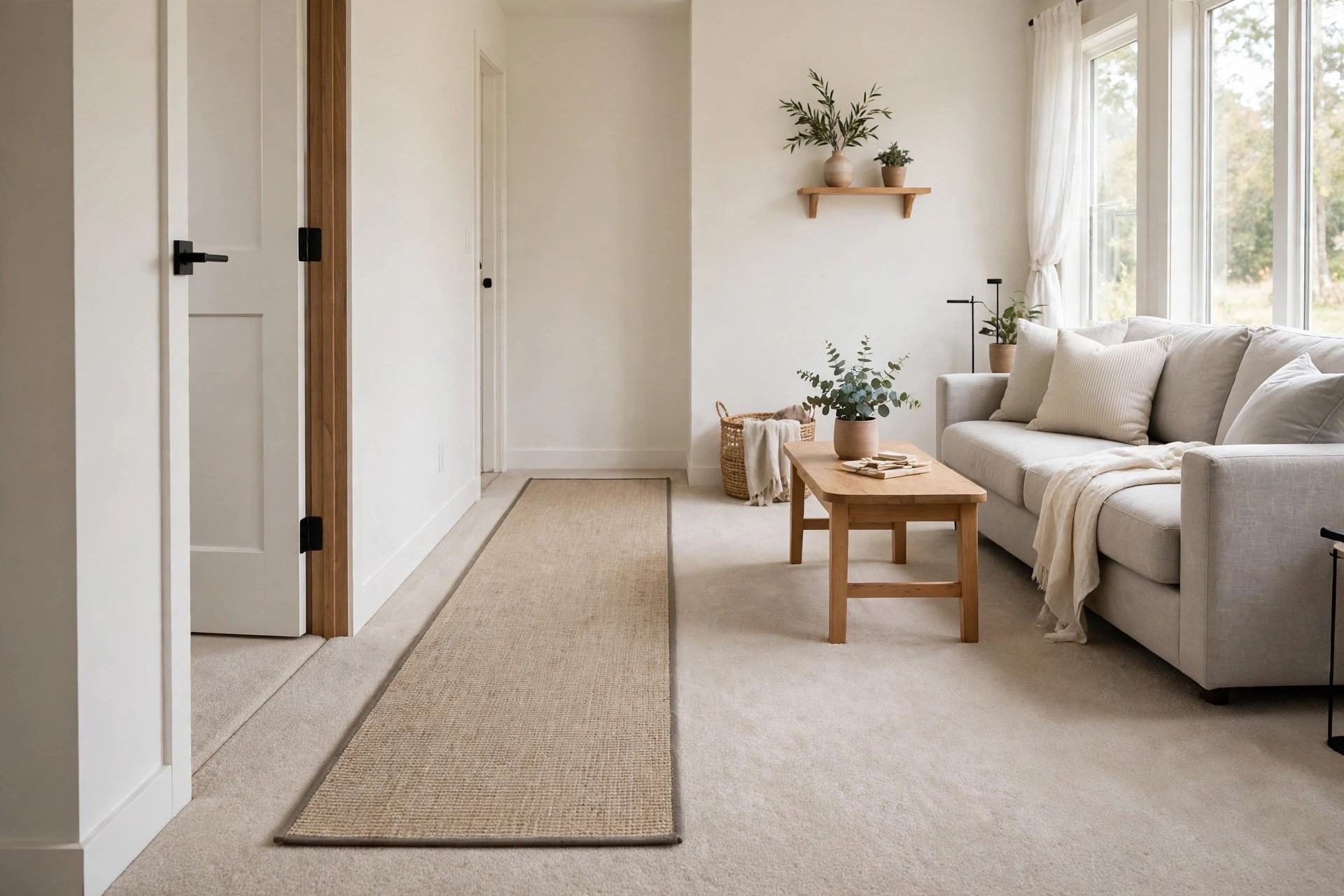
In rooms where guests cut straight across the seating area, a narrow runner over the carpet can guide the path. Run it from the door toward the hallway or kitchen, keeping it clear of the main rug so each piece has space.
Choose a flat weave with a simple border and colors close to the main rug, so the two pieces feel related. A clear path means fewer crossed edges, fewer lifted corners, and a calmer route through the room at night.
Check where the runner ends, because a loose end near a chair leg will get kicked up again and again. Tuck the end fully under a low, heavy piece if you can, or end it in open floor.
5. Pick a Flat Weave Base So Doors Still Swing Freely

Thickness is the quiet problem with layering over carpet, especially near the door that opens into the room each day. Test the swing before you settle any rug, and watch the lowest point of the door as it passes over.
If the door brushes or catches, choose a thinner weave or shift the whole layer further into the room. A flat weave base also gives the top rug a firmer surface, so corners stay calmer through the week.
This one check saves the most common layered rug failure, a corner that curls where the door swings every morning. Fix the clearance first, and the prettier color and pattern choices will last much longer in place.
6. Pair a Smooth Base With One Soft Texture on Top

Texture contrast does more work than color in a neutral room, and you can feel it the moment you sit down. Keep the larger layer smooth and close woven, then add softness only where feet land most, under the coffee table.
That balance keeps the floor from feeling bulky or uneven when you walk across it in socks late at night. One soft layer reads as comfort, while two thick layers can feel spongy and make low furniture wobble slightly.
Run your hand across both layers before you buy a second rug in the same family for another corner. If you cannot feel a clear difference between them, the layering will not show and is not worth adding.
7. Build a Calm Room With Tone on Tone Neutrals
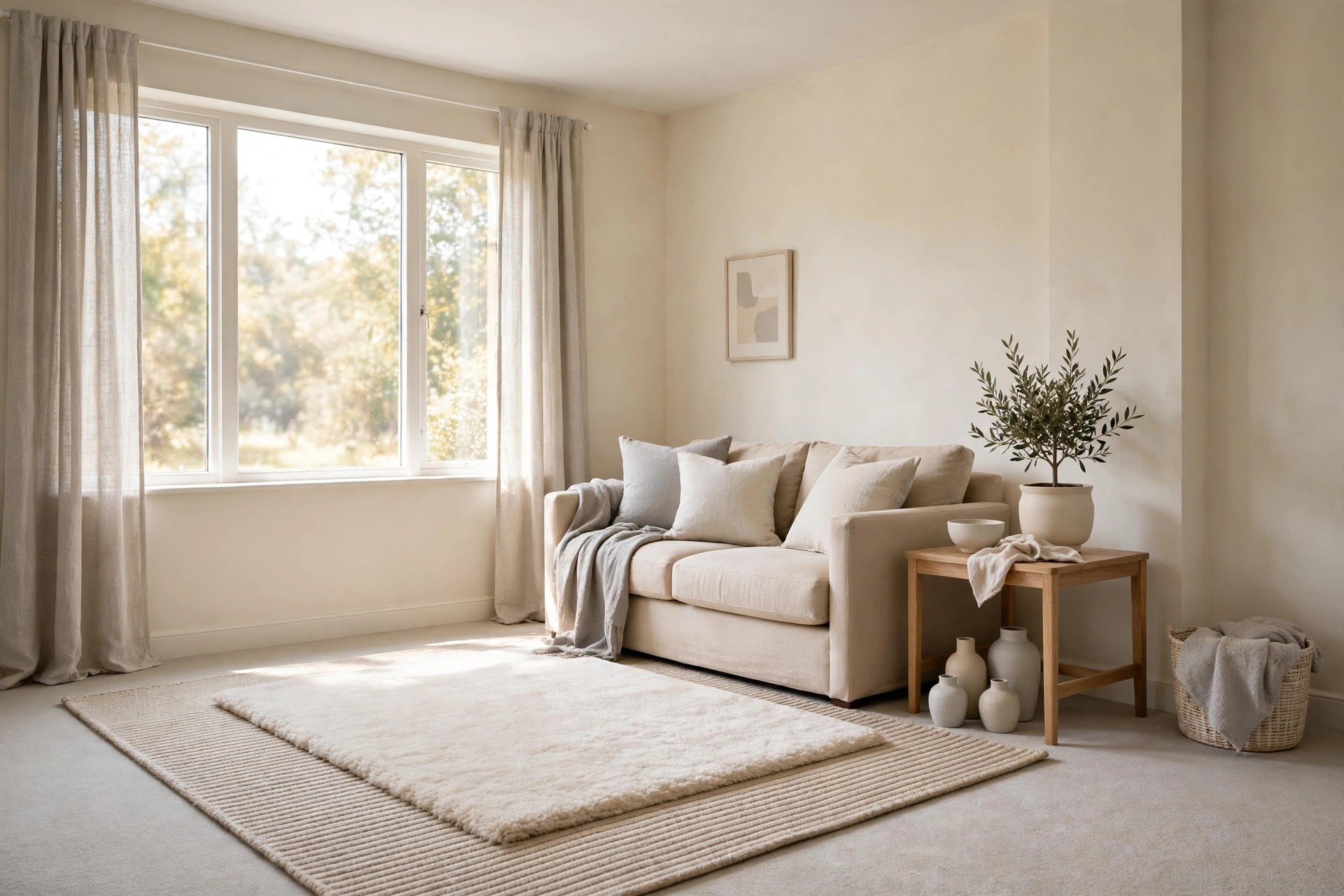
If bold pattern is not your taste, layer cream, warm beige, and soft gray rugs that sit close in tone. The change shows in the weave instead of the color: a ribbed base under a plain, slightly plush top rug.
This approach suits rooms that go dark early in winter, because pale layers lift the floor without adding visual noise. Add depth with wood tones and one dark frame or lamp, so the pale floor does not wash out.
Keep the sofa fabric a step darker than the lightest rug, so the seating still stands out against the floor. That small gap in tone is what stops a neutral room from looking flat in photos and in person.
8. Add Color With a Faded Vintage Style Top Rug

A faded, vintage style top rug brings in red, blue, or clay tones without asking you to change the sofa. Because the colors are already muted, the rug sits well over plain beige or gray carpet in most lights.
Faded pattern also hides daily marks kindly, which matters in a room that serves as office, lounge, and guest space. Keep other patterns small after this choice, and let the floor carry the main pattern for the whole room.
Let the rug sit for a full day before you judge the color, since carpet beside it changes its tone. Morning light can make the same rug look cooler, while evening lamp light makes it look warmer and deeper.
9. Angle the Top Rug Slightly for a Relaxed Corner Feel

A slight angle can loosen a very formal layout, as long as the base rug stays straight with the sofa. Turn only the smaller top rug, and keep its corners clear of chair legs and the path to the kitchen.
Check the door swing again after angling, because a turned corner reaches further than a straight one in the same spot. The corner that lifts or curls is the one to move first, before you add anything else.
This look suits a relaxed corner with a low chair and a plant, less so a formal pair of matching chairs. Match the angle to the mood of the seating, and keep the rest of the layout simple and straight.
10. Define a Reading Corner With Its Own Small Rug
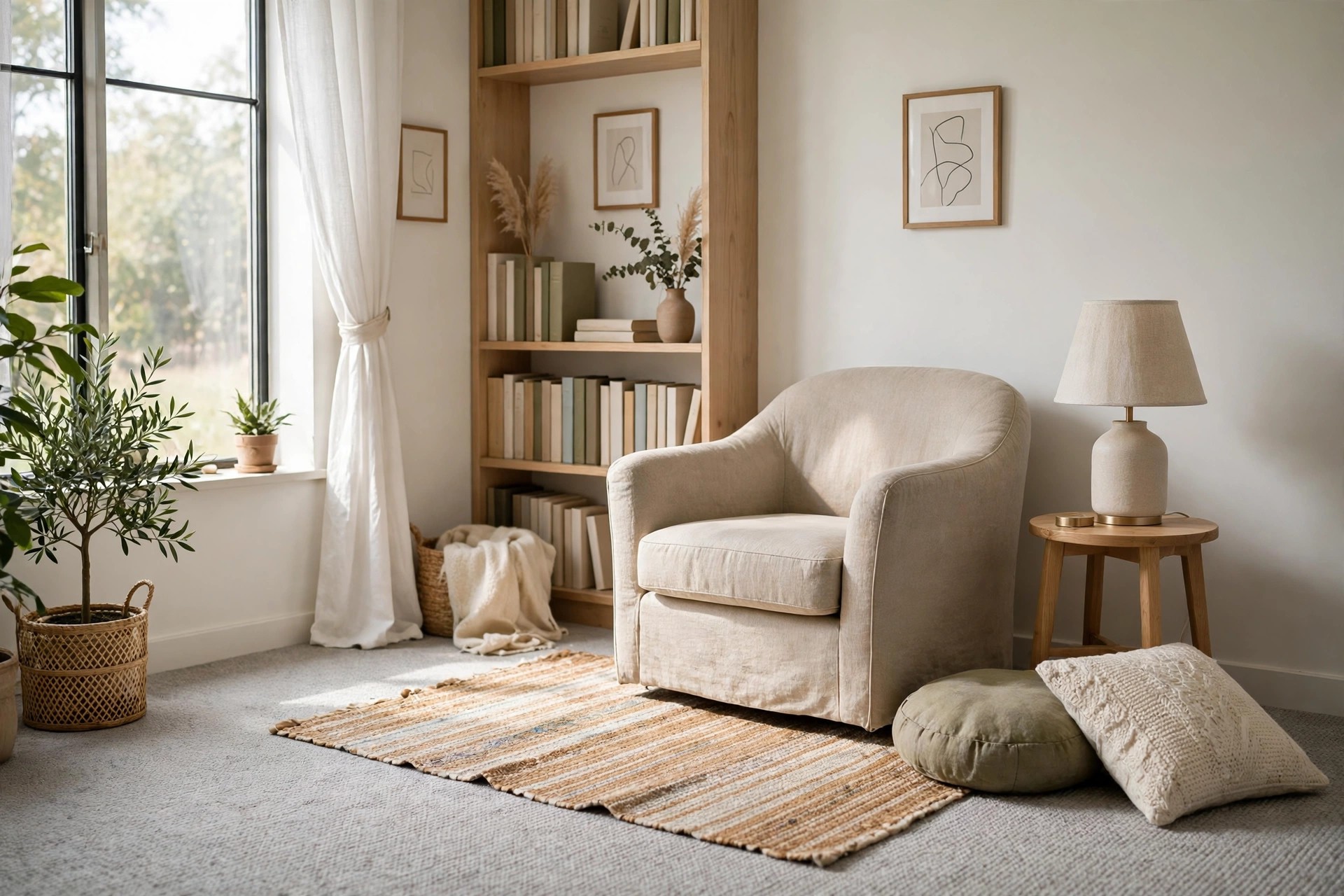
A small rug layered in one corner can give a chair and lamp their own place inside a shared room. Set the chair fully on the small rug if you can, with a side table beside it for a book and drink.
For extra seats nearby, floor cushions for extra seating keep the corner flexible without crowding it with another full chair. They stack in a basket when the corner goes back to one person and a quiet hour.
Give the corner its own light, even a small lamp, so the rug zone feels complete after dark in winter. A defined pool of light over the small rug is what turns a spare chair into a real reading spot.
11. Choose a Washable Low Profile Rug for Busy Weeks

The top layer takes the spills, crumbs, and muddy paw prints, so a washable low profile rug earns its place here. Pick a pattern with some mix in it, since a plain pale rug will show every mark between washes.
Keep the weave low so chairs still move easily and the coffee table sits level on the surface below it. Care stays simple when the layer lifts off without dragging heavy furniture across the room each time you clean.
Wash and fully dry the rug before it goes back down, so no damp layer sits on carpet for days. Lay it back in the same spot while the pattern is fresh in your mind, using the sofa legs as guides.
12. Keep a Visible Carpet Border Around Every Layer
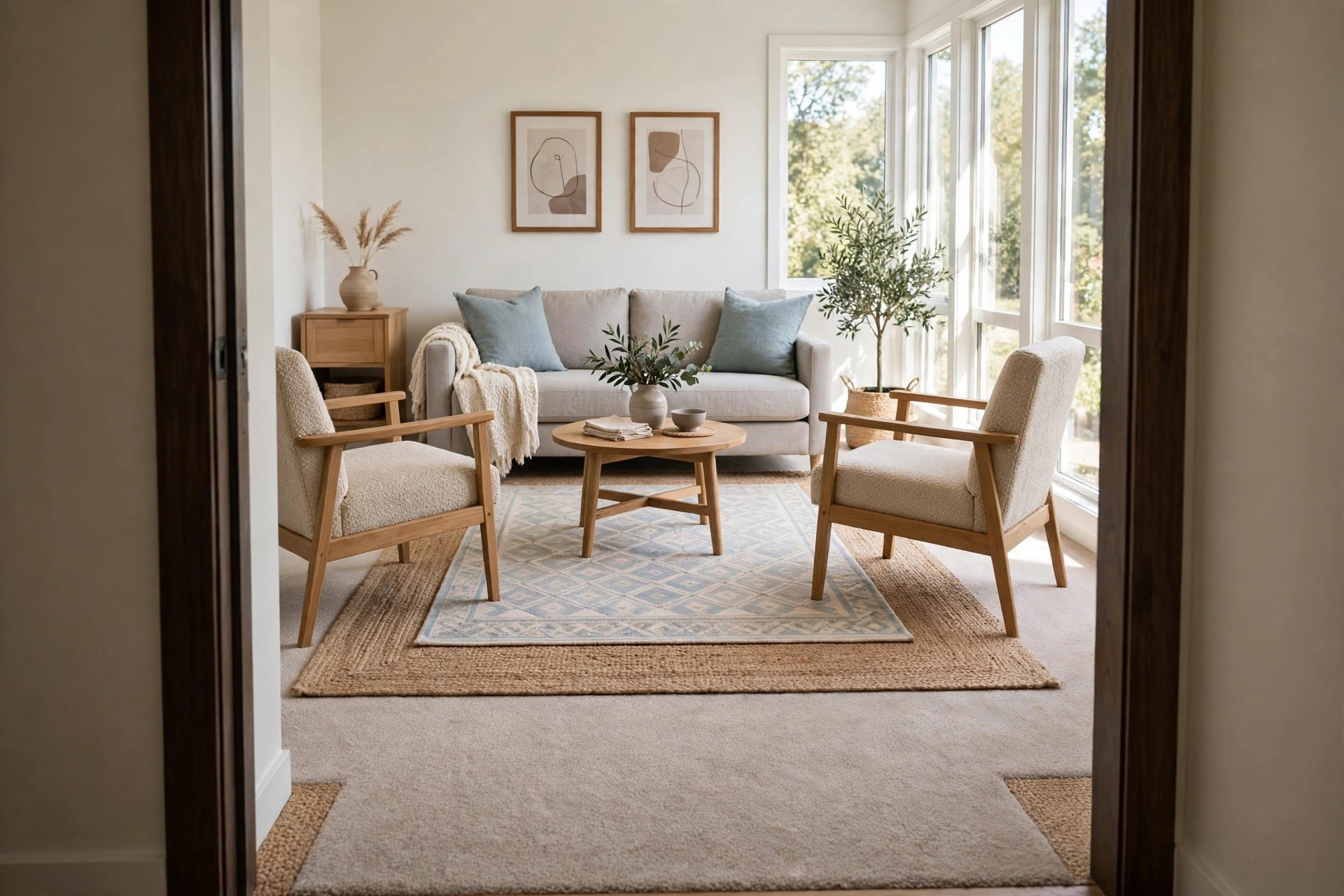
A common mistake is covering nearly all the carpet, which makes the room feel smaller and the layers feel heavy. Step back to the doorway and check the frame, since that is the view guests get in the first seconds.
You should see carpet on all sides, fairly even where the room shape allows, with no side fully hidden away. That frame also helps if you later add a leather accent chair for contrast beside the sofa, since its legs need a clear edge.
If one side has no border at all, the rug is likely too large or pushed too far toward that wall. Pull it back toward the sofa a little, and the whole room will look more planned at once.
13. Use Wide Stripes on Top to Stretch the Room Visually

Wide stripes running along the longer side of the room can guide the eye and make the floor feel longer. Keep the stripes broad and low contrast, such as ivory with warm beige, so the effect stays calm from the sofa.
Pair the look with nesting side tables for small spaces that tuck away when the floor needs to stay clear for guests. Their light footprint keeps the striped layer as the main line in the room, not one more shape competing with it.
Avoid mixing stripes with a second strong pattern on cushions or curtains in a room this size and shape. One clear direction on the floor, plain fabrics above it, and the room feels longer without feeling busy.
14. Swap Only the Top Layer With the Seasons

Layering gives you a seasonal change that fits in a closet: swap only the small top rug, nothing else at all. A lighter cotton weave suits spring, while a warmer wool look top layer suits the darker months of the year.
Store the off season rug rolled, not folded, and keep it somewhere dry away from direct heat or damp air. A roll avoids hard creases that take days to settle flat again when the rug comes back into the room.
Take a quick phone photo of the setup you liked before you swap, including where each corner sat that season. Next year you can rebuild the same layout in minutes, instead of guessing why it looked right last time.
15. Settle Edges Flat and Check Them Every Week
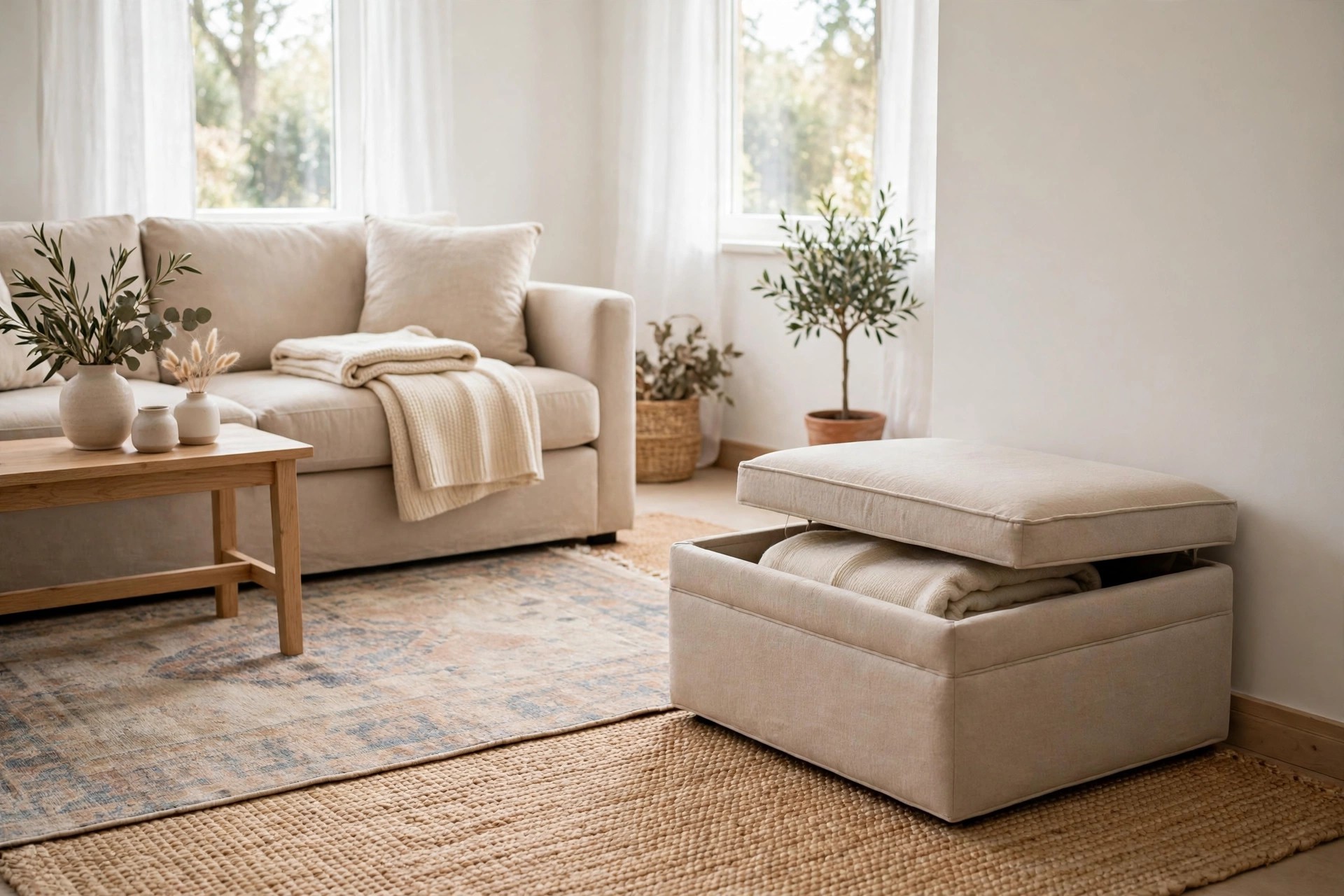
Good layering ends with a plain weekly habit: walk the edges, smooth any lifted corner, and reset chairs that pull the rug. Heavy, low furniture on the base edge helps hold it in place through daily use and vacuuming.
Low storage ottomans for small living rooms can anchor a corner while holding blankets, remotes, and the clutter that builds up by Friday. Keep their weight on the base rug only, so the top layer still lifts easily for cleaning underneath.
If you share the room with a dining spot, borrow the zoning habit from a dining corner in a small apartment and give each rug one clear job. One rug for sitting, one for a path, and the layers stop fighting for space.
Layered rugs work best when each one has a clear job: anchor the seating, add pattern, or mark a corner. Start with one large low pile layer, test the door swing, then add a smaller top rug only if the room needs it.
Save the setups you like to the Apartment Living Room Decor Ideas board, and try one change at a time.
Small living room ideas with layered rugs over carpet stay renter friendly, because nothing is fixed down for good.


