

Straight Leg vs Wide Leg Jeans: How to Choose in 15 Points
Before the change, most closets held one safe pair of jeans. Now the rail holds two strong shapes, and the rack at the shop seems to ask you to pick a side.
You do not have to pick a side for life. You do need a clear way to judge each pair in the fitting room, in under five minutes.
This guide sets out straight leg vs wide leg jeans, how to choose between them point by point, from thigh room and rise to shoes, work, and weather.
Read it with your own closet in mind. The best shape is the one that works with the tops, shoes, and days you already have.
The two shapes are not rivals for one crown. They do two jobs: one brings calm range for busy weeks, the other brings room and swing for slower, bolder days.
Judge them in the same store visit if you can, with the same top and shoes. A fair test in one mirror beats weeks of reading about cuts online.
This post contains affiliate links. If you buy through them, we may earn a small commission at no extra cost to you. See our Affiliate Disclosure.
1. The Basic Leg Shape, in Plain Words

A straight leg keeps about the same width from hip to hem. The line falls in one calm column, with no taper in and no flare out at the ankle.
A wide leg opens up from the hip and keeps that width all the way down. There is more fabric in the leg, more swing when you walk, and a bolder outline.
Hold both pairs up in the shop and lay them flat if you can. The shape gap is clearest on a table, away from mirrors and sales talk.
Bring a photo of your most worn outfits to the shop. The shape that fits the life in those photos is a stronger guide than any trend list.
2. Room Through the Thigh
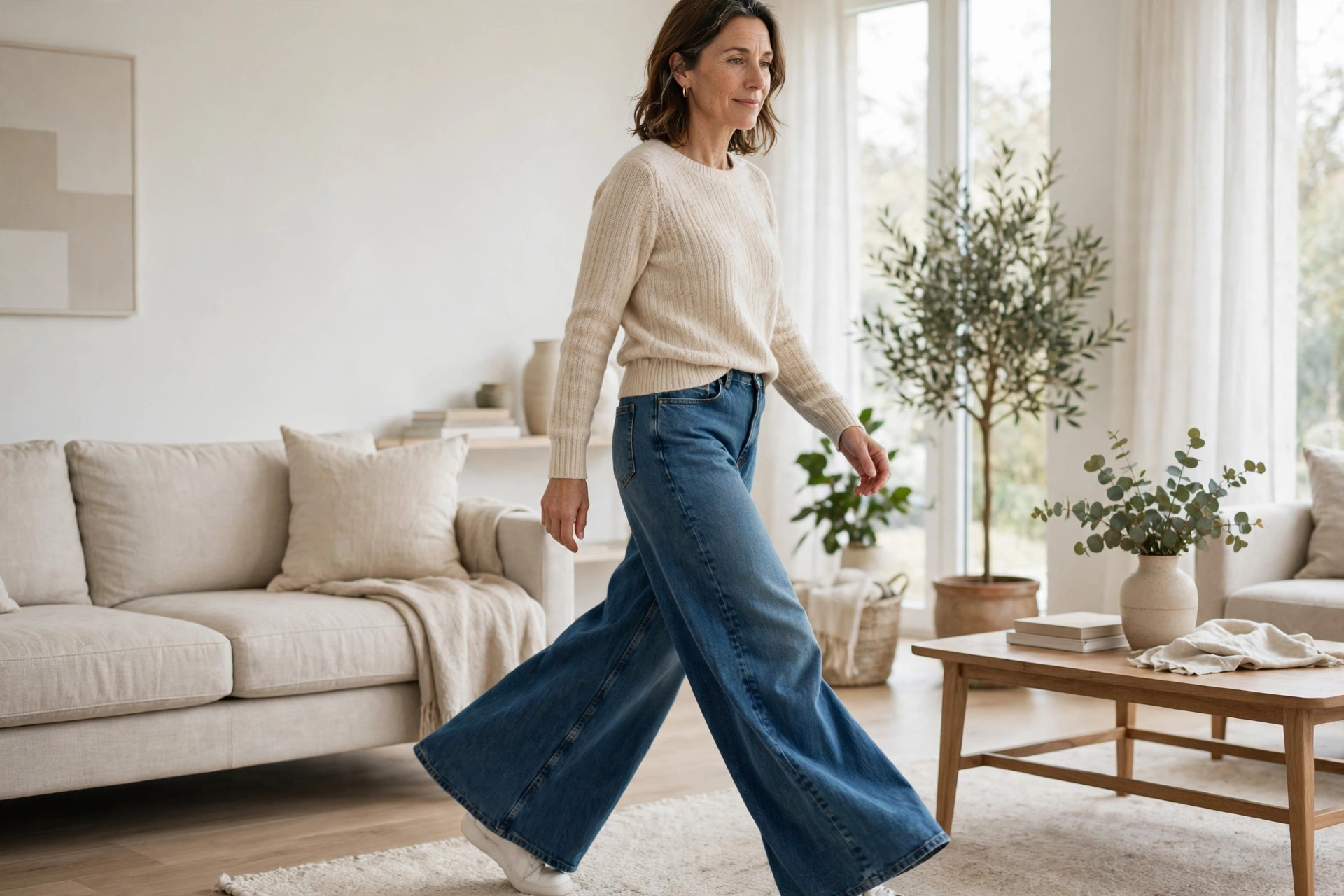
Wide legs give the thigh full ease. If snug thighs are your main fit gripe, that loose fall can feel like a relief from the first try on.
Straight legs skim the thigh with less spare fabric. Women who dislike extra cloth around the leg often find the straight cut calmer and neater for daily wear.
Pinch the fabric at mid thigh in each pair. A small pinch is normal for straight legs. In wide legs, you should be able to gather a clear handful with ease.
Sit in both pairs for this point too. Thigh room that feels fine standing can pull when you sit, and wide legs keep their ease in both poses.
3. How Each One Handles Wide Hips and a Small Waist

Wide legs can balance wide hips well, since the leg width echoes the hip width and the eye reads one smooth line from waist to hem.
Straight legs show the hip line more, which many women like. The key in both shapes is the waistband fit: no gap at the back, no dig at the front.
For cuts built around this shape, see these best jeans for curvy pear shapes, then test both leg shapes with that waist fit as your base rule.
In both shapes, a contoured waistband helps. The leg choice comes second. A gap at the back will spoil a straight leg or a wide leg in the same way.
4. How Each One Sits on a Straighter Frame
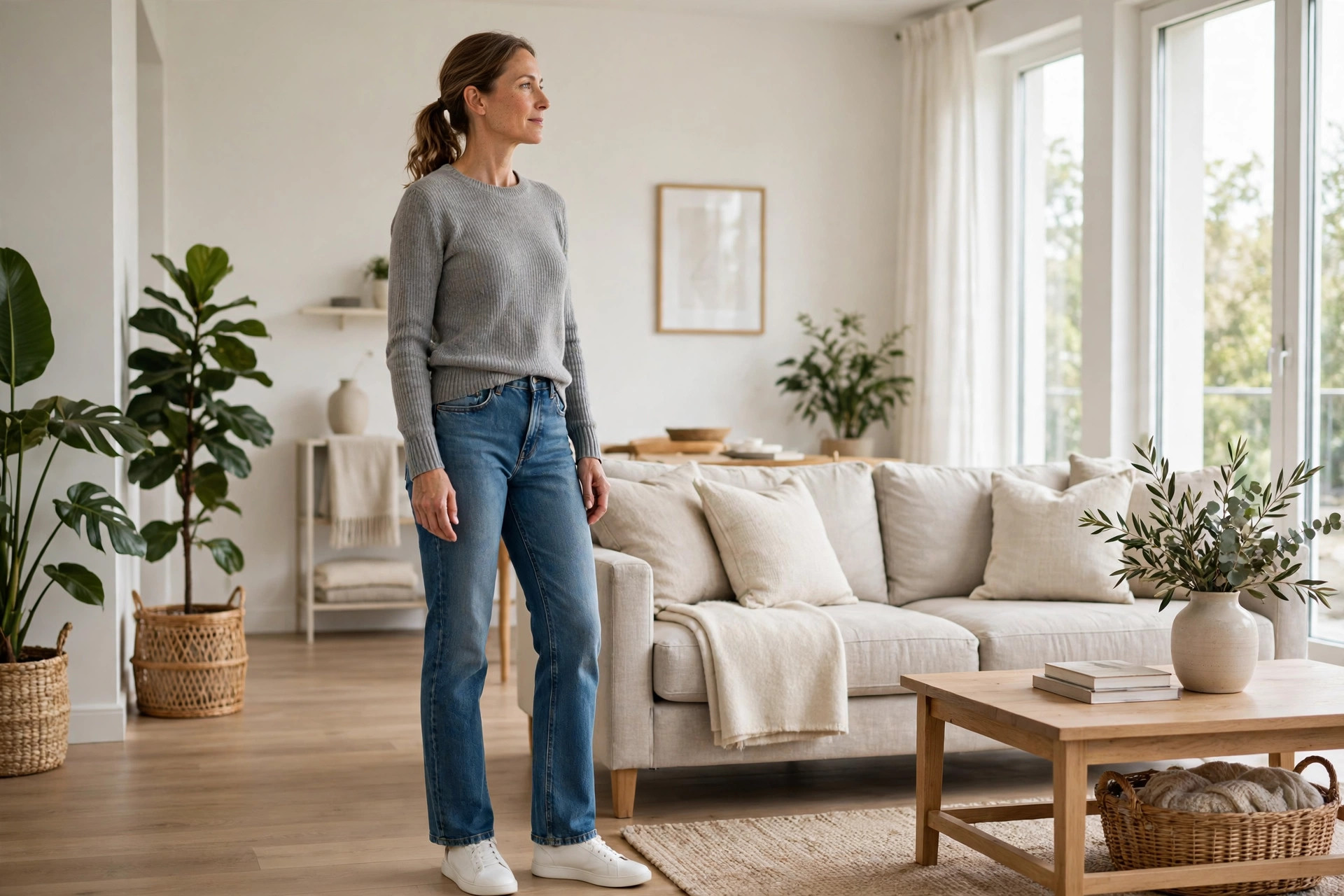
On a straighter frame, with less gap between waist and hips, a straight leg follows the body line with ease and rarely needs much fit work at the waist.
Wide legs add shape at the lower half, which some straighter frames love. A tucked top and a belt help the look by marking the waist above the width.
Try both shapes with the same tucked tee in the fitting room. The mirror will show you in seconds which line feels more like you.
Waistbands tell the truth on straighter frames. If the band stands away at the back in the wide leg, size the waist first and let the leg fall from there.
5. The Rise Each Shape Needs
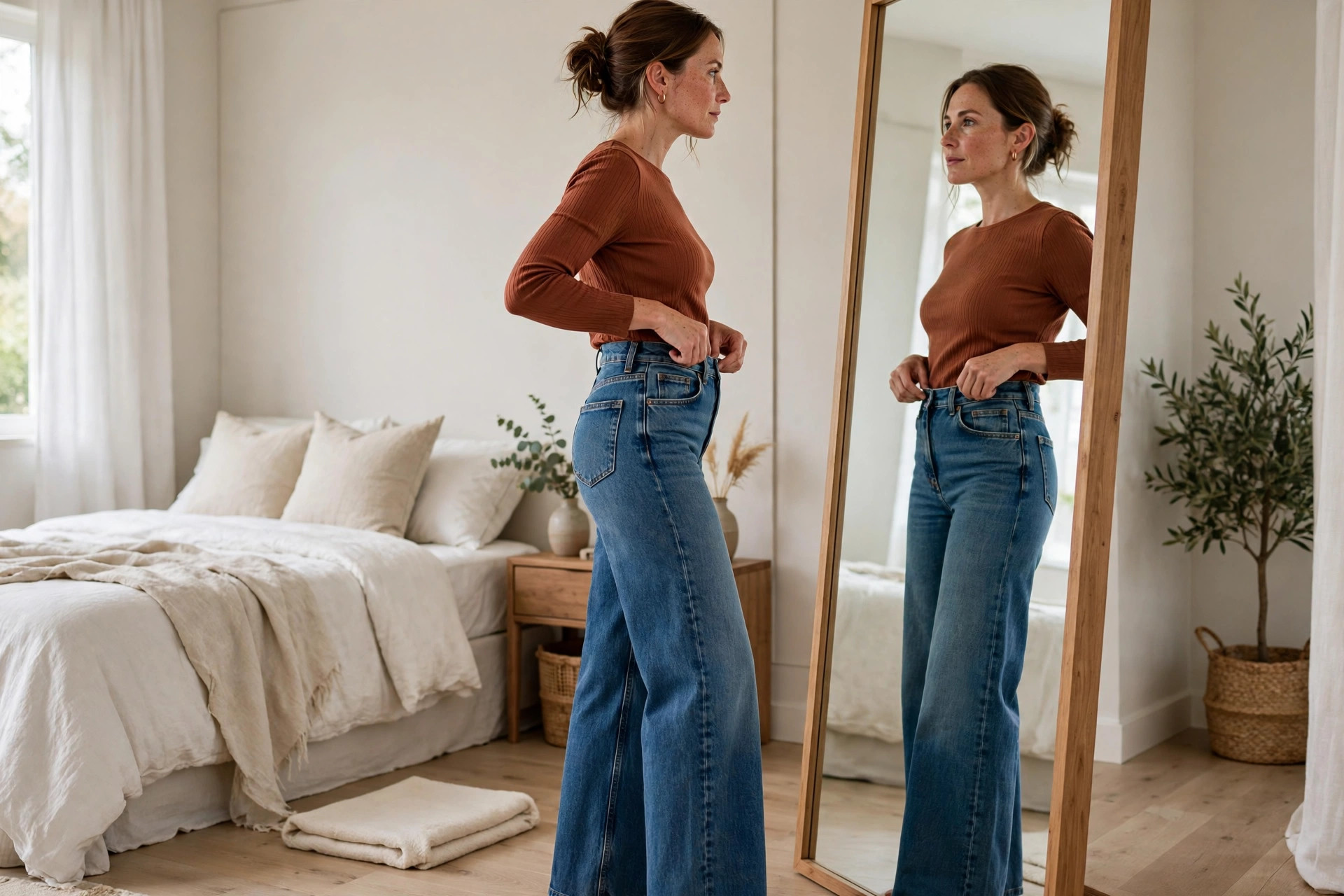
Wide legs need a high rise to work at their best. The high waist marks the top of all that fabric and keeps the outfit in balance.
Straight legs are more forgiving. A mid rise or a high rise can both look right, which gives you more choice if a very high band feels tight when you sit.
Sit down in both pairs during the try on. Rise comfort shows up sitting, not standing, and a full workday has a lot of sitting in it.
Test the sit with your phone in the front pocket, as you would on a real day. A rise that fights a phone will fight you all day too.
6. The Length Each Shape Needs
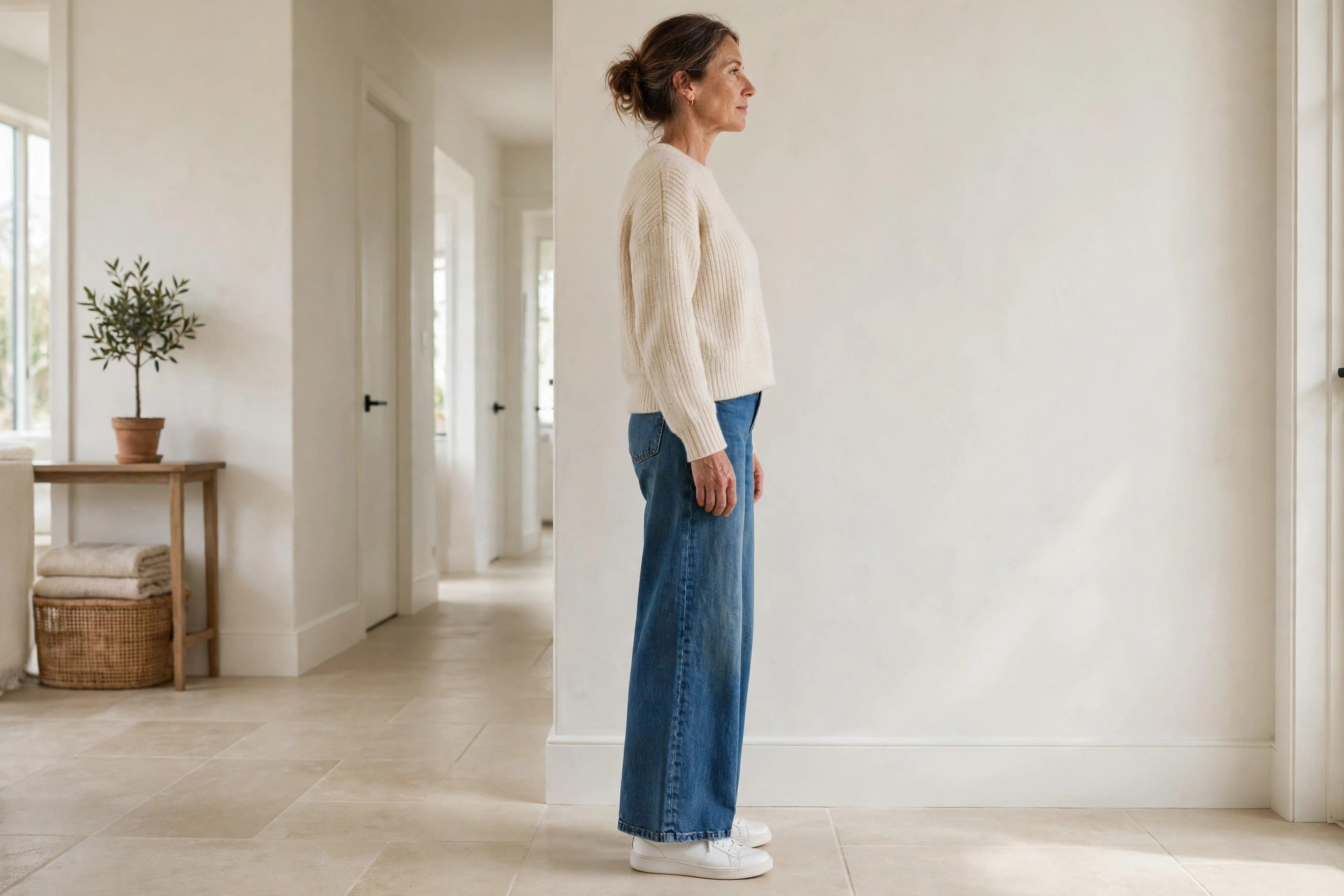
Straight legs are kind on length. An ankle length pair works with most shoes, and a small fold at the hem rarely hurts the line.
Wide legs are strict on length. Too short, and they look cut off. Too long, and they drag and pool. The hem should skim the shoe or just clear the floor with heels.
If you buy wide legs, plan the hem for one main shoe height and stick to it. That single choice will save you daily second guessing.
Take a short video of your walk in each pair if the shop allows it. Length faults show in motion: drag, swing, and pooling are all clear on film.
7. The Shoes Each Shape Asks For

Straight legs take almost any shoe: loafers, flats, sneakers, ankle boots, and low heels all sit well under that even hem. This range is a big part of their ease.
Wide legs need a shoe with some presence: a block heel, a chunky loafer, or a boot with a firm shape. Fine, thin shoes can get lost under the wide hem.
For boot pairings by season, these fall jeans outfits for women with boots and cozy layers show which shoe weights hold up under each leg shape.
Boots change the call by height. A tall boot under a straight leg is clean. Under a wide leg, the boot top can push the hem out and spoil the fall.
8. The Tops Each Shape Balances With

Straight legs accept most top lengths and fits. A tucked shirt, a half tuck, or a hip length knit all sit well, since the leg adds no extra width to balance.
Wide legs ask for a shorter or tucked top. A long, loose top over a wide leg hides the waist and makes one wide shape from shoulder to floor.
Test each pair with two tops in the fitting room: one tucked, one loose. The shape that looks right with the tops you own most is the safer buy.
A cardigan that ends at the hip works with both shapes and makes a kind test top. If a shape fails with that layer, note it before you pay.
9. How Each One Reads at Work

In dark wash, a straight leg reads closest to a dress pant. It is the safer shape for offices, client days, and any room with a strict dress code.
A wide leg can work at the office in a dark wash with a blazer and a heeled shoe. It reads more like a trouser, and it needs that polish on top to hold its place.
If your office is new to you, start with the straight leg. Add the wide leg once you have read the room for a few weeks.
Bring your own belt to the fitting room. A belt shows the true waist line of each shape, and shop lighting alone can flatter a loose band.
10. Packing and Travel Days
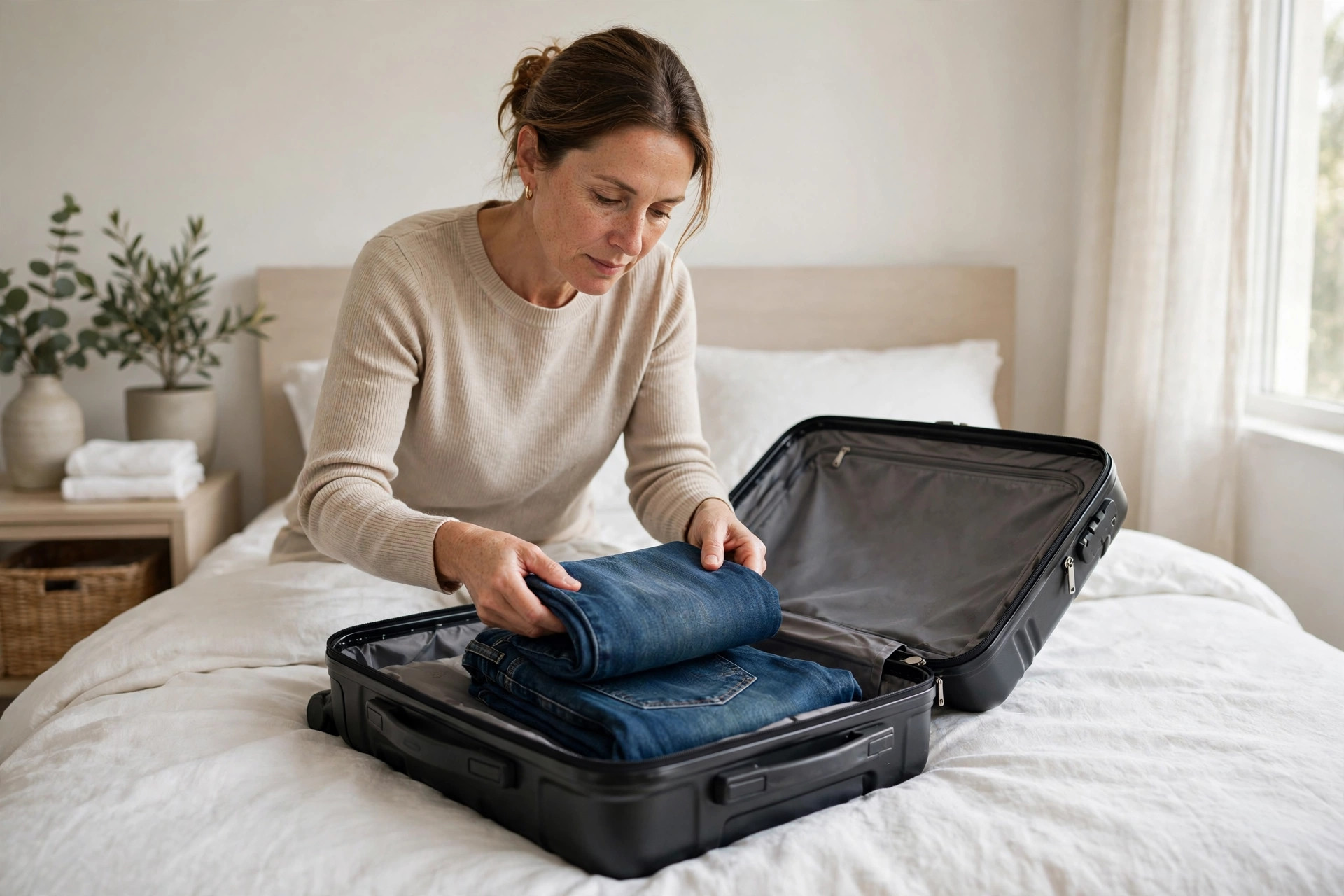
Straight legs pack flat, weigh less, and crease less in a case. They also dry faster after a wash on a trip, which matters in a small hotel room.
Wide legs take more room in the bag and more care at the hem. In return, they feel airy and loose on long travel days and warm train rides.
If you travel light and often, the straight leg earns its space first. Keep the wide leg for trips where the bag has room and the days are slow.
A straight leg also wins the wash test on trips: it dries on a hotel rail overnight in most rooms, while a wide leg can still feel damp at the hem.
11. Comfort After a Full Day of Sitting and Walking
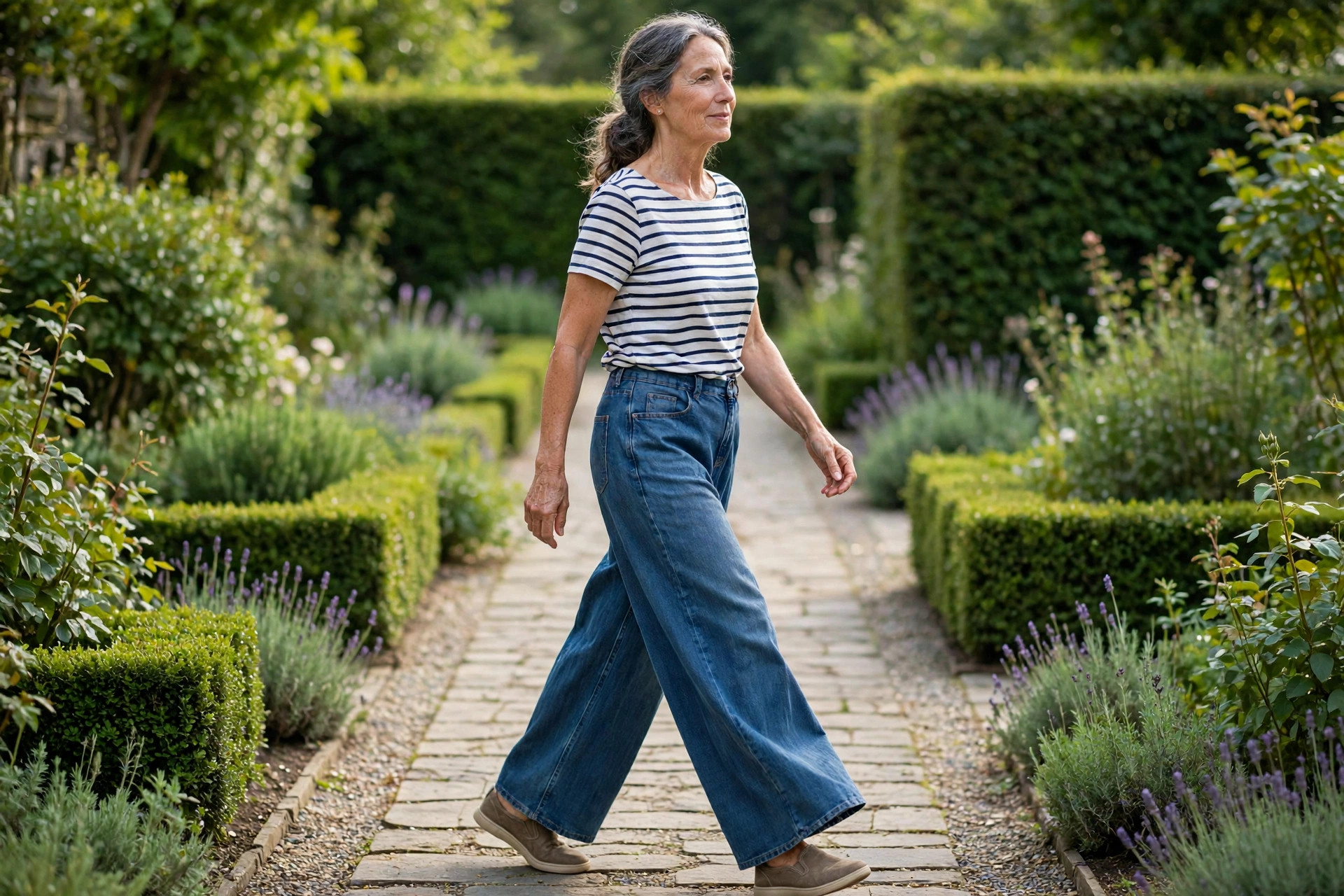
Wide legs shine on days with lots of walking and warm rooms. Air moves in the leg, the thigh stays free, and the seat rarely pulls when you sit and stand.
Straight legs feel more held and neat, which some women prefer for desk days. A small amount of stretch in the denim keeps that held feel kind by late afternoon.
Think about your real week, not your best day. The shape that suits three normal days in a row is the shape you will wear most.
Note how each pair feels at the end of the try on, not the start. Denim warms and gives fast, and the tenth minute is closer to real life.
12. Fabric Weight and How the Shape Holds

Wide legs need denim with body. A firm or mid weight cloth holds the wide line. Thin, soft denim can cling at the thigh and lose the shape by noon.
Straight legs work in more cloth weights, from firm denim to softer blends, since the cut itself does most of the shape work.
Hold the leg up by the waistband in the shop. Wide legs should fall in a clean sweep. If the cloth twists or clings at rest, pass on that pair.
Squeeze the cloth in your fist for five seconds, then let go. Cloth that holds deep creases will show every sit line by noon in a wide leg.
13. Cold Weather, Boots, and Layers
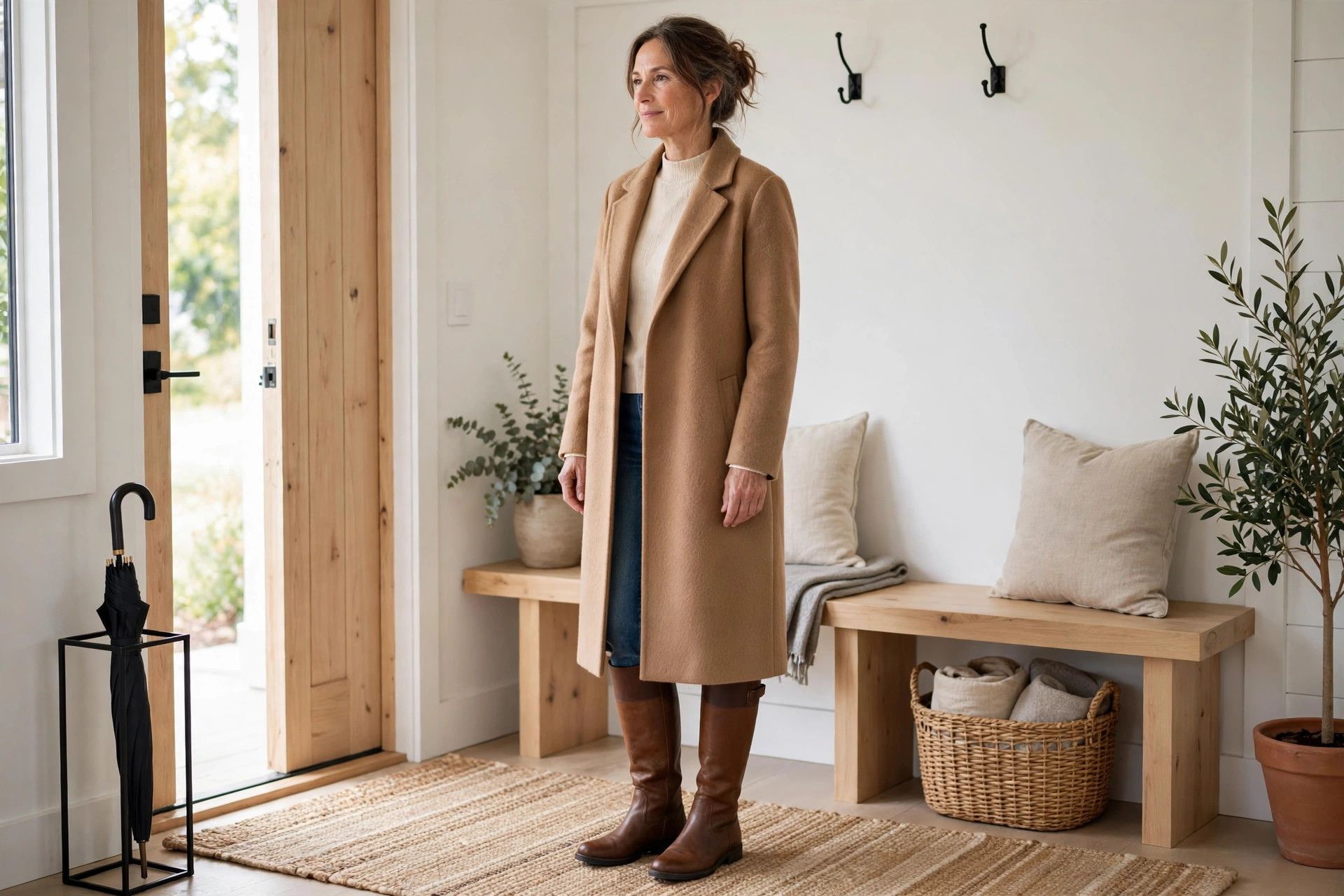
Straight legs tuck into tall boots with ease and sit neat over ankle boots. That range makes them a strong base for cold months and thick socks.
Wide legs cover the top of a boot and keep wind off the ankle, but the hem can pick up wet ground. In snow or heavy rain, a shorter wide leg or a straight leg wins.
For full cold day builds in both shapes, see these winter jeans outfits for women, warm without the bulk, which layer each shape with boots and coats.
Thick socks are part of this test. Try the straight leg with your winter socks in the boot, since snug boots and thick socks can change the hem line.
14. Warm Weather and Air Flow

On hot days, the wide leg is the cooler wear. Loose cloth stands away from the skin, air moves as you walk, and a cropped wide leg feels light with sandals.
Straight legs in a pale wash or a cropped length still work in heat. A full length dark straight leg is the warmest option of the four and best saved for cooler days.
If your summers are long and hot, a cropped wide leg may get more wear than any other pair you own. Let your climate have a vote in this choice.
A cropped wide leg with a flat sandal is a strong hot day outfit. Keep the hem above the ankle bone, so the leg reads as a choice, not a cut off full length.
15. The First Pair Call, and How to Test Both
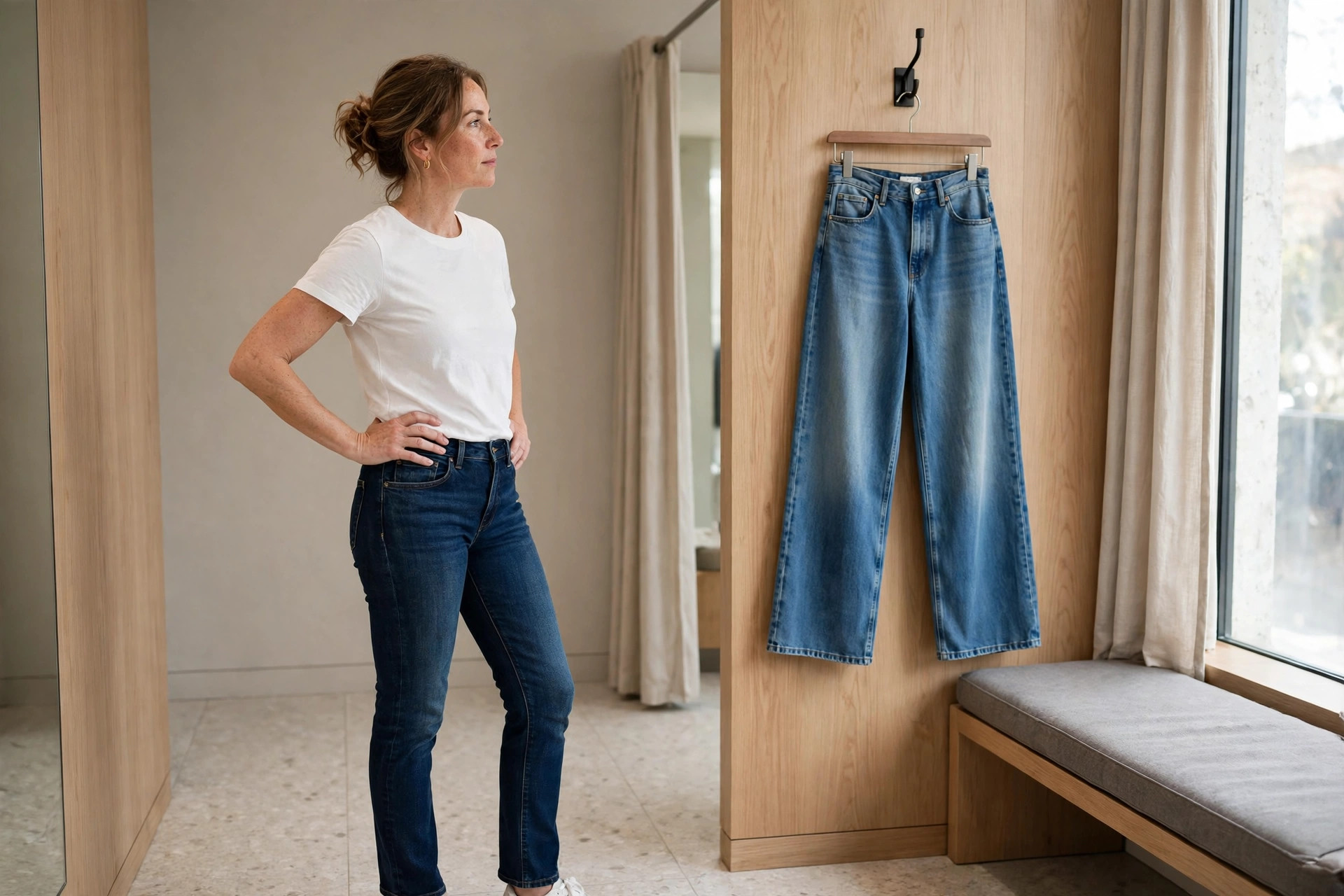
If you own neither shape in a fit you love, buy the straight leg first. It covers more days, more shoes, and more rooms, and it will teach you your best rise and length.
Add the wide leg second, in a dark wash, once you know your waist fit. That order keeps cost low and gives each pair a clear job in your closet.
Shorter women can wear both shapes with the right length. These best petite jeans for women over 50 show the lengths to look for. Save this guide to your jeans board before your next fitting room trip.
Write down your rise and inseam from the winning pair. Those two figures make the next buy, in either shape, a five minute job instead of a fresh search.
There is no wrong shape here, only the wrong shape for a given day. Straight legs bring ease and range. Wide legs bring room, swing, and a bold trouser line.
Judge each pair by rise, length, shoes, and tops, in that order, and the choice gets calm and quick. Save this to your jeans outfits board for your next shop trip.
Start with rise and length, then weigh shoes and tops. That order keeps the call calm, and it is the surest way to settle straight leg vs wide leg jeans, how to choose for your own closet.


