

15 Thanksgiving Table Runner Ideas for a Narrow Dining Table
A narrow dining table can carry a full Thanksgiving runner, and the trick is width, not length. A runner that fits the middle leaves room for plates on both sides and still gives the table its color.
Most runner advice assumes a wide farmhouse table. A narrow table has no spare inches, so a runner that is too wide pushes plates to the edge and crowds every elbow.
Guests end up eating with their plates half off the wood.
Thanksgiving table runner ideas for a narrow dining table start with one measurement: the runner should cover about a third of the table width and no more.
These 15 ideas cover fabric, width, layering, and the centerpiece that sits on top. Each one keeps the runner working for the meal, not against it.
If your table is small as well as narrow, these Thanksgiving table decor ideas for a small dining room use the same one-third rule at a small dining table.
This post contains affiliate links. If you buy through them, we may earn a small commission at no extra cost to you. See our Affiliate Disclosure.
1. Measure the Third Before You Buy
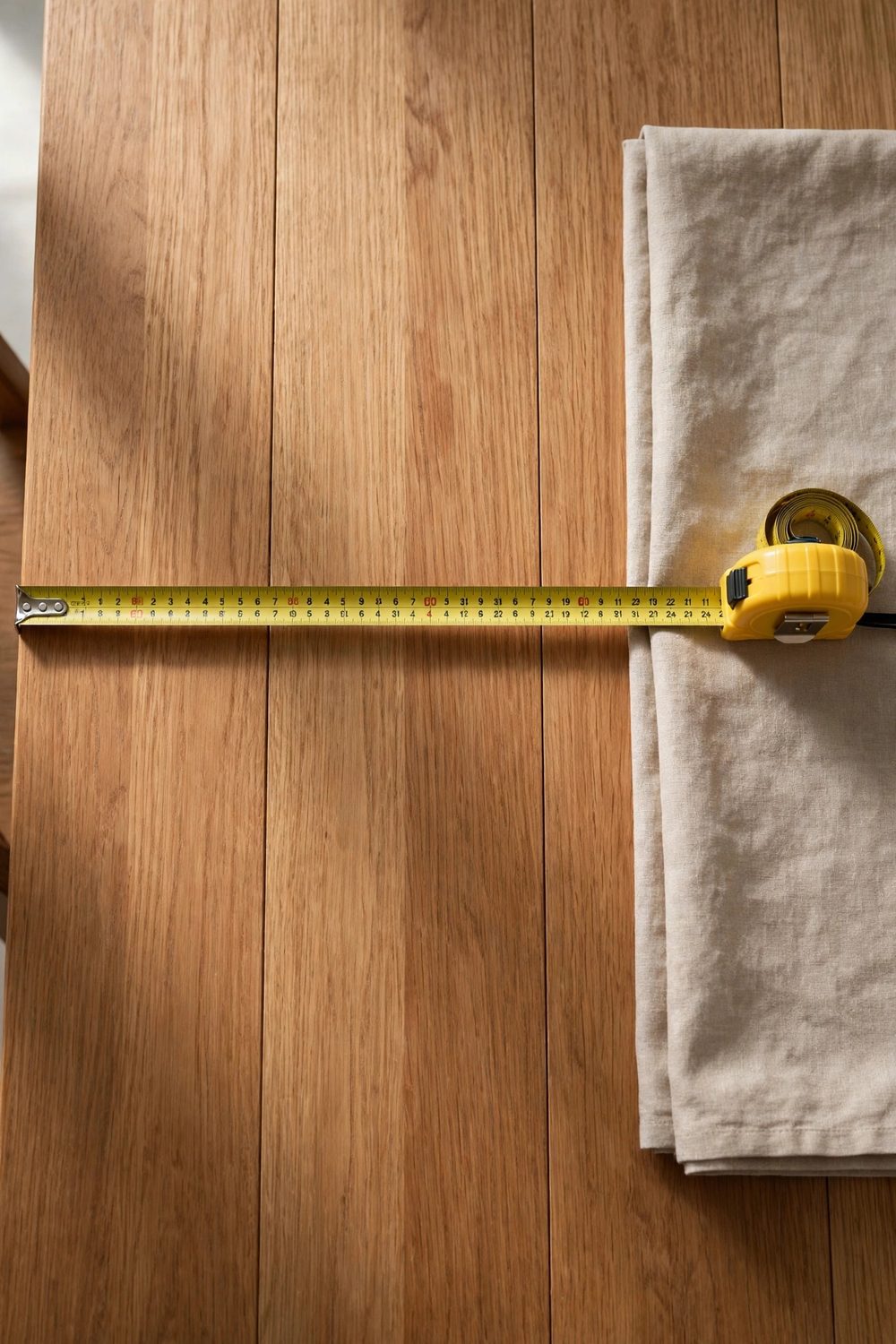
Measure the table width first, then divide by three. A table that is 36 inches wide takes a runner about 12 inches wide, and a 30 inch table takes one about 10 inches wide.
That third leaves room for a plate, a glass, and a hand on each side.
Write the number on a card and carry it when you shop. A runner that looks slim in a store can look wide on a narrow table, and the card keeps the choice honest.
Check the drop at the ends too. Six to eight inches past each end looks neat, and a runner that pools on a chair seat will catch every time someone stands.
One measurement, made once, keeps every other idea in this list from going wrong.
2. Choose Linen for a Soft Narrow Line
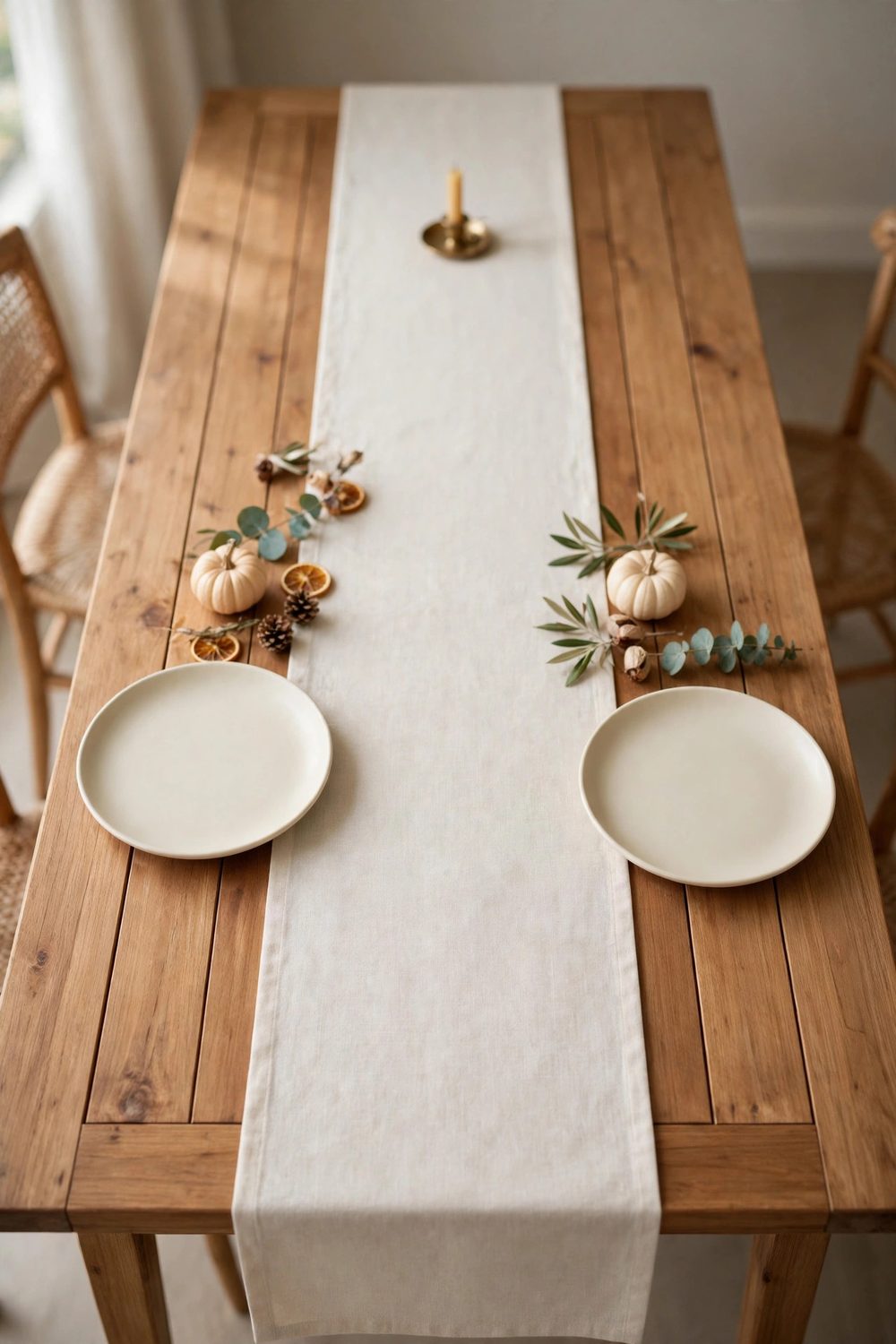
Linen falls flat and stays where you put it. On a narrow table, a linen runner in cream or oatmeal gives a soft line of color without adding bulk or shine.
The fabric lies close to the wood, so plates sit steady beside it.
Iron the runner while it is still a little damp. Crisp edges read as care, and a wrinkled runner on a narrow table looks like a dish towel left behind.
Pick a solid color or a faint stripe. A loud print on a thin strip fights the plates and the food for attention, and the food should win.
Linen also washes well after the meal. Shake it out, wash it cool, and it is ready for the next holiday.
3. Layer a Thin Runner Over a Bare Table
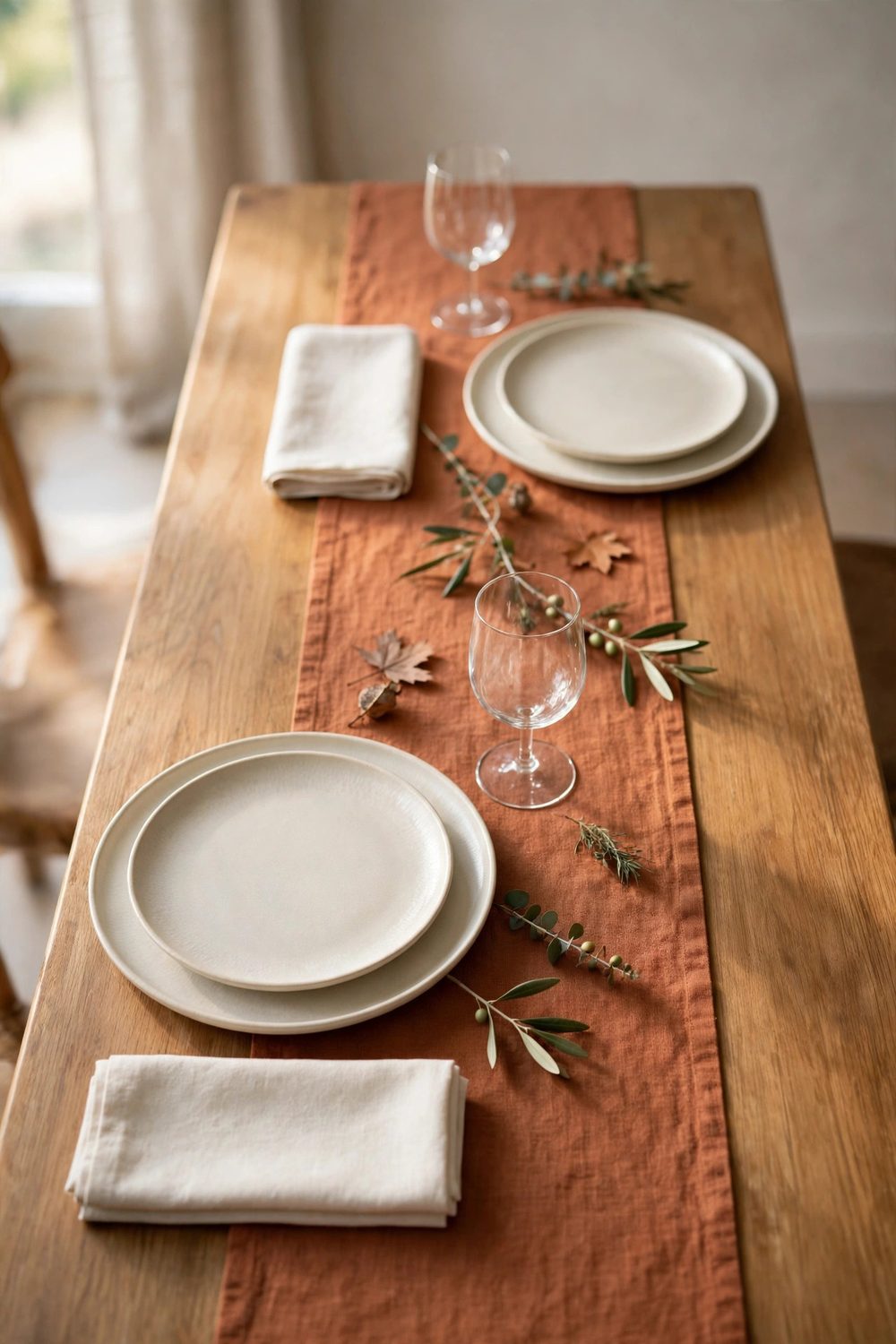
Skip the tablecloth on a narrow table and let the wood show. One thin runner down the middle gives the table its color while the bare wood keeps it light.
The wood grain on either side acts as a frame, and the runner reads as a deliberate stripe.
This works best on a table with a warm, even finish. A scratched or stained top needs a cloth instead, because the runner will only frame the damage.
Oil the wood the week before if it looks dry. A fed table glows under candlelight, and the runner sits on a surface that looks cared for.
Bare wood plus one runner is the simplest version of this whole list, and it suits a narrow table better than any layered cloth.
4. Double Two Runners for Depth
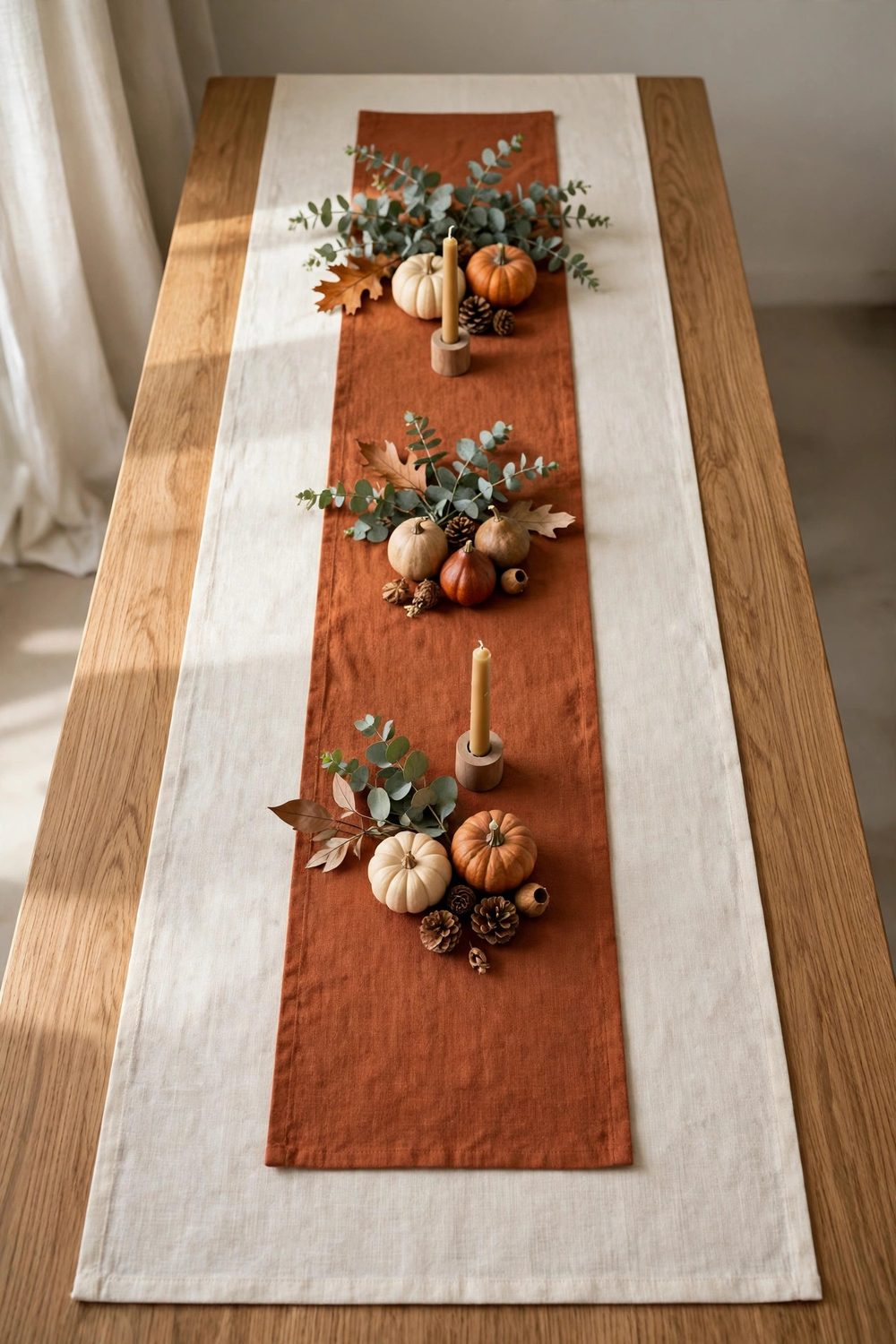
Two thin runners, one wide and one narrow, give a narrow table depth without width. Lay a cream runner first, then a rust one half its width down the middle.
The layered edge reads as care, and the top runner carries the color.
Keep the top runner no wider than eight inches on a narrow table. A wide top layer eats the space the plates need and turns the pair into one wide cloth.
Line up the ends so both runners hang the same length. Uneven ends look like a mistake, and even ends look like a plan.
The same layered pair shapes a Thanksgiving tablescape in rust and cream fall colors when the whole table follows the same two colors.
5. Run Burlap for a Rustic Narrow Table
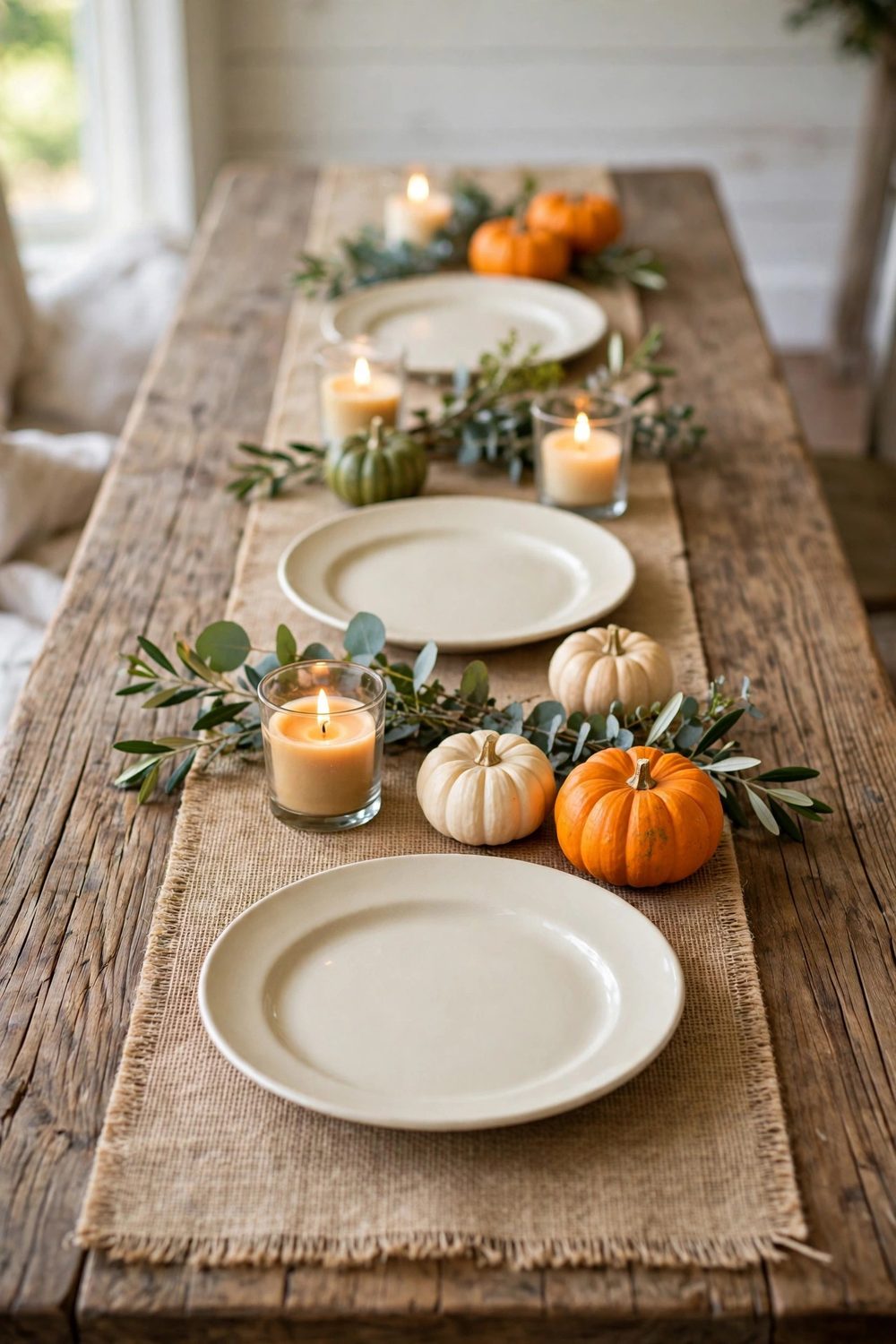
Burlap suits a narrow farmhouse table because its open weave looks light even in a dark color. A burlap runner in natural tan adds texture without shine.
The rough weave holds the centerpiece still, so pumpkins and candles do not slide.
Shake the burlap outside before you lay it down. Loose fibers shed for the first hour, and a shake keeps them off the plates.
Pair burlap with cream plates and plain glass. The rough cloth plus smooth plates is the whole look, and a busy print would tip it into clutter.
After dinner, roll the burlap instead of folding it. A rolled runner keeps its shape, and a folded one creases along the weave.
6. Use Kraft Paper as a Writable Runner
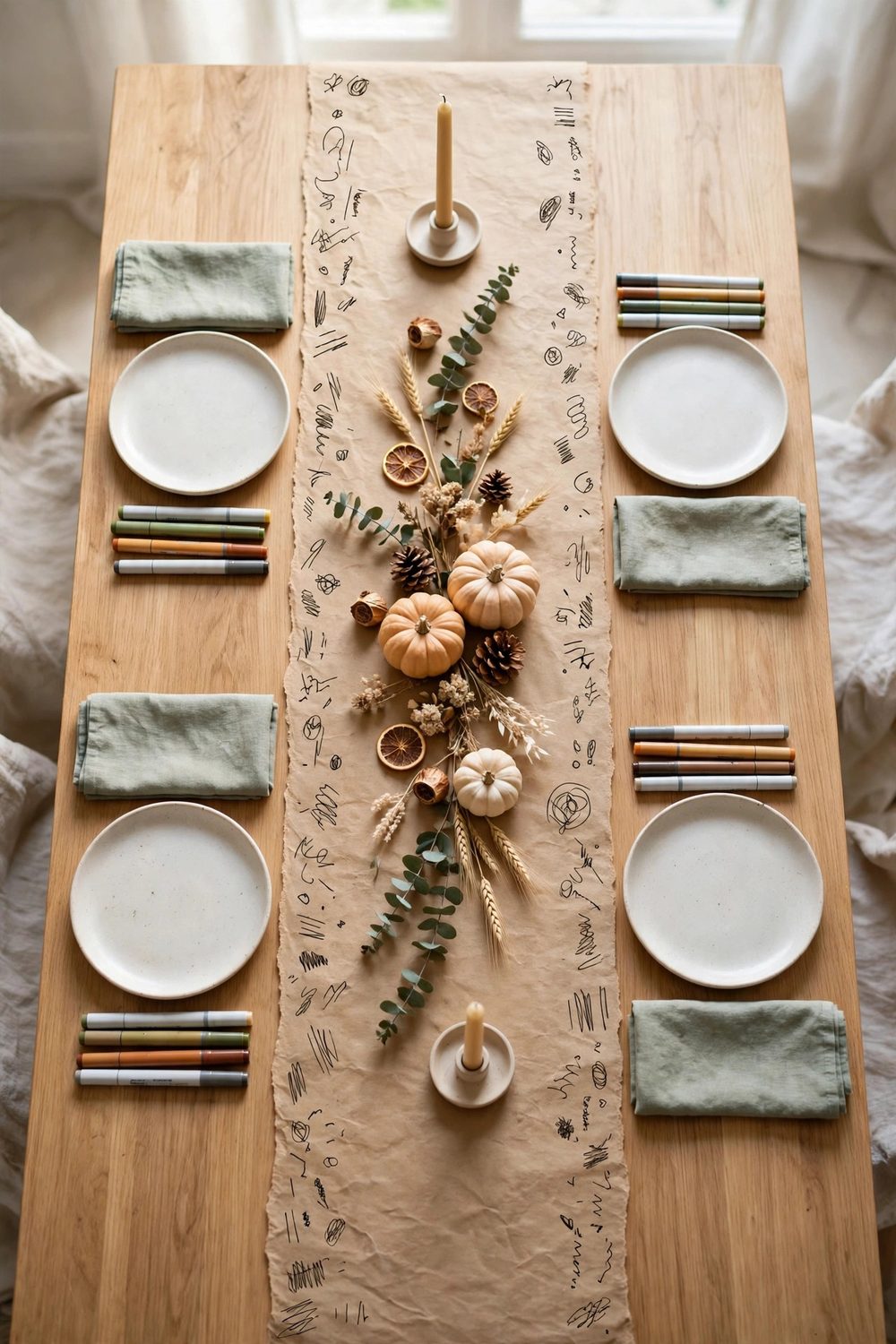
A roll of brown kraft paper makes a narrow runner that guests can write on. Lay it down the middle, tape the ends under the table, and leave a marker at each place.
Guests write names, notes, or thanks along the edge.
Keep the paper strip about 10 inches wide on a narrow table. A wide paper runner leaves no room for plates, and a thin one looks like a strip of tape.
Set the centerpiece on small plates or a tray so candle wax and pumpkin stems do not mark the paper. The paper is the guest book, not the tablecloth.
After dinner, roll the paper up and keep it. A paper runner full of notes is a keepsake, and it costs less than a card for each guest.
7. Keep the Centerpiece on the Runner Only
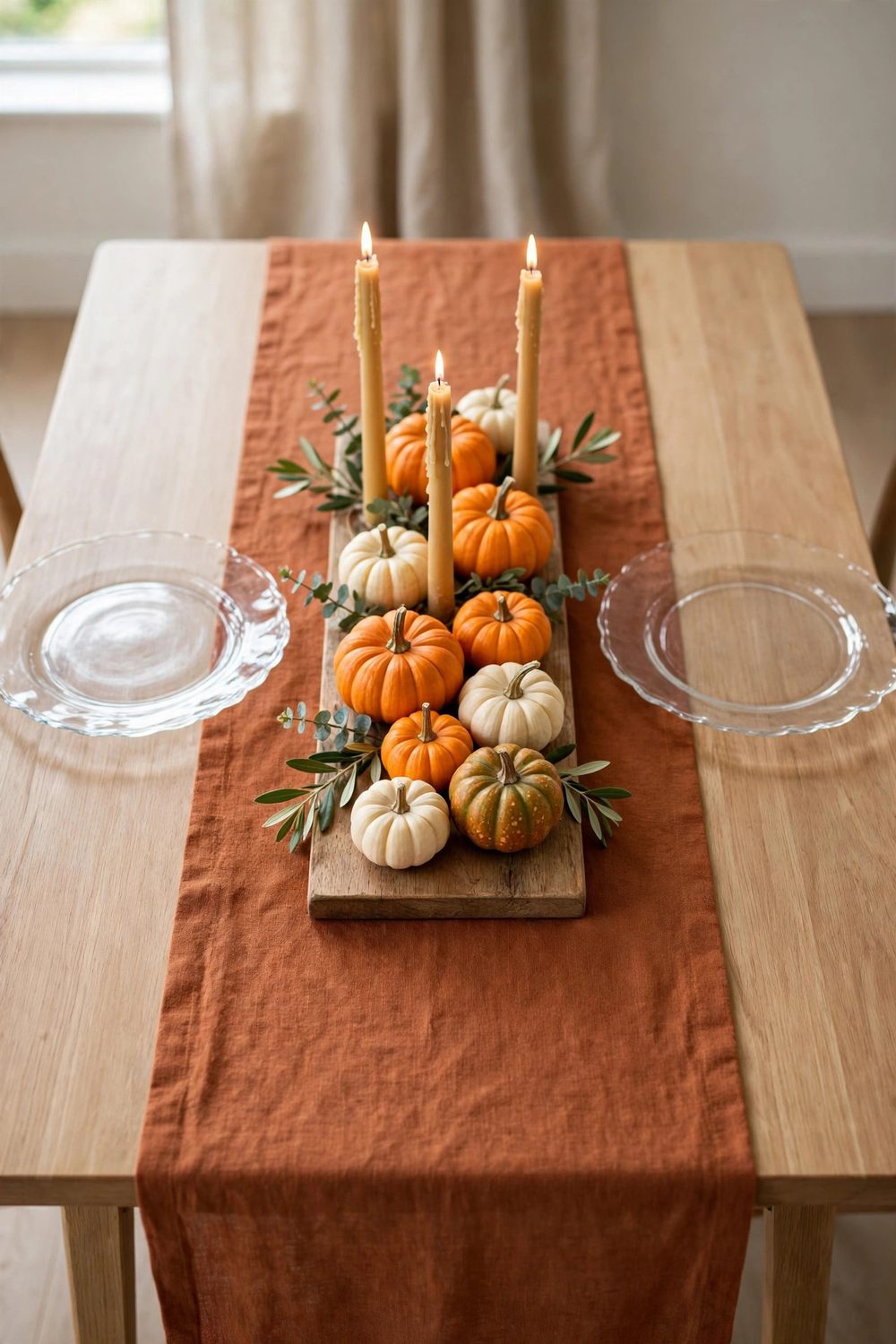
Every centerpiece piece must sit on the runner, not beside it. A pumpkin that drifts onto the wood eats a plate spot, and a candle off the runner drips wax on the table.
Build the center inside the runner edges and check it from each chair.
Use a narrow tray on the runner to hold the whole center. The tray keeps the pieces in one line and lifts away in one motion when the food arrives.
Choose a tray no wider than the runner itself. A tray that overhangs the fabric looks wrong and catches sleeves as guests reach.
This one rule protects the plates. The same runner-first habit guides the Thanksgiving centerpiece ideas from a natural autumn harvest on a wider table too.
8. Try a Plaid Runner for Warmth
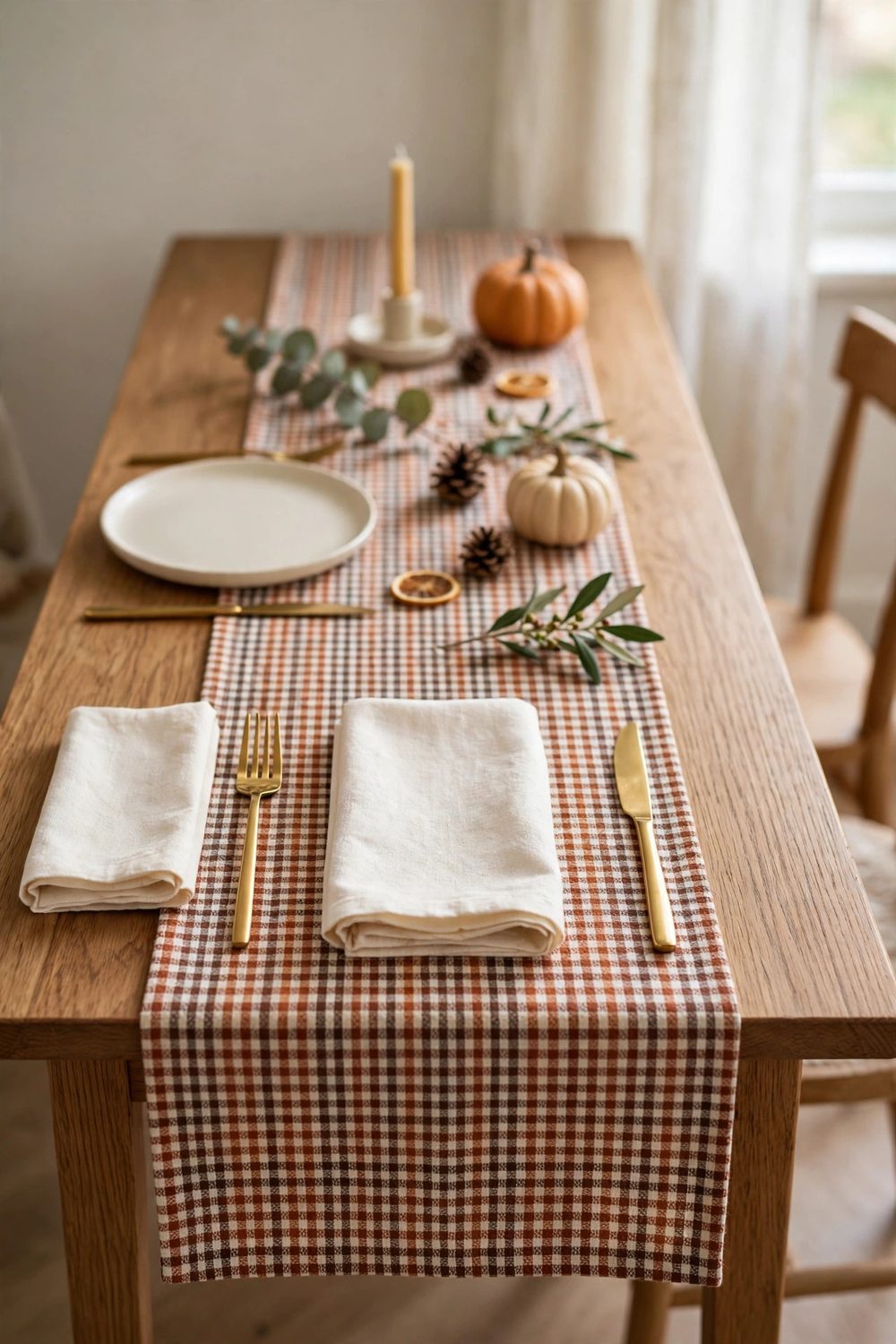
A plaid runner in rust, cream, and brown gives a narrow table its fall color in one piece. The checks read as warm and familiar, and the pattern hides a crumb or two.
Pick a plaid with a small check. A large check on a thin runner looks chopped up, while a small check reads as a full pattern.
Keep the napkins solid when the runner is plaid. Two patterns at one place fight each other, and a solid napkin lets the runner carry the color.
Match the plaid to the wood tone. Rust and cream suit a warm oak table, while a cooler grey plaid suits a dark walnut top.
Fold the runner ends square and press them flat. A plaid that curls at the ends loses its crisp edge, and the edge is what makes it read as finished.
9. Set Tapers in a Straight Line on the Runner
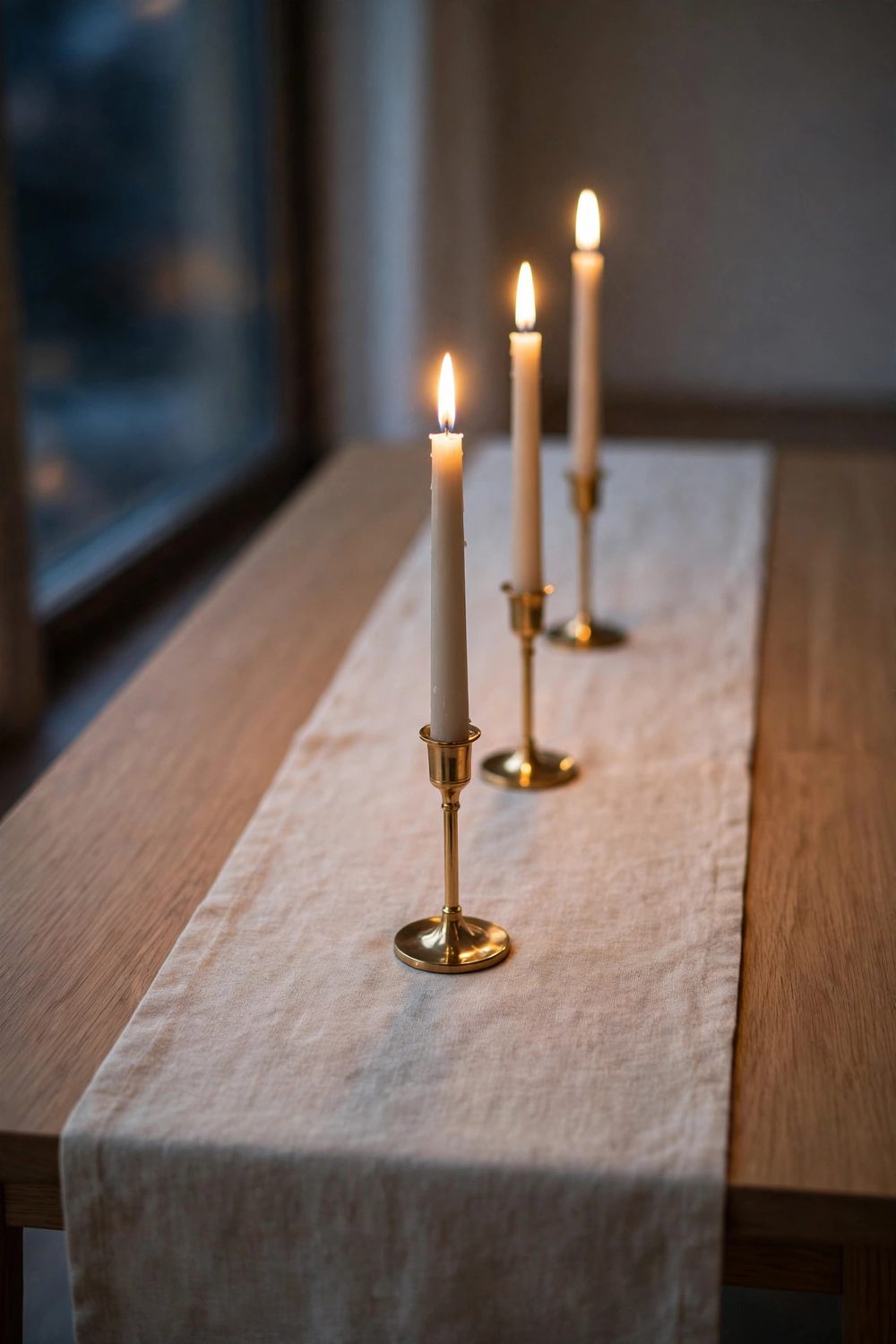
Three taper candles in a straight line down the runner give a narrow table its height without its width. Slim holders take little space and the flames sit well clear of plates.
Space the candles a hand apart so the light runs the full length.
Use dripless tapers to protect the runner. Wax on linen is hard to lift, and a dripless candle keeps the fabric clean through a long dinner.
Keep the candles short, about eight inches tall. Tall tapers on a narrow table lean into the sight line and block faces across the table.
Light the candles just before guests sit down. The flames are at their best when the room is full, and the runner glows under them.
10. Weave Eucalyptus Along the Runner Edge
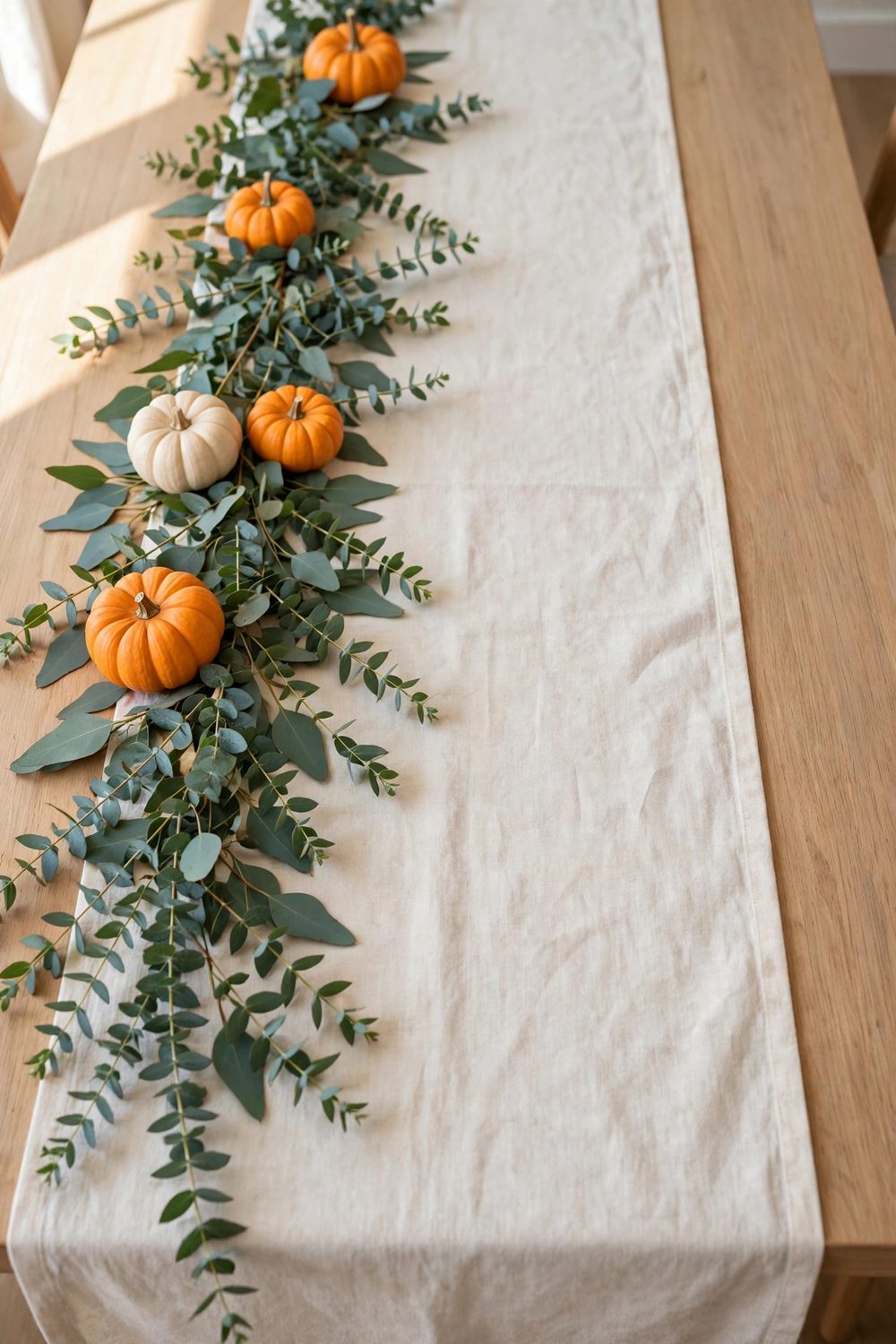
A few sprigs of eucalyptus laid along the runner edge give a narrow table its green without a vase. The leaves lie flat, take no height, and smell faintly fresh.
Tuck the stems under the runner edge so they stay put.
Use dried eucalyptus if the table sits near candles. Fresh leaves wilt in the heat, and dried ones hold their shape all evening.
Keep the greenery on one side of the runner only. Greenery on both sides doubles the width of the center and eats the plate space the runner was meant to save.
After dinner, the sprigs go into a jar on the windowsill. A narrow runner center often outlasts the meal as a simple green line.
11. Leave Gaps for Serving Dishes
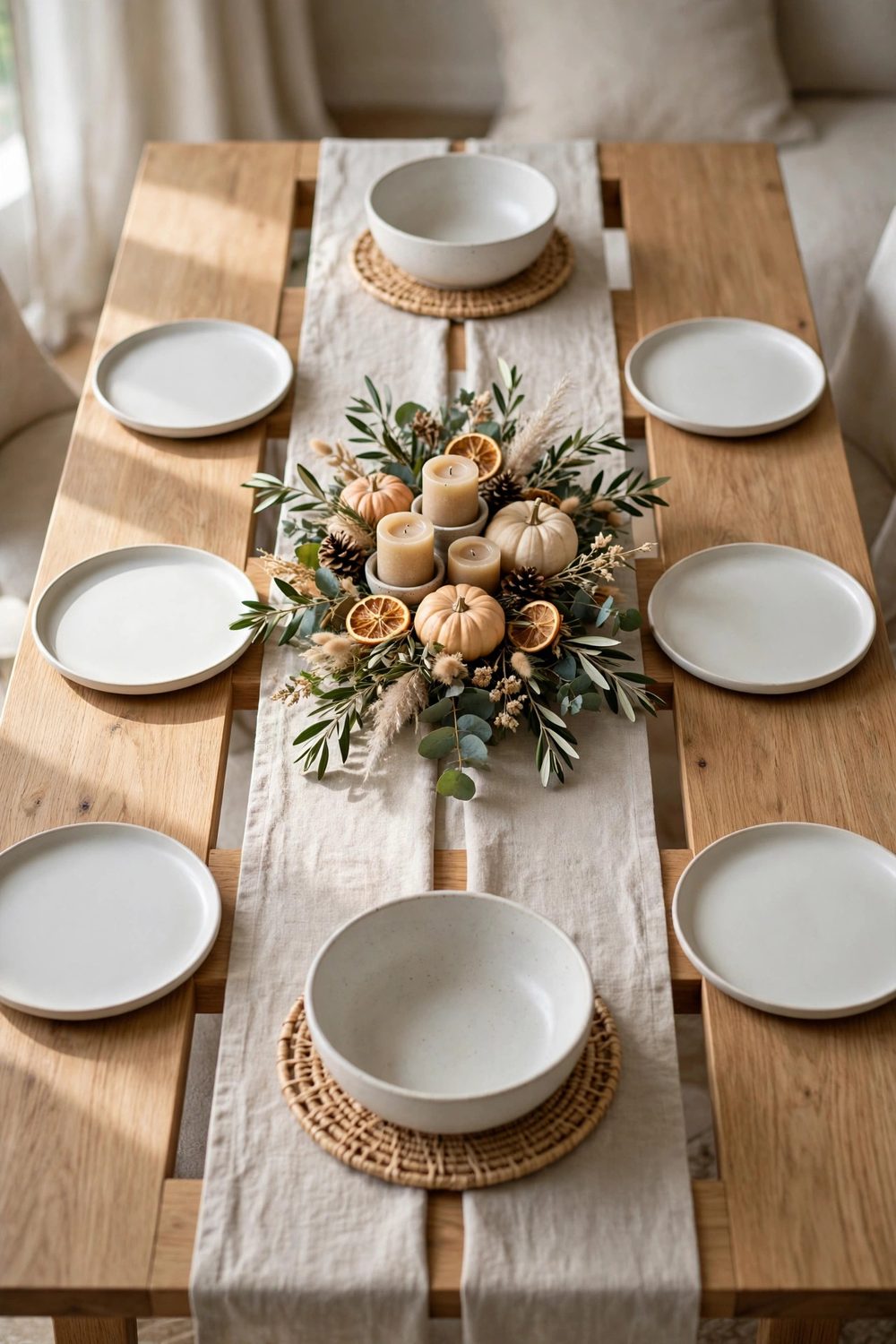
A runner that runs the full length with no gaps leaves nowhere for the serving bowls. Plan two open spots on the runner, one near each end, for a shared dish.
Mark the gaps with a trivet or a folded towel before the food arrives.
Keep the centerpiece in the middle third only. A center that stretches the whole runner leaves no landing spot, and a bowl set on the bare wood slides.
Test the gaps with the actual bowls the night before. A bowl that is wider than its gap will push the candles aside and break the line.
The same gap planning shapes the Thanksgiving table setting ideas in warm neutral autumn when the meal is served family style.
12. Hem a Fabric Scrap Into a Runner
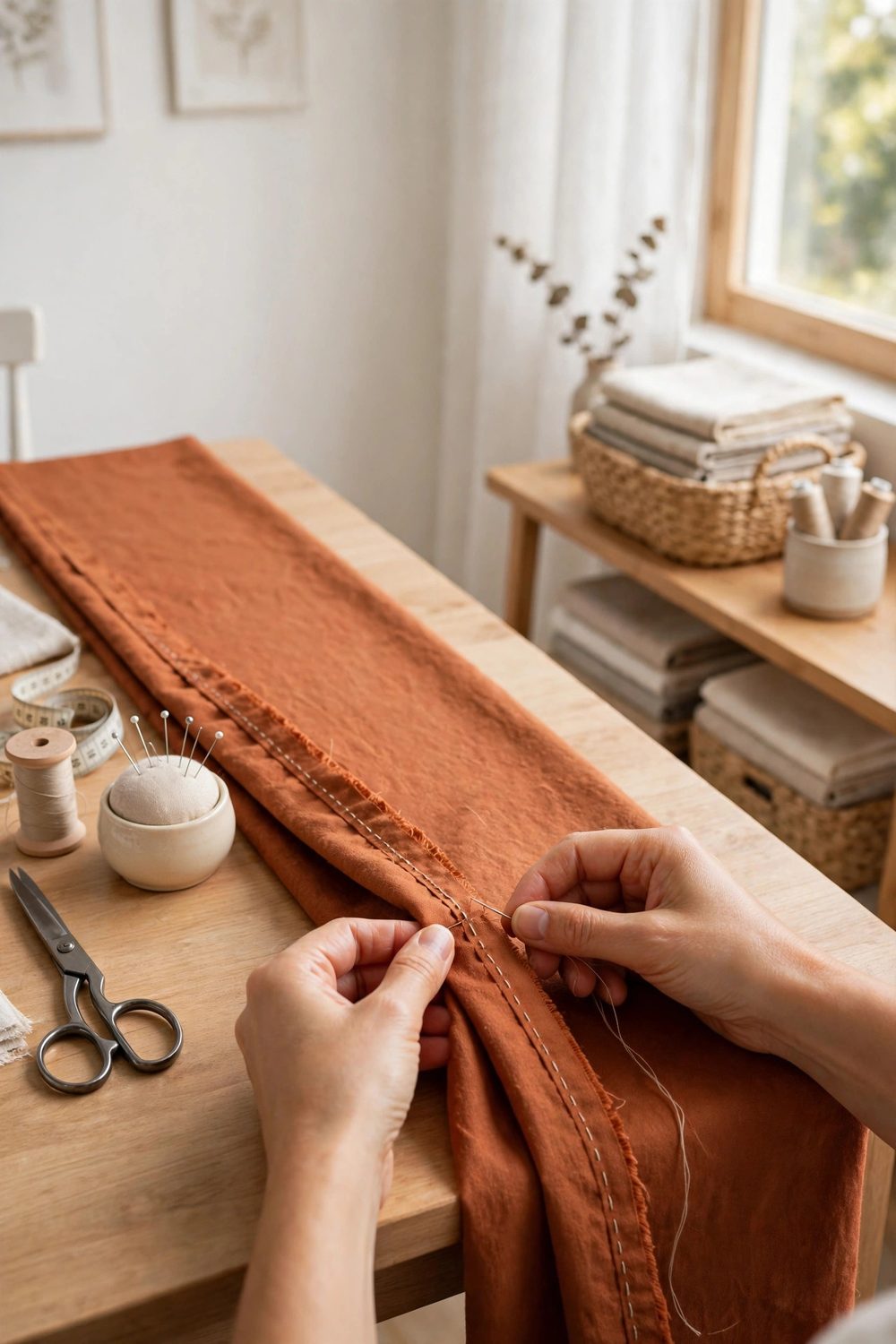
A length of fabric from a craft store, hemmed on two sides, makes a runner in the exact width a narrow table needs. Cut it to a third of the table width and press the hems flat.
No sewing skill beyond a straight stitch is needed.
Pick a cotton or linen blend that irons well. A fabric that wrinkles the moment it is touched will look tired before the guests arrive.
Choose a warm solid, like rust or deep gold, and let the centerpiece carry the pattern. A solid runner is easy to match and easy to reuse.
Make the runner a few inches longer than the table so the ends hang evenly. A runner that ends short of the table edge looks unfinished.
13. Protect the Runner With a Thin Board
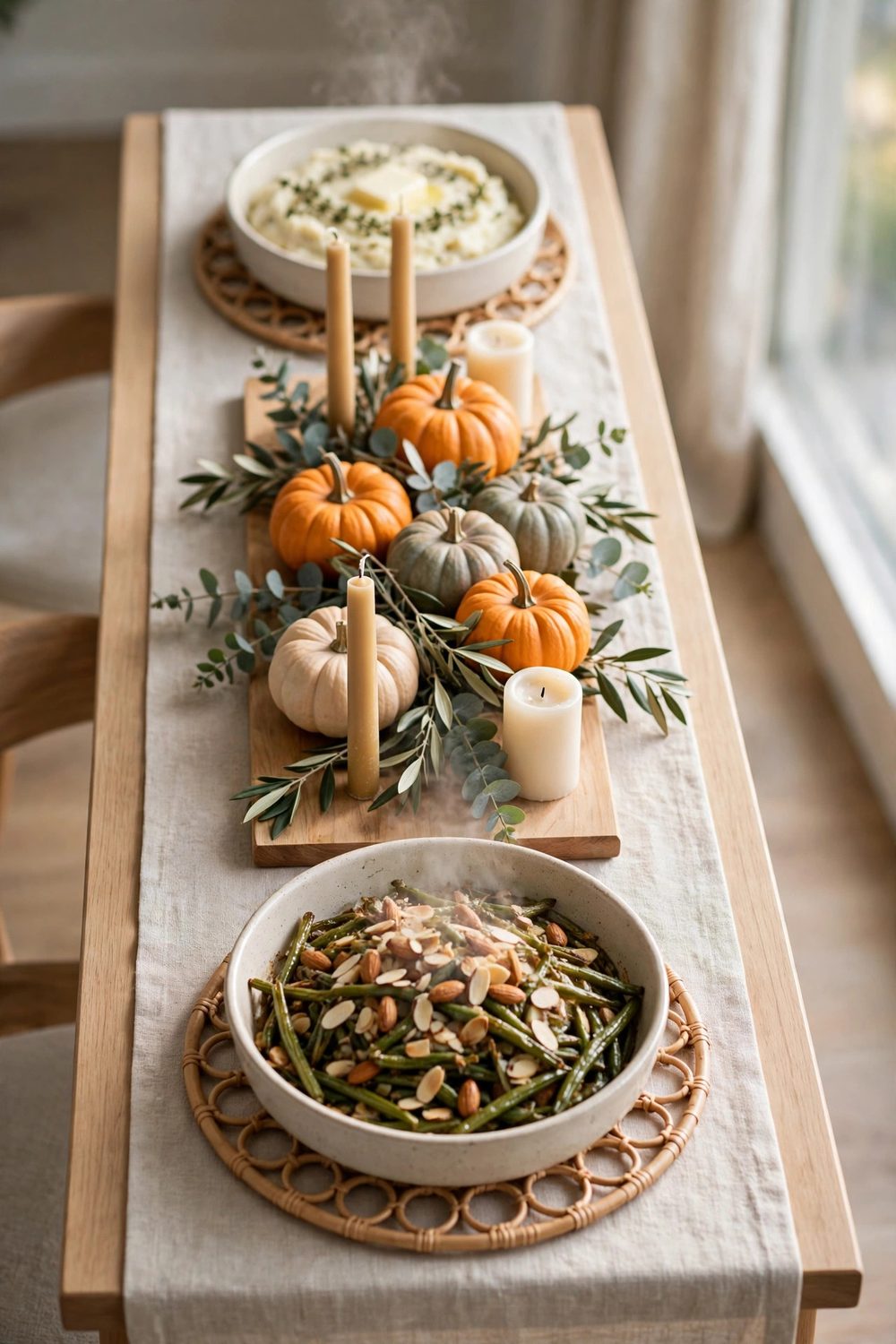
Hot bowls and candle wax both mark a runner. Lay a thin wooden board under the centerpiece and set trivets under each hot dish.
The board takes the heat, and the runner stays clean.
Pick a board no wider than the runner and no longer than the centerpiece. A board that sticks out past the fabric reads as a mistake.
Oil the board before the meal so gravy wipes off with a damp cloth. A dry board stains, and a stained board shows on every future table.
Keep one spare trivet at the end of the runner. The turkey board needs a landing spot too, and a spare trivet keeps it from sliding on the cloth.
14. Match the Napkins to the Runner, Not the Plates
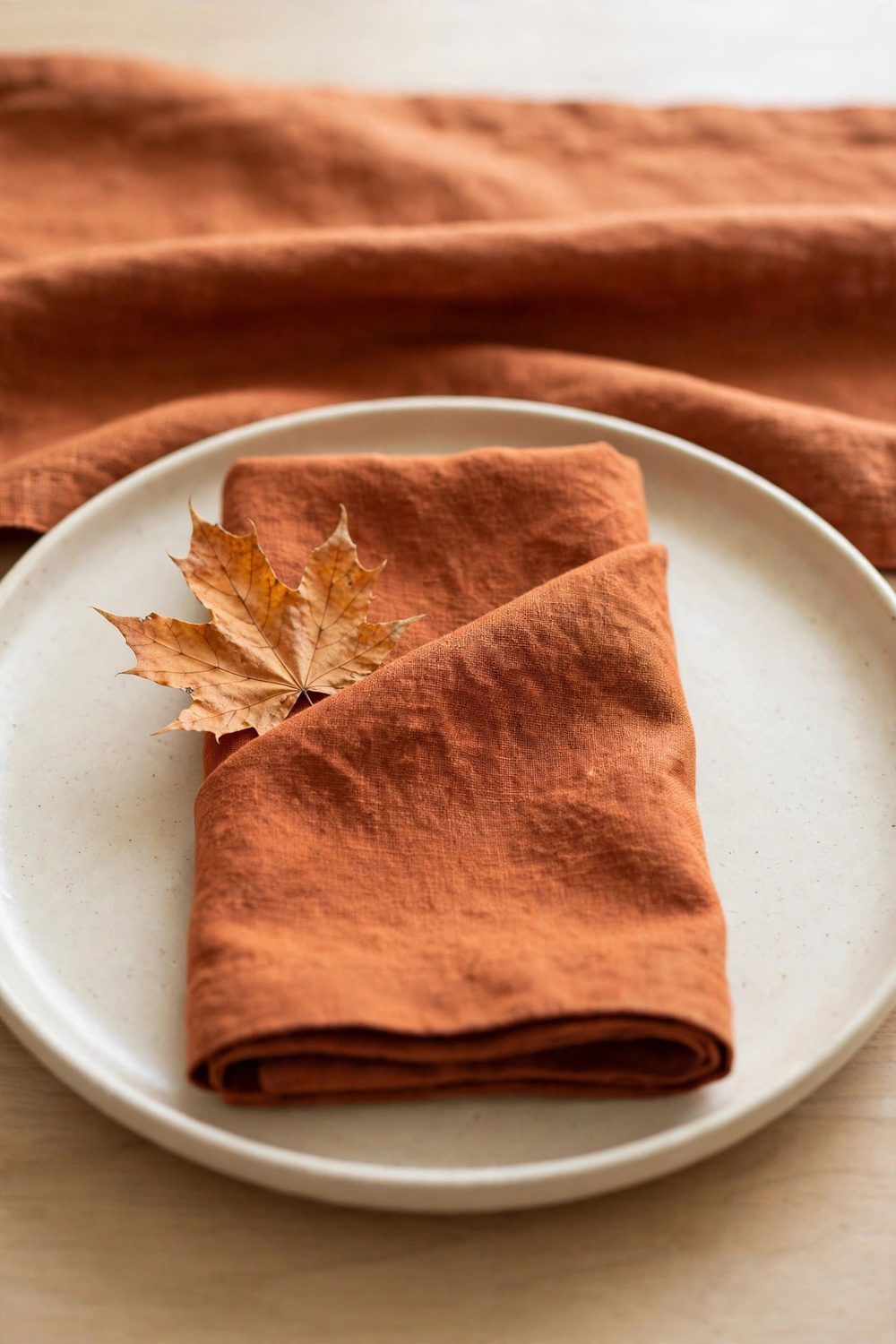
On a narrow table, the runner is the color story. Pick napkins in the runner’s main color, and let the plates stay plain cream.
The match ties each place to the center line.
Fold the napkins in a simple rectangle on the plate. A tall fold on a narrow table blocks the view, and a flat fold keeps the sight line open.
Tuck a small leaf or a sprig of wheat into the fold. One sprig per napkin is enough, and it repeats the greenery on the runner.
The same color-match habit links a Thanksgiving table decor for a breakfast nook that seats four when the nook table runs narrow too.
15. Roll the Runner Away the Same Night
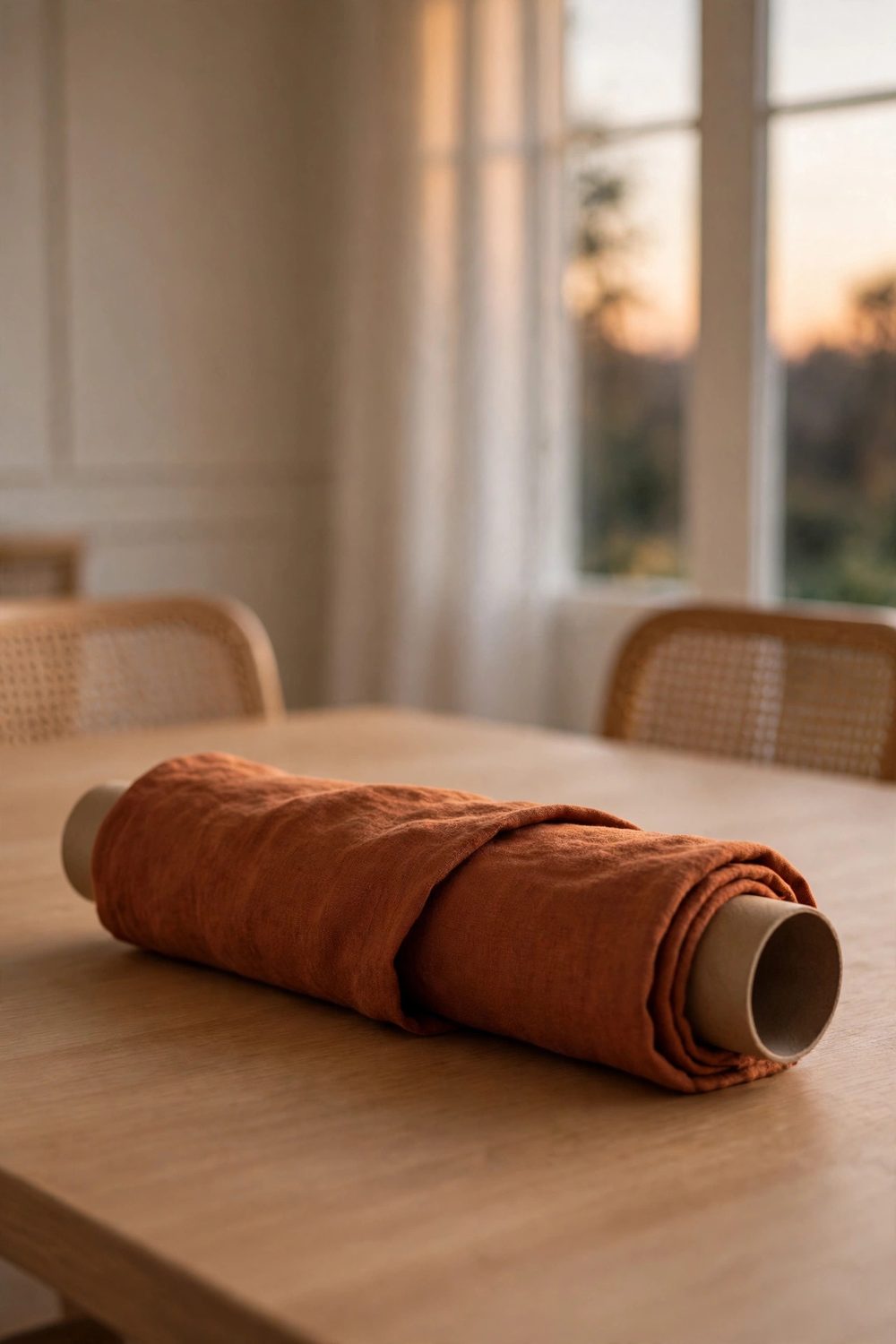
A runner left on the table overnight picks up crumbs, wax, and a crease where a plate sat. Roll it up the same night, while the table is clear.
Shake it outside first, then roll it around a cardboard tube.
Check for wax spots before you store it. A wax spot scrapes off cold with a dull knife, and a warm iron through brown paper lifts what is left.
Store the runner flat or rolled, never folded tight. A sharp fold creases the fabric and shows on the next table.
A narrow runner that is cared for lasts for years. The table stays narrow, but the runner keeps it dressed for every holiday.
Thanksgiving table runner ideas for a narrow dining table come down to one habit: measure the third, then build the center inside it. The runner adds color, the center stays low, and the plates keep their room.
A narrow table does not need less decor. It needs decor that fits the width it has.
Pick three ideas and lay the runner out the night before. Set a plate at each seat and check the elbows.
Save this one to your Thanksgiving Decor Ideas board on Pinterest so the runner plan is ready when the holiday comes around again.


