
15 Bedroom Wall Art Ideas for a Man’s Minimalist Bedroom
A minimalist bedroom can look sophisticated without filling every wall. The challenge is finding wall art that gives the room personality while keeping the clean, uncluttered feeling that makes minimalism work. Too many small frames, loud colors, or unrelated themes can quickly make a simple bedroom feel busy.
The best bedroom wall art ideas for a man’s minimalist bedroom usually rely on strong composition, restrained colors, thoughtful proportions, and plenty of breathing room. A single oversized photograph can have more impact than an entire crowded gallery wall. Likewise, a subtle abstract print can add depth without competing with the bed, lighting, or furniture.
The ideas below cover several directions, from architectural photography and monochrome artwork to textured pieces and understated personal displays. Each one can be adapted to a modern, industrial, warm neutral, or contemporary bedroom while keeping the overall look clean and intentional.
1. Oversized Black and White Photography
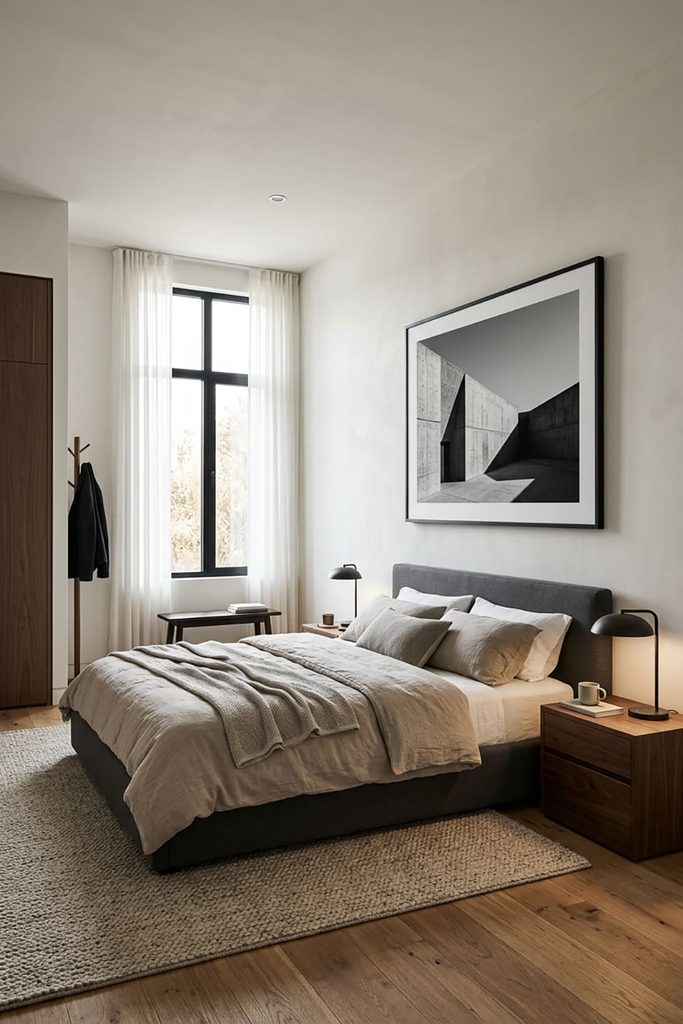
One large black and white photograph can create a strong focal point without making the bedroom feel decorated. Choose an image with a simple subject such as architecture, a mountain landscape, a quiet street, or an interesting geometric structure. Place it above the bed or on the largest uninterrupted wall.
Keep the frame simple, using matte black, dark wood, or another restrained finish. Avoid combining it with several unrelated pictures. The empty wall surrounding the photograph is part of the design, so allow plenty of space around the frame. This approach works especially well when the bedroom already has neutral bedding and simple furniture.
2. Minimal Architectural Line Drawing
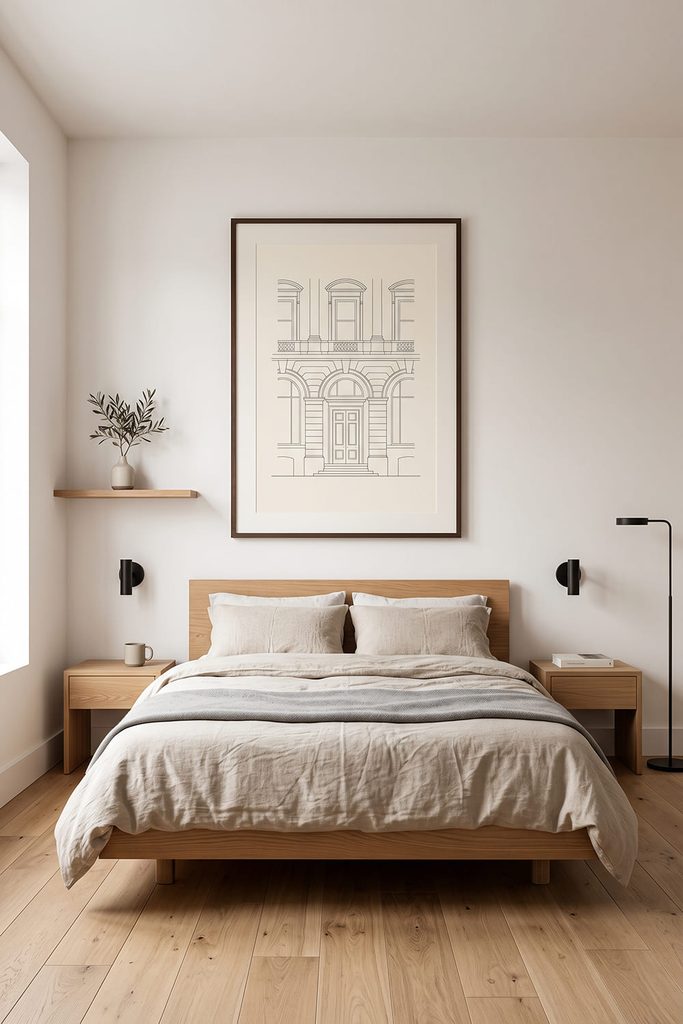
Architectural line drawings bring structure to a minimalist bedroom without introducing much visual weight. Look for artwork that shows a building facade, doorway, staircase, bridge, or abstract architectural form in thin black or charcoal lines.
A cream or warm-white background keeps the piece soft against a neutral wall. Use one large drawing above the headboard or two smaller drawings with matching frames beside each other.
This idea is particularly suitable for a man who prefers design-focused artwork rather than traditional landscapes or decorative prints. The clean geometry can echo straight furniture lines, rectangular nightstands, shelving, or a low-profile bed.
3. Muted Abstract Artwork
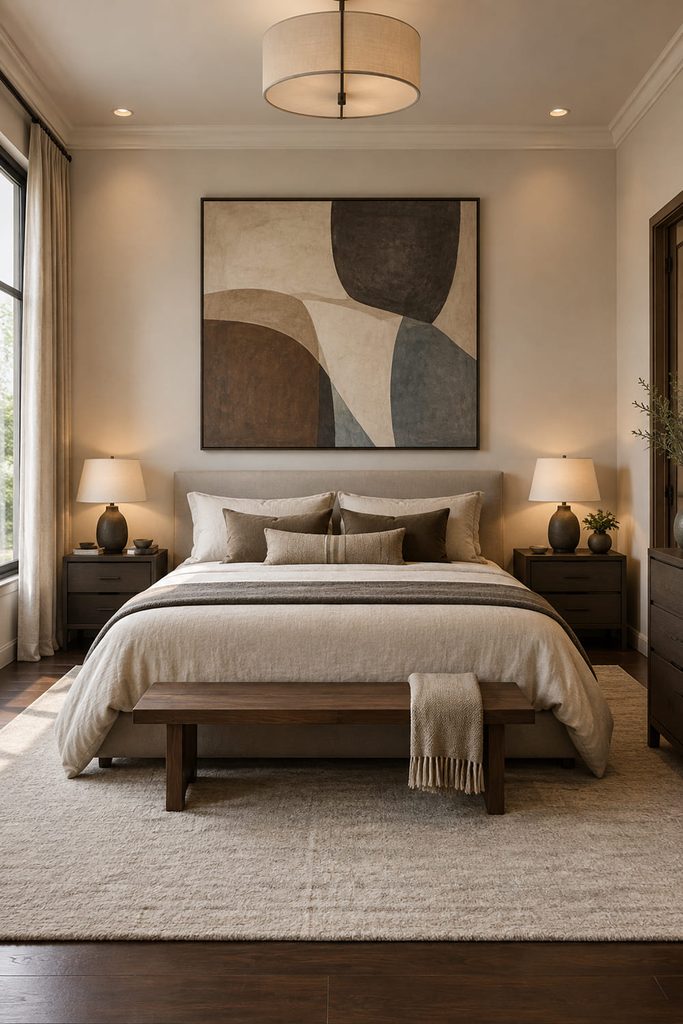
A muted abstract painting can introduce personality while keeping the bedroom calm. Instead of bright colors, choose a composition built around charcoal, beige, taupe, warm white, stone, brown, or a subdued blue-gray.
Look for artwork with a few large shapes rather than hundreds of small details. Organic forms, broad brush marks, and simple blocks of color can work beautifully above a bed.
Choose a frame that connects with something already in the room, such as the wood of the nightstands or the dark finish of the lighting. This creates continuity without requiring matching furniture throughout the room.
4. Large Neutral Textured Canvas
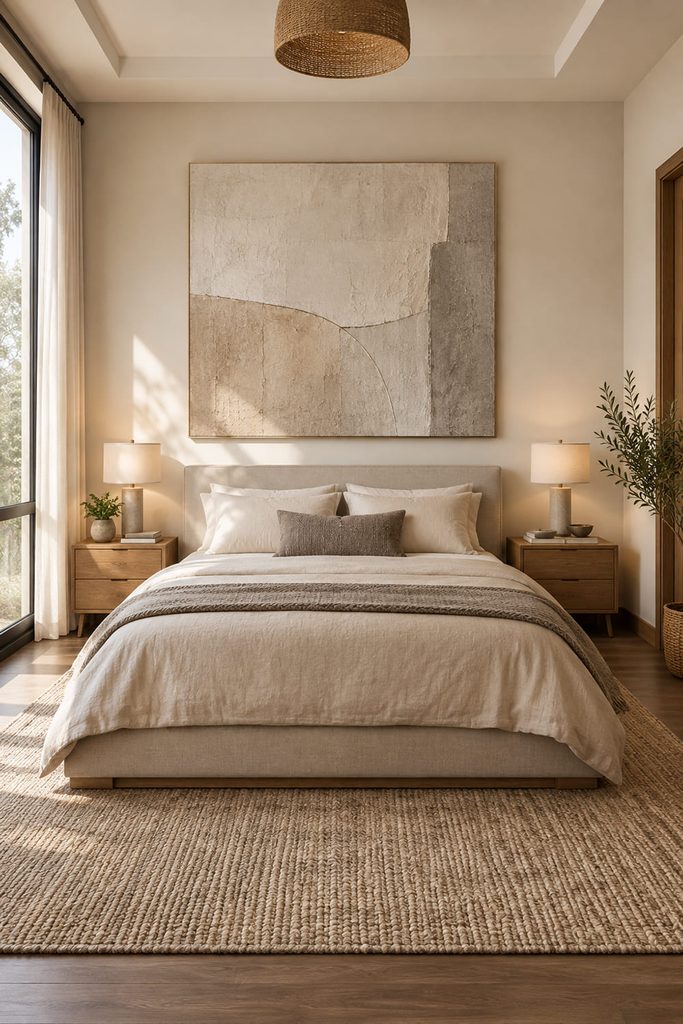
When the bedroom already has a simple color palette, texture can provide visual interest without adding another strong color. A large textured canvas in off-white, sand, beige, stone, or soft gray can fill an empty wall while remaining extremely understated.
The texture might resemble plaster, fabric, layered brushwork, or subtle raised geometric forms. Choose a piece where the texture is visible when you approach it but does not dominate the room from a distance.
This works especially well above a low-profile bed because the artwork gives the wall dimension without creating a busy focal point. Pair it with simple bedding and natural materials for a warm minimalist result.
5. Minimalist Mountain Landscape
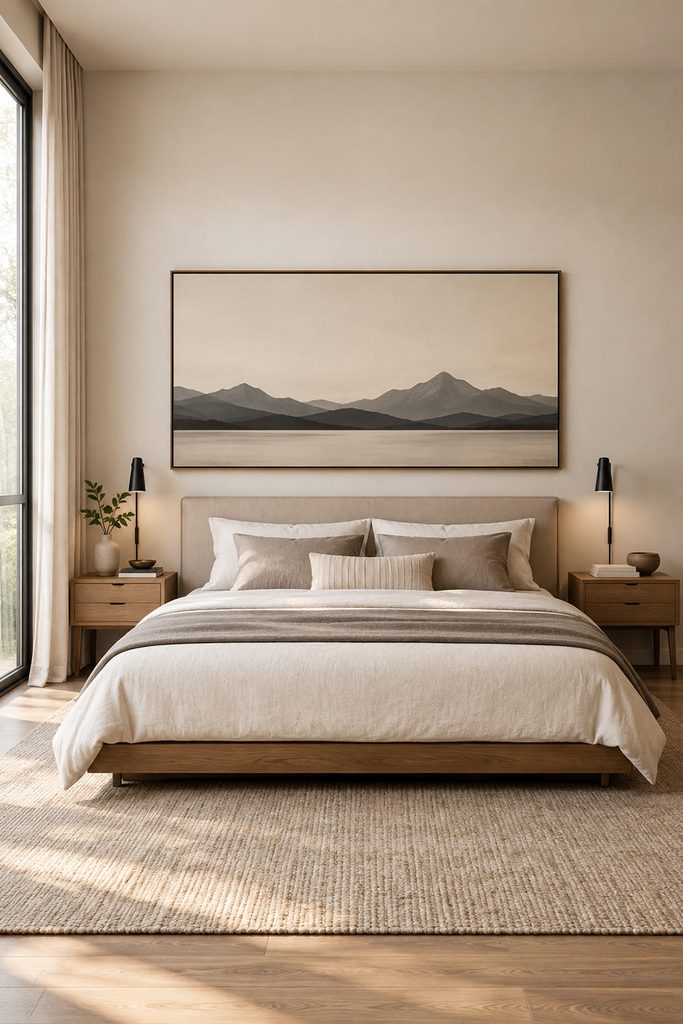
A simplified mountain landscape gives a man’s bedroom a connection to nature without making the space look rustic. Choose an image with a limited palette, such as charcoal mountains against a pale sky or muted brown peaks against a warm beige background.
Avoid overly dramatic photography with intense colors and complicated details. A calm composition with large areas of sky and a simple horizon will complement minimalist furniture much better.
A horizontal print works particularly well above a wider bed. Use a thin black, dark wood, or natural wood frame depending on the existing finishes. The artwork can become the room’s main focal point while still preserving the quiet character of the space.
6. Black Ink Gesture Artwork
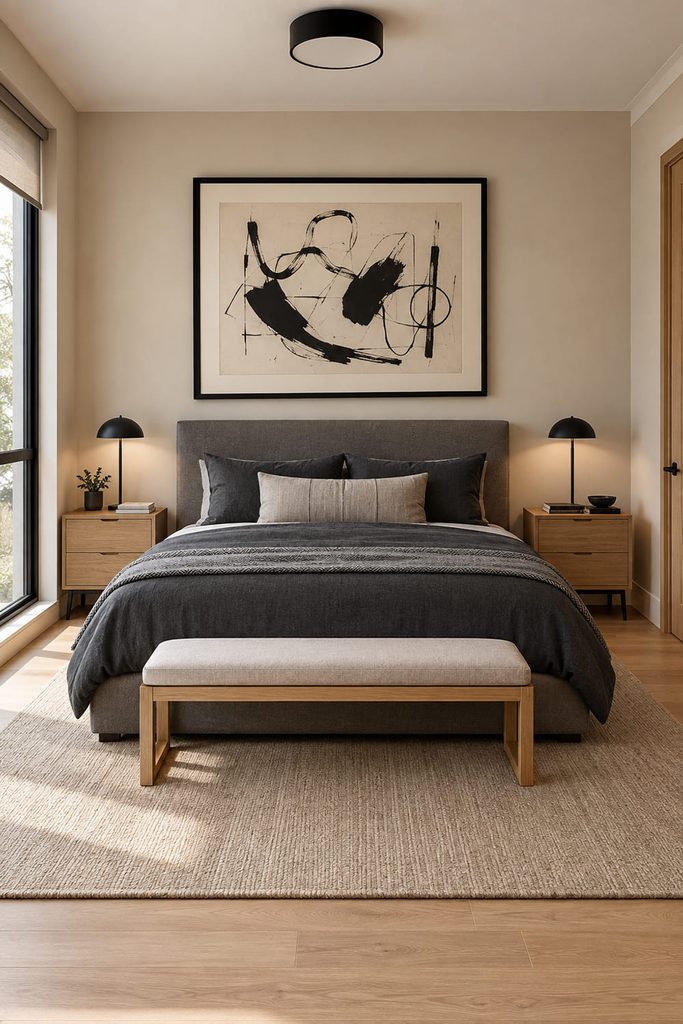
A simple black ink composition can give a minimalist bedroom an artistic focal point without requiring much color. Look for expressive but restrained marks, curved strokes, abstract figures, or loose geometric forms on a warm-white background.
The beauty of this approach is its simplicity. One large piece can stand alone rather than being surrounded by decorative objects.
For a stronger contemporary look, choose a wide frame with generous white or cream matting around the artwork. The empty border creates additional negative space and makes the central drawing feel more intentional. This style pairs particularly well with black metal lighting, charcoal bedding, and light wood furniture.
7. Minimalist Topographic Map
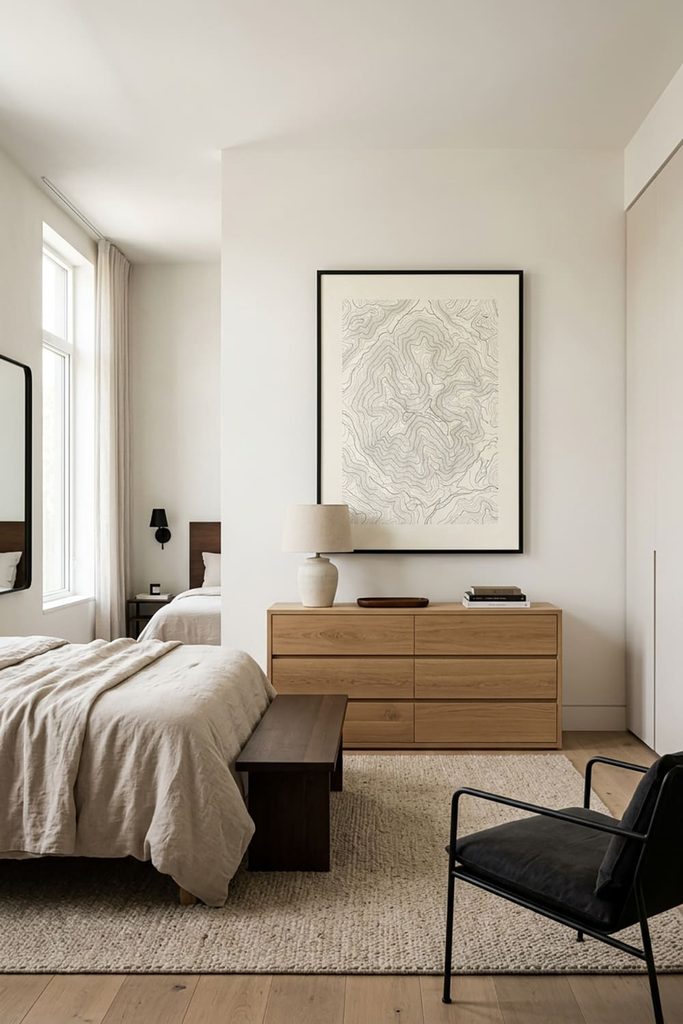
A simplified topographic map can bring an interesting geographical element into the bedroom while maintaining a clean visual language. Choose a map with subtle contour lines rather than a brightly colored geographic design.
You could select a meaningful location, such as a favorite hiking region, hometown, travel destination, or landscape that has personal significance. Keep the colors limited to black and cream, gray and white, or another restrained combination.
A large rectangular map above a dresser can become a quiet focal point. For a more polished look, use a thin frame and generous margins instead of filling the entire frame with the map.
8. Single Botanical Silhouette
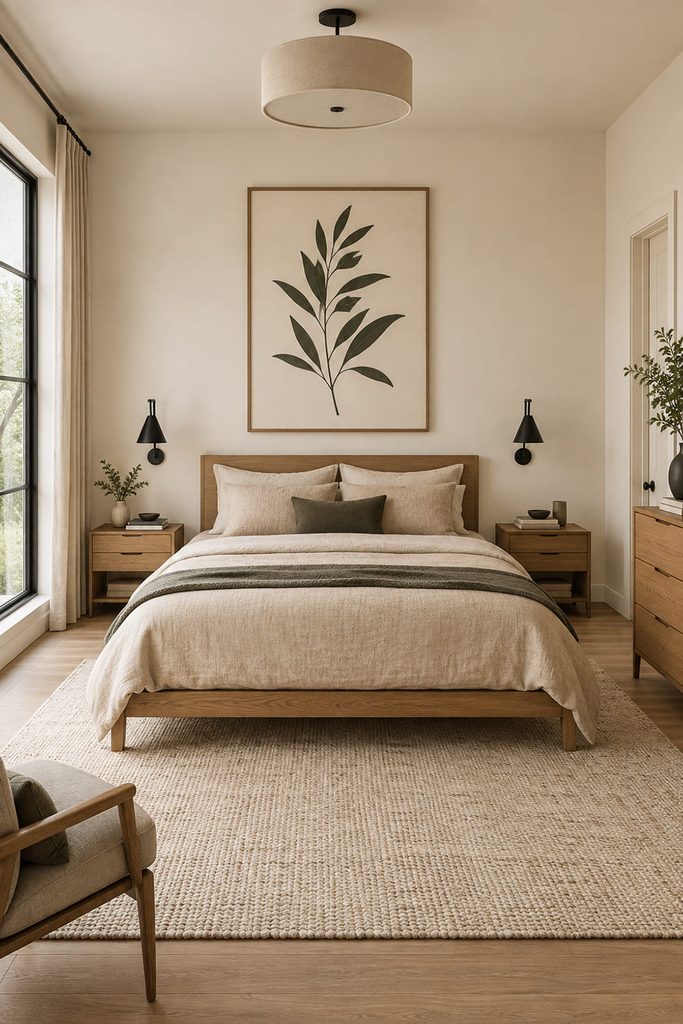
Minimalism does not mean avoiding nature-inspired artwork. A single botanical silhouette can soften a man’s bedroom while keeping the composition clean and sophisticated.
Choose one large leaf, branch, grass form, or simple plant silhouette rather than a crowded botanical collage. Black artwork on warm white creates a crisp appearance, while dark green or muted brown can add subtle color.
Place the artwork above the bed or on an otherwise empty wall. A natural wood frame can make the piece feel warmer, while a black frame creates a sharper modern appearance. Keep surrounding wall decor limited so the botanical form remains the main visual element.
9. Monochrome City Photography
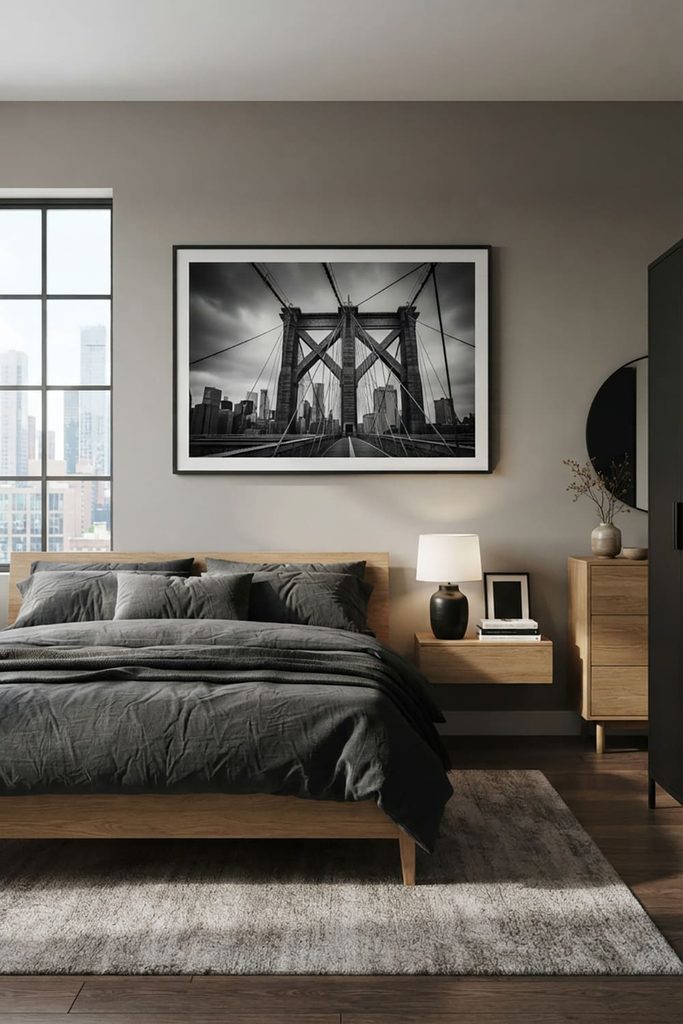
For a more urban bedroom, use a monochrome photograph of a city skyline, modern building, bridge, street corner, or architectural detail. The key is choosing an image with strong shapes and controlled contrast rather than an overly busy city scene.
A large vertical photograph can work well beside a dresser or reading chair, while a horizontal photograph can anchor the wall above a bed.
Keep the rest of the room relatively quiet so the photograph has space to breathe. Black-and-white imagery also makes it easier to coordinate the artwork with charcoal bedding, gray walls, black fixtures, and natural wood without introducing another competing color.
10. Two Complementary Abstract Prints
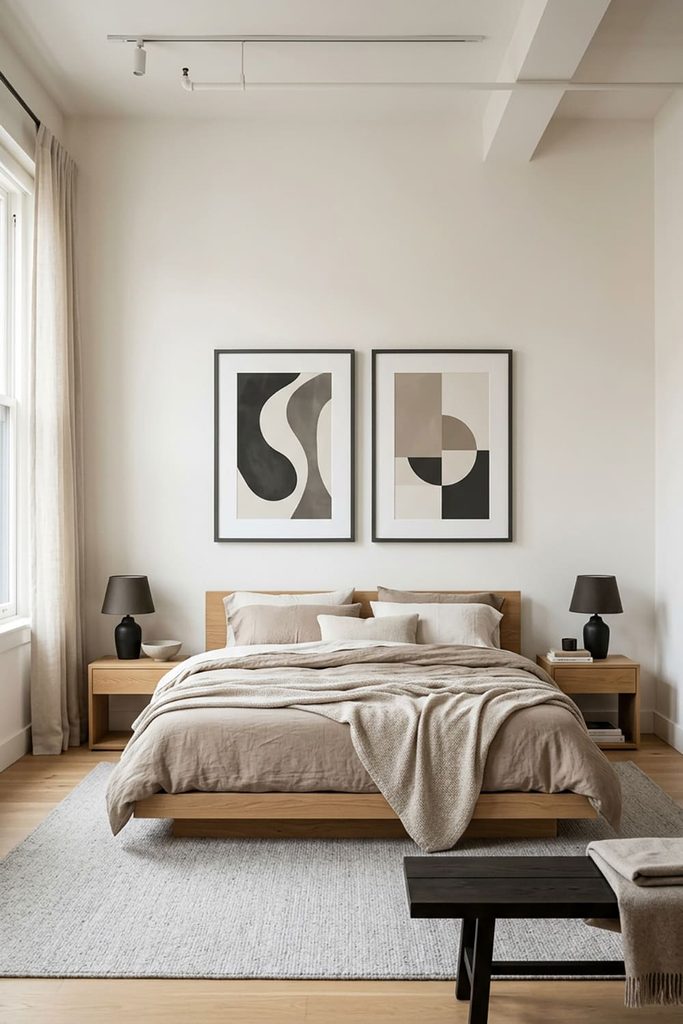
Instead of one large artwork, use two related prints with the same frame style and color palette. The designs do not need to be identical. One might contain a large curved shape while the other uses a simple geometric composition.
Hang them side by side with consistent spacing. Their combined width should relate to the furniture below rather than leaving a tiny cluster in the middle of a large wall.
This approach works well for someone who wants more visual interest than a single print but still wants to maintain a minimalist appearance. Keeping the frames identical helps the pair read as one intentional composition.
11. Oversized Dark Landscape
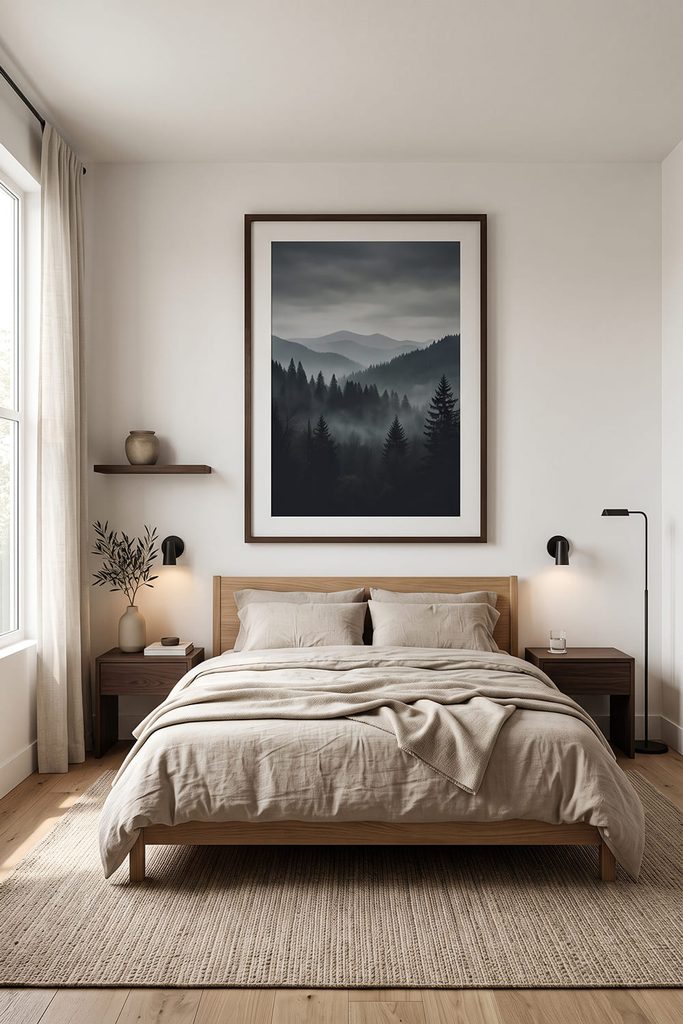
A dark landscape can give a minimalist bedroom more depth without relying on decorative clutter. Consider a misty forest, distant mountains, rocky coastline, or simple nighttime landscape rendered in charcoal, deep gray, muted green, or dark blue.
Choose an image with a relatively simple composition. Too much detail can make the artwork feel visually heavy.
A dark frame can reinforce the deeper tones, while a natural wood frame can soften the overall presentation. This idea works particularly well in bedrooms with warm white walls, beige bedding, dark wood furniture, or subtle black accents.
12. Minimal Typography With One Meaningful Word
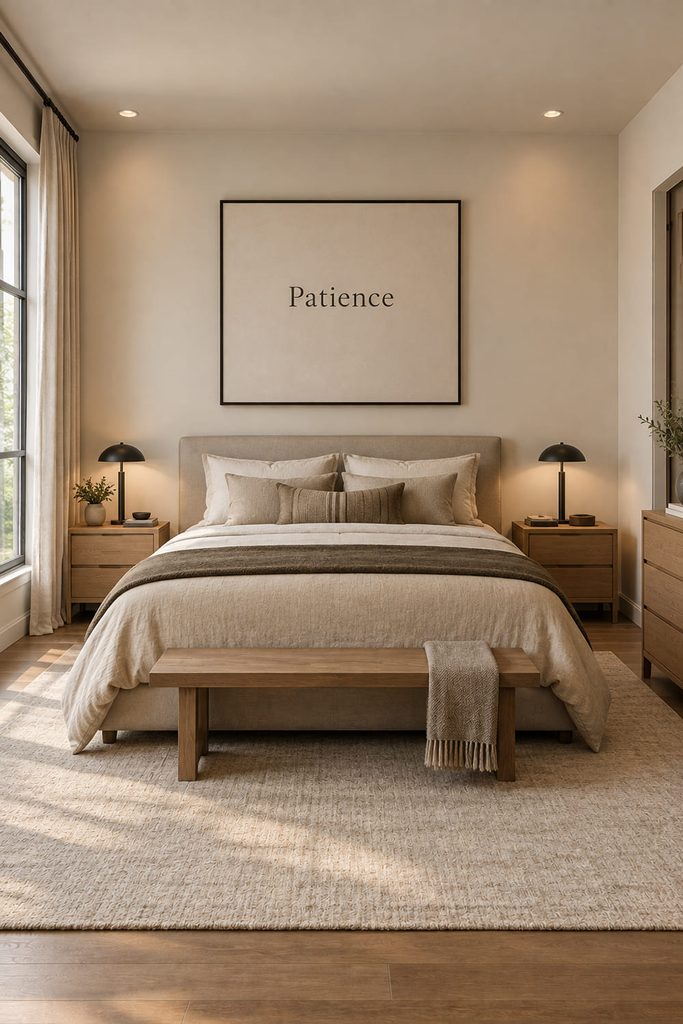
Typography can work in a minimalist bedroom when it is extremely restrained. Instead of a large motivational quote, choose one meaningful word or a very short phrase that has personal significance.
Use a simple typeface and plenty of space around the lettering. Neutral black, charcoal, or dark brown works well against a warm-white background.
The important part is choosing something that feels personal rather than generic. A word connected to travel, creativity, family, discipline, nature, or a personal interest can give the room character without filling the wall with text.
Keep the artwork relatively large so the design feels deliberate rather than like a small poster floating on an empty wall.
13. Natural Wood Relief Art
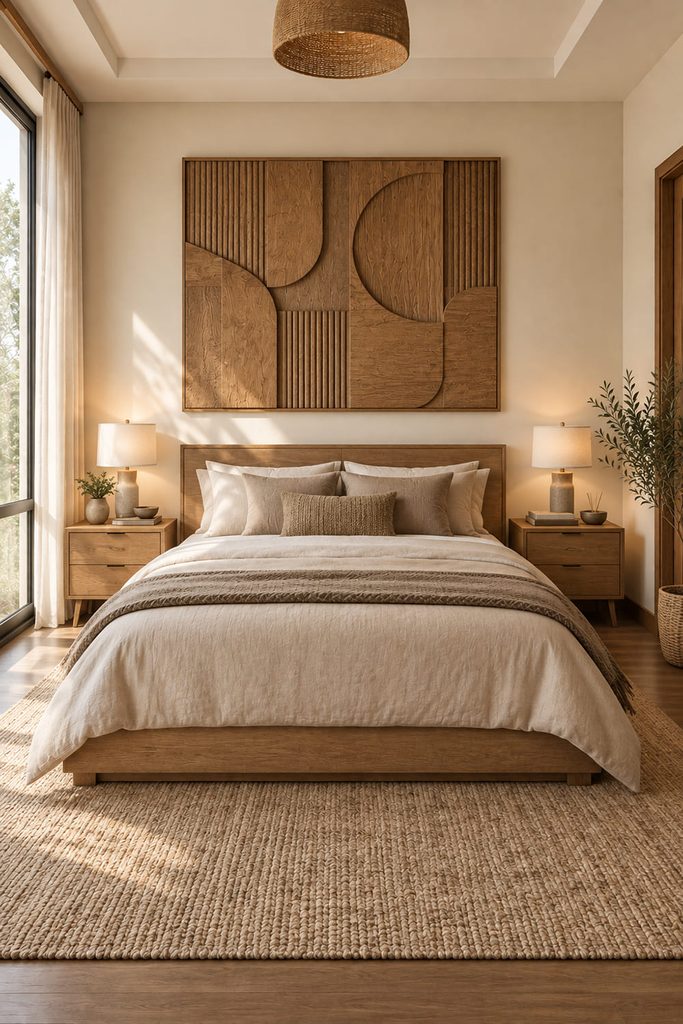
A minimalist bedroom does not have to rely entirely on framed paper artwork. A simple wooden relief can introduce warmth and dimension while keeping the wall visually quiet.
Look for a piece made from natural wood with a geometric pattern, carved lines, layered shapes, or an understated abstract composition. Avoid overly ornate designs.
Natural wood works particularly well with beige bedding, cream walls, oak furniture, woven textiles, and warm lighting. If the bedroom already contains several wood tones, choose an artwork with a finish that relates closely to the existing furniture rather than introducing another unrelated shade.
14. One Large Circular Artwork
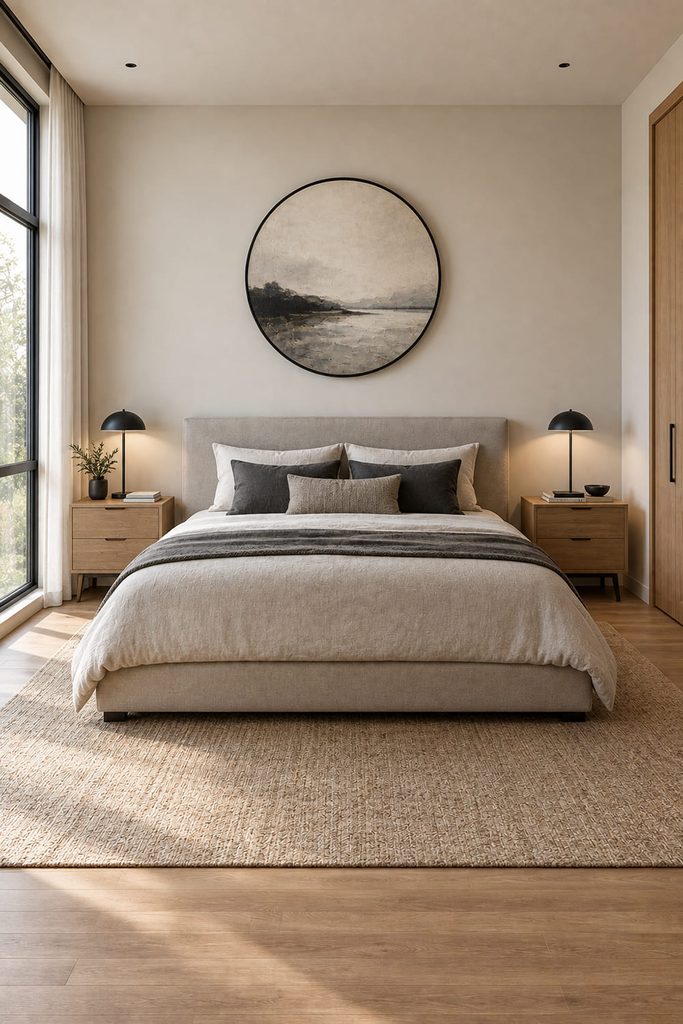
Most bedroom wall art is rectangular, so a large circular composition can subtly change the geometry of the room. Choose a simple circular artwork featuring an abstract design, monochrome landscape, textured surface, or understated graphic.
The curved outline can soften a room filled with straight lines from the bed, nightstands, shelves, and furniture.
A large round piece works particularly well above a simple rectangular headboard. Leave enough space around it so the shape remains visually clear. A black frame gives it a contemporary appearance, while natural wood makes the composition warmer.
15. Personal Photography With a Minimal Frame
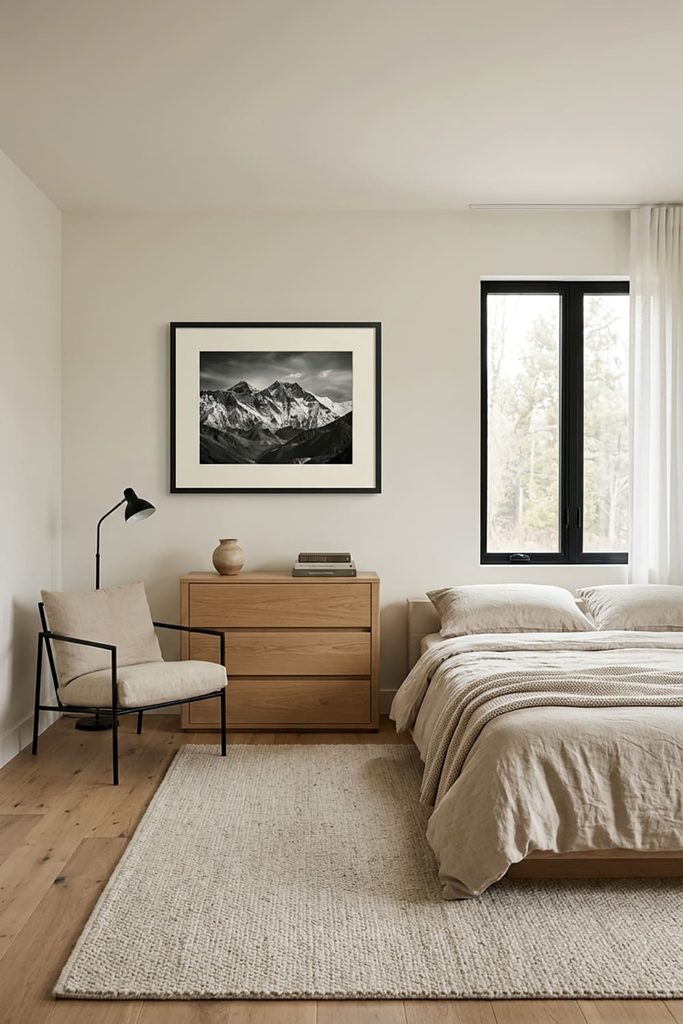
Personal artwork can make a minimalist bedroom feel more individual without creating clutter. Choose one photograph with genuine meaning rather than displaying an entire collection.
It could be a landscape from a memorable trip, an architectural photograph you took yourself, a favorite outdoor scene, or another image connected to an important experience.
Print it in black and white or muted tones if you want it to blend naturally with the room. Use a simple frame with generous matting and place it where it can be appreciated without becoming the only feature in the bedroom.
The goal is to make the room feel personal while preserving the clean visual structure that makes minimalist design appealing.
How to Choose the Right Wall Art for a Minimalist Bedroom
Start with the room rather than the artwork. Look at the colors already present in the walls, bedding, curtains, flooring, and furniture. Then choose artwork that connects with those tones instead of introducing several unrelated colors.
Scale is equally important. A very small piece can disappear above a large bed, while an oversized piece can overwhelm a narrow wall. For a minimalist room, it is usually better to choose fewer pieces with stronger proportions than many small decorations.
Pay attention to the frame as well. Black frames create definition, natural wood adds warmth, and light frames can blend into pale walls. Keeping frame finishes consistent can make several pieces feel like one composition.
How to Keep Minimalist Bedroom Wall Art From Looking Empty
Minimalism should not mean leaving every wall completely blank. Instead, give each artwork enough surrounding space to remain visually important.
If you choose one large piece above the bed, let it be the focal point. Avoid immediately adding several unrelated objects around it simply because the wall still looks empty.
You can create richness through scale, texture, framing, and subtle color instead of quantity. A textured canvas, natural wood frame, soft bedding, and carefully chosen lighting can provide plenty of visual depth without requiring a gallery wall.
Where to Place Wall Art in a Man’s Minimalist Bedroom
The wall above the bed is the most obvious location, but it is not the only option. A large piece can work above a dresser, opposite the bed, beside a reading chair, or on a wall visible from the doorway.
Before hanging anything, consider the furniture underneath it. Artwork should look connected to the furniture rather than appearing to float independently on a large wall.
For multiple pieces, establish the arrangement on the floor first. Measure the spacing and overall width before putting holes in the wall. This simple step can prevent a collection from becoming uneven or too crowded.
How to Make the Artwork Feel Personal
A minimalist bedroom does not have to look impersonal. Personal meaning can come from the subject rather than the number of objects.
Choose artwork connected to places you have visited, landscapes you enjoy, architecture that interests you, photography you have taken, or a simple visual theme that reflects your personality.
The most effective personal displays often use restraint. One meaningful photograph can say more about the person living in the room than ten generic decorative prints.
Final Thoughts
The strongest bedroom wall art ideas for a man’s minimalist bedroom are based on restraint rather than decoration for its own sake. A large photograph, quiet abstract painting, architectural drawing, textured canvas, or meaningful personal image can give the room character while preserving its clean appearance.
Choose one clear direction, keep the color palette controlled, and give the artwork enough empty space to stand on its own. When the artwork, furniture, lighting, and bedding work together, the bedroom can feel sophisticated and personal without becoming visually crowded.


