
15 Work Outfits for Plus Size Women Over 50 in the Workplace
Building a professional wardrobe that feels comfortable, polished, and genuinely flattering can become much easier when you focus on fit, proportion, and versatility rather than chasing every fashion trend. For plus-size women over 50, the best work outfits are often the ones that allow easy movement while still creating a confident, put-together appearance.
Workplace dress codes vary widely. Some offices expect traditional business attire, while others are more relaxed and follow a business-casual approach. Public-facing roles, corporate environments, schools, healthcare settings, and creative workplaces can all have different expectations.
The goal is not to dress according to a particular age. Instead, choose clothing that fits properly, feels comfortable throughout the workday, and reflects your personality while remaining appropriate for your workplace.
These 15 work outfits for plus-size women over 50 focus on adaptable pieces such as tailored trousers, blazers, knit tops, midi dresses, skirts, cardigans, and comfortable professional footwear.
1. Navy Trousers With an Ivory Blouse
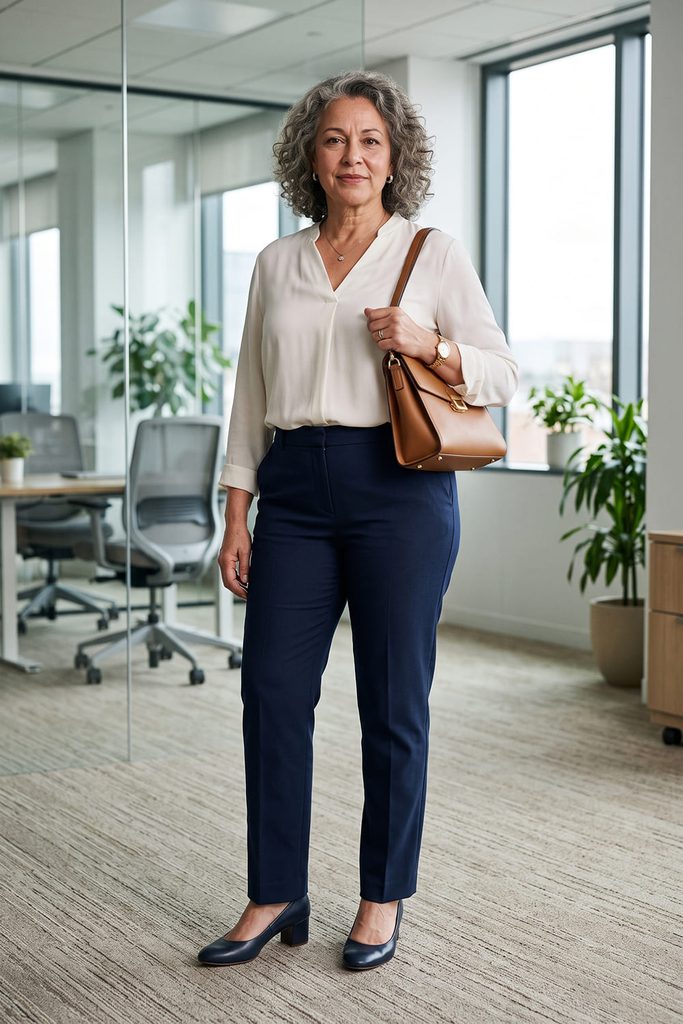
Navy trousers are one of the most versatile pieces in a professional wardrobe. Choose a straight-leg or gently wide-leg silhouette with a comfortable waistband and enough room through the hips and thighs.
Pair the trousers with an ivory blouse for a clean contrast. A blouse with a V-neckline, soft collar, or simple open neckline can create an elongated visual line without requiring a tight fit.
Add loafers or low block heels and a structured handbag. For a more formal workplace, layer a navy or charcoal blazer over the blouse. For a business-casual office, the blouse and trousers may work perfectly on their own.
This outfit can also be repeated with different tops, making it a practical foundation for a smaller wardrobe.
2. Black Trousers With a Jewel-Tone Blouse
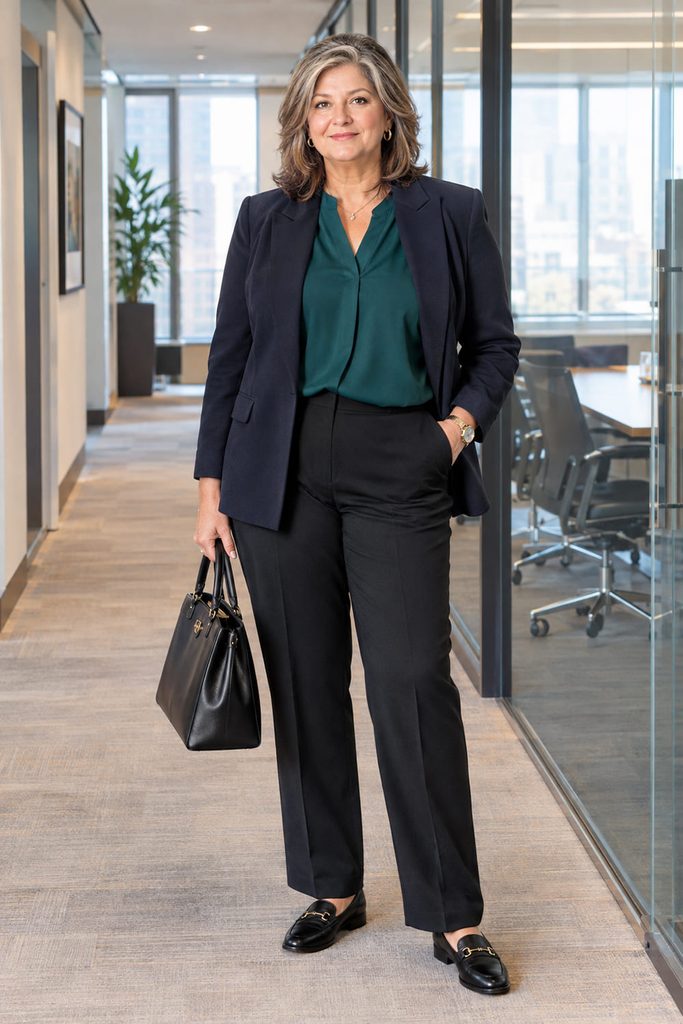
Black trousers provide a dependable base for professional outfits, while a jewel-tone blouse adds color. Try burgundy, emerald, deep teal, sapphire, or plum. These richer shades can bring personality to an otherwise neutral outfit without appearing overly casual.
Choose a blouse with enough room for comfortable movement rather than sizing down for a closer fit. Complete the outfit with black loafers, flats, or low heels. If you have an important presentation or meeting, add a structured blazer in black, charcoal, or navy. The result is polished without requiring complicated styling.
3. A Navy Midi Dress With a Longline Blazer
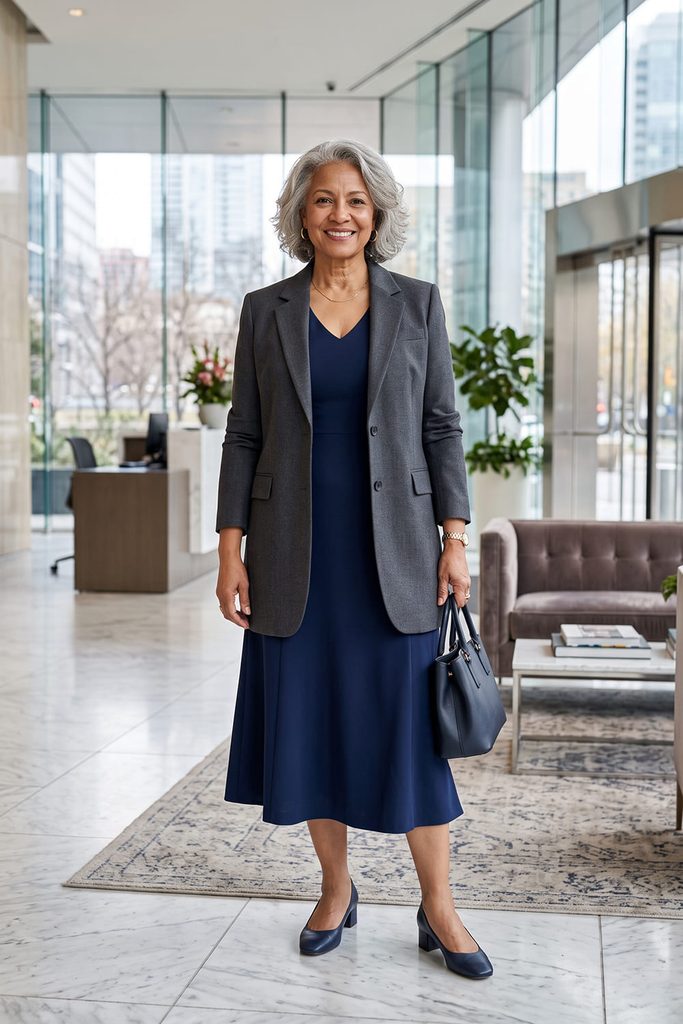
A midi dress can simplify work dressing because it creates an entire outfit with one piece. Choose a dress with a comfortable silhouette that skims rather than clings. A simple V-neck, scoop neckline, or modest wrap-inspired design can create a flattering shape while remaining professional.
Add a longline blazer in gray, camel, navy, or black. Low block heels or refined flats can complete the outfit. This combination is particularly useful on busy workdays because it requires very little coordination.
You can change the appearance by switching the blazer, shoes, or accessories.
4. Wide-Leg Trousers With a Fitted Knit Top
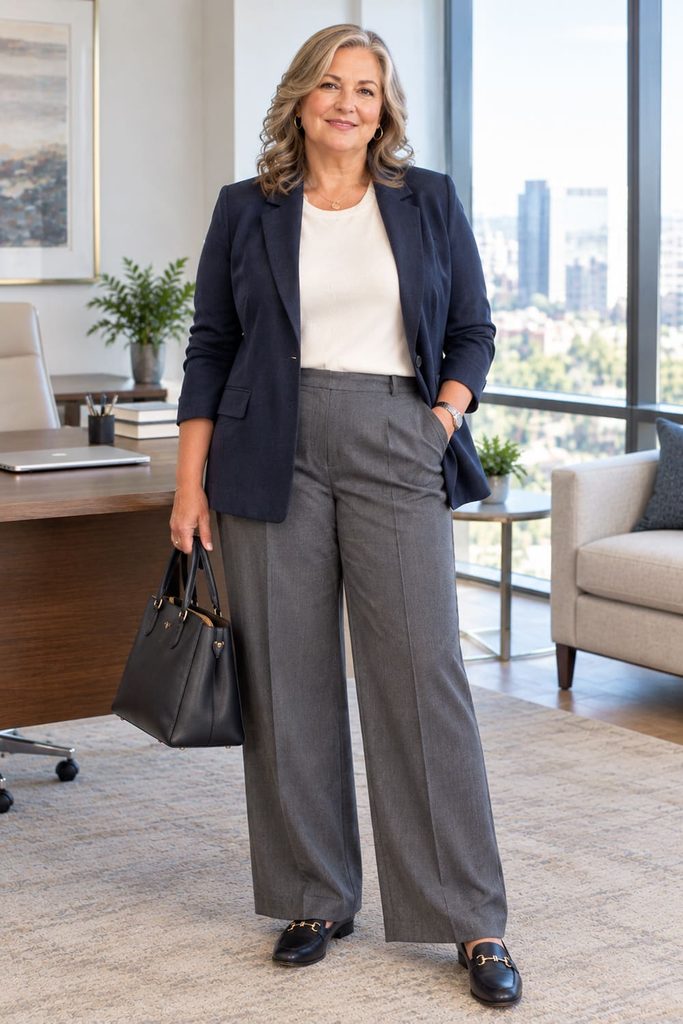
Wide-leg trousers can provide comfortable movement while creating a polished silhouette. Choose trousers that fall smoothly from the hip rather than adding excessive volume. Pair them with a simple knit top that has enough structure to balance the wider leg.
A tucked or partially tucked top can define the waist if that feels comfortable, but it is not essential. Add a short or medium-length blazer if the workplace is more formal. Loafers, low heels, or sleek flats can finish the outfit.
The combination works especially well for women who prefer trousers that do not feel restrictive during long office days.
5. Gray Trousers With a Soft Blue Blouse
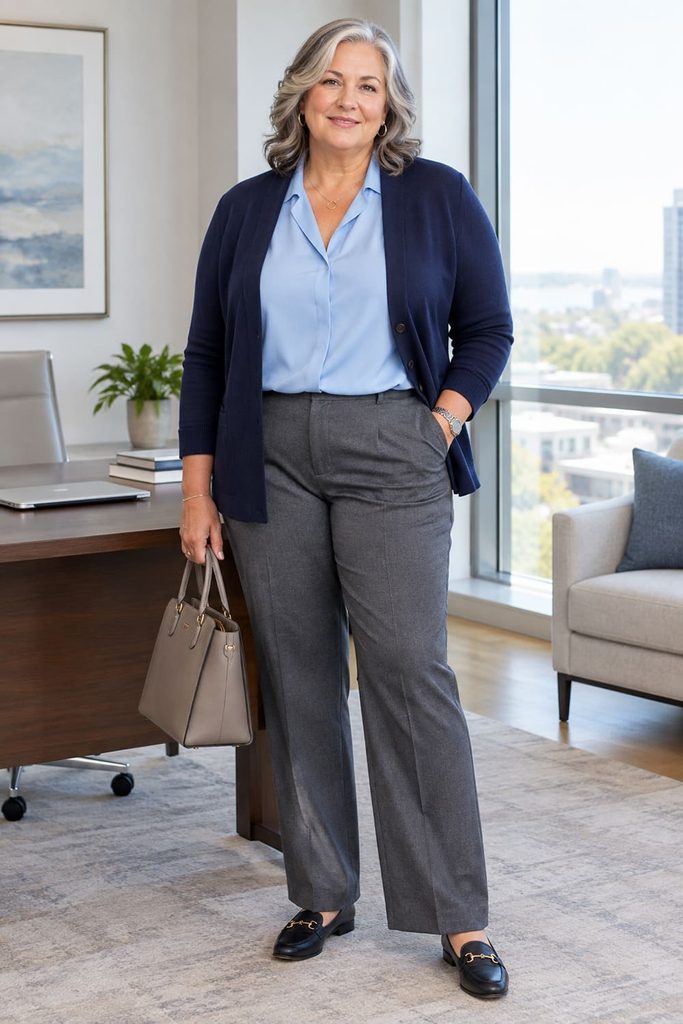
Gray and blue create an understated professional combination that works in many office environments. Choose medium or charcoal gray trousers and pair them with a pale or medium blue blouse.
A blouse with subtle draping can provide movement without adding excessive volume. Add a navy cardigan or blazer when you need an additional layer. Black, navy, or taupe shoes can all work with the outfit.
This is an excellent everyday option because it looks polished while remaining softer than an all-black ensemble.
6. A Structured Cardigan With Straight-Leg Trousers
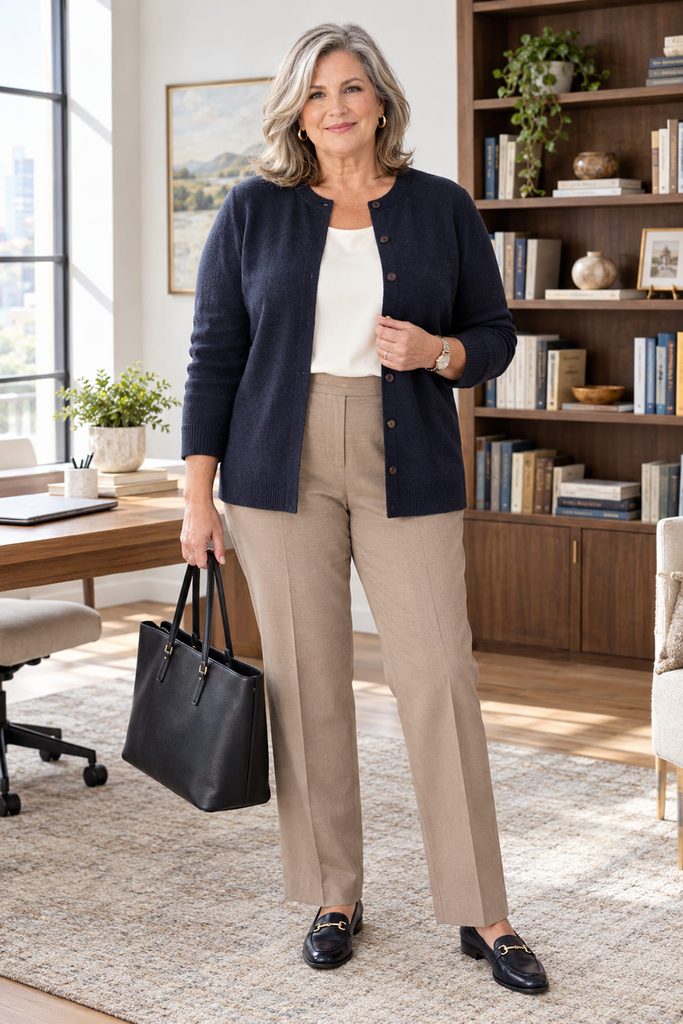
A structured cardigan can provide the comfort of knitwear while looking more polished than a loose sweater. Choose a cardigan with clean edges and a relatively streamlined shape.
Pair it with straight-leg trousers in navy, charcoal, brown, or black. Wear a simple shell or blouse underneath so the cardigan can be removed if the office becomes warm.
Add a belt if you want to create more definition, or leave the cardigan open for a longer vertical line. This outfit is particularly useful for business-casual workplaces.
7. A Wrap-Style Midi Dress With Low Heels
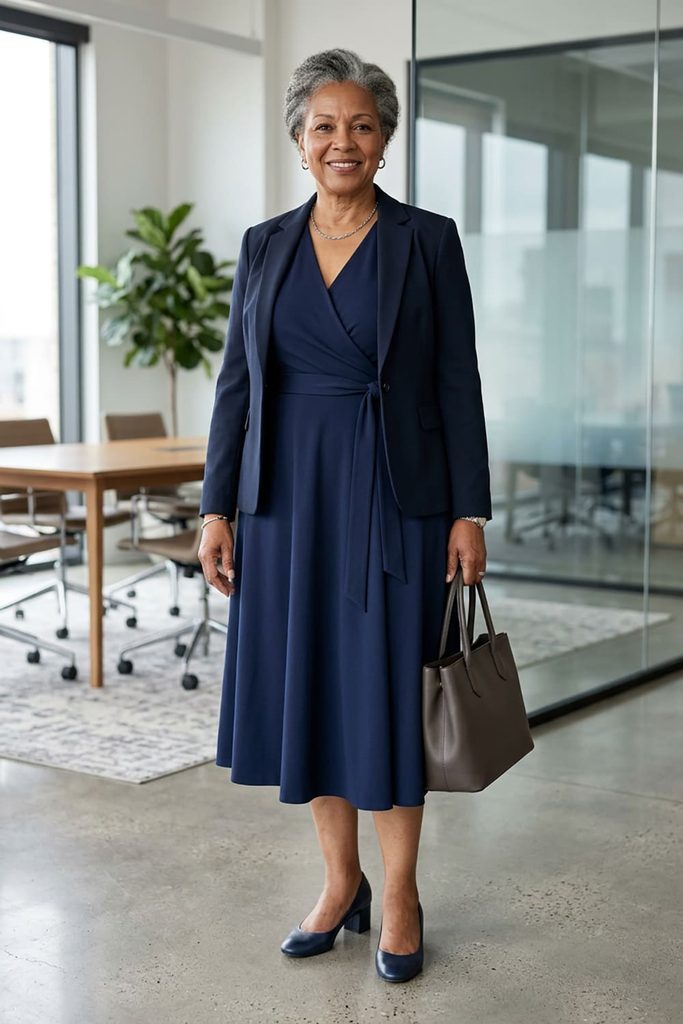
A wrap-style or wrap-inspired midi dress can create a polished silhouette while remaining comfortable. Choose a design that stays securely closed and has a modest neckline appropriate for your workplace.
A solid color such as navy, burgundy, forest green, charcoal, or deep blue makes the dress easy to accessorize. Add low block heels or polished flats.
A lightweight blazer can make the outfit more formal when needed. This is a useful choice for meetings, presentations, office celebrations, or days when you want something more feminine than a trouser outfit.
8. Brown Trousers With a Cream Knit Top
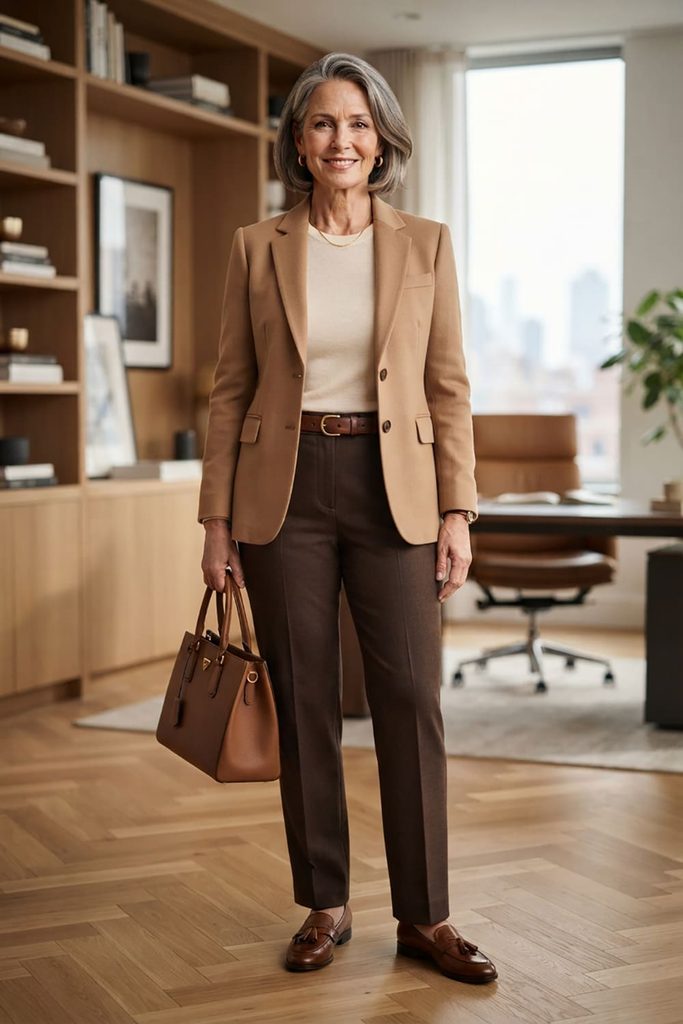
Brown can be an excellent alternative to black or navy. Choose dark chocolate, espresso, or medium brown trousers and pair them with a cream knit top. Add a brown belt and matching loafers for a coordinated appearance.
A camel, navy, or dark brown blazer can provide another layer. The warm neutral combination works especially well in autumn and winter, but lighter brown trousers can also work during warmer months.
This outfit is comfortable enough for everyday work while still looking intentional.
9. A Monochromatic Charcoal Outfit
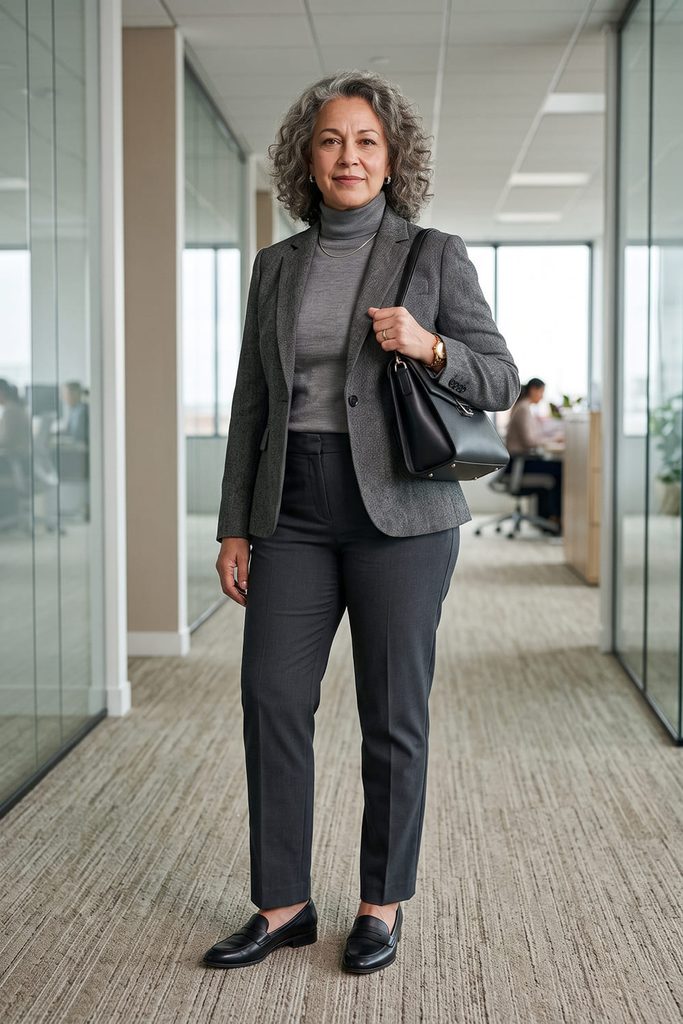
A monochromatic outfit can create a clean and sophisticated appearance without requiring identical shades. Combine charcoal trousers with a medium-gray or dark-gray blouse and add a slightly different gray blazer or cardigan.
The repeated color family creates visual continuity. Choose different textures to keep the outfit interesting. For example, pair smooth trousers with a fine-knit top and a softly textured blazer.
Black shoes and a structured bag can complete the look. This is particularly useful when you want a streamlined outfit without relying on strong colors or patterns.
10. A Midi Skirt With a Tailored Blazer
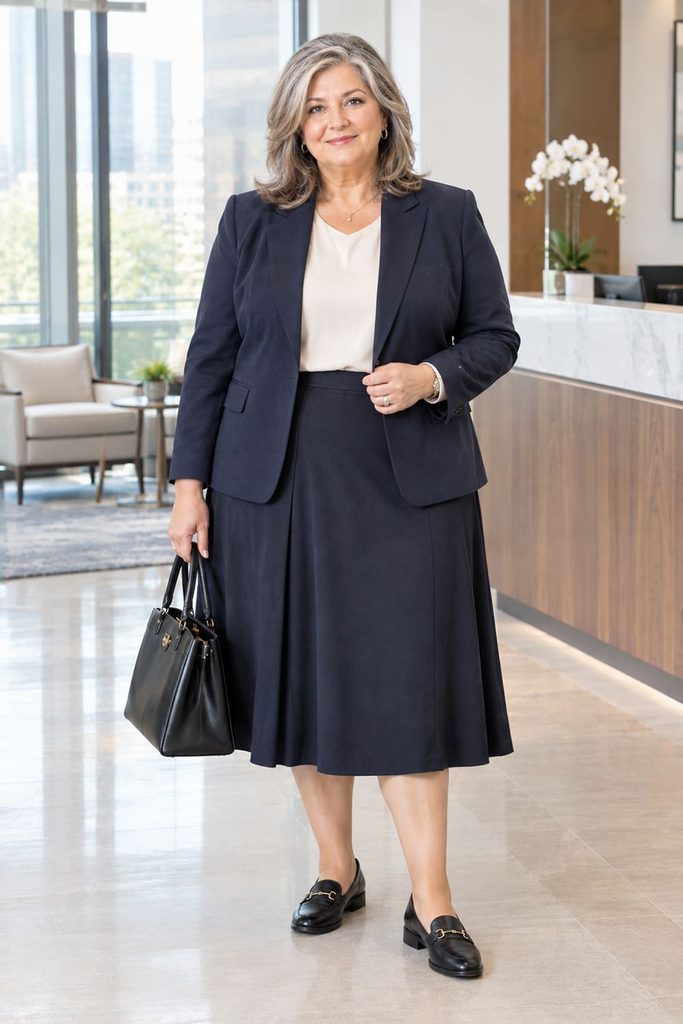
A midi skirt can provide a professional alternative to trousers. Choose an A-line, straight, or softly pleated silhouette depending on your preference and workplace.
Pair it with a simple blouse or fine-knit top and add a tailored blazer. Keep the top relatively streamlined if the skirt has volume. Conversely, a straighter skirt can work well with a softly draped blouse.
Low block heels, flats, or polished loafers can complete the outfit. The combination can be adapted for formal offices or relaxed workplaces simply by changing the blazer and footwear.
11. Dark Jeans With a Polished Blazer
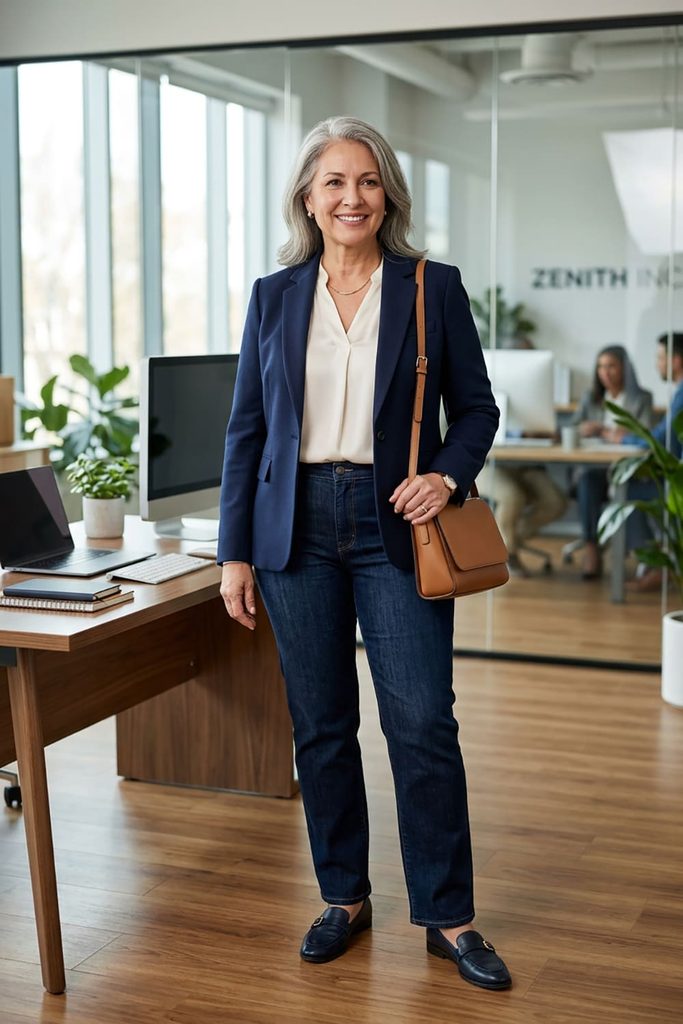
Some workplaces allow dark, clean, non-distressed jeans as part of business-casual dressing. If your workplace permits them, choose a dark wash with a simple straight or gently wide-leg silhouette.
Pair the jeans with an ivory blouse and a structured blazer. Avoid excessive fading, rips, embellishments, or overly casual details. Complete the outfit with loafers or clean, polished flats.
This can be an excellent Friday or relaxed-office outfit while still maintaining a professional appearance. Always follow your employer’s specific dress code before wearing jeans to work.
12. A Longline Vest Over Trousers
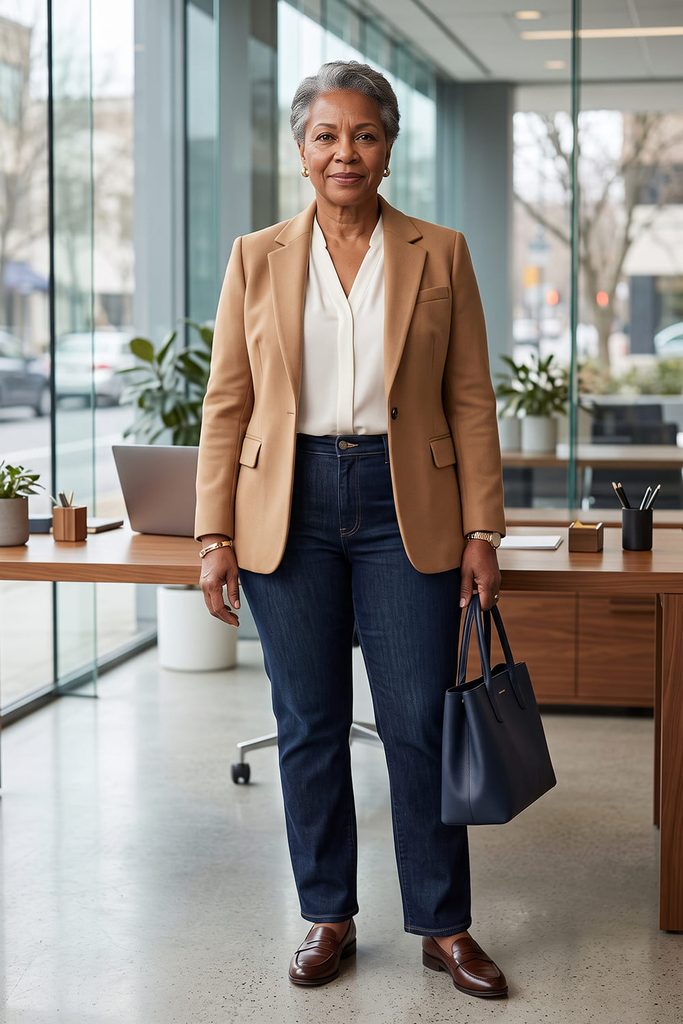
A longline vest can create an elegant layered look without the weight of a traditional blazer.
Pair a tailored vest with straight-leg trousers and a simple blouse or knit top.
Choose complementary colors such as:
- Black and ivory
- Navy and cream
- Camel and white
- Charcoal and pale blue
- Brown and beige
The longer layer creates a continuous visual line while providing structure.
This outfit works especially well during transitional seasons when a full blazer may feel too heavy.
13. A Printed Blouse With Solid Trousers
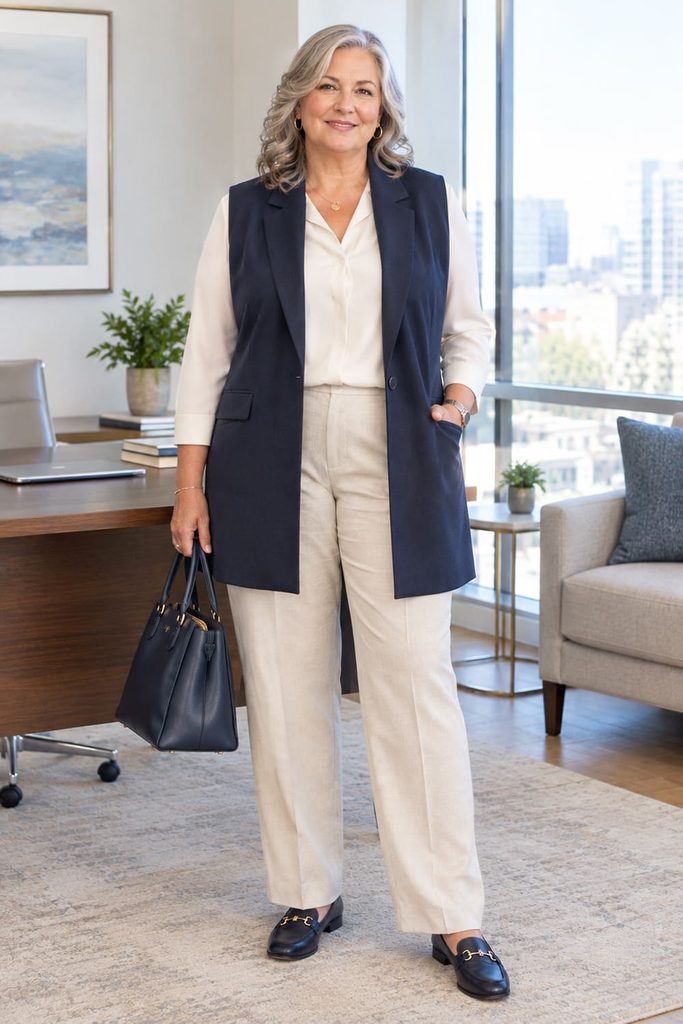
A tasteful print can bring personality into a professional wardrobe. Choose a blouse with a restrained floral, geometric, abstract, or striped pattern.
Pair it with solid trousers that pick up one of the colors in the blouse. If the blouse is visually strong, keep the rest of the outfit simple.
For example, a navy-and-cream patterned blouse could work with navy trousers and neutral shoes. This approach allows you to wear prints without making the entire outfit visually busy.
14. A Matching Trouser Suit With a Simple Shell
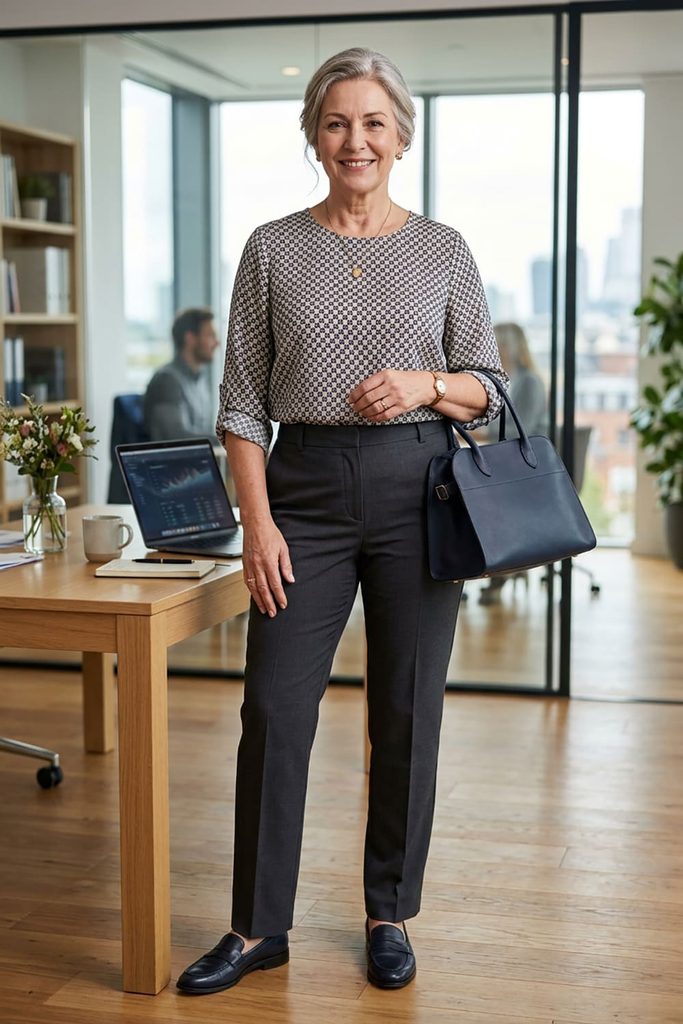
For a formal workplace, a coordinated trouser suit remains one of the easiest ways to create a polished appearance. Choose a suit in navy, charcoal, black, or another sophisticated neutral.
Under the blazer, wear a simple shell or lightweight blouse rather than a bulky top. The key is finding a suit with enough room for comfortable movement. The jacket should sit properly across the shoulders and bust without pulling, while the trousers should sit comfortably at the waist.
Add simple jewelry, a structured handbag, and comfortable professional shoes. The individual pieces can later be worn separately, giving you multiple outfits from the same investment.
15. A Neutral Jumpsuit With a Tailored Jacket
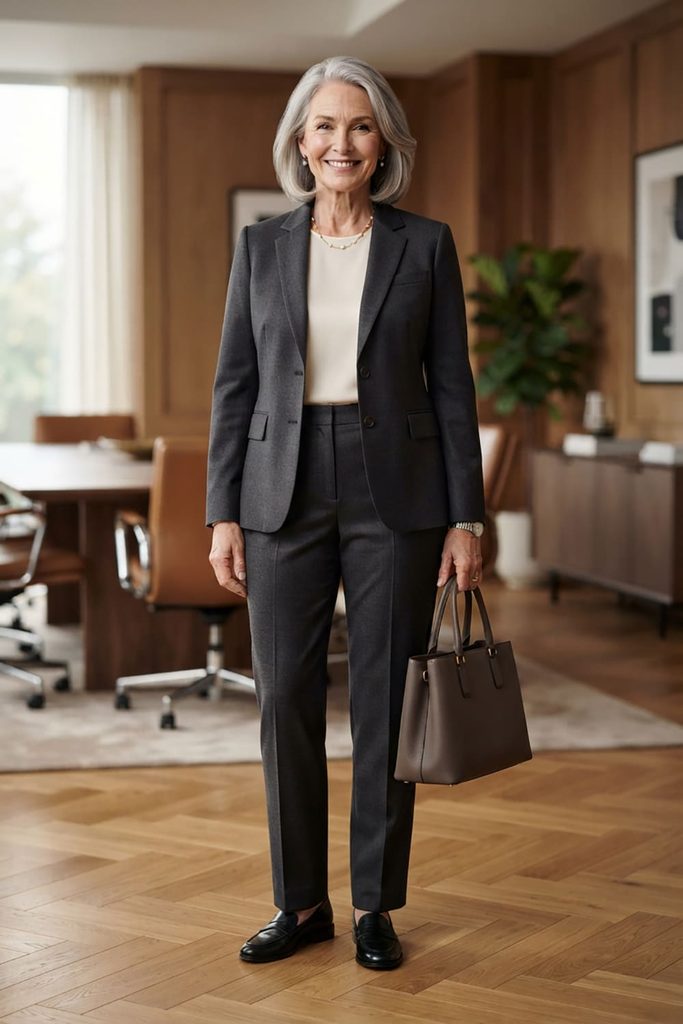
A professional jumpsuit can provide a modern alternative to dresses and separates. Choose a design with a relatively simple neckline, full or ankle-length trousers, and a fabric that maintains its shape.
Add a tailored blazer in a complementary color. For example, a black jumpsuit can work with a camel blazer, while a navy jumpsuit can pair with gray or cream.
Choose footwear that complements the trouser length and allows comfortable movement. This option is especially suitable for workplaces with a contemporary business-casual dress code.
How to Choose the Right Work Clothes
The most important consideration is fit.
A garment does not need to be tight to look polished. Clothing that skims the body and allows comfortable movement can often create a cleaner appearance than pieces that are either extremely oversized or too restrictive.
Pay particular attention to shoulder seams, waistbands, sleeve length, trouser length, and the fit across the bust and hips.
If a garment fits well in most areas but needs a small alteration, tailoring can make a significant difference.
Build Outfits Around Three Main Colors
A coordinated wardrobe becomes easier when you have a small group of colors that work together.
For example, you could build around:
- Navy
- Ivory
- Camel
Or:
- Charcoal
- Black
- Burgundy
Another option might be:
- Brown
- Cream
- Olive
This does not mean every outfit has to use only these colors. Instead, having a consistent foundation makes it easier to mix and match individual pieces.
Choosing Patterns for the Workplace
Patterns can make professional clothing more interesting, but they do not need to be large or dramatic.
Small florals, narrow stripes, subtle checks, understated geometric prints, and muted abstract patterns can work well.
If you choose a strong pattern, keep the rest of the outfit relatively simple.
For example, pair a patterned blouse with solid trousers rather than adding another patterned layer.
This creates a balanced outfit that feels intentional rather than overly busy.
Comfortable Footwear for the Workday
Comfortable footwear is particularly important if your job requires standing, walking, commuting, or moving between meetings.
Useful options include:
- Loafers
- Low block heels
- Cushioned flats
- Low-profile ankle boots
- Polished slip-on shoes
The right choice depends on your workplace and personal comfort.
A shoe can look professional without having a high heel. A well-designed low heel or polished flat can work beautifully with trousers, skirts, and dresses.
How to Layer Without Adding Bulk
Layering is useful in offices where temperatures change throughout the day.
Instead of wearing several thick layers, choose lightweight pieces.
A simple shell underneath a blazer, a fine-knit top underneath a cardigan, or a lightweight blouse beneath a structured jacket can provide flexibility.
Longer layers can also create a clean silhouette without requiring oversized clothing.
If you are wearing wide-leg trousers, a relatively streamlined top can help maintain balance.
How to Look Professional Without Dressing Too Formally
Not every workplace requires a suit every day.
For business-casual environments, combine one structured item with softer pieces.
For example, wear tailored trousers with a knit top, or dark jeans with a blazer if jeans are permitted.
A polished handbag, simple jewelry, neat footwear, and well-maintained clothing can make even a relatively simple outfit look professional.
The goal is to match your workplace rather than automatically dressing more formally than everyone around you.
Practical Wardrobe Staples
A versatile workplace wardrobe can be built around a relatively small number of pieces.
Consider starting with:
- Two pairs of tailored trousers
- One pair of wide-leg trousers
- One pair of dark trousers
- One blazer
- One cardigan
- Two neutral blouses
- Two colorful or patterned blouses
- One midi dress
- One midi skirt
- One pair of comfortable loafers
- One pair of flats
- One pair of low heels
- One structured work bag
These pieces can create many combinations without requiring a huge closet.
Final Thoughts
The best work outfits for plus-size women over 50 are not about hiding the body or following strict fashion rules. They are about finding clothing that fits comfortably, creates a balanced silhouette, and gives you confidence throughout the working day.
Tailored trousers, midi dresses, structured jackets, soft knitwear, polished blouses, and comfortable footwear can provide a strong foundation. From there, colors and accessories can make each outfit feel personal.
Pay attention to the expectations of your workplace, but do not sacrifice comfort simply to look professional. Proper fit, practical fabrics, and thoughtful proportions can make a greater difference than expensive labels or constantly changing trends.
Whether you prefer classic neutrals, rich colors, modern silhouettes, or simple business-casual combinations, the most successful outfit is one that lets you walk into work feeling comfortable, confident, and completely yourself.


