

15 Modern Brown Living Room Ideas That Feel Warm, Clean, and Current
Brown has quietly become the colour modern interiors reach for when white feels too cold and grey feels too done. The best modern brown living room ideas do not lean on heavy, traditional furniture or dark, closed-in walls. Instead, they treat brown the way a good neutral deserves to be treated: as a warm anchor for clean lines, honest materials and uncluttered layouts. Walnut, cognac leather, chocolate velvet and camel wool all bring depth without visual noise, and they pair beautifully with the sculptural shapes and matte finishes that define contemporary design.
If your current room feels flat, dated or a little too “safe beige,” brown is the upgrade that adds richness without sacrificing the calm, edited feel of a modern space. Below you will find a practical guide to building the look, followed by fifteen specific ideas you can copy one at a time or combine into a full scheme.
How to Build a Modern Brown Living Room That Still Feels Warm
Start with undertone, because not all browns behave the same way in a room. Warm browns — cognac, caramel, chestnut, warm walnut — carry red or golden undertones and glow in south- and west-facing light. Cool browns — taupe, mushroom, greige-brown and some ash walnuts — lean grey and suit bright, north-facing rooms where warm tones can turn orange. Hold fabric and wood samples against your wall at different times of day before committing; a shade that looks perfect at noon can read muddy by evening if its undertone fights your light.
Next, build the palette around brown rather than matching it. The most current combination is a tonal ladder: one deep brown (the sofa or a wall), one mid brown (wood furniture, curtains), and one light warm neutral (cream, ivory, oatmeal) to keep everything breathing. Accents in matte black or brushed brass sharpen the scheme, while a single muted colour — olive, clay or slate — adds life. If you like the softer end of the spectrum, our guide to grey and brown living room ideas with modern decor shows how cool neutrals can balance warmer woods.
Materials do the heavy lifting in a modern brown scheme. Choose flat-front walnut or oak with visible grain, smooth leather that will patina, nubby bouclé and linen for softness, and matte metal or smoked glass wherever you need light to pass through. Shiny, orange-toned woods and glossy finishes are what make brown feel dated, so keep sheens low and textures varied.
Finally, follow the layout rules that keep brown feeling current: float furniture off the walls where space allows, keep silhouettes low and leggy so the floor stays visible, repeat your main brown at least three times around the room so it reads as intentional, and leave genuine empty space. A modern brown room is edited, not filled — every piece should earn its place.
Idea 1: Anchor the Room With a Low-Profile Cognac Leather Sofa
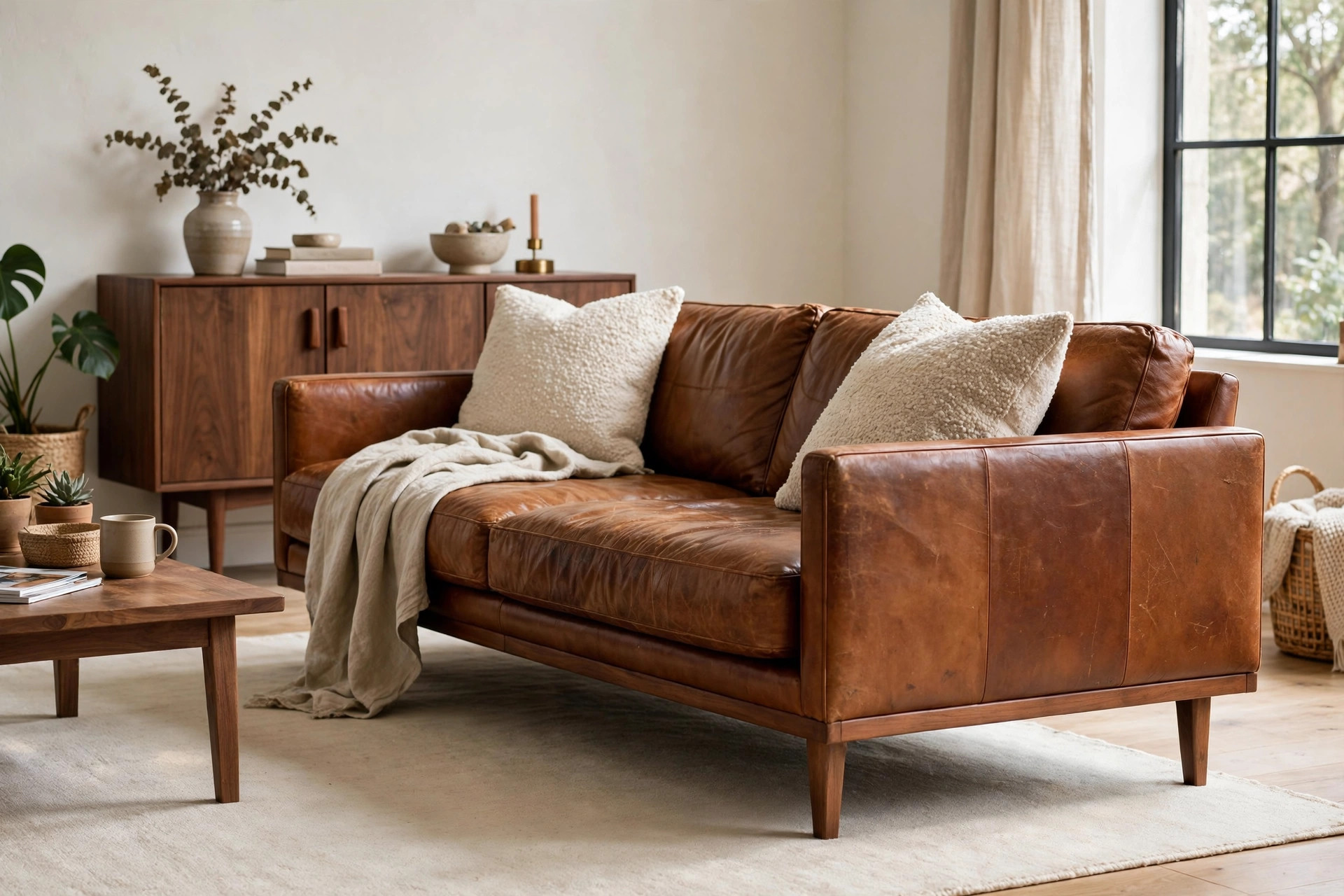
A low, clean-lined sofa in cognac or saddle leather is the single most effective starting point for a modern brown scheme. The warm mid-tone sits happily between dark chocolate and pale camel, so it works with almost any floor or wall colour, and the low back keeps sightlines open, which makes the whole room feel larger and calmer. Look for a track-arm or slim-arm design on short wooden or metal legs rather than a bulky rolled-arm style.
Style it simply: one cream or oatmeal throw draped over a single arm, two cushions in linen or bouclé, and nothing more. Leather develops a natural patina, so small creases and variations in tone are part of the appeal rather than a flaw. If a full leather sofa is beyond reach, a pair of leather sling chairs gives a similar effect — and for deeper tones, see our chocolate brown sofa living room ideas for styling that stays light.
Idea 2: Line the Sofa Wall With Vertical Walnut Slats
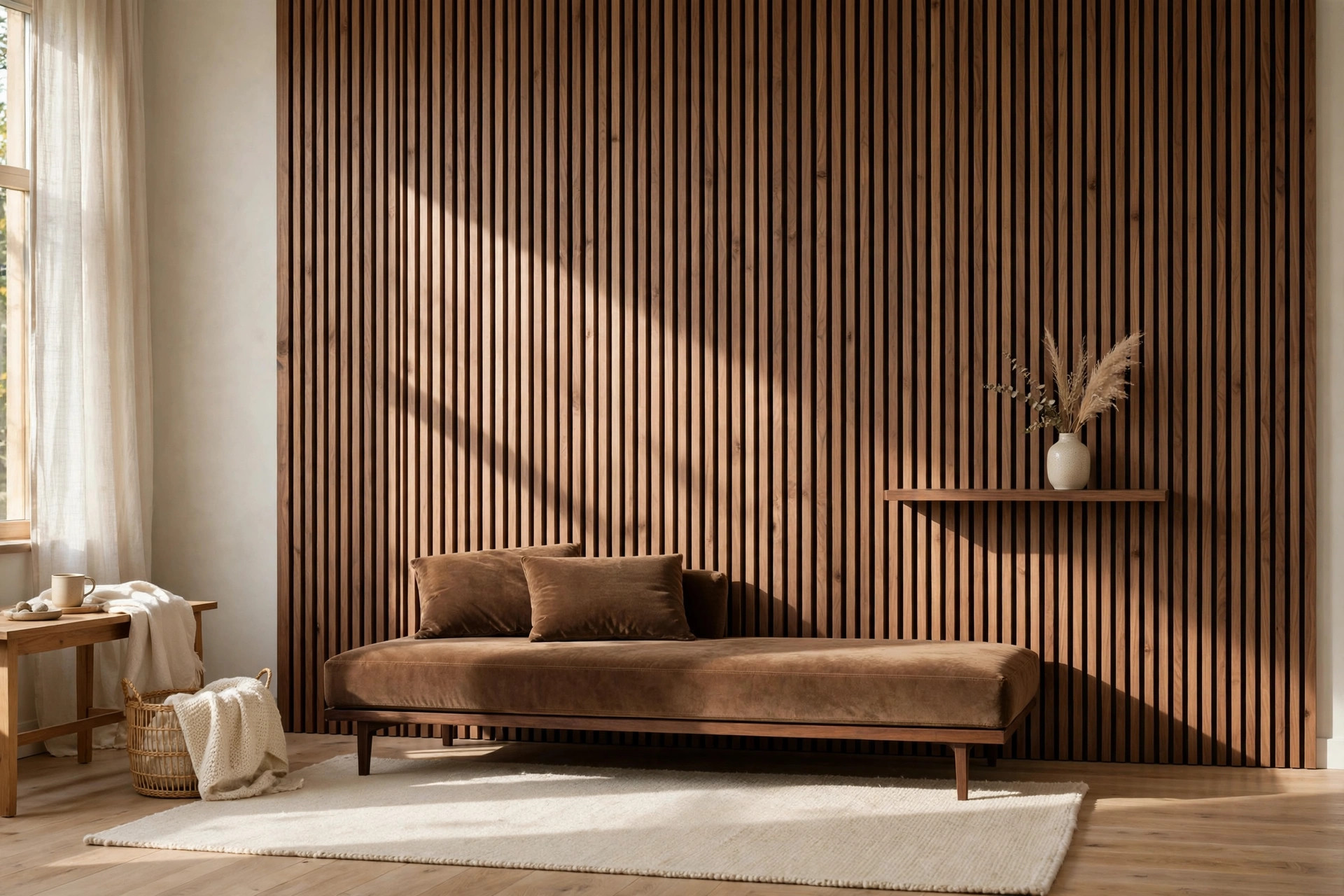
Vertical wood slat panelling turns a plain wall into architecture, and walnut is the natural choice for a brown scheme because its grain already contains the whole tonal ladder from honey to espresso. Run the slats floor to ceiling behind the sofa only — one wall is enough — and let narrow shadow gaps between them create rhythm and depth without any extra decoration.
The slats do practical work too: they visually raise the ceiling, hide an uneven wall, and give a low-profile sofa the strong backdrop it needs. Keep the rest of the wall styling to almost nothing — a single floating shelf or one sculptural object — because the texture is the artwork here. Pre-finished acoustic slat panels make this a weekend project, and a matte oil finish keeps the wood looking modern rather than glossy.
Idea 3: Layer Browns Tonally, From Chocolate Up to Camel
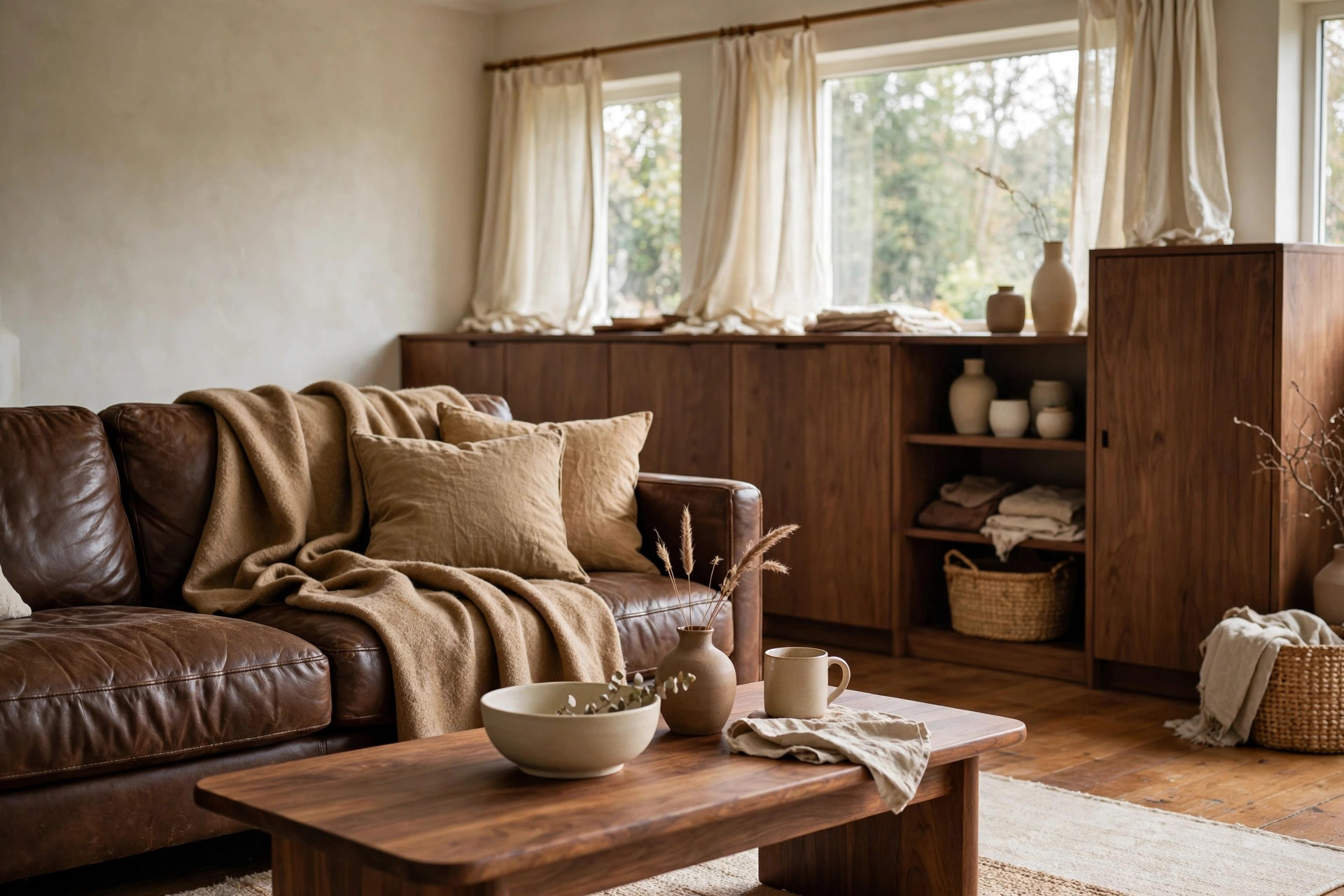
A tonal scheme — several browns of different depths in one room — is the most sophisticated version of the look and the one least likely to date. Start with the darkest note low in the room, usually the sofa in chocolate or espresso, then step up through walnut furniture, camel or tan textiles, and finish with cream at eye level in cushions, curtains and the ceiling. Each layer should be clearly distinct; shades that are almost-but-not-quite the same just look like a matching mistake.
Texture is what stops a tonal room feeling flat. Mix smooth leather, rough linen, nubby wool and matte ceramic so the eye reads variety even where the colour barely changes. Our brown and cream living room ideas explore the lightest version of this ladder if your room needs maximum brightness.
Idea 4: Contrast Brown With Cream Bouclé Accent Chairs
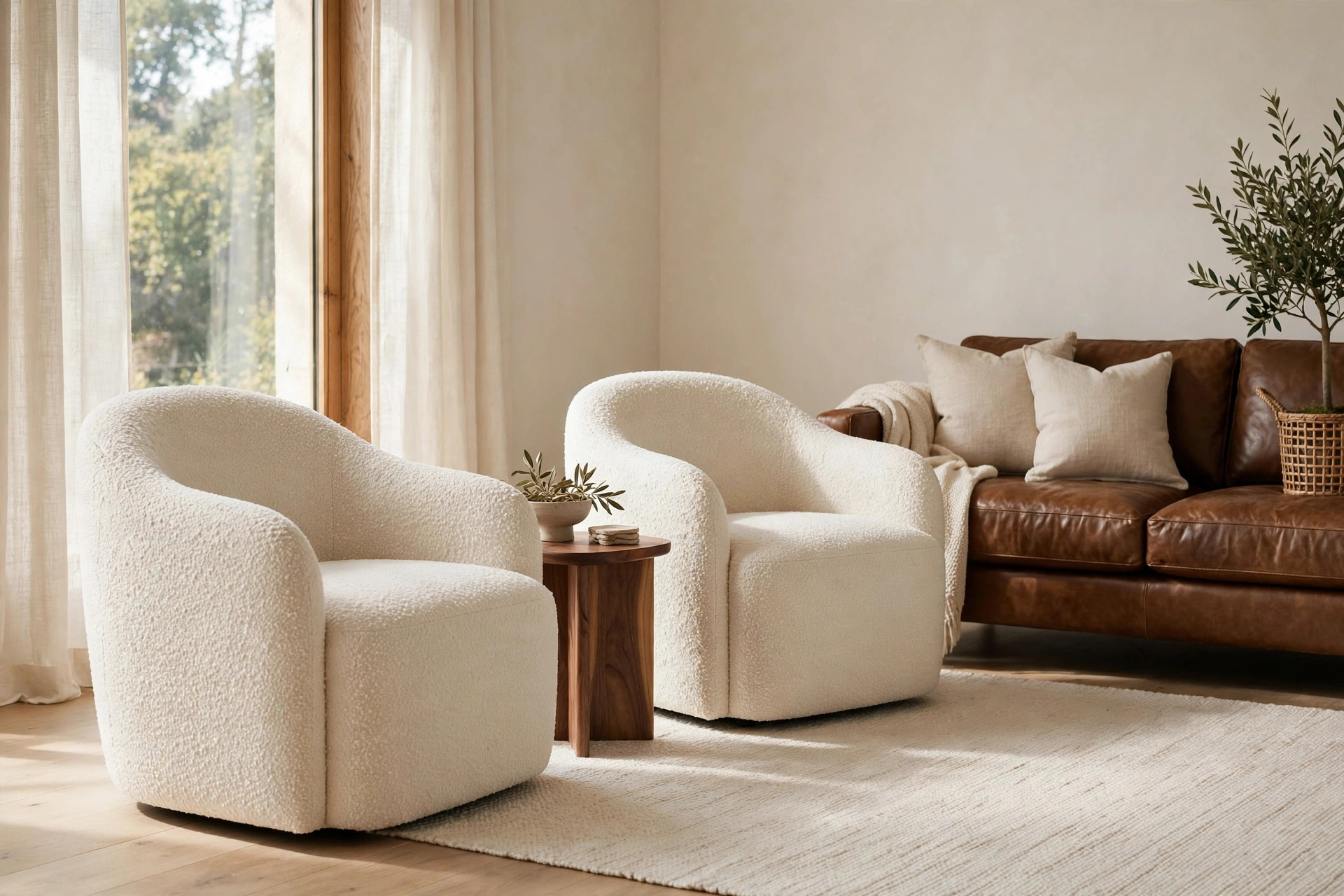
Every brown room needs one pale, tactile counterpoint, and the cream bouclé accent chair has become the modern classic. Its rounded, sculptural shape softens the straight lines of a leather sofa, while the looped wool texture catches light in a way that flat upholstery cannot. Place two chairs angled toward the sofa to form a conversation grouping, or use a single chair to fill an awkward corner with a floor lamp behind it.
Choose chairs with a low, wide seat and minimal visible frame; swivel bases are practical in open-plan rooms. Keep the bouclé cream or ivory rather than bright white, which can look stark against warm browns, and protect the fabric with a textured throw over the seat if the chair will get daily use from children or pets.
Idea 5: Wash the Walls in a Warm Limewash or Soft Plaster Brown
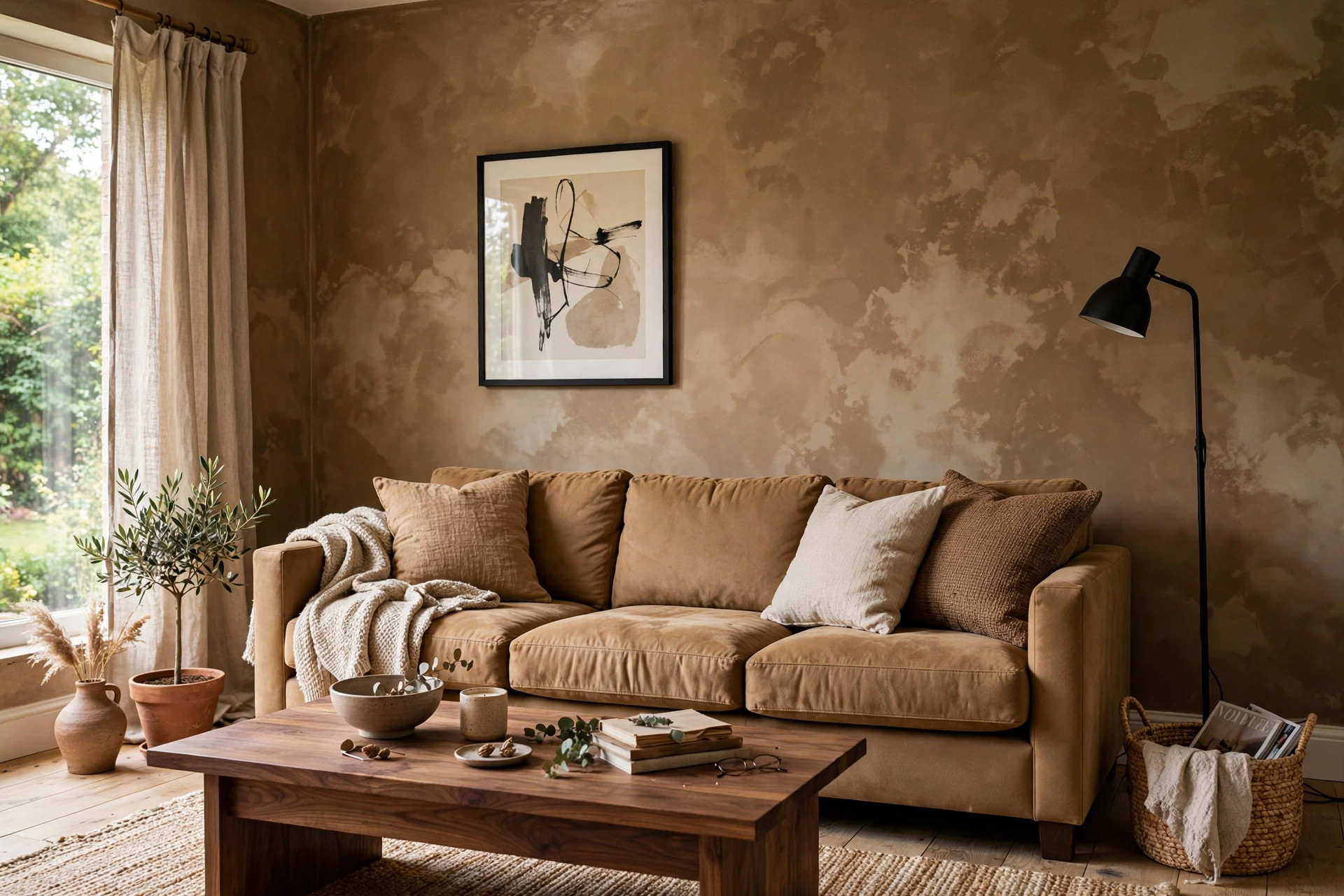
Flat paint can make a brown room feel boxy, but limewash and plaster-effect finishes add the subtle movement that modern schemes rely on. A mid-tone warm brown limewash — think wet sand or café au lait — gives walls a cloudy, hand-worked depth that changes gently through the day, turning the wall itself into a design feature behind simple furniture.
Apply it to all four walls for a cocooning effect in a larger room, or to the sofa wall alone in a small space, keeping the other walls warm white. Because limewash is matte and slightly chalky, it pairs perfectly with low-sheen walnut and leather. Test a large sample area first: limewash dries noticeably lighter than it looks in the tin, and its patchiness is part of the charm — embrace variation rather than chasing a perfectly even coat.
Idea 6: Sharpen the Palette With Matte Black Accents
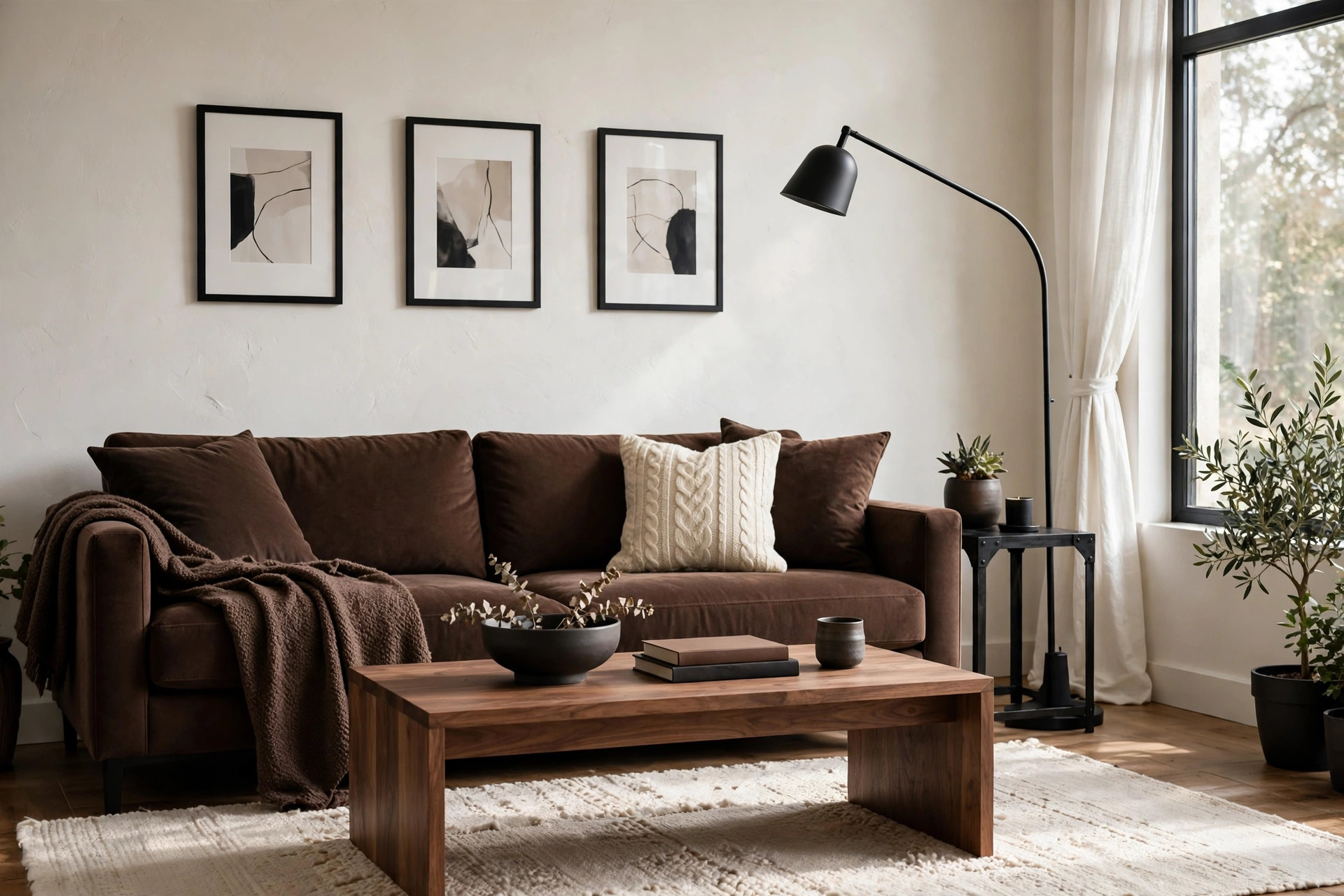
Matte black is the punctuation mark a brown room needs. A black metal floor lamp, slim black picture frames, a blackened-steel side table or black window frames add the graphic contrast that stops warm tones from blurring into one soft mass. The rule is repetition in small doses: three or four black touches spread around the room read as a deliberate design decision.
Keep the finish matte or satin, never glossy, and let black stay an accent — once it covers large surfaces, the room tips from modern warmth toward stark minimalism. This is the same balancing act explored in our black and brown living room ideas, where black is used to frame and define rather than dominate.
Idea 7: Choose a Curved Sofa in Chocolate Velvet
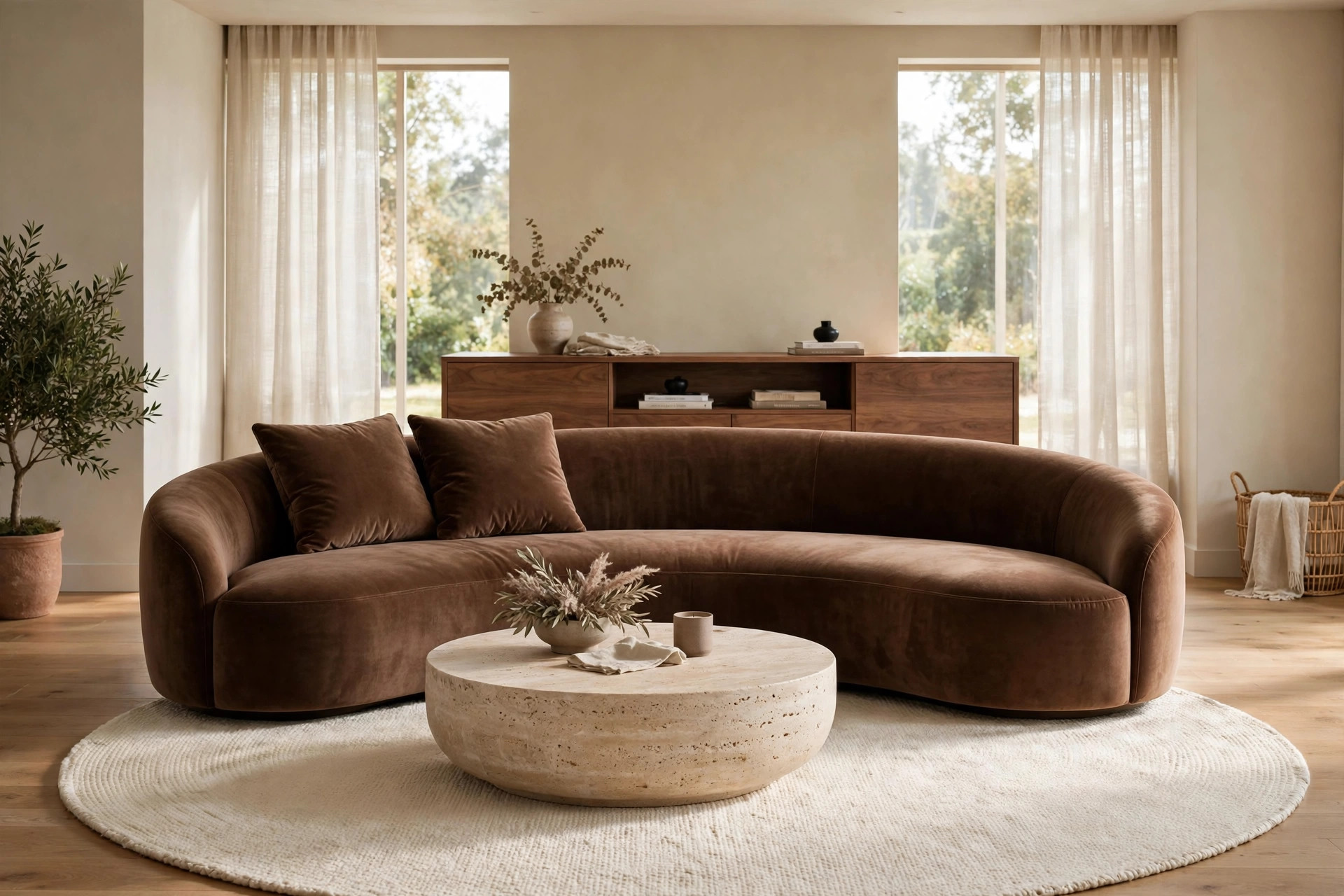
Curves are the defining silhouette of current furniture design, and a gently curved sofa in deep chocolate velvet is the most dramatic way to bring them into a brown scheme. The arc softens a rectangular room, improves conversation flow because the ends turn people toward each other, and creates a natural walkway behind the sofa back. Velvet’s pile catches light differently across the curve, so the colour shifts between espresso and milk chocolate as you move around it.
Balance the curve with a round or oval coffee table and a circular rug, and keep the surrounding pieces angular — a straight media console or slatted wall — so the room feels composed rather than themed. A curved sofa needs breathing room on all sides; float it rather than pushing it into a corner.
Idea 8: Keep Sightlines Open With a Glass and Stone Coffee Table
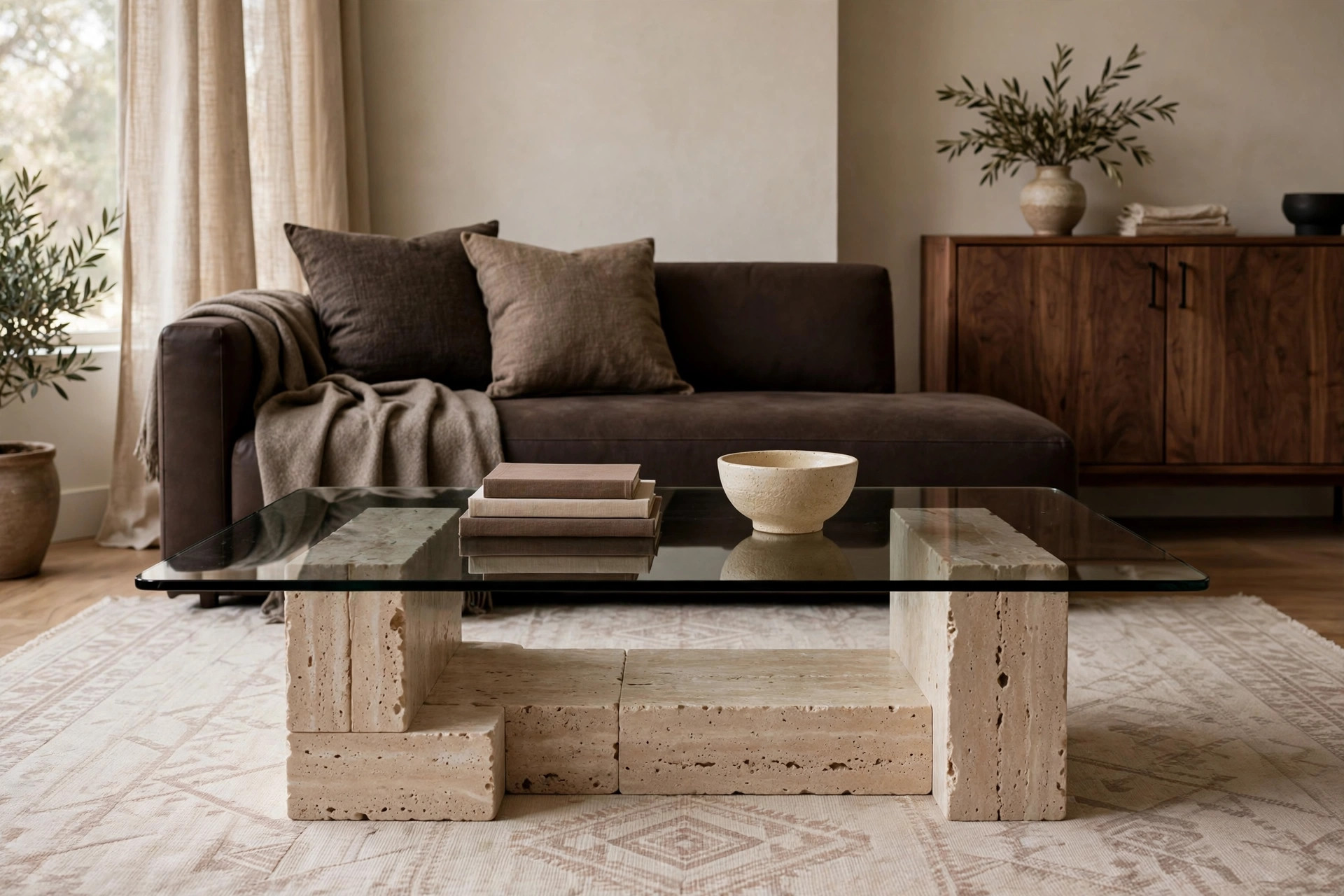
A heavy wooden coffee table in the middle of a brown room can double the visual weight of the scheme. Swapping it for smoked glass, clear glass or pale travertine keeps the centre of the room light and lets the rug show through, which matters when your anchor furniture is dark. Smoked glass is especially sympathetic: its warm grey-brown tint echoes the palette while staying transparent.
Style the surface with restraint — a small stack of books, one ceramic bowl, perhaps a low stone tray — and leave at least half of it empty. If glass feels impractical with young children, an open-frame metal-and-wood design gives the same see-through effect. The goal is always the same: the middle of the seating group should feel airy, not parked on.
Idea 9: Add Sculptural Brass Lighting
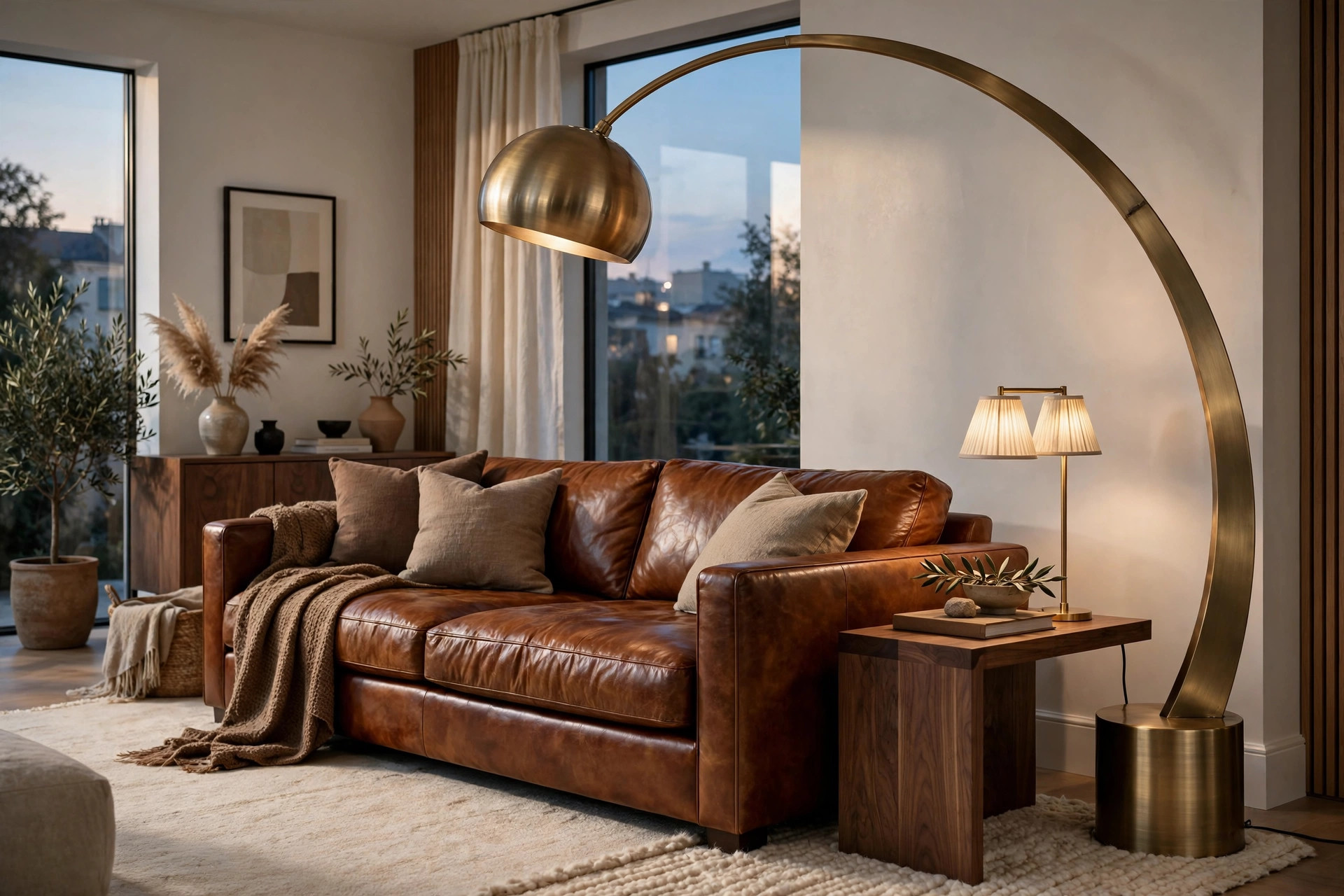
In a modern brown room, lighting fixtures double as sculpture. An oversized arc floor lamp in brushed brass, leaning over the sofa from behind, gives you reading light exactly where it is needed while drawing a bold line through the space. Brass is the natural metal partner for brown: its warmth echoes cognac and walnut tones without matching them exactly.
Choose one hero fixture and let everything else stay quiet — a slim table lamp here, a picture light there. Stick to a maximum of two metal finishes in the room, ideally brass plus matte black, and keep bulbs warm so the light flatters wood grain and leather. Lighting placed at different heights — floor, table, wall — is what gives brown rooms their evening glow instead of a flat overhead wash.
Idea 10: Hang One Oversized Piece of Abstract Art
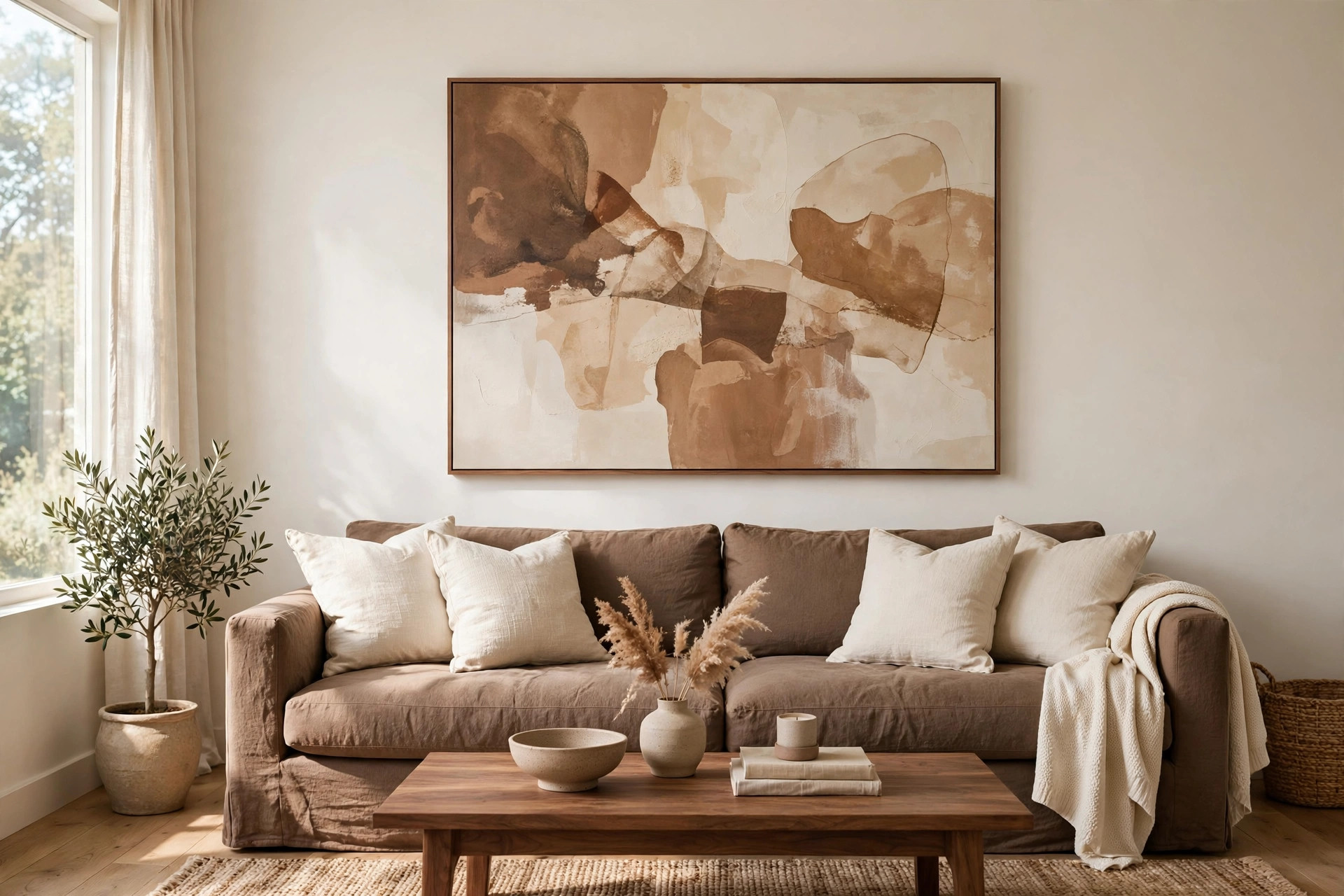
A single large abstract canvas above the sofa does more for a modern brown room than any gallery wall. Look for soft, organic shapes in the room’s own palette — umber, clay, sand, cream, a touch of charcoal — so the artwork feels like a window into the scheme rather than a decoration added afterwards. Aim for a piece roughly two-thirds the width of the sofa, hung low enough that its bottom edge sits just above the sofa back.
A slim walnut or matte black frame connects the art to the furniture below. If a large original is out of budget, an unframed canvas or a fabric wall hanging in the same tones achieves a similar scale. Resist adding smaller pieces around it; the white space around one confident artwork is exactly what makes the wall feel modern.
Idea 11: Float the Furniture for a True Modern Layout
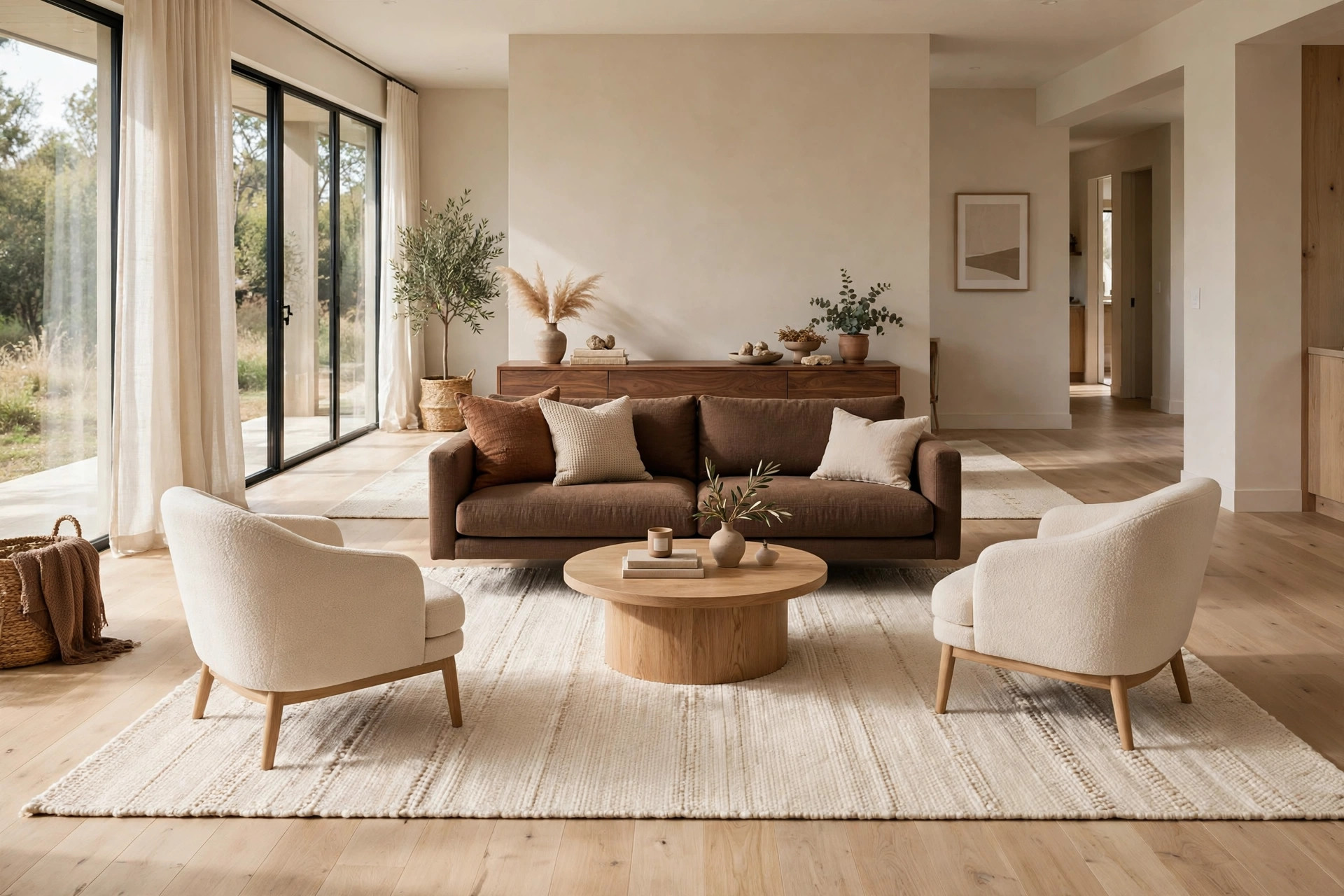
Pushing every piece against the walls is the fastest way to make a room feel like a waiting area. Modern layouts float the sofa off the wall — even 15 to 20 centimetres — with a low console or a pair of stools behind it, chairs angled inward, and a rug that anchors the whole group. Walkways of roughly 75 to 90 centimetres around the grouping keep the arrangement practical as well as good-looking.
Floating works especially well with brown because it breaks up the dark mass of a large sofa and lets light travel around it. Anchor the group with a rug large enough for at least the front legs of every seat, and keep the floor visible at the edges. For a stricter, even more pared-back version of this layout, browse our minimalist brown living room ideas.
Idea 12: Ground Dark Seating on a Pale, Textured Rug
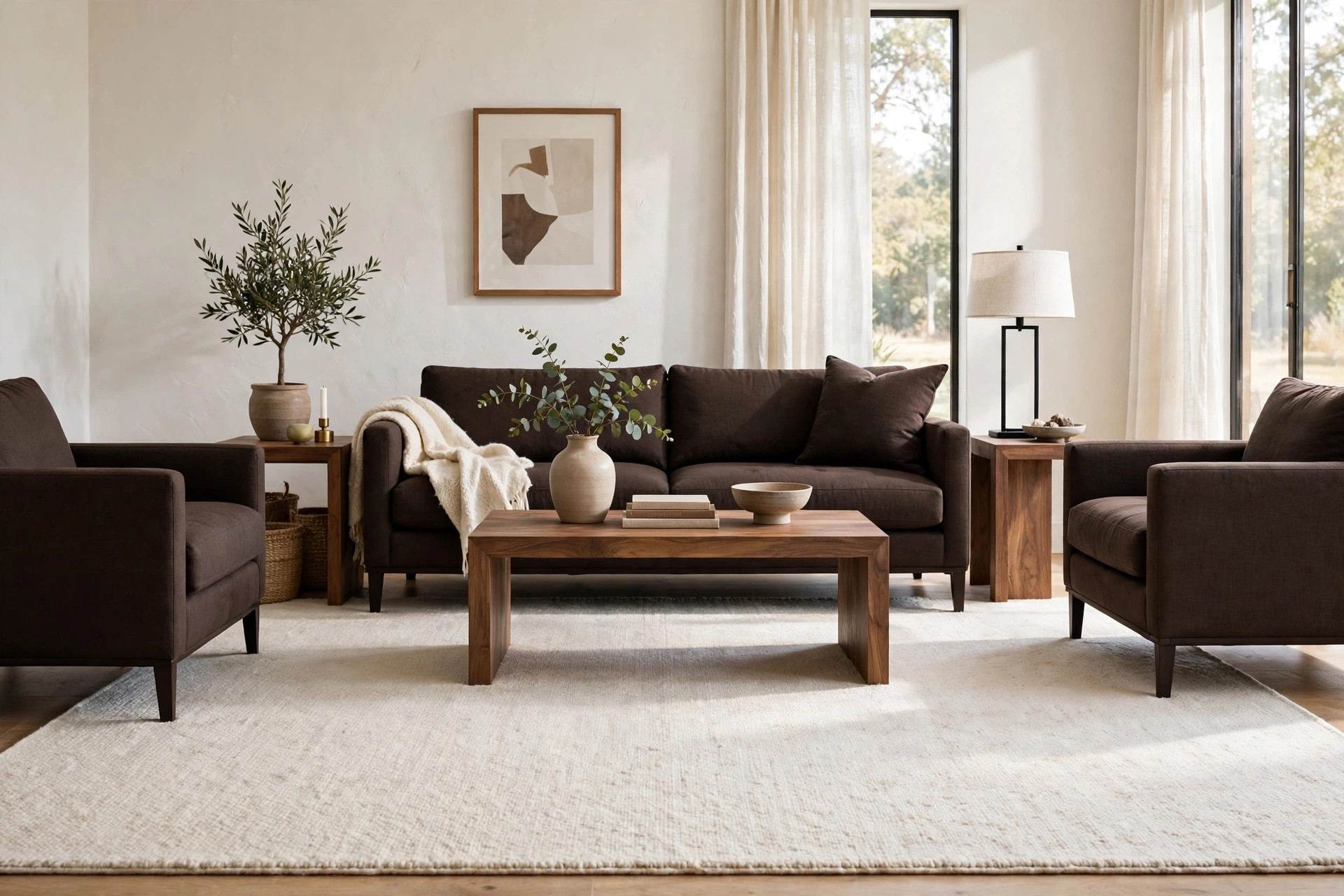
The rug is the hardest-working piece in a brown room because it sets the brightness of everything above it. A pale ivory, oatmeal or warm cream rug under dark seating lifts the whole scheme, defines the conversation zone, and gives leather and velvet something soft to play against. Choose a low-pile wool or a subtly patterned flatweave so the texture shows without competing with the furniture.
Size matters more than pattern: the rug should extend at least 15 to 20 centimetres beyond the sofa on each side, with front legs of all seating resting on it. Avoid stark cool whites, which fight warm browns, and avoid dark rugs under dark sofas — the combination swallows light and is the most common reason brown rooms feel heavy.
Idea 13: Build In Walnut Shelving and a Low Media Wall
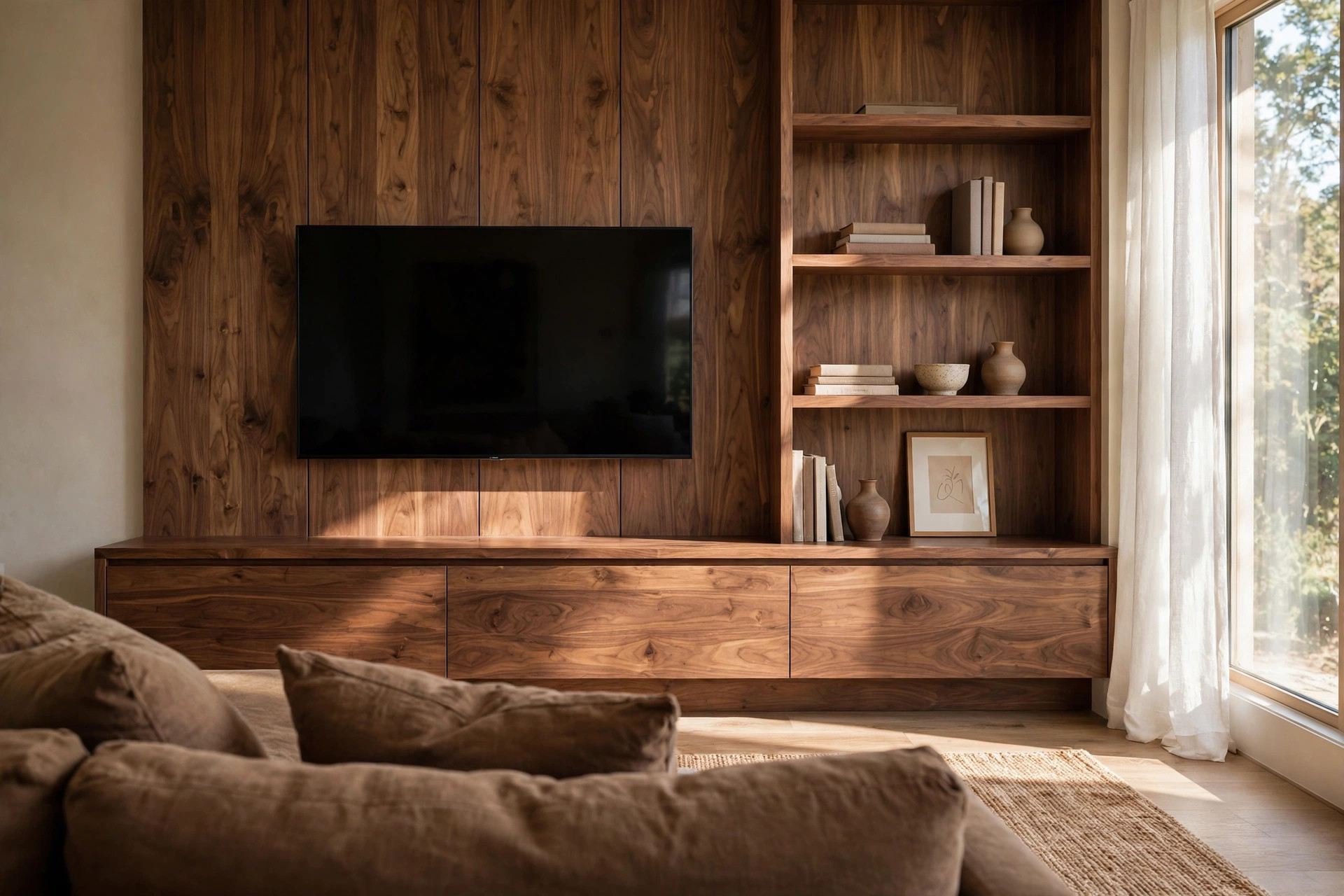
Built-in cabinetry in walnut gives a modern brown room its tailored, architectural finish. A run of low, flat-front units beneath the television keeps electronics invisible and the wall line clean, while open shelves above or beside display a small edit of books, ceramics and one or two pieces of art. Handleless doors and a consistent wood tone make the whole wall feel like a single piece of furniture.
Style shelves with restraint: group objects in threes, leave some shelves partly empty, and mix vertical books with one horizontal stack. If bespoke joinery is not an option, a long low walnut media console with two matching bookcases gives a similar built-in impression. Keep cables hidden and the screen surround clear — visual calm is the entire point of this wall.
Idea 14: Layer Warm Lighting for the Evening Hours
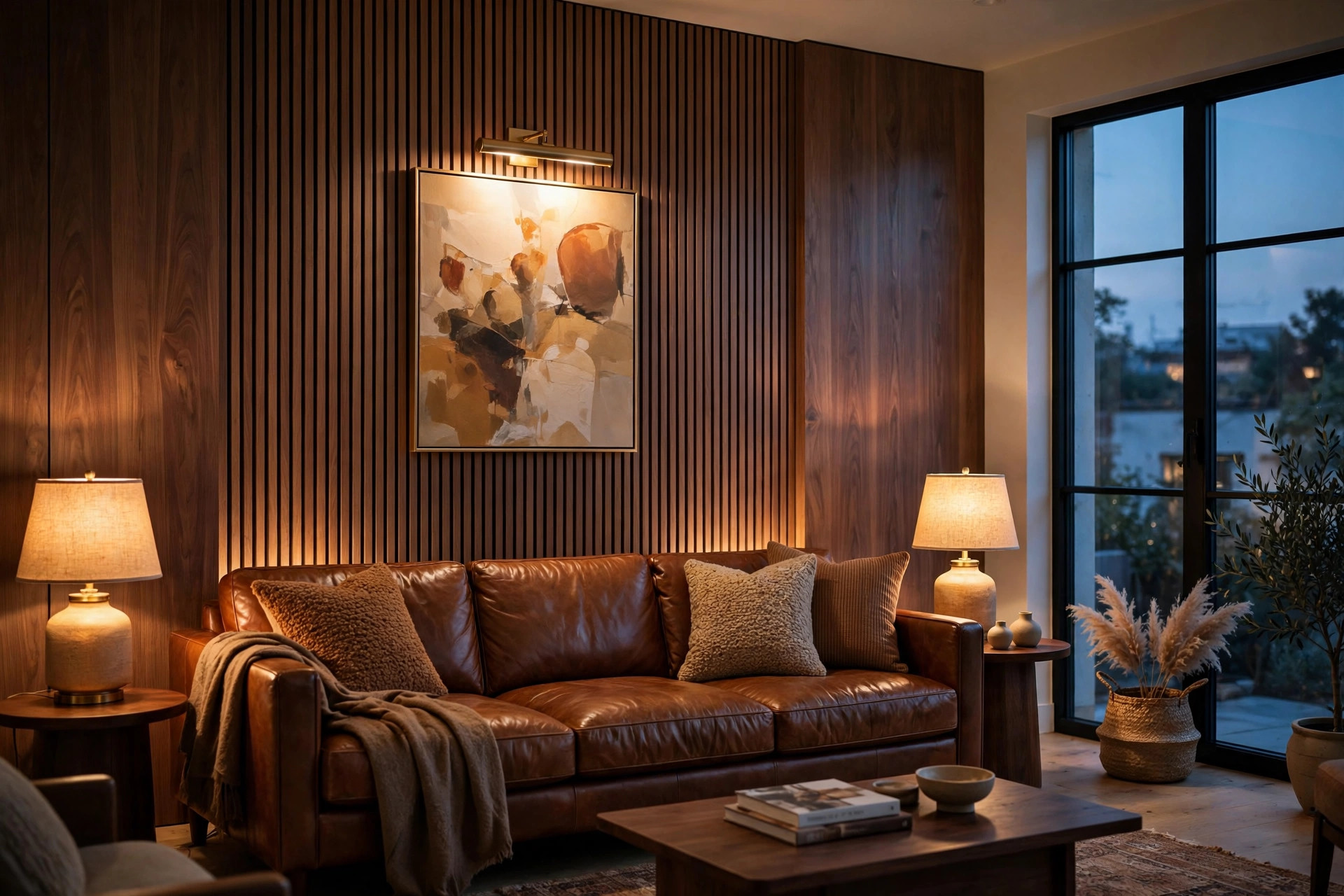
Brown rooms live or die by their lighting after dark. A single ceiling light flattens wood grain and turns leather dull, so build three layers instead: soft ambient light from a dimmable ceiling fixture or cove, task light from table and floor lamps beside seats, and accent light from picture lights or small uplighters that graze texture on slatted or limewash walls. Warm-white bulbs in the 2700K range flatter every shade of brown.
Put lamps on dimmers wherever possible and switch off the overhead light in the evening; the room will feel instantly more expensive. Place light sources at different heights so pools of light overlap gently rather than glaring from one point. This layered approach is also forgiving — it makes even a simple scheme of sofa, rug and one chair feel finished.
Idea 15: Finish With Greenery and Raw, Natural Stone
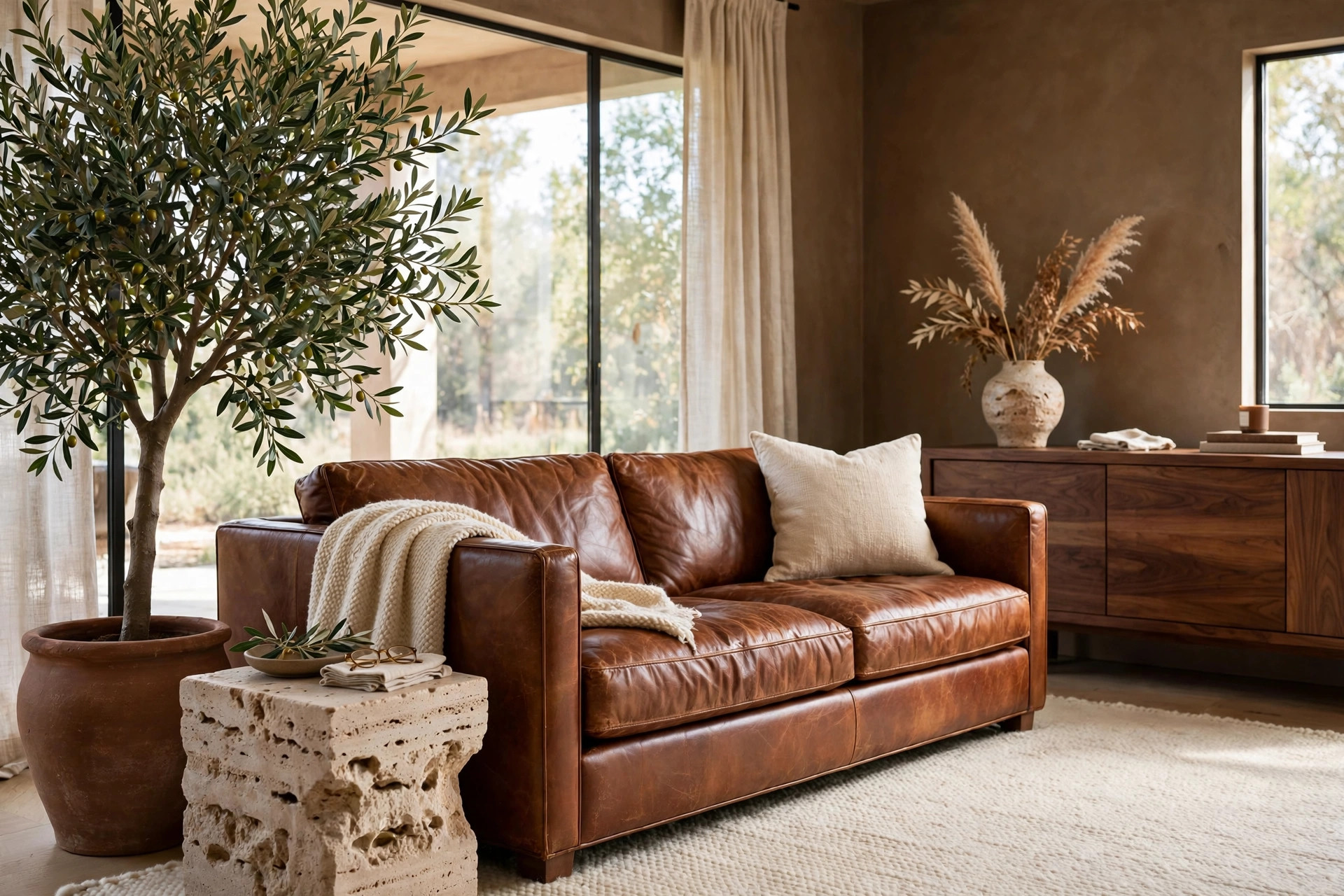
The final layer is alive and geological. One tall plant — an olive tree, fiddle-leaf fig or sculptural branch arrangement in a ceramic pot — introduces the vertical line and fresh green that brown rooms need to avoid feeling sealed in. Travertine, honed marble offcuts and rough ceramic bring in pale, matte stone that cools the palette just enough.
Keep it edited: one statement plant, one stone side table or plinth, a couple of hand-finished vases. These natural textures echo the wood and leather already in the room while adding the irregularity that stops a modern scheme from looking like a showroom. Choose a pot in the room’s tonal family — terracotta, sand or charcoal — so the plant feels planted in the design, not parked in it.
Common Mistakes to Avoid
Matching every brown exactly. A sofa, floor and furniture in the same mid-brown merge into one flat mass. Vary depth deliberately — dark, mid and light — and let texture separate pieces that sit close in tone.
Choosing orange-toned wood. Honey-pine and glossy cherry finishes are what make brown feel dated. Modern schemes use walnut, smoked oak and matte finishes with grey or neutral undertones instead.
Skipping the pale contrast. Without a cream rug, pale chairs or light walls, even a beautiful brown scheme turns heavy by mid-afternoon. One large light element is non-negotiable.
Pushing all the furniture to the walls. It leaves a dead space in the middle and makes brown seating look like it is lining up rather than gathering. Float the group on a rug and let the room breathe.
Using cool white light. Blue-toned bulbs make brown look muddy and grey. Warm-white light around 2700K keeps leather rich and wood grain golden.
Over-accessorising. Brown already brings visual warmth and weight, so clutter shows twice as fast. Edit surfaces hard: a few large, well-chosen objects always beat many small ones.
Frequently Asked Questions
What colours go best with a modern brown living room?
Warm neutrals — cream, ivory, oatmeal and camel — are the foundation, with matte black for definition and brushed brass for warmth. For a colour accent, muted olive, clay, rust and slate blue all sit comfortably with brown. If you want a bolder pairing, our teal and brown living room ideas show how a deep blue-green makes walnut and cognac look richer.
How do I stop a brown living room from looking dark or dated?
Keep one large element pale (usually the rug or the walls), choose low-profile furniture so light travels over it, avoid glossy orange-toned woods, and layer warm lighting instead of relying on a single ceiling light. Mixing textures — leather, bouclé, linen, matte wood — also keeps the colour feeling fresh rather than flat.
Should walls be lighter or darker than a brown sofa?
Either can work, but the sofa and walls should never be the same depth. A dark sofa looks best against light warm walls, while a mid-tone camel sofa can carry a deeper limewash or slatted wood wall behind it. The contrast between the two is what gives the room its structure.
Is brown a good choice for a small living room?
Yes, used selectively. Put the deepest brown on the sofa, keep walls and rug pale, choose leggy furniture that shows the floor, and use glass or open-frame tables so sightlines stay clear. One dominant dark element per small room is a reliable rule.
Can I mix different wood tones with brown furniture?
Absolutely — mixing woods looks more modern than matching them. Keep undertones consistent (warm with warm, cool with cool), repeat each wood at least twice in the room, and separate similar tones with a rug or upholstery so they do not sit directly against each other.
What is the difference between modern and contemporary brown living rooms?
Modern design draws on mid-century principles — clean lines, warm woods, functional layouts — while contemporary simply means what is current now, including curves, limewash and tonal layering. Our contemporary brown living room ideas lean into the newest shapes and finishes if you prefer the fresher edge.
Final Thoughts
A modern brown living room succeeds when brown is chosen with intention: the right undertone for your light, a tonal ladder instead of a single shade, honest materials with varied texture, and a layout that leaves room to breathe. Start with one anchor — a cognac sofa, a walnut wall, a pale rug — and build outward using the ideas above, and the result will feel warm, clean and completely current.
If you are torn between styles, remember that brown crosses over beautifully; the same walnut and leather foundation can lean softer, bolder or more pared back with a simple change of textiles and accents. Start small, live with each change for a week, and let the room build gradually — that patience is what separates a designed room from a decorated one.


