

15 Beige Living Room Ideas With Rust Cushions and Throws
A beige room can feel calm and still look unfinished, like the sofa is waiting for something to happen. Rust fixes that gap fast. One warm cushion or throw gives the pale base a clear focal point. Rust in small doses does it best.
This guide stays on one pairing from start to finish. You will find beige living room ideas with rust cushions and throws that cover fabric mixes, cushion counts, throw draping, and small echoes around the room.
Each idea uses soft layers you can move, wash, or swap in minutes. Nothing here needs paint, new furniture, or a full room redo. You work with the beige sofa and chairs you already own. Start with what you own today.
If you want the wider neutral base first, start with our beige living room ideas guide, then come back here for the rust layer. The order matters, because rust reads best on a settled beige ground.
This post contains affiliate links. If you buy through them, we may earn a small commission at no extra cost to you. See our Affiliate Disclosure.
1. Start With Two Rust Cushions, Not Five
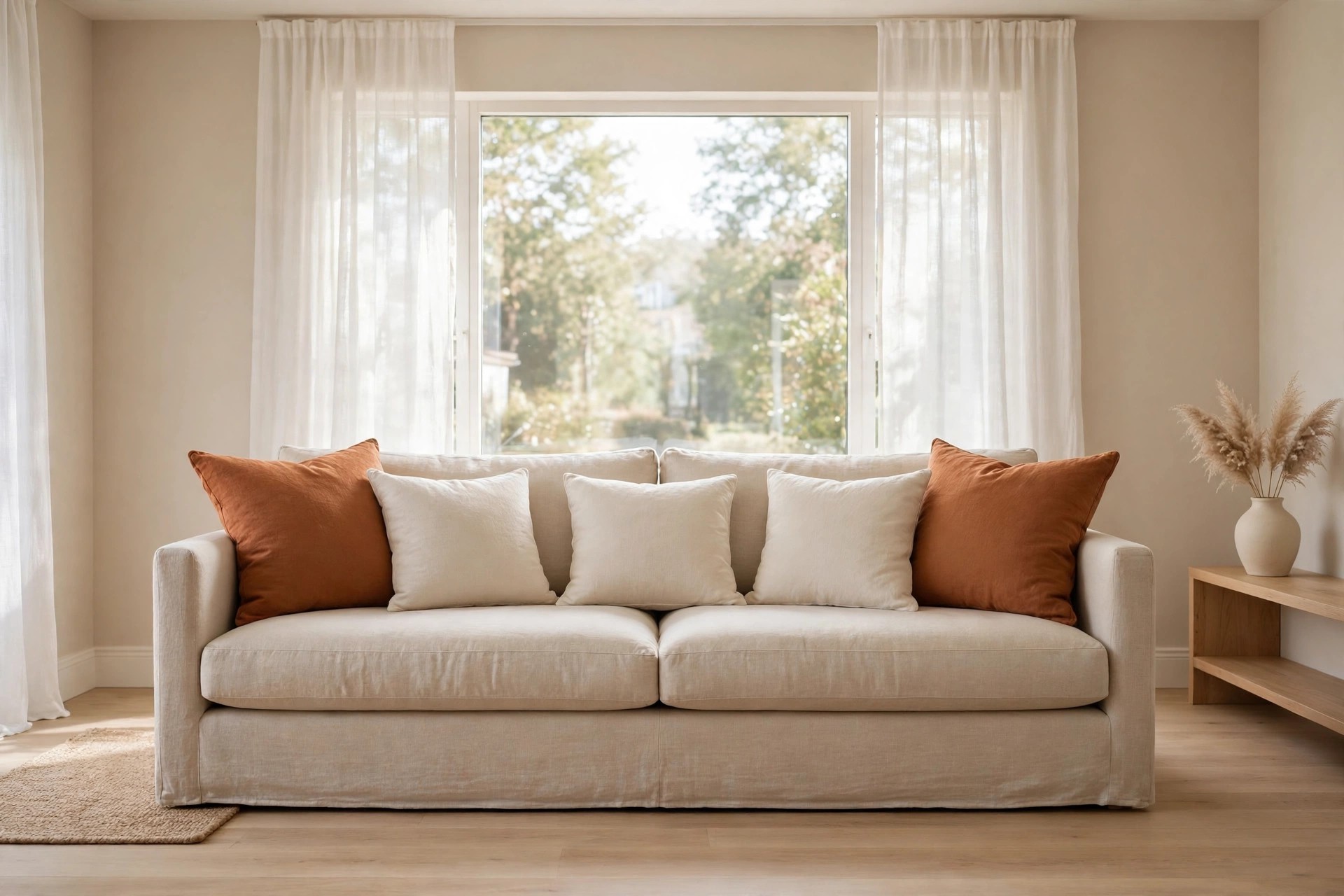
The most common mistake is buying a full set of rust cushions on day one. Five matching cushions turn a calm beige sofa into one solid block of orange. The room feels loud instead of warm.
Start with two large rust cushions, one at each end of the sofa. Keep the middle cushions beige, cream, or soft taupe. That gap in the center lets each rust cushion read clearly and keeps the balance calm.
Lived with two for a week, you will know if you want a third. Most rooms stop at two or three. The sunny end cushion also fades a little faster, so rotate the pair each month.
Check the view from the doorway at night too, since lamp light can make rust look stronger than daylight does.
2. Mix Rust Velvet and Rust Linen on One Sofa
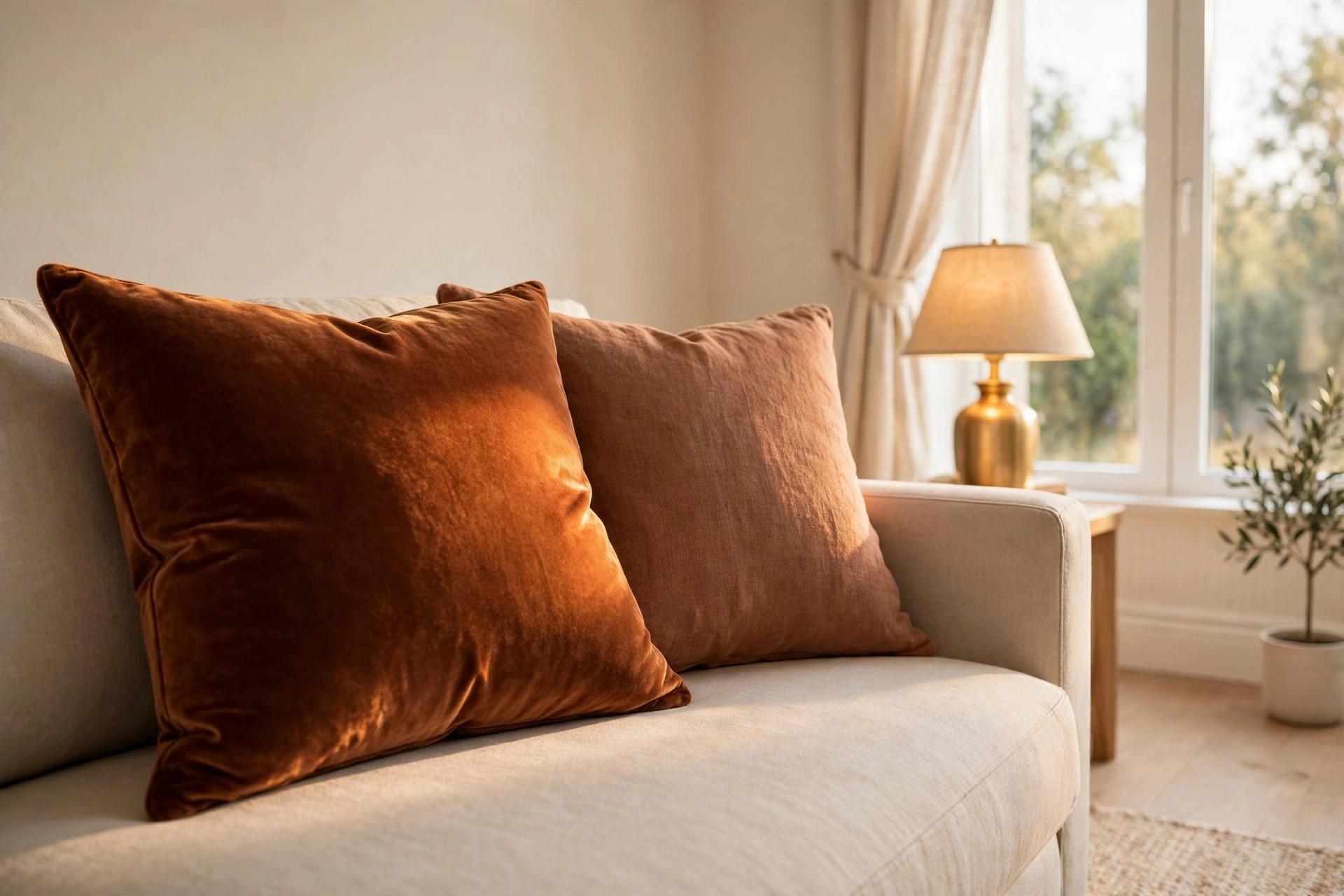
One rust cushion in velvet and one in washed linen will do more for a beige sofa than four cushions in the same flat fabric. Velvet catches light and looks deep. Linen looks dry, soft, and relaxed.
Place the velvet cushion where lamp light hits it in the evening. Put the linen cushion on the brighter side near the window. The same rust tone then shows two moods in one room, rich and calm.
Keep both covers removable if you can. Velvet marks show up fast after a movie night with snacks. Linen creases are part of its look, so it forgives daily use and quick plumping far better.
Run your hand across both covers before buying, since a rough linen beside smooth velvet feels best in that order.
3. Drape One Rust Throw Over the Sofa Arm
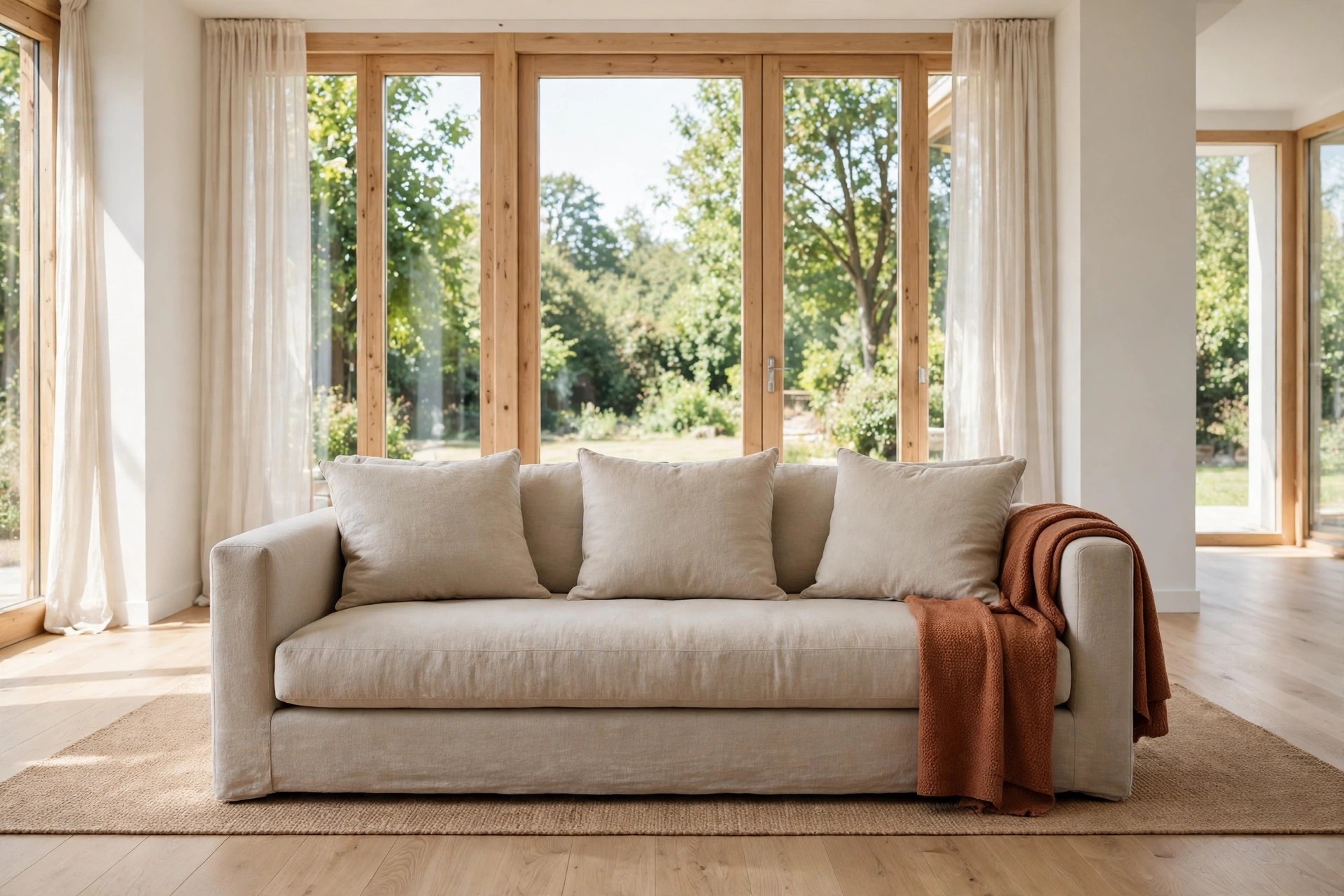
Fold a rust throw into a long strip and lay it over one sofa arm, with a short fall on the outside and a longer fall on the seat. That one line of color leads the eye across the beige.
Choose the arm nearest the door or window, the side people see first. Leave the other arm bare. A throw on both arms can look matched and stiff, like a showroom sofa no one sits on.
Tuck the seat end under one beige cushion to hold it in place. Kids and pets will still pull it loose by Friday. A quick refold takes ten seconds and resets the whole sofa.
If the throw slips on a smooth sofa fabric, place the folded edge under the seat cushion for extra hold.
4. Layer a Cream Throw Under a Rust Throw
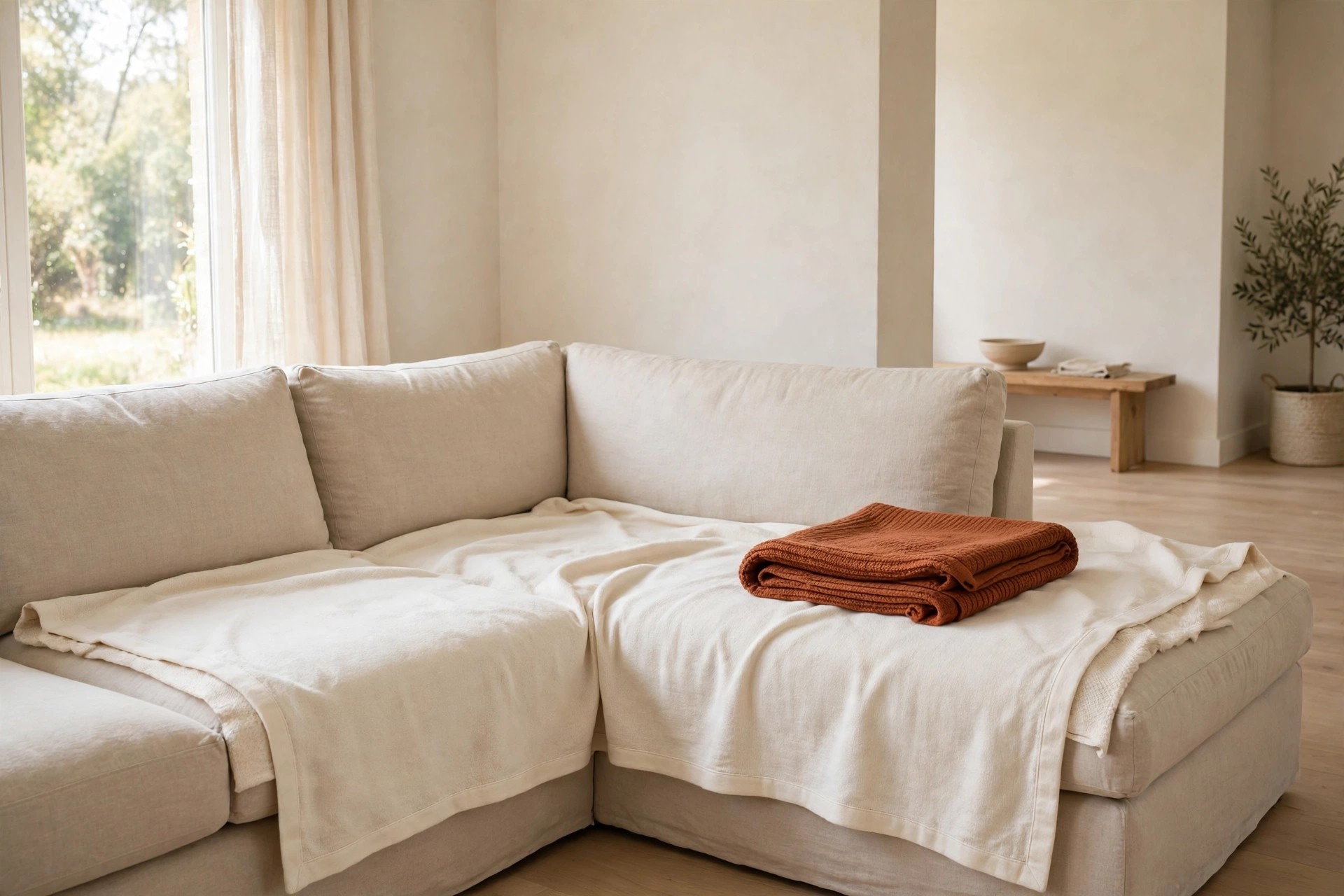
A rust throw laid straight on a beige sofa can look harsh at the edge where the two colors meet. A cream or oatmeal throw underneath softens that line and makes the rust feel planned, not dropped on.
Spread the cream throw wide across the back and seat corner first. Then fold the rust throw narrower and lay it on top, off center. Let a hand width of cream show on both sides of the rust.
This layer also helps on cold nights. You can pull the top rust throw over your legs and leave the cream layer in place. The sofa still looks styled when you stand up.
Wash the cream layer more often than the rust layer, since pale fabric shows dust and pet hair sooner.
5. Use Three Depths of Rust Instead of One Flat Tone
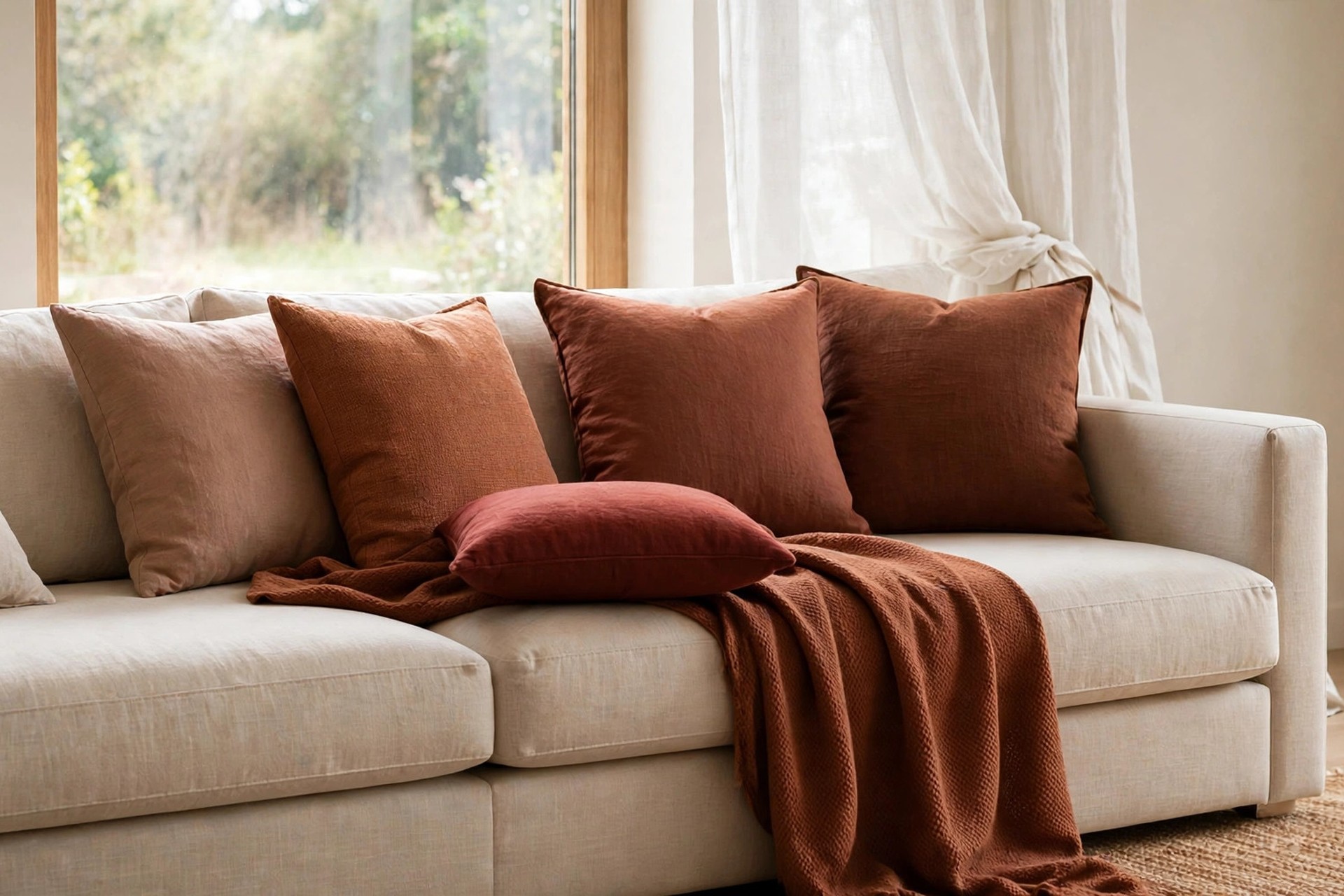
Rust is not one color in a real room. A pale clay cushion, a mid rust throw, and one deep brick cushion will read as a family. Three pieces in the exact same dye can look flat and matched.
Put the deepest tone low and near the center, where shadows already sit. Keep the palest clay near the window light. The mid tone works best for the throw, since it covers the largest area.
Hold covers together in daylight before you commit. Phone photos at night turn rust orange or brown and mislead you. Morning light near the actual sofa shows the true gap between each depth best.
A fabric swatch card kept in a drawer helps you match new covers to the rust family months later.
6. Set One Patterned Rust Cushion in the Middle
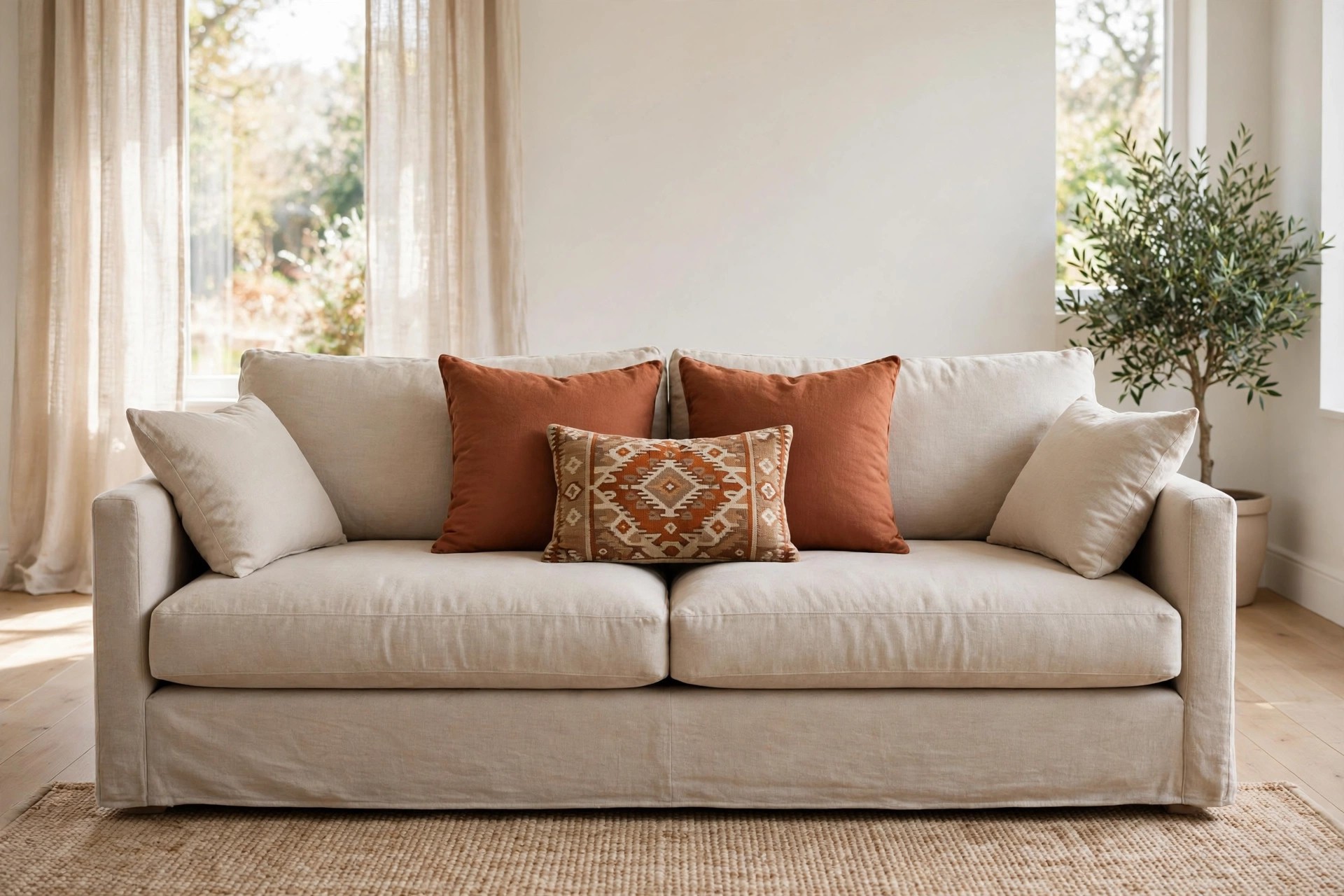
A single patterned cushion gives solid rust cushions a reason to be there. Look for a small stripe, a faded kilim feel, or a simple block print in rust, beige, and cream. Keep the pattern scale small to medium.
Place that cushion in the center front, with plain rust behind it and plain beige on the outer sides. The pattern becomes the focal point of the sofa. Everything else can stay quiet and still feel finished.
Avoid a second pattern on the same sofa. Two prints in rust tones fight each other and the eye keeps jumping. If you love another print, move it to a chair across the room instead.
Flip the patterned cushion to its plain back side on days when you want a calmer sofa look.
7. Pair Rust With Warm Wood Beside the Sofa
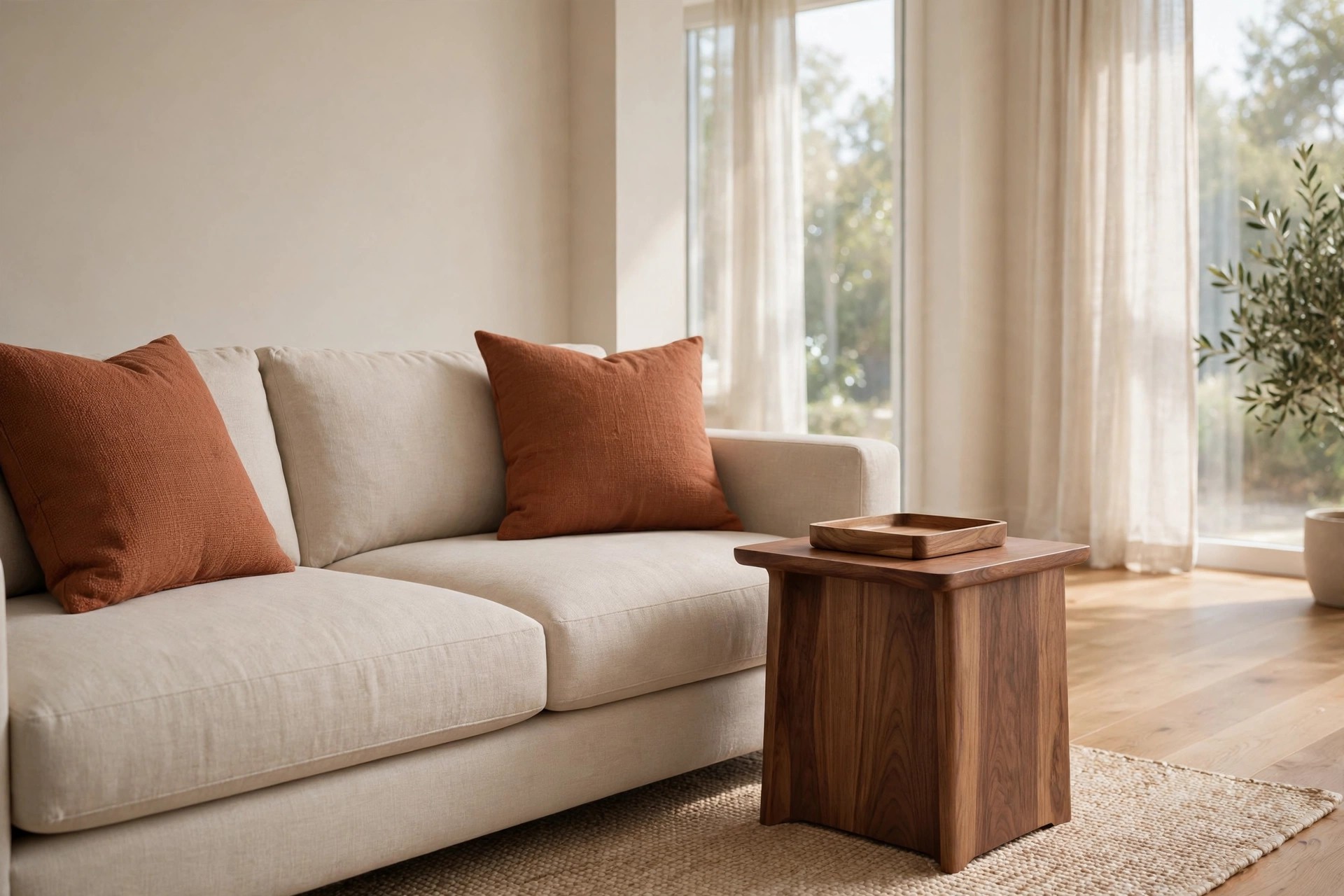
Rust needs one warm neighbor to sit well in a beige room, and warm wood does that job with no extra color at all. A walnut or honey oak side table beside rust cushions makes both tones look richer.
Keep the wood piece plain and close to the sofa. A small table, a low stool, or a simple tray on the coffee table is enough. Pale ash wood can look grey next to rust, so test first.
This is also where cozy rustic living room ideas can help, since they use warm wood and woven texture well. Borrow the wood tone only. Keep your own room on the beige and rust plan.
A small wood tray in the same tone can hold remotes and keep the table clear.
8. Echo Rust in a Low Rug Border
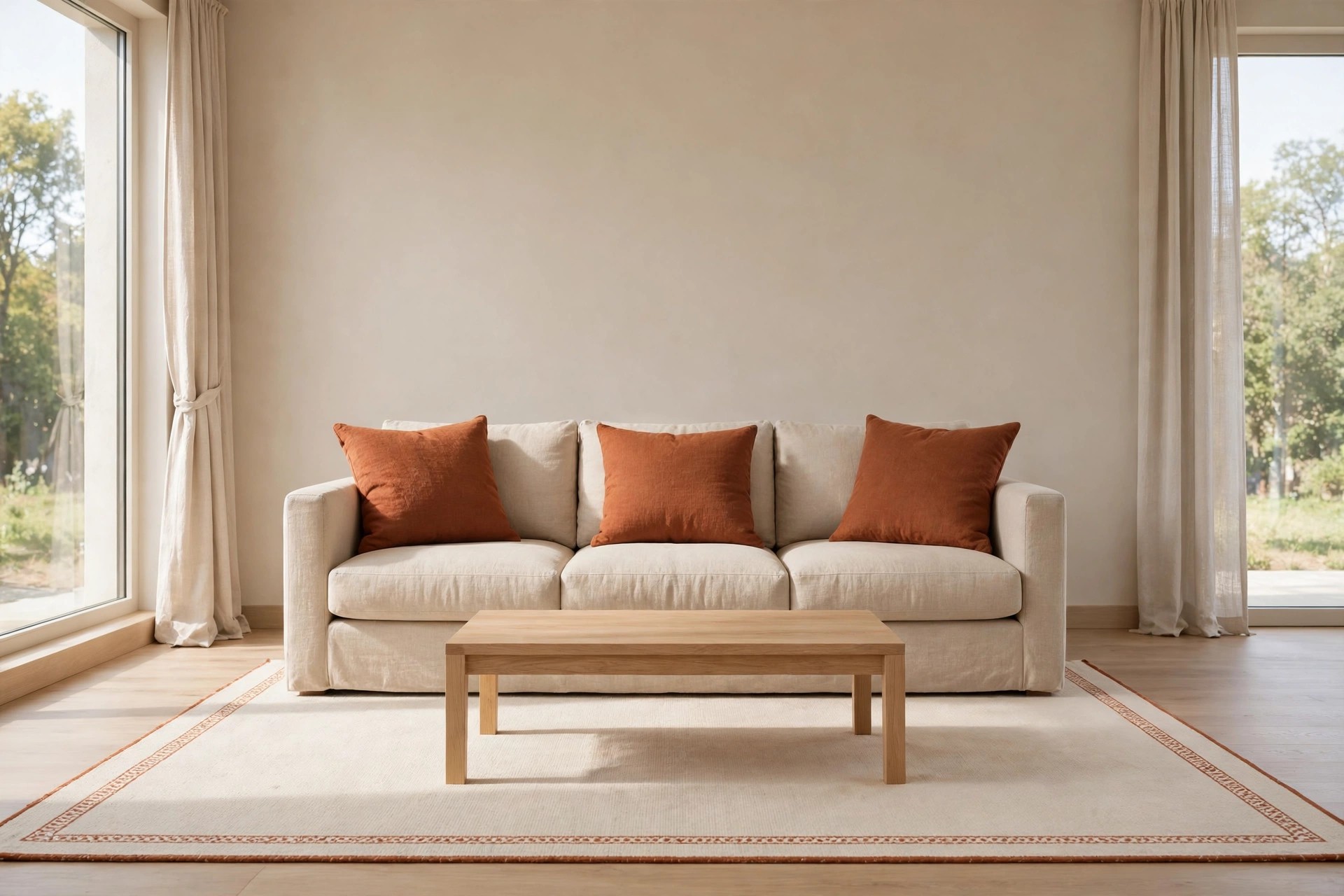
Cushions alone can float if nothing below them repeats the color. A rug with a thin rust border or a faded rust pattern under the coffee table grounds the sofa. The rust then reads from floor to seat.
Keep the center of the rug beige, cream, or jute toned. Too much rust underfoot darkens the whole seating area and shows crumbs fast. A border or a worn pattern gives you the echo without the upkeep.
Our guide to living room rugs with a beige couch covers sizes and placement in detail. Use it for the fit, then choose the pattern that carries just a thread of rust.
Vacuum the rust border with the grain of the pattern, since faded designs can look worn if brushed both ways.
9. Repeat Rust Lightly in Art Above the Sofa
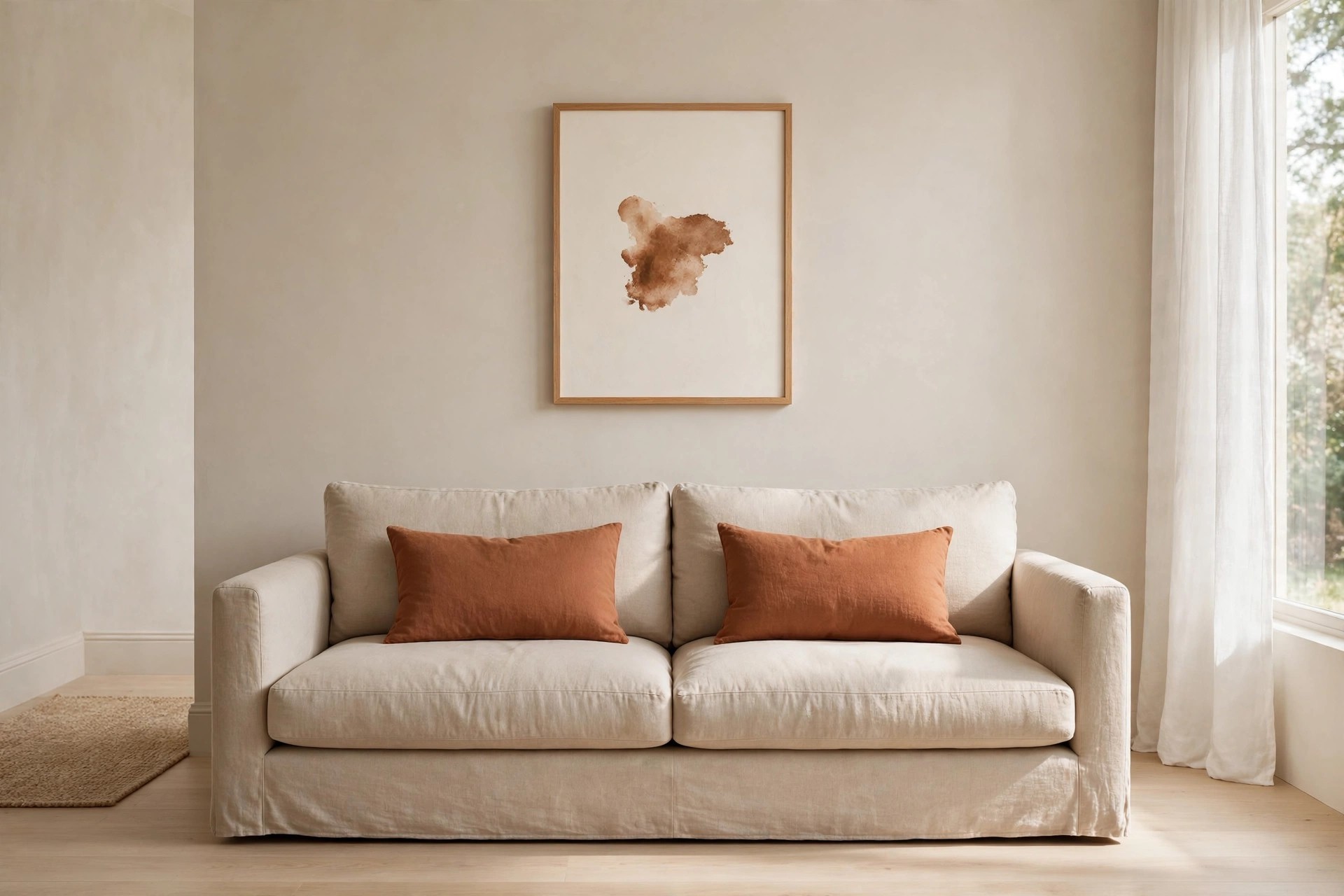
One piece of art with a rust shape, a clay hill, or a warm abstract wash can tie the sofa to the wall. Without it, beige walls above rust cushions can look cut in half at the sofa back.
Keep the rust share in the art small, about a fifth of the canvas or less. The rest should stay beige, cream, black line, or soft brown. A mostly rust canvas will compete with the cushions below it.
Hang the frame low enough that the art and sofa read as one group. A high frame floats alone. A gap of a hand span above the sofa back usually feels close and calm.
Leave plain beige wall space around the frame, since a crowded gallery wall steals focus from the sofa.
10. Warm One Corner With a Rust Lampshade
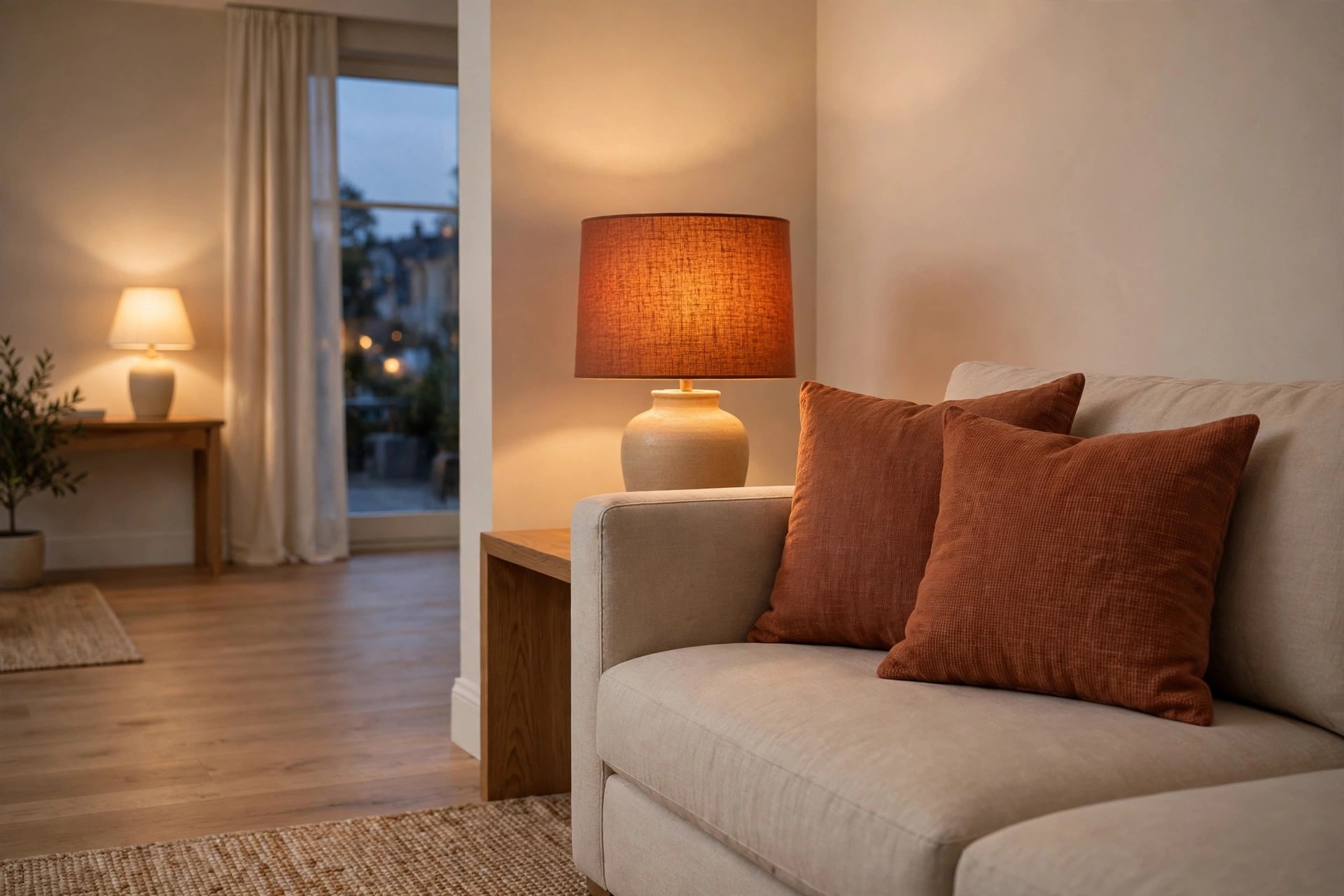
A rust lampshade on one side table gives the pairing a night mode. In daylight the shade is a quiet color echo. After dark, warm light through rust fabric turns the beige corner soft and amber.
Use one rust shade only, on the lamp nearest the sofa. Keep any second lamp cream or linen toned. Two rust shades can tint the whole room orange at night and tire the eyes fast.
Test the bulb tone with the shade on. A cool white bulb can turn rust muddy and grey. A warm bulb keeps the shade true and makes beige upholstery look golden instead of flat.
Move the lamp a few inches from the wall to stop a harsh rust glow pooling in one bright spot.
11. Give the Armchair One Rust Cushion Only
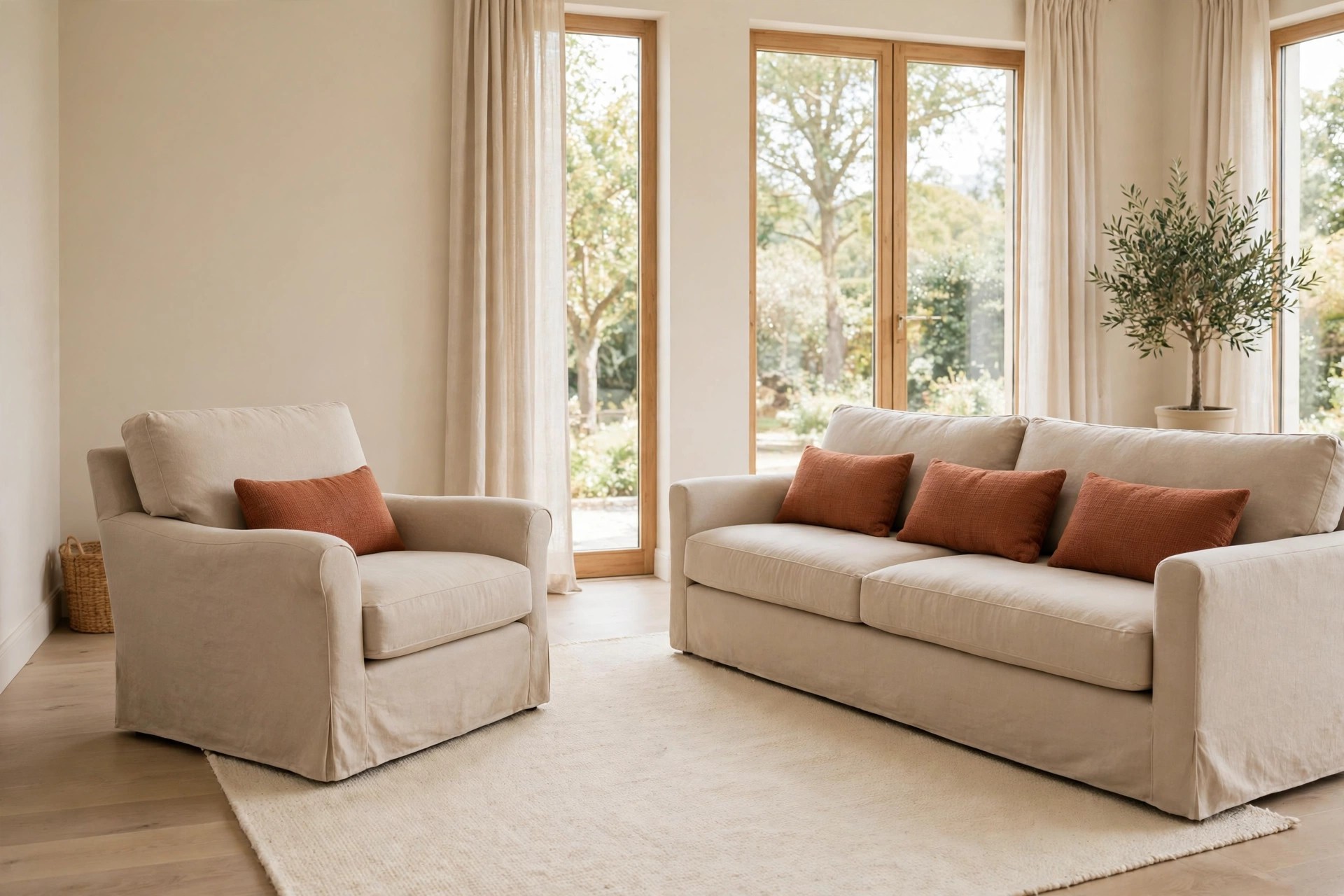
Spread the color across the room by giving a beige armchair a single rust cushion and nothing more. No throw, no second cushion. That one spot of rust tells the eye the scheme reaches beyond the sofa.
Use a smaller cushion on the chair than the pair on the sofa. Same size everywhere can look copied. A neat lumbar shape works well on a chair and supports the lower back during long reads.
Angle the chair a little toward the sofa, not square to the wall. The rust cushion then faces the rust cushions, and the two spots talk to each other across the rug in a calm way.
Keep a beige throw on the chair back instead, so the single rust cushion stays the only warm spot there.
12. Swap Rust Covers by Season, Keep the Beige Base
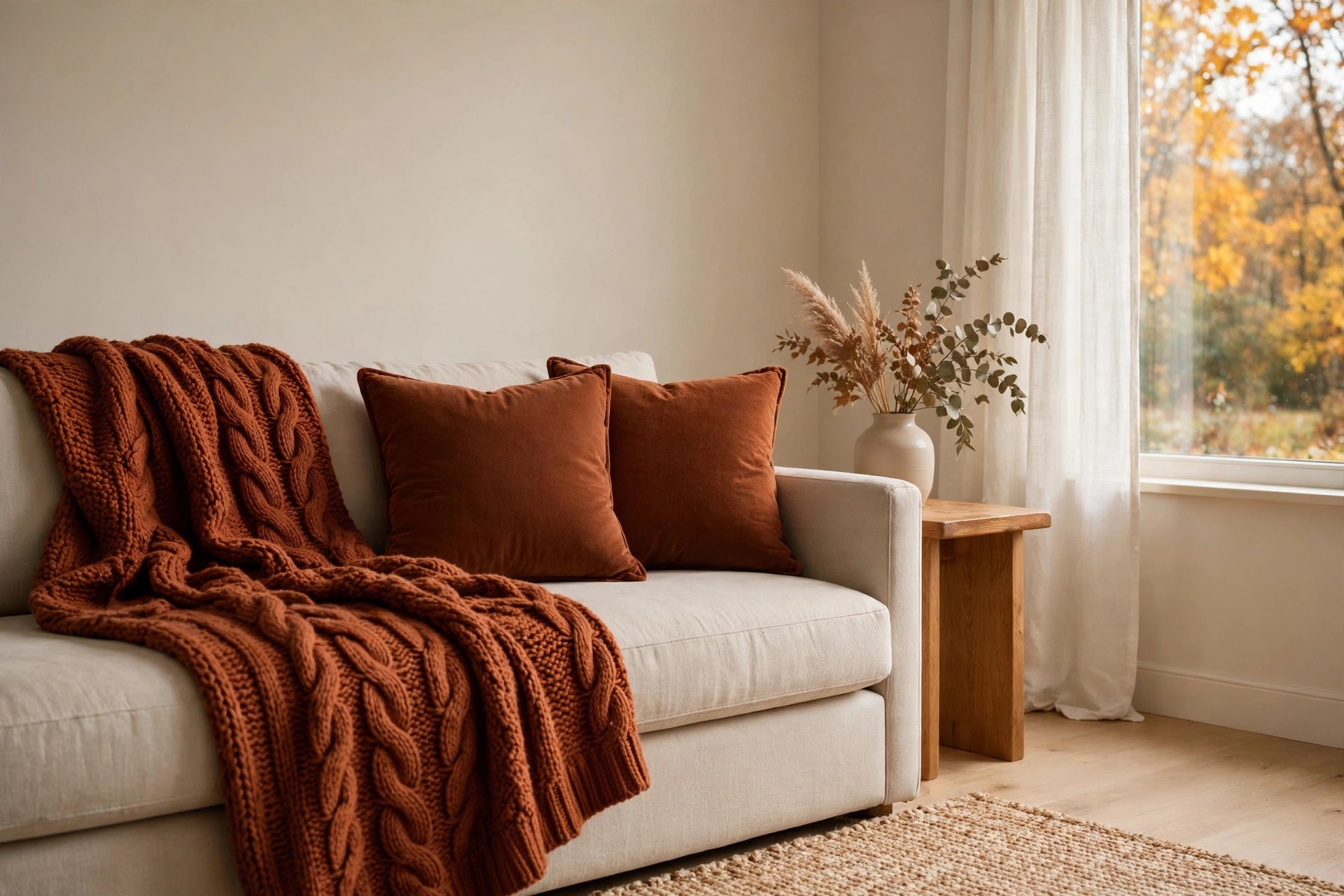
Rust can shift with the seasons if you swap covers, not furniture. In spring, use pale clay cushions and one thin rust throw. In fall, bring in deep brick cushions and a heavier knit rust throw.
Store the off season covers folded in the same basket or drawer. When every cover lives in one spot, the swap takes ten minutes. Loose covers in three rooms tend to stay unswapped all year.
For deeper fall tones on the same beige base, our notes on beige living room ideas with burgundy accents for autumn show the next step. Burgundy sits close to deep rust, so the change feels natural.
Label each stored cover set with the season on a small tag, so the fall swap needs no guesswork later.
13. Keep Rust on Soft Layers, Not on the Walls
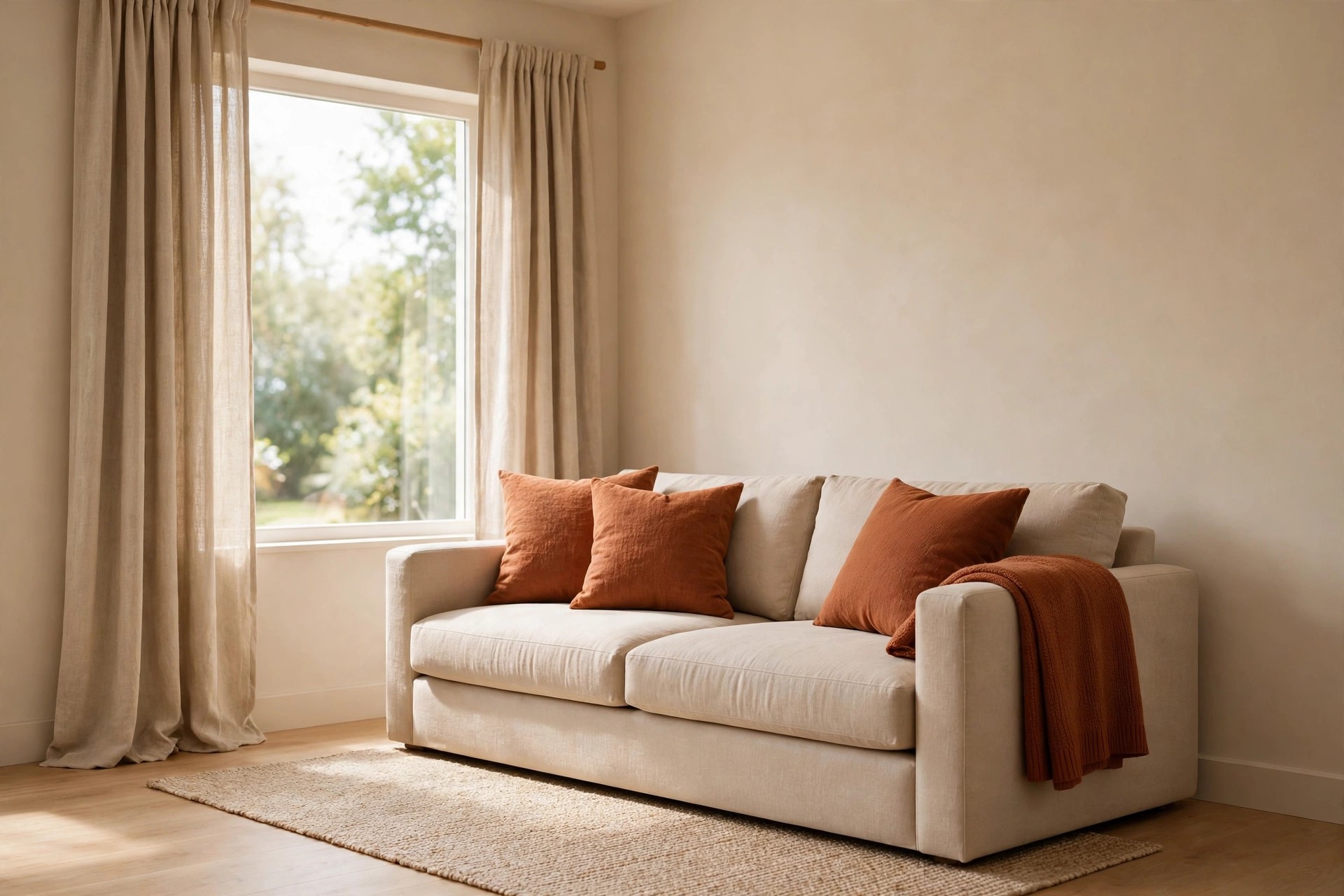
A quick rule protects the calm of this scheme: rust lives on things you can pick up. Cushions, throws, a shade, a rug border. Beige stays on the walls, sofa, and curtains, the parts that cost real money to change.
People who paint a rust wall behind a beige sofa often tire of it first. The wall sets the mood all day, in all light. A cushion cover can rest in a drawer when you need a break.
This rule also keeps the room easy to cool down in summer. Remove the rust throw, swap two covers to cream, and the same beige room feels lighter in one short session of folding.
Curtains in warm beige also protect rust cushions from sun, which fades the sunny side faster in summer.
14. Balance Rust With a Small Touch of Olive Nearby
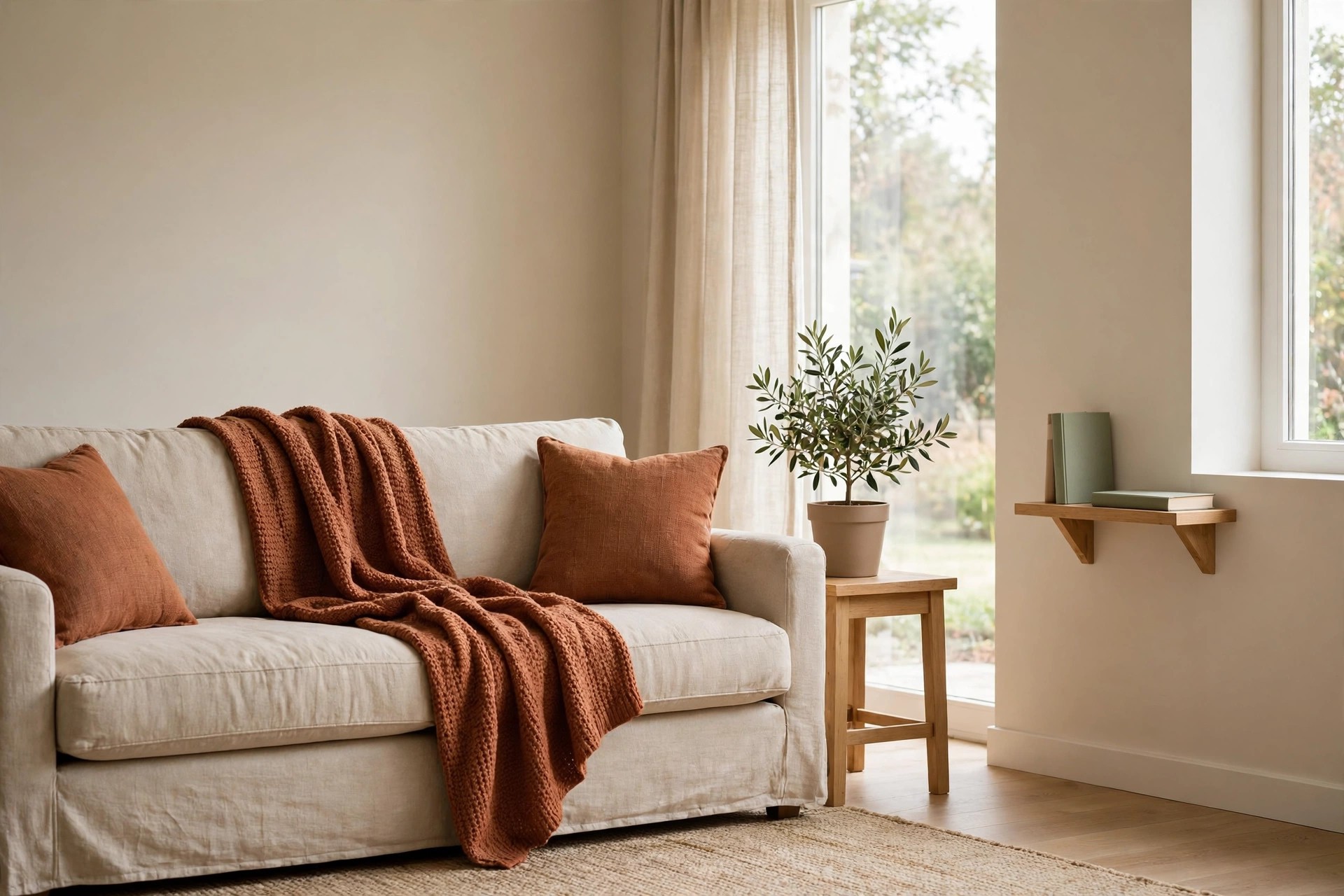
Rust and beige are both warm, and a room full of warm tones can feel sleepy by late afternoon. A small olive touch, a plant, a single olive cushion back, or a muted green book spine, wakes the scheme up.
Keep the olive share tiny compared with the rust. One plant on the side table and one green spine on the shelf is enough. Green should feel like a pause in the room, not a second accent color.
If that earthy mix appeals to you, see how beige and olive living room ideas for an earthy scheme build a full room on it. Here, olive stays in a supporting role behind rust.
Soft, dull plant leaves suit rust better than glossy leaves, which can look cold beside warm fabric.
15. Fold the Spare Rust Throw Into a Basket by the Sofa
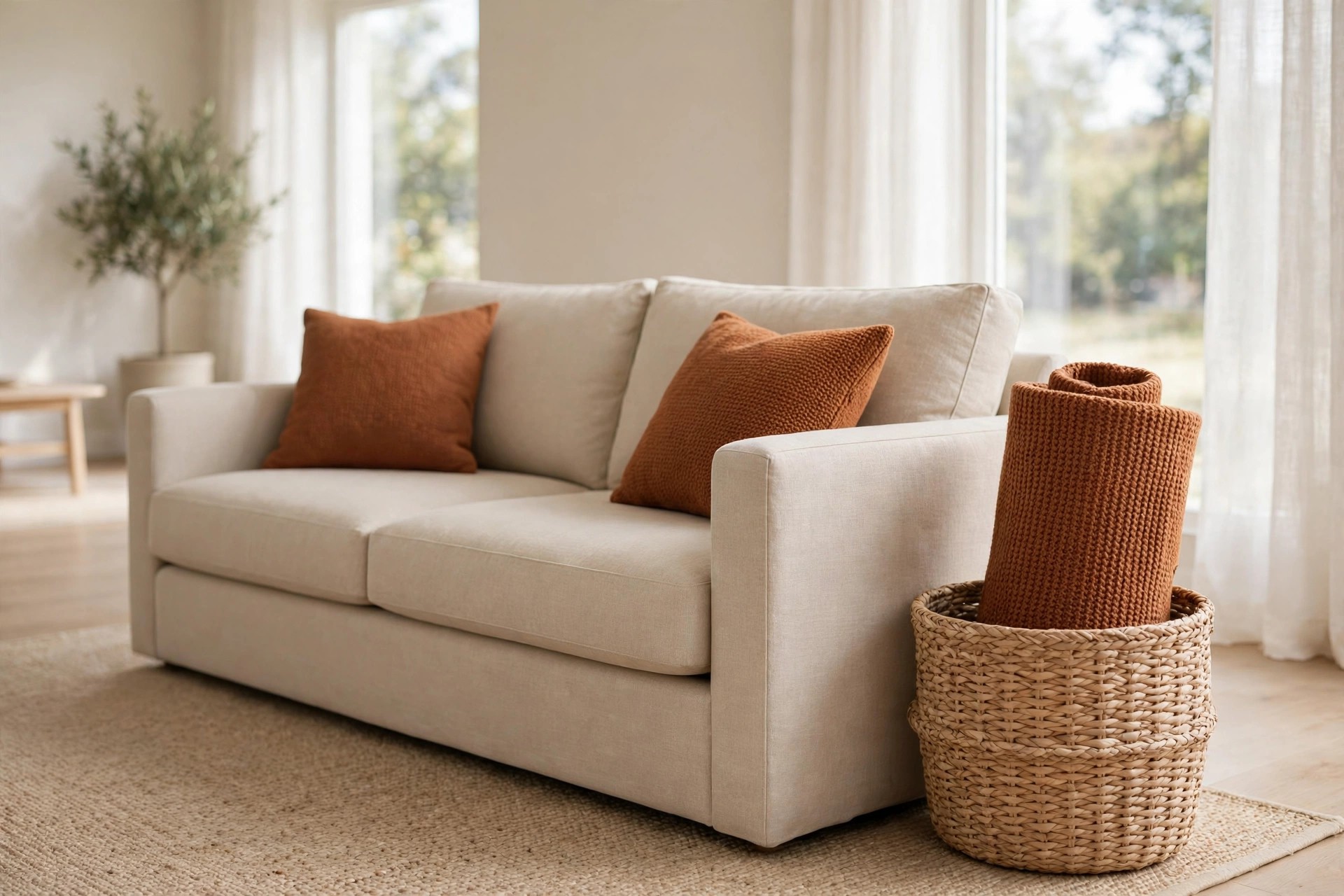
Every rust scheme needs a home for the spare throw, or it will live in a heap on the sofa arm. A plain woven basket beside the sofa holds one folded rust throw and keeps the seat clear for guests.
Fold the throw in thirds, then roll it loosely and stand it on end in the basket. The end shows the color and any fringe or edge detail. A flat fold hides the rust and looks like storage only.
Shake the basket throw out once a week when you tidy. Throws stored for weeks can hold a stale smell and flat creases. A quick air on the sofa back keeps it ready for use.
Keep the basket close to the sofa end for nightly use.
Start small, with two cushions and one throw, and live with the balance for a few days. Rust is strong, so beige living room ideas with rust cushions and throws work best when each new piece earns its place.
Add the rug echo or the art echo only after the sofa feels right. Soft layers are easy to move, so you can test a spot in the morning and change it by night with no cost.
Save this to your beige living room board for later, and try the two cushion start this weekend. A few warm layers are often all a calm beige room was waiting for.


