

15 Small Living Room Ideas for Hosting Game Night: Seating That Works
Six friends, one small sofa, and a board game spread across a coffee table that is too low for anyone to reach in comfort.
That is the moment most small living rooms fail game night, not because the room is small, but because the seats were never planned for a crowd.
The fix is not a bigger room. It is seats that appear when friends arrive and vanish when they leave, a table at a height that suits cards and snacks, and a path so no one climbs over a coffee table to reach the kitchen.
These small living room ideas for hosting game night seating focus on that exact problem. Each idea below gives one seat, one table move, or one storage spot you can set up in minutes, then put away the next morning.
You do not need to buy a new sofa or knock down a wall. Start with the seats you already own, add one or two pieces that store flat or stack.
This post contains affiliate links. If you buy through them, we may earn a small commission at no extra cost to you. See our Affiliate Disclosure.
1. Slide Two Firm Poufs Under the Console Table
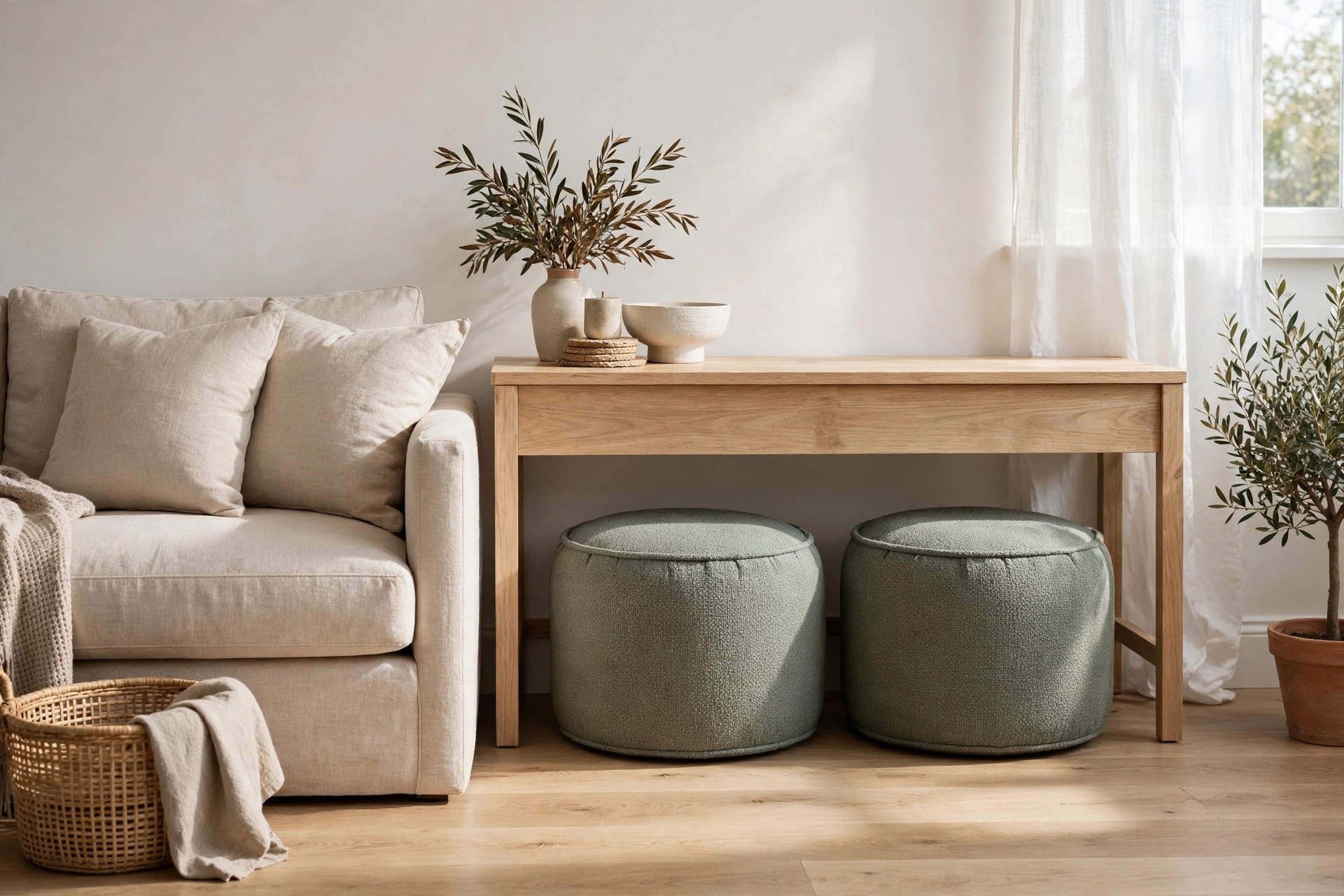
Two firm poufs slid under a console table are the easiest extra seats in a small room. They stay out of the way on normal days, then pull out in seconds when friends arrive for cards.
Pick poufs that sit close to sofa height so guests do not sink low while others sit high. A flat top also lets a pouf hold a drink tray after the game ends, which gives it a second job.
Measure the gap under your console before you shop, and leave a finger width of space so the pouf slides in without catching. Tuck a small rug under the console to stop sliding feet on a wood floor.
When the night ends, guests can push each pouf back with one hand.
2. Pick a Storage Ottoman That Seats One and Hides the Games
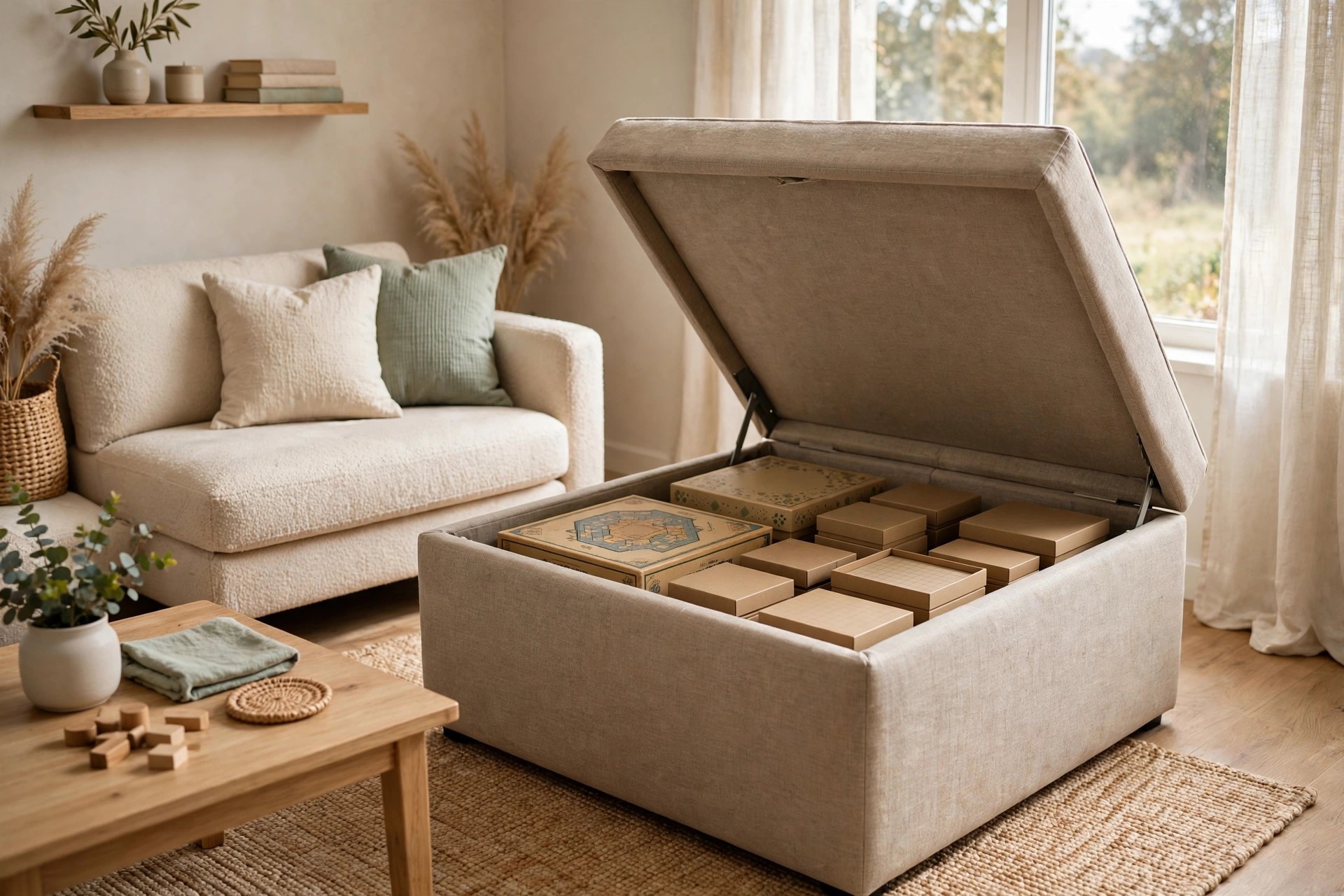
A storage ottoman earns its floor space twice. It holds board games, card decks, and score pads inside, and it gives one more guest a seat when the sofa fills up.
Look for a lid that stays flat and firm when closed, since a soft lid sags under a seated guest. The ottoman should sit at knee height or just below, so players can sit and stand without a struggle.
Sort the games inside by size, with flat boxes at the bottom and card games on top.
Keep the ottoman near the coffee table on game night, then slide it back to its daily spot as a footrest. One piece of furniture covers storage, seating, and a snack tray base.
3. Keep Four Folding Chairs Stacked in the Closet
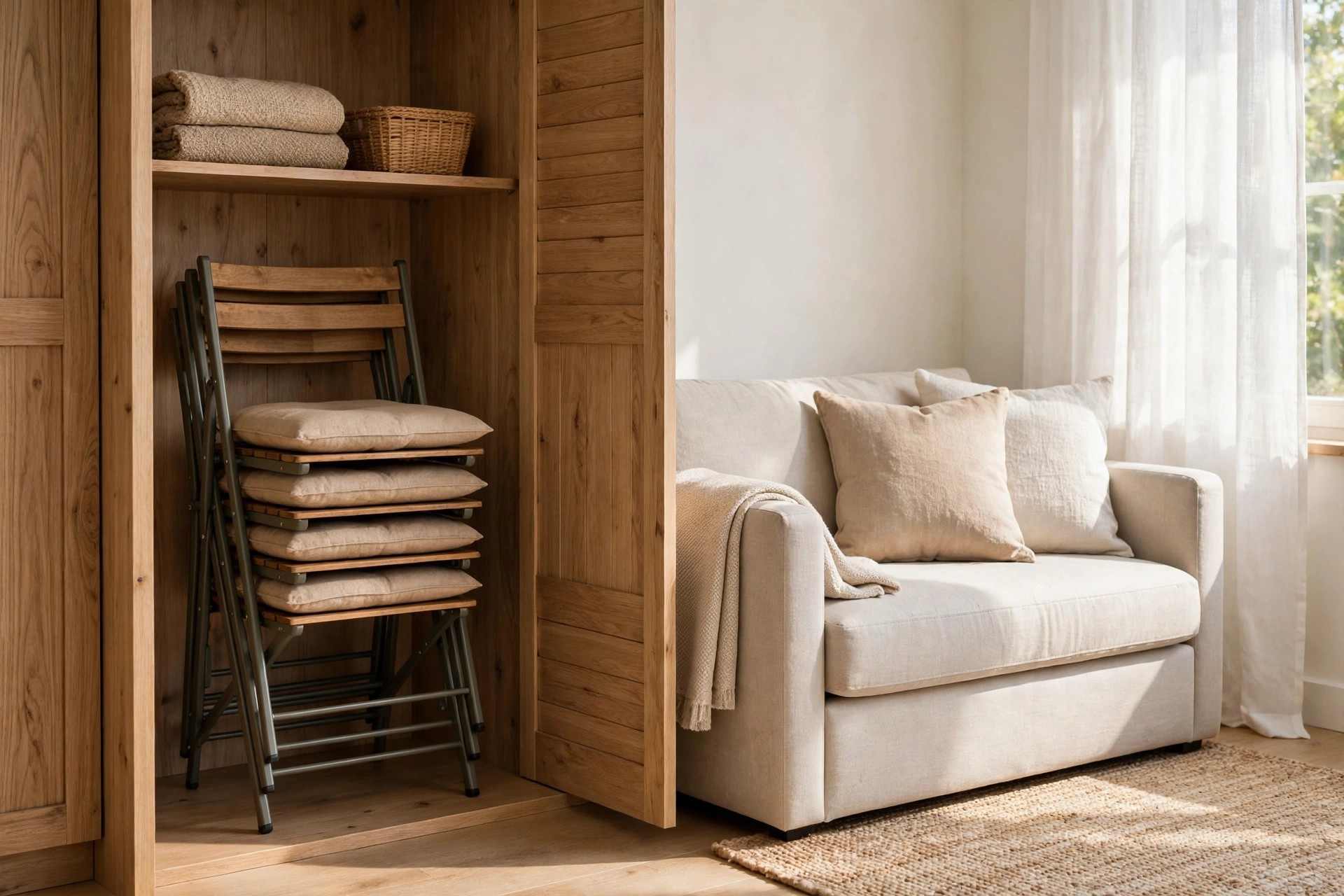
Folding chairs sound plain, but four of them solve the hardest game night problem: where do guests five through eight sit? Stacked in a closet, they take less room than a vacuum cleaner.
Choose chairs with a padded seat if you can, since a long card game punishes a hard seat. Test one chair yourself for a full evening before you buy four, and check that it folds flat without pinching fingers.
Store the chairs with a small hook for a seat cushion each, so comfort is part of the same grab.
Set the chairs out before guests arrive, not after, so no one has to ask for a seat. A chair waiting in place tells each guest they were counted in the plan.
4. Borrow Dining Chairs for the Night and Return Them After
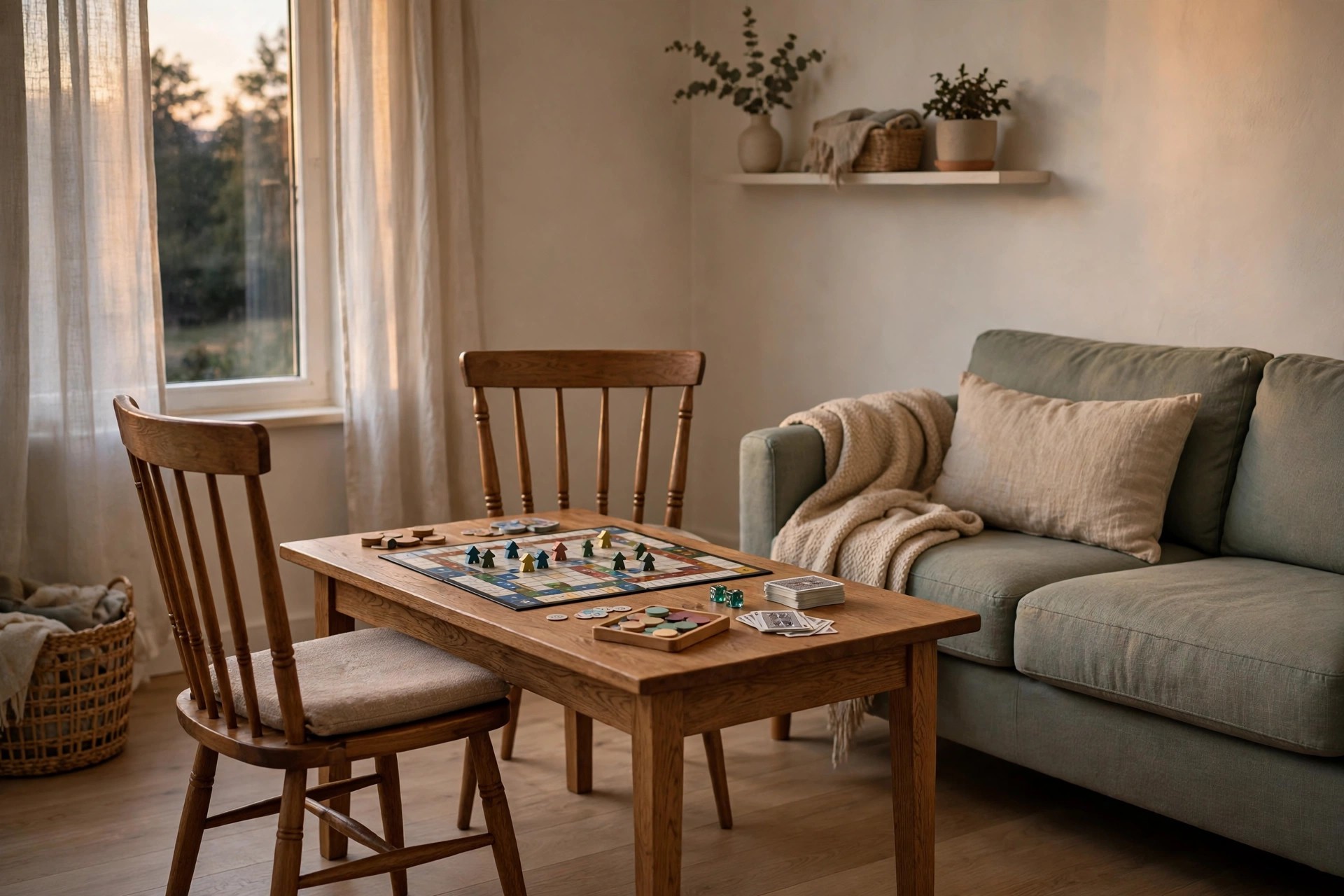
The dining chairs you already own are the cheapest extra seats you will ever buy, because you bought them long ago. Carry two or three into the living room and set them around the game table.
Dining chairs work best when their seat height matches the sofa seat height within a small gap.
Put felt pads on the chair feet if your living room floor is wood, since dragged chairs mark floors.
Return the chairs right after the last round. If you wait until morning, the living room stays a dining room, and the next day starts with a chore.
A combined living and dining layout can make this swap easy, as shown in these living room and dining room combo ideas for small apartments.
5. Run a Low Bench Along the Wall for Flexible Seating
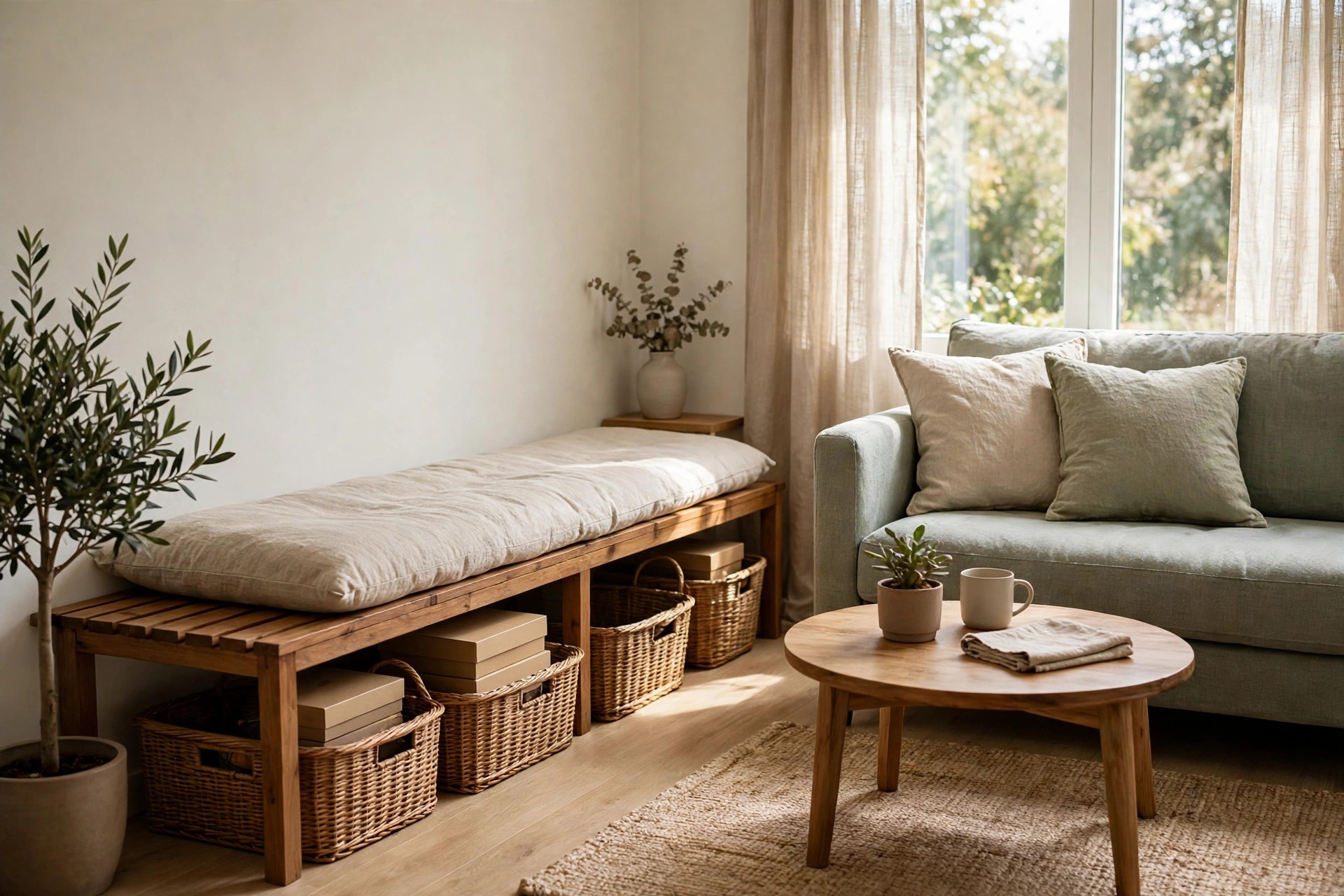
A low bench against one wall seats two adults side by side, or three kids in a row, and it never blocks the walkway.
Pick a bench that is no deeper than a sofa cushion, so it hugs the wall instead of jutting into the room.
Add one long cushion on top so the bench feels like a seat, not a shelf. Guests sit longer and lean in more when the bench is soft, and a cushion is easy to wash after snack spills.
Place the bench where players face the game table, not with their backs to it. A bench behind the sofa helps no one, but a bench on the side wall puts two more players right at the board.
6. Fill a Basket With Floor Cushions for Casual Players
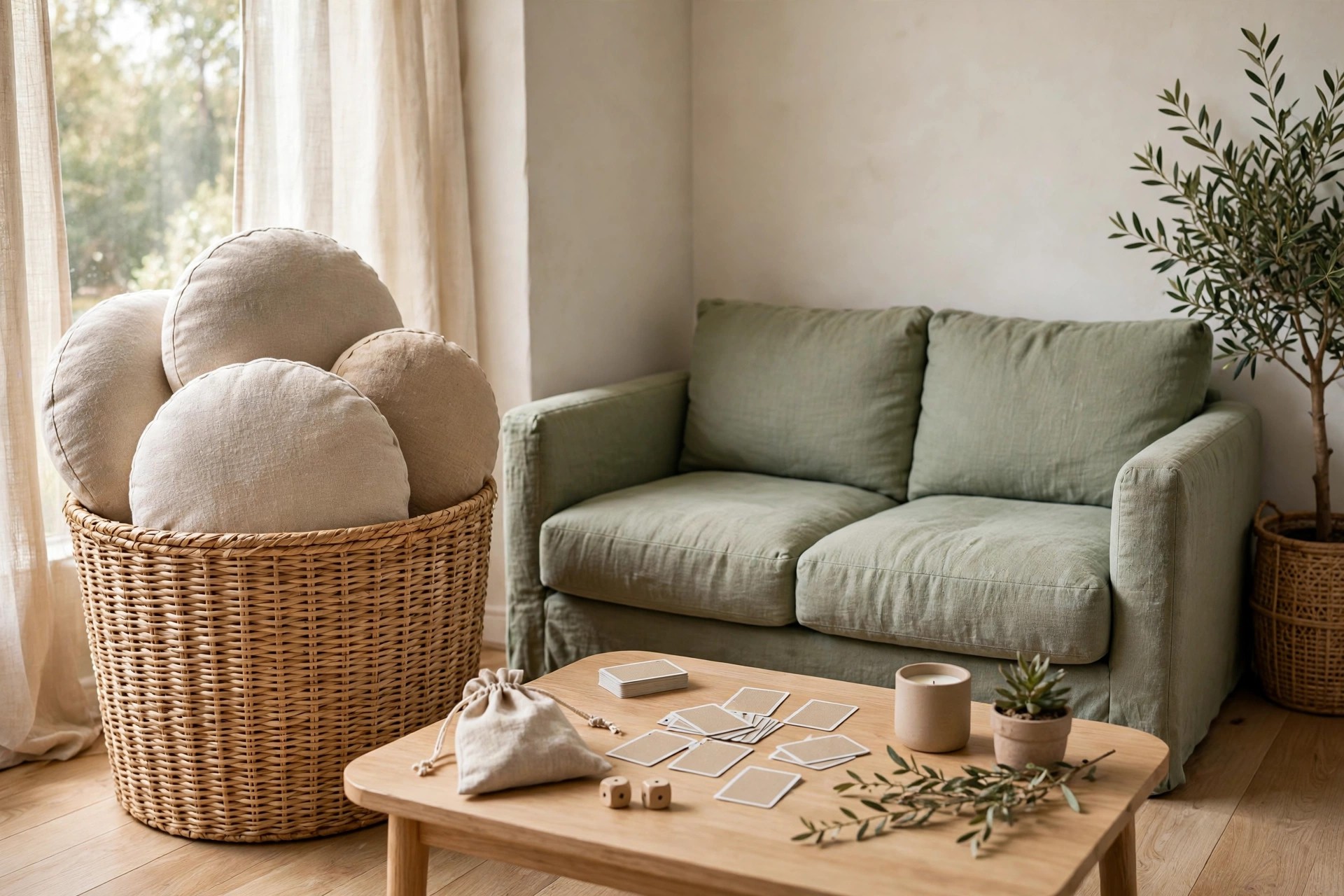
A tall basket of floor cushions is the most relaxed way to add seats. Younger guests and casual players often like the floor, and cushions stack in a corner without a single chair leg in sight.
Choose thick cushions with a firm core, since thin ones flatten in ten minutes and leave guests sitting on the rug. A washable cover matters here, because floor cushions meet shoes, snacks, and pets.
Set the basket near the game zone, not in a far bedroom, so guests can help themselves without asking.
Limit floor seats to two or three players per night, and keep the sofa and chairs for guests who need back support. That mix keeps the game open to all ages without tiring anyone out.
7. Raise the Game With a Lift Top Coffee Table
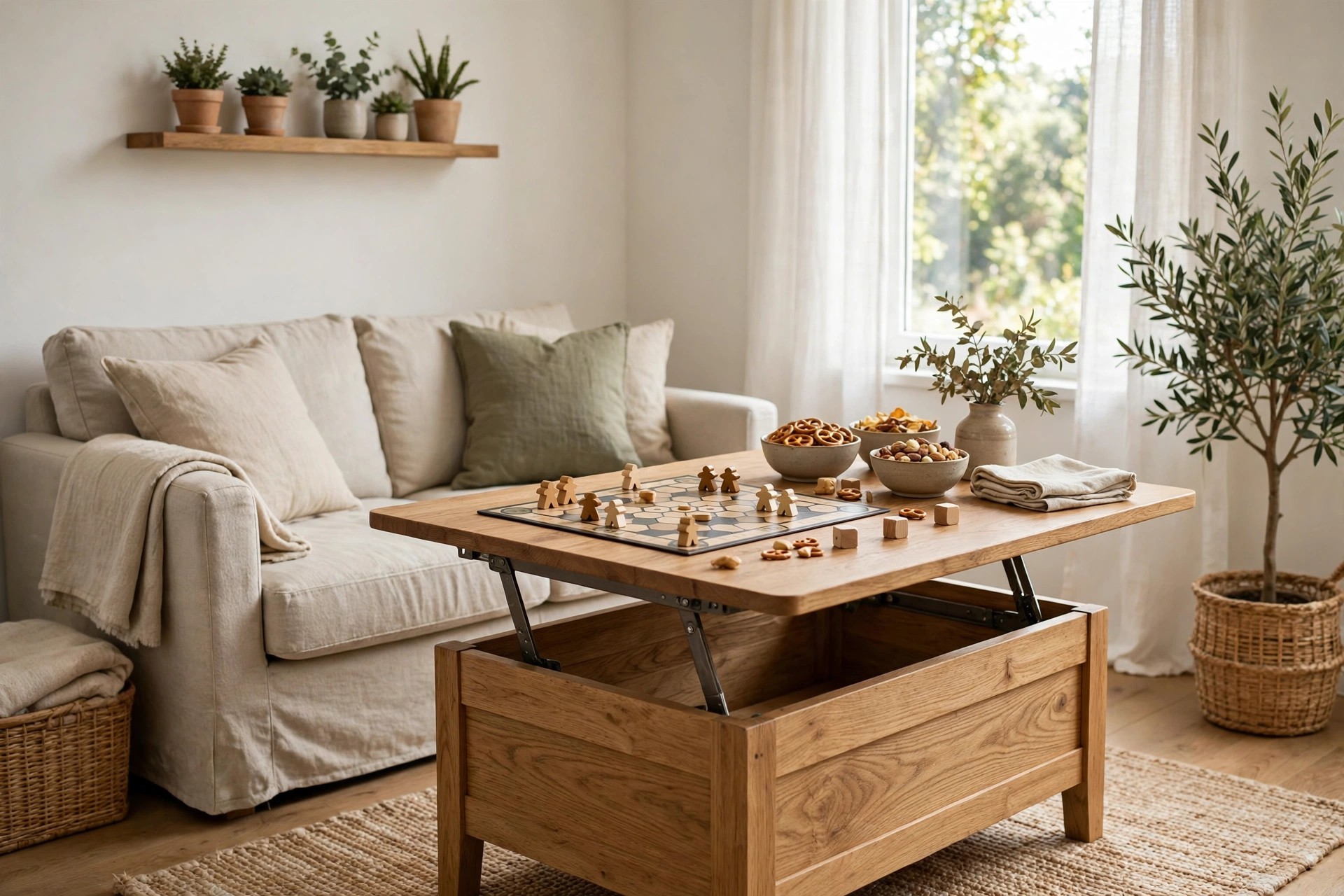
A coffee table that is too low makes players hunch, drop cards, and knock drinks. A lift top table rises to a height where cards, boards, and snacks sit within easy reach of every seat.
Test the lifted height against your sofa before game night. The top should sit just below elbow height for a seated player, so arms rest easy and no one leans forward all evening.
Use the space inside the table for the games you play most, so setup means lifting the lid and dealing the cards. That one habit cuts the pre-game hunt through shelves and closets.
Lower the top when the game ends, and the room goes back to a normal living room in seconds.
8. Scatter Nesting Tables So Every Player Has a Drink Spot
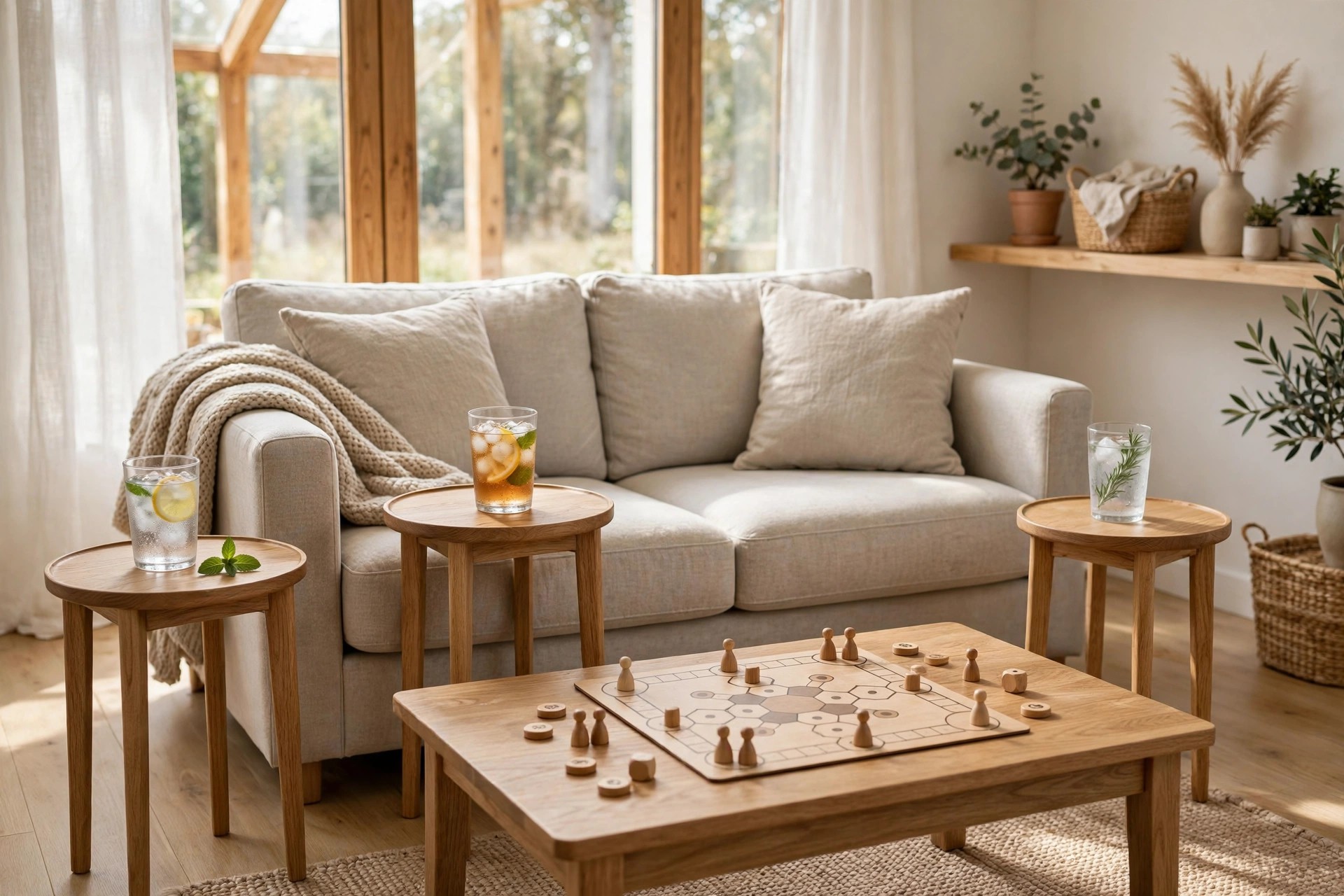
Drinks cause most game night mess, and the cause is simple: no one has a spot for a glass. Nesting tables fix that, since they pull apart into small side tables and stack back into one slim set.
Place one small table beside each end of the sofa and one near the extra chairs. Each player should reach a drink without stretching across the board or asking a neighbor to move.
Pick tables with a rim or a tray top if you can, so a bumped glass stays put instead of sliding off.
Stack the tables back together when guests leave, and slide the set beside the sofa. The whole drink system hides in a gap barely wider than a book, ready for the next round.
9. Angle the Sofa Into a Loose Circle for Board Games
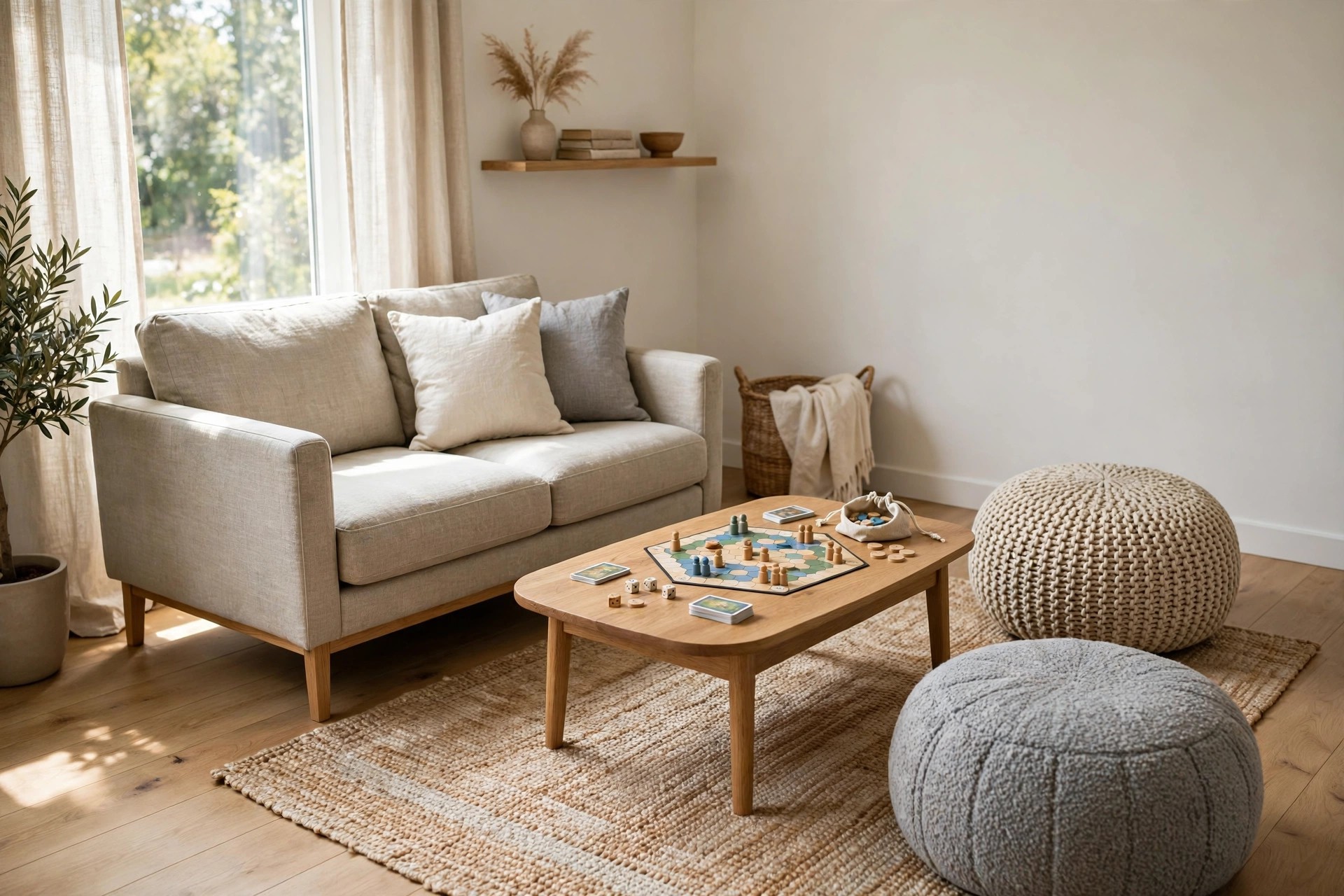
Most sofas sit flat against a wall, which leaves half the players facing away from the game. Pull the sofa out a few inches and angle one end toward the table, and the seats form a loose circle.
You do not need to move the sofa far. A small shift opens a gap behind the sofa for a chair or a pouf to join the circle.
If one seat still faces a wall, swap in a lighter chair for that spot.
Push the sofa back after the game if the angled spot blocks a door or a walkway.
For help sizing the sofa and the screen around it, see these small living room layout ideas with a TV and a sofa that fit.
10. Add Two Armless Chairs That Slide Into Narrow Gaps
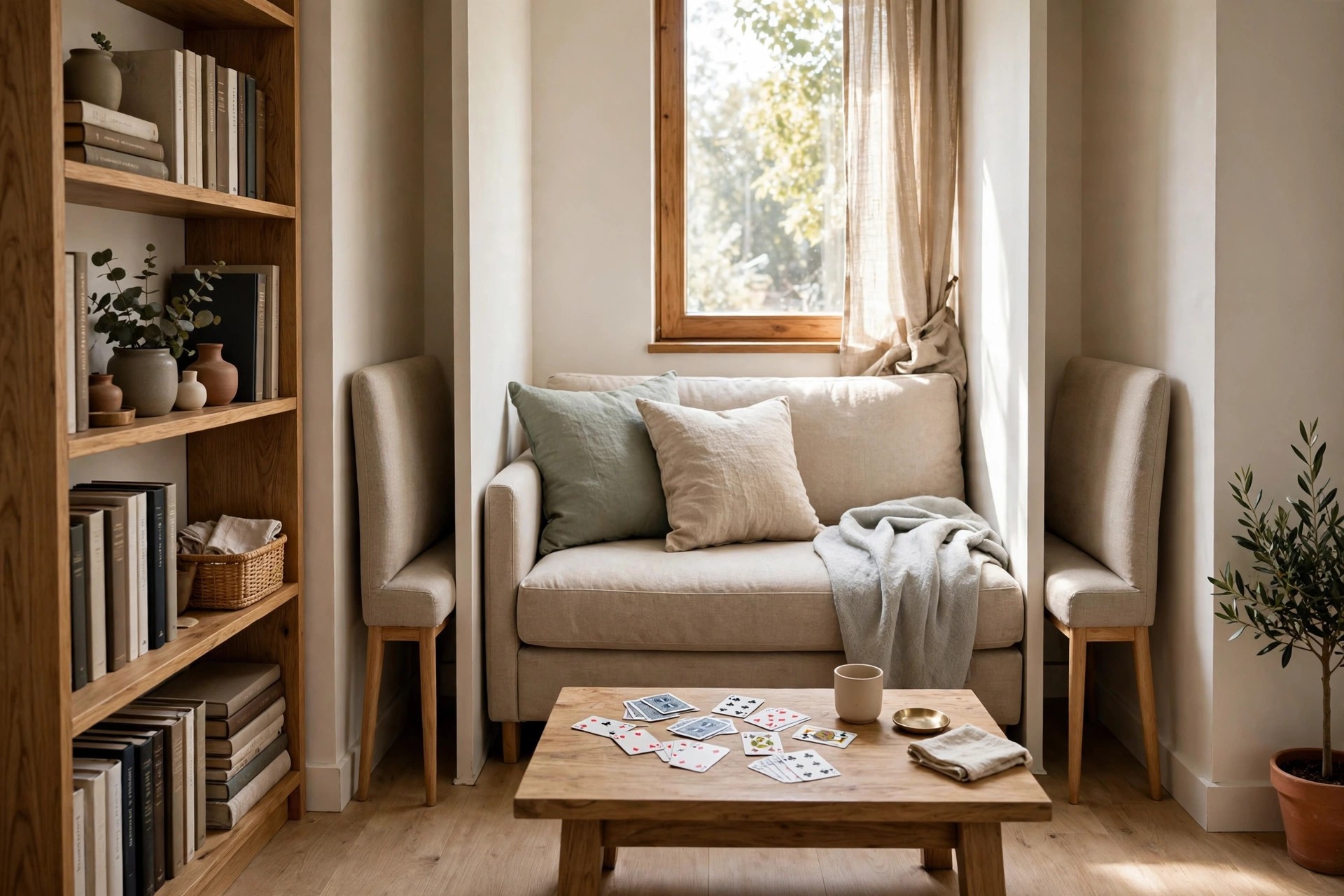
Armless chairs are the quiet heroes of small rooms, because they slide into gaps where a full armchair never fits. Beside a bookcase, between the sofa and the wall, or at the end of a bench, they wait without crowding.
Look for chairs with slim legs and a light frame, so one person can pull a chair out with one hand.
Match the chair seat height to your sofa, and keep the back low enough to tuck under a window sill if needed.
On game night, pull both chairs to the table ends, where players need a clear view of the board. After the game, slide them back into their gaps, and the room looks calm again.
11. Use Counter Stools as Overflow Seats by the Kitchen
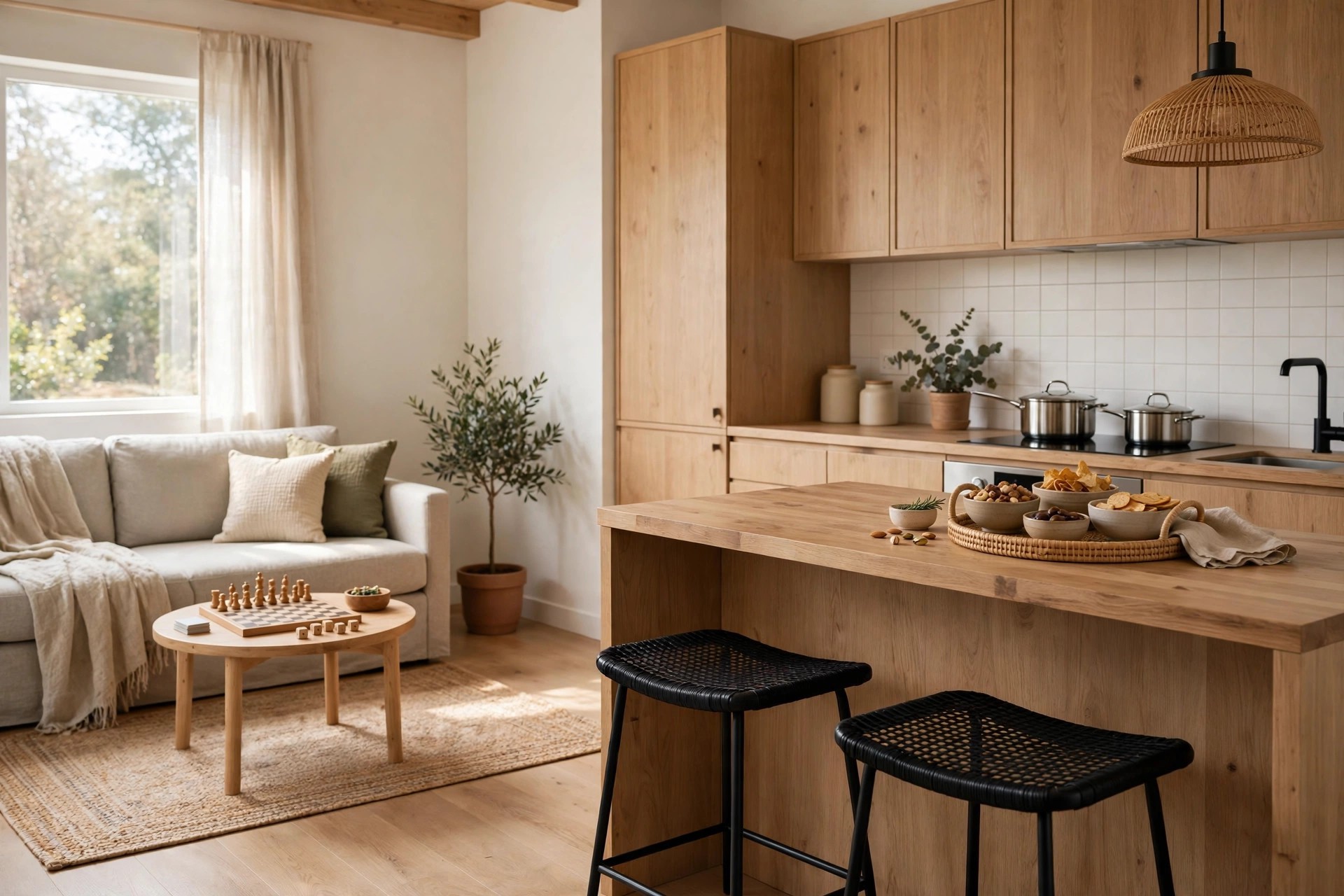
When the living room seats run out, the kitchen counter is the next best game zone. Two counter stools give late guests a perch with a view of the game, plus a built in spot for snacks.
Backless stools tuck fully under the counter when the night ends, which matters in a small room.
Set a tray on the counter for drinks and bowls, so the stool seats do not turn into a snack shelf.
Keep the path between the counter and the game table open, since stool players will cross it. That open lane is also how snacks travel, so it serves the whole night.
Open kitchen layouts make this flow simple, as these small living room ideas for apartments with open kitchens show.
12. Turn the Window Seat Into a Player Perch
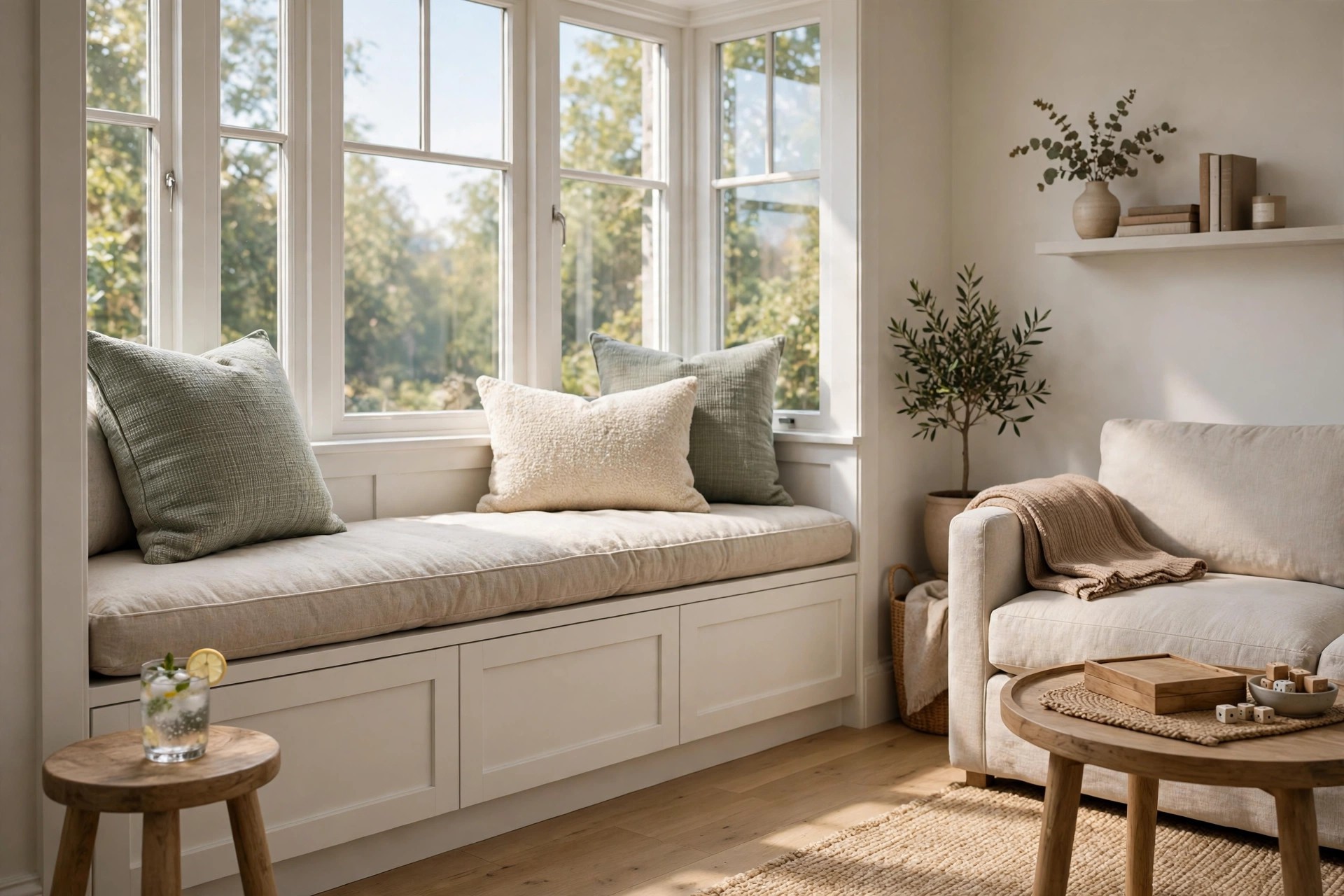
A window seat is often wasted on plants and books, but on game night it is a ready made perch. Add a thick cushion and a back pillow, and one or two players gain a seat with the best light in the room.
Check the seat depth before you count it as a game seat. A shallow ledge suits one player with a card hand, while a deep bay can hold two players side by side if the cushion fits.
Keep a small side table or a stool beside the window seat for drinks, since players there sit far from the coffee table.
Clear the window seat before guests arrive, and put the plants on the floor for the night.
13. Set a Tray on the Ottoman and Keep Snacks Off the Game
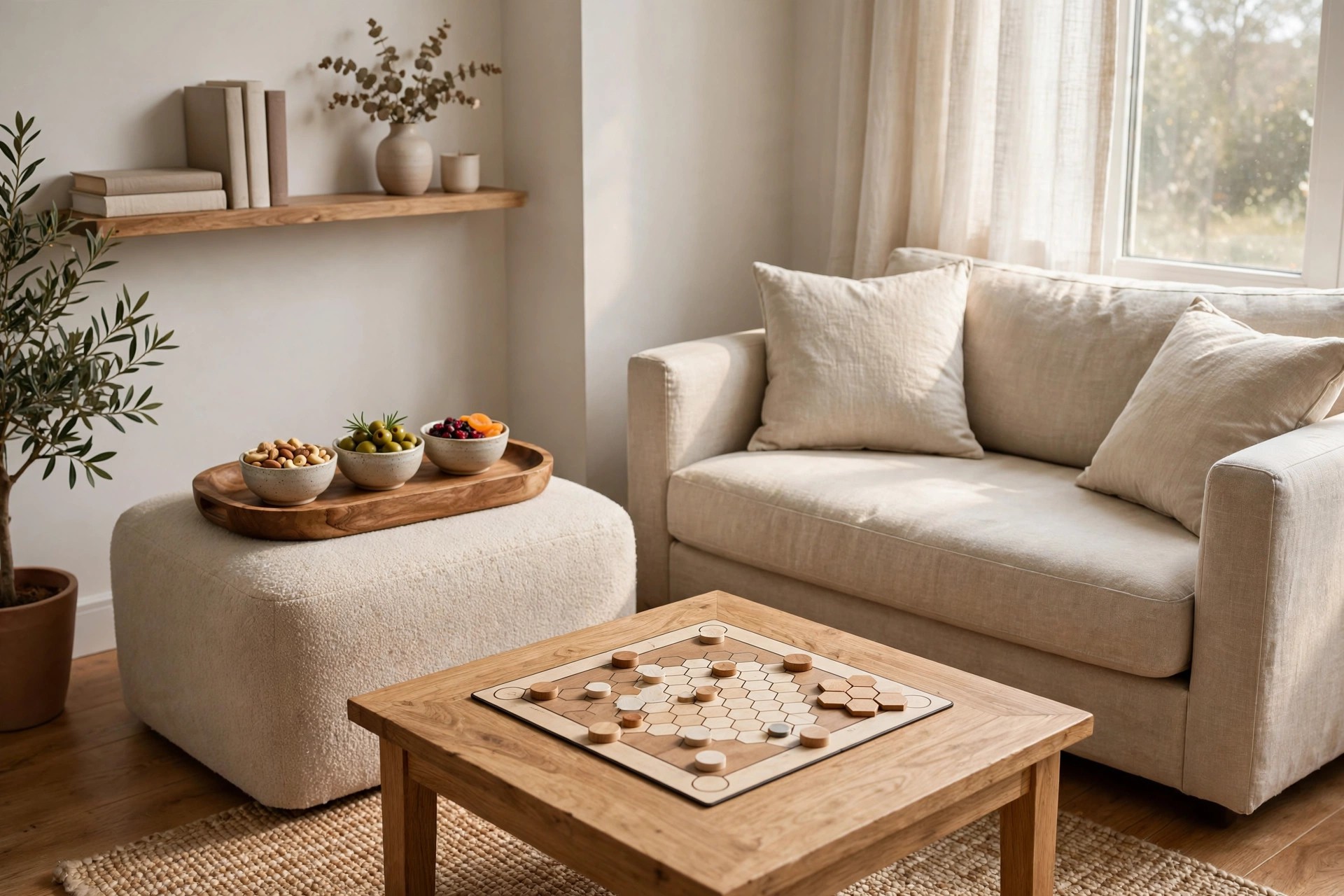
Snacks and board games fight for the same table, and snacks usually win by spilling. A large tray on the ottoman moves food to its own station, so the game table stays clear for play.
Pick a tray with raised edges and handles, so it carries from kitchen to ottoman in one trip.
Refill the tray in the kitchen, not at the ottoman, so the game pauses for one trip instead of a string of small ones. One refill run also gives the host a short break from play.
Use small bowls rather than one big bowl, so two players can snack without reaching across the board. When the game ends, lift the tray and the snack station vanishes with it.
14. Do a Trial Run of Your Small Living Room Ideas for Hosting Game Night Seating
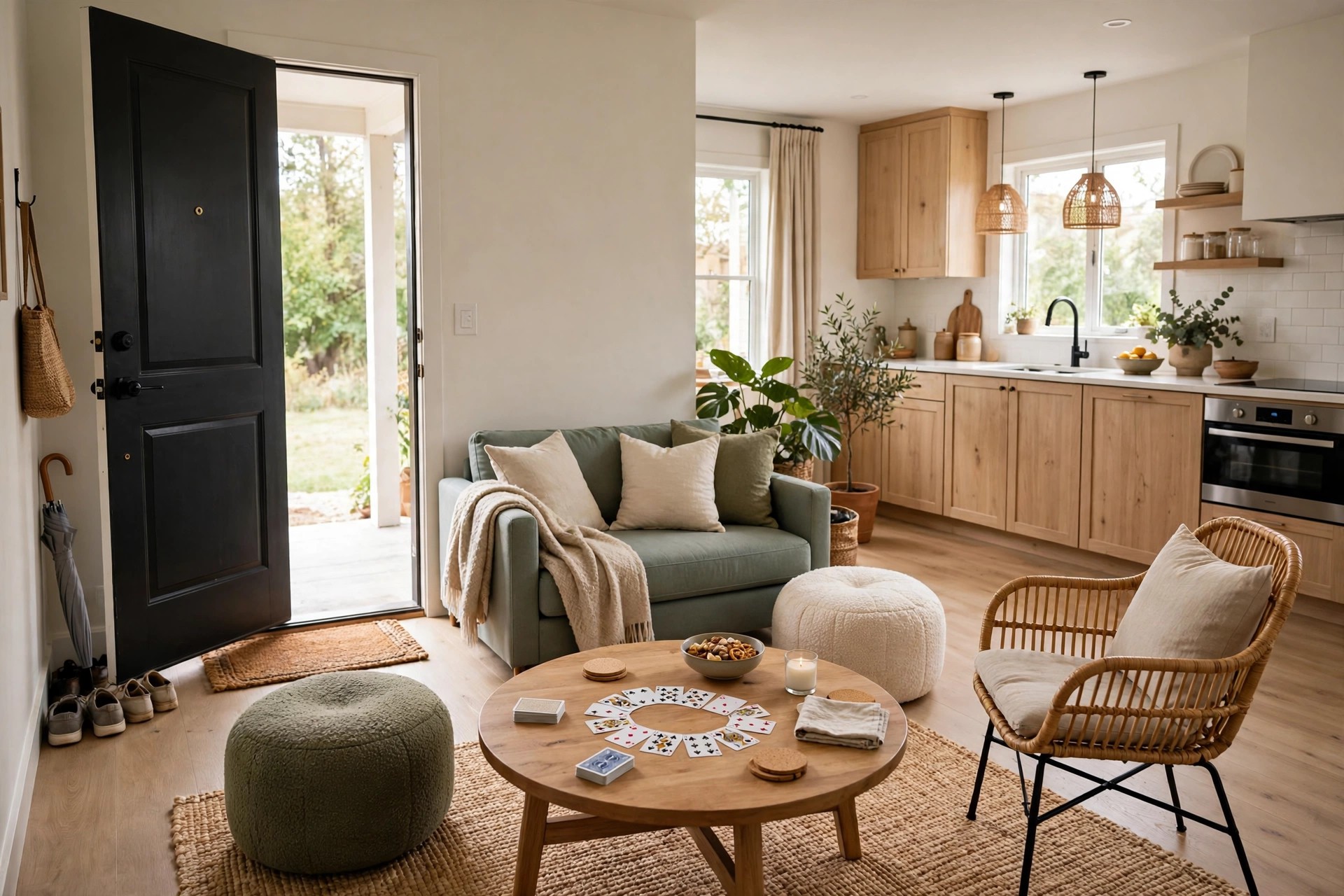
A trial run the day before game night saves the night itself. Set out every seat, sit in each one, and deal a few cards to see what each player can reach.
Walk the path from the front door to the kitchen and back, since that is the route guests will use. If a chair blocks the path, move it now, not while guests stand holding drinks.
Count the seats and match them to your guest list, with one spare seat if you have room.
Note what failed in the trial, and fix that one thing before the night. Narrow rooms need this check most, so these narrow living room layout ideas can help you plan the path.
15. Pack a Reset Basket So the Room Is Back in Ten Minutes
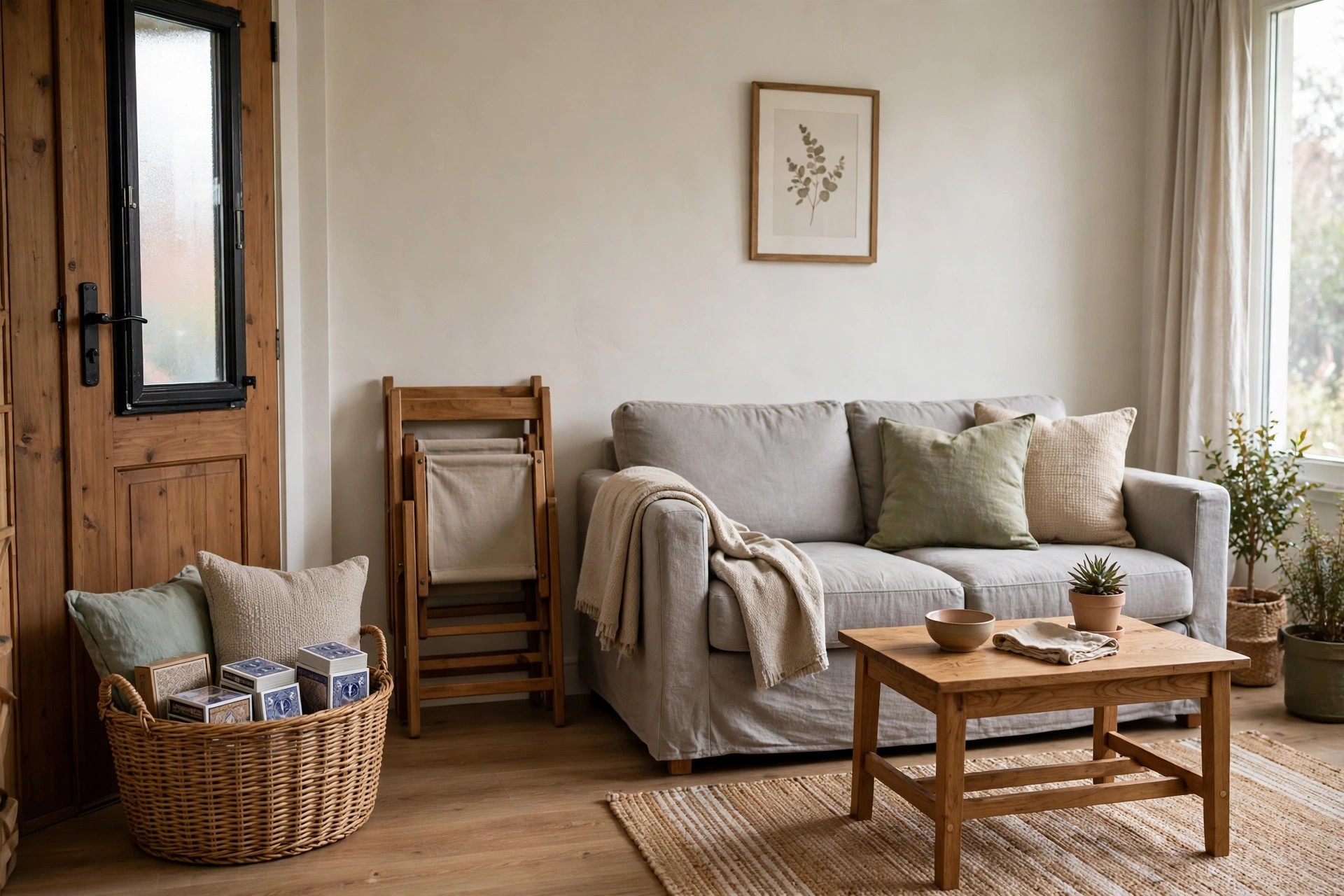
The best game night ends with a fast reset, not a long tidy up. A reset basket by the door holds the small things that scatter: card decks, score pads, coasters, and spare cushions.
During the last round, ask each guest to drop their coaster and cushion in the basket on the way out.
Fold the chairs, stack the poufs, and slide the nesting tables together in one short pass. Work from the door toward the sofa, so you never cross a space you just tidied.
Put the games back in the ottoman or on one shelf, not scattered across three rooms. A room that resets in ten minutes is a room you will happily open for game night again.
A few pieces that store away, a table at the right height, and a clear path do more than a bigger sofa ever could.
These small living room ideas for hosting game night seating give you a place to start. Pick two or three ideas that fit your room, try them at your next game night, and keep the ones your guests ask about.
If a friend stays over after the game, a seat that turns into a bed solves the next problem too, as these sofa bed living room ideas for guests show.
Save this to your small living room board for later, so the plan is waiting when the next game night comes around.


