

15 Pale Blue and Wood Living Room Ideas for Scandi Homes
Pale blue can turn cold fast in a north light room, and plain white scandi rooms can feel flat by evening.
The fix is a tight pairing. These pale blue and wood living room ideas for scandi homes keep blue soft and wood light, so the room stays calm and warm at the same time.
Each idea below changes one thing only: where the blue sits, which wood tone carries it, or how white balances the two.
For a broader tour of the style, see our scandinavian living room ideas guide. This list stays on the blue and wood pairing alone.
Start small if you like. A cushion, a rug, or one painted wall is enough to test how the blue behaves in your light.
The ideas run from big doses to small ones, so you can stop at the level that suits your room, your budget, and your lease.
This post contains affiliate links. If you buy through them, we may earn a small commission at no extra cost to you. See our Affiliate Disclosure.
1. Paint All Four Walls Pale Blue Over a Pale Wood Floor
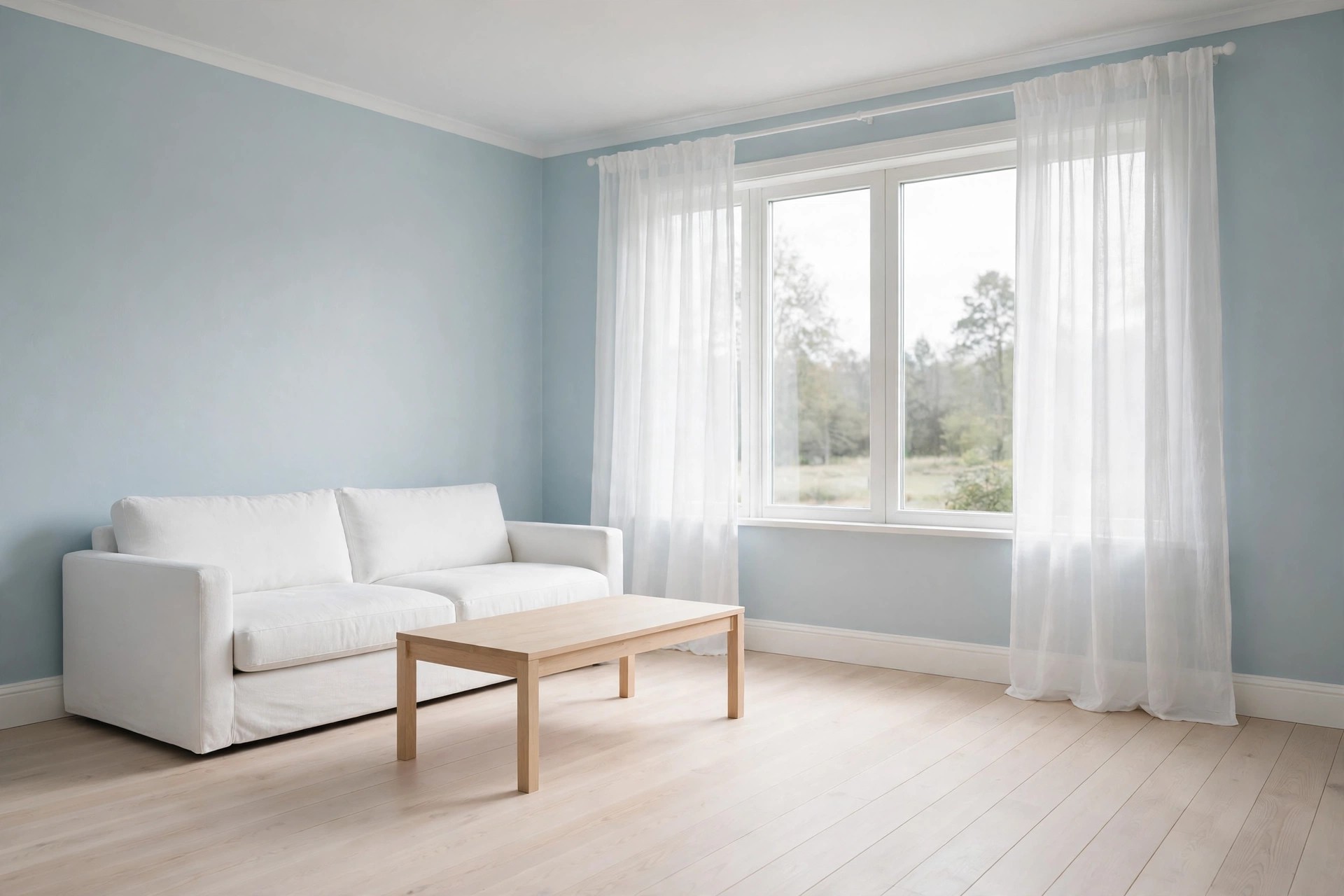
Start with the strongest dose: pale blue on every wall, with a white ceiling and pale ash or birch tone flooring below.
The floor does the warming work here. Keep skirting and door frames white so the blue edge reads crisp, not heavy.
Choose a blue with a grey base, not a bright sky tint. Grey based blues hold steady in flat daylight and lamplight.
Test the paint on the wall that gets least sun first. That wall shows the truest, coolest version of the color.
Keep other wood in the room pale to match the floor. A darker sideboard or chair leg will pull focus and make the blue walls look colder than they are.
2. Keep Walls White and Put the Blue on the Sofa
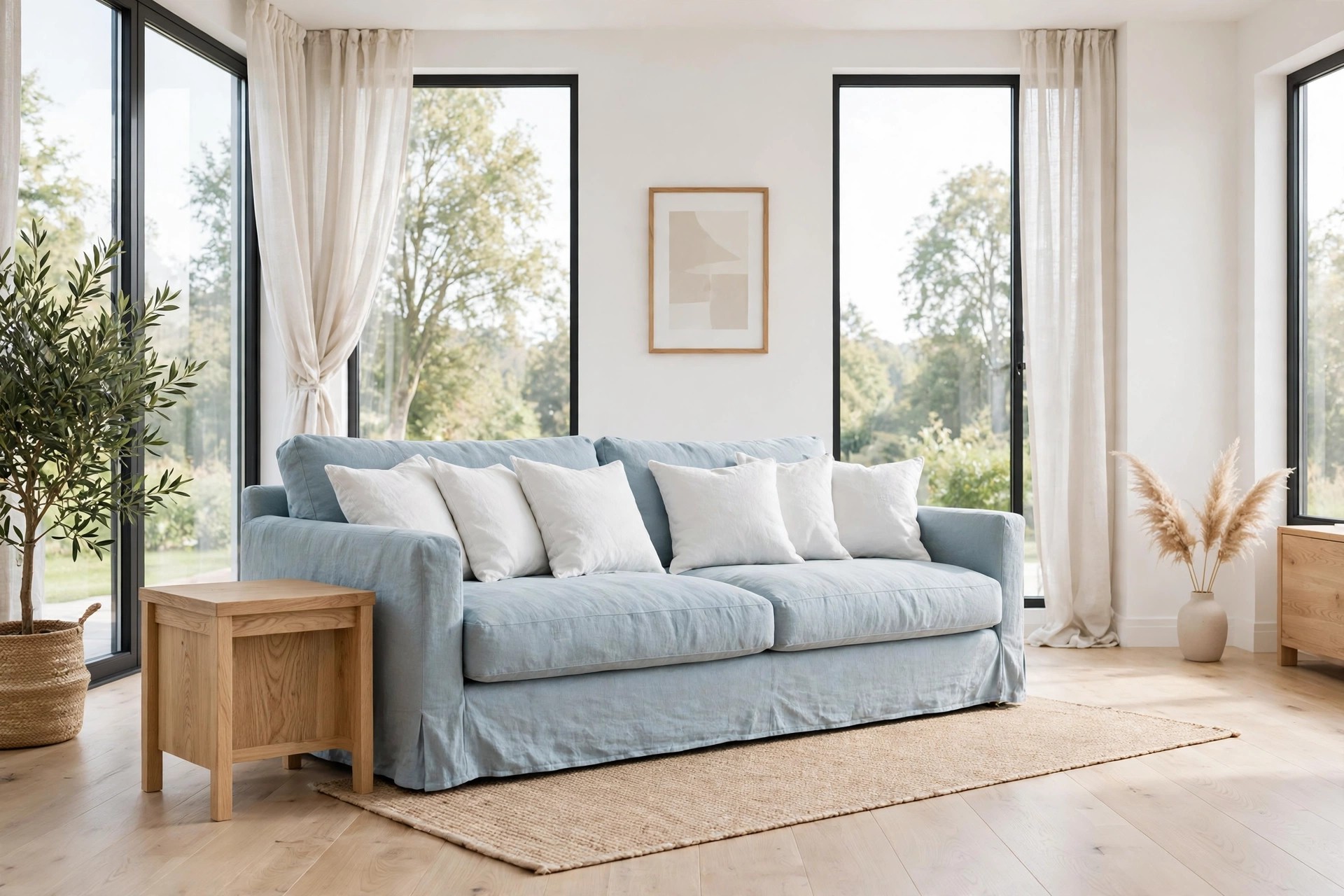
A pale blue sofa on white walls gives you the same calm with far less commitment than paint.
Pick a plain weave cotton or linen mix cover in a washed, dusty blue. Avoid shiny fabric, which makes pale blue look cold.
Pair it with light oak legs and a light wood side table so the blue reads soft against warm grain.
This dose also suits small rooms well. Our blue ideas for small living rooms cover the tight layout side of that balance.
Ground the sofa with a pale rug and a light throw if the white walls feel bare. One white cushion with a blue cushion keeps the seat from looking like a single flat block of color.
3. Anchor the Seating With Light Oak Tables
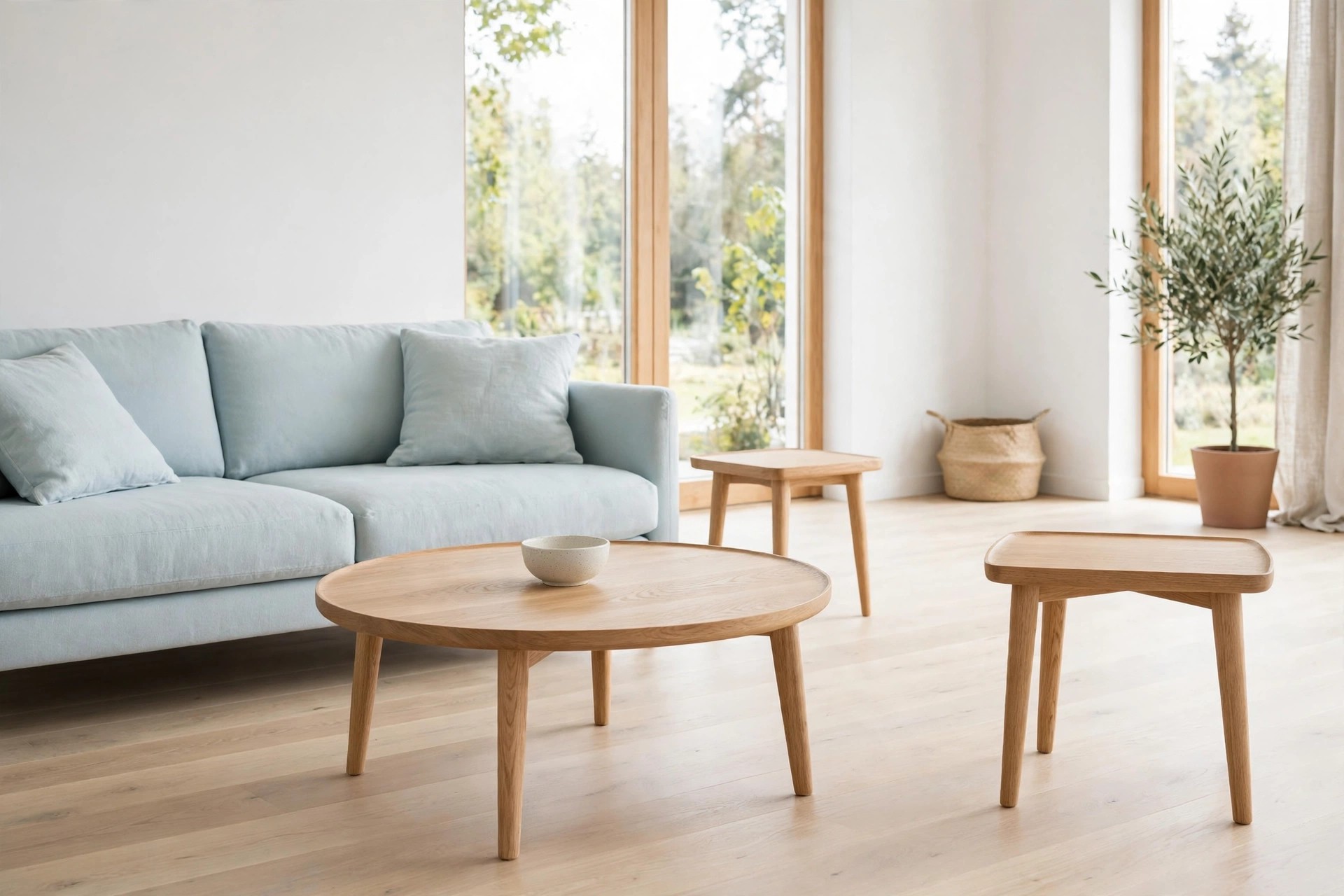
Light oak tables give pale blue something solid to sit next to. A round coffee table softens a square room best.
Keep the shapes simple: tapered legs, thin tops, and no dark stain or glossy finish anywhere in the set.
Match the tone, not the exact piece. A coffee table and two side tables in the same pale oak family look calm together.
Leave the tops mostly clear. One small ceramic bowl or a short stack of books is enough on each surface.
Round tables also help in tight rooms, since you can walk past them without catching a corner. Leave walking space on all sides so the seating group still feels open and easy to use daily.
4. Lay a Pale Blue Rug Over the Wood Floor
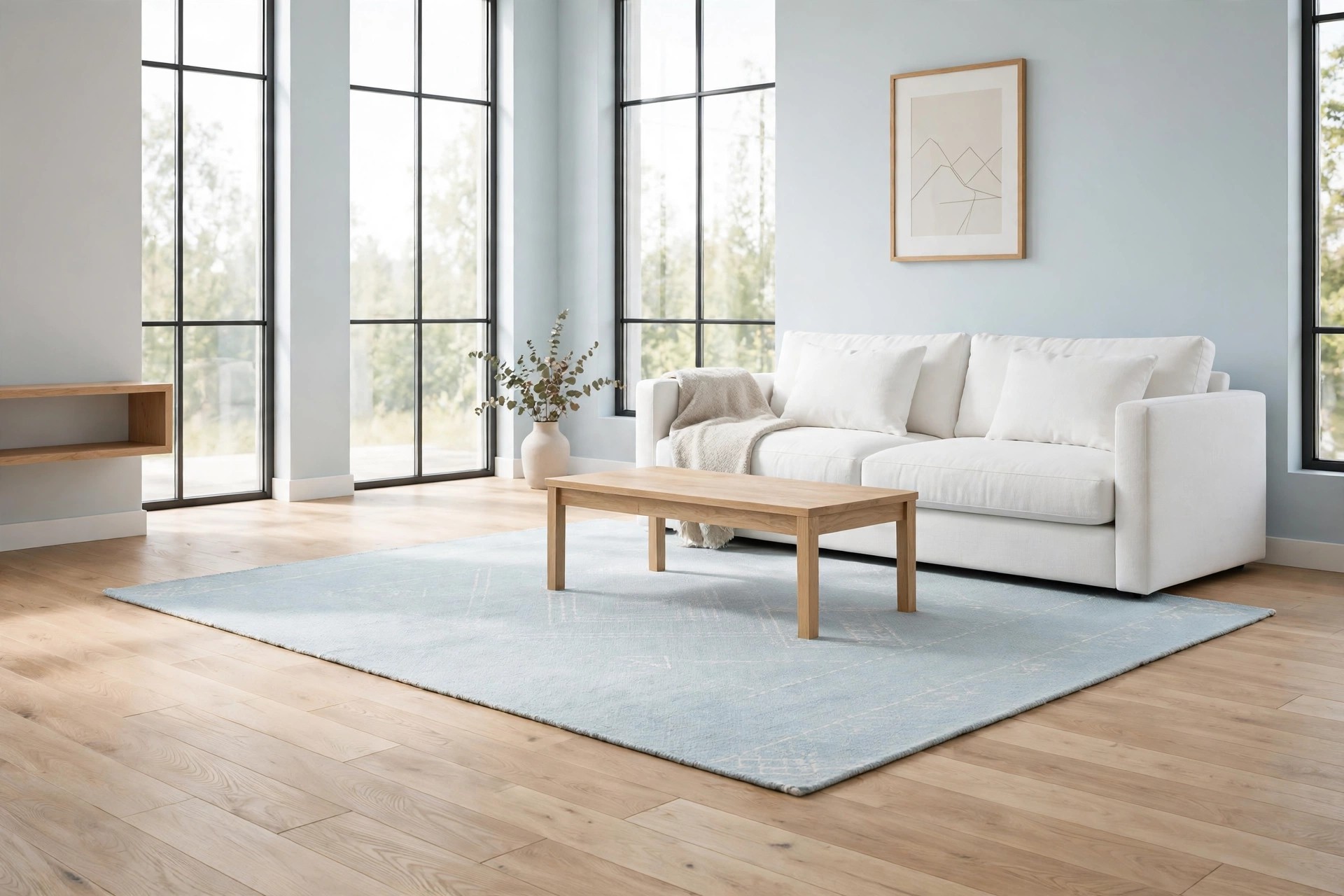
A rug is the easiest way to set the seating zone and add blue without touching a wall.
Choose a flat weave wool rug in pale blue with a faint white pattern. Leave a wide border of wood showing on all sides.
That wood border matters. It keeps the blue feeling light and stops the floor from looking cut in half.
For more rug led schemes, see our blue rug living room ideas. If floors are your focus, these grey beige rooms with warm wood floors show the wood side well.
Vacuum the rug with the grain of the weave and lift the corners now and then to sweep grit off the wood. Grit left under a rug will mark a pale floor faster than daily foot traffic does.
5. Build a Low Birch Shelf Wall With Closed Boxes Below
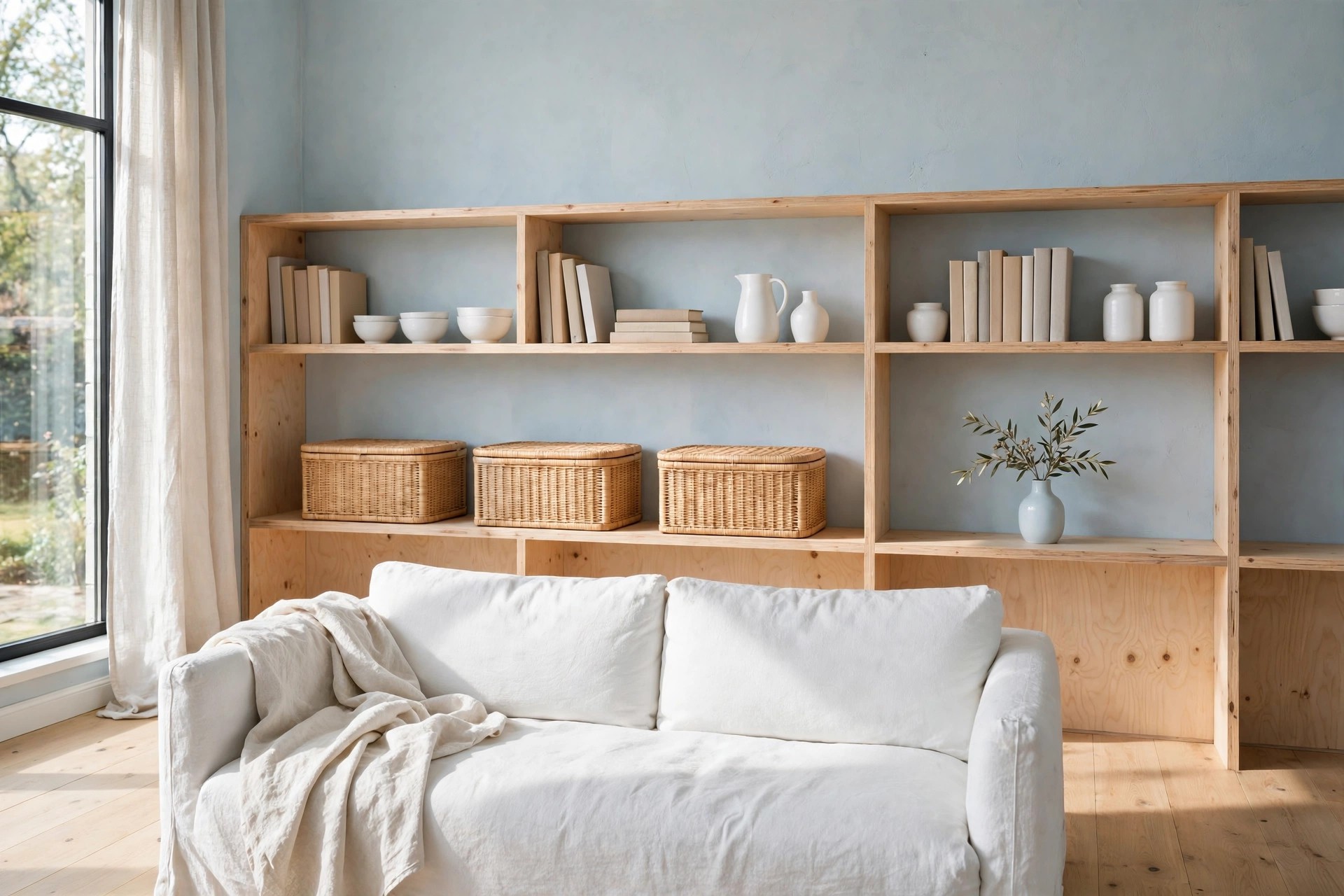
Open shelves suit this palette only when they stay half empty. Birch or pale pine keeps the wall light against pale blue paint.
Put books and ceramics on the top shelves. Put remotes, chargers, and loose paper in lidded boxes on the low shelves.
Repeat the blue in just two or three shelf objects, such as a vase and a small framed print.
For deeper storage styling, our sibling guide to beige rooms with built in shelf styling covers shelf balance step by step.
Leave one shelf almost empty on purpose. That gap of pale wall or wood behind a single object is what stops the whole wall from reading as storage instead of part of the room.
6. Hang Pale Blue Linen Curtains With a White Sheer Layer
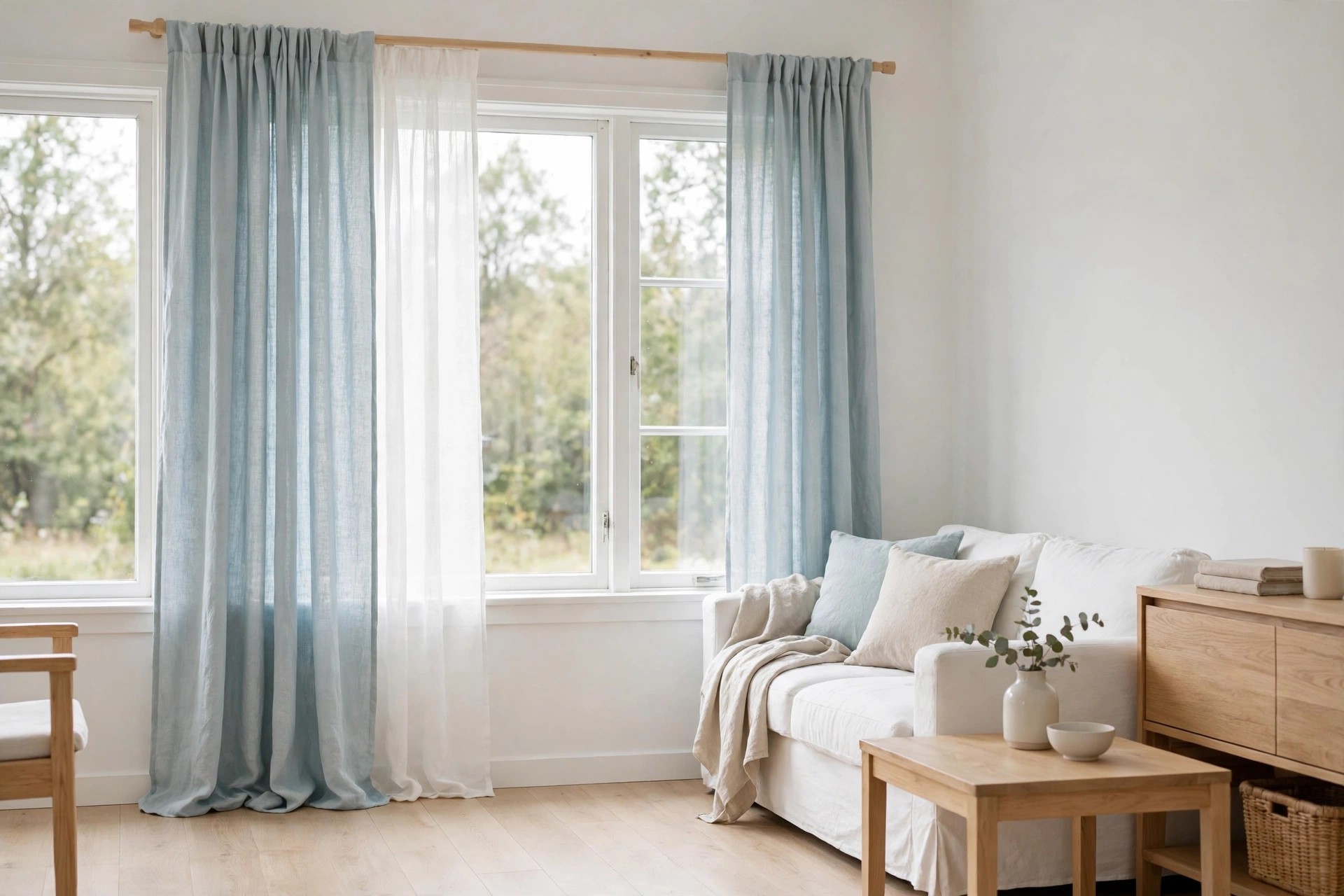
Curtains carry blue up the wall without paint, and linen keeps the color soft at the edges of the light.
Hang a white sheer closest to the glass and the pale blue linen panel in front of it. The sheer stops glare on bright days.
Use a light wood or white pole, set high and wide so the panels clear most of the window when open.
Let hems just touch the floor. Pooled fabric gathers dust fast and breaks the clean line this look needs.
Wash linen panels on a gentle cycle and hang them back while still slightly damp. Linen creases settle that way, and you skip the pressed, stiff look that fights the soft scandi feel.
7. Layer Natural Wool and Cotton in Blue and White Only
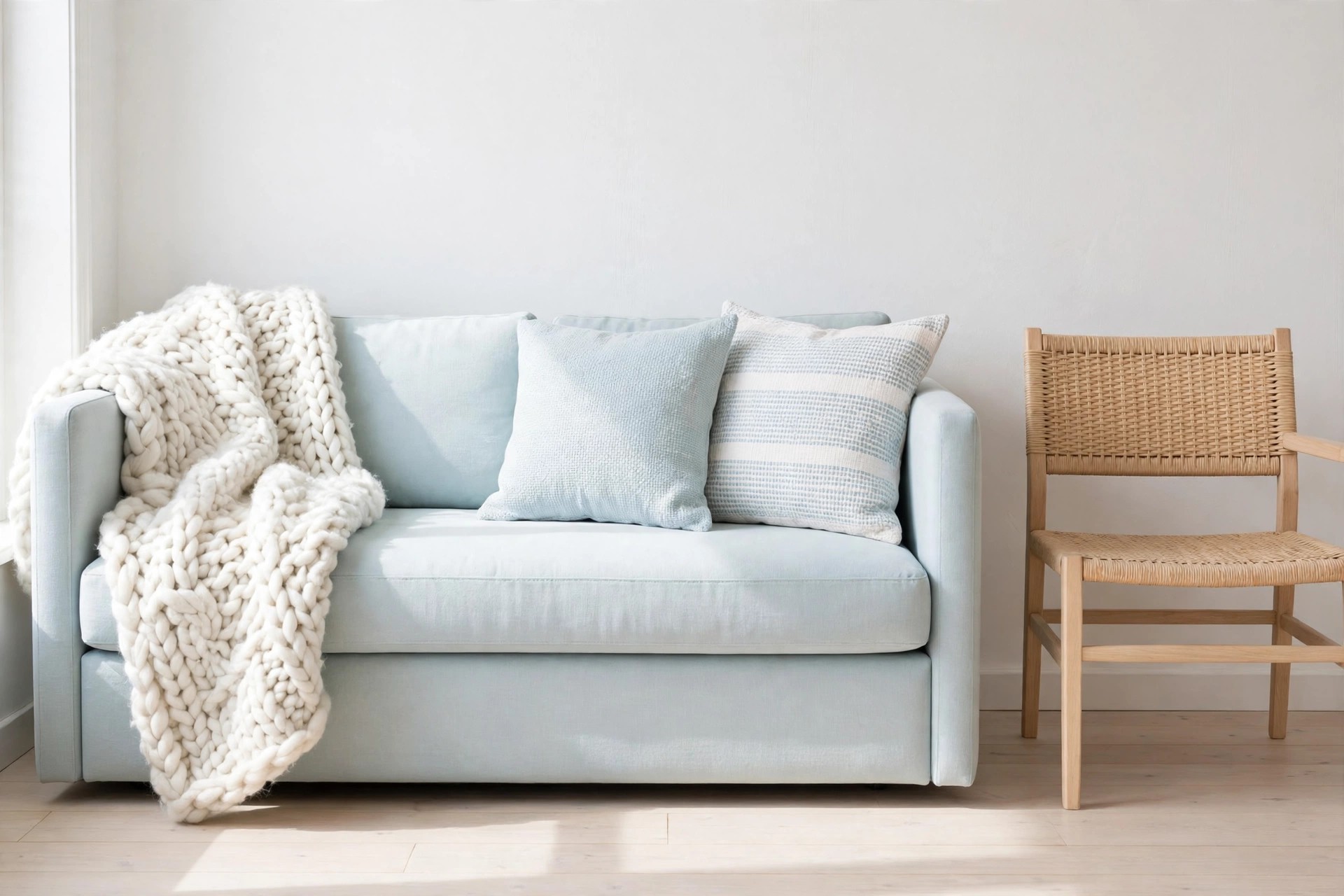
Texture does more for this pairing than pattern does. Wool, cotton, and linen in pale blue and white feel calm side by side.
Try a white wool throw over a blue sofa arm, and blue cotton cushions on a white or pale wood framed chair.
Keep weaves visible: a chunky knit, a plain flat cotton, and one slub linen. That mix reads warm up close.
Washable cushion covers help here. The palest blue cover on the sunny seat will fade a shade faster than the rest.
Stick to two cushions per seat and one throw per sofa. More layers than that turn a pale palette muddy, and the blue and white stop reading as clear, separate colors.
8. Choose a Low Light Wood Console and Hide the Cables
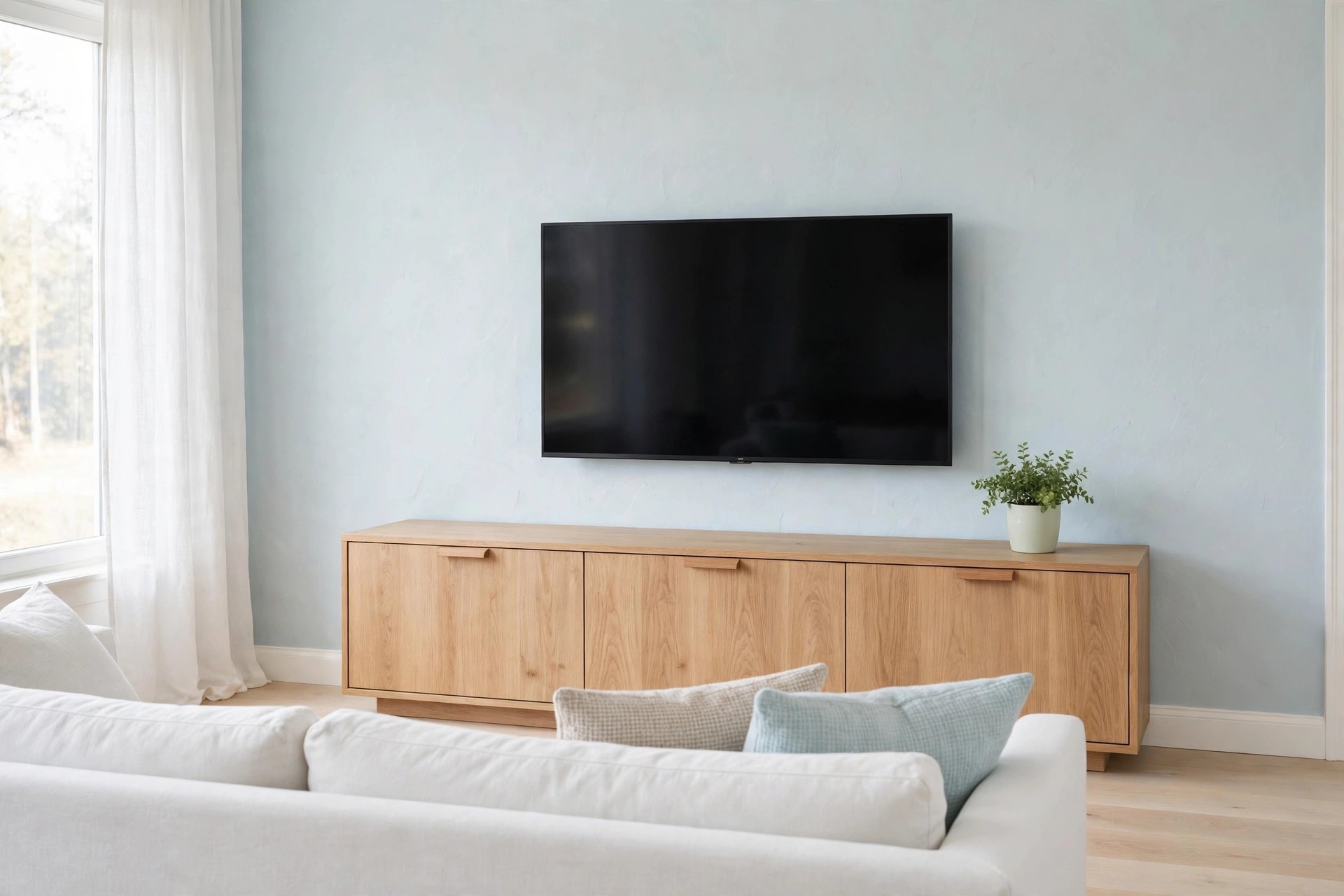
A low console in light oak or ash keeps the TV wall quiet, which matters more in a pale room than a dark one.
Pick a piece with doors, not open bays. Closed fronts hide boxes, remotes, and the cable tangle in one move.
Run cables inside the unit and out the back. A single visible black lead stands out sharply against pale blue paint.
Set nothing on top except the screen and one small plant. Clear tops are what keep this wall feeling scandi, not stark.
Measure the console depth before you buy, and leave air space behind it for heat from boxes and screens. A low, wide piece looks calmer than a tall, narrow one on the same wall.
9. Make a Pale Blue Reading Corner With a Birch Chair
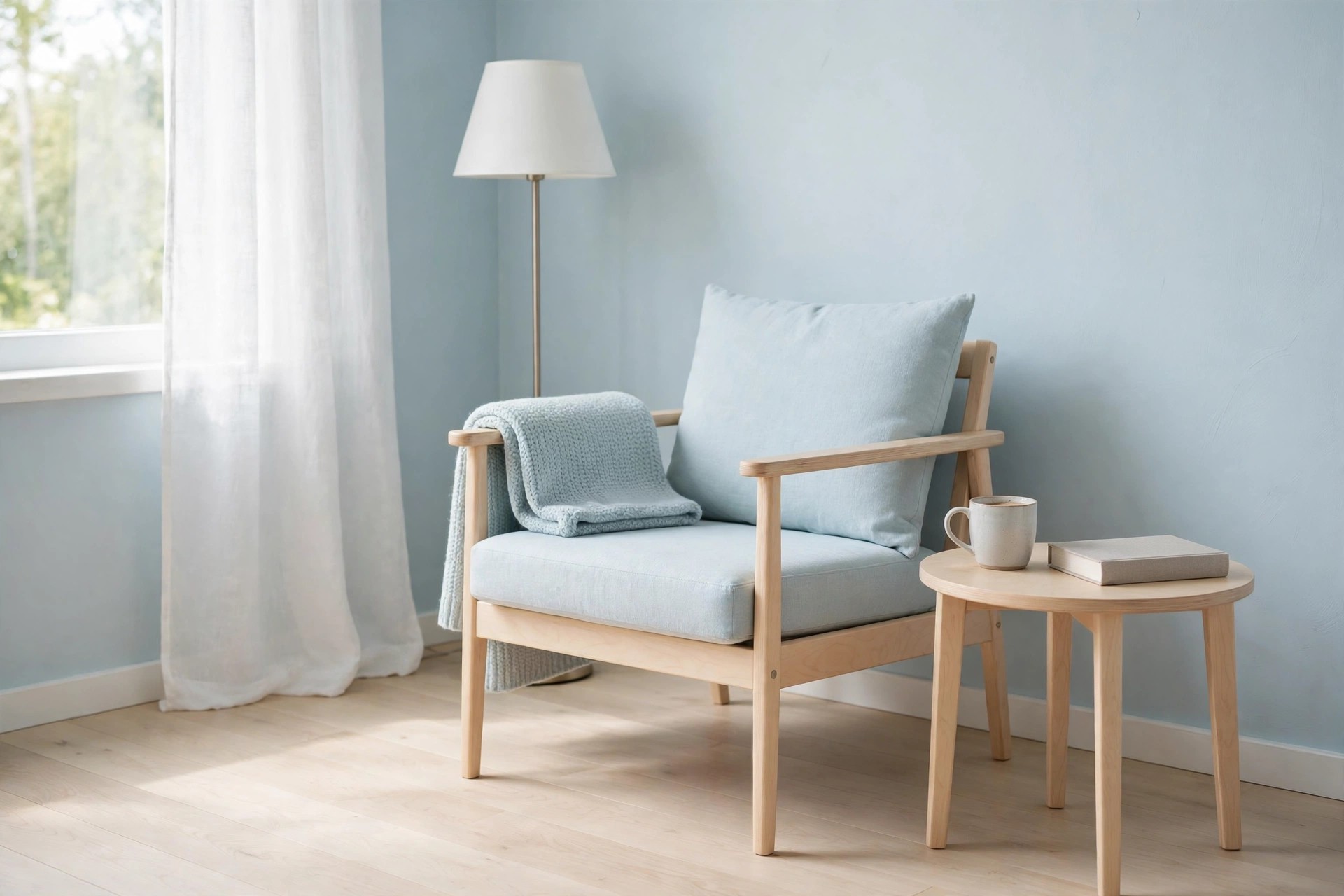
A single corner can carry the whole pairing. Start with a birch framed chair and a pale blue cushion and throw.
Add a small round wood side table for a mug and a book. A table you can reach without leaning keeps the corner in use.
Use a slim floor lamp with a white shade behind the chair. Warm bulb light stops pale blue turning grey at night.
Face the chair toward the room, not the wall. It joins the seating group and still reads as its own quiet spot.
Add a small footstool in pale wood or white fabric if you read for long stretches. Keep a spare throw folded on the chair arm so the corner is ready without a trip across the room.
10. Lighten the Blue Dose for Bright Summer Days
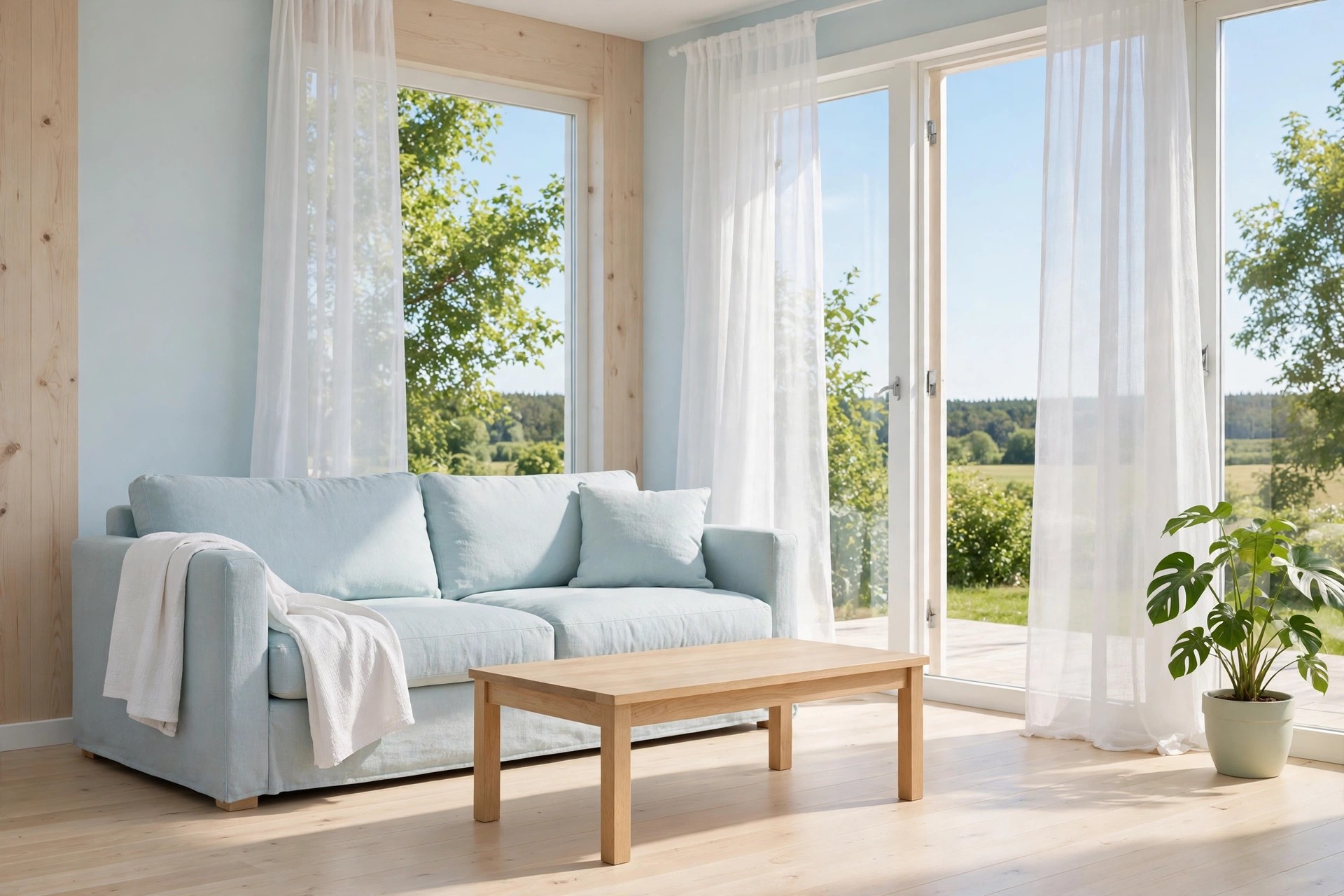
The same room needs less blue in June than in January. Strong summer light makes pale blue look brighter on its own.
Swap heavy throws for thin cotton ones, and store the darkest blue cushions until autumn. Keep one blue layer only per seat.
Open the sheer curtains fully and clean the glass. Clear light shows the wood grain better and lifts the whole palette.
Move a spare blue cushion to a bedroom for the season. Rotation keeps covers fading at the same rate.
Add one green plant by the window in summer and skip extra decor. Fresh leaf color lifts pale blue and light wood without adding a new color the room has to carry.
11. Warm the Same Palette for Dark Winter Evenings
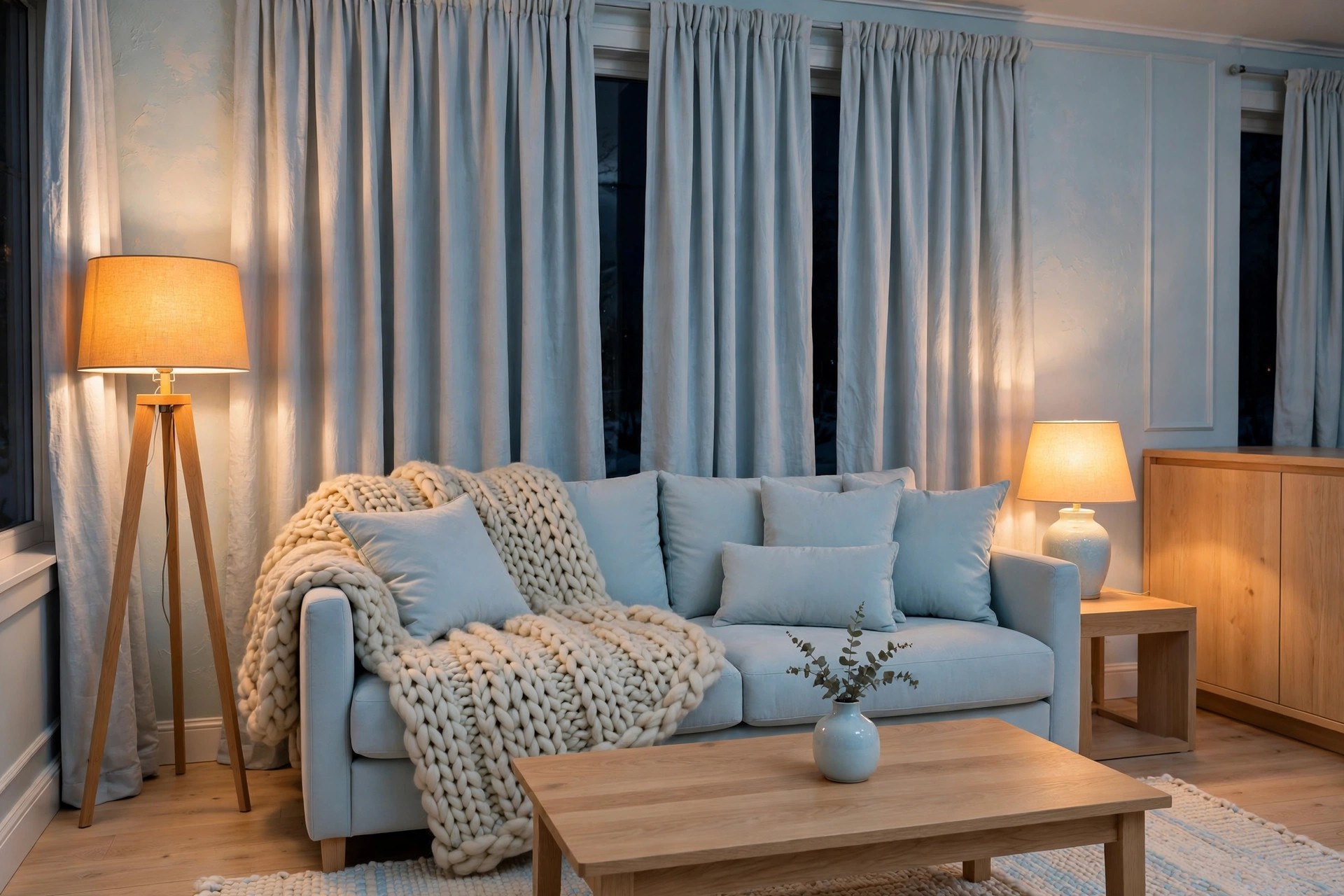
Winter light is the hard test. Short days and warm bulbs can push pale blue toward a dull, flat grey.
Bring the stored cushions and wool throw back, and add one extra lamp at seat height. Low light pools feel warmer than ceiling light.
Check your bulb color before you repaint anything. A bulb that is too yellow will muddy blue, and one too blue will chill the wood.
Test the wall color at night with lamps on. Daylight samples alone mislead in rooms used mostly after dark.
Close curtains early on winter evenings and keep the wool layer on the sofa, not folded away. Trapped warm air and soft fabric both help a pale room feel snug after dark.
12. Hold the Balance With Mostly White, Then Blue, Then Wood
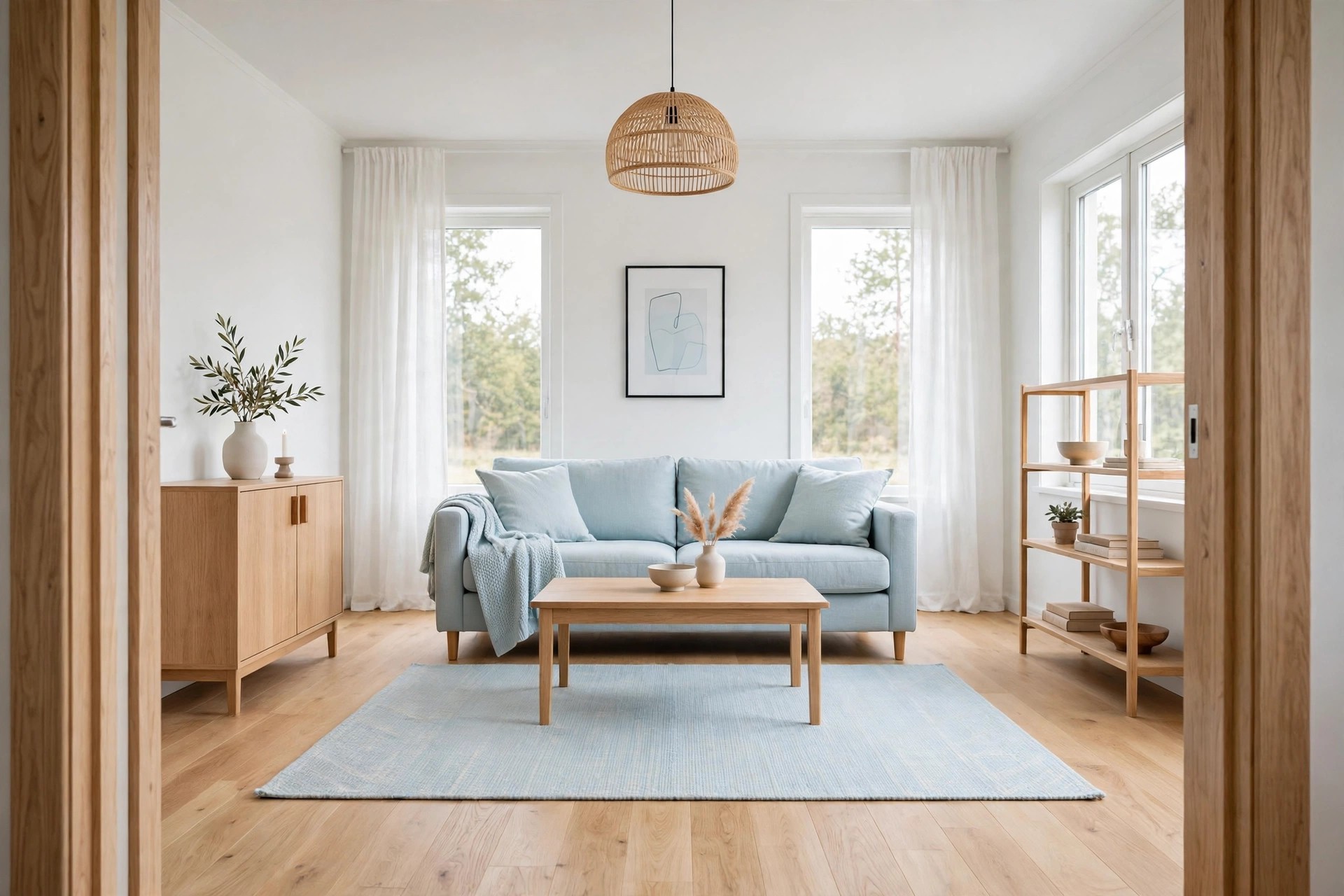
Rooms in this palette go wrong in one order: too much blue first, then too many wood tones mixed in.
A steady order helps. Let white cover the largest share, pale blue come second, and light wood act as the frame.
Count big surfaces only: walls, floor, sofa, and rug. Small objects do not shift the balance much either way.
If the room feels cold, add wood or white before adding more blue. More blue almost never fixes a cold room.
Stand at the door and squint at the room to check the order fast. If blue is the first thing you see everywhere, swap one blue piece for white and check again.
13. Keep Clutter Calm With Wood Tone Baskets and Lidded Boxes
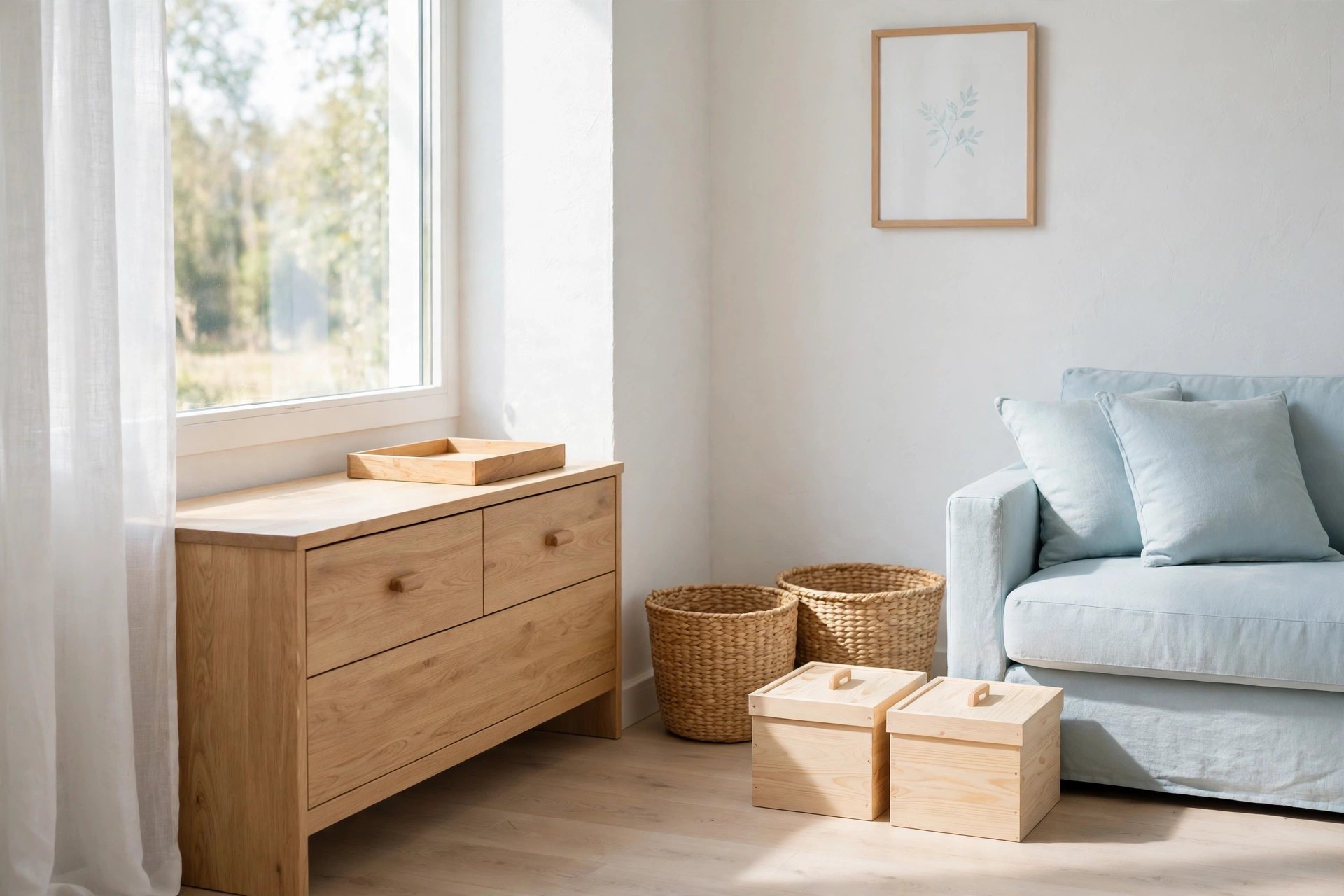
Pale rooms show clutter fast. Every dark remote and bright toy cover stands out against blue and white.
Give daily clutter one home per zone: a woven basket by the sofa, a lidded wood box on the console, a tray by the door.
Choose baskets in pale natural tones that sit close to your floor color. Bright white plastic bins break the palette at once.
Empty and reset each basket weekly. A full basket in plain sight reads as mess, even when the lid still fits.
Label nothing and match nothing too hard. Baskets in slightly varied natural weaves look lived in and calm, while a full matching set can read stiff in a soft colored room.
14. Add Small Framed Prints in Wood Frames Over the Sofa
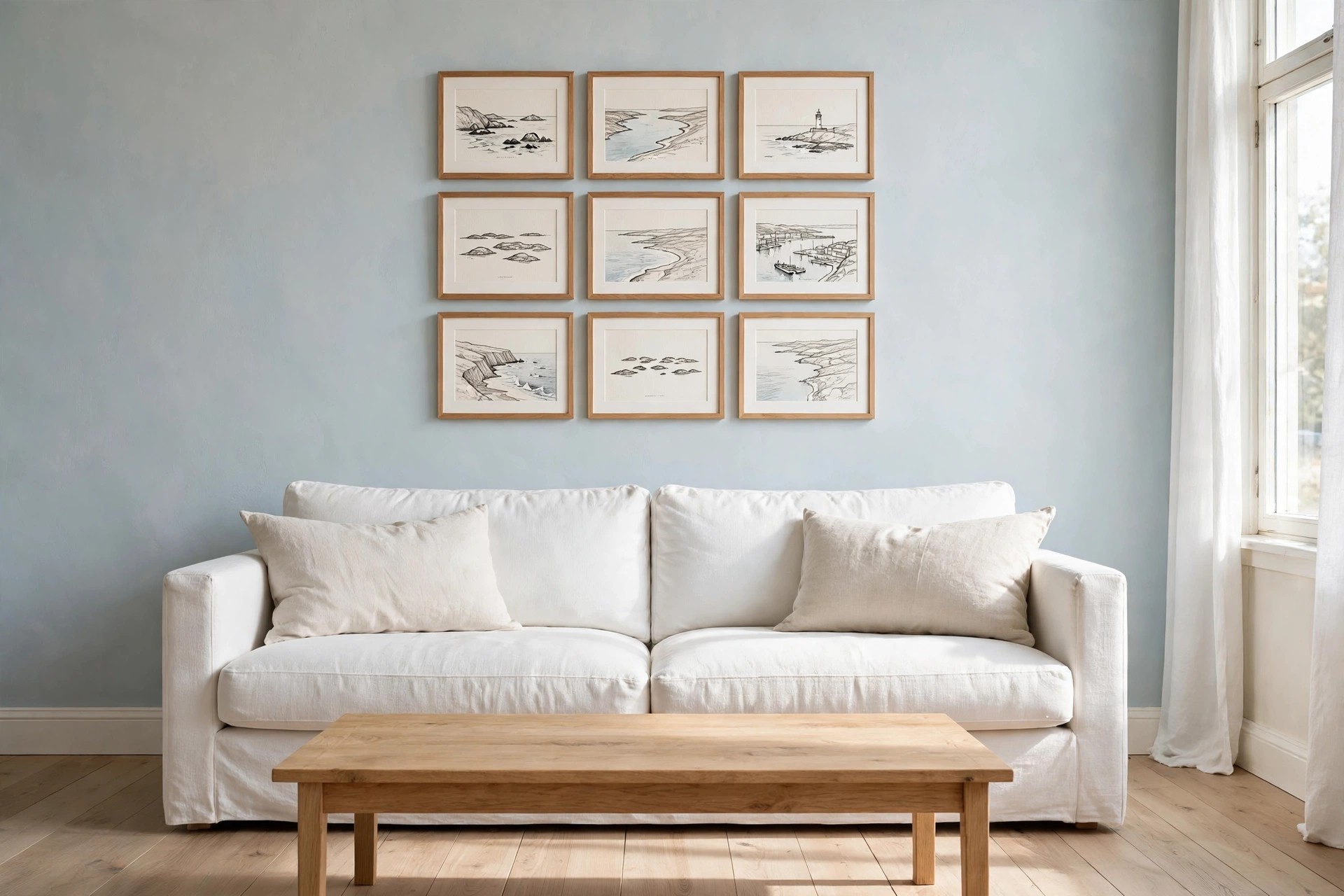
Art is a low cost blue dose that leaves walls easy to repaint later. Simple line or coastal prints suit this palette best.
Use thin light wood frames in one finish for the whole group. Mixed frame colors make a pale wall look busy fast.
Keep prints small and grouped tight, with white mounts. The white space inside each frame does as much work as the art.
Hang the group so its center sits at eye level when standing. Art set too high floats away from the sofa below it.
Swap one print with the seasons if the wall starts to feel stale. The frames and layout stay the same, so the change takes minutes and the wall never needs new holes.
15. Repeat One Light Wood Tone From Floor to Small Pieces
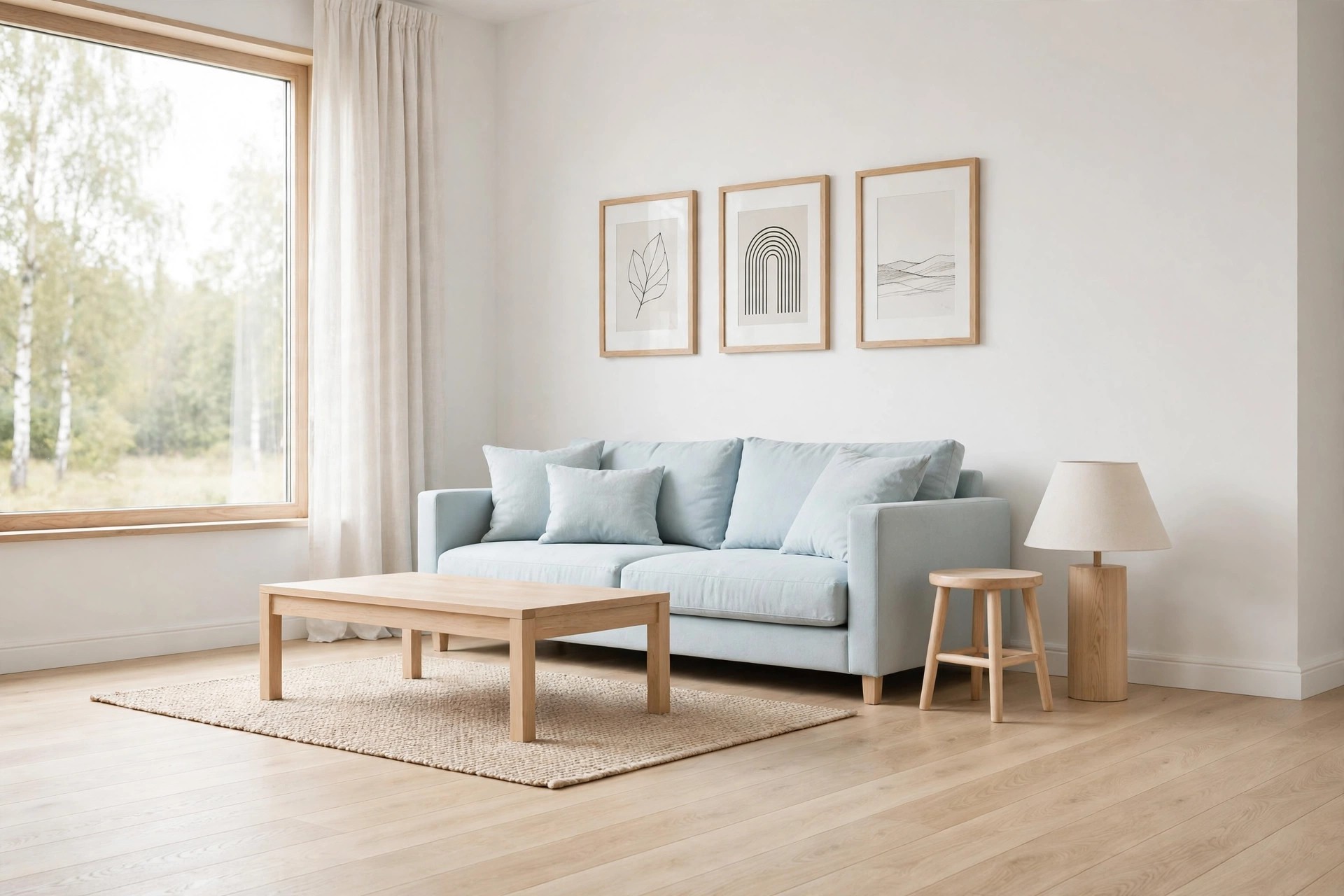
One wood tone, repeated, is the quiet rule behind most calm scandi rooms. Floor, table, and frames should sit in one family.
Birch, ash, and pale oak sit close enough to mix. Dark walnut or orange pine will fight pale blue every time.
Hold a floor sample next to new furniture before you buy. Shop light makes pale wood look paler than it will at home.
Small pieces count too. A tray, a lamp base, and a stool in the same tone tie far corners of the room together.
When a piece wears out, replace it inside the same tone family rather than chasing an exact match. Close tones blend in natural light, and small shifts read as depth, not error.
Start with one dose of blue and one wood tone, then live with it for a week before you add more.
That slow order is what keeps pale blue and wood living room ideas for scandi homes feeling calm instead of themed.
Save this list to your scandi board for later, and pick the one idea that fixes the coldest corner of your room first.
Pick one corner, finish it fully, and let the rest of the room follow that lead over time.


