
15 Black Countertop Bathroom Ideas That Feel Bold, Not Boring
There’s a moment in every bathroom renovation when the countertop stops being a functional afterthought and starts becoming the star of the room. Black countertops do exactly that. They ground a space, sharpen every line around them, and make even the simplest fixtures look considered.
Whether you’re drawn to the moody drama of soapstone, the marbled elegance of Nero Marquina, or the industrial cool of poured concrete, black countertops give a bathroom a sense of permanence and polish that’s hard to fake with any other color. Below are 15 ways to bring this look into your own space, from full monochrome statements to warm, contrast-driven pairings that keep things feeling livable.
This post contains affiliate links. If you buy through them, we may earn a small commission at no extra cost to you. See our Affiliate Disclosure.
1. Matte Black Quartz for a Clean, Low-Maintenance Base

Matte quartz is the easiest entry point into the black countertop trend. Unlike natural stone, it’s non-porous, resists staining from makeup and skincare products, and never needs sealing. The soft, non-reflective finish hides water spots and fingerprints far better than a polished surface, which matters in a room that sees constant use. Pair it with a simple white oak or painted vanity to let the material speak for itself. Because quartz is engineered, the color stays perfectly consistent slab to slab, which is ideal if you’re matching a double vanity or running the surface into a shower curb.
2. Black Granite with Gold or Copper Veining
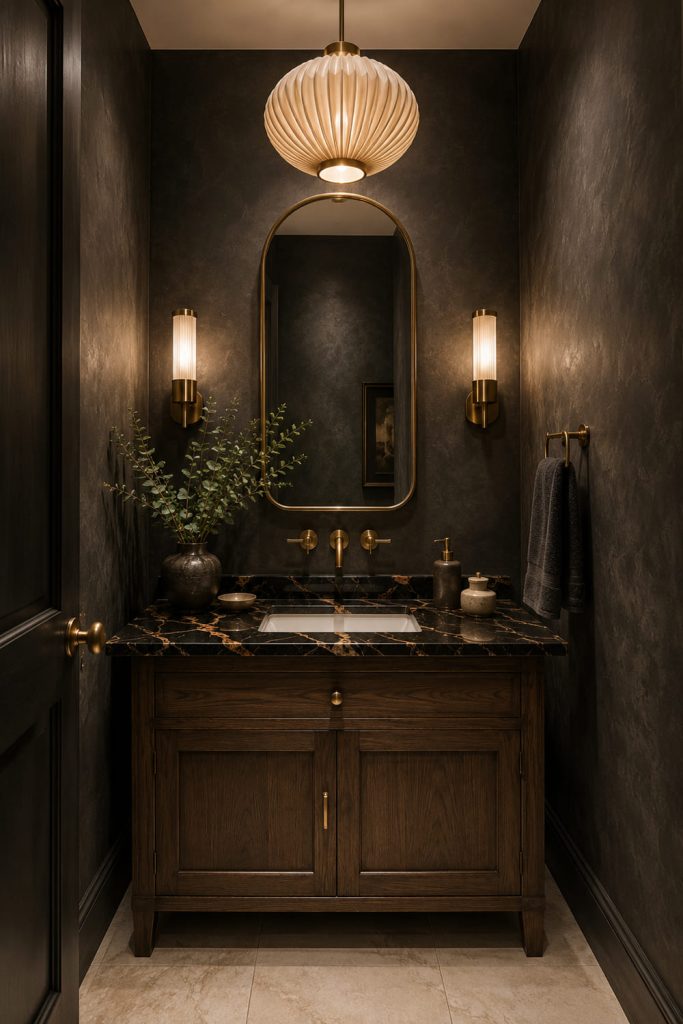
Granite brings texture that quartz can’t replicate. Varieties like Black Galaxy or Absolute Black with natural flecking catch light in a way that feels almost celestial, while granites with warm gold or copper mineral veining add a jewelry-box quality to a small powder room. Granite is heat- and scratch-resistant, making it a practical choice near styling tools. Because every slab is unique, it’s worth seeing the actual piece in person before committing. Pair it with brushed brass or unlacquered brass fixtures to echo the veining and keep the palette from feeling too cold or corporate.
3. Nero Marquina Marble for Timeless Drama

Nero Marquina, a black marble quarried in Spain, is instantly recognizable for its crisp white veining running through a deep charcoal-black base. It reads as more refined than granite and pairs beautifully with polished chrome or nickel fixtures for a classic, almost old-world hotel feel. Marble is porous, so it does need regular sealing and a gentler cleaning routine than quartz or granite, but the payoff is a surface with genuine movement and depth. Use it on a single vanity top with a matching marble backsplash for a cohesive, boutique-hotel bathroom that feels expensive without excess ornamentation.
4. Honed Black Soapstone for a Soft, Tactile Finish

Soapstone has a velvety, almost soap-like texture that softens under the hand, which makes it a favorite for anyone who wants black without the hard, glossy edge. It naturally darkens and develops a rich patina over time as it’s treated with mineral oil, giving the countertop a lived-in character that improves with age. Soapstone resists staining and heat exceptionally well, and small scratches can be buffed out at home. It works especially well in farmhouse or transitional bathrooms, paired with a furniture-style vanity in a warm wood tone and simple bridge faucets.
5. Poured Concrete for an Industrial Edge
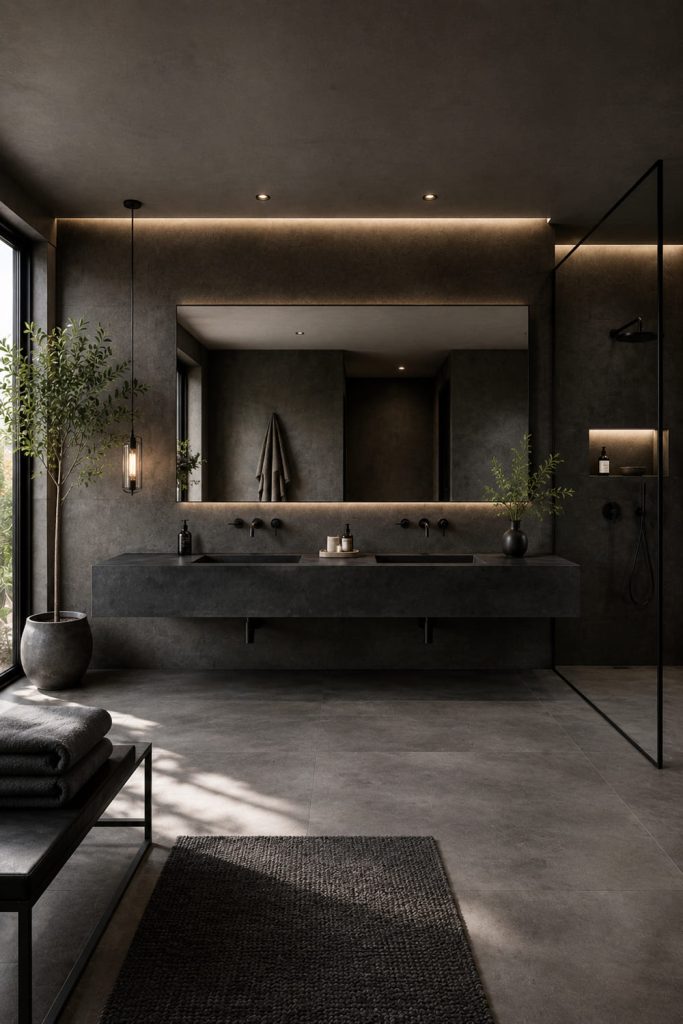
Concrete countertops offer complete customization: the color, edge profile, and even embedded elements like brass inlays or fossils can be tailored to the space. A charcoal or true-black concrete top pairs naturally with exposed pipe fixtures, matte black hardware, and floating vanities for a loft-like aesthetic. Concrete is heavy and typically requires professional installation and periodic resealing to prevent staining, but few materials offer the same monolithic, seamless look. It’s a strong choice for a modern powder room where you want the countertop to feel like it was cast as part of the architecture itself.
6. Black Terrazzo for Playful Texture

Terrazzo has made a strong comeback, and a black-based terrazzo countertop flecked with white, gray, or brass chips adds personality without leaning into a full pattern or print. It’s a great way to introduce visual interest in a bathroom that otherwise uses a restrained, neutral palette. Terrazzo is durable and easy to maintain, and it pairs well with rounded vessel sinks and curved mirror shapes, which soften its speckled texture. Because chip size and color mixes vary by manufacturer, ordering a sample piece in advance helps ensure the terrazzo complements your tile and hardware choices.
7. Black Zellige or Mosaic Tile Countertop

For a more artisanal, textured look, a countertop built from small black zellige or penny tiles brings warmth and handmade character that slab materials can’t replicate. The slightly uneven surface and visible grout lines add depth, especially under warm lighting. This approach works best in vintage-inspired or eclectic bathrooms rather than sleek modern ones, since the grout requires more upkeep than a sealed stone or quartz surface. Pair it with a wall-mounted faucet to minimize water pooling around tile joints, and use a matching or contrasting grout color to further define the pattern.
8. Black Countertop Paired with Warm Brass Fixtures

One of the most popular directions right now pairs a black stone or quartz countertop with brushed brass, champagne bronze, or unlacquered brass fixtures instead of the once-dominant matte black hardware. The warm metal tones soften the countertop’s intensity and keep the room from feeling cold or overly masculine. This combination works particularly well with a white oak or walnut vanity base, since the wood grain bridges the contrast between the dark stone and the warm metal, creating a layered, collected-over-time look rather than a matched showroom set.
9. Floating White Oak Vanity with a Black Slab Top
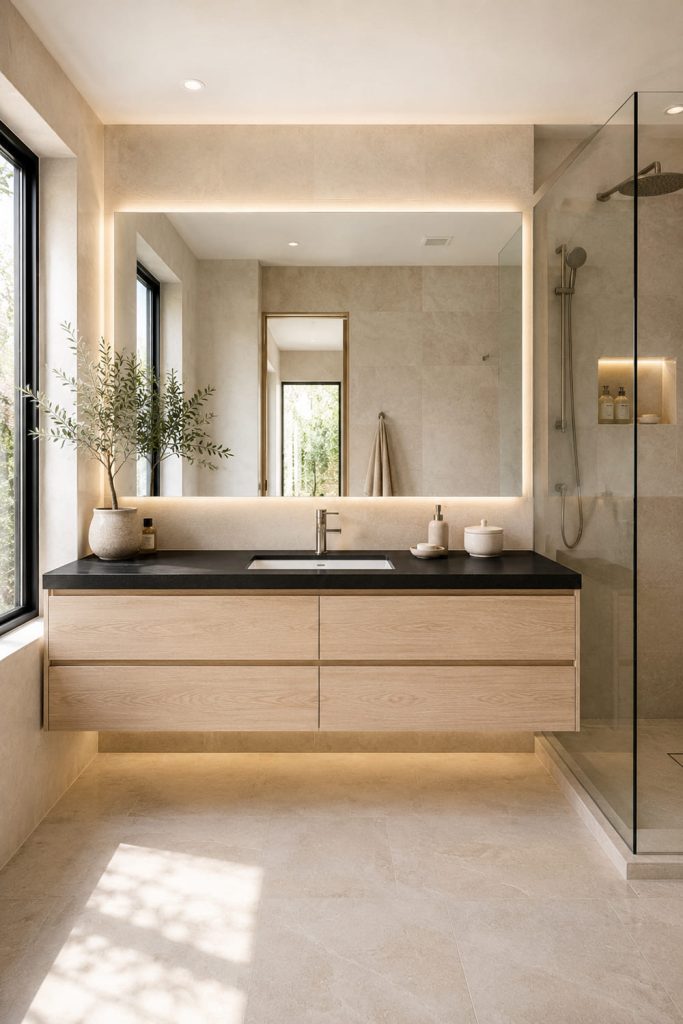
Contrast is what makes this pairing so effective. A floating vanity in pale white oak visually lightens the room and creates the illusion of more floor space, while the black countertop above adds weight and definition. This combination is especially useful in smaller bathrooms, where an all-black scheme could feel enclosing. Add a backlit or integrated-lighting mirror to keep the wall above the vanity feeling open and current, and choose slim, unlacquered brass or matte nickel hardware so the metal doesn’t compete with either the wood grain or the stone.
10. Black Countertop Double Vanity for Primary Bathrooms
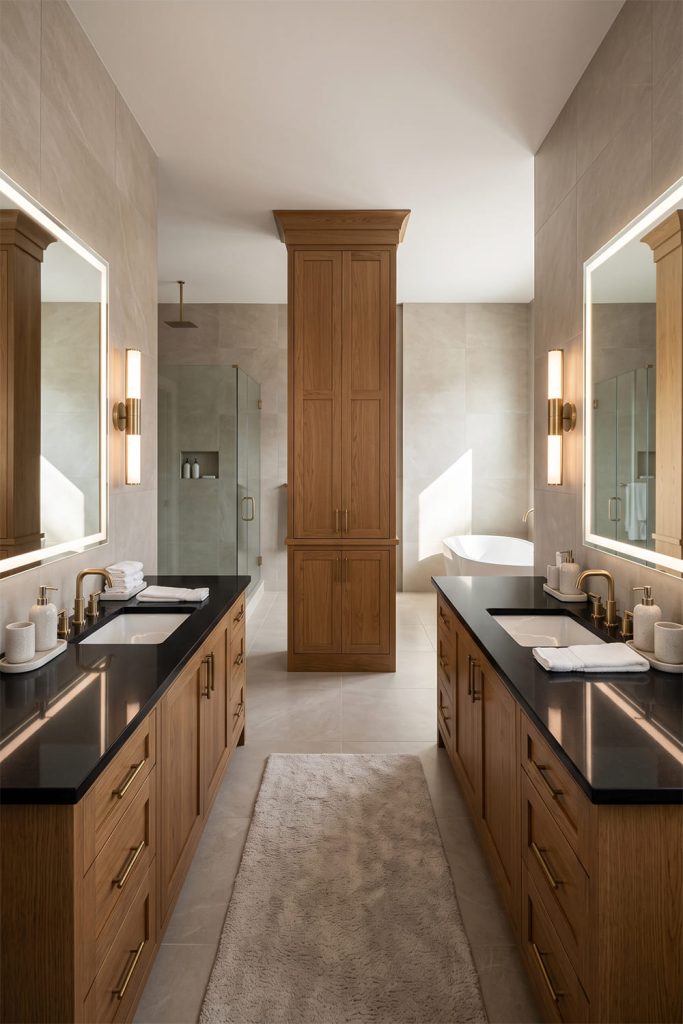
In larger primary bathrooms, a continuous black countertop spanning two sinks creates a strong, unifying visual anchor. It reads as more custom and architectural than two separate vanities, and it hides the inevitable wear that comes from daily use by two people. Undermount sinks are worth the investment here, since they keep the black surface looking like one continuous plane rather than being interrupted by a raised sink lip. Flank the vanity with matching sconces or a single horizontal light bar to reinforce the symmetry the countertop already establishes.
11. Black Countertop with a Sculptural Vessel Sink

A vessel sink sitting on top of a black countertop turns the sink itself into a design feature rather than a purely functional element. Choose a sink in a contrasting material, such as white marble, brushed concrete, or hammered brass, to create visual separation between the two surfaces. This pairing works especially well in powder rooms, where the vanity is often the single focal point of the room. A wall-mounted or gooseneck faucet gives the vessel sink room to stand on its own without crowding the composition.
12. Monochrome Black Vanity and Countertop

For a fully immersive, moody look, matching a black cabinet base to a black countertop removes the visual break between the two elements entirely. This monochrome approach works best in bathrooms with strong natural light or generous ceiling height, since an all-black scheme can otherwise feel heavy in a small, dim space. Break up the darkness with a large mirror, a light-colored tile floor, or metallic hardware in a warm or polished finish, and consider a matte rather than glossy cabinet finish to keep fingerprints and dust from showing.
13. Black Countertop Against Crisp White Cabinetry

This is the most classic and versatile black countertop pairing, and it remains popular because it works in nearly any architectural style, from traditional to transitional to modern farmhouse. The white cabinetry keeps the room feeling bright and spacious, while the black countertop adds a defined, grounding edge. This combination is particularly forgiving for resale value, since it reads as clean and timeless rather than trend-driven. Polished chrome or brushed nickel hardware keeps the look crisp, while black hardware doubles down on the contrast for a more graphic, high-impact finish.
14. Black Countertop with Patterned Tile Backsplash

Let the countertop serve as a quiet, solid base while a patterned tile backsplash in black and white, or black and terracotta, carries the visual energy of the room. Cement-look encaustic tiles or fish-scale patterns in a limited color palette pair especially well here, since the countertop below echoes one of the pattern’s core tones and ties the whole wall together. This approach is a good option for anyone who loves bold pattern but wants the actual work surface to stay practical, easy to clean, and visually calm.
15. Small Black Countertop for a Powder Room Statement
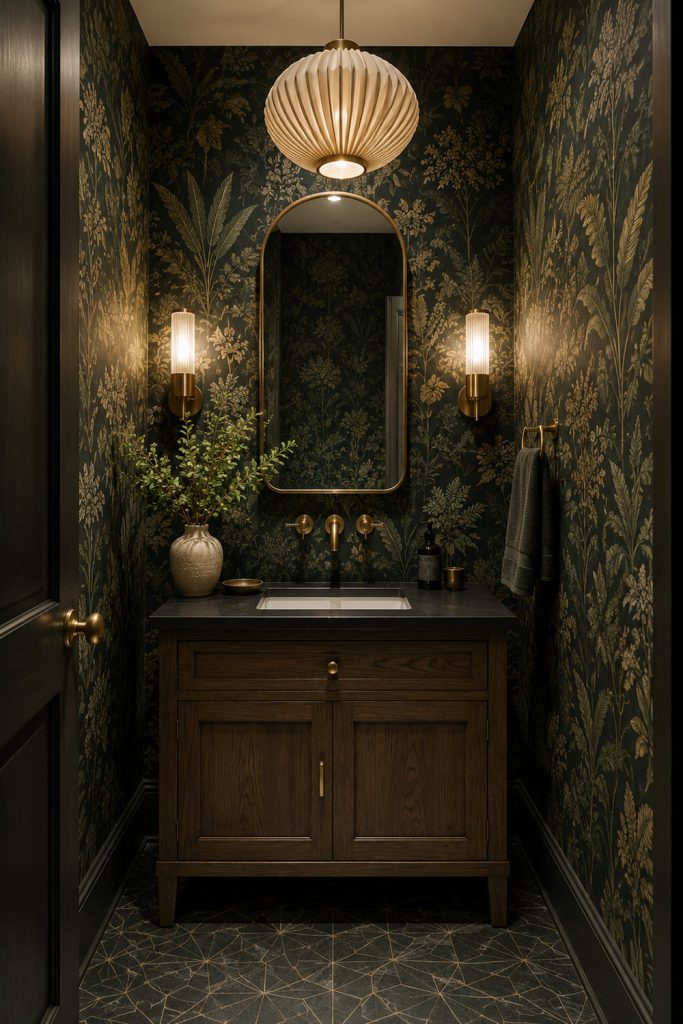
Powder rooms are the ideal place to experiment with a black countertop, since the smaller footprint means both material cost and visual commitment are lower than in a full primary bathroom. A compact black stone or quartz top on a narrow console or pedestal-style vanity makes a strong first impression for guests without overwhelming the rest of the home’s palette. Pair it with a single statement light fixture and a bold wallpaper or paint color, since the black countertop can comfortably anchor a much more adventurous design choice than a larger bathroom might allow.
How to Choose the Right Black Countertop Material
Consider maintenance before aesthetics. Quartz and granite are the most forgiving for daily use, requiring little more than routine cleaning. Marble, soapstone, and concrete all demand more care, whether that’s periodic sealing, mineral oil treatments, or gentle cleaning products to avoid etching.
Match the finish to your lighting. Polished black surfaces reflect light and can show water spots and dust more readily, while honed or matte finishes hide daily wear better and give the room a softer, more muted feel. In bathrooms with limited natural light, a polished finish can help bounce available light around the room.
Balance black with warmth. An entirely black countertop, paired with black cabinetry and black hardware, can feel heavy in a small or dim space. Introduce a lighter element, whether that’s a wood vanity, a pale tile floor, or warm metal fixtures, to keep the room from feeling closed in.
Think about resale and longevity. Materials like quartz and granite in classic black tones tend to hold their appeal over time, while highly textured or trend-driven finishes, like a specific terrazzo chip mix, may feel more personal but slightly more dated a decade from now.
Get a physical sample. Because black surfaces vary enormously in undertone, from true black to deep charcoal, navy-black, or greenish-black, always view a sample slab or tile in your own bathroom’s lighting before finalizing the choice.
Final Thoughts
Black countertops have staying power because they do something few other design choices can: they add drama and sophistication without requiring a full room redesign. Whether you go all-in with a monochrome black vanity or use black as a grounding contrast against white cabinetry and warm brass fixtures, the material choice you land on should reflect both the mood you want and the amount of upkeep you’re willing to take on. With the right pairing of cabinetry, hardware, and lighting, a black countertop can turn even a modest bathroom into the most memorable room in the house.


