

15 Genius Very Small Balcony Ideas That Feel Like a Cozy Outdoor Retreat
There’s a particular kind of magic in stepping onto a balcony that’s barely big enough for a chair, yet somehow feels like your own private escape. A small balcony doesn’t need square footage to earn its keep — it needs intention. The right chair, the right light, a handful of plants that don’t demand too much space, and suddenly four square feet becomes the best seat in your home.
Whether you’re working with a narrow Juliet balcony, a tiny apartment ledge, or a cramped condo perch, these 15 ideas prove that limited space is not a limitation — it’s a creative brief. Here’s how to turn your smallest outdoor corner into a spot you actually want to spend time in.
1. Fold-Down Wall Table
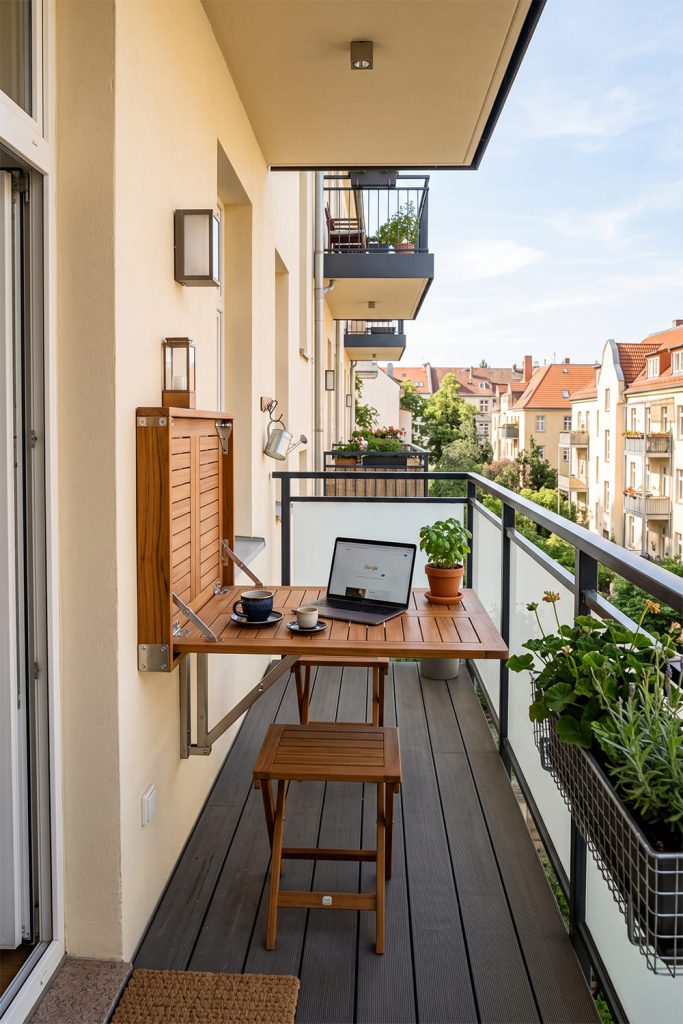
A fold-down table hinged directly to the exterior wall is one of the smartest moves for a tiny balcony, because it converts dead vertical space into a working surface only when you need one. Look for a bracket-and-hinge system rated for outdoor use, ideally with a stainless steel or galvanized hardware finish so it won’t seize up or rust after a season of rain. Teak and eucalyptus hardwoods are popular choices for the tabletop itself because their natural oils resist water damage without heavy sealants, while powder-coated aluminum is the lighter, lower-maintenance alternative. Standard drop-leaf tables for balconies run between 15 and 24 inches deep when open, which is enough for two coffee cups or a laptop, and they fold to just a few inches of wall depth. Pair it with a single folding stool that tucks beneath it, and you’ve built a functional café setup that disappears entirely the moment you don’t need it.
2. Vertical Garden Wall
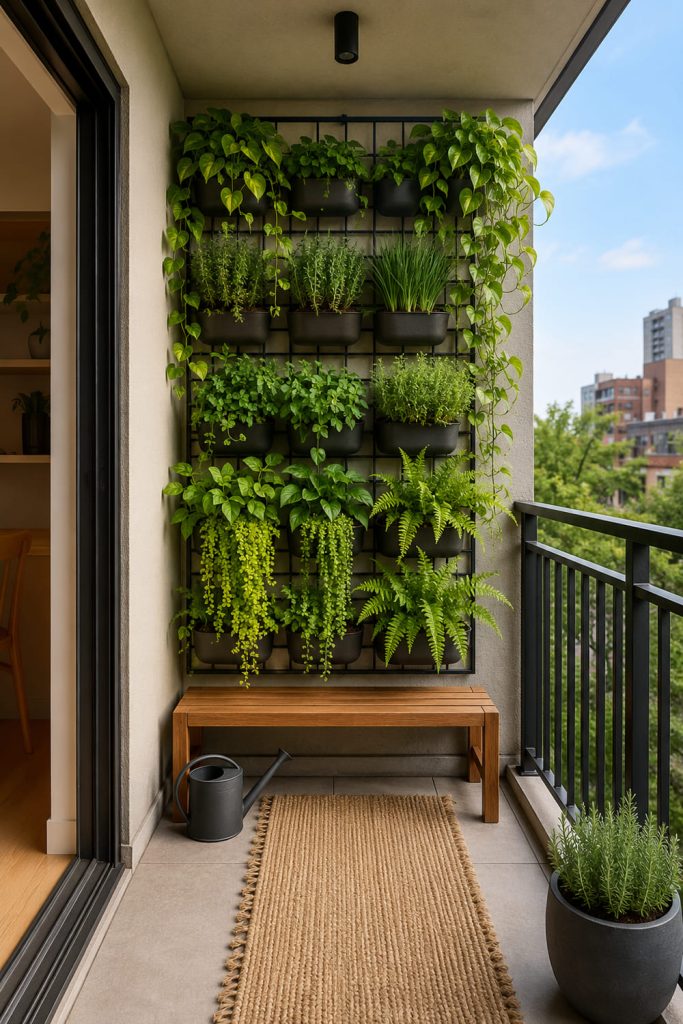
When floor space is off the table, the wall becomes your growing surface, and a vertical planting system can hold two to three times the number of plants a floor-based arrangement would in the same footprint. Felt pocket organizers are the most budget-friendly and breathable option, allowing roots to aerate well, while modular grid systems with individual removable pots make it easier to rotate plants seasonally or replace one that’s struggling without disturbing the rest. Herbs like thyme, oregano, and chives do particularly well in vertical setups because their root systems stay shallow, and trailing varieties like pothos, string of pearls, or creeping Jenny soften the hard lines of the grid as they spill downward. Position the wall on the side that gets the most consistent light — most balconies have one wall that outperforms the others — and water slightly more often than you would floor-level pots, since vertical systems drain and dry faster.
3. Bistro Set for Two
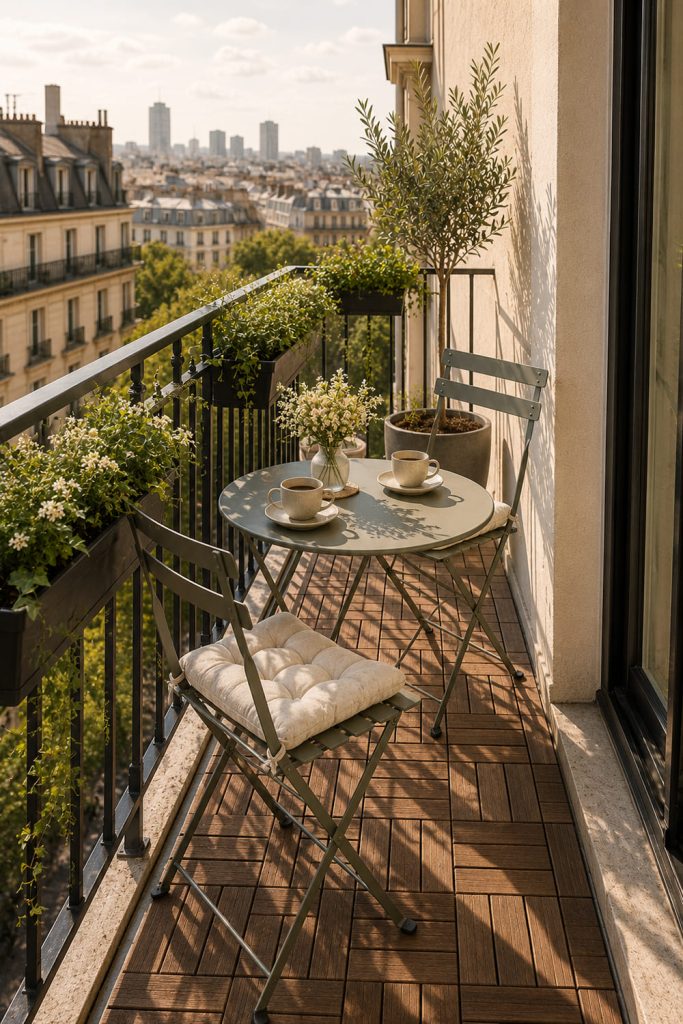
The classic two-chair bistro set earns its reputation because it genuinely works in tight footprints, typically requiring as little as 3 feet by 3 feet of clearance for a round 24-inch table and two chairs pushed in. Choose foldable versions in powder-coated steel or aluminum, both of which resist rust far better than untreated iron, so the whole set can be leaned flat against the wall when it’s not in use. A round tabletop, rather than square, is a deliberate choice for small spaces — it eliminates sharp corners that catch on passing hips and allows chairs to tuck in more efficiently around the curve. Add a small vase or a single flameless candle to the tabletop, and you’ve created a genuine little dining spot perfect for morning coffee or a glass of wine after work, even when the balcony itself is only a few feet deep.
4. Railing Planter Boxes

Railing-mounted planter boxes are widely considered the most space-efficient way to add greenery to a small balcony, because they hook or clamp directly onto the balustrade and keep both soil and stems entirely off the usable floor. Look for boxes with adjustable brackets that fit railing widths from about 2 to 6 inches, and choose self-watering models with a built-in reservoir if you’re prone to forgetting waterings, since railing planters dry out faster than ground-level pots due to increased wind and sun exposure. Cascading flowers such as petunias, lobelia, or verbena add color that spills attractively downward, while a working herb box of rosemary, thyme, and basil keeps fresh seasoning within arm’s reach of the kitchen. Positioned at eye level, these boxes also double as a soft privacy screen, gently blocking sightlines from neighboring units without the bulk of a full screen or fence.
5. Hammock Chair Corner
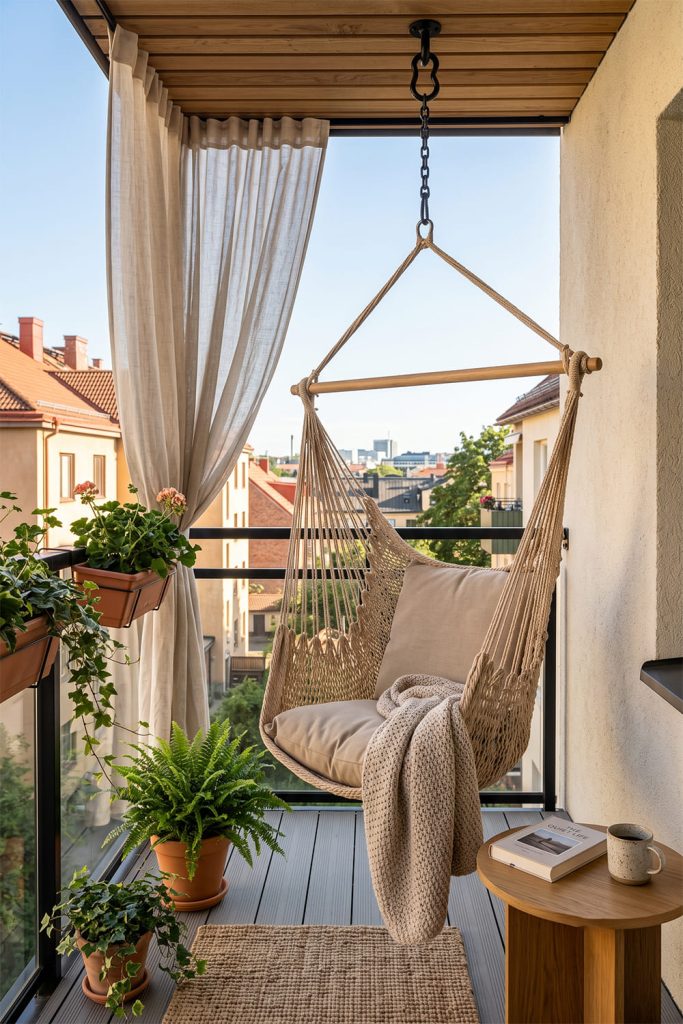
A hanging hammock chair turns even the smallest balcony into a place for genuine relaxation, and unlike a standard armchair, it needs only a single sturdy ceiling hook rated for at least 250 pounds or a freestanding stand designed specifically for compact spaces. Cotton rope hammock chairs offer a classic, breathable feel but require more shelter from rain, while woven polyester or all-weather wicker versions hold up better to direct sun and moisture without fading or mildewing. Compact stands built for hammock chairs typically have a footprint as small as 3 feet square, and many fold flat for storage during winter months or when you need the floor space back. Add a supportive cushion and a small blanket for cooler evenings, and you’ve created a reading nook that feels far more indulgent than the square footage suggests.
6. String Lights and Lanterns
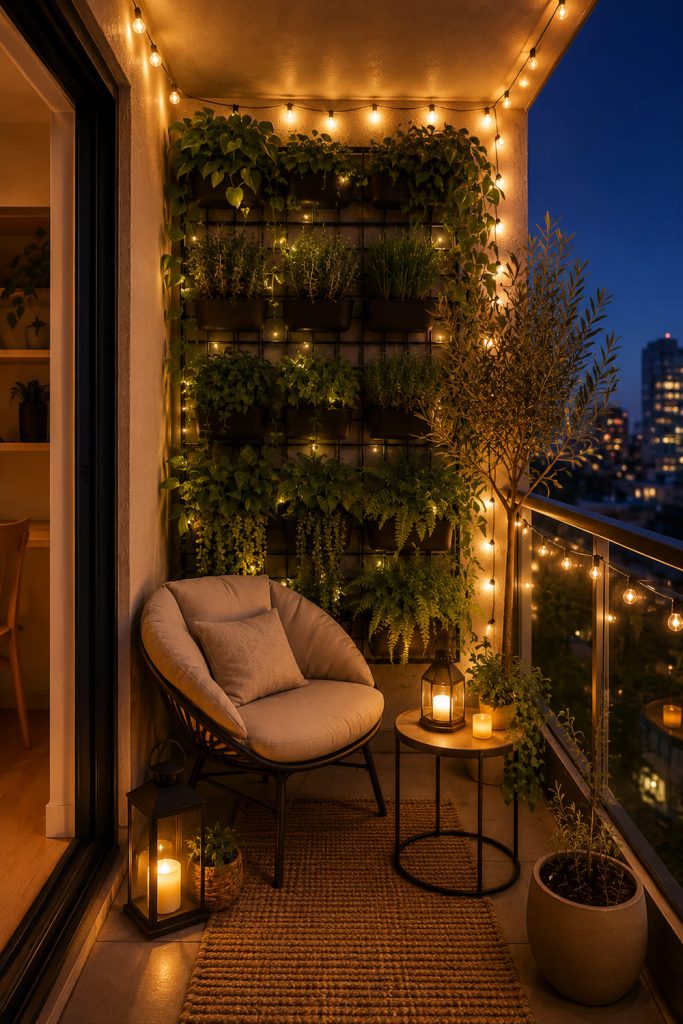
Lighting does more to transform a small balcony’s atmosphere than almost any other single change, and warm white string lights — ideally in the 2700K to 3000K range, which mimics candlelight rather than the colder tone of standard LEDs — instantly shift the mood from utilitarian to inviting after sunset. Solar-powered strings eliminate the need for an outdoor outlet, though battery-powered or plug-in versions typically offer more consistent brightness on cloudy days. Layer in a few flameless LED candles or small solar lanterns at table height for a softer, more intimate glow that doesn’t rely on overhead light alone. This is one of the lowest-cost, highest-impact upgrades available for a small outdoor space, and because most string lights use minimal wattage, they can run for hours nightly without a noticeable increase to your electricity bill.
7. Foldable Bar Cart

A slim, foldable bar cart tucked against the wall gives you a stylish, mobile surface for mixing drinks, displaying a small plant collection, or storing cushions when they’re not in use. Rattan and woven resin carts are popular for their light visual weight, while powder-coated metal versions offer better durability in wet climates. Two- and three-tier designs make the most of vertical space, letting you assign each shelf a distinct purpose — glassware on top, plants or a cocktail shaker below. Because the entire cart sits on locking casters, it can be rolled indoors ahead of bad weather or pushed flush against the wall in seconds to reclaim floor space for guests. Look for a cart rated for outdoor or “indoor-outdoor” use specifically, since many decorative bar carts are designed for interior humidity levels only and won’t hold up to direct rain exposure.
8. Corner Bench with Storage
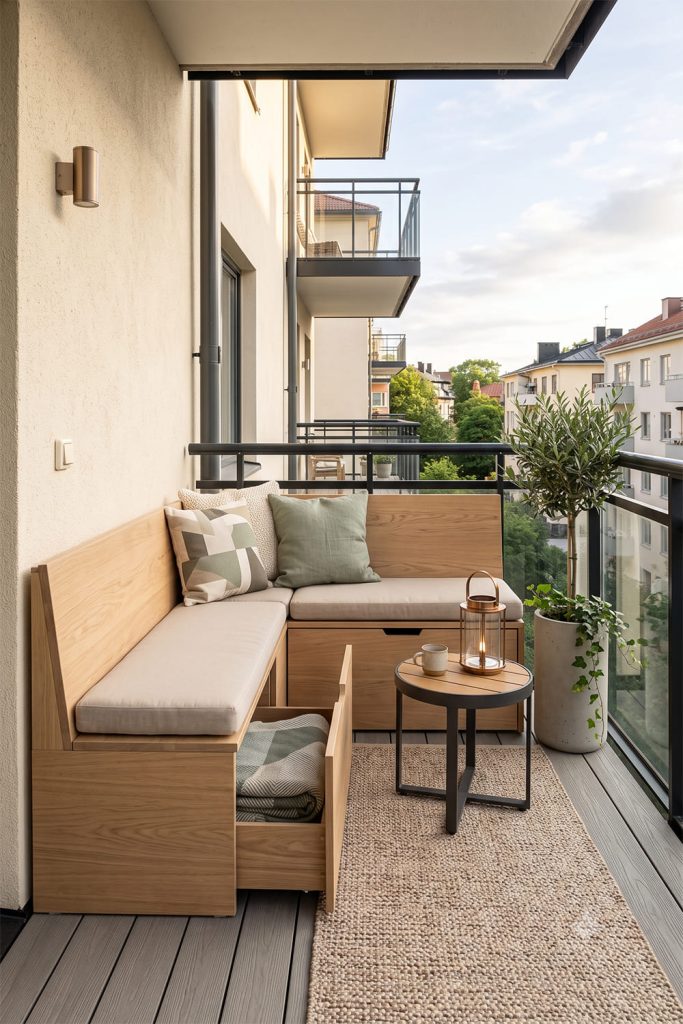
A built-in or freestanding corner bench solves two space problems simultaneously: seating and storage. Choosing a version with a hinged, weatherproof lid gives you a dry compartment for cushions, gardening tools, or folded blankets that would otherwise clutter the floor or need to be carried inside every time it rains. Marine-grade polymer or powder-coated aluminum benches resist warping and rust far longer than untreated wood in constant outdoor exposure, and many manufacturers rate their storage benches for loads between 250 and 400 pounds. Because a corner bench hugs the balcony’s L-shaped edge rather than sitting in the middle of the floor, it leaves the remaining space fully open for walking. Top it with weatherproof cushions in a bold pattern using solution-dyed acrylic fabric, which resists fading and mildew far better than standard outdoor cotton blends.
9. Suspended Shelf for Plants

Floating shelves mounted at staggered heights on the exterior wall let you display a plant collection vertically instead of spreading pots across the floor, effectively tripling your display capacity within the same footprint. Choose brackets rated for outdoor use — stainless steel or galvanized steel resists the rust that standard indoor brackets develop within a single rainy season — and stagger shelf depths between 6 and 10 inches to accommodate a mix of small and medium pots. Group plants by light and water needs on the same shelf to simplify care: a trailing pothos or ivy on top catches more light and can spill downward, while a compact, shade-tolerant fern or peace lily works well on a lower shelf shielded by the one above it. This layered, gallery-like arrangement is especially effective on narrow balconies where every inch of floor space is needed for walking.
10. Outdoor Rug for Definition
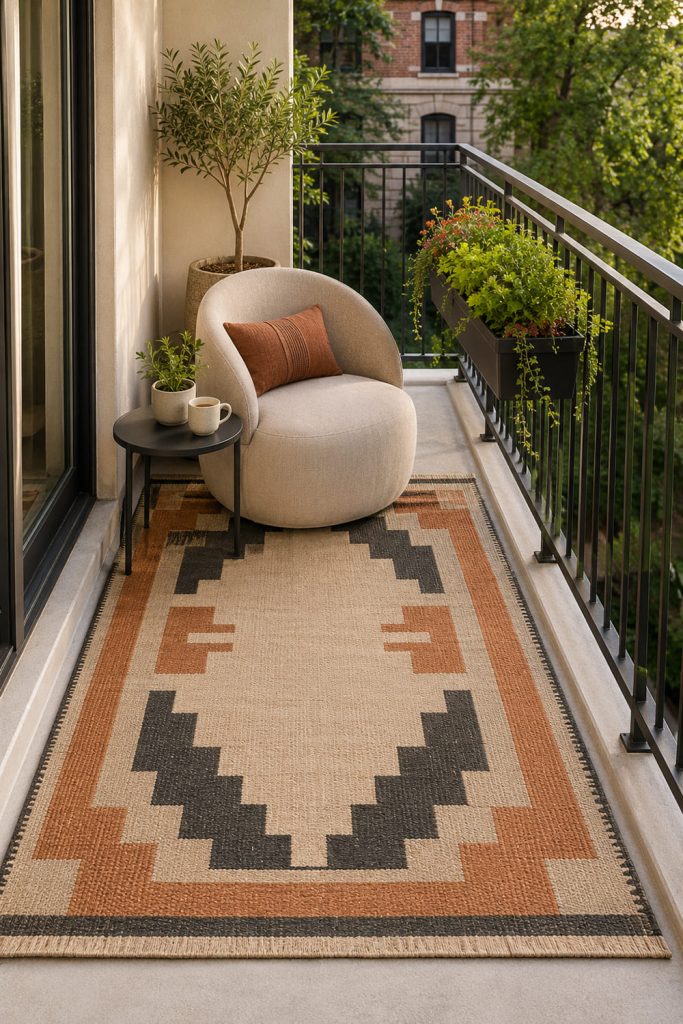
A small outdoor rug does more than add comfort underfoot — it visually defines the balcony as a distinct room rather than a leftover strip of concrete, a trick borrowed directly from small-space interior design. Choose polypropylene or specifically labeled “indoor-outdoor” synthetic fibers rather than natural jute or wool, since synthetic weaves resist mold, mildew, and UV fading even with direct rain and sun exposure. A bold color or graphic pattern makes the space feel curated and adds visual interest to what’s often the most overlooked surface on a balcony. Even a compact rug as small as 2 feet by 3 feet is enough to anchor a single chair and side table, while a 3-by-5 works well beneath a full bistro set. Look for rugs with a low pile height, which dry faster after rain and won’t trap moisture against the flooring beneath.
11. Compact Egg Chair
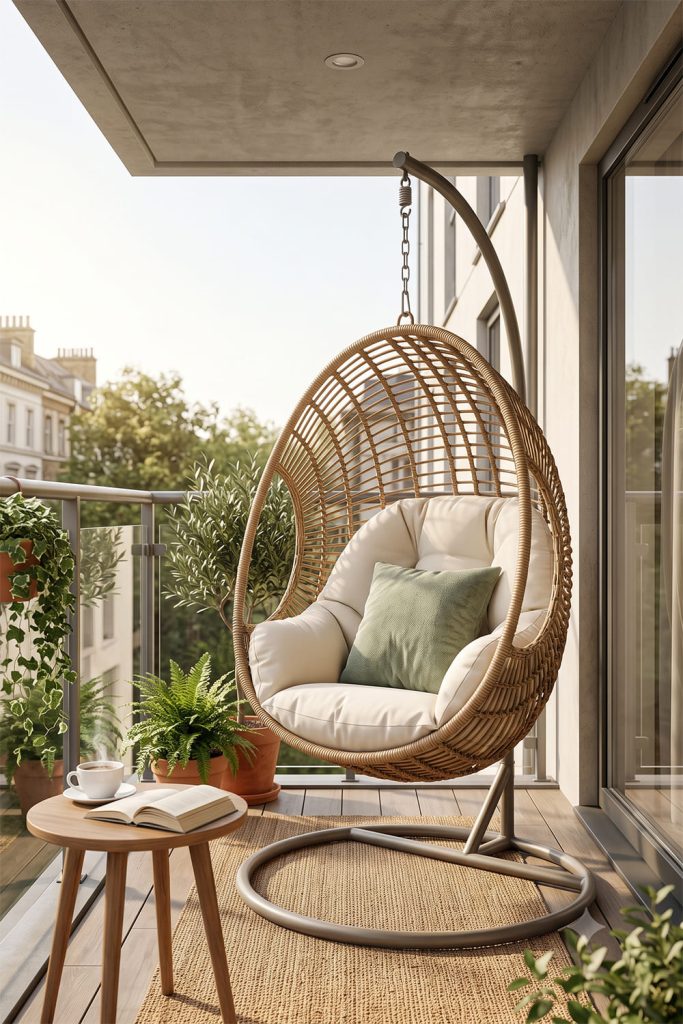
A single rattan or all-weather wicker egg chair — whether hanging from a ceiling hook or mounted on its own stand — makes a striking focal point for a solo balcony retreat. Its rounded, cocoon-like shape uses space efficiently while still feeling substantial, especially fitted with a deep, quick-dry foam cushion designed to resist water absorption after rain. Hand-woven resin wicker over a powder-coated steel frame is the standard for outdoor durability, holding up to UV exposure far better than natural rattan, which is better suited to covered balconies. Freestanding stand versions typically require a footprint of only about 3 feet in diameter, making them one of the few large-format seating options that genuinely work in balconies too narrow for a full seating set. It becomes the one perfect spot to curl up with a book or morning coffee.
12. Mirror to Expand the View
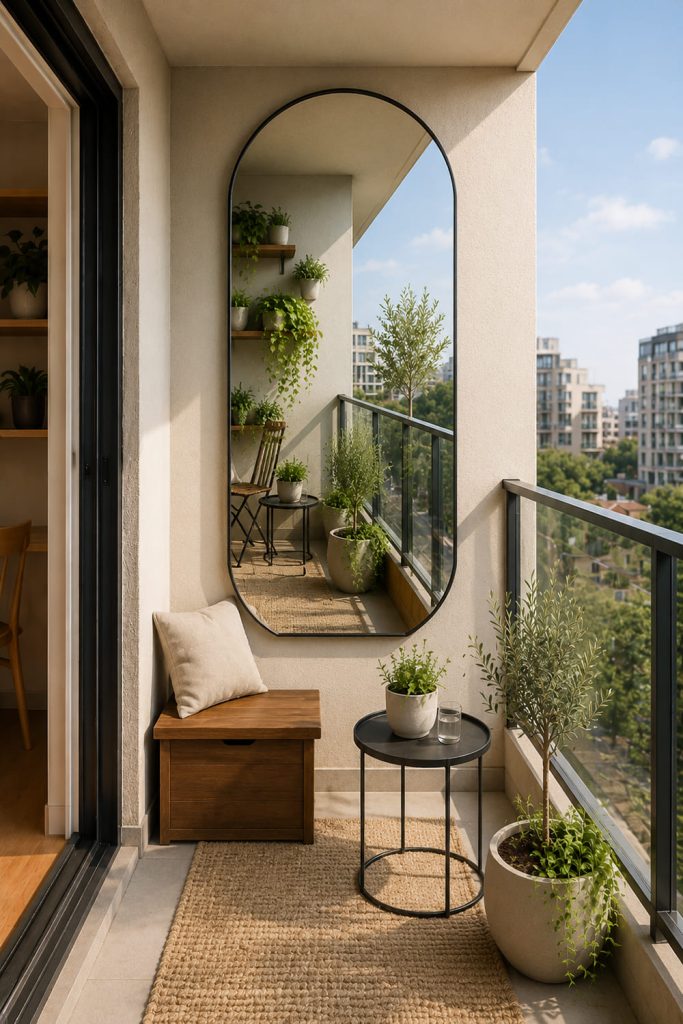
Mounting a weatherproof outdoor mirror on the balcony wall is a designer’s trick borrowed from small interior rooms, and it works outdoors just as effectively — reflecting greenery, sky, and light back into the space to make even a narrow ledge feel visually doubled in size. Look specifically for mirrors framed in rust-resistant materials like powder-coated aluminum, teak, or weather-sealed resin, since standard indoor mirror frames deteriorate quickly with humidity and rain exposure. Tempered or acrylic mirror glass is safer than standard glass in an outdoor setting, since it’s less likely to shatter from temperature swings or accidental impact. Position the mirror to reflect either your densest cluster of plants or the view beyond the railing, whichever gives the most convincing sense of added depth, and angle it slightly to avoid direct glare at eye level.
13. Nesting Side Tables
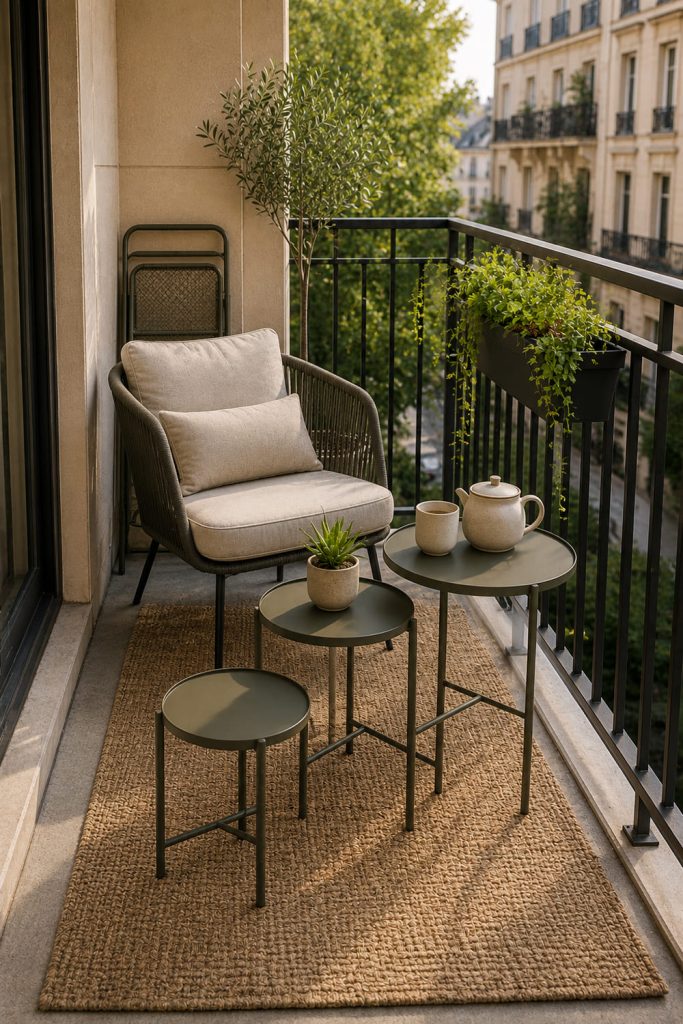
A set of two or three nesting tables gives you flexible surface space without permanently committing floor area to one large table. Pull them apart when a friend joins you for a drink, or stack them into a single compact footprint — often as small as 12 by 12 inches — the rest of the time. Powder-coated metal or resin wicker construction keeps each table light enough to move with one hand, and because the tables stack directly on top of one another, they take up a fraction of the storage space a traditional side table would. Many sets are designed with slightly varying heights so that even when nested, the rims remain visible and easy to grip, making them one of the most genuinely adaptable furniture choices available for tight, frequently reconfigured outdoor spaces.
14. Curtain Panel for Privacy
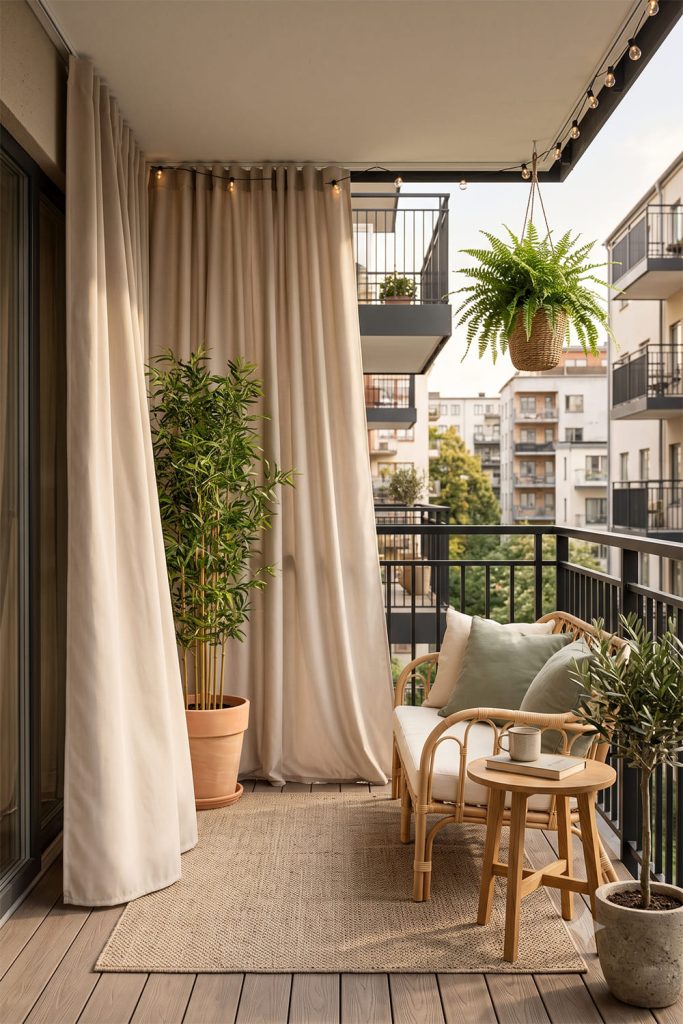
Hanging a single outdoor curtain panel along one open side of the balcony adds privacy from neighbors and softens the hard edges of railings and walls, a technique often used on apartment balconies that face directly into another unit’s sightline. Choose a solution-dyed acrylic or polyester fabric specifically rated for outdoor use, since these resist the fading, mildew, and water damage that indoor curtain fabrics develop within weeks of exposure. A tension rod is the simplest no-drill installation, while a ceiling-mounted track offers a cleaner line and allows the panel to slide fully open when you want maximum light and airflow. Grommet-top panels tend to glide more smoothly and hang straighter than rod-pocket styles in outdoor conditions, where wind can otherwise cause bunching.
15. Multi-Purpose Ottoman
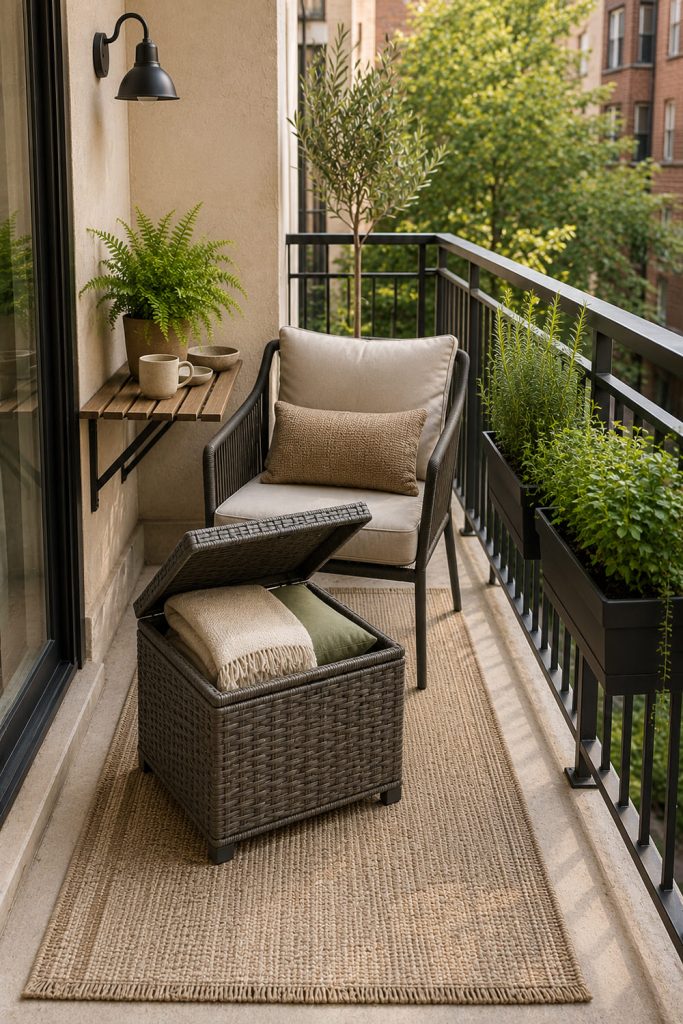
A weatherproof ottoman that doubles as both seating and a footrest is one of the most efficient single pieces you can add to a tiny balcony, and many versions open at the top for hidden interior storage, giving you a dry place to keep an extra cushion or a folded throw blanket. Look for a shell made from woven polyethylene resin over a rust-resistant aluminum frame, which holds up significantly better outdoors than fabric-upholstered indoor ottomans. Because it’s low-profile, lightweight, and easy to shift with one hand, it adapts instantly to whatever the moment calls for — extra seating when a guest visits, a footrest during a solo evening, or a temporary plant stand when you rearrange. Standard outdoor ottomans typically measure around 18 to 20 inches square, small enough to tuck beneath a table when not in active use.
Planning Your Small Balcony: A Quick Buying Guide
Before you buy anything, measure your balcony’s exact depth and width down to the inch, and note where the door swings open — this single detail eliminates more furniture options than anything else. Prioritize foldable, stackable, or wall-mounted pieces over freestanding ones, since anything that can collapse or hang gives you back usable floor space when it’s not in active use.
Stick to a weather-resistant material palette — powder-coated aluminum, teak, resin wicker, or synthetic rattan over rust-resistant frames — so pieces can stay outside year-round without warping, rusting, or fading. Choose one or two anchor pieces, such as a chair and a small table, rather than trying to fit a full furniture set into a space that can’t support it, and let plants, lighting, and a rug do the remaining work of making the space feel complete. Finally, think vertically: railings, walls, and ceiling hooks are the most underused real estate on almost every small balcony, and they’re often the easiest way to add both function and greenery without sacrificing another inch of floor.
Final Thoughts
A very small balcony rewards thoughtful choices more than expensive ones. The best tiny outdoor spaces aren’t the ones packed with furniture — they’re the ones where every single piece has been chosen on purpose, from a fold-down table to a single well-placed plant shelf. Start with one or two ideas from this list, live with them for a while, and build from there. Before long, that overlooked ledge outside your window will become the place you actually want to be.


