

15 Comfy Reading Chairs for Small Spaces — Styled in Real Nooks
A great reading chair does not need a library to live in. In a small home it needs roughly one square metre, decent light and a seat that suits how you actually read — curled sideways, legs out, or upright with a mug going cold beside you. The trick is choosing a chair shape that gives you comfort without swallowing the room.
Every chair below is a type, not a shopping list: an armless slipper chair for a tight corner, a swivel barrel that turns toward the window, a short chaise along a wall. Each is styled as it would really be used — lamp, small table, throw — and follows the spirit of our wider reading nook ideas: a corner that earns its place daily.
Measure your corner before you fall for any of them. A chair that fits on paper can still feel huge if its back is tall, its arms are wide or it blocks the light. The fifteen ideas here keep the footprint honest and the comfort real.
1. Start With an Armless Slipper Chair
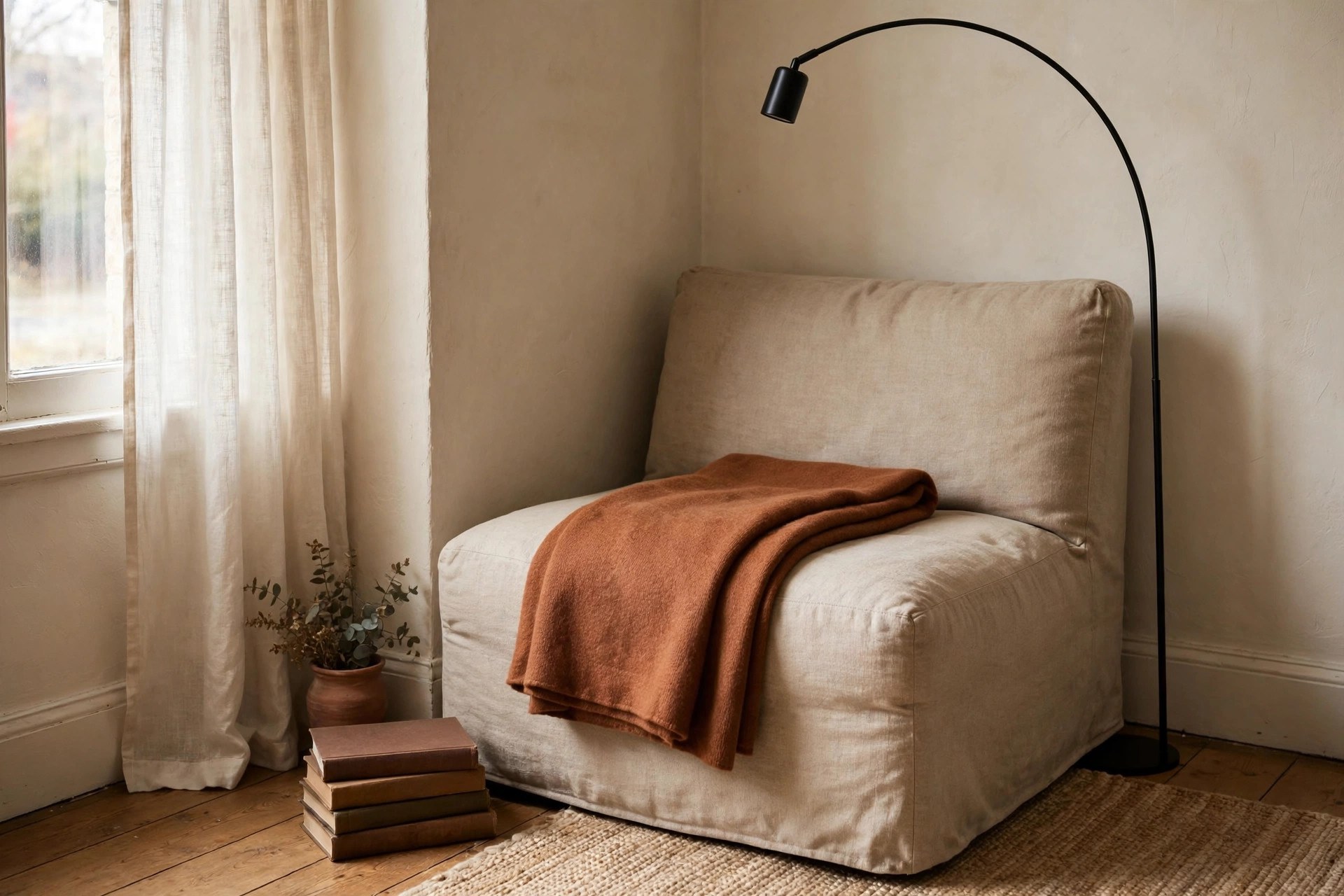
The slipper chair is the small-space reader’s best friend: no arms means it is often 15 centimetres narrower than an equivalent armchair, and its low, wide seat is made for curling up. Look for a seat height around 40 to 45 centimetres so your feet rest flat, and about 50 centimetres of seat depth for tucking one leg under you. Style it simply: an arc lamp curving over one shoulder, a rust or ochre throw folded across the seat, and a stack of books on the floor as a side table. It slides into corners other chairs cannot use.
2. Swivel in a Barrel Chair
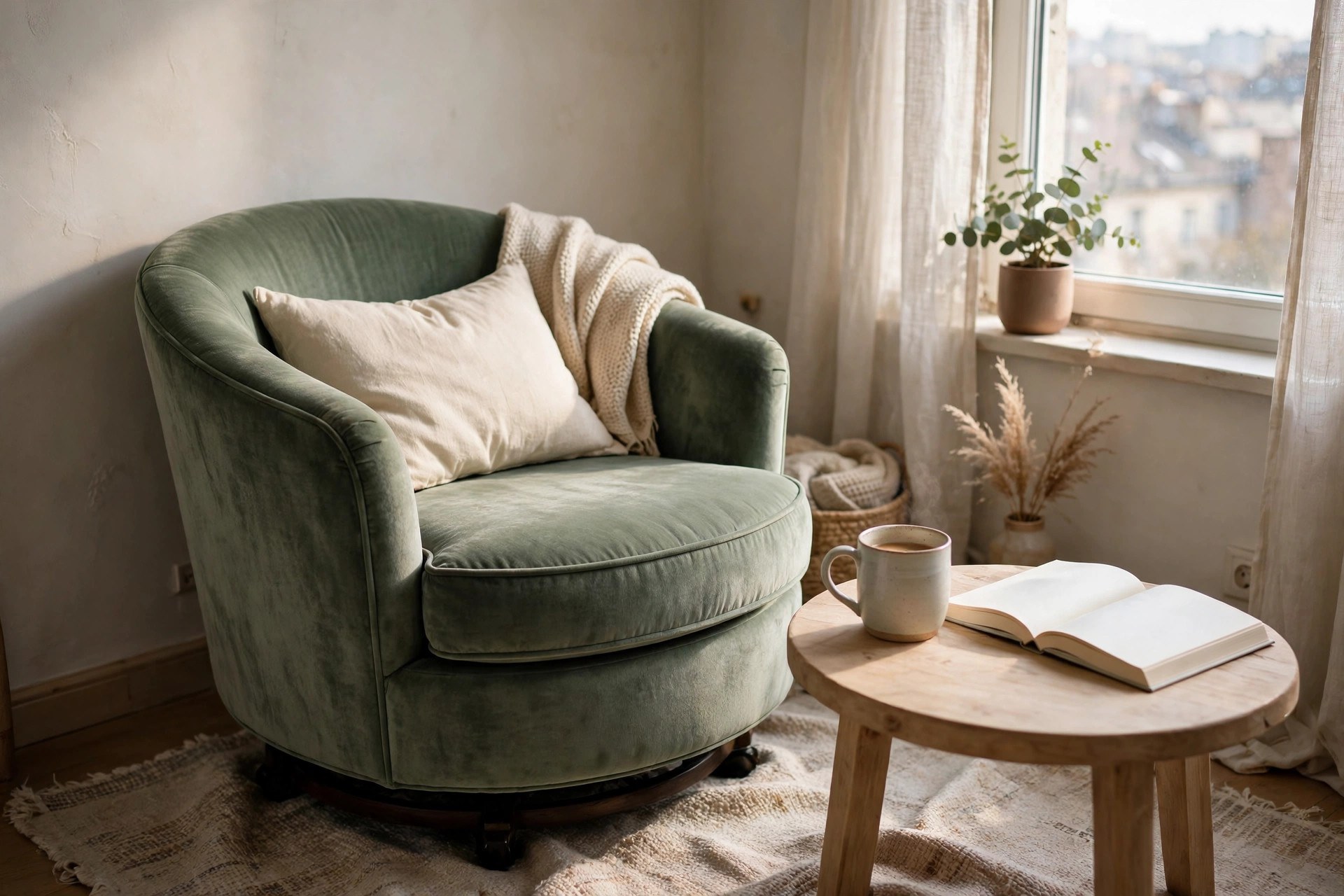
A barrel chair wraps you in a continuous curve of back and arms, yet its footprint is a near-circle of about 75 to 85 centimetres — smaller than most square armchairs. The swivel base is the real gift in a small room: turn toward the window for morning chapters, turn back toward the room for evening conversation, without dragging it across the floor. Choose a firm seat cushion so the low back stays supportive, and echo the curve with a round side table — no sharp corner to catch your shin. Velvet, boucle or a tight-weave linen all wear well here.
3. Shrink the Wingback, Keep the Support
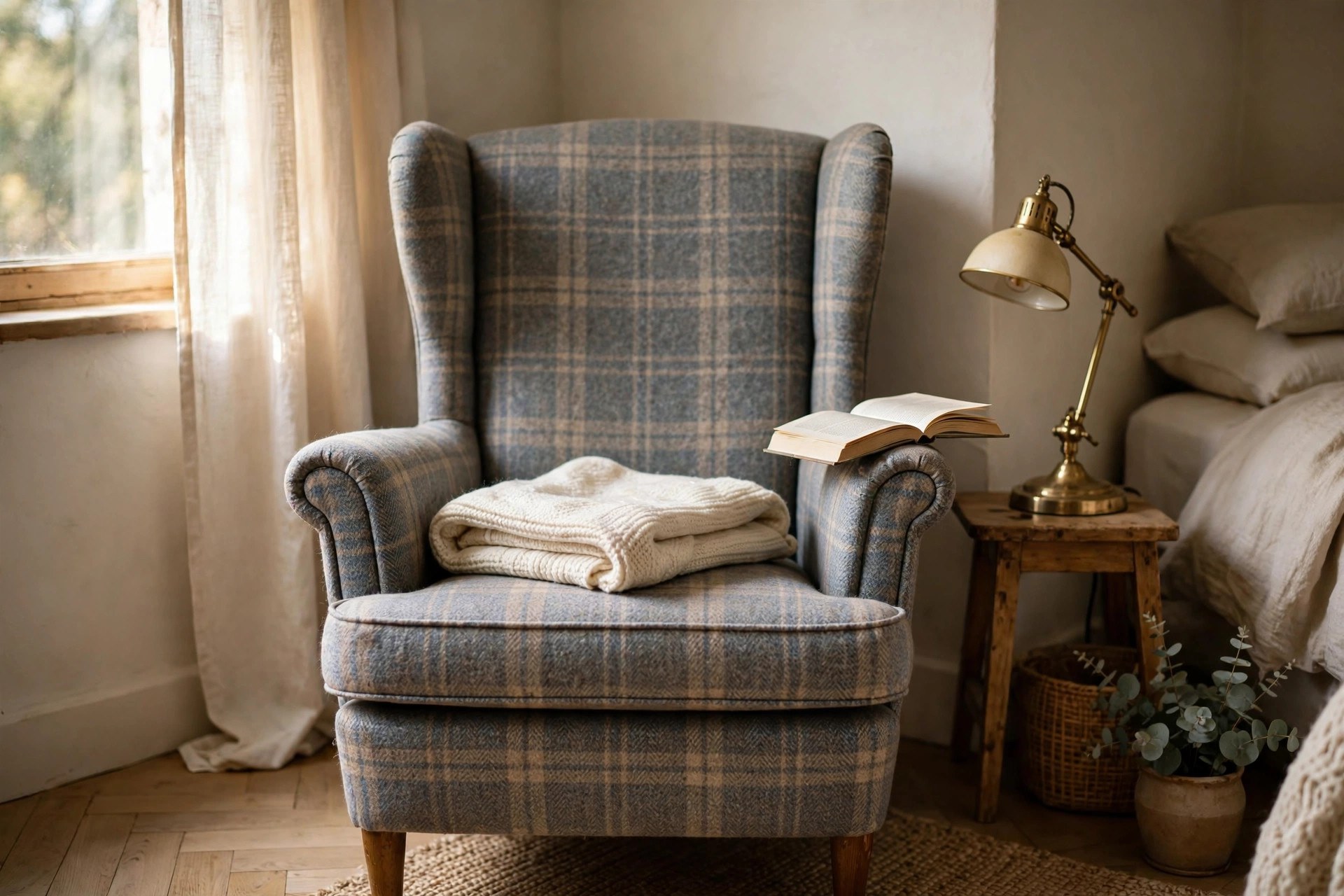
The classic wingback was designed for readers: the wings block draughts and give your head somewhere to rest. Compact versions keep those virtues at around 70 centimetres wide instead of the traditional 85 or more. Check that the seat is not too deep — 50 to 55 centimetres suits most people, with a cushion behind your back if it runs deeper — and wings at head height, not towering. A plaid or herringbone wool makes it feel like furniture with a past. Keep a brass lamp close on a tiny table; wingbacks drink up light, and the page needs its own source.
4. Stretch Out on a Short Chaise
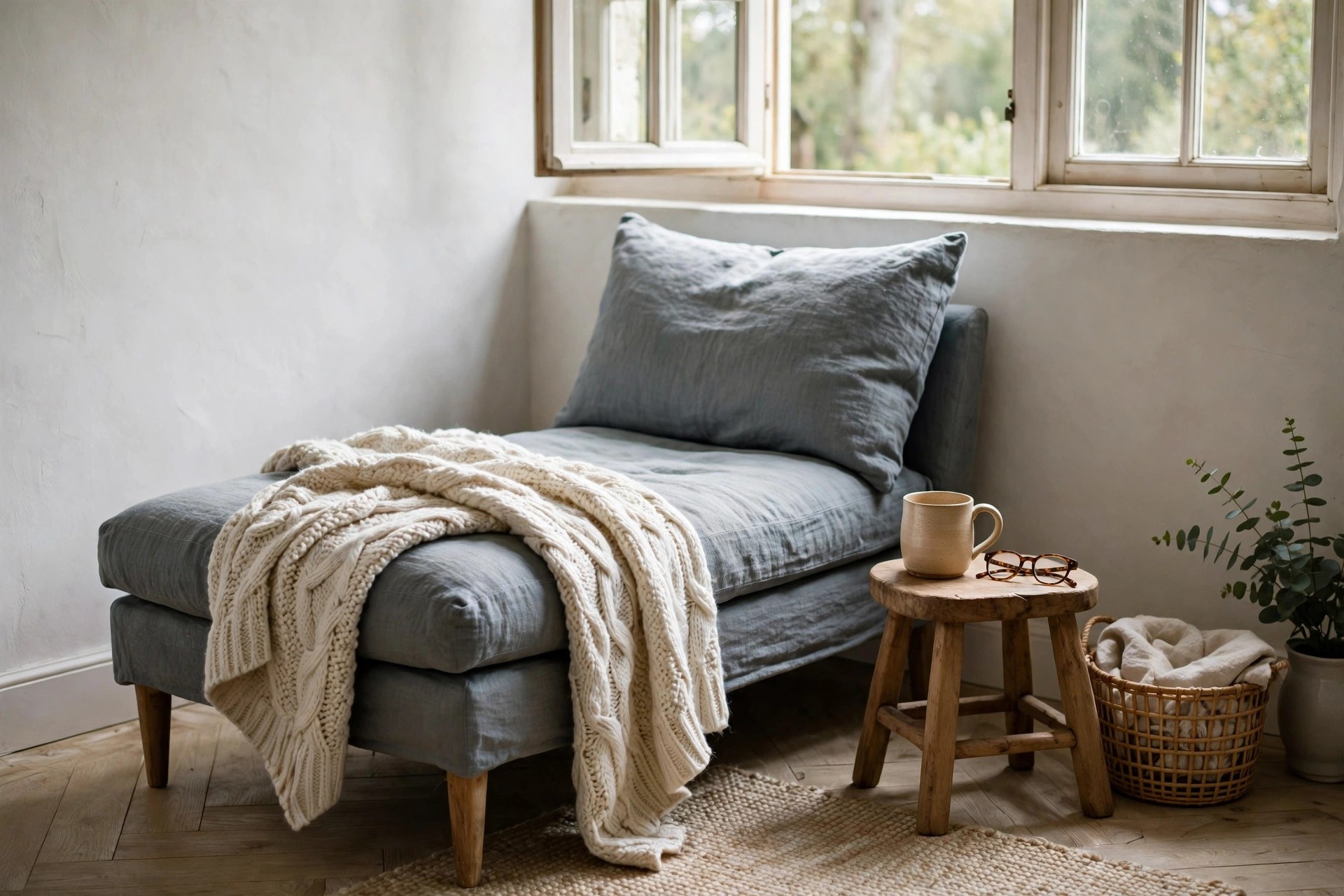
If you read lying back with your legs up, a short chaise beats a chair and footstool: one piece, one footprint, typically 140 to 160 centimetres long and as little as 65 wide. Run it along a wall or beneath a window where a sofa would never fit. The back should prop your shoulders at a reading angle, not a sleeping one; a firm cushion behind you fine-tunes the tilt. Style it with a chunky knit throw over the leg end and a low wooden stool beside the head end for a mug and your glasses.
5. Choose a Small-Scale Club Chair
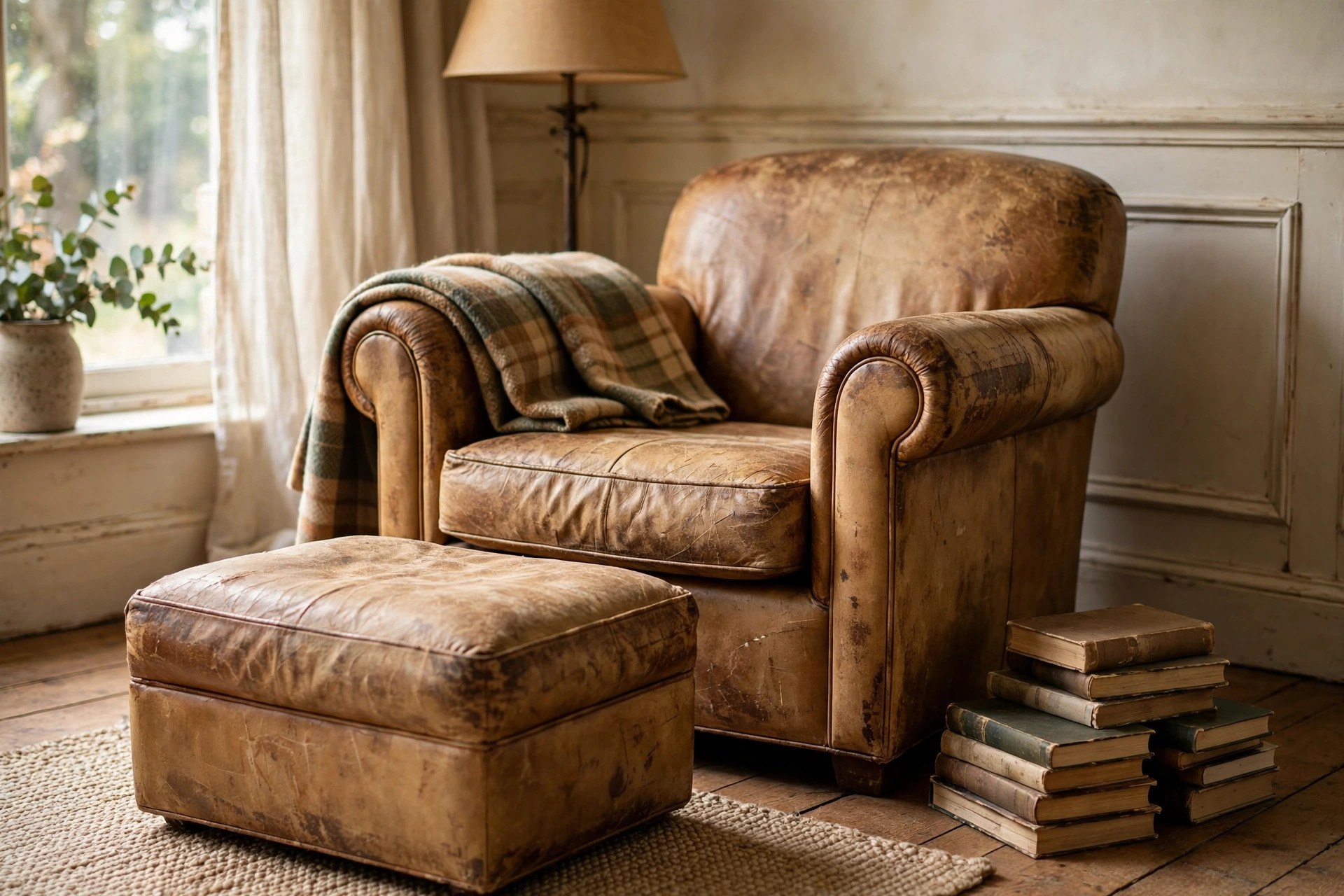
A club chair’s deep, low seat is reading comfort itself, but full-size versions are room-eaters; small-scale ones, under 80 centimetres wide overall, keep the enveloping feel without the bulk. Sit in it before you commit: your back should touch the backrest with your feet flat, and the arms should sit low enough to rest a book on. A separate footstool earns its floor space by doubling as an extra seat and a book stack beside the chair. Worn leather is the forgiving finish here; every crease becomes patina rather than damage.
6. Let Rattan Keep the Corner Light
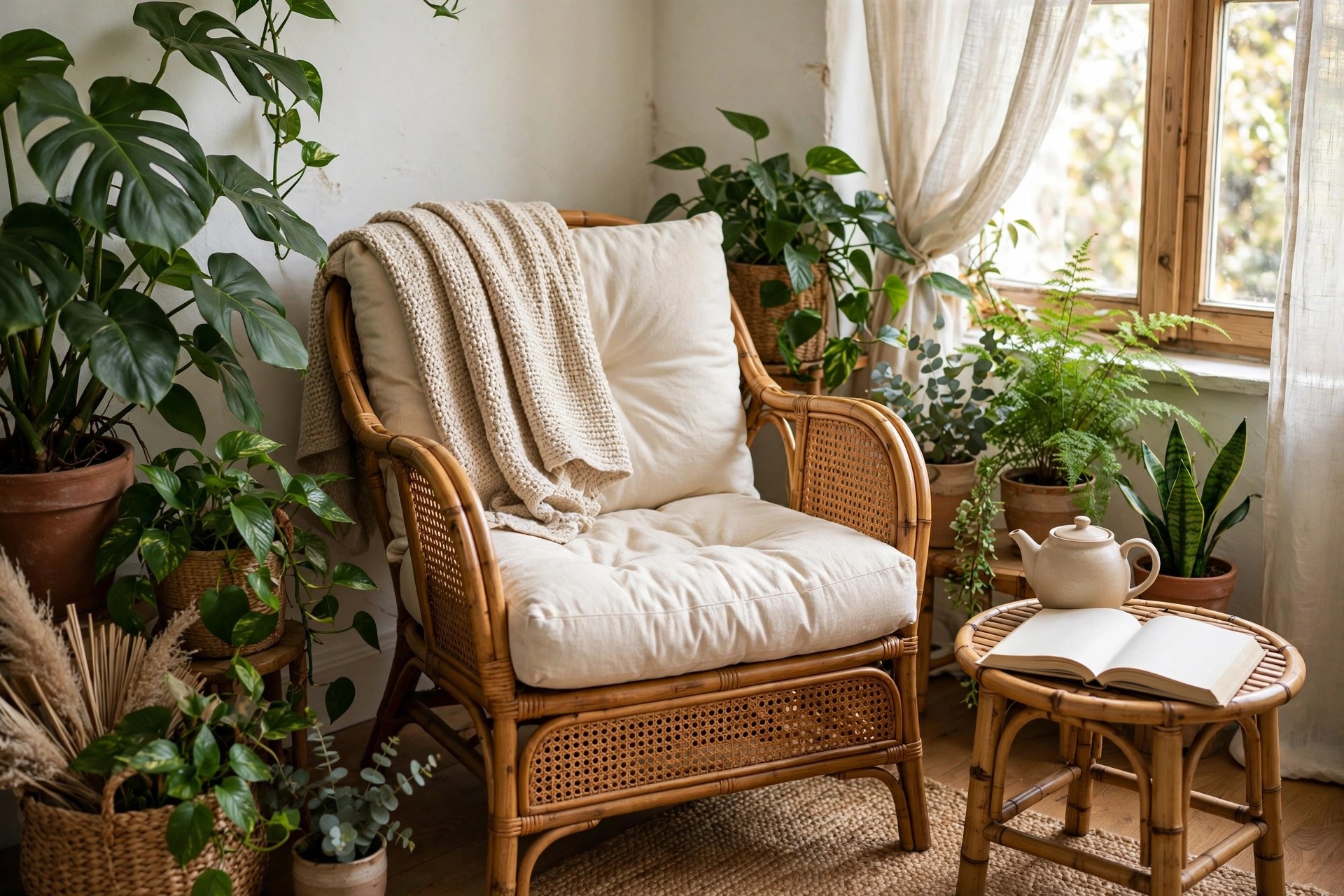
In a small room, a chair you can see through feels half the size of a solid one. A rattan or cane chair brings that visual lightness, plus a frame light enough to move for cleaning or chasing the sun. The frame alone is not comfortable for a whole novel, so budget for thick seat and back cushions and a throw for cooler evenings. Surround it with plants and a bamboo side table and the corner reads as a conservatory escape; it is the same relaxed layering behind boho dream bedroom ideas.
7. Rock Gently in a Bentwood Rocker
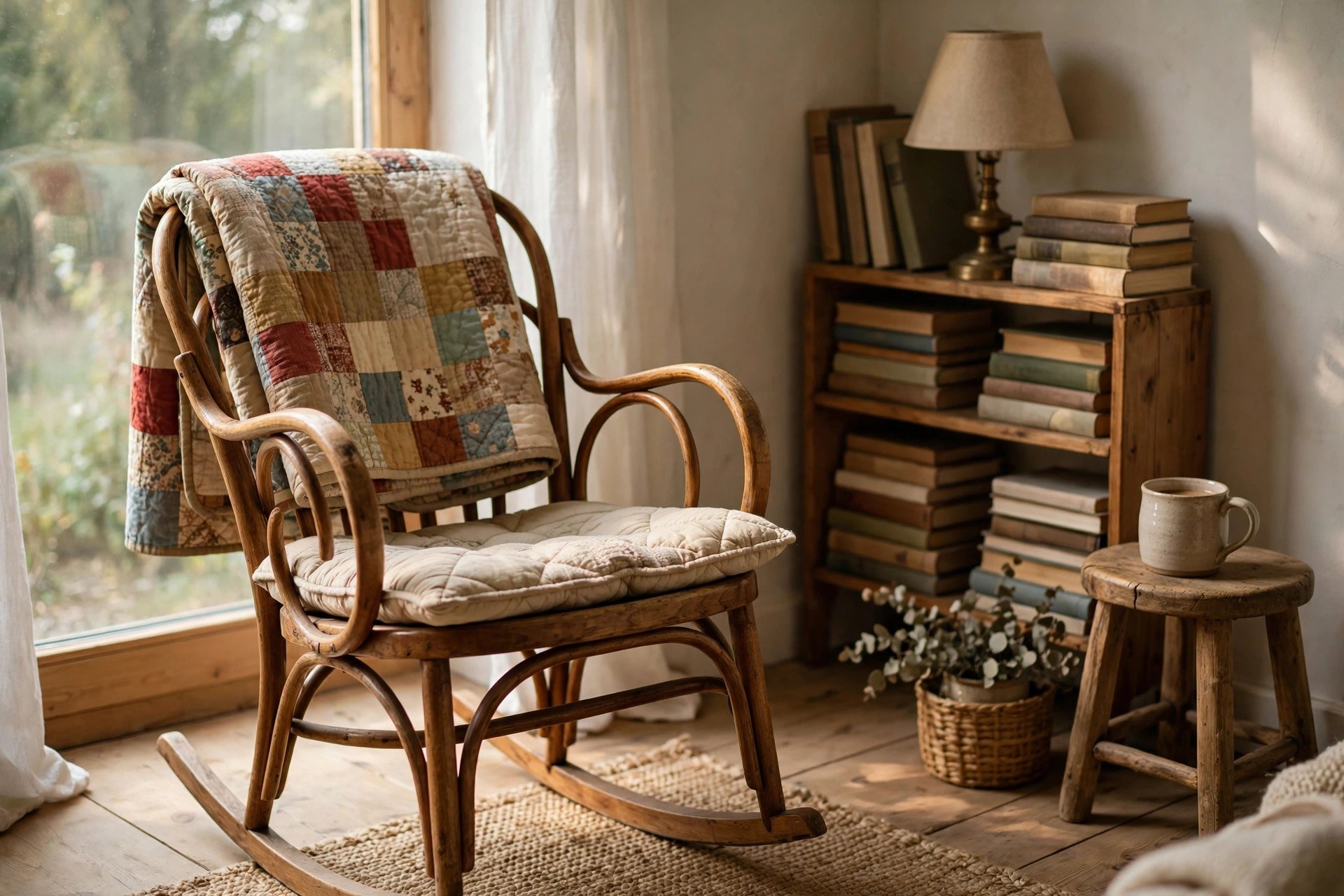
A bentwood rocker gives restless readers that gentle rhythm in a frame far lighter than a traditional rocking chair. Plan the footprint honestly: allow roughly 90 centimetres front to back so the runners can travel, and set it on a rug to protect the floor and quiet the creak. A quilted seat cushion and a patchwork quilt over the back rail soften the wood. It suits a corner beside a low bookshelf, where the rocking slows as the chapter ends. Our bedroom wall art ideas for bookworms were made for the wall above that shelf. Test the balance — you should rock without your feet pushing.
8. Splurge on a Chair-and-a-Half
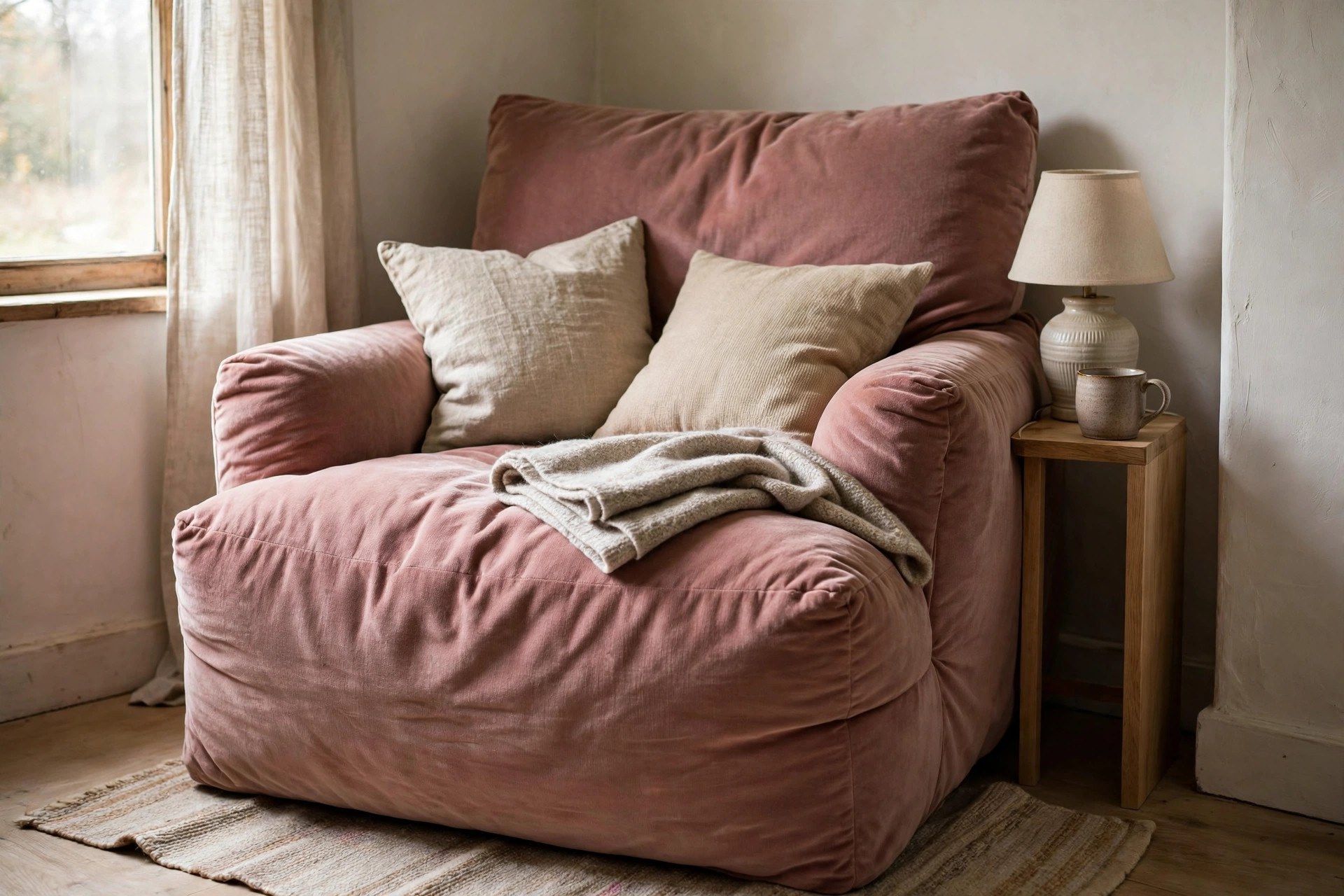
A chair-and-a-half is wider than an armchair — usually 100 to 110 centimetres — yet in a small room it can still be the smart buy, because one generous chair replaces both a reading seat and the loveseat you were trying to squeeze in. It is the chair for sideways readers, shared story time, and anyone whose cat insists on co-reading. Keep the rest of the nook narrow to compensate: a slim side table just wide enough for a lamp and mug, a flat-weave rug, and cushions lighter than the upholstery so it reads soft, not heavy.
9. Drop Down to a Floor Chair
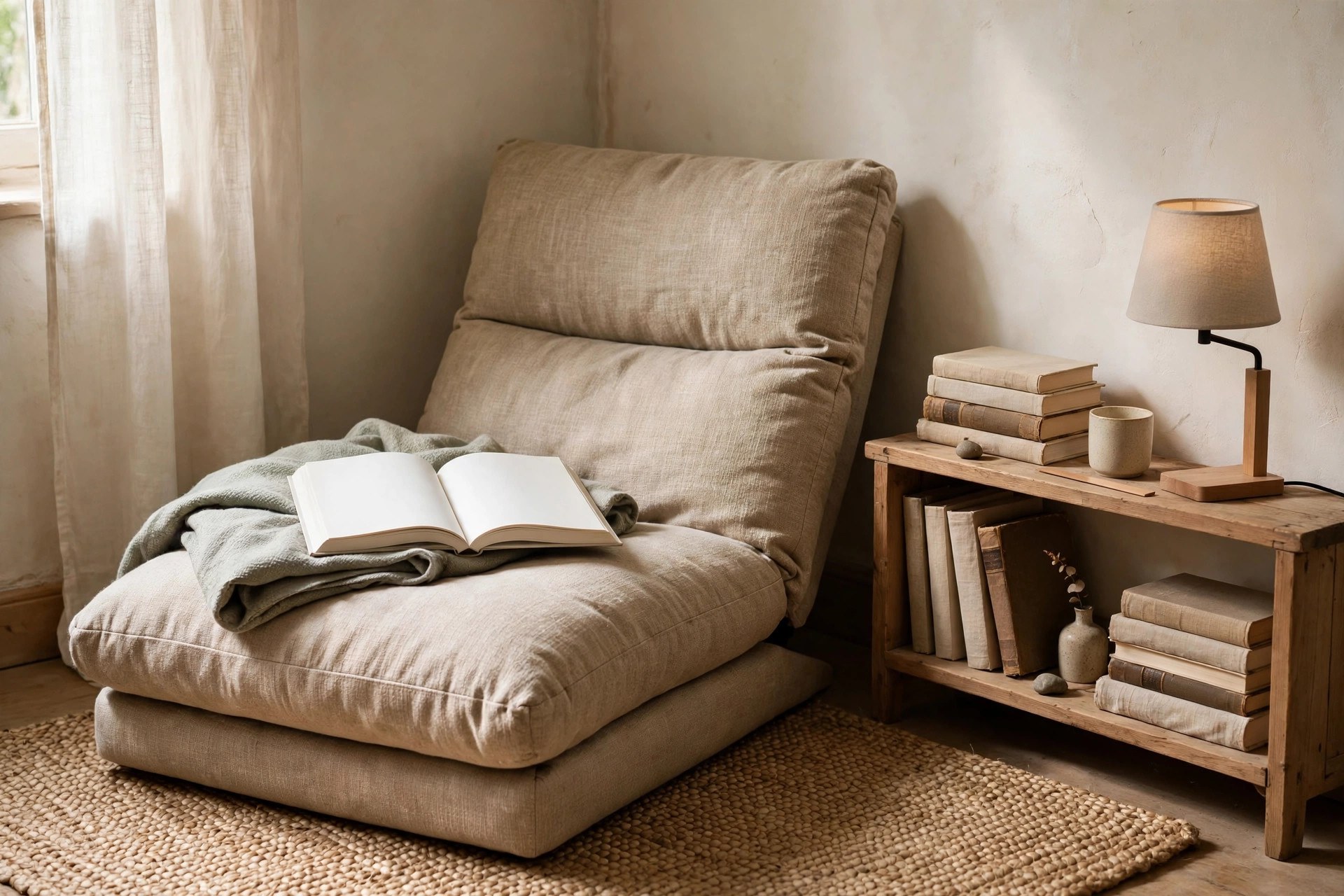
Where ceilings slope or space is truly tight, a floor chair with an adjustable backrest gives you a real reading seat at cushion height. It folds flat for storage, weighs almost nothing, and pairs naturally with a low bookshelf and a small lamp at the same level. Choose one whose back clicks into several angles and supports your shoulders — about 50 centimetres of back height minimum. This is the relaxed, grounded end of the scale, and it layers beautifully with the soft, low styling in our cozy small bedroom wall art ideas.
10. Rescue a Vintage Wooden Armchair
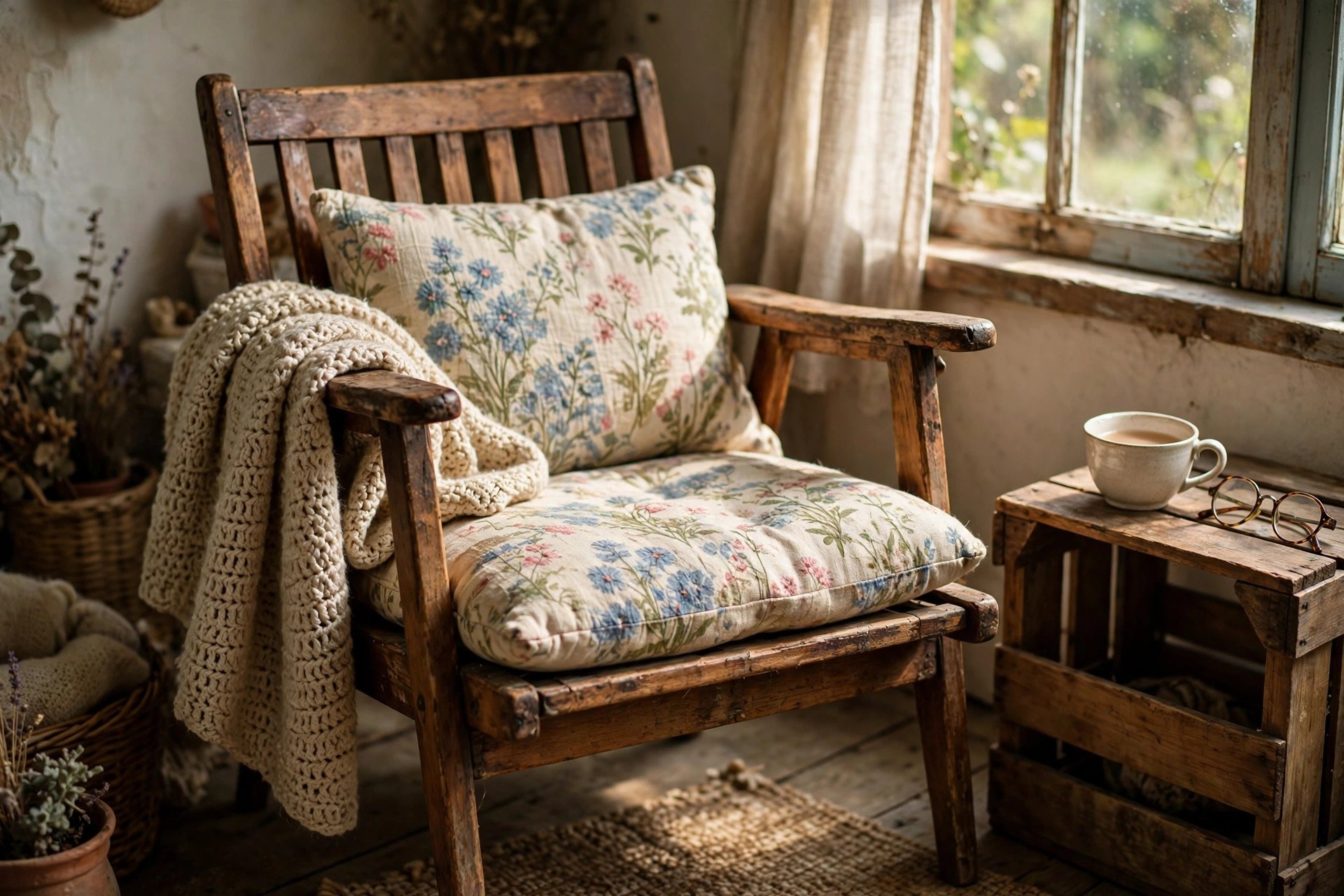
Older wooden armchairs were built at a smaller scale than most modern furniture, which makes them naturals for small nooks. Hunt for a solid frame with narrow arms and a seat around 45 centimetres high; a little wobble in a joint is fixable, a cracked frame is not. Comfort comes from what you add: a firm new seat cushion, a softer back cushion, and a crocheted blanket over one arm. Style it with a wooden crate as the side table — mug and reading glasses on top, current reads stored inside — and the whole corner costs little and looks collected, not matched.
11. Promote a Dining Chair
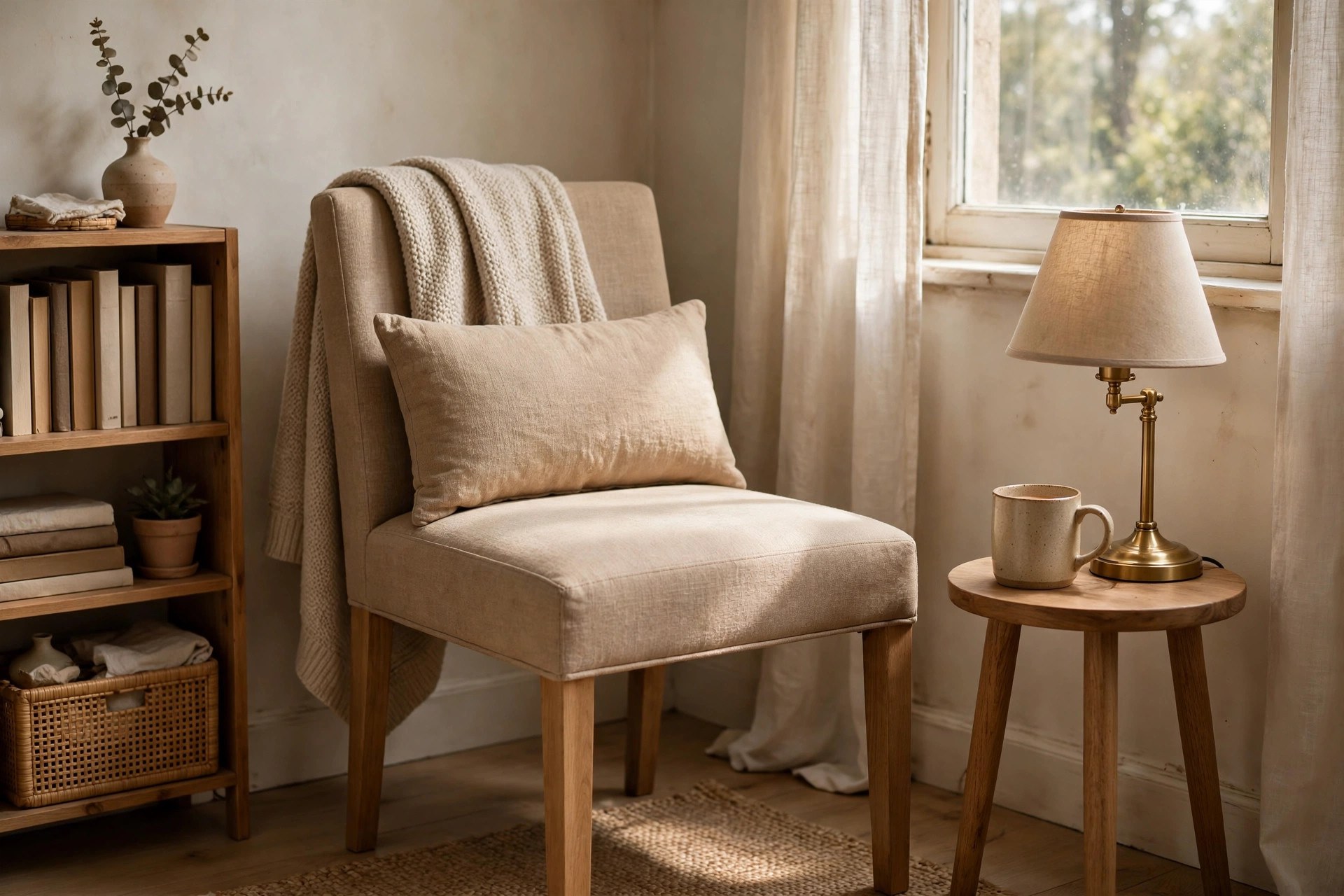
An upholstered dining chair — the Parsons style, with its padded back and seat — is already in your home, already the right scale, and only one cushion away from reading duty. The fix is lumbar support: dining backs are upright, so add a small firm cushion at the small of your back and the posture softens into reading mode. A pouffe or low stool for your feet completes it. Drape a throw over the back so it reads as a reading chair, not a spare seat, and give it a lamp and side table of its own. Two rooms, one chair, no extra footprint.
12. Tuck a Tub Chair Into the Corner
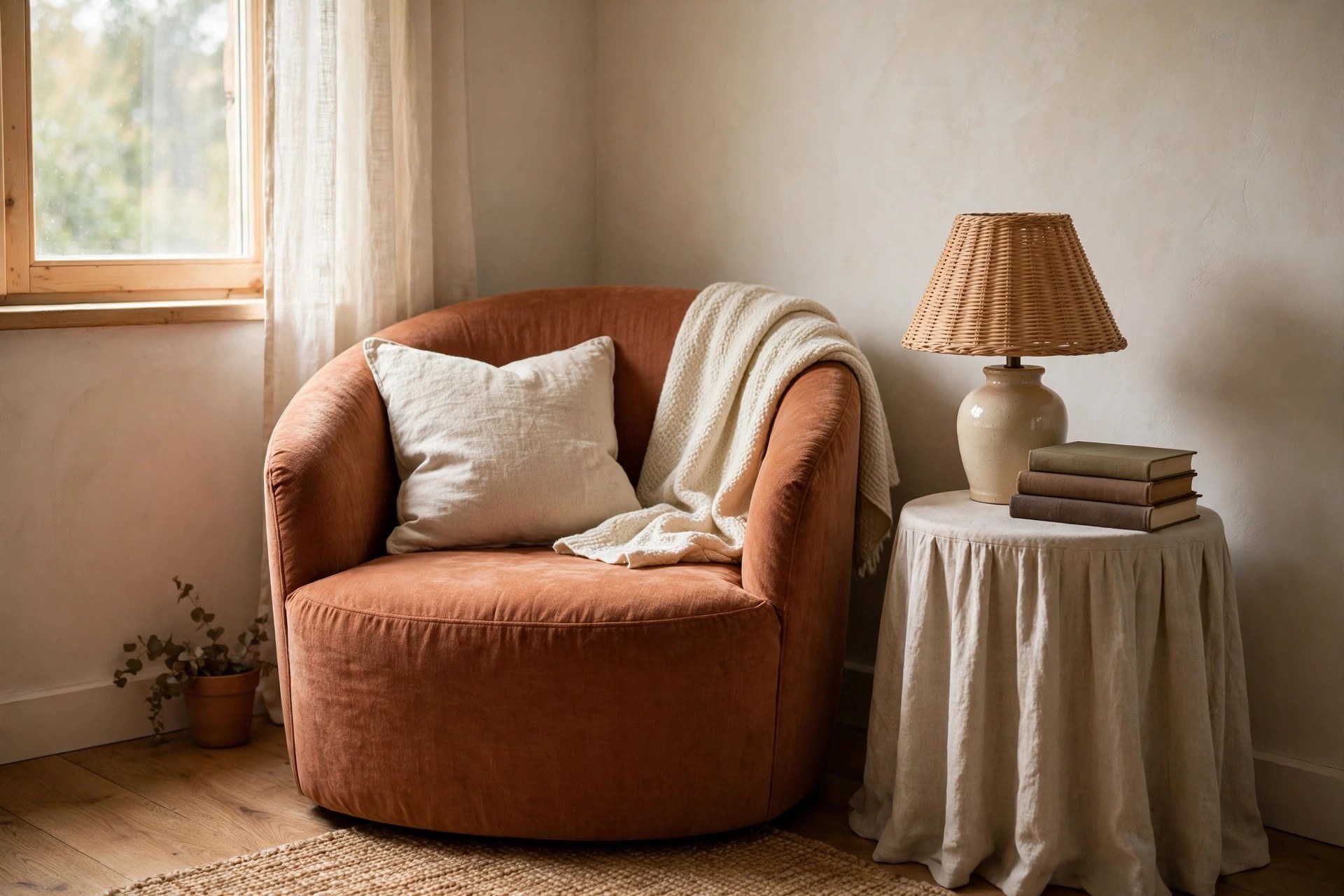
A tub chair’s curved back and low arms form a ready-made alcove, and angled into a corner it uses the deadest floor space in the room. Most are around 75 centimetres wide; check the seat depth — roughly 50 centimetres — lets you sit back without your feet dangling. Angling the chair also angles the light: position a lamp behind the corner so it falls over your shoulder onto the page. Beside it, a skirted round table hides a basket of books under its cloth — storage a small room always needs.
13. Cocoon in a Mini Bowl Chair

The papasan-style bowl chair is pure cocoon, and scaled-down versions around 90 centimetres across fit dormers, eaves corners and bay windows where nothing rectangular works. Measure the doorway before anything else — the bowl is one wide piece — and choose a cushion at least 10 centimetres thick, since your whole weight rests on it. The deep dish shape suits readers who sit cross-legged or sideways with knees up. Keep the styling quiet: a knit blanket, a small lamp on a low shelf, books stacked beside the base. Under a sloped ceiling, it turns wasted headroom into the best seat in the house.
14. Recline Without the Bulk
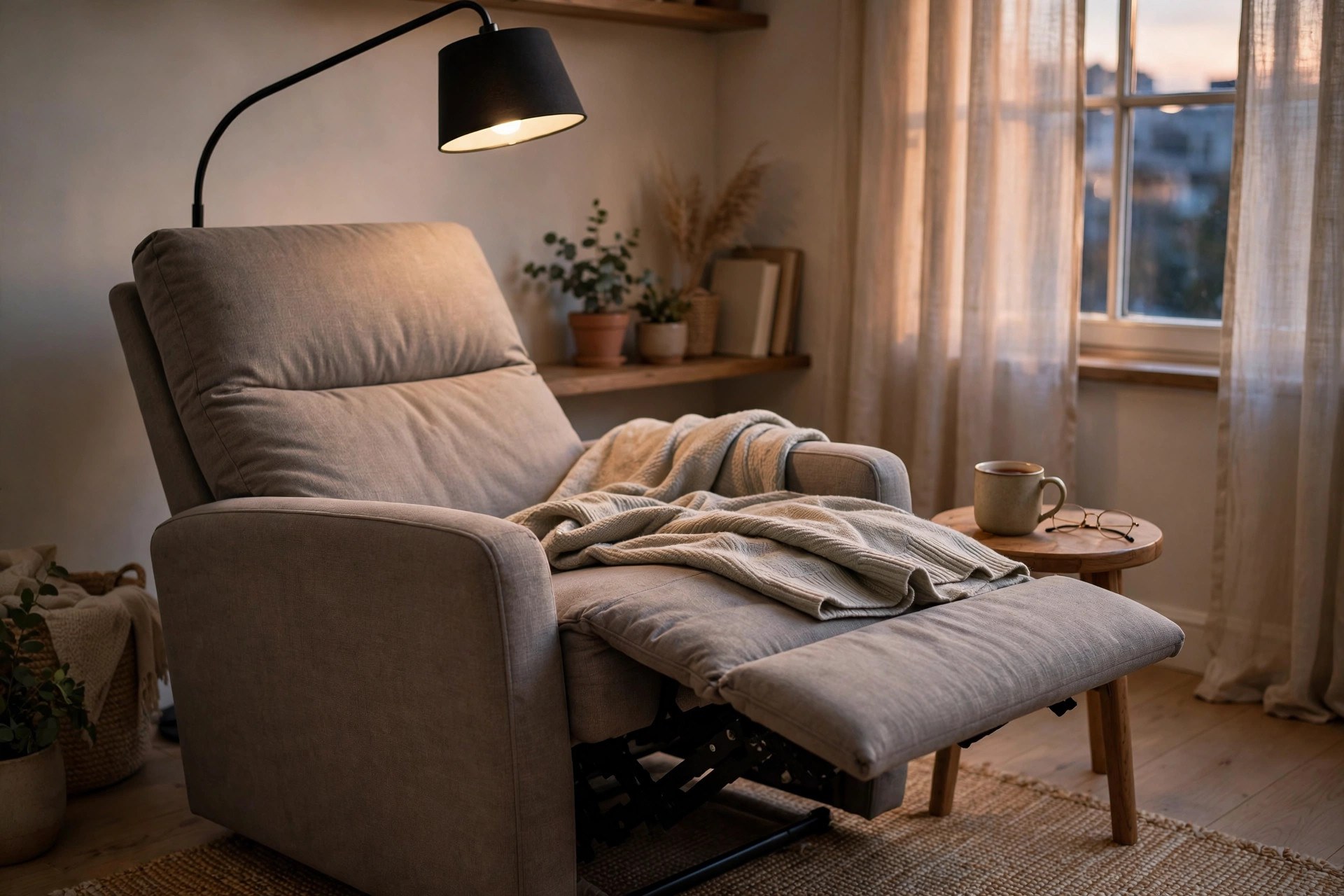
A recliner sounds like the opposite of small-space furniture, but slim recliners exist at around 70 centimetres wide, and wall-hugger designs open fully with only about 10 centimetres of clearance behind them. For readers, the raised footrest and tilting back remove the need for a footstool — one footprint does everything. Check the reclined length against your room so the extended chair does not block a door or walkway. An arc floor lamp is the natural partner, dropping light onto the page from above your shoulder; a small round table keeps a mug in reach.
15. Line a Settle Bench Along the Wall
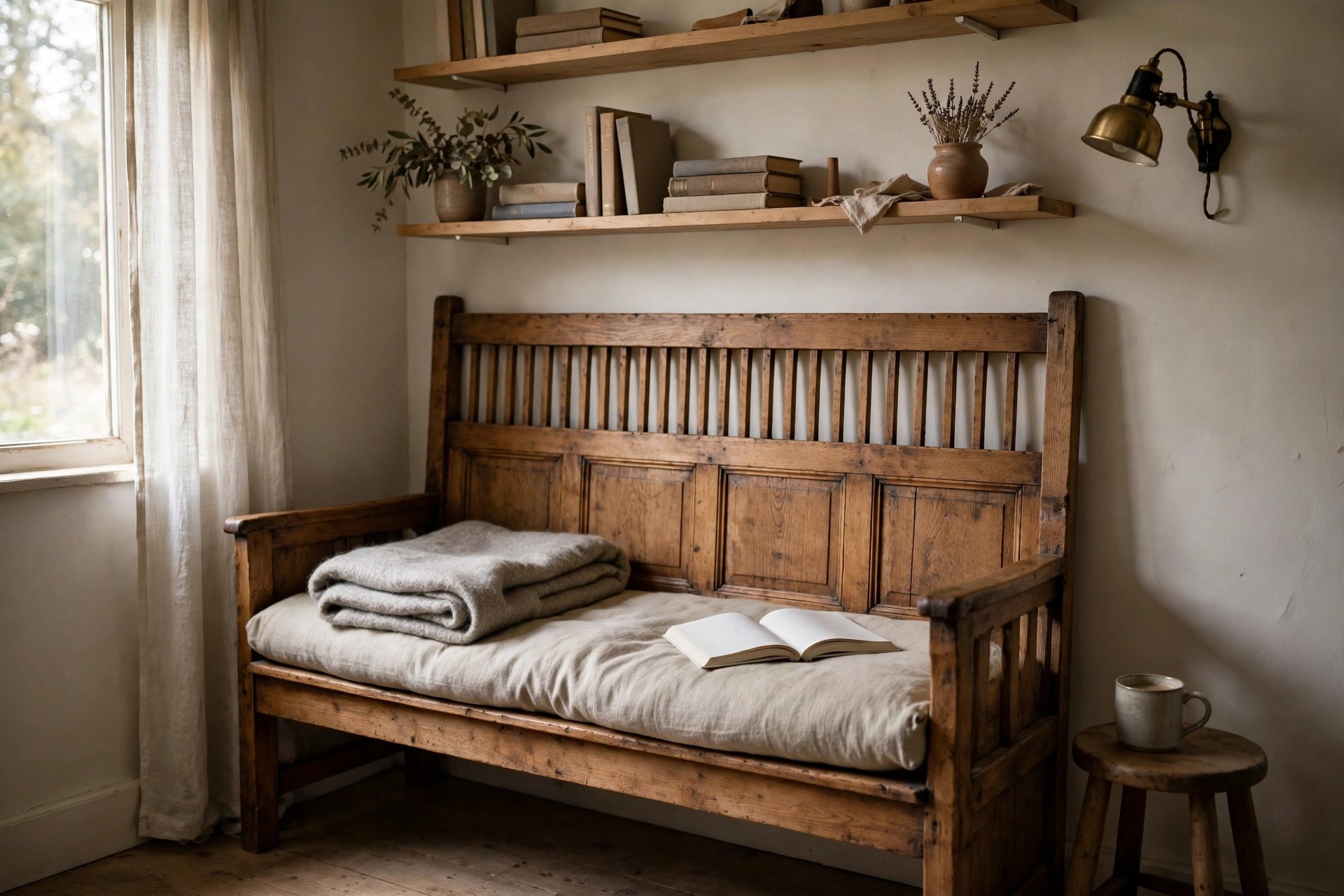
A settle bench — a high-backed wooden bench — is only about 50 to 55 centimetres deep, shallower than any chair here, so it hugs a wall that nothing else can use. Comfort is entirely in the dressing: one long bench cushion, two or three back pillows you can rearrange, and a folded wool throw at one end. Floating shelves above it hold the library, and a brass wall lamp frees the surface entirely. It seats one reader stretched out, or two upright — double duty that matters in a narrow room. Choose worn, honest wood and it becomes the room’s character piece.
How to Choose a Reading Chair That Fits a Small Space, Step by Step
Start with the corner, not the chair. Measure the floor space, then picture it as a square — chair widths are quoted at their widest point, usually the arms. Leave at least 45 centimetres to walk past the chair, and check the route in: doorways, hall turns and the chair’s own diagonal. Then shortlist by shape: armless or low-armed chairs for the tightest spots, round footprints for corners, a chaise or bench where the only space is a long wall.
Next, sit-test for your reading posture, not showroom posture. Your feet should rest flat or be deliberately supported, your lower back meets the chair without a cushion stuffed behind you, and the seat depth lets your back touch the backrest — 50 to 55 centimetres suits most adults. Finally, build the nook around the winner: light falling over your shoulder, a table surface within arm’s reach at roughly seat height, and a throw that lives on the chair. A chair that passes those three tests will be used daily.
Common Mistakes to Avoid
1. Buying the standard-size version. Almost every classic reading chair shape — wingback, club, papasan — exists in a compact version. The full-size one fits through the door yet overwhelms the room, blocking light and walkways. Always compare overall width and depth, not the seat size alone.
2. Forgetting the reclined or rocked footprint. A recliner at rest and a recliner open are two different pieces of furniture, and a rocker needs travel room behind it. Measure the chair the way it will actually be used, or the nook collides with a wall, door or bookshelf daily.
3. Adding a chair but no light or table. A reading chair without light over the shoulder and a surface for a mug and book is just a seat. Plan the lamp and table as part of the footprint from the start — they are what turn a corner into a reading chair at all.
Frequently Asked Questions
What size chair fits a small reading nook?
As a working guide, look for an overall width under 80 centimetres and a depth under 85. Armless slipper chairs, compact wingbacks and tub chairs usually qualify; round chairs are measured by diameter. Always leave around 45 centimetres of walk-past room.
What seat height and depth are most comfortable for reading?
Most adults read comfortably with a seat height of about 40 to 45 centimetres and a seat depth of 50 to 55 centimetres, so the back is supported while the feet rest flat. If a seat runs deeper, a firm cushion behind the lower back restores the posture.
Where should the lamp go in a small reading corner?
Behind and slightly above your shoulder, so light falls on the page without shining in your eyes or casting your shadow across the book. Arc lamps, wall lamps and table lamps all achieve this in very little floor space.
Can a reading chair work in a bedroom instead of a living room?
Yes — bedroom corners are often the quietest spot in a small home. A compact chair beside the bed doubles as a place to sit while dressing, and a floor chair or settle bench along the wall keeps the footprint shallow. Just keep the same light-and-table rule.
Final Thoughts
The best comfy reading chairs for small spaces are not shrunken compromises — they are honest shapes, chosen for one corner and one reader. Pick the type that matches how you sit, measure its true footprint, and finish it with light, a table and a throw. The same corner can even change mood with the seasons: a cushion swap and a few festive touches, along the lines of our christmas bedroom ideas, turn a reading nook into the cosiest seat in the house all winter.


