

15 Container Vegetable Garden Ideas for Beginners With No Yard at All
No yard at all sounds like a verdict: no garden, no home-grown food, end of story. It is not true, and the proof fits on one balcony rail. Pots do not care that the ground below them is concrete, shared, or three floors down.
This guide to container vegetable gardening for beginners with no yard at all collects 15 ways to grow real food in pots. Each one names the crop, the pot size, and the care it actually needs. Nothing here needs digging, beds, or a lawn.
Start with one or two ideas that match your light and your appetite. You can add pots over the season as your confidence grows. By the end, you will know which crops earn space on a small balcony and which to skip.
Every idea here suits a renter, too. Pots lift up and move with you, and nothing is planted in the ground. Your deposit stays safe while your dinner gets fresher.
This post contains affiliate links. If you buy through them, we may earn a small commission at no extra cost to you. See our Affiliate Disclosure.
1. Start With One Tomato in a 5-Gallon Pot
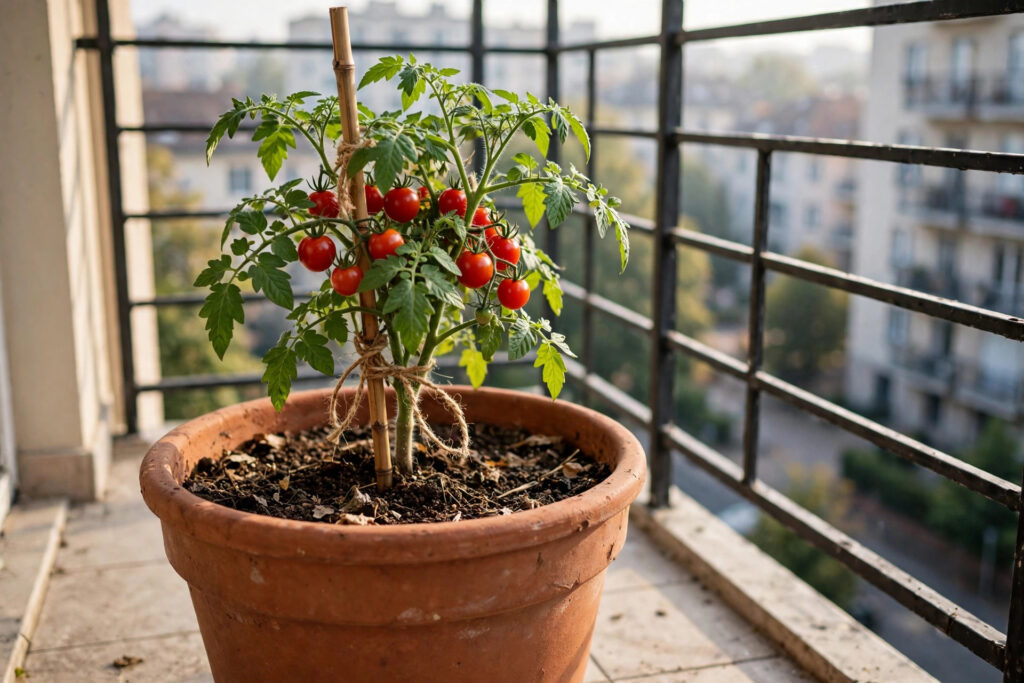
One sunny rail on a third-floor balcony is enough room for a real harvest. Set a single tomato plant in a 5-gallon (about 19-liter) pot in the brightest spot you have.
Pick a compact variety bred for pots, such as ‘Tiny Tim’ or ‘Patio Choice’. These stay small, crop early, and do not need a tall cage. A short stake tied loosely to the main stem is plenty.
Water deeply whenever the top inch (2.5 cm) of mix feels dry. Feed every two weeks once flowers open. Tomatoes forgive a lot, but they sulk if the pot dries out day after day.
If you want the full setup order first, read our guide on how to start a container vegetable garden from scratch. It walks through pots, mix, and planting in the right order.
2. Fill a Wide, Shallow Bowl With Loose-Leaf Lettuce
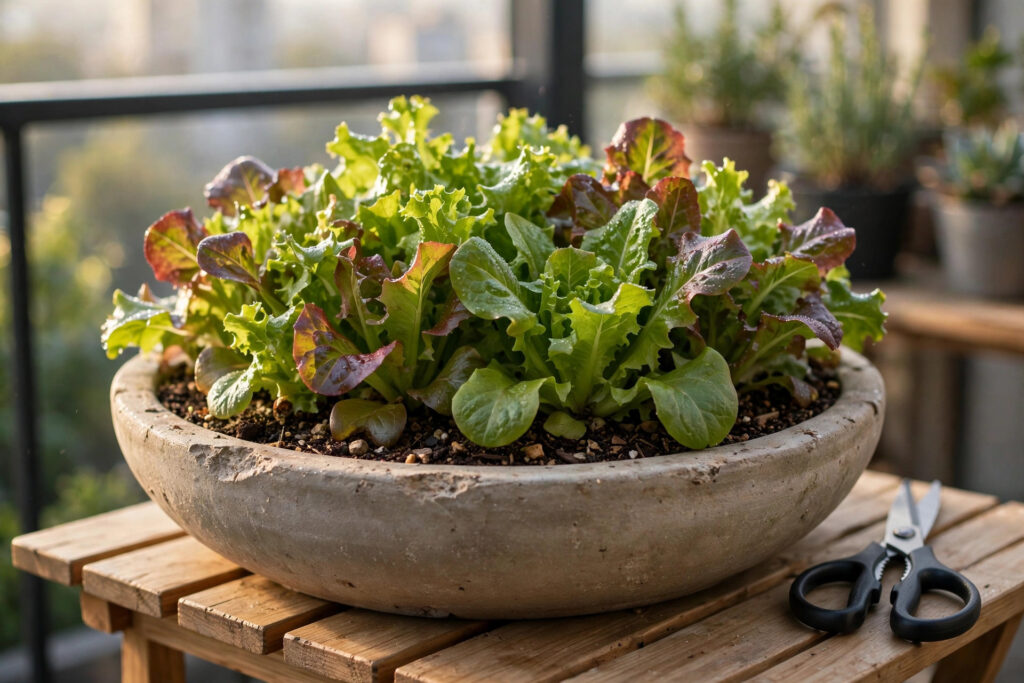
A wide bowl of green leaves, cut fresh for lunch, is the prettiest pot on most balconies. Lettuce roots stay shallow, so the width of the pot matters more than its depth.
Choose a pot at least 12 inches (30 cm) wide and 6 to 8 inches (15 to 20 cm) deep. Fill it with potting mix and scatter loose-leaf seed thinly over the surface. Cover with a dusting of mix and mist it daily.
Lettuce grows happily with 3 to 4 hours of sun, so it suits a balcony that loses light early. Snip outer leaves with scissors and the plant keeps producing new ones from the center.
Sow a second small pot two weeks after the first. While one bowl is being picked hard, the other is sizing up.
3. Grow Radishes in a Window Box for a Fast First Win
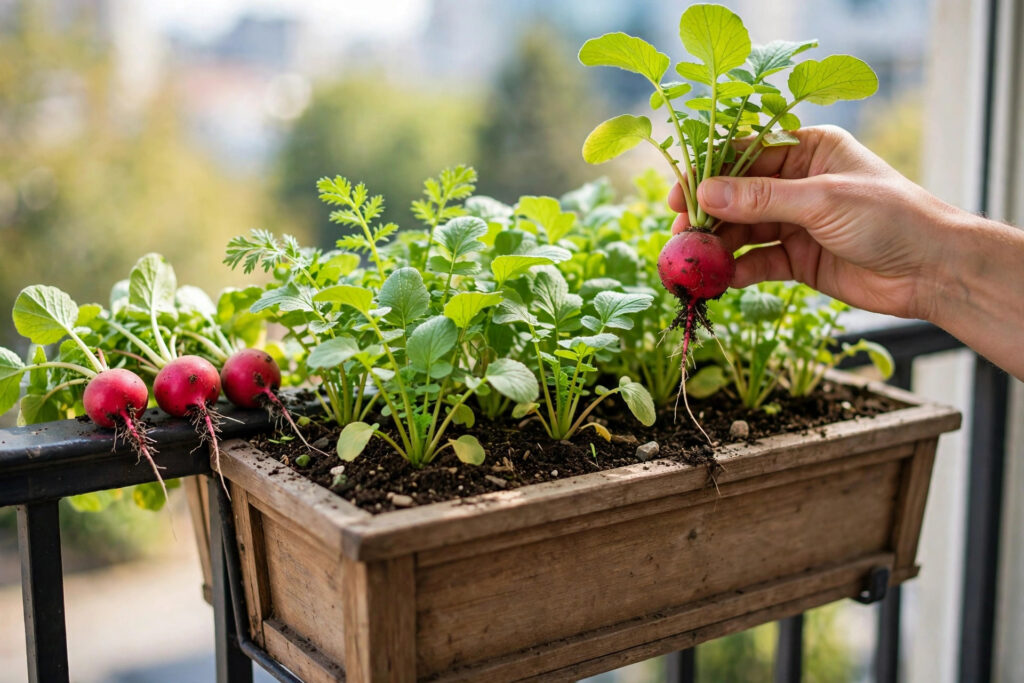
Radishes are the quickest reward in a new garden, ready to pull roughly a month after sowing in spring. That early win keeps beginners going when slower crops are still small.
Use a window box or trough at least 6 inches (15 cm) deep. Sow seed ½ inch (1 cm) deep and 1 inch (2.5 cm) apart. Thin seedlings to 2 inches (5 cm) apart once they sprout.
Keep the mix damp, never soggy, and pull roots as soon as they size up. Radishes left sitting in warm mix turn woody and fiery.
More forgiving crops like these are rounded up in our list of the easiest vegetables to grow in pots for beginners. Start there if you want the gentlest first season possible.
4. Plant a Railing Box of Herbs You Actually Cook With
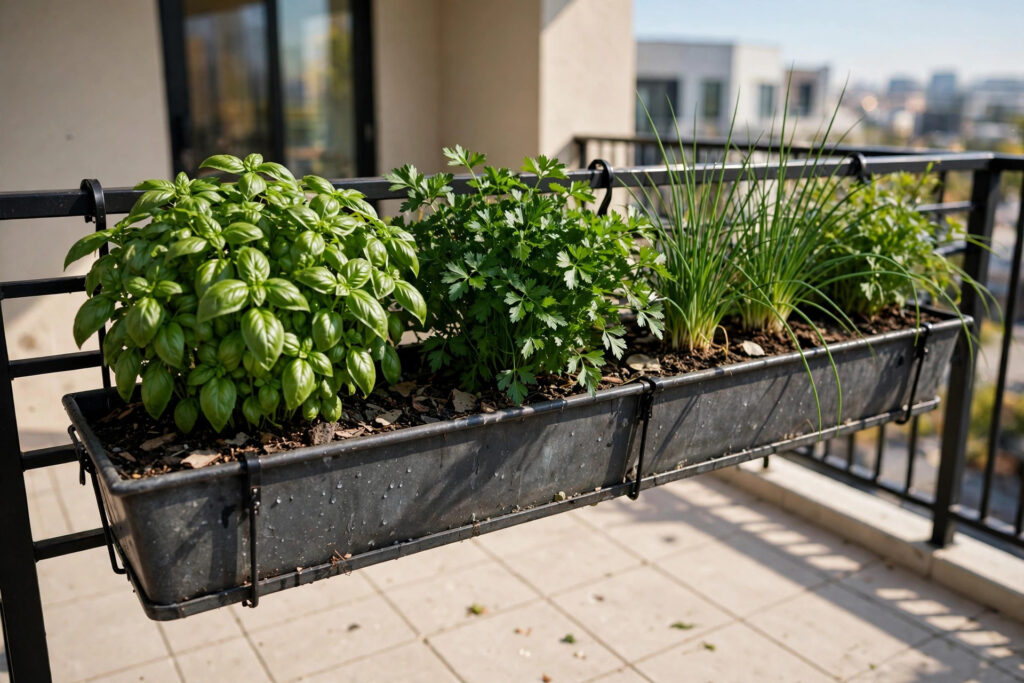
The sad herb pots from the supermarket die because they are crowded seedlings in almost no soil. A railing planter fixes that problem in one step, with real room for roots.
Choose a box at least 8 inches (20 cm) deep and hang it on the inside of the rail. Plant basil, chives, and parsley, one plant per 8 inches (20 cm) of length. Each plant gets space to bush out.
Basil wants full sun and steady water. Parsley and chives accept a little shade and forgive a missed watering. Pinch basil tips weekly so it branches instead of racing to flower.
Grow only herbs your kitchen already uses, and the box earns its rail space fast. For more ways to fit herbs onto a small rail, see these balcony herb garden ideas for apartments.
5. Give One Zucchini a 10-Gallon Grow Bag

Zucchini does not need a garden bed, despite its reputation. It needs width, food, and water, and a 10-gallon (about 38-liter) fabric grow bag gives it all three.
Plant one ‘Astia’ zucchini (courgette) per bag. This compact variety was bred for containers and sets fruit over a long season. Set the bag where it gets at least 6 hours of sun.
Fabric bags drain freely, so water daily in hot weather and feed every week once flowers start. Pick fruits at about 6 inches (15 cm) long, before they turn into clubs.
If few bees visit your balcony, move pollen between flowers with a soft brush on a still morning. Male flowers have a thin stem. Female flowers carry a tiny fruit behind the petals.
6. Grow Kale in a Deep Pot and Pick It for Months
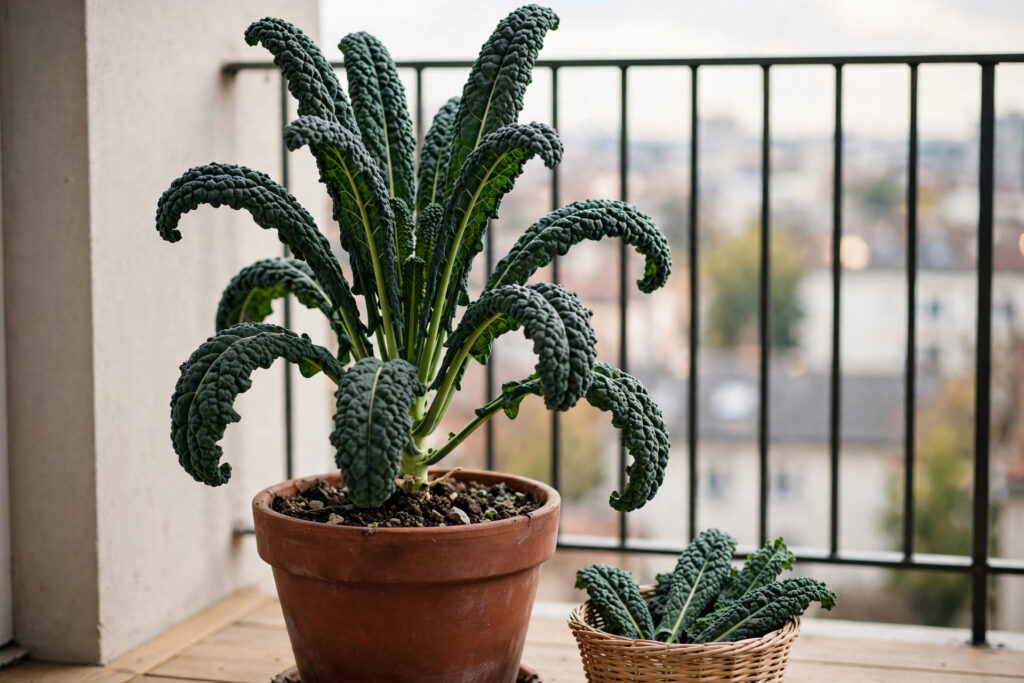
Fill a pot at least 12 inches (30 cm) deep with potting mix, and set one kale plant in the middle. ‘Lacinato’ kale grows upright and narrow, so it takes very little floor space.
Kale settles for about 4 hours of sun, which makes it a strong pick for east-facing balconies. Water when the top inch (2.5 cm) of mix dries out. A liquid feed every two weeks keeps new leaves coming.
Pick the outer leaves and leave the center crown alone, and the same plant feeds you for months. Always leave at least five or six leaves on the plant so it can keep growing.
Kale shrugs off cool nights and even a light frost. In mild-winter areas, roughly USDA zones 8 to 10, a healthy pot can crop right through the cold season.
7. Follow the One-Plant Rule for Peppers

One pepper plant, one 5-gallon (about 19-liter) pot. That single rule prevents most pepper failures in containers, because two plants sharing a pot compete for water and food, and both sulk.
Peppers are heat lovers, so give yours the hottest corner, with 6 to 8 hours of sun. A compact jalapeño or a small bell type suits a balcony best. Reflected heat from a wall helps on cool nights.
Push a short stake in at planting time, before the roots spread. Branches loaded with fruit snap easily in wind, and a loose tie now saves the plant later in summer.
Water evenly, because swings between dry and soaked can split fruit and drop flowers. Feed every two weeks once the first peppers set.
8. Choose Bush Beans Over Pole Beans on a Small Balcony

Pole beans climb 6 feet (about 2 m) and shade everything behind them. Bush beans stop at knee height and crop in a much smaller footprint. For a first pot on a small balcony, bush wins.
Sow ‘Provider’ or ‘Contender’ seed 1 inch (2.5 cm) deep and 3 inches (8 cm) apart in a 5-gallon pot. Sow only after your last frost, because beans sulk and rot in cold soil.
Beans ask for little beyond warm mix and steady water. They even feed the soil a little, since their roots hold nitrogen. A feed is rarely needed in fresh potting mix.
Pick pods every two days once they start coming. Regular picking tells the plant to make more flowers. Stop picking for a week and it slows down, thinking its job is done.
9. Grow Carrots in a Deep Pot of Loose Mix
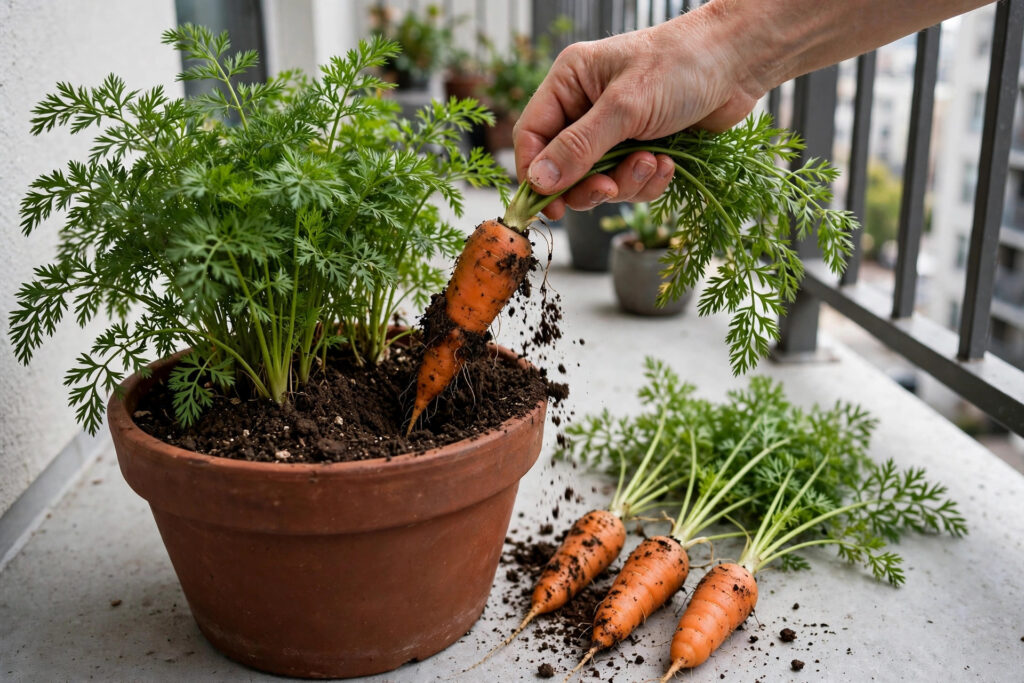
Carrots fork and stunt when their roots hit stones or hard lumps in garden soil. A pot removes the problem completely, because you control every inch of the mix the root grows through.
Use a pot at least 12 inches (30 cm) deep and fill it with loose, stone-free potting mix. Sow short varieties such as ‘Little Finger’ or ‘Parisian Market’. Scatter seed thinly, ¼ inch (0.5 cm) deep.
Keep the surface damp until seedlings show, which can take 2 to 3 weeks with carrots. A board laid over the pot holds moisture in and stops the seed drying out between waterings.
Thin seedlings to 2 inches (5 cm) apart so each root has room to swell. It feels harsh, but crowded carrots stay pencil thin.
10. Let Peas Climb a Small Trellis in a Long Trough

Early spring, a cold rail, and a trough of peas is where the growing season really starts. Peas like cool weather, so they go in weeks before tomatoes and peppers can.
Pick a trough at least 8 inches (20 cm) deep and tie a small trellis or a square of netting to the rail behind it. Sow ‘Sugar Snap’ peas 1 inch (2.5 cm) deep and 2 inches (5 cm) apart.
Guide the first tendrils onto the net and the plants climb on their own after that. Water at the base, not over the leaves, to keep mildew down in still air.
Pick pods often to keep new flowers coming, and eat some straight off the vine. For more compact crops that earn their space, browse these small balcony plant ideas.
11. Keep One Self-Watering Pot for Busy Weeks

The pots that survive a busy week are the self-watering ones. A reservoir under the soil holds a store of water, and the roots draw it up as the mix dries.
Use one for a thirsty crop such as a tomato or a pepper. Fill the reservoir once or twice a week instead of watering the surface every day. The plant drinks at its own pace.
In a heat wave, check the reservoir every second day, because a big plant empties it fast.
Dry-loving plants are the exception to this idea. Rosemary and thyme rot in constantly damp mix, so keep those in plain pots with sharp drainage. Save the reservoir pot for heavy drinkers only.
12. Train a Cucumber Up the Rail in a 5-Gallon Pot
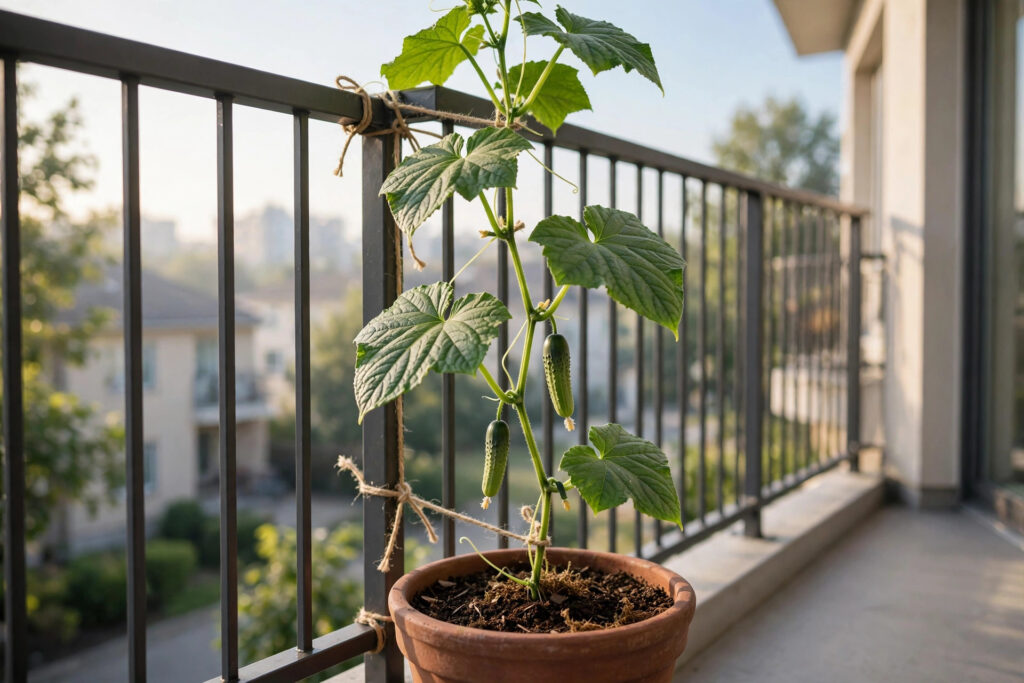
Set a 5-gallon (about 19-liter) pot at the base of your rail and plant one ‘Spacemaster’ cucumber. This bush type was bred for small spaces and grows shorter vines than standard types.
Tie soft ties from the main stems to the rail as the plant grows. Growing upward saves floor space and keeps the fruit clean and straight instead of curled on the ground.
Air moves better around raised leaves, which cuts mildew problems on still, humid days. Check under the big leaves twice a week, because cucumbers hide well and oversize fruit sneaks up on you.
Cucumbers are mostly water, so the mix should never dry out fully. Water deeply each morning in summer. Pick fruit young and often, at 6 to 8 inches (15 to 20 cm), before the seeds harden.
13. Sow a Pinch of Seed Every Two Weeks
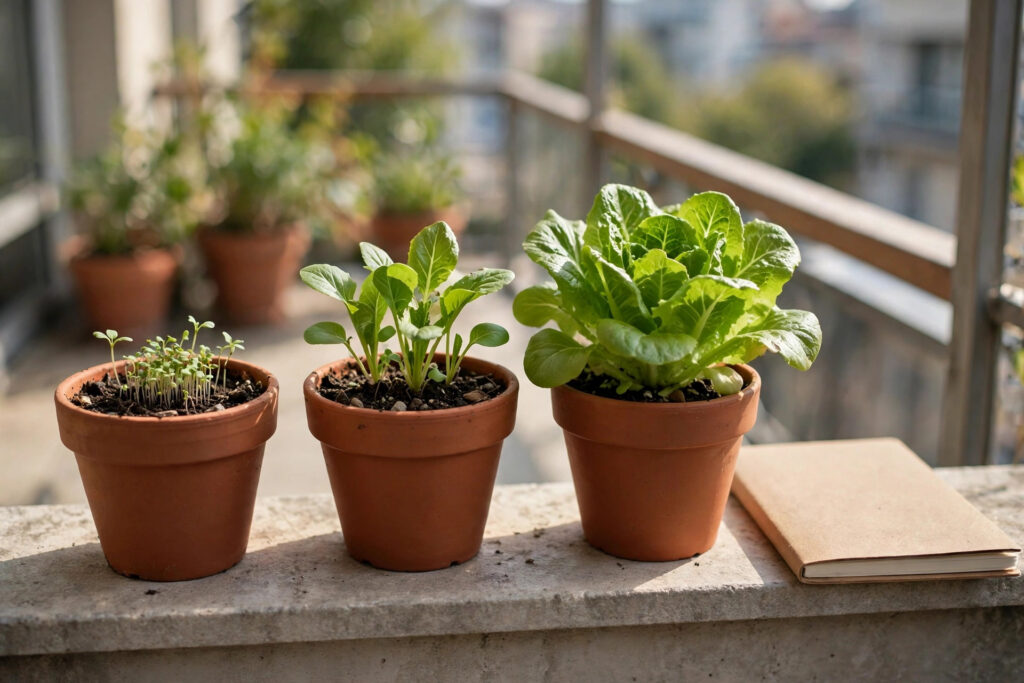
The two-week rule stops the feast-and-famine cycle of balcony greens. Sow a short row or a pinch of seed every two weeks, and something is always ready to pick.
It works for lettuce, radishes, spring onions, and arugula (rocket). Use two or three small pots in rotation instead of one big sowing. As one pot finishes, its neighbor is already half grown.
In high summer, move salad pots where they get morning sun only, because heat makes leaves bitter and plants bolt to seed. Shade at midday buys you weeks of extra picking.
A small notebook by the door keeps sowing dates straight. Write the crop and the date on a strip of tape on each pot.
14. Stack Pots on a Tiered Stand, Not Across the Floor
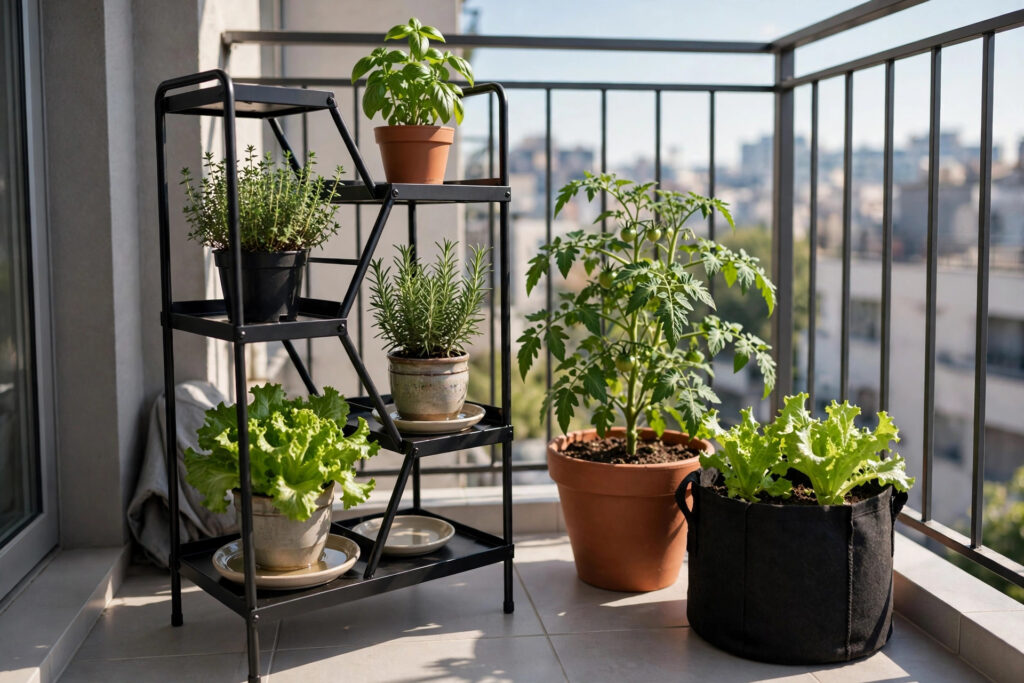
Five pots in a row eat a whole balcony. The same five pots on a tiered stand use a fraction of the floor, and every plant catches better light and air.
Put the heavy pots, like the tomato and the zucchini bag, on the ground beside the stand. Herbs and lettuce go on the upper tiers, where you can snip them without bending down.
Check that the stand is rated for the weight of wet mix, which is far heavier than dry mix.
Water the top tier first, and keep saucers under the lowest tier so nothing drips onto the balcony below. More layouts that respect a tiny footprint are in our small balcony garden ideas.
15. Water by Finger Test, Not by Calendar

Watering every day on a fixed schedule drowns more container plants than drought does. Roots sitting in soggy mix rot quietly while the leaves wilt, which looks exactly like thirst.
Push a finger into the mix to the first knuckle before you water anything. Dry at that depth means water now. Damp means wait a day and test again tomorrow.
When you do water, soak the pot until water runs out of the drainage holes. Empty the saucer after about 30 minutes so the roots never sit standing in water.
A watering can filled at the kitchen sink makes the whole round take about five minutes.
Fifteen ideas is a lot, so do not plant all of them this weekend. Pick three that match your sun and the food you actually eat, and start there.
That is the real secret of container vegetable gardening for beginners with no yard at all: small choices, repeated weekly. A tomato, a salad bowl, and a herb box will teach you the whole routine.
Save this list to your container garden board for later, and add one pot at a time as the season warms up. Your first harvest is closer than you think.


