

15 Cream Bedroom Ideas With Layered Quilts and Throws
A cream bed can look flat in photos and feel flat in person. One duvet, one color, no depth. The bed takes up half the room, so flat bedding makes the whole room feel dull.
Layers fix that fast. A quilt over a duvet, a throw over the quilt, and small tone steps between each piece give a cream bed real depth with no new furniture.
These cream bedroom ideas with layered quilts and throws stay on the bed itself: the order of the layers, the folds, the textures, and the tone steps that keep cream from looking plain.
Start with what you own. Most cream bedding you already have can be restacked in a better order before you buy a single new piece.
A fresh fold and a smarter order can change the bed in one morning. You can wake up in the same quilts and throws, stacked a better way, and feel the difference at once.
This post contains affiliate links. If you buy through them, we may earn a small commission at no extra cost to you. See our Affiliate Disclosure.
1. Start With Smooth Cream Cotton Sheets as the Base

Every good stack starts flat. Cream cotton sheets, smooth and plain, give the quilts above them a clean base to sit on.
Turn the top sheet back in one wide band at the pillows. That band is the first visible layer, and it sets the lightest tone in the whole stack.
Keep the sheet cream, not white. A white sheet under cream quilts can look blue gray at the edges and break the warm run of tones.
Tuck the sides in tight. Loose sheet corners poking out under a quilt make the whole bed look half made, no matter how good the top layers are.
2. Spread One Light Quilt as the Main Cover
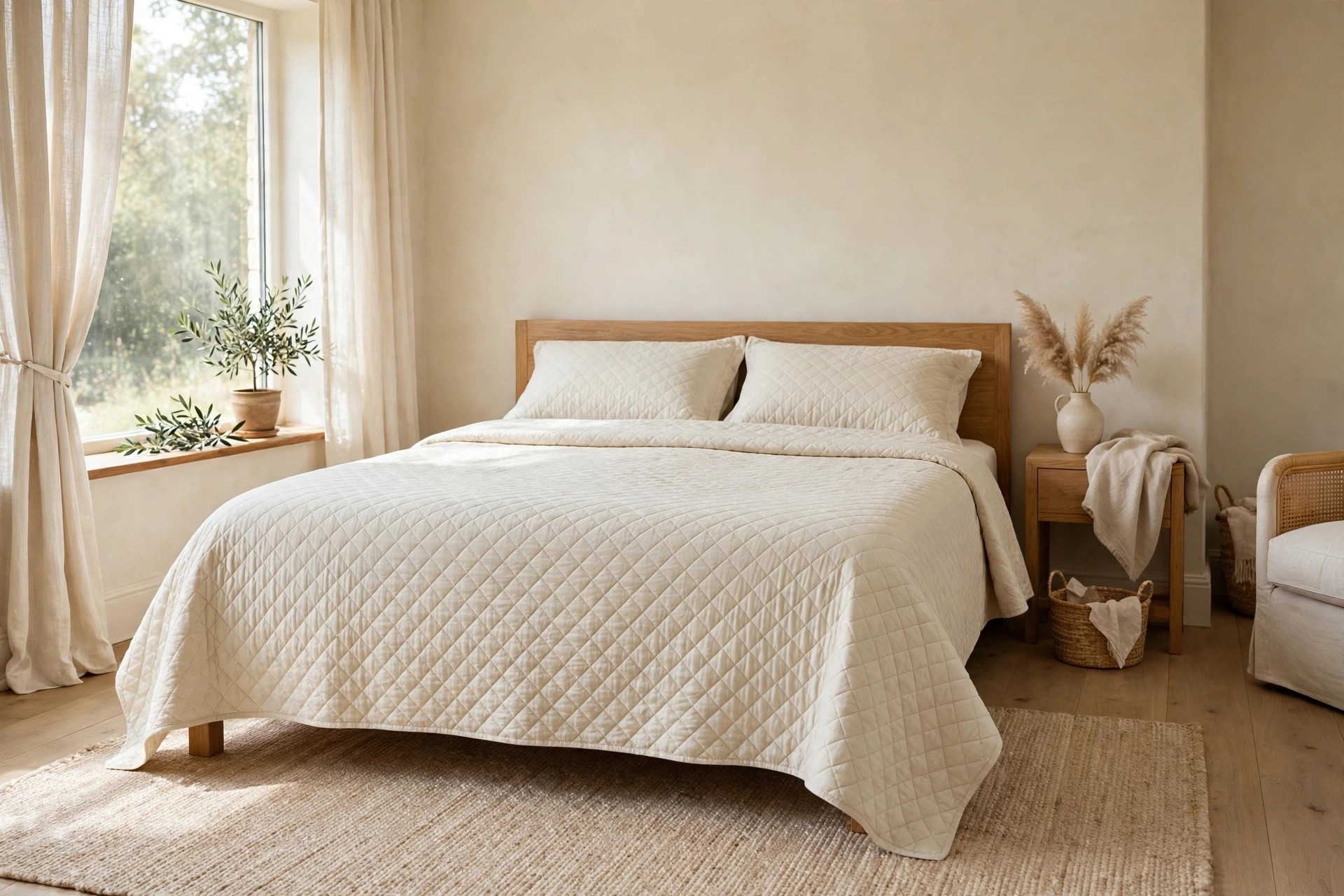
The main quilt does most of the work. Spread it over the full bed, smooth, with its edges falling even on both sides.
Pick a quilt with a fine stitched pattern, small diamonds or close lines. The stitching catches light and gives a plain cream surface its depth.
Let the quilt cover the duvet or sit in place of one in warm months. A quilt alone keeps the bed low and neat, with no puffy bulk.
Check the drop on both sides from the foot. Even edges read calm; a quilt hanging lower on one side pulls the whole bed off balance.
3. Fold a Second Quilt at the Foot for a Third Band

A second quilt, folded in thirds and laid across the foot, adds the band that makes the bed look styled rather than just made.
Choose a shade one step deeper than the main quilt, closer to oatmeal. That small tone step is what the eye reads as layering.
Keep the fold crisp and straight across the bed. A crooked foot band is the first thing you see from the door, and it reads as a mistake.
This is the layer to swap first with the seasons. A deeper tone in fall and a paler one in spring change the bed with one fold.
4. Fold the Duvet Back to Show the Sheet Line

On days you use a duvet, fold it back to the middle of the bed. The fold shows the sheet band above it and the duvet bulk below it.
Two clear bands beat one flat cover. Your eye reads sheet, then duvet, then quilt, and the bed gains depth in three plain moves.
Fluff the duvet before you fold. A flat duvet folded back looks like a spare blanket, while a lofted one makes the fold line look full and soft.
Keep the duvet cover plain cream with a smooth face. Save pattern for one small layer, so the fold lines stay the star of the bed.
5. Drape a Chunky Knit Throw Over One Corner

A chunky knit throw brings the rough texture a cream bed needs. Drape it over one bottom corner, at an angle, with one end near the floor.
One corner only. A throw spread straight across the foot can look stiff, while the angled drape looks like someone just left the bed.
Pick a knit in a warm cream with big, open stitches. The holes and shadows in the knit give the pale stack its strongest texture contrast.
For a fuller stack plan, these neutral bedroom ideas with layered bedding order every layer from sheet to throw.
6. Slide a Thin Waffle Blanket Between Duvet and Quilt
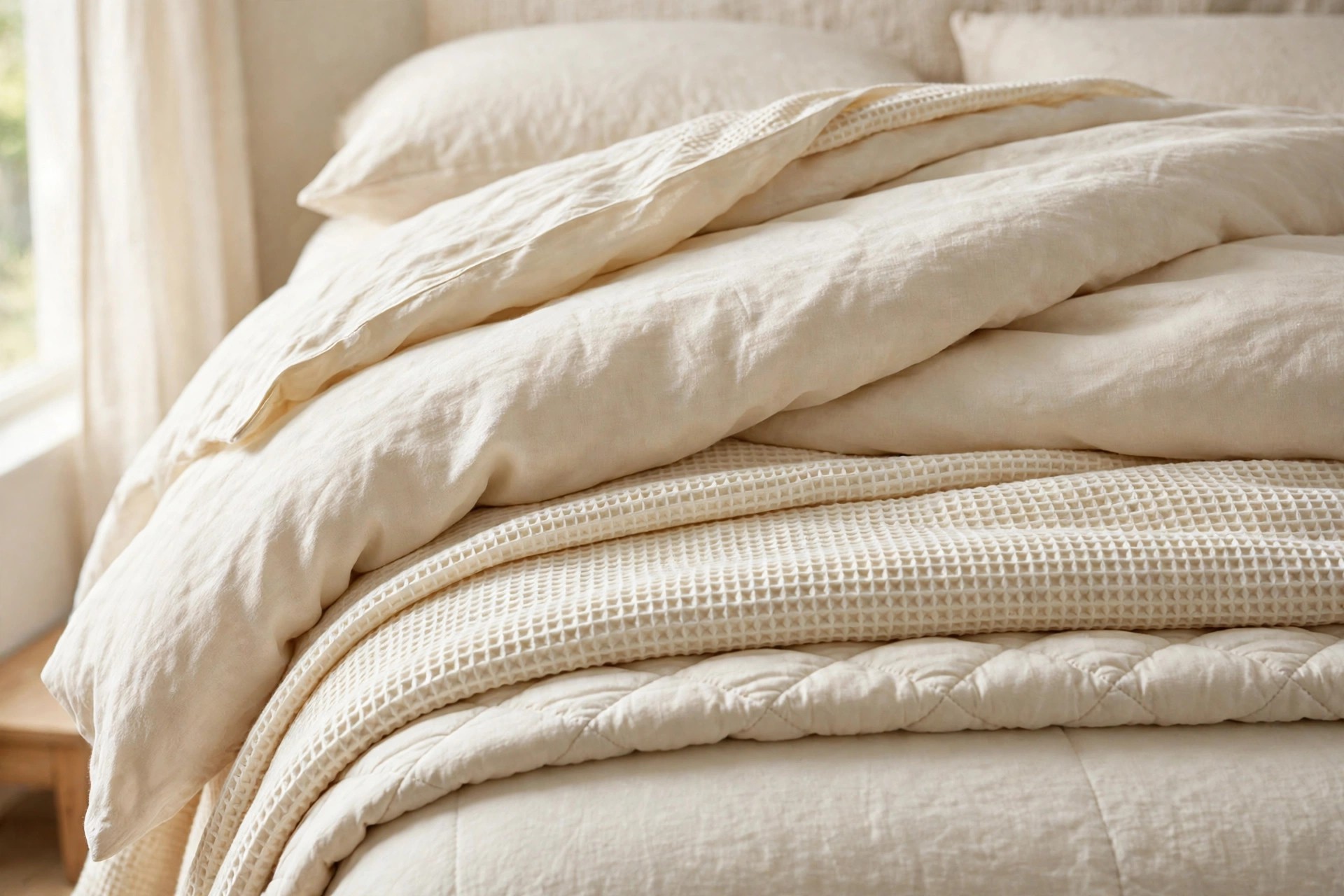
A thin waffle weave blanket earns its place in the middle of the stack. It adds warmth with almost no bulk, and its grid texture peeks out at the folds.
Layer it over the duvet and under the foot quilt. When you fold the quilt back to sit in bed, the waffle layer is the one your hands find.
Choose the waffle blanket in the palest cream you have. A light middle layer keeps the tone steps gentle from sheet to throw.
Waffle weave also washes and dries fast. Middle layers get washed most, and a quick dry fabric keeps the full stack easy to keep up.
7. Work in Tone Steps From Ivory to Oatmeal
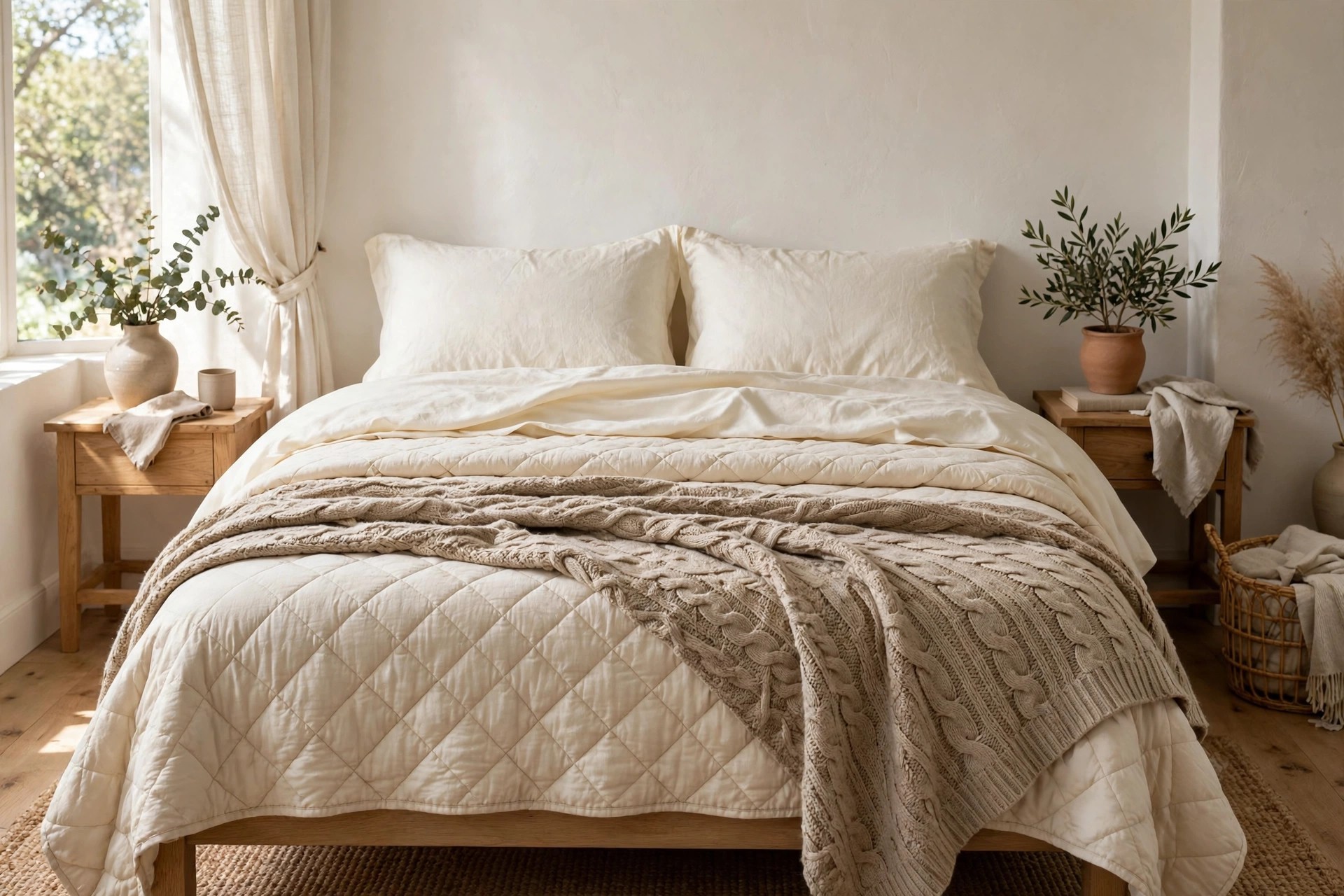
Cream layering fails when every piece is the same shade. Side by side, matched creams just look like one big pale cover.
Plan three tones instead: ivory at the sheets, true cream at the quilt, oatmeal at the throw. Each step is small, and the stack reads rich.
Hold pieces next to each other in daylight before you commit. Two creams that match under a shop light can split into pink and yellow at home.
Keep the room walls in the same family. A cream bed against a cool gray wall loses its warmth before the layers get a chance to work.
8. Stack Pillows in Three Rows With One Lumbar

Pillows finish the stack, so give them an order. Sleeping pillows stand at the back, two larger shams in front, and one long lumbar across the front.
Keep every case in the cream family, but change the fabric each row: smooth cotton, stitched quilt sham, then a knit or linen lumbar.
The lumbar is where a small pattern can live. A thin stripe or a faint check on one small pillow will not fight the plain quilts below.
At night, the lumbar and shams go in one spot, every time. A set landing place, a bench or a basket, keeps the stack quick to rebuild.
If you want the bed to sit inside a fuller cream room, these all cream bedroom ideas carry the same tones to walls, rugs, and curtains.
9. Lay a Plain Runner Across the Foot Over the Quilts

A bed runner, laid flat across the very foot, caps the stack with one clean line. It also guards the quilt where feet and bags land during the day.
Pick a runner in a flat weave with a woven border. The border line frames the foot of the bed and makes the layers below look planned.
Keep it narrower than the folded quilt band. Two bands of near equal width fight each other; one wide and one slim reads as order.
A runner lifts off in one move for washing. Foot layers take the most dust and wear, so easy washing keeps this spot in the stack fresh.
10. Keep a Spare Throw on a Bench at the Foot

Not every layer has to live on the bed. A spare throw, folded on a bench or stool at the foot, tells the eye the layering continues past the mattress.
Choose the spare in the deepest tone of your stack. A darker note at floor level grounds the pale bed and stops it floating.
This is the throw that moves to shoulders on cold nights. The bed stack stays made, and no one has to unfold the styled layers to get warm.
In fall, that bench throw can take a warmer tone, much like these terracotta and cream bedroom ideas for autumn warmth deepen a cream base for the season.
11. Give One Layer a Small Pattern and Keep the Rest Plain

One patterned layer gives a cream stack its focal point. A quilt with a faint stripe, a small check throw, or a stitched floral in cream on cream all work.
Keep that pattern small in scale and low in contrast. Big bold print on a cream bed eats the calm that makes the palette work.
Place the patterned layer where eyes land first: the foot fold or the front lumbar. A pattern buried mid stack just looks like a shadow.
If you tire of it, that one layer is the cheap swap. The plain base stays, and a new foot quilt changes the whole bed.
12. Use Binding and Stitched Edges as Quiet Detail

With a palette this plain, edges do the talking. A quilt with a bound edge in a deeper cream reads as a drawn line around the bed.
Look for hand style stitching or a channel stitch you can feel. Raised stitch lines catch morning light and show up well in a pale room.
Match the binding tone to your throw. When the quilt edge and the throw share a tone, the stack reads as one set, not spare parts.
Turn one corner of the foot quilt back to show its reverse side. A small flip shows both faces of the quilt and adds a soft fold line.
13. Layer Two Throws, One for Each Side of the Bed

Two sleepers rarely want the same weight of cover. Two slim throws, one draped on each side, solve the tug of war and double the texture.
Keep the pair matched in tone but not in weave: a knit on one side, a flat woven throw on the other. The small mismatch looks lived in, in a good way.
Fold each throw lengthwise before draping. A slim folded throw sits neat on its half and does not creep across the middle by morning.
This split also helps with washing. The used throw goes in the wash while the spare from the bench takes its place for a night.
14. Mix One Tucked Side With One Loose Side

A fully tucked bed can look stiff, and a fully loose bed can look slept in. Split the difference: tuck the side the door sees, leave the far side soft.
The tucked side shows clean quilt lines from the entry. The loose side, with the throw draped low, keeps the bed from feeling like a showroom piece.
This also speeds up bed making. One side gets the full tuck treatment, and the other side just needs the layers pulled straight.
The same bed first thinking drives these sage green bedroom ideas with beige bedding layers, where the layer stack sits in a soft green room.
15. Wash and Rotate Layers So the Stack Stays Fresh

Layers only look good while they look clean. Cream shows dust and wear faster than deep colors, so give the stack a simple rotation plan.
Wash the top throw and the sheet weekly, the quilts once a month, and air the duvet on a chair by the window on dry days.
Store the off duty quilt folded in the open, not sealed in plastic. Cream cotton and wool need air, and a sealed bag can leave a stale smell.
For the room around the bed, these cream and beige bedroom ideas pair the bed with rugs, lamps, and wall tones that match.
A cream bed earns its depth from order: smooth sheets, a stitched quilt, a deeper fold at the foot, and one rough knit to break the softness.
Restack what you own first, in the order above, before you shop. Most beds need a better stack, not more bedding, to make cream bedroom ideas with layered quilts and throws work.
Save this to your bedroom color ideas board for later, and take a photo of your stack so you can rebuild it after wash day. The photo saves the head scratching on laundry night.


