

15 Dream Bedroom Ideas for Kids with a Small Indoor Play Tent
A small tent in a bedroom corner gives a child a place that feels like their own tiny house. Inside it, books feel like treasure and quiet time feels like a game. The rest of the room stays calm around it.
These dream bedroom ideas for kids with a small indoor play tent treat the tent as the heart of the play zone. The bed stays for sleep, the floor stays clear for games, and storage sits close so tidy up stays quick.
Pick a tent size that leaves room to walk around it with ease. A tent that fills the room will annoy everyone within a week. A tent with air around it feels like a treat for years.
For more room themes to pair with a tent corner, these dream bedroom ideas for kids cover many playful styles. This list stays with the tent and the small zone that makes it work.
This post contains affiliate links. If you buy through them, we may earn a small commission at no extra cost to you. See our Affiliate Disclosure.
1. Place a Small Canvas Tent in the Corner
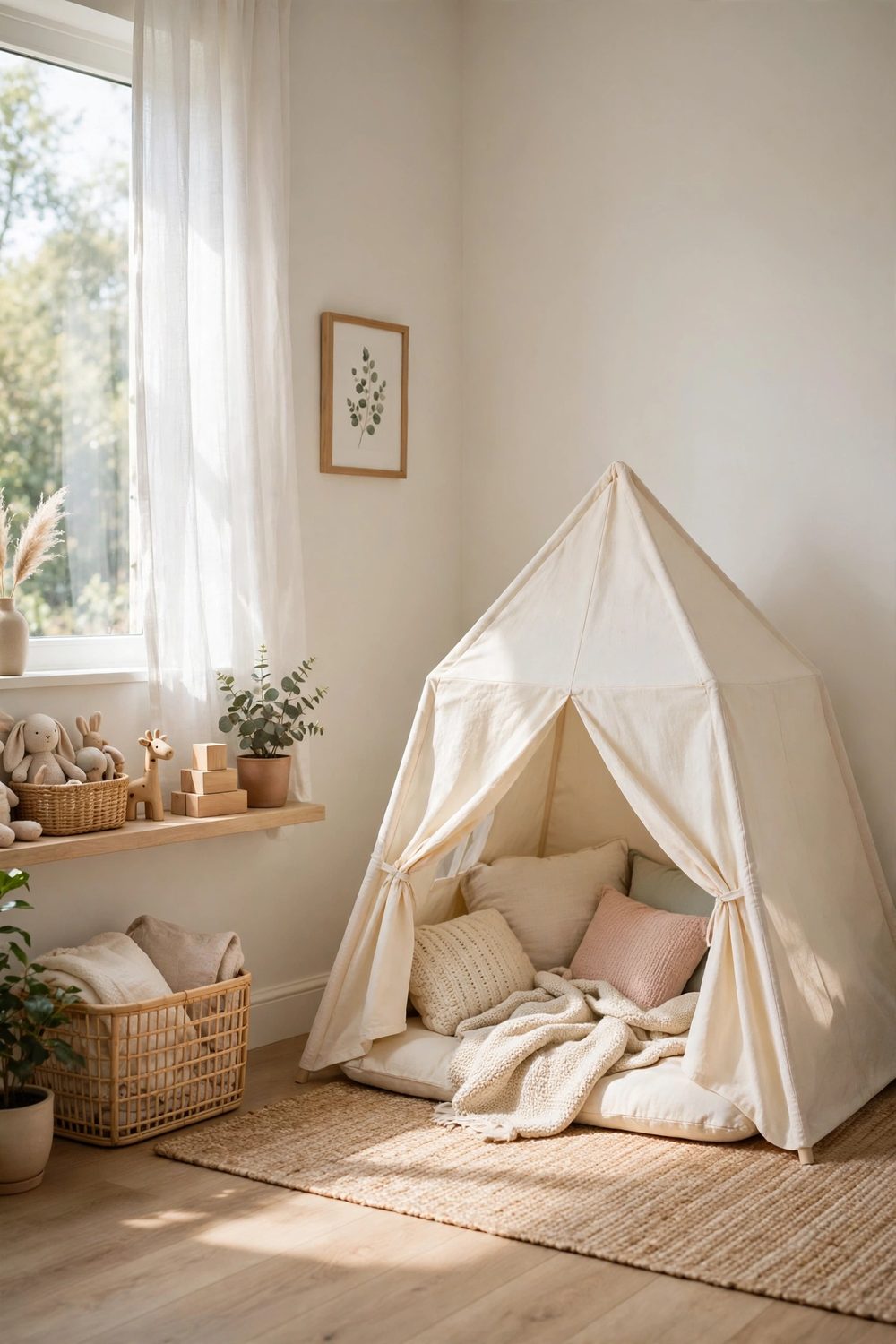
A corner is the natural home for a small tent. Two walls give it shelter and shape, and the open side faces the room. The child can see the door and the bed from inside.
A warm wall finish makes the corner feel even cozier. These small bedroom ideas with wood panels show how a panel wall can warm up a plain corner.
Canvas in cream or pale grey suits most bedroom colors. Bright tent prints can fight bedding and rugs. A plain tent lets cushions and toys bring the color instead.
Leave the tent door facing the middle of the room. A door that faces a wall feels shut off. An open view makes the tent part of daily play, not a hidden den.
2. Add Soft Cushions Inside the Tent
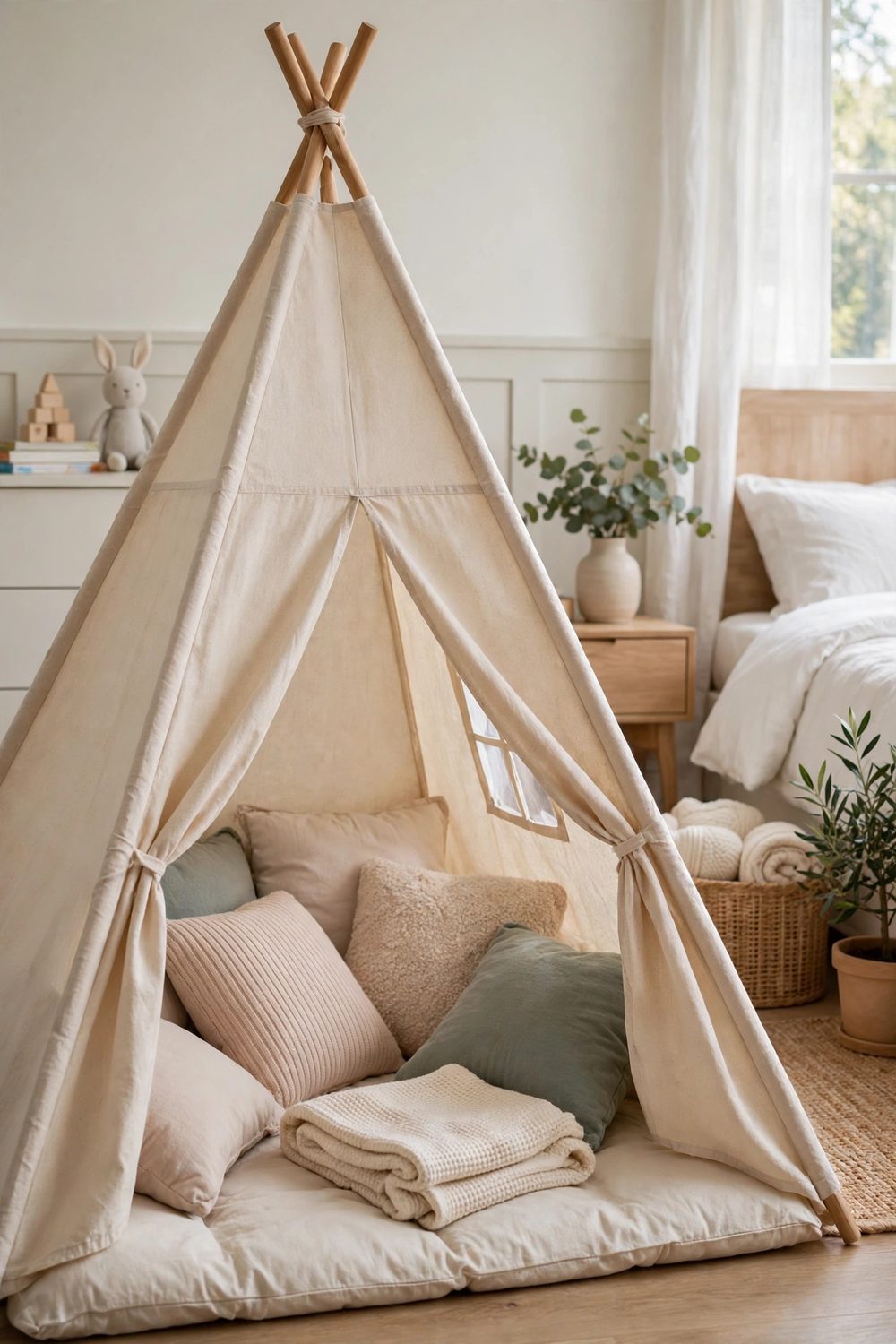
Cushions turn a bare tent floor into a place a child wants to stay. Two or three large floor cushions give room to sit, lean, and read. A small blanket adds warmth for story time.
Pick cushion covers that zip off for washing. Tent floors collect crumbs and craft bits fast. Washable covers keep the den fresh without much work each week.
Keep cushion colors close to the bedding palette. The tent then reads as part of the room design. Wild clashes make the corner look like storage, not a planned play zone.
Add one small soft toy that lives in the tent. A resident toy makes the tent feel like a home. Other toys visit, then go back to their bins at tidy time.
3. Keep the Tent Near a Window for Light
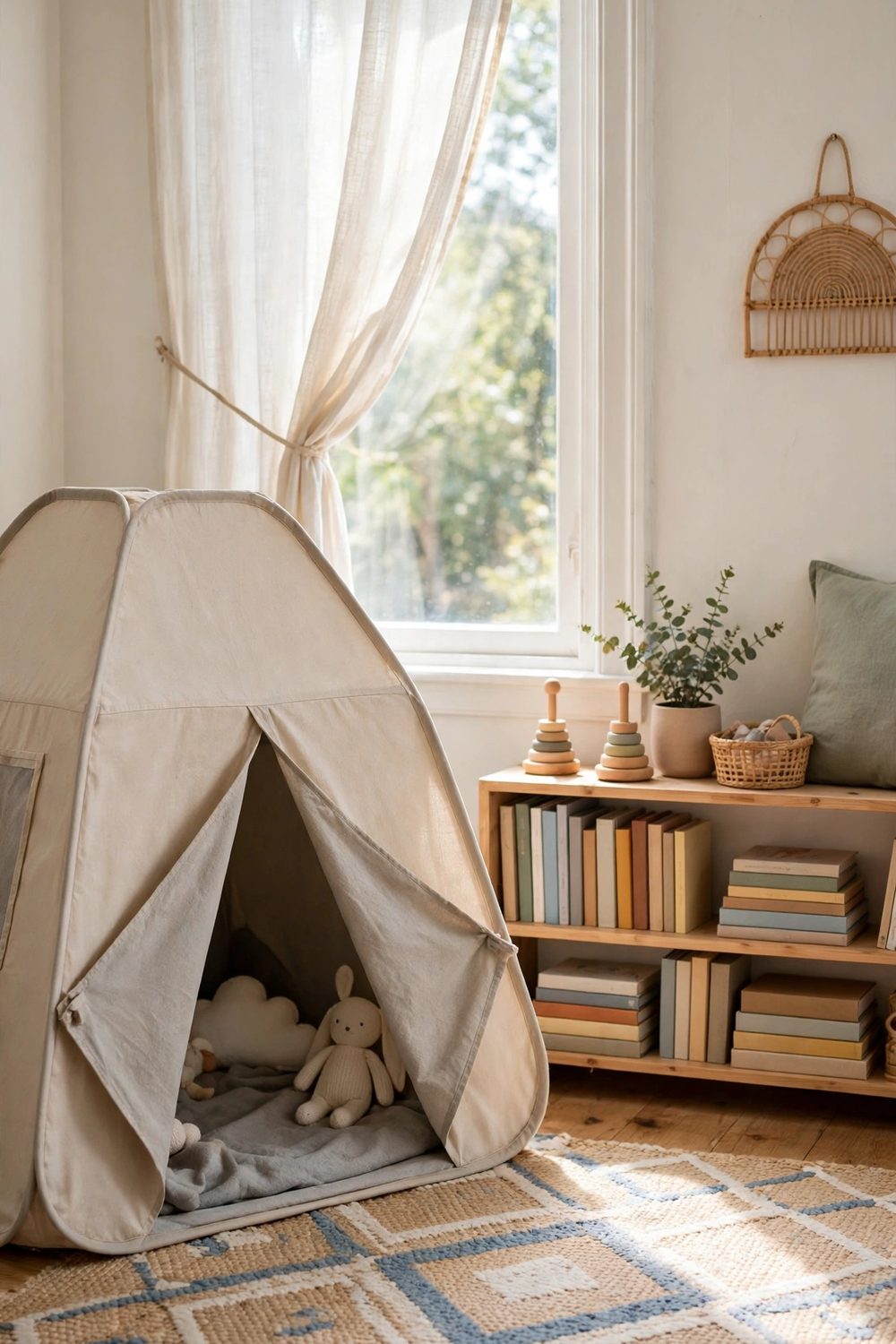
Daylight makes a tent feel open and safe for young children. A spot near a window fills the canvas with soft light. Reading and drawing inside the tent get far easier.
Check that direct sun does not bake the tent at midday. A sheer curtain can soften harsh light. The tent should feel bright, not hot, on summer afternoons.
Keep the tent clear of curtain cords and window locks. Safety checks matter more than looks in a play corner. Move the tent a short way out if any cord hangs near it.
Evening light near a window gives the tent a golden glow. That glow makes pre dinner quiet play feel calm. The room winds down in step with the light outside.
4. Lay a Round Rug Under the Tent
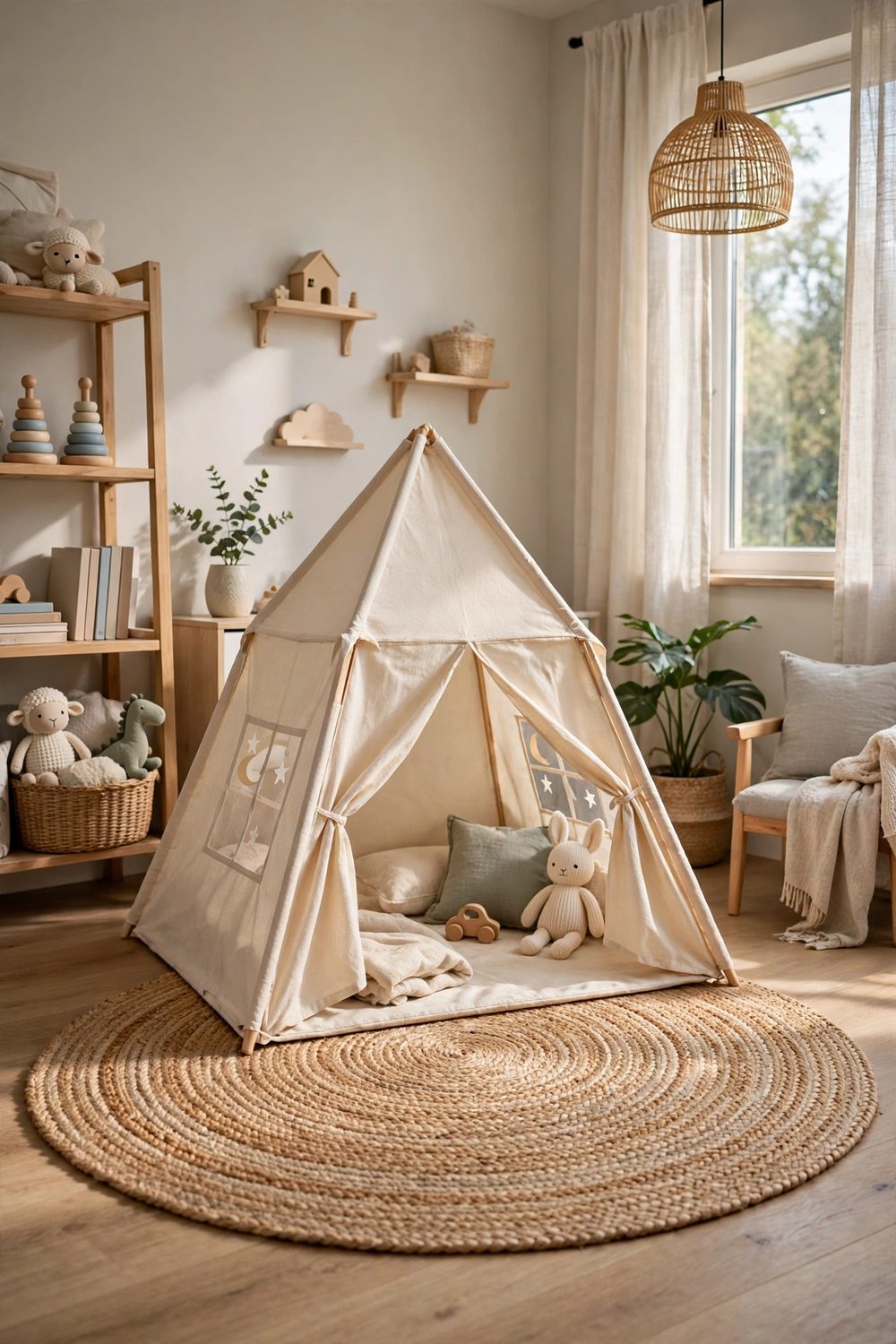
A round rug under the tent softens the floor and marks the play zone. The round shape echoes the tent and feels gentle in a room of straight lines. Bare feet land on warmth, not cold boards.
Size the rug so the tent and a sitting space both fit on it. A child should be able to sit at the tent door on the rug. Extra rug at the front works like a small porch.
Low pile rugs clean with ease after craft spills. Thick shag traps beads and small toy parts. A flat weave in a mid tone hides daily marks between cleans.
Tape or grip the rug edges so they stay flat. Curled edges trip small feet in a rush. A flat rug also keeps the tent poles steady on the floor.
5. Add a Low Book Basket Beside the Tent
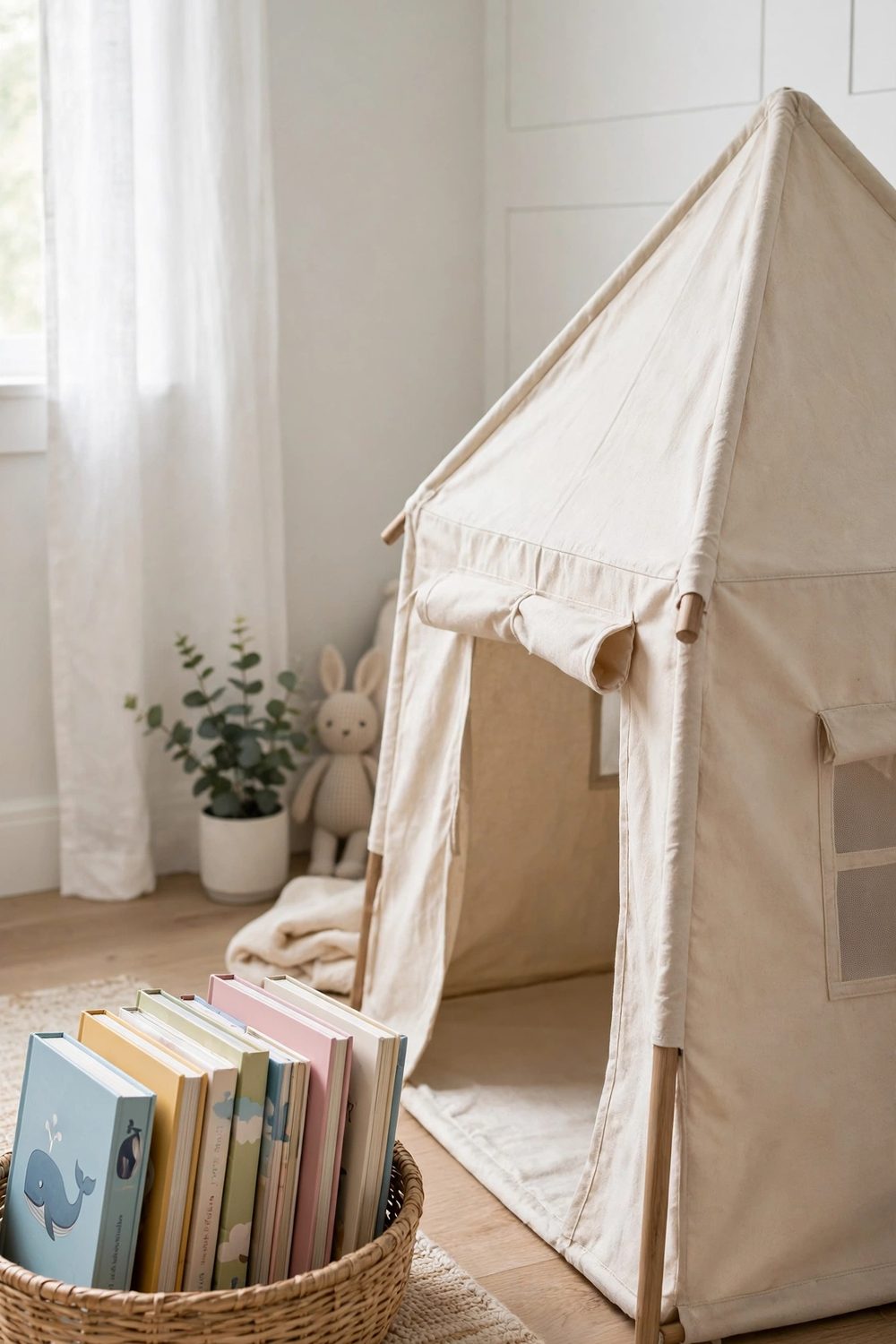
Books belong near the place where a child sits to read them. A low basket beside the tent door holds the current favorites. The child can pick a book and settle in seconds.
Keep just five or six books in the basket at a time. A stuffed basket hides the good ones at the bottom. Swap books from the main shelf each week for fresh choice.
A basket with handles moves with ease at tidy time. The whole set can shift to a shelf in one trip. Light baskets also suit small arms that want to help.
Face book covers outward in the basket where you can. Covers sell the story to a young reader. A child picks books by their pictures long before they read titles.
6. Hang Fairy Lights Around the Tent Opening

A short string of warm fairy lights makes a tent door feel magic at dusk. The glow stays soft and low, good for calm play. Battery sets keep cords away from the play zone.
Fix lights along the top edge of the opening, out of reach of small hands. Loose loops can tangle and pull. Small clips hold the wire neat against the canvas or poles.
Turn lights on as an evening signal that play is winding down. Soft light shifts the mood from wild to quiet. Stories inside the tent then lead well into bedtime.
Check battery packs and wires each month for wear. Swap tired sets out at once. Safe, sound lights keep the magic without the worry for parents.
7. Use a Teepee Tent That Folds Flat
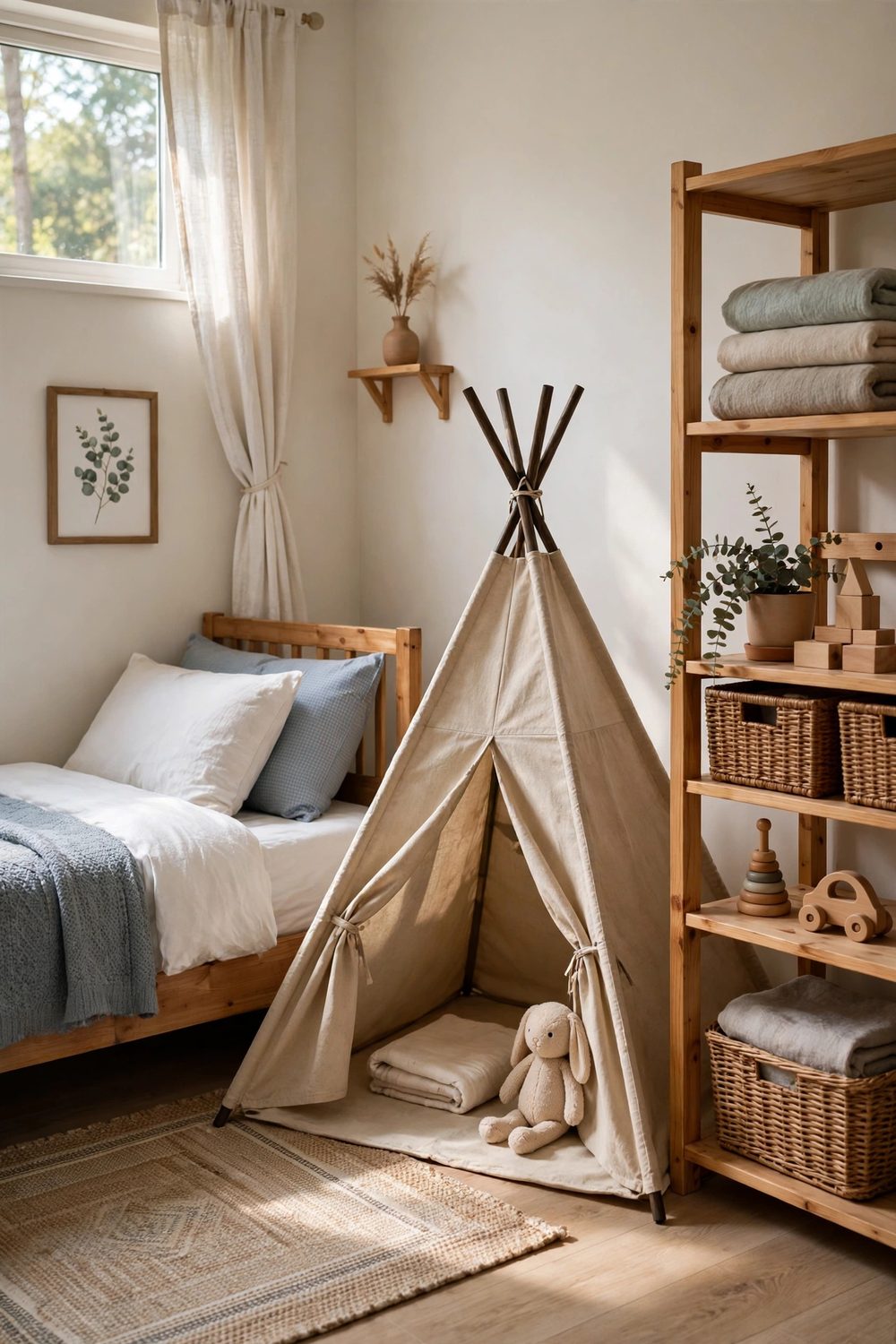
A teepee that folds flat suits small rooms and tidy homes. It opens for play in minutes and stores behind a door or wardrobe. Floor space comes back for other games when needed.
Very small rooms gain the most from folding pieces. These teen girl bedroom ideas for a very small room use the same slim, flexible thinking for tight spaces.
Teach your child how the teepee folds and where it rests. A child who can pack the tent owns the routine. Setup and pack away both become part of the fun.
Store cushions in a lidded box when the teepee is down. Loose cushions drift around the room and look messy. One box keeps the whole tent kit in a single place.
8. Keep the Bed Simple Beside the Play Area
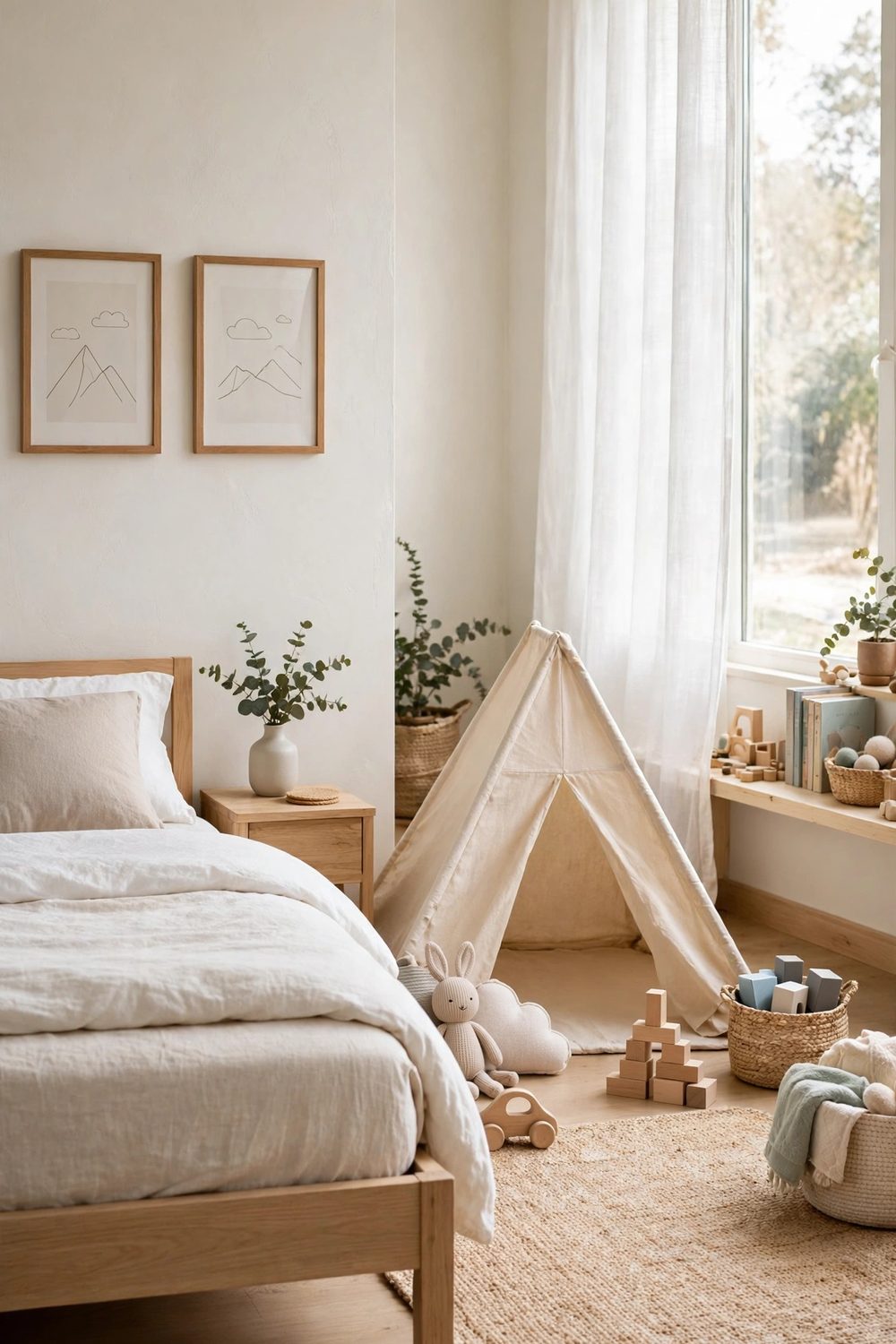
A simple bed balances a busy play corner in the same room. Plain bedding and a tidy frame keep sleep space calm. The eye reads play on one side and rest on the other.
Rooms with bunk beds need this calm balance even more. These small kids bedroom ideas for twins or bunk beds show how to keep sleep zones restful in tight rooms.
Keep toys off the bed as a steady house rule. The bed then stays linked with sleep in the child’s mind. Tent toys return to bins or the tent floor at tidy time.
A low bedside lamp with warm light suits both zones. Story time can start in the tent and end in bed. One warm glow ties the evening routine together.
9. Add Storage Bins Behind the Tent
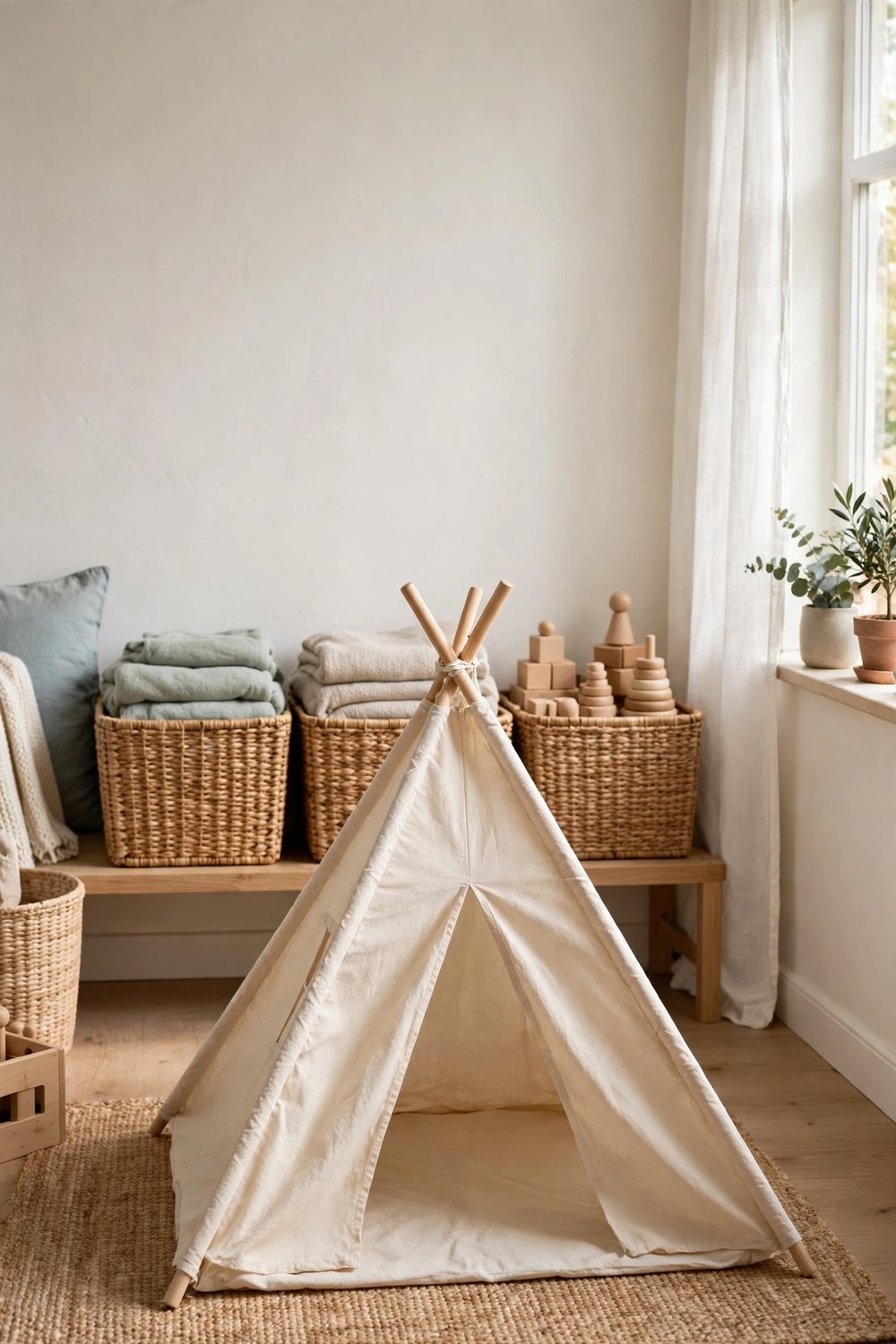
The gap behind a corner tent is dead space, so put it to work. Slim bins or a low box can hold spare blankets and soft toys. The storage stays hidden, and the room looks tidy.
Keep items you need rarely in this back spot. Daily toys belong in bins a child can reach with ease. Back storage is for extras, not for the current favorite game.
Label each bin, even if only you read the labels. You will find the winter blanket fast when you need it. A quick grab keeps tidy systems from falling apart.
Check behind the tent each month for dust and lost items. Hidden spots collect both in quiet rooms. A fast wipe keeps the corner fresh and clean.
10. Set Up a Dress Up Rail Next to the Tent
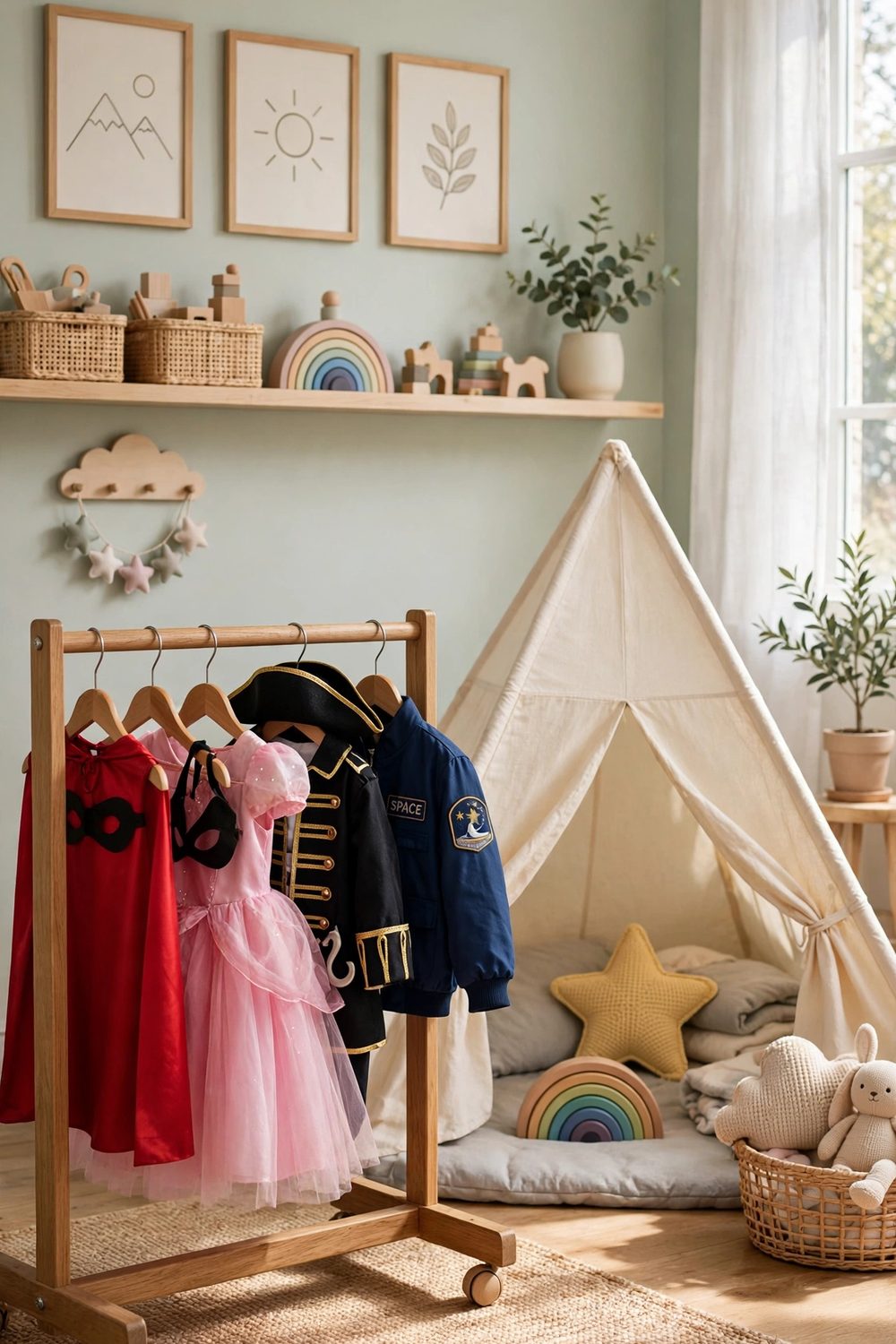
Dress up play and tent play go hand in hand for many children. A low rail beside the tent holds costumes where actors can reach them. Dress up time starts fast and ends with a tidy rail.
Keep the rail short and the costume count small. Five or six outfits give plenty of choice. Overfull rails dump clothes on the floor and kill the fun.
Add a small mirror on the wall by the rail, fixed firm and low. Children love to check their look before a tent show. A safe, fixed mirror beats a loose one every time.
Hang a small basket under the rail for hats and props. Small pieces stay in one place instead of spreading. Tidy up turns into a quick sort, not a hunt.
11. Add a Small Table for Drawing Near the Tent
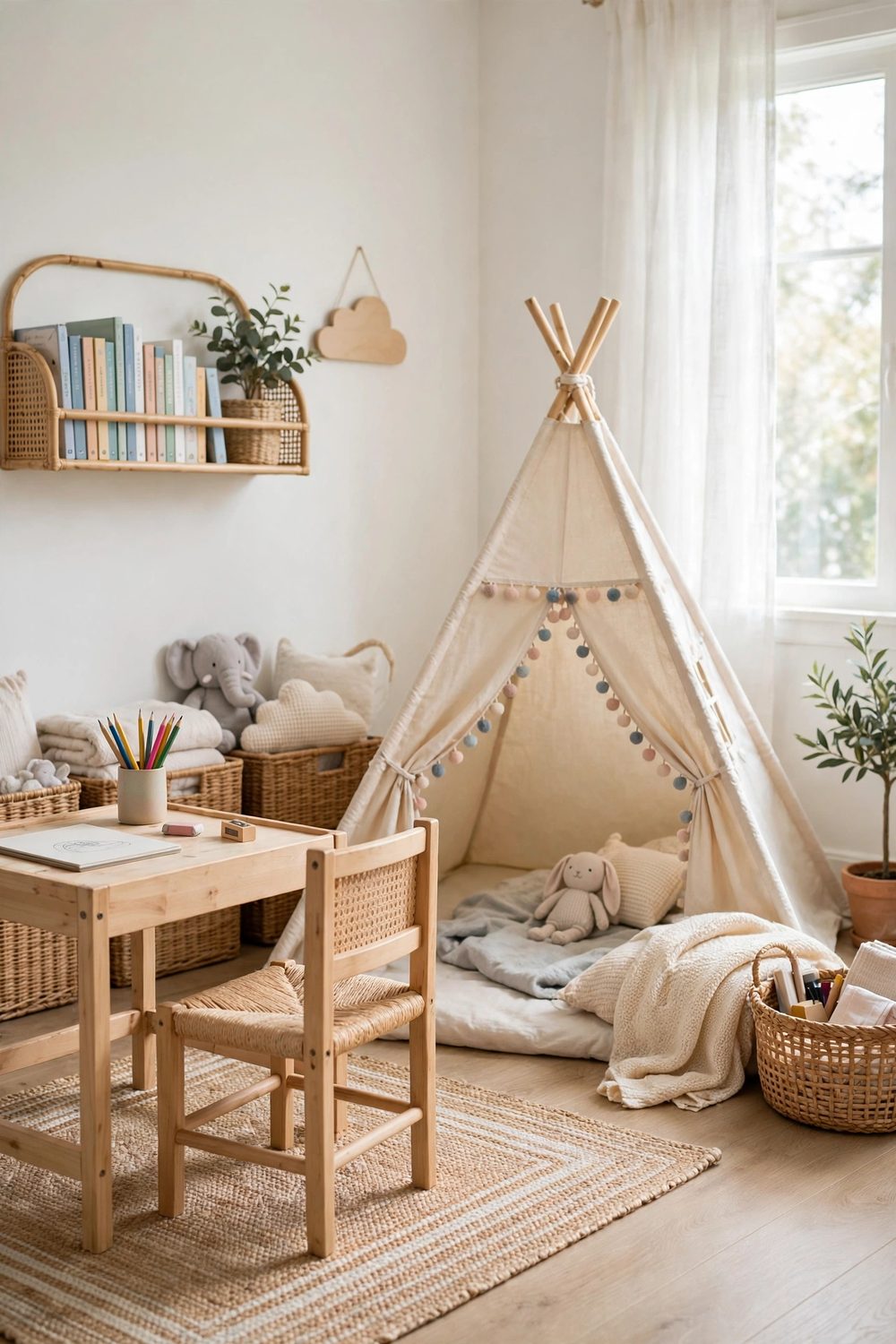
A small table near the tent gives art a home outside the den. Paper and pencils stay on the table, and the tent floor stays soft. Each activity keeps its own clear spot.
As children grow, this table can grow into a full desk. Older kids may later like teen bedroom ideas for gamers with a desk setup for screens and study.
Keep the table light enough to move for big games. A folding or slim table suits small rooms best. The play zone can stretch or shrink with the day’s plans.
Store paper in a flat box under the table. Loose sheets drift and tear on the floor. A box keeps fresh paper clean and ready for the next drawing.
12. Use Washable Floor Cushions Around the Tent
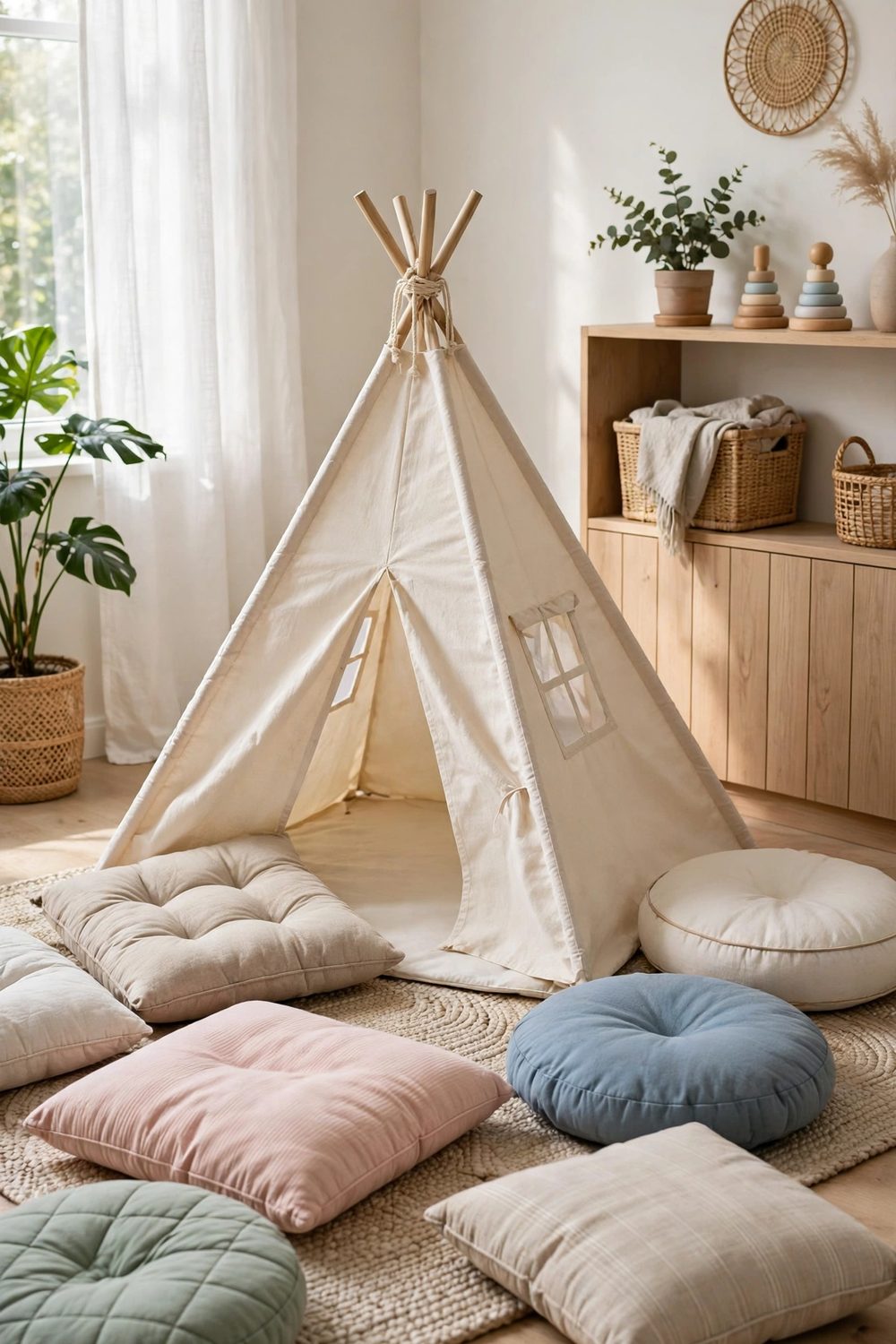
Extra cushions outside the tent welcome friends and siblings to the show. Two or three seats on the rug make a small audience row. Play grows social without growing messy.
Washable covers matter for seats that live on the floor. Spills and muddy socks happen in real play. Covers that zip off save the cushions again and again.
Stack spare cushions in the tent when guests leave. The floor clears fast, and the room resets to calm. A tidy floor at bedtime helps the whole room feel restful.
Pick cushion sizes a child can carry alone. Independence in tidy up builds good habits early. Light pieces get put away, and heavy pieces get left out.
13. Keep a Toy Kitchen Beside the Tent Zone
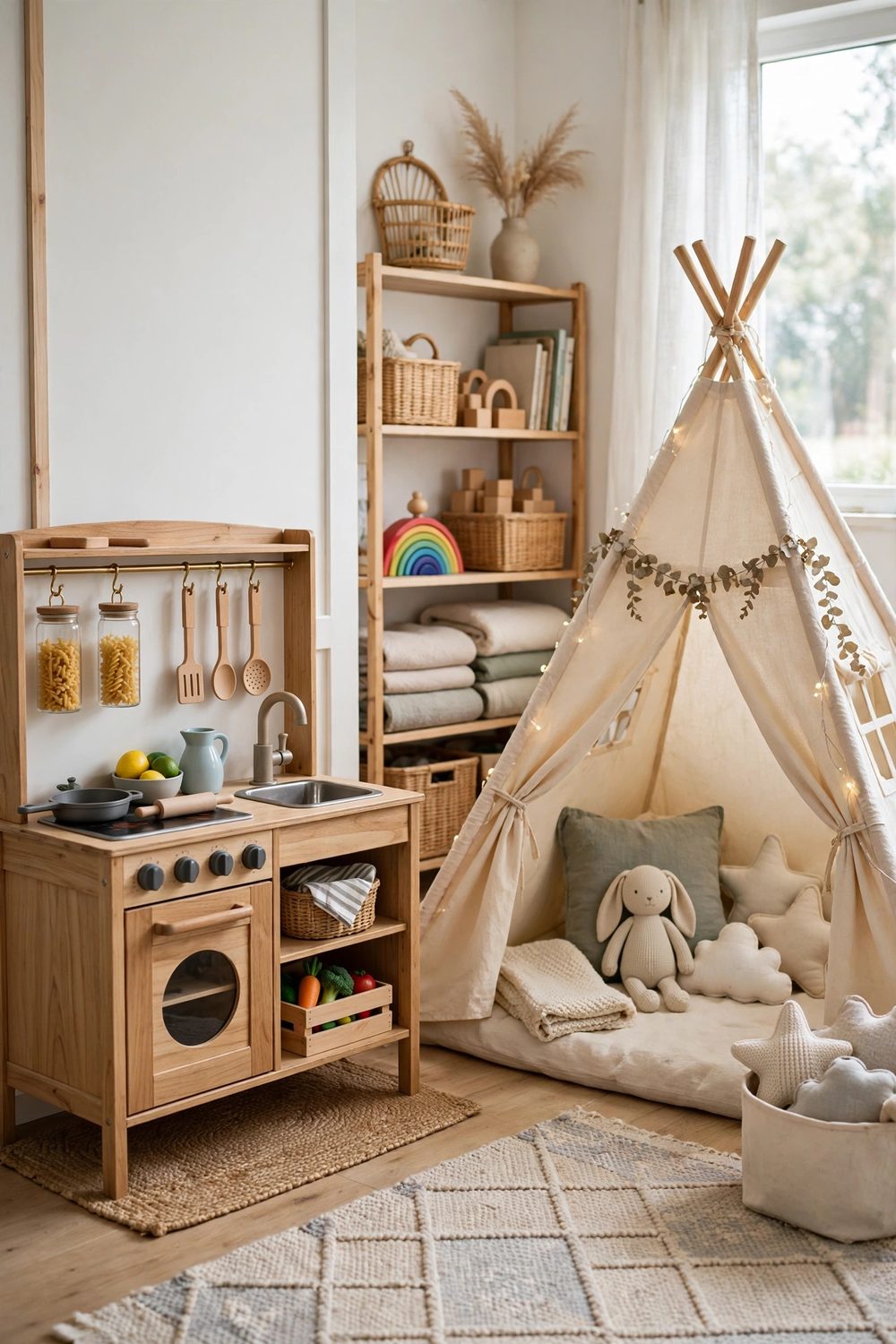
A small toy kitchen pairs well with a tent for pretend camping and home games. Food play moves between kitchen and tent like a story. The two pieces share one rug or play mat with ease.
Keep play food in a basket inside the kitchen unit. Loose plastic food spreads across floors fast. One basket keeps sets whole and tidy up quick at night.
Face the kitchen toward the tent so play flows between them. A clear path of a few steps links the two. The child runs a tiny world inside one safe corner.
If space is tight, swap the kitchen for a small shop counter or a workbench. The idea stays the same, one partner piece for the tent. Pick the toy your child loves most.
14. Add Wall Decals That Match the Tent Colors
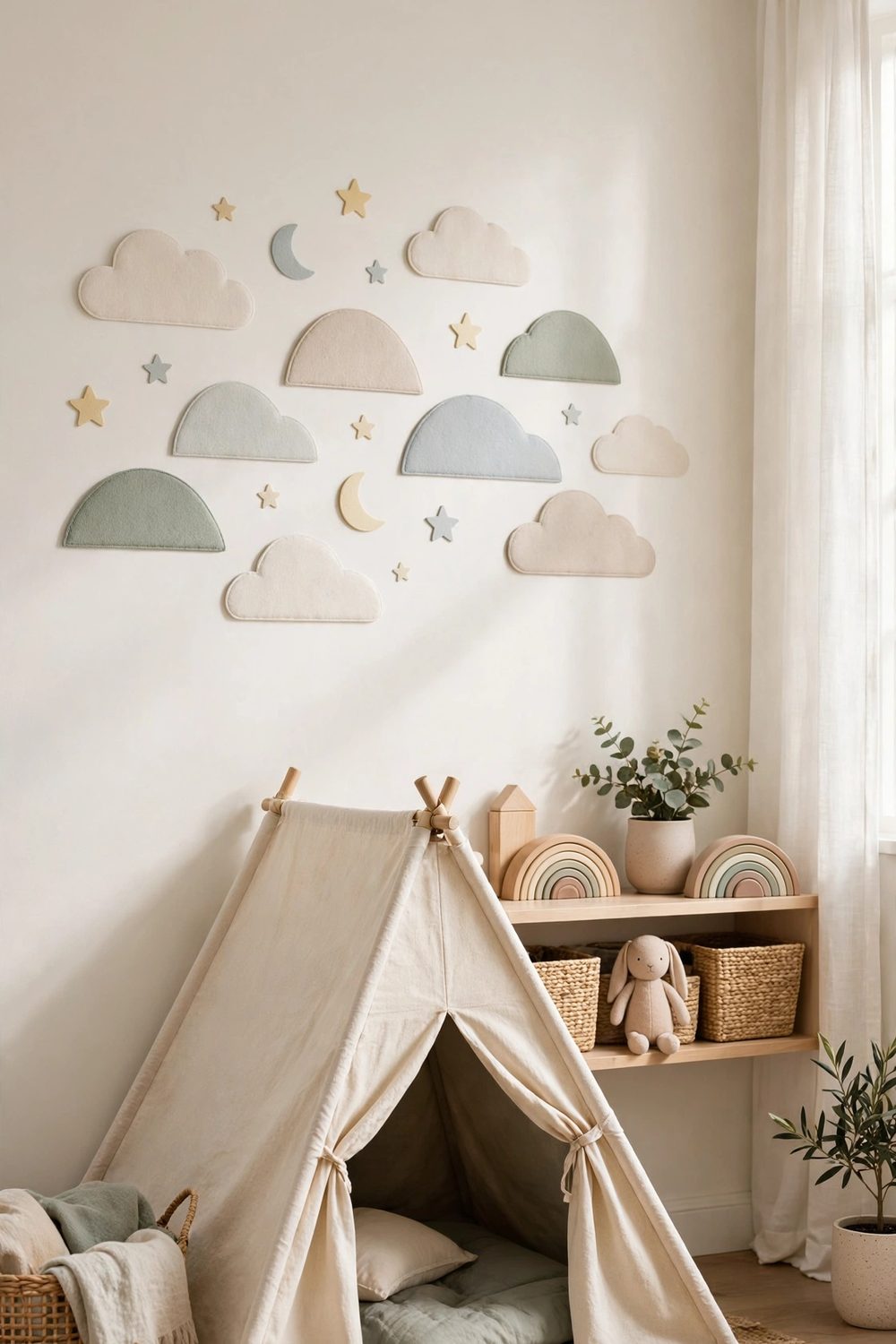
Wall decals above the tent can echo its colors and theme. Soft stars, leaves, or simple shapes lift a plain corner. Decals peel off clean when tastes change, which suits growing children well.
Keep decals above child reach and away from the bed. Peeling hands will test any edge they can reach. High placement keeps the art safe and the wall tidy.
Match decal colors to the tent and cushions for a planned look. Three shared colors are plenty for one corner. The zone reads as one small world inside the bigger room.
Leave most walls plain around the play zone. A single dressed corner has more charm than busy walls everywhere. Calm walls also help the room feel restful at bedtime.
15. Leave Clear Floor Space Around the Tent
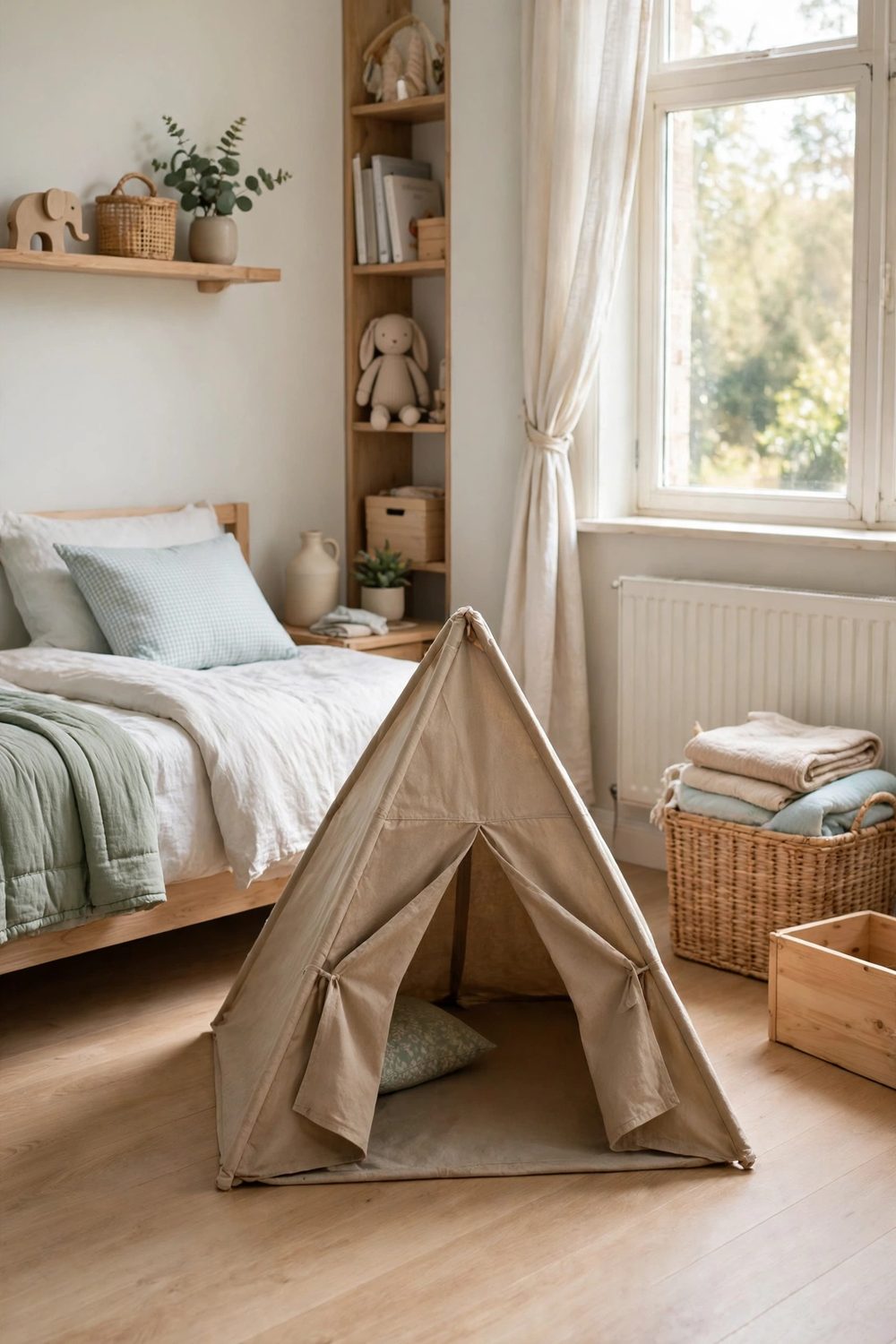
Clear floor around the tent keeps play safe and the room calm. A child needs room to crawl in, sit at the door, and step back. Crowded tents get knocked and torn in daily use.
Keep a walk path from door to bed that never crosses the tent zone. Night trips stay safe, and the tent stays a daytime place. Zones with clear jobs help small rooms feel bigger.
Resist filling the spare floor with extra furniture. Air around the tent is part of the design. Open space is what makes a small room feel like a dream room.
End each day with a two minute reset of the zone. Cushions in, toys in bins, rug clear. The tent greets the morning tidy and ready for new games.
A tent gives a child a world of their own inside the home. Soft cushions, good light, and storage close by keep that world tidy. These dream bedroom ideas for kids with a small indoor play tent make play and rest sit side by side.
Start with the corner, the tent, and one rug this week. Add the book basket and soft lights next. Soon the corner will be the first place your child runs to each morning with joy.


