

How to Dress a Petite Frame Without Looking Shorter: 15 Ideas
Short tops that end in odd places. Sleeves that cover your hands. Skirts that stop at the widest part of the calf. None of that is about your height. It is about clothes cut for a taller frame landing on yours.
Learning how to dress a petite frame means learning where each piece should start and stop. Rise, hem, neckline and shoe all play a part. Small shifts in placement change the whole read of an outfit.
This list gives you fifteen proportion rules, each with a real outfit that proves it. Pick two or three rules first and wear them for a week. You will feel the difference in the mirror fast.
For a small core wardrobe built on these same rules, our guide to a capsule wardrobe for petite women pairs well with everything below.
Keep your own height and lengths handy as you read. A rise that suits you, a skirt length you trust, and a sleeve that ends at the wrist form a personal set of numbers for every shop trip.
This post contains affiliate links. If you buy through them, we may earn a small commission at no extra cost to you. See our Affiliate Disclosure.
1. Start With a High Rise That Sits at Your Natural Waist
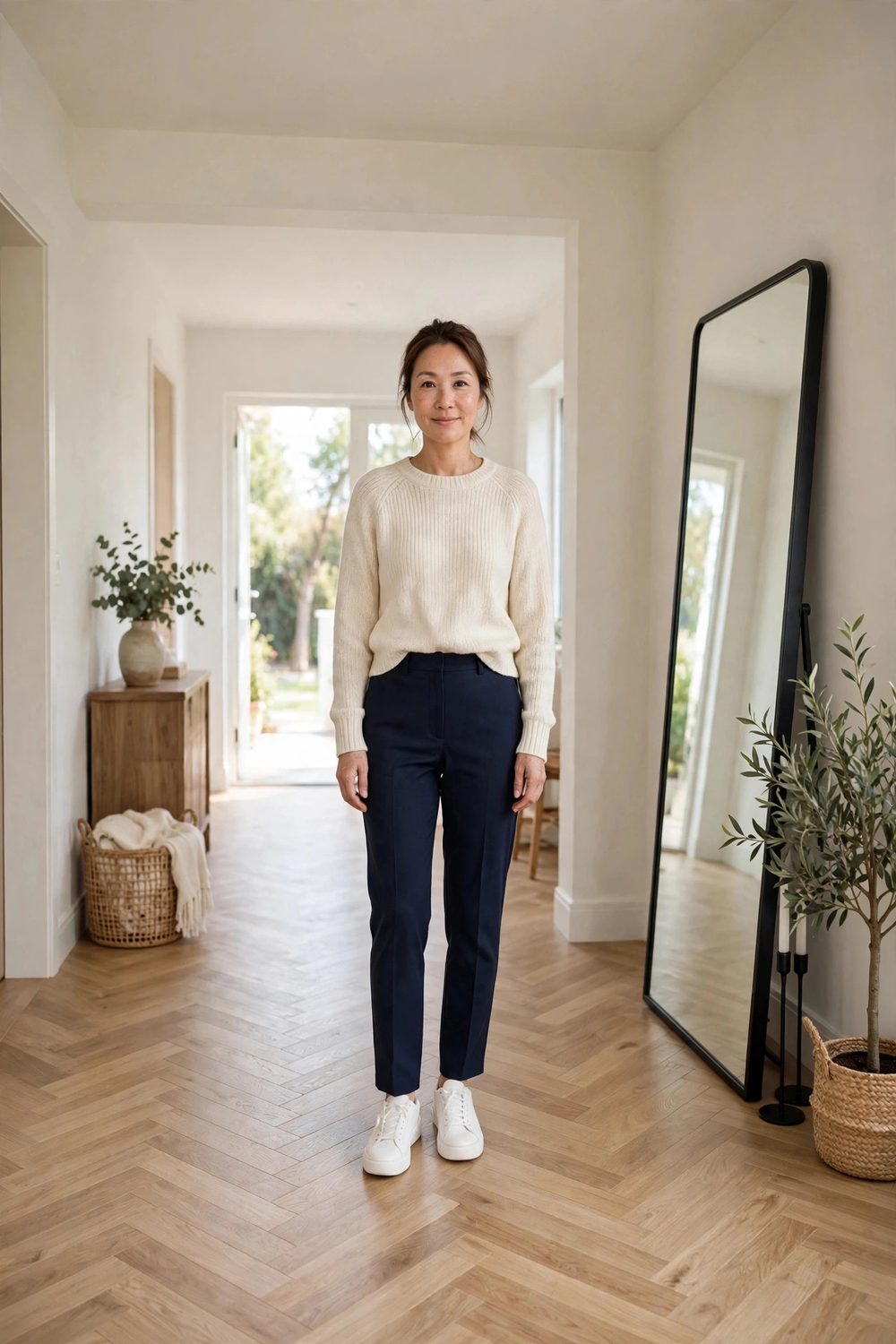
A high rise that lands at your natural waist gives your legs the longest possible line. The waistband marks the start of the leg, so a higher start reads as more leg.
Try navy petite trousers with an eleven inch rise and a cream knit tucked in fully. The tuck shows the full rise instead of covering the best part of the trousers.
Check the fit sitting down as well as standing. The waistband should stay smooth at the back with no gap, and the front should lie flat when you sit.
A mid rise can work too, as long as it truly reaches your waist. If the band sits two inches below it, the torso looks longer and the legs look shorter.
2. Keep Tops Short Enough to Show the Waistline
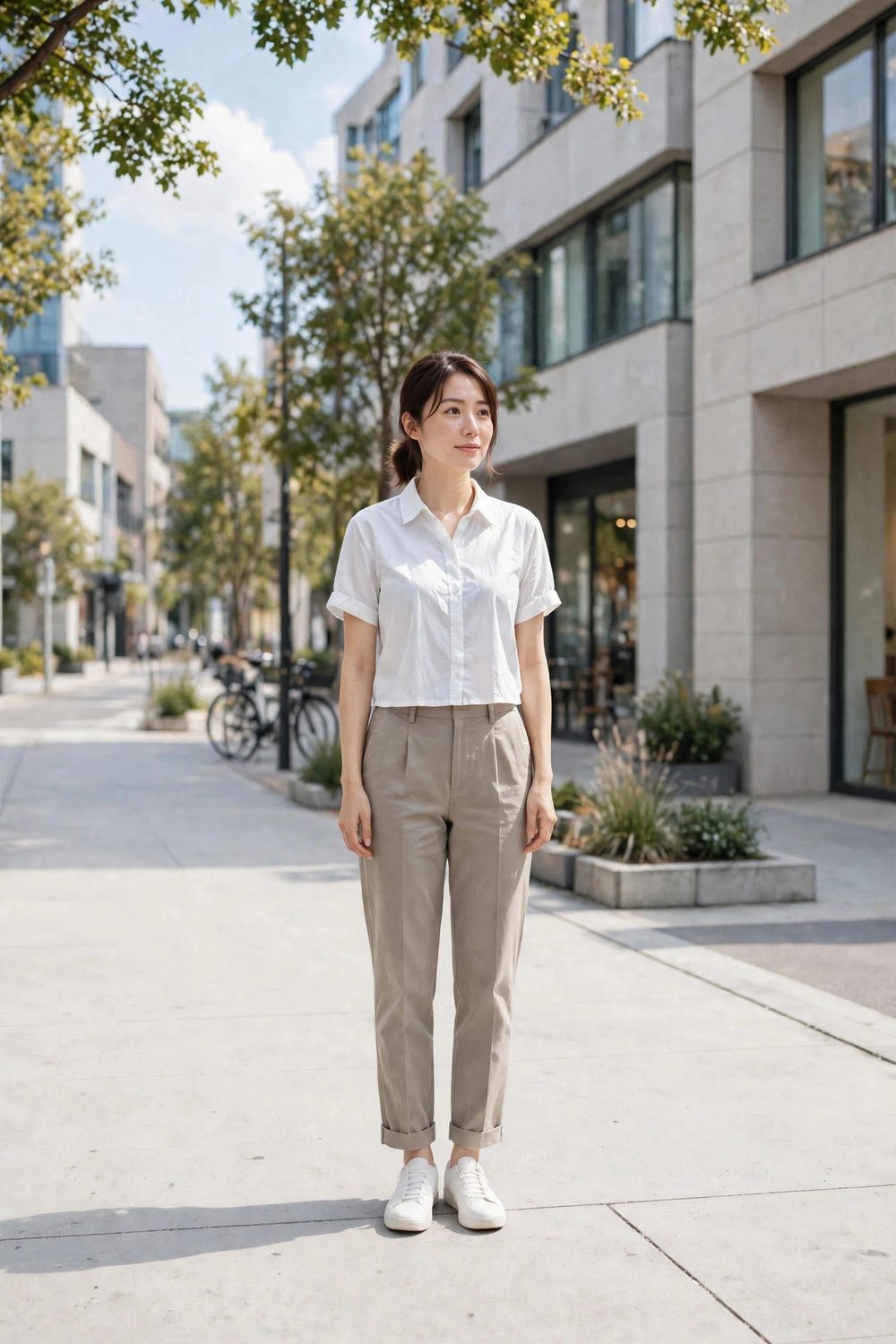
A top that ends past the hip hides the waist and cuts the body into two heavy blocks. A shorter top keeps the upper block small and the leg line long.
Wear a petite white shirt that ends at the hip bone over straight leg stone trousers. Leave the last button open so the shirt front parts slightly at the waist.
If a favorite top runs long, try a front tuck on one side. That small tuck shows the waistband and breaks the straight downward line of fabric.
Petite range tops are cut shorter through the body, not just trimmed at the hem. That is why they sit better than a regular top taken up at the bottom.
3. Wear One Color Head to Toe for a Longer Line
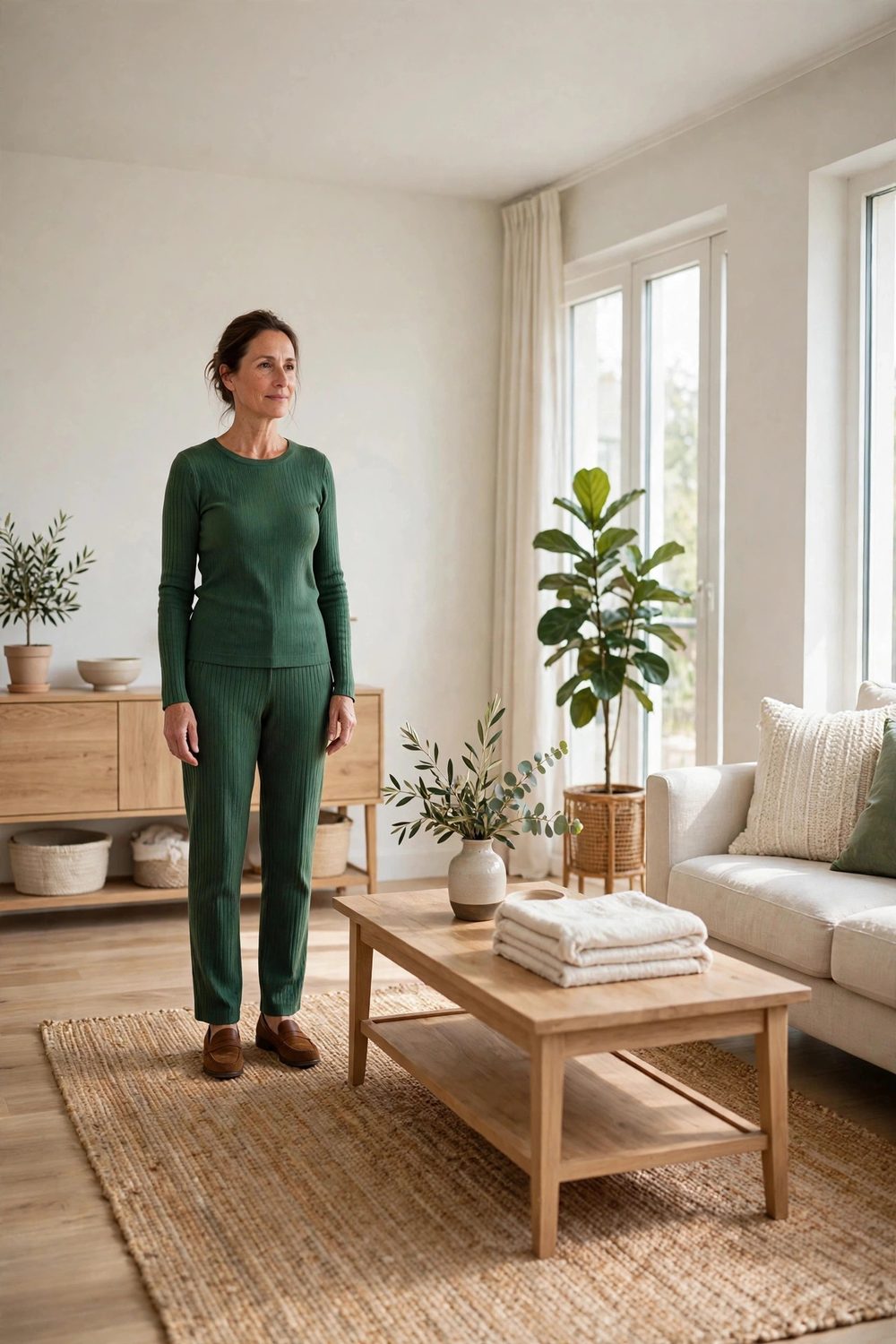
One color from shoulder to shoe lets the eye travel without a hard stop at the waist. That unbroken line is the simplest way to add visual height.
Build it with a forest green petite knit and matching green trousers, then add brown loafers. Keep the tones close rather than exact, so the outfit still has depth.
Our winter outfits for petite women use this same trick with coats and boots, because a single color column works in every season.
Texture does the variety work here. Ribbed knit on top and smooth twill below keeps a one color outfit from looking flat, even in plain black or navy.
4. Pick Prints Smaller Than Your Palm
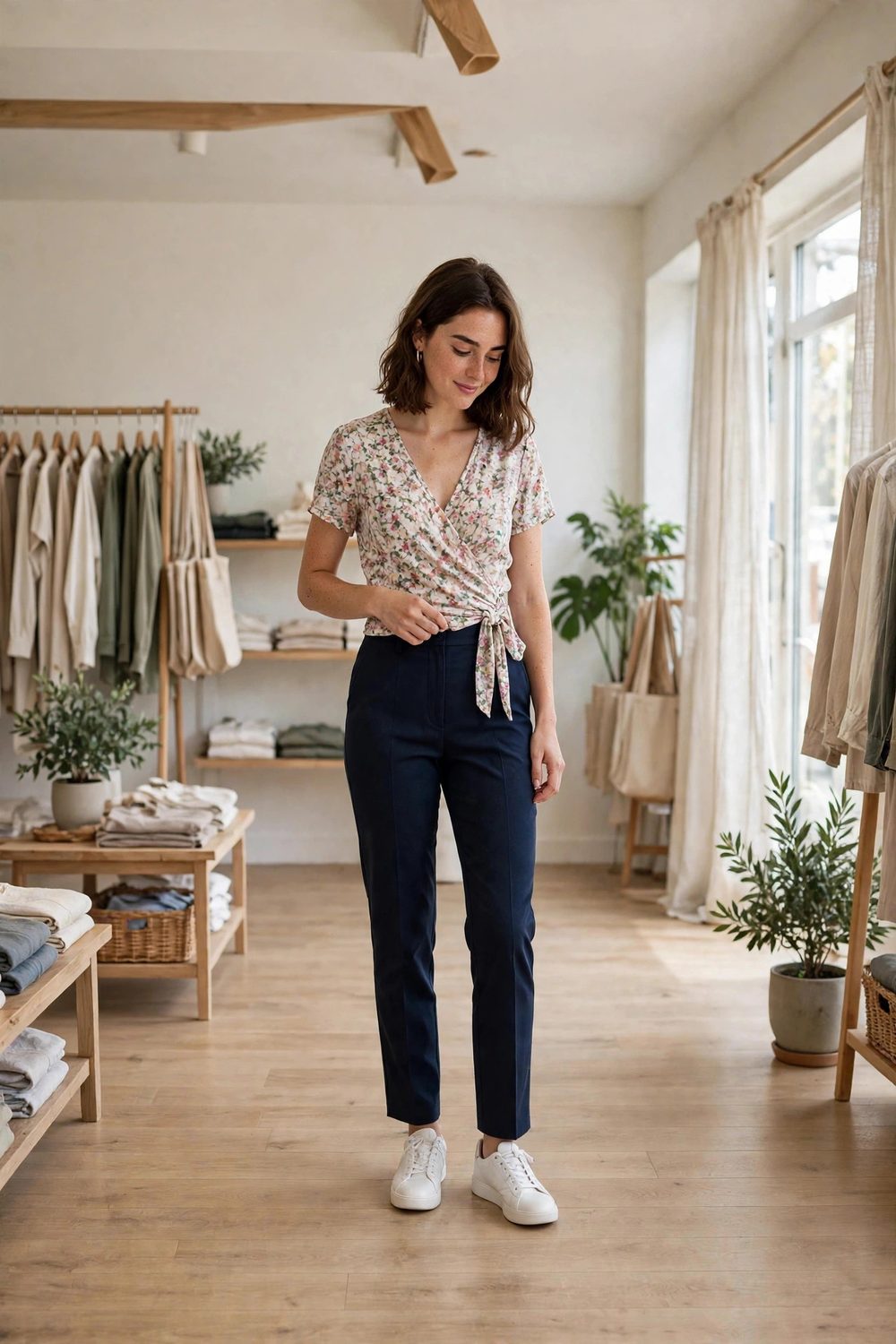
Print scale is a simple test you can do in the shop. Hold your palm over the pattern. If one motif is bigger than your hand, it was drawn for a taller frame.
A small floral on a petite wrap top shows several full repeats across the front. The pattern reads as a pattern, not as one giant flower sitting on your chest.
Fine stripes, small checks and tiny polka dots all pass the palm test easily. They add interest close up without taking over the whole outfit from across the room.
Large prints are not banned forever. Wear one on a bottom half with a plain top, so the big scale sits on the longer part of your frame.
5. Open the Neckline Upward With a V or a Scoop
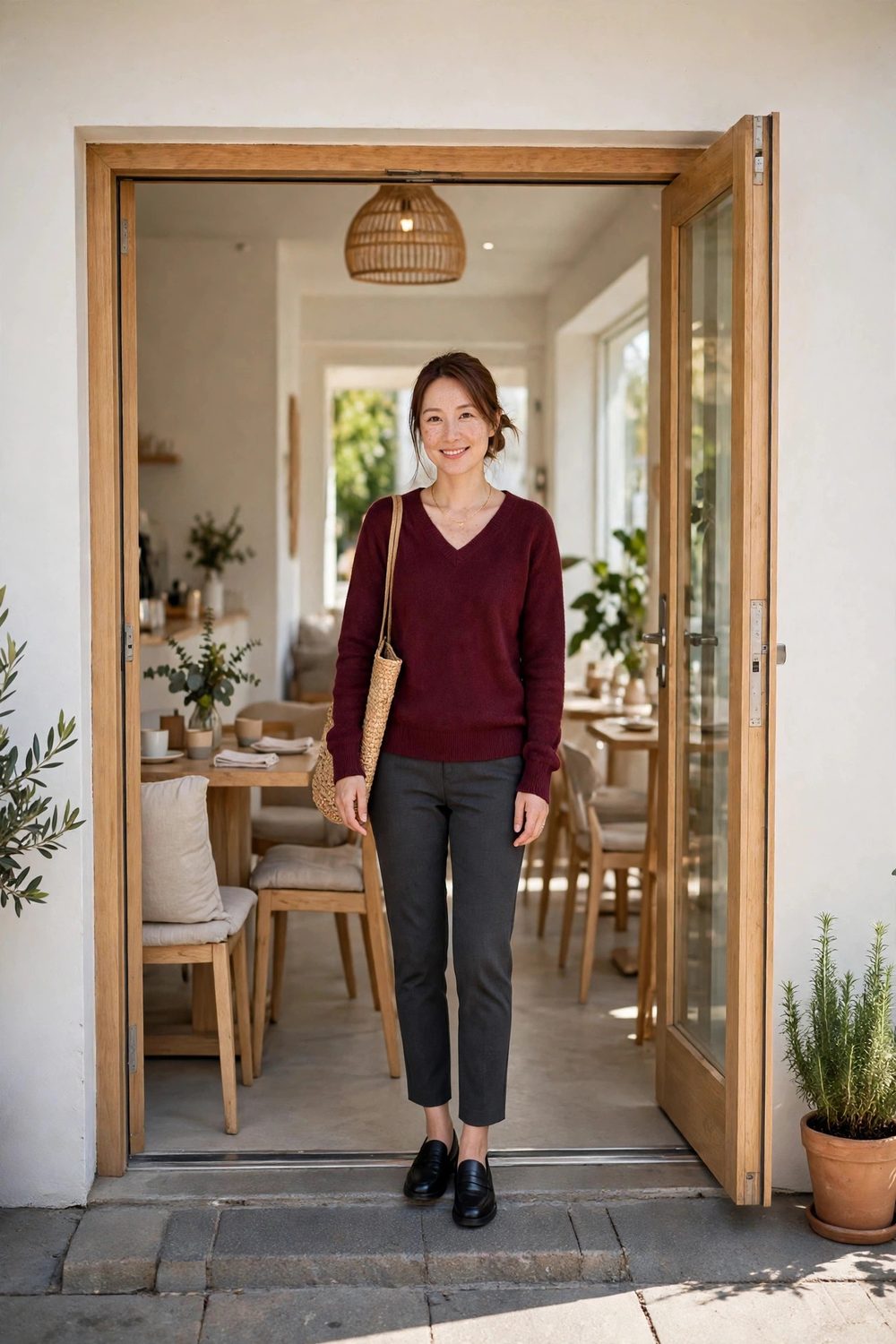
A V neckline draws a clean line from the chin down to the waist. That line adds length to the upper body and keeps a shorter neck looking open and clear.
Try a burgundy V neck sweater with charcoal petite trousers and a fine gold chain that sits inside the V. The chain follows the same line instead of crossing it.
Scoop necks and open square necks work the same way. They show a little collarbone, which gives the top half air and space on a compact frame.
High crew necks can still work if the top is short and fitted. Add a long pendant that hangs past the neckline to restart the downward line.
6. Match Your Shoes to Your Trousers or Tights
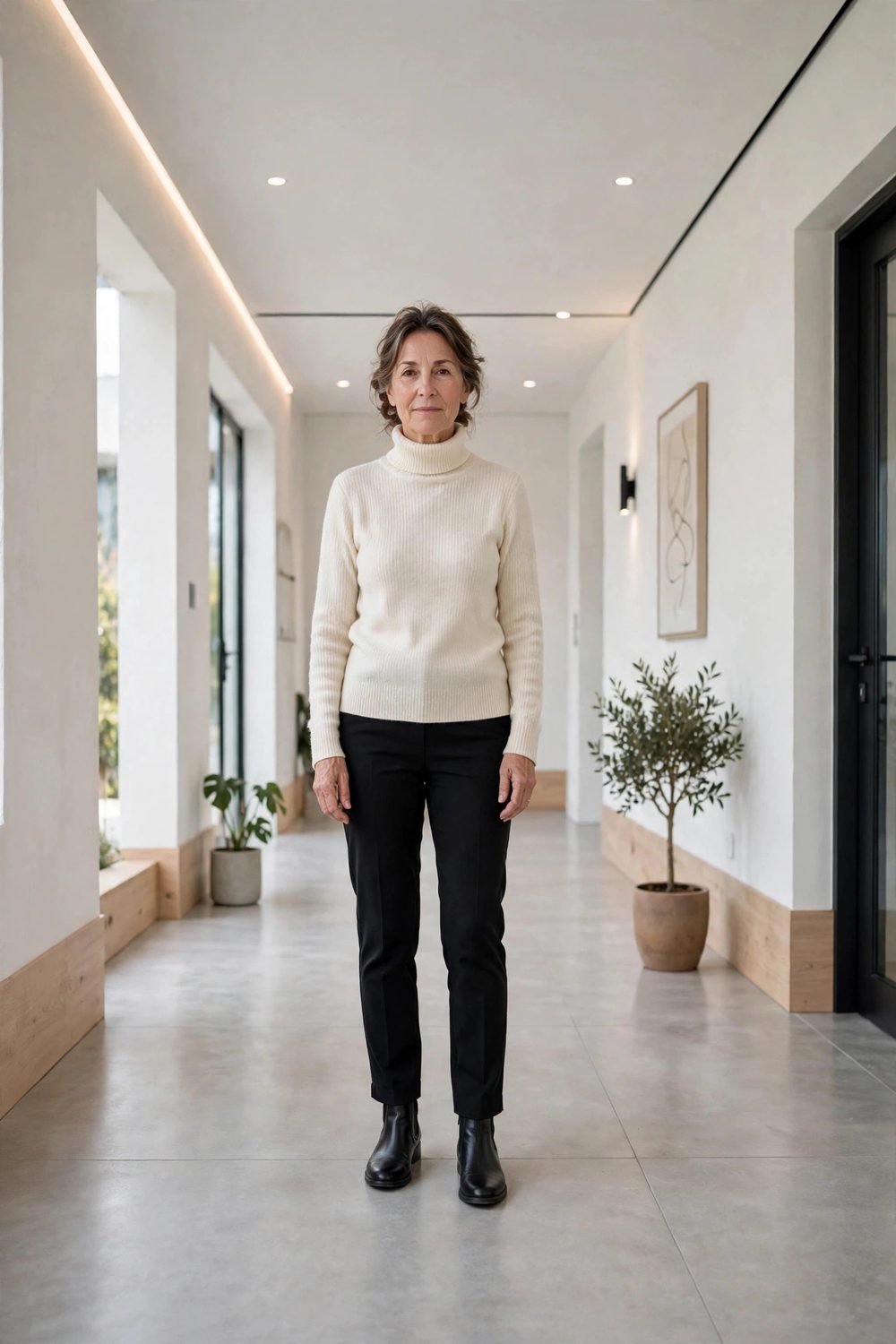
When the shoe matches the trouser, the leg line runs straight into the foot. A contrast shoe chops that line at the ankle and takes length with it.
Wear black petite trousers with black ankle boots on a cold day. The boot shaft slides under the hem, so there is no band of skin or sock to break the line.
With bare legs, a nude toned flat or sandal does the same job. Pick a shade close to your skin so the shoe nearly disappears against the leg.
This trick helps most with cropped lengths. A matched shoe turns a risky crop into a deliberate one, as our notes on petite jeans for curvy women also show.
7. Wear One Volume at a Time, Never Two
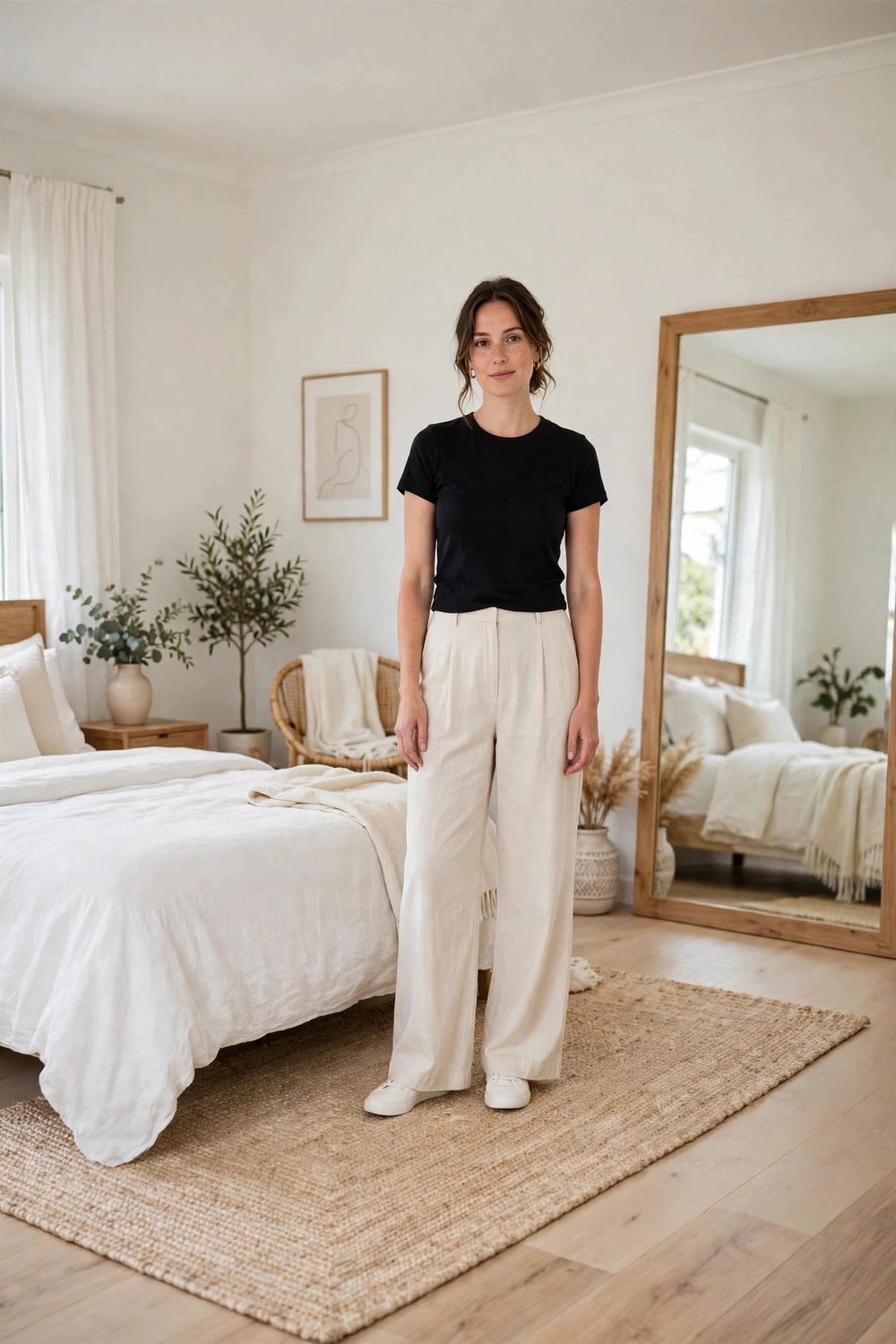
Wide fabric everywhere at once is what swamps a small frame. Volume itself is fine. The rule is simple: one wide piece per outfit, one close piece to balance it.
Pair wide leg cream trousers with a fitted black tee that ends at the waist. The close top shows your shape, and the wide leg gets room to move.
Flip it the next day. A soft oversized cardigan works over slim straight trousers, as long as the cardigan stops at the hip and stays open at the front.
Check the side view in the mirror. If you cannot see a waist or an ankle anywhere, swap one piece for a closer cut before you leave.
8. End Skirts Above the Knee or Well Below the Calf
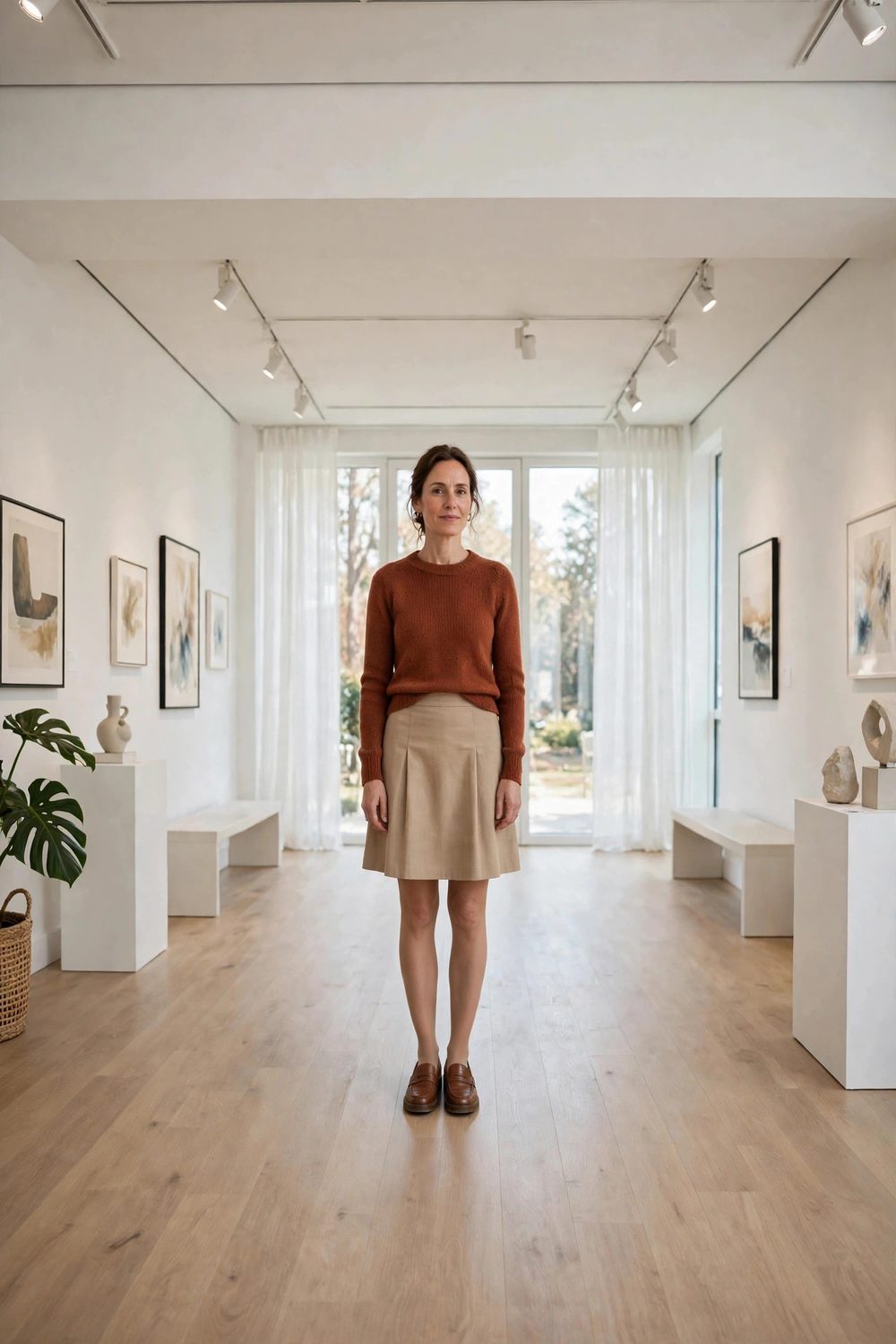
Skirt length is about where the hem stops, not how long the skirt is. A hem that ends above the knee shows leg. A long hem past the calf shows a clean column.
The awkward zone sits right at the widest part of the calf. A hem parked there splits the leg at its broadest point and shortens the whole look.
Try a petite A line skirt that ends two inches above the knee with a tucked rust knit. The exposed leg does the lengthening, and the knit keeps the waist clear.
For a longer skirt, choose a petite midi that falls below the calf muscle. On a petite frame that length often reads as a maxi, which is fine and graceful.
9. Belt at the True Waist With a Slim Belt
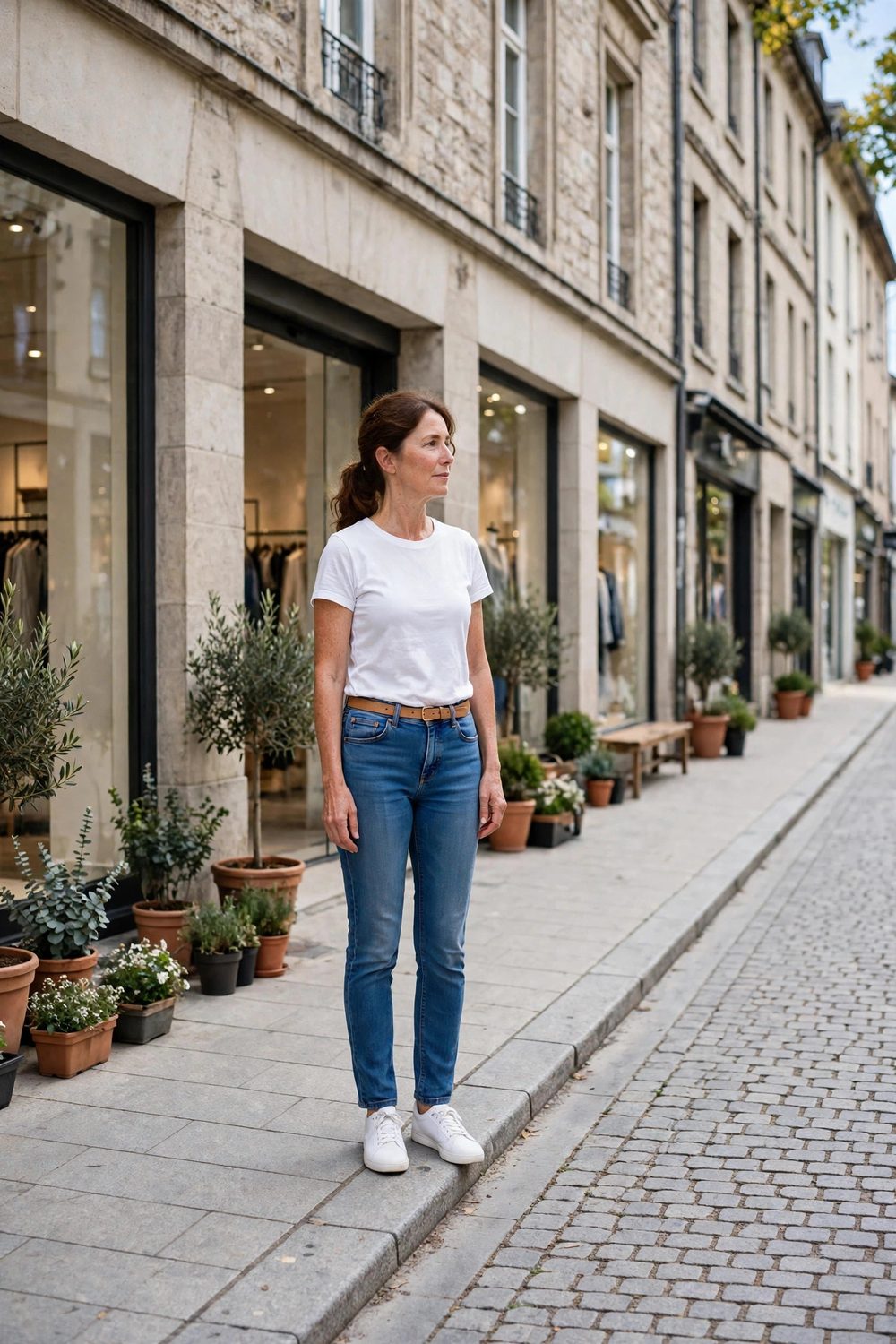
A belt only helps if it sits at your true waist, the narrow point above your hip bones. A belt worn low on the hips pulls the eye down and shortens the legs.
Pick a slim belt, about an inch wide, in a color close to your outfit. A wide belt on a short waist takes up space the torso cannot spare.
Thread a tan slim belt through high rise jeans and add a white petite tee. The belt marks the waist, the jeans start high, and the proportions settle.
On dresses, place the belt over the waist seam. If the seam sits below your waist, the dress is a regular cut, and no belt will fully fix that.
10. Keep Jackets Cropped or Hip Length
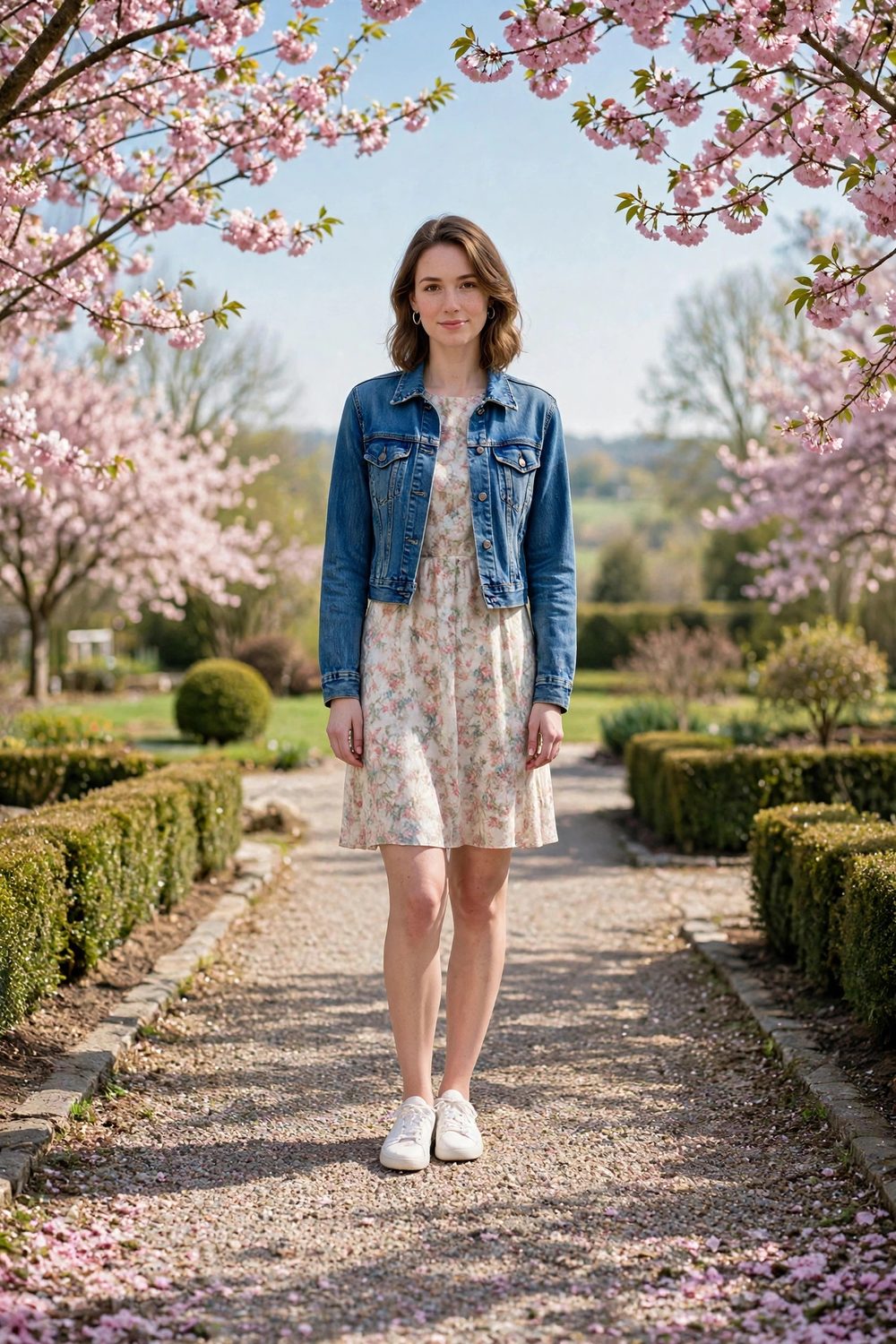
A jacket that ends at the waist or the hip bone keeps the leg line long. A jacket that ends mid thigh covers the waist and most of the hip at once.
A cropped denim jacket over a knee length dress is the classic proof. The jacket stops high, the dress waist shows, and the legs run free below the hem.
Blazers work too in a petite cut, with the hem at the hip bone and sleeves at the wrist. Push regular blazer sleeves up and the body length still gives it away.
Long coats are the one exception worth keeping. Wear one open over a one color outfit, so the long line reads as a frame rather than a cover.
11. Show a Slice of Ankle or Wrist on Purpose
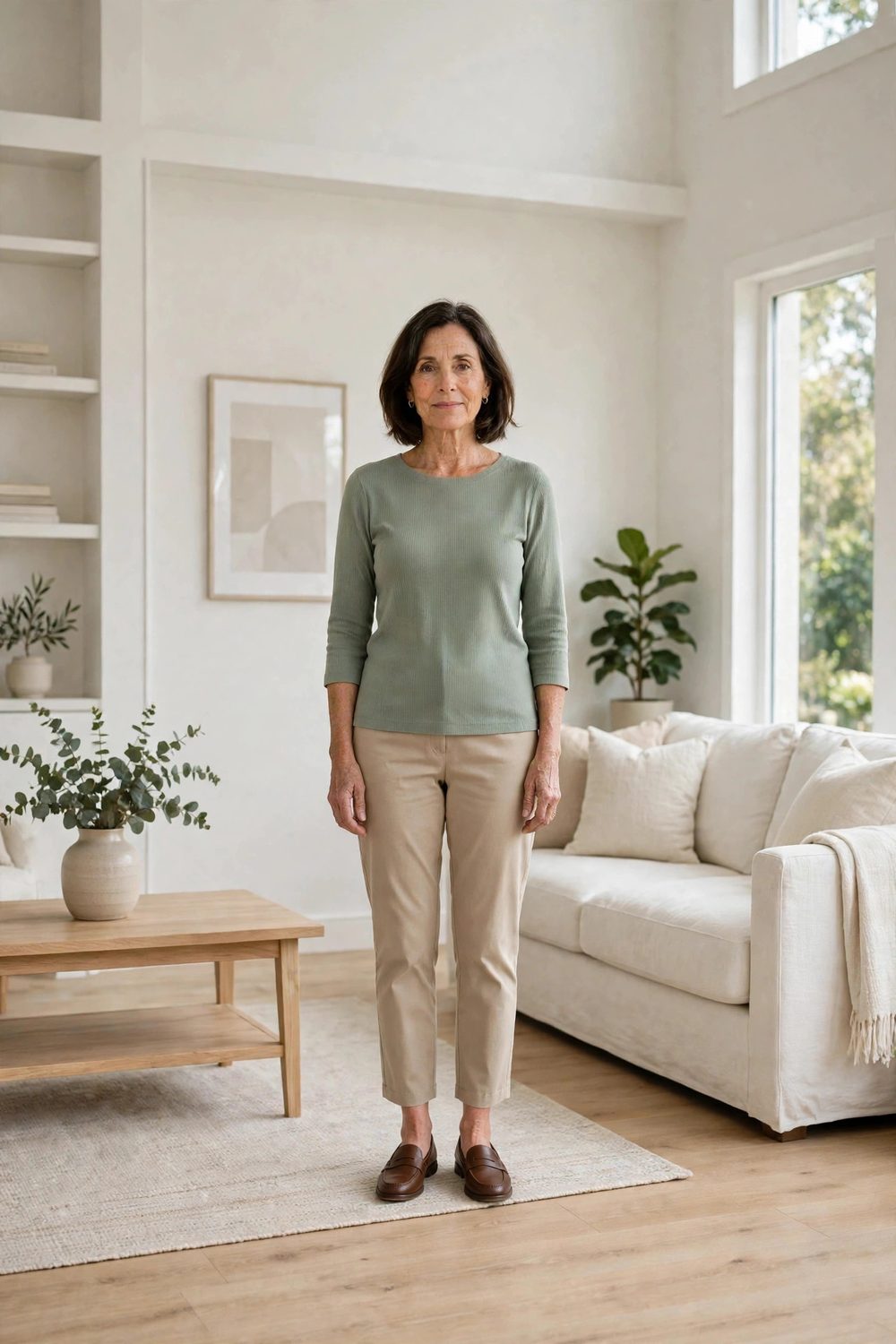
A small break of skin at the ankle or wrist keeps an outfit light on a small frame. Covered joints can make even well fitted clothes look heavy and long.
Choose ankle length trousers that end right above the ankle bone, then add loafers with no socks. That inch of skin signals the trousers end there by choice.
Three quarter sleeves do the same work on top. A bracelet length sleeve ends at the slim part of the forearm and leaves room for a watch or bangle.
If sleeves run long, push them to the forearm rather than folding big cuffs. A pushed sleeve looks deliberate, while a thick folded cuff adds bulk at the wrist.
12. Scale Bags and Jewelry to Your Frame

Accessories read against your body, so size is relative. A huge tote on a petite frame looks like luggage, even when the same bag looks normal on a taller woman.
A medium crossbody that sits at the hip is a safe daily size. It holds the basics, keeps hands free, and stays in proportion with a shorter torso.
Jewelry follows the same logic. Fine chains, small hoops and one slim bangle look balanced, while three chunky pieces at once crowd the neck and wrist.
Keep one statement piece if you love it, and let it be the only one. A bold earring with a plain neckline gives impact without crowding your frame.
13. Use Vertical Lines From Seams, Ribs and Buttons
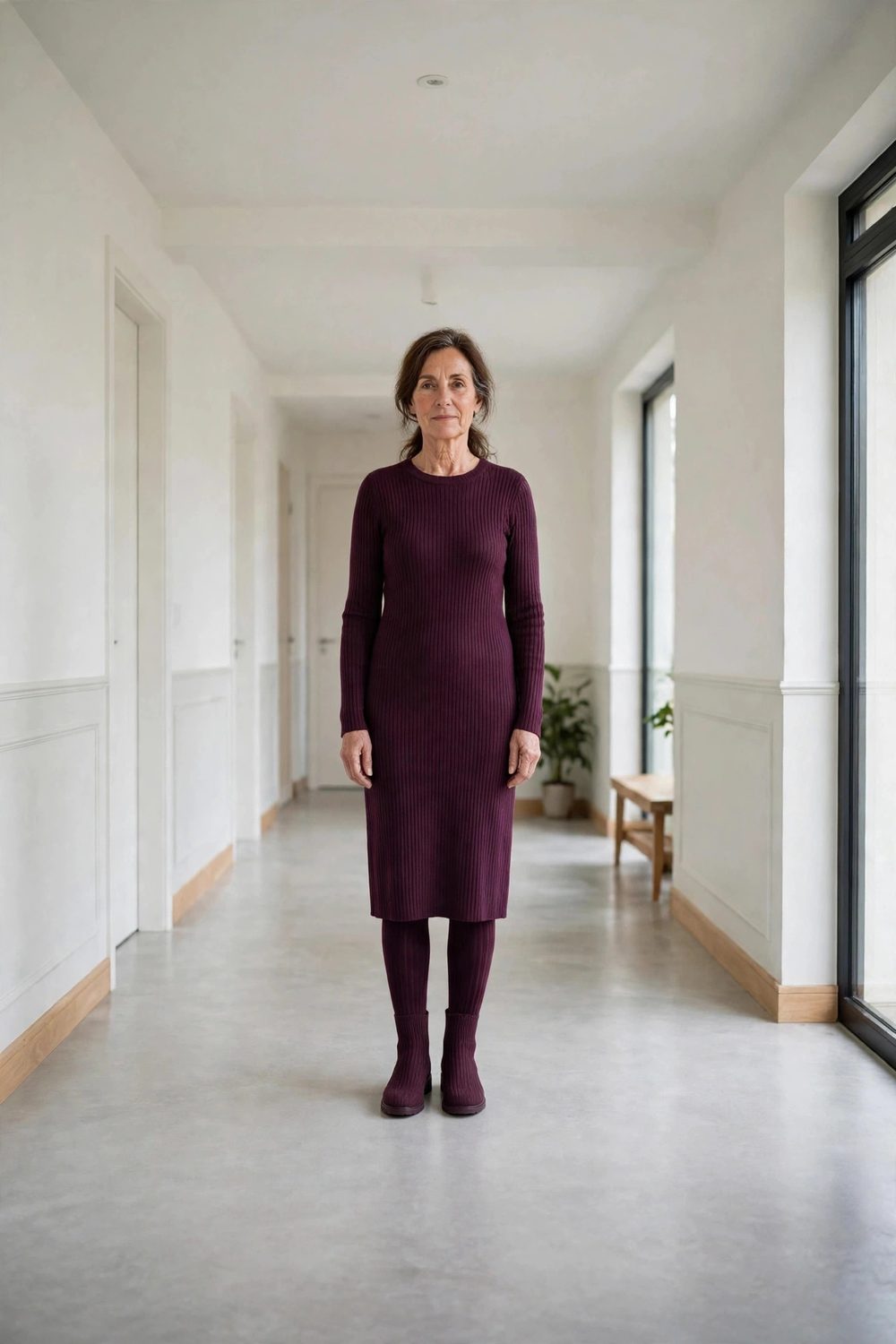
Vertical details guide the eye up and down, and that travel reads as height. The lines do not need to be stripes. Seams, ribs and button rows all count.
A ribbed knit dress in deep plum has fine lines running its full length. Worn with matching tights and boots, the whole outfit becomes one long vertical read.
A row of buttons down a skirt front or a shirt placket does similar work. Leave a cardigan open and its two front edges form vertical lines as well.
Keep the lines unbroken where you can. A belt in a close color crosses the outfit gently, while a bright contrast belt cuts the vertical run in half.
14. Keep Layers Light and Close to the Body
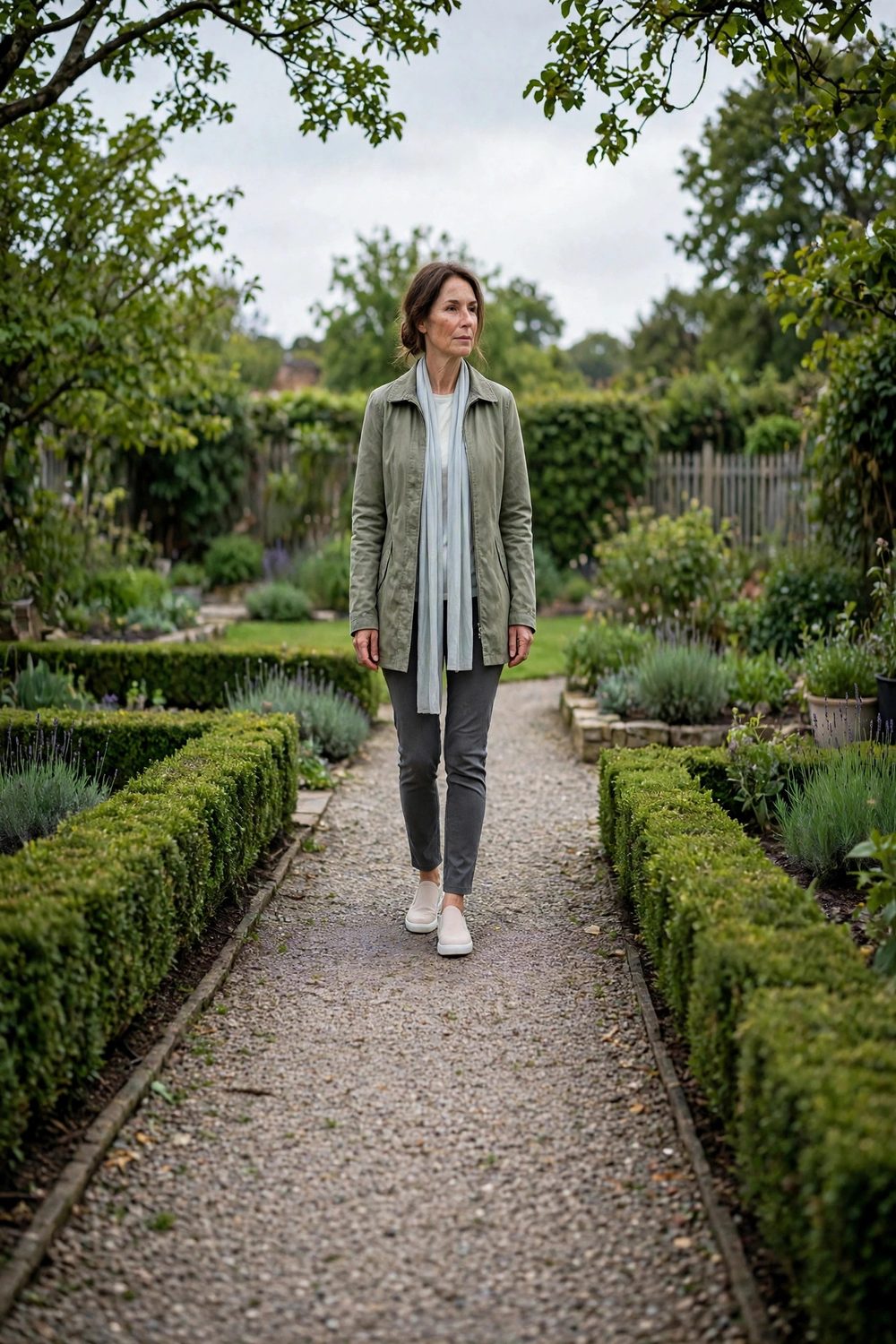
Layers add warmth and interest, but thick stacked layers add width a petite frame feels fast. The fix is fabric weight: thin layers, worn close, in a planned order.
Start with a fine thermal or a thin tee, add a light knit, then a hip length jacket. Each layer sits smooth, so the total stays neat rather than padded.
Simple home tweaks help layers sit right, and our list of easy home alterations for petite fit covers the hems and straps that matter most.
Scarves follow the layer rule too. A long thin scarf worn hanging adds a vertical line, while a thick scarf wound twice adds bulk right at the neck.
15. Finish With a Pointed Toe and a Low Heel
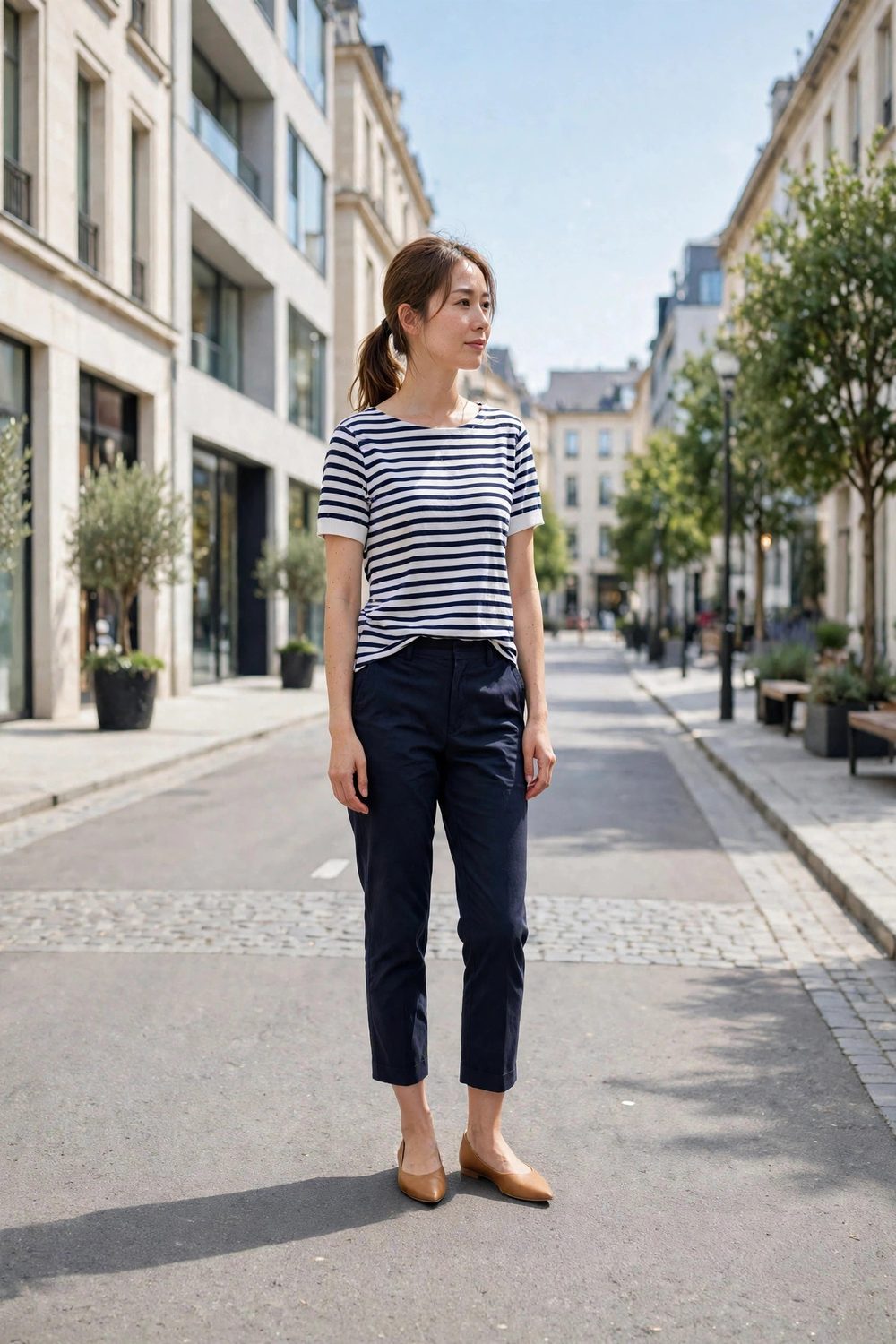
Shoe shape is the last proportion lever. A pointed toe extends the foot line a little past the shoe, and that extra length carries the leg with it.
A low heel of one to two inches lifts the hem clear of the ground and improves posture. You do not need high heels for the effect to show.
Try pointed tan flats with cropped navy trousers and a striped petite top. The point, the ankle break and the short top all pull in the same direction.
Before you buy another pair, compare your height charts with our guide to petite vs regular sizing, so the clothes themselves start from the right cut.
None of these rules asks you to dress like someone taller. They ask each garment to sit where it belongs on your frame, so your clothes look chosen rather than borrowed.
Start with rise and hem placement, since those two change the most outfits at once. Add color columns and scaled prints once the base fits feel steady and easy.
Save the rules that work for you to our Petite Outfits for Women board, and build your own short list from the fifteen. Three rules worn daily beat fifteen worn once.


