

How to Water Balcony Plants While on Vacation: 15 Setups
Your suitcase is by the door, the taxi is booked, and the basil by the rail already looks thirsty. That last look at the balcony is the one most plant owners forget until the car pulls away.
Learning how to water balcony plants while on vacation means picking a setup before you pack, not hoping for rain. Pots on a balcony dry out fast, since sun and wind reach them from several sides at once.
A week of dry soil can undo a whole season of steady care on a small balcony. The setups below range from free tricks with a bottle to small kits that run on their own.
The good news is that most balcony pots need a steady trickle, not a flood. A bucket, a bottle, or a small timer can cover many plants while you are gone.
If your pots still crowd the door swing, our small balcony garden ideas show layouts that leave clear floor space for a water bucket. Work through the fifteen setups below and match one to your trip length, your tap, and your plants.
1. Give Every Pot a Deep Soak the Night Before
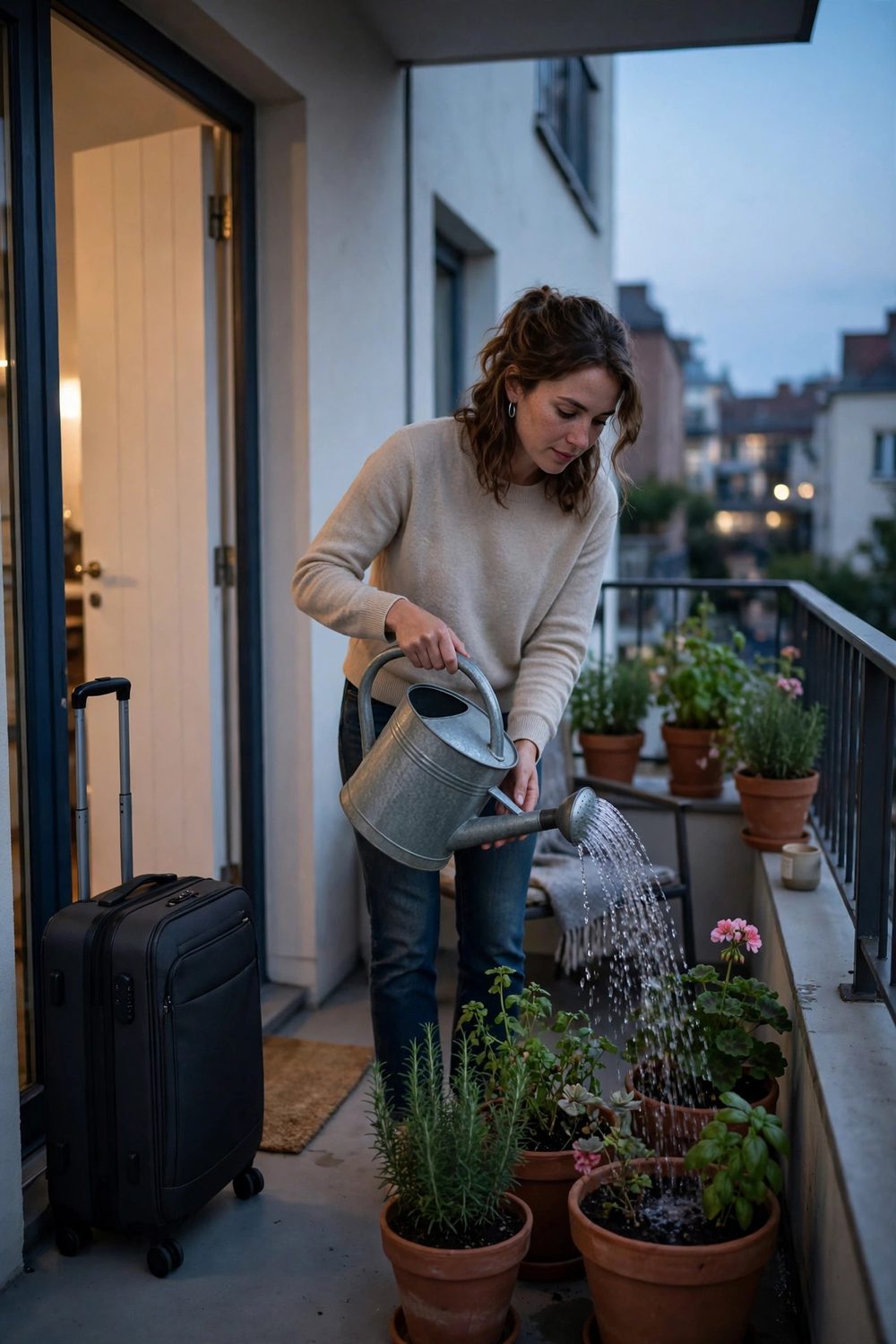
Start with soil that is wet all the way through, not just damp on top. Water each pot slowly, wait ten minutes, then water again until a little runs from the drainage hole.
Do this the evening before you leave, when the air is cool and less water is lost to heat. Morning watering on travel day often gets rushed between bags and keys.
Empty the saucers an hour later so roots do not sit in standing water while you are away. A deep soak buys every other setup on this list a calmer, slower start.
Set a phone reminder for the soak itself, since travel eve is full of small jobs. A sticky note on the watering can works just as well in most homes.
2. Move Pots Into One Shady Corner
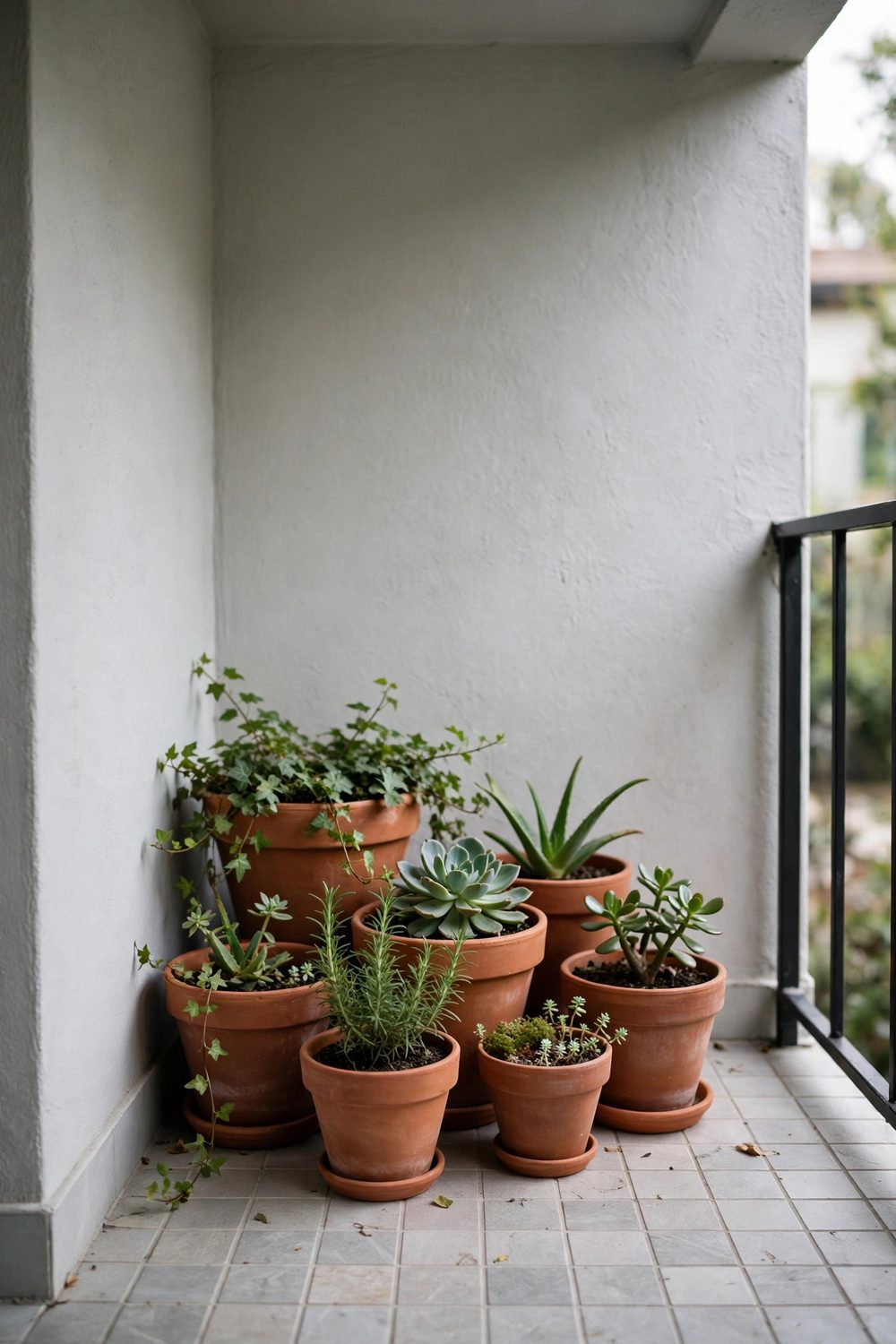
Sun is the fastest way a pot dries out, so shift the whole group to the corner that gets the least direct light. Pots close together also shelter each other from drying wind.
Keep the group clear of the door swing and leave a narrow path so a helper can still step in. Small pots dry first, so tuck them in the middle of the group.
On a hot balcony, shade matters even more, as our guide to summer balcony ideas for hot, south-facing heat shows. Put the pots back in place the day you return home.
Check the railing pots too, since hanging pots catch wind on all sides. If a rail pot cannot move, build the group plan around it instead of forcing it.
3. Run Cotton Wicks From a Raised Bucket
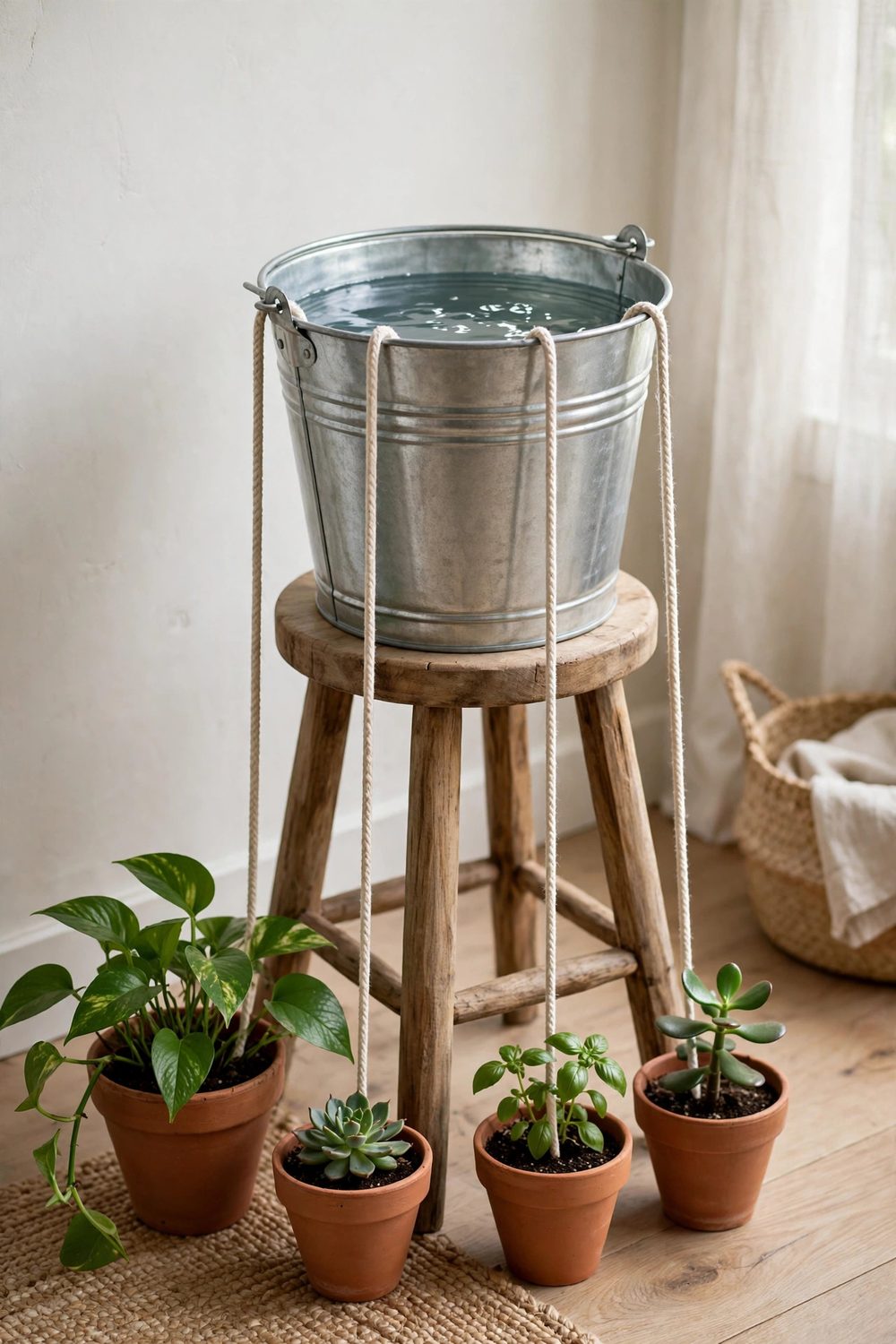
Set a large bucket of water on a stool so it sits a little higher than the pots. Run a thick cotton cord from the bottom of the bucket into the soil of each pot.
Water moves along the cord slowly as the soil dries, a bit at a time. Cotton works for this job, while cords made from plastic do not pull water along in the same way.
Push each cord end a few inches into the soil and weigh the bucket end down with a clean stone. One bucket can feed several small pots grouped around the stool.
Tie each cord loosely at the pot rim so a gust cannot flick it out. A cord that ends up on the tiles feeds the floor, not the plant.
4. Push an Upturned Bottle Into Large Pots
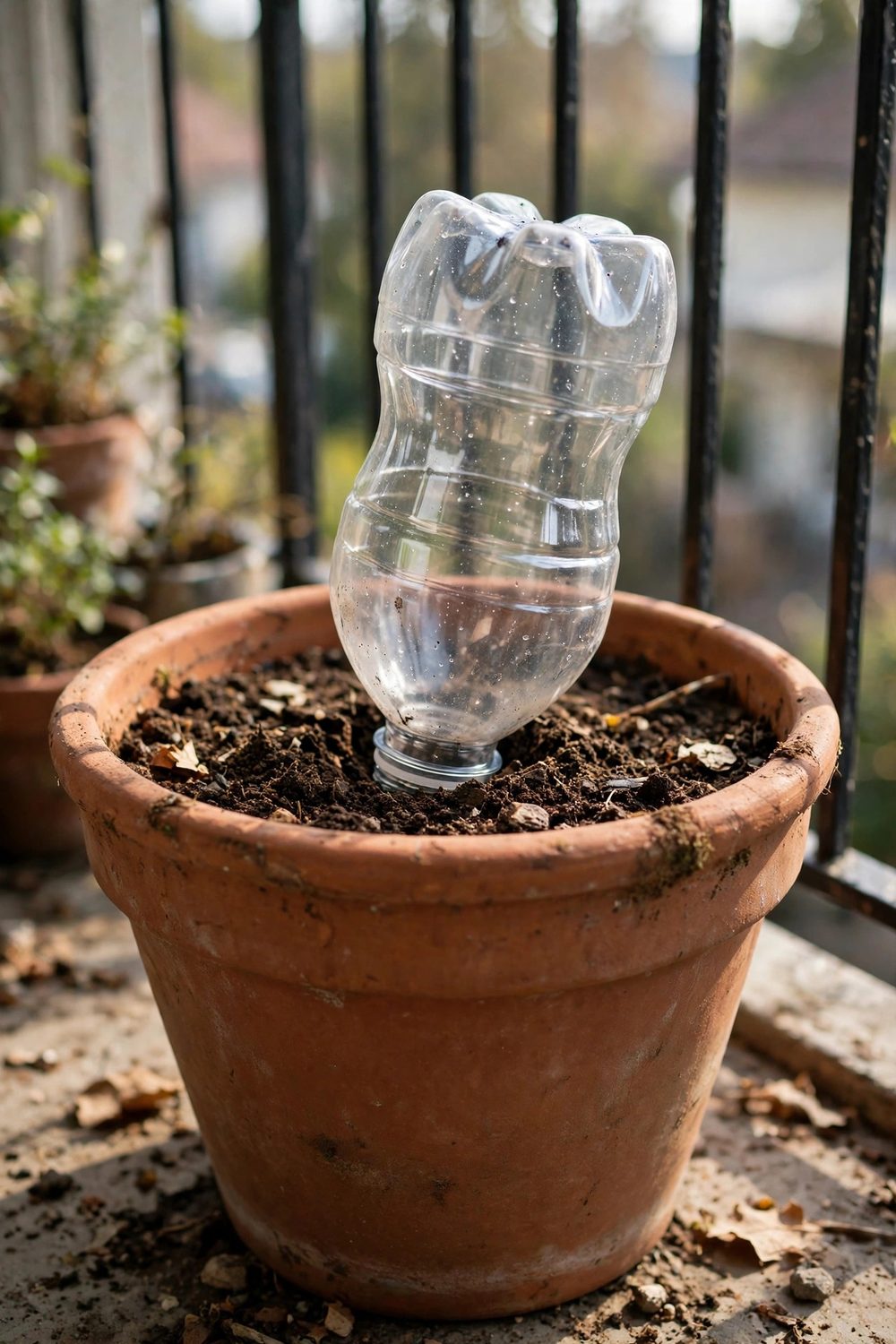
A big pot with a thirsty plant can drink from a bottle turned upside down in its soil. Fill the bottle, cover the neck with your thumb, and push it in at an angle.
Water seeps out slowly as the soil dries and air moves back into the bottle. Water the pot well first, since a bottle pushed into dry soil can empty far too fast.
Use this setup for your largest pots only, where the soil volume can hold the bottle steady. A bottle in a small pot tips over and floods the saucer within hours.
Mark the water line on the bottle with a strip of tape before your trial run. By morning you can see at a glance how much the plant drank overnight.
5. Fit Terracotta Spikes to Bottles for a Slower Drip
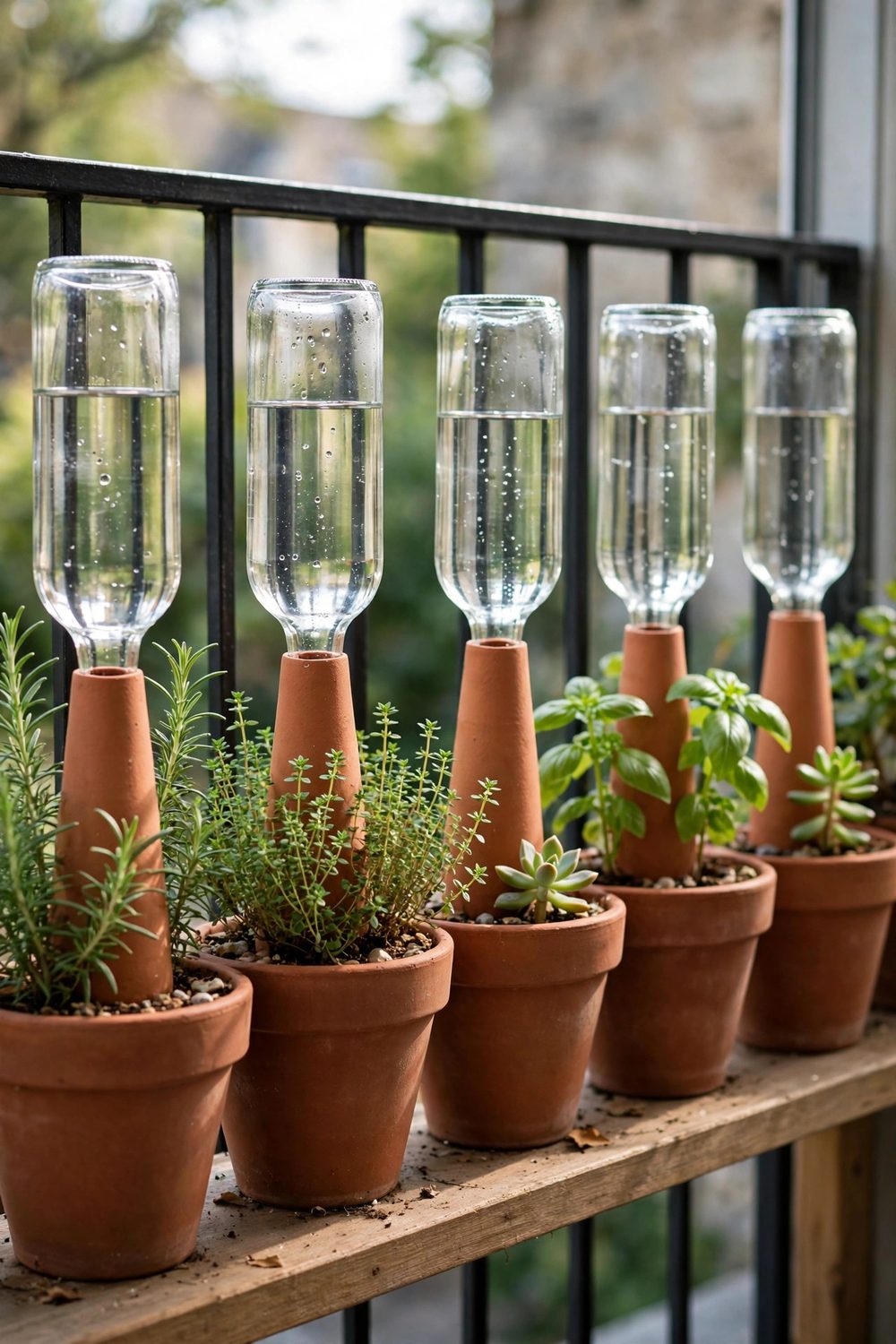
Clay spikes push into the soil first, then hold a filled bottle above the pot. The porous clay lets water pass into the soil at a slower, steadier rate than an open bottle neck.
Soak the spikes in water before you fit them, so the clay starts off damp and ready. Push each spike in away from the main stem, near the edge of the pot.
This is a tidy pick for a row of rail pots that all drink at a similar pace. Check the bottle levels during your trial run to see which pots finish first.
Keep one spare spike and bottle ready in case a spike cracks during setup. Clay is strong once it sits in soil, but it chips fast if dropped on tiles.
6. Swap Thirsty Plants Into Self-Watering Pots
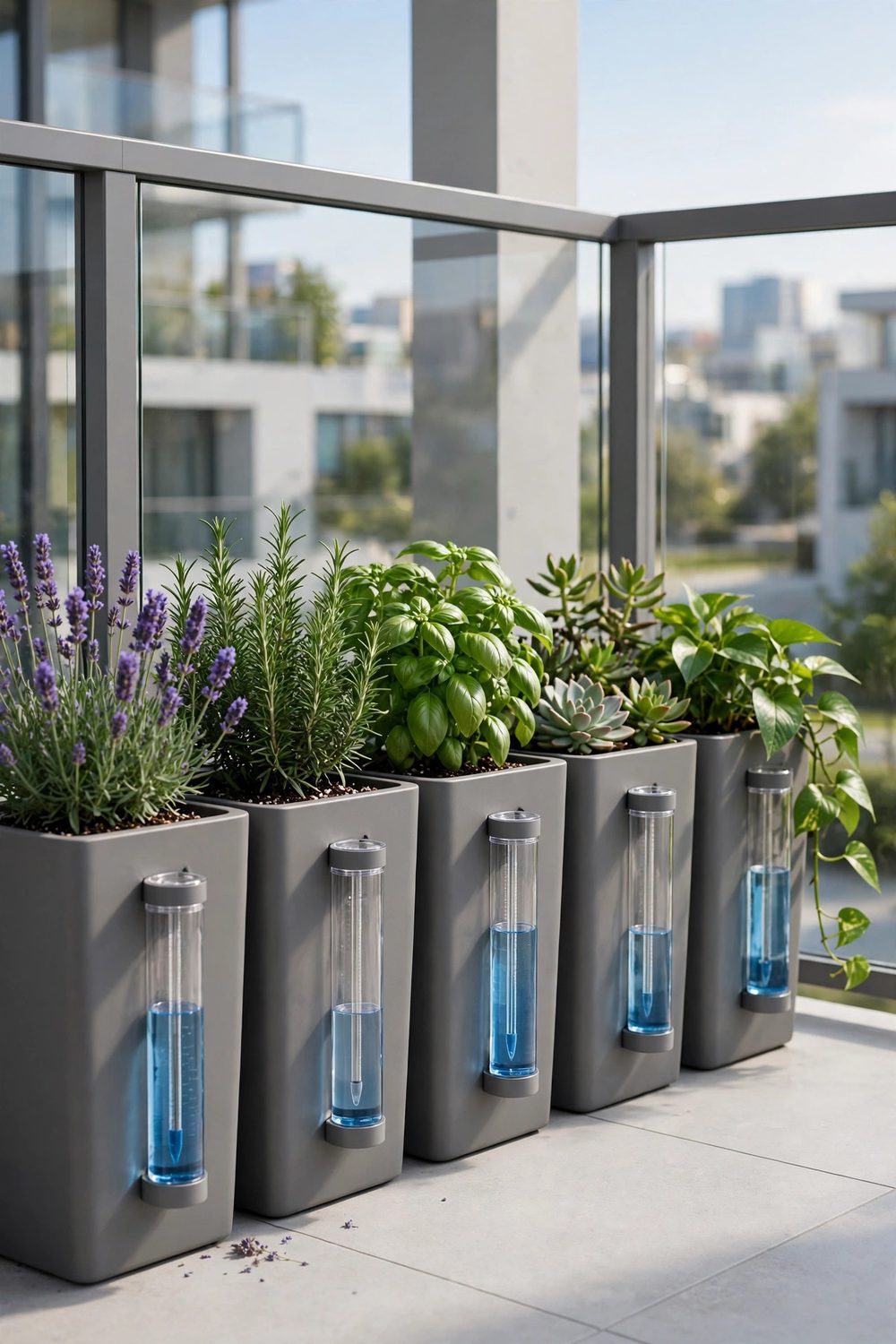
Self-watering pots hold a store of water in a base below the soil. Roots draw up what they need through the soil, and a small gauge on the side shows the level.
Fill the store to the mark the day before you leave, after a normal watering from the top. Plants new to these pots need a few weeks of top watering while roots settle in.
This swap suits plants you plan to keep in the same pot for a long time. It costs more than a bottle trick, but it keeps working trip after trip.
Wipe the gauge tube clear before you go, so the water level stays easy to read. A helper can then check every pot in seconds during a short visit.
7. Fit a Timer Drip Kit to the Balcony Tap
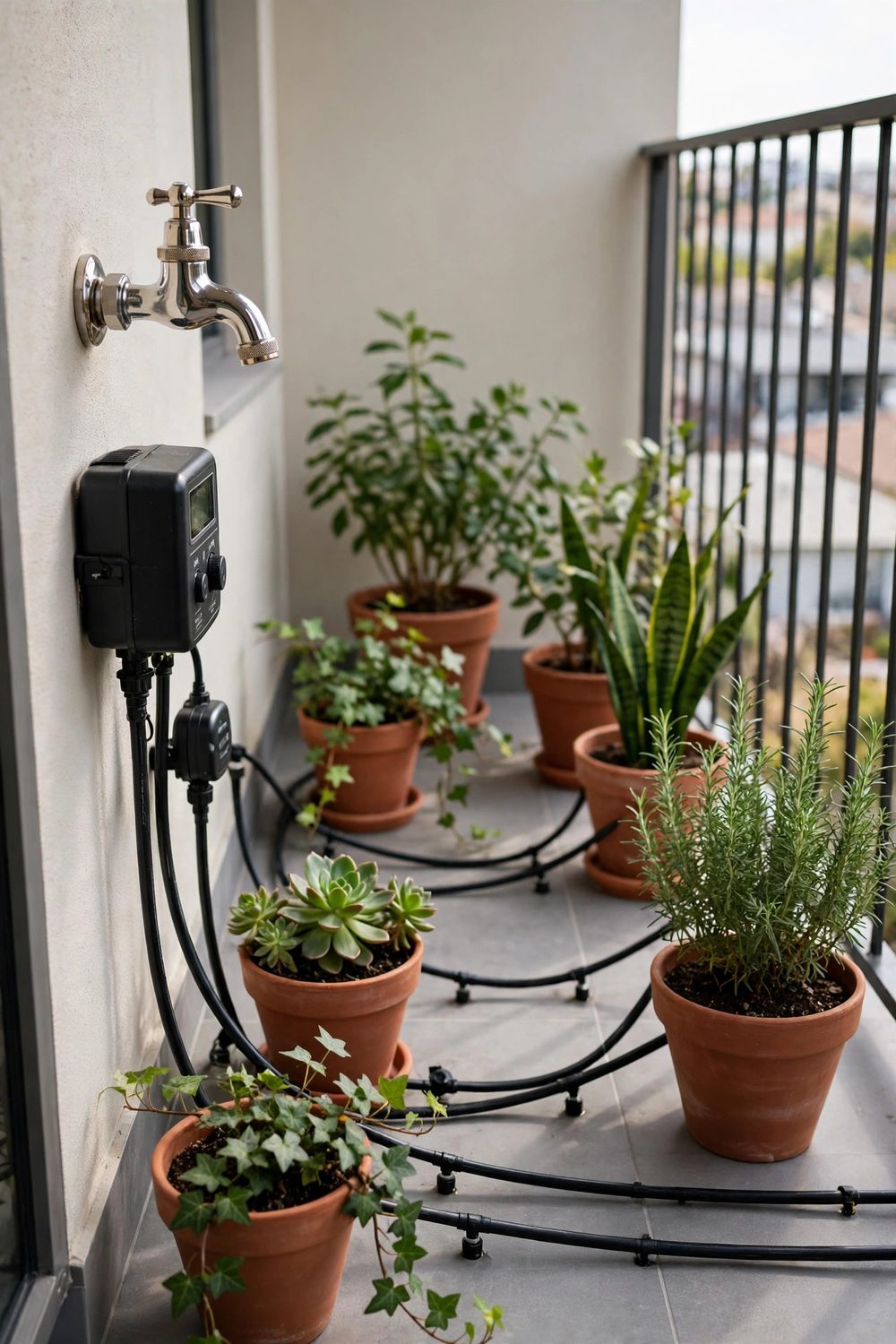
If your balcony has an outdoor tap, a small drip kit can water every pot on a set schedule. Thin tubes run from the tap to each pot, with a drip head resting on the soil.
A battery timer on the tap turns the water on and off while you are away. Set short runs in the early morning, when less water is lost to sun and wind.
Lay the tubes flat along the wall so nobody trips on them during a check visit. Leave the tap wrench and a spare battery in plain sight for your helper.
Leave the timer notes taped inside the balcony door, facing into the room. If a drip head pops off, your helper can refit it without calling you mid trip.
8. Use a Solar Pump Kit When There Is No Tap
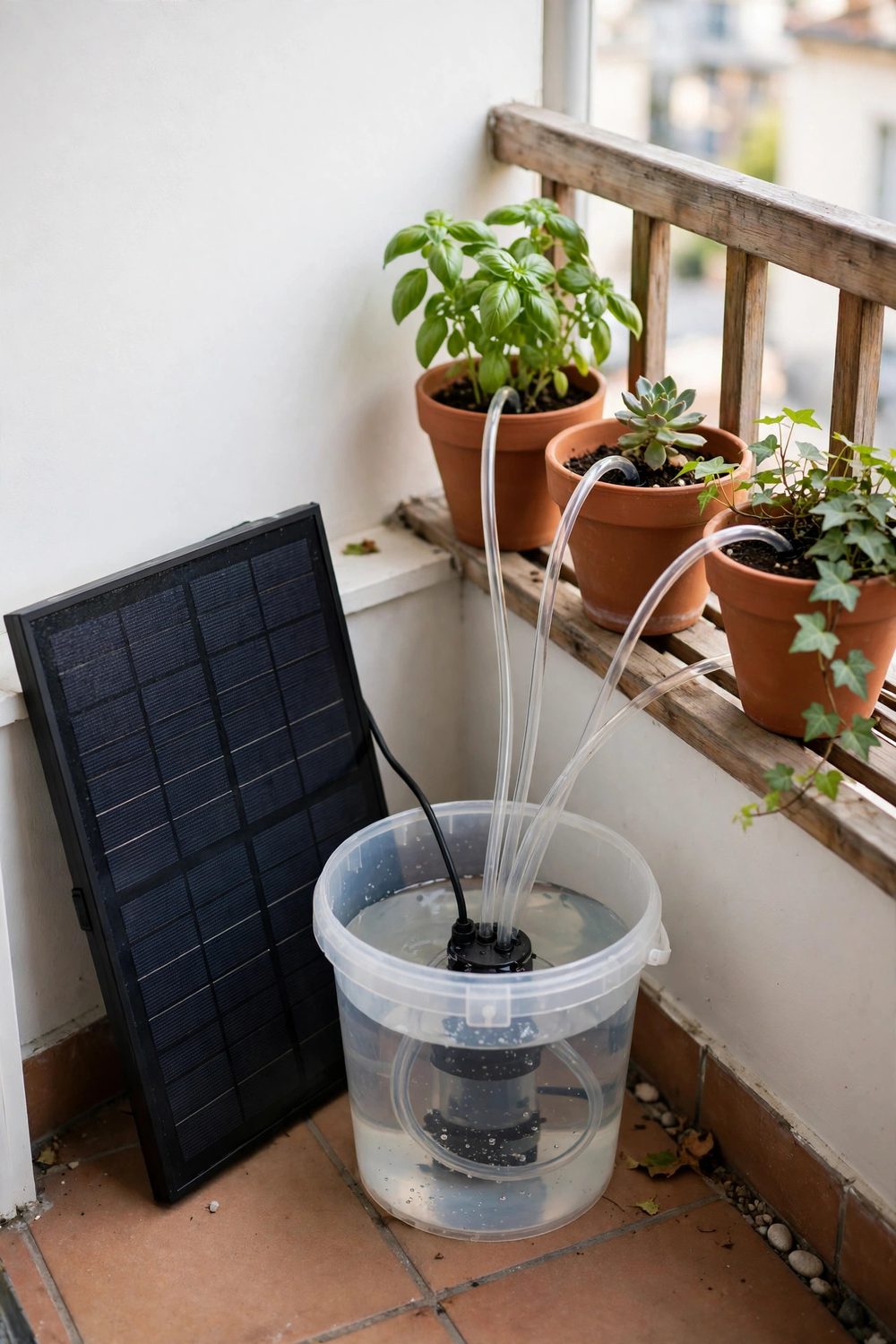
Many small balconies have no outdoor tap at all, and this kit solves that gap. A small pump sits in a bucket of water and pushes it through thin tubes to each pot.
A little solar panel powers the pump, so set the panel where it catches real daylight hours. The bucket needs to hold enough water for the full trip, with a bit to spare.
Tape the tubes down along the pot row so wind does not pull a drip head out. Test the pump on a sunny and a cloudy day if you can.
Fill the bucket the night before, so the pump starts the trip with a full store. A lid with a small gap for the tubes keeps leaves and dust out.
9. Stand Pots on a Capillary Mat Tray
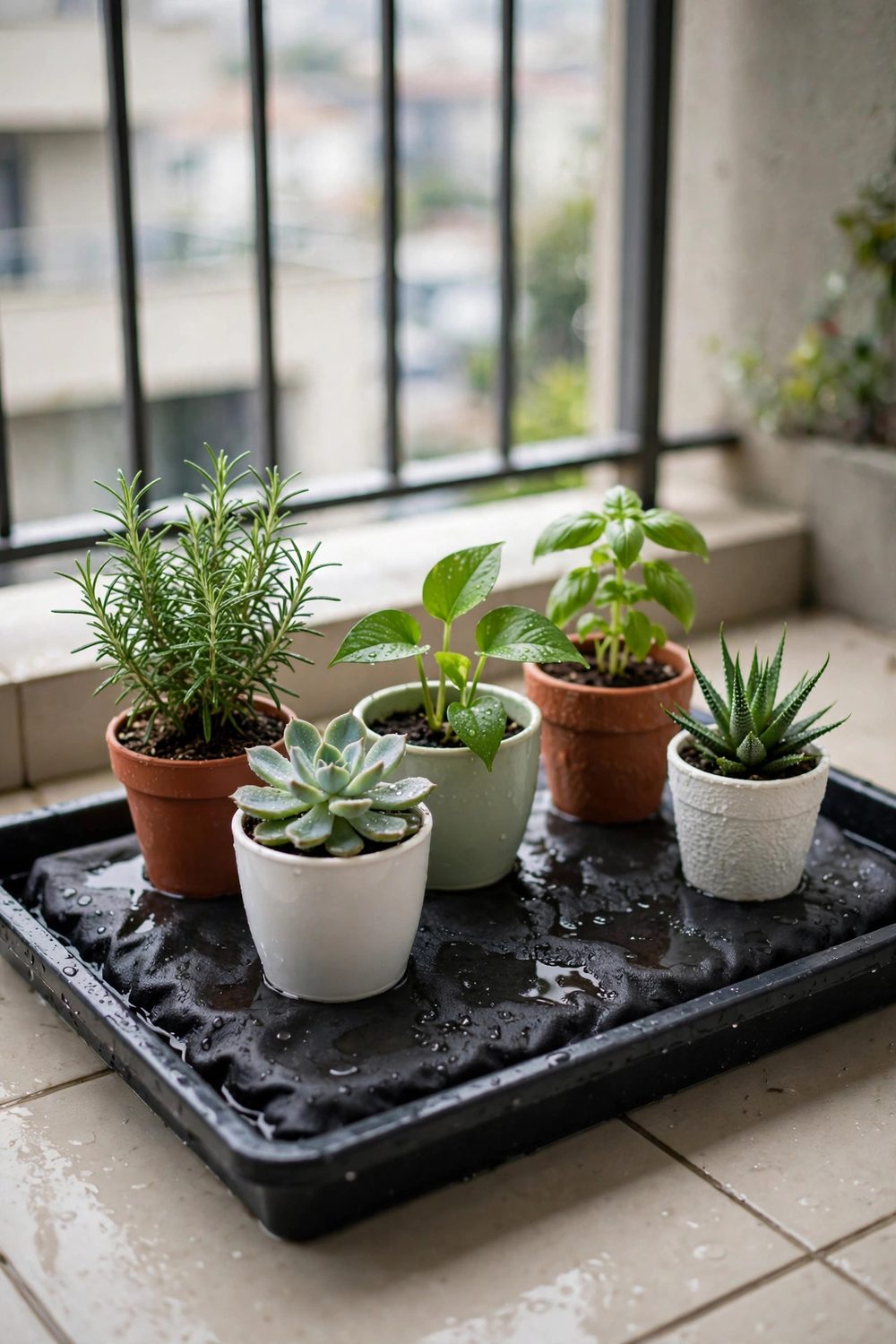
A capillary mat is a thick fabric sheet that holds water like a sponge. Lay it in a shallow tray, wet it well, and stand your pots on top of the damp mat.
Soil draws water up through the drainage holes as it dries, a little at a time. This works best for pots with flat bases that sit in full contact with the mat.
Top the tray up before you leave and keep the tray out of harsh midday sun. Small and medium pots suit this tray well, while very large pots are too heavy.
Trim any mat edge that hangs over the tray side, since a hanging edge wicks water onto the floor. The mat should end inside the tray on all four sides.
10. Cover the Soil With a Layer of Mulch
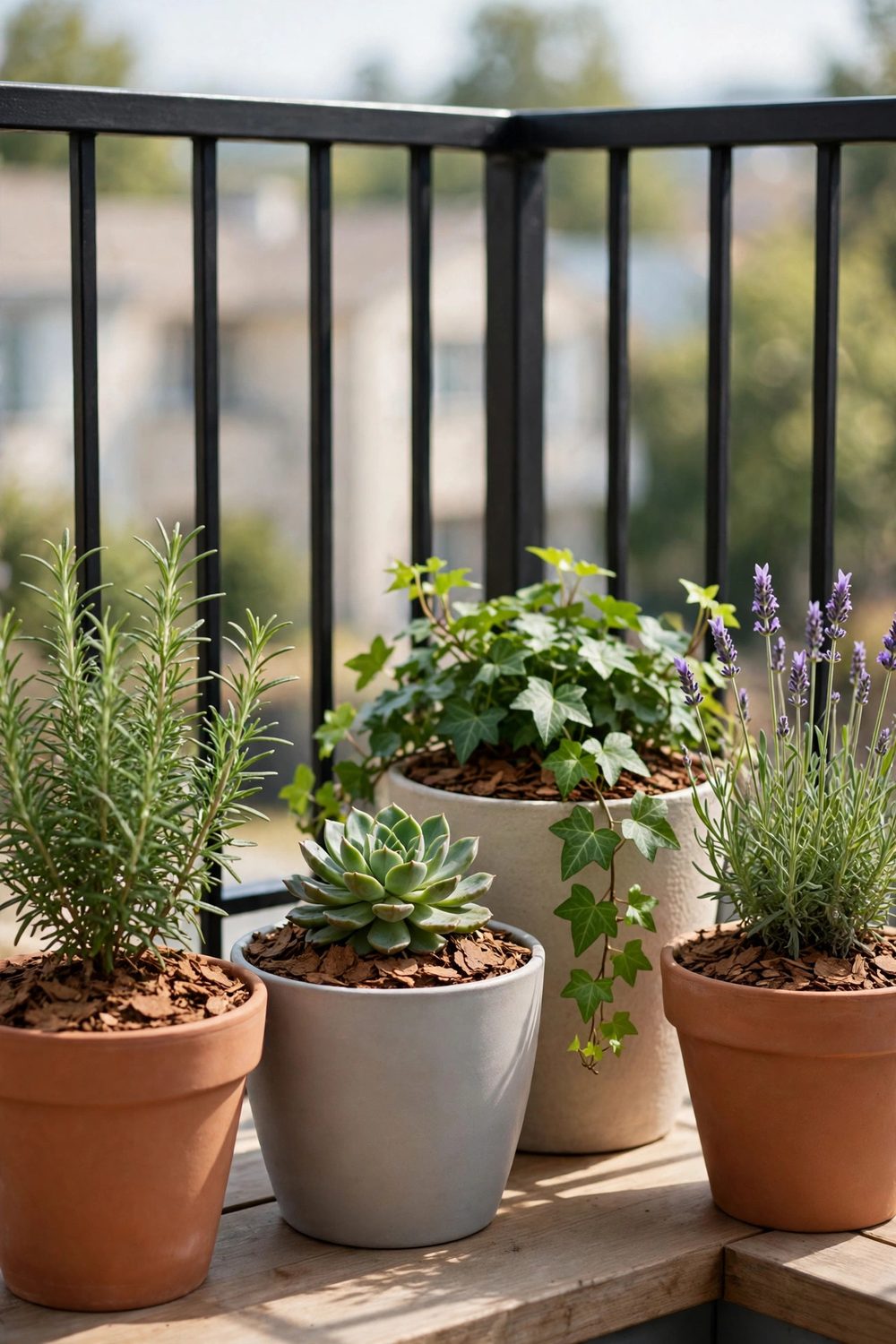
Bare soil loses water to sun and wind all day long on an open balcony. A layer of bark chips or straw over the soil shades it and slows that loss down.
Spread the layer about an inch deep, and keep it a finger width away from each stem. Water the pot well first, so the mulch locks in moisture rather than dryness.
Mulch pairs well with every other setup here, from wicks to drip kits. Brush fallen chips off the balcony floor before you go, so the space still looks cared for.
On very windy balconies, weigh loose straw down with a few bark chips laid on top. The mix stays in place and still lets water pass through at watering time.
11. Mix Water-Storing Granules Into the Soil
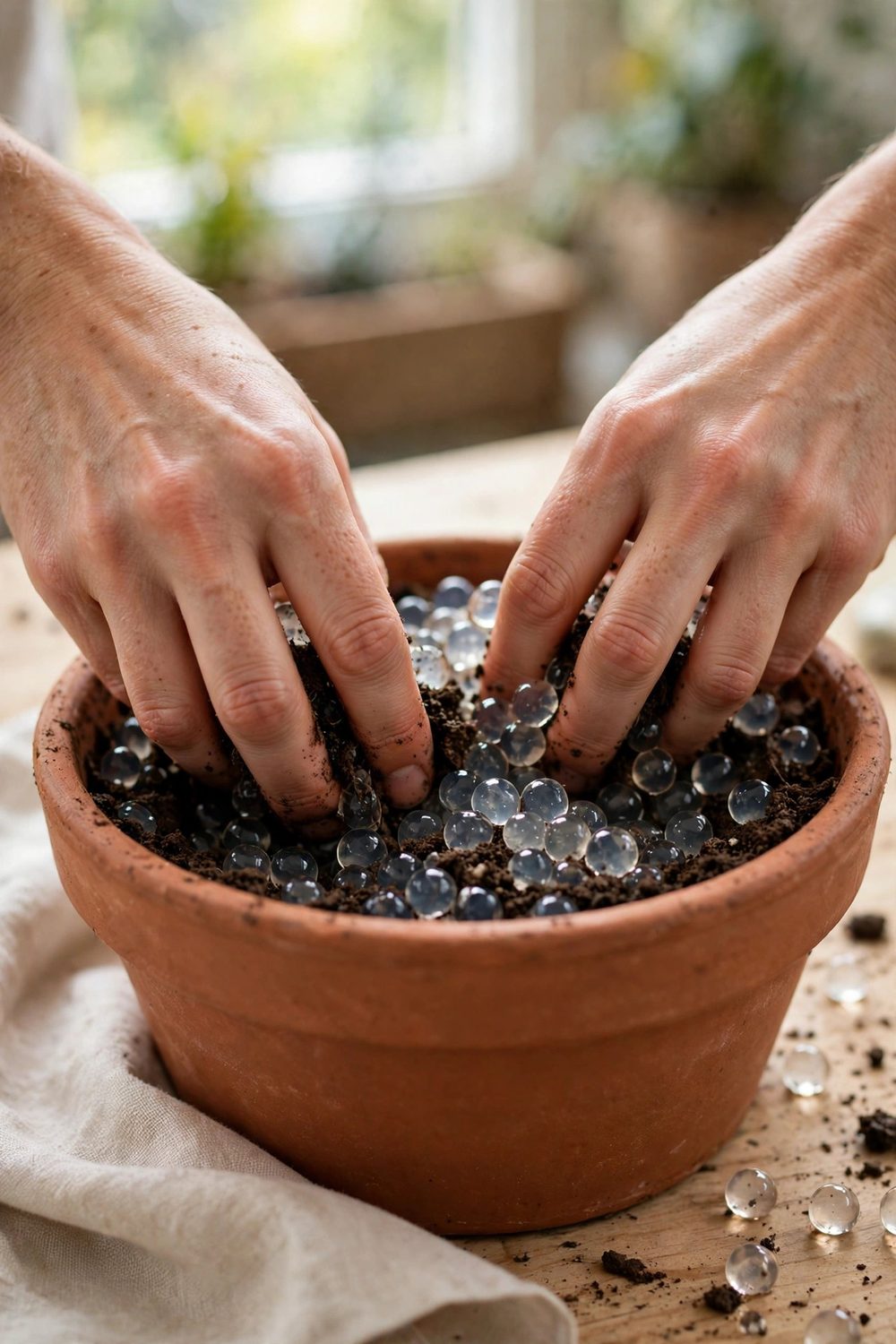
Some potting soils hold water longer when granules are mixed through them before a trip. The granules soak up water at watering time and give it back to the soil as it dries.
This job means lifting the plant out of its pot, so do it on repotting day, not travel day. Follow the packet amounts, since too many granules can push soil out of the pot.
Water the repotted plant well and let it settle for a few days before you travel. Granules help most in small pots, which dry out faster than any other size.
Keep granules for the pots that will rely on stored water alone. Pots watched by a sitter get checked by a person, so plain soil is fine for those.
12. Leave a Plant Sitter a Simple Watering Kit
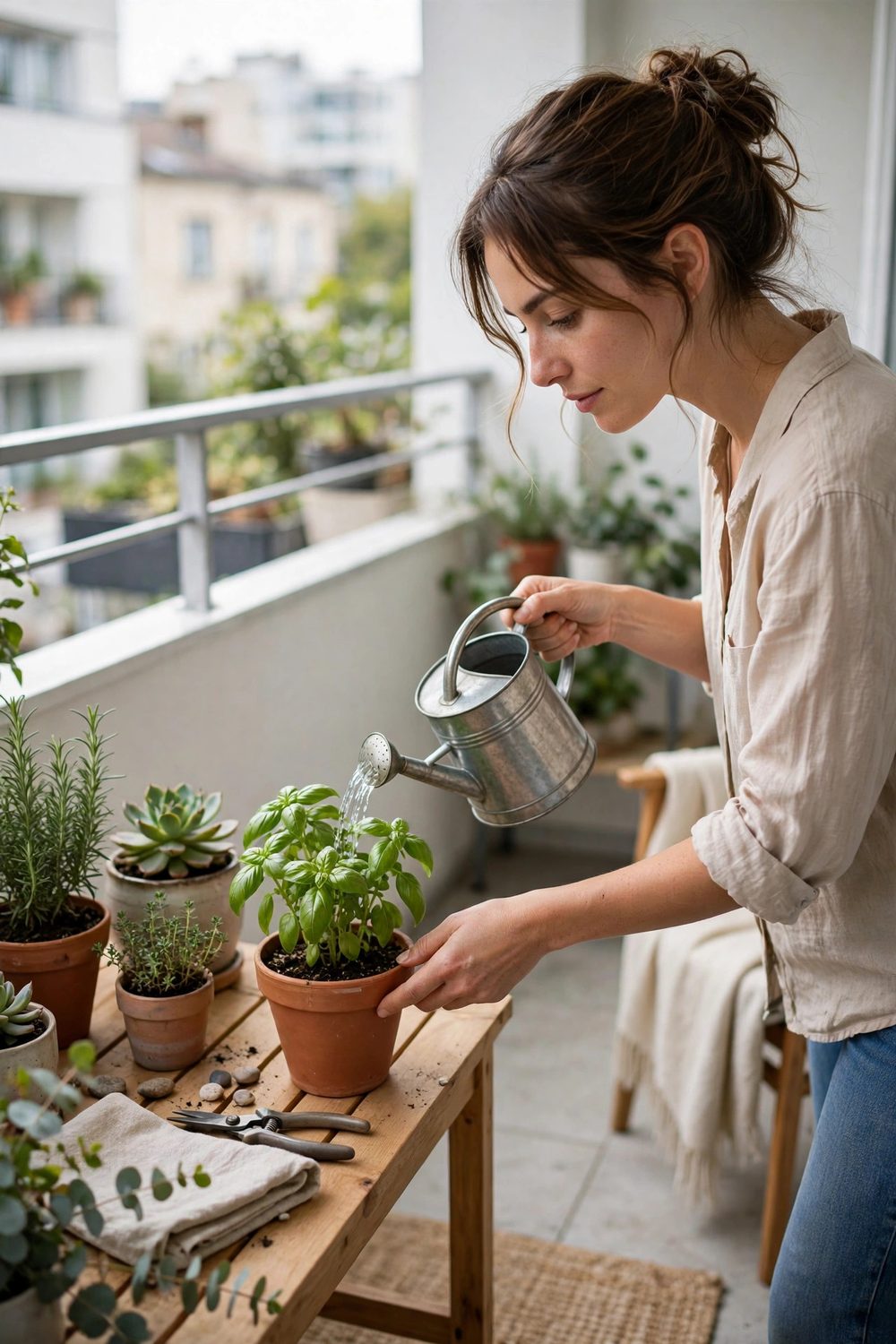
A kind neighbor is still the most flexible setup on this list. Make the job easy: one watering can, filled and waiting, plus a short card that lists each pot and its needs.
Group the pots that need water most in one spot, close to the door. Note which pots can skip a visit, so your helper is not guessing or overwatering the tough ones.
Herbs on the rail often need the most checks, as anyone with balcony herb garden ideas in pots and rails will know. Leave a small thank you note for your return day.
Put your return date and the key plan on the same card as the plant list. A photo of the pot groups on your phone helps if a question comes by text.
13. Split Pots Into Thirsty and Tough Zones
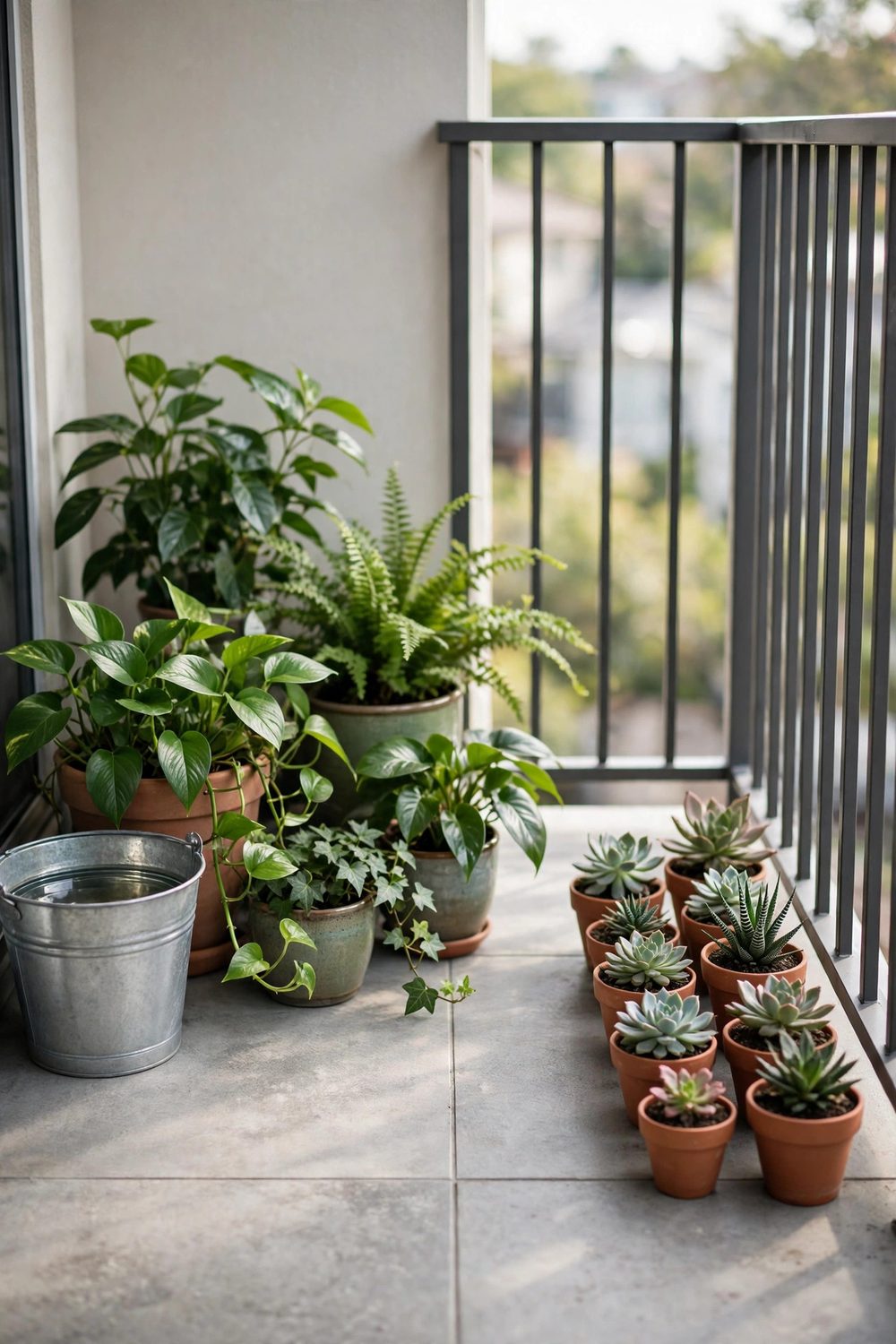
Not every plant drinks at the same speed, and one setup rarely fits them all. Move leafy, thirsty pots into one zone with the strongest watering help you have.
Put tough plants that store water in their leaves into a second zone with light help only. A bottle in a tough plant pot can give it far more water than it wants.
Label the two zones with two colors of tape on the pot rims. The split also tells a helper, at a glance, which group to check first each visit.
Take a quick photo of both zones before you lock the door. On your return, the photo shows which zone coped best and where the next trip needs more help.
14. Place Pots Where Rain Can Reach Them
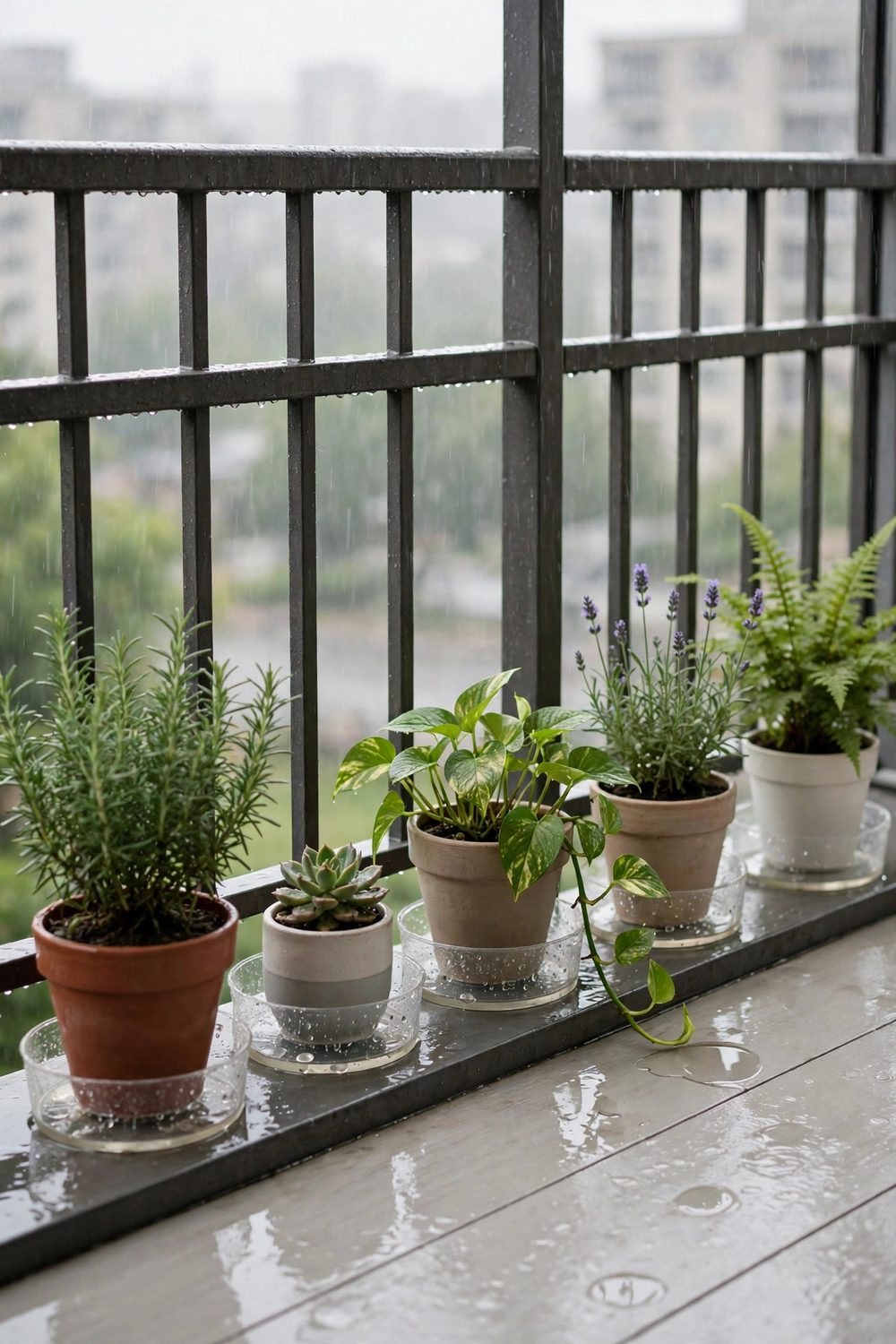
On many balconies, one strip near the rail catches rain while the wall side stays bone dry. If your trip is short and rain is likely, move key pots into that wet strip.
Check that each pot still drains freely, with no saucer holding a deep pool after rain. A pot that sits in pooled water for days can suffer as much as a dry one.
This trick costs nothing and suits the general layouts in apartment balcony ideas, where the rail strip is often the sunniest spot too. Weigh up sun against rain before you commit the thirsty pots.
Pull pots in the rain strip back a step if hard wind is on the forecast. A top heavy pot can rock in a storm and crack against the rail.
15. Test the Whole Setup Three Days Early
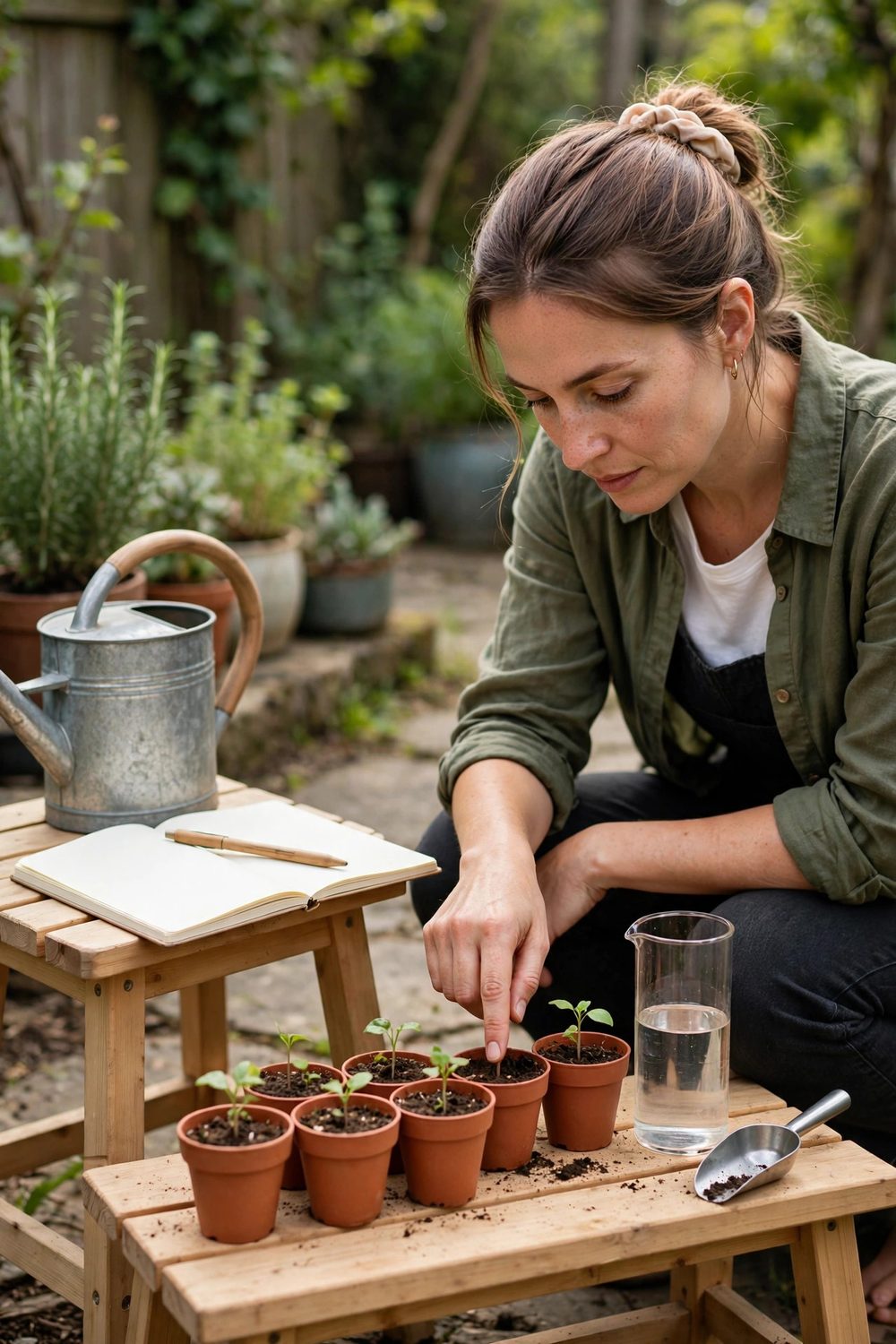
Every setup here can fail in a small, fixable way: a cord slips out, a tube kinks, a bottle empties in a day. A trial run while you are home shows you each weak point.
Set everything up three days before you leave and check the soil each morning. Swap any bottle that drains too fast and rerun any tube that drips onto the tiles.
Write down what you changed, so next trip starts from a proven plan. Our spring balcony reset ideas pair well with this habit at the start of the season.
Once the trial passes, leave the setup exactly as tested until you come home. Last minute upgrades on travel day are how tubes end up kinked and cords end up short.
Pick one setup, test it early, and let the soil tell you if the flow is right. A dry pot during the trial is useful news, since you are still home to fix it.
Once you know how to water balcony plants while on vacation, packing gets calmer and the return home feels better. The balcony greets you green instead of crisp and drooping.
Save this to your balcony board for later, and give every pot a slow drink the day you get back.


