

15 Spring Balcony Reset Ideas: Cleaning, Planting, Seating
Winter leaves a balcony dusty, faded, and hard to use, even when the space itself is small and simple.
This guide fixes that in order, with spring balcony reset ideas cleaning planting seating steps you can finish one by one.
You clean first, so you can see the real floor space and the true state of each chair and pot.
Then you plant, group, and seat the space with care. If you want a wider refresh later, our small balcony makeover ideas show the next layer.
Work in daylight if you can, so dust, cracks, and faded fabric show up clearly.
Set a timer for each stage if time is tight. Small finished stages beat one long, half-done day.
Keep a trash bag and a wash bucket at the door from the start, so sorting stays quick.
By the end, each pot and chair should have a clear spot, a clear job, and room around it.
1. Empty Everything Off the Balcony First
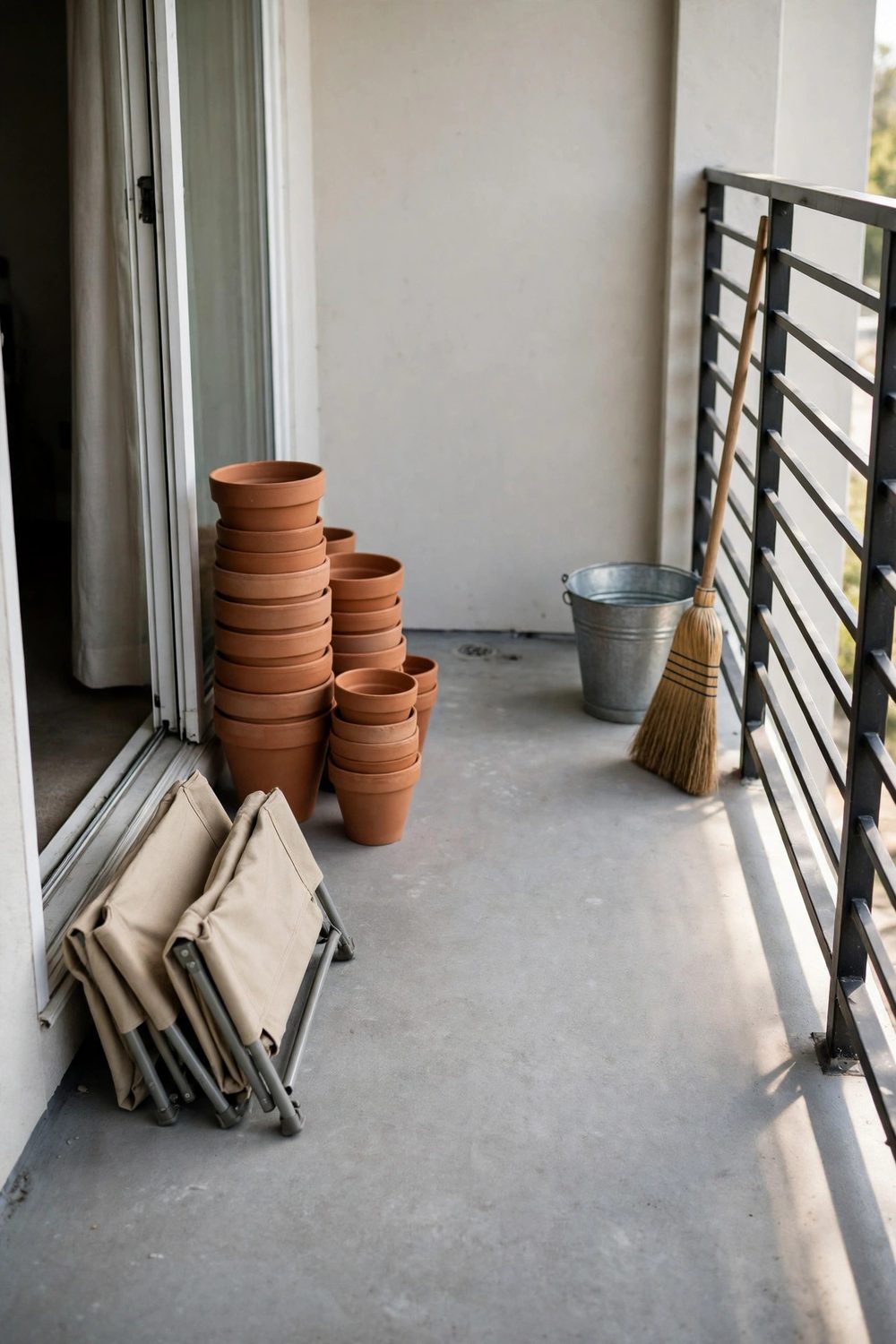
Start by taking every chair, pot, mat, and loose item inside or into one hallway corner.
An empty floor shows stains, cracks, and the drain corner that stayed hidden all winter.
It also stops the common trap of cleaning around clutter and calling the job done.
Stack folded chairs by the door and line empty pots in a row for sorting later.
Keep, fix, wash, and toss piles form fast when you can see each item.
Take a photo of the bare space. It helps you plan seating before anything goes back.
Sort as you lift, not after. A chair you would not sit on today will not feel better in May.
Leave the floor bare for the full clean. Any item that returns early just gets dusty again.
2. Sweep, Then Wash the Floor and Railing
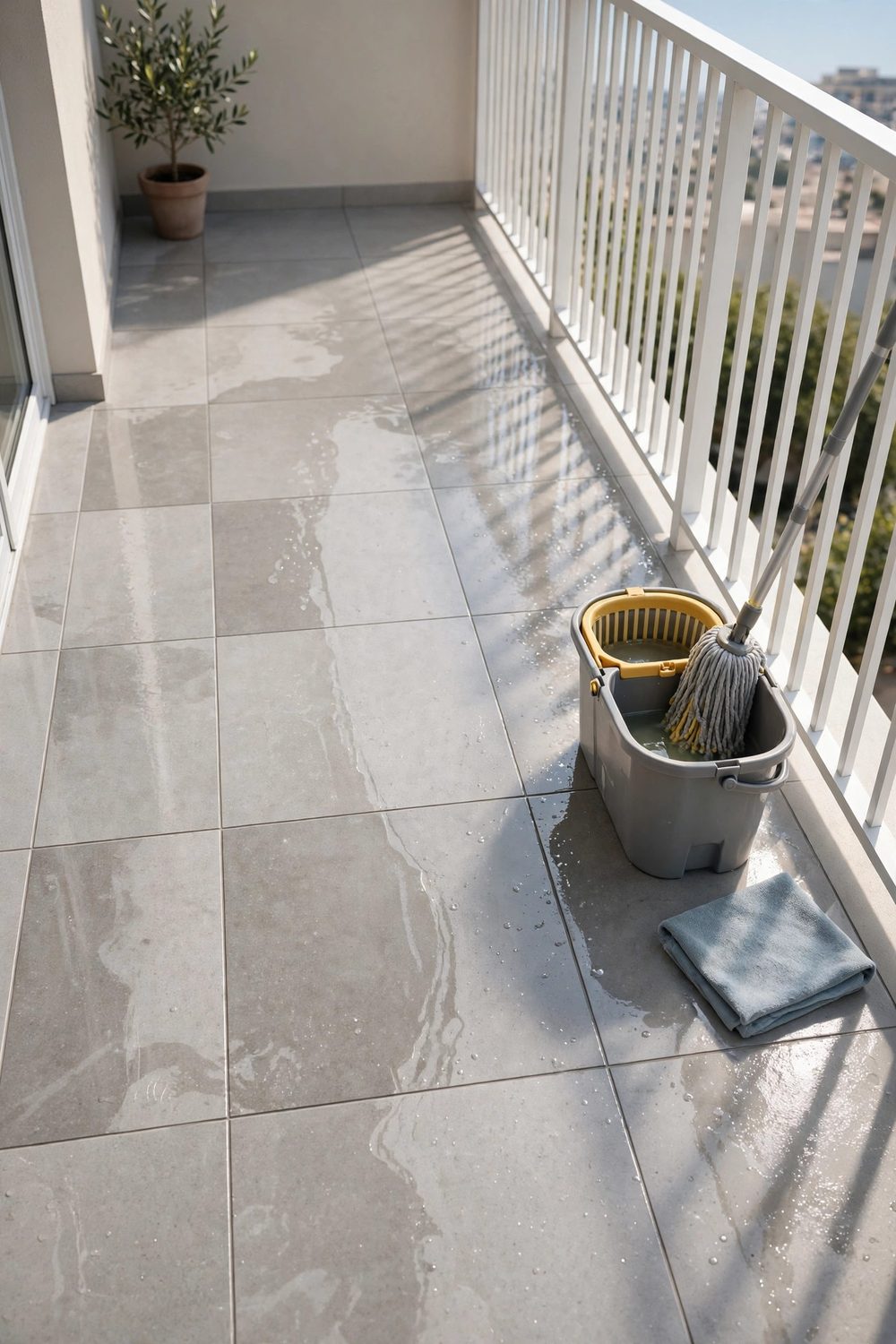
Sweep the full floor first, working from the far corner back toward the door.
Loose grit under a mop just spreads, so get the dry dirt up before any water touches the tiles.
Wash the floor with warm water and a mild cleaner that suits your surface.
Wipe the railing top rail and bars, where black dust builds up over winter.
Rinse with clean water and let the floor dry in the sun before you judge the color.
On my last reset, the tiles looked two shades lighter once the rinse water ran clear.
Work the corners with an old brush, since grit collects where the broom cannot reach well.
Let the railing dry fully before pots go back, or wet bars mark the pot bases with rings.
3. Check Screws, Wobbles, and the Drain Corner
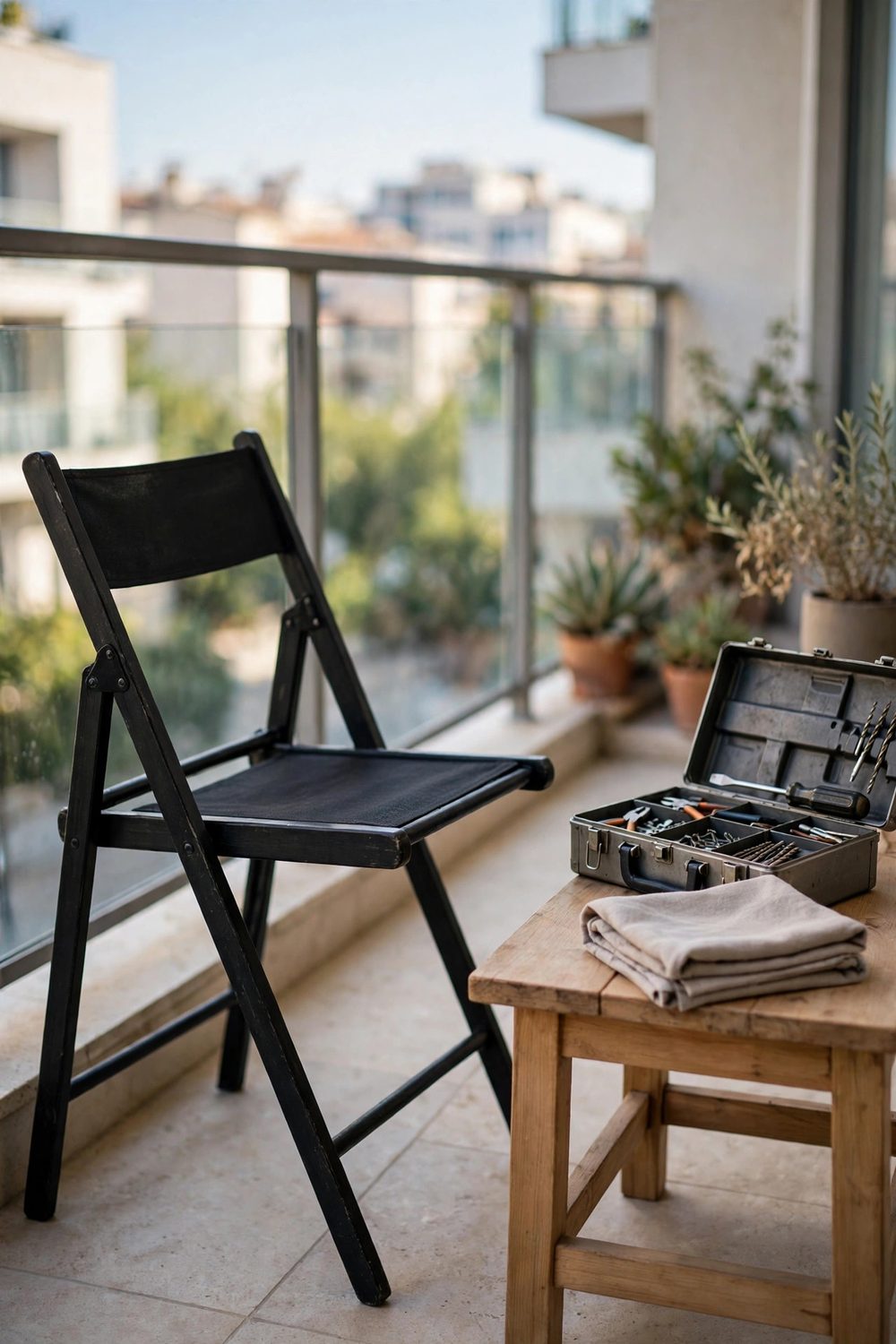
A wobbly chair feels small in March and ruins a seat by June, so check each piece now.
Tighten loose screws on chairs and tables, and test each leg on flat floor.
Look at the drain corner and clear any leaves or grit that block water flow.
Check pot feet and saucers too, since cracked ones leak dirty water across clean tiles.
Set aside anything bent, split, or unsafe. A short fix list beats a mid-season swap.
Keep the tools in one small box by the door until every check is done.
Sit hard in each chair and shift your weight. A chair that rocks on tile needs a fix, not a rug.
Note small rust spots on metal frames and dry them well. Early care keeps them from spreading.
4. Wash Cushions and Throws Before They Go Back
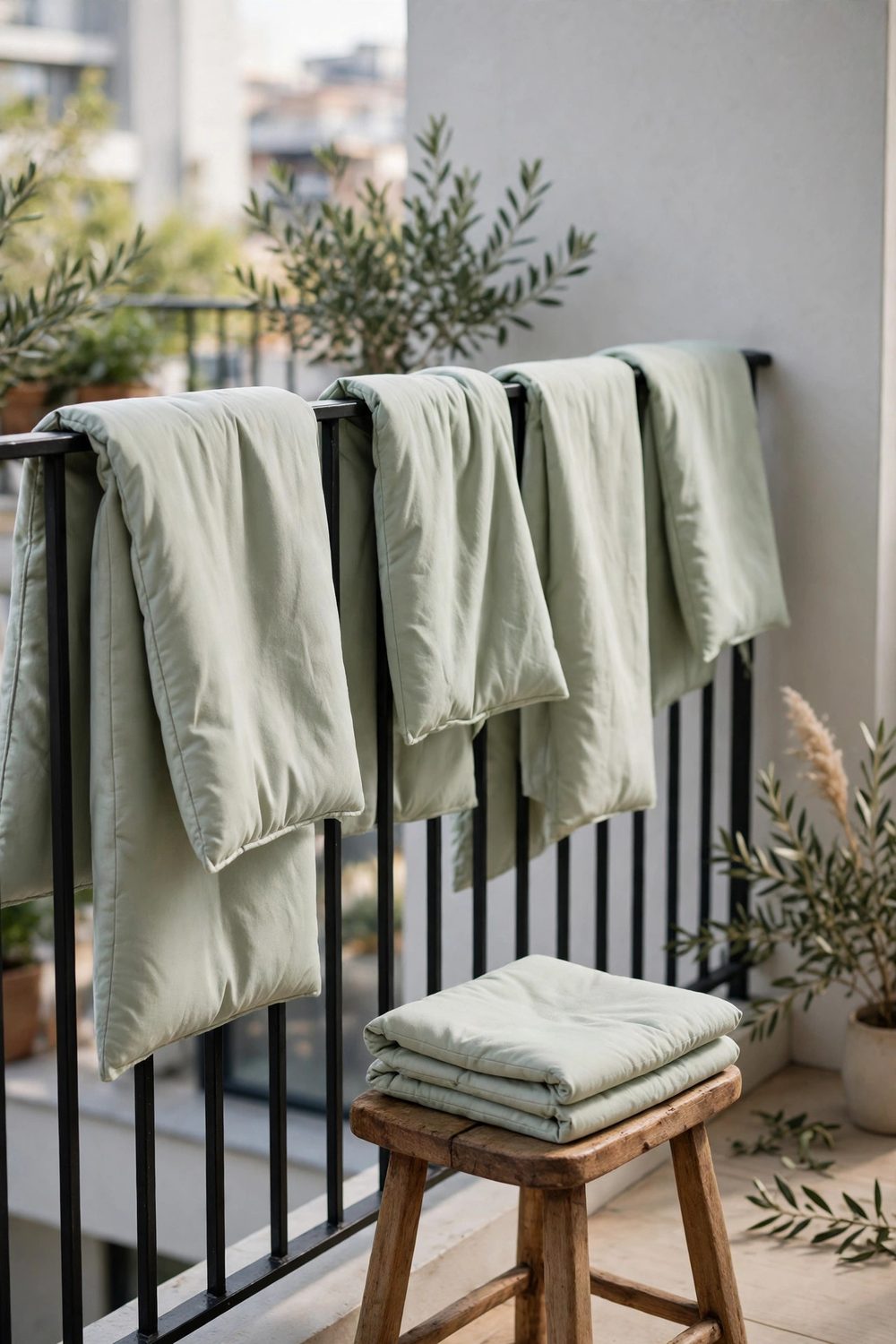
Cushion covers hold winter damp and dust, even when they look fine at a glance.
Shake each one outside first, then wash the covers if the care labels allow it.
Sponge foam pads with mild soapy water and rinse them with a light hand.
Dry everything flat in full sun, flipping once so both sides air out well.
A cushion that stays damp inside will smell within a week, so do not rush this step.
Fold one clean throw for cool spring nights and store the rest inside for now.
Pillow inserts that lost their shape can rest in sun for an hour, which helps them puff back up.
Store spare covers in a dry indoor box, so a quick swap is ready after spring rain.
5. Scrub Pots and Start With Fresh Soil
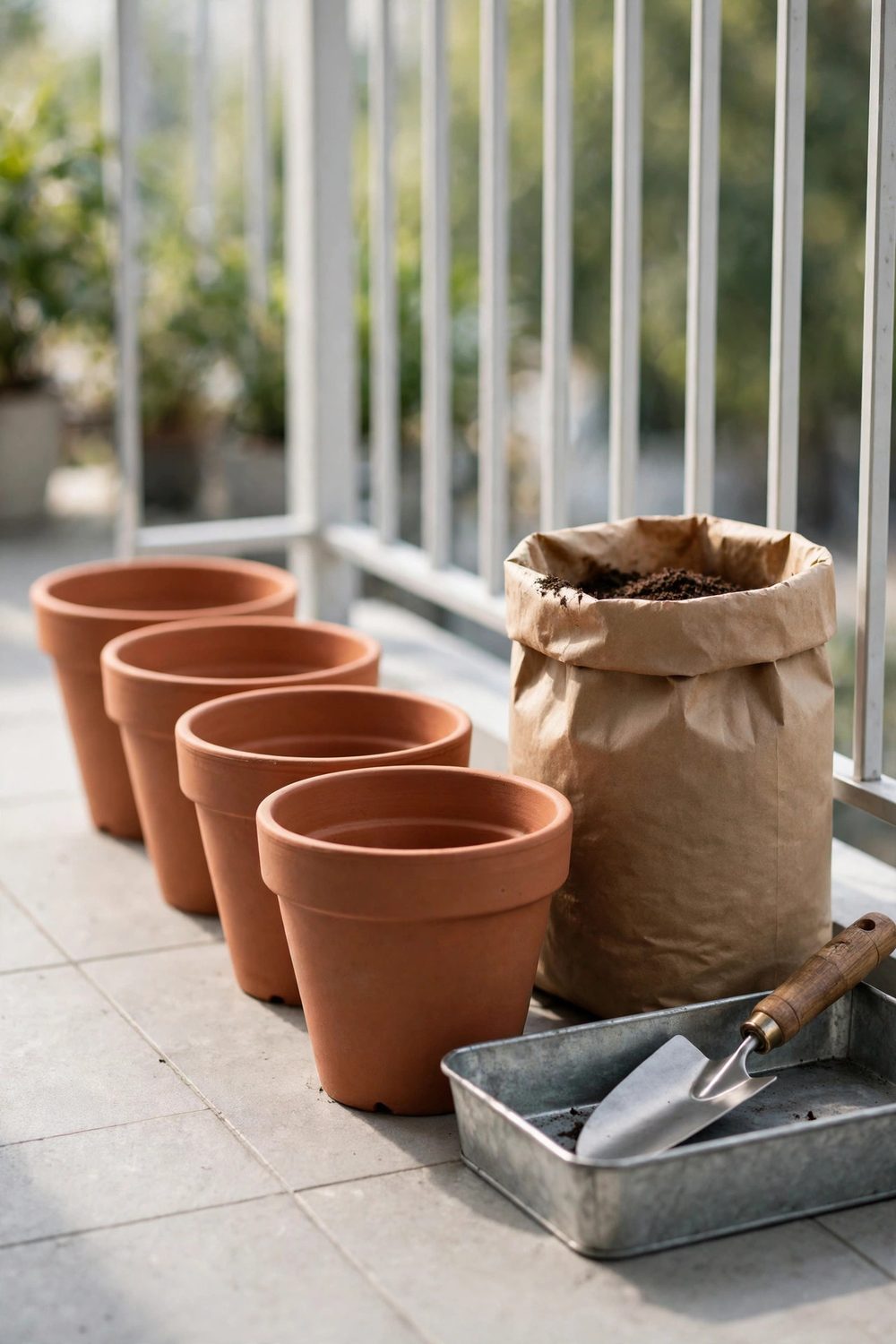
Old pots carry white crust, old roots, and soil that has lost its shape and feed.
Scrub each pot inside and out, rinse it, and let it dry before you refill it.
Tip out spent soil from pots that held dead plants, and save only clean, loose mix.
Fresh potting mix gives new roots air and water in the right balance.
Line your clean pots in size order on the dry floor. Filling them is faster in a row.
Check each pot has a clear drain hole. A blocked hole is the top cause of soggy roots.
Group pots by plant need as you fill them: thirsty herbs together, dry-soil plants together.
Leave a finger of space below each rim, so water soaks in rather than running off the top.
6. Map the Sun Before You Choose Plants
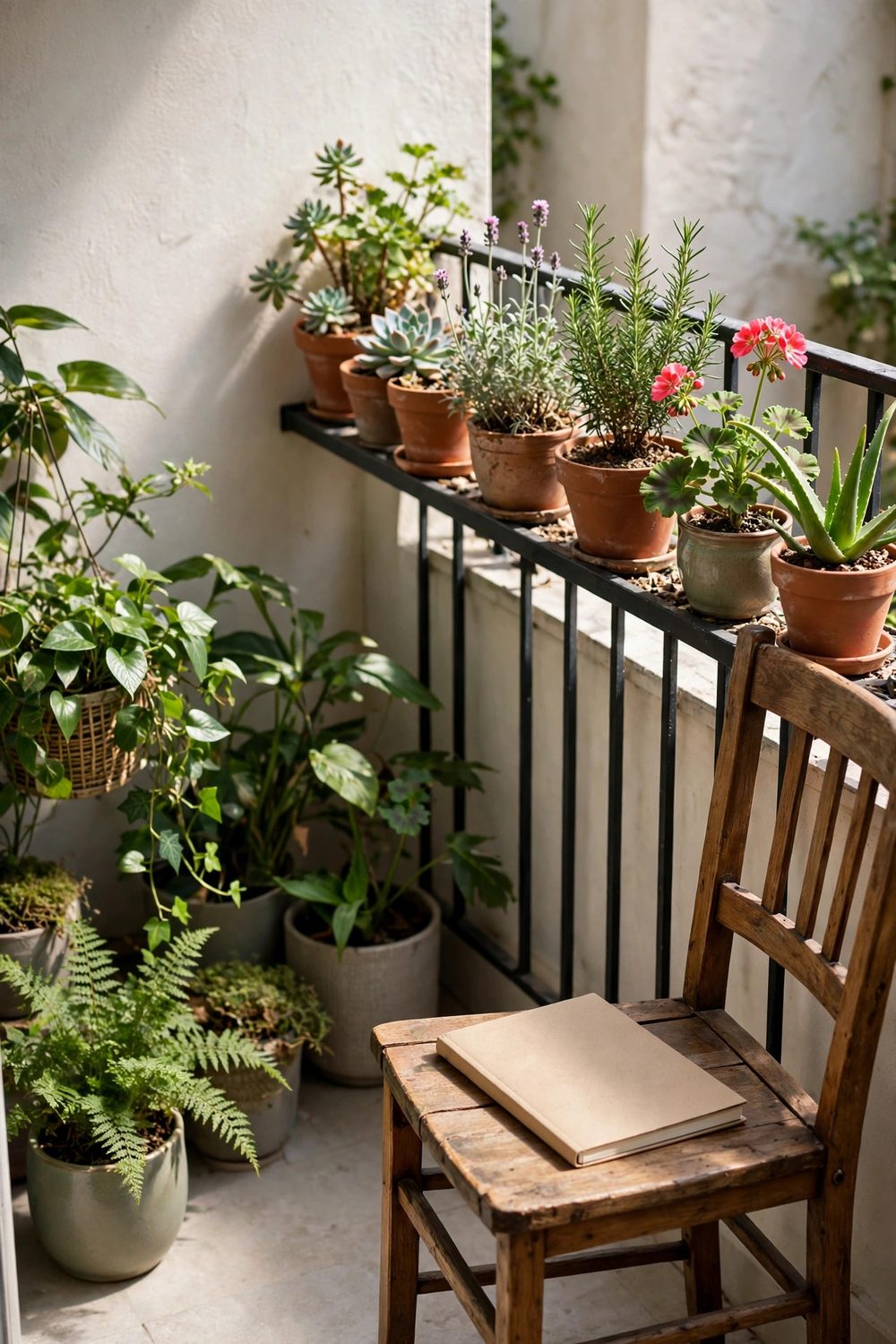
Sun on a spring balcony shifts fast, and a pot in full light now can sit in shade by May.
Watch the floor at three times in one day: morning, noon, and late afternoon.
Mark the bright strip and the cool strip with two spare pots or a bit of tape.
Put sun lovers in the bright strip and leafy plants in the cool strip.
For more layout help, see our small balcony garden ideas before you buy.
New to plants? Our guide to tiny balcony garden ideas for beginners keeps first picks simple and hard to kill.
Cloudy days can fool this test, so repeat it on the next bright day.
Note which wall stays cool all day. That spot suits ferns and leafy herbs in warm weeks.
7. Plant Spring Color in Groups of Three
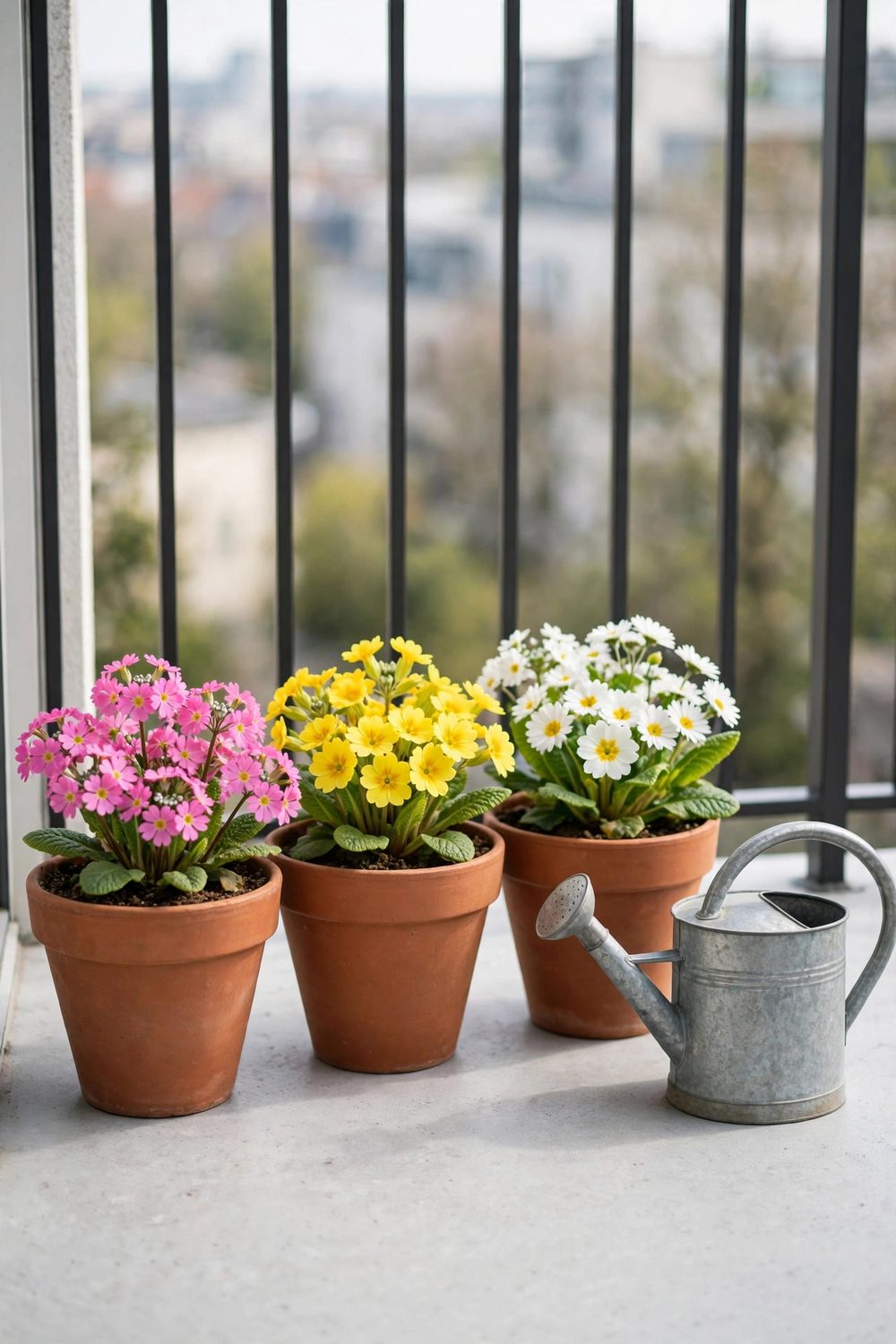
Single lone pots look lost on a clean balcony, so plant color in groups of three.
Use one tall pot, one mid pot, and one low pot in each group for a calm look.
Pick spring flowers in two colors, plus green leaves, so the group reads as one set.
Set the groups at the railing ends and by the door, leaving the middle floor clear.
Water each pot well right after planting, until water runs from the drain hole.
Step inside and look out. If a group hides the door swing, shift it six inches sideways.
Tuck one pot of green leaves in each color group, so the shades rest the eye.
Feed and water on a set day each week. New plants settle faster with a steady routine.
8. Start Herbs in One Rail Planter
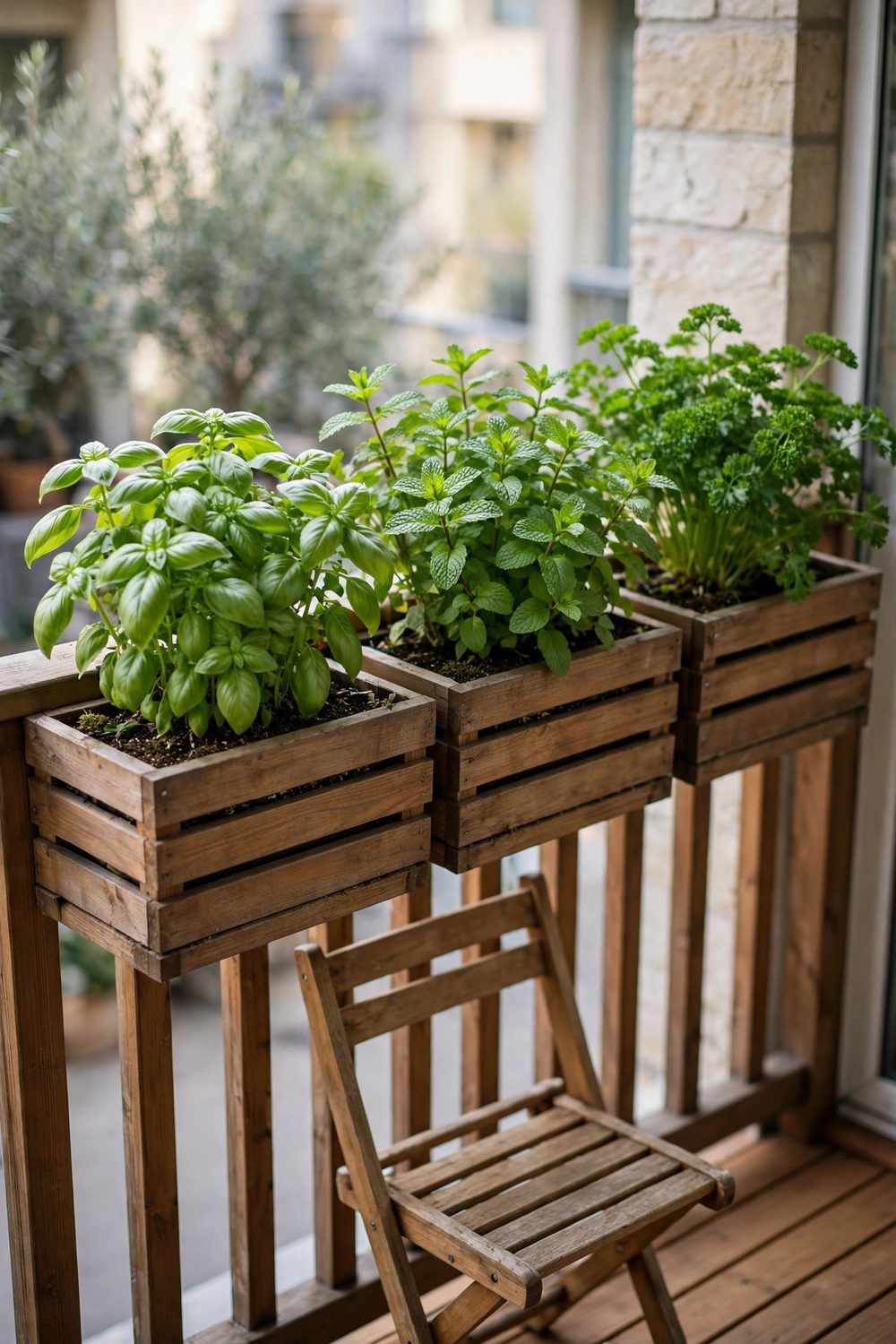
One rail planter of herbs earns its space every week, unlike a row of tiny pots.
Choose three or four herbs you cook with often, and give each one room to spread.
Keep mint in its own pot beside the planter, since its roots push out other plants.
Fit the planter so it sits firm and level, with no wobble when you brush past it.
Snip little and often once leaves grow, which keeps the plants bushy.
A small pair of kitchen scissors by the door makes quick herb cuts part of dinner prep.
Wash herb leaves with a light spray before you pick them, since rail planters catch street dust.
If one herb grows much faster, give it the end spot, where it can spill without crowding others.
9. Lift Plants Up a Slim Tiered Stand
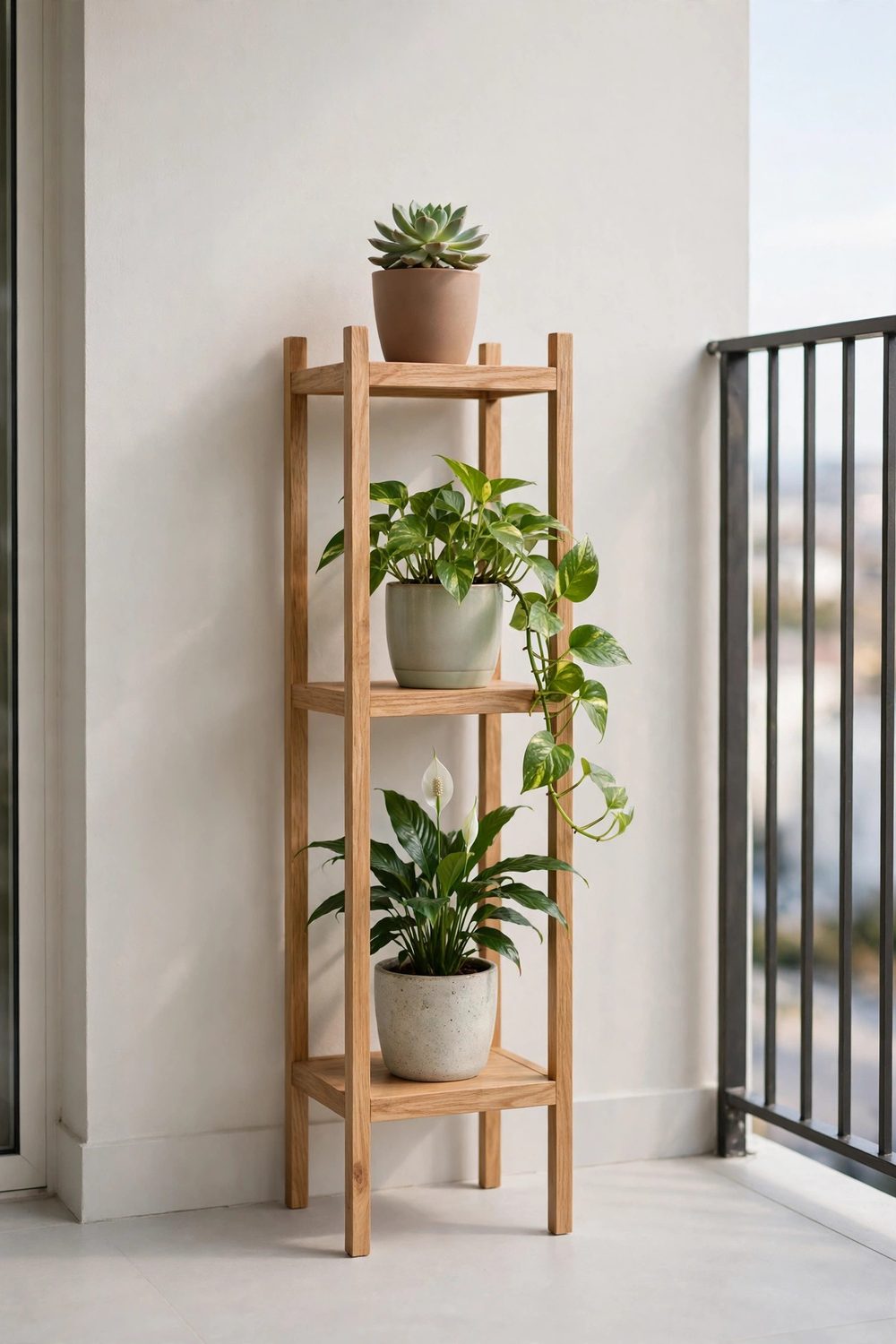
Floor pots eat the space your feet and chairs need, so lift the small ones up.
A slim tiered stand against the wall holds four to six pots in one pot of floor space.
Put the plants that need most light on the top tier and leafy ones lower down.
Leave the stand a hand width from the wall so air can move behind the leaves.
Check the stand stands firm on your floor, since uneven tiles can make tall stands rock.
Grouping pots on one stand makes watering a short stop, not a tour of the floor.
Heavy pots belong on the lowest tier, both for balance and for easy lifting on water days.
Turn each pot a quarter turn each week, so growth stays even on all sides.
10. Set Two Chairs Around the Door Swing
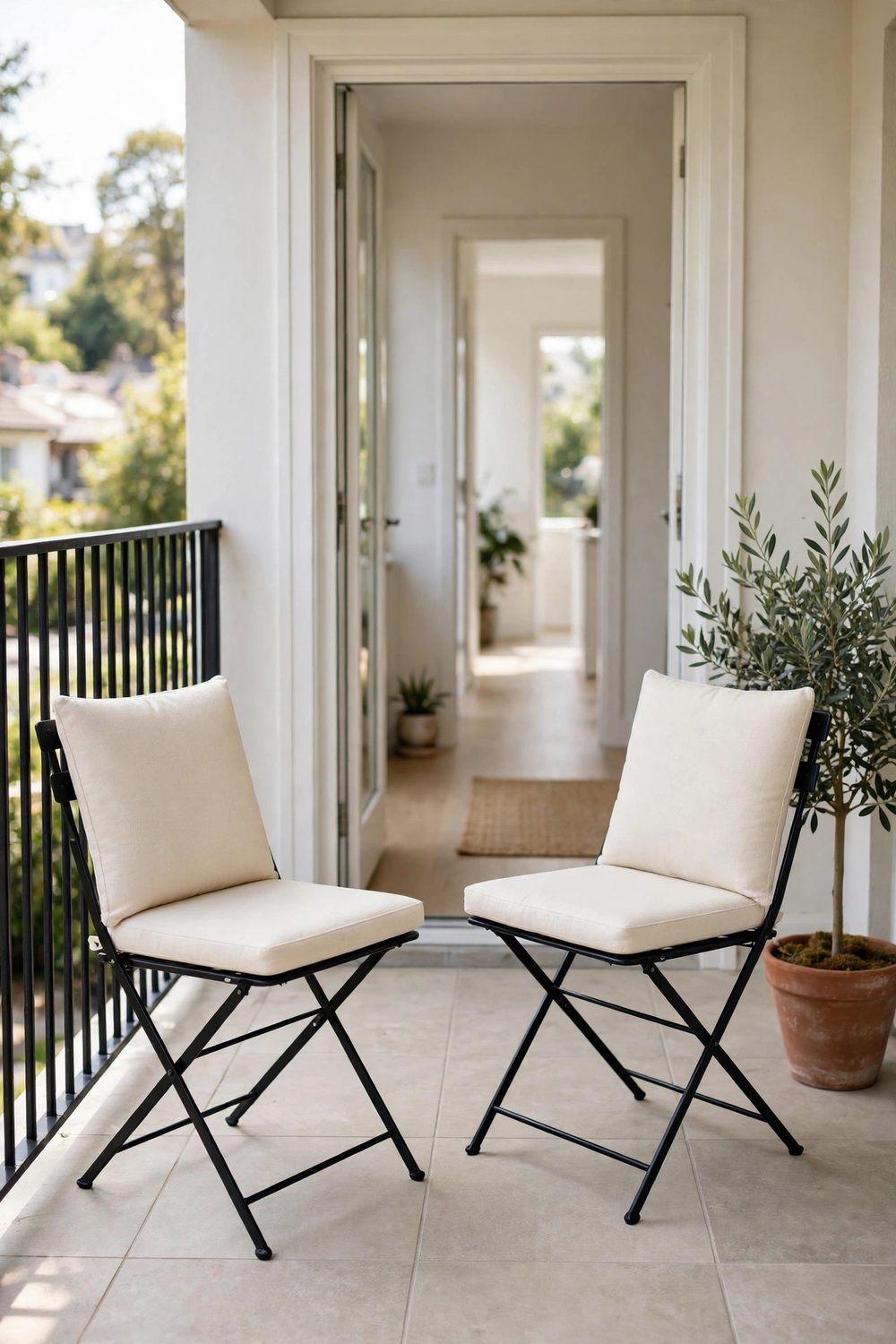
Seating fails most often at the door, where a chair leg blocks the swing every single day.
Open and close the door with the chairs in place before you call the layout done.
Two compact folding chairs beat one wide seat on most small balconies.
Angle both chairs toward the view, with a clear path from door to railing.
For more fit checks, browse our small balcony seating ideas before you shop.
Sit in each chair with a mug in hand. If your elbow hits the wall, turn the chair slightly.
Measure the narrowest gap with chairs in place. A bag or watering can should still pass with ease.
Light chairs you can fold in seconds make storm storage and floor sweeps far more likely to happen.
11. Add a Small Table That Folds or Tucks Away
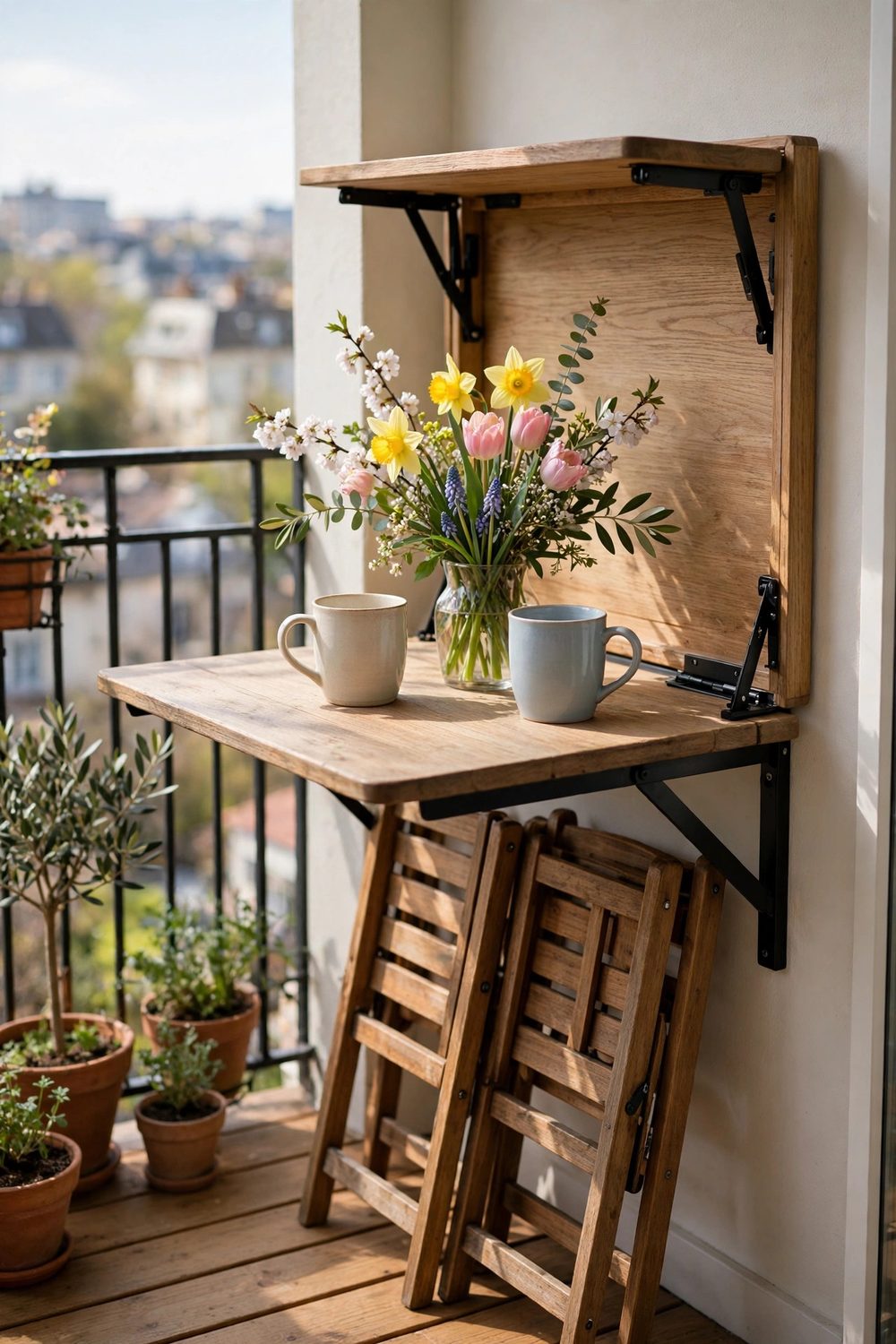
A table earns its spot if it holds two mugs and folds flat when you need floor space.
A fold-down wall table or a slim side table both work in a tight corner.
Test the height against your chairs. Your mug should land without a stretch or a stoop.
Keep the table top clear by habit, with one small vase or a lantern at night.
On narrow balconies, a railing shelf can serve as the table and save the floor.
Wipe the top after each use. Spring pollen coats outdoor tables fast.
A table edge that catches sleeves or hips is too big, no matter how good it looks.
Keep one clear corner of the top for a book or plate. A full table stops being useful fast.
12. Roll Out a Flat Outdoor Rug Last
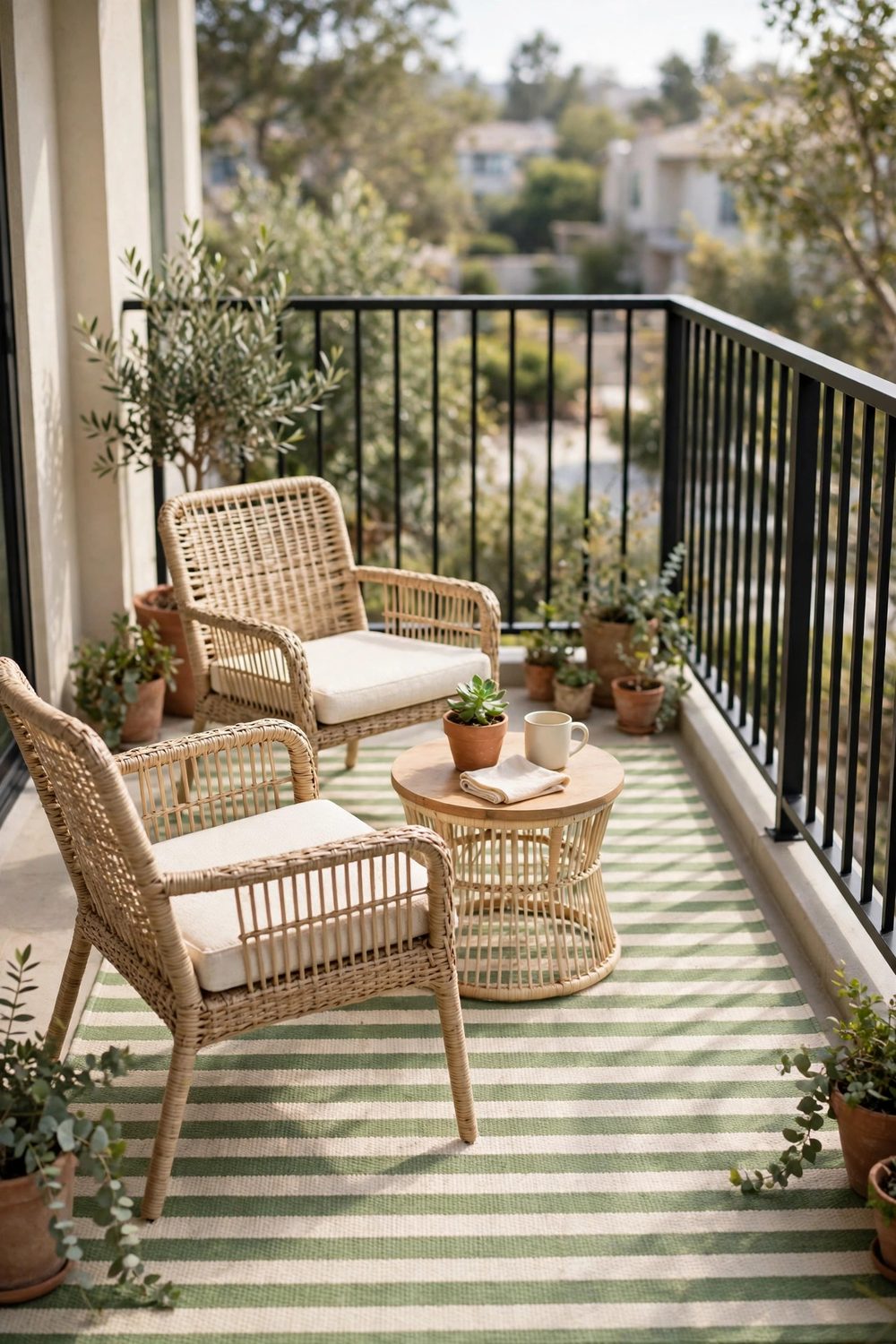
A rug goes down last, once the floor is clean and the seating plan is set.
Pick a flat weave made for outdoor use, sized so chair legs sit fully on it.
A rug that ends under two chair legs will curl and trip feet within days.
Leave a bare border of floor at the edges so rain can dry and dirt stays visible.
Soft green, warm sand, or a simple stripe keeps spring color calm under bright pots.
Shake the rug weekly and lift it after heavy rain so the floor below dries fully.
Vacuum or shake out grit under the rug weekly, since trapped grit wears both rug and floor.
If corners curl, weight them with a pot for a day rather than taping them to wet tile.
13. Hang Soft Light for Longer Spring Evenings
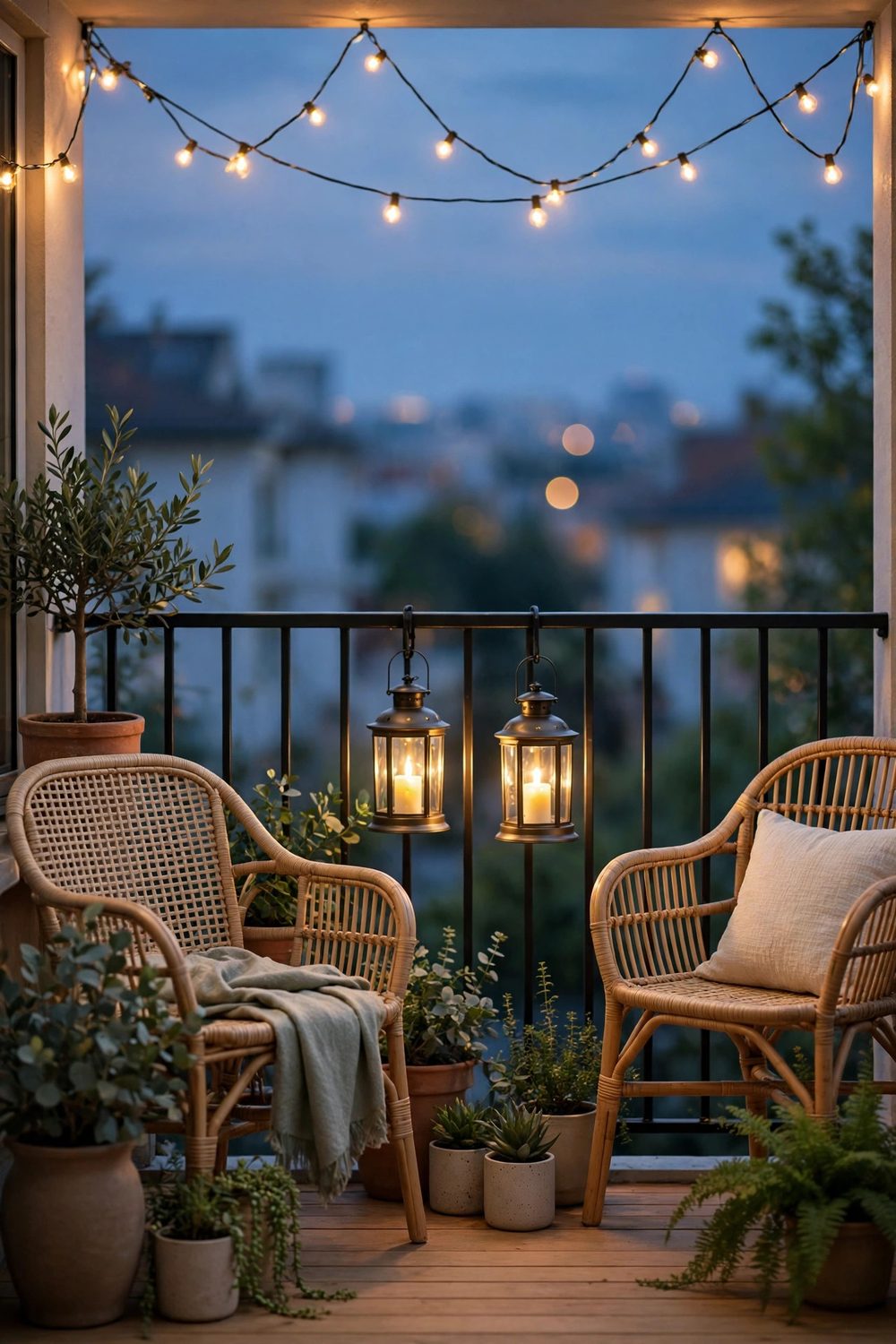
Spring days end fast, and one soft light source keeps the balcony in use after dinner.
Solar lanterns on the railing or a short string of outdoor lights both work well.
Keep cords off the floor and away from the door path, where feet catch them in the dark.
Warm light flatters plants and skin, while harsh light makes a small space feel stark.
Set one lantern on the table rather than lighting each corner. Pools of light feel calm.
Charge solar lights in the sun strip you mapped, even if they hang in shade.
Test the light from your chair, not the door. Glare at eye level spoils the calm you want.
Bring solar lanterns inside for a full charge once, early in the season, to start them strong.
14. Add Light Shade for Bright Midday Sun
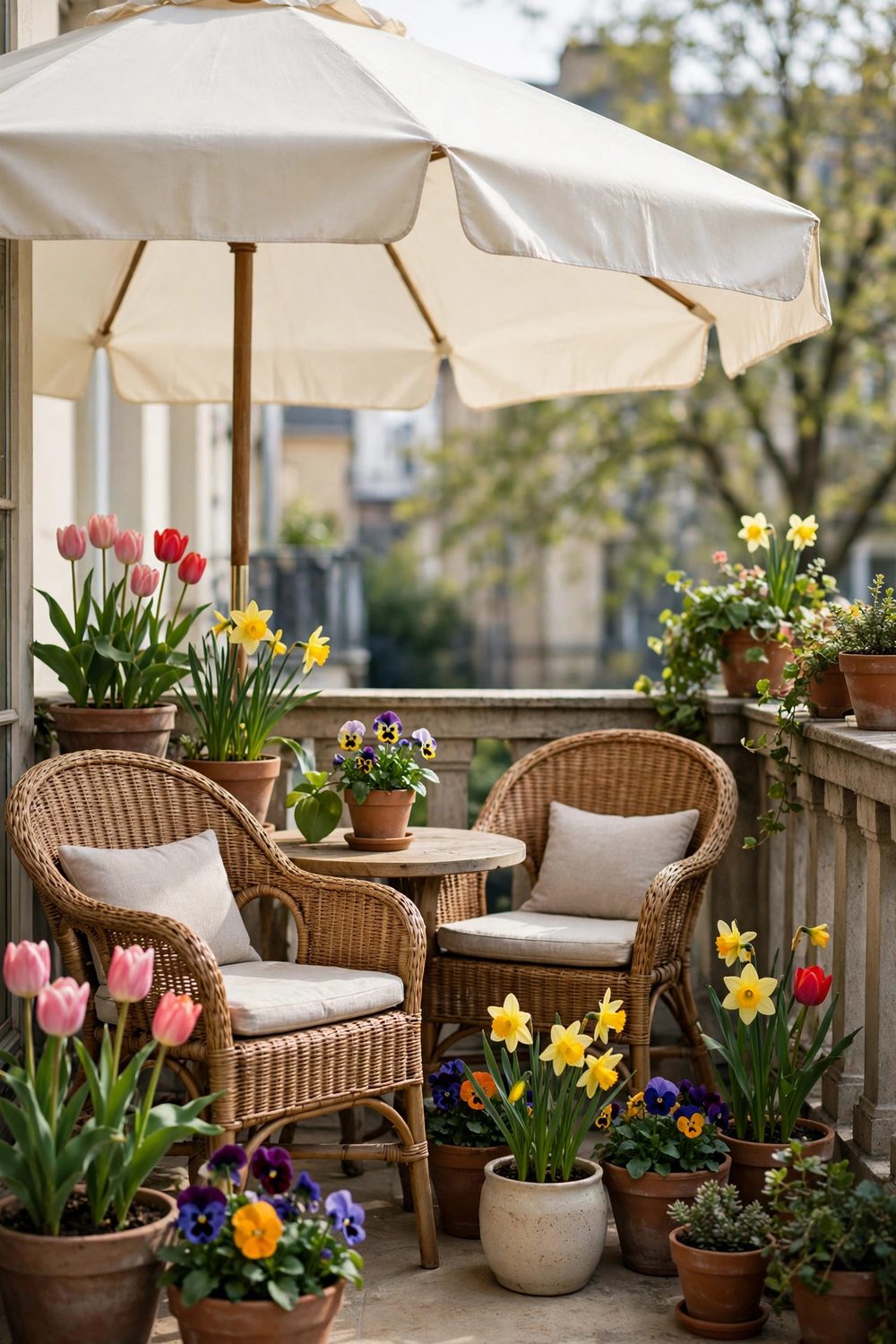
Spring sun can scorch new leaves and heat a small seat by noon on bright days.
A compact umbrella, a shade cloth panel, or a tall plant in the hot corner all help.
Test the shade at midday, not in the morning, since that is when the heat builds.
Keep shade gear light and easy to fold, so you can store it on dull days.
When heat grows, our summer balcony ideas for hot south-facing heat take this step further.
Move new seedlings out of harsh noon sun for their first week, then shift them back slowly.
Angle shade so seats stay cool but flower pots still catch some light at the edges.
On windy days, close and tie the umbrella first. Spring gusts arrive faster than forecasts suggest.
15. Keep a Tiny Care Kit by the Door
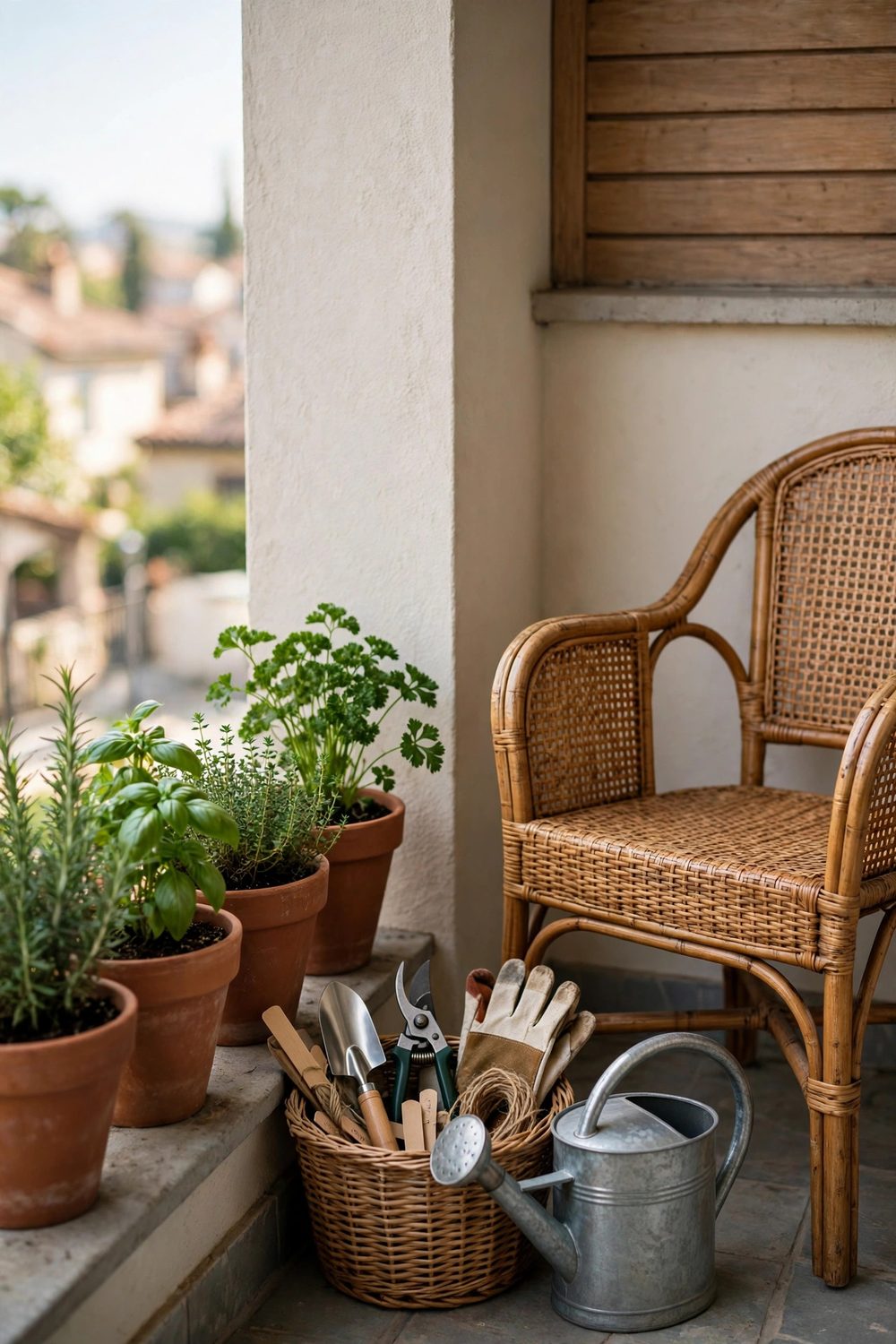
A reset lasts when care takes minutes, and minutes happen when tools live within reach.
Keep one small basket by the door with a watering can, scissors, and a soft cloth.
Sweep fallen leaves twice a week before they stain the tiles or block the drain.
Check soil with a fingertip before you water. Wet soil needs no more water that day.
Deadhead spent flowers during your morning coffee, a few at a time, so pots keep blooming.
Once a month, repeat the quick screw and wobble check from the start of this list.
Add plant ties and spare labels to the basket, so small jobs get done the moment you spot them.
End each week with a two-minute look from the door. Small messes caught early stay small.
A spring reset works best in order: clean floor, sound chairs, fresh pots, then seating that fits the door swing.
Use these spring balcony reset ideas cleaning planting seating steps once now, and the small weekly checks will hold the result.
Save this list to your balcony board for later, and start with the empty-floor step this weekend.
Start small if the list feels long. The empty floor, the wash, and one planted group already change daily use.
Then add seating and light over the next week, one piece at a time, and check the fit each time.


