

15 Coastal Balcony Ideas to Bring Beach House Calm to Any Home
There’s a reason coastal design never really goes out of style. Even if your balcony overlooks a parking lot instead of the Pacific, the right mix of whitewashed textures, breezy fabrics, and salt-worn accents can trick your senses into believing the ocean is just a few steps away. Coastal balcony design isn’t about literally living by the water — it’s about recreating its feeling: light, airy, sun-bleached, and unhurried.
The best coastal balconies borrow from beach houses, seaside cottages, and Mediterranean terraces alike, blending natural materials with a relaxed color palette of sandy neutrals, sea glass blues, and driftwood grays. Below are 15 coastal balcony ideas — from small apartment nooks to sprawling oceanfront terraces — to help you design an outdoor space that feels like a permanent vacation.
1. Whitewashed Wood and Weathered Textures
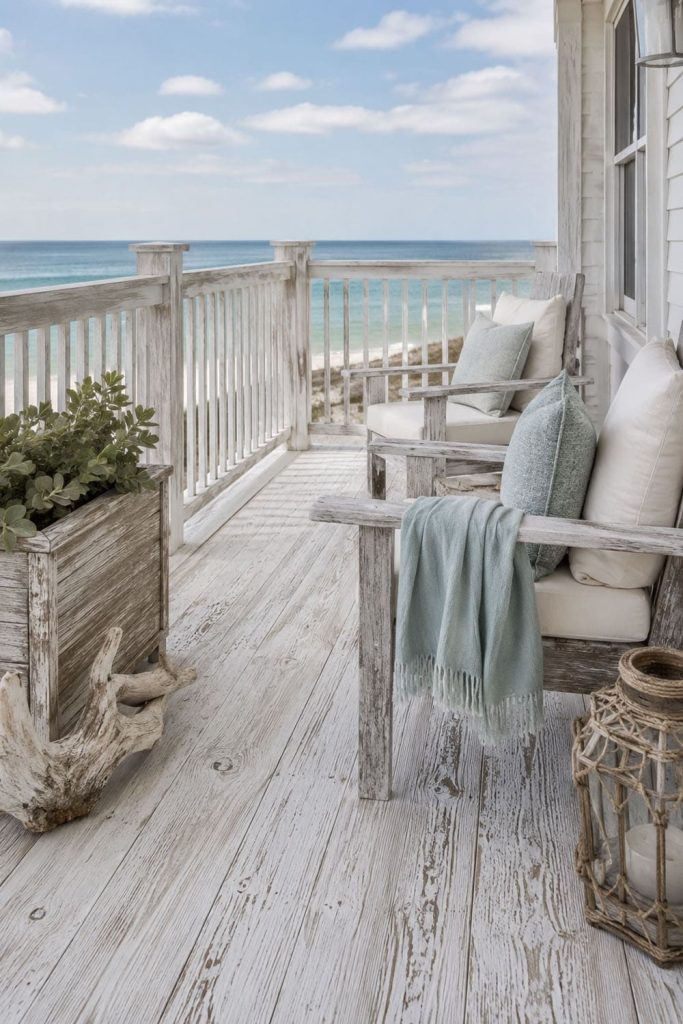
Nothing says coastal like whitewashed wood. Applying a light lime-wash or pickled finish to your balcony’s decking, railings, or furniture instantly evokes sun-bleached boardwalks and beach cottages. The trick is to let the wood grain show through rather than fully covering it, so the surface still reads as natural and weathered rather than painted. Pair whitewashed elements with rope details, driftwood accents, or reclaimed timber planters for extra texture. This look works especially well on balconies with wood flooring or slatted railings, and it holds up nicely against sun exposure since lighter finishes reflect heat rather than absorb it.
2. A Rattan and Wicker Seating Nook

Rattan and wicker furniture are coastal design staples because they’re lightweight, breathable, and visually soft against hard architectural lines. A single rattan armchair with a cushioned seat, or a compact wicker bistro set, instantly signals “beach house” without overwhelming a small footprint. Look for pieces treated for outdoor use, since untreated natural fiber can warp in humid conditions or when exposed to rain. Layer in a few textured cushions in cream, seafoam, or faded coral to soften the woven surfaces. Even a single rattan hanging chair in a corner can anchor the entire coastal mood on a compact balcony.
3. Ocean-Inspired Blue and White Palette

A crisp blue-and-white color scheme is the most recognizable coastal signature, echoing sailboats, striped awnings, and classic nautical flags. Use it sparingly and intentionally: a striped cushion here, a navy-and-white rug there, a single accent wall in soft sky blue. Avoid saturating the whole space in color, which can start to feel more “beach-themed” than genuinely coastal. Instead, let white dominate as the base — railings, walls, furniture frames — with blue used as punctuation through textiles, ceramics, or a painted front door visible from the balcony. The effect should feel breezy, not costume-like.
4. Sea Grass and Jute Rugs
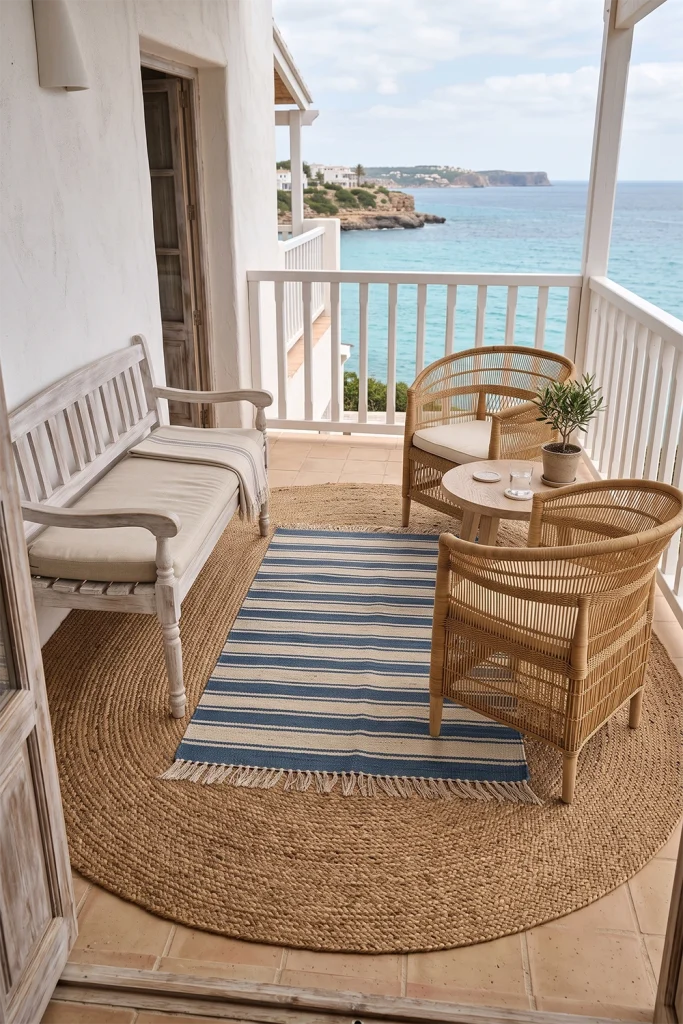
An outdoor-safe sea grass, jute, or woven sisal rug grounds a coastal balcony the same way it would a beach house sunroom. These natural-fiber textures add warmth underfoot and visually soften hard tile or concrete flooring, while their neutral tones keep the space feeling sandy and sun-washed. Choose a flatweave design rated for outdoor humidity so it resists mold and fading. A round or oval rug works particularly well on smaller balconies because it softens the boxy geometry of the space. Layer a striped or chevron-patterned throw rug on top for a more layered, boutique-hotel finish.
5. Hanging Plants and Trailing Greenery
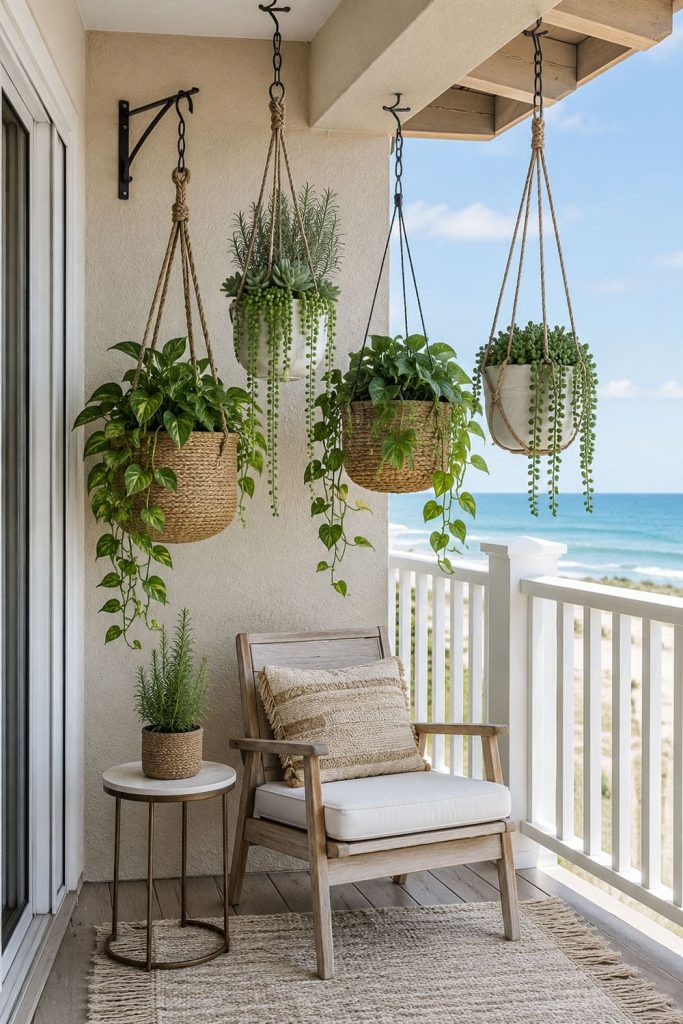
Coastal gardens tend to favor plants that can handle wind, salt air, and bright sun — think trailing pothos, string of pearls, rosemary, or hardy succulents in hanging planters. Suspending greenery from a pergola beam, ceiling hook, or wall bracket adds vertical interest without eating into limited floor space, which is especially useful on apartment balconies. Choose woven or ceramic hanging planters in warm neutral tones to keep the coastal aesthetic consistent. Grouping three or four planters at varying heights creates a lush, cascading effect that softens railings and mimics the wild, breezy greenery found along real coastlines.
6. A Driftwood-Inspired Accent Wall
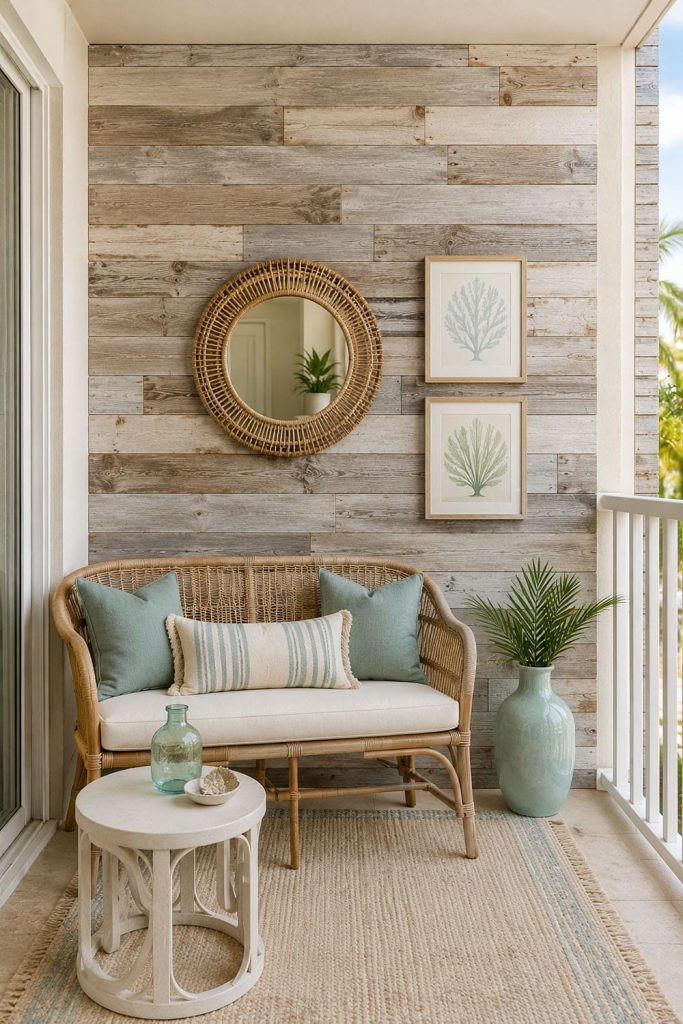
If your balcony has a blank wall, consider cladding a section in reclaimed or faux driftwood paneling. The irregular grain, silvery-gray tone, and slightly weathered texture of driftwood-style wood instantly reads as coastal without requiring any actual beach salvage. This works particularly well as a backdrop for a small seating area or outdoor bar cart, giving the eye a textured focal point instead of bare stucco or brick. For renters, look for lightweight, adhesive-backed driftwood panels that can be removed without damage. Pair the wall with a few framed botanical prints or a woven mirror for a finished, gallery-like feel.
7. Striped Outdoor Cushions and Awnings
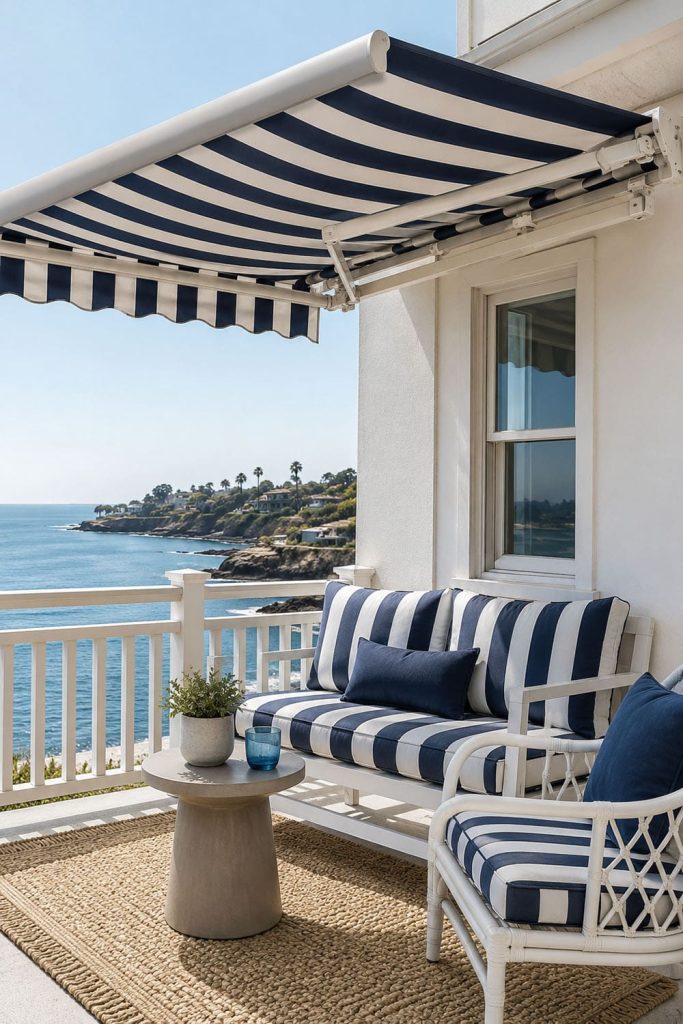
Stripes are shorthand for seaside style, whether on a classic cabana awning, deck chair cushions, or a simple throw pillow. Choose a retractable striped awning in navy-and-white or terracotta-and-cream to add shade while reinforcing the coastal theme from the moment someone steps outside. If a full awning isn’t practical, striped cushion covers on existing furniture achieve a similar effect at a fraction of the cost. Look for solution-dyed acrylic fabrics, which resist fading and mildew far better than standard cotton blends, since coastal balconies are often exposed to more sun and moisture than a typical patio.
8. A Miniature Herb and Succulent Garden

Coastal doesn’t have to mean purely decorative — a working herb garden of rosemary, thyme, lavender, and sea-tolerant succulents brings function and fragrance to the space. Arrange terracotta or galvanized metal pots along the railing or on a tiered plant stand to maximize a small footprint. These plants are ideal for coastal balconies because many are naturally drought- and wind-resistant, requiring less maintenance than delicate tropical varieties. The scent of crushed rosemary or lavender drifting on a breeze reinforces the sensory side of coastal design, turning a simple herb garden into an aromatic extension of the kitchen.
9. Nautical Rope and Knot Details

Rope detailing — whether wrapped around railing posts, used as plant hanger cords, or knotted into a decorative wall hanging — is a subtle nod to sailing culture that reads as coastal without feeling overly literal. A rope-wrapped mirror frame, a macramé plant hanger, or a woven rope pouf can all introduce this texture in small doses. The key is restraint: one or two rope elements feel intentional and elegant, while too many can tip the space into a costume-like “nautical theme” rather than genuine coastal sophistication. Natural manila or jute rope in warm tan tones works better than stark white cord.
10. Weathered Teak Furniture
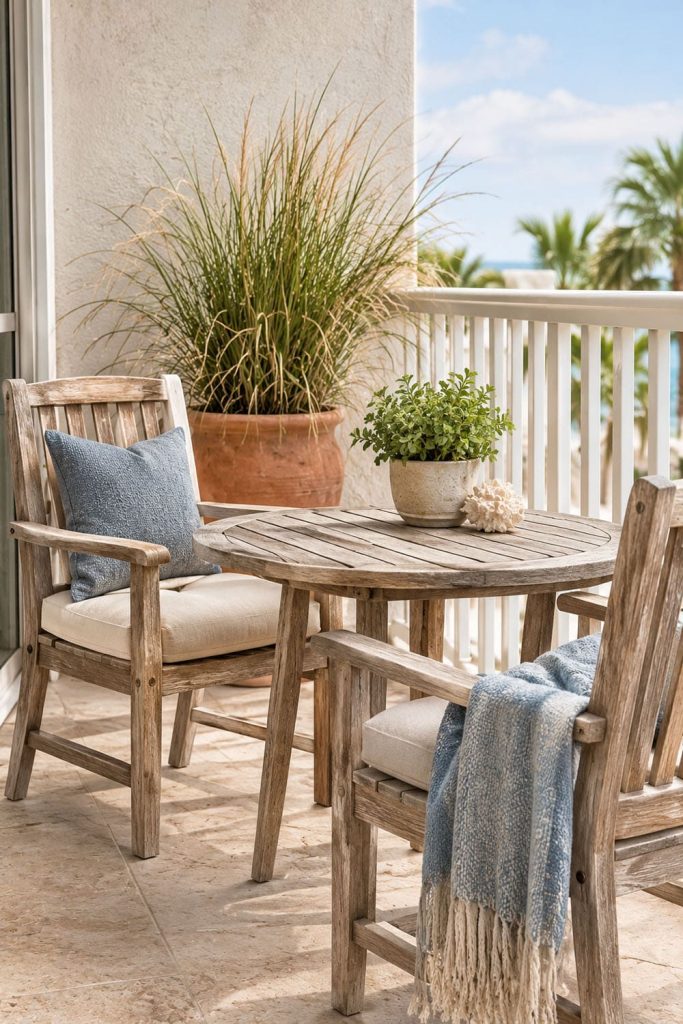
Teak is the gold standard for coastal outdoor furniture because it naturally weathers to a soft silvery-gray patina when left untreated, echoing driftwood and sun-bleached boardwalks. A simple teak bistro set, bench, or lounge chair ages gracefully with sun and salt exposure, making it ideal for balconies that get direct light. Unlike painted or upholstered pieces, teak requires very little upkeep beyond an occasional cleaning, and its dense grain resists warping and rot even in humid coastal climates. For a more finished look, an occasional coat of teak oil will restore the honey-brown tone if you prefer that over the gray patina.
11. Shell, Coral, and Beach-Glass Accents

Small collected accents — shells, sea glass, coral fragments, or smooth beach stones — displayed in glass jars or shallow dishes bring an authentic, personal touch to coastal styling. These work best in moderation: a single curated arrangement on a side table feels intentional, while shells scattered everywhere can read as clutter. Consider filling a glass hurricane lantern with sand and shells around a candle, or lining a windowsill with a few oversized pieces of sea glass that catch the light. This is also one of the most budget-friendly coastal ideas, since many of these accents can be collected rather than purchased.
12. A Pergola or Sailcloth Shade Canopy

Coastal balconies benefit enormously from a shade structure that filters harsh sun while echoing the look of beach cabanas or dockside pergolas. A simple wooden pergola frame with a stretched canvas or sailcloth panel provides both practical shade and strong visual character, especially on south- or west-facing balconies. Choose weather-resistant canvas in white, cream, or soft stripe patterns, and make sure the frame is securely anchored if your balcony sees strong coastal winds. Even a retractable shade sail spanning two corners can transform an exposed balcony into a shaded lounge that feels like a private cabana.
13. Coastal Lantern and String Light Layering
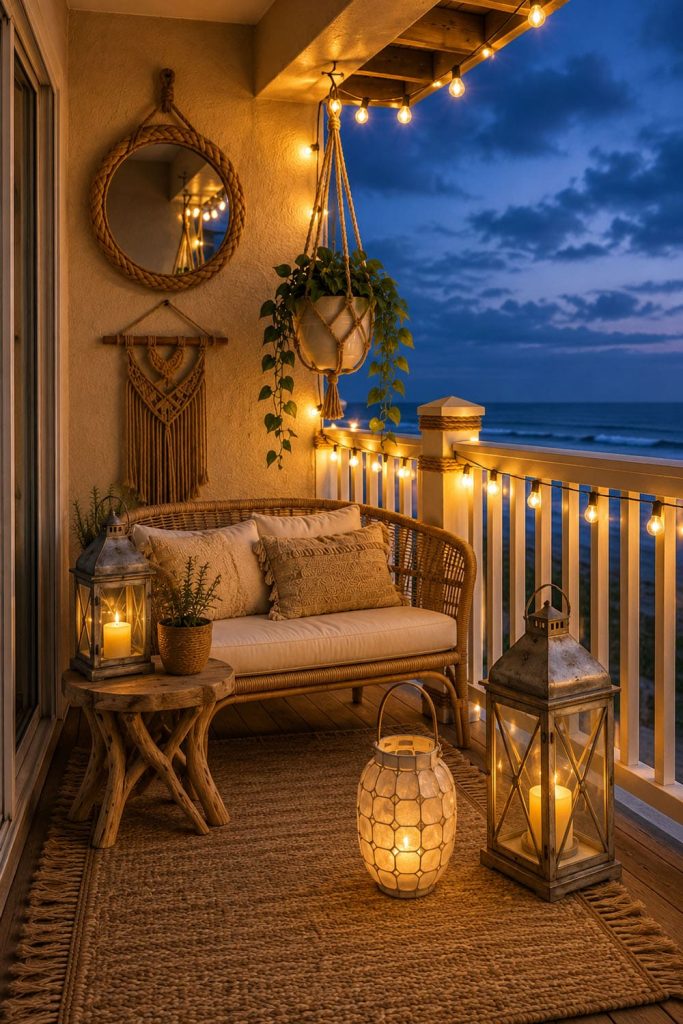
Lighting sets the mood for evening balcony time, and coastal style leans toward warm, low, ambient sources rather than bright overhead fixtures. Layer a few galvanized metal or capiz-shell lanterns at different heights with warm-white string lights strung along the railing or pergola beams. Battery-powered or solar lanterns are especially practical for balconies without easy outdoor outlets. The soft, flickering quality of lantern light mimics candlelit beach dinners and dockside restaurants, and it pairs beautifully with the natural textures already present in rattan furniture, sea grass rugs, and driftwood accents for a cohesive evening atmosphere.
14. A Compact Coastal Dining Corner
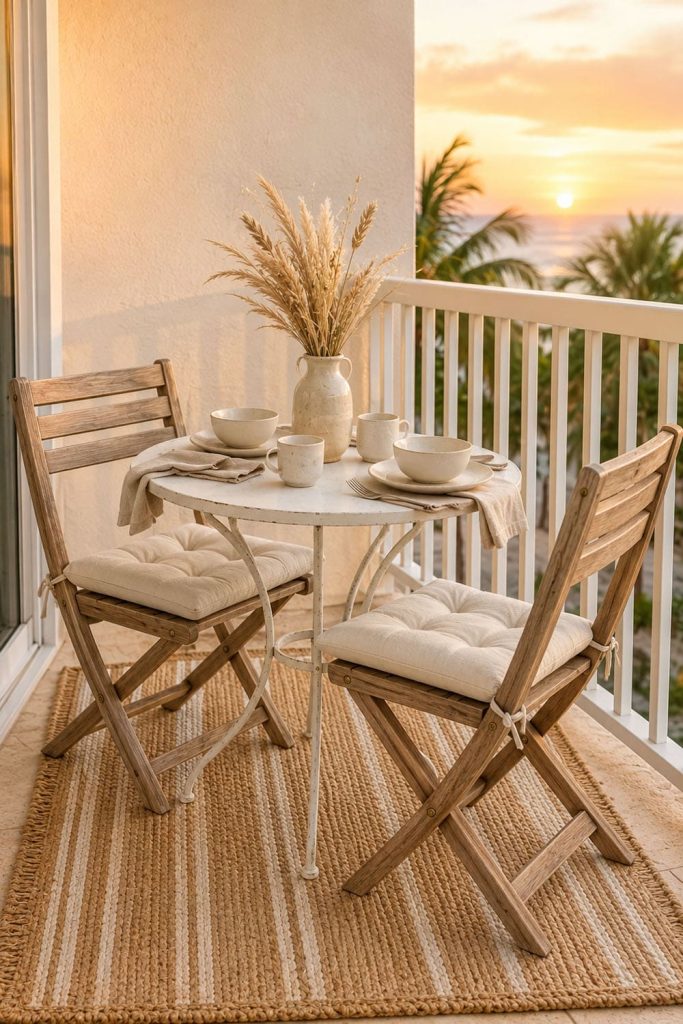
Even a narrow balcony can fit a small bistro table for two, turning the space into a spot for morning coffee or sunset dinners. Choose a round table in white-painted metal or weathered teak to keep the footprint light and airy, paired with folding or stackable chairs that can be tucked away when not in use. Dress the table with linen napkins, a small vase of dried coastal grasses, and simple white ceramic dishware to keep the styling cohesive. This idea works particularly well for apartment balconies where every square foot needs to serve a clear, functional purpose.
15. Ocean View Framing with Minimal Railings

If your balcony actually faces water, the most important design move is getting out of the way of the view. Opt for glass or slim cable railings instead of bulky wood or wrought iron balustrades, which can visually block sightlines to the horizon. Keep furniture low-profile and positioned to face outward, and avoid tall planters or dense greenery directly in the line of sight. A single daybed or chaise angled toward the water, with minimal surrounding clutter, allows the ocean itself to become the balcony’s primary design feature — which is, after all, the whole point of coastal living.
Coastal Balcony Planning and Buying Guide
Choose materials built for the elements. Even balconies far from the beach benefit from weather-resistant choices — teak, rattan-look resin wicker, powder-coated aluminum, and solution-dyed fabrics all hold up better against sun, humidity, and temperature swings than indoor-grade materials.
Anchor the palette in neutrals first. Start with whites, sandy beiges, and driftwood grays as your base, then add coastal blues, seafoam greens, or coral accents through cushions, rugs, or ceramics rather than paint or large furniture pieces — it keeps the look flexible as trends shift.
Prioritize wind- and sun-tolerant plants. Rosemary, lavender, succulents, olive trees, and ornamental grasses are naturally suited to bright, breezy conditions and require far less maintenance than tropical foliage on an exposed balcony.
Think in layers, not single statements. The most convincing coastal balconies combine texture (rope, rattan, sea grass), material (driftwood, teak, linen), and light (lanterns, string lights) rather than relying on one obvious “beach” item like an anchor or a single striped cushion.
Respect your balcony’s size and load limits. Heavy planters, water-filled features, and dense furniture groupings can strain smaller balconies. Check weight guidelines, especially for apartment or high-rise balconies, before committing to large terracotta pots or a full dining set.
Budget for durability over decoration. A slightly higher spend on genuine teak, solution-dyed fabric, or a quality outdoor rug will outlast several rounds of cheaper decor that fades or warps within a season, especially in direct sun or coastal humidity.
Final Thoughts
A coastal balcony doesn’t require ocean frontage — it requires intention. Whitewashed textures, natural fibers, breezy blues, and a few well-placed plants can turn even the smallest apartment balcony into a space that feels like a permanent seaside retreat. Start with one or two ideas from this list, whether it’s a rattan chair, a sea grass rug, or simply a shift toward a whiter, more weathered color palette, and build outward from there. The goal isn’t to replicate a beach house exactly — it’s to capture that same unhurried, salt-air calm, wherever your balcony happens to be.


