

15 Tiny Balcony Garden Ideas for Beginners Who Kill Plants
If every plant you bring home seems to give up within a few weeks, you are not alone. Many beginners buy too many plants at once, water on a fixed schedule, and put sun lovers in shade.
A tiny balcony makes those small errors show fast, since pots dry out or stay wet with little room to hide a mistake.
These tiny balcony garden ideas for beginners who kill plants keep the whole setup small, plain, and easy to check. You will start with a few pots, learn one watering habit at a time, and pick plants that forgive a missed day.
Nothing here needs a large budget, a big space, or prior skill.
Work through the list in order if you like, or pick the idea that fixes your last failure first. For more small-space planting plans, see these small balcony garden ideas to compare layouts before you buy pots.
1. Start With a Small Group of Pots
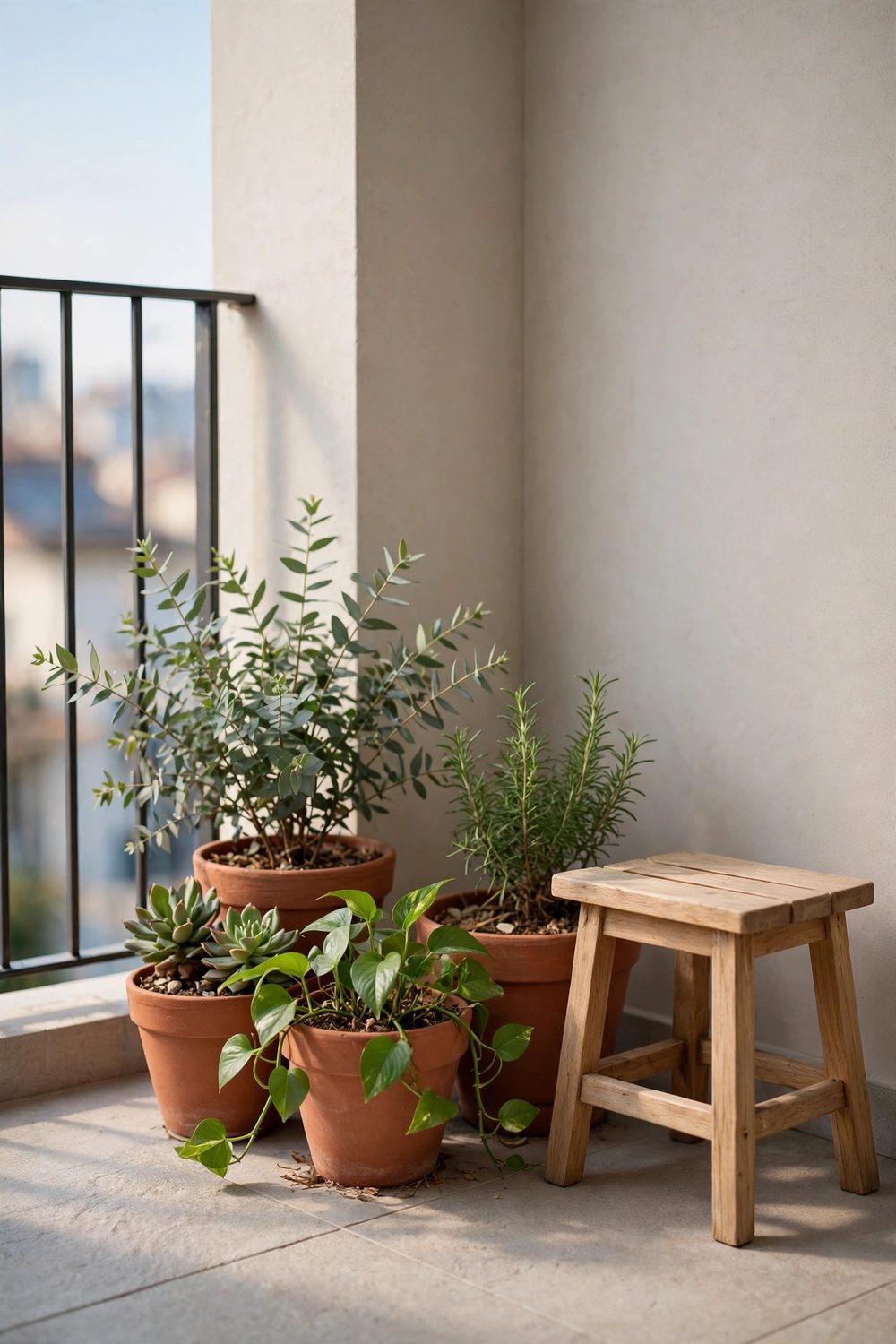
Most failed balcony gardens start too big. A dozen new pots means a dozen different needs, and no beginner can track them all in week one. Three or four pots are enough to learn how sun, wind, and water act on your balcony.
You can watch each plant closely and spot trouble early.
Put the group in one corner where you walk past it each day. A wooden stool beside the pots gives you a spot to set a watering can down, so checks become part of your routine.
Keep the rest of the floor clear while you learn.
When those first pots stay healthy for a month, add one more pot, not five. Slow growth in plant count builds skill that lasts, and your balcony stays calm and easy to care for.
2. Use the Finger Test Before You Water
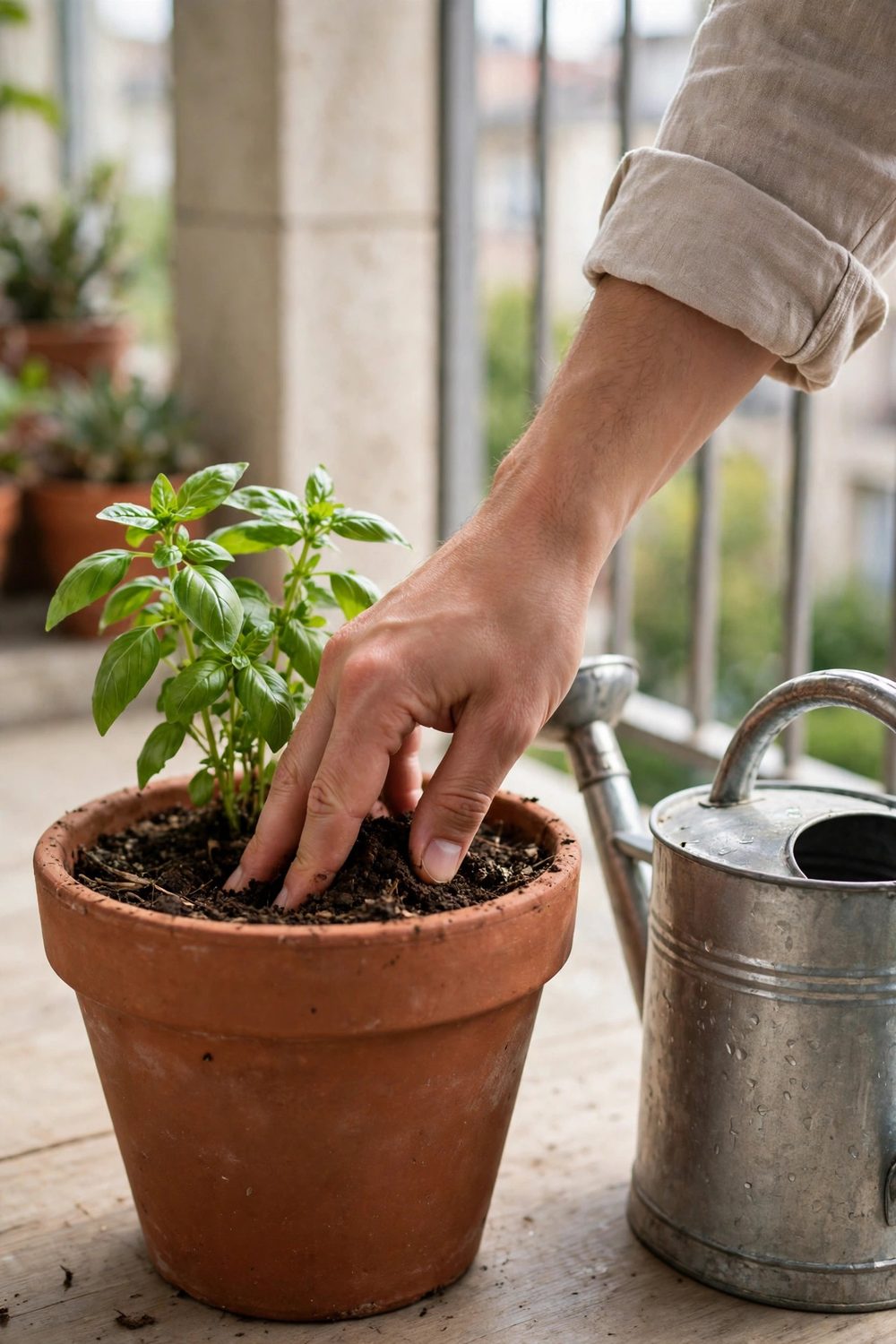
One rule saves more plants than any gadget: check the soil first. Push one finger about an inch into the soil. If it feels damp, wait. If it feels dry at that depth, water slowly until a little runs out below.
This one habit stops the most common beginner error, which is watering on a calendar instead of by need.
Soil in small pots can look dry on top while still holding water below. A quick finger test takes five seconds and keeps you from adding water to an already wet pot. It also teaches you how fast each pot dries in sun and wind.
Make the test part of your morning step outside. After a week, you will know which pot dries first and which one can wait a day longer.
3. Pick Three Forgiving Plants First
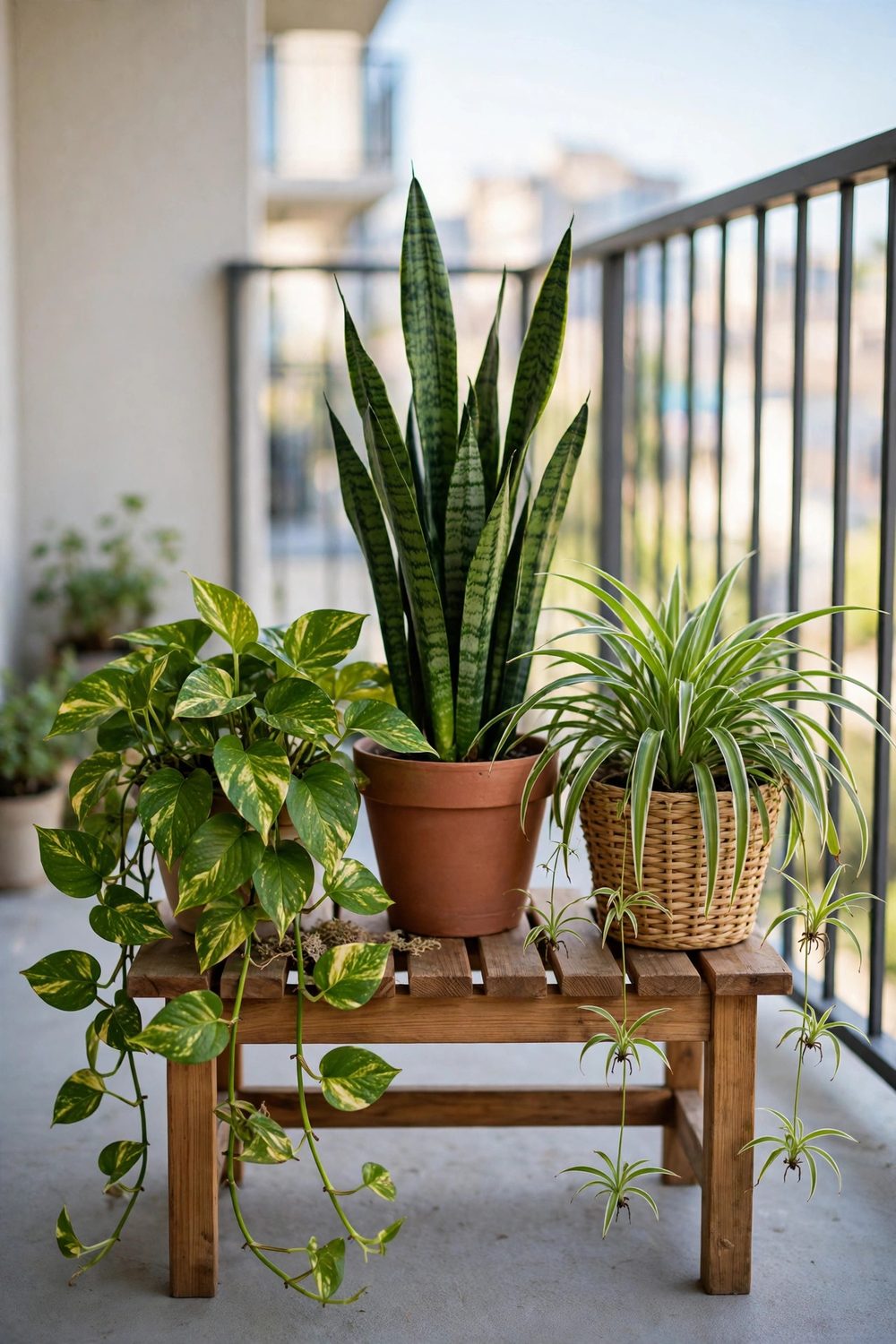
Forgiving plants buy you time while you learn. A pothos trails softly from a pot, a snake plant stands upright with little fuss, and a spider plant shows fresh striped leaves even after a rough week.
These three look different from each other, so the group still feels like a garden, not a test row.
Place them where their light needs fit, and do not move them every day. Plants settle best when they stay in one spot while you learn their rhythm.
If a cat shares your balcony, read these balcony ideas for cat owners before you choose plants, so safety stays part of the plan.
Start with healthy plants from a local shop, not the cheapest tired ones on a clearance rack.
4. Map Your Sun Before You Shop
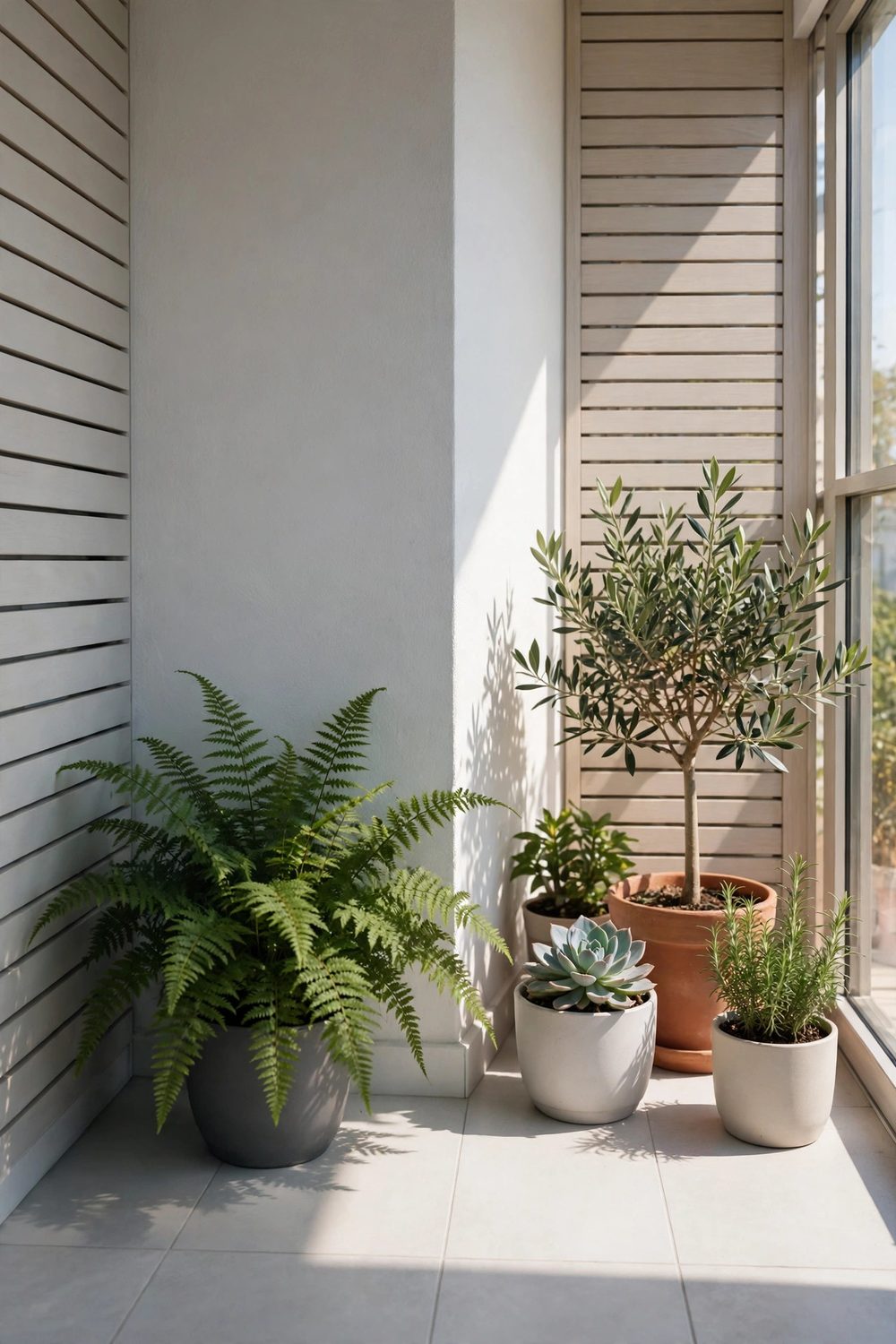
Step outside at three times in one day and note where light falls. Morning light may hit the railing, midday sun may bake one corner, and late light may leave the wall in shade.
Write those notes on your phone. This simple map keeps you from buying a sun lover for a shady wall.
Put plants that like strong light in the brightest spot, and keep shade-tolerant plants near the wall or under an overhang. On a tiny balcony, a shift of two feet can change how a plant grows.
If your balcony stays shaded most of the day, look at these north-facing balcony ideas for plants that love shade for plant types that suit low light. Matching light first beats buying pretty plants that cannot cope.
5. Hang One Rail Planter and Keep the Floor Clear
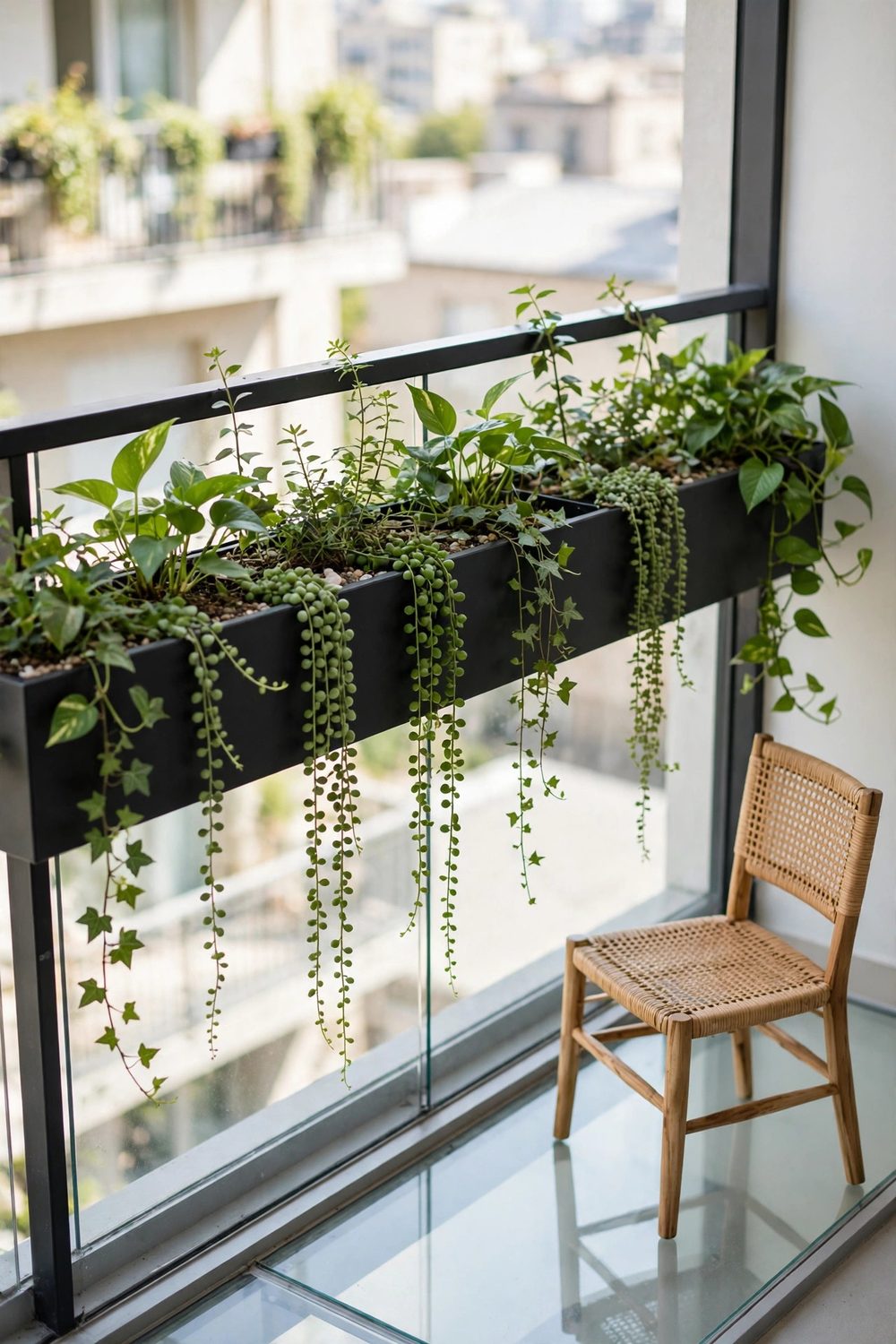
On a tiny balcony, floor space is gold. One rail planter hangs on the railing and holds trailing plants without taking a single step of floor.
You still walk out with ease, and the plants catch light and air at the edge where they need it most.
Check that the planter hooks fit your railing width before you buy. A loose hook can tip in wind, so test it empty first, then add soil and plants.
A single wicker chair can stay on the balcony beside it, with room to sit and look at the green edge.
Keep this planter to one plant type at first, so watering stays simple. When it grows well, the trailing stems will soften the railing line and make the whole balcony feel more finished.
6. Choose Pots With Drainage Holes and Saucers
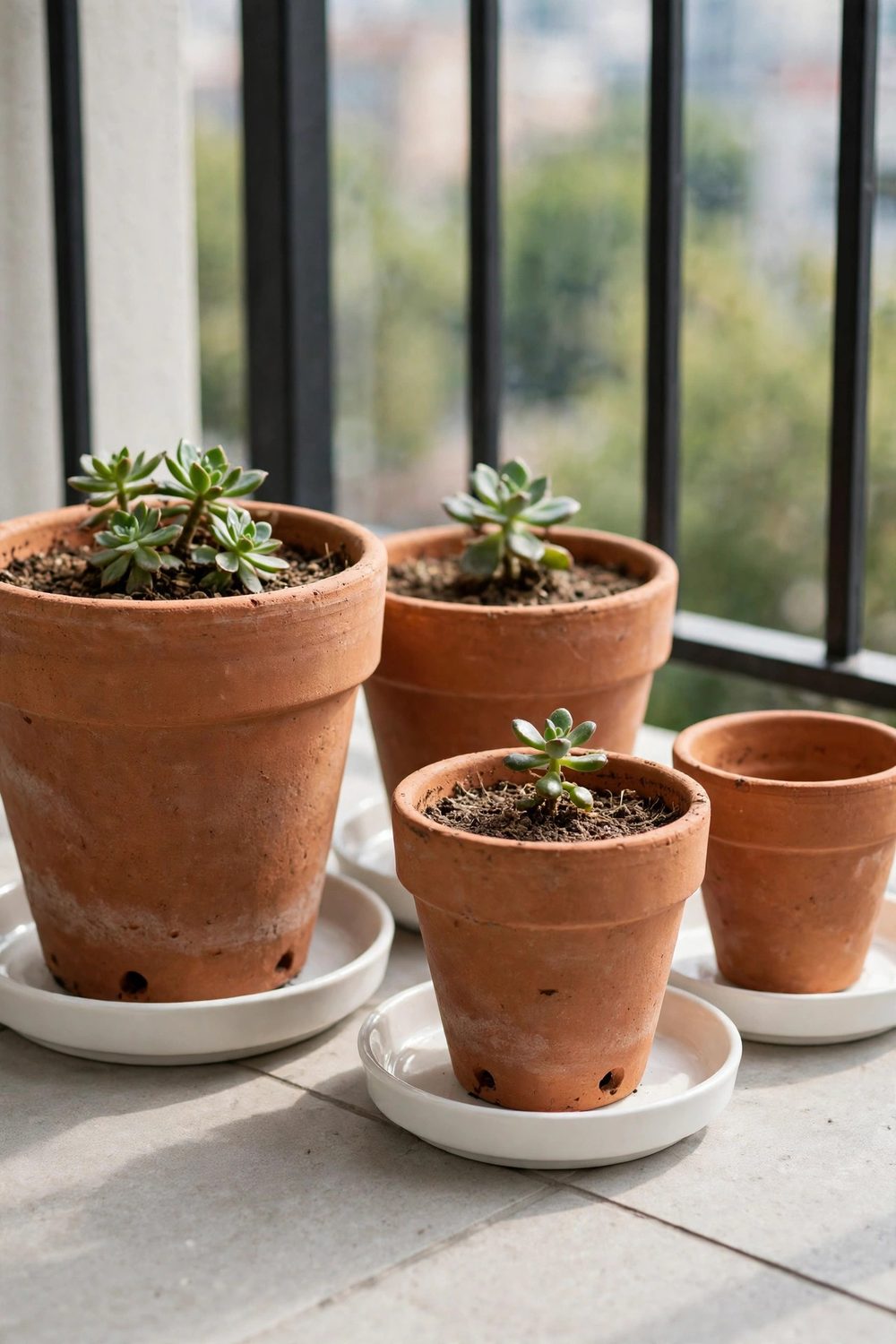
A pot with no hole traps water at the roots, and that still, wet soil is hard on most plants.
Always flip a pot over and check for a hole before you buy it. If it has no hole, use it as a cover pot with a plain pot inside that does drain.
Set each pot in a saucer that fits it well. A saucer that is too small will overflow onto the tiles, while one that is too wide will sit in a puddle.
Empty saucers after watering so roots do not sit in standing water for days.
This small check costs nothing and prevents a quiet failure that looks like bad luck. Many beginners blame themselves when the real fault was a pot that could not drain.
7. Water Slowly in the Morning
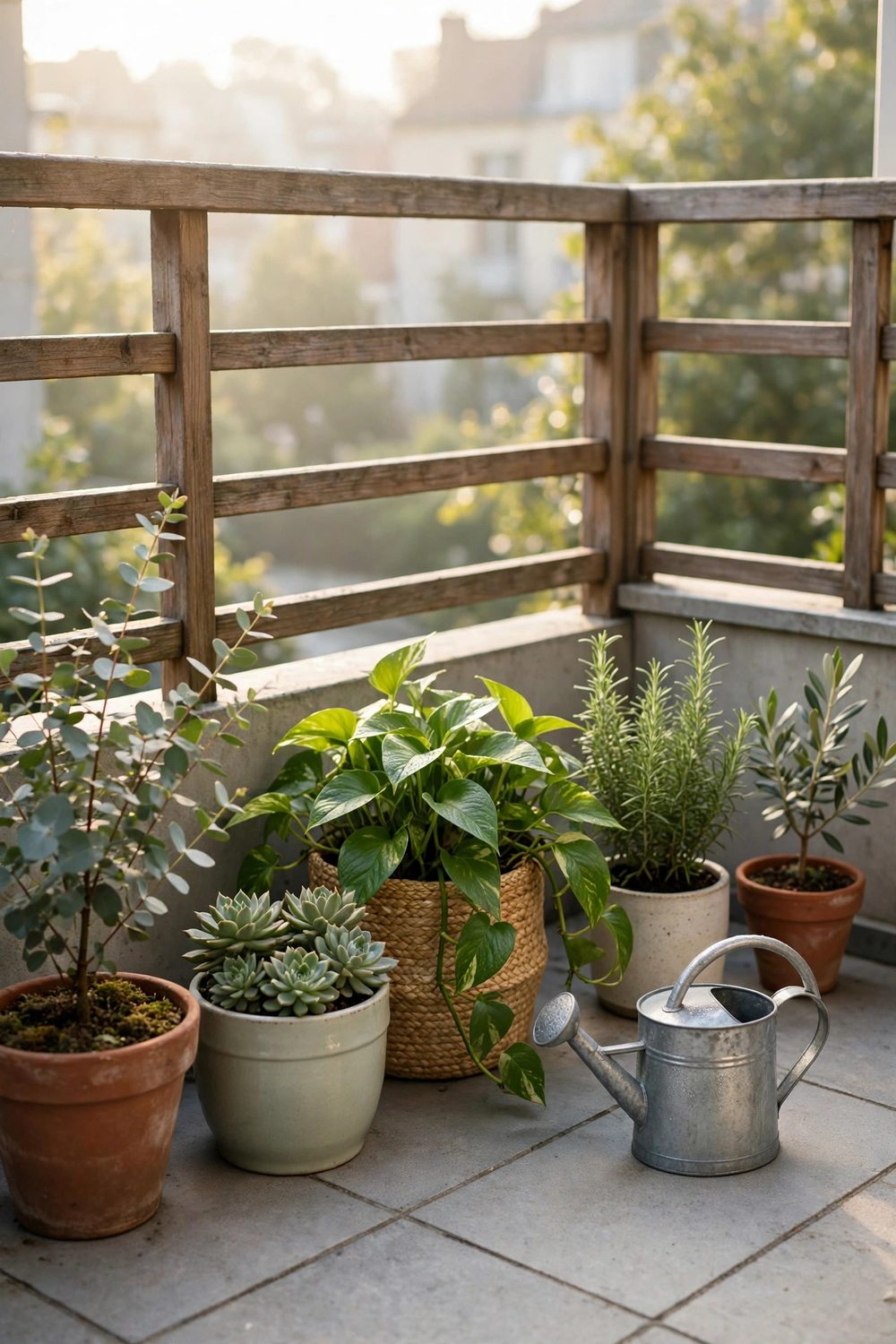
Soft morning light, a cool tile floor, and a small watering can make a calm start to plant care. Water slowly around the base of each plant, pause, and let the soil soak it in.
Fast pouring runs down the sides of dry soil and out the hole, leaving the middle still dry.
Morning watering gives leaves time to dry during the day and soil time to settle before night. It also fits a daily check: step out, test the soil, water only the pots that need it, and step back inside.
Keep the can small. A large can is heavy, hard to aim, and tempts you to water every pot just because the can is full.
8. Keep a Small Watering Can by the Door
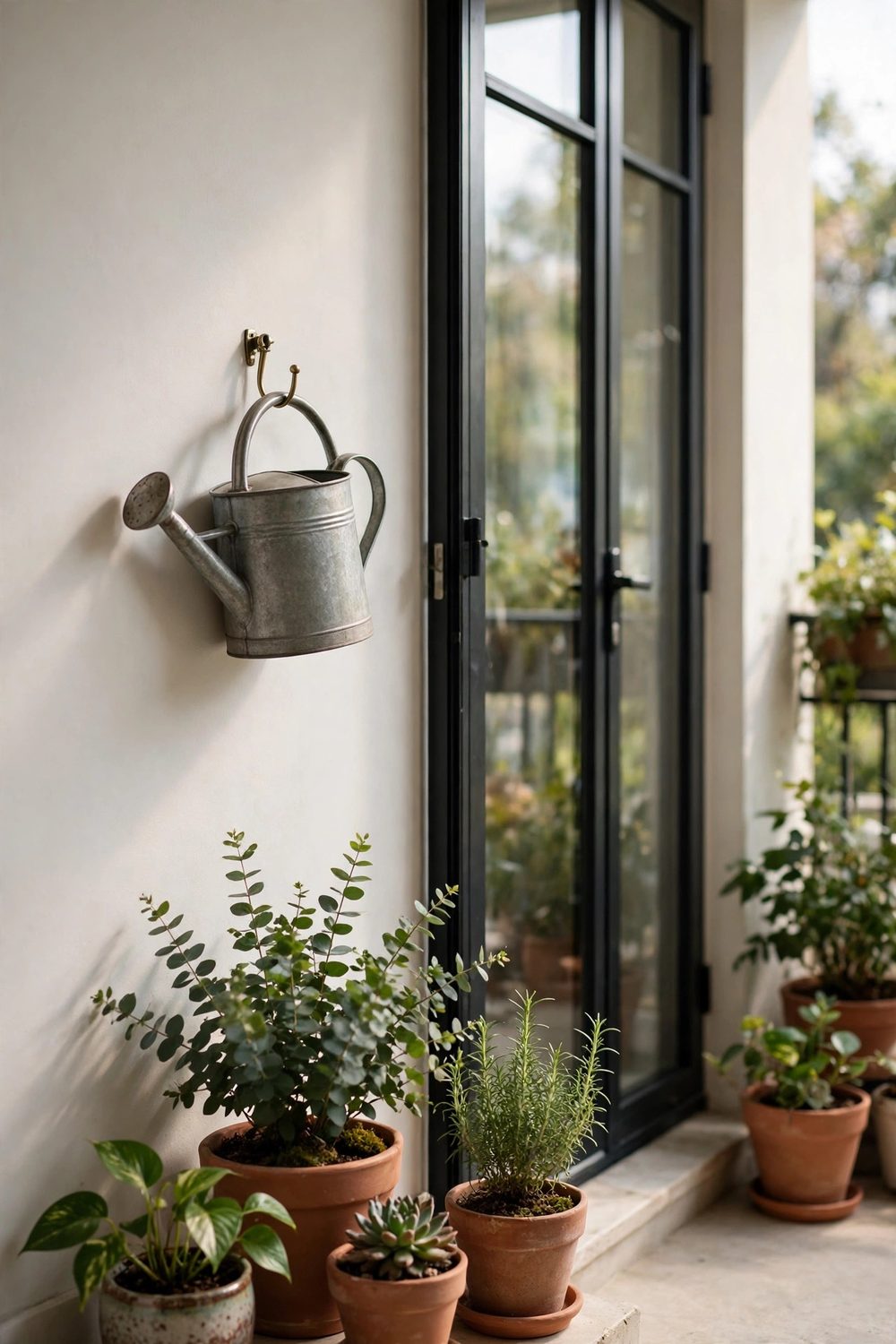
A can hung on a hook by the balcony door beats a can stored in a far cupboard. When the tool is in sight, the check happens. When it is buried behind cleaning supplies, watering waits until plants droop, and then a rushed soak follows.
Pick a can with a narrow spout that aims at soil, not leaves. A gentle stream lands where roots need it and keeps tiles cleaner. Fill it at the kitchen sink each morning, so it is ready when you step out.
This habit also stops the classic balcony flood: a big jug poured in haste. A small can slows you down just enough to notice which pot is dry and which one can wait.
9. Group Plants That Like the Same Water
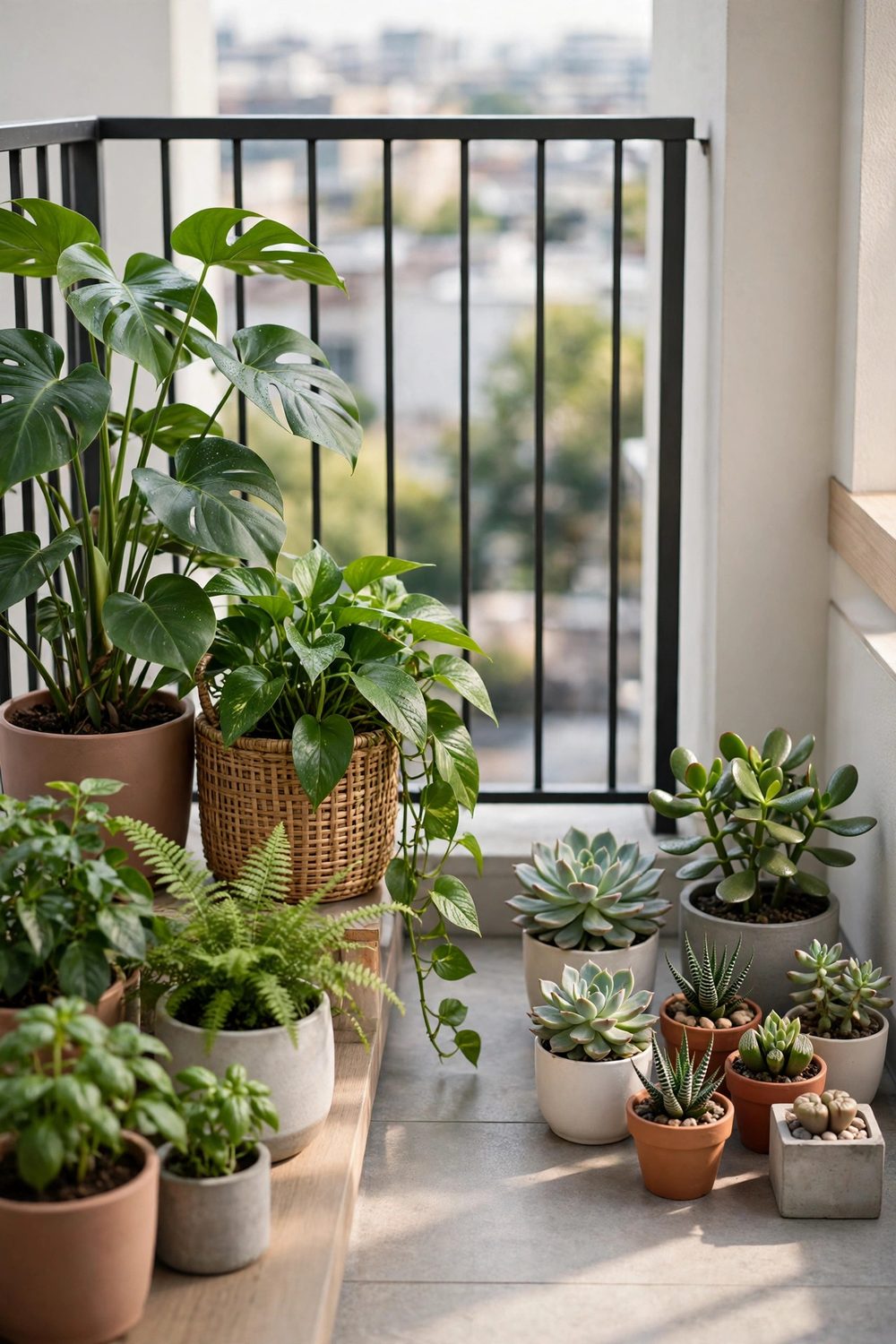
I once watered a mixed row the same way every day, and half the pots sulked. Leafy plants drank fast, while succulents stayed wet too long. Grouping by thirst fixed the problem in one move, and it is a lesson I now pass on first.
Put plants that like steady moisture together on one side, and plants that like to dry out between drinks on the other side. You can then water each group in its own way without stopping to recall each plant name.
Leave a clear gap between the groups so you can see the split at a glance. On a tiny balcony, that gap also keeps air moving, which helps leaves dry after watering.
10. Add One Trailing Plant for Instant Fullness
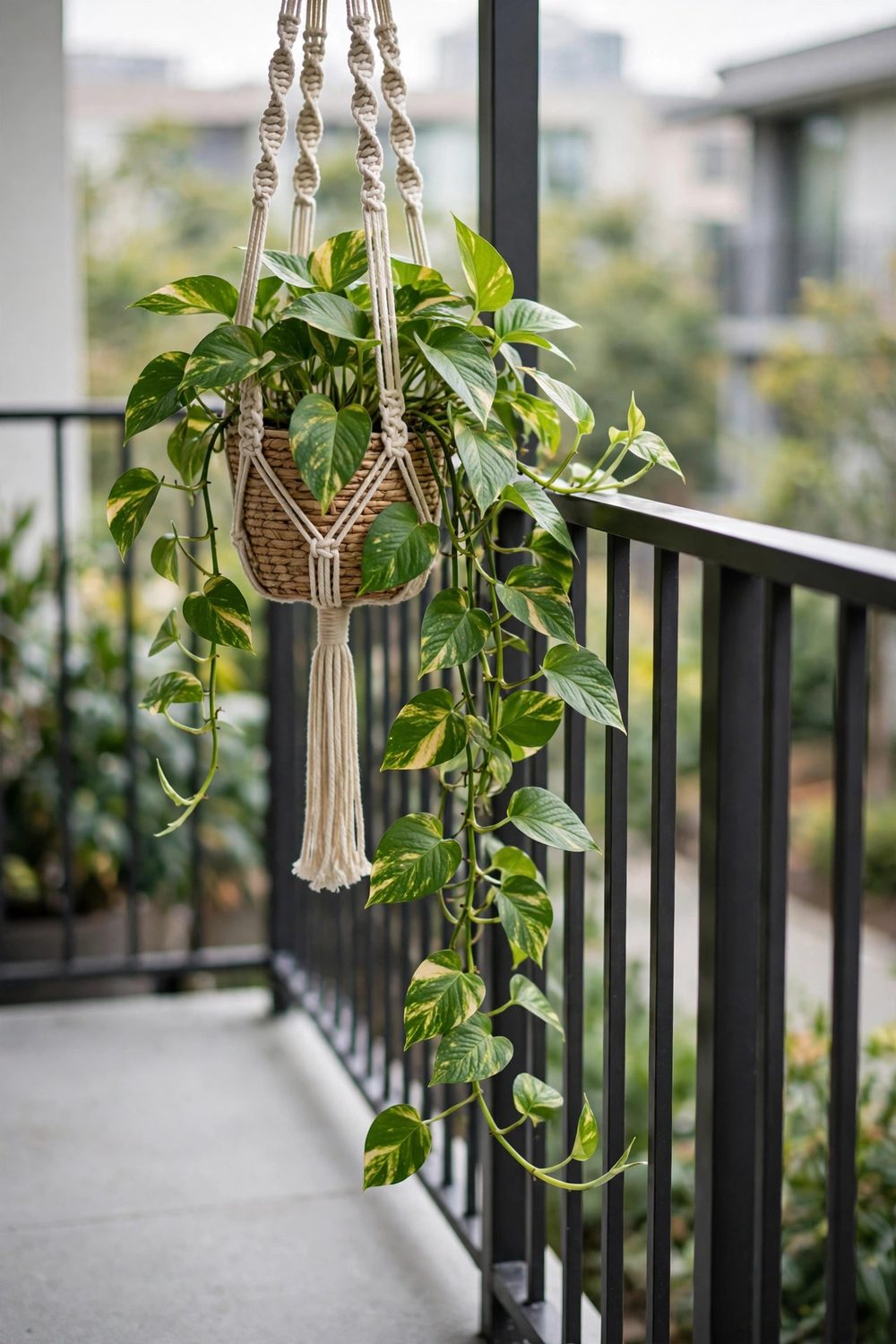
Some beginners think a trailing plant will look messy, but one well-placed trailer does the opposite. It draws the eye along the railing and makes a small group of pots look like a full garden, even when you own only a few plants.
Hang it high enough that stems clear your chair and walkway. Let the vines fall in one soft curtain, not in tangled loops across other pots. Trim a stem that blocks the door or drags on the floor.
A trailing pothos in a hanging holder is a safe first choice here. It grows at a steady pace, shows new leaves often, and tells you quickly when it needs water by looking less perky.
11. Label Each Pot With Its Plant Name
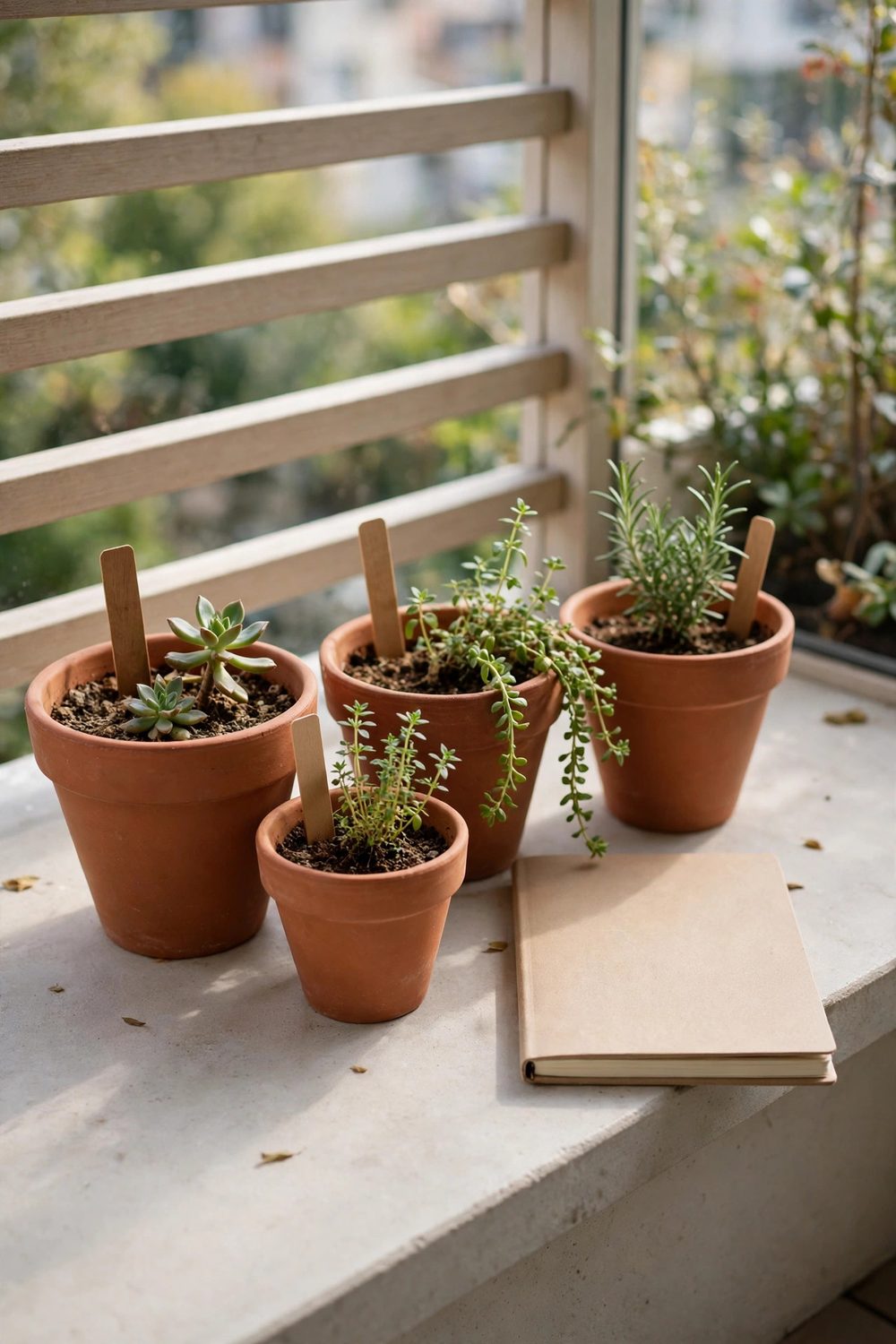
Write the plant name on a small wooden label and push it into the soil. This sounds fussy, but it saves you from guessing later, when a plant needs help and you cannot recall what it is.
A name lets you look up care tips with confidence.
Add a short note on the back of the label, such as “dry between drinks” or “likes shade.” That note turns the label into a care card you can read at a glance.
For potted herbs, these balcony herb garden ideas for apartments show how labels help when several pots look alike.
Keep a small notebook by the door for the first month, and jot down which pots you watered. That record beats memory, and it shows patterns you would otherwise miss.
12. Line Pots Along the Edges, Not the Middle
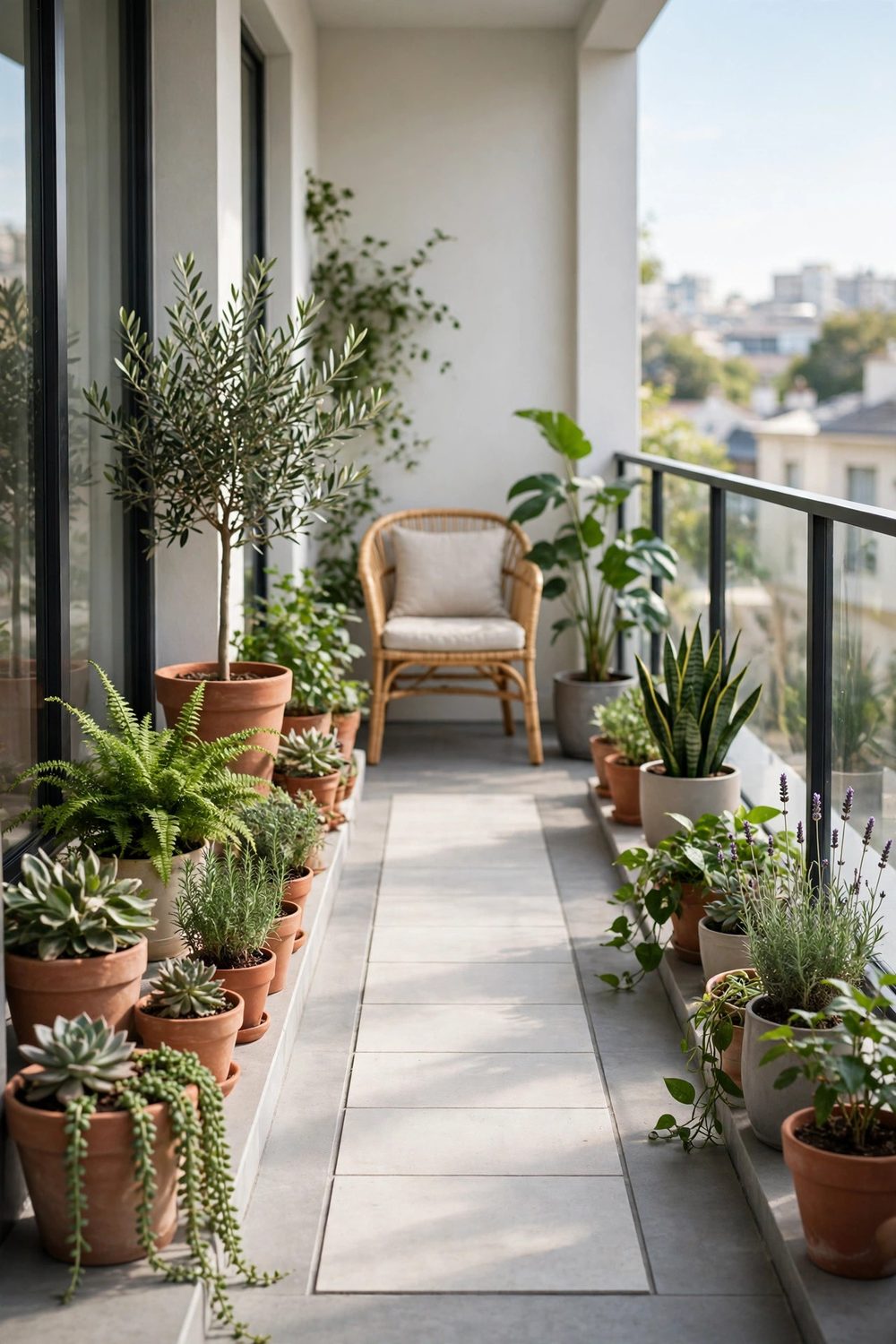
A row of pots down the middle of a tiny balcony looks lush in a photo, but it blocks your path in real life.
You will step around pots, bump leaves, and soon avoid going out at all. Pots along the edges leave the middle open, so the balcony stays usable.
Place tall pots in corners, low pots along the railing, and keep one clear path to a chair. That path is what turns a plant shelf into a place you enjoy.
For seating that fits this layout, see these small balcony furniture ideas before you add a chair.
Test the layout by walking the path with a watering can in hand. If you must sidestep a pot, move that pot to an edge before it gets knocked over.
13. Move One Pot at a Time to Chase Better Light
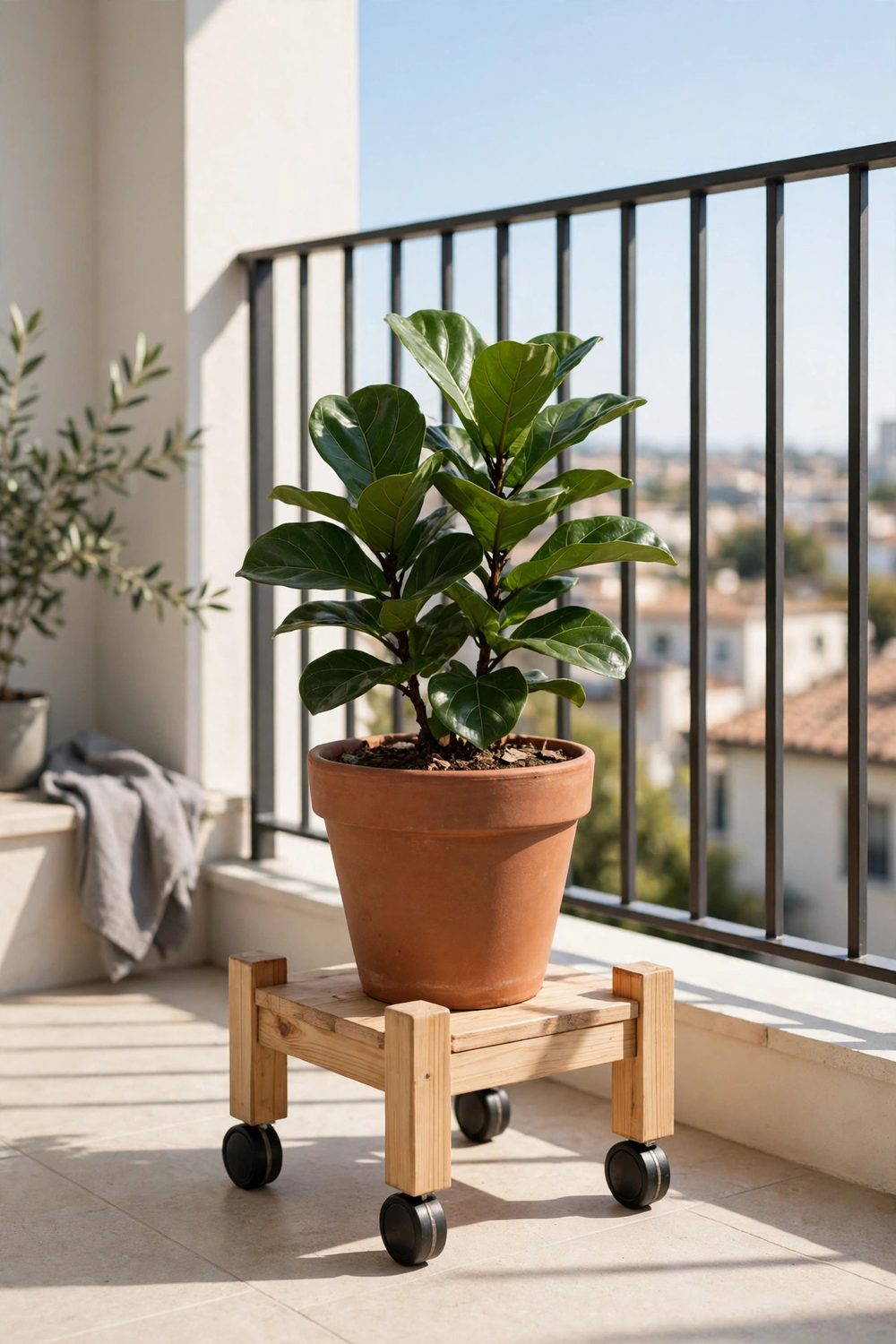
I used to shuffle all my pots each weekend, hoping for a better result. Nothing improved, because I could not tell which move helped. Now I move one pot, wait a week, and watch its leaves. That slow test gives a clear answer.
A small wheeled stand helps here, since you can roll one heavy pot a few inches without lifting it. Try the sunny side for a week, then the shaded side if leaves look stressed. Note the change in your notebook.
Seasonal light shifts also matter. A spot that was bright in spring may sit in shade by late summer, so a single move can keep a plant happy without a full balcony reset.
14. Trim Dead Leaves Once a Week
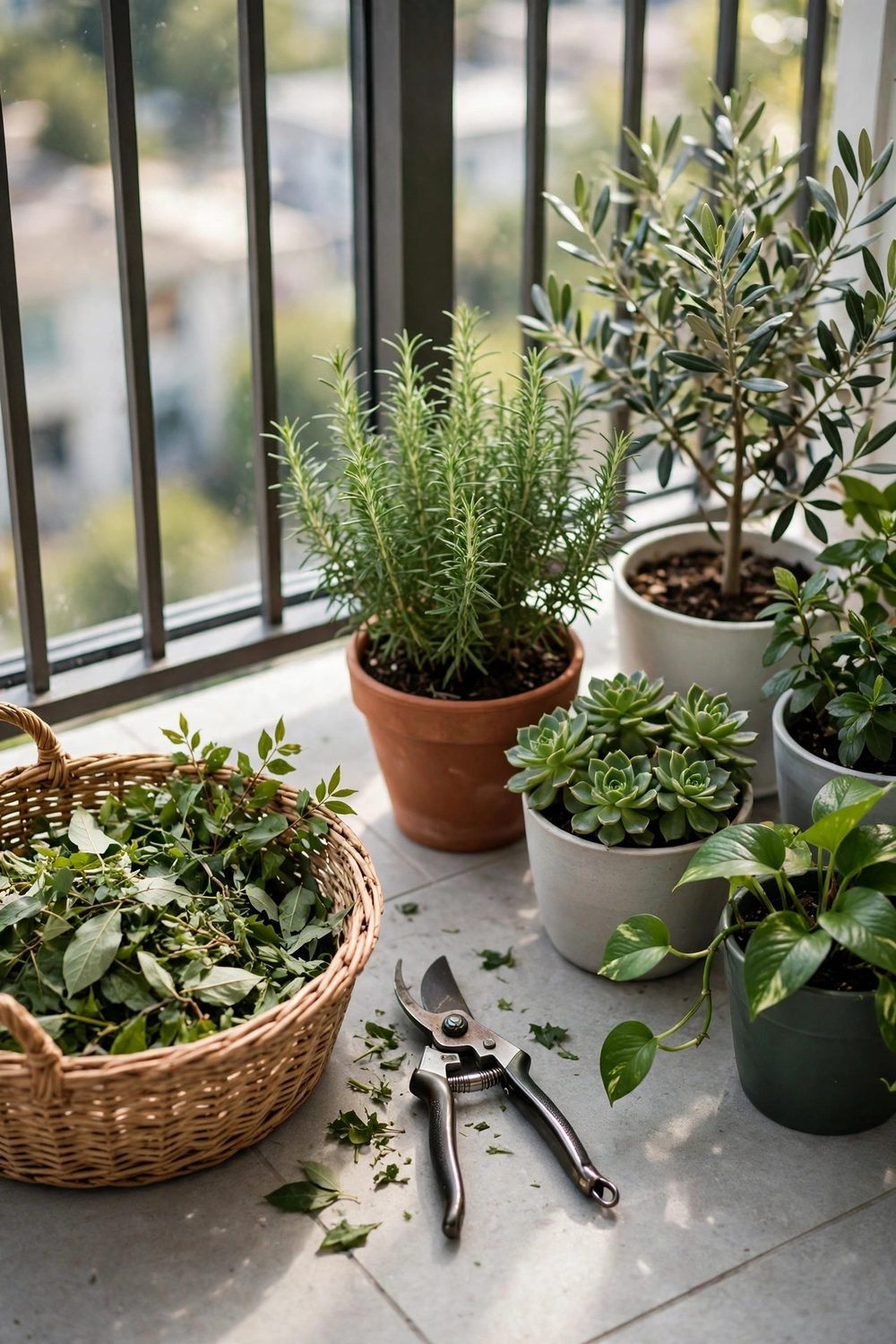
Skipping all pruning is a quiet mistake. Dead leaves stay on a plant, block light from new growth, and make a healthy pot look tired. A five-minute trim once a week keeps plants tidy and helps you spot pests or dry soil early.
Use clean, sharp snips and cut only the dead or yellow leaf, not a healthy stem beside it. Drop trimmings in a small basket, not on the floor, so the balcony stays clean.
Wash the snips when you finish, so they stay sharp for next week.
Do not cut a plant back hard in one go. Small, steady trims are kinder, and they let you learn how each plant responds before you take more.
15. Keep a Spare Pot Ready for a Rescue
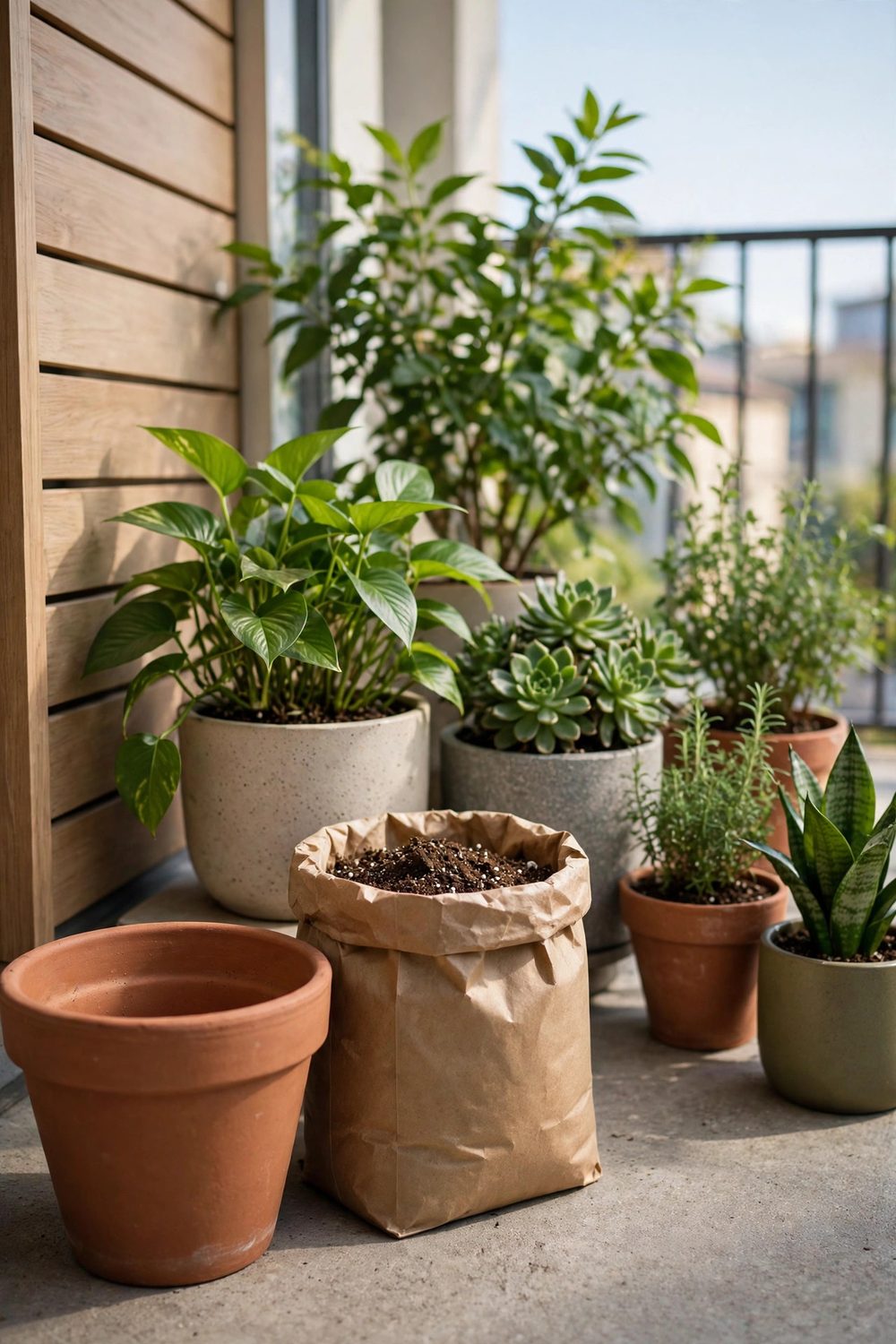
A spare pot turns a plant crisis into a simple fix. When a pot cracks, a plant outgrows its home, or soil stays wet too long, you need a clean pot at once, not a shopping trip next week.
Keep one empty terracotta pot and a bag of potting mix by the door.
Choose a spare pot only one size larger than your current pots. A pot that is far too large holds extra wet soil around small roots, which can cause new trouble. Fresh mix, a drainage hole, and a saucer make the spare ready to use.
This backup also lowers the stakes of learning. You can try a new plant with less fear, since you know a rescue pot waits if the first home does not work out.
Start with three or four pots, test the soil before you water, and let light guide where each plant lives. Small habits like labels, morning checks, and a weekly trim do more than a large plant haul ever will.
They keep care simple, and simple care is what keeps plants alive.
Pick one idea from this list today, and give it a full week before you add the next one.
Save this to your balcony board for later, so you can come back to the list when you are ready to add a pot or try a new plant.


