

15 Balcony Herb Garden Ideas in Pots and Rails
Your balcony rail sits empty while store herbs wilt in the fridge drawer.
That gap is easy to close with a few pots placed where the light already falls. These balcony herb garden ideas in pots and rails keep the setup small, tidy, and close to the kitchen door.
You do not need a big floor or a long list of tools. A rail planter, a few sturdy pots, and a watering can cover most of these ideas. The trick is to match each herb to the spot it likes best.
Sun lovers go on the rail where light is strongest. Soft leaf herbs do better in a cooler corner with some shade. Mint always gets a pot of its own, since it spreads fast.
Work through the list and pick two or three ideas to start. A small herb corner that you use each week beats a crowded balcony you avoid. For a wider look at apartment herb setups, see these balcony herb garden ideas for apartments.
1. Hook Rail Planters on the Sunniest Stretch
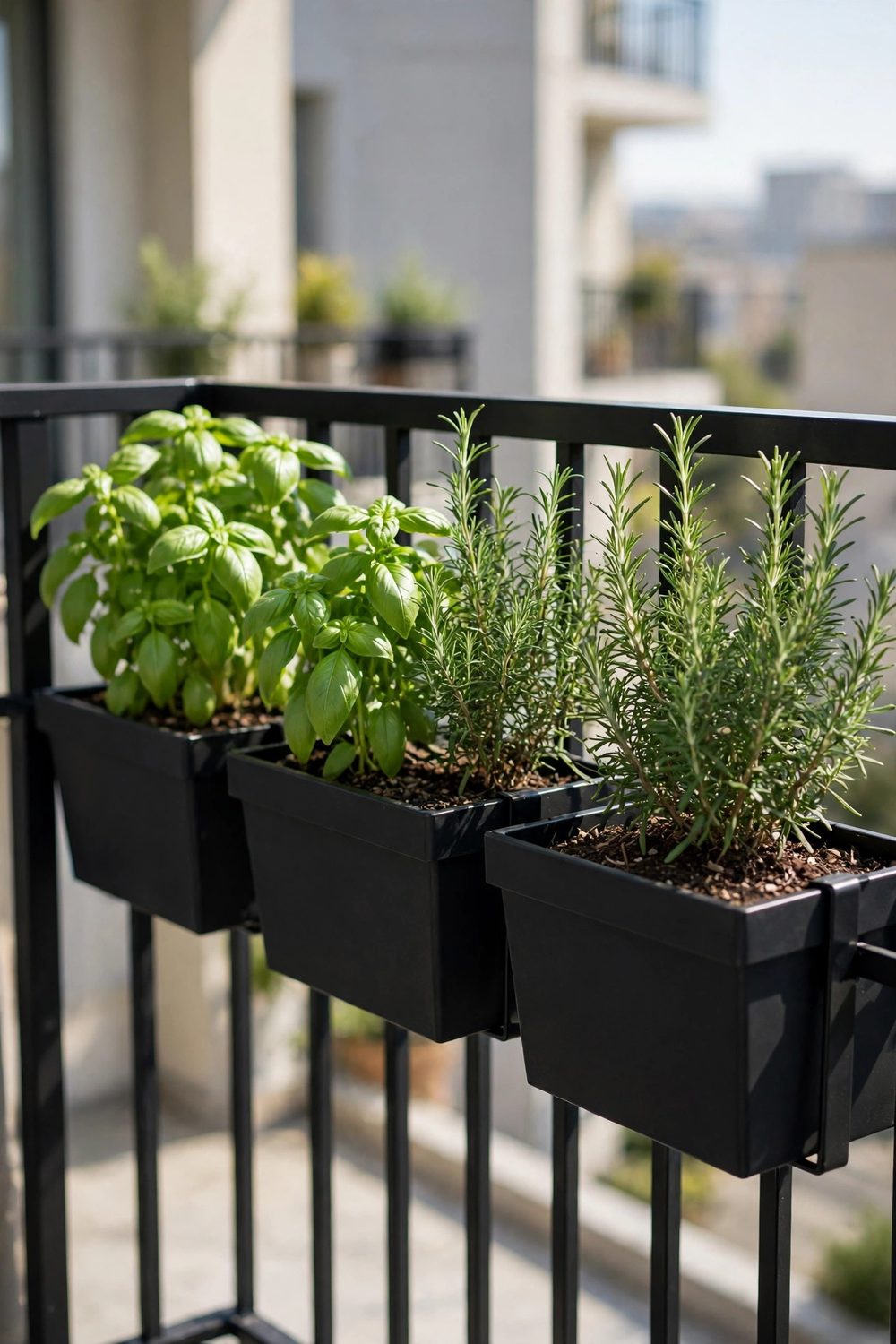
The rail gets more sun than the floor, yet most balconies leave it bare. A hook-on rail planter puts basil and rosemary right where the light is strongest. It also leaves the floor free for a chair and a small table.
Check the fit before you buy. The hooks must sit flat on your rail with no wobble when you press down on the rim. A planter that rocks will spill soil the first time a strong gust hits it.
Start with one planter, not three. Fill it, water it, and watch how fast it dries for a week. That one test tells you how many rail planters your balcony can handle.
Leave room at the rail ends so the door opens fully.
2. Gain the Most Herbs From a Tiered Stand in the Corner
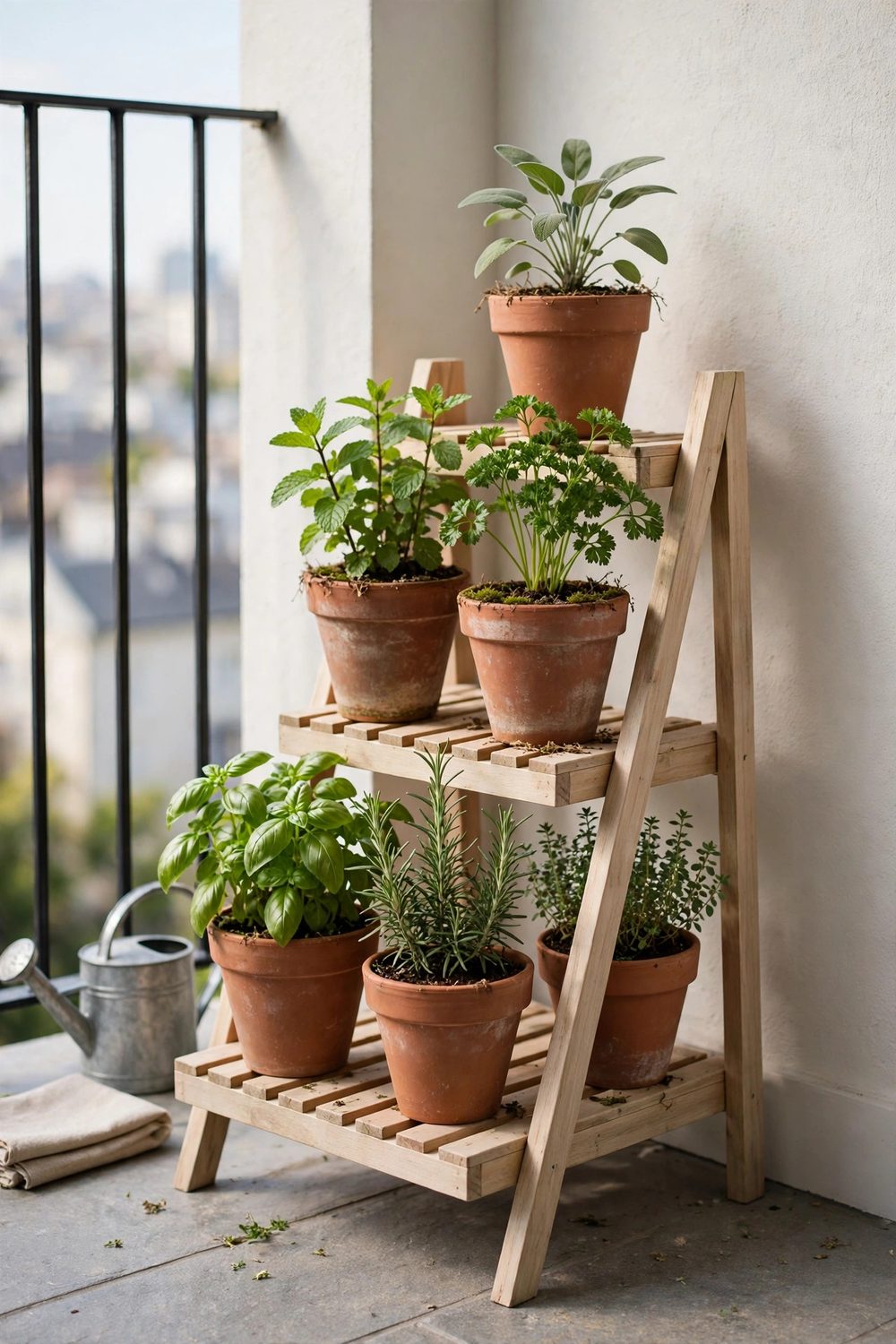
A tiered stand gives you the most herbs in the least floor space. Three shelves hold six or more small pots in about the same footprint as one chair. It suits a corner that gets a mix of sun and shade.
Put sun lovers on the top shelf and softer herbs lower down. The top shelf dries first, so check it each morning in warm weather. The lower shelves stay cooler and hold water a bit longer.
Keep the stand close to the wall so it does not block the door swing. Leave a hand width of space behind it for air flow and for reaching pots at the back.
Label the top shelf pots so you grab the right herb fast.
3. Let One Large Pot Anchor the Space by the Door
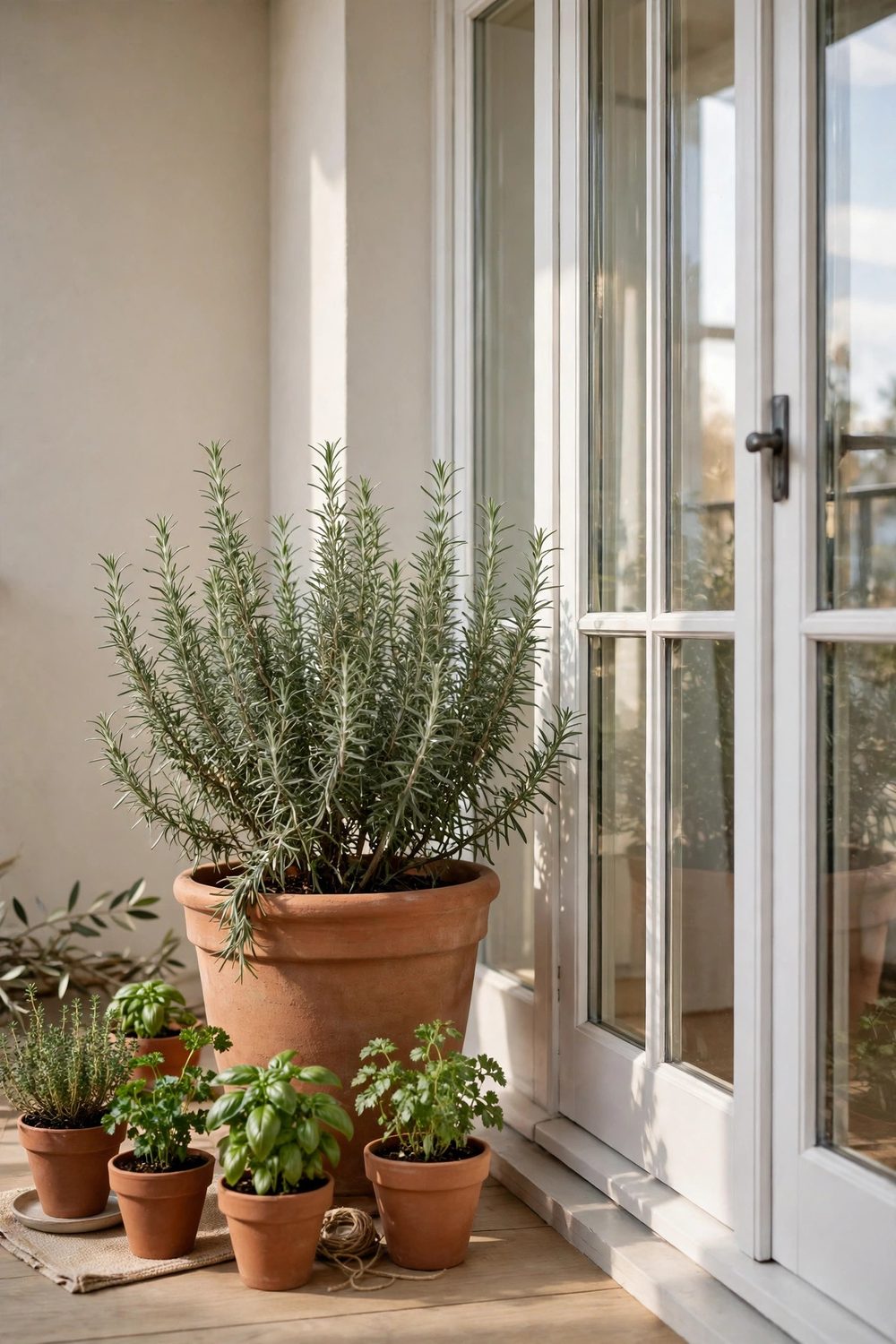
A single large pot with a full, leafy herb makes the whole balcony look planned. The eye lands on it first, and the smaller pots around it fall into place. Rosemary or a big basil plant works well here.
Place the large pot beside the door, not in front of it. You want to brush past the leaves as you step out, not squeeze around the pot with a tray in your hands.
Use a saucer under the pot to catch drips on the floor. A dark ring on balcony tiles is hard to shift once it sets, and a saucer costs far less than a scrub.
Turn the pot a quarter turn each week so one side does not grow thin.
4. Hang Small Pots From the Rail With Sturdy Hooks
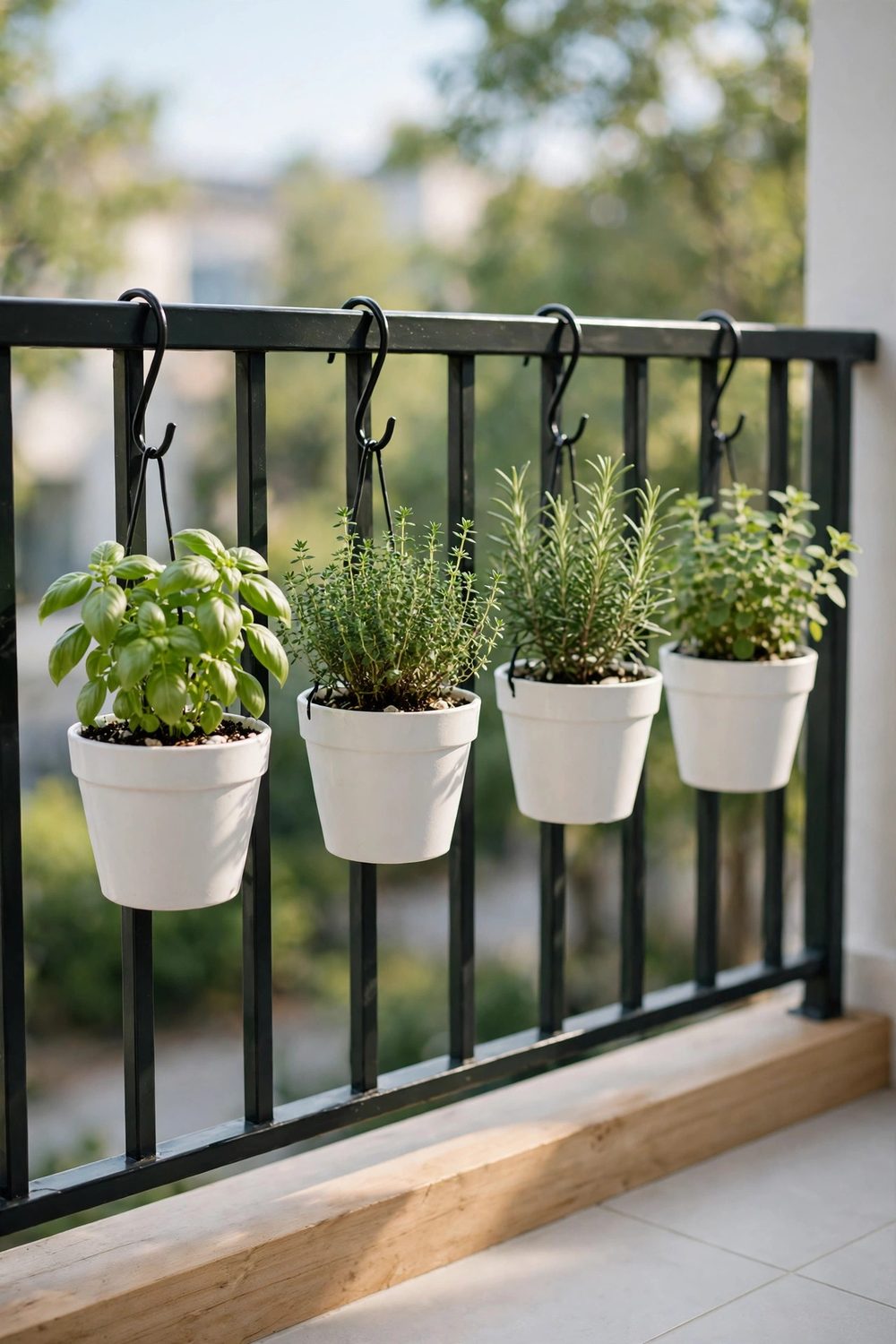
Pick pots with a strong rim or a built-in hook loop. Hang one pot per hook, and space them so the leaves do not crowd each other. Thyme and chives suit small hanging pots well.
Hang the pots on the inside of the rail, not the outside. Pots on the outside catch more wind and are harder to reach for watering. Inside pots are also safer for neighbors below.
Water hanging pots slowly until a little water runs from the base. Fast watering just runs down the sides and leaves the middle of the soil dry.
Use hooks rated for wet soil weight, not just the empty pot. Wet soil weighs far more than dry soil. Space hooks a hand width apart for air flow.
5. Snip Dinner Herbs From a Long Rail Trough
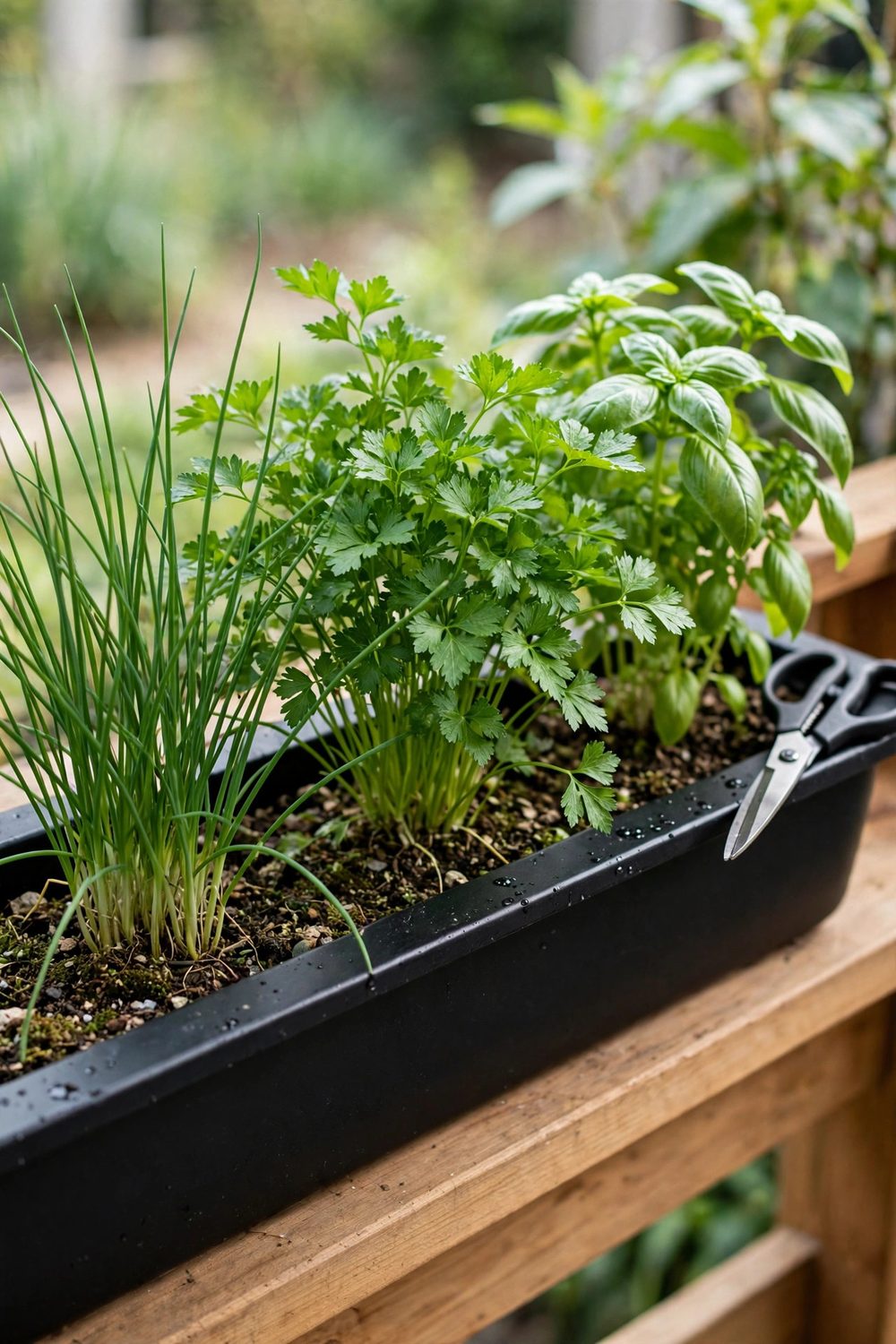
On pasta night, you step out with scissors and snip parsley straight from the rail trough. The trough sits at hand height, so you never bend down or hunt through a crowd of pots. That easy reach is why a trough earns its place.
Plant a cooking row in the trough: parsley, chives, and basil in a line. Keep the spacing even so each plant gets light and air. Crowded leaves stay damp and pick up marks fast.
Trim a little and often, rather than cutting one plant bare. Light, regular snips keep the row bushy and give you fresh leaves all through the season. For more small-space planting ideas, browse these small balcony garden ideas.
Keep scissors tied to the trough so they never wander.
6. Keep Floor Pots to One Color for a Calm Look
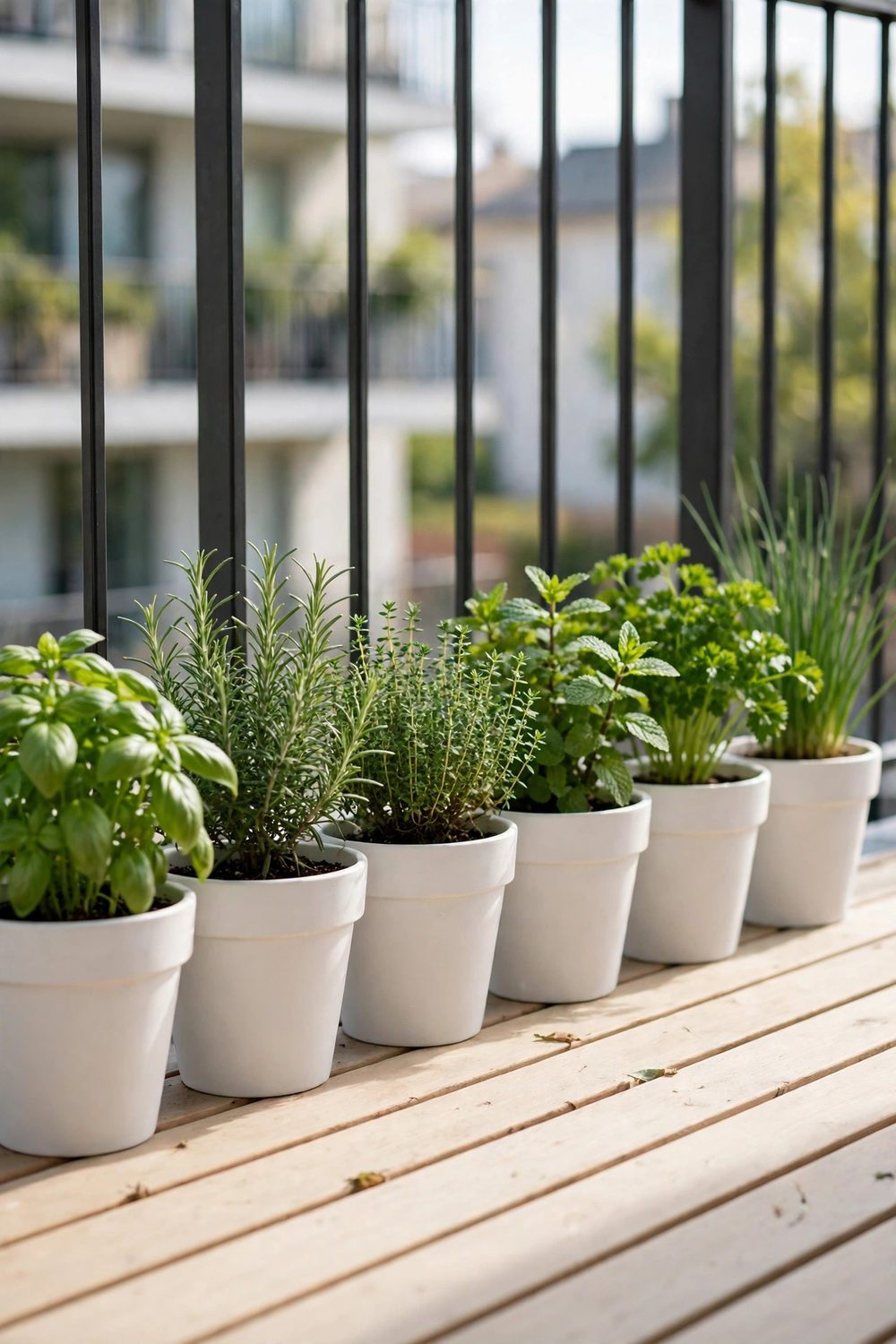
One color for all floor pots is the simplest rule on this list. Terracotta, white, or dark gray all work, as long as you stick to one. Mixed colors make a small balcony look busy, even with few plants.
The rule also makes shopping easier. When a pot breaks, you buy the same color again and the row still matches. You never end up with a stray bright pot that draws the eye.
Let the herbs supply the color instead. Green leaves against one pot color look fresh and calm, and the balcony reads as one tidy corner.
One pot color also calms the view from inside. The balcony reads as part of the room, not a jumble. If you love a second color, use it for tags, not pots.
7. Free the Floor With a Wall Rail for Small Pots
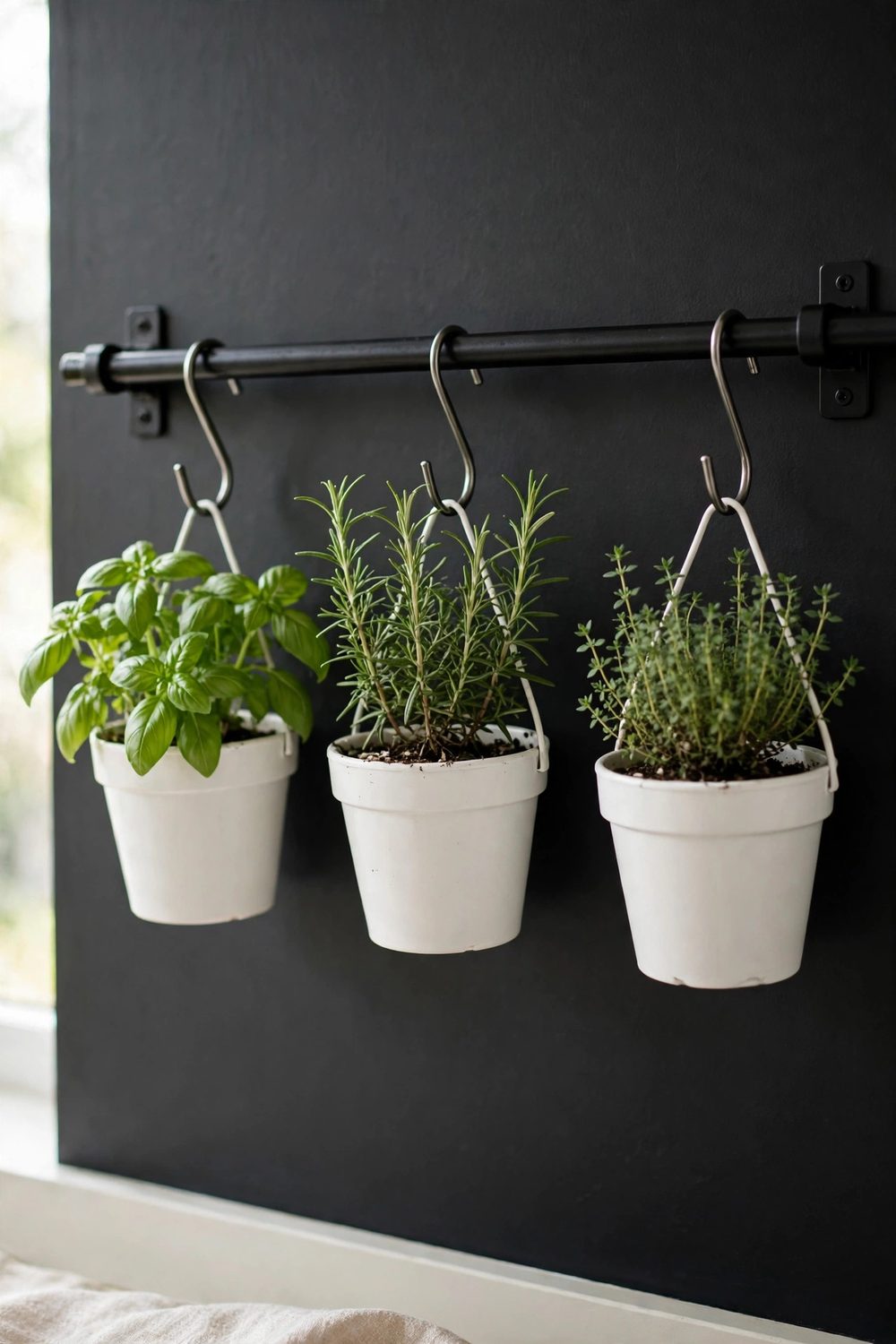
Floor pots eat floor space, while a wall rail lifts small pots up to eye level. S-hooks hold each pot on the rail, and you can slide pots along to change the order. It suits a narrow balcony with barely room for a chair.
Hang lighter pots on a wall rail and keep heavy pots on the floor. A rail full of wet soil gets heavy fast, and a sagging rail is no help to anyone.
Put the herbs you snip most often at the front of the rail. Herbs you use once a week can sit further along, where you reach them less often.
Check the rail fixings once a month for loose screws. Tighten them by hand before they work loose.
8. Stop Rail Pots Drying Out With Self-Watering Pots
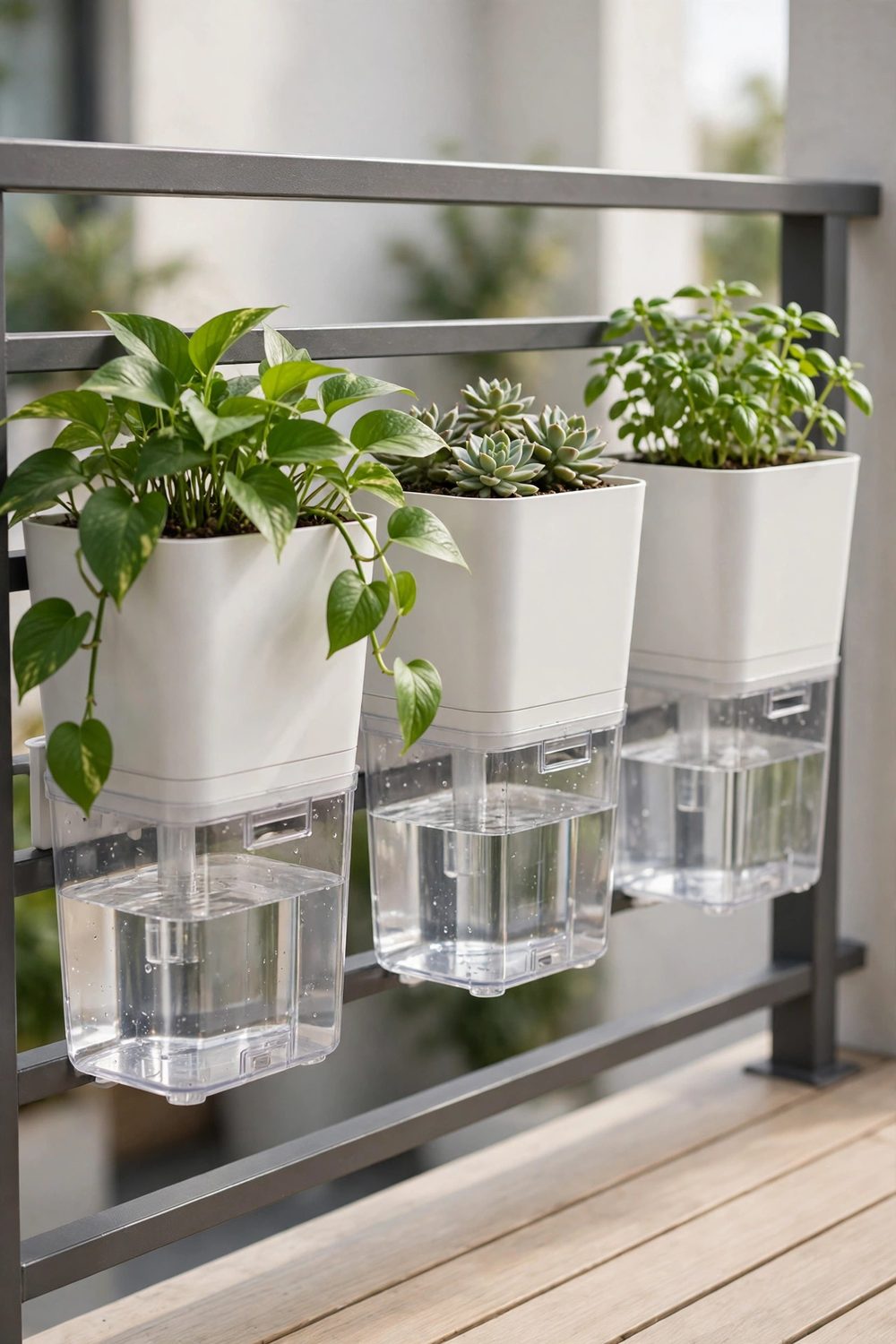
Many people water rail pots on Sunday, then find them bone dry by Wednesday. Rail planters sit in sun and wind, so they lose water faster than floor pots. That quick drying is the most common reason rail herbs fail.
A self-watering pot holds a small reserve of water under the soil. The plant draws from it as the top soil dries, which buys you extra days between waterings. It does not remove watering, but it forgives a missed day.
Check the reserve gauge or lift the pot once a week to learn its rhythm. If you plan a trip, read these tips on how to water balcony plants while on vacation before you leave.
Refill the reserve before it runs dry, not after.
9. Give Mint a Pot of Its Own, Always
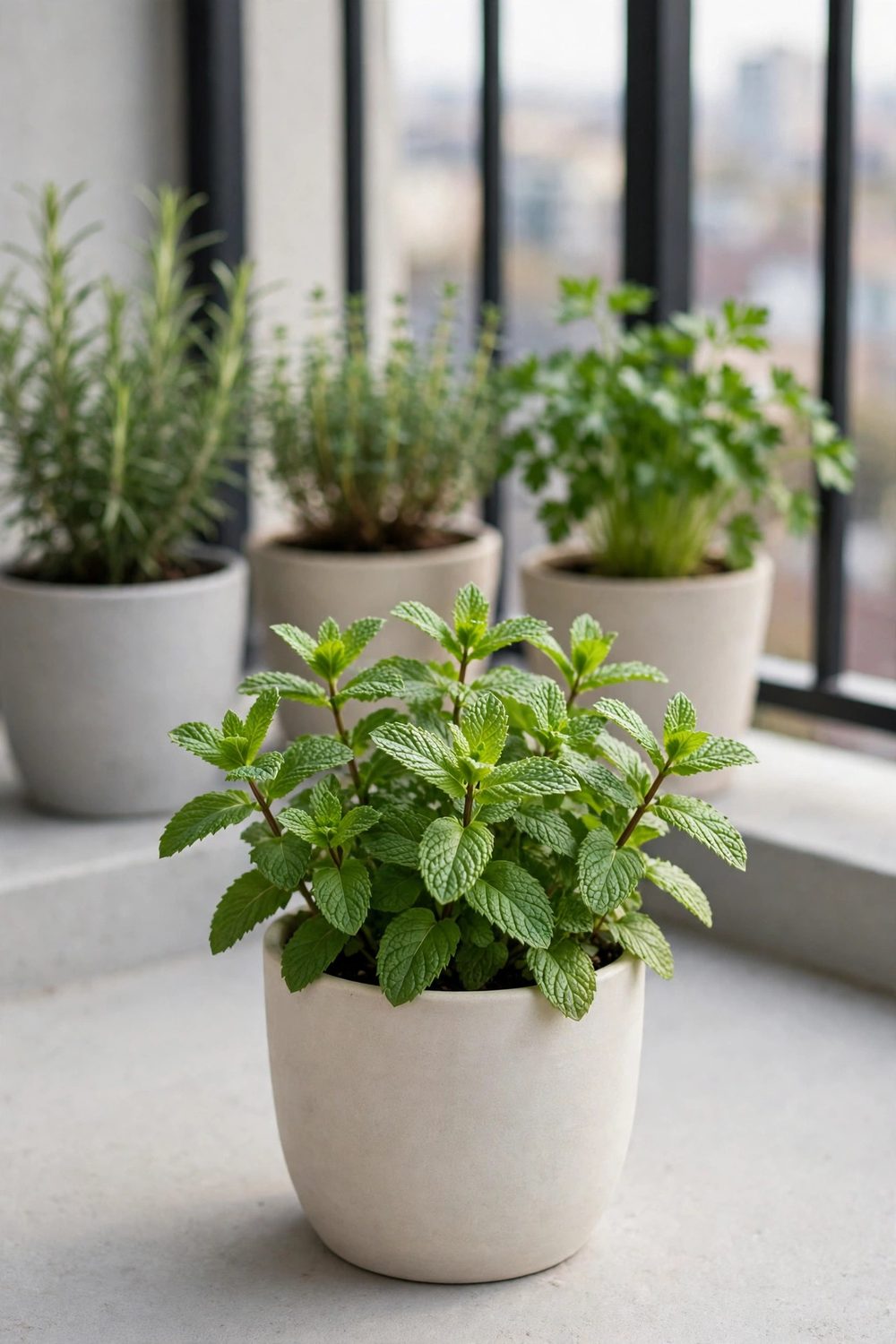
People often assume mint will share nicely in a mixed pot. It will not. Mint sends out runners under the soil and crowds out its neighbors within weeks. The shared pot soon holds mint and little else.
Keep mint alone in its own pot, with no other herb beside it. A medium pot gives the roots room without letting them roam across the whole balcony.
Snip mint from the top to keep it bushy and low. A tall, leggy mint plant flops over the pot rim and shades the pots next to it.
If mint outgrows its pot, divide it into two pots. Give one pot away or keep both for cooking. Trim roots at the same time to keep growth in check.
10. I Moved My Pots Twice Before I Learned to Use Casters
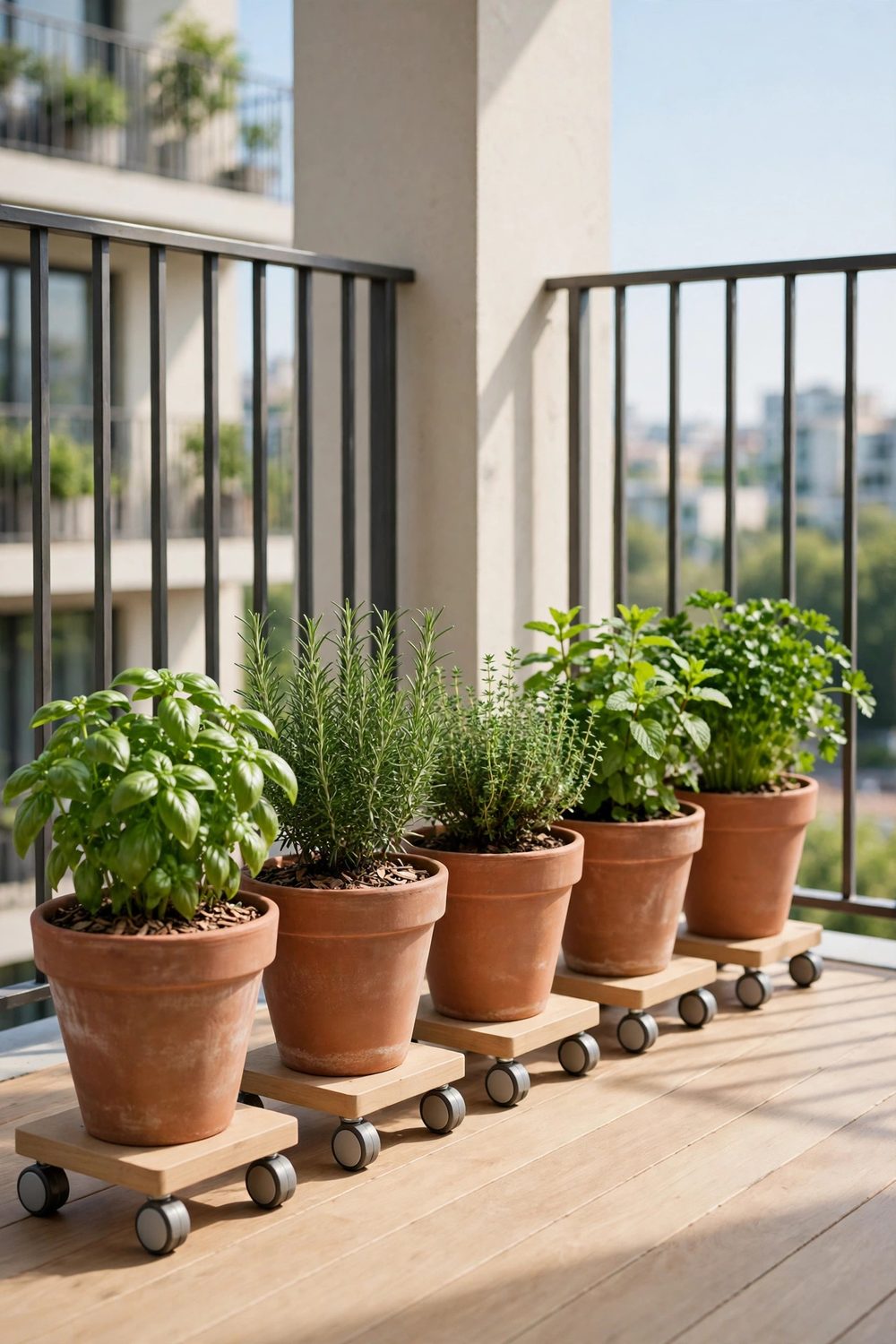
I used to drag heavy pots across the tiles each time the sun moved. The pots scraped, the soil spilled, and my back hurt. Then I set the big pots on small wheeled bases, and moving them became a one-hand job.
Casters help most on a balcony where sun shifts across the day. Roll sun lovers into the light in the morning, then roll them back into a cooler spot on hot afternoons.
Brake the wheels once the pot is in place. A pot left free to roll on a windy balcony can hit the rail or block the door.
Wipe grit off the wheels each month so they roll smooth. Choose bases with a lip so the pot cannot slide off.
11. Stack Pots Into a Tower for a Tight Corner
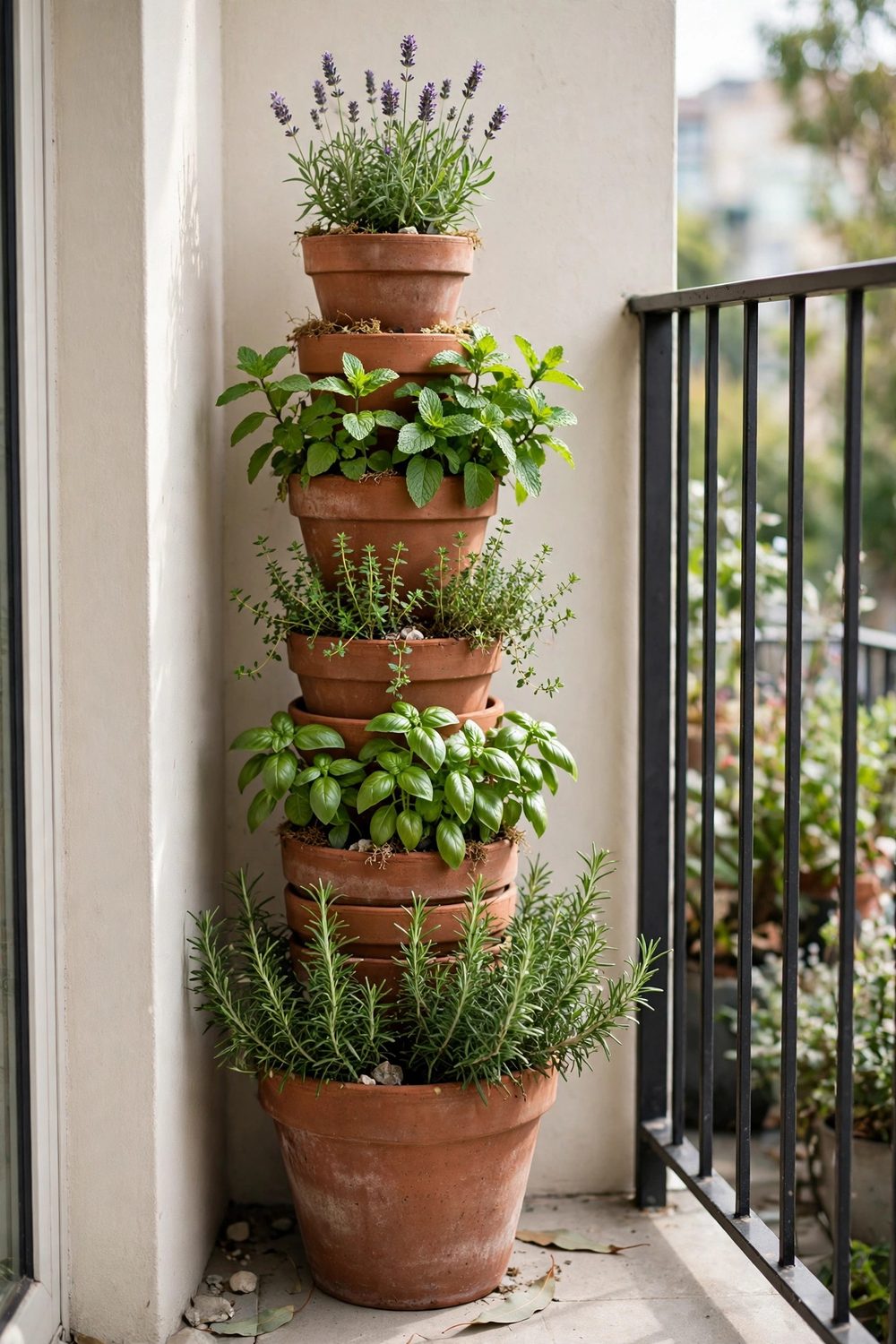
Start with the largest pot at the base and set a smaller pot on top, slightly off center. Repeat with one more pot if the stack stays stable. Each tier holds a different herb, so one corner gives you three or four kinds.
Test the stack with a firm push before you plant. If it wobbles empty, it will wobble worse once the soil is wet. A stable tower matters more than a tall one.
Water the top tier first and let the excess drip down to the pots below. Go slow, so the water soaks in rather than washing soil over the rims.
Keep the tower away from the door swing. A tower by the door gets bumped daily.
12. Set Up a Cook’s Corner With Pots, Scissors, and a Stool
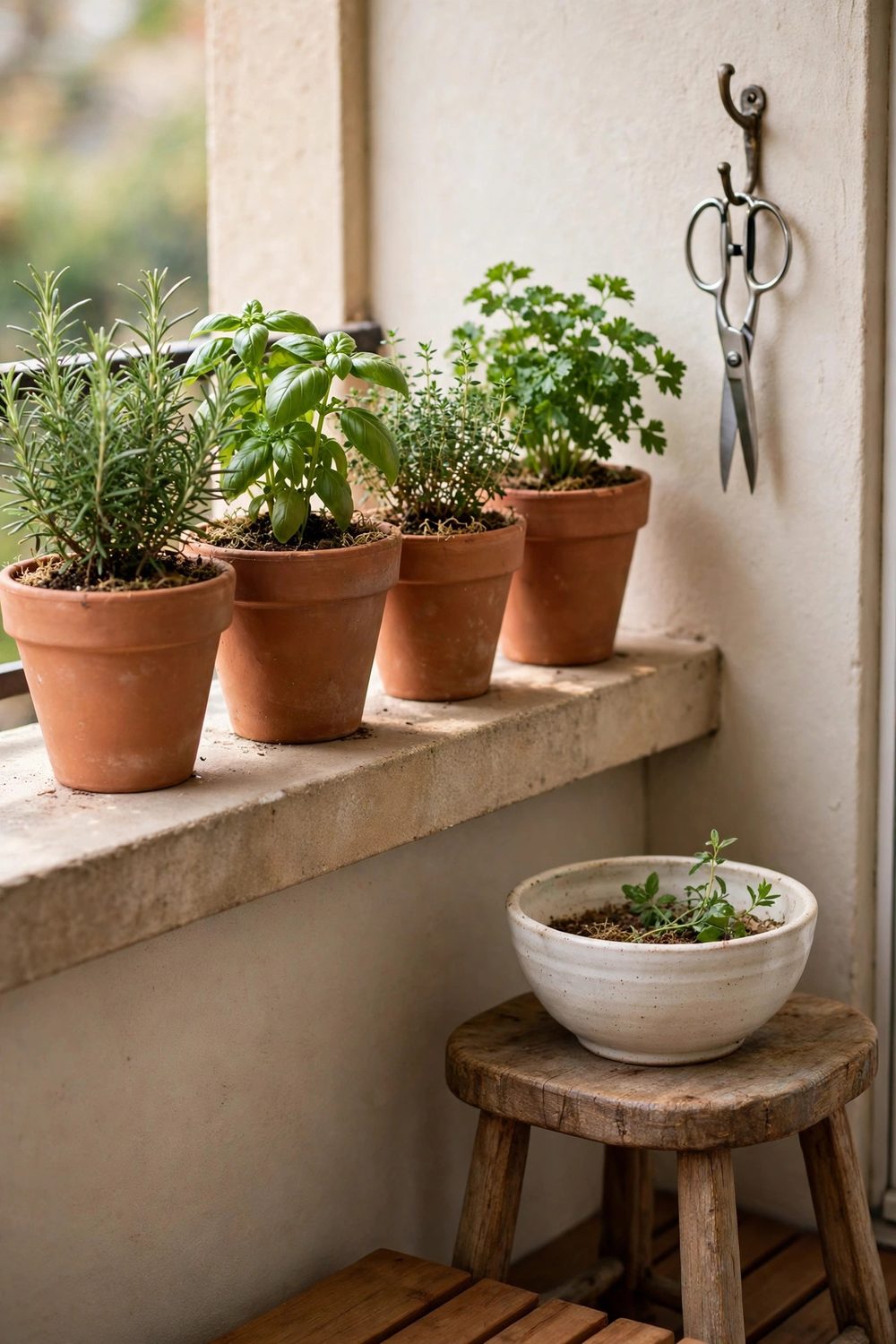
Evening light hits the rail, and you carry a small bowl out to gather herbs for dinner. Scissors hang on a hook by the pots, and a low stool holds the bowl while you snip.
The whole job takes two minutes because all of it sits in one spot.
Keep the stool light enough to move with one hand. A heavy stool stays in the way, while a light one tucks under the rail when you are done.
Store the scissors in a dry spot, such as a small covered box on the rail. Wet scissors rust fast outdoors, and dull blades crush stems instead of cutting them clean. If seating is tight nearby, see these small apartment balcony ideas for layout help.
13. Use the Shade Side for Soft Leaf Herbs
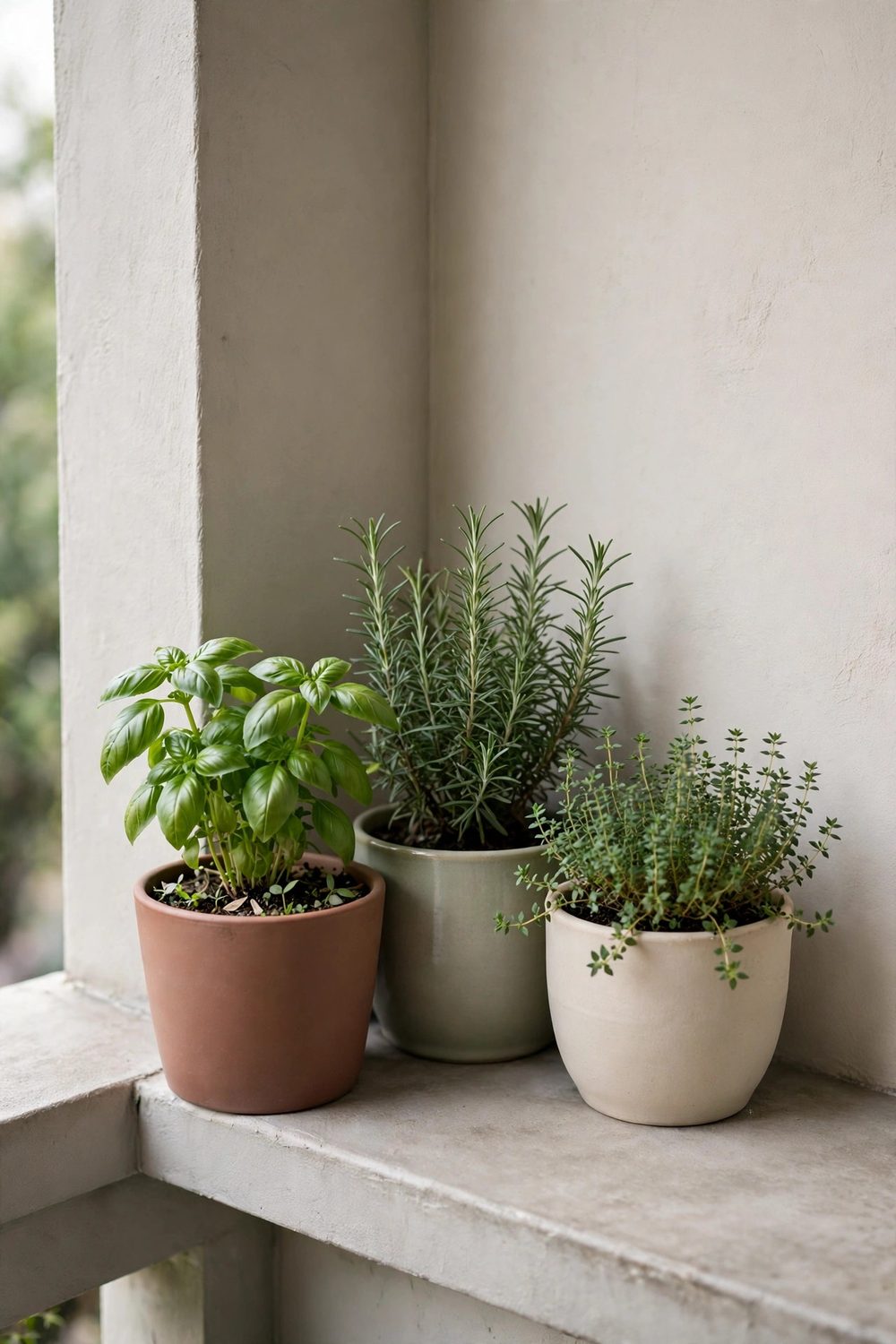
Soft leaf herbs give you the best return from a shady corner. Parsley, chives, and mint cope with less direct sun than basil or rosemary. They also wilt less on hot days when they sit out of harsh light.
Place shade-side pots where they still get bright, open sky above them. Deep shade under a solid roof is different from soft shade beside a wall, and most herbs need that open light.
Water shade pots less often than sun pots, and check the soil with a finger first. Soil in shade stays damp longer, so a fixed watering day can leave roots sitting wet.
Mark shade pots with a dot so you water them last. That small mark stops you from watering on autopilot.
14. Refresh One Pot at a Time Through the Season
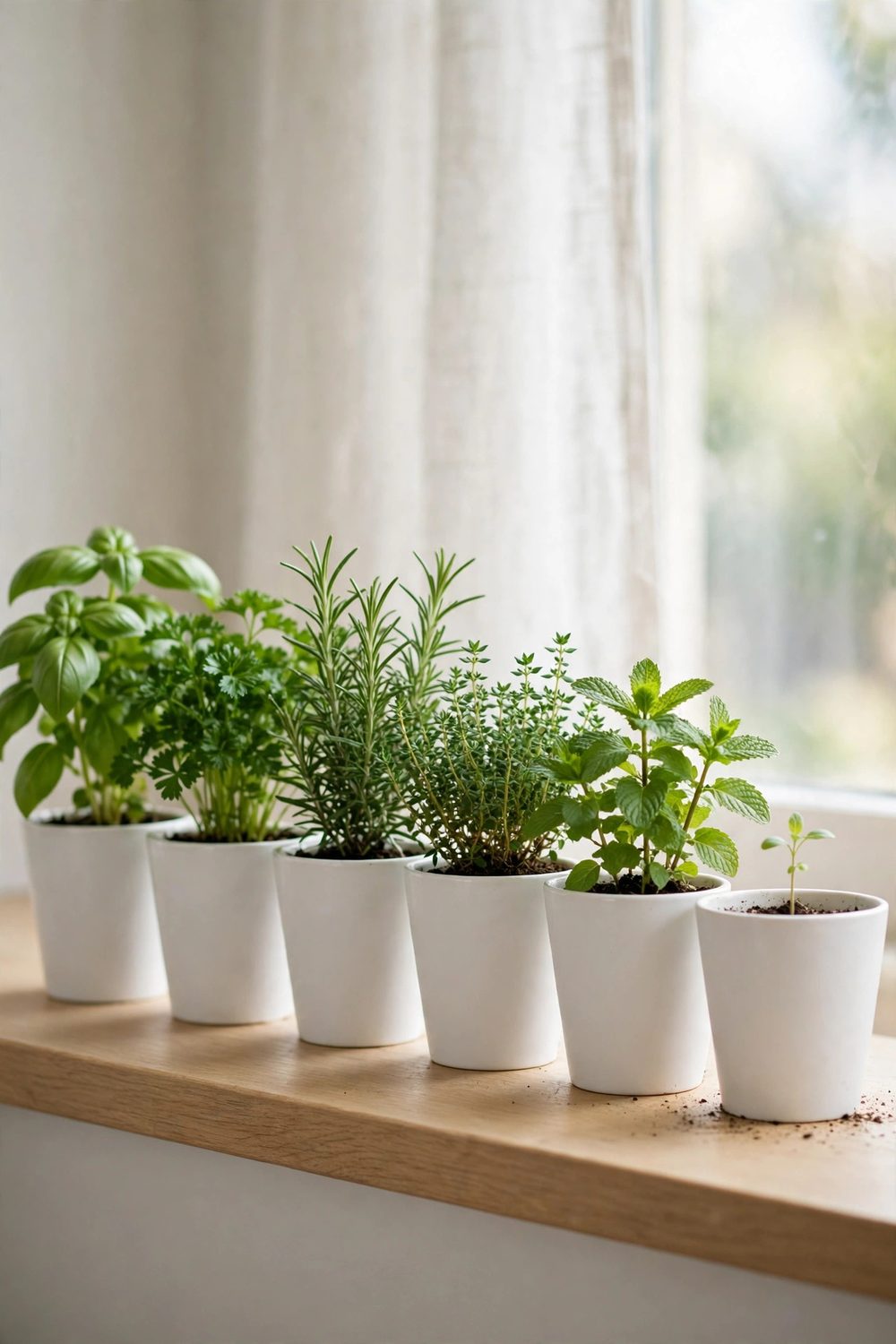
One pot per month is the rule that keeps a herb balcony looking fresh. When a plant gets leggy or thin, swap that one pot and leave the rest alone. The balcony never looks half empty, since only one spot changes at a time.
This slow refresh also spreads the cost and the work. You buy one plant, not six, and you learn what suits your balcony pot by pot.
Keep a note of which pot you swapped and when. A short note on your phone stops you from swapping the same pot twice while another one quietly fades.
Start the swap habit with the weakest pot first. One strong swap builds trust in the habit. Note the swap date on the pot tag.
15. Label Each Pot for a Tidy, Easy-to-Use Row
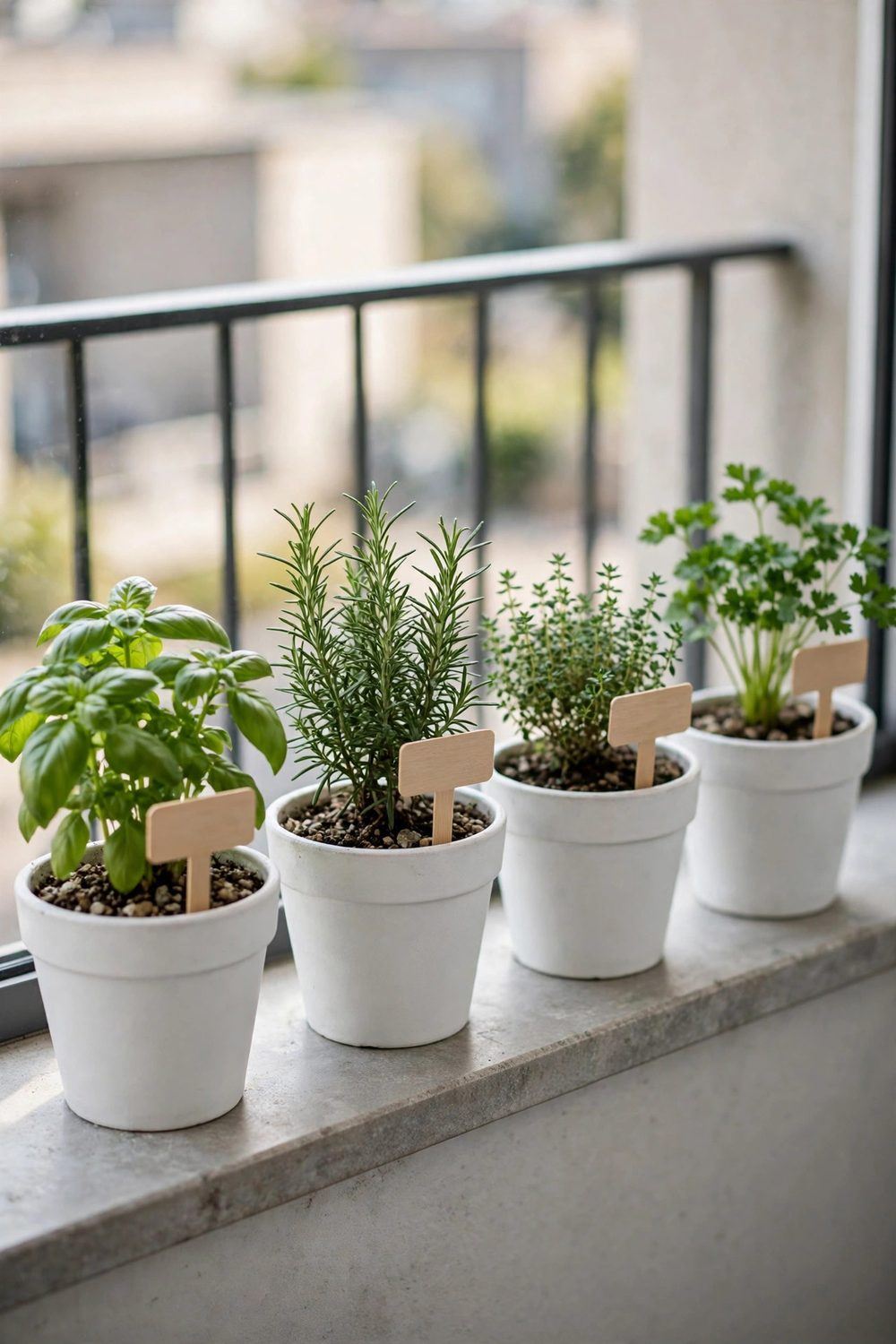
Small wooden markers, slate tags, or painted stones all label pots well. The labels sit at the front of each pot, where you can read them without lifting leaves. Guests can snip the right herb without asking which plant is which.
Write the herb name in large, plain letters. Fancy script looks nice in a photo but is hard to read in evening light when you are in a hurry.
Check labels once a month and rewrite any that rain has faded. A row with clear labels looks cared for, and it stops mix-ups at cooking time.
Too many pots can also crowd a balcony, so watch for the mistakes that make a small balcony feel cluttered as your collection grows.
Start with the rail, add one large pot, and let the rest grow slowly. That order keeps the balcony usable while the herbs settle in.
Keep the pots to one color, mint in its own pot, and the tools in one spot by the door. Small habits like these do more than a big one-day shop.
This balcony herb garden ideas in pots and rails setup works best when it fits your cooking. Save this to your balcony board, then pick your first two pots and start this week.


