

How to Make a Small Balcony Feel Like a Room: 15 Steps
Most small balconies end up as a holding spot for a drying rack, a dead plant, and one sad chair that nobody picks first on a sunny day.
That is a waste of good square footage, because a balcony already has three things every room needs: light, air, and a view. It lacks a floor that feels indoor, edges that feel private, and a seat worth sitting in.
This guide walks through how to make a small balcony feel like a room in 15 steps, in the order you should actually do them. You start with the floor and the edges, then add seating, light, storage, and a weekly reset.
Each step is small on its own. Together, they turn a bare slab into a place you walk out to on purpose, morning coffee in hand. For a wider look at balcony layouts, see these apartment balcony ideas before you start measuring.
1. Clear Everything Out and Measure the Bare Space
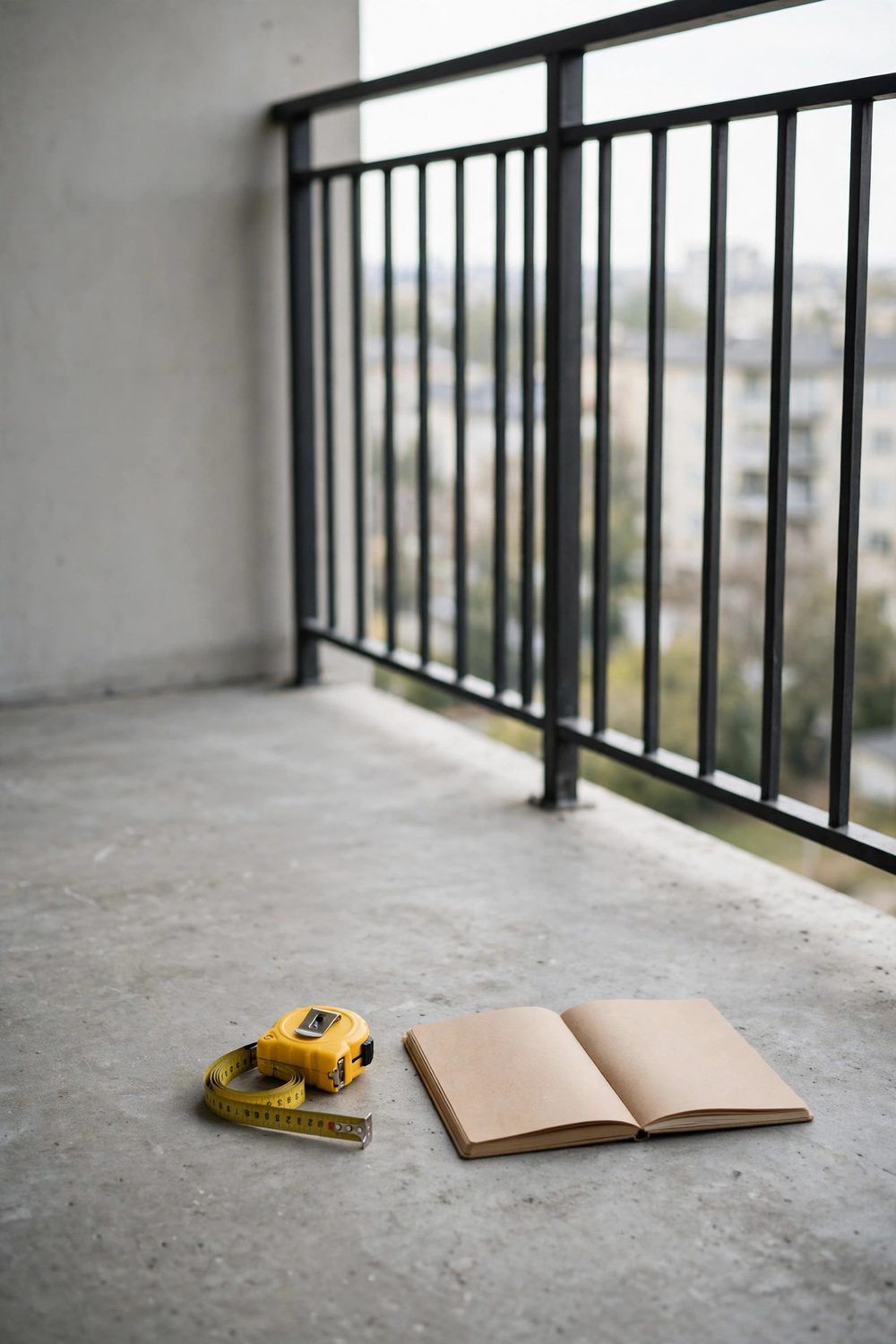
Nothing reads as a room while it still holds broken pots and a bike pump. Take it all off, sweep the floor, and look at the empty slab for a full minute. That empty look is your starting point, not a problem to hide.
Then measure the width, the depth, and the height of the railing. Write the numbers on your phone, plus the width of the door swing. That door swing decides where a chair can go. Keep the list in your pocket when you shop for tiles.
Note where the sun lands at breakfast and again at dinner. A chair placed in full glare at 6 p.m. will sit empty, no matter how nice it looks in a photo. Sit in the spot for five minutes before you call it done.
2. Lay a Floor That Looks Like It Belongs Indoors
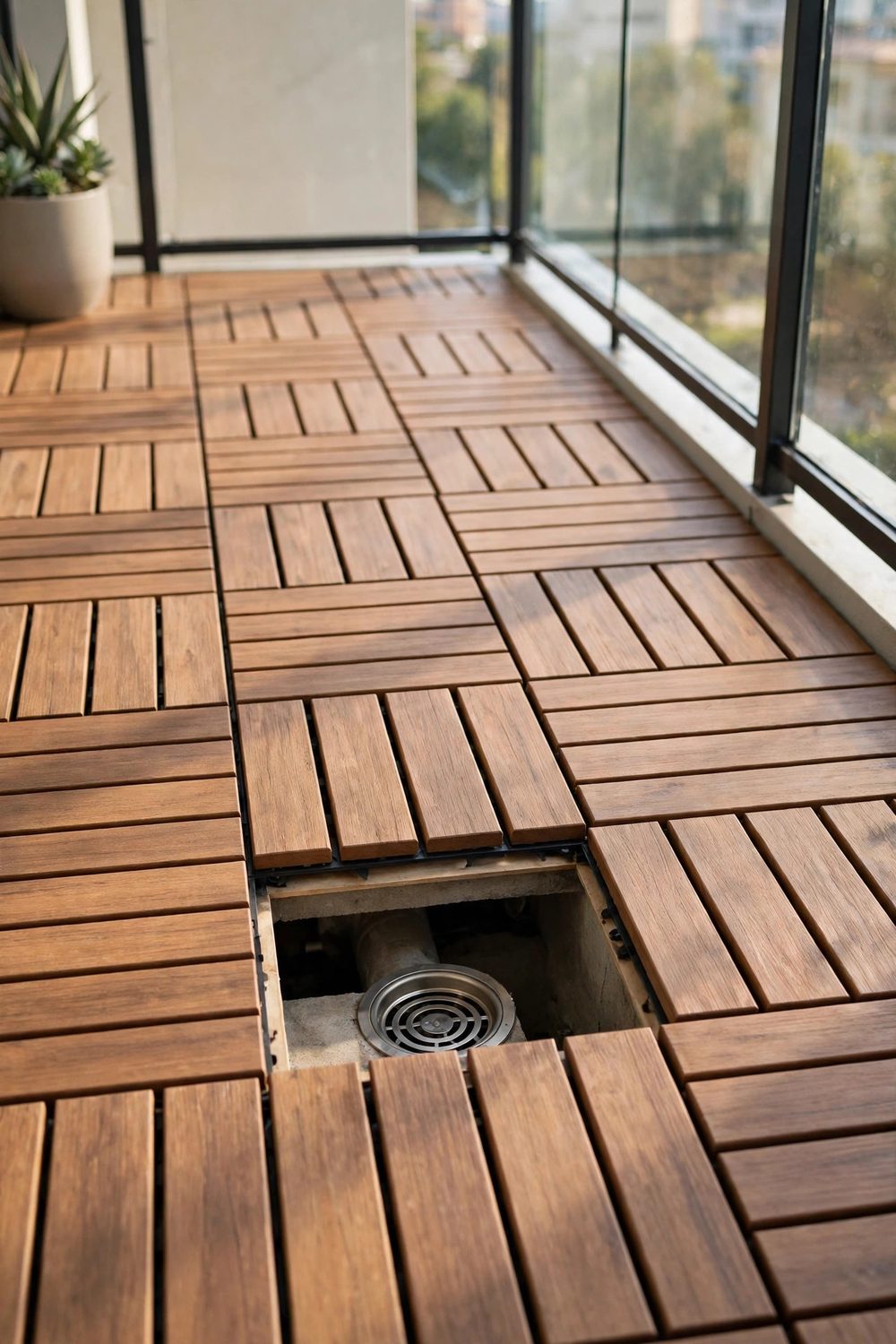
Bare concrete is the single biggest reason a balcony feels unfinished. A warm floor underfoot tells your brain this is a room, not a ledge. It also softens sound, so steps and chair legs feel less harsh.
Interlocking deck tiles or a flat outdoor rug both work, and both lift off again if you rent. Pick one warm tone, such as wood or sand, and run it edge to edge.
Leave a gap at the drain so rain can still run off. Sweep under the tiles monthly so grit does not scratch the floor below. If you want more floor options, read these balcony flooring ideas renters can install in an hour before you buy.
3. Give the Balcony One Clear Job
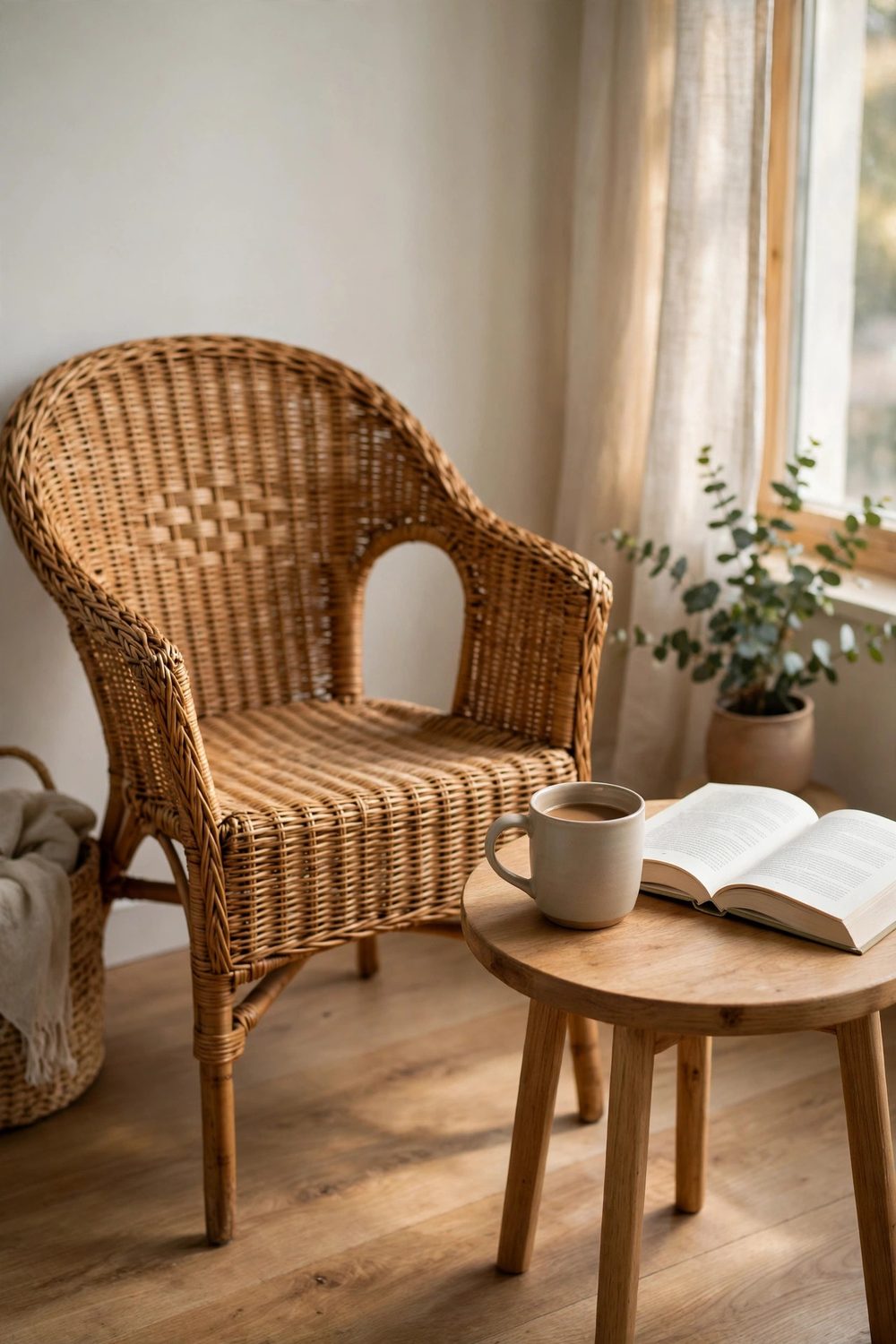
Pick one job and say it out loud: morning coffee spot, reading corner, or dinner for two. A balcony that tries to do five jobs ends up doing none of them well. Say it to a friend and the choice feels final.
That one job then picks your furniture for you. A coffee spot needs one good chair and a place for a mug. A dinner spot needs two chairs and a steady table.
Write the job on a sticky note and keep it while you shop. It stops the extra side table, the extra planter, and the extra stool from creeping back in. Tape it inside a kitchen cupboard where you will see it while you shop online.
4. Build the Walls With a Screen, Curtain, or Tall Plants
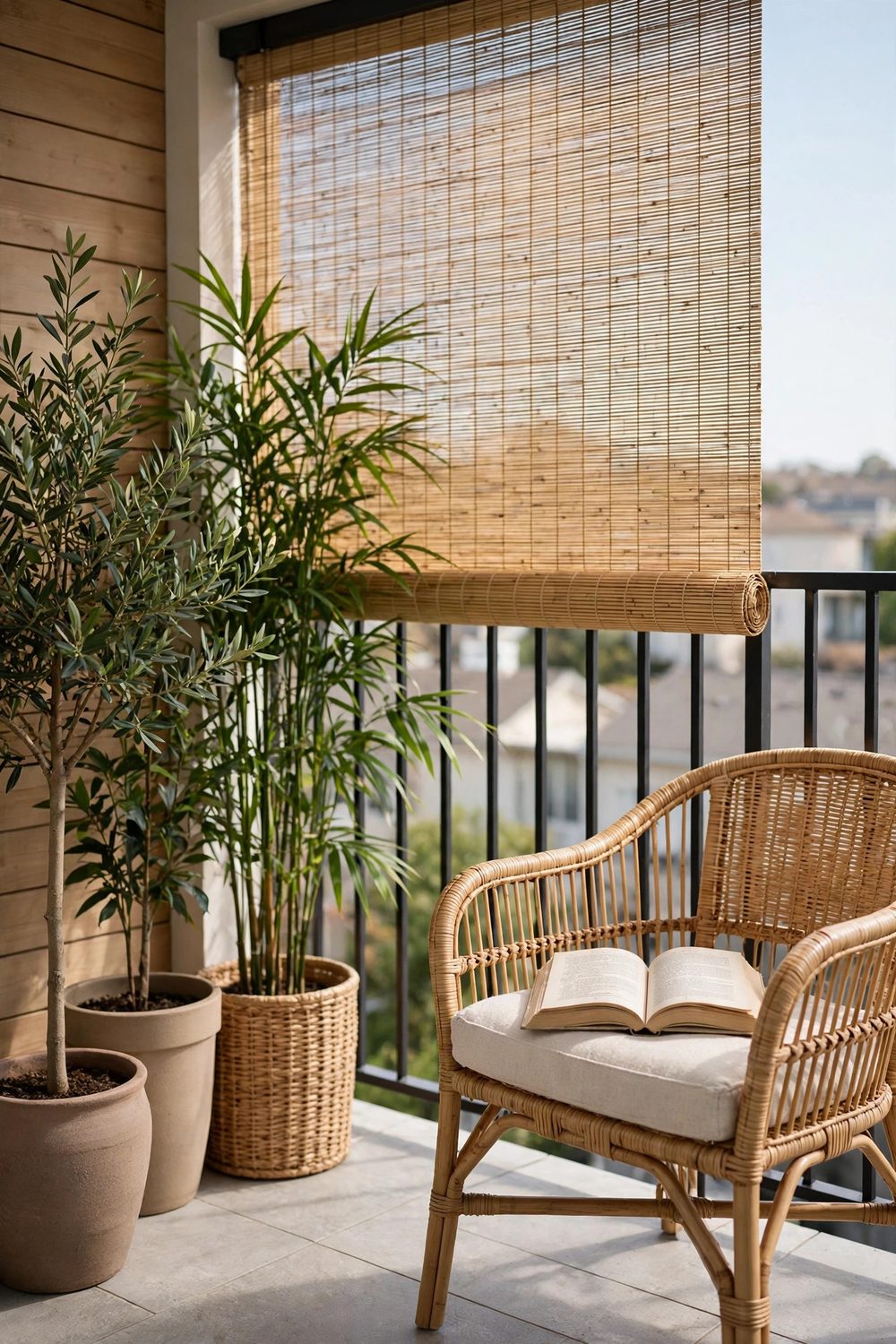
It is a quiet evening, you sit down with a book, and the neighbor across the gap is staring straight at you. No one relaxes in a fishbowl. A soft screen at eye level fixes that in one afternoon.
Rooms have walls, so give your balcony at least one. A roll-up screen on the railing, one outdoor curtain panel, or two tall planters all close off the worst sightline.
Cover only the side that bothers you most and leave the rest open. Full enclosure on a small balcony feels like a box, while one soft wall feels like privacy. A single panel also costs less and takes less time to put up.
5. You Do Not Need Four Walls to Get the Room Feeling
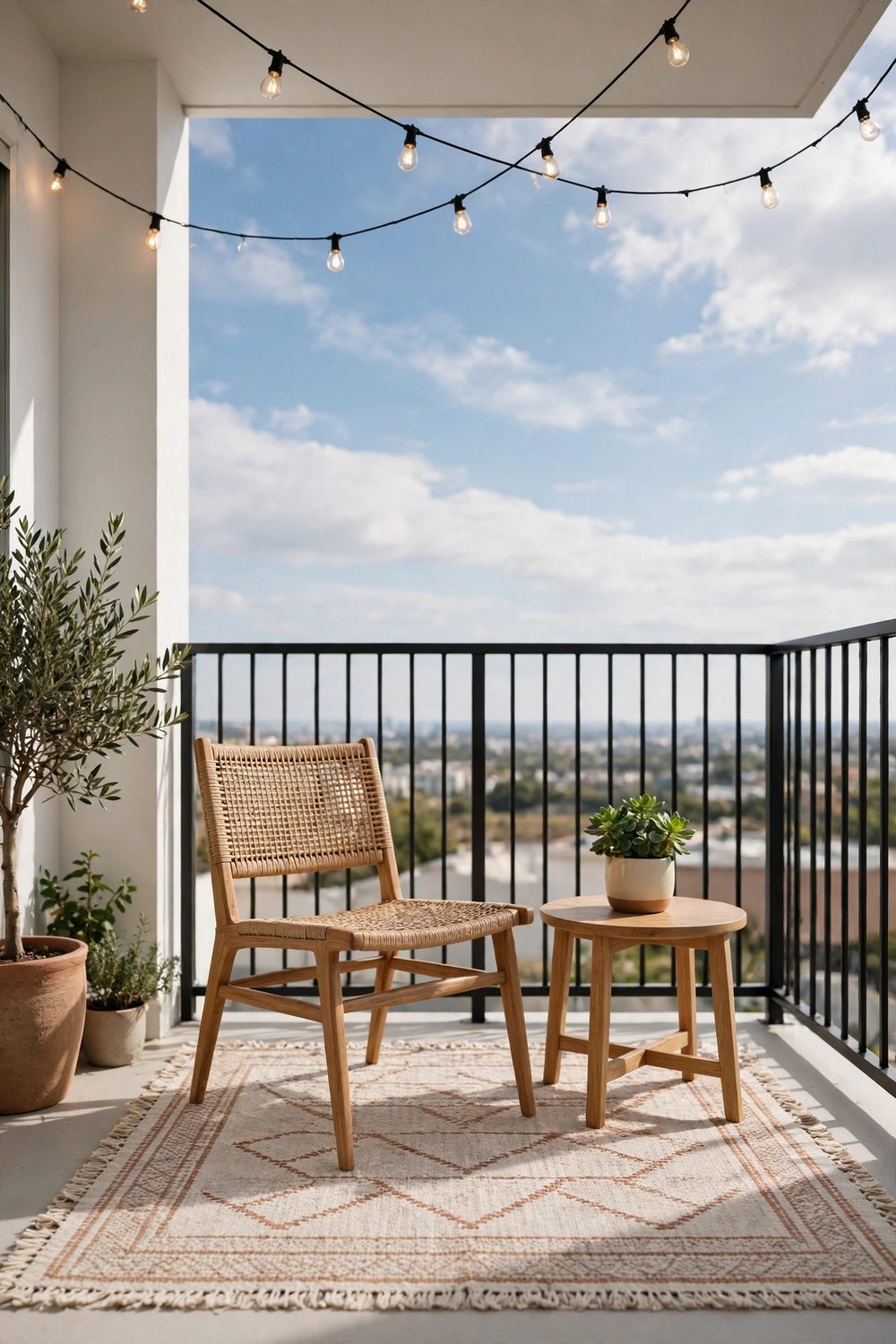
Some people wait for a full enclosure before they use a balcony at all. That wait can last years, and the space sits empty the whole time. Start with what you have and add walls only where needed.
A floor, one wall, and a light overhead already signal “room” to most eyes. The open sky above you is a bonus, not a flaw in the plan.
Work with the edges you have: railing, side wall, and door frame. Those three lines frame the space, and the steps below fill in the rest. Stand in the doorway and trace those lines with your eyes before you shop.
6. Start With the Biggest Shape: the Seating
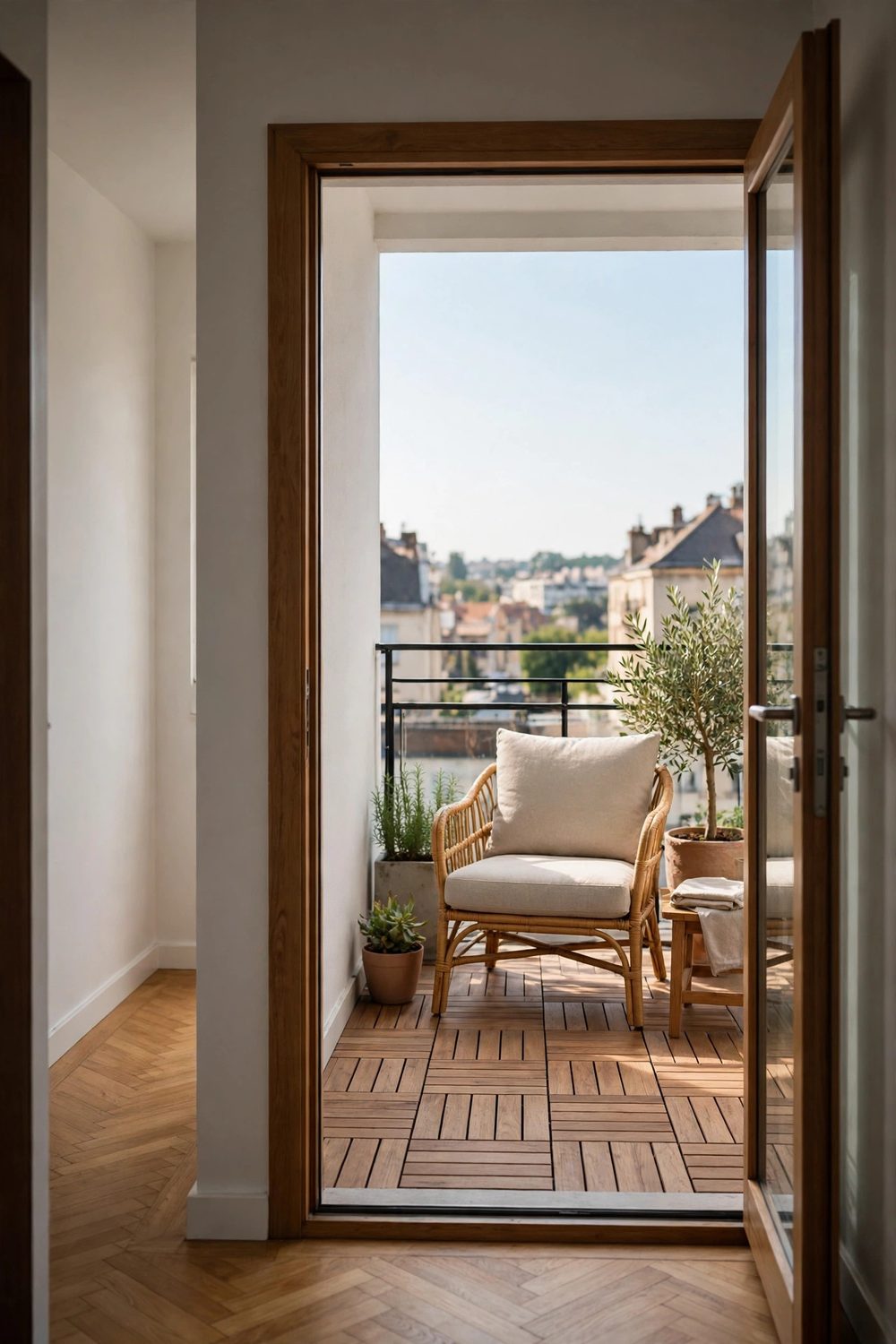
Look at the balcony from the doorway and notice the first big shape your eye lands on. On a good balcony, that shape is a chair you actually want to sit in. If the first shape is storage boxes, move them out of sight.
Choose seating that fits with room to walk past it. A deep lounge chair may look soft, but it eats the whole floor on a narrow balcony. Check these tips for choosing balcony furniture that survives weather so your chair lasts past one season.
Test the fit with tape on the floor before you order. Mark the chair outline, walk the path to the railing, and check that the door still opens all the way. Keep the tape down for a day so you can test the path twice.
7. Add One Small Table at Elbow Height
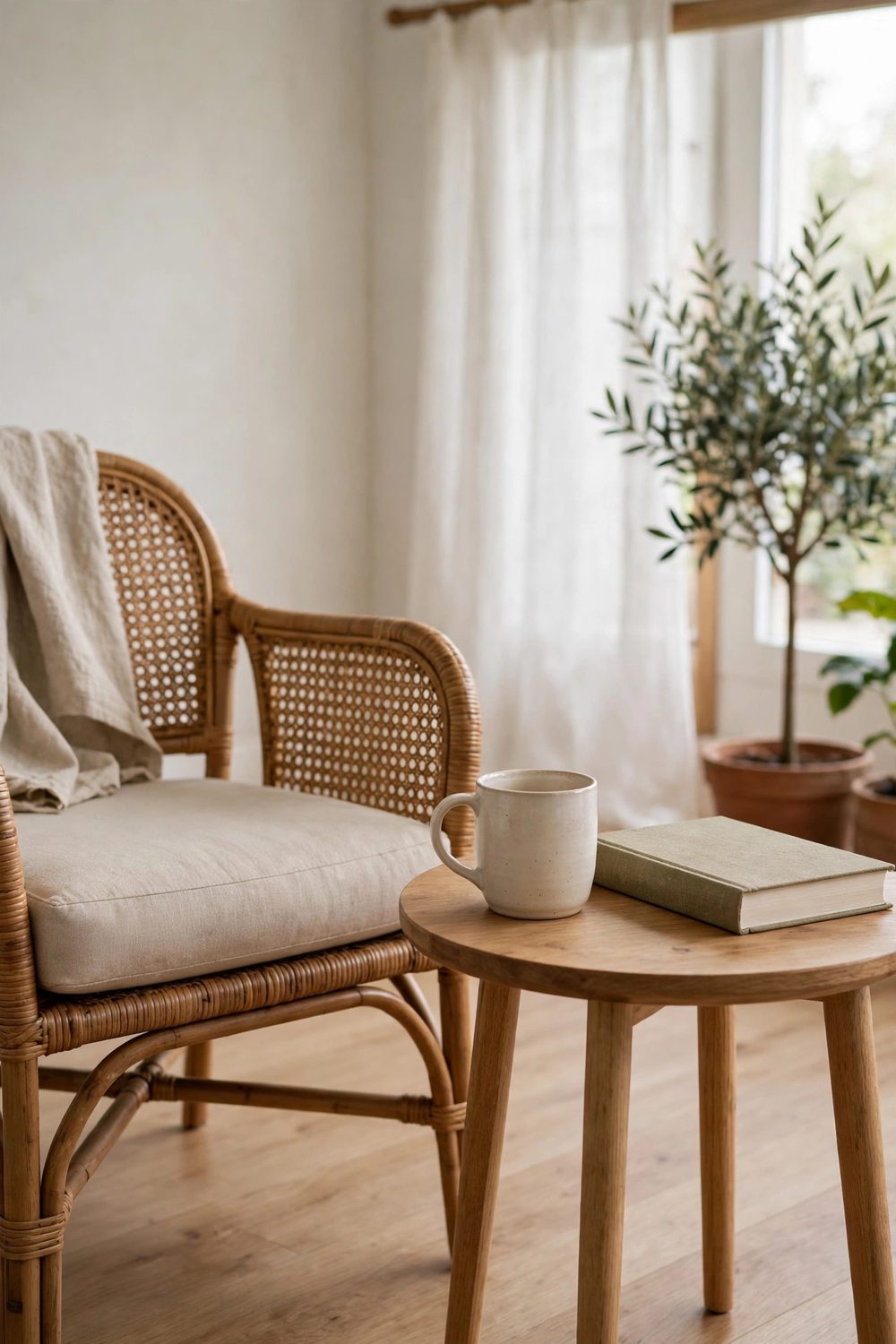
Rule to remember: every seat needs a landing spot within arm’s reach. Without one, mugs end up on the floor and books end up balanced on knees. That rule holds for one chair or for a full seating group.
A small side table at elbow height beats a big table every time on a small balcony. It holds a mug, a phone, and a book, and that is the whole job.
Pick a table you can lift with one hand, so you can shift it for sun or rain. For seating and table pairings that fit tight floors, see these small balcony furniture ideas for scale ideas. A lipped edge stops mugs sliding off in wind.
8. Layer a Rug and Cushions Over the Hard Surfaces
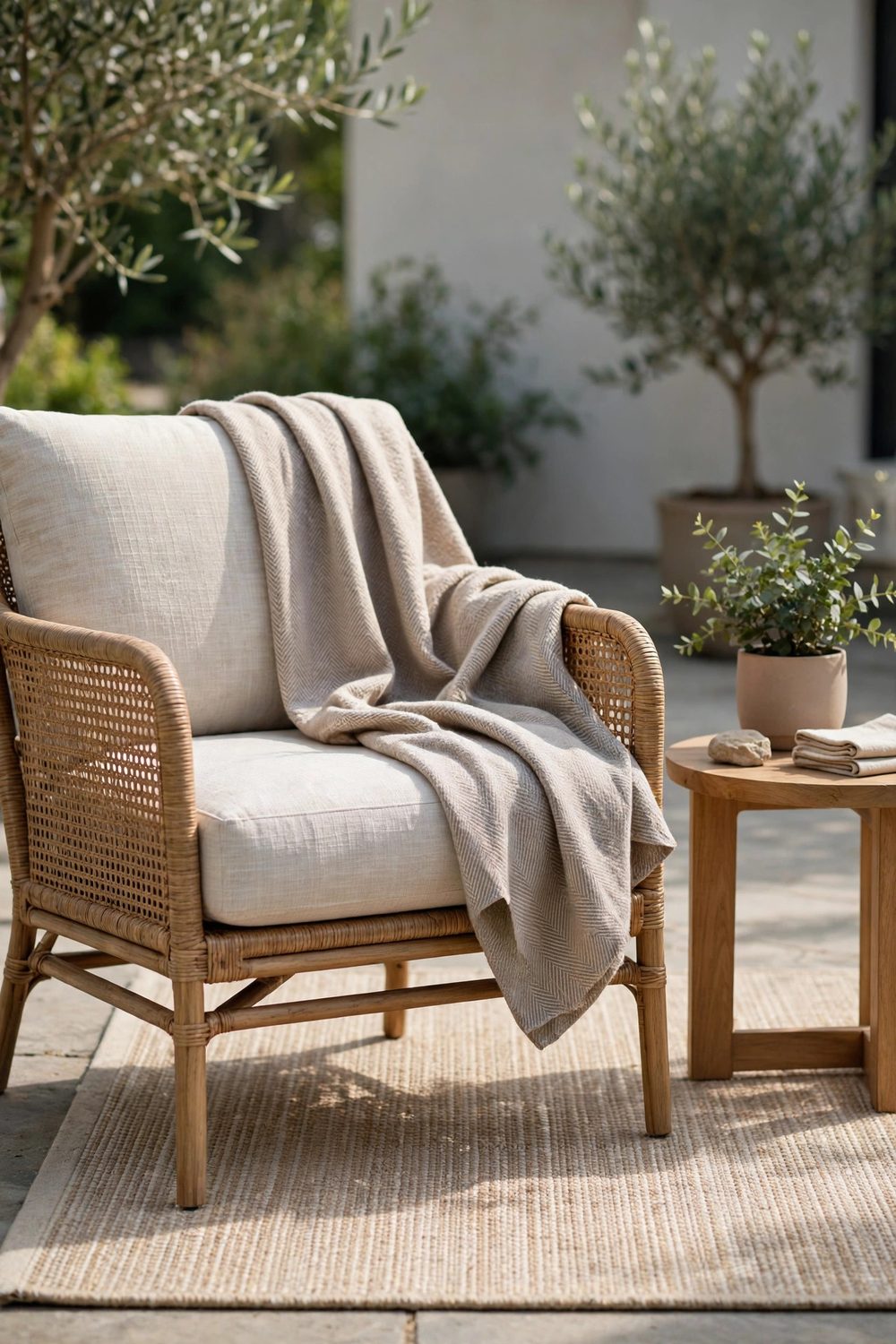
The classic mistake is buying the chair first and stopping there. A bare chair on a bare floor still feels like outdoor storage, even if the chair cost a lot. Layers, not price, are what make a seat feel lived in.
Soft layers fix that fast. An outdoor rug under the chair and a firm cushion on the seat change how the space sounds and feels underfoot.
Keep the rug flat with a non-slip pad made for outdoor use. On smooth balcony tiles, a rug with no grip slides a few inches every time you stand up. Trim the pad a touch smaller than the rug so no edge shows.
9. A Rug Beats a Second Chair on a Tiny Balcony
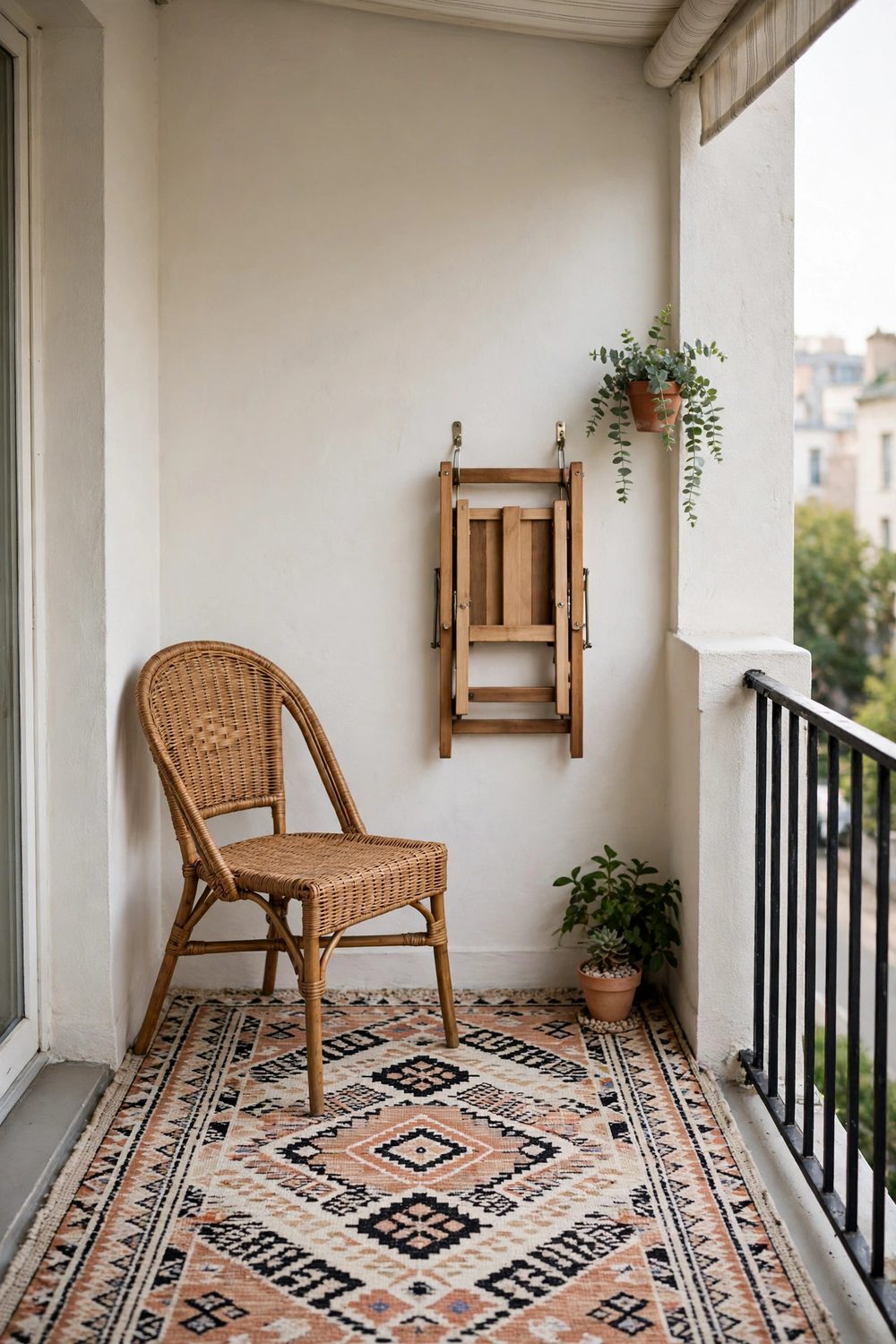
Two chairs sound sociable, but on a very small balcony the second chair often blocks the door. A rug, by contrast, takes no walking space at all. Walk the door path yourself before you add a second seat.
The rug marks the room boundary, warms the floor, and ties the chair and table into one group. Guests still have a place to stand with a drink. See these small balcony rug ideas for sizes that fit a narrow floor.
If you truly host often, add one folding stool that hangs on the wall. It comes out for guests and goes away after, so the floor stays clear daily. Hang it on a hook by the door, not behind the chair.
10. I Learned This From a Balcony That Only Fit One Chair
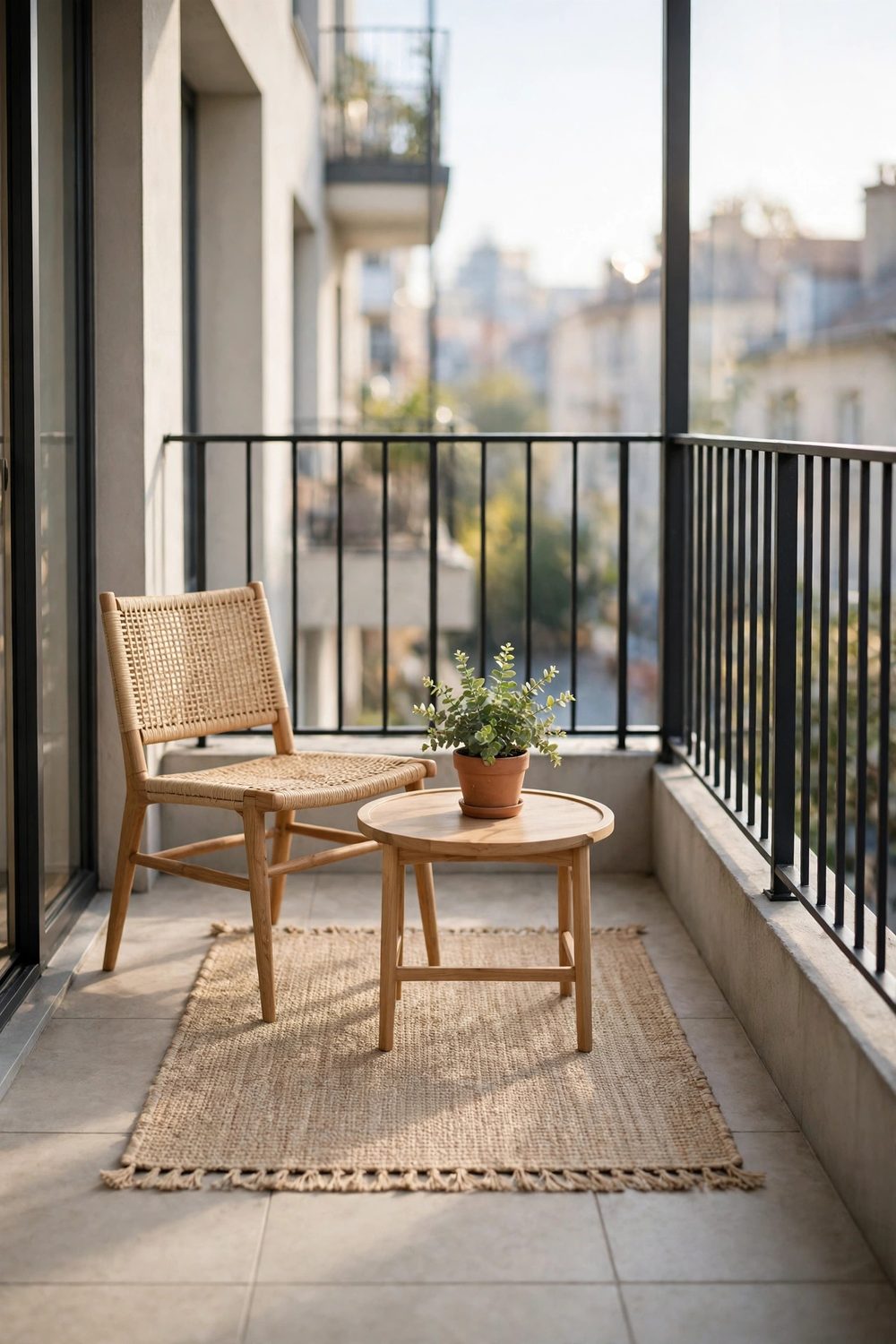
My own first balcony fit one chair, one pot, and not much else. I kept buying small decor, and each piece made the floor feel tighter. The floor looked full, yet the space felt like nothing at all.
The change came when I stopped adding and started grouping. One rug, one chair, one table, and one plant by the railing finally looked like a room.
The lesson stuck: on a small balcony, fewer pieces placed as a group beat more pieces spread along the edges. Leave one stretch of floor bare on purpose. That bare stretch is what lets the room breathe and stay usable.
11. Hang One Piece of Wall Decor at Eye Level
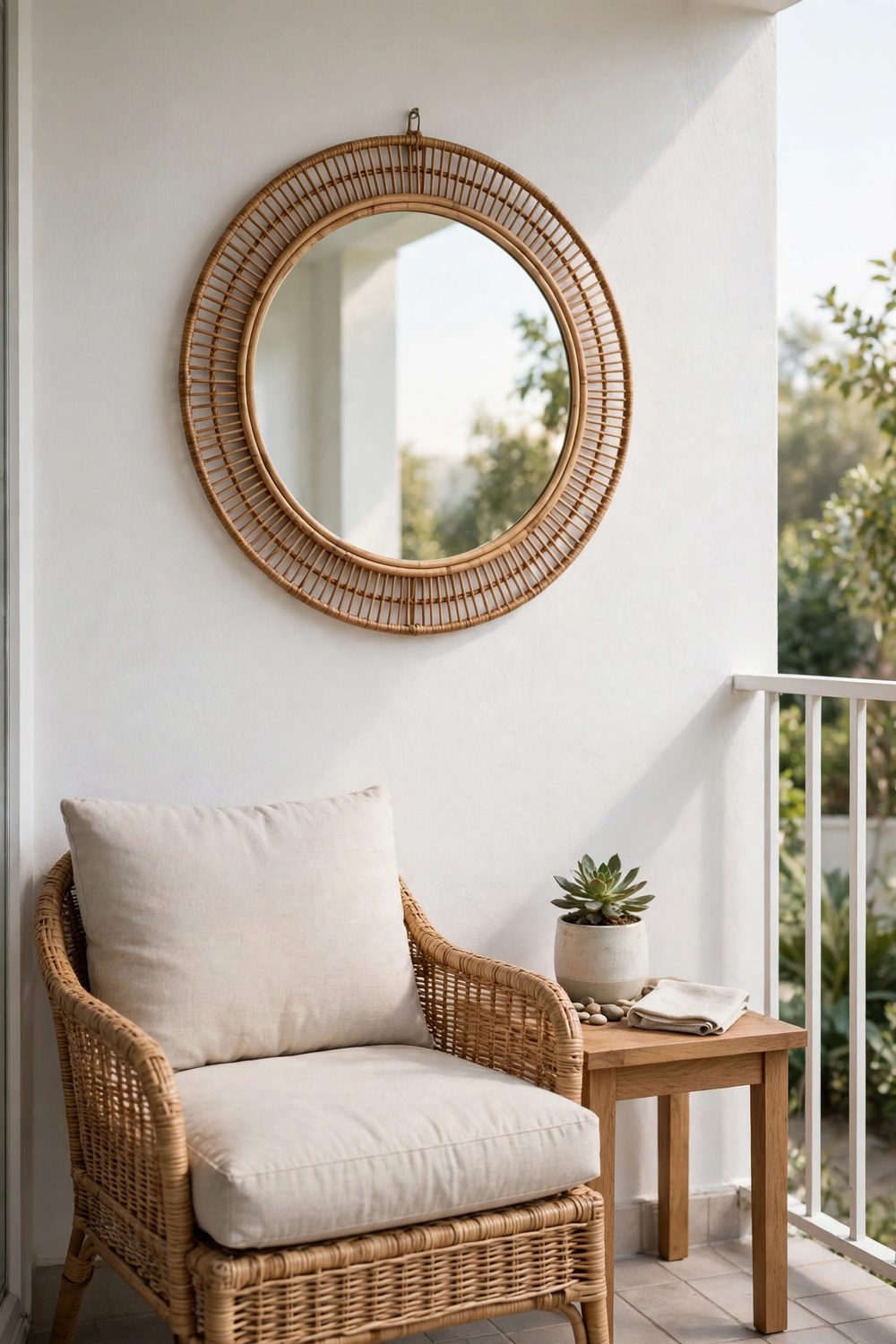
Bare walls are the reason a balcony can have furniture and still feel like a yard. Indoors, walls carry art, shelves, or a mirror, and eyes expect that here too. One hung piece closes that gap fast and at low cost.
Hang one weather-safe piece at eye level on the side wall: a small mirror, a metal print, or a wall planter. One piece is enough, and it pulls the whole space together.
Use a removable hook if you rent, and check the weight limit first. A mirror that falls in wind is worse than a bare wall, so hang it low and secure. Press the hook firm and wait a day before you hang the piece.
12. Make Evenings Work With Three Small Lights
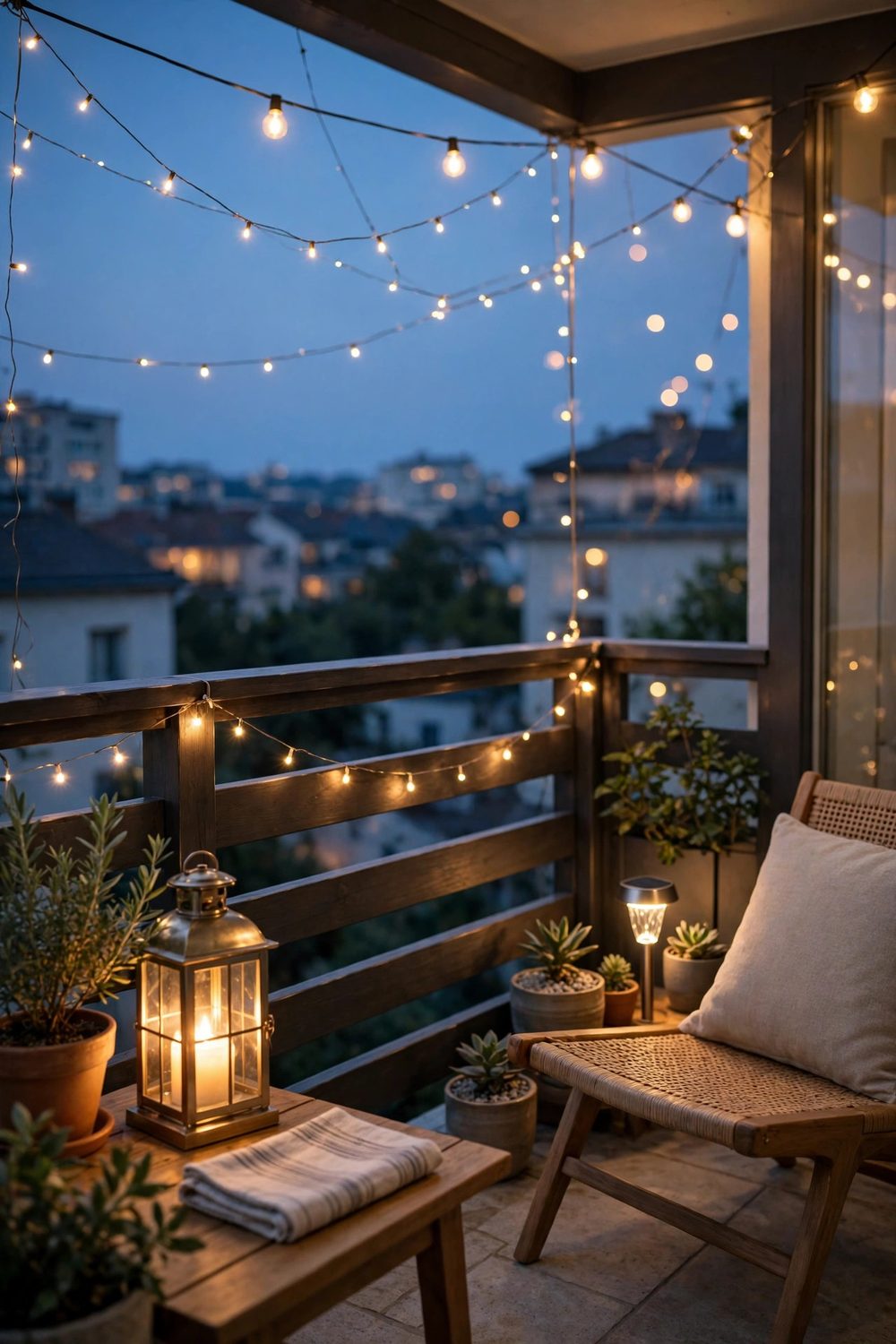
One bright overhead bulb makes a balcony feel like a porch at a gas station. Soft light at three heights makes it feel like a living room after dark. Dim light also flatters the plants and the rug at night.
Try string lights up high, a lantern on the table, and one small solar light near the floor. Together they glow without glare, and they cost little to run.
Check where the string light plug reaches before you hang the strand. A plug that stops a foot short of the outlet turns a nice plan into an extension cord trip hazard. A battery strand avoids the plug problem on balconies with no outlet.
13. Tame Sun and Wind Before You Buy More Decor
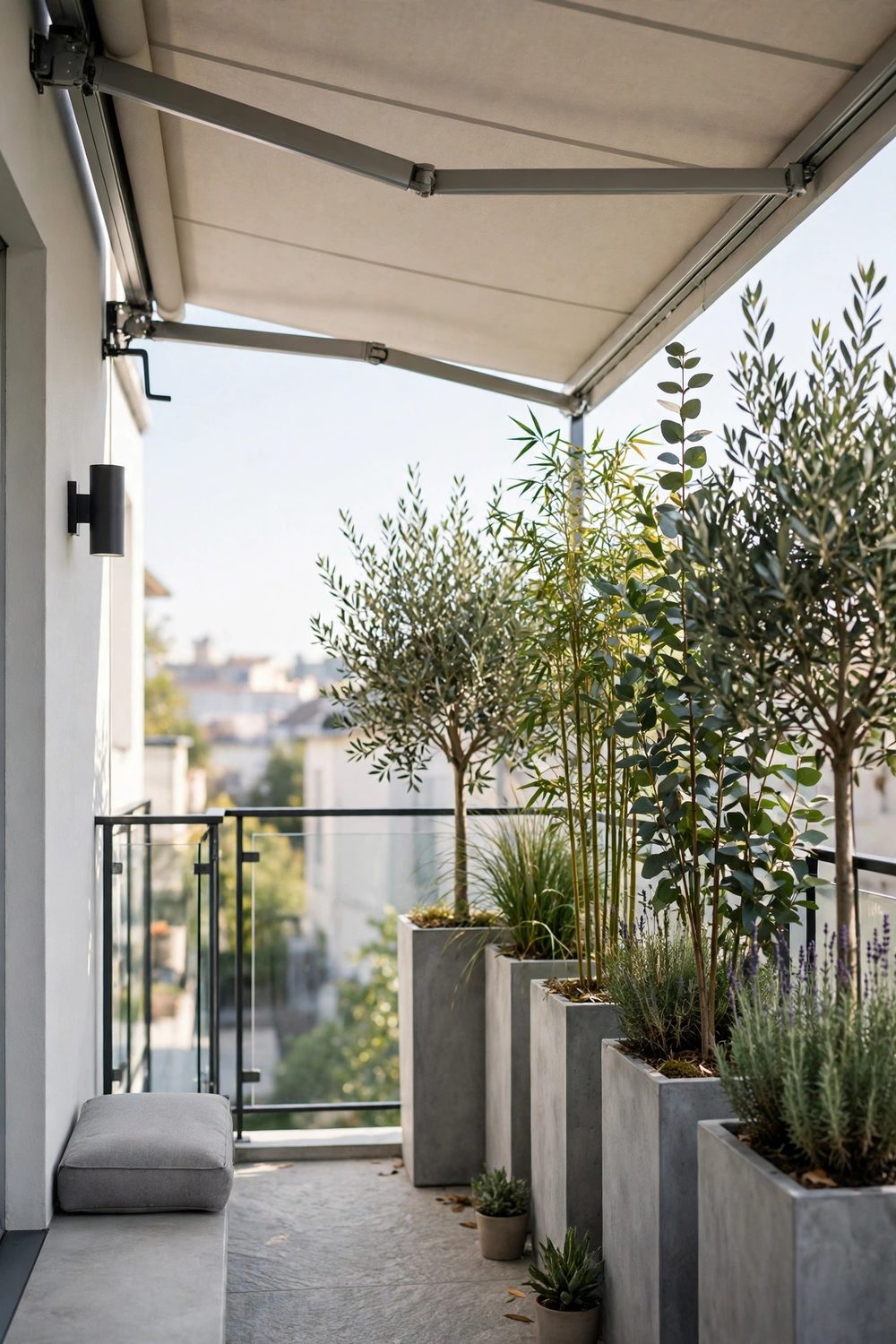
Set up shade and wind cover in this order: first a shade that moves, then a wind break on the worst side. A fixed shade traps heat on still days. Movable shade lets you chase sun in spring and dodge it in summer.
A tilt umbrella or a shade sail you can adjust beats a fixed canopy on a small space. For wind, a dense planter or a screen on one side cuts the gust.
Watch one windy afternoon before you commit. Note which corner catches the wind, then place the screen there, not where it looks best in a photo. A notebook note on that day saves a wrong purchase later.
14. Dinner for Two on a Balcony That Finally Feels Like a Room
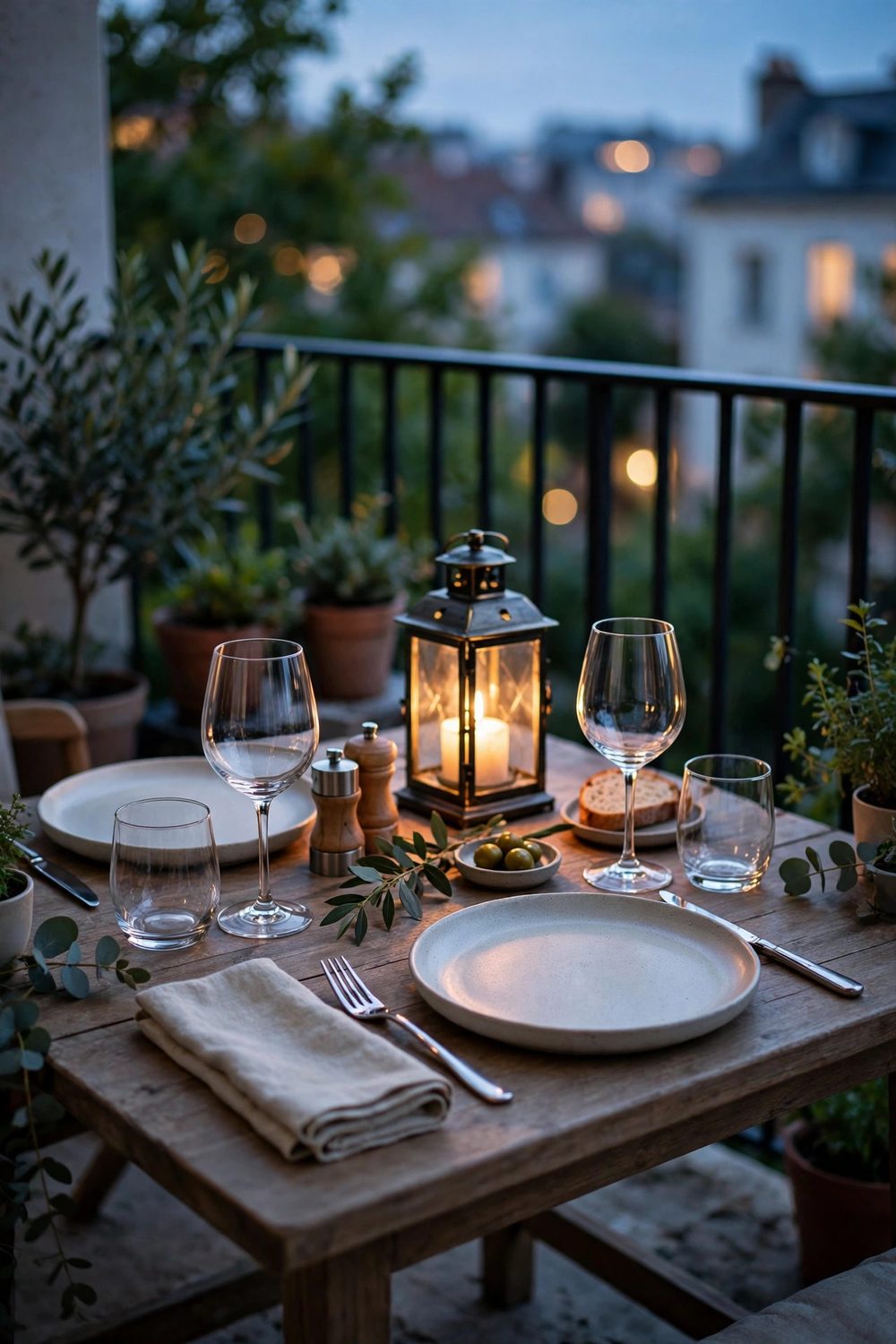
It is a warm evening, two plates fit on the small table, and the lantern glows between them. No one is perched on a step or holding a plate on a knee. That is the moment the whole project earns its keep.
That scene is the test for the whole project. If dinner works, morning coffee and reading will work too, because the same seat, light, and table serve all three.
Keep a small tray by the door for carrying plates out and back. Two trips with a tray beat one trip with full hands past a narrow door frame. A tray with raised sides keeps glasses from sliding on the way out.
15. Keep It a Room With a Five Minute Weekly Reset
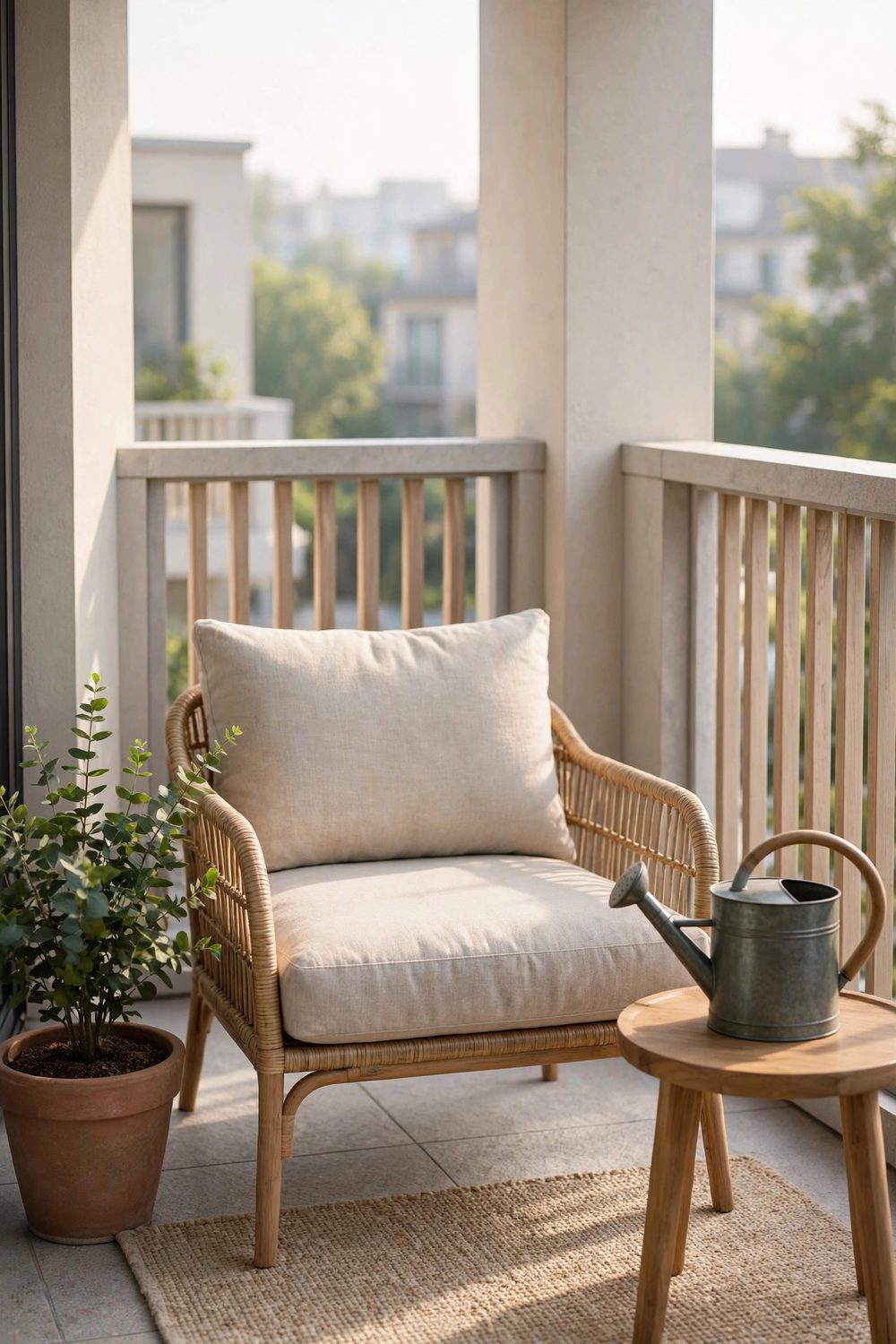
Many people think the room feeling comes from one big makeover weekend. In truth, it comes from a short reset that stops clutter from moving back in. Big weekends fade, but small habits hold the room together.
Once a week, shake out the rug, wipe the table, and carry in anything that does not belong. Five minutes is enough if the space started tidy.
Pair the reset with something you enjoy, such as watering the plants or making coffee. When the reset has a fixed slot, the balcony stays a room all season. Set a phone reminder for the same morning each week.
Start with step one this weekend: clear the floor, measure it, and lay down one warm layer underfoot. That single change already shifts how the space feels.
You do not need to finish all 15 steps at once. Add the wall, the light, and the seat over a few weeks, and let each layer settle before you buy the next. That slow pace also spreads the cost across paydays.
When you learn how to make a small balcony feel like a room, the payoff is daily: a real extra room, steps from your kitchen. Save this to your balcony board for later so you can work through the steps in order.


