

15 Cozy Balcony Ideas With Outdoor Rugs and Layers
Bare feet hit cold concrete, and the balcony stays empty all evening. A rug changes that first step. Soft layers keep you out there longer, once the floor feels warm. You sit longer, read more, and eat outside more often.
This guide shares cozy balcony ideas with outdoor rugs and layers for a small balcony, even one that gets rain, sun, and daily foot traffic. Each idea works on its own, so you can start small.
You do not need a large budget or a full rebuild. You need a base that covers the floor, a second layer for warmth, and a plan for rain and dirt. Add layers over time, one piece at a time.
Measure first, then shop. Note the door swing, the drain, and the spot where chairs slide. Those small facts decide rug size, rug grip, and where a throw will actually get used. Write the numbers down.
1. Start With One Flat Rug That Covers the Seating Zone
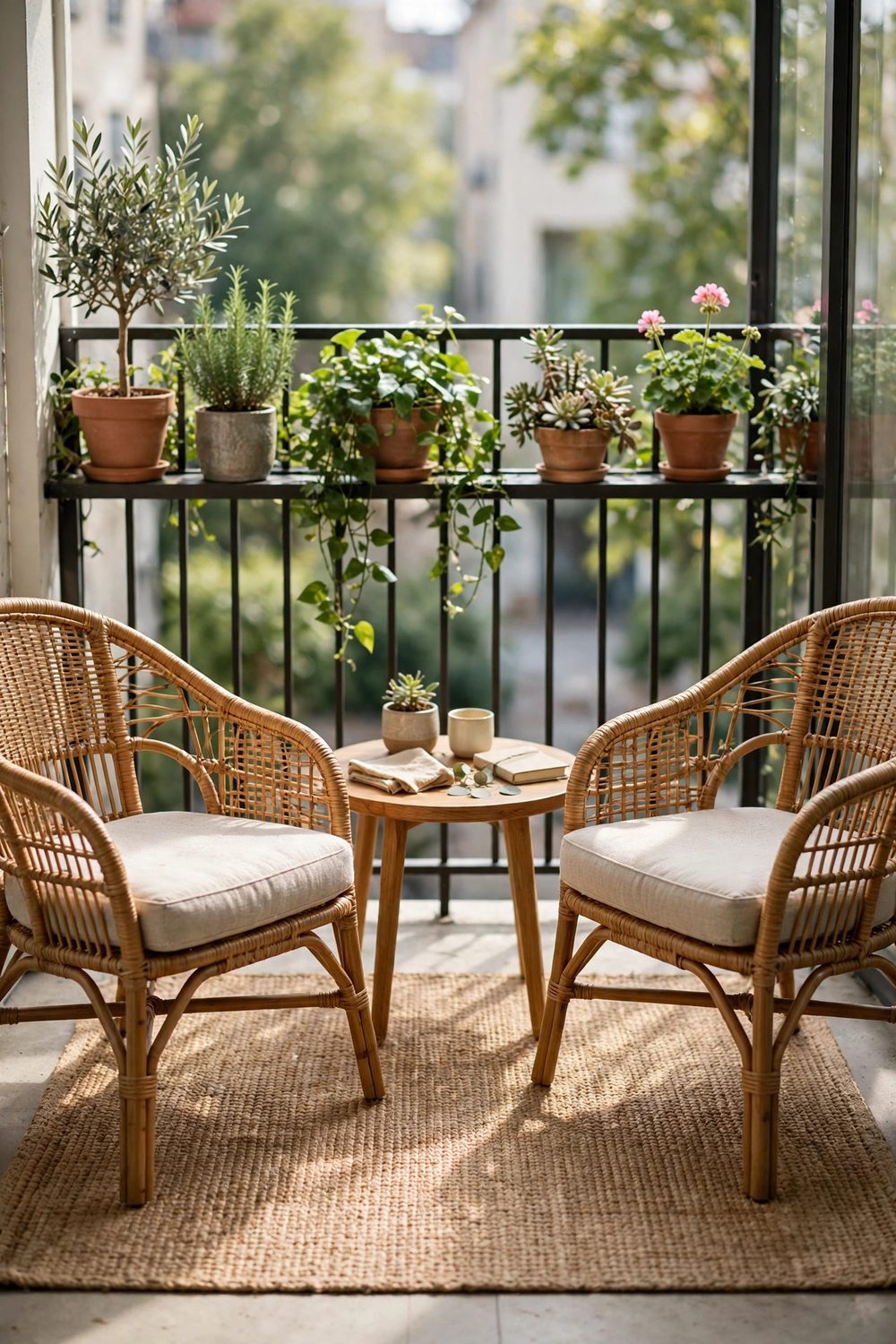
A bare floor makes a balcony feel unfinished, even with good chairs. A flat rug fixes that fast. It gives your feet a warm place to land and pulls chairs, a table, and a plant into one clear group.
Pick a rug that fits under the front legs of each chair and extends past the table. If it stops short, chairs tip off the edge when you lean back.
Leave a clear path to the door, and keep the rug off the drain so water can still run away.
Choose a low pile that dries fast and shakes out with ease. A thick indoor rug holds rain and stays damp for days. For more rug shapes and sizes, see these small balcony rug ideas before you buy. Cost: low to mid.
Best for: first layer.
2. Layer a Smaller Rug on Top at a Slight Angle
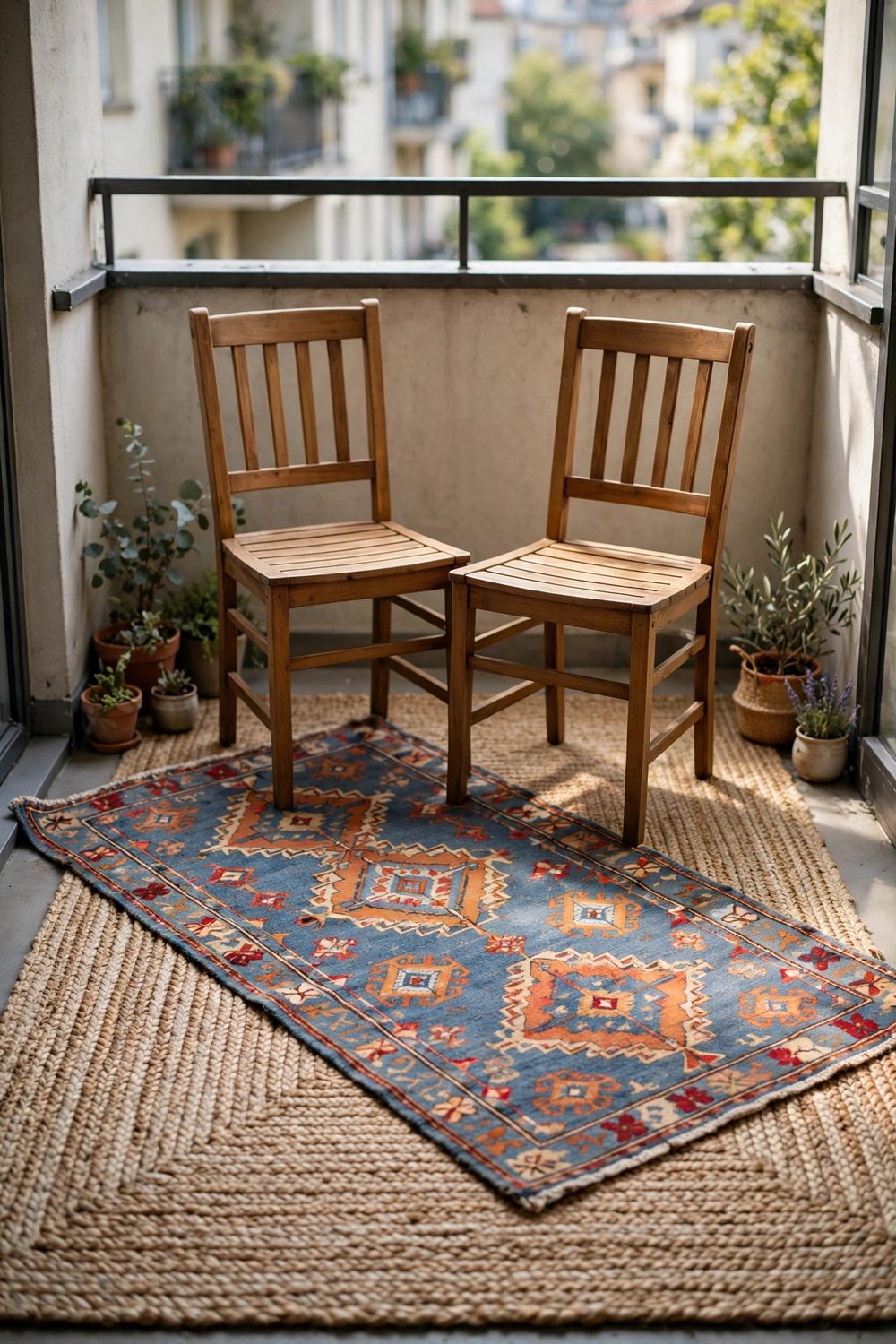
A second rug adds instant warmth, and it costs less than new furniture. Place a smaller rug over the base rug, turned at a slight angle, so the edge shows all around.
That offset edge is what makes the pair look planned, not stacked by accident.
Keep the top rug light in weight so you can lift it to shake out dust. A soft cotton blend works for dry weeks, while a flat weave works better where rain blows in.
Match one color from the base rug, then let the second color stay quiet.
This layer also marks the spot for bare feet. Put it where you sit, not where you walk past with wet shoes. When the top rug gets dirty, wash that one piece and leave the base rug in place.
3. Add a Grip Pad So the Top Rug Stays Put
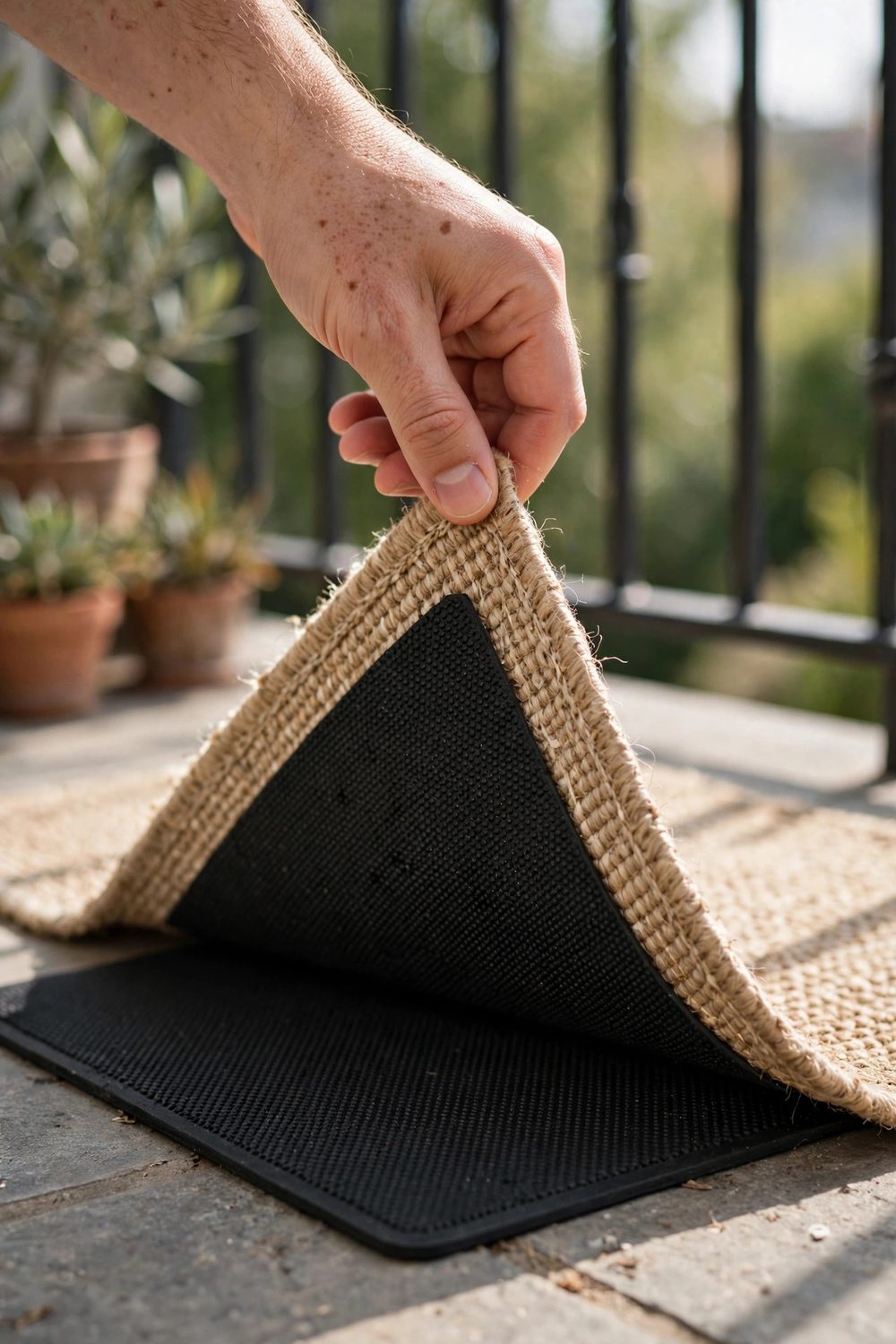
Cut a grip pad to fit just inside the top rug. Lay it flat, smooth out air bubbles with your hands, and set the rug back down. Press the corners and the middle, then slide a chair leg onto one edge to hold it steady.
Check the pad after the first rain. Some pads trap water, so lift the rug and let both layers dry on a rail for an hour.
A pad that stays damp will leave a mark on a light rug, and it can smell stale by the next week.
Replace the pad when it curls or loses grip. A curled pad bunches underfoot and trips you at night. Keep a spare pad cut to size, so a swap takes two minutes and the rug stays safe to walk on.
4. Keep a Washable Rug Near the Door
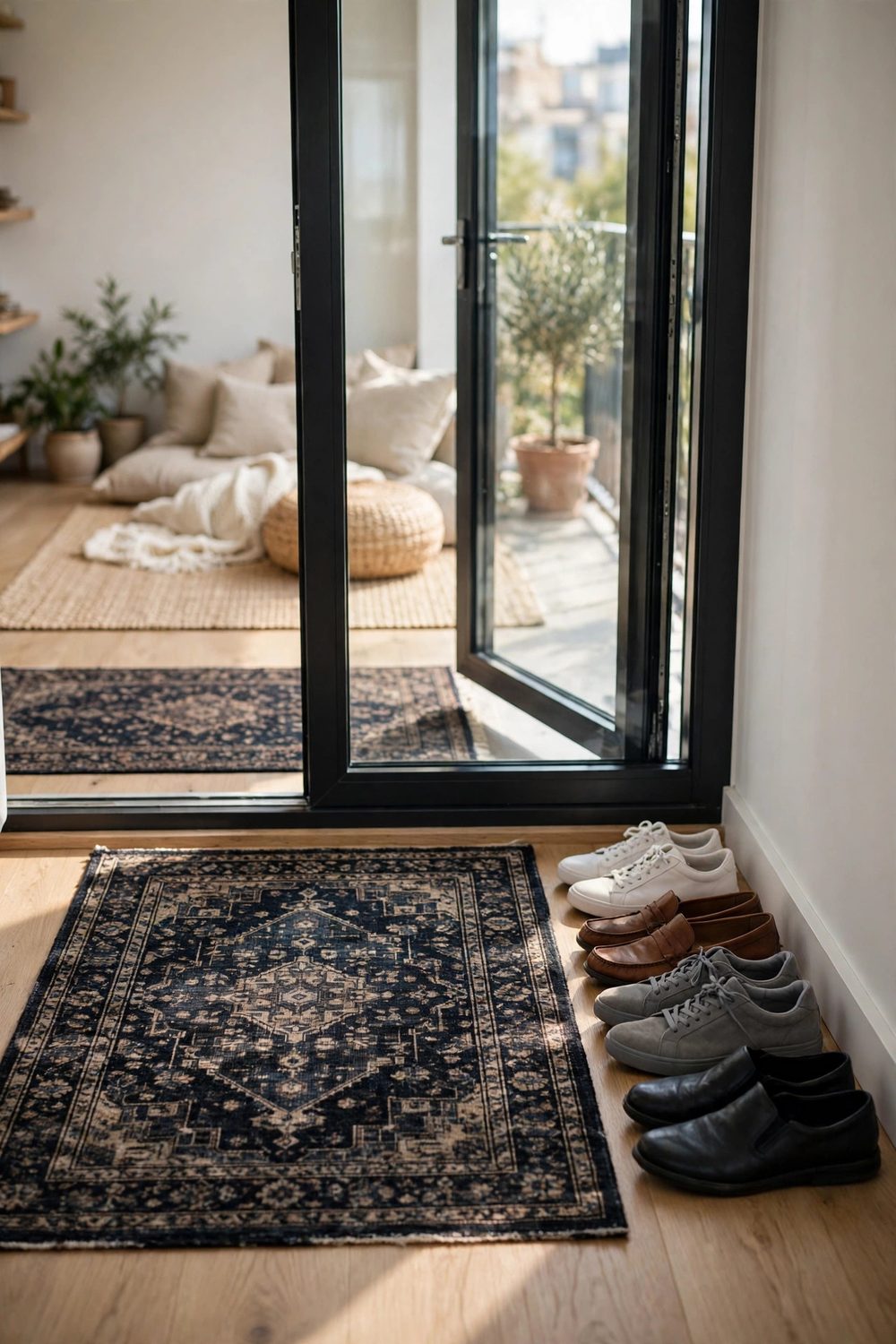
Morning coffee, muddy shoes, and a dog bowl all meet at the door. A washable rug there takes the wear, so your main rug stays clean for sitting.
Pick a dark pattern that hides dust, and a size that fits the door swing with room to spare.
Shake it out each night, and wash it on a set day, such as Sunday. Hang it over the rail until it dries right through, not just on the top face.
A rug that goes back down damp will hold a musty smell under the door mat line.
This small rug also sets a habit. Shoes come off there, bags land there, and dirt stops before it reaches the seating rug. That one habit keeps the whole balcony looking fresh for much longer.
5. Run a Narrow Runner Down a Long Balcony
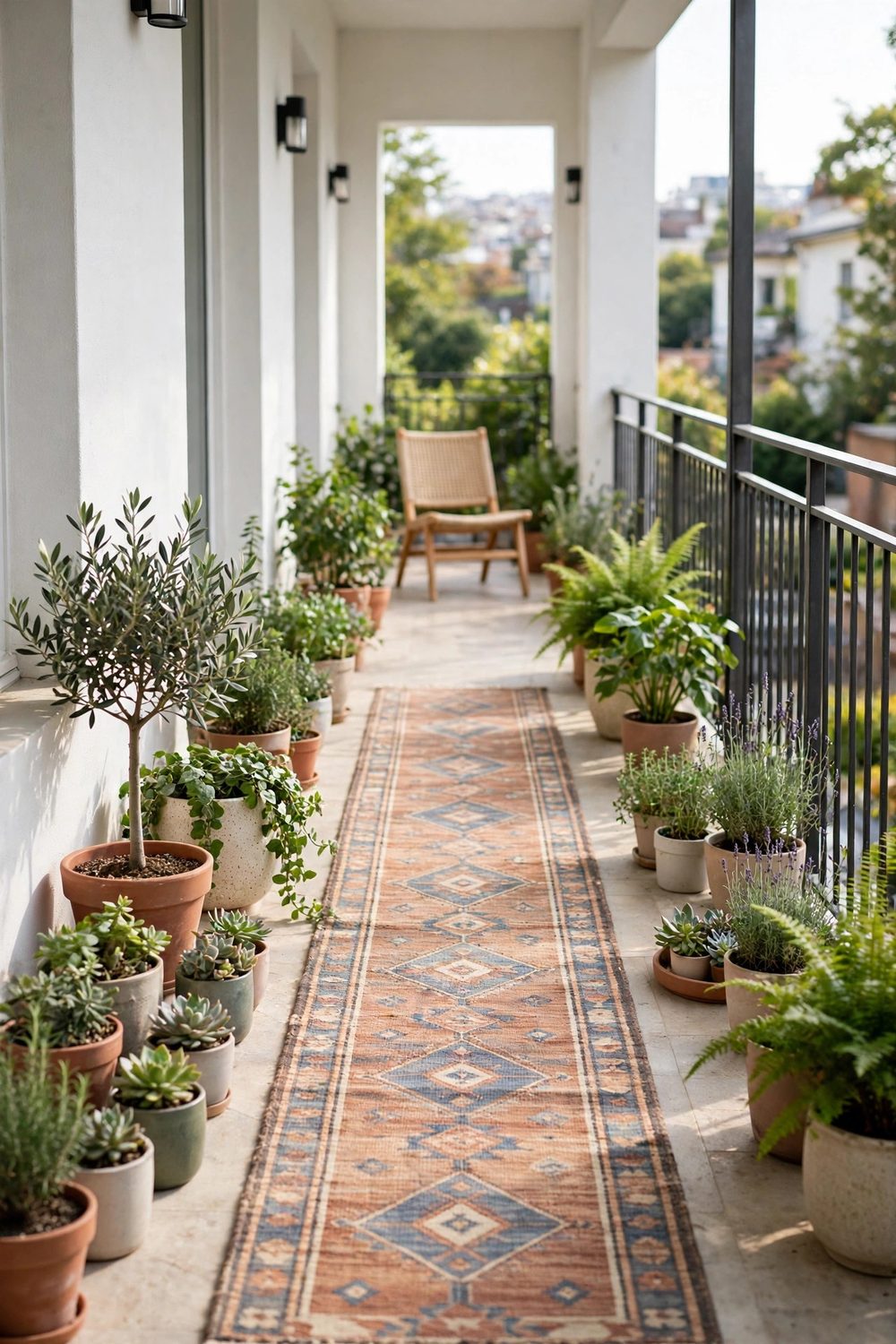
Many people think a long, narrow balcony has no room for rugs. A runner proves that idea wrong. It follows the shape of the space, warms the walkway, and leads the eye toward the chair at the far end.
Leave a hand width of floor showing on each side, so the runner looks like a path, not wall to wall carpet. Anchor one end under a chair leg, and let the other end stop short of the rail.
That gap keeps rain from pooling under the edge.
Pair the runner with a flat base layer if your floor is rough concrete. The base evens out the feel underfoot, and the runner adds color on top.
For floor options that suit renters, see these balcony flooring ideas renters can install in an hour. Cost: low. Best for: narrow balconies.
6. Centre a Round Rug Under a Small Table
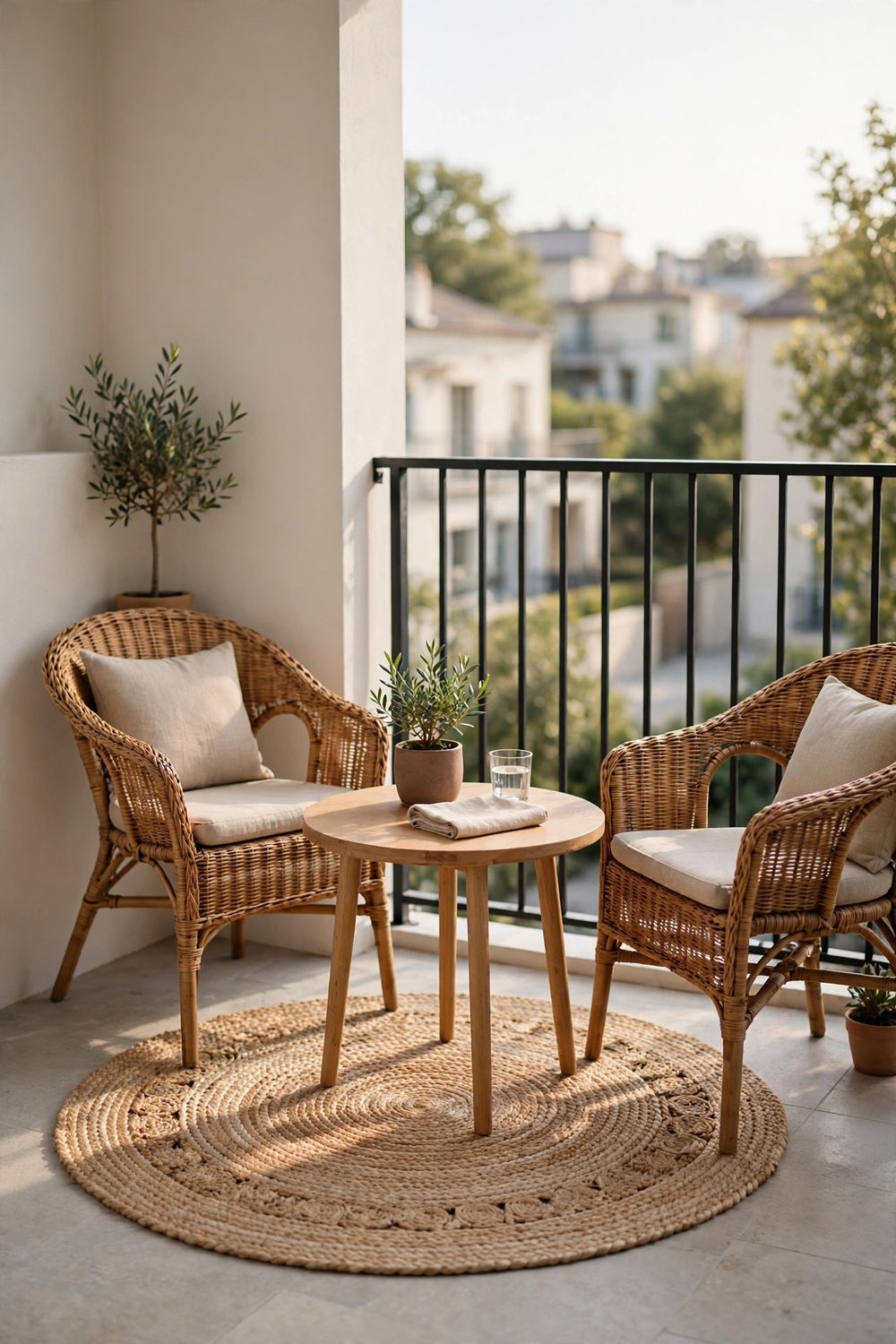
A round rug softens a square balcony at once. Its curve breaks up straight rails and straight tiles, and it draws the eye to the table in the middle. The shape works well when chairs tuck in close and space is tight.
Size it so chair legs stay on the rug when you pull a chair out to sit. If legs slip off, the rug bunches and the table wobbles.
A rug about a foot wider than the table on each side gives most bistro sets room to move.
Pick a simple pattern for a round rug, since the shape already does the work. A busy print on a round rug can fight with the table and chairs. One quiet color, plus a plain cushion, keeps the corner calm and easy to use.
7. Build a Low Floor Lounge on the Rug
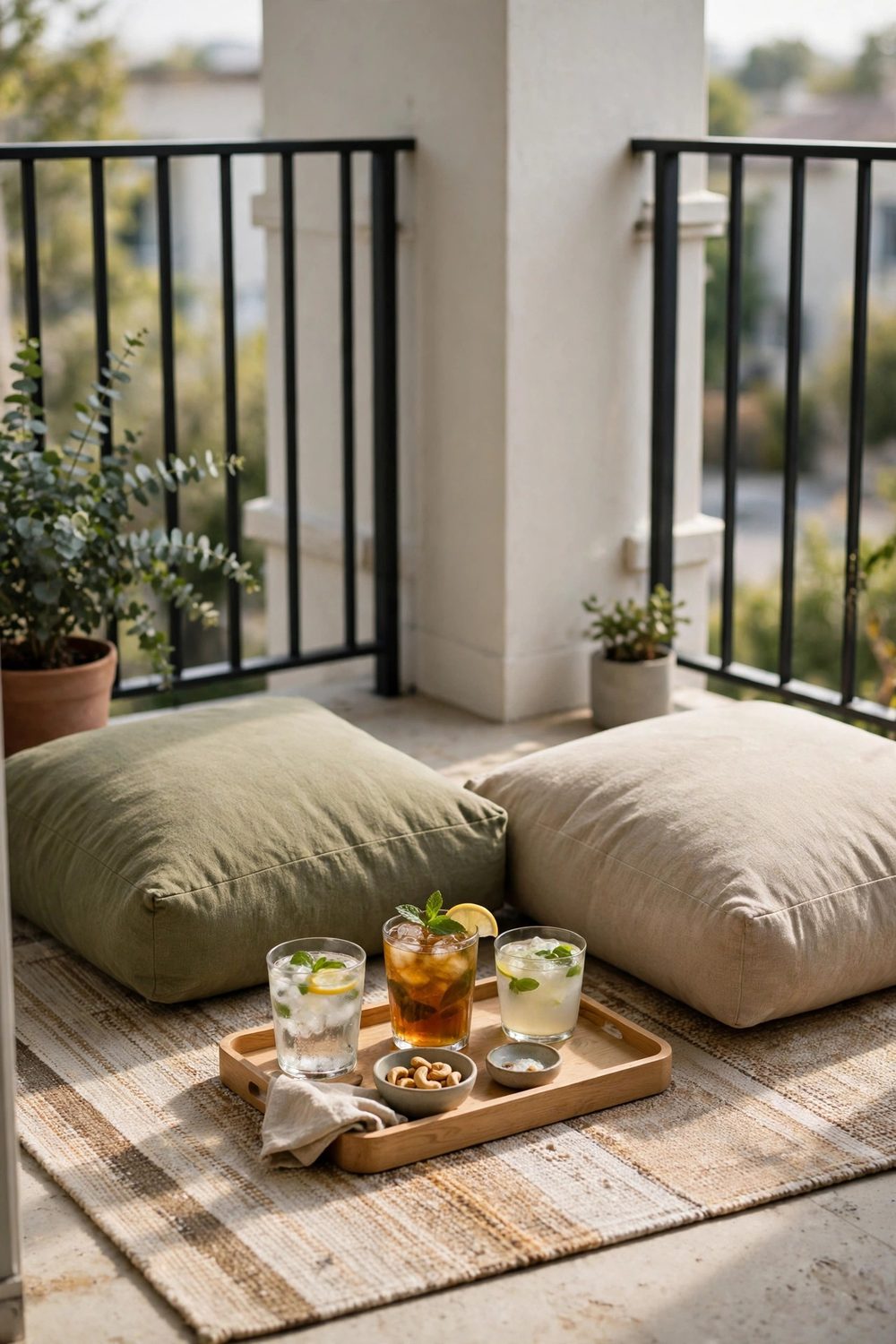
One rule keeps a floor lounge from feeling messy: everything sits on the rug, and nothing spills past its edge. Start with a flat base rug, add two floor cushions, and finish with a low tray for drinks.
Use cushions with removable covers, so a spill means one wash, not a ruined seat. Store a spare cover indoors, and bring cushions in when heavy rain is due. Wet foam takes days to dry, and it feels cold long after the rain stops.
Add a small side table at rug height, not a tall chair table. A low table keeps drinks within reach from a cushion.
For seat shapes that fit small floors, see these small balcony seating ideas. Cost: low to mid. Best for: relaxed evenings.
8. Pair the Rug With Cushions and a Throw
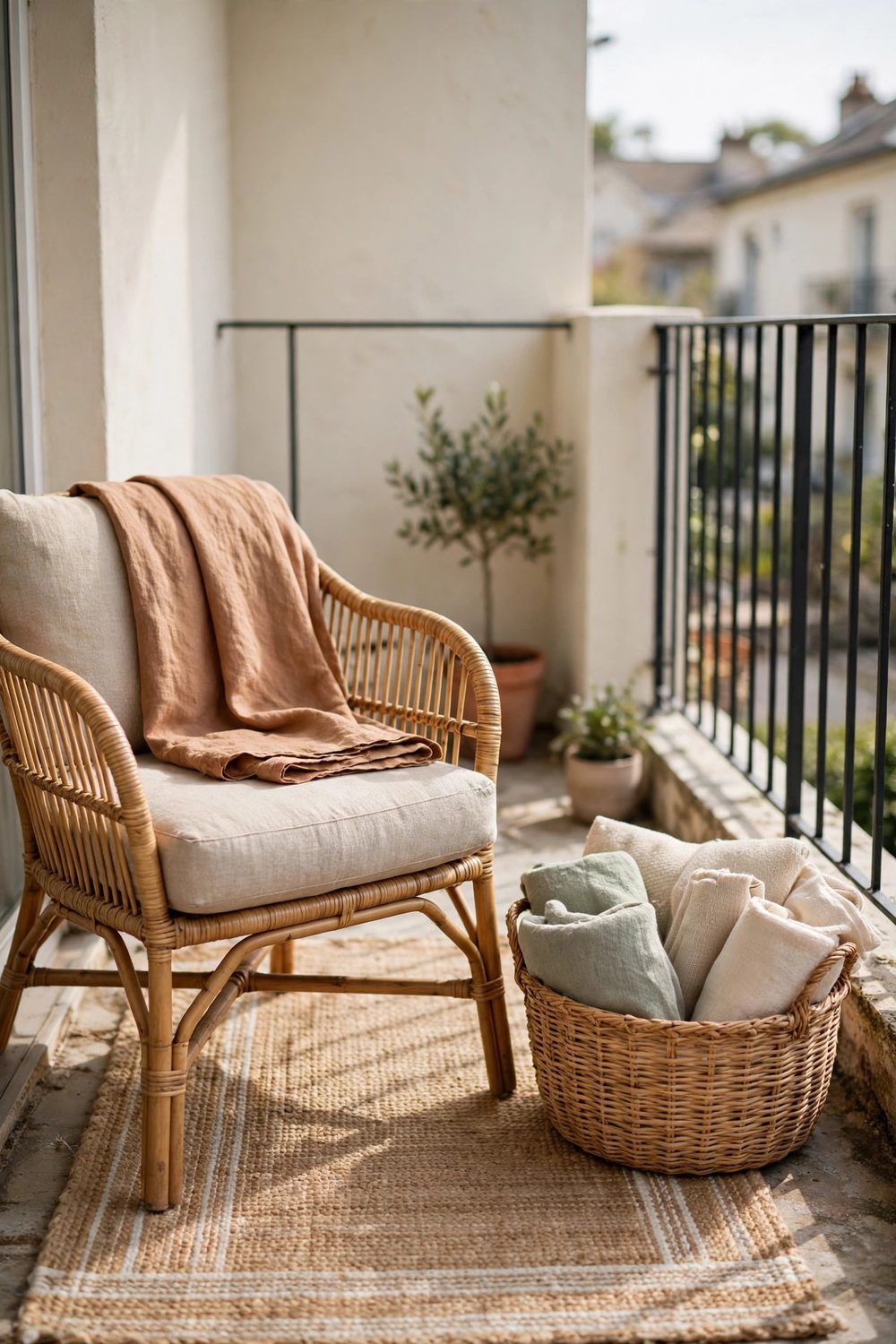
A common mistake is to buy a rug and stop there. The floor looks warm, but the chair still feels hard and cold. Add a seat cushion for comfort, a back cushion for support, and a throw for cool nights.
The three layers work as one set.
Keep the throw in a basket by the door, folded and ready. If it lives on the chair all day, sun fades it and rain soaks it. A basket also gives you a place to stash the throw fast when clouds build over the railing.
Match the throw to one rug color, not to every color in the set. One link between floor and seat is enough to tie the space together. Too many matching pieces make a small balcony feel stiff, not soft.
9. Let Warm Light Fall Across the Layers at Night
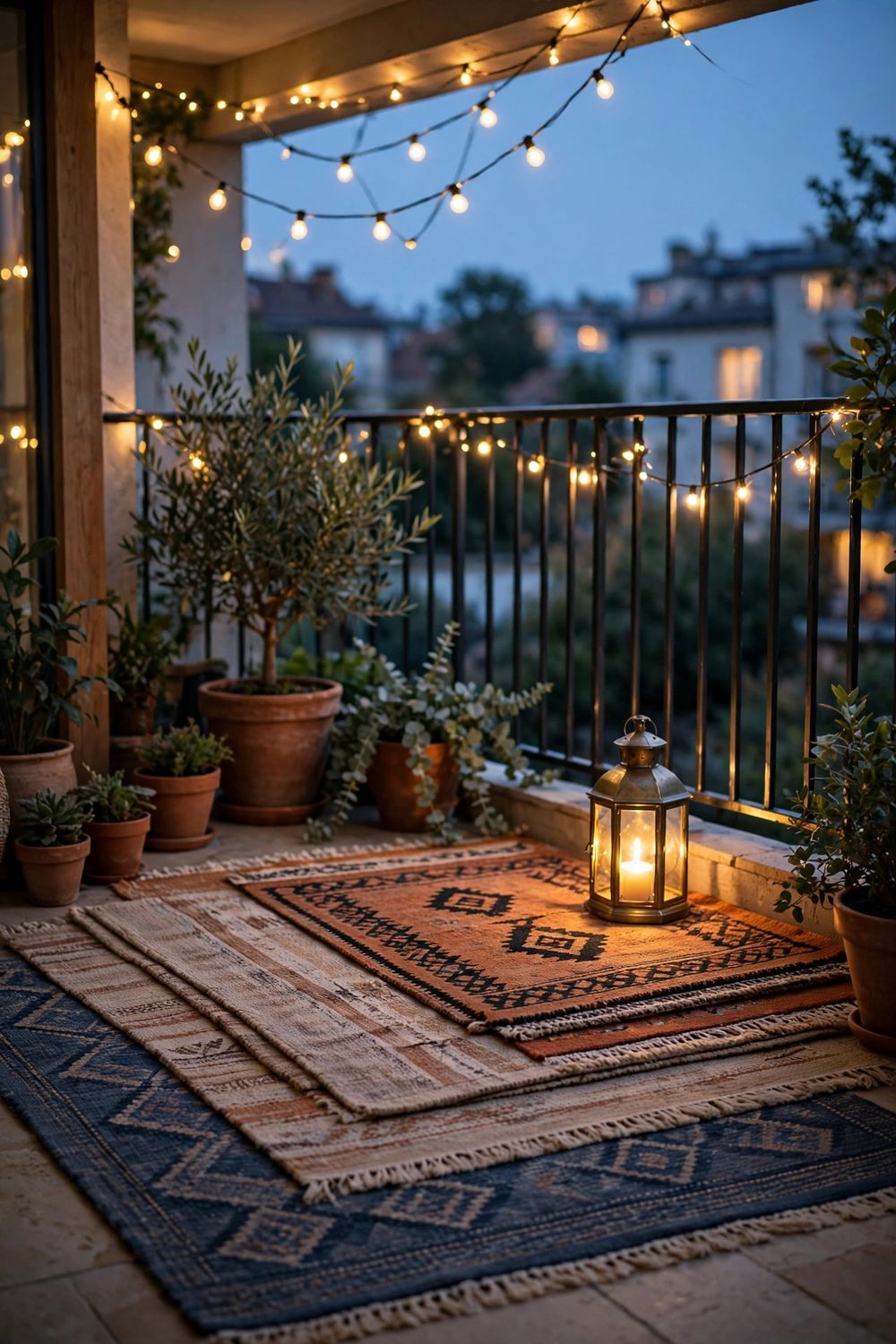
A rug looks flat under a harsh white bulb, but warm light brings out its weave and color. A string of warm lights, or one lantern on the floor, casts soft shadows that make layers look deep and lived in.
Hang lights where the cord reaches without a stretch across the walkway. A cord that crosses the rug is a trip risk, and it pulls the rug out of place each time someone steps on it.
Clip lights to the rail, and test the glow at dusk.
Keep one light low, near the rug, and one light at eye height. The low light shows texture underfoot, and the high light keeps faces lit for talk. That mix turns a plain rug stack into an evening spot you return to.
10. Mark a Reading Corner With Rug and Chair
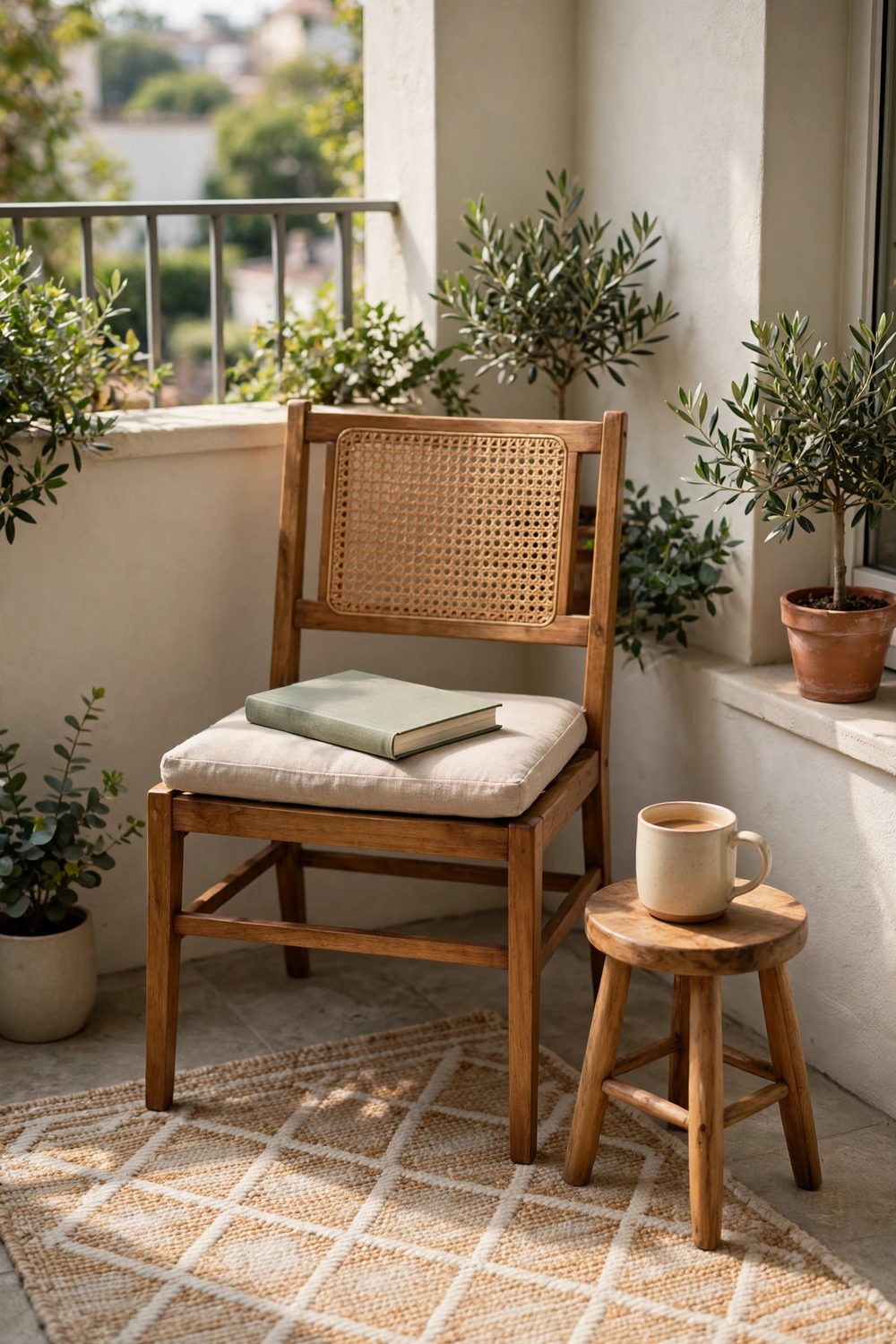
I kept passing my balcony for weeks, until a small rug and one chair gave it a job. The rug marked the corner, the chair faced the view, and a book stayed on the seat as a quiet invite.
Place the rug so your feet rest on it, not on bare tiles, when you sit back to read. Add a small stool for your feet, and a side table for a mug. Those two pieces stop you from going inside for each small need.
Keep the corner near the wall, away from the main walkway, so no one steps through your reading light. A plant at the edge adds shade and a soft frame.
For more small space warmth, see these cozy apartment balcony ideas.
11. Swap Layers With the Season, Not the Whole Balcony
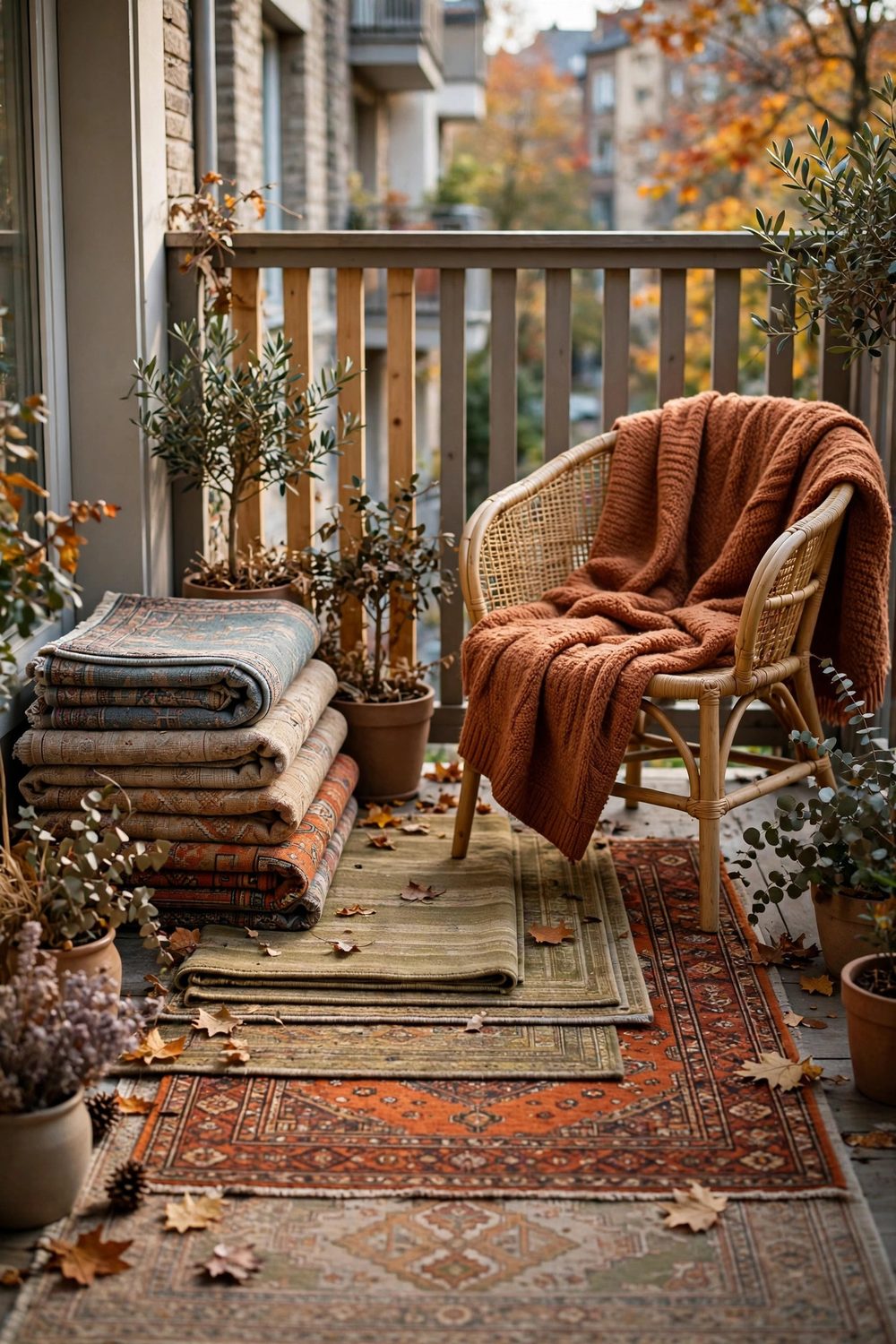
When summer heat fades, many people clear the whole balcony and start again. A layer swap is faster and cheaper. Keep the base rug in place, and change only the top rug, the throw, and the cushion covers for cooler nights.
A thicker top rug adds warmth underfoot in autumn, while a light flat weave suits hot weeks. Store the off season layers in a dry box indoors, folded flat so they do not crease. Label the box, so you find the right set next spring.
This habit also saves storage space. One base rug stays out all year, and two small seasonal sets rotate through one box. The balcony feels new each season, without a full shop or a full clear out.
12. Ground a Plant Corner With a Tough Rug
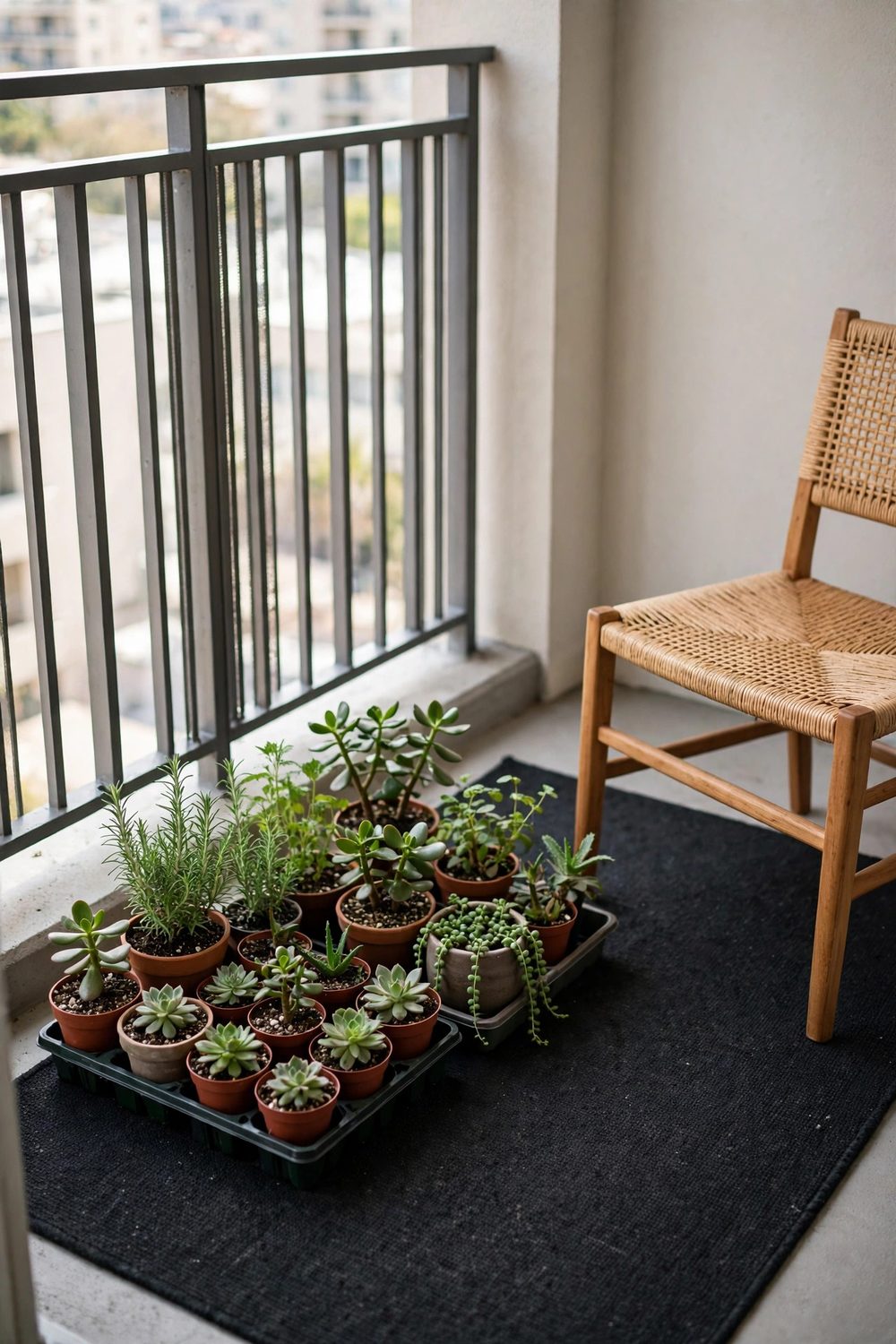
Plants add life to a balcony, and they also add soil, water, and fallen leaves. A tough rug under the pots catches that mess, and it gives the plant group a clear home. Without it, pots drift apart and the corner looks untidy.
Pick a dark, flat weave rug that you can shake out with ease. Set pots on trays, so water drains into the tray and not straight onto the rug. Lift the rug once a week, sweep beneath it, and check for damp spots after watering.
Keep the rug smaller than the plant group, so leaves do not hide its edge. A visible edge frames the pots and keeps the corner from blending into the seating rug. One plant corner, one rug, and a weekly sweep keep it tidy.
13. Mix a Stripe With a Solid Throw
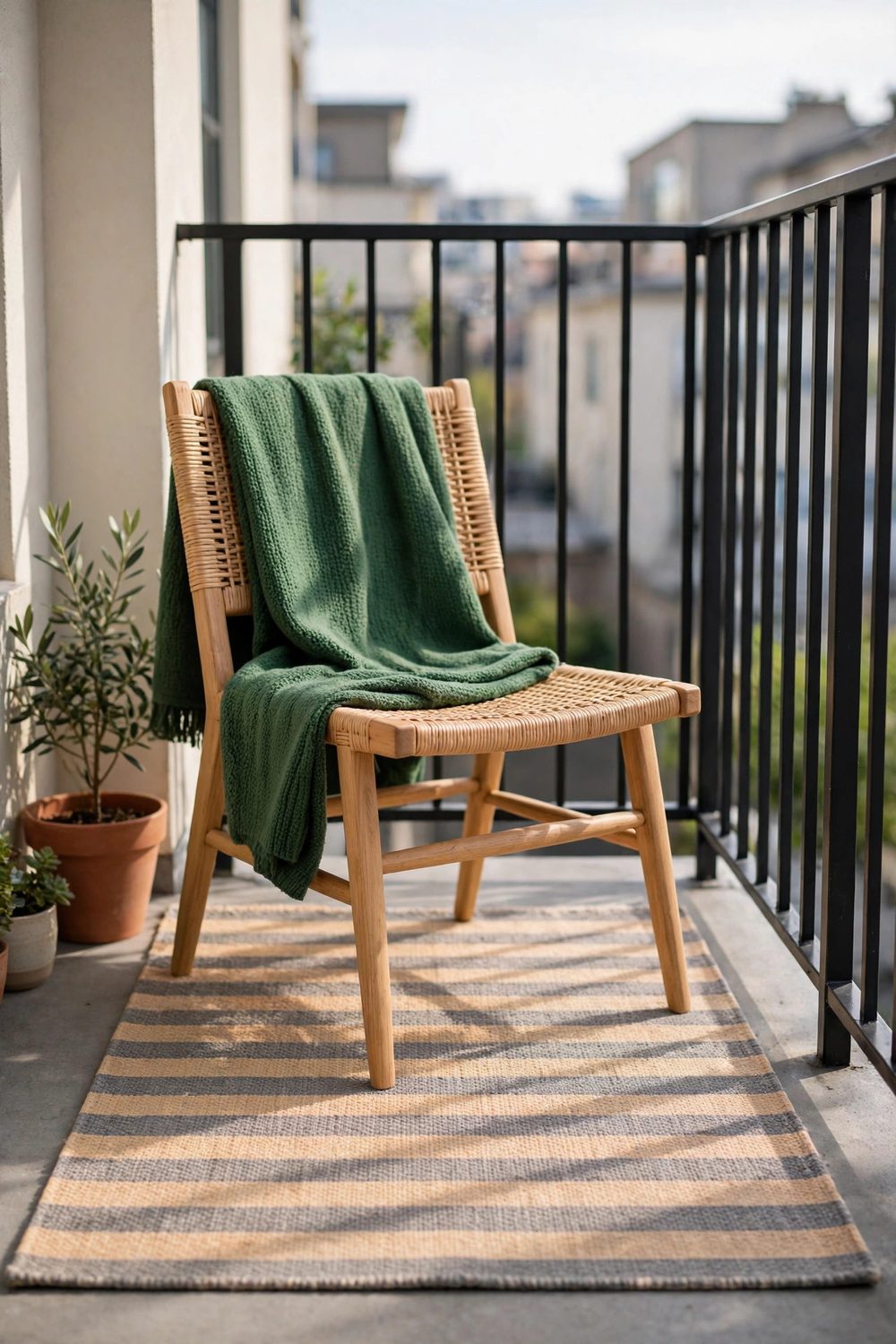
Start with a striped base rug in two quiet colors, such as sand and soft grey. Lay it flat, and line up the stripes with the rail, so the pattern leads the eye along the balcony. That straight line makes a narrow space feel longer.
Next, add a solid throw in one color pulled from the rug. Fold it over the chair back, not bunched on the seat, so the stripe stays visible. A solid throw calms the pattern, and it gives your eyes a rest spot between stripes.
Do not add a striped cushion on top of a striped rug. Two stripes at different scales clash, and the space looks busy from the door. One pattern, one solid, and one plain cushion is a safe mix for a small balcony.
14. Shake, Hose, and Dry Rugs Before They Smell Damp
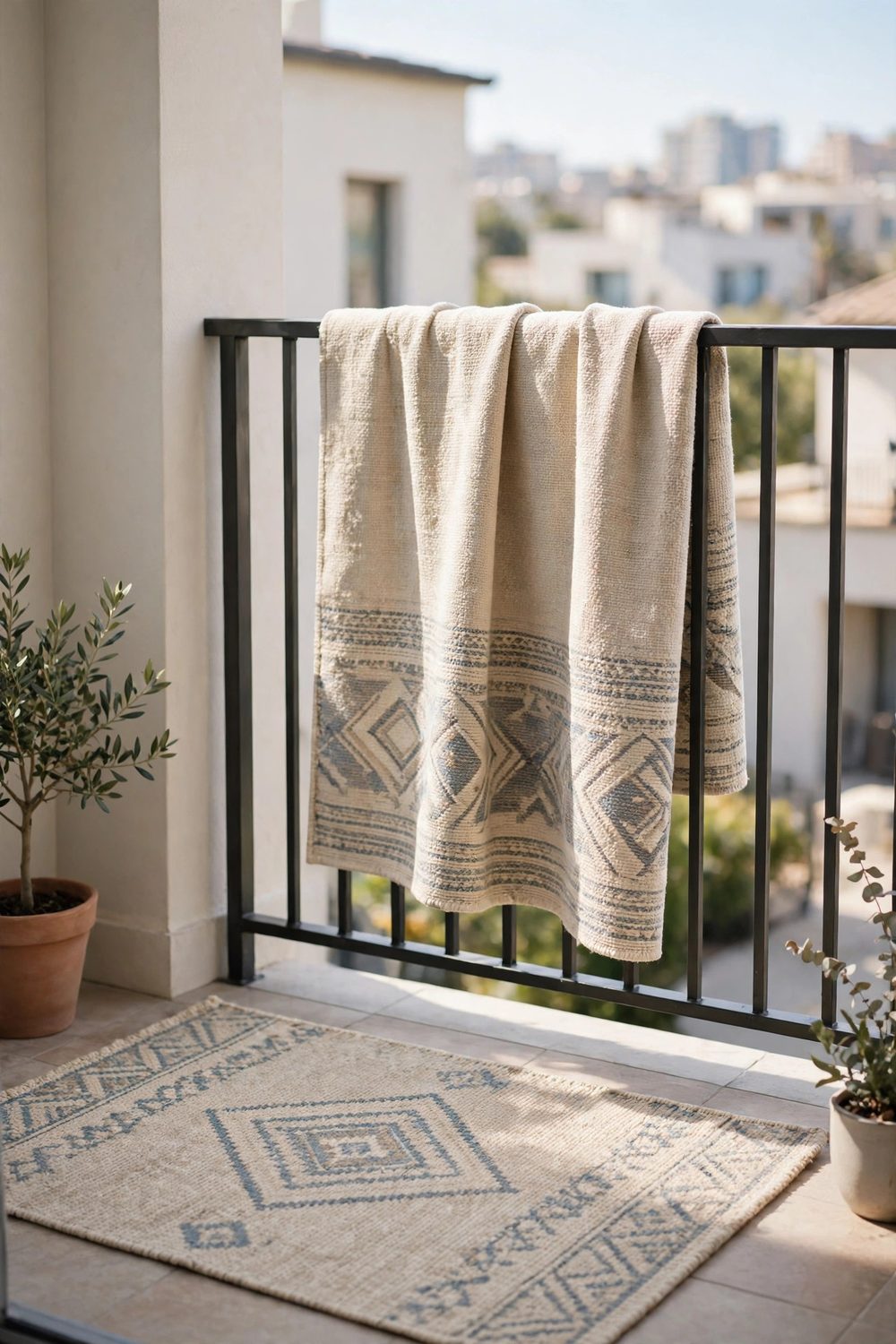
Last spring, I left a rug down through three rainy days and learned my lesson. The top felt dry, but the underside stayed damp and smelled stale. Now I shake each rug out weekly, and I hose the base rug once a month.
Hose on a mild day, with the rug flat on the balcony floor, and brush loose dirt toward the drain. Rinse until the water runs clear, then hang the rug over the rail in sun and breeze.
Do not lay it back down until the underside feels dry.
Keep a dry day in mind before you wash, not after. A rug washed late in the day stays damp overnight, and damp leads to smell. Morning washing, full sun, and a dry check save you from a second wash.
15. Layer on a Budget With One Base and One Accent
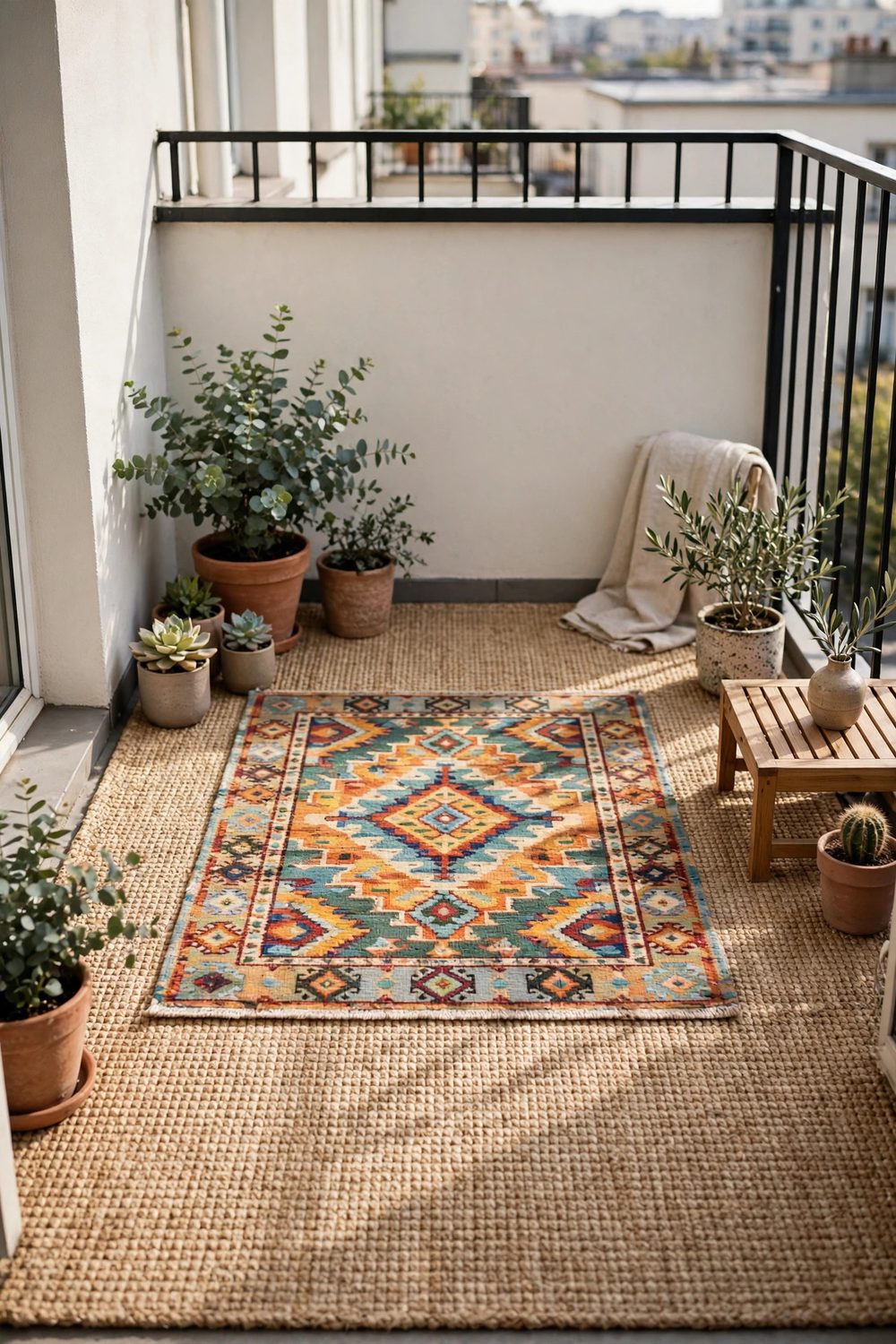
A layered look does not need five rugs. One solid base rug, plus one small accent rug, gives you the same depth at a lower cost. Spend your care on the base, since it takes the most wear, and let the accent carry the color.
By contrast, five cheap rugs wear out fast, slide around, and pile up at the door. One good base stays flat, dries well, and holds its shape through rain. The accent rug can change with taste, without a full rebuy each year.
Shop in this order: base rug first, grip pad second, accent rug third. That order stops you from buying a pretty accent that does not fit the base. Cost: low. Best for: first time layering, renters, and small floors.
A layered balcony stays warm underfoot, clear to walk through, and easy to clean. Start with the base rug, add one soft layer, and test it for a week before you buy more.
Small steps beat a big shop, and they keep the space feeling like yours.
Pick the idea that fits your floor, your rain, and your evenings out there. Save this to your balcony board for later, and try the next layer when the first one feels right.
For a full room feel, see how to make a small balcony feel like a room next. These cozy balcony ideas with outdoor rugs and layers work best when the layers serve real use, not just a photo.


