

15 Mistakes That Make a Small Balcony Feel Cluttered
Your balcony is not too small. It is just holding too many things that do not earn their place.
Most small balconies feel crowded for the same reason. One chair too many, pots with no plan, and a few stray items that never got put away.
None of them look like a big problem alone. Together, they eat every inch of floor and every inch of calm.
This list covers the mistakes that make a small balcony feel cluttered, and the simple fix for each one. Work through it one mistake at a time. You do not need to buy a whole new setup to get a balcony that feels open again.
Small balconies show every item because there is nowhere for it to hide. A chair that fits indoors can block a path outside. That is why this list focuses on fixes you can do today, with what you already own, before you spend a cent.
1. Buying Furniture Before You Measure the Space
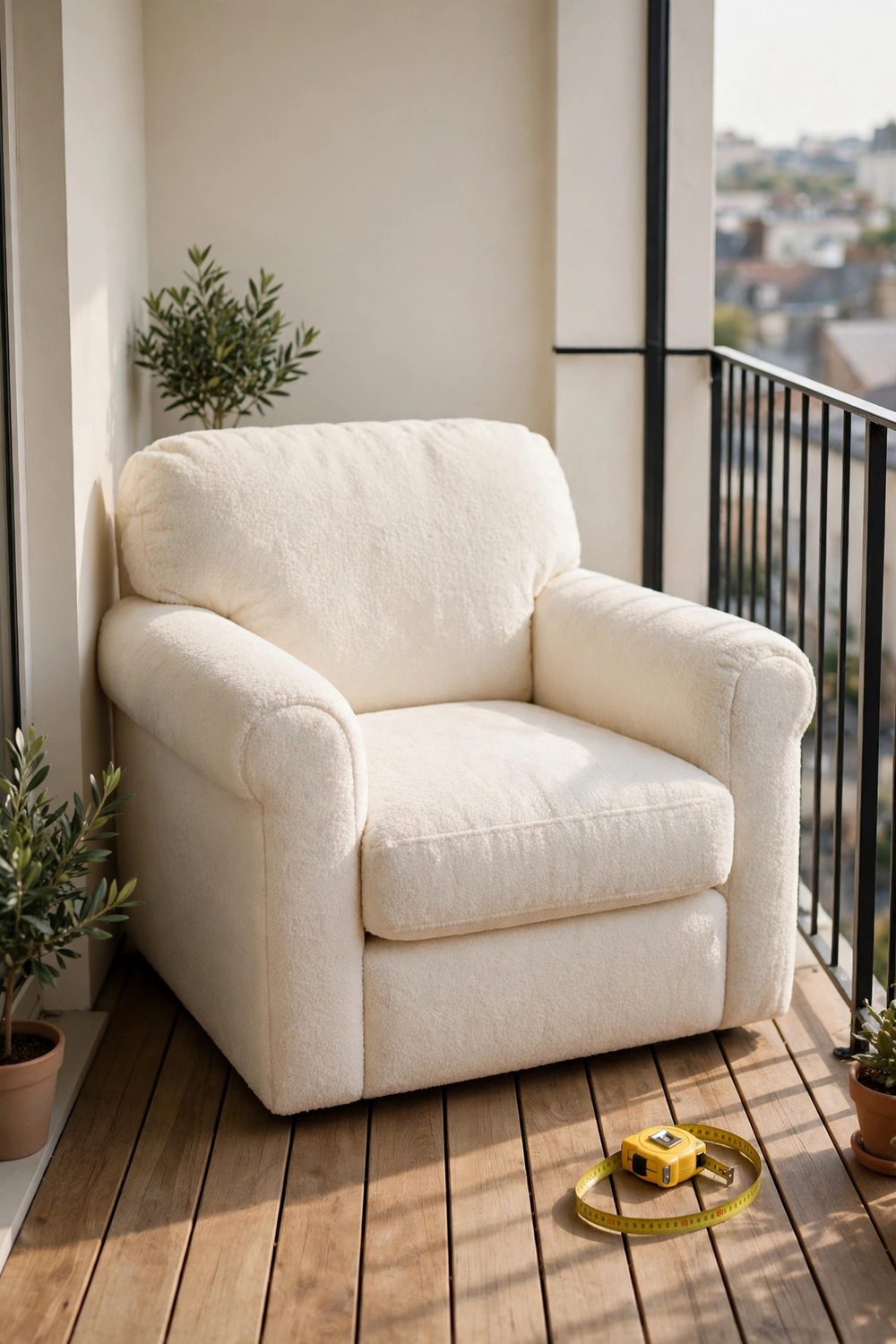
The trouble starts at the store, not on the balcony. A chair that looked small in a big showroom can swallow a narrow balcony whole. Then the table will not fit beside it, and you end up stepping sideways just to reach the railing.
Measure first, and write the numbers down. Note the width, the depth, and the path from the door to the railing. Leave room to pull a chair out and sit down without bumping the wall.
The fix is simple. Pick one seat that fits the tape measure, not your wish list.
If you need help sizing seats for a tight spot, these small balcony furniture ideas show pieces that work in small footprints. Buy the smaller chair, and your balcony will feel twice as big.
2. Scattering Lots of Tiny Pots Across the Floor
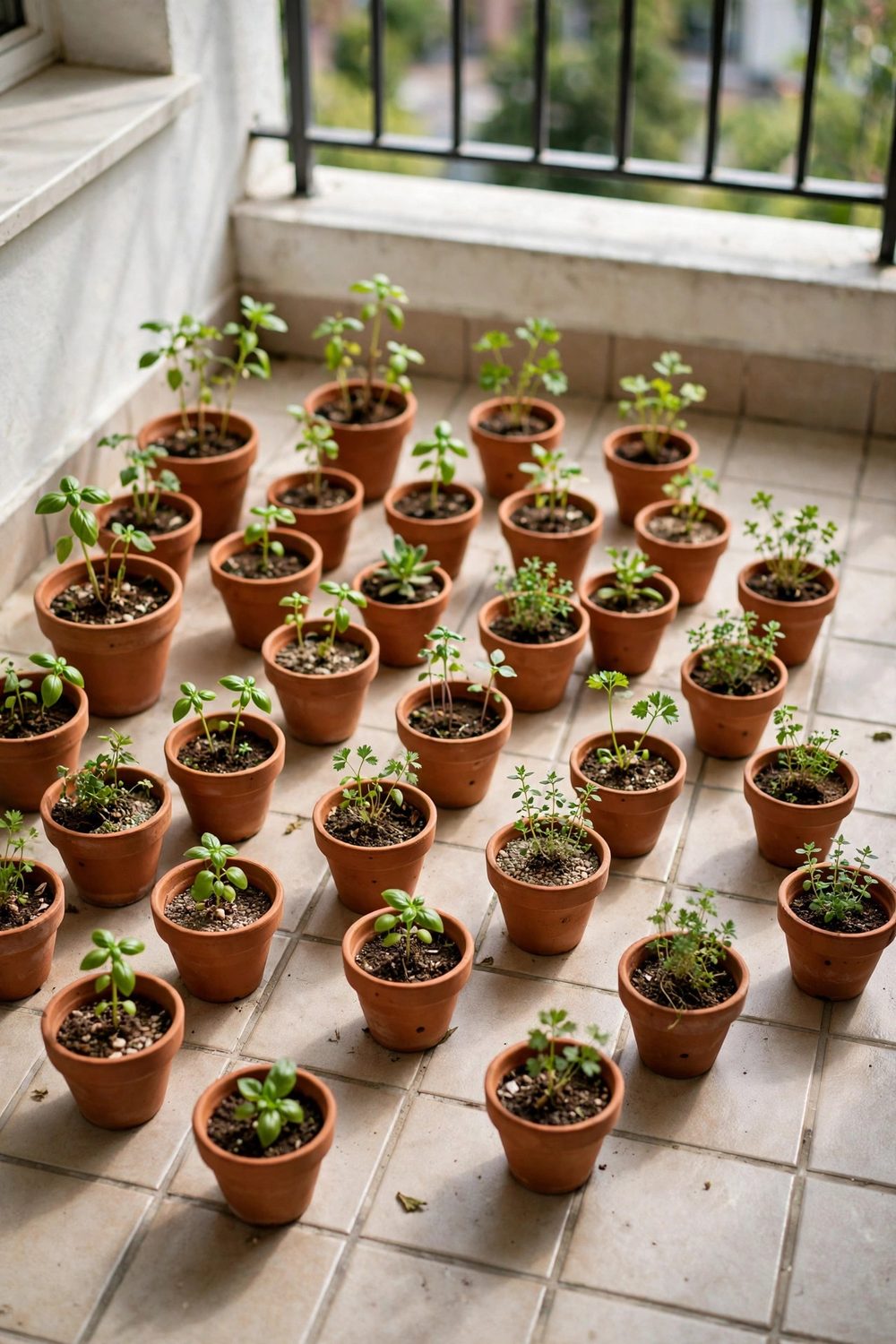
Fewer, larger pots make a balcony feel calm. Ten tiny pots spread across the floor do the opposite. Each one needs its own saucer, its own watering, and its own patch of floor. Soon you are stepping around a maze just to water one plant.
Group your plants instead. Three medium pots in one corner read as one green cluster, not ten small chores. A plant stand or a rail planter lifts some of them off the floor too.
Keep the floor clear where you walk. Put the tallest plant at the back, the mid-size ones in front, and leave the path open. You still get the green look, but the floor stops feeling like an obstacle course.
3. Leaving Cushions and Throws Out All the Time
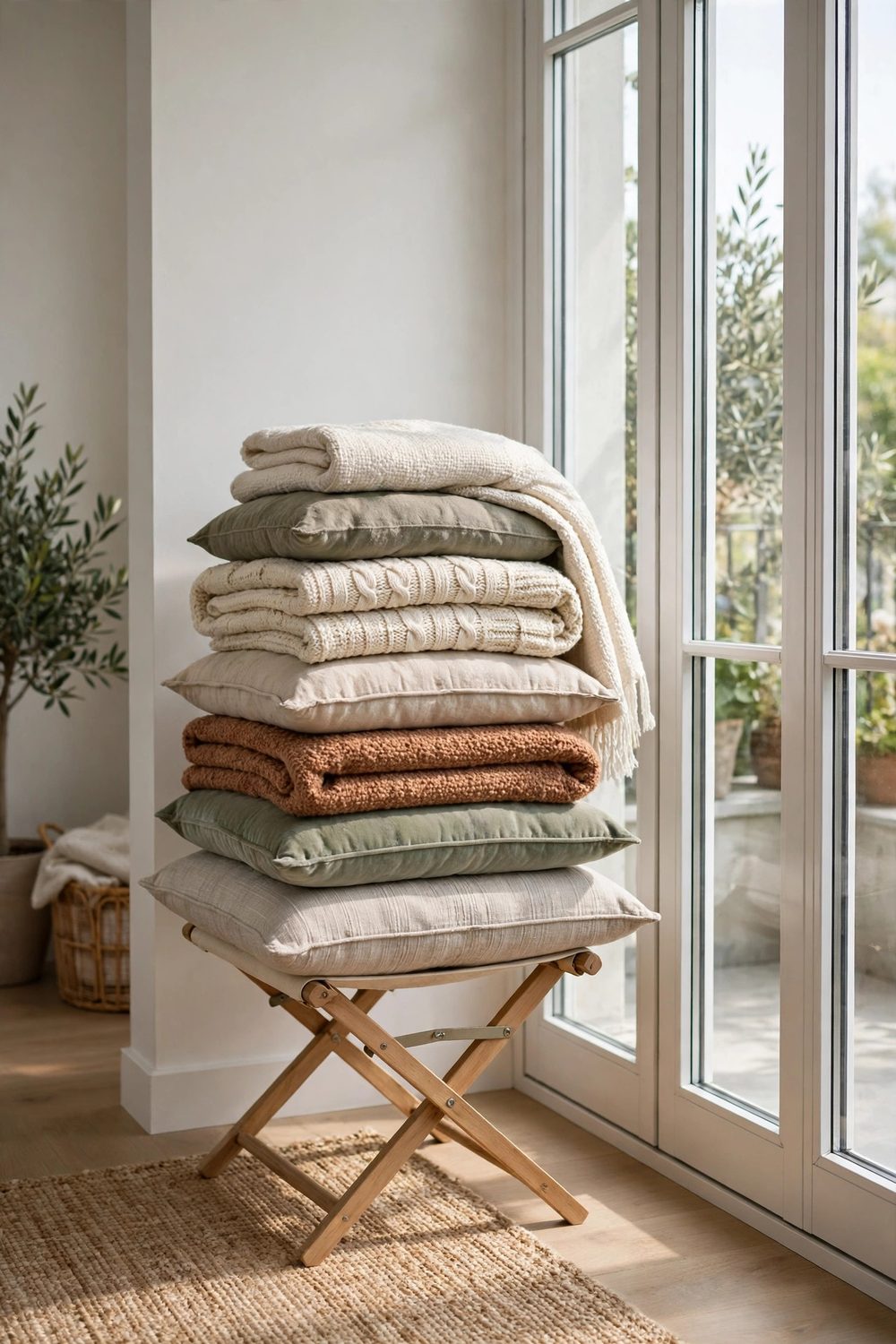
Grab a cushion, sit down, and enjoy the evening. That part is fine. The mistake is leaving every cushion, throw, and blanket out there for days. Rain dampens them, wind moves them, and soon the chair looks like a laundry pile.
Give soft things a home by the door. A small lidded box or a basket just inside keeps them dry and close at hand. You take out only what you need for that sit-down.
When you come back inside, the cushions come with you. It takes less than a minute, and the balcony stays ready for the next visit. A tidy chair invites you out far more than a chair buried under damp fabric.
4. Blocking the Door Swing and the Walkway
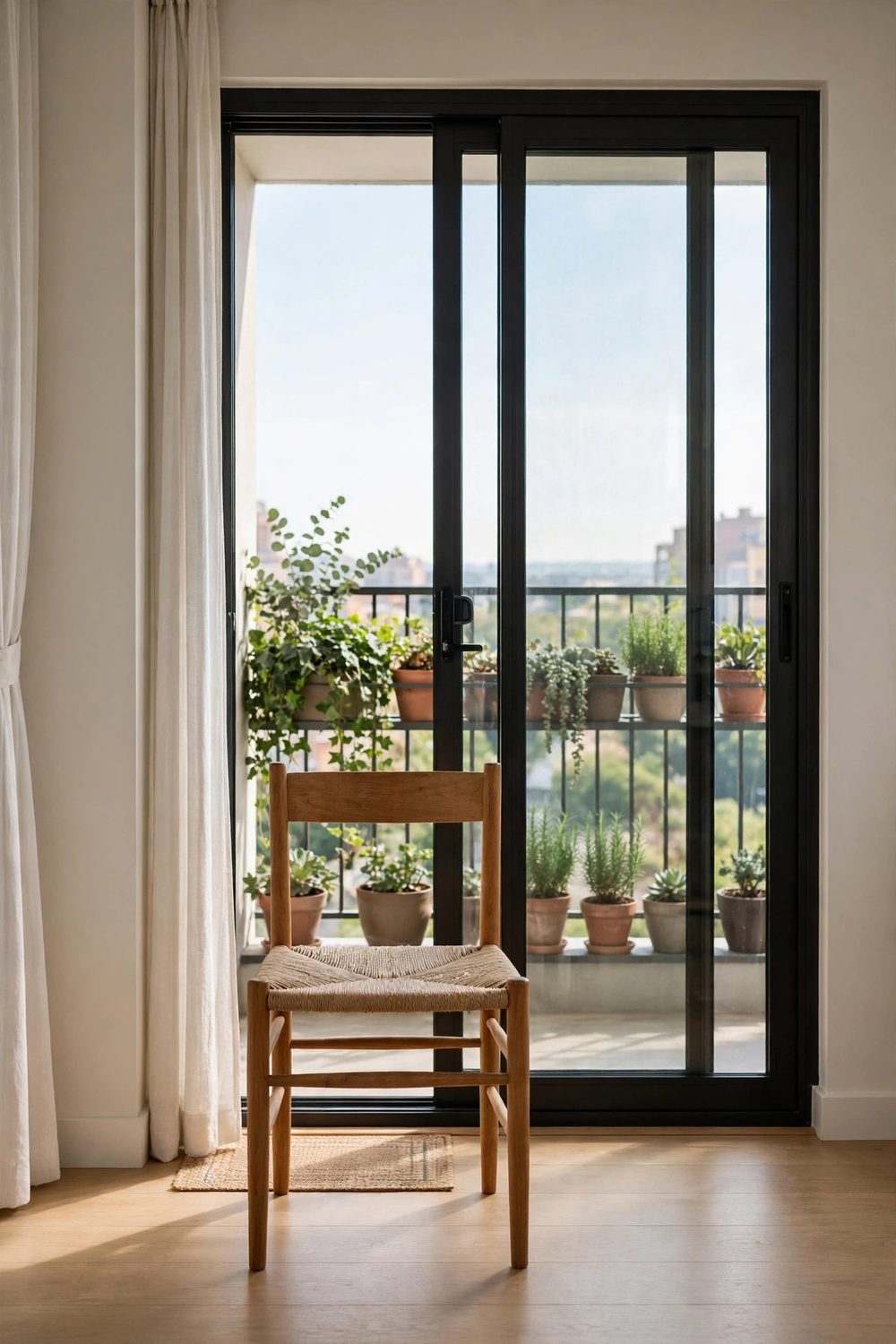
It is a warm evening, and you carry a mug out to the balcony. The door swings open and hits the back of a chair. You squeeze past a planter, set the mug down, and realize there is nowhere to put your feet.
That squeeze is the sign. The walkway from door to railing should stay open, even if it means one less piece of furniture. Tape the path on the floor before you buy anything new.
Move the chair to the side wall, not the middle of the path. Slide planters against the railing, not beside the door. Once you can walk out with a mug in each hand, the balcony finally feels easy to use.
5. Mixing Too Many Colors and Patterns at Once
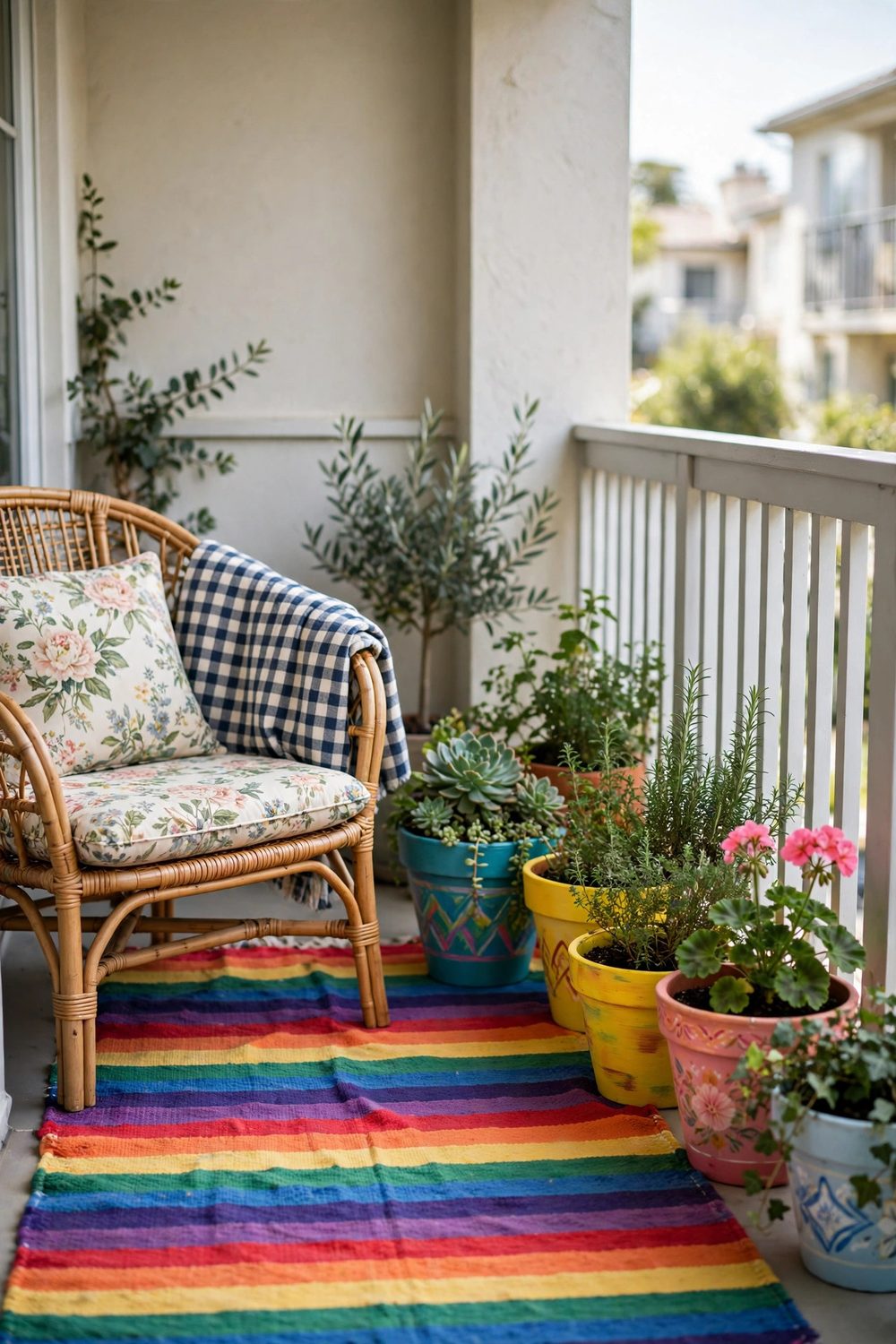
It is a myth that more color means more style. On a small balcony, five bright patterns fight for attention at once. A striped rug, a floral cushion, a checked throw, and painted pots in three colors can make the space feel loud and busy.
Pick one main color and one accent, then repeat them. A plain rug, cushions in the same family, and pots in one color will calm the whole view. The eye rests instead of jumping from item to item.
This does not mean you must love beige. A deep blue with white, or green with warm wood, works just as well. The rule is repeat, not pile on. Two colors, used three times each, look planned. Ten colors, used once each, look like clutter.
6. Covering Every Surface With Small Decor
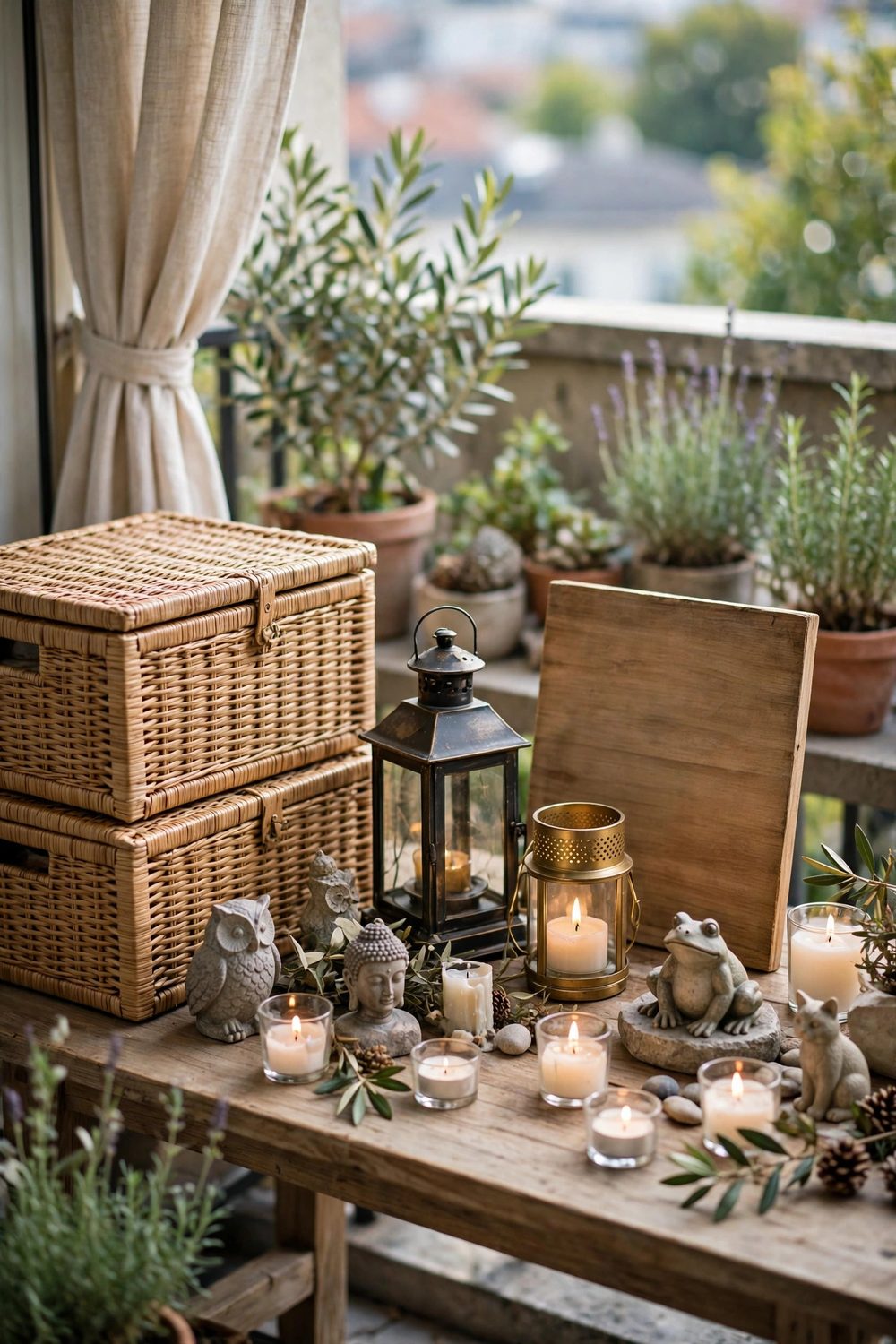
Look at the table, the railing, and the top of the storage box. A lantern here, a candle there, a small sign, a wind chime, and three tiny statues add up fast. Each piece is small, but together they fill every flat spot in sight.
Choose one or two decor pieces that you truly like. A single lantern on the table and one hanging light can set the mood. The rest can live inside until you swap them in for a change.
Empty space is not wasted space. A clear table top gives you room for a mug, a book, and your hands. When every surface is covered, there is nowhere left to actually enjoy the balcony.
7. Using the Balcony as Extra Storage
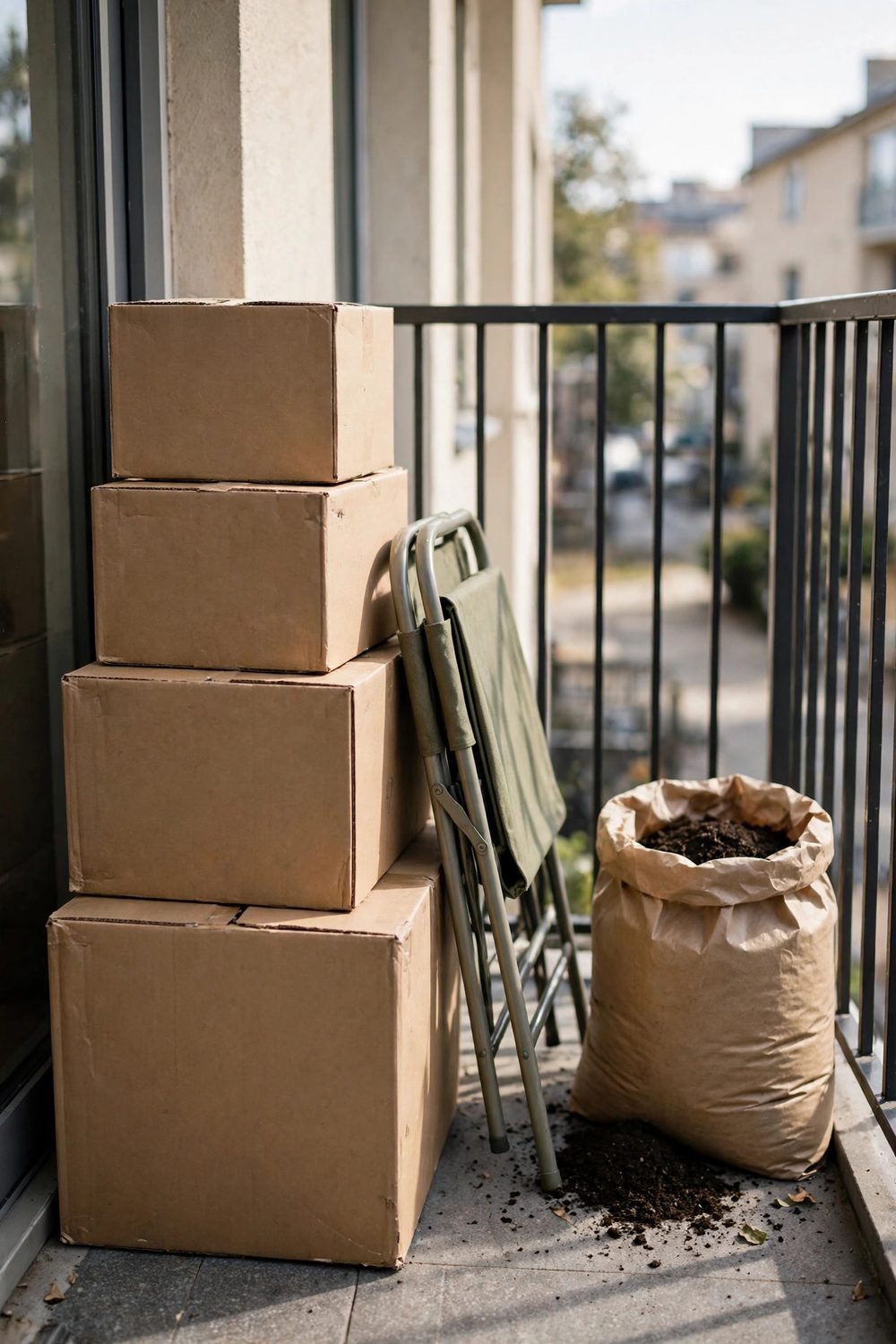
One box is the start. It holds old paint cans, then a broken chair joins it, then a bag of potting soil. Before long, the balcony is a shed with a view, and the seat you wanted is blocked by things you forgot you owned.
Set a firm rule. If an item is not used on the balcony at least once a week, it does not live there. Move storage boxes, tools, and spare parts back inside or to their real home.
Keep only balcony gear outside: a watering can, a small tool set, and one storage seat if it truly fits. Everything else goes. You will gain floor space, and you will stop tripping over the past every time you step out.
8. Picking a Rug That Is the Wrong Size
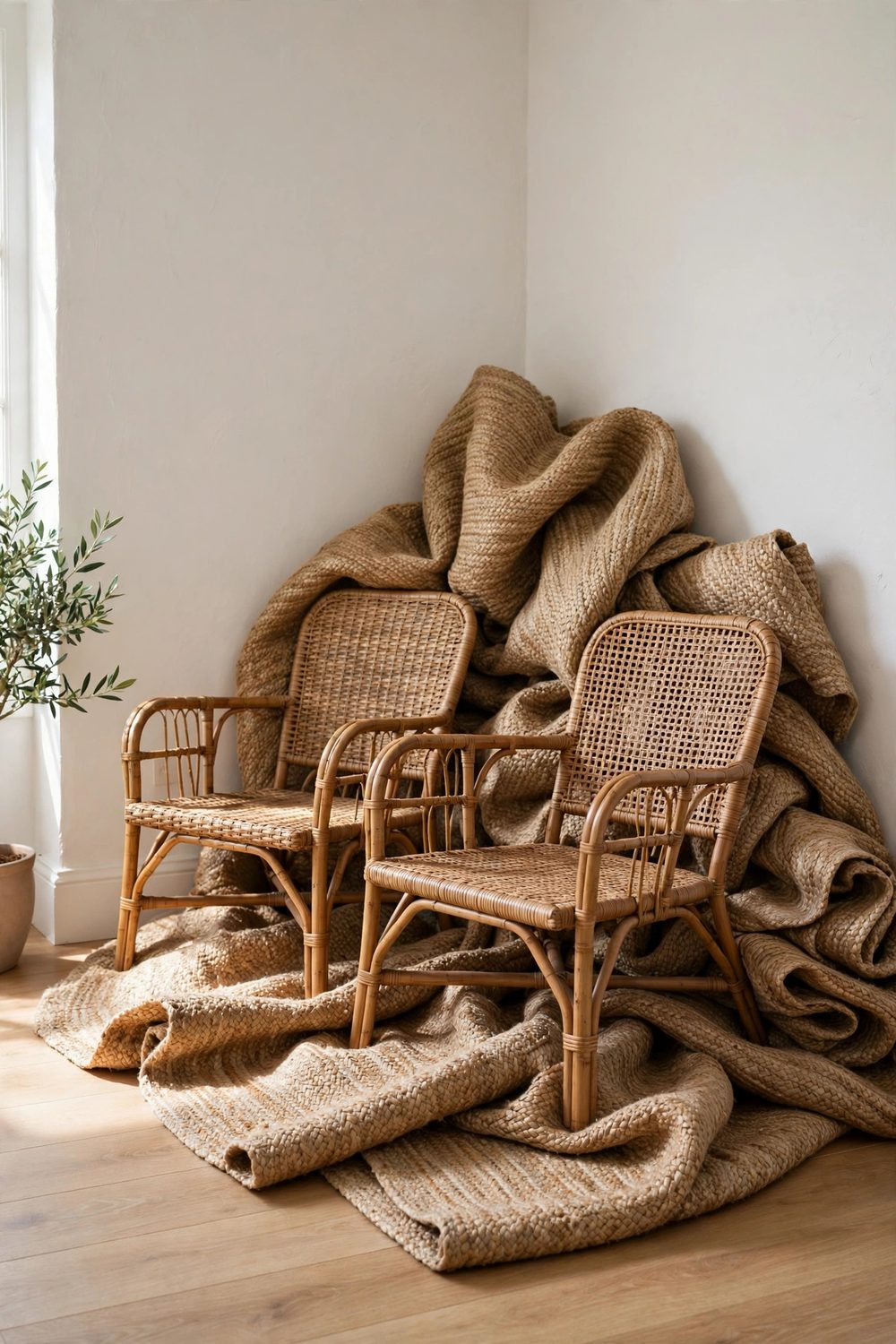
A rug that is too big bunches up against the walls and curls at the edges.
A rug that is too small floats in the middle like a mat, and the chair legs catch on its corners. Both mistakes make the floor look messy, even when the rug is new.
Measure the seating area, not the whole balcony. The rug should sit under the front legs of the chairs and leave a clear border of floor around it. That border is what makes the space look neat.
If you want more rug guidance, these small balcony rug ideas show sizes and layouts that fit tight floors. Pick one rug, lay it flat, and let the floor breathe around it.
9. Loading the Railing With Planters, Lights, and Screens
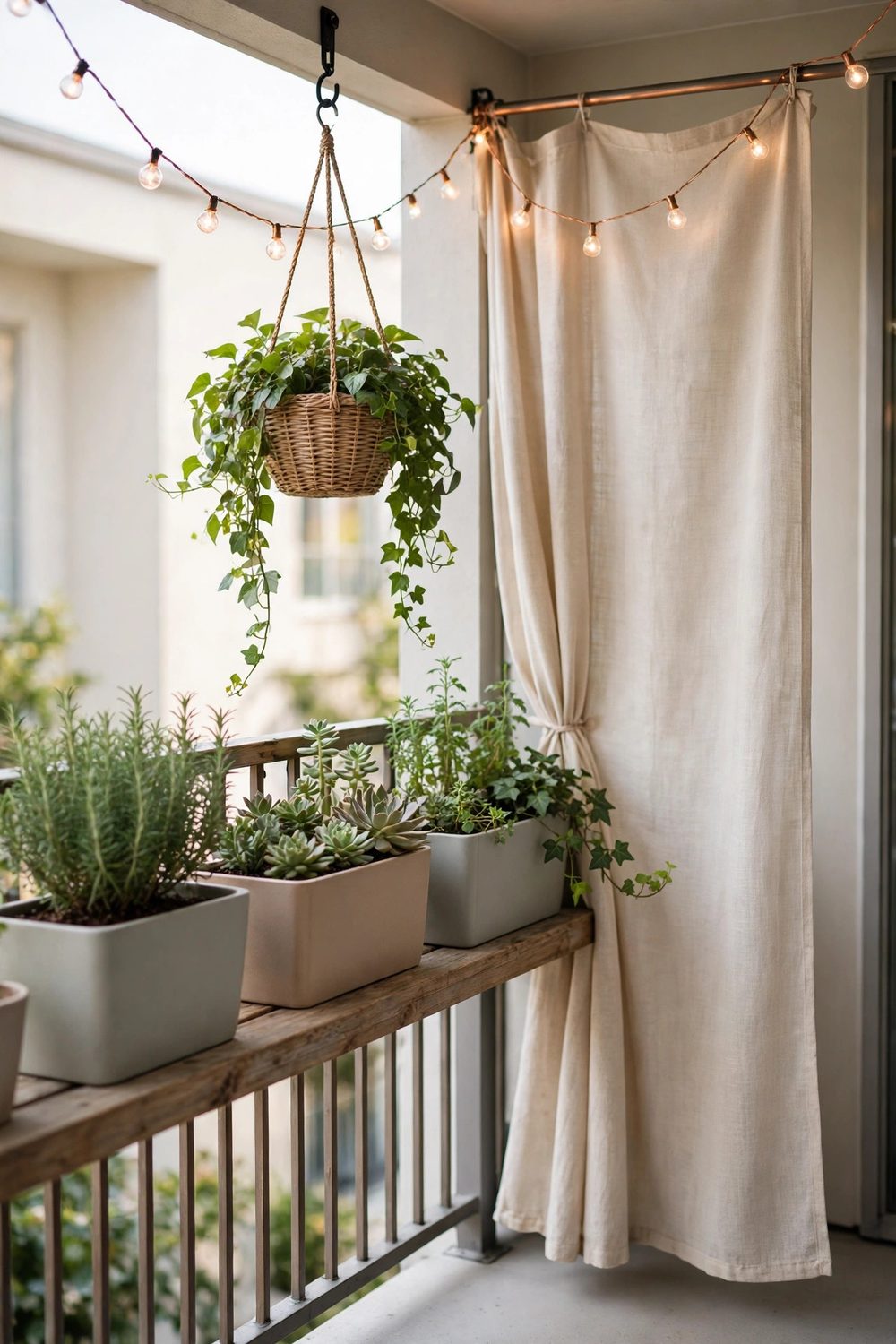
The railing feels like free space, so it collects everything. Rail planters, a privacy screen, string lights, and a hanging basket can stack up until the railing looks like a crowded shelf. From inside, the view turns into a wall of stuff.
Pick one job for the railing. If you want plants there, skip the heavy screen. If you want privacy, keep the lights on the wall instead. One layer looks neat, and three layers look busy.
Check the weight too. Wet soil in rail planters adds up fast, and a packed railing is hard to clean. Leave a gap where you can rest your arms and look out. That open stretch is often the best part of the whole balcony.
10. Leaving Seasonal Decor Up Long After the Season Ends
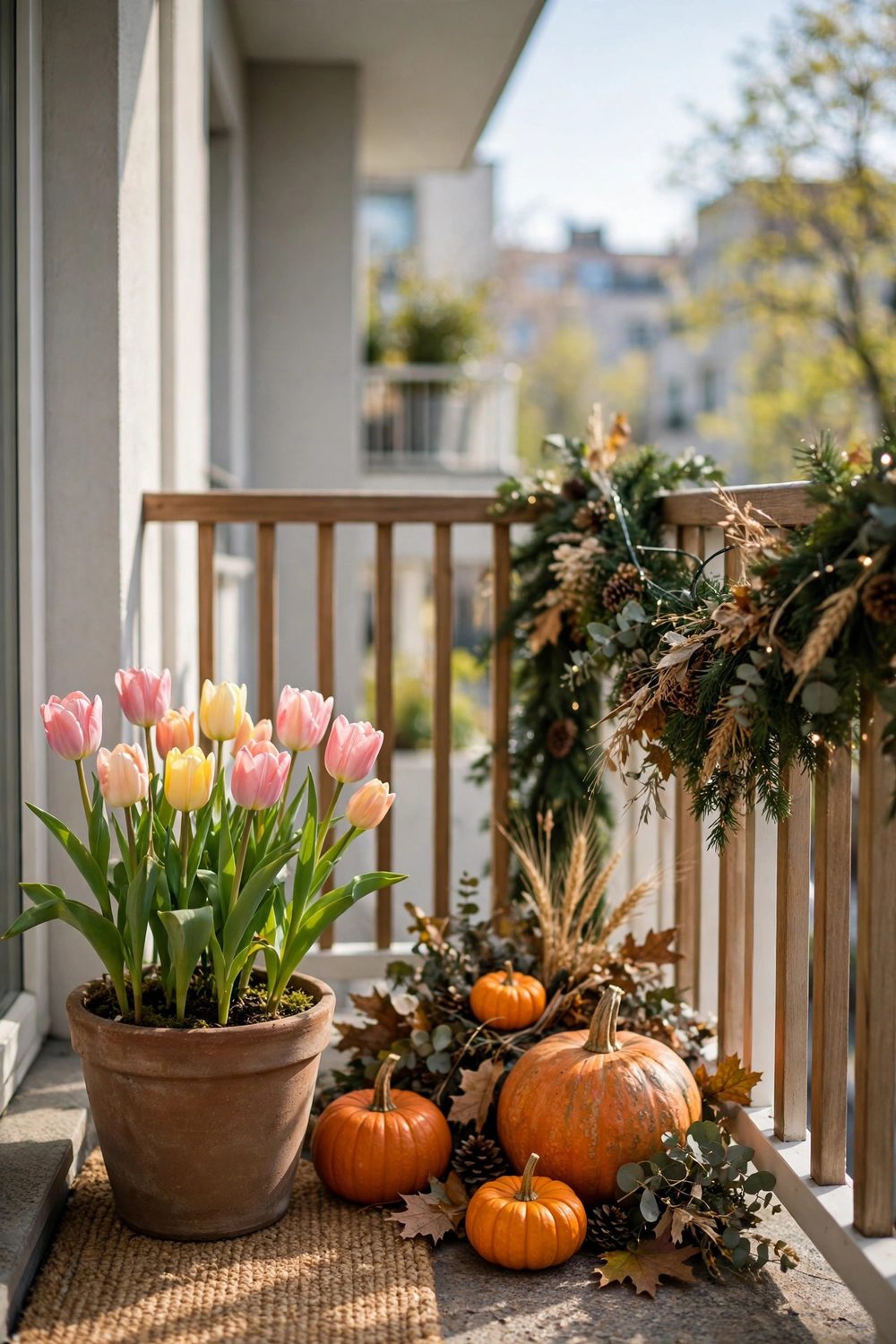
Pumpkins in January and faded garland in March send a clear message: this balcony has no reset day. Seasonal pieces are fun for a few weeks, but they turn into clutter the moment the season passes and they stay put.
Set a take-down date when you put decor up. When the date comes, pack the pieces in one labeled box and store it inside. The balcony gets its clean look back in one short session.
If you love a festive look, plan it as a short run, not a permanent display. These Christmas balcony ideas for a small space work best when the lights come down after the holidays. Fresh seasons deserve a fresh start.
11. Using Pots in Every Color and Material
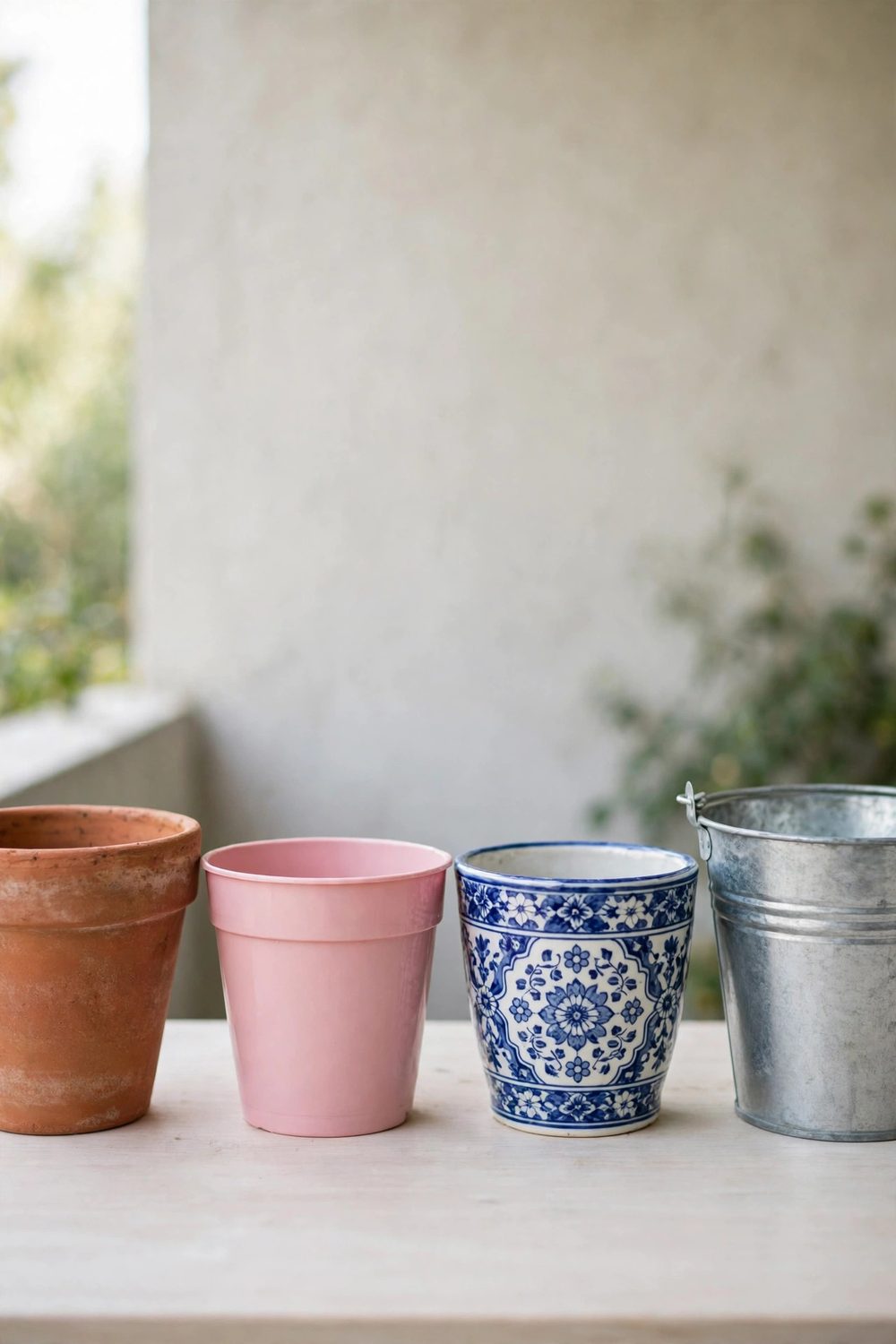
One terracotta pot, one bright plastic pot, one cracked ceramic pot, and one metal bucket do not read as a collection. They read as leftovers. Mixed pots pull the eye in five directions, and the plants get lost in the noise.
Pick one pot style and repeat it. The same color in three sizes looks calm and planned, even with different plants inside. If you already own mixed pots, group the matching ones together and move the odd ones inside.
You do not need new pots to fix this. A single coat of outdoor paint in one color can unite a mixed set. Once the pots match, the plants become the star, and the balcony looks cared for instead of crowded.
12. Keeping Dead Plants and Empty Pots Around
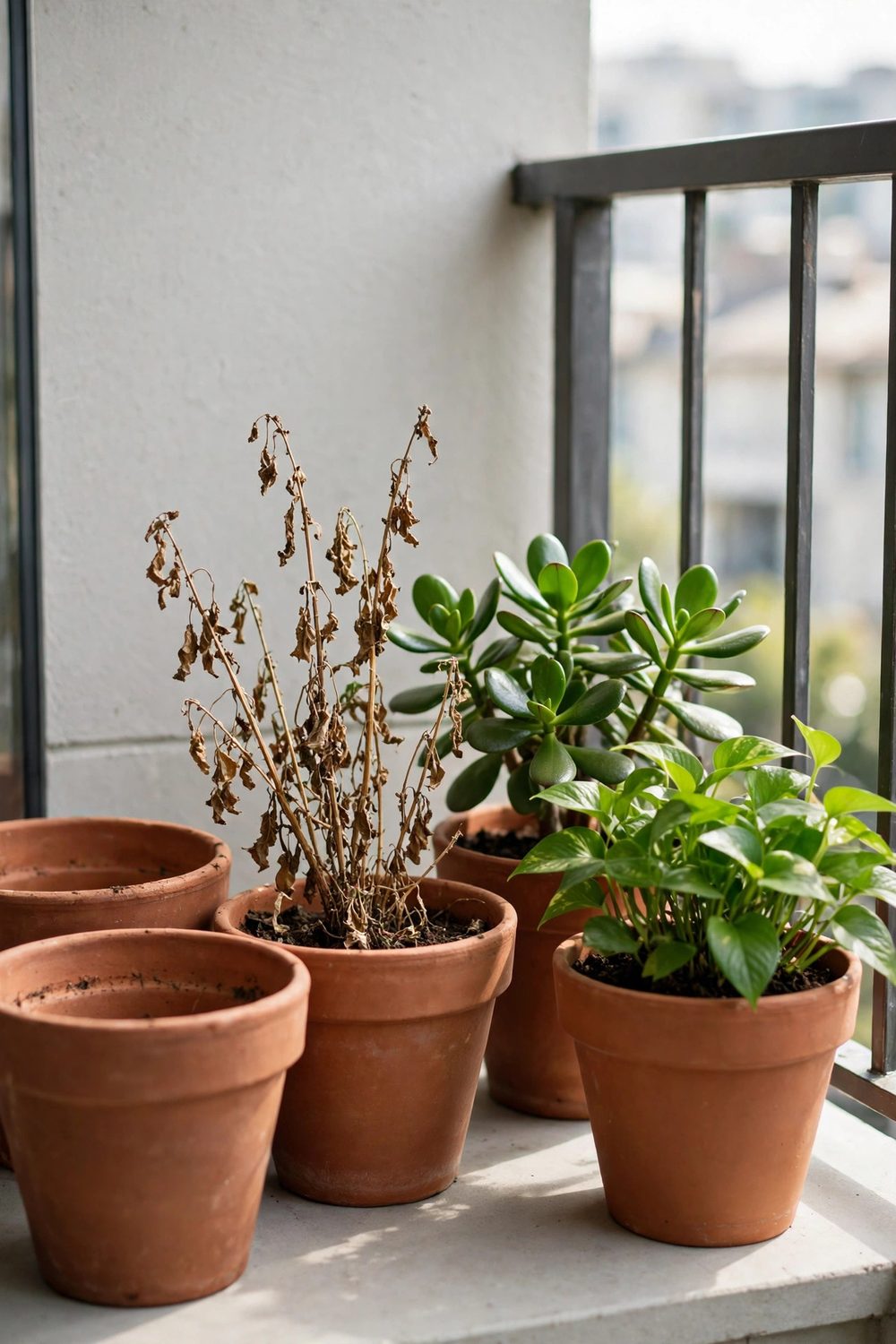
Dead stems, dry soil, and empty pots are easy to ignore. You walk past them each day, and they slowly become part of the view. But each dead plant still takes up floor space, and empty pots still catch leaves and rain.
Do a quick plant check once a week. If a plant is truly done, compost it and put the pot to work or store it. A pot with no plant in it is just a container taking up room.
Replace only what you can care for. Two healthy plants beat six struggling ones, and they need less water, less time, and less floor. A balcony with living plants feels fresh. A balcony with dead ones feels forgotten.
13. Running Three Kinds of Lighting at Once
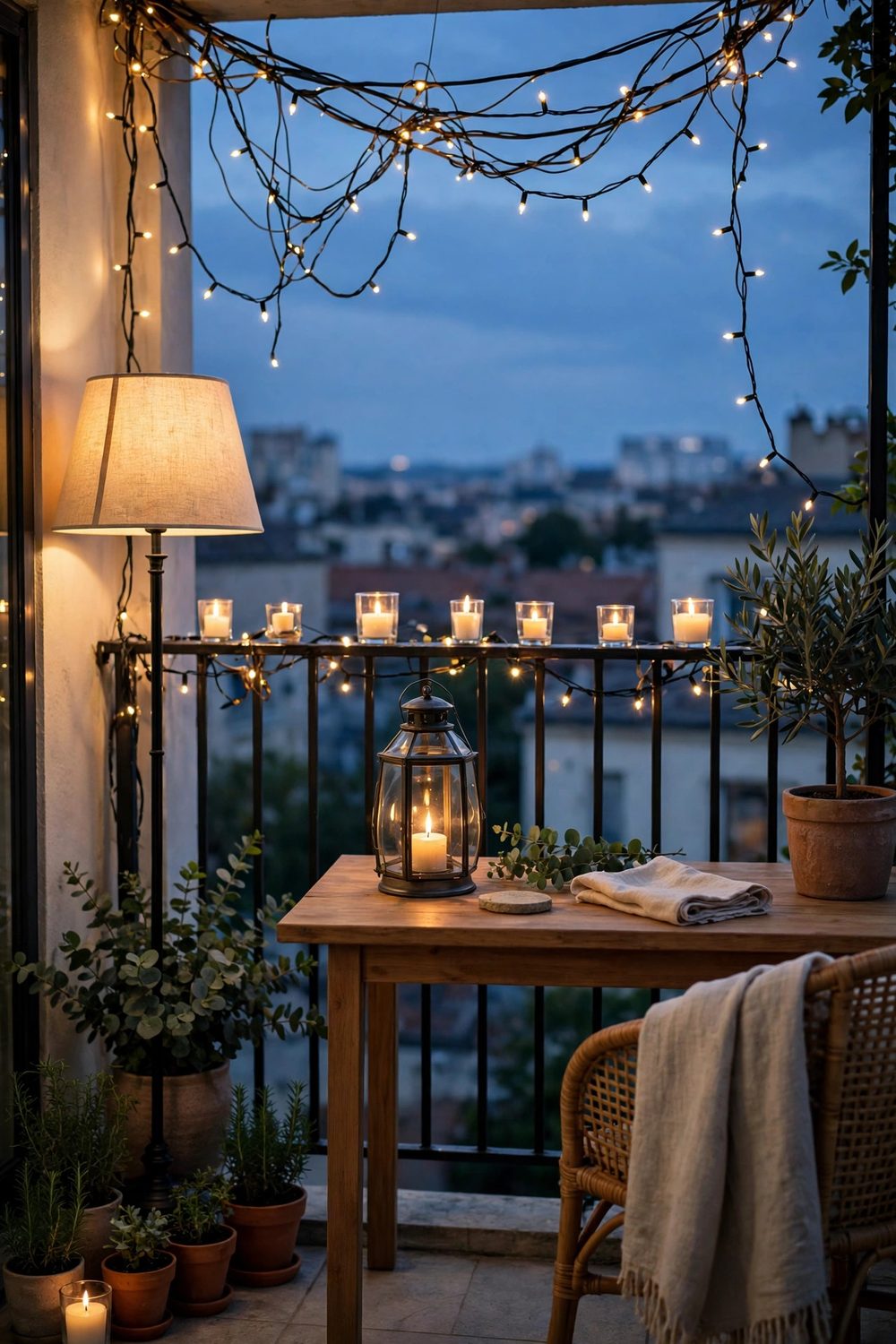
String lights across the top, a lantern on the table, a floor lamp in the corner, and candles on the rail can all glow at once.
The result is not cozy. It is a tangle of cords, plugs, and competing glows that makes the space feel wired up.
Pick one main light and one small accent. String lights along one edge plus a single lantern is plenty for a small balcony. One plug, one switch, and no cords crossing the walkway.
Check where the plug sits before you hang lights. A cord that must stretch across the door is a trip risk and an eyesore. Short runs, tucked along the wall, keep the glow soft and the floor clear.
14. Choosing a Table That Is Too Big for Two People
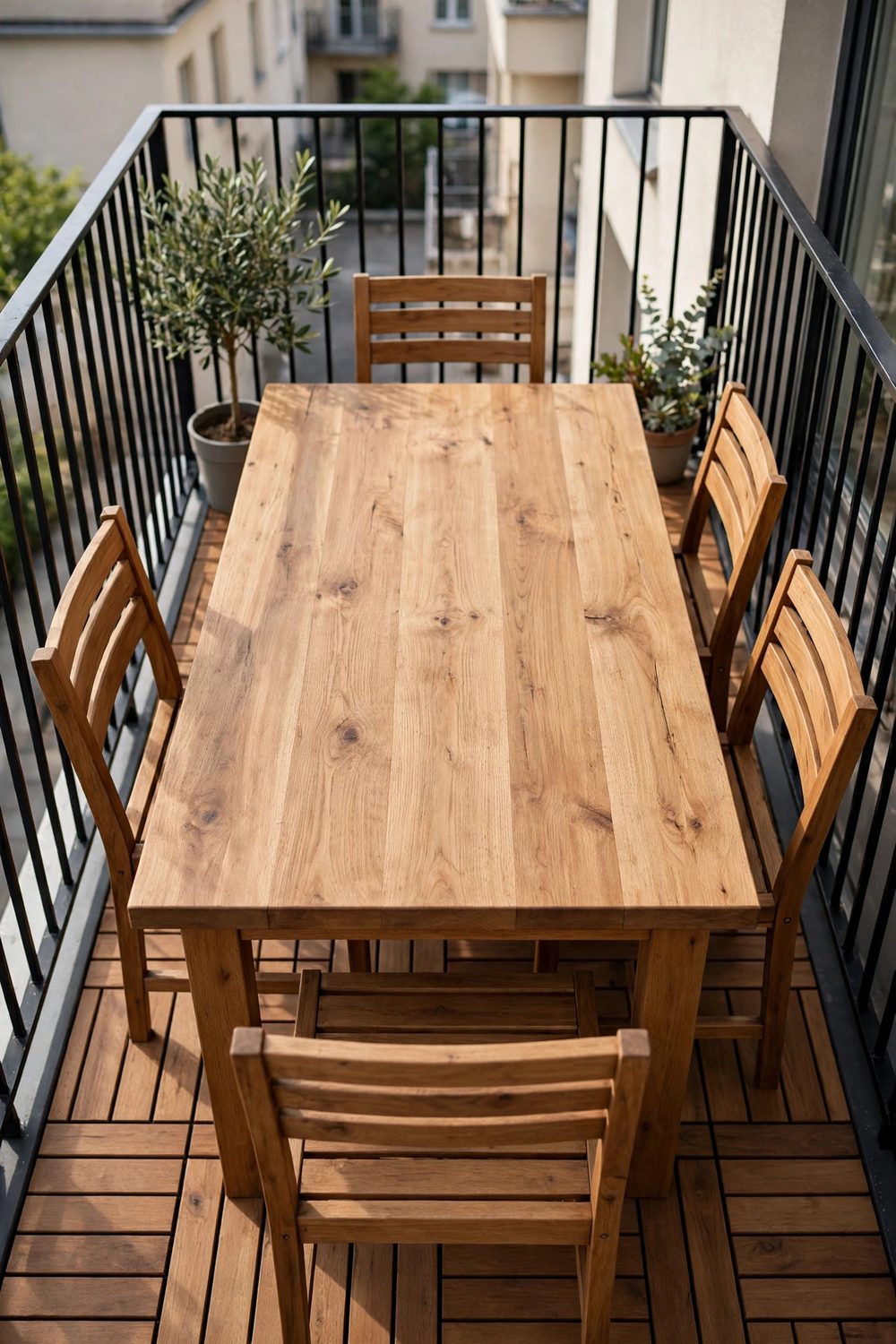
A full dining table sounds great until it lands on a small balcony. It seats four in theory, but in practice it blocks the door, traps the chairs, and leaves no room to stand. Most days, only one or two people use it anyway.
Match the table to real use, not guest dreams. A small round or folding table fits two mugs and a book, and it folds away when you need floor space. That is a win on a tight balcony.
If seating is the puzzle, these small balcony seating ideas show compact setups that leave room to move. A table you can walk around beats a table you must climb past.
15. Letting Small Messes Pile Up With No Reset Day
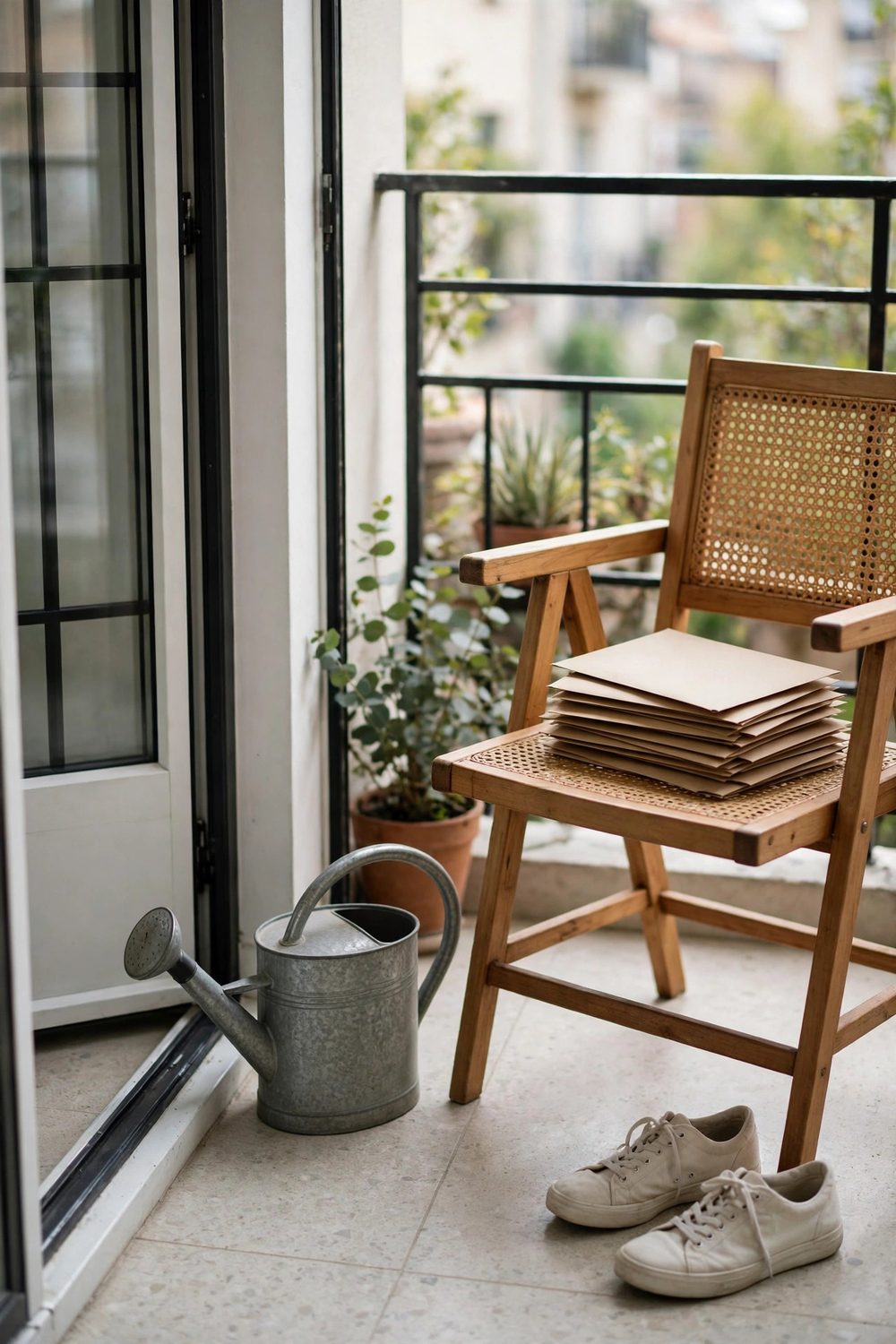
I used to leave one small thing out each day. A watering can by the door, a pair of shoes, a mail bundle on the chair. None of them mattered alone, but by Sunday the balcony looked like a hallway closet.
The fix is a ten minute reset once a week. Return shoes inside, empty the saucers, fold the throw, and wipe the table. Small jobs done weekly never grow into a big clear-out.
A seasonal deep clean helps too. These spring balcony reset ideas give that reset a simple order: clean, plant, then seat. Pick a reset day and keep it.
Also check the corners each week. Leaves and dust gather there first, and a quick sweep keeps them from spreading.
Start with the mistake that bugs you most. Fix that one thing, then pick the next. A balcony feels open when each item has a job and a home, not when it holds the most stuff.
The mistakes that make a small balcony feel cluttered are all easy to undo, and most fixes cost nothing but a little time. Save this to your balcony board for later, so you can work through the list on a quiet weekend.


