
20 Mid Century Modern Kitchen Ideas for a Timeless and Stylish Home
Mid Century Modern kitchens continue to dominate interior design because they combine timeless simplicity with nostalgic warmth. Originating between the 1940s and 1960s, this style is known for its clean cabinetry, organic textures, geometric accents, functional layouts, and retro-inspired color palettes. Design experts still point to warm walnut wood, matte finishes, brass accents, open shelving, and sculptural lighting as defining elements of this enduring aesthetic.
The beauty of a Mid Century Modern kitchen lies in its ability to feel both vintage and current at the same time. Whether you are planning a complete remodel or simply refreshing your decor, these carefully researched ideas will help you create a kitchen that feels stylish, welcoming, and effortlessly sophisticated.
1. Choose Warm Walnut or Teak Cabinets
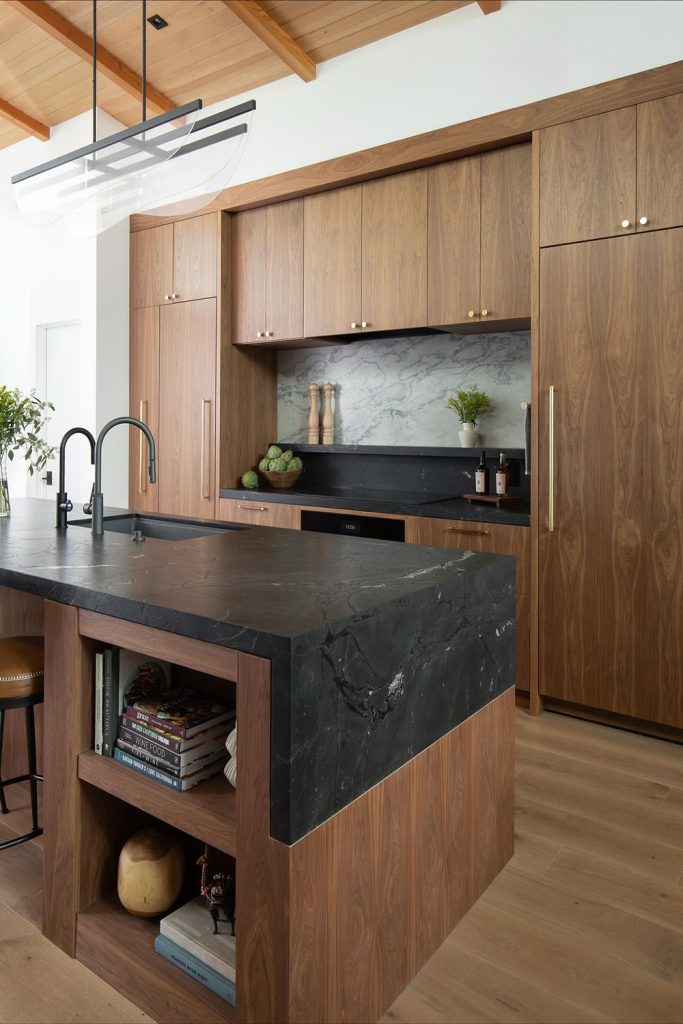
Nothing says Mid Century Modern quite like rich wooden cabinetry. Walnut, teak, and oak are signature materials because they bring instant warmth and visual depth without needing ornate detailing. Flat-panel cabinets with visible grain create the sleek simplicity this style is famous for. Instead of glossy modern finishes, choose matte or satin wood surfaces that feel authentic and organic. Warm wood remains one of the strongest kitchen design trends because it softens the space while maintaining a clean architectural appearance.
2. Use Flat Front Cabinet Doors

Traditional raised-panel cabinets do not belong in a true Mid-Century kitchen. Instead, opt for slab or flat-front doors with minimal hardware. The entire purpose is to create uninterrupted horizontal lines that make the kitchen look open, calm, and uncluttered. This design approach reflects the mid-century principle of “form follows function.” Clean cabinet faces also make the room feel more modern, even when paired with vintage décor. This simple upgrade instantly transforms an ordinary kitchen into a retro-inspired statement.
3. Add Brass or Brushed Gold Hardware

Mid Century Modern spaces are never too flashy, but they do appreciate subtle metallic sophistication. Brushed brass cabinet pulls, slim drawer handles, and minimalist gold knobs create a refined retro touch without overwhelming the kitchen. Current design experts note that warmer metals are replacing cold chrome in modern homes because they add character and softness. When combined with walnut cabinets or muted paint colors, brass hardware helps tie the whole vintage-modern look together beautifully.
4. Incorporate Retro Color Pops

Mid Century Modern design loves carefully selected color. Think mustard yellow, olive green, burnt orange, teal, rust, and muted blue. You do not need an entire colorful kitchen—just a few statement accents like stools, pendant lights, a backsplash, or kitchen accessories. These tones create playful energy while preserving the minimalist structure of the room. The key is balance: use one or two vintage shades against a neutral wood backdrop so the kitchen feels curated rather than chaotic.
5. Install Geometric Tile Backsplash
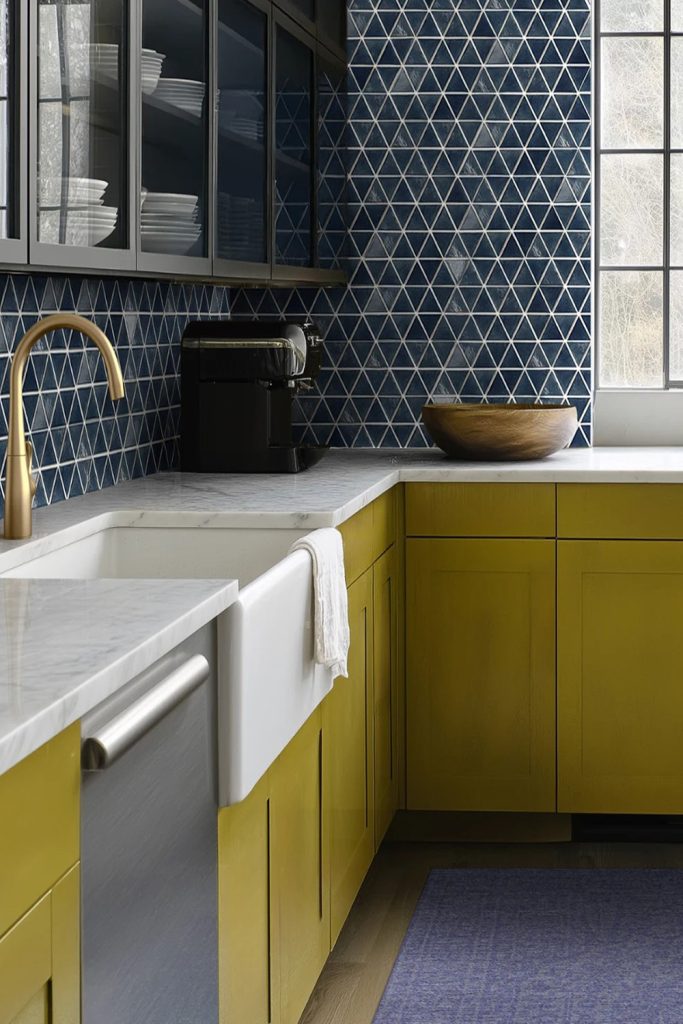
Geometry played a major role in Mid Century interiors, which is why a geometric backsplash instantly strengthens the style. Hexagons, stacked rectangles, diamond tiles, or subtle starburst patterns work extremely well. Instead of loud multicolor mosaics, choose earthy or monochromatic shades that blend with the cabinetry. The geometric detail adds visual rhythm while still respecting the simplicity of the space. It becomes a functional art piece behind your stove or sink, adding texture and personality without unnecessary clutter.
6. Go for Open Shelving Instead of Heavy Uppers

One classic Mid Century Modern principle is visual openness. Removing bulky upper cabinets and replacing them with floating wooden shelves makes the kitchen feel brighter and more breathable. Open shelves also provide the perfect place to display ceramic dishes, glassware, retro mugs, or small potted plants. Designers consistently recommend open shelving in Mid Century spaces because it prevents the room from feeling boxed in and creates a more airy indoor-outdoor flow, which was central to this era’s design philosophy.
7. Use Statement Pendant Lighting

Lighting in Mid Century kitchens should never be boring. Think globe pendants, cone-shaped fixtures, sputnik chandeliers, or sculptural brass hanging lights. These pieces are not only functional—they serve as art. A dramatic pendant above the island or breakfast nook immediately creates a vintage focal point. Warm lighting also enhances the wood tones and earthy palette used throughout the room. Since Mid Century design values both utility and aesthetics, the right lighting fixture often becomes one of the most important elements in the kitchen.
8. Bring in a Retro-Inspired Refrigerator

A rounded vintage-style refrigerator can instantly become the heart of your Mid Century kitchen. Cream, pastel green, muted blue, or soft red appliances create nostalgic charm while still offering modern functionality. Even if you do not want a full retro appliance package, one standout fridge can set the design tone for the whole room. It creates that delightful old-school Americana feeling that Mid Century homes are known for while keeping the rest of the kitchen sleek and minimal.
9. Mix Wood with Stone Countertops

A successful Mid Century kitchen balances warmth with structure. Wooden cabinets paired with stone countertops—such as quartz, terrazzo, travertine, or honed granite—create that perfect contrast. The wood provides softness and natural movement, while the stone introduces a clean durable work surface. Experts often describe this material pairing as the reason Mid Century kitchens feel grounded but sophisticated. It avoids the coldness of all-white modern kitchens and gives the space layered richness that looks expensive and timeless.
10. Choose a Muted Earth Tone Palette

Instead of stark white or shiny gray, Mid Century kitchens thrive on earthy neutrals. Cream, mushroom, beige, clay, taupe, olive, and warm greige all work beautifully. These tones help create a lived-in softness that feels cozy rather than sterile. Recent kitchen trend reports also show a strong shift toward warmer natural palettes and away from cold minimalism. Earth tones allow your wooden elements and brass details to stand out while keeping the room peaceful and inviting.
11. Add a Breakfast Nook with Tapered Legs

A small breakfast nook with a round table and tapered wood chairs instantly channels authentic Mid Century style. Furniture from this era often featured slim angled legs, curved seats, and practical compact shapes. Adding such a nook creates a charming family corner where function meets retro aesthetics. Choose upholstered seating in mustard, olive, or teal for extra vintage appeal. It turns the kitchen into more than just a cooking area—it becomes a social space, which was a key feature of Mid Century homes.
12. Use Terrazzo Flooring

Terrazzo has become one of the biggest comebacks in modern interiors, and it fits Mid Century kitchens perfectly. Its subtle speckled appearance adds texture, personality, and a slight retro playfulness. Unlike plain tile floors, terrazzo feels artistic yet practical. It pairs wonderfully with wood cabinetry and brass details while maintaining the smooth clean lines required in Mid Century design. Because terrazzo is durable and visually interesting, it gives the kitchen both character and long-term style relevance.
13. Keep Decor Minimal but Intentional

Mid Century Modern is not about filling every corner with décor. It is about choosing fewer but stronger pieces. A ceramic vase, abstract framed art, one fruit bowl, a vintage clock, or a sculptural planter is enough. Clutter destroys the sleekness this design depends on. Every decorative item should look purposeful. By keeping countertops mostly clear and accessories limited, your kitchen will feel more refined, functional, and architecturally beautiful—just like original Mid Century homes.
14. Include Indoor Plants

One of the strongest Mid Century themes is the connection between indoors and outdoors. Adding greenery instantly softens the straight cabinet lines and brings life into the kitchen. Hanging pothos, snake plants, rubber plants, or herbs on open shelves all work wonderfully. Plants introduce natural color and organic movement without needing expensive renovations. Even a simple ceramic planter by the window can make the room feel fresher, healthier, and more authentically connected to Mid Century principles.
15. Install a Long Horizontal Window

If you are remodeling, consider a horizontal picture window above the sink or along one wall. Mid Century architecture often emphasized long linear windows to maximize daylight and outdoor views. This makes the kitchen feel wider and brighter while strengthening the home’s retro architectural identity. Natural sunlight also enhances wood tones and muted wall colors beautifully. A well-placed window can make the kitchen feel less enclosed and more serene, which is one of the most loved qualities of this style.
16. Add a Functional Kitchen Island with Wood Paneling

Kitchen islands are wonderful in Mid Century kitchens when they are kept simple and practical. Choose a rectangular island with slatted or flat wood paneling and clean edges. Avoid ornate corbels or farmhouse details. The island should feel integrated, not oversized. Experts continue to emphasize that successful islands must support prep, storage, and gathering without blocking movement. A streamlined wooden island becomes both a workspace and a sculptural centerpiece in your retro-inspired kitchen.
17. Display Vintage Bar Stools

Swap standard stools for low-profile Mid Century bar stools with tapered legs, curved seats, or leather upholstery. These instantly create a stylish retro diner vibe around an island or breakfast counter. Bar stools are a small detail, but in design they often have a huge visual impact because they sit in open sightlines. Choosing stools in walnut wood, black metal, or mustard upholstery helps reinforce the overall theme while adding comfortable functionality.
18. Use Ribbed or Fluted Glass Cabinets

Fluted glass or ribbed cabinet inserts add subtle texture while still keeping the clean lines of Mid Century style. This detail introduces a hint of vintage sophistication without making the kitchen feel busy. Use it on a pantry door, a few upper cabinets, or a display hutch. Because the glass partially hides contents, it keeps the room looking organized while adding visual interest. It is one of those designer details that quietly elevates the entire kitchen.
19. Try Sculptural Wall Art

Mid Century homes often used abstract and geometric artwork to break up simple walls. In the kitchen, a bold framed print, line drawing, or atomic-era graphic adds personality without clutter. Choose pieces with warm oranges, blacks, ochres, or greens to complement the palette. Since kitchens can sometimes feel purely functional, adding art makes the space feel thoughtfully designed and more connected to the rest of the home’s décor language.
20. Blend Vintage with Modern Appliances

The best Mid Century Modern kitchens are not museum replicas. They mix retro charm with current convenience. Stainless built-in ovens, induction cooktops, hidden dishwashers, and modern faucets can coexist beautifully with wood cabinetry, brass handles, and earthy colors. This blend keeps the kitchen practical for daily life while preserving the nostalgic visual identity. The goal is not to live in the 1950s—it is to borrow the era’s warmth, function, and simplicity in a way that still feels fresh today.
Conclusion
A Mid Century Modern kitchen is one of the few design styles that never truly goes out of fashion. Its clean lines, warm woods, retro colors, and practical layouts create a space that feels elegant, welcoming, and highly functional. By mixing natural materials, geometric accents, sculptural lighting, and carefully chosen vintage touches, you can build a kitchen that feels nostalgic without becoming outdated.
Whether you adopt just one of these ideas or combine several, the result will be a timeless kitchen filled with character, comfort, and unmistakable style.
Frequently Asked Questions
What defines a Mid Century Modern kitchen?
A Mid Century Modern kitchen is defined by flat-front cabinets, warm wood finishes, minimal ornamentation, retro-inspired colors, geometric patterns, and functional open layouts. It combines vintage charm with sleek simplicity.
What colors work best in a Mid Century Modern kitchen?
Mustard yellow, olive green, burnt orange, teal, cream, beige, walnut brown, and warm white are the most popular colors. These shades create a nostalgic but sophisticated atmosphere.
Are Mid Century Modern kitchens expensive to create?
Not necessarily. You can achieve the look affordably by changing cabinet hardware, adding retro lighting, using wood accents, installing open shelving, and incorporating vintage-inspired decor without a full remodel.
Can Mid Century Modern mix with contemporary design?
Yes. In fact, the best Mid Century kitchens often blend vintage aesthetics with modern appliances and updated materials. This keeps the kitchen practical while maintaining a timeless visual appeal.
Is Mid Century Modern still trending?
Yes, it remains one of the strongest, timeless interior trends because homeowners continue to prefer warm woods, earthy palettes, and functional minimalist layouts over cold, sterile kitchen designs.


