

15 Navy Blue and Grey Living Room Ideas for Small Apartments with Limited Light
Small rooms with little daylight can still carry navy and grey, as long as the balance leans light. Pale grey on the largest surfaces, navy in clear blocks, and plenty of warm light will keep the space feeling open rather than dim.
This guide covers navy blue and grey living room ideas for small apartments with limited light, with layouts, finishes, and furniture sizes chosen for compact rooms where every corner has to earn its place in daily life.
For the full palette in larger spaces, see our guide to navy blue and grey living room ideas as a starting point, then come back here for the small room rules that change how that palette behaves.
Every idea here respects two limits, floor space and daylight. Furniture is scaled down, storage moves up the walls, and pale or shiny surfaces sit where they can share light.
Work through the list in order if you are starting from an empty room. If your room is furnished, jump to the lighting and layout ideas first, since they change the feel fastest.
This post contains affiliate links. If you buy through them, we may earn a small commission at no extra cost to you. See our Affiliate Disclosure.
1. Pale Grey Walls With One Navy Feature Wall
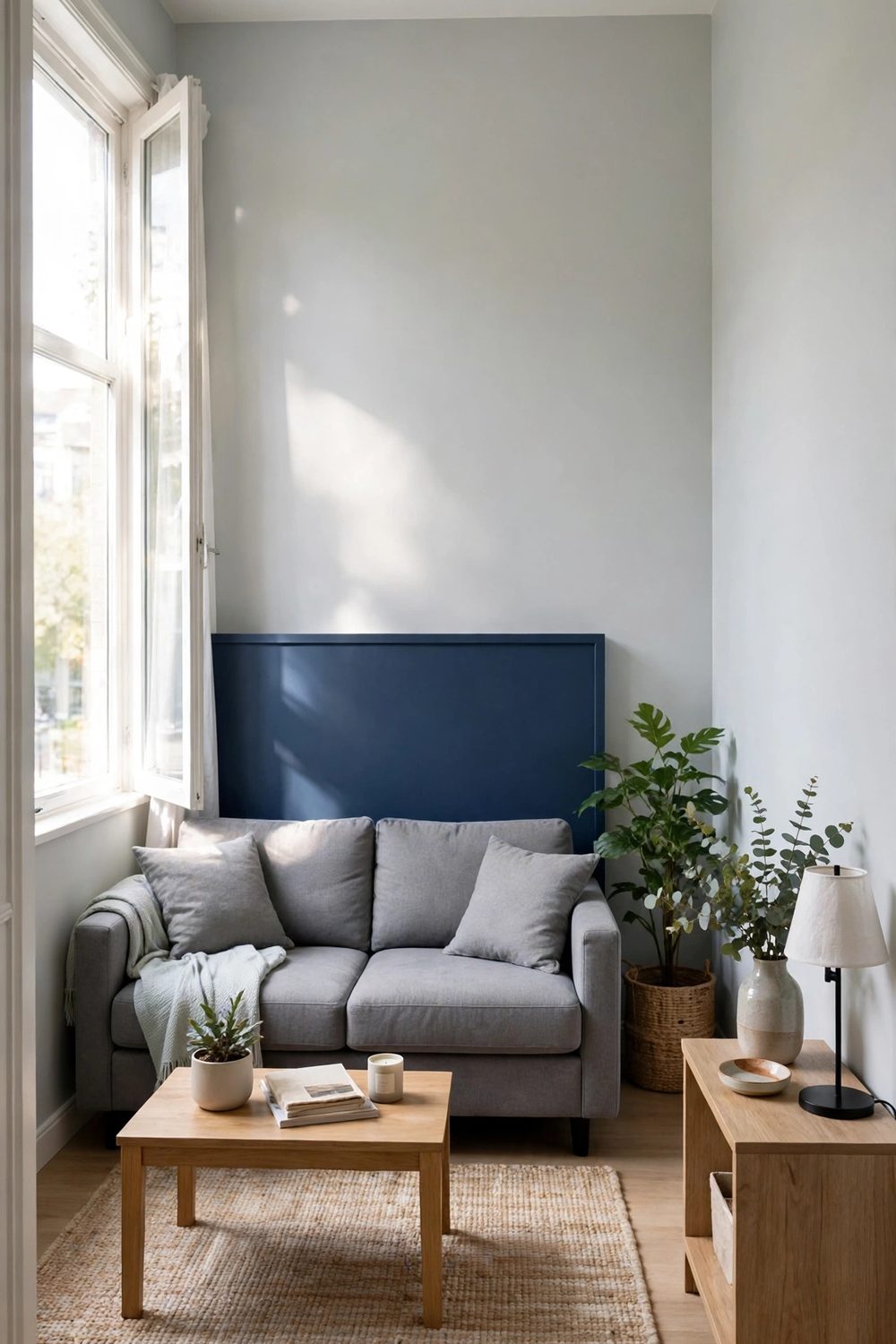
Keep three walls in a pale warm grey and save navy for the shortest wall. The deep colour gives depth at the far end, while the pale sides bounce window light back into the room.
Choose the wall behind the sofa for the navy. Seating against deep colour looks settled, and the pale walls around it keep the seating area from feeling closed in.
Test paint on large sheets of paper first. Small chips mislead in dim rooms, while a big sheet shows how the colour behaves in morning and evening light.
Keep one clear surface in the room at all times. A bare coffee table or an empty shelf gives a small room a visual pause and stops clutter building up.
2. Slim Sofa in Light Grey With Navy Cushions
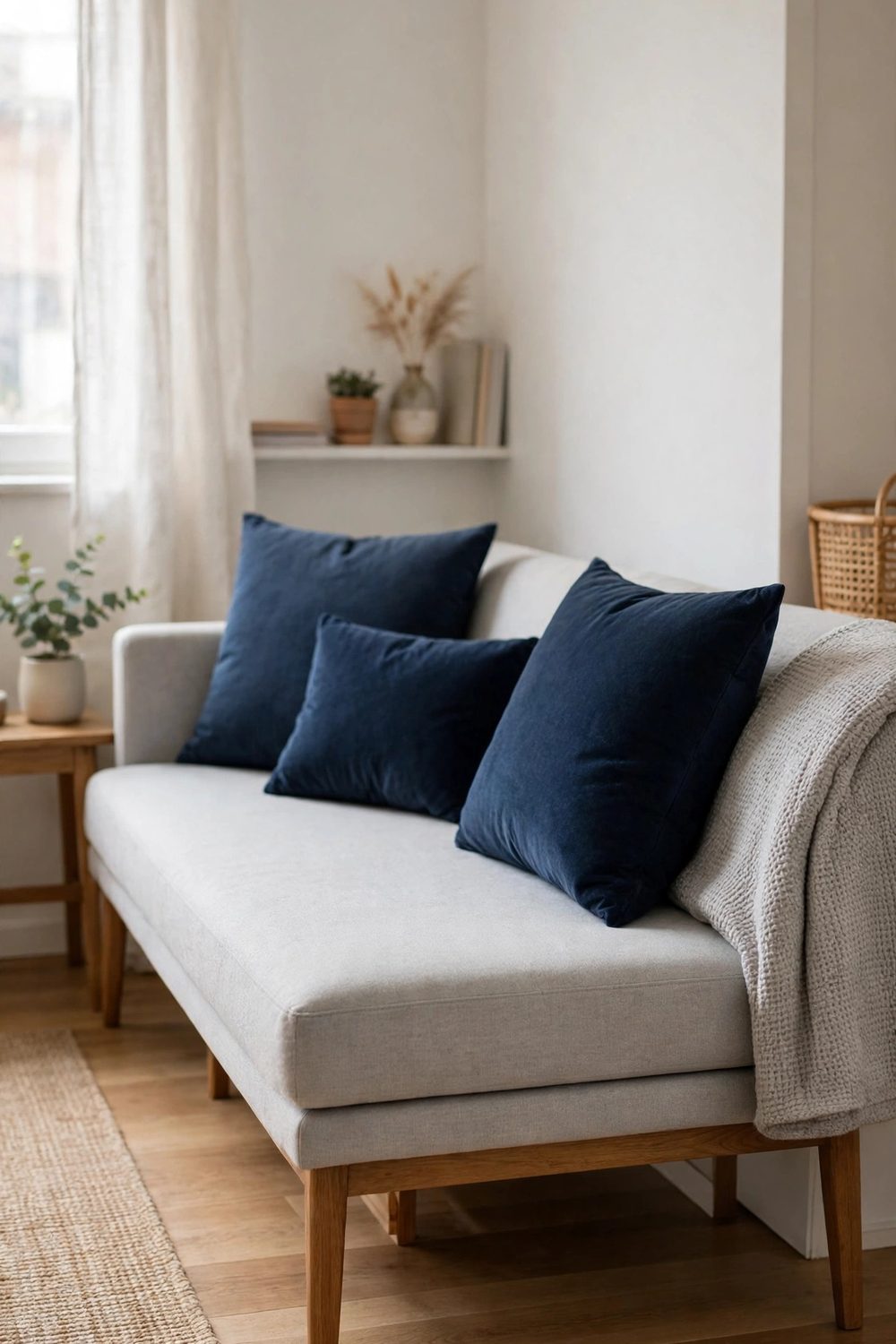
A slim sofa with narrow arms gives more seat width in the same floor space. Light grey upholstery keeps the biggest piece in the room pale, and navy cushions add the deep note in a changeable form.
Measure the door and hallway before you order. Compact flats often have tight turns, and a sofa that cannot enter the room is a costly mistake to fix.
Raised legs help small rooms. Seeing floor beneath the sofa makes the footprint feel lighter and lets a vacuum pass under with ease.
A washable sofa cover in the same grey protects against daily wear. Small flats host meals, work, and rest in one space, so fabrics work harder than in big homes.
3. Mirror Placement to Share Window Light
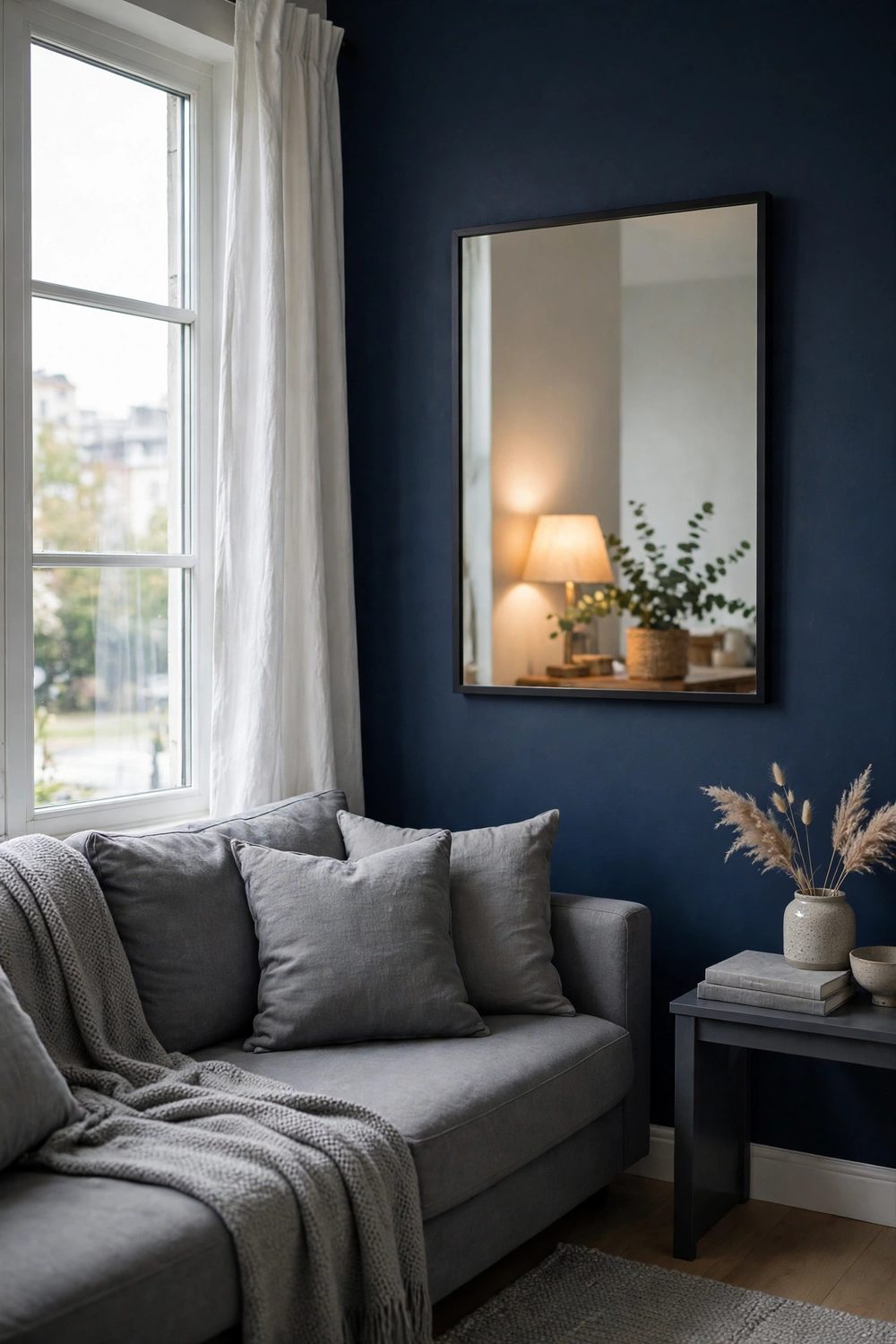
A mirror on the wall opposite or beside the window shares daylight across the room. In a navy and grey scheme, a plain frame in pale wood or brushed metal keeps the mirror calm and useful.
Angle matters more than size. A modest mirror placed to catch the window will do more than a large one facing a dark corner or the back of a tall bookcase.
Keep the mirror at seated eye height near the sofa. It will reflect lamplight in the evening too, which doubles its value in a room short on daylight.
4. Open Plan Layouts That Borrow Light
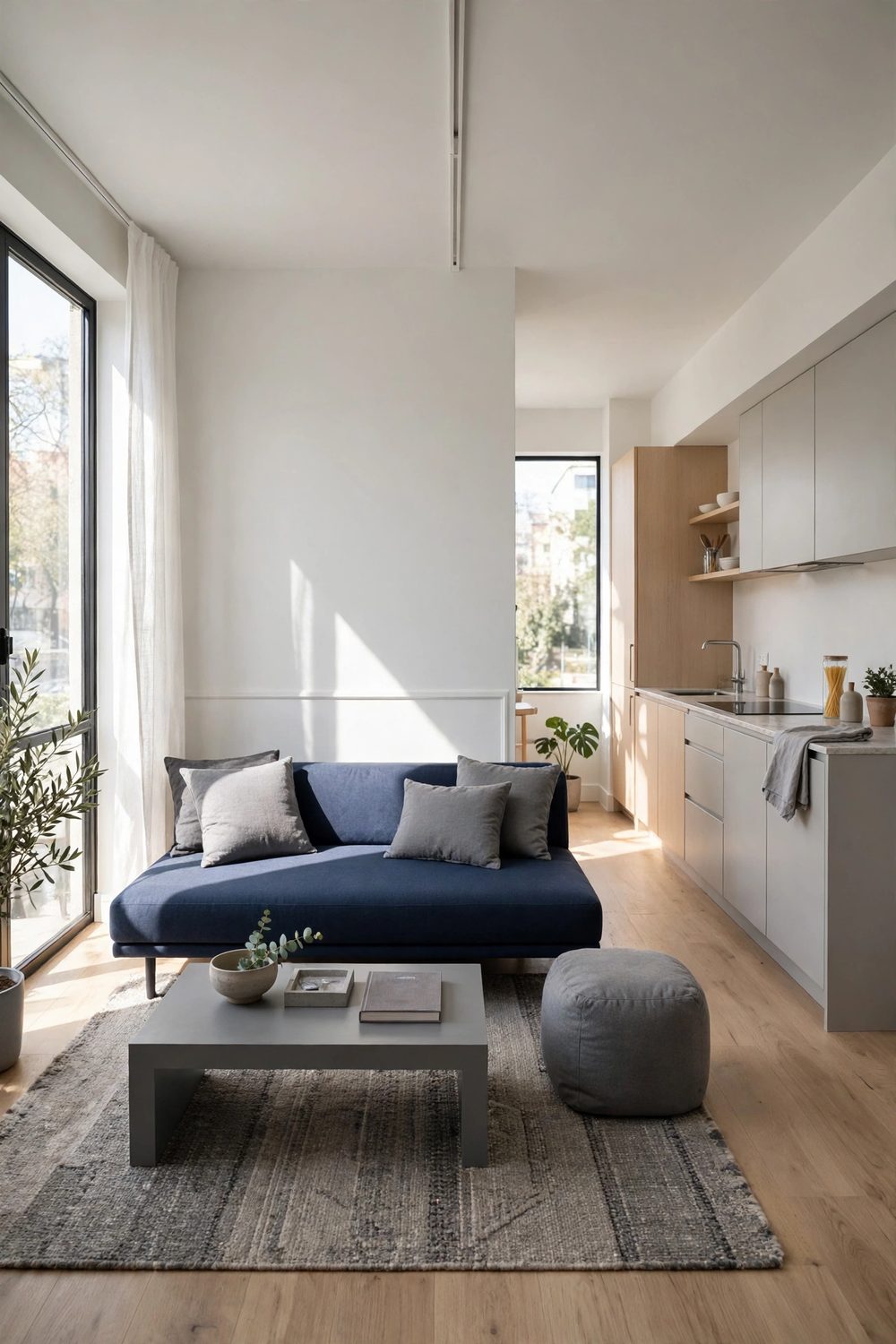
Apartments where the living area shares space with the kitchen can borrow light from both ends. Keep the navy pieces low and central so they do not block the path of light between windows.
Layouts in small living rooms for apartments with open kitchens show how low furniture keeps shared spaces feeling like one bright room.
Use a rug to mark the seating zone instead of a divider. A rug gives the area its own identity while the sightlines and the daylight stay open above it.
Rugs also soften sound in shared buildings. A calm acoustic helps a small flat feel private, which matters when neighbours sit close on every side of you.
5. Layered Lighting With Three Sources
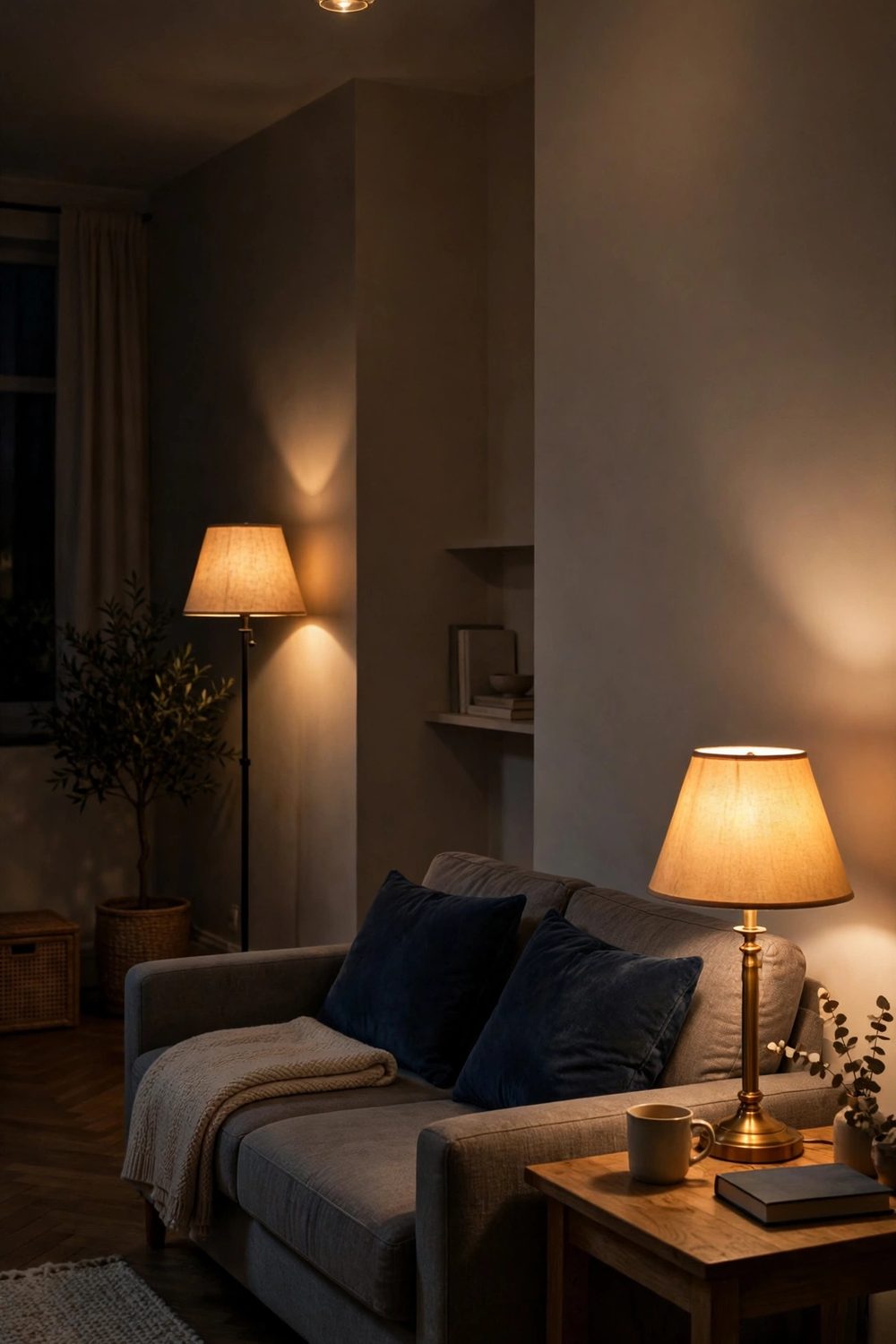
One ceiling light is rarely kind in a dim flat. Aim for three sources at different heights, a ceiling or wall light, a floor lamp, and a table lamp, so the room has pools of warm light instead of glare.
Warm bulbs suit navy well. Cool bulbs can push navy toward black and grey toward blue, while warm light keeps both colours true and the room welcoming after dark.
Put the table lamp where you read and the floor lamp in the darkest corner. Light placed by need beats light placed by symmetry in a small room.
Keep one clear surface in the room at all times. A bare coffee table or an empty shelf gives a small room a visual pause and stops clutter from building up.
6. Sheer Curtains That Keep Privacy and Light
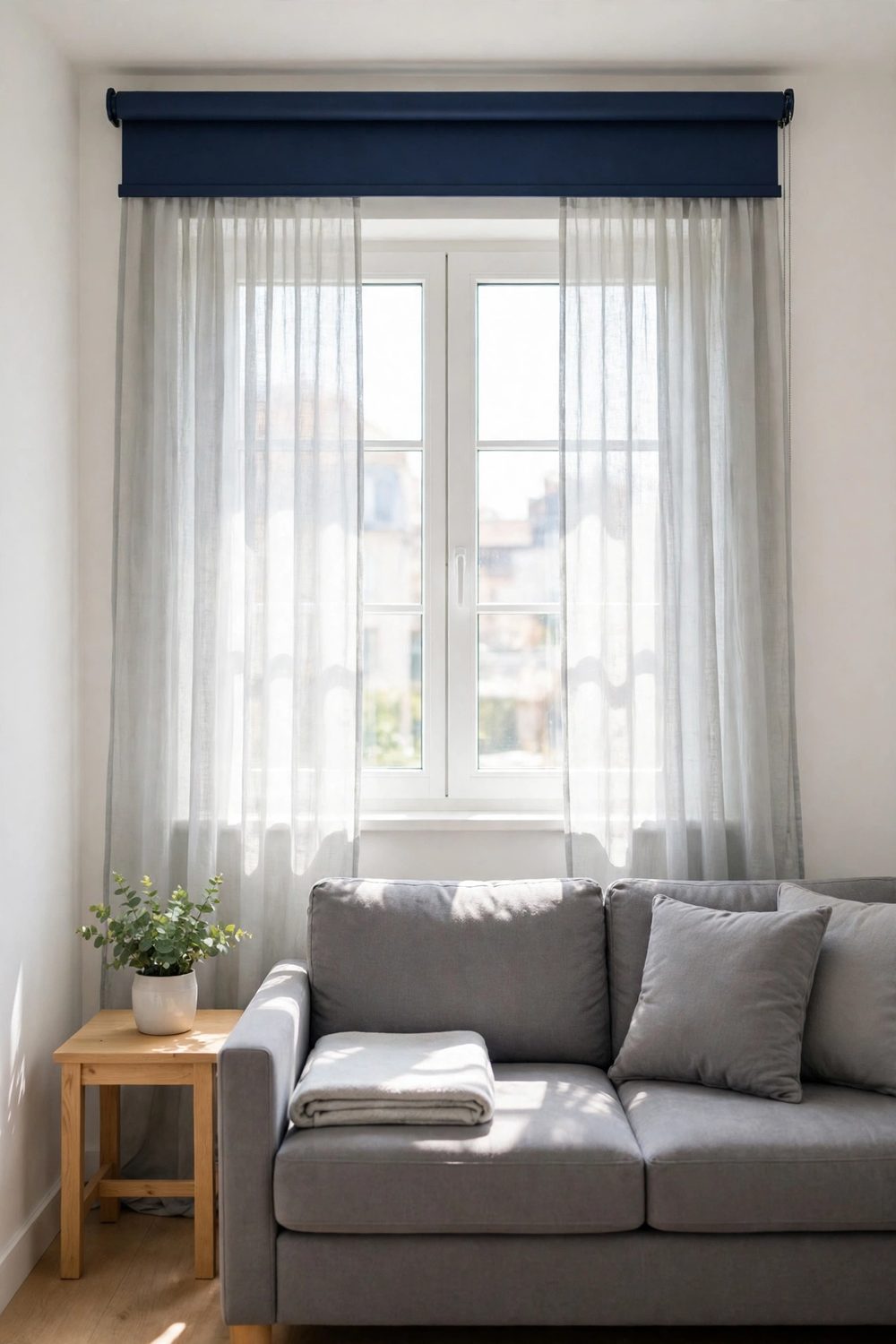
Heavy drapes eat daylight that small flats cannot spare. Sheer or light linen curtains in pale grey soften the window, keep privacy, and let most of the light pass into the room.
For a second layer at night, add a simple navy roller blind behind the sheers. The blind gives darkness for films and sleep overs, and it rolls away to nothing in the day.
The soft window treatments in grey and beige rooms with navy accents follow the same rule, pale fabric at the glass and deep colour in smaller pieces.
Fit curtain tracks to the ceiling where you can. Fabric that starts high makes the window look taller, and taller windows make the whole room feel larger.
7. Compact Navy Armchair Instead of a Second Sofa
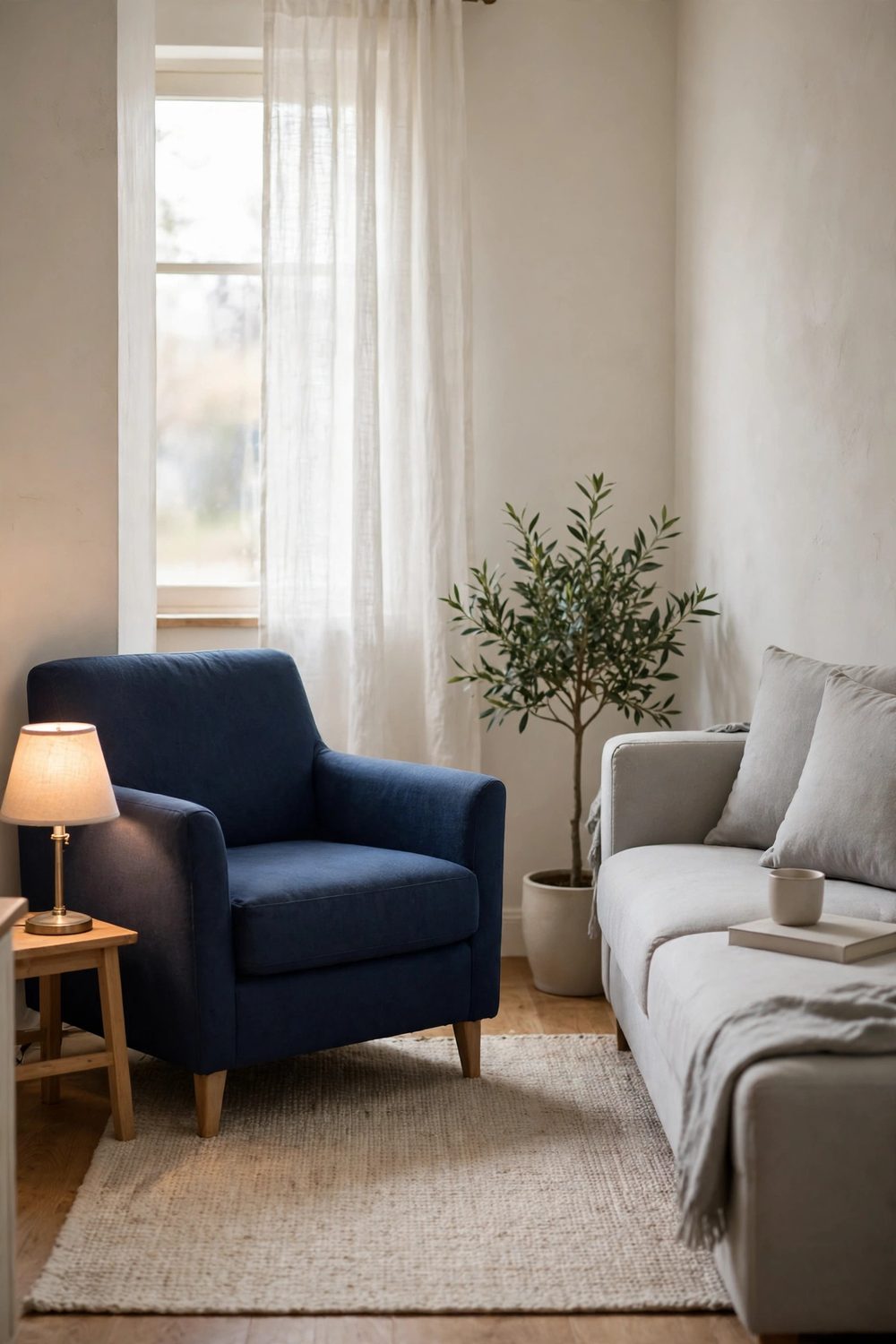
A second sofa crowds a small room, while one compact navy armchair gives the deep colour and an extra seat in half the footprint. Angle it toward the sofa to keep talk easy.
Choose a chair with a low back if it sits near the window. Low backs keep the light path open and stop the seating from forming a wall across the room.
A small side table beside the chair completes the spot. A lamp or a drink needs a home, and a table the size of a dinner tray is often enough.
A chair in navy velvet catches light on its pile and looks rich in dim rooms. The fabric change gives depth that flat weaves cannot match at this scale.
8. Light Rug to Lift a Dark Floor
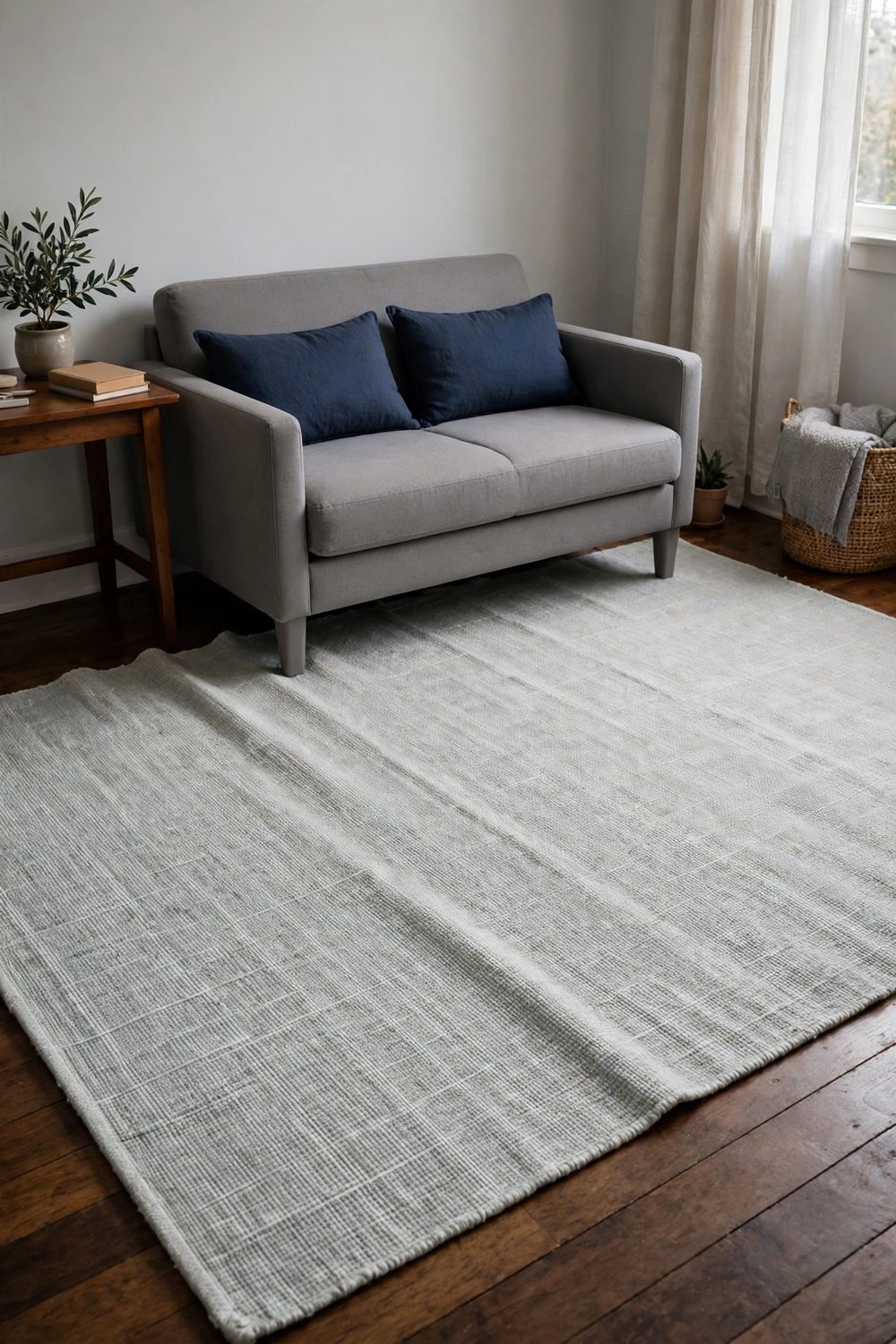
Dark rental floors pull light down. A pale grey rug under the seating lifts the centre of the room and defines the living zone, and it can go with you when you move.
Pick the largest rug the seating can sit on with front legs resting on it. A small rug floating in the middle makes a compact room feel smaller and less settled.
Flat weave rugs suit busy flats. They sit well under doors, clean easily, and keep the profile low so the room feels calm rather than layered and heavy.
9. Wall Mounted Storage to Free the Floor
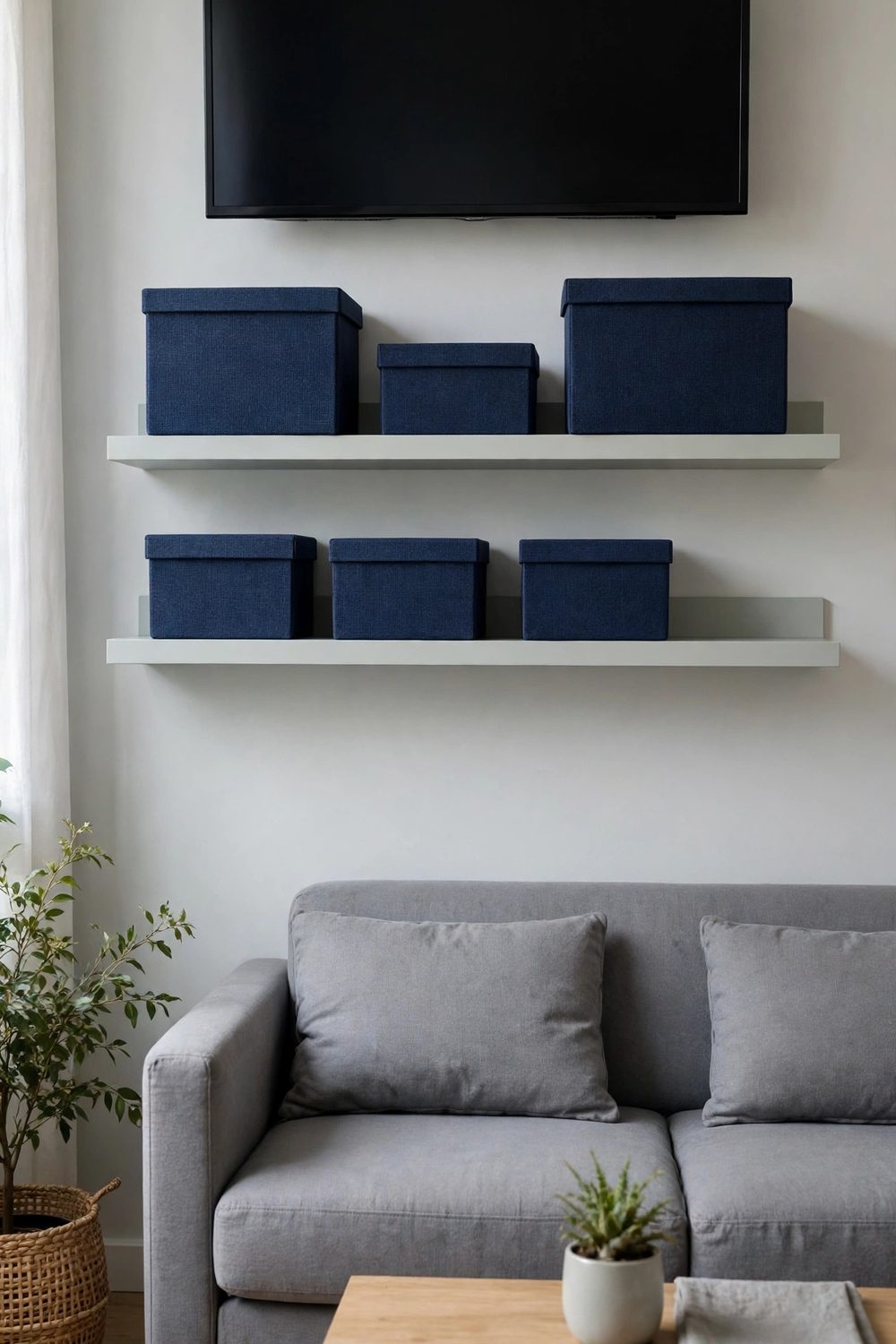
Floor standing shelves eat the scarcest thing in a small flat, which is floor. Wall mounted shelves and a mounted television free the ground plane and make the room easier to clean and to cross.
Keep shelves in pale grey or white so they recede. Store navy and brighter items on them as the colour, rather than painting the storage itself in deep tones.
Small homes planned like brown living rooms for small apartments use the same wall first habit, since freed floor is what makes compact rooms feel generous.
Add one shelf at picture rail height for books you love. High storage uses dead space, and the row of spines adds colour without touching the floor plan.
10. Glass and Gloss Surfaces in Small Doses
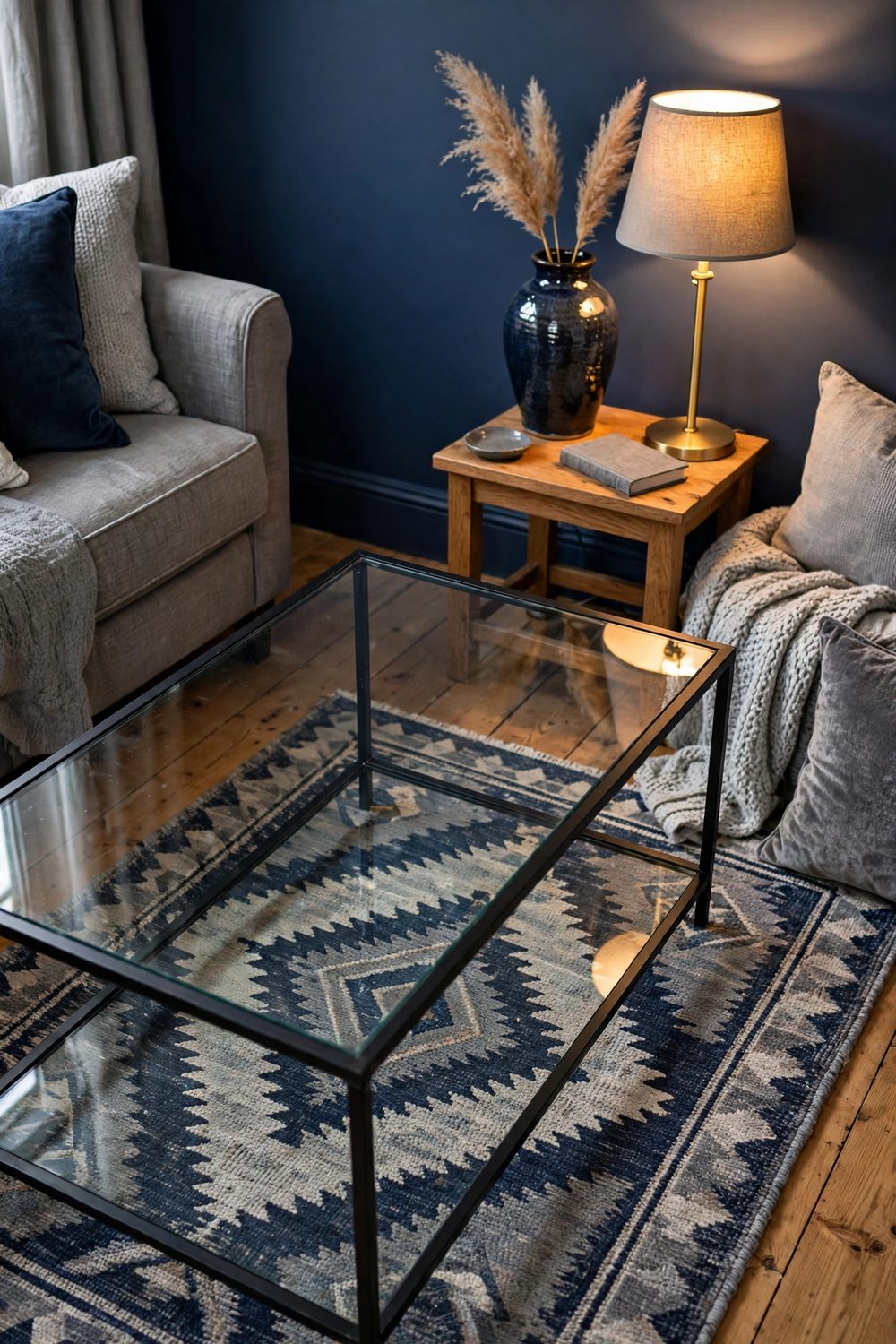
A glass coffee table lets light and sight pass through the middle of the seating. The room reads as open because you can see the rug and floor beneath the table surface.
Gloss on small items helps too. A glazed navy vase or a lacquered tray catches lamplight and gives the eye a bright point in a dim corner, without any building work.
Balance glass with soft textiles nearby. Cushions, throws, and a rug stop a room with hard shiny surfaces from feeling cold or echoing when people talk.
11. Navy Kept to Lower Half of the Room
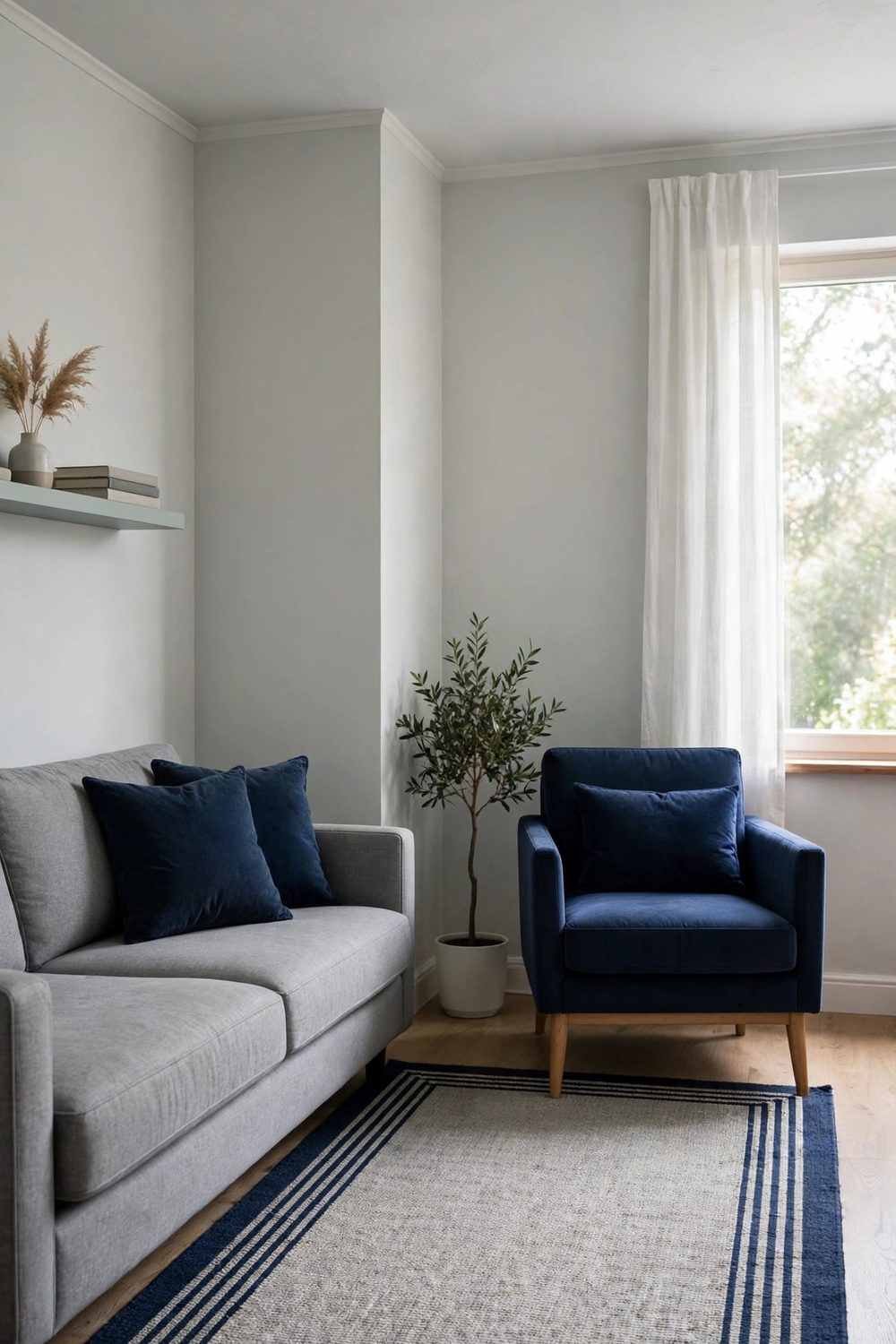
A useful rule for dim rooms is to keep deep colour low and pale colour high. Navy on cushions, chairs, and a rug border sits below eye level, while pale walls and curtains keep the upper room bright.
The rule works because we read a room from the top down for light. A pale ceiling and upper walls signal daylight, even when the seating below is rich and dark.
If you paint a navy wall, stop the colour at picture rail height where one exists. The pale band above carries the eye up and keeps the deep wall from pressing down.
Keep the navy lower half easy to dust. Cushion covers that zip off and chair fabrics that brush clean keep the deep colours looking rich rather than grey with dust.
12. Small Scale Patterns That Do Not Crowd
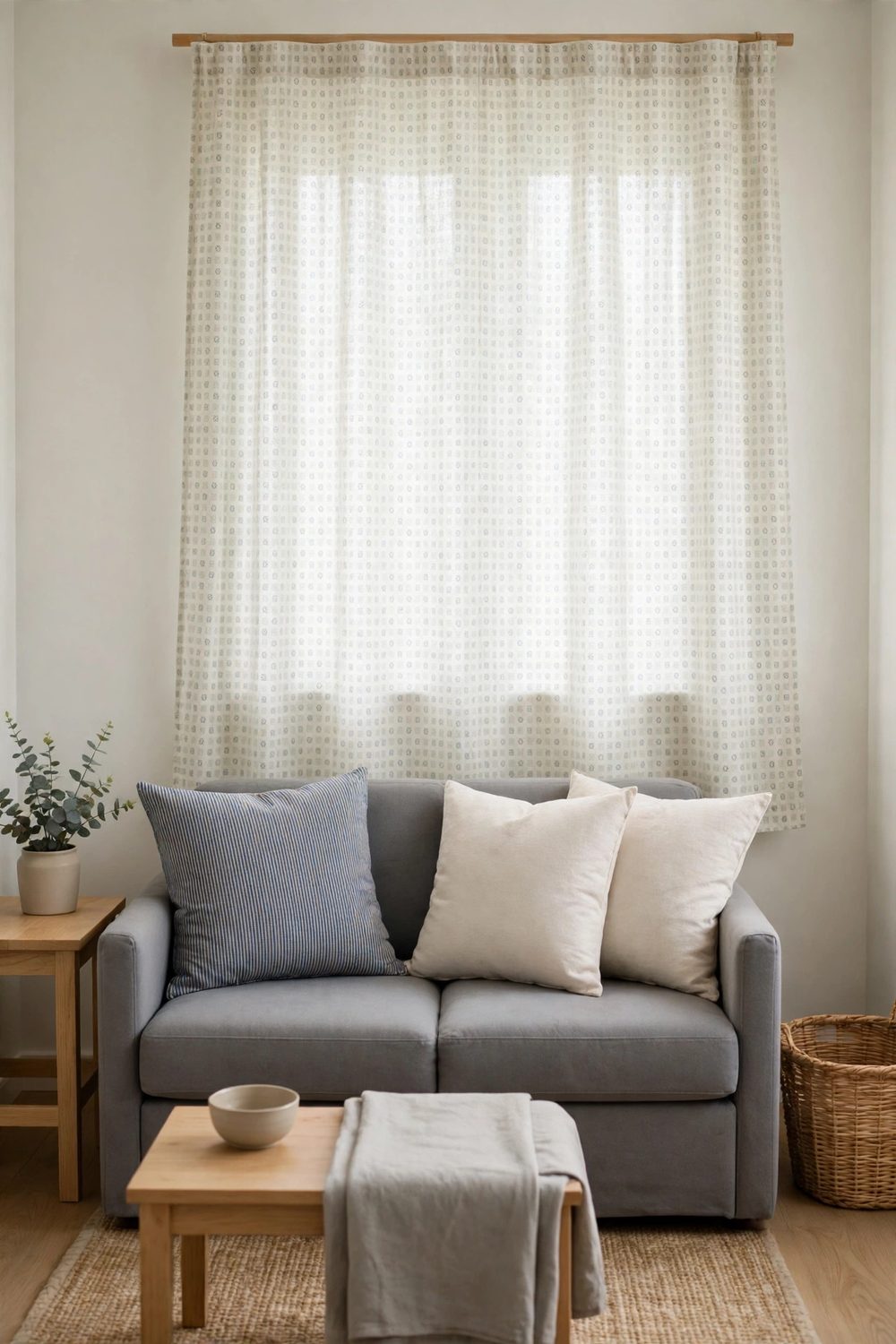
Large patterns overwhelm compact rooms. Choose small scale prints for cushions and curtains, such as fine stripes or tiny geometric repeats in navy and grey on a pale ground.
One patterned item per seat is a safe limit. The rest can stay plain, which keeps the room restful and lets the single pattern do its work clearly.
The restrained schemes in blue living rooms for small living rooms use fine patterns the same way, keeping interest high and visual noise low.
Fine patterns also forgive small marks between washes. In a hard working small room, that kindness matters as much as how the pattern looks on day one.
13. Daylight Bulbs Balanced With Warm Shades
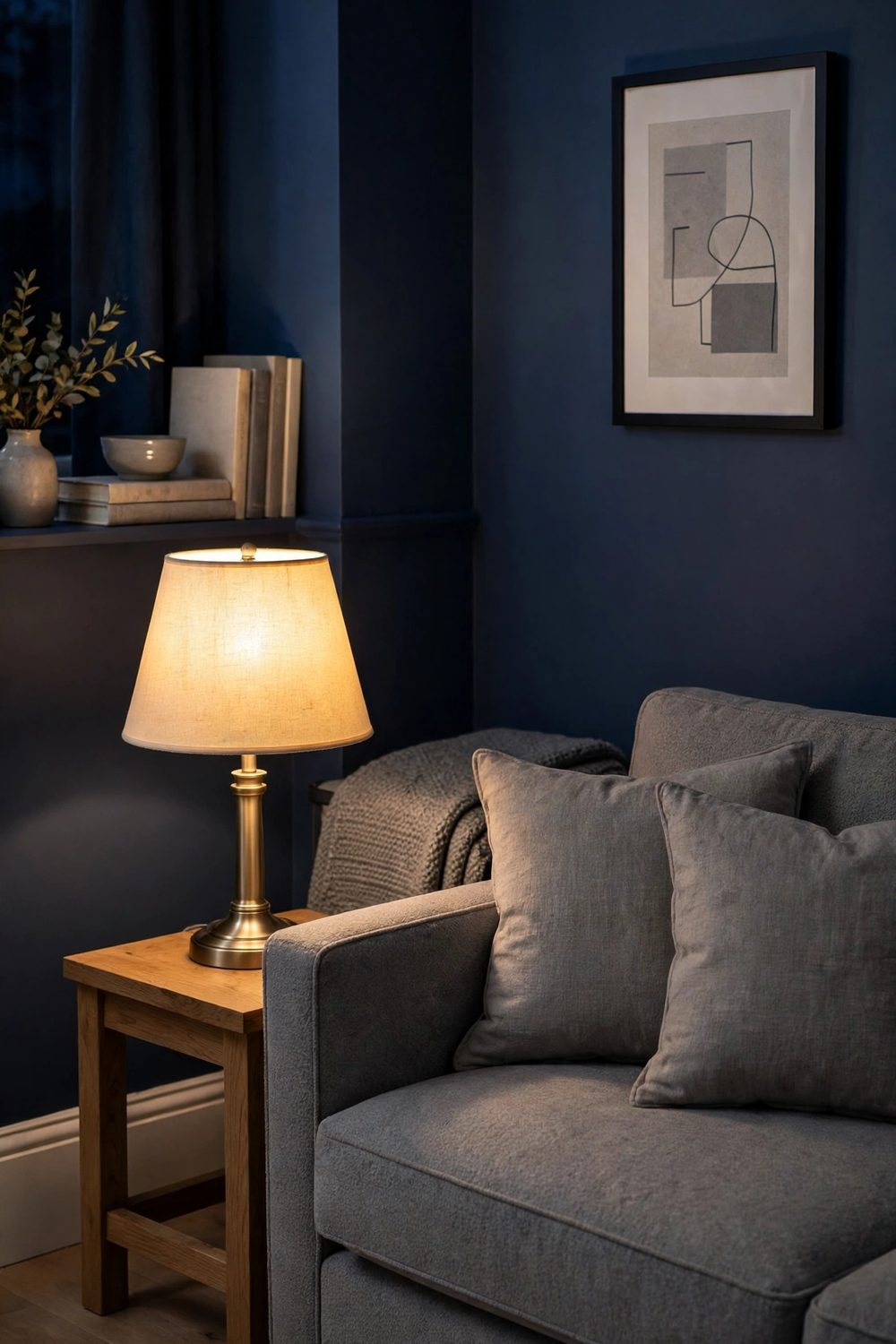
Bulbs labelled daylight can feel harsh alone, yet they help in rooms with weak sun. Pair them with warm toned shades in cream or pale linen so the light spreads softly rather than glaring.
Try one bulb change at a time and live with it for two evenings. Light is personal, and a small flat gives you fast feedback on what feels right at home.
Keep a spare of the bulb you settle on. Matching replacements matter in a small room, where one odd bulb stands out across the whole space.
Keep bulbs in the same fitting family across the room. Mixed colour temperatures in a tiny space look like a mistake, while matched light feels calm and planned.
14. Fold Away and Dual Use Furniture Picks
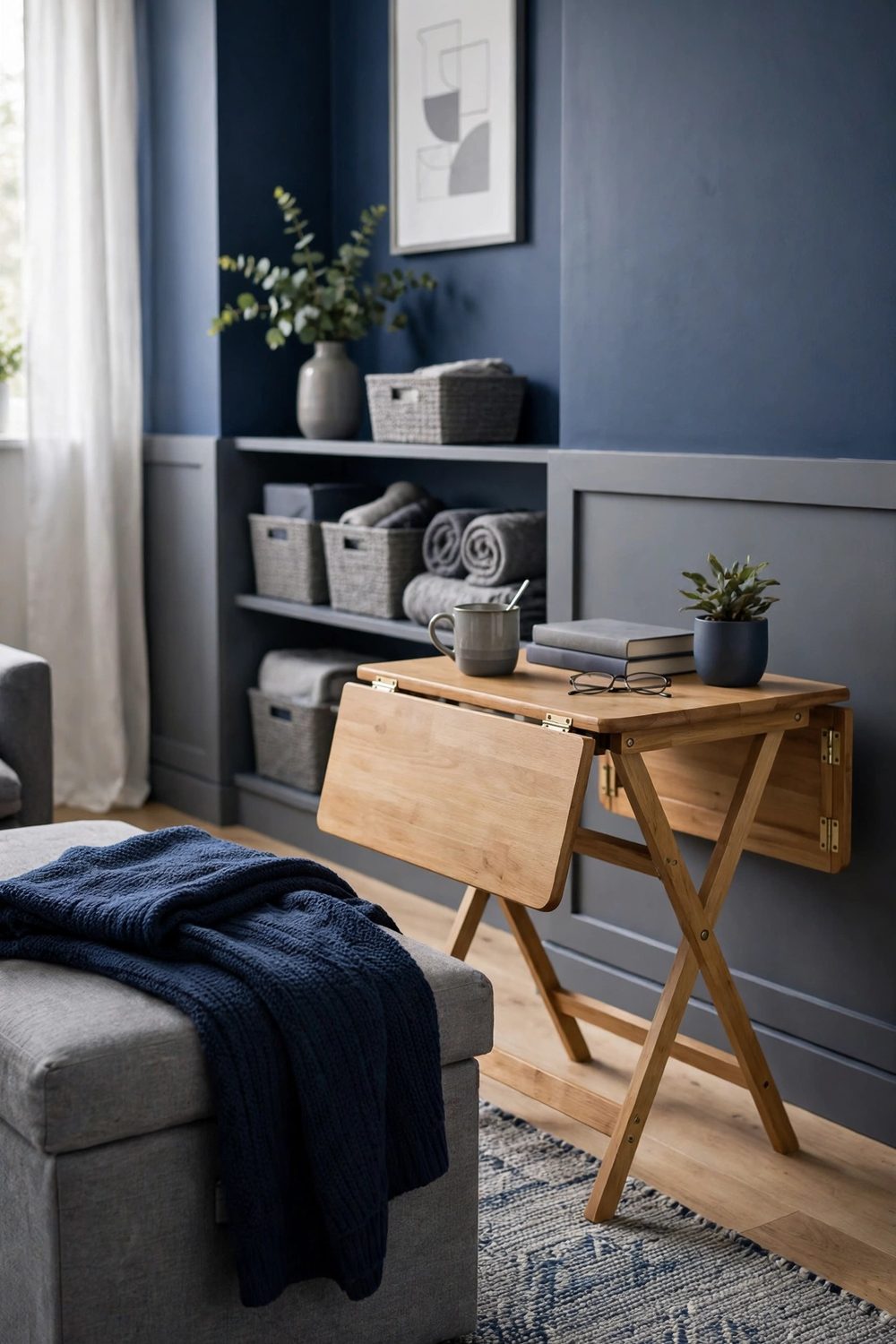
In a small flat, furniture that folds or serves twice earns its place. A gateleg table, a storage ottoman, and a sofa bed for guests let one room handle work, rest, and visitors.
Choose dual use pieces in grey fabrics so they blend with the scheme in both roles. A storage ottoman in grey with a navy throw reads as part of the seating, not as spare kit.
Test folding parts before you buy. Hinges and latches that feel solid in the shop will be used weekly, and weak fittings are the first thing to fail at home.
15. Weekly Habits That Keep Dim Rooms Bright
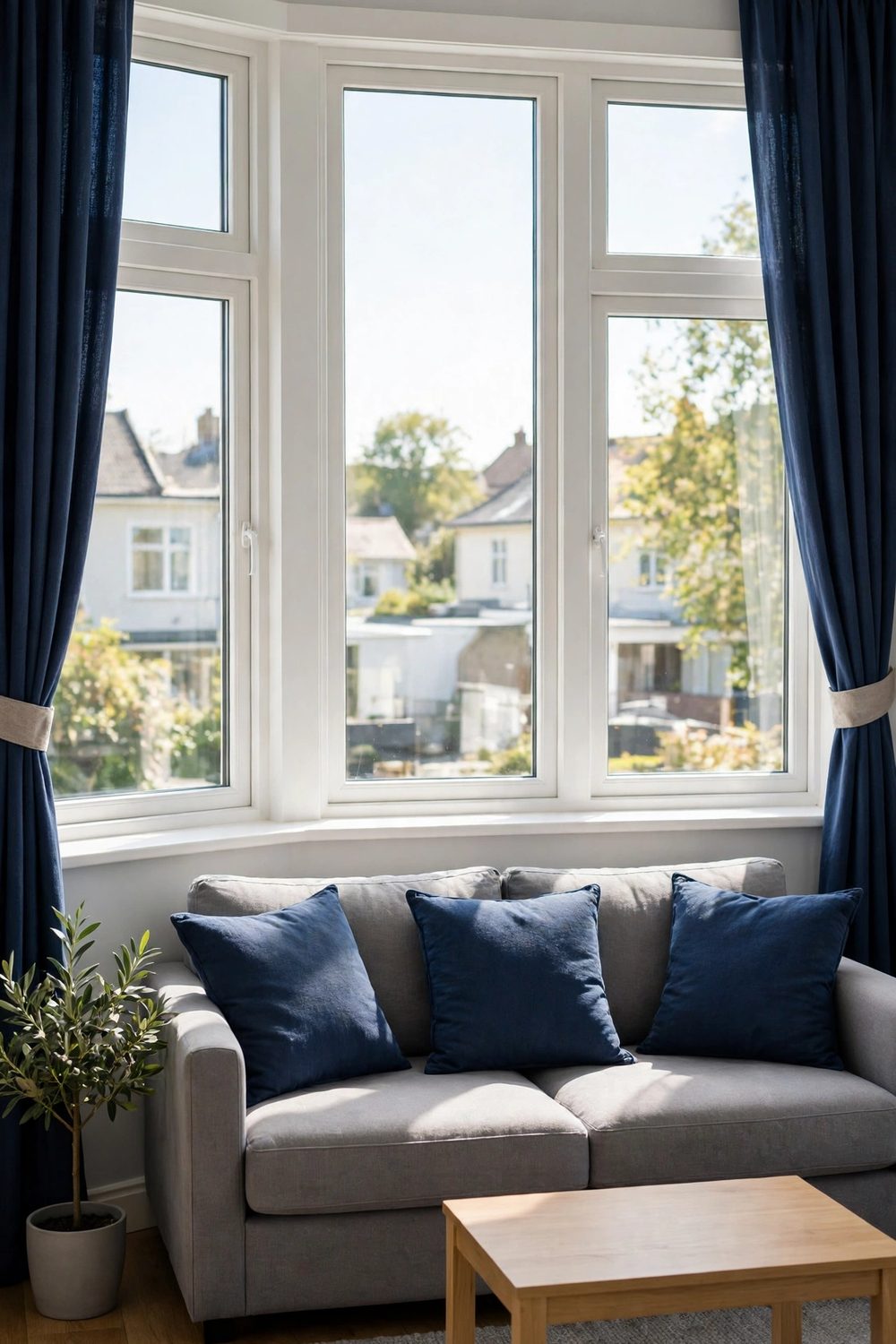
Small dim rooms stay bright with habits as much as with furniture. Clean windows inside each month, since film on glass cuts light quietly, and keep sills clear so nothing blocks the lower pane.
Keep navy textiles washed and aired. Deep colours show dust sooner than pale ones, and fresh fabric keeps the colour rich rather than dusty and flat.
Open curtains fully each morning, even on grey days. The habit costs nothing, takes seconds, and gives the room its best light for the hours you are home.
A five minute reset each night keeps the room bright by morning. Cushions straight, throws folded, and surfaces clear take little time and pay back all day.
A compact room with weak light asks for balance rather than bravery. Pale grey does the brightening, navy arrives in cushions, chairs, and one wall, and layered lamps finish the job after sunset each day in every season of the year.
Work in that order and the room will feel larger than its measurements suggest. That steady balance is what makes navy blue and grey living room ideas for small apartments with limited light work in real homes with real limits.


