

Red Brick Kitchen Design Ideas: 15 Stunning Ways to Style Exposed Brick in Your Kitchen
There’s something about red brick that instantly warms a room. It carries the memory of old bakeries, converted lofts, and farmhouse hearths — a texture that feels lived-in even when it’s brand new. In a kitchen, red brick does more than decorate; it grounds the space, softens sleek modern finishes, and adds a story to every meal cooked within its walls. Whether you’re renovating a century-old home or building brick character into a new build, these fifteen ideas show just how versatile this humble material can be.
This post contains affiliate links. If you buy through them, we may earn a small commission at no extra cost to you. See our Affiliate Disclosure.
1. Exposed Brick Backsplash

An exposed red brick backsplash instantly turns a plain cooking wall into a focal point. The rough, uneven texture contrasts beautifully with polished countertops and stainless steel appliances, creating a layered, collected-over-time look. Because brick handles heat and splatters well, it’s a practical choice directly behind the range or sink. Seal it with a food-safe matte sealant to protect the surface from grease while keeping its natural, weathered charm. Pair it with open wood shelving or black hardware for an industrial-farmhouse feel. This is one of the simplest ways to add texture without a full renovation, since many homes already have brick hiding beneath old plaster.
2. Whitewashed Brick Walls
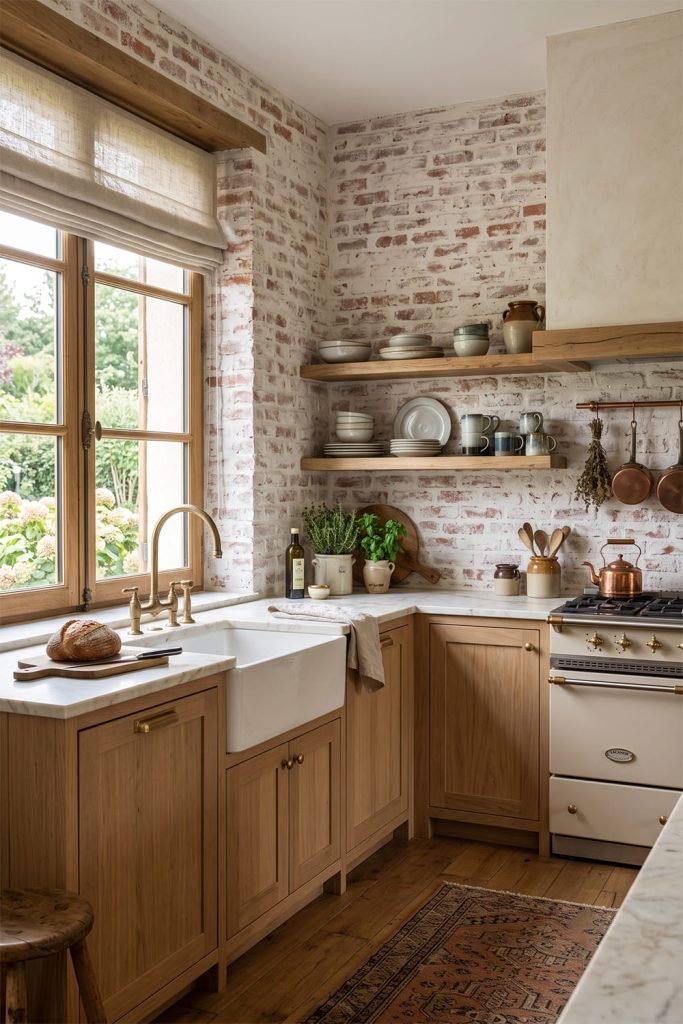
For those who love brick’s texture but want a softer, brighter palette, whitewashing is the answer. A diluted white or cream paint wash is brushed on and partially wiped away, letting patches of red peek through the chalky finish. The result feels European farmhouse rather than industrial loft — airy, timeworn, and effortlessly romantic. Whitewashed brick pairs beautifully with light oak cabinetry, brass fixtures, and linen textiles. It also reflects more light than raw brick, making it ideal for kitchens with limited natural light. This technique is forgiving of imperfect brickwork, since uneven color actually enhances the aged, hand-finished look.
3. Brick Accent Wall Behind Open Shelving

Rather than covering an entire kitchen in brick, dedicate just one wall to it and mount open wood or iron shelving directly against the exposed surface. The juxtaposition of rustic brick with neatly arranged dishware, glass jars, and potted herbs creates a curated, gallery-like display. This approach lets brick act as a textured backdrop rather than the star of the room, so it won’t overwhelm smaller kitchens. Choose shelving brackets in black iron or aged brass to echo the brick’s warmth. This idea works especially well in kitchens that already have one structural or load-bearing brick wall to highlight.
4. Herringbone Brick Pattern Backsplash
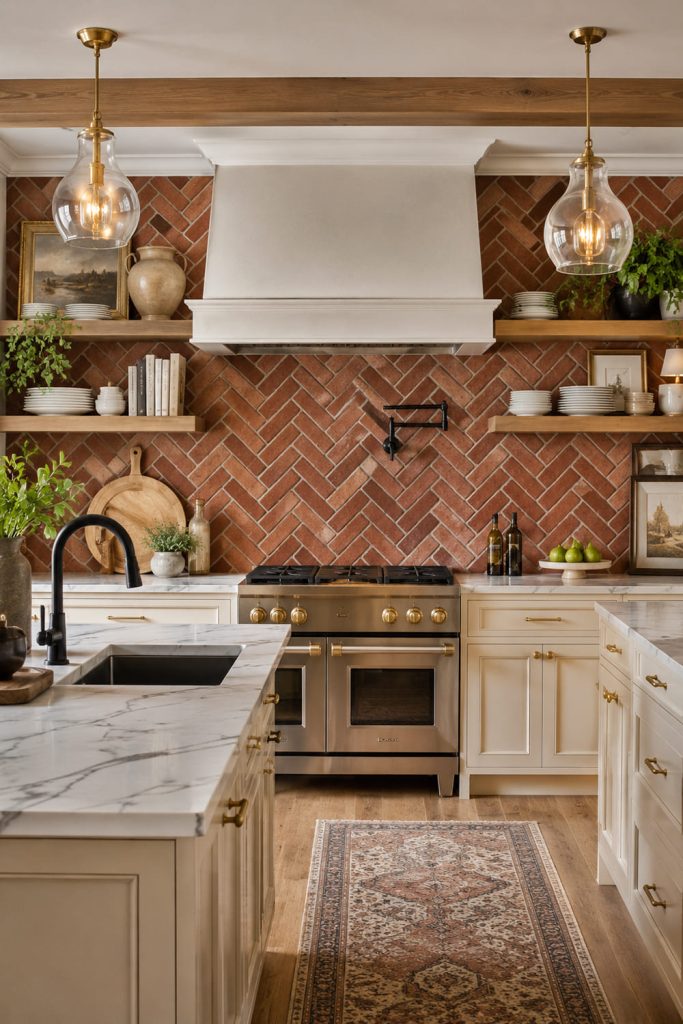
Thin brick tiles laid in a herringbone pattern bring movement and sophistication to what could otherwise be a flat backsplash. The diagonal zigzag catches light differently than a standard running-bond layout, adding subtle dimension behind the stove or sink. This pattern works particularly well in kitchens that want brick’s texture but a more refined, tailored appearance rather than a raw industrial look. Herringbone brick pairs elegantly with marble countertops, matte black faucets, and brass cabinet pulls. Because the pattern is more intricate, it’s best installed by a professional tiler to keep the joints crisp and evenly spaced throughout.
5. Brick Archways Between Kitchen Zones
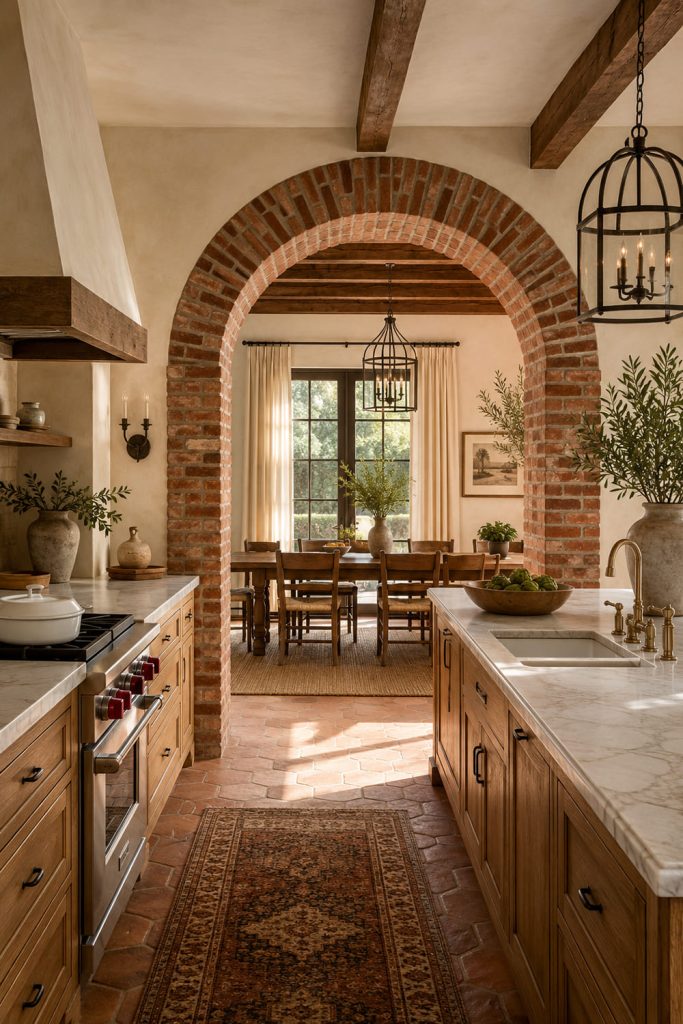
Instead of a flat doorway or open cutout, frame the transition between your kitchen and dining or living area with a curved brick archway. This architectural detail borrows from Mediterranean and Tuscan farmhouse design, softening the boxy feel of standard drywall openings. The rounded brick edge draws the eye upward and creates a sense of flow between rooms without a hard visual stop. It works beautifully in open-concept homes that still want defined zones. Combine the archway with a matching brick knee wall or pass-through counter for a cohesive, intentional architectural statement throughout the connected spaces.
6. Painted Red Brick Kitchen Island
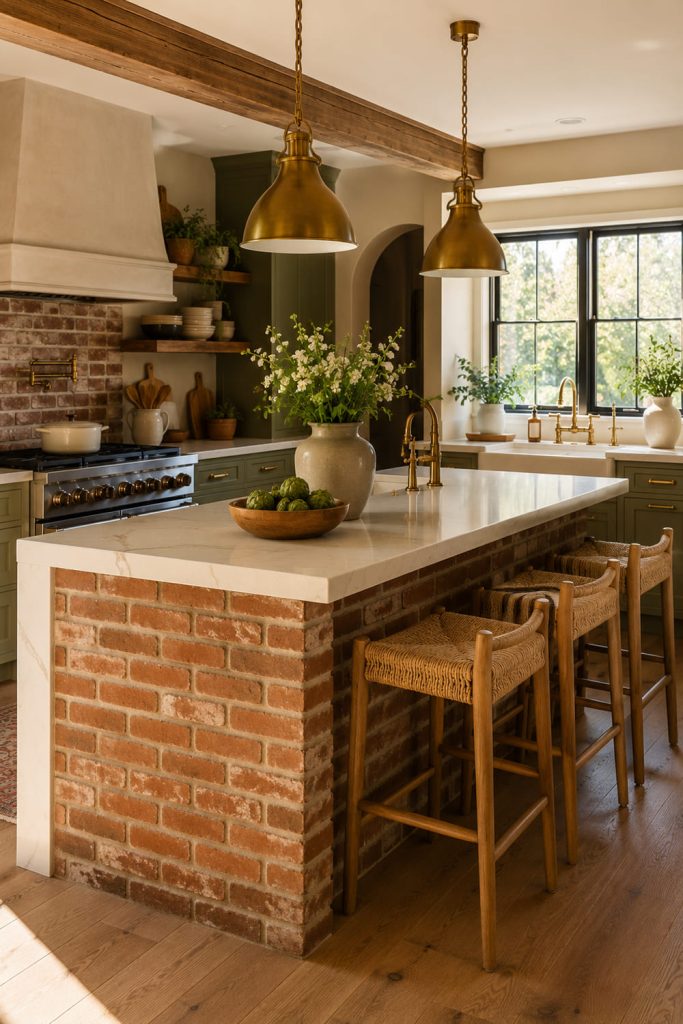
For a bold, unexpected centerpiece, wrap your kitchen island in red brick and leave it unpainted, or paint it a contrasting matte color like charcoal, navy, or sage green for a more custom look. A brick-clad island feels substantial and grounded, especially topped with a butcher block or honed stone counter. It also visually separates the island from surrounding cabinetry, even if both share a similar color palette. This idea suits kitchens with generous square footage, since the brick’s visual weight needs room to breathe. Add stools with woven or leather seats to balance the texture with softness.
7. Brick Flooring
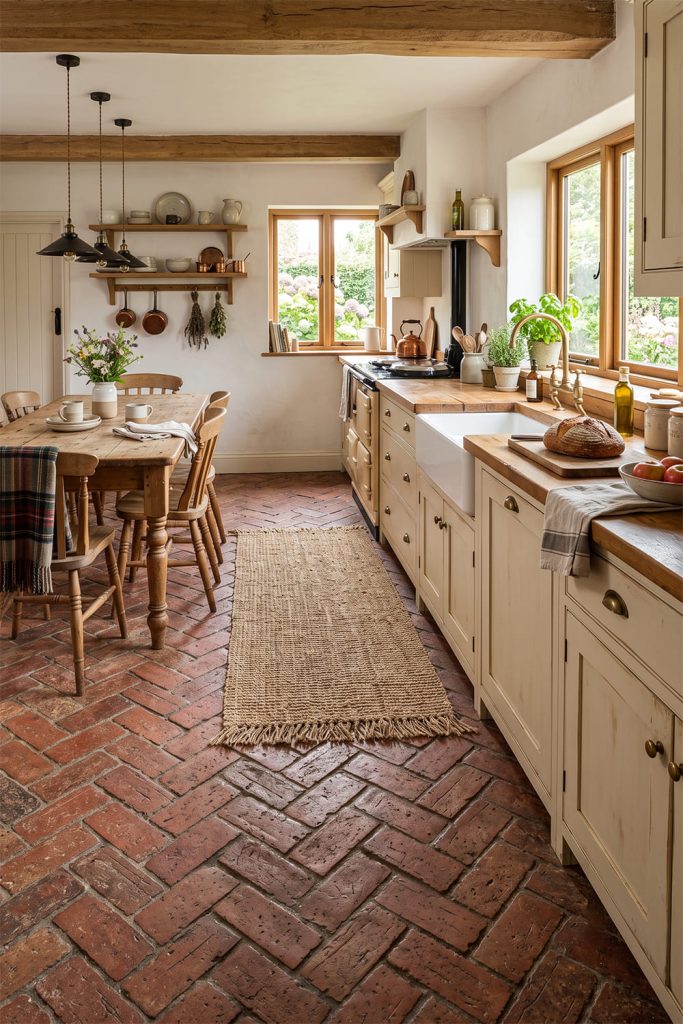
Reclaimed or manufactured brick flooring brings warmth underfoot and a genuinely old-world character that tile or hardwood can’t replicate. Laid in a classic herringbone, basketweave, or running-bond pattern, brick floors develop a beautiful patina over years of foot traffic. They’re naturally durable and hide scuffs, crumbs, and daily wear better than lighter flooring options. Because brick can be cold and hard underfoot, pairing it with radiant heating or a few woven runners adds comfort. This flooring choice works especially well in farmhouse, cottage, or rustic Mediterranean-style kitchens where authenticity and texture matter more than glossy perfection.
8. Brick Range Hood Surround
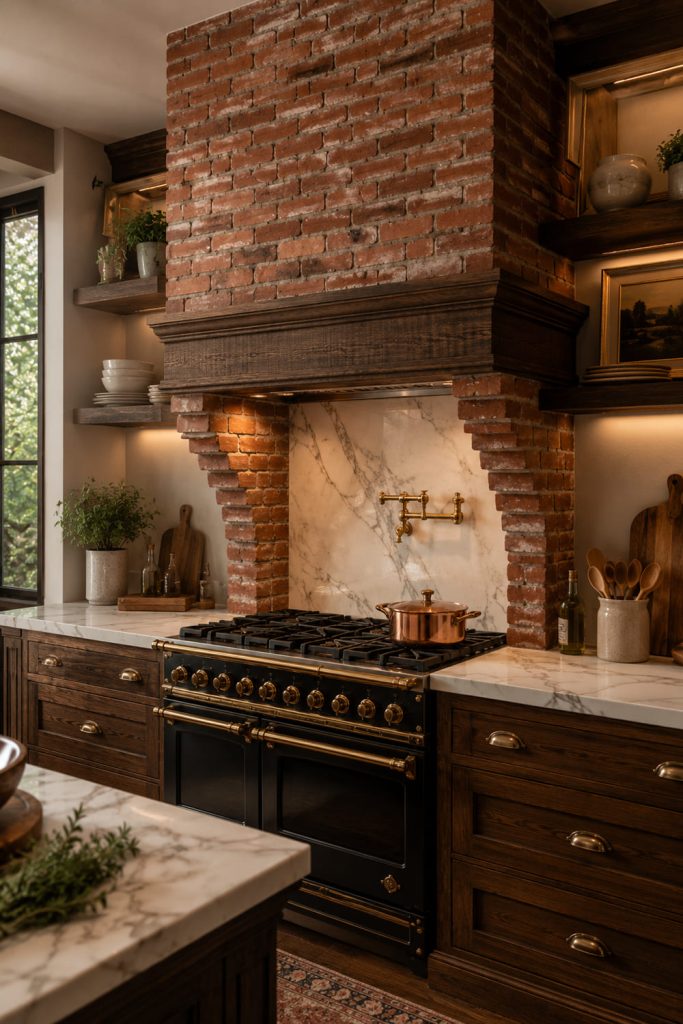
Encasing your range hood in a brick surround transforms a purely functional fixture into a dramatic architectural feature. The brick can extend from countertop to ceiling, mimicking the look of an old hearth or bread oven. This idea works particularly well with a black or copper hood insert peeking through the brick opening, creating striking material contrast. It’s a strong focal point for kitchens that want a statement without adding brick everywhere else. Because the hood area already needs heat-resistant materials, brick is a practical and beautiful solution that doubles as both function and design centerpiece.
9. Reclaimed Brick for Rustic Authenticity
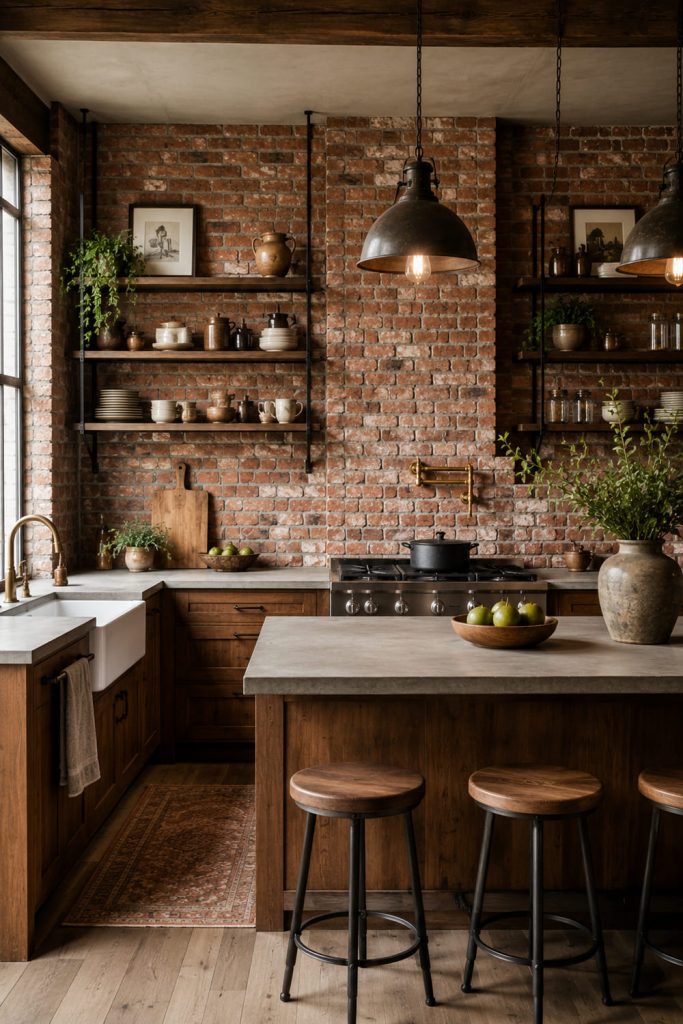
Reclaimed brick, salvaged from old buildings, carries irregular coloring, chips, and weathering that new brick simply can’t replicate. Using it on an accent wall or backsplash brings genuine history and character into the kitchen, along with the sustainability benefit of repurposing existing materials. Reclaimed brick often shows traces of old mortar, soot, or paint, which adds to its story rather than detracting from it. This option suits kitchens aiming for an authentic farmhouse, industrial loft, or European countryside feel. Source reclaimed brick through architectural salvage yards to ensure it’s properly cleaned and structurally sound before installation.
10. Brick Paired with Black Steel Windows
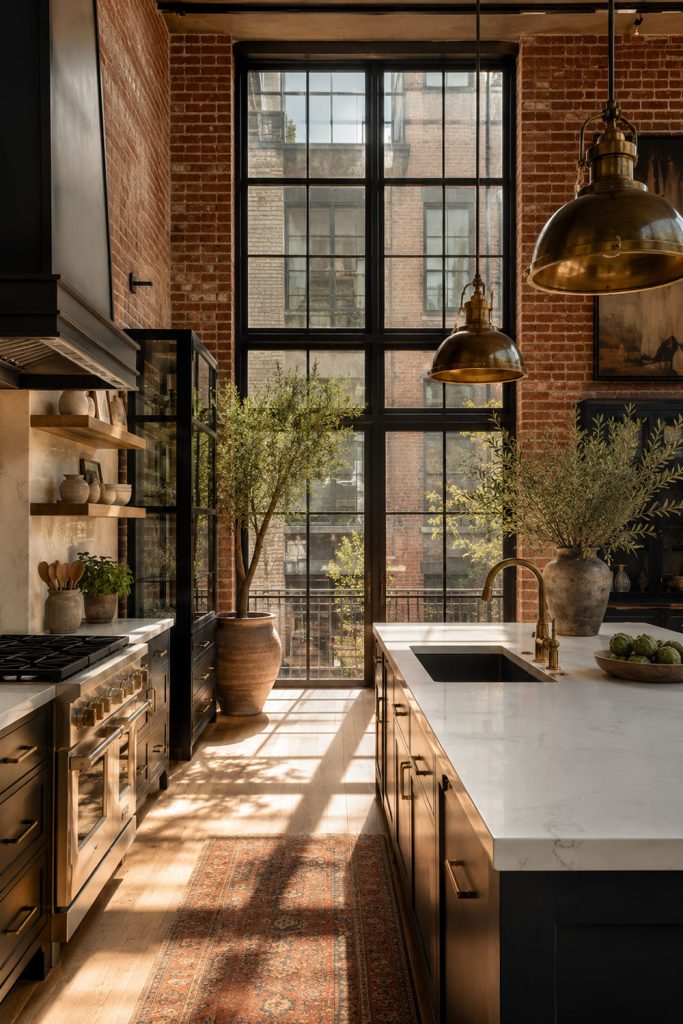
Red brick and black steel-framed windows or doors create one of the most striking material pairings in kitchen design. The deep, matte black frames sharpen the brick’s warm, textured surface, giving the whole space an industrial-loft edge. This combination works beautifully for kitchens with garden views or courtyard access, where large steel windows flood the room with natural light against the brick backdrop. Extend the black steel theme into cabinet hardware, pendant lights, or a steel-framed pantry door for a cohesive look. This pairing feels equally at home in a converted warehouse or a new build.
11. Brick with Butcher Block Countertops
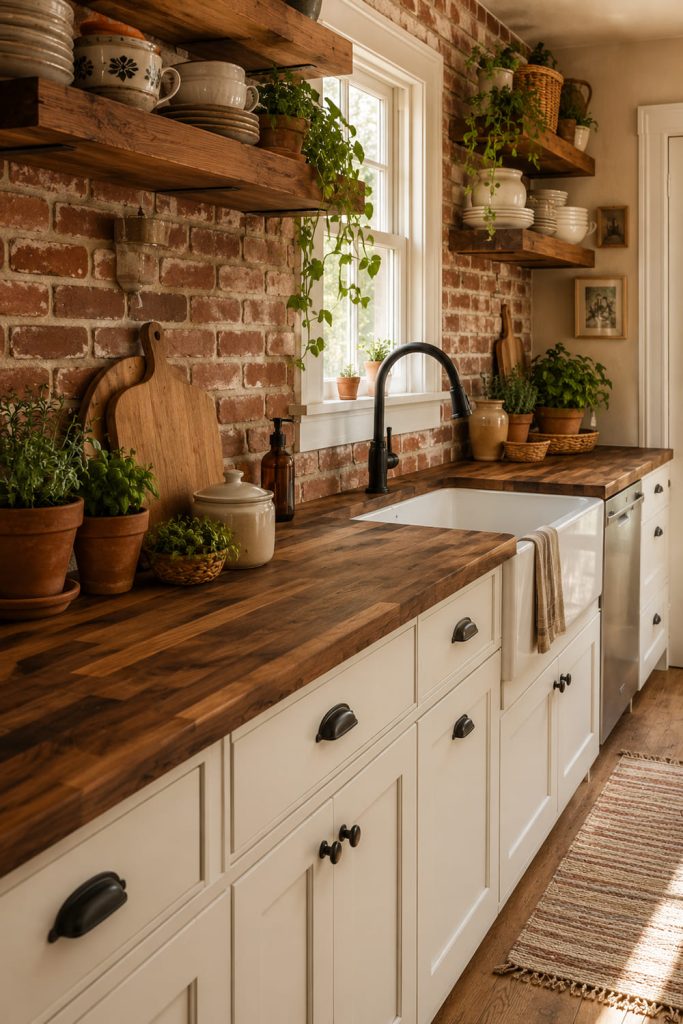
Warm wood butcher block countertops soften brick’s rougher edges and bring a cohesive, natural palette into the kitchen. The combination feels distinctly farmhouse, evoking bakeries and old countryside kitchens where wood and brick have always coexisted. Butcher block is also forgiving of nicks and stains, matching brick’s own imperfect, lived-in character. Choose a warm-toned wood like walnut or oak to complement red brick’s undertones rather than compete with them. This pairing works well across cabinet styles, from white shaker to dark green painted cabinetry, making it one of the most flexible brick combinations available.
12. Brick and Marble Contrast

For a more elevated, glamorous take on brick, pair it with white or gray-veined marble countertops and backsplash trim. The rough texture of brick against marble’s cool, polished surface creates a compelling push-and-pull between rustic and refined. This combination works well in kitchens that want brick’s warmth without leaning fully into farmhouse or industrial style. A marble waterfall island against a brick accent wall, for instance, feels simultaneously luxurious and grounded. Gold or brass fixtures tie the two materials together, echoing marble’s cool veining while picking up warm tones from the brick itself.
13. Brick Ceiling with Exposed Beams

Extending brick up onto a vaulted or barrel ceiling, combined with exposed wood beams, creates an immersive, cabin-like atmosphere that few other materials can achieve. This treatment works particularly well in kitchens with higher ceilings, where the brick adds visual interest to what would otherwise be an empty expanse of drywall. Pendant or hanging fixtures suspended from the beams add warmth and a sense of scale. This idea suits vacation homes, converted barns, or kitchens aiming for a cozy, enveloping feel. Balance the heavier ceiling treatment with lighter-colored lower cabinetry to prevent the room from feeling too dark.
14. Thin Brick Veneer Accent

Thin brick veneer offers all the visual texture of full brick at a fraction of the weight and installation cost, making it ideal for kitchens where structural brick isn’t feasible. It can be applied directly over drywall for a backsplash, accent wall, or even a wrapped island without major construction. Because it’s thinner, veneer is easier to cut around outlets, windows, and cabinetry edges. This makes it a popular choice for renovations rather than new builds. Available in a range of reds from deep brick to soft terracotta, veneer lets homeowners achieve an authentic look without the structural commitment.
15. Brick with Greenery and Plants

Softening brick’s hard edges with trailing plants, potted herbs, or a small living wall brings life and freshness into the kitchen. Hanging pothos, rosemary in terracotta pots, or a vertical herb garden mounted against a brick wall creates a lush, organic contrast to the material’s rigid geometry. This pairing works especially well near a sunny window or open shelving unit, where plants can double as both décor and functional cooking ingredients. Greenery also helps a red brick kitchen avoid feeling too heavy or monochromatic, introducing color variation and a sense of the outdoors brought inside.
Planning and Buying Guide
Before committing to red brick in your kitchen, consider a few practical factors:
- Real brick vs. veneer: Full brick offers authenticity and durability but adds weight and often requires structural support. Thin veneer is lighter, easier to install, and better suited for renovations.
- Sealing: Kitchen brick should be sealed with a food-safe, heat-resistant sealant, especially near cooking surfaces, to prevent grease absorption and make cleaning easier.
- Color and finish: Reclaimed brick offers variegated, aged tones; new brick comes in more uniform shades. Whitewashing or limewashing can adjust the color intensity to suit your palette.
- Maintenance: Unsealed brick is porous and can stain. Regular sealing and gentle cleaning with mild soap and water will keep it looking its best.
- Balance: Brick is a strong textural statement — pair it with at least one or two smooth, neutral materials (marble, painted cabinetry, steel) so the kitchen doesn’t feel visually heavy.
- Budget: Reclaimed and full brick installations cost more due to labor and structural needs; thin brick veneer or brick-look tile are more budget-friendly alternatives.
Conclusion
Red brick brings a rare combination of warmth, texture, and history to kitchen design — qualities that are hard to replicate with any other material. Whether used sparingly as a backsplash accent or embraced fully across walls, floors, and ceilings, brick has the flexibility to suit everything from a rustic farmhouse to a refined, marble-accented space. The key is balance: let brick do the heavy lifting on texture while surrounding materials keep the room feeling current and livable. With the right pairing of finishes, fixtures, and greenery, a red brick kitchen becomes a space that feels both timeless and entirely your own.


