

15 Small Kitchen Ideas for a Mobile Home Kitchen Update
A mobile home kitchen can look dated even when everything in it still works well. The cabinets are sound and the layout suits daily cooking, but panel walls and worn finishes make the whole run feel tired.
These small kitchen ideas for a mobile home kitchen update keep the home fixed in place and work with what is already there. Think lightweight cabinet finishes, narrow runs, panel walls, and compact fittings that suit a manufactured home.
None of the ideas needs heavy building work or new walls. Most are paint, surface, and storage changes you can finish one at a time, starting with the run you look at most.
The order matters less than the fit. Every idea here respects the weight limits of the walls, the width of the walkway, and the fittings a manufactured home already has in place.
Readers who like light-touch changes will also enjoy these small kitchen ideas for renters who cannot paint cabinets, since many of the same gentle fixes suit a mobile home kitchen.
This post contains affiliate links. If you buy through them, we may earn a small commission at no extra cost to you. See our Affiliate Disclosure.
1. Paint the Existing Cabinets in a Pale Warm White
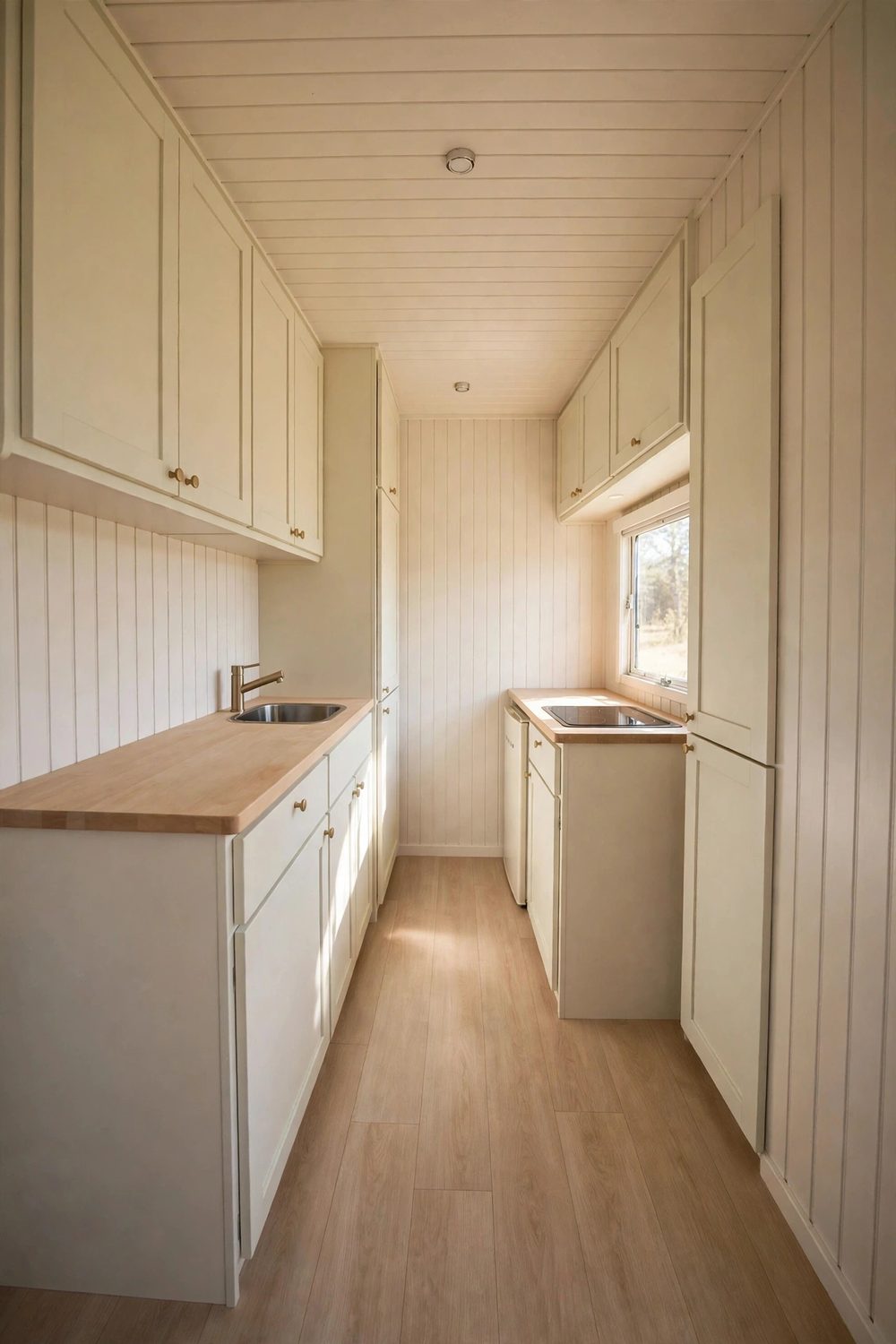
Most mobile home cabinets are lightweight boxes with thin doors, and they take paint well. A pale warm white covers the yellowed finish that dates so many manufactured home kitchens.
Keep the color the same on uppers and lowers. In a narrow run, one calm color reads as one long, tidy unit instead of a patchwork of doors and drawers.
Use a satin finish so cooking splashes wipe clean with a damp cloth. The corner by the stove always collects the most marks, and satin handles that daily wiping best.
Leave the cabinet layout exactly as it is. Fresh color alone makes the same boxes look newer, and the walkway, doors, and work triangle all stay familiar.
2. Paint Over Panel Walls and Cover the Seams With Battens
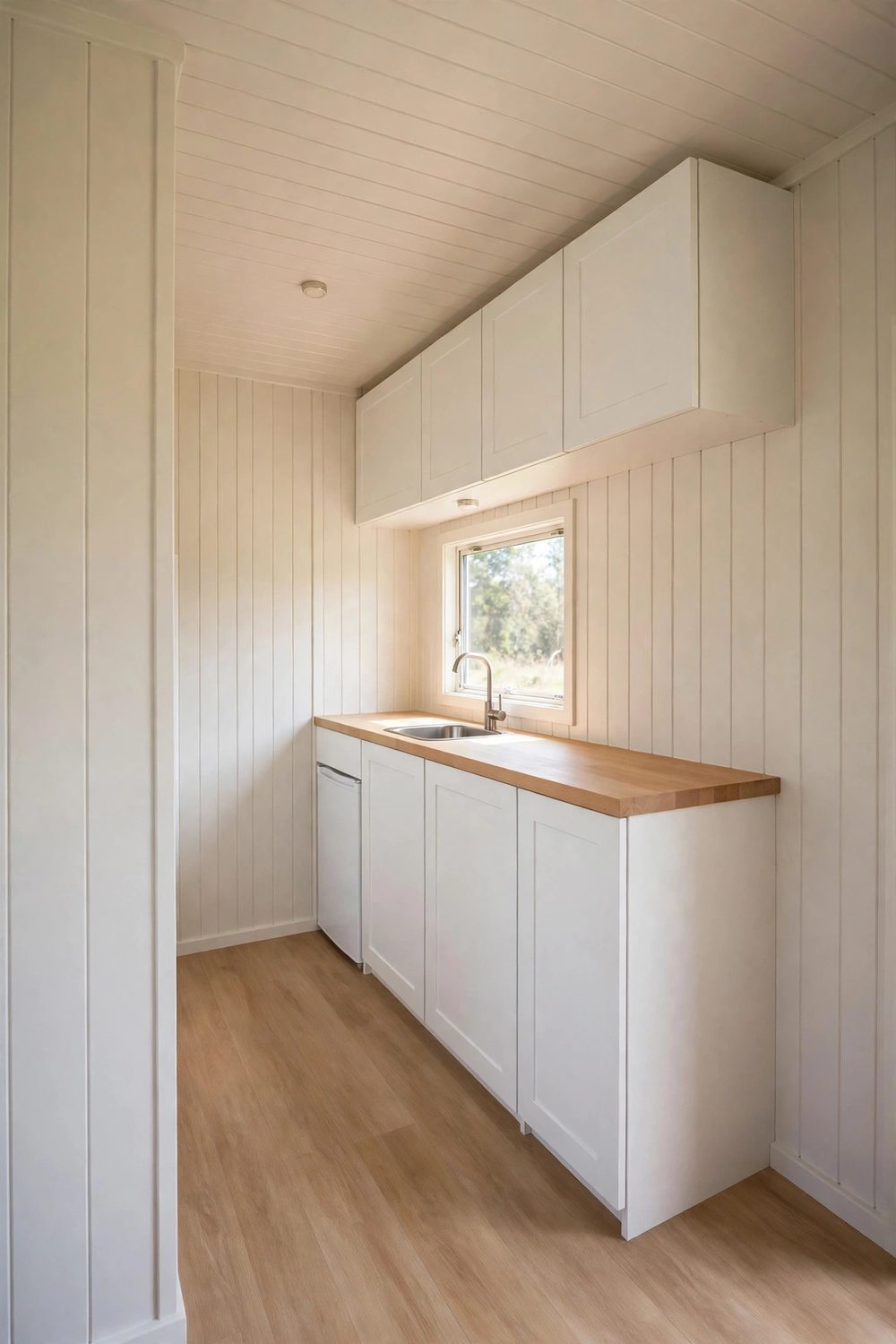
Panel walls are the clearest sign of an older manufactured home. The vertical grooves collect shadow, and the thin strips over each seam make the kitchen feel boxed in.
Paint the panels in the same pale tone as the ceiling for a calmer wall. Then cover each seam with a flat batten strip painted to match, so the joins look planned.
The wall still moves and flexes as panel walls do, but the eye reads clean vertical lines instead of factory joins. Keep spare paint for quick touch ups along the busiest seam.
Behind the sink, choose a washable paint finish. That short wall takes steam and splashes every day, and it needs a surface that scrubs clean without lifting.
3. Add a Peel and Stick Backsplash in a Small Scale Pattern
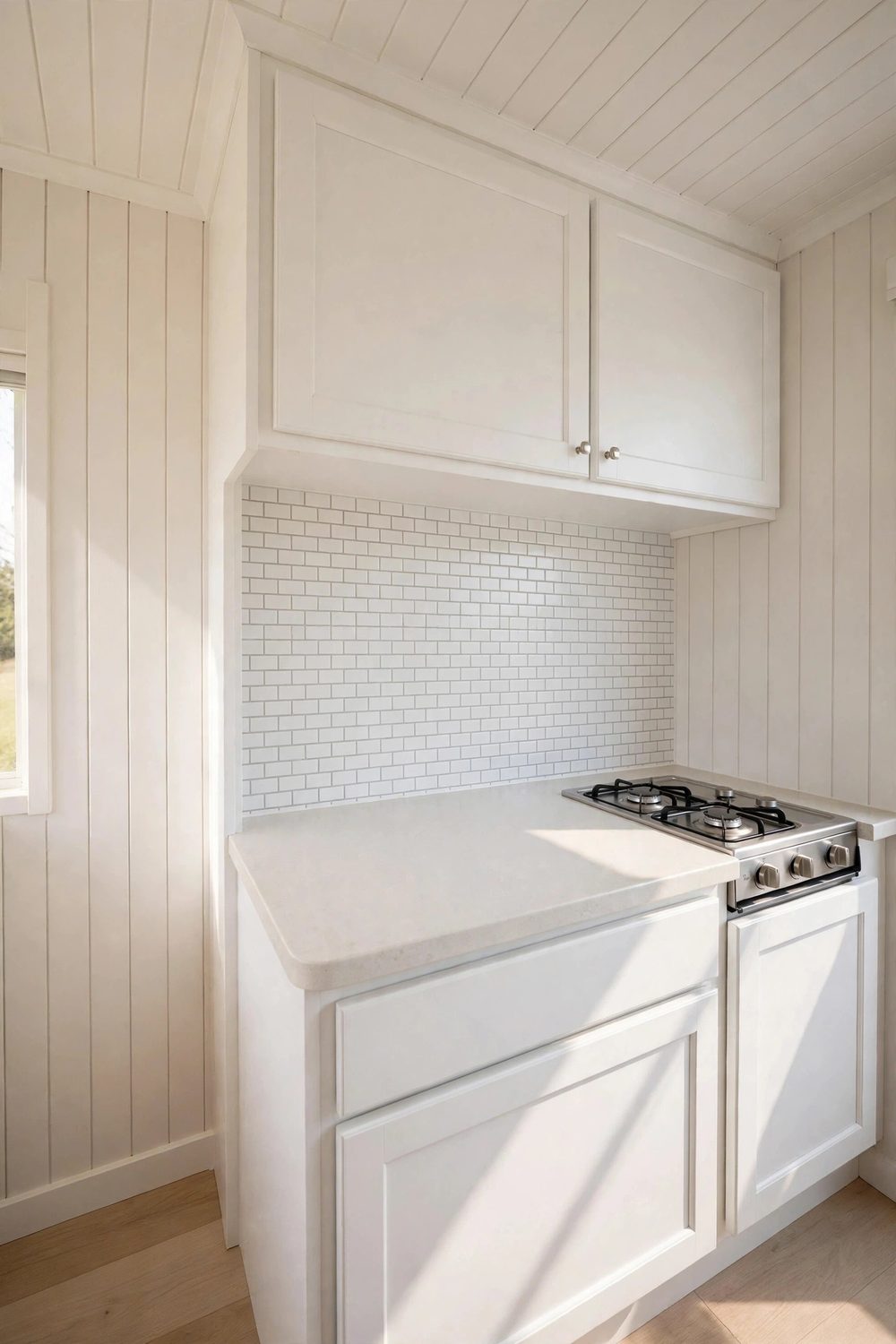
Bare panel or flat paint behind the counters leaves the run looking unfinished. A peel and stick backsplash adds a finished surface without weight, tile cutting, or grout.
Pick a small scale pattern, like a short subway shape or a tiny hexagon. Small repeats suit a short backsplash height and do not overwhelm a narrow galley run.
Run the sheets from counter to the underside of the uppers in one unbroken band. Stopping halfway up the wall leaves a ledge line that makes the space feel shorter.
Keep the color close to the cabinets, with just enough contrast to show the pattern. A soft white on warm white reads clean and keeps the run feeling wide.
4. Swap Dated Knobs for Slim Pulls Sized for Thin Doors
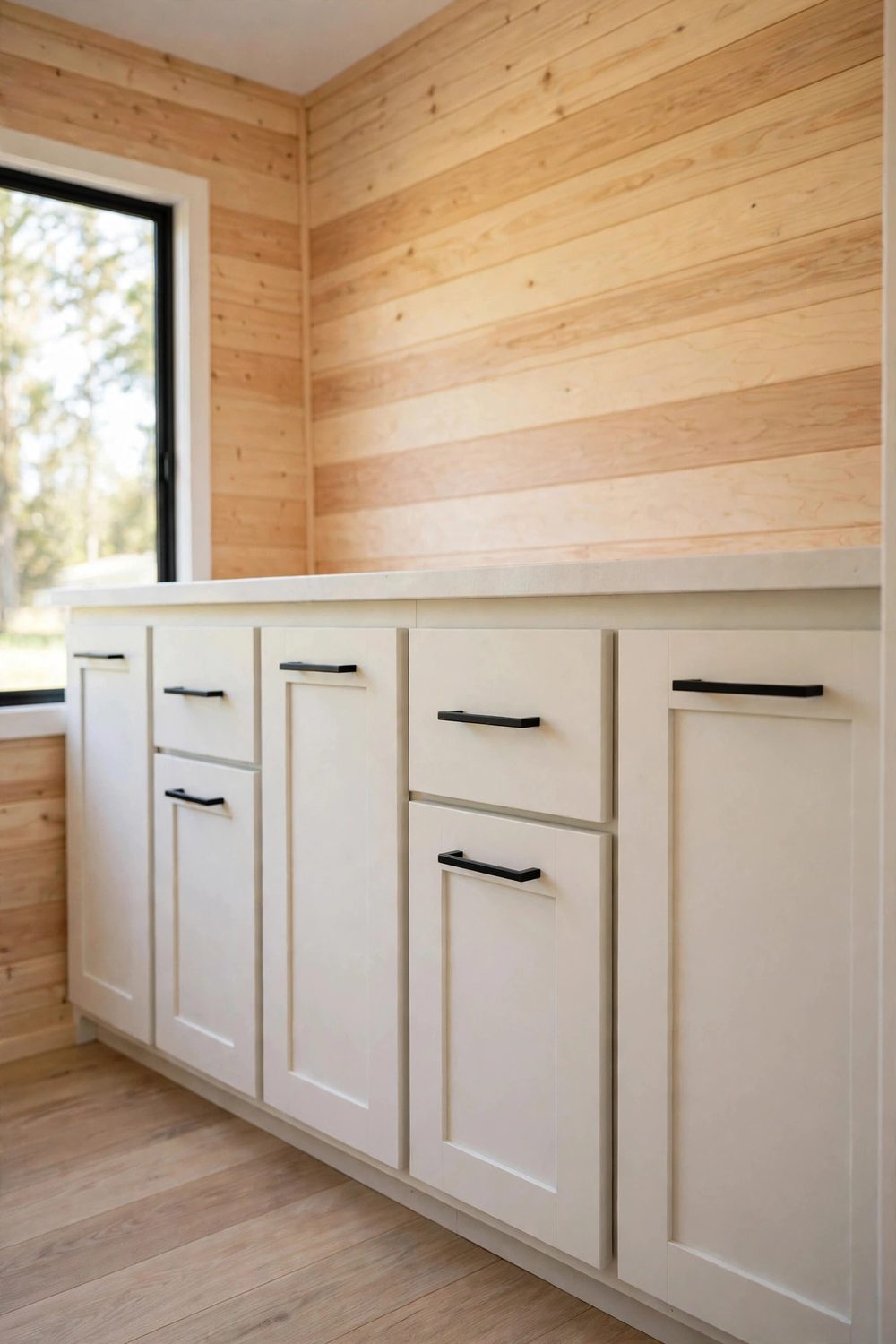
Old knobs are often the first thing your hand meets and the last thing your eye forgives. Swapping them is the fastest hardware change in a mobile home kitchen.
Choose slim bar pulls or simple round knobs with short posts. Lightweight cabinet doors are thin, and heavy, long pulls can feel loose and look out of scale.
Use one finish across the whole run, such as brushed nickel or matte black. Mixed finishes on a short run look like repairs done at different times.
Check the drawer beside the stove with care. That pull gets a hot, greasy hand most days, so a smooth finish that wipes clean earns its place there.
5. Take Down One Upper Cabinet and Fit Two Open Shelves
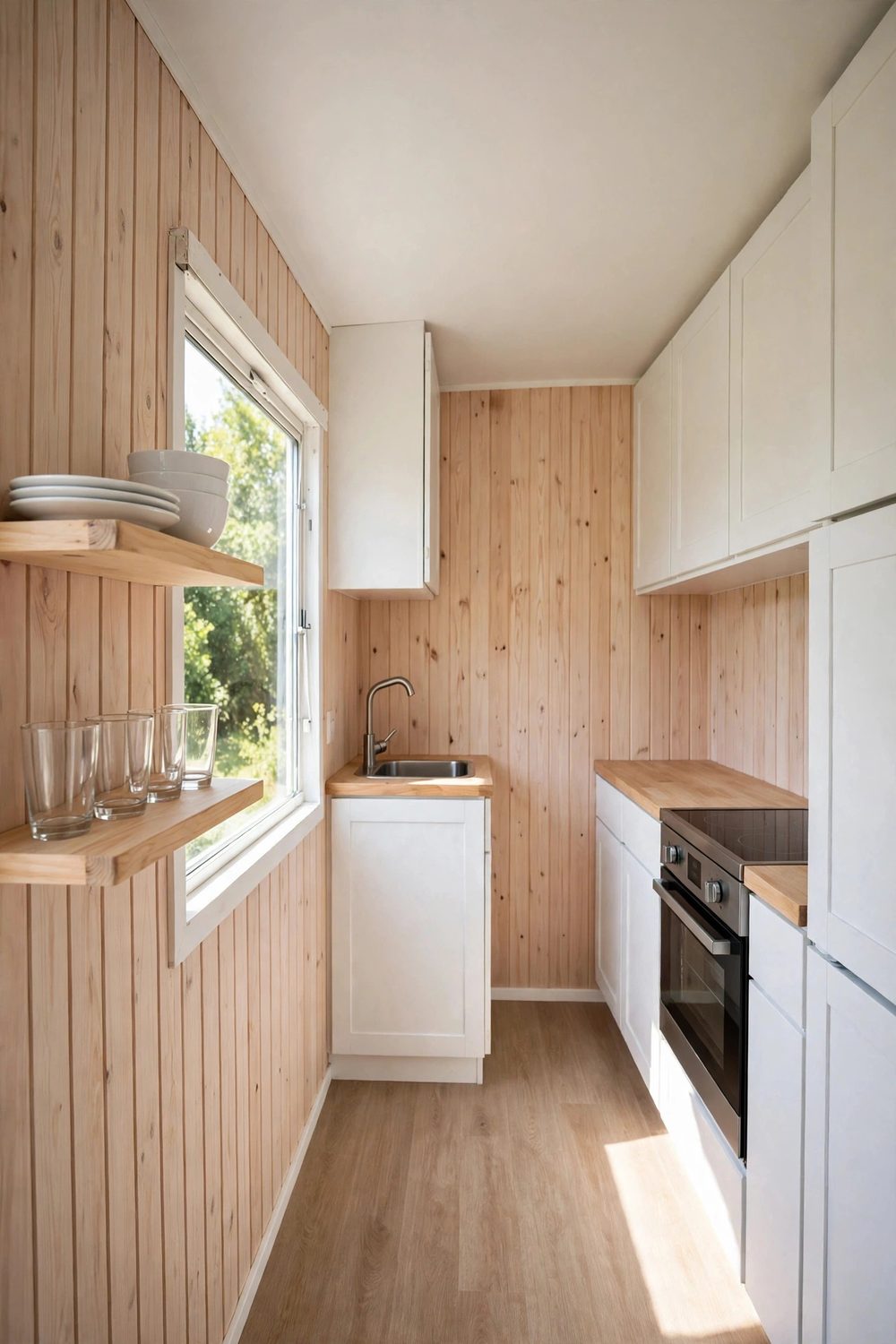
A full wall of upper cabinets can press down on a low mobile home ceiling. Removing just one cabinet and fitting two open shelves opens that stretch of wall.
Pick the cabinet beside the window or at the end of the run. Those spots hold daily dishes well, and the shelves catch the best light in the kitchen.
Keep shelves light in build and color, and load them with the plates and glasses you use each day. Daily use keeps dust down and stops shelves becoming display clutter.
Leave the other uppers closed for pans and packets. One open stretch is enough to lift the room, and closed storage still hides the less tidy half of cooking.
6. Run One Pale Floor Finish Straight Through the Galley
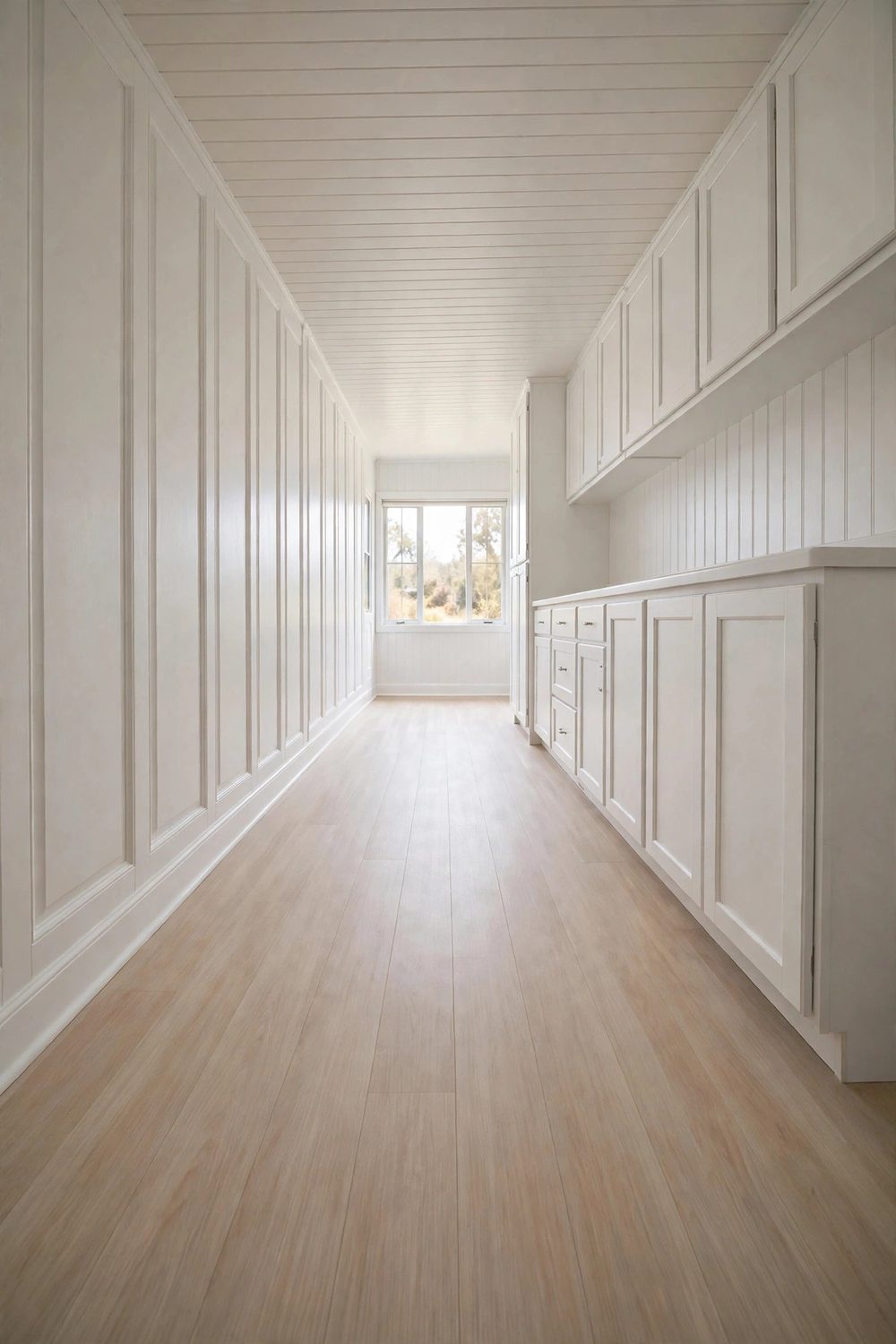
Many mobile home kitchens meet a different floor at every doorway. One pale, continuous finish down the whole run makes the narrow floor plan read longer and calmer.
Luxury vinyl plank in a light wood tone suits this job well. It is thin, light, and forgiving over the floors found in manufactured homes, and planks lay along the run.
Lay the planks lengthways, following the galley. Lines that run with the kitchen pull the eye to the far window instead of cutting the floor into short blocks.
Carry the same finish a short way into the hall or dining area if you can. The join disappears, and the kitchen feels part of the home rather than a boxed off strip.
7. Keep Appliances Compact and Flush With the Counter Line
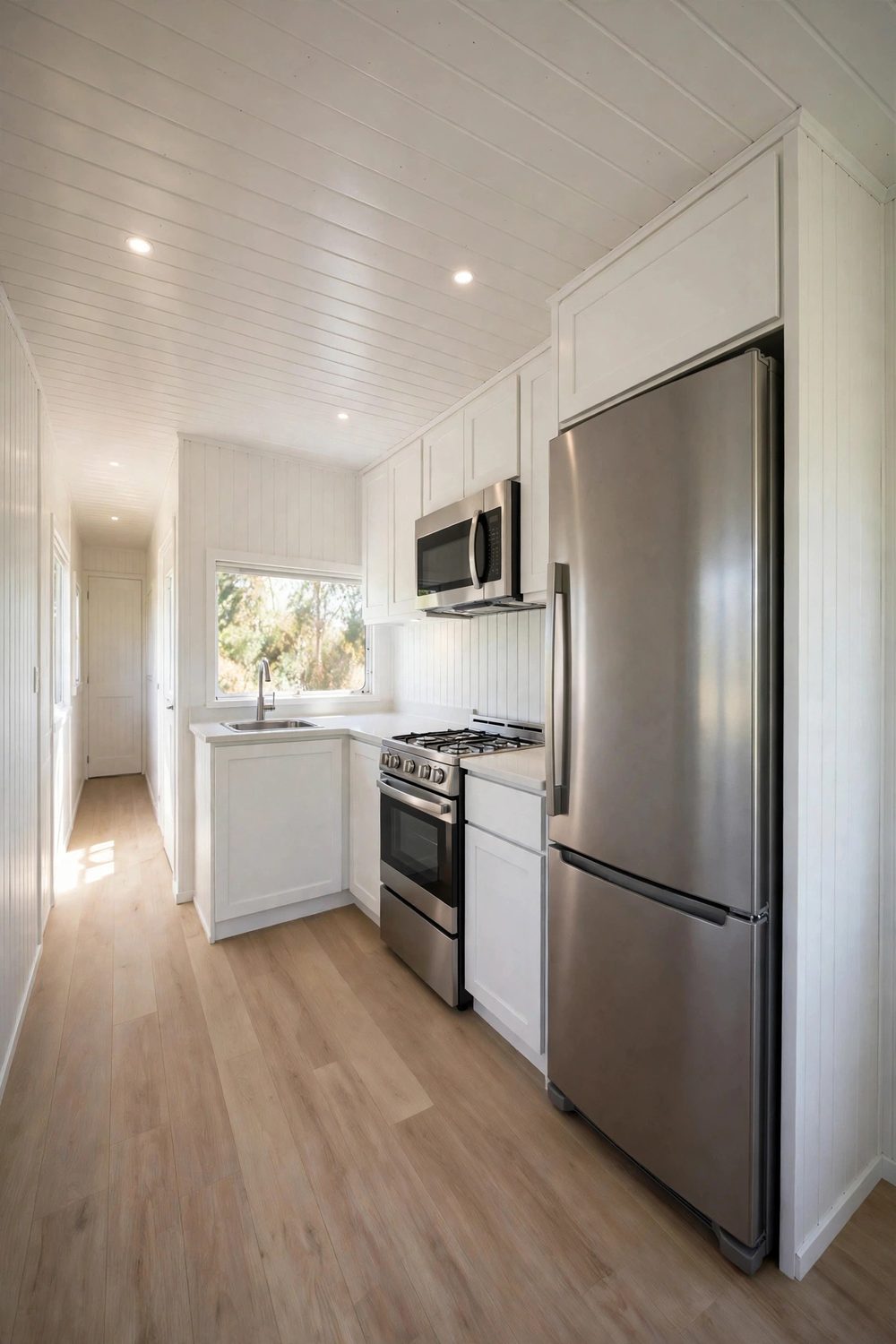
Oversized appliances steal the walkway in a mobile home kitchen. A fridge that juts past the counters narrows every pass, and a deep stove crowds the cook.
When a unit needs replacing, choose a counter depth fridge and a compact range. Flush fronts restore the straight line of the run and free inches where you walk.
Match the finish across fridge, range, and microwave where you can. One finish on a short run looks calm, and our small galley kitchen ideas for a bright, space saving layout show the same rule at work.
Keep small appliances to the back of the counter, under the uppers. The front half of the counter stays clear for prep, even on a busy weeknight.
8. Fit Slim Light Strips Under the Uppers for Even Counter Light
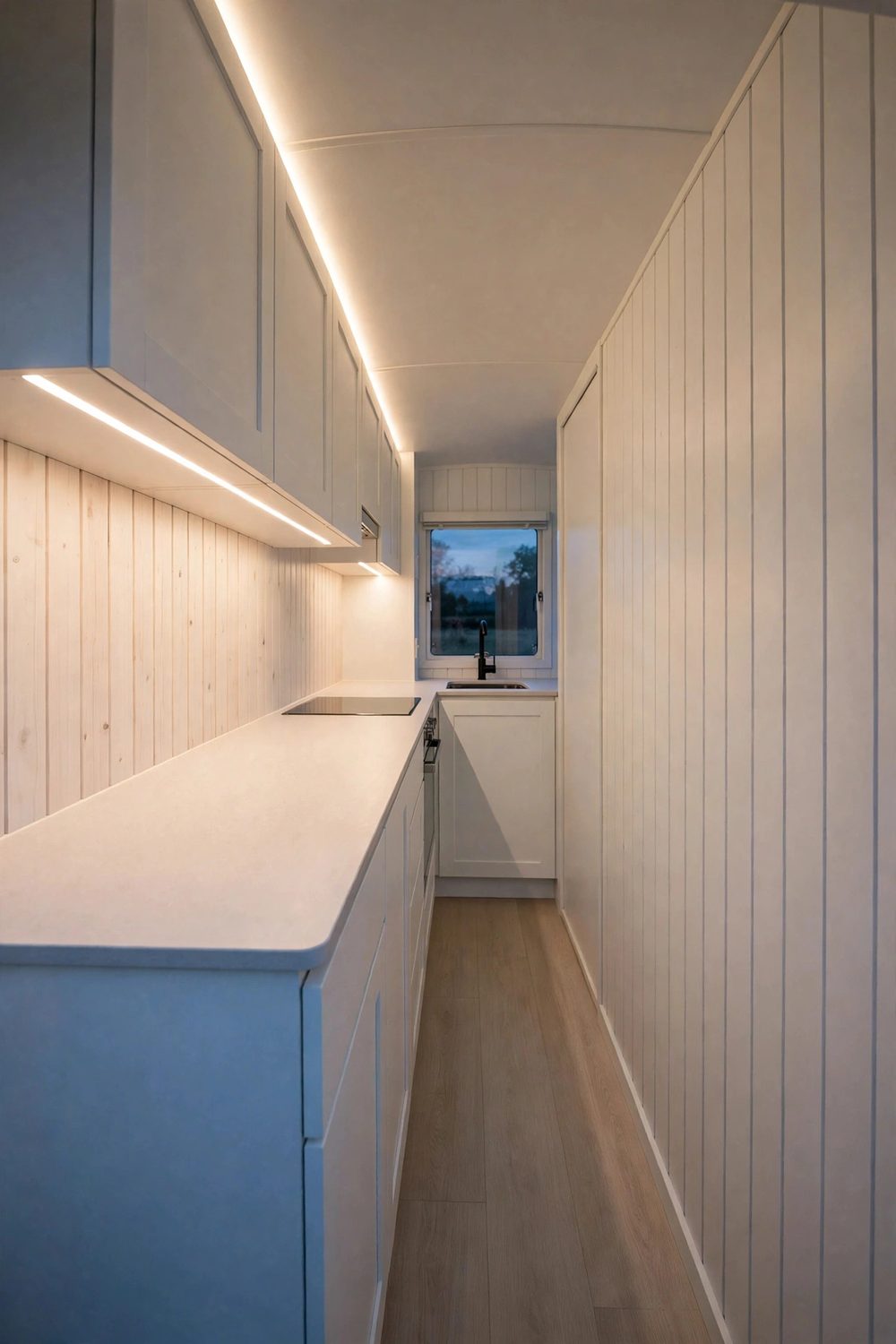
One ceiling light leaves the counters in shadow in most mobile home kitchens. Your own body blocks the light, and the strip under the uppers stays dim all day.
Slim light strips fixed under the wall cabinets fix that shadow line. Fit them toward the front edge of the cabinet base so light falls on the prep zone, not the wall.
Choose a warm white tone that matches your ceiling light. Mixed tones on a short run look patchy, with one counter glowing yellow and the next looking blue.
An electrician handles any wiring changes. At styling level, your job is placement and tone: even light, no dark corners, and a run that feels safe to cook in after dark.
9. Use the Short End Wall for Tall, Skinny Storage
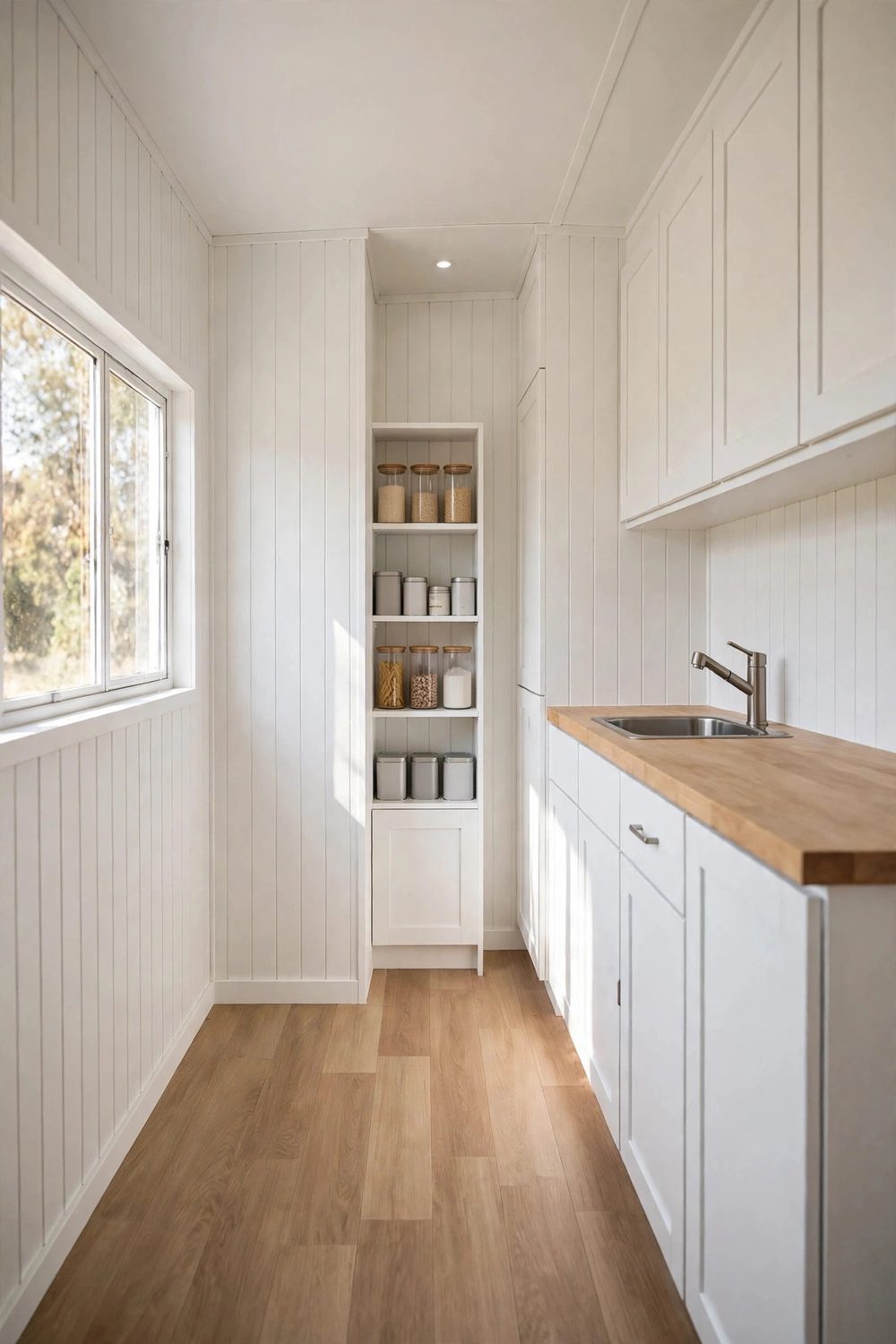
The short end wall of a galley run often holds nothing but a calendar. That narrow strip can carry a tall, shallow tower for tins, jars, and cleaning bottles.
Keep the tower shallow so it never narrows the walkway. Tall and skinny beats deep and bulky here, a point our small kitchen ideas with tall skinny storage towers cover in full.
Put daily items between waist and shoulder height. The top shelf suits spare rolls and seasonal pans, and the lowest shelf suits heavy bottles that you lift with care.
Paint the tower to match the cabinets. Matched color makes a new piece read as part of the original kitchen instead of a unit squeezed in later.
10. Add Storage Inside Cabinet Doors and in the Toe Space
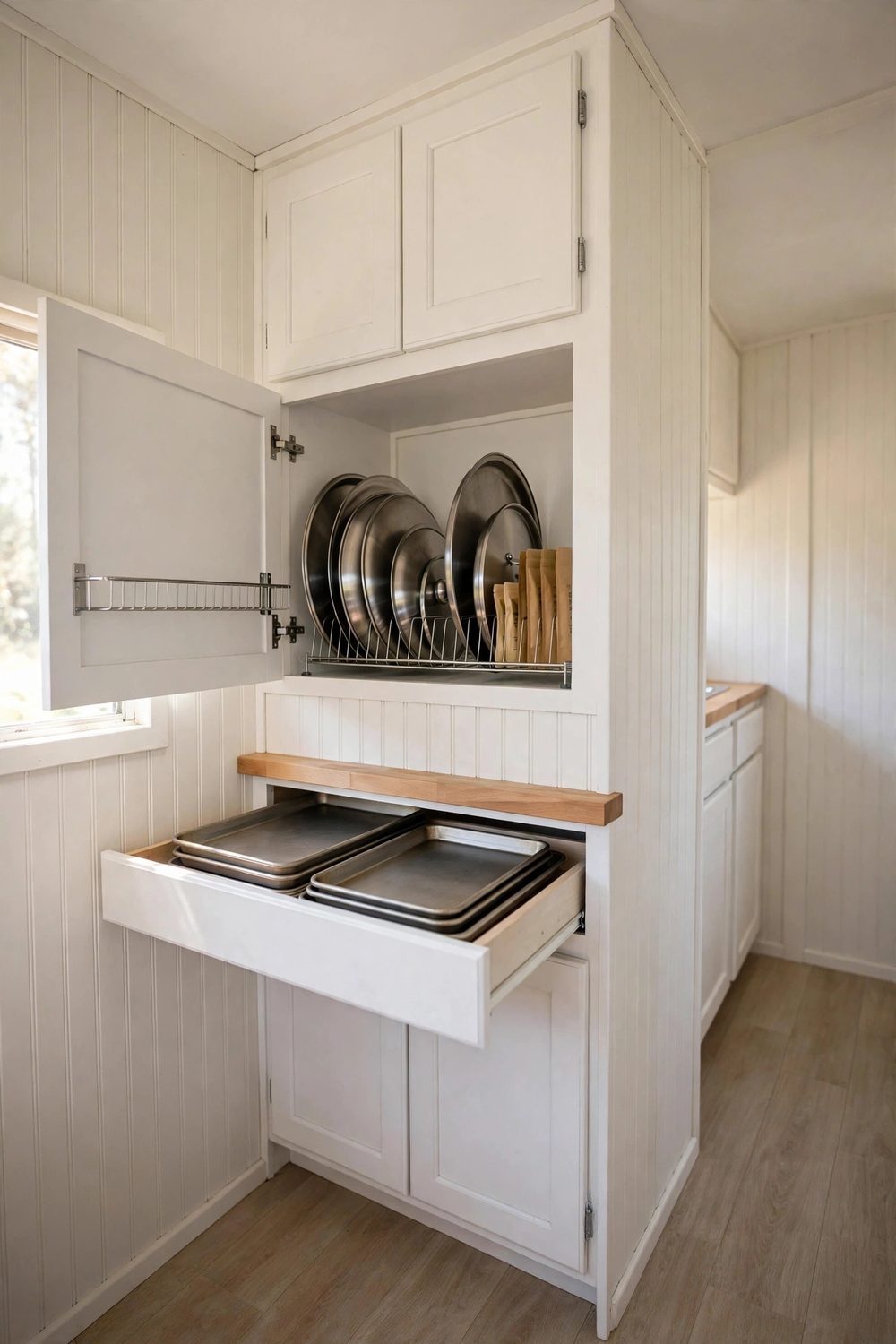
Mobile home cabinets often have one fixed shelf and a lot of wasted air. The inside of each door and the space at floor level can both hold more.
Fit slim racks inside doors for lids, wraps, and spice packets. Keep them shallow, and test the close each time: a rack that knocks the shelf edge will annoy you daily.
The toe space under the base cabinets suits flat trays and baking sheets in a shallow drawer or on a low plinth shelf. Flat items slide in and stay out of sight.
Work one cabinet at a time and cook for a week between changes. You soon learn which door you open on tiptoe and which corner still hides the jar you need.
11. Choose a Shallow Sink and a Tall, Single Handle Faucet
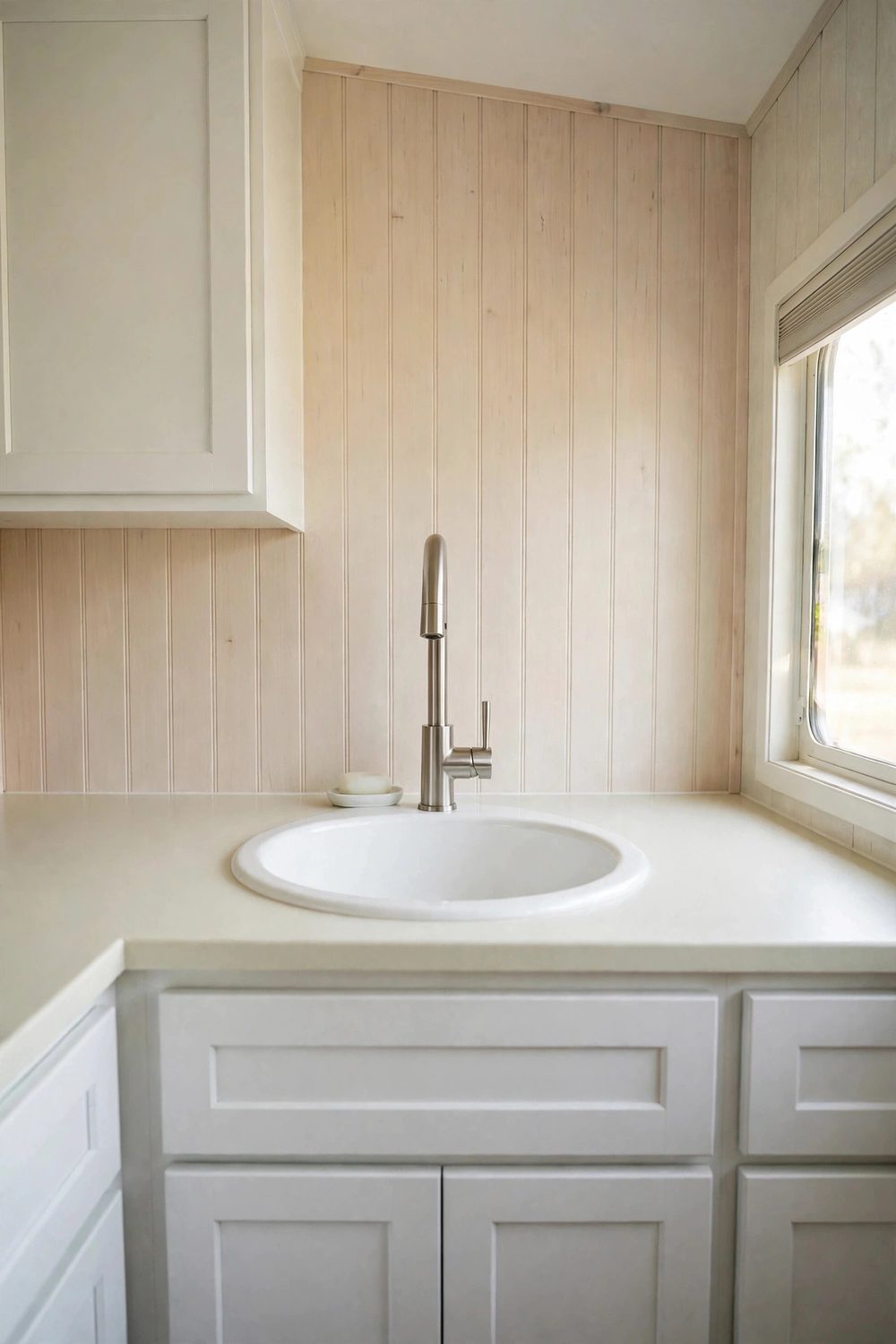
A deep, wide sink eats counter on both sides in a narrow run. A shallower single bowl gives back prep space while still holding a full size pan.
Pair it with a tall, single handle faucet. One handle is easy to nudge with a wrist when your hands are messy, and the height clears stockpots without a struggle.
Keep the area behind the sink almost empty. In many mobile homes you reach that corner on tiptoe, so leave it for a small soap dish and nothing you need daily.
A light colored sink brightens the middle of the run. It also shows splashes at a glance, which makes a quick wipe part of the normal tidy up.
12. Mount a Fold Down Table on the One Open Wall
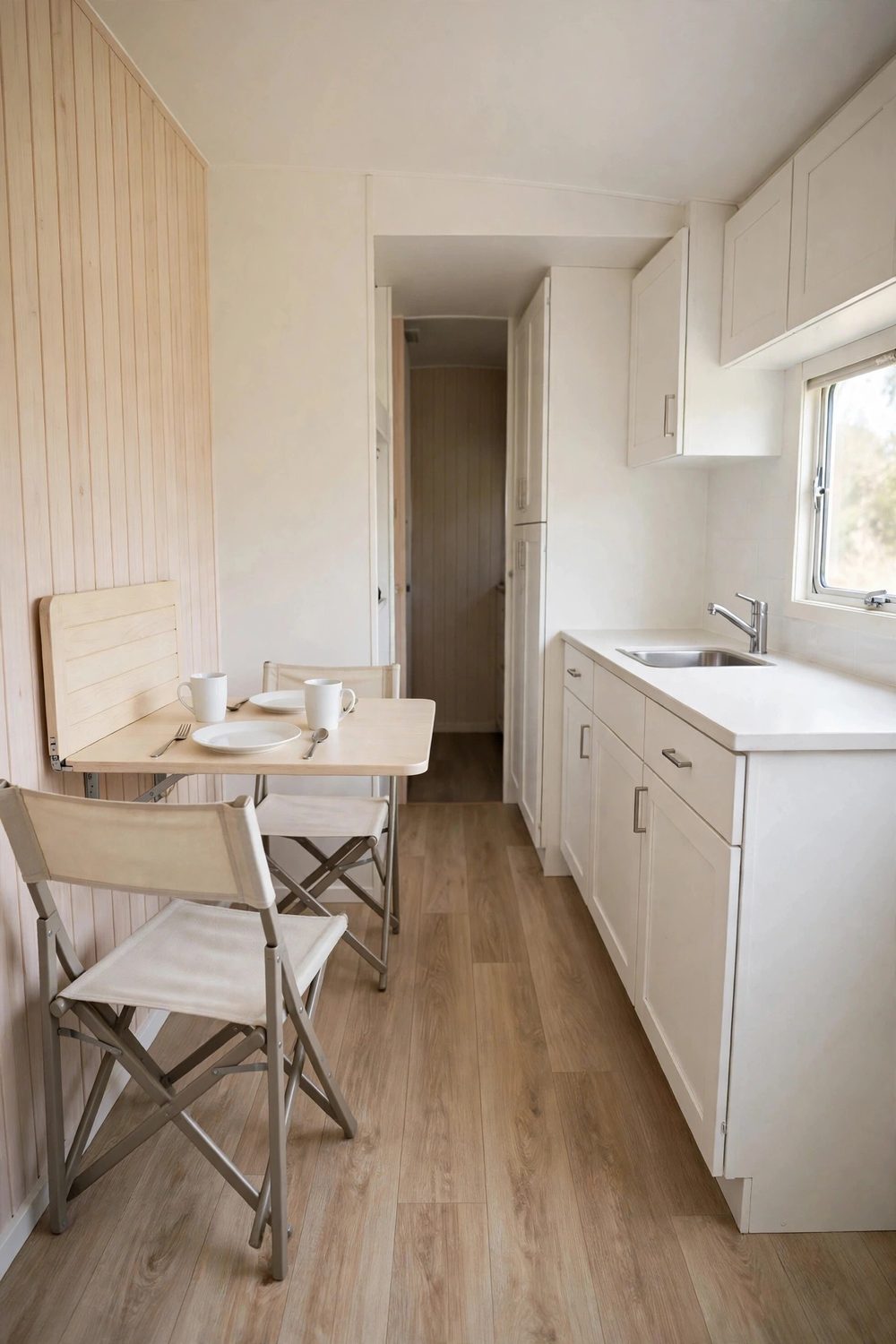
Most mobile home kitchens have no room for a table that stays up all day. A fold down table on the open wall gives you a seat and folds flat after meals.
Size it for two people at most. A short top in a pale wood tone seats a pair for coffee and still leaves the walkway clear when it is up.
Store two folding chairs in the gap beside the fridge or in a hall closet. Our small kitchen ideas with a fold down wall table cover chair storage and folded depth in detail.
When the table is down, the wall reads as a slim shelf. Keep one small plant or a folded cloth there, and the folded table still looks intentional.
13. Dress the Window Short, Pale, and Clear of the Sink
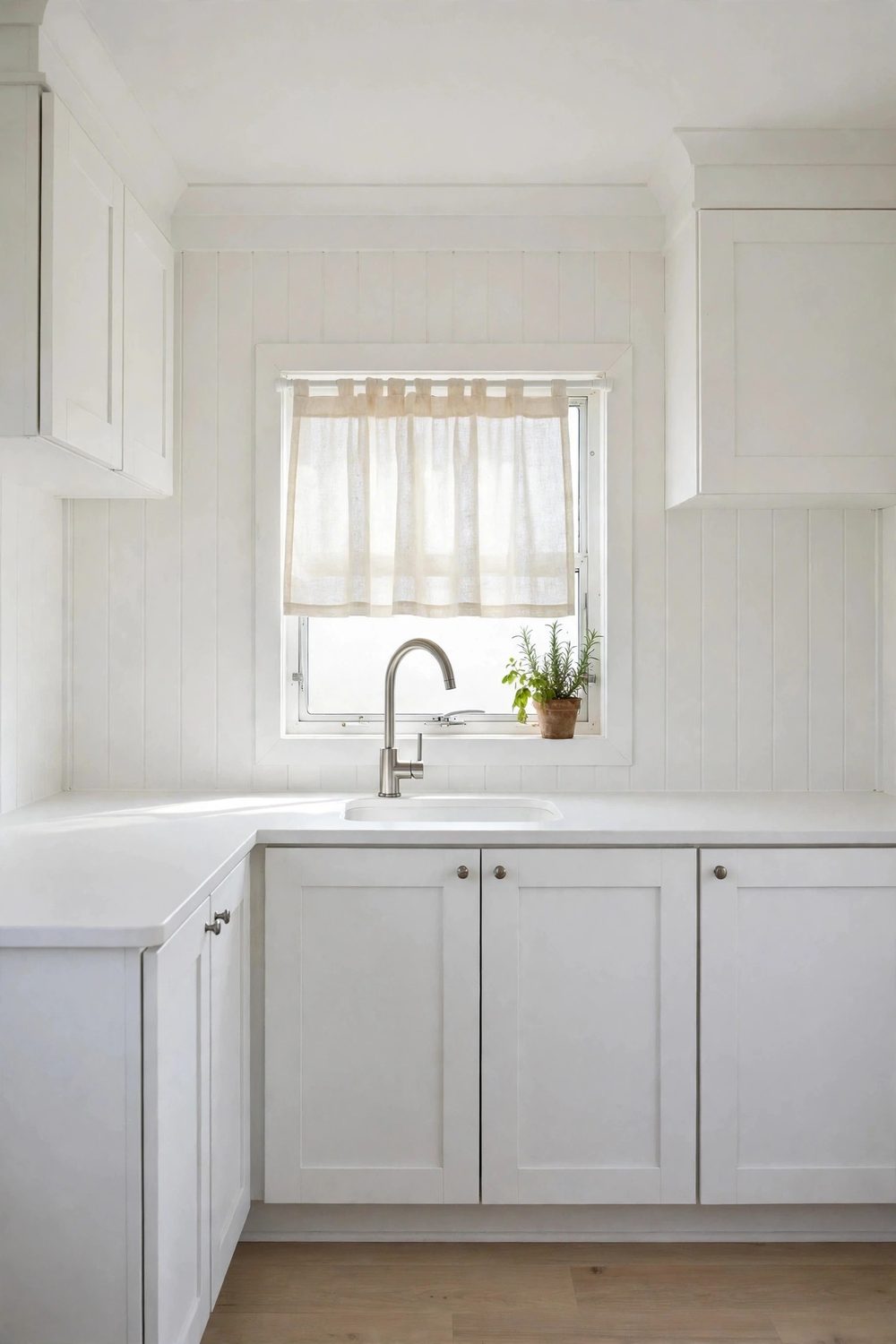
Long curtains over a kitchen sink drag in steam and block the best light in the room. Short, pale window coverings suit a mobile home kitchen far better.
Choose a cafe curtain, a simple roller shade, or a short valance that ends well above the faucet. Fabric stays dry, and daylight reaches the counters for most of the day.
Keep the color close to the wall paint. Strong patterns at the window pull the eye from the whole run to one small square of glass, which shrinks the room.
If the window sits at the end of the galley, treat it as the focal point. A clean frame, a pale shade, and one small herb pot reward the long view down the run.
14. Keep Counters in One Color Family With Very Little Left Out
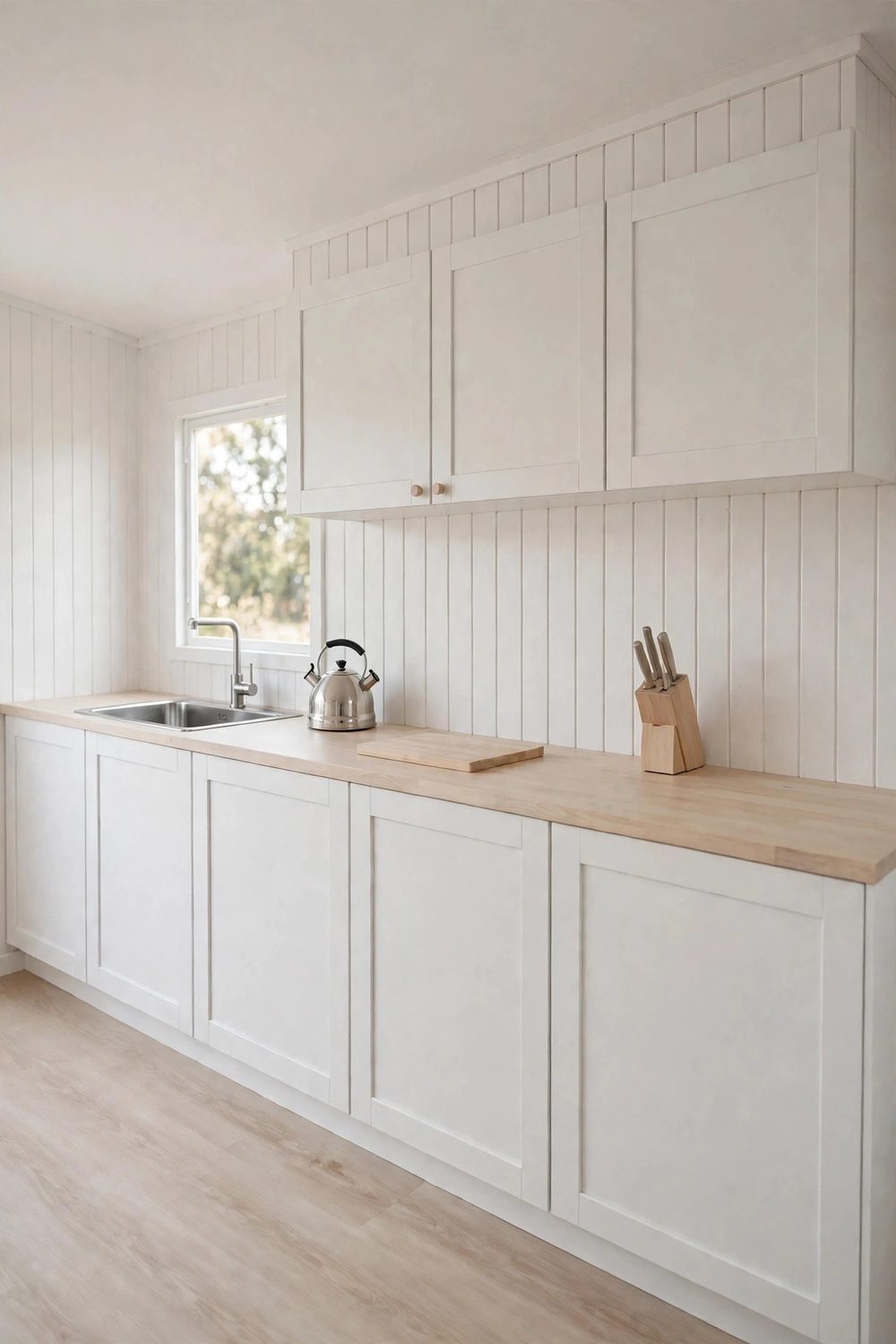
A short counter fills fast. When every item left out is a different color and shape, the run looks busy long before it is truly full.
Pick one color family for the items that stay out, like white and pale wood, or soft gray and steel. Matching tones calm the surface, much like the palettes in these small kitchen color ideas that make a room look bigger.
Leave out only what you use daily: a knife block or rail, the kettle, and one board. Everything else earns a cabinet, a door rack, or the tall end tower.
Clear the stretch beside the sink each night. Waking to one empty, dry counter changes how the whole small kitchen feels before you cook a thing.
15. Finish Panel Edges and Cabinet Lines With Simple Trim
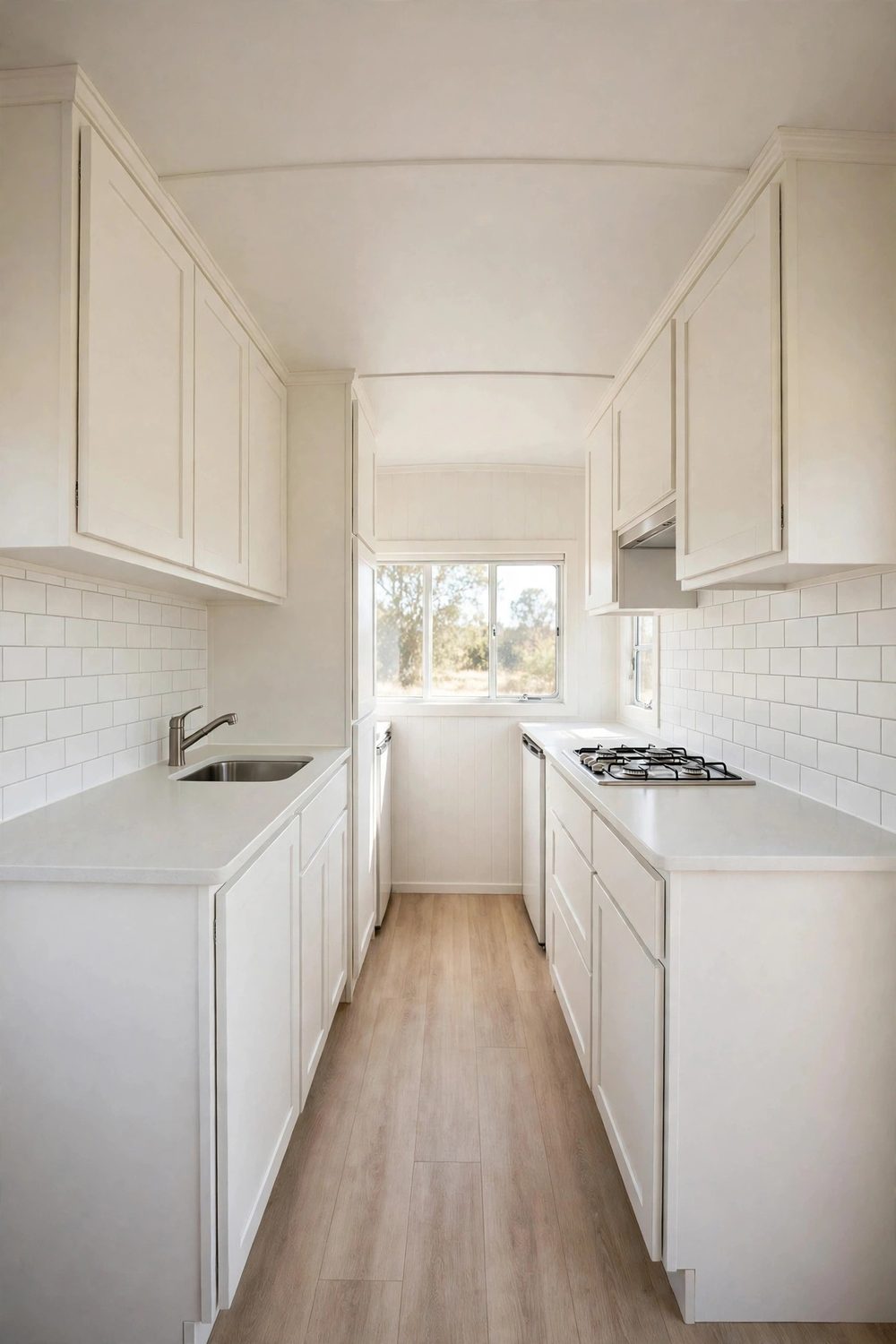
Updated paint and shelves still look unfinished if every edge stops short. Simple trim along panel seams, cabinet tops, and the ceiling line pulls the update together.
Use thin, lightweight trim that suits manufactured home walls. A narrow strip over the cabinet to ceiling gap hides the dust ledge and makes the uppers look built in.
Paint all trim the same color as the walls and cabinets. One color across trim, panels, and doors removes the stripes that make a mobile home kitchen feel assembled from parts.
Run a neat bead of paintable caulk where counters meet the backsplash. That small line stops crumbs collecting in the gap and gives the run a clean, finished edge.
An update in place suits a mobile home kitchen best. Paint, light surfaces, compact fittings, and storage that fits the narrow run will do more than any big rebuild, and each step can stand alone.
Start with the one change you will notice at breakfast: cabinet color, panel walls, or counter light. Live with it for a week, then choose the next of these small kitchen ideas for a mobile home kitchen update.
Save this to your small kitchen ideas board for later, and work down the list at your own pace. A calm, bright run is built one small, finished edge at a time.


