

15 Terracotta and Blue Bathroom Ideas
Terracotta and blue create a distinctive bathroom color combination that feels warm, refreshing, and full of character. Terracotta brings the earthy richness of fired clay, sunbaked landscapes, and natural stone, while blue introduces a cooler element that can make the room feel calm and balanced.
Together, these colors work across many design styles, from Mediterranean-inspired spaces and rustic retreats to contemporary bathrooms with clean lines and understated finishes. The secret to using terracotta and blue successfully is deciding which color should lead and how the other should support it.
Terracotta tiles can bring warmth to a shower or vanity wall, while blue cabinetry, painted walls, or decorative accents add contrast. Alternatively, blue can become the main color, with terracotta introduced through flooring, pottery, or smaller architectural details.
The following terracotta and blue bathroom ideas explore different combinations of tile, paint, fixtures, storage, and lighting, helping you create a bathroom that feels coordinated rather than overwhelming.
1. Terracotta Floor Tiles With Soft Blue Walls
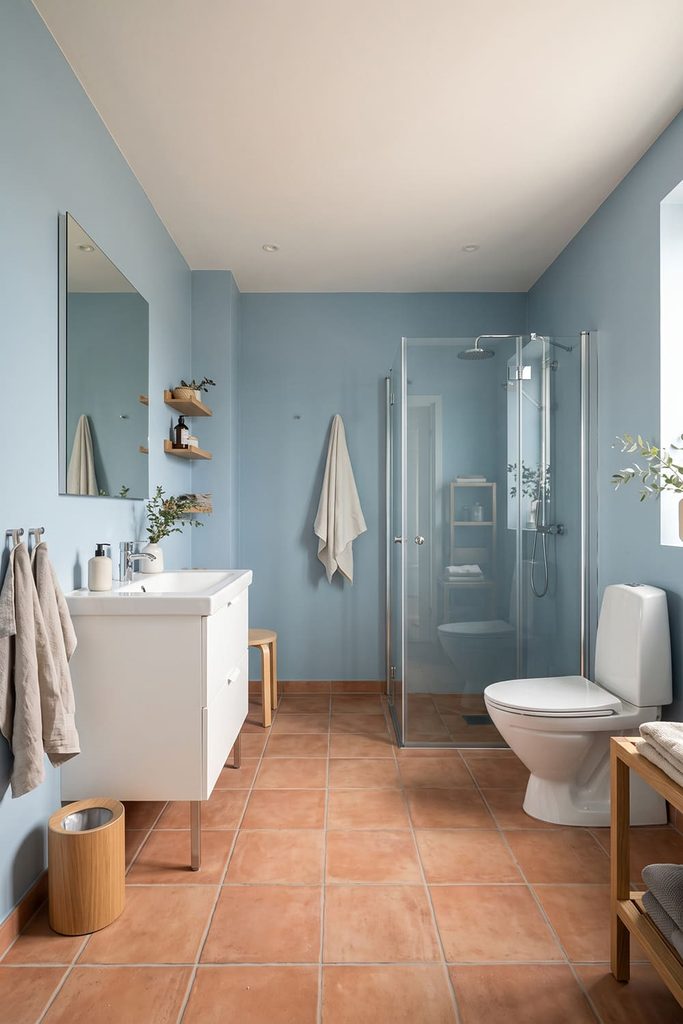
Terracotta floor tiles provide a warm foundation for soft blue bathroom walls, creating a balanced contrast between earthy and cool tones.
Choose matte clay-colored tiles with natural variation, then use dusty blue or muted sky blue on the upper walls; white fixtures, a simple mirror, and light wood accessories keep the room bright while allowing the floor and wall colors to remain the main decorative features.
2. Blue Vanity With a Terracotta Backsplash
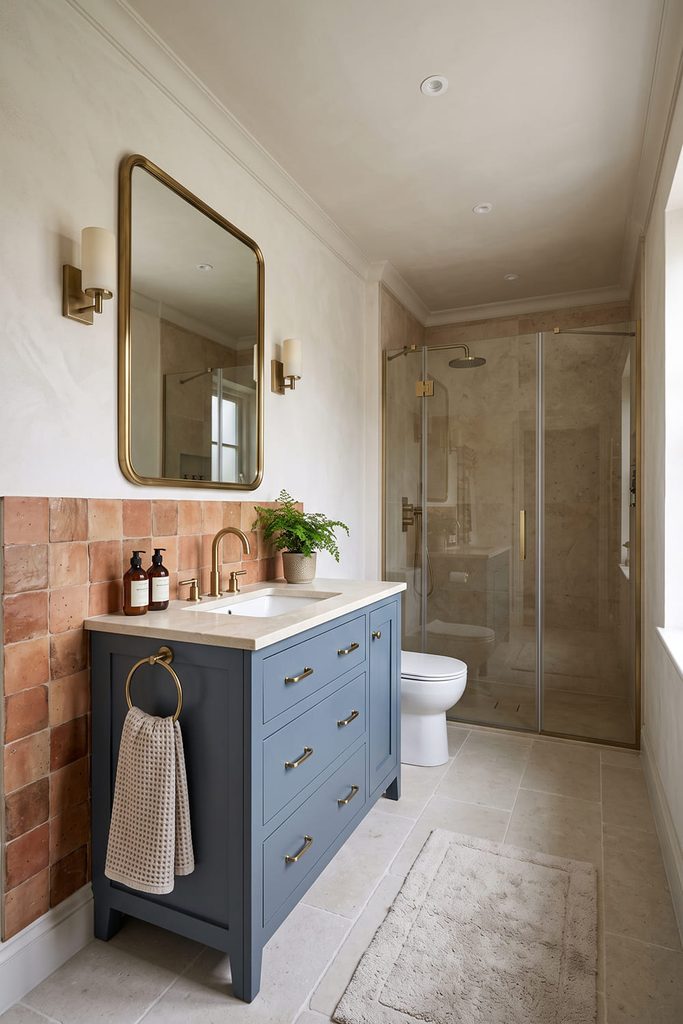
A blue vanity paired with a terracotta backsplash creates a colorful focal point without requiring every surface to compete for attention.
Select navy, slate blue, or muted teal cabinetry and place handmade-look terracotta tiles behind the basin, keeping the countertop in white, cream, or pale stone; brushed brass or understated chrome fixtures can complete the design while the contrasting colors give the vanity area a distinctive personality.
3. Mediterranean Bathroom With Terracotta and Cobalt Blue
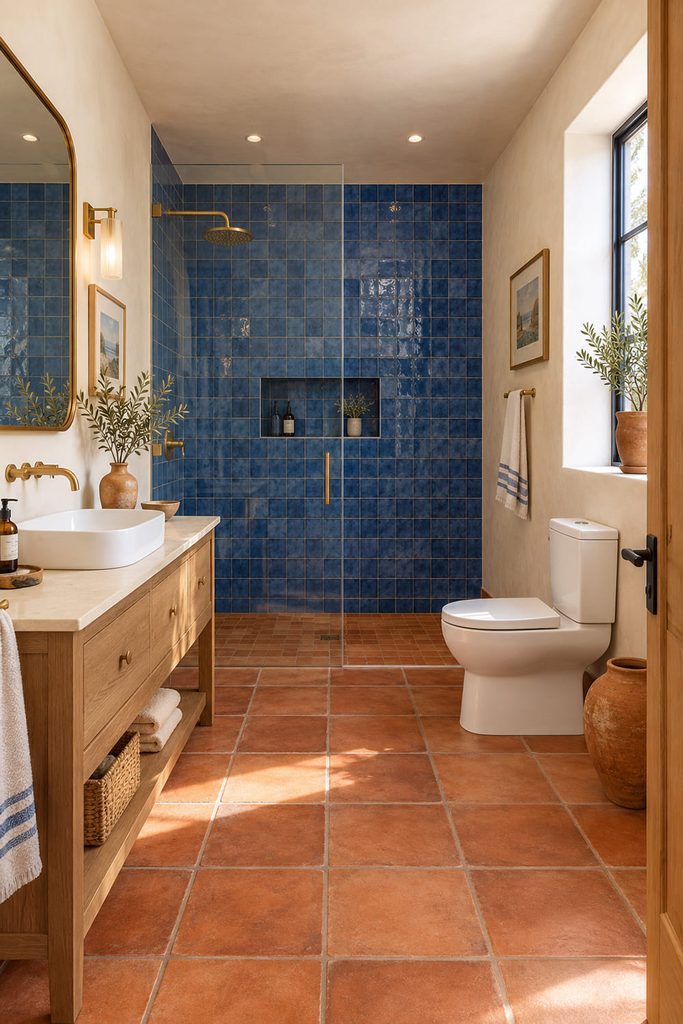
Cobalt blue and terracotta create a bold Mediterranean-inspired bathroom that feels expressive and energetic.
Use cobalt tiles in a defined area, such as a shower wall or decorative basin backsplash, and balance them with warm terracotta flooring, cream plaster-style walls, and simple natural wood details; limiting the strongest colors to two or three surfaces helps preserve visual harmony and prevents the room from feeling crowded.
4. Dusty Blue Walls With a Terracotta Shower Floor
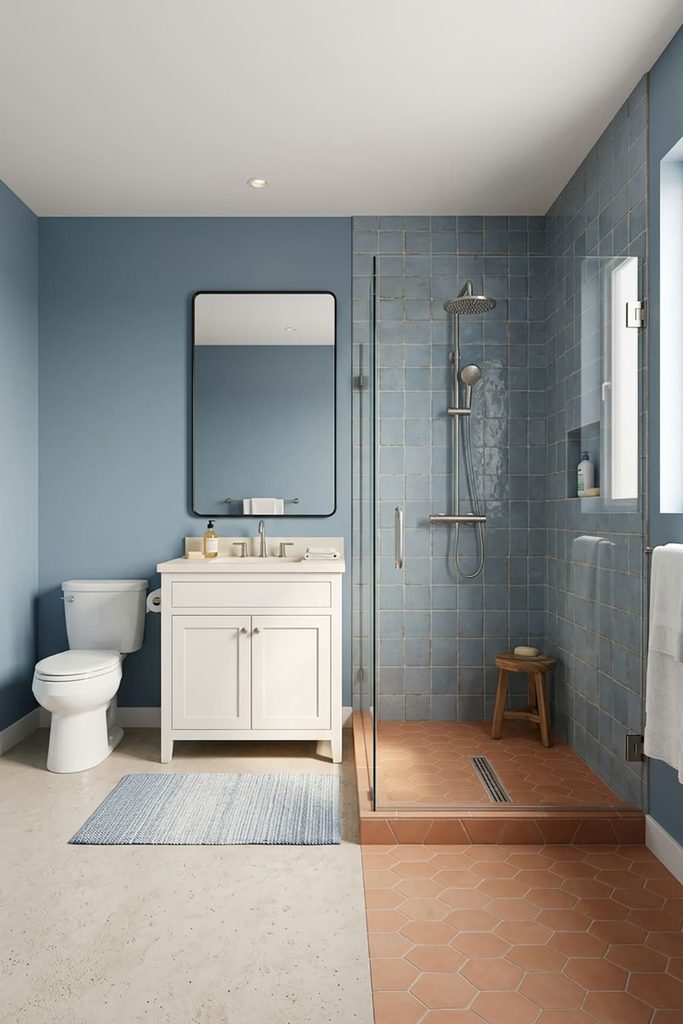
Dusty blue walls offer a gentle backdrop for terracotta-colored shower flooring, creating contrast without the intensity of bright blue or deep orange.
Choose a suitable slip-resistant shower tile in a clay-inspired tone, coordinate it with the main bathroom floor, and use clear glass to maintain visual openness; white sanitaryware and warm lighting help connect the cool walls with the warmer floor finish.
5. Terracotta Shower Tiles With Blue Bathroom Cabinets

Terracotta shower tiles can make the bathing area feel warm and textured, while blue cabinetry introduces a crisp contemporary contrast.
Use terracotta tiles across the shower walls and select a vanity in muted blue, keeping the remaining surfaces relatively simple with pale flooring and neutral walls; a clear glass enclosure allows the tilework to remain visible without creating a strong visual barrier across the bathroom.
6. Blue and Terracotta Patterned Floor Tiles

Patterned tiles can combine terracotta and blue in one surface, making it easier to coordinate both colors throughout the bathroom.
Choose a design with a clear pattern and a restrained palette, then pair it with plain cream walls, a simple vanity, and minimal accessories; because the floor already provides visual interest, use solid-colored tiles in the shower and avoid introducing several competing patterns.
7. Navy Blue Walls With Warm Terracotta Accents
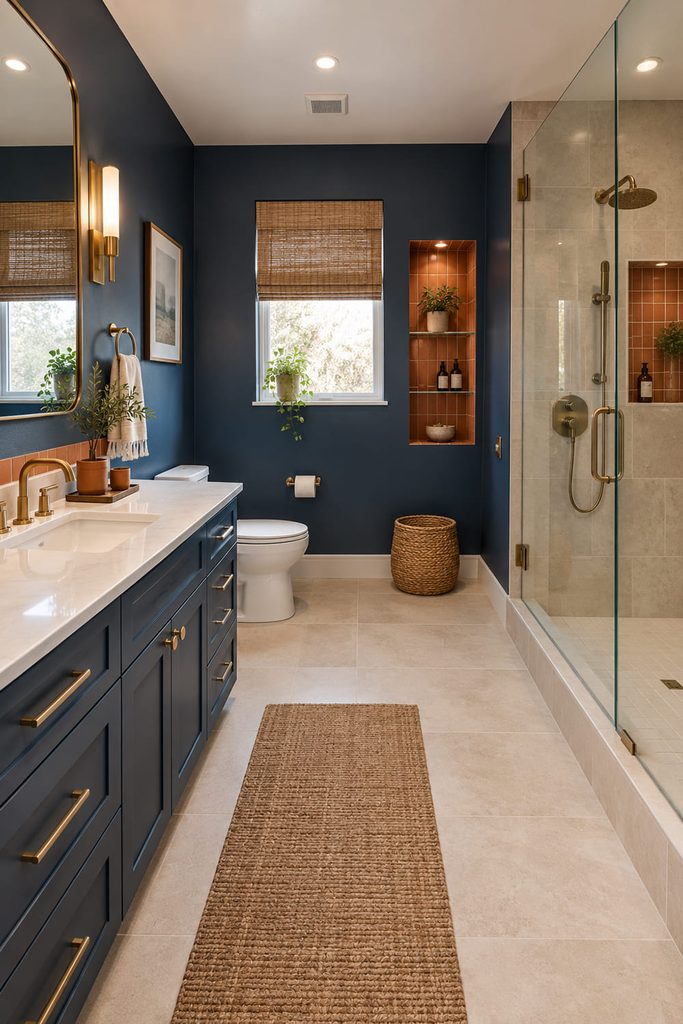
Navy blue walls create a rich, dramatic backdrop for terracotta accessories and earthy finishes.
Apply navy to a well-lit wall or use it on the vanity cabinetry, then introduce terracotta through a tiled niche, ceramic soap dish, planter, or small decorative surface; white fixtures and a large mirror help reflect available light, while warm bulbs soften the contrast and keep the room from feeling too severe.
8. Terracotta Vanity With Pale Blue Tiles

A terracotta-colored vanity brings warmth to the bathroom while pale blue tiles add a fresh, airy quality.
Choose cabinetry in a muted clay shade or a painted finish inspired by natural terracotta, and use light blue tiles behind the basin or inside the shower; cream countertops, simple hardware, and restrained decoration allow the two colors to complement one another without making the room appear overly busy.
9. Mediterranean Arched Niche in Blue and Terracotta

An arched niche creates architectural interest and provides a natural place to combine terracotta and blue.
Finish the niche interior with blue tiles and surround it with terracotta-colored plaster or matching clay-inspired tile, using the recess to display a few bathing essentials rather than numerous decorative objects; proper waterproofing is essential if the niche sits inside a shower, and a simple layout helps its shape stand out.
10. Blue Subway Tiles With Terracotta Flooring

Blue subway tiles create a clean, familiar pattern that pairs naturally with the earthy texture of terracotta flooring.
Use pale blue tiles across the shower wall or vanity backsplash, keeping grout colors close to the tile shade for a quieter appearance; terracotta floors add warmth beneath the cool walls, while a white vanity, clear glass, and simple metal fixtures keep the overall design contemporary and easy to coordinate.
11. Terracotta and Blue Bathroom With Brass Fixtures

Brass fixtures can connect terracotta and blue by adding a warm metallic finish between the two contrasting colors.
Pair muted blue cabinetry or wall tiles with terracotta flooring or a clay-colored backsplash, then introduce brass through the faucet, mirror frame, cabinet pulls, and lighting details; repeat the finish consistently rather than mixing too many metals, and choose bathroom-rated products suitable for the room’s moisture conditions.
12. Small Bathroom With Terracotta and Light Blue

A small bathroom can use terracotta and light blue without feeling visually cramped when the colors are distributed carefully.
Keep the largest wall surfaces pale blue or warm white, then introduce terracotta through the floor, vanity details, or a narrow backsplash; a floating cabinet, large mirror, clear shower screen, and limited countertop accessories help preserve visible space while allowing the color combination to remain distinctive.
13. Terracotta Walls With a Blue Freestanding Bathtub
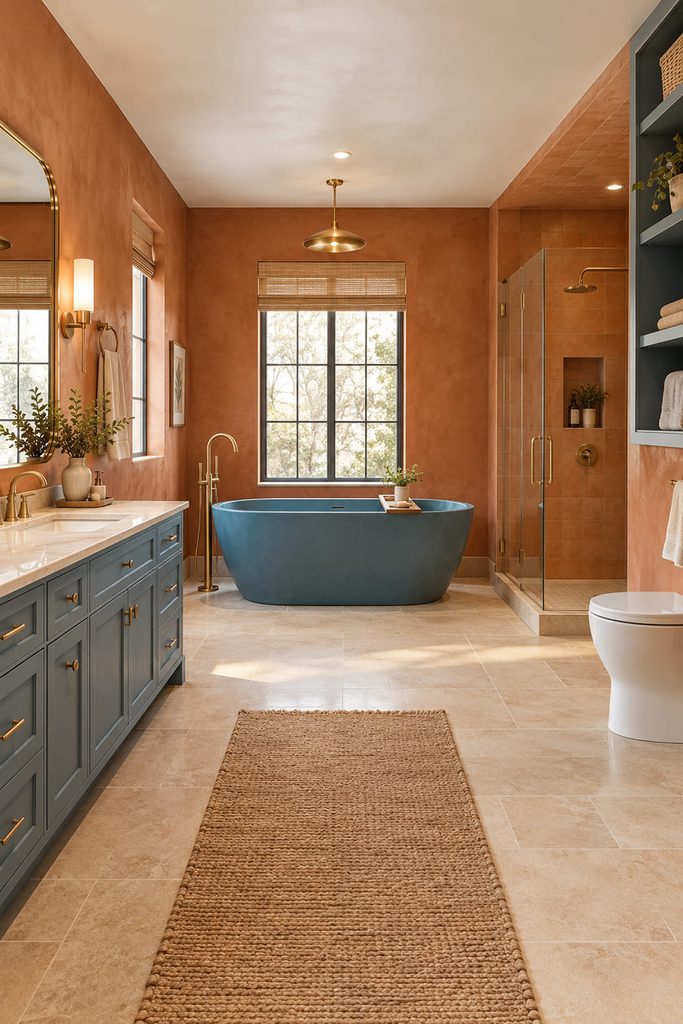
Terracotta walls can create a warm backdrop for a blue freestanding bathtub, making the bath the main feature of a spacious bathroom.
Choose a muted clay finish for the walls and a deep blue, dusty blue, or blue-green tub, then keep the surrounding floor and fixtures relatively neutral; before committing to this arrangement, check the available floor space, plumbing requirements, and access needed to clean around the bathtub.
14. Blue Mosaic Tiles With Terracotta Details
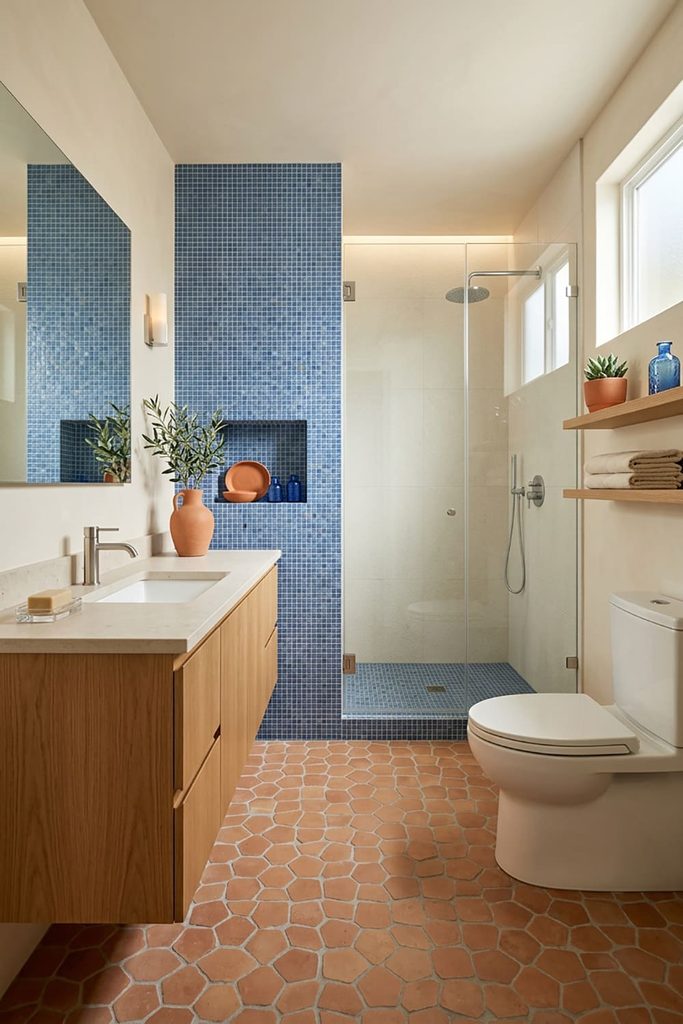
Blue mosaic tiles introduce fine texture and variation, while terracotta details prevent the bathroom from feeling too cool.
Use mosaics on a defined shower wall, a recessed niche, or the front of a vanity, then add terracotta through flooring, pottery, or a clay-colored accent wall; because small tiles already create a busy surface, keep the remaining walls simple and use grout that complements the mosaic’s overall color.
15. Modern Minimalist Bathroom With Terracotta and Blue

A modern minimalist bathroom can use terracotta and blue through a few carefully selected finishes rather than decorating every surface.
Combine a blue floating vanity with a terracotta tile floor, pale neutral walls, a frameless shower screen, and simple geometric fixtures; concealed storage keeps everyday products out of sight, while natural materials and warm lighting introduce enough texture to prevent the clean design from feeling cold or unfinished.
How to Balance Terracotta and Blue in a Bathroom
The most successful terracotta and blue bathrooms usually have a clear color hierarchy. Decide whether terracotta or blue will be the dominant shade, then use the second color to provide contrast.
For example, terracotta flooring can be paired with pale blue walls, or blue cabinetry can become the focal point against clay-colored tiles. When both colors occupy large areas, use a neutral finish such as cream, warm white, or pale beige to give the eyes a resting place.
Consider the intensity of each color before choosing materials. Deep navy and saturated terracotta create a dramatic combination, while dusty blue and muted clay feel softer and more relaxed. Pale blue works especially well in bathrooms with limited natural light, whereas darker blue surfaces benefit from thoughtful illumination and lighter surrounding finishes.
It is also important to compare undertones. Orange-based terracotta often works well with blue shades that contain a little gray or green, while pinkish clay can pair beautifully with dusty blue. Place physical samples beside each other in the actual bathroom lighting before making a final decision, because colors can look different under daylight, warm bulbs, and cool LED lighting.
Choosing the Right Terracotta Tiles
Terracotta-inspired bathroom finishes are available in natural clay, porcelain, ceramic, and other manufactured materials. Traditional clay tiles have an earthy, irregular character, but their suitability for wet areas depends on the specific product, finish, sealing requirements, and installation system. Confirm that any tile selected for a shower or bathroom floor is rated for that application.
Porcelain tiles designed to resemble terracotta can provide a similar warm appearance with different maintenance requirements. They are available in matte finishes, varied clay tones, and shapes ranging from square tiles to elongated rectangles. This can be a useful option if you want a terracotta look on the floor while keeping maintenance straightforward.
For a handmade appearance, consider tiles with subtle color variation and slightly irregular edges. Use them on a backsplash, shower wall, or feature area, and pair them with simpler surfaces elsewhere. If the tile has a strong pattern or pronounced texture, avoid repeating it across every wall because too much visual detail can compete with the blue elements.
Finding the Best Shade of Blue
Blue can change the atmosphere of a bathroom significantly. Pale blue creates a light and relaxed appearance, making it suitable for smaller rooms and bathrooms with limited daylight. Dusty blue feels understated and works well with natural wood, cream surfaces, and muted terracotta. Navy adds depth and drama, while teal introduces a green undertone that can complement warm clay finishes.
Think about where the blue will appear before choosing its shade. A deep blue vanity can provide contrast without darkening the entire room, while blue wall tiles will have a much greater effect on the overall atmosphere. If you prefer a strong color but want a flexible design, use it on cabinetry or a replaceable accessory rather than committing every wall to a saturated shade.
Always check the finish as well as the color. Glossy tiles reflect more light and can create a lively surface, while matte finishes often appear softer and more restrained. Neither finish is automatically best for every application, so consider cleaning requirements, slip resistance where relevant, and the appearance of the tile under your bathroom lighting.
Lighting and Accessories for Terracotta and Blue Bathrooms
Lighting helps connect the warm and cool sides of this color combination. Warm-white illumination can bring out terracotta’s earthy qualities, while balanced vanity lighting keeps blue surfaces from appearing too dark or dull. Use general lighting for the whole room, dedicated lighting around the mirror, and appropriately rated fixtures in wet areas.
Natural materials can soften the contrast between blue and terracotta. Light wood, woven storage baskets placed away from direct splashes, linen-look window treatments, and simple ceramic accessories can introduce texture without adding more strong colors. Choose a small number of useful objects rather than filling every shelf and countertop.
Metal finishes also influence the final appearance. Brass and brushed gold create a warmer effect, while chrome and brushed nickel provide a cooler, more contemporary finish. Matte black offers a stronger outline against pale tiles and cabinetry. Choose one main metal finish and repeat it across the faucet, shower fittings, and cabinet hardware to make the bathroom feel coordinated.
Storage and Layout Tips
A beautiful color scheme will not compensate for an awkward layout. Measure the bathroom before selecting a vanity, bathtub, or shower enclosure, and make sure doors, drawers, and shower screens can open without obstructing movement. In a narrow bathroom, a floating vanity or shallow cabinet may provide enough storage while preserving a comfortable walkway.
Use recessed niches where the wall construction allows them, especially in the shower. These spaces can store everyday products without requiring a protruding shelf, but they need suitable waterproofing and careful detailing. Mirrored cabinets can also provide useful storage while keeping the vanity area visually simple.
Keep the number of finishes manageable. If you have selected patterned blue tiles and richly colored terracotta flooring, use plain walls and simple cabinetry to balance them. If the tiles are understated, you have more freedom to introduce a distinctive mirror, colorful vanity, or decorative lighting. This approach helps the colors remain the main feature without making the bathroom feel cluttered.
Common Mistakes to Avoid
One common mistake is choosing terracotta and blue shades separately without comparing them together. A blue that looks attractive on a small sample may appear too cool beside a strongly orange clay tile. Test both materials side by side and view them under the lighting you intend to use.
Another mistake is using several bold patterns at once. Patterned flooring, mosaic shower walls, decorative wallpaper, and detailed cabinetry can compete for attention in a compact room. Choose one main patterned surface and allow the remaining materials to support it.
Finally, do not overlook moisture resistance and floor safety. Decorative appearance should never take priority over suitable tile specifications, correct waterproofing, proper drainage, and bathroom-rated fixtures. Use materials designed for their intended locations, and consult a qualified installer when the project involves plumbing, electrical work, or shower waterproofing.
Conclusion
Terracotta and blue offer a versatile way to create a bathroom that feels both warm and refreshing. From terracotta floors with pale blue walls to navy cabinetry, blue mosaics, and clay-colored shower tiles, the combination can suit minimalist, Mediterranean, contemporary, and more traditional interiors.
Start by selecting one dominant color, then choose a complementary shade and a neutral finish to connect the design. With suitable materials, thoughtful lighting, practical storage, and a well-planned layout, your terracotta and blue bathroom can feel distinctive, balanced, and comfortable for everyday use.


