
15 Work Outfits for Women Over 50 Preparing for a Job Interview
Choosing an outfit for a job interview can feel surprisingly difficult when you want to look professional, feel comfortable, and express your personality at the same time. For women over 50, the best interview outfits combine thoughtful tailoring, appropriate coverage, comfortable shoes, and colors that suit the workplace.
You do not need an entirely new wardrobe or an overly formal suit to make a confident first impression. The right clothing depends on the role, industry, company culture, and interview format. A corporate position may call for a structured blazer and tailored trousers, while a creative workplace might welcome a refined blouse with smart ankle pants.
For a video interview, neat clothing and a well-chosen neckline can be especially important. These 15 work outfits for women over 50 preparing for a job interview offer practical combinations for different professional environments, with ideas for choosing accessories, adapting layers, and looking polished without sacrificing personal style.
1. Navy Blazer With Tailored Black Trousers

A navy blazer paired with tailored black trousers creates a dependable interview outfit for corporate offices, administrative roles, and many professional services positions.
Choose a blazer with clean shoulders, comfortable sleeves, and enough room to move, then add an ivory blouse and closed-toe leather loafers or low heels; a structured handbag and simple earrings complete the look without distracting from your conversation or qualifications.
2. Cream Blouse With Charcoal Dress Pants
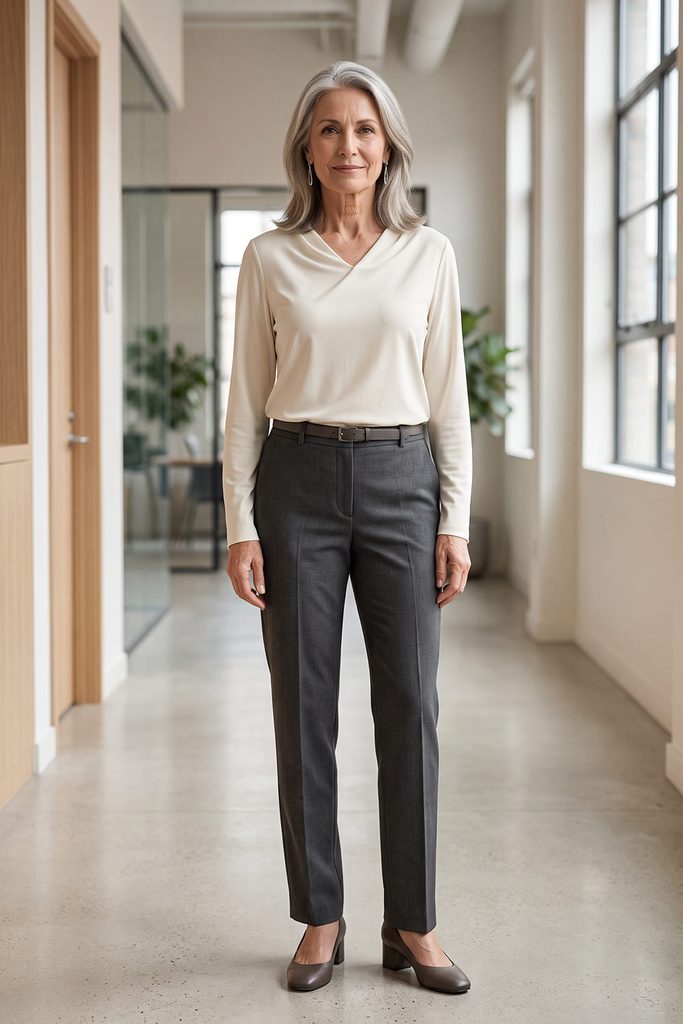
A cream blouse and charcoal dress pants offer a softer alternative to an all-dark interview outfit while remaining professional and composed.
Choose a blouse with a modest neckline and fabric that does not cling, then pair it with straight-leg or gently tapered trousers; black or taupe shoes, a slim belt, and understated jewelry help create a coordinated appearance suitable for office support, education, healthcare administration, and customer-facing positions.
3. Matching Neutral Pantsuit

A matching pantsuit in charcoal, navy, or warm taupe creates a cohesive outfit when interviewing for senior, managerial, financial, or other formal positions.
Look for a jacket and trousers that fit comfortably through the shoulders, waist, and hips, and wear them with a simple blouse in white or a muted color; polished loafers, low block heels, and minimal accessories maintain a professional appearance without making the outfit feel overly elaborate.
4. Knee-Length Sheath Dress With a Blazer
A knee-length or just-below-the-knee sheath dress can provide a streamlined interview outfit without requiring separate pieces to coordinate.
Choose a dress in navy, charcoal, or another understated color, check that you can sit and walk comfortably, and layer a fitted but unrestrictive blazer over it; closed-toe shoes and a structured bag finish the look, making it suitable for office interviews and workplaces with traditional dress expectations.
5. Soft Blue Button-Down Shirt With Beige Trousers
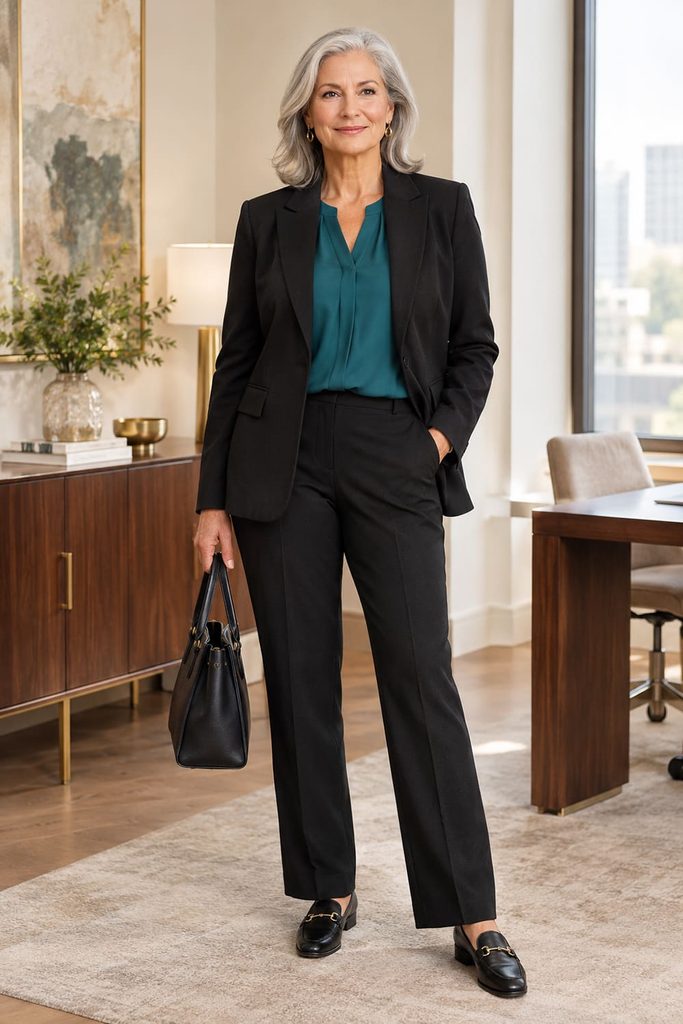
A soft blue button-down shirt paired with beige trousers creates a fresh, approachable look for interviews in business casual workplaces.
Choose a shirt that sits smoothly across the shoulders and bust, and select trousers with a comfortable waistband and a clean hem; brown loafers or low heels connect the colors, while a simple watch and small earrings provide a finished appearance without adding unnecessary decoration.
6. Black Blazer With a Jewel-Tone Blouse
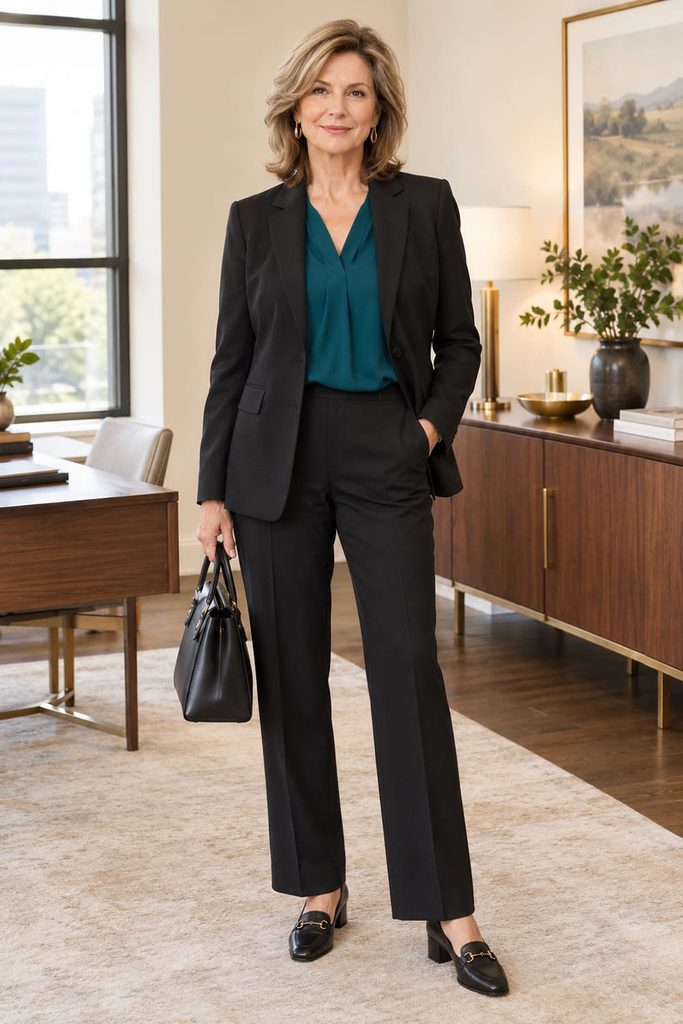
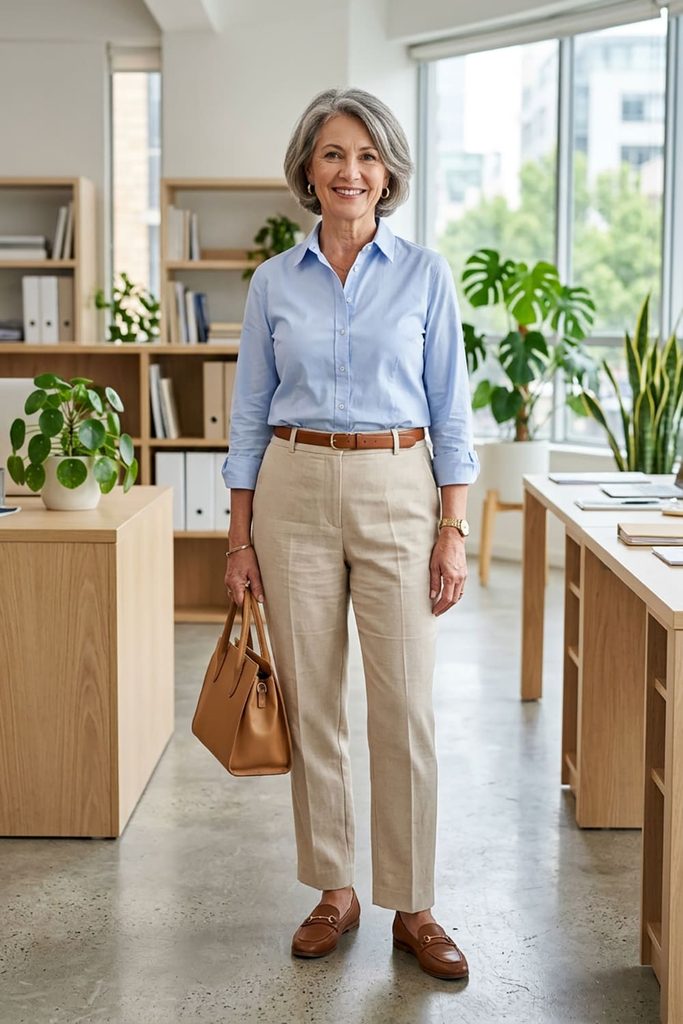
A black blazer paired with a jewel-tone blouse adds color while keeping the overall outfit structured and professional.
Consider deep teal, burgundy, emerald, or plum, choosing the shade that makes you feel comfortable and confident; combine it with tailored black trousers or a modest pencil skirt, then finish with neutral shoes and a simple bag so the blouse provides interest without dominating the interview look.
7. Monochromatic Gray Outfit
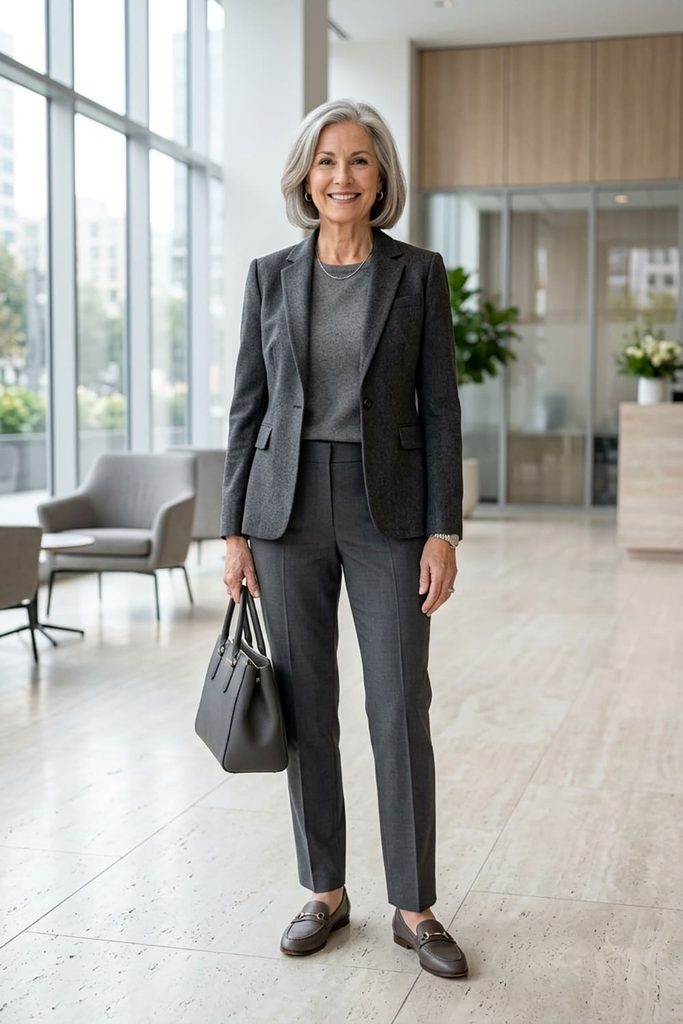
A monochromatic gray outfit creates a refined appearance through different shades and textures rather than strong color contrasts.
Pair charcoal trousers with a medium-gray blazer and a lighter gray or ivory top, making sure the pieces differ enough in tone to remain visually distinct; black or dark taupe shoes and a structured handbag keep the combination grounded, while comfortable tailoring makes it practical for a long interview day.
8. Knit Top With Tailored Ankle Pants
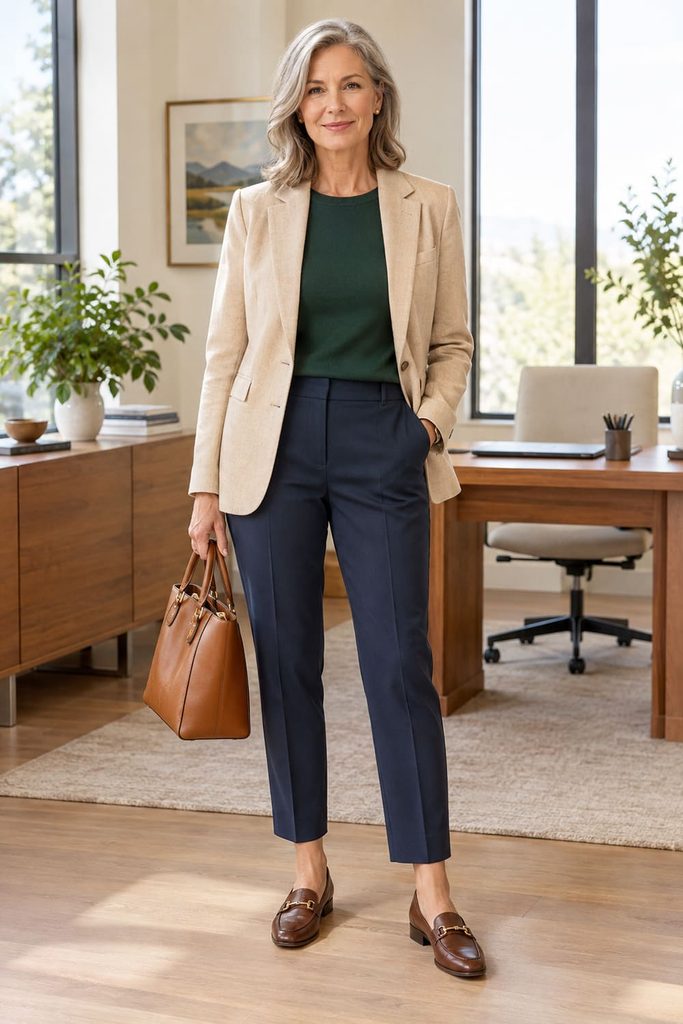
A fine-gauge knit top with tailored ankle pants is a comfortable option for interviews in business casual environments.
Choose a smooth knit in navy, cream, forest green, or burgundy, and pair it with trousers that finish neatly near the ankle without pulling or bunching; add a lightweight blazer if the workplace is more formal, then complete the outfit with loafers or low block heels and restrained accessories.
9. Midi Skirt With a Structured Blouse
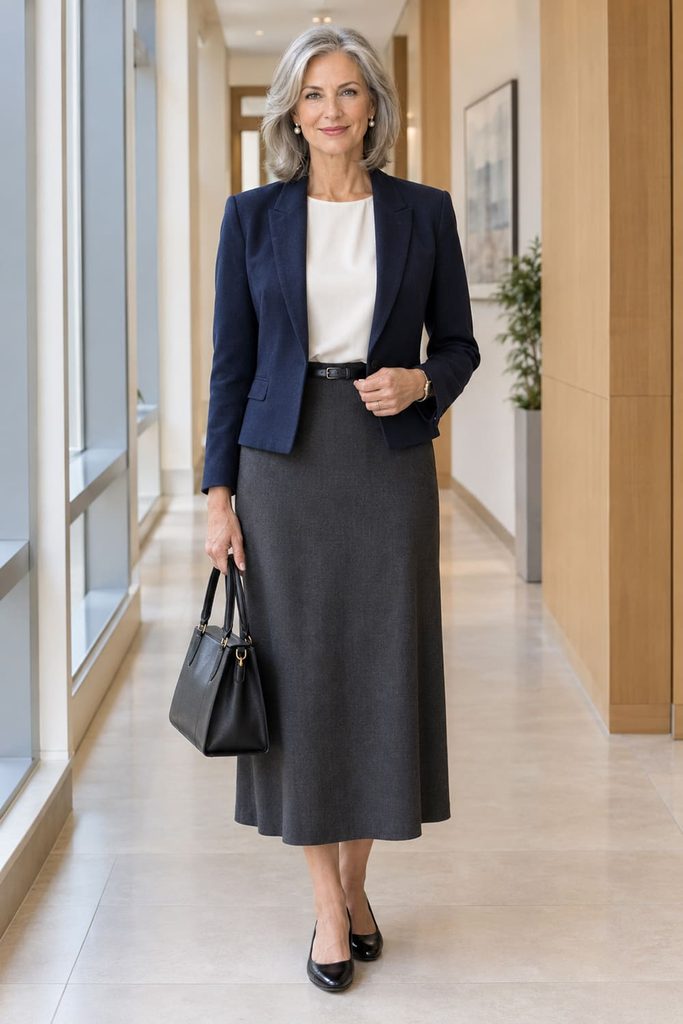
A midi skirt paired with a structured blouse offers a professional alternative to trousers while allowing comfortable movement.
Select a skirt that falls around mid-calf, with a straight or gently flowing shape, and pair it with a blouse that stays neatly tucked or has a polished hem; a short blazer, simple belt, and closed-toe shoes create balance, making the outfit suitable for education, administration, and many office-based roles.
10. Camel Blazer With Navy Trousers
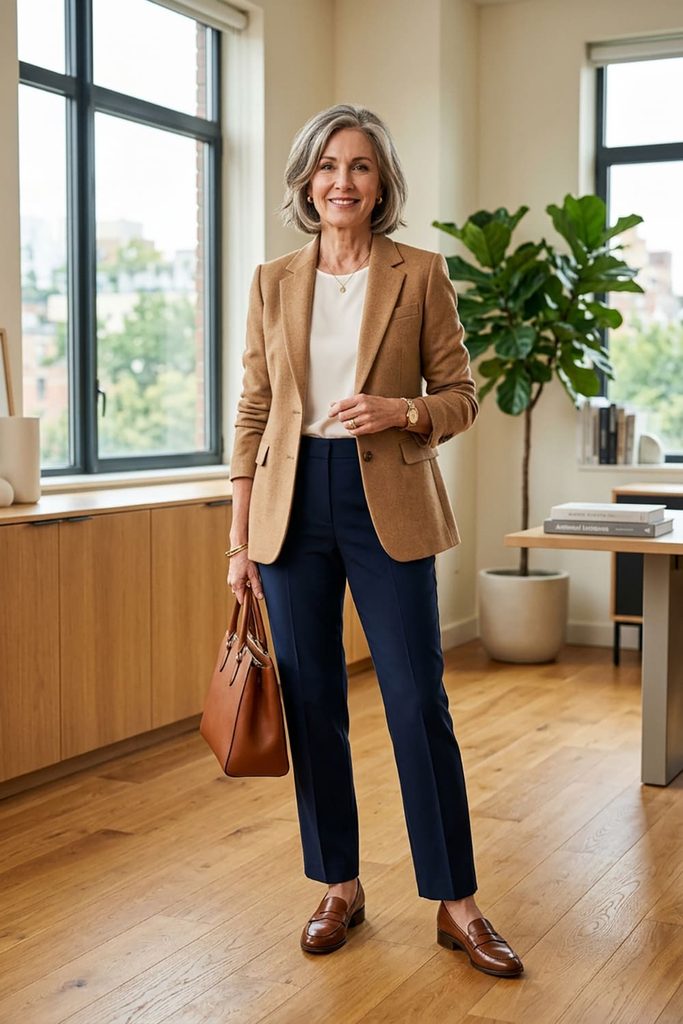
A camel blazer and navy trousers combine warm and cool neutrals for an outfit that looks polished without feeling too severe.
Wear the pieces with a white, ivory, or pale blue top, and choose trousers with a clean front and a comfortable fit through the hips; brown or navy shoes coordinate naturally, while a structured handbag and minimal jewelry make this a useful option for business casual and mid-level professional interviews.
11. Elegant Wrap-Style Dress With a Jacket

A wrap-style dress can provide a defined waist and comfortable movement, making it a useful interview choice when the fabric and neckline are appropriate for the workplace.
Choose a secure design in a solid color or a subtle pattern, check that it stays in place while sitting, and layer a tailored jacket over it for added structure; low heels or refined flats complete the outfit without compromising comfort.
12. Smart Cardigan With a Collared Blouse
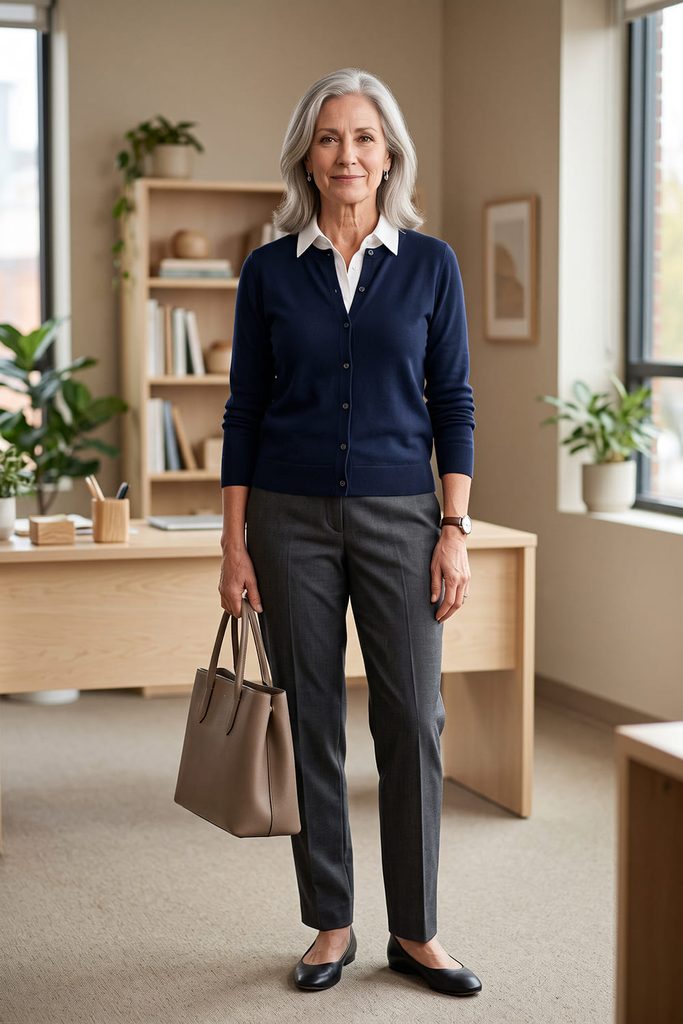
A fine-knit cardigan layered over a collared blouse can work well for interviews in relaxed offices, nonprofit organizations, schools, and smaller businesses.
Choose a cardigan with a neat shape and minimal embellishment, then pair it with tailored trousers or a modest skirt; coordinated colors, polished flats, and a structured tote help the outfit look intentional, while a blazer can replace the cardigan if the role requires more formal attire.
13. Dark Straight-Leg Jeans With a Blazer
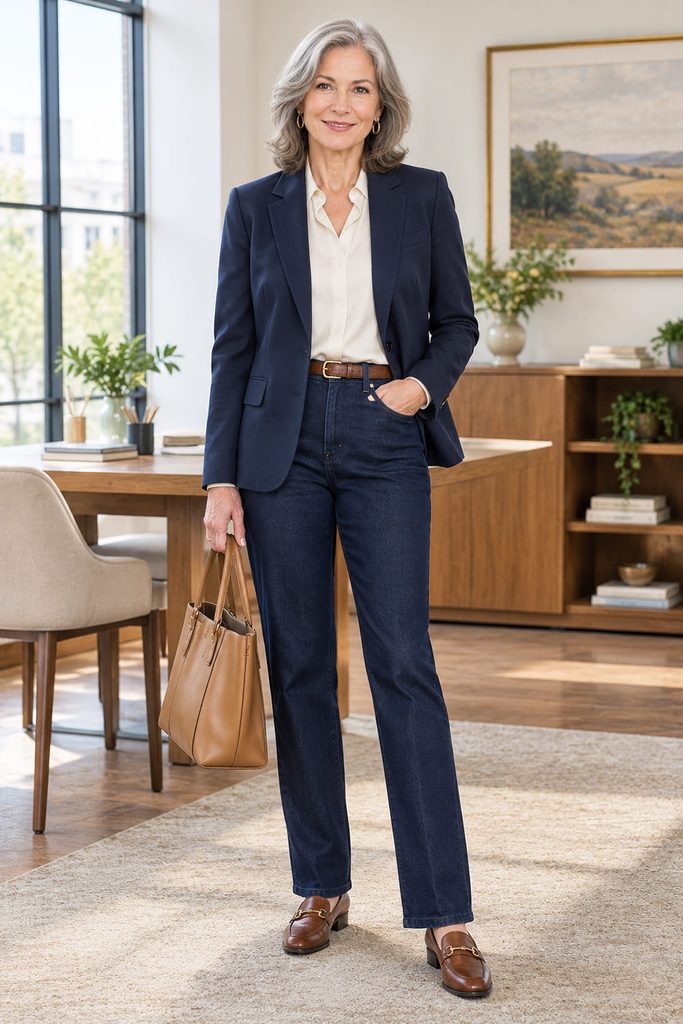
Dark straight-leg jeans can be appropriate for an interview when the employer clearly has a casual dress culture and the role does not require formal business attire.
Choose a clean, unembellished pair without fading or distressed details, then add a structured blazer, a refined blouse, and polished loafers; if you are uncertain about the dress code, tailored trousers are the safer choice because they work across a wider range of workplaces.
14. Professional Dress With Low Block Heels

A simple professional dress with low block heels offers a practical combination for women who prefer a single-piece outfit.
Choose a knee-length or midi style in navy, charcoal, muted green, or burgundy, with enough room at the shoulders and waist to sit comfortably; a light jacket, modest jewelry, and a structured handbag provide a finished appearance, while stable heels help you move confidently through the workplace and interview room.
15. Modern Blazer With a Soft Printed Blouse

A modern blazer worn over a softly printed blouse allows you to show personality while maintaining a professional foundation.
Choose a small-scale pattern with two or three coordinating colors, such as navy and cream or burgundy and gray, then pair it with solid tailored trousers; keep the remaining accessories simple so the print remains balanced, and make sure the blazer and blouse sit smoothly when you are seated.
How to Choose the Right Interview Outfit
Before selecting an outfit, research the company’s dress expectations and consider the position you are applying for. Traditional corporate employers often expect a suit or structured separates, while business casual workplaces may accept tailored trousers, a blouse, and a blazer.
Creative organizations can allow more individual expression, but neatness, good fit, and appropriate coverage remain useful guidelines. If possible, check employee photographs or the company’s careers information to understand its general workplace style.
When the dress code is unclear, choose an outfit that is slightly more formal than everyday employee clothing without looking uncomfortable or out of place. You can always adjust the formality through your shoes, jacket, and accessories.
Fit matters more than buying expensive labels. Shoulders should sit properly, trouser hems should not drag on the floor, and jackets should allow you to reach forward without pulling tightly across the back. Try the complete outfit before interview day and sit, stand, walk, and reach for a bag to check that everything stays comfortable and in place.
Best Colors for Women Over 50 at a Job Interview
Navy, charcoal, black, cream, and taupe are versatile foundations because they coordinate easily and suit many professional settings. Navy often feels softer than black while remaining formal, and charcoal provides a polished alternative for suits and trousers. Cream and ivory can brighten an outfit when used for blouses, while beige and camel add warmth without introducing a strong color contrast.
You can also introduce color through a blouse, scarf, or modest accessory. Deep teal, burgundy, forest green, plum, and muted blue offer interest while remaining easy to pair with neutral tailoring. Choose colors that make you feel comfortable rather than following rules that suggest a particular age requires specific shades.
Consider the interview setting as well. A video call may benefit from a solid color that contrasts gently with your background, while very small patterns can appear distracting on camera. For an in-person interview, check how the outfit looks under indoor lighting and make sure your shoes and bag complement the overall palette.
Choosing Shoes and Accessories
Shoes should be polished, comfortable, and appropriate for the employer’s dress code. Low block heels, loafers, refined flats, and simple closed-toe shoes are practical choices for many interviews. If you choose heels, wear a height that allows you to walk naturally, especially if you need to travel, use stairs, or move between buildings.
Accessories work best when they support the outfit rather than compete with it. Small earrings, a simple necklace, a classic watch, and a structured handbag can provide a finished appearance. Avoid carrying a bag that is so large or overfilled that it becomes awkward to handle, and bring only the documents and personal items you need.
Pay attention to practical details before leaving home. Check that clothing is clean, pressed, and free of loose threads, and ensure that buttons and zippers work properly. Keep perfume subtle, if you use it, because strong fragrances can be uncomfortable for some people in enclosed interview rooms.
Dressing for Different Types of Interviews
For a corporate, banking, finance, or executive interview, a matching pantsuit, structured blazer, or tailored dress is generally a safe starting point. Pair it with a simple blouse and polished shoes, and keep accessories understated. The goal is to create a professional appearance that lets the interview focus on your experience, skills, and answers.
For education, healthcare administration, nonprofit work, or general office roles, tailored trousers with a blouse and cardigan or blazer can offer the right balance. Select comfortable fabrics and shoes because these positions may involve moving around a workplace or attending several meetings during the day.
For creative and casual workplaces, you may have more freedom to wear a printed blouse, a textured blazer, or dark jeans if the company’s dress culture supports them. Avoid assuming that every modern company has the same expectations. When in doubt, ask the recruiter or hiring contact about the recommended interview dress code.
For a video interview, choose a complete outfit rather than dressing only for the visible portion of the screen. A coordinated lower half can help you feel prepared if you need to stand, and comfortable clothing can improve your confidence throughout the conversation. Position your camera at eye level, check the lighting, and make sure the background is uncluttered.
Common Interview Outfit Mistakes to Avoid
One common mistake is wearing clothing that looks attractive while standing but becomes uncomfortable when sitting. Tight waistbands, restrictive jackets, skirts that shift when seated, and blouses that gape can distract you during an interview. Test your outfit in advance so you can focus on answering questions rather than adjusting your clothing.
Another mistake is choosing shoes for appearance alone. Uncomfortable footwear can affect your posture and confidence before the interview even begins. Select shoes that are clean, in good condition, and suitable for the amount of walking required. If you have new shoes, wear them briefly before interview day to make sure they fit properly.
Avoid over-accessorizing or introducing too many competing colors and patterns. A statement necklace, printed blouse, bright handbag, and patterned shoes can make an otherwise professional outfit feel busy. Choose one element for personality and keep the rest of the outfit simple.
Finally, do not assume that women over 50 must dress conservatively in every workplace. Your outfit should reflect the role, your comfort, and your personal style. Modern tailoring, refined color combinations, and well-chosen accessories can look professional at any age.
Conclusion
The best work outfits for women over 50 preparing for a job interview combine comfortable fit, appropriate formality, and personal confidence. A navy blazer with tailored trousers, a neutral pantsuit, a professional dress, or a blouse with ankle pants can all work well when they suit the workplace and allow you to move naturally.
Plan your outfit around the role, check the fit before interview day, and choose shoes and accessories that feel comfortable and polished. You do not need to follow every trend or purchase an entirely new wardrobe. A few versatile pieces, coordinated thoughtfully, can help you arrive prepared and focus on what matters most: demonstrating your experience, abilities, and suitability for the position.


