

15 Thanksgiving Place Setting Ideas for a Long Farmhouse Table
A long farmhouse table seats everyone, and that is the trouble. Twelve settings down two sides can drift out of line by the third plate, and the far end ends up set tighter than the near end.
These thanksgiving place setting ideas for a long farmhouse table treat the long table as a row of single settings. Each guest gets the same charger, the same stack, and the same space, from the first seat to the last.
Nobody gets the wide end of the table, and nobody gets the squeeze.
The method is plain. Set one place with care, measure it, then copy it down the row. A repeated setting looks calm in photos and feels fair to every guest who sits down at the table.
Work from the ends toward the middle, and keep serving dishes off the settings. The center of the table can stay low and plain, because the settings themselves carry the whole look of the meal.
1. Wooden Chargers to Anchor Every Place Down the Row
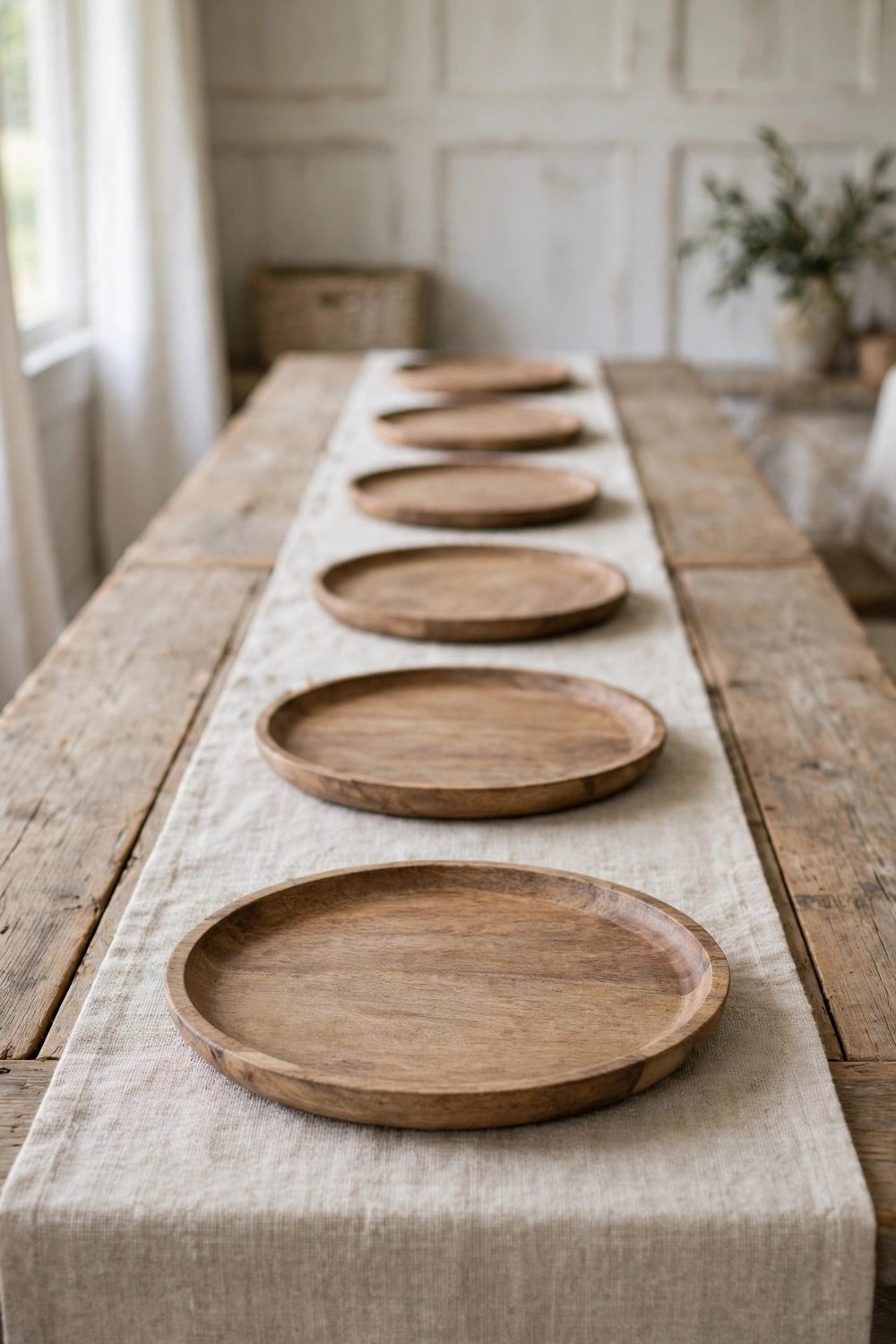
A charger gives every setting on a long table the same starting point. Set one wooden charger at each seat before any plate goes down, and the whole row builds itself in a straight, even line.
Match the charger tone to the table, or go one shade darker for a quiet contrast. Down a long row, matching wood reads as one calm band, and the small gaps between settings stop looking like mistakes.
Leave the chargers in place for the whole meal. They catch crumbs and heat under the dinner plates, and the row stays framed even after the salad plates have been cleared away to the kitchen.
2. Placemats at Each Seat to Draw the Setting Line
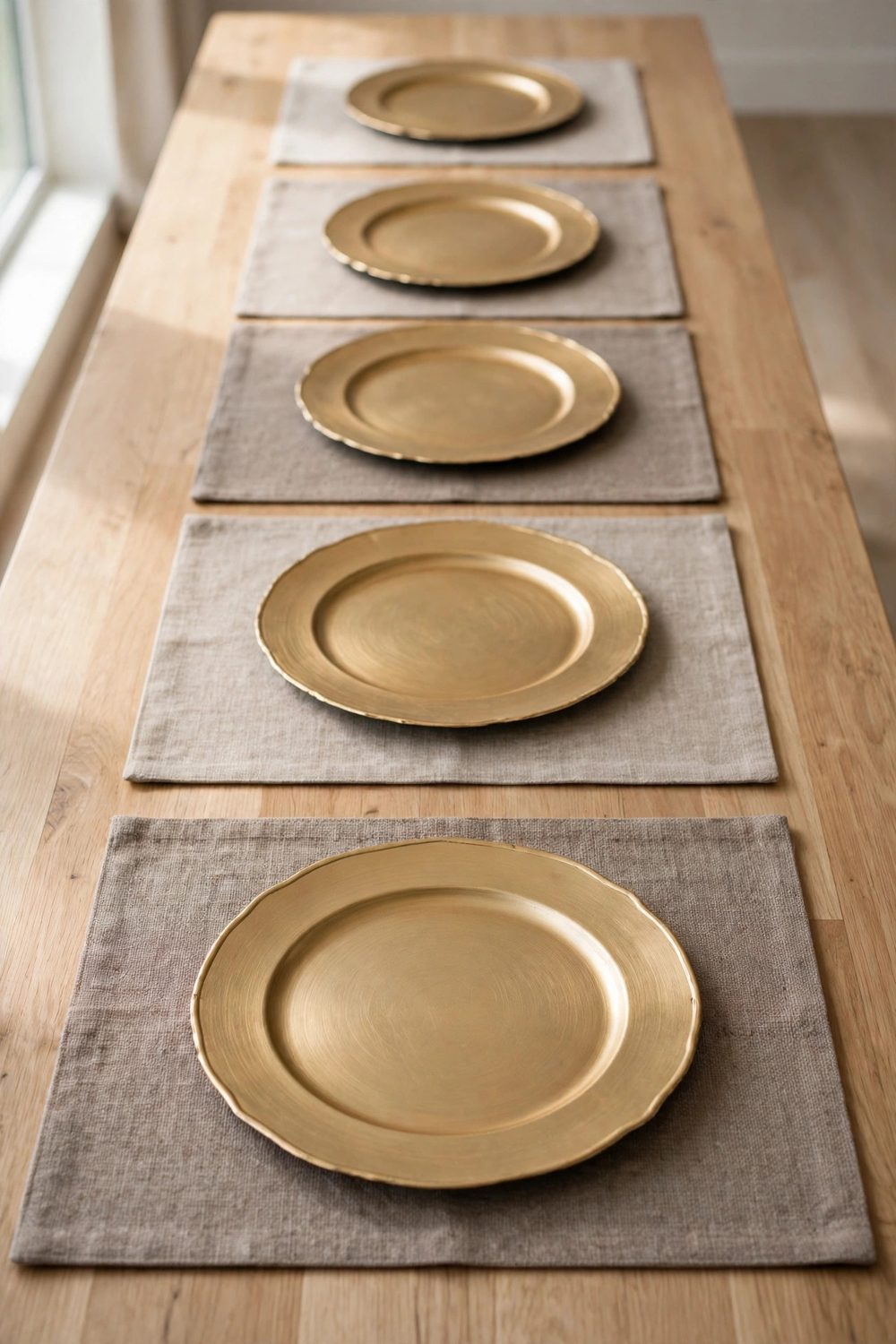
On a bare farmhouse table, a placemat at each seat draws the line that chargers alone cannot. The mat marks where one guest ends and the next one begins, all the way down both sides.
Choose flat woven or faux linen mats in a plain taupe or natural tone. A flat mat stays put when plates land on it, and the plain color lets the plates and napkins carry the pattern.
Line the mats up by their top edges instead of judging by eye from one end. Sight down the table from the head seat, and nudge any mat that steps out of the row.
3. Linen Napkins Folded Flat on Every Plate
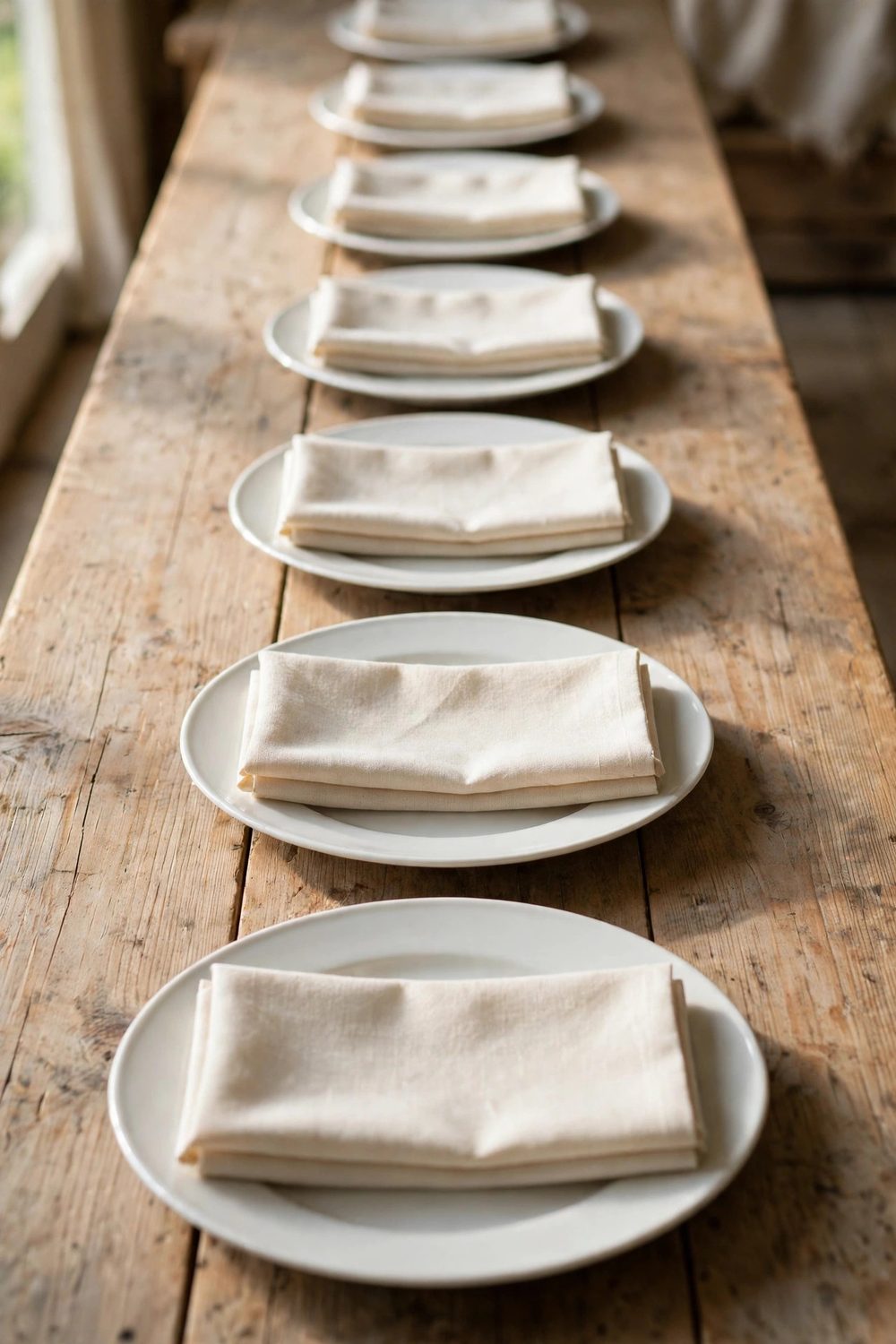
A flat fold suits a long table. Fold each linen napkin into a plain rectangle and lay it centered on the dinner plate, folded the same way at every seat from one end to the other.
Flat folds stack fast and set fast. You can fold twelve napkins in a few minutes, and the row of pale rectangles down the table looks neat and calm before a single dish arrives.
Press each fold once with your hand as you lay it down. Linen that sits flat reads as care, while a puffy fold makes the row look restless in the low light of the room.
For folds with more shape, these napkin folding ideas for a formal family dinner table include standing folds that still sit well in a long row.
4. One Napkin Ring Style Repeated at Every Seat
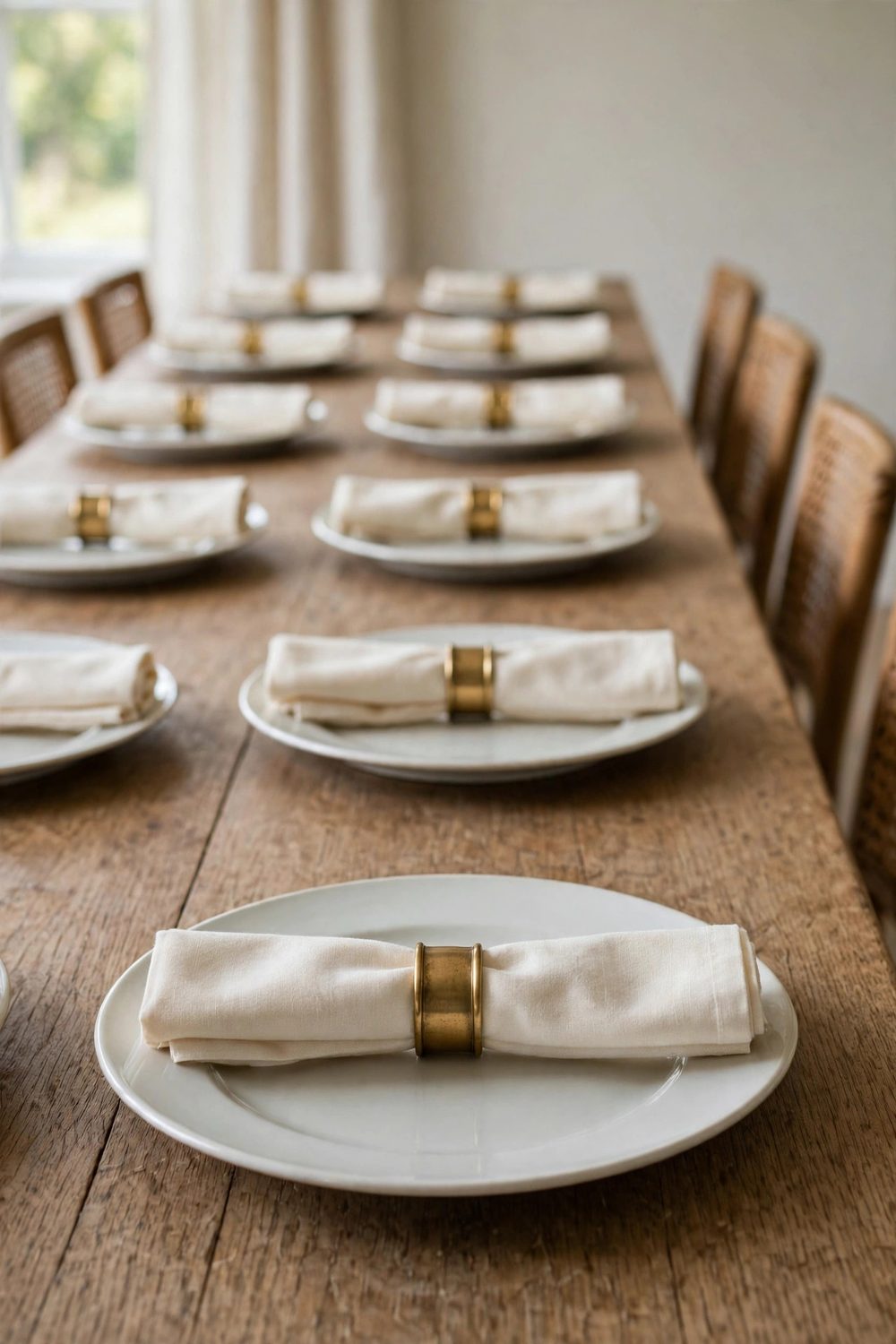
If flat folds feel too plain, slide each folded napkin through a ring instead. One ring style, repeated twelve times down the table, gives the row a steady beat of metal or warm wood.
Gold or brass rings warm up a wood table, and plain wooden rings keep the setting quiet. Either way, the same ring at every seat matters far more than the material you happen to pick.
Set the ringed napkin on the plate, not beside it. On the plate it stays clean while the kitchen is still busy, and each guest lifts it up as they settle into their seat.
5. Amber Goblets at the Top Right of Each Plate
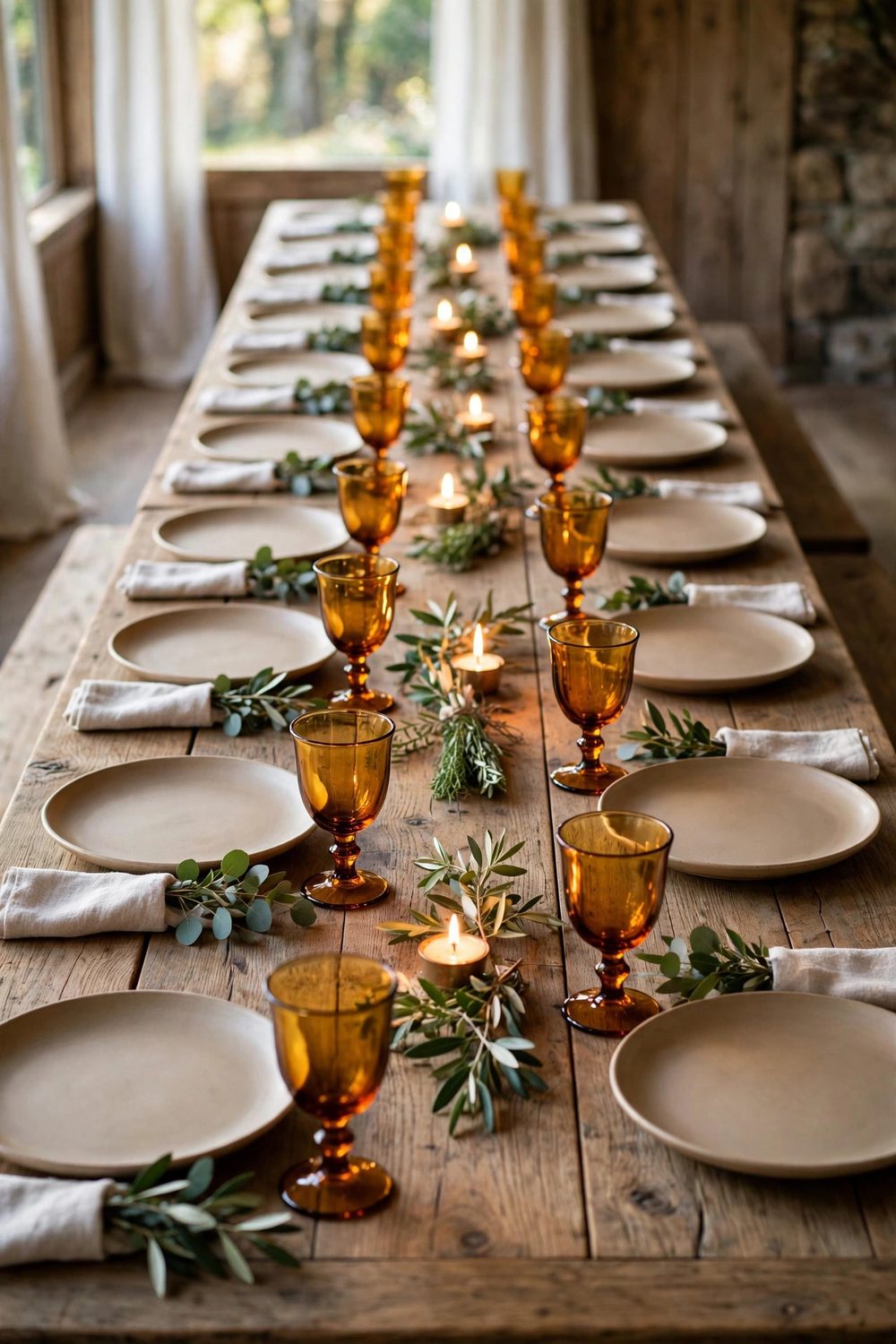
Amber glass suits a farmhouse table in November. Set one amber goblet at the top right of every plate, above the knife, in the exact same spot at every seat down both sides of the table.
The color does quiet work along the row. A line of amber glass catches the candlelight and ties the two sides of the table together, without any extra decor sitting between the guests.
Keep the goblet as the only stemmed glass at each place. A second stem crowds a long setting, and water can ride in a plain tumbler set just beside the goblet instead.
6. Flatware in the Same Order at Every Setting
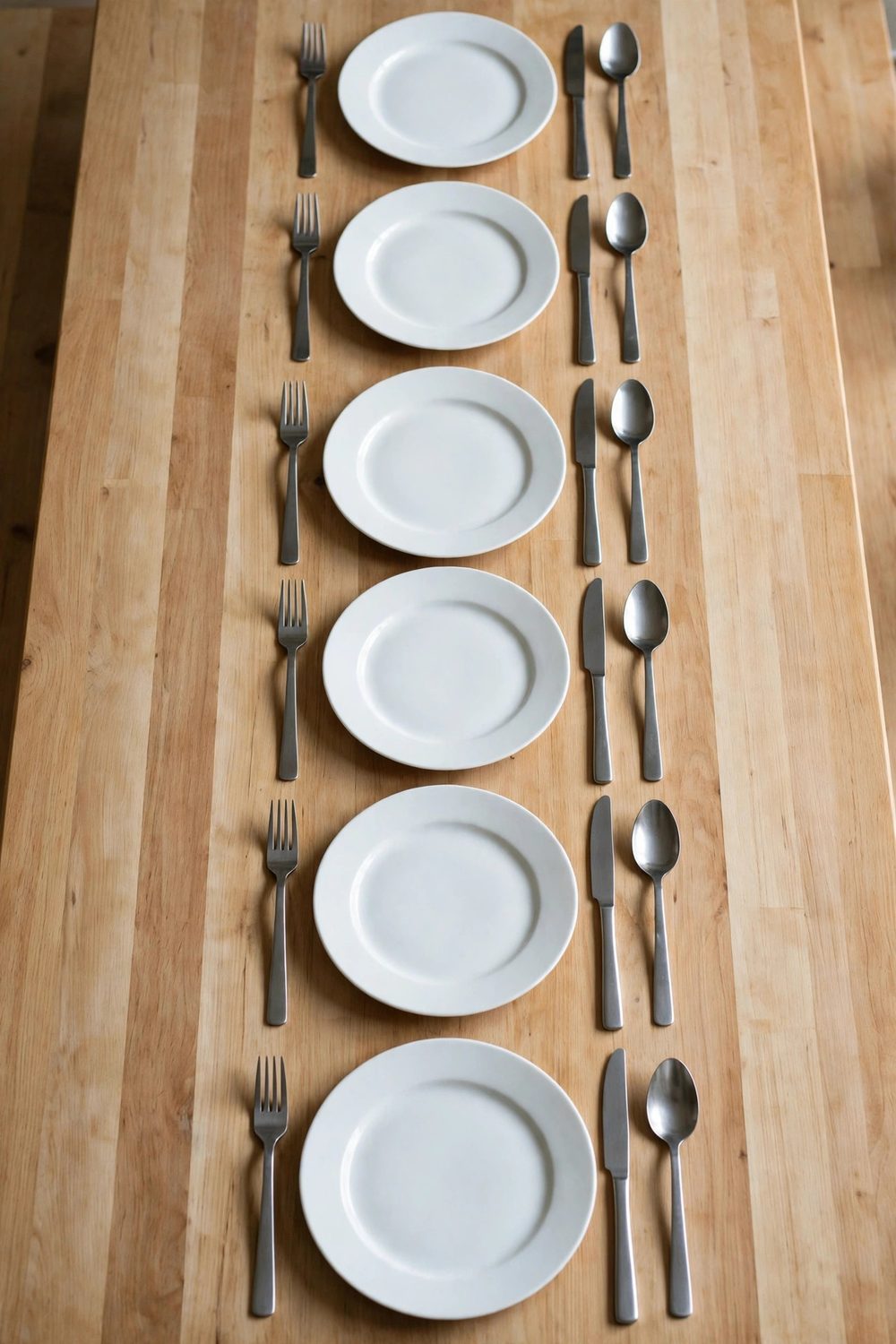
Guests read a setting by its flatware. Fork on the left, knife and spoon on the right, blade facing the plate, in the same order at every seat from the first chair to the last.
Line the handles up even with the edge of the plate. Even handles are the small detail that makes a long row look set on purpose instead of set in a hurry before guests arrive.
Set the flatware in one pass down each side, after the plates are down. One pass keeps the order honest, and you can spot a stray fork or a missing spoon at a glance.
7. Place Cards Tied With Twine at the Head of Each Plate
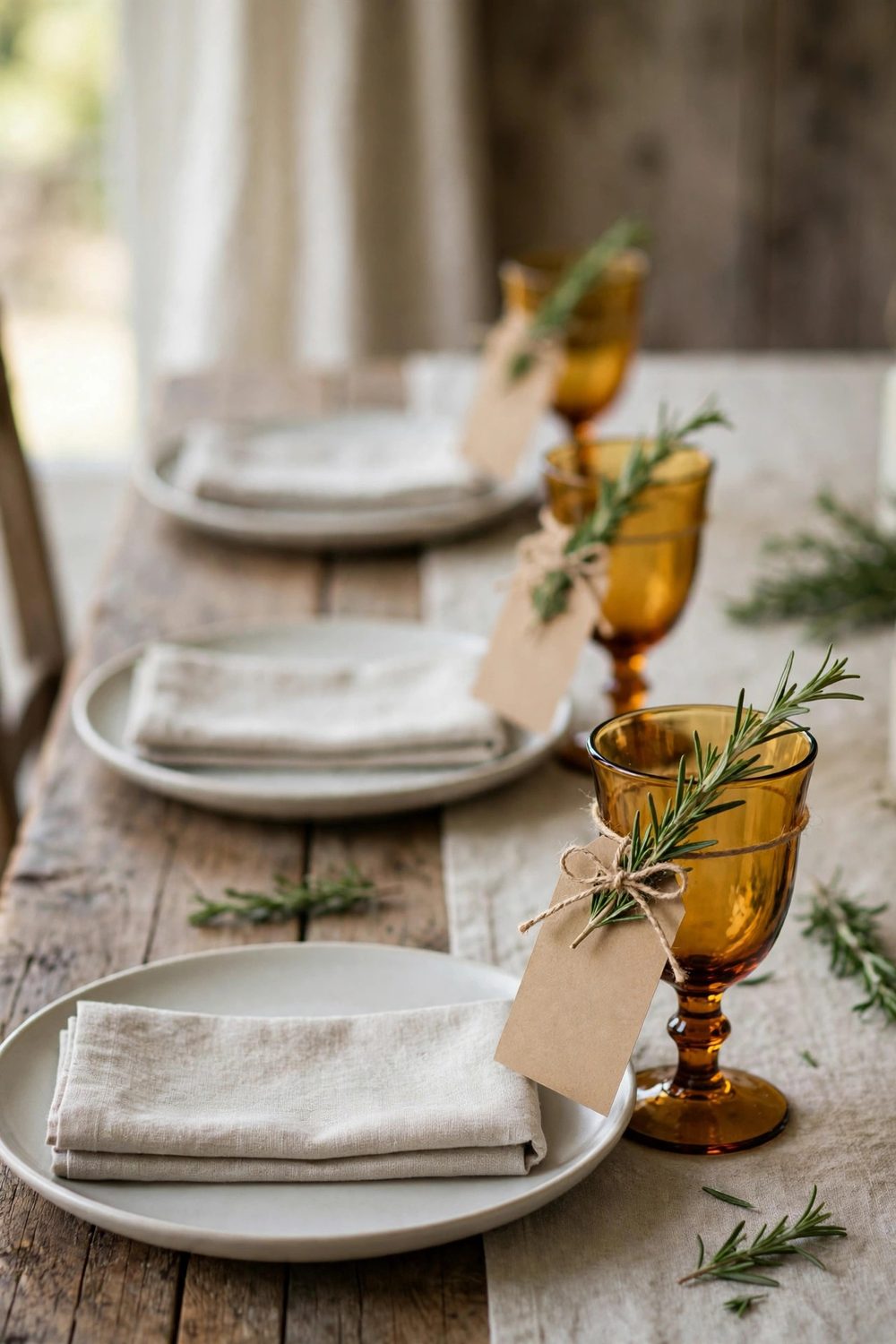
A long table needs place cards more than a small one does. Guests facing twelve seats hunt for a name, and a card waiting at each plate ends the hunt right at the dining room door.
Write each name on a plain kraft card and tie it to a short sprig of rosemary or a stem of wheat with twine. The tie suits the farmhouse table and takes only seconds each.
Lean the card against the goblet or lay it across the top of the plate. Print the names in clear, plain letters that stay easy to read in a dim room late in the day.
8. A Mini Pumpkin Resting on Every Napkin
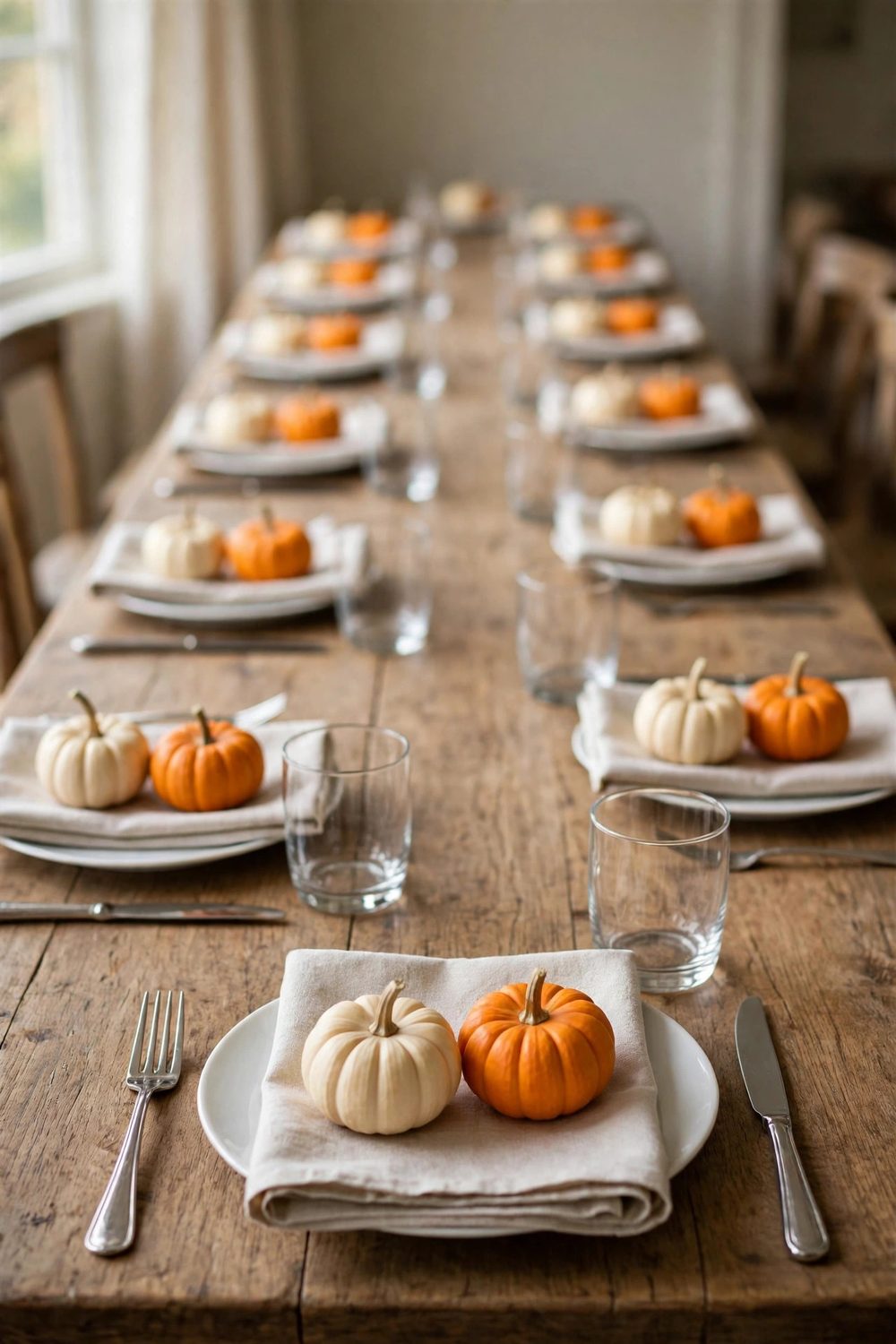
One mini pumpkin per guest is the easiest fall detail on a long table. Set a small cream or orange pumpkin on each napkin, stem up, at every place down both sides of the table.
The pumpkins repeat down the row and mark each seat from across the room. Guests can take theirs home at the end of the night, which clears the table a little with every goodbye.
Pick pumpkins with flat bottoms and short stems. A pumpkin that rocks on a napkin will roll by the second course, so test each one with a small nudge before you call it done.
9. Rosemary Sprigs Laid Across Each Plate
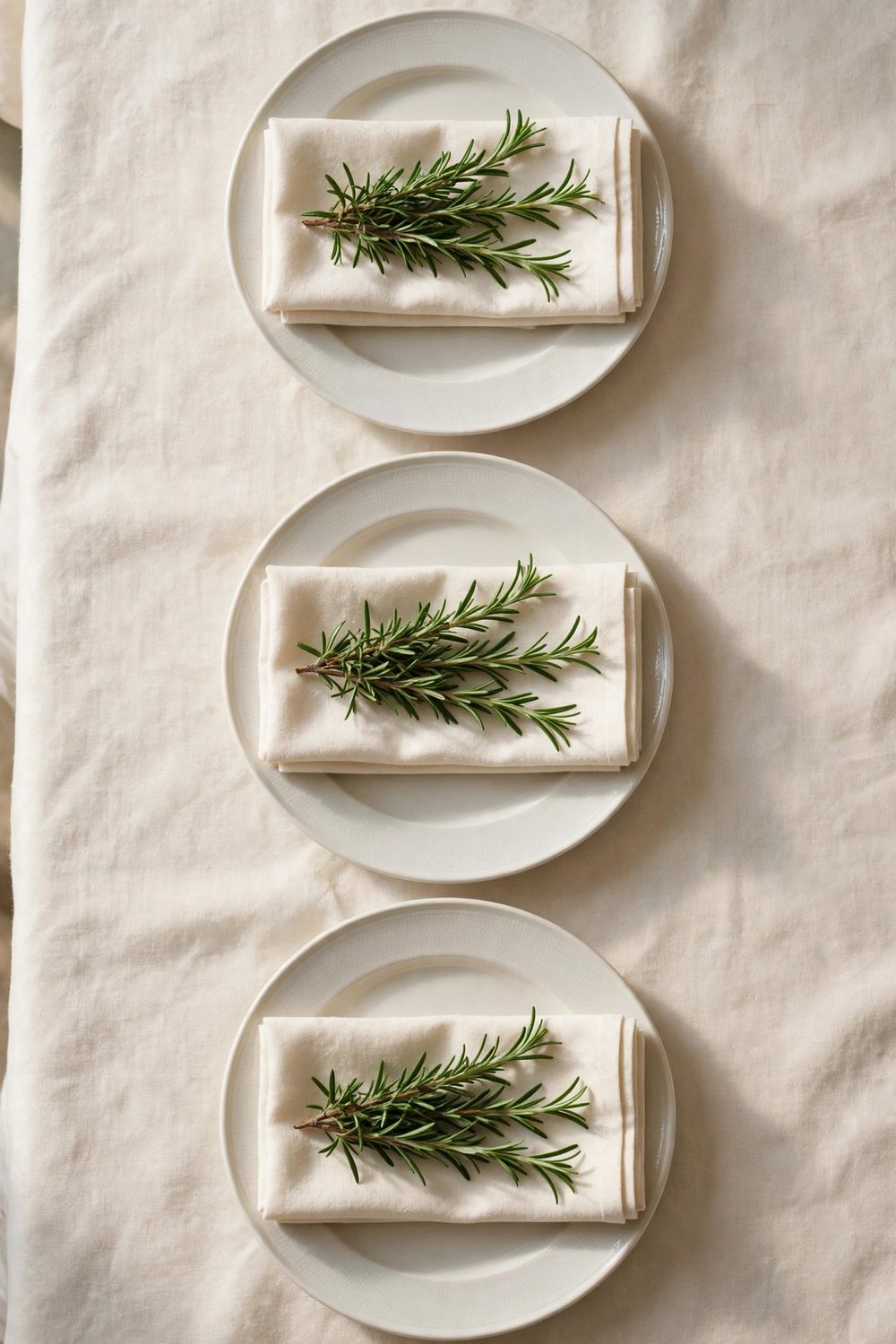
A sprig of rosemary across each plate adds green to a table that runs heavy on brown and cream. Cut the sprigs to one length so every place matches its neighbors down the long row.
Lay the sprig across the napkin or along the top rim of the plate. The scent lifts when guests sit down, then fades into the meal without fighting the food in front of them.
Cut the sprigs the morning of the dinner and keep them in a damp cloth. Fresh rosemary stays bright through the meal, while sprigs cut days ahead dry out and shed onto the plates.
The same green and cream palette runs through these table setting ideas in warm neutral autumn tones, which pair well with a plain wood table.
10. Bread Plates Above the Forks at Every Place
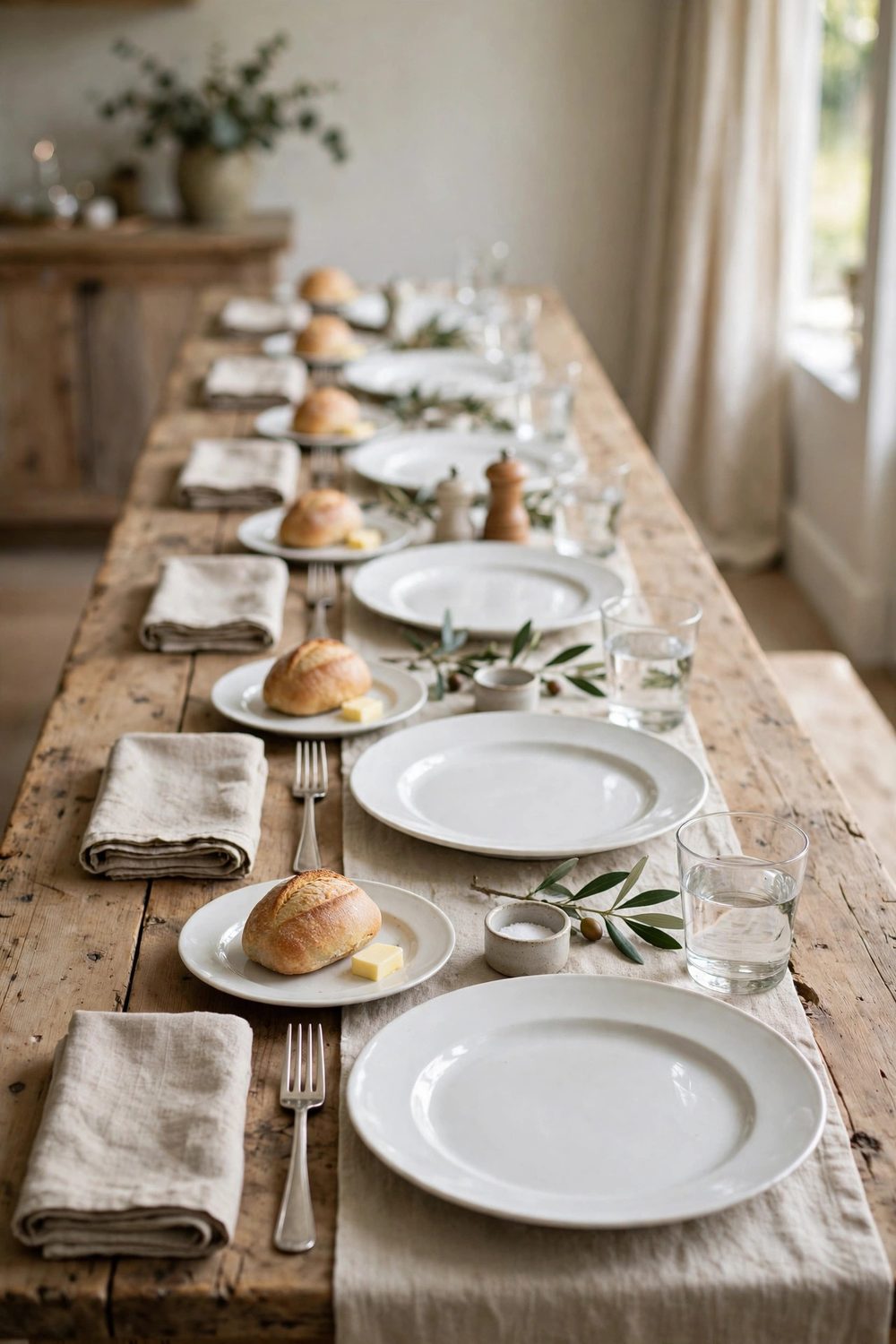
A bread plate at each setting keeps rolls off the tablecloth and off the dinner plate. Set it above the forks, at the top left of the dinner plate, in the same spot at every seat.
On a long table, bread plates end the basket math. Each guest has a spot for a roll, so the basket can travel down the table without anyone guarding a roll on a napkin.
Use the smallest plates you own for the bread. A small plate leaves room for the goblet on the other side, and the setting stays balanced at both of its top corners.
11. A Stoneware Mug at Each Seat for After-Dinner Cider
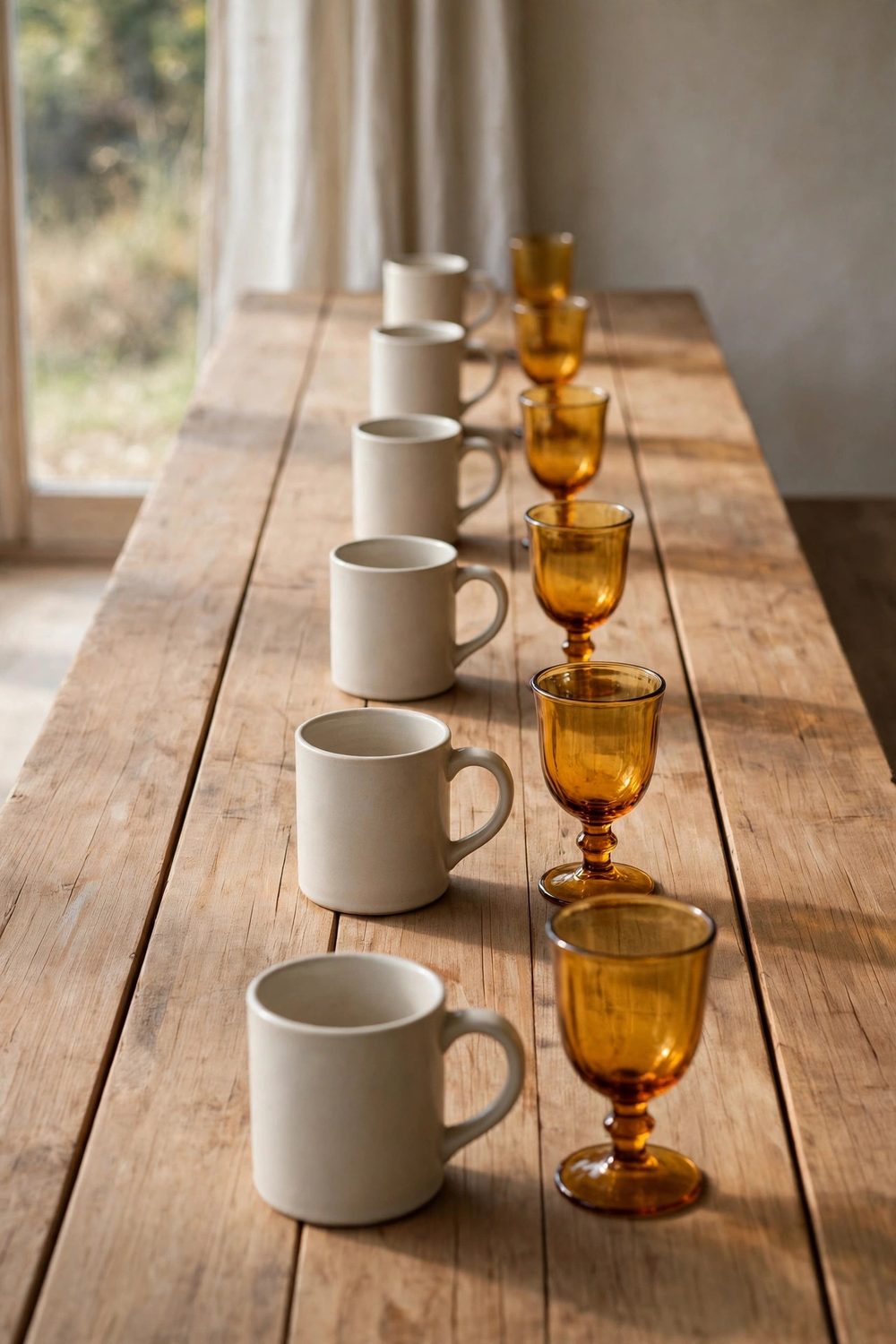
Thanksgiving dinner ends with something hot. A plain stoneware mug at each setting, set above the goblet or just beside it, means no cup hunt when the cider or coffee comes out.
Mugs suit a farmhouse table better than fine cups do. They are sturdy, easy to hold with cold hands, and they match the weight of the wood, linen, and stoneware already on the table.
Set the mugs empty, with the handles turned the same way at every seat. A row of handles pointing one way is a small detail that guests feel more than they ever see.
12. Salad Plates Stacked on the Dinner Plates
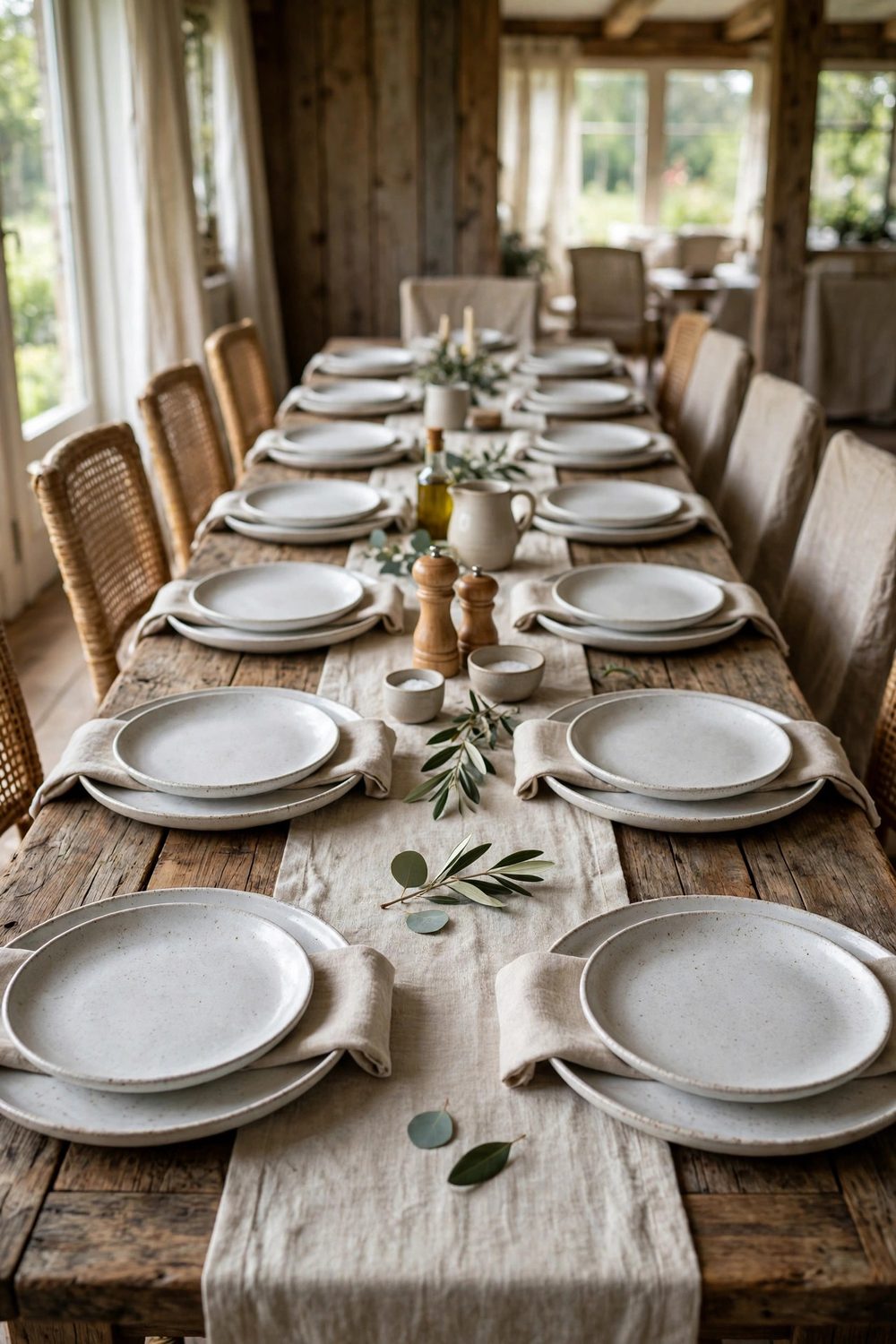
Stack the salad plate on top of the dinner plate at every seat. The stack gives each setting a little height and keeps the salad course in the setting instead of waiting in the kitchen.
A stacked setting also sets faster. Plates travel to the table in pairs, and the whole row rises in one pass down each side, which matters when twelve seats need setting before noon.
Keep the napkin under the salad plate or on top of it, the same at every seat. Mixed napkin spots down a long row read as settings done by two different hosts.
13. Even Spacing Measured Along Both Sides
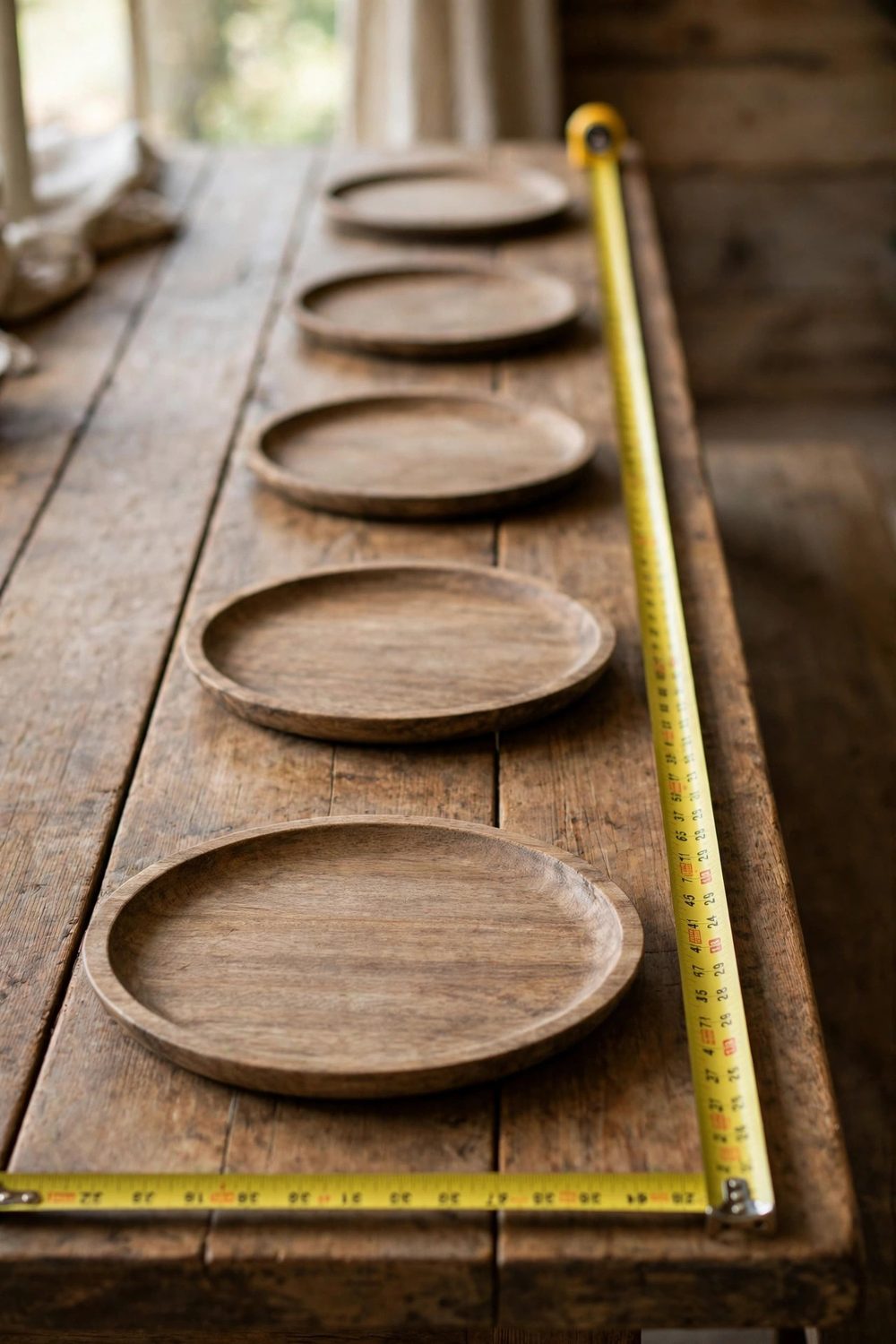
Long tables drift because nobody measures. Give each guest about two feet of table edge, and mark the seats with the chargers first, before you set a single plate or glass on the table.
Even spacing matters more than fancy pieces. A guest with fair room eats in comfort, and the guest at the tight end remembers the squeeze long after the pie has been cleared away.
Count the seats on each side before you start, and set the two sides to match. A table set six and five looks lopsided in every photo taken from the end of the room.
The same measure-first habit drives these place setting ideas for a dining room with bench seating, where the row cannot move once guests slide in.
14. The Same Setting at Both Ends of the Table
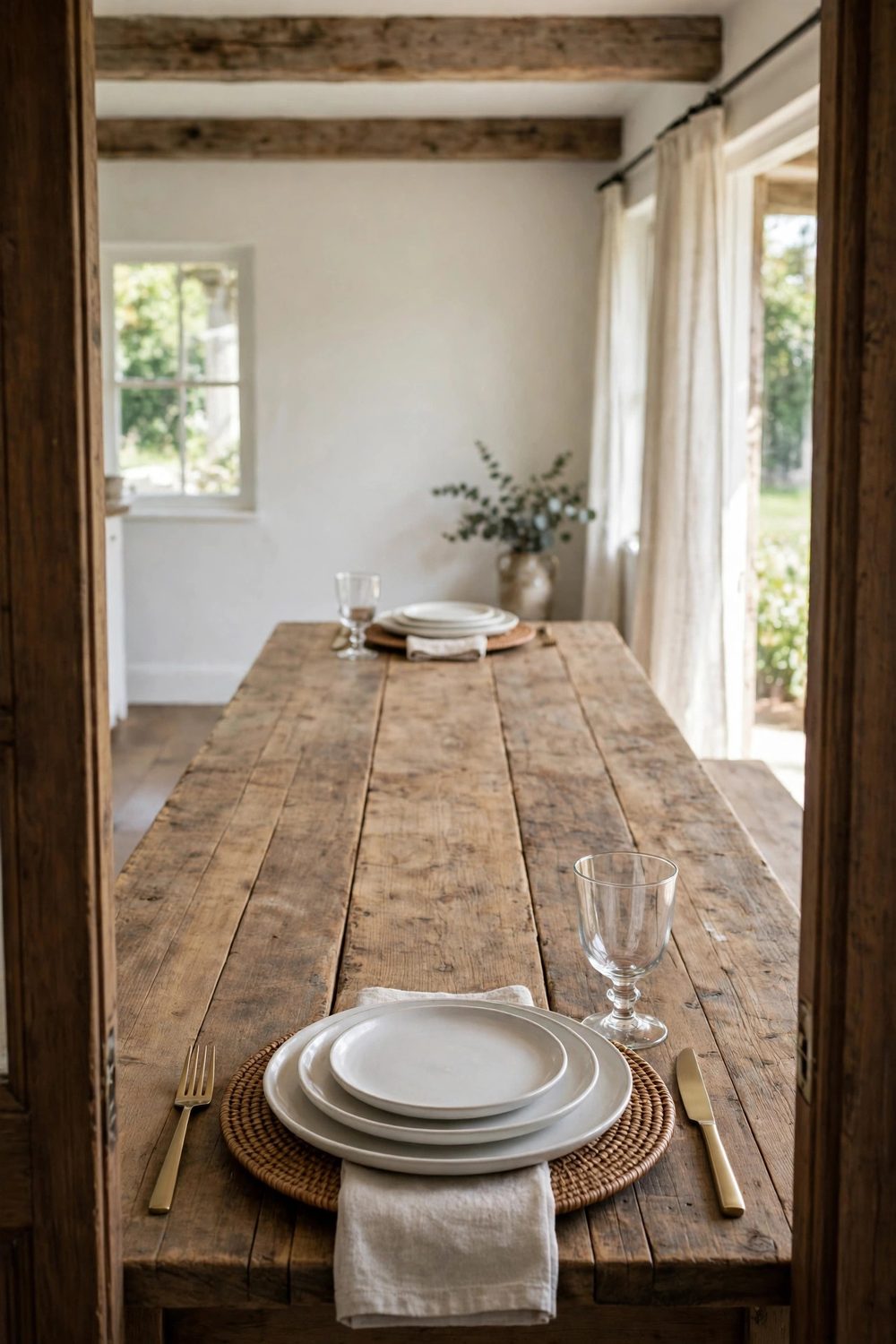
The two end seats frame a long table. Set them exactly like the side seats, same charger, same stack, same goblet, so the whole table reads even when you stand in the doorway.
End guests often get the leftovers of the setting box. Count your pieces before you start, and hold back two full settings so the ends never end up with the odd plate out.
Seat the hosts at the ends if you can. The end seat reaches the kitchen and the sideboard with the fewest steps, and the settings there get the most use during the meal.
A round table gives every guest the same seat by shape. These place setting ideas for a round dining table chase the same fairness in a circle.
15. Serving Pieces Kept Off the Settings
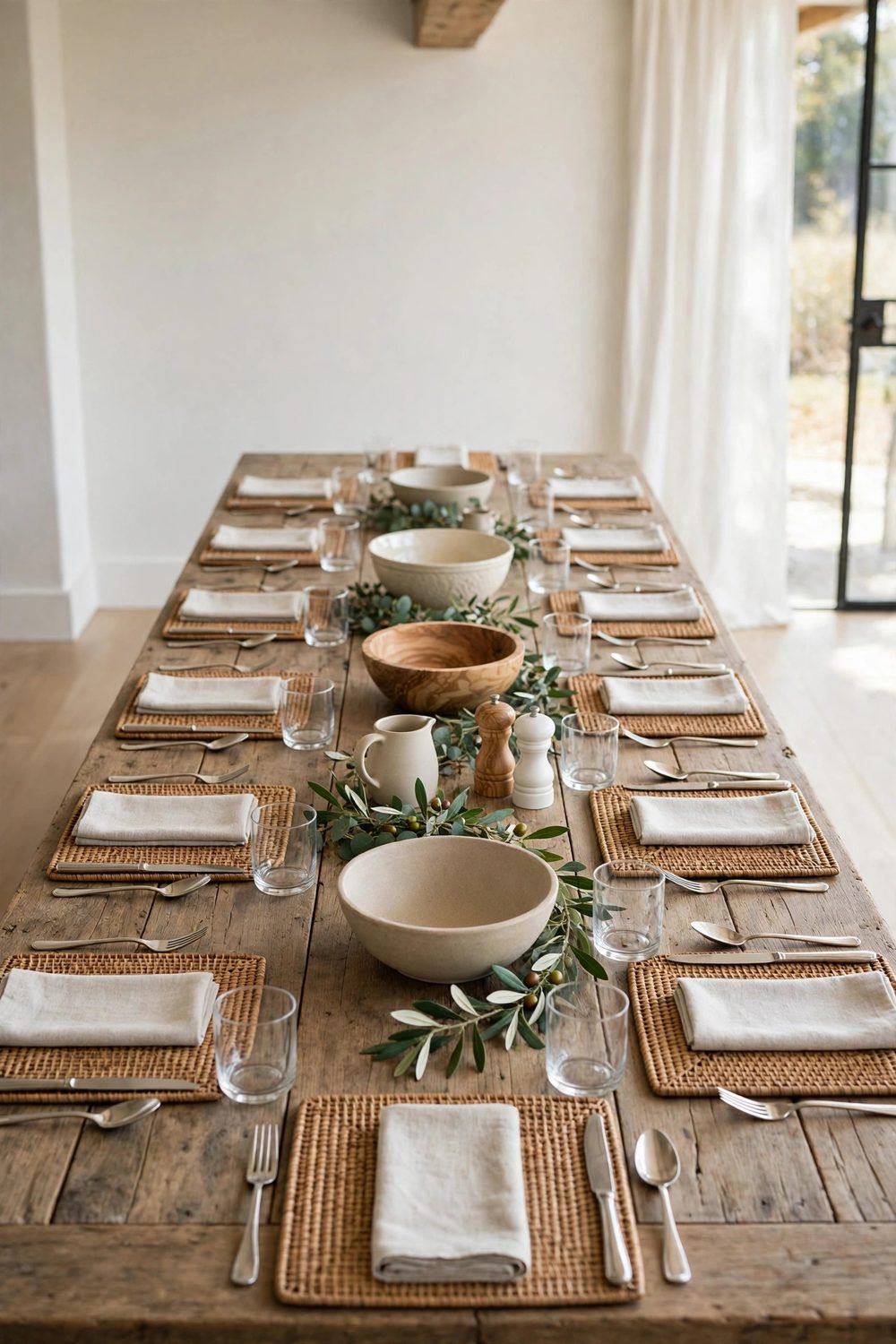
A long table tempts you to park serving bowls inside the settings. Keep every setting clear for the guest, and give the serving pieces their own planned spots in the middle or off the table.
Each place then stays the same width from one end to the other. Bowls land in the gaps you planned for them, not in the space a guest needs for elbows and plates.
Set the settings first and the serving pieces last. Once a bowl sits down inside a setting line, the whole row shifts around it, and the drift you worked to avoid creeps back in.
For where the serving pieces should live instead, see these sideboard decor ideas for a long farmhouse table, which style the long table like a sideboard.
A long farmhouse table looks its best one setting at a time. Build one place with care, copy it down the row, and these thanksgiving place setting ideas for a long farmhouse table will hold from the first seat to the last.
Measure the spacing, keep the stack the same at every seat, and let the row do the decorating. A set table the night before makes the whole cooking day feel calmer.
Save this guide to your Thanksgiving Decor Ideas board on Pinterest, and pull it up next year when the long table comes out and the whole family is on the way.


