

15 Welcoming Guest Bedroom Ideas: Hotel Touches at Home
Think of the last hotel room that treated you well. Nothing in it was grand. The bed was crisp, the water was poured, the light sat where your hand expected it.
That is the whole secret behind welcoming guest bedroom ideas: a system of small, placed things that answer needs before a guest has to ask out loud.
This list runs the system room by room, from the bed out to the door. It stays on the whole room on purpose, because a hotel feeling never comes from one feature alone.
Work through it once and write down what your room is missing. Most hosts find the gaps are small, cheap, and fixed in a single afternoon of placing things well.
Nothing here copies a hotel’s look, with its matching furniture and framed prints of the local skyline. You are copying its habits instead, and habits travel well into a real spare room with real furniture.
This post contains affiliate links. If you buy through them, we may earn a small commission at no extra cost to you. See our Affiliate Disclosure.
1. Start With a Crisp White Bed as the Base
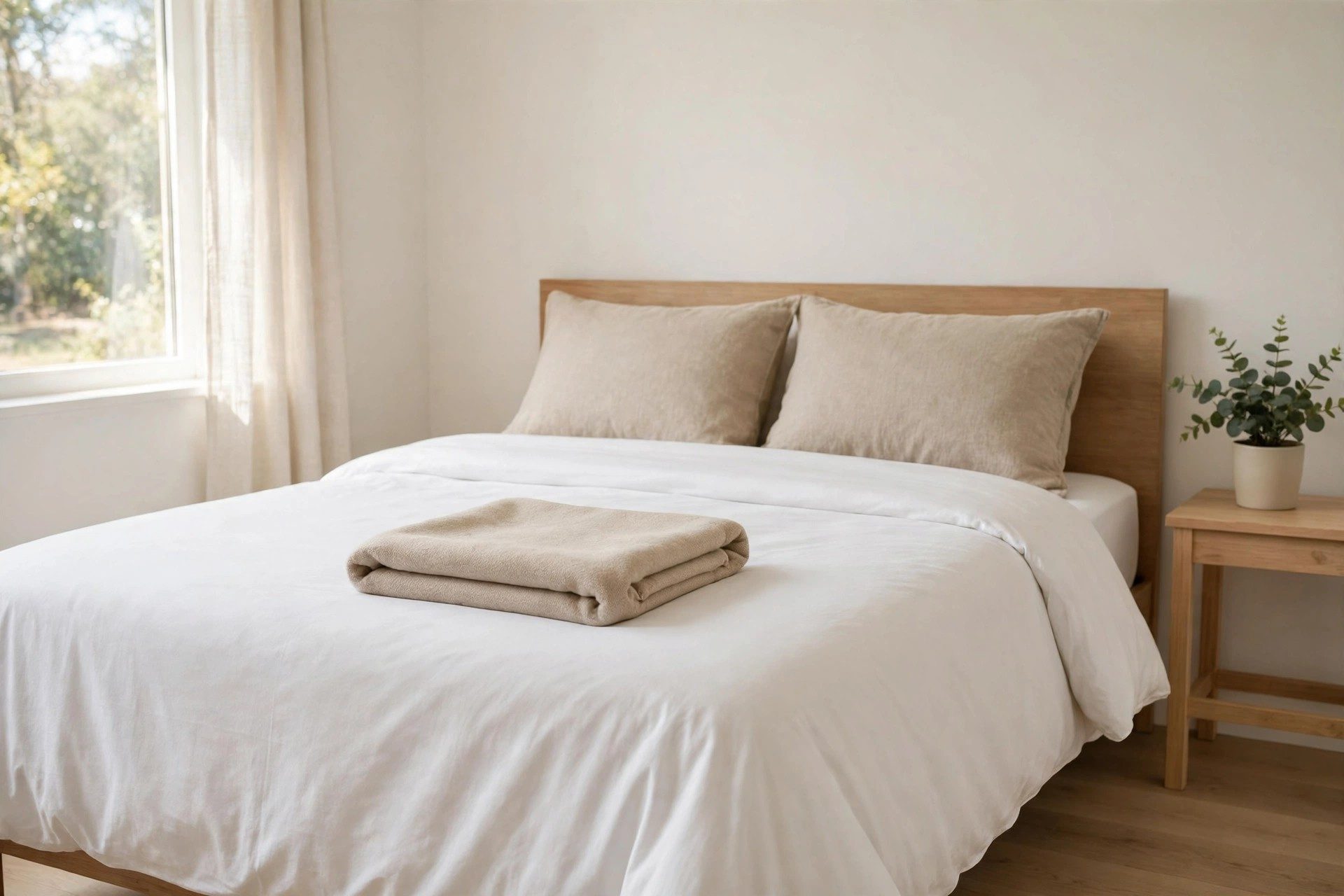
Hotels build the bed on white for a plain reason: white reads clean at a glance, and a guest trusts a bed they can read. Start your guest bed the same way.
White sheets and a white duvet cover also wash together without sorting, which keeps the reset between guests simple. Simple resets are the ones that actually happen every time.
Add color in the two pieces that sit on top: a folded throw and two cushions. If beige suits your room, these beige guest bedroom ideas show restful ways to warm the white up.
Keep spare white pillowcases in the room. A fresh case on the second night is a tiny hotel habit that guests register as care, even when they say nothing.
2. Layer the Bed So Guests Set Their Own Warmth
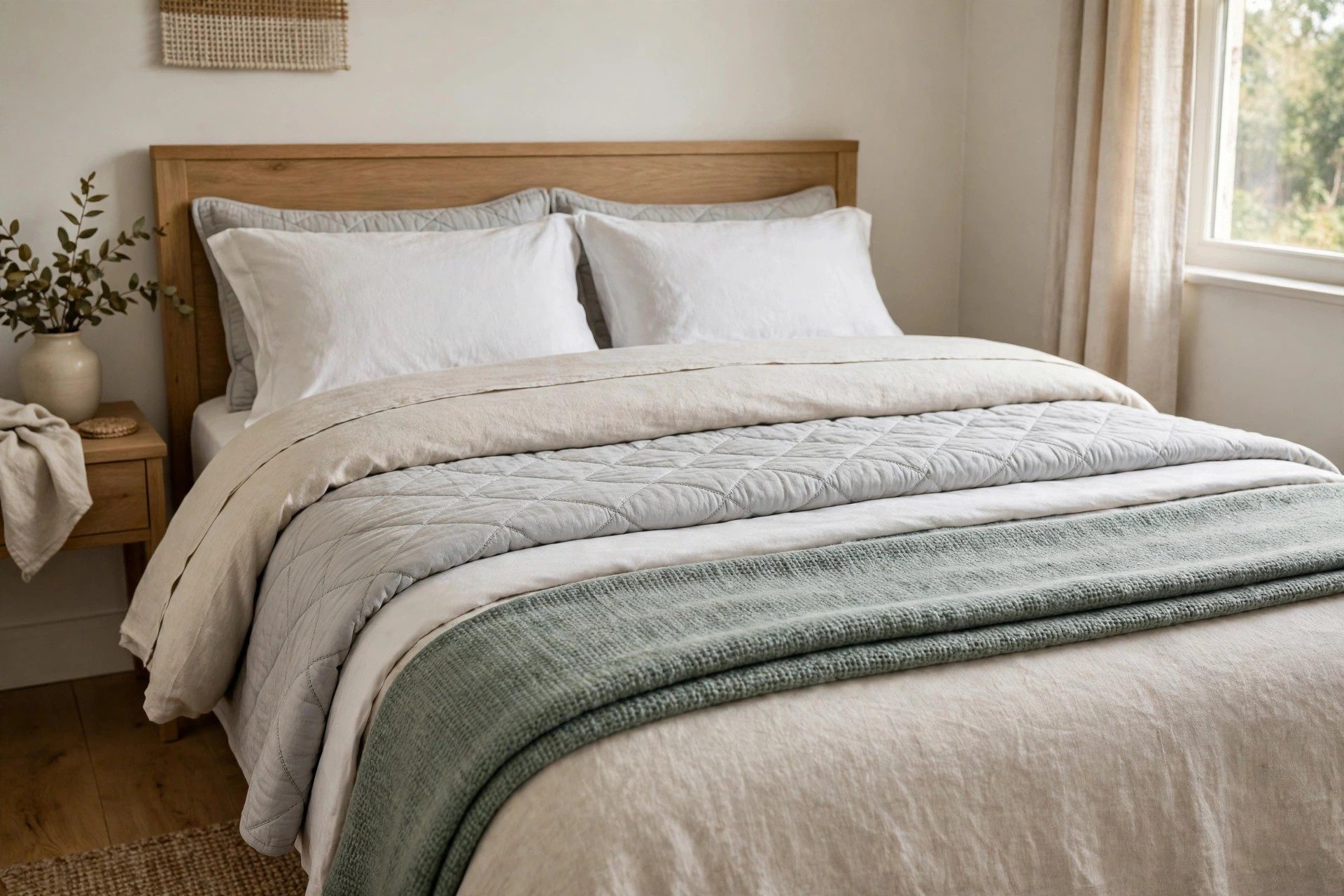
A hotel bed never bets everything on one heavy blanket. It stacks light layers, because the hotel cannot know whether tonight’s guest sleeps hot, cold, or somewhere between.
Copy the stack: sheet, a light quilt or coverlet, then the duvet, with one folded blanket at the foot. Each layer should peel back cleanly without disturbing the others.
This is the same adjustable thinking behind these cozy guest bedroom ideas, where layers serve the guest instead of the photograph. A bed that only looks good helps nobody at two in the morning.
Fold the top layer back once when you make the bed. That single fold is an invitation: it shows guests the stack exists and gives them a starting point.
3. Place the Towel Set Inside the Room
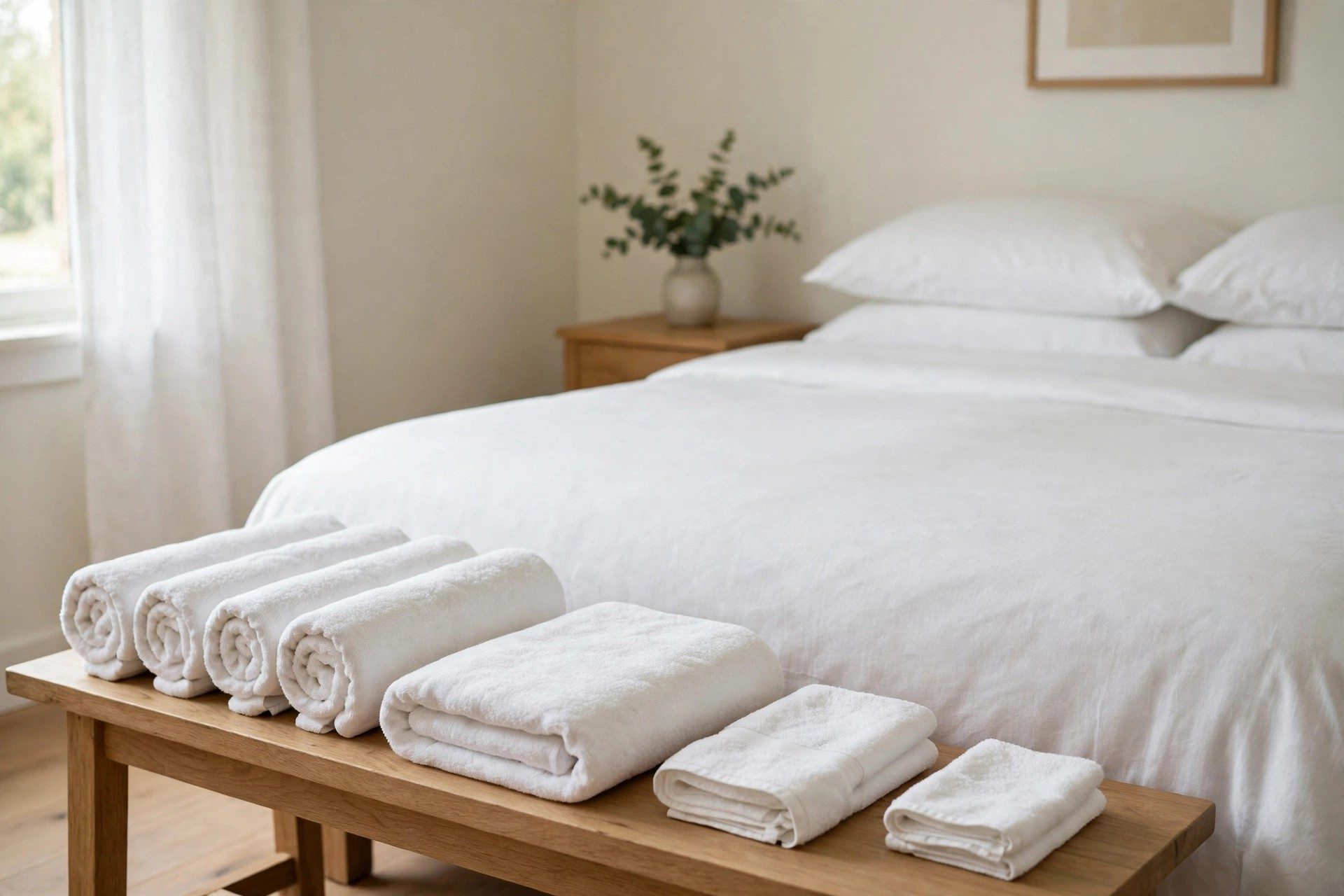
A guest should never wander a hallway in a towel hunting for linen. Hotels put towels where the guest sleeps, and your spare room can follow the same plain logic.
Set one bath towel, one hand towel, and a washcloth per guest on the bench, in a basket, or across the foot of the bed, folded the same way each time.
Rolling towels keeps them compact and shows at a glance that the set is fresh and complete. A rolled set also survives being moved aside without unfolding into a heap.
Add a hook or a clear stretch of rail near the room’s sink run or door. Wet towels need a home too, or they end up draped over your best chair.
4. Set Water and Glasses on the Nightstand
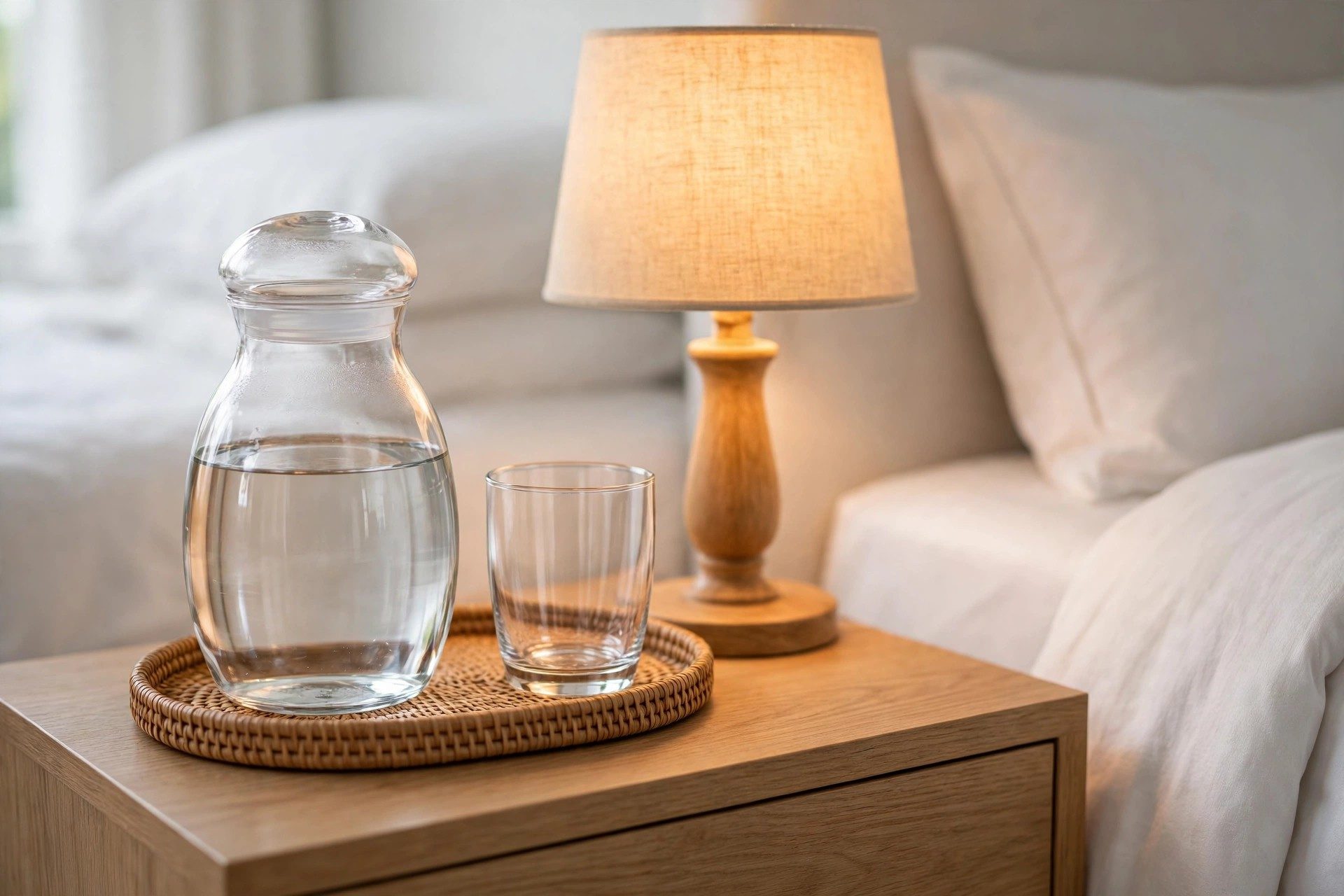
Of every hotel habit worth copying, this one earns the most thanks per minute of effort. A covered carafe and a clean glass mean no midnight kitchen trip in a strange house.
Fill the carafe on the day of arrival, not the day before. Water that sat two days in a warm room tastes like it sat two days in a warm room.
Use a small tray under the carafe to catch drips and to group the set. The tray also tells guests this corner is stocked for them, not borrowed from the kitchen.
On the second night, refill without being asked and swap the glass. Guests notice the repeat more than the first setup, because the repeat proves it was not a one off.
5. Put a Working Lamp on Both Sides
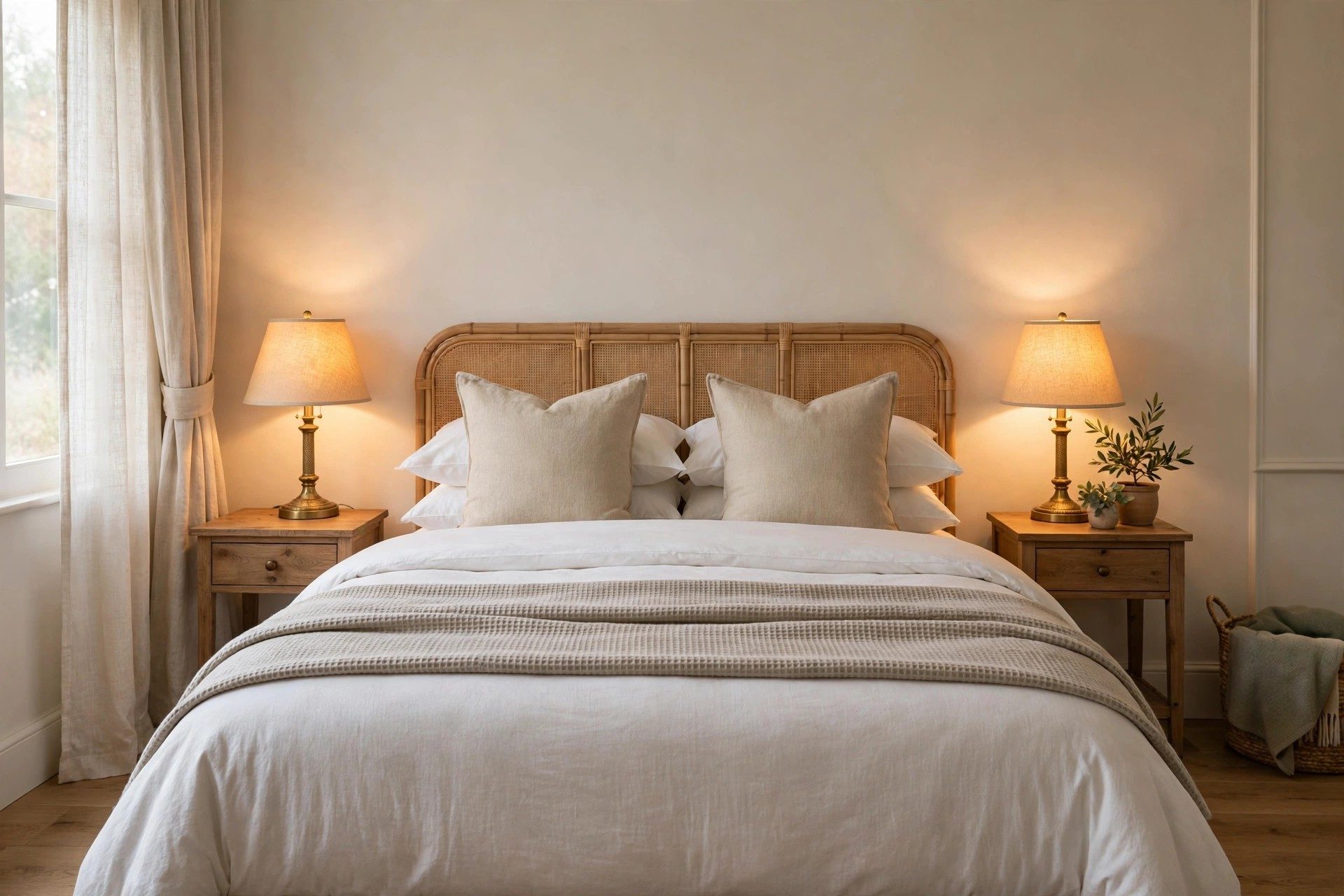
One lamp for a two person bed means one reader keeps the other awake, or one guest crosses a dark room to kill the only light. Hotels solved this long ago: a lamp each.
The switches matter more than the shades. Each lamp should switch on from the bed, at pillow height, without leaning, hunting, or finding a cord on the floor.
Warm bulbs in both lamps keep faces and pages looking restful. Match the two bulbs exactly, since mismatched light on each side of one bed feels oddly unsettled.
Test both lamps from under the covers before guests arrive. It takes one minute, and it is the only test that counts, because that is where your guest will use them.
6. Hang Curtains That Close the Day Out
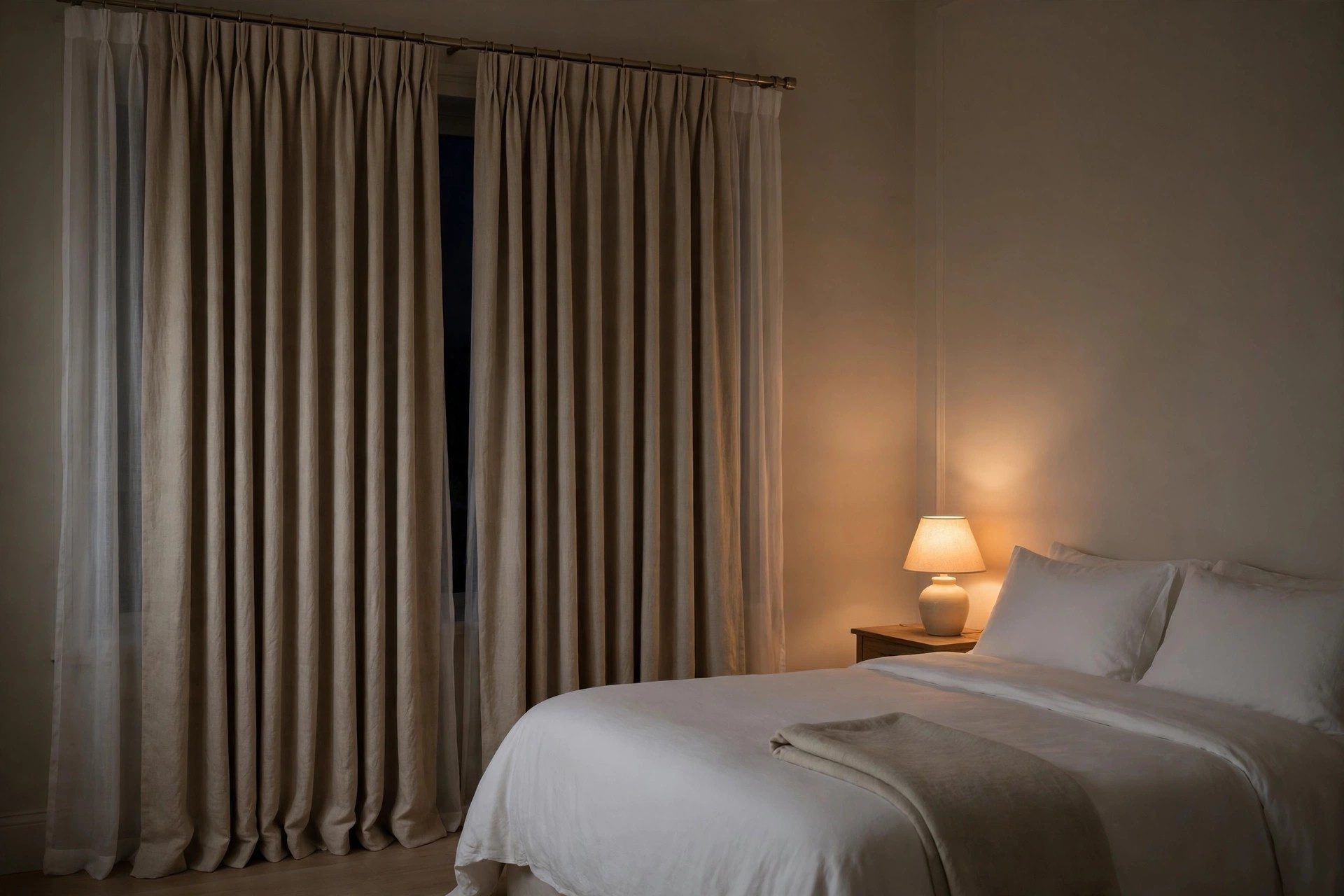
Travelers sleep at odd hours, and a room that cannot darken cannot rest them. Lined curtains or a blackout layer behind sheers give guests control over morning light.
Run the panels wide enough to cover the glass fully when closed, with no bright gap at the center. Meet in the middle and overlap slightly if the rod allows it.
Keep the sheers for daytime privacy. A guest dressing at noon should not have to choose between light and being overlooked by the house across the street.
Show guests the curtain pull during the room tour if it is hidden behind a panel. A control nobody can find is the same as no control at all.
7. Give the Suitcase a Rack or a Bench
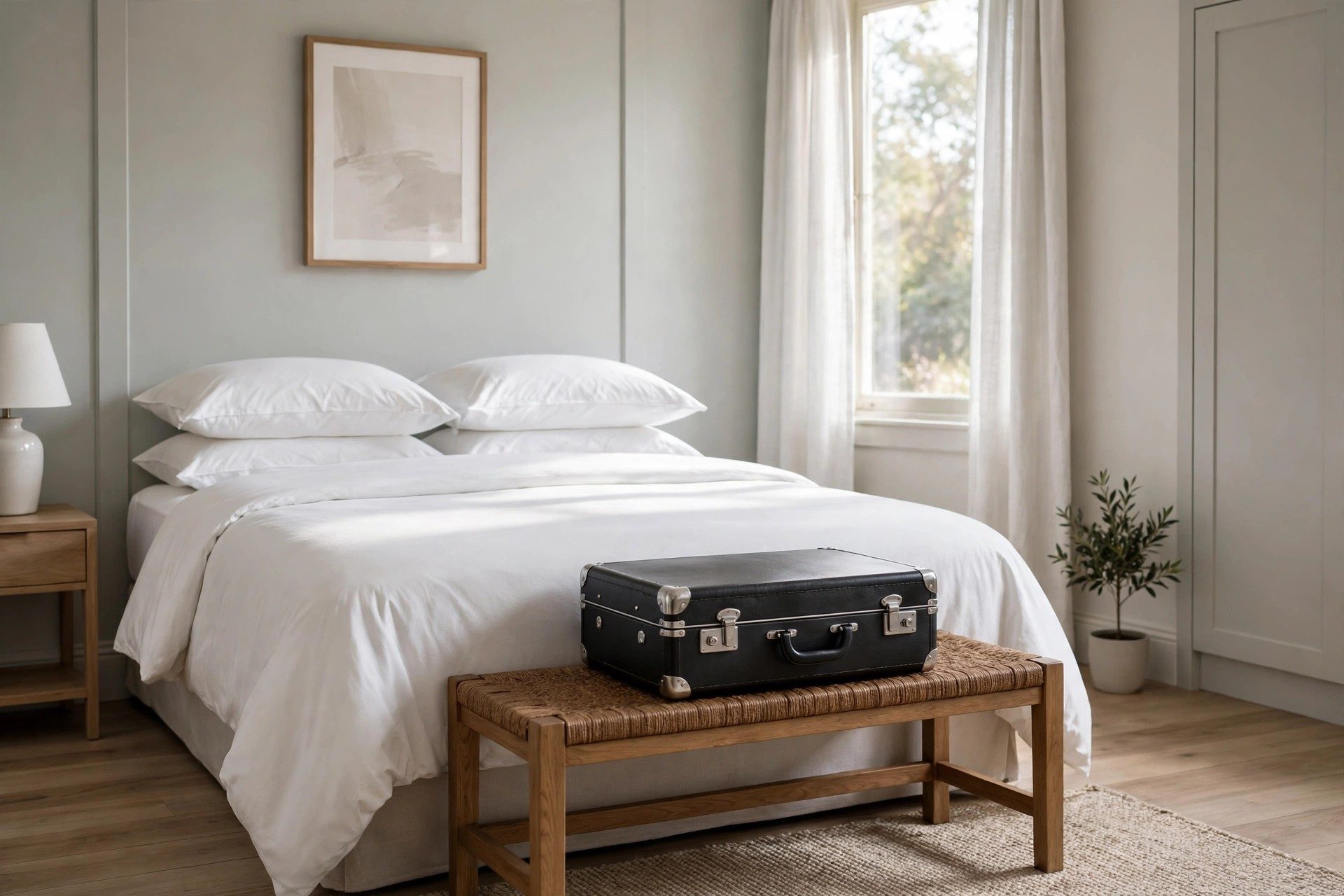
Hotels never make you unpack from the floor. A folding luggage rack or a firm bench at the foot of the bed lifts the case to a civilized working height.
A bench holds a heavier case and doubles as seating for shoes in the morning. A rack folds away between visits, which suits a spare room that works other jobs.
Place it where the case opens fully without blocking the door swing or the path to the bathroom. A case that must close every time someone passes will just live open elsewhere.
Leave the surface bare before arrival. A bench styled with cushions and books on guest day is a bench your guest feels rude using, so the case ends up on the bed.
8. Clear Real Hanging Space and One Drawer
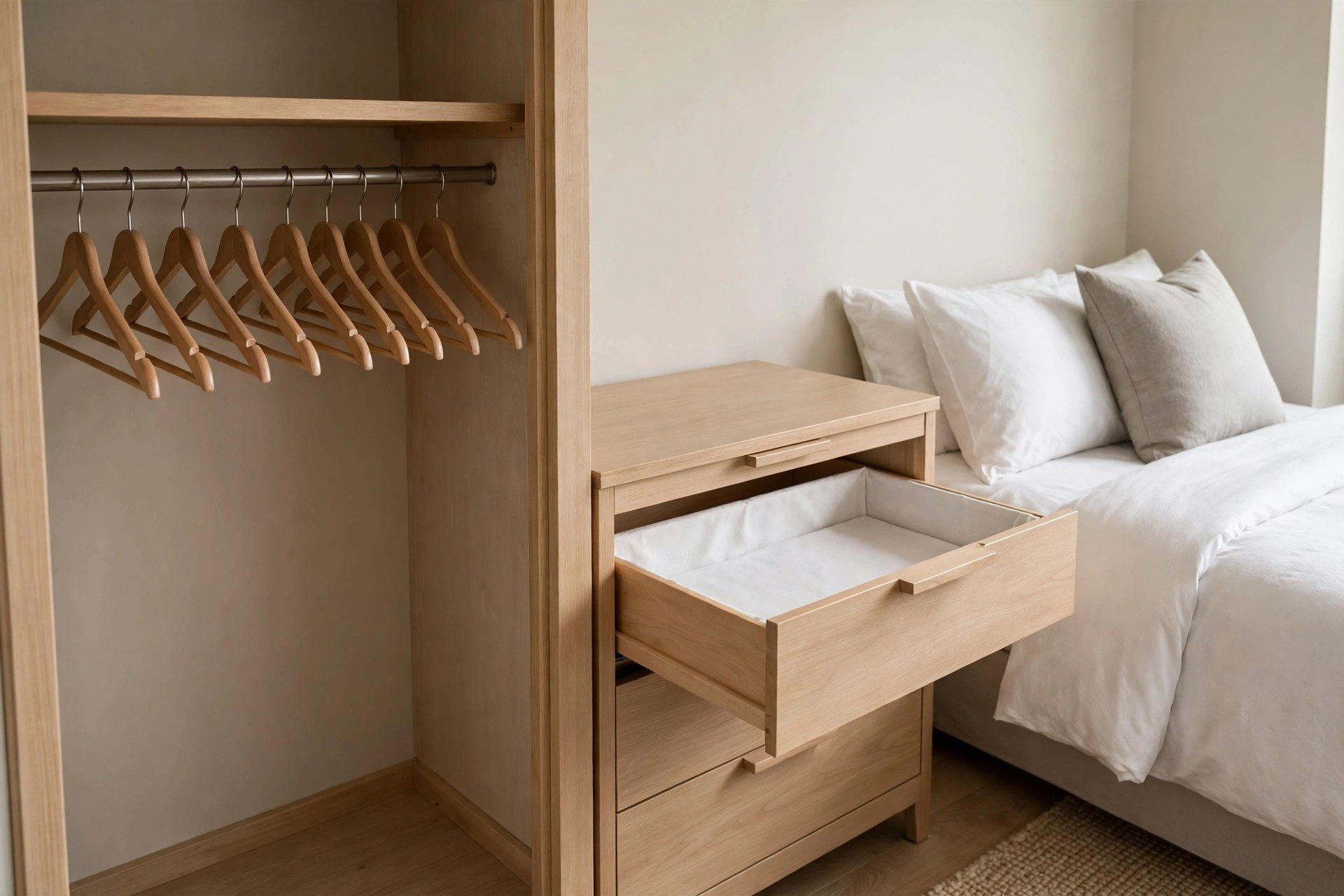
The clearest hotel signal is empty space that is clearly yours: a run of rail, a handful of hangers, and one drawer that opens to nothing but clean liner.
Clear at least a third of the closet rail, not an apologetic hand’s width. Guests with a dress, a suit, or a week of clothes need honest room to hang them.
Mixed hangers look like leftovers. Set out six to eight matching hangers, including two with clips or bars for trousers and skirts, the way a hotel rail is stocked.
Check the drawer for the usual spare room drift: batteries, gift wrap, a phone charger from three phones ago. If it is not for the guest, it does not live here.
9. Put Charging Within Reach of the Pillow
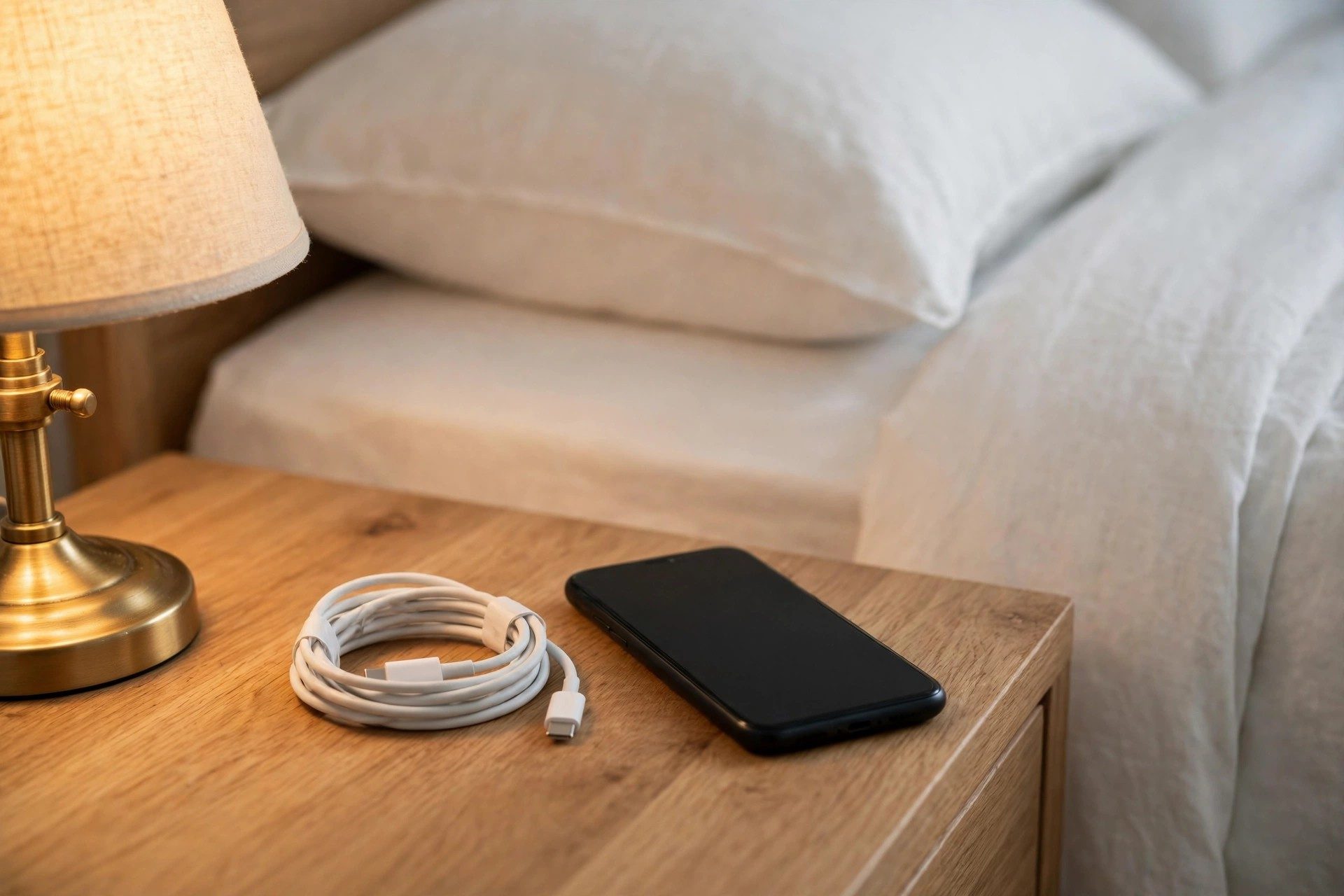
A dead phone by morning is the modern version of no water at night. Give each side of the bed a reachable outlet or a short, tidy charging lead on the nightstand.
Run cables behind the nightstand so they do not drape across the walking path. A cable across a dark floor is a trip line with a plug on the end.
A small multi lead covers the common plug shapes without a drawer full of adapters. Keep it in the nightstand drawer between visits so it is always in the same place.
Test the outlet with your own phone. Spare room outlets sit unused for months, and the visit is the worst possible time to learn one of them is dead.
10. Hang One Calm Piece of Art Above the Bed
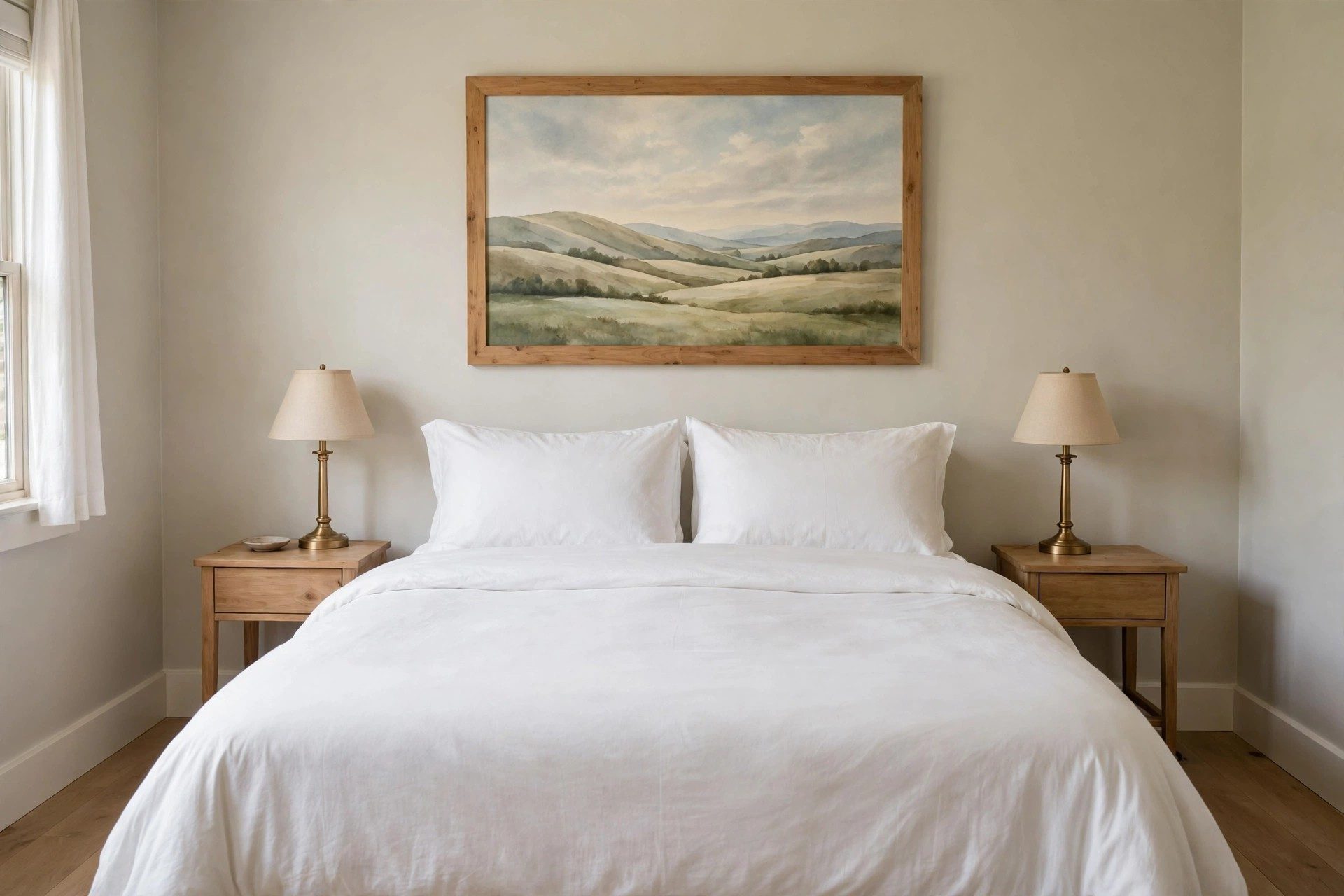
A bare headboard wall makes the room feel stored rather than hosted. One wide, calm piece above the bed settles the whole wall and gives the eye a place to land.
Keep the subject restful and the frame simple: a landscape, a soft abstract, a pair of quiet prints in matching frames. The bed wall sets the room’s tone, so let it whisper.
For placement heights and sizes that suit a guest bed, these hotel style wall art ideas cover the art side in full. Here, one good piece is the whole job.
Hang it high enough to clear a sitting reader’s head, and anchor it properly. Art that leans on a nail above a sleeping guest is a worry, not a welcome.
11. Set Out a Small Welcome Tray
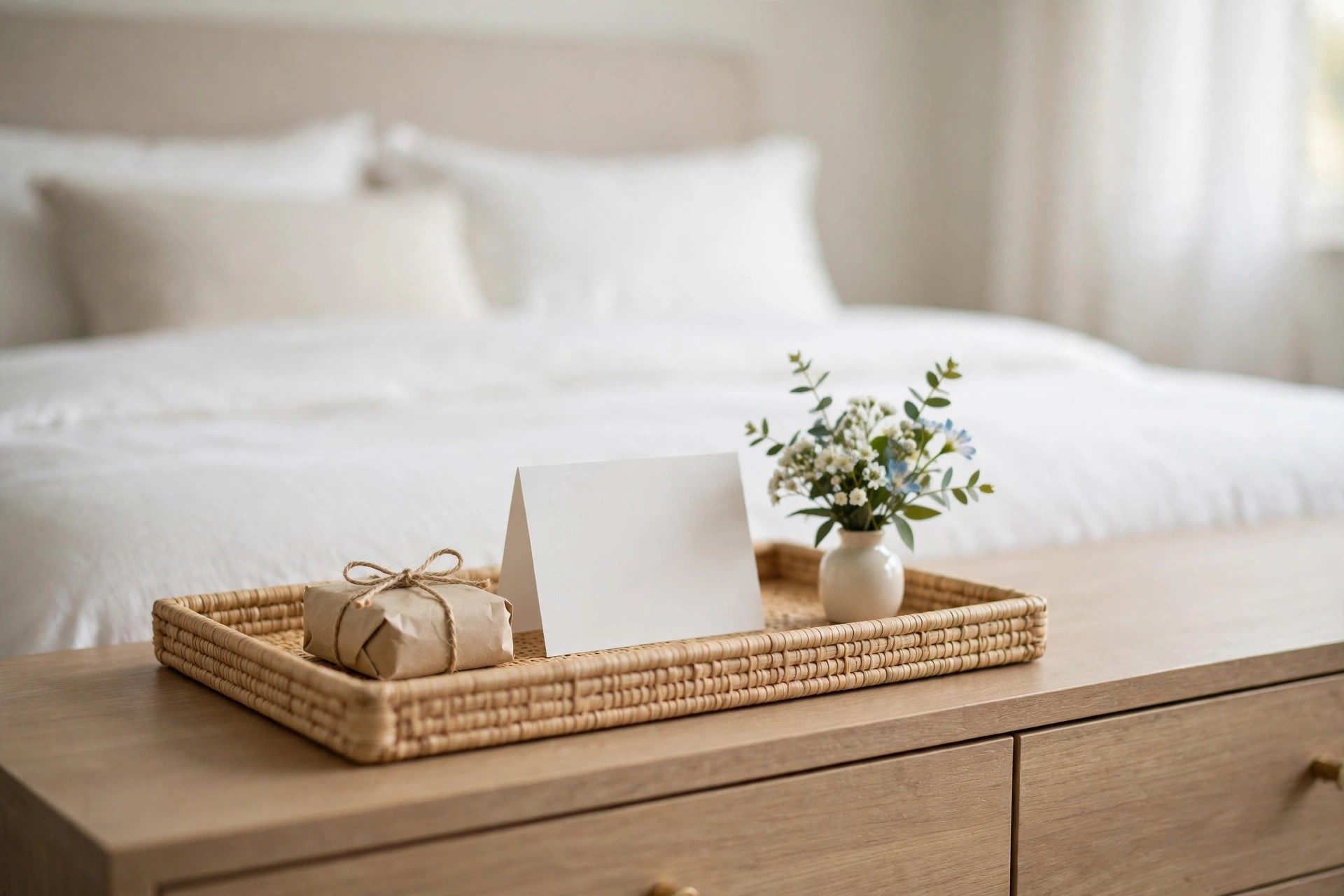
A shallow tray on the dresser gathers the little arrivals: a wrapped snack, a small note with the house basics, and anything your guest might need before unpacking.
Keep the note short and plain: the wifi name and password, where the spare towels live, and when breakfast usually happens. Three lines answer the three questions every guest has.
A tray works better than scattering the same items across the dresser. Grouping tells guests the items are for them, and it keeps the dresser looking calm, not stocked like a shop.
Refresh the tray on day two of a longer stay: fresh snack, fresh note if plans changed. This tiny repeat is the most hotel like habit on this entire list.
12. Add One Chair With a Lamp for Winding Down
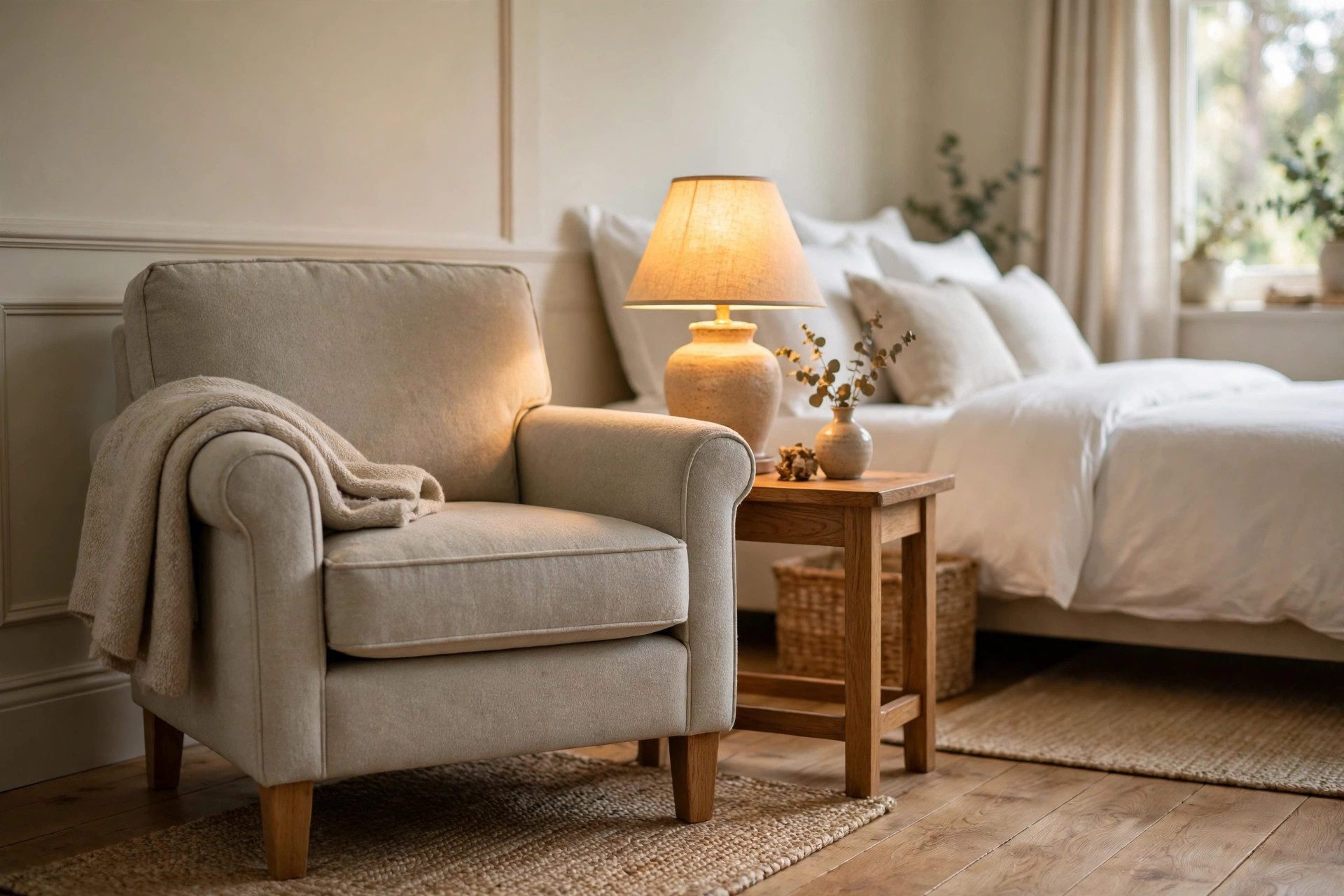
A guest room with only a bed sends guests to the living room for every waking hour. One chair in the corner gives them a place to read, dress, and decompress alone.
Pair the chair with the small table and the third light in the room. A chair in the dark is storage; a lit chair with a surface is a destination.
The full setup is covered in these guest bedroom ideas with a reading chair and lamp. In a tight room, a compact chair beats a wide one that swallows the walking path.
Drape the spare throw over this chair rather than the bed. It keeps the bed stack simple and marks the chair as the room’s cozy seat at a glance.
13. Stock a Small Basket of Forgotten Basics
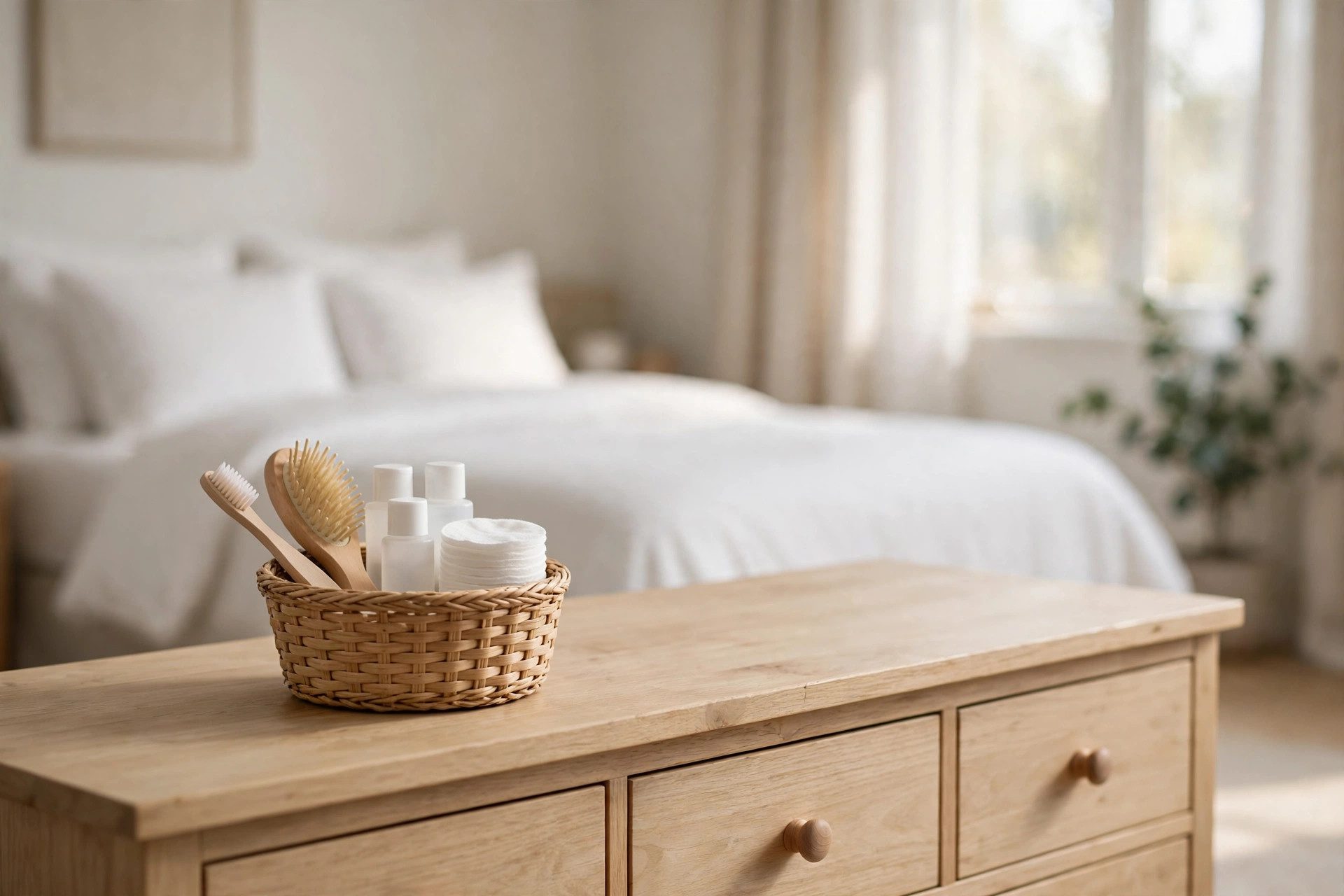
Every guest forgets one thing. A small basket of sealed basics (a toothbrush, toothpaste, cotton pads, a comb, tissues) covers the common losses without a late shop run.
Keep quantities small and the basket shallow, so it reads as a kindness rather than a store shelf. Three or four items, fresh and clearly unopened, is the right scale.
Place the basket where it will be found at the moment of need: on the dresser or in the top drawer, mentioned in the welcome note from the tray.
Check dates and seals when you reset the room. A dried out tube or a dusty packet undoes the welcome it was meant to deliver.
14. Keep an Extra Blanket Visible in the Room
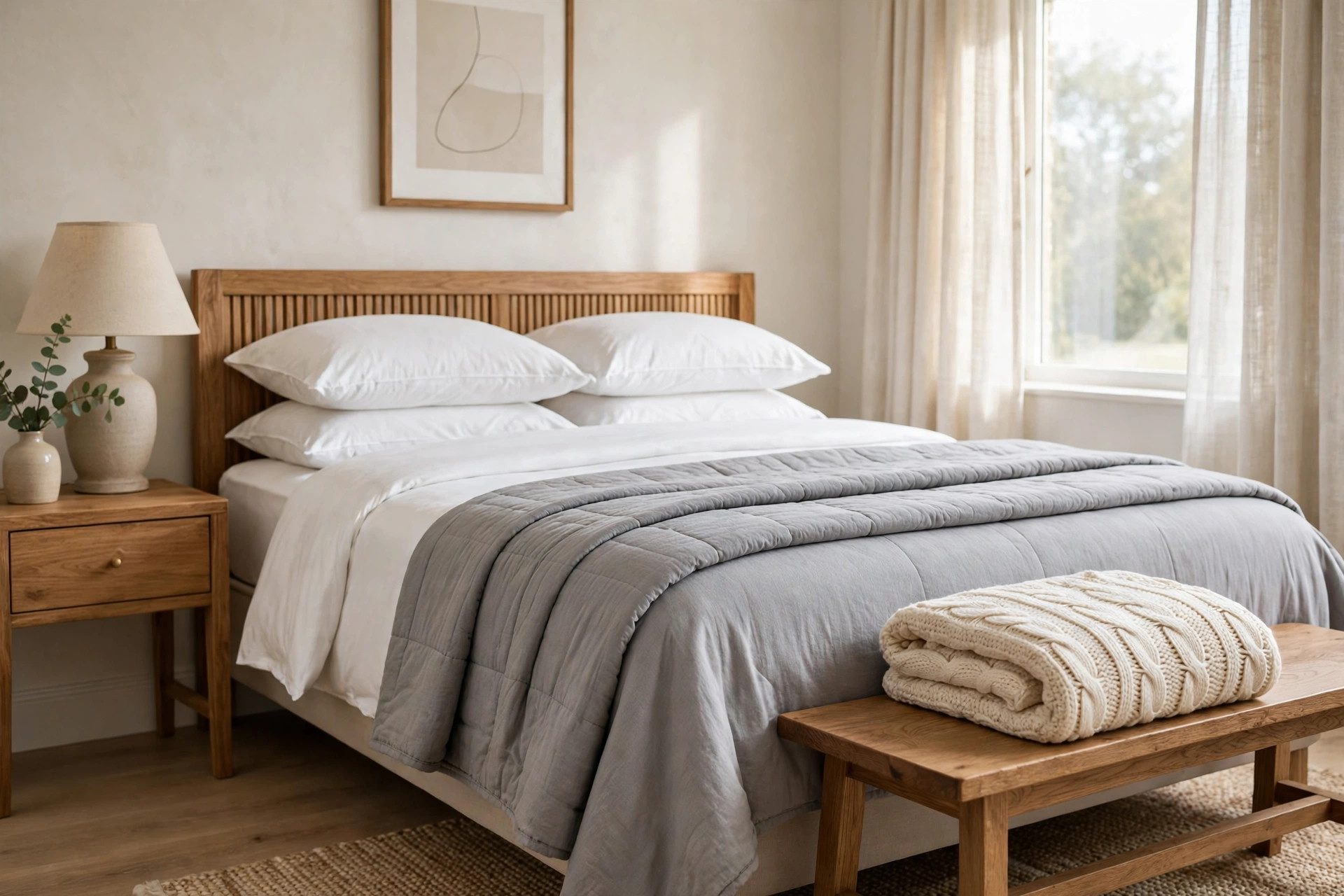
Hotels hide spare blankets in the closet, and guests still ask at the desk. At home there is no desk, so make the spare blanket findable without a search party.
Fold it in a basket beside the bed or lay it across the chair. Visible and folded beats stored and perfect, because a cold guest at midnight will not open three cupboards.
Choose a blanket with some weight and a washable cover or weave. The spare blanket gets borrowed for sofas, cars, and garden evenings, and it should wash without drama.
Mention it during the tour in one short line. Guests use what they know about, and a blanket they know about gets used instead of endured around.
15. Sleep One Night in the Room Yourself
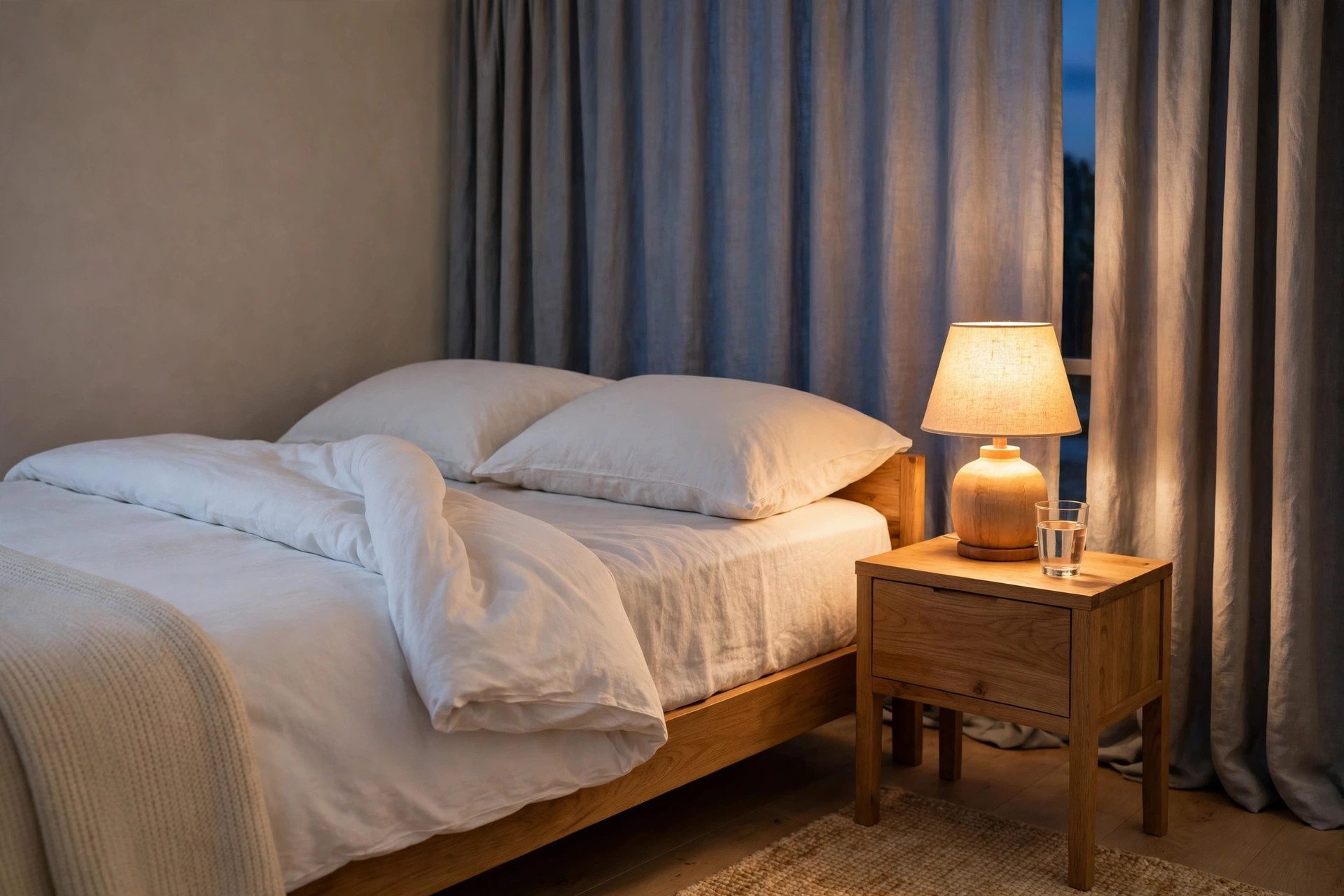
The final hotel habit is inspection. Managers check rooms by standing in them; hosts can do better and sleep in theirs once a season, with a notebook on the nightstand.
You will find the real list by morning: the lamp switch that hides, the curtain gap at dawn, the drawer that sticks, the outlet that needs a stretch across the floor.
Fix the top three findings before the next visit and note the rest. One honest night finds more than a month of guessing from the doorway ever will.
Repeat the test when seasons change. A room that passed in spring can fail in January on warmth alone, and your winter guest will never tell you.
A welcoming guest room is a system, not a shopping list: white bed, layered warmth, water poured, light on both sides, space cleared, and a tray that answers the first questions.
Run the system the day before guests arrive and it holds for the whole stay. Save these ideas to the Guest Bedroom Ideas board so the full checklist sits ready before your next hosting weekend.
Your guests will likely name only one or two touches out loud. The rest they will feel as a good night’s sleep in a room that asked nothing of them, which is the whole point.


