

15 Autumn Container Vegetables for a Second Harvest
In late August the tomato pots look tired, the beans are stringy, and the balcony feels finished for the year. Six weeks later, the same rail can hold fresh spinach, sweet carrots, and salad bowls again.
The trick is a second sowing while the mix is still warm. These autumn container vegetables for a second harvest are the cool-season crops from spring, sown again as the heat breaks.
Every pick below gives you a pot size in inches and cm, a sowing depth, and the sun hours it needs as days shorten. Most go into pots you already own, topped up with fresh potting mix.
Sow from late summer into early autumn, while soil is warm enough for fast sprouting. In mild areas the picking runs into winter; in cold ones, a fleece cover buys extra weeks.
The spent summer pots give you a head start: warm mix, big containers, and a watering routine that already works.
This post contains affiliate links. If you buy through them, we may earn a small commission at no extra cost to you. See our Affiliate Disclosure.
1. Spinach Sown as the Heat Breaks
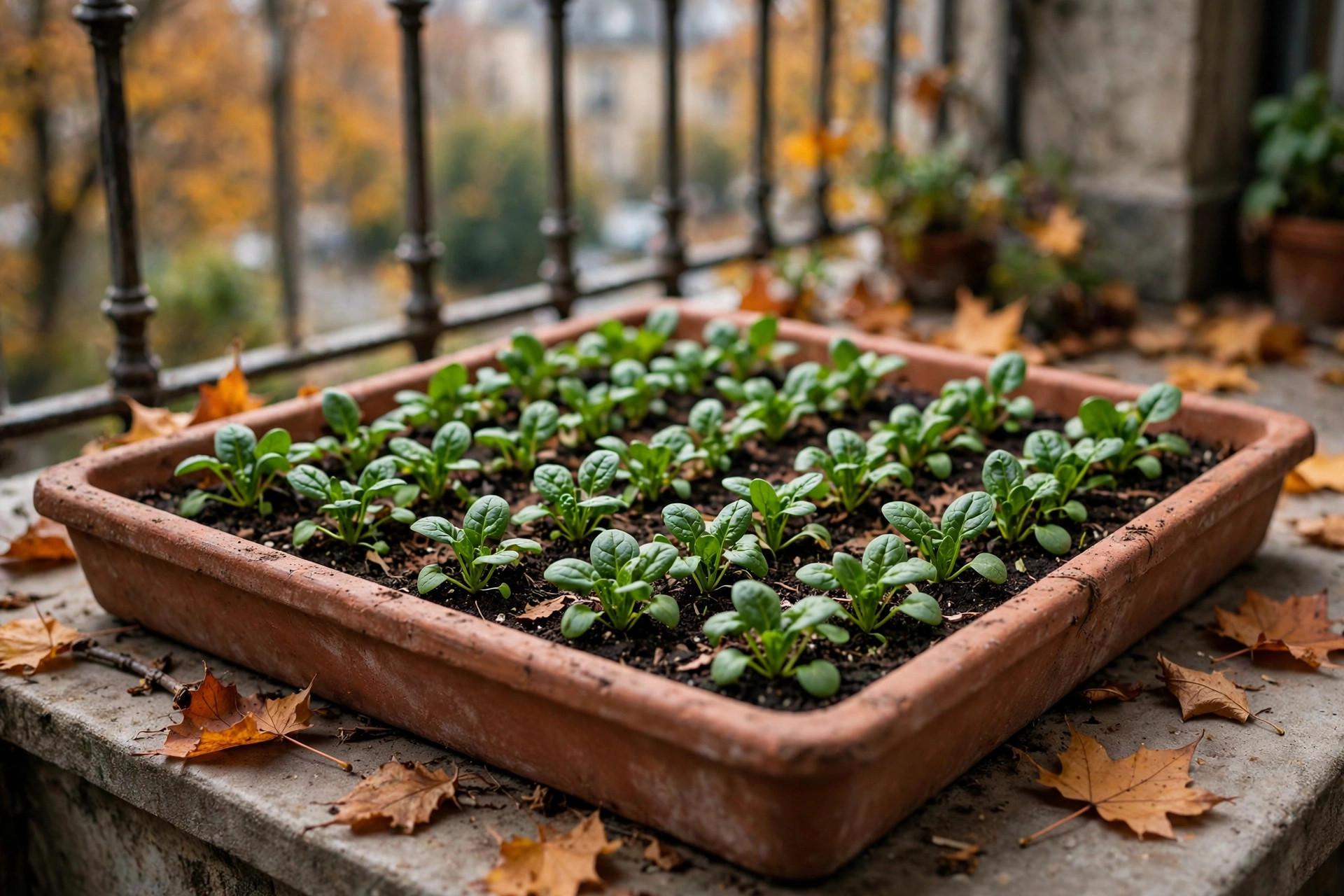
The first cool evening of late summer is the signal: spinach seed goes back into a wide pot the same week. Sown now, it germinates fast in warm mix, then grows sweet as nights cool.
Use a pot 8 inches (20 cm) deep, sow seed 1/2 inch (1 cm) deep in rows 4 inches (10 cm) apart, and thin plants to 3 inches (8 cm). Keep the surface damp for the first week.
Spinach grows on 3 to 4 hours of sun, and autumn light is gentler, so the shadier end of the rail works again. ‘Bloomsdale Long Standing’ holds its leaves well into the cold.
Pick outer leaves at hand size. In mild areas, the same pot keeps giving into winter.
2. ‘Lacinato’ Kale That Sweetens With the Cold
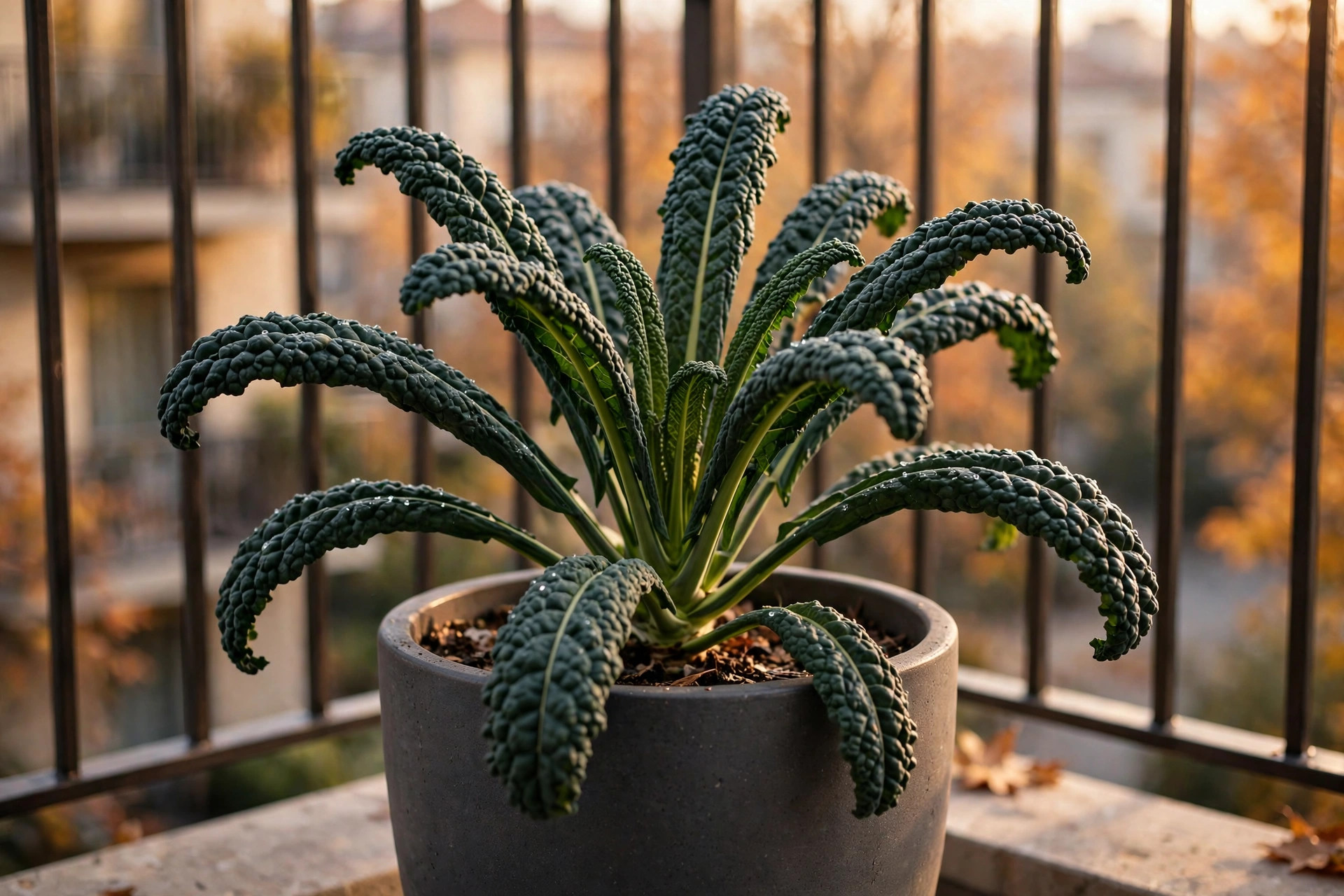
Kale earns its autumn pot because cold improves it. Leaves picked after the first frost taste sweeter than anything the same plant gave in June.
Give one plant a pot at least 12 inches (30 cm) deep. Sow seed 1/2 inch (1 cm) deep in late summer, or set out a small seedling to save weeks.
Thin to a single strong plant, since crowded kale stays small. It grows well on 3 to 4 hours of sun, which suits shortening days and a shadier rail.
Pick the outer leaves and leave the center rosette alone. Picked this way, one plant feeds soups and salads for months, standing through light frost without protection.
3. ‘Bright Lights’ Chard to Fill the Tomato Pot

The problem with a spent tomato pot is the gap it leaves: good mix, big pot, nothing growing. Chard is the fastest honest refill, and it looks good doing it.
Pull the old plant, top the pot up with fresh mix, and sow chard seed 1/2 inch (1 cm) deep. Space plants 6 inches (15 cm) apart, since each seed cluster sends up several seedlings.
‘Bright Lights’ grows stems in red, gold, and pink, so the pot looks planted on purpose into the grey months. Give it 4 to 6 hours of sun and cut outer stems at the base.
Chard is the same cool-season family as the spring sowings in this guide to spring container vegetables to plant first.
4. Loose-Leaf Lettuce for Autumn Salad Bowls

One rule keeps autumn lettuce sweet: sow little and often. A pinch of seed every two weeks from late summer gives steady bowls instead of one glut that bolts.
Choose a wide bowl 8 inches (20 cm) deep and 12 inches (30 cm) wide. Sow seed 1/4 inch (0.5 cm) deep, thin to 6 inches (15 cm) apart, and keep the surface damp until green shows.
Lettuce manages on 3 to 4 hours of sun, ideal as the rail’s sunny hours shrink. Cool nights stop the bitterness that ruins summer lettuce.
Small, steady sowings also suit small households. This guide to container vegetables for one person plans harvests with no waste.
5. Radishes, the Three-Week Gap Filler
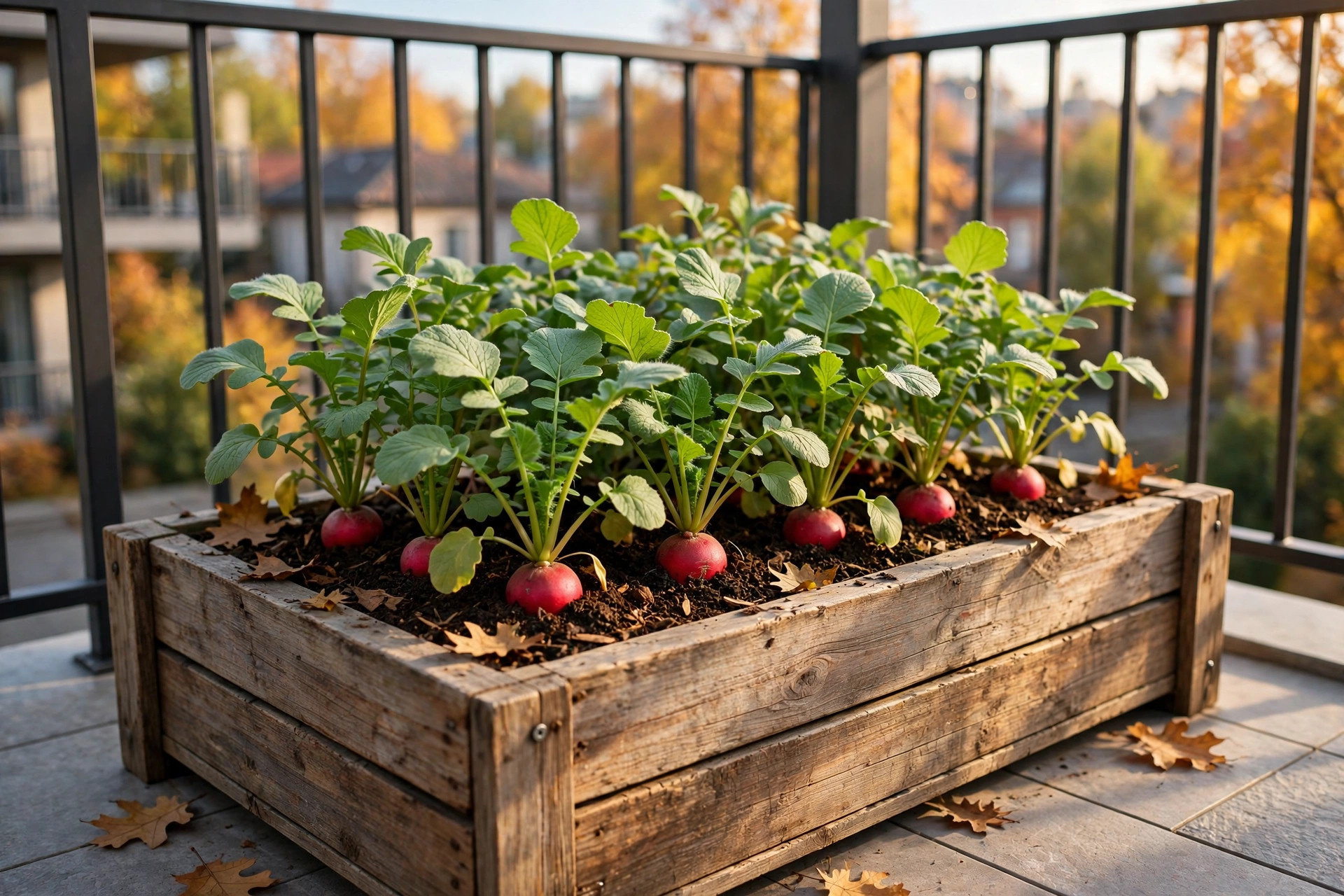
Radishes do the same job in autumn as in spring, only faster to start. Sow seed 1/2 inch (1 cm) deep in any pot or box at least 6 inches (15 cm) deep.
Thin seedlings to 2 inches (5 cm) apart once they stand an inch tall. Keep the surface damp in the first week; dry seed is the main cause of gaps in the row.
Radishes manage on 4 to 5 hours of sun, so they fill the ends of pots and the gaps between slower crops. Pull them when red shoulders push up through the mix.
From sowing to pulling takes about a month in warm autumn mix. Sow the last row about a month before your first hard frost is due.
6. Beets for Roots and Greens Before Winter

Most autumn crops give you leaves. Beets give leaves first, then roots, and the roots sweeten as the weather cools, so one sowing pays twice in the short season.
Sow seed 1/2 inch (1 cm) deep in a pot at least 10 inches (25 cm) deep. Each wrinkled seed holds several sprouts, so thin the cluster to one plant every 3 inches (8 cm).
‘Detroit Dark Red’ is the steady standard for pots. Beets accept 4 to 6 hours of sun and cope well with cooling nights, asking only for steady water while the roots swell.
The signal to pull is written on the surface: a red shoulder about 2 inches (5 cm) wide crowning above the mix.
7. Short Carrots Sown Into Warm Mix

Carrots are the autumn sowing I nearly skip every year, because the seed is slow and the wait feels long in September. By November I am always glad I bothered.
Pick a short, round type such as ‘Parisian Market’, which sizes up faster than long roots. Fill a pot 12 inches (30 cm) deep and sow seed under 1/2 inch (1 cm) of mix.
Seed can take 2 to 3 weeks to sprout, even in warm mix. Keep the surface damp the whole wait, under a board or light cloth on windy days.
Thin seedlings to 2 inches (5 cm) apart. Cold nights improve the flavor, so there is no rush to pull the last roots before winter.
8. Garlic Planted Now for Next Summer
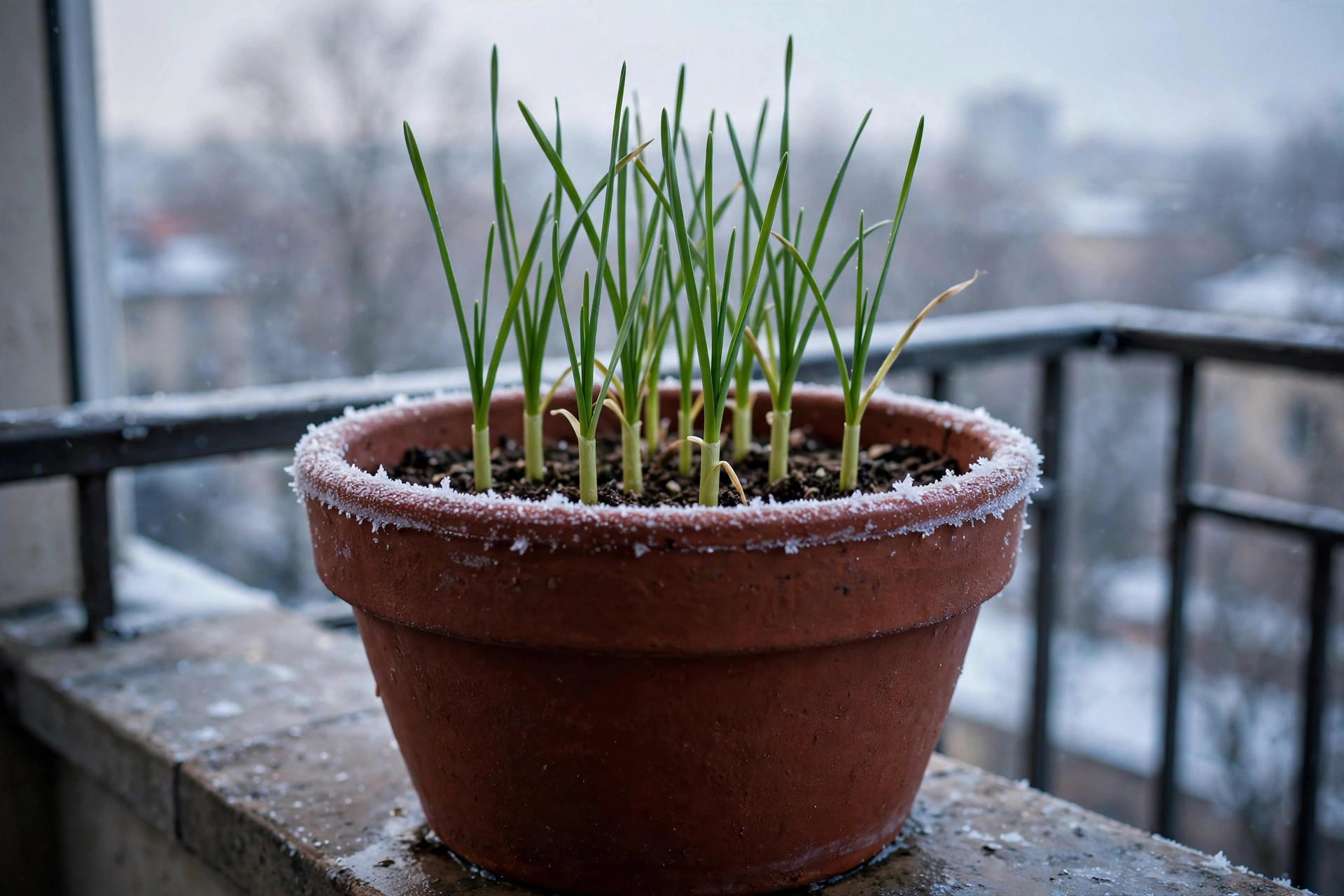
Many beginners plant garlic in spring and harvest small, sulky bulbs. Garlic wants the opposite plan: cloves go in during autumn, root before winter, and grow away in spring.
Buy seed garlic from a garden supplier, not the grocery store. Split the bulb and plant each clove pointy end up, 2 inches (5 cm) deep, in a pot at least 10 inches (25 cm) deep.
Space cloves 4 inches (10 cm) apart. The pot sits outside all winter in most areas; the cold is part of the recipe, not a problem to fix.
Green shoots show in spring, and bulbs lift the following summer. It is the longest plan in this list, and the easiest to keep.
9. Scallions to Cut All Autumn

The sign a scallion trough is working is the smell when you brush past it: sharp, green, and fresh long after the summer herbs fade. The plants barely seem to notice your scissors.
Sow seed 1/4 inch (0.5 cm) deep in a trough at least 6 inches (15 cm) deep in late summer. Thin the seedlings to about 1 inch (2.5 cm) apart in the row.
A bunching type such as ‘Evergreen Hardy White’ shrugs off light frost and regrows after every cutting. It manages on 4 hours of sun at the rail end.
Cut about a third of the green tops at a time. Small troughs stack well on a tight rail, like the groupings in these small balcony garden ideas.
10. Arugula Before the Frosts Arrive
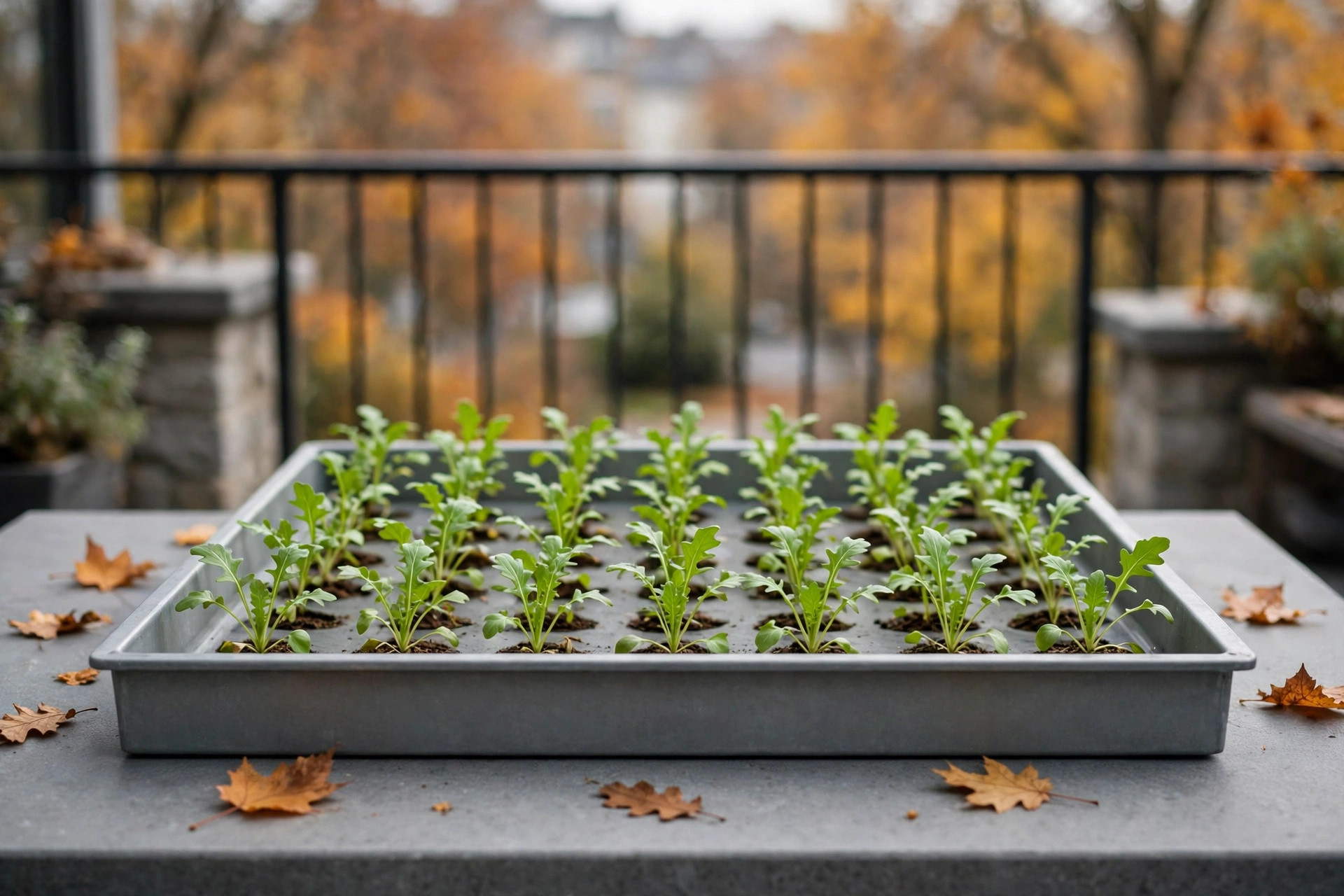
The quick mistake with autumn arugula is sowing it too early, while days are still hot, when leaves turn harsh. Wait for the first cool nights and it stays peppery and mild.
Use a wide, shallow tray at least 6 inches (15 cm) deep. Sow seed 1/4 inch (0.5 cm) deep in short rows and keep the surface damp; in warm autumn mix it shows within a week.
Arugula grows on 3 to 4 hours of sun, which suits the shadier end of the rail. Snip outer leaves with scissors, or pull whole young plants to thin the row.
Pick young and often. A fleece cover on cold nights stretches the harvest by weeks in most areas.
11. Bok Choy That Loves the Cooling Days

Bok choy earns its autumn pot because the season fixes its one spring problem. Cooling days mean far less bolting, so heads sit and swell instead of rushing to flower.
Use a pot at least 8 inches (20 cm) deep, sow seed 1/2 inch (1 cm) deep, and thin plants to 6 inches (15 cm) apart for full heads. Keep the mix evenly damp.
A dwarf type such as ‘Mei Qing Choi’ suits pots and matures fast. Give it 4 to 5 hours of sun; dry mix is still the fast route to a bitter, flowering plant.
Harvest whole heads while they are compact, or pick outer leaves a few at a time for stir-fries.
12. Salad Turnips in About Five Weeks

One rule keeps salad turnips mild: pull them small. Left to grow old in cooling soil, the roots turn woody and hot, while golf-ball size roots stay crisp and sweet.
Sow seed 1/2 inch (1 cm) deep in a pot at least 10 inches (25 cm) deep, and thin seedlings to 3 inches (8 cm) apart. Sow in late summer for the fastest run.
‘Tokyo Cross’ forms smooth white roots in about five weeks of cool weather. Give the pot 5 to 6 hours of sun and keep the mix evenly damp so roots swell without splitting.
The green tops cook like spinach, so nothing from the pot is wasted.
13. Broad Beans in Mild-Winter Areas

The problem with spring broad beans is timing: sow too late and blackfly and heat arrive together. An autumn sowing in mild areas skips both and crops early the next spring.
This only works where winters stay mild, roughly USDA zones 8 to 10, or in sheltered UK city and coastal gardens. Everywhere colder, wait and sow in early spring instead.
Sow the big seeds 2 inches (5 cm) deep in a deep pot, at least 12 inches (30 cm). Keep one plant in a 5-gallon (19 litre) pot and push a short cane beside it.
Herb pots winter well beside them on the same rail. These balcony herb garden ideas for apartments show small pots that sit by a kitchen door.
14. Mustard Greens for Cool-Weather Heat
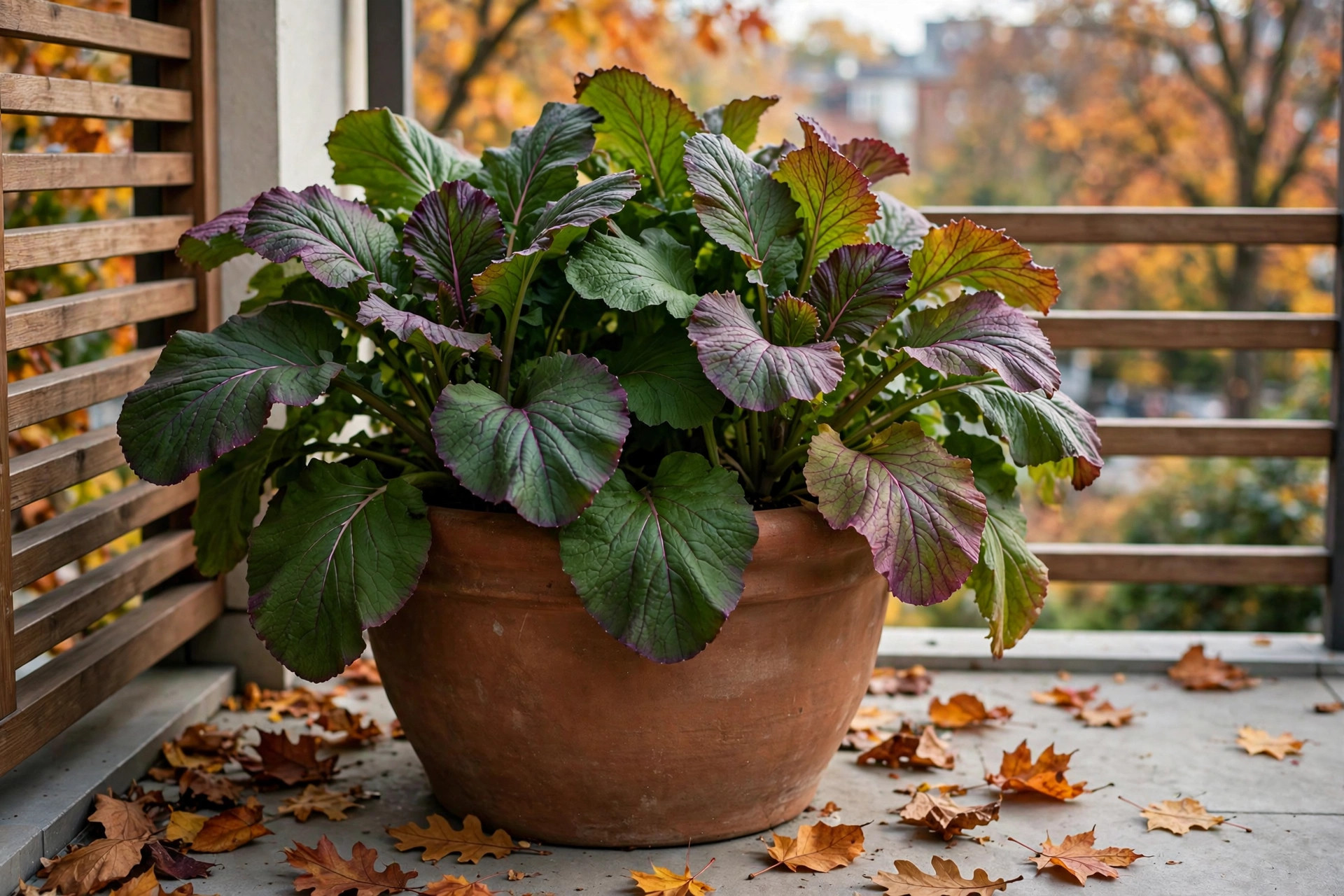
Sow mustard greens the week the summer pots come out and you will pick within a month. Use any pot at least 8 inches (20 cm) deep and sow seed 1/4 inch (0.5 cm) deep.
Thin seedlings to 4 inches (10 cm) apart and keep the surface damp for the first week. The seed germinates fast in warm autumn mix, faster than almost anything else in this list.
‘Red Giant’ gives broad leaves with a real mustard heat that softens when cooked. It grows on 3 to 4 hours of sun and shrugs off light frost.
Pick outer leaves and let the center grow on. A hard freeze ends the run in cold areas, so pick the last leaves ahead of it.
15. A Second Sowing of Sugar Snap Peas
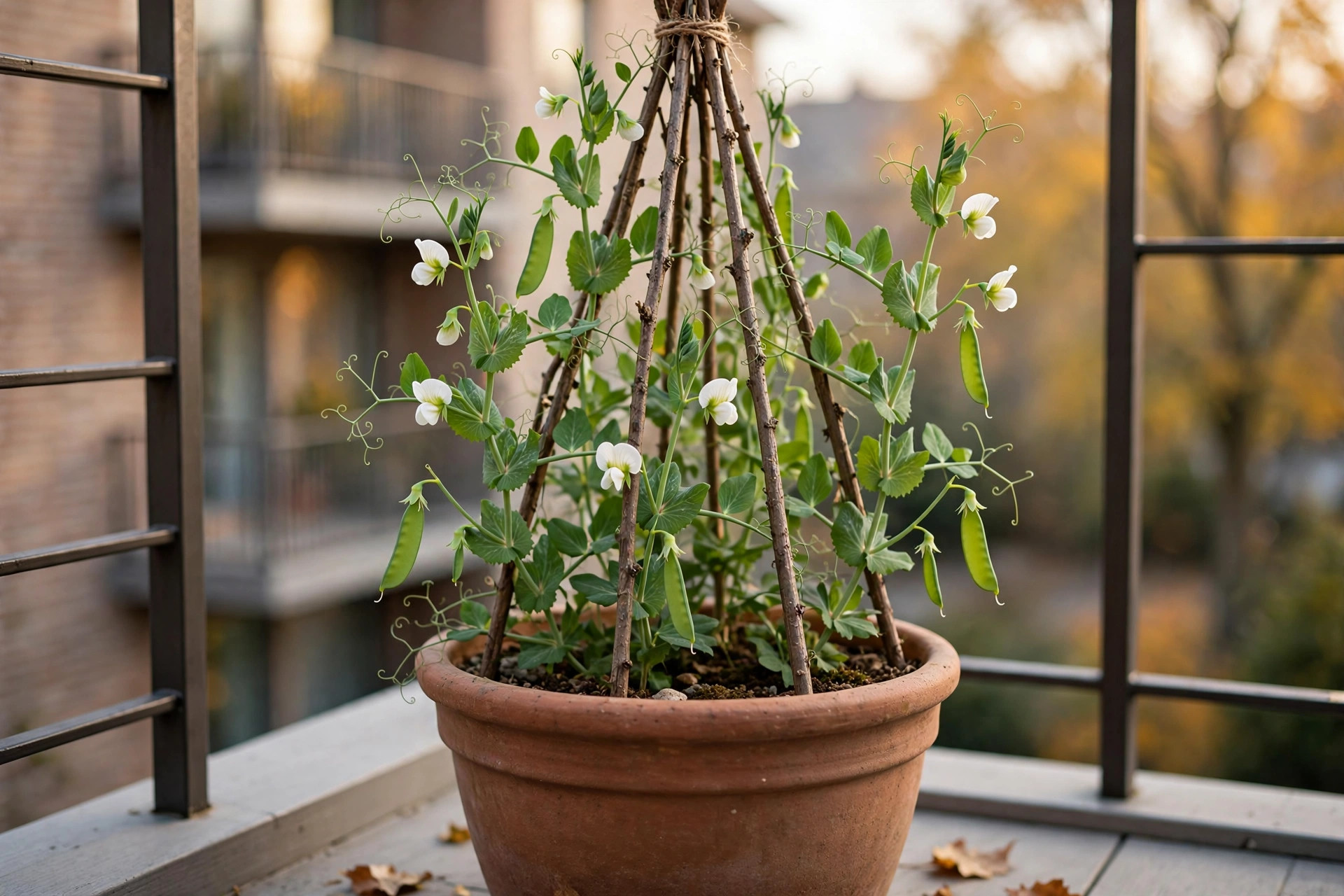
The last pods of spring feel like a goodbye, but in mild areas peas get a second act. Sown in late summer, they climb the same twiggy frame and pod before the frosts.
Use a pot at least 10 inches (25 cm) deep and sow seed 1 inch (2.5 cm) deep and 2 inches (5 cm) apart along the sticks. ‘Sugar Ann’ stays short and crops early, which suits the short season.
Give the pot 5 to 6 hours of sun and steady water once flowers open. In colder areas the flowers may beat the frost but the pods lag; the gamble costs one packet of seed.
Ground beds run the same trick on a bigger scale. These small front yard garden ideas for beginners plan the beds behind them.
These autumn container vegetables for a second harvest ask for one thing: seed in the ground while the mix is still warm from summer. Wait for cold soil and the same crops crawl.
Start with spinach, lettuce, and radishes in the pots you emptied first. Add garlic and broad beans where your winters allow, and let the rail earn its keep into the cold months.
Save this list to your container garden board for later, and sow the first autumn row this week.


