

15 Spring Container Vegetables to Plant First (Cool-Weather Crops)
On the first bright morning of March, the balcony soil is still cold enough to numb your fingers, and that cold is the whole point. A whole group of vegetables prefers it.
These spring container vegetables to plant first cool weather crops go in weeks before tomatoes dare. Peas, spinach, radishes, and their cool-season friends germinate in chilly mix and grow steady in mild sun.
Every pick below gives you a pot size in inches and cm, a sowing depth, and the sun hours it needs. Most ask for one pot, bought potting mix, and the watering can from the kitchen sink.
The depths and spacings are the standard ones printed on seed packets, so you can trust them at the garden center.
Start with three or four pots while nights are still cold, and sow the quick rows first. The warm-season crops can take over the same pots later, once these spring harvests finish.
This post contains affiliate links. If you buy through them, we may earn a small commission at no extra cost to you. See our Affiliate Disclosure.
1. Sugar Snap Peas on a Twiggy Frame, Sown First of All

The pea row goes in before anything else on my balcony, sometimes while a fleece still hangs by the door. Peas like cold soil, and a pot set out early gives them the slow start they prefer.
Use a pot at least 10 inches (25 cm) deep and push in a few twiggy sticks or a short teepee before you sow. Sow seed 1 inch (2.5 cm) deep and 2 inches (5 cm) apart along the sticks.
Give the pot 5 to 6 hours of sun and steady water once white flowers open. The pods are sweetest picked young, while they still look glossy and flat.
‘Sugar Ann’ stays short, crops early, and suits a rail where wind can bully taller vines.
2. Radishes in a Shallow Box for the Fastest Spring Win
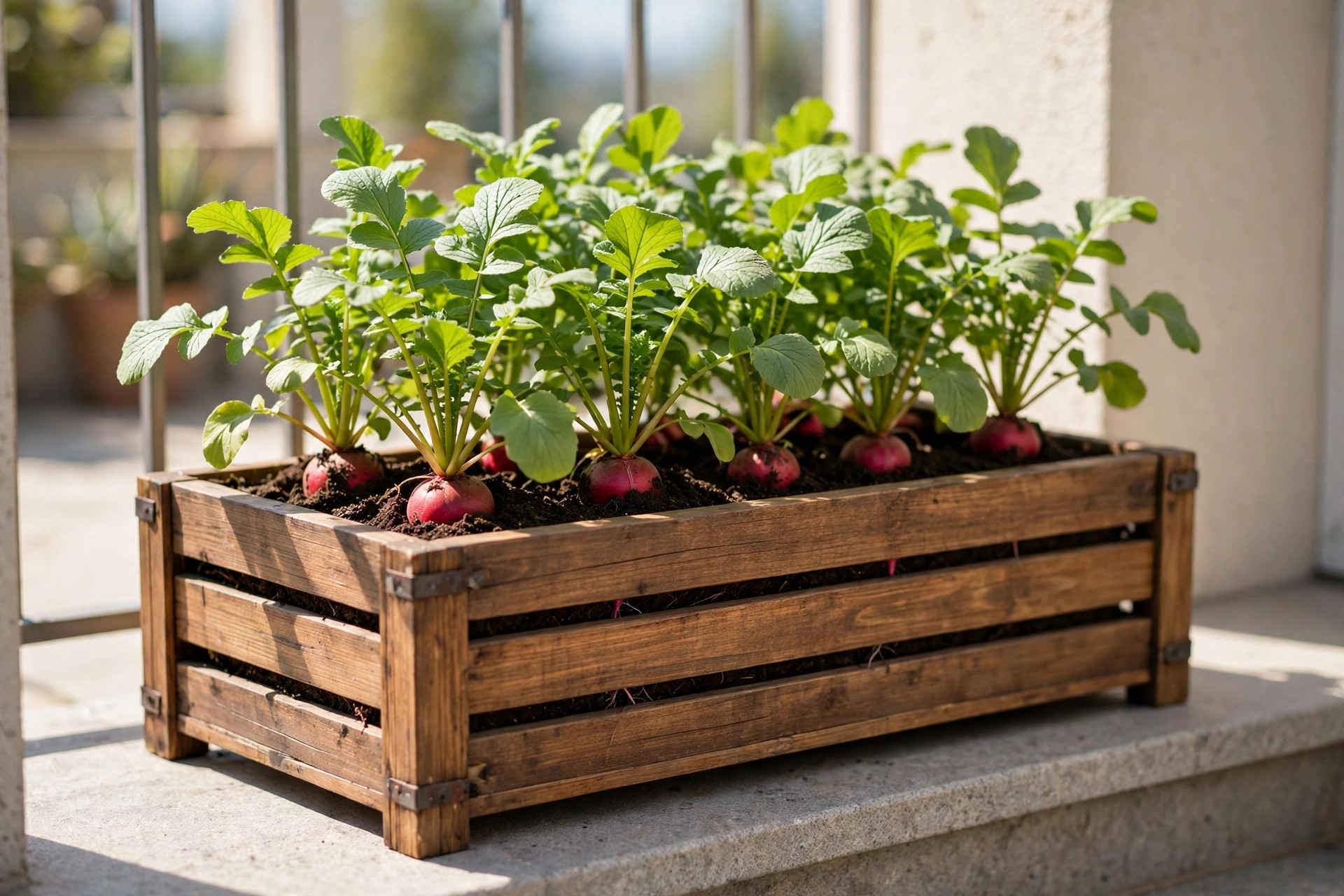
One rule makes radishes foolproof: never let the surface dry out in the first week. Keep the mix damp and the row almost always comes up.
Any box at least 6 inches (15 cm) deep will do. Sow seed 1/2 inch (1 cm) deep, then thin seedlings to 2 inches (5 cm) apart once they stand an inch tall.
Radishes manage on 4 to 5 hours of spring sun, so they take the rail end that leafy shade covers by June. Pull them when red shoulders push up through the mix, at about a month old.
New to pots entirely? This guide on how to start a container vegetable garden from scratch sets up your first containers in order.
3. Spinach Sown Early, Before Warm Days Ruin It
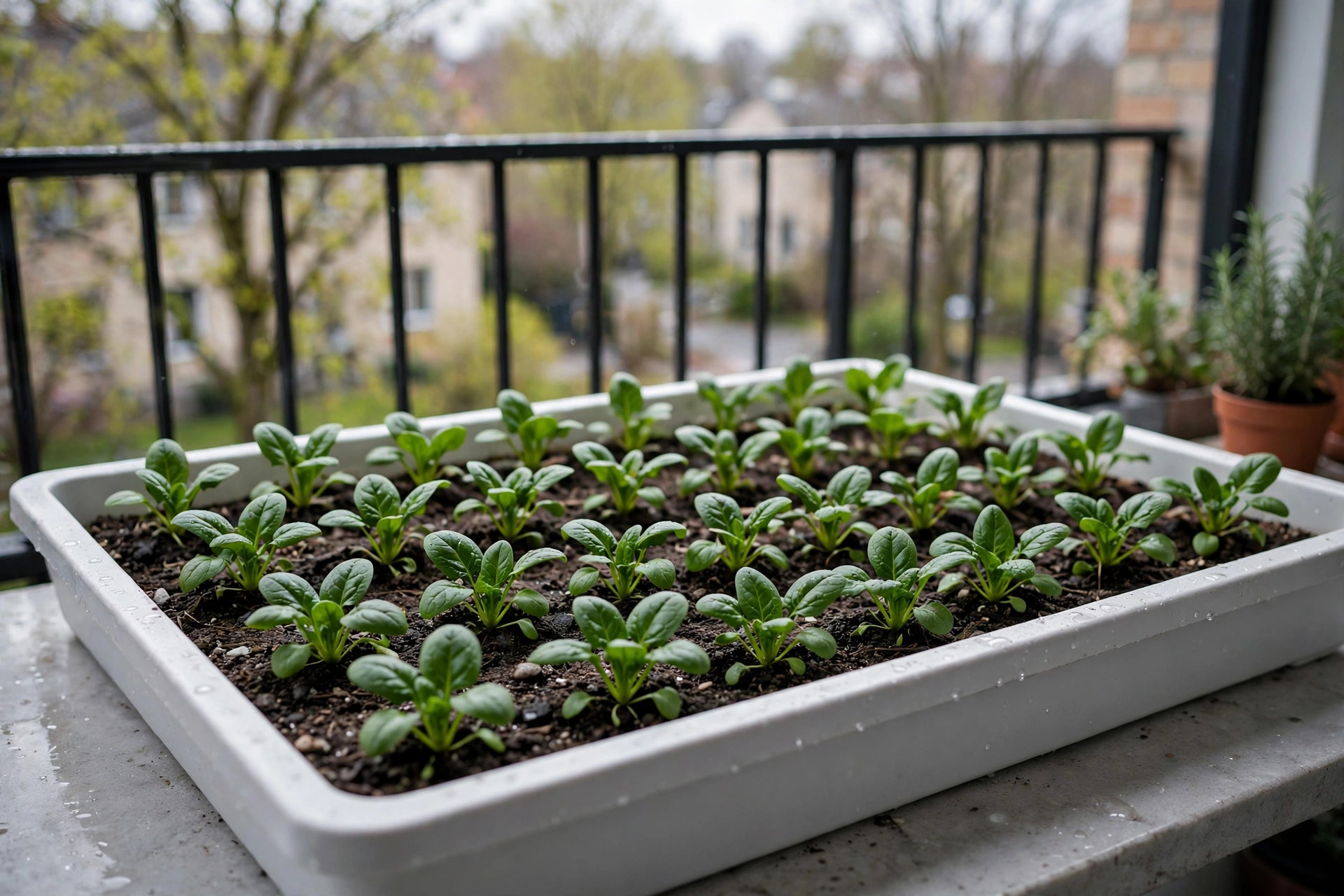
Spinach has one firm demand: cool weather, or it bolts to seed and turns bitter. A late sowing in warm mix is the usual reason a first pot disappoints.
Sow in late winter or early spring, as soon as the mix can be worked. Use a wide pot 8 inches (20 cm) deep and sow seed 1/2 inch (1 cm) deep in rows 4 inches (10 cm) apart.
Thin the seedlings to 3 inches (8 cm) once they stand an inch tall. Spinach grows well on 3 to 4 hours of sun, and morning light with afternoon shade buys extra weeks of picking.
‘Bloomsdale Long Standing’ holds its leaves longer than older types before bolting. Pick outer leaves at hand size and the center keeps sending up fresh growth.
4. Loose-Leaf Lettuce for Salads Within Weeks
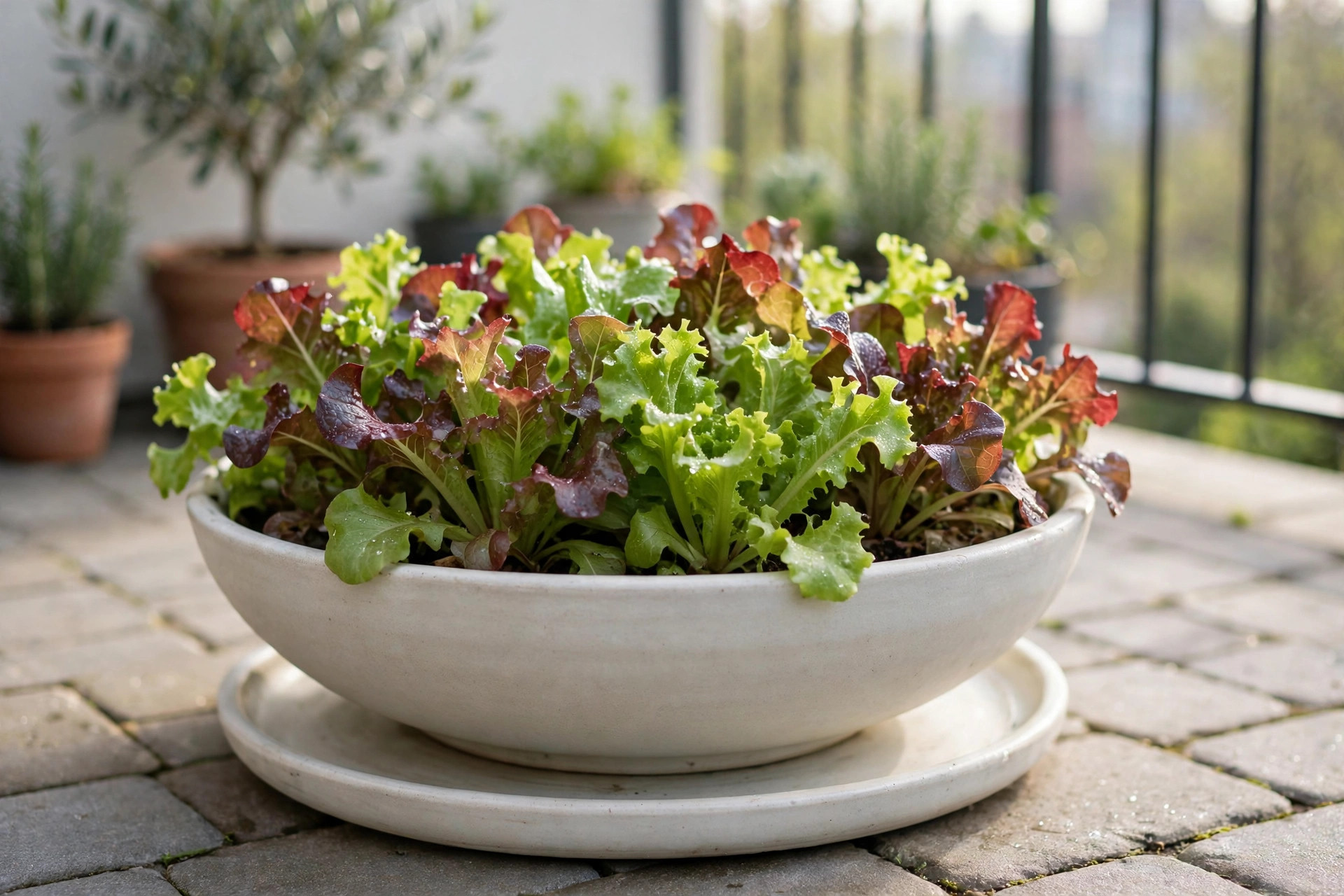
A bowl of loose-leaf lettuce pays you back in salads while the peas are still climbing. You pick the outside leaves at lunch size and the plant keeps making more.
Choose a wide bowl 8 inches (20 cm) deep and 12 inches (30 cm) wide. Sow seed 1/4 inch (0.5 cm) deep, thin to 6 inches (15 cm) apart, and keep the surface damp until green shows.
Lettuce manages on 3 to 4 hours of sun, so it takes the shadier end of the rail. A fresh pinch of seed every two weeks keeps the supply steady instead of landing all at once.
Herbs slot into the same spring plan beside it. These balcony herb garden ideas for apartments show small pots that earn their keep by a kitchen door.
5. ‘Lacinato’ Kale That Stands Through Cold Snaps

Kale is the spring crop I never worry about when a cold snap lands in April. It shrugs off light frost, and the leaves taste sweeter after cold nights touch them.
Give one plant a pot at least 12 inches (30 cm) deep, since crowded kale stays small and draws aphids to weak leaves. Sow seed 1/2 inch (1 cm) deep, then thin to a single strong plant.
‘Lacinato’ has dark, crinkled leaves that handle the nibbling insects that trouble cabbage. It grows well on 3 to 4 hours of sun, which makes it the easy tenant for a shadier corner.
Pick outer leaves and leave the center rosette alone. Picked this way, one plant feeds soups and salads for months.
6. Scallions in a Slim Trough You Sow Once
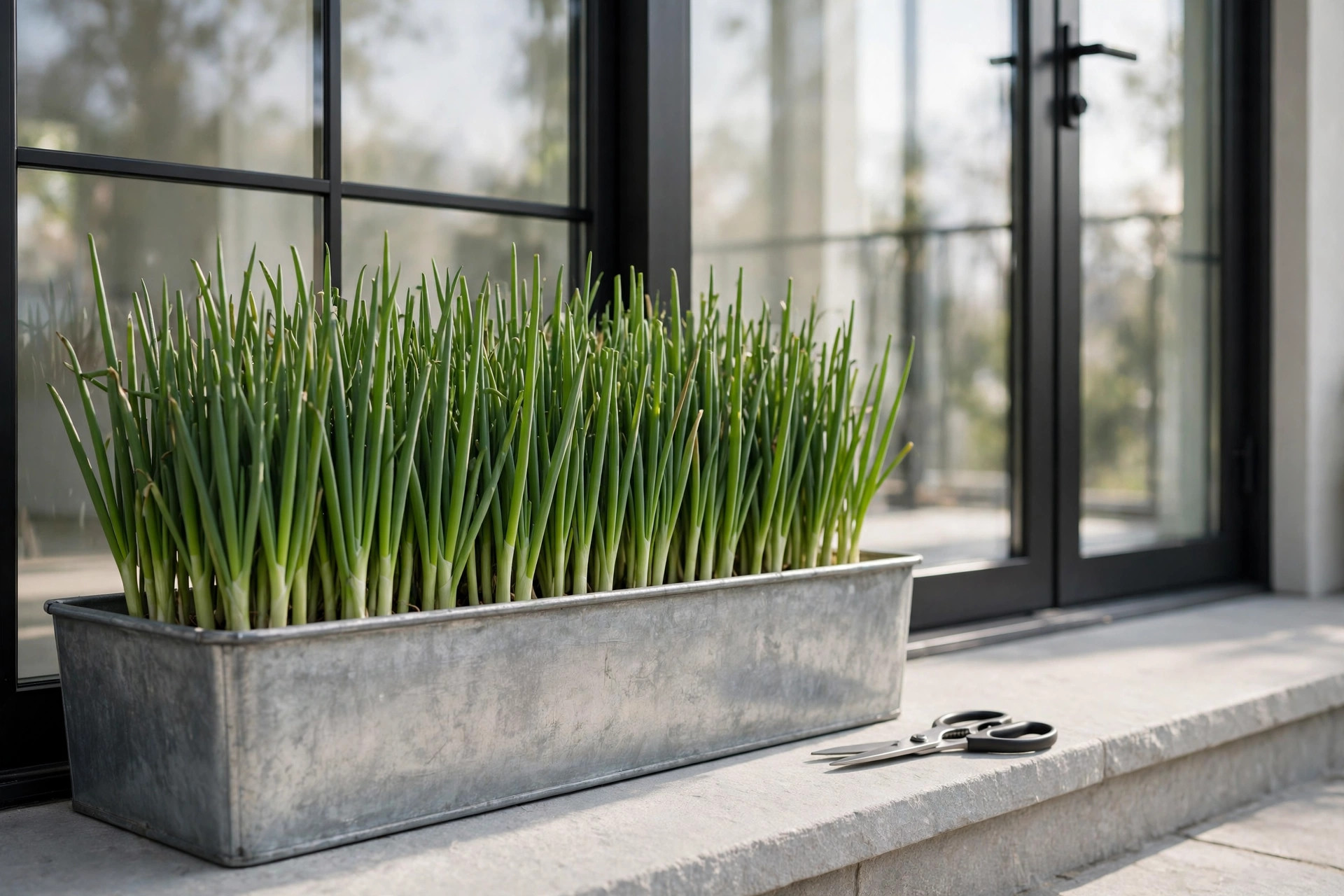
Sow scallions once in early spring and snip from the same trough for months. Start with a trough at least 6 inches (15 cm) deep, set where you pass it daily.
Sow seed 1/4 inch (0.5 cm) deep and thin the seedlings to about 1 inch (2.5 cm) apart in the row. Keep the mix damp while the fine seed sprouts, which can take two weeks.
Scallions shrug off light frost and draw almost no pests. A bunching type such as ‘Evergreen Hardy White’ stands in the trough through spring and into summer.
Cut what you need with kitchen scissors, about a third of the green tops at a time, and the plants regrow for the next round of eggs, soup, or rice.
7. Broad Beans, the Tough Beans That Like It Cold

The myth says beans need summer heat, full stop. Broad beans (fava beans) break that rule: they germinate in cold soil and crop before spring peas finish.
Sow the big seeds 2 inches (5 cm) deep in a deep pot, at least 12 inches (30 cm). Keep one plant in a 5-gallon (19 litre) pot, or two in a wider trough, and push a short cane beside each plant early.
Broad beans want 6 hours of sun and steady water once flowers open. Pinch out the soft growing tips once pods set, which discourages blackfly and firms up the plant.
Pick pods young, when the beans inside feel like peas through the shell, and cook them the same day.
8. Short Carrots in Deep, Stone-Free Mix

The first sign is a lacy green fringe along the row, so fine it looks like dill. Give carrots time: the seed can take 2 to 3 weeks to show.
Pick a short, round type such as ‘Parisian Market’, which forms golf-ball roots in shallow mix. Fill a pot 12 inches (30 cm) deep and sow seed under 1/2 inch (1 cm) of mix.
Keep the surface damp the whole wait, under a board or a light cloth if spring winds dry it out. Dry seed is the main cause of failed carrot rows.
Thin seedlings to 2 inches (5 cm) apart so roots size up evenly, and set the pot in 5 to 6 hours of sun.
9. Beets for Two Harvests From One Spring Sowing

Most spring crops give one harvest and finish. Beets give two: tender leaves first, thinned while the roots swell, then the roots themselves a few weeks later.
Sow seed 1/2 inch (1 cm) deep in a pot at least 10 inches (25 cm) deep. Each wrinkled seed holds several sprouts, so thin the cluster to one plant every 3 inches (8 cm).
‘Detroit Dark Red’ is the steady standard for pots and beds alike. Beets accept 4 to 6 hours of sun and cope with cool spring weather, asking only for steady water while roots swell.
Small pots group well on a tight rail. These small balcony garden ideas show how a few containers fill a narrow space without crowding it.
10. ‘Bright Lights’ Chard, Sown Once the Frosts Ease

The quick mistake with chard is sowing it in the coldest week and writing it off as slow. Chard seed wakes up slowly in cold mix, then grows fast once nights soften.
Wait until hard frosts pass, then sow seed 1/2 inch (1 cm) deep in a pot 10 to 12 inches (25 to 30 cm) wide. Space plants 6 inches (15 cm) apart, since each seed cluster sends up several seedlings.
‘Bright Lights’ grows stems in red, gold, and pink against deep green leaves, so the pot looks planted on purpose. Give it 4 to 6 hours of sun and cut outer stems at the base.
The heart keeps pushing new leaves for months after each cut.
11. Broccoli Raab for Fast Spring Shoots
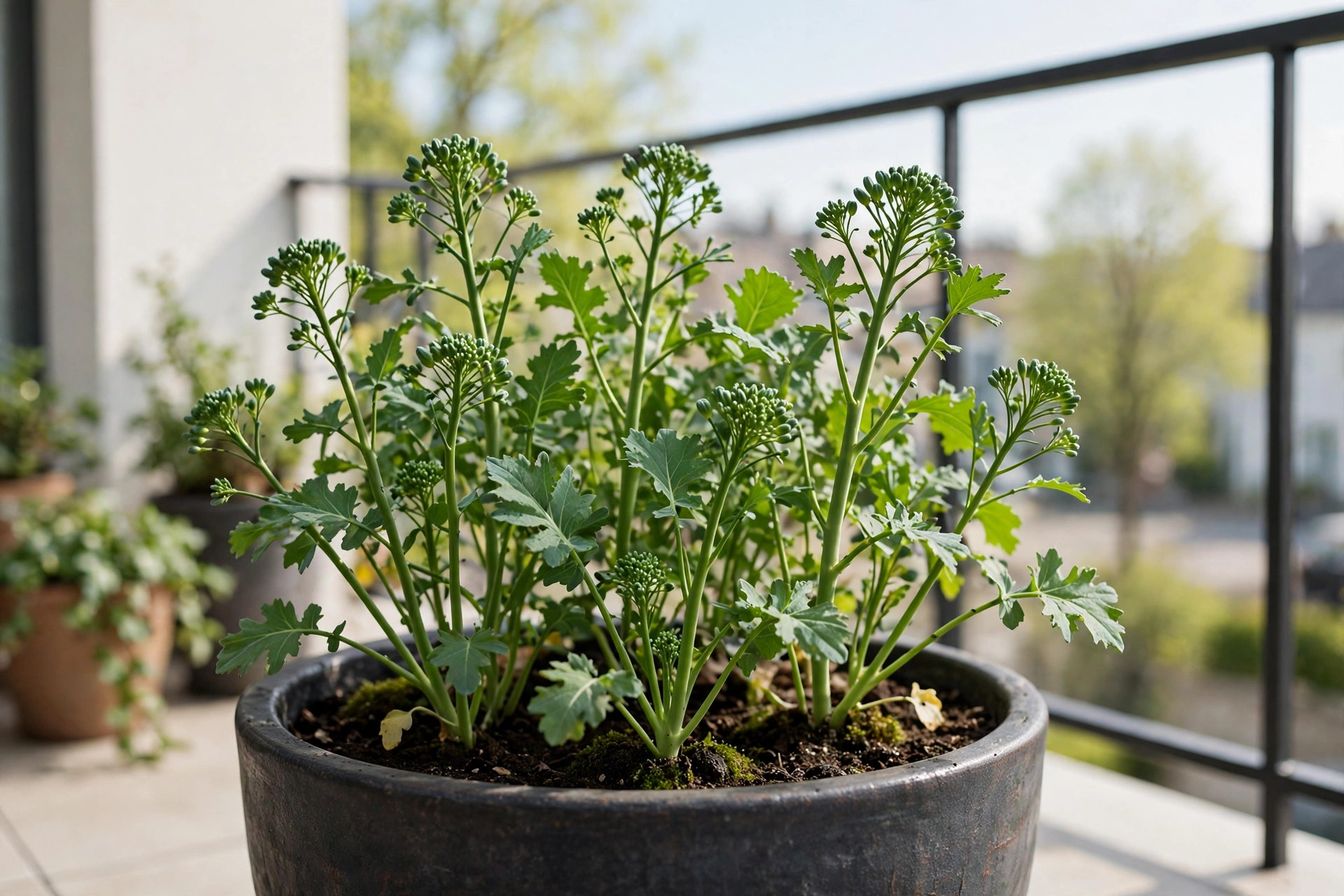
The harvest hides in plain sight: small green buds on thin stems, more like asparagus tips than a supermarket head. Broccoli raab is grown for those shoots, and it is quick.
Sow seed 1/2 inch (1 cm) deep in a pot at least 10 inches (25 cm) deep, and thin plants to 4 inches (10 cm) apart. It germinates fast in cool mix and wants 5 to 6 hours of sun.
Cut the shoots as soon as buds form, before any yellow flowers open, and the plant sends up side shoots for a second and third picking. Warm weather ends the run, so this is a true spring crop.
Cook the shoots the day you cut them, stems and all.
12. Arugula in a Wide Tray, Picked Young

One rule keeps arugula sweet: pick it young. Leaves left to grow large in warming weather turn hot and bitter, while baby leaves stay peppery and mild.
Use a wide, shallow tray at least 6 inches (15 cm) deep. Sow seed 1/4 inch (0.5 cm) deep in short rows, keep the surface damp, and expect green within a week in cool spring mix.
Arugula grows on 3 to 4 hours of sun, which suits the shadier end of the rail. Snip outer leaves with scissors, or pull whole young plants to thin the row as you harvest.
Sow a fresh pinch every two weeks until days turn warm, then pause until autumn, when the same tray earns a second run.
13. Salad Turnips That Ripen Before Summer

Turnips sound like a winter field crop, heavy and slow. Salad types break that idea: ‘Tokyo Cross’ forms smooth white roots in about five weeks of cool weather.
Sow seed 1/2 inch (1 cm) deep in a pot at least 10 inches (25 cm) deep, and thin seedlings to 3 inches (8 cm) apart. Keep the mix evenly damp so roots swell without splitting.
Give them 5 to 6 hours of spring sun. Pull roots at golf-ball size, while they are still mild and crisp enough to slice raw into salads.
The green tops cook like spinach, so nothing from the pot is wasted. For more small-space planning, these smart balcony garden ideas add useful checks.
14. Bok Choy That Bolts if You Sow It Late
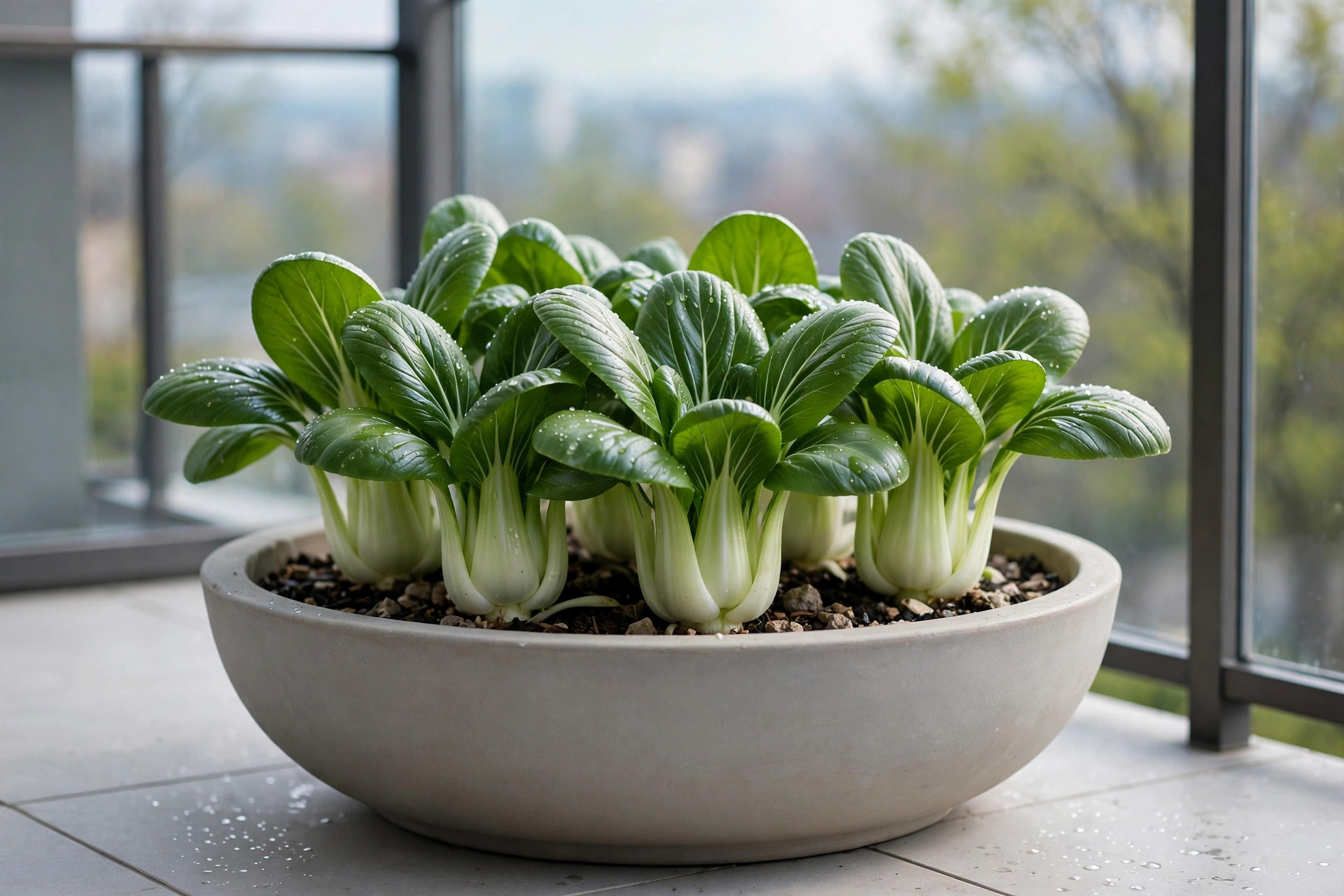
The mistake with bok choy is waiting for warm, settled weather. Given a late start, it bolts to flower in the first hot spell and the leaves turn bitter.
Sow early instead, while nights are still cold. Use a pot at least 8 inches (20 cm) deep, sow seed 1/2 inch (1 cm) deep, and thin plants to 6 inches (15 cm) apart for full heads.
A dwarf type such as ‘Mei Qing Choi’ suits pots and matures fast. Give it 4 to 5 hours of sun and steady water; dry mix is the other fast route to bolting.
Harvest whole heads while they are still compact, or pick outer leaves a few at a time.
15. Mustard Greens for a Last Cold-Season Kick

Mustard greens are the spring crop I sow when the seed box is nearly empty and the rail still has one cold corner left. They germinate fast, grow faster, and ask almost nothing.
Use any pot at least 8 inches (20 cm) deep. Sow seed 1/4 inch (0.5 cm) deep, thin to 4 inches (10 cm) apart, and keep the surface damp for the first week.
‘Red Giant’ gives broad leaves with a real mustard heat that softens when cooked. It grows on 3 to 4 hours of sun and shrugs off light frost that would end tender greens.
When spring pots empty, the same containers carry the next season. This guide to autumn container vegetables for a second harvest plans that handover.
Start these spring container vegetables to plant first cool weather crops while the soil is still cold, and your balcony is producing food weeks before the summer crops go in.
Cold soil is not a delay for this group; it is the starting signal they wait for.
Begin with peas, radishes, and one leafy green in the sun you actually have. Add a pot at a time as each sowing proves itself.
Save this list to your container garden board for later, and sow the first row this week, fleece by the door or not.


