

15 Container Vegetables for a Tiny Patio, Step by Step
A folding chair, a coffee mug, and a patch of paving barely wide enough for both: that is the whole patio. It can still grow your dinner.
You can build a container vegetable garden for a tiny patio step by step in one weekend, with no digging and no yard at all. The list below follows the order that works on a few square feet.
Each pick is a vegetable that earns its footprint. Pot sizes are given in inches and cm, with sun hours and spacing, so you can shop once and plant once.
Start with the corner that gets the most sun, and work down the list. Small patios reward a plan more than they reward money.
Before you buy a single pot, spend one day watching the light. Note which corner catches the morning sun, which wall holds heat into the evening, and where the wind slips through.
That one day of watching decides where every plant on this list will sit. Fruiting crops take the bright hours, leafy crops take what is left, and nothing gets planted twice by mistake.
This post contains affiliate links. If you buy through them, we may earn a small commission at no extra cost to you. See our Affiliate Disclosure.
1. Cherry Tomatoes in a 5-Gallon Pot at the Sunniest Edge
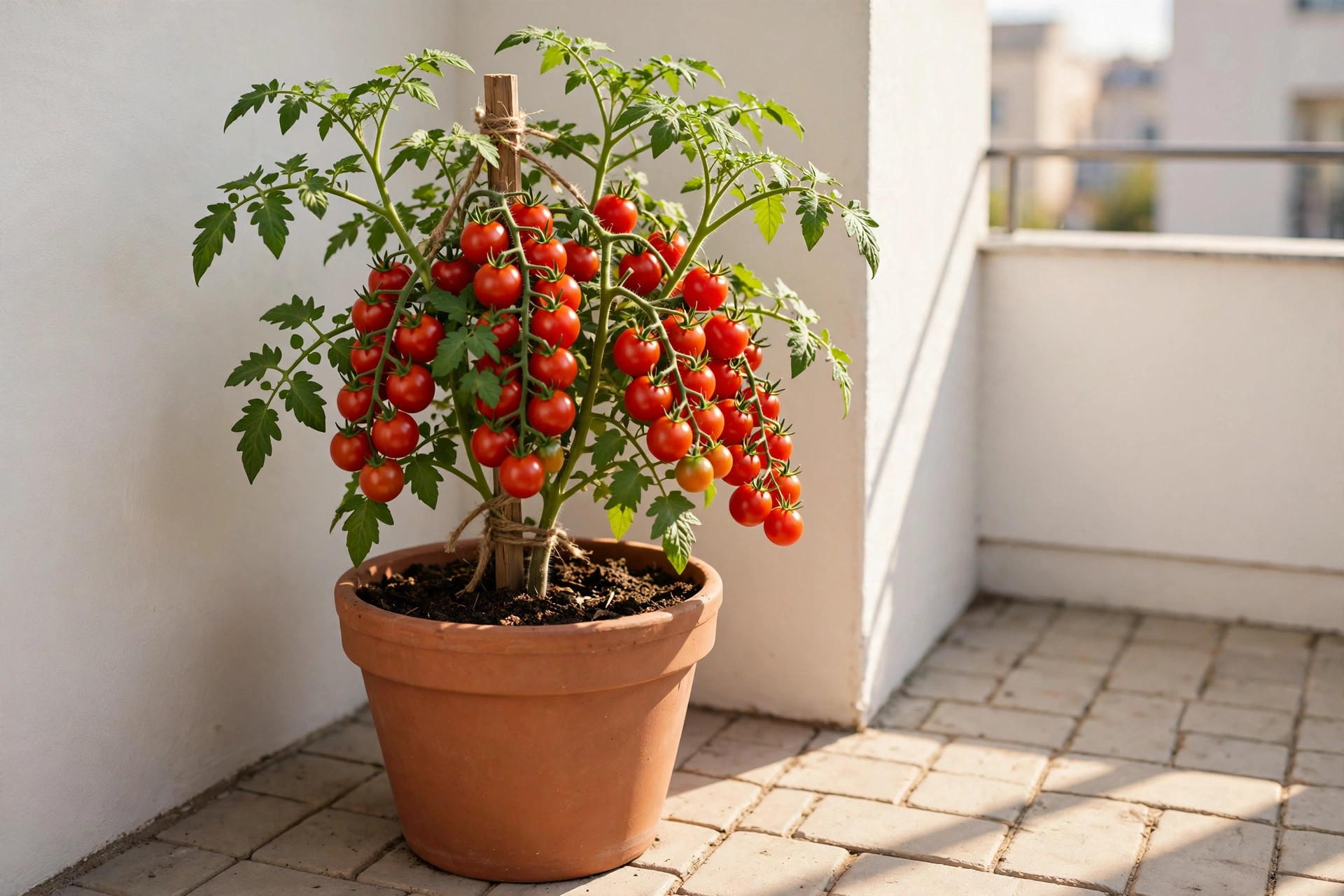
The sunniest corner of a tiny patio is easy to find. It is the spot where the paving stays warm after lunch, the place a cat would pick for a nap. Give that corner to a tomato.
Choose a compact type bred for pots, such as ‘Patio Choice’, and set one plant in a 5-gallon (19 litre) pot, about 12 inches (30 cm) across. A bigger pot holds more water, which means fewer wilted afternoons.
Tie the main stem loosely to a short stake as it grows. Feed weekly with a liquid tomato feed once the first flowers open.
A small plan helps before you lift any bags of mix. This guide to a container vegetable garden layout for a small space walks through sun order and spacing for tight footprints like yours.
2. Radishes in a Window Box for a Fast First Win
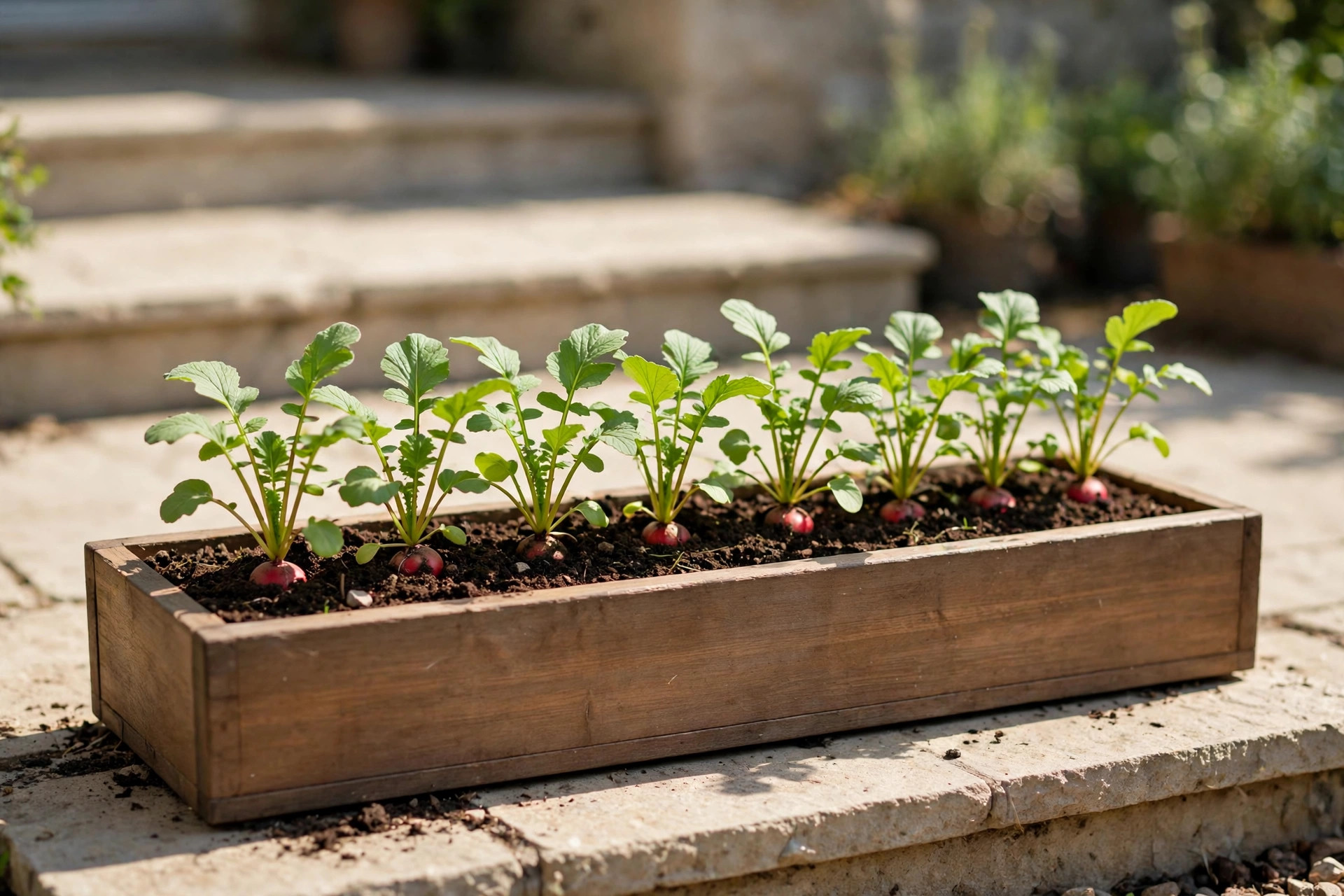
One rule covers radishes: sow little and often. A short row every two weeks beats one long row that all ripens in the same week and turns woody.
Use a window box or any pot at least 6 inches (15 cm) deep. Scatter the seed thinly, cover with 1/2 inch (1 cm) of mix, and thin the seedlings to 2 inches (5 cm) apart.
Radishes forgive beginners because they are quick. Most types are ready to pull about a month after sowing in warm weather, so a failed row costs you almost nothing.
Keep the mix damp while seeds sprout. A box that dries out on a sunny step gives hot, split roots, so check it each morning with a fingertip.
3. Lettuce in a Wide, Shallow Bowl for Cut-and-Come-Again Salads
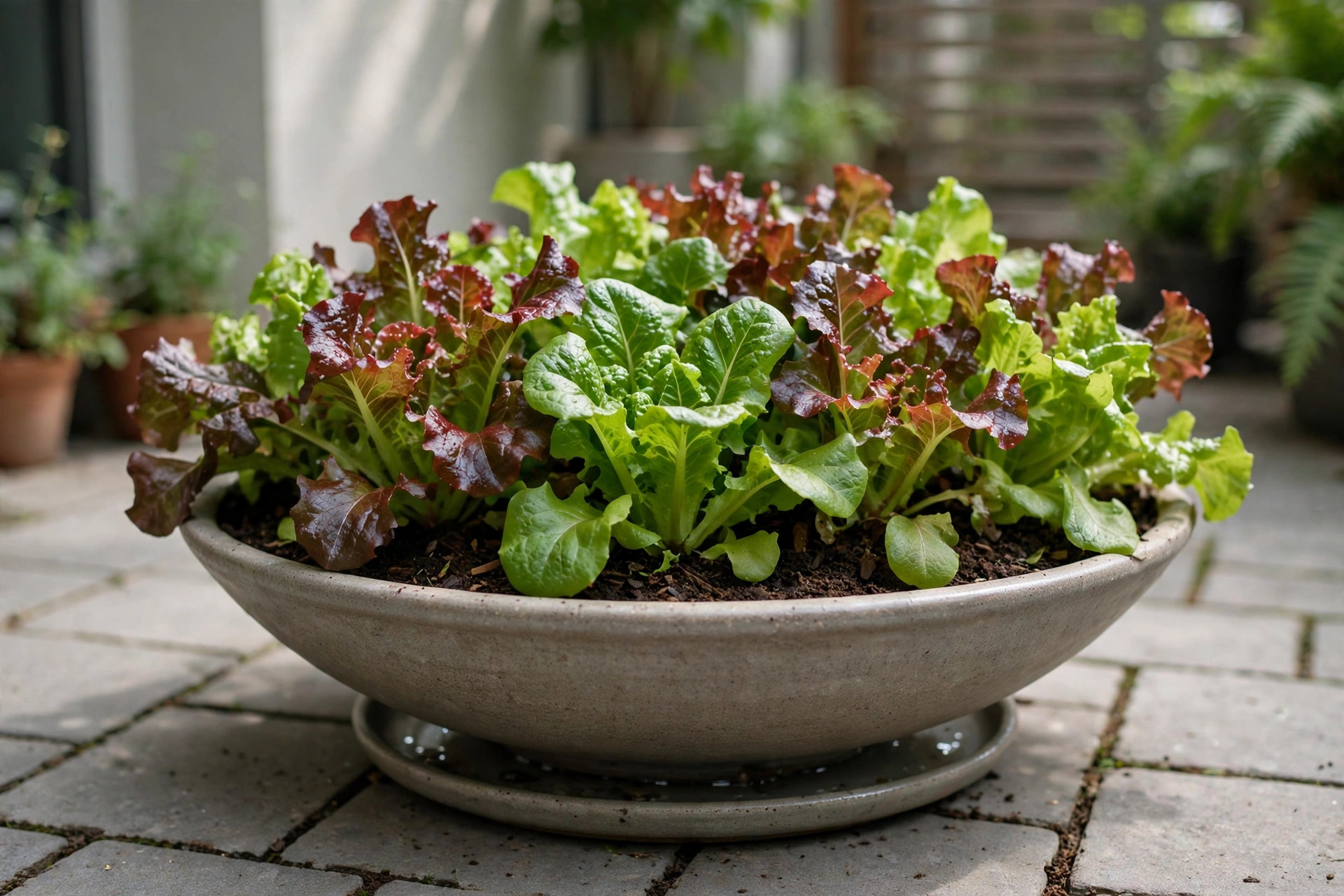
Lettuce asks for width, not depth. A wide bowl 8 inches (20 cm) deep grows a whole salad bar in the space a tomato pot uses.
Loose-leaf types suit tiny patios best because you pick the outer leaves and the plant keeps going. Sow a pinch of seed every two weeks and you will rarely buy a bag of salad again.
Greens manage on 3 to 4 hours of sun, so the bowl can live in the shadier half of the patio. That frees the bright corner for fruiting plants that need 6 hours or more.
Water little and often, and pick in the morning when leaves are crisp. A saucer under the bowl stops drips reaching the balcony below, which the neighbours will quietly thank you for.
4. Basil in a 12-Inch Pot Beside the Door
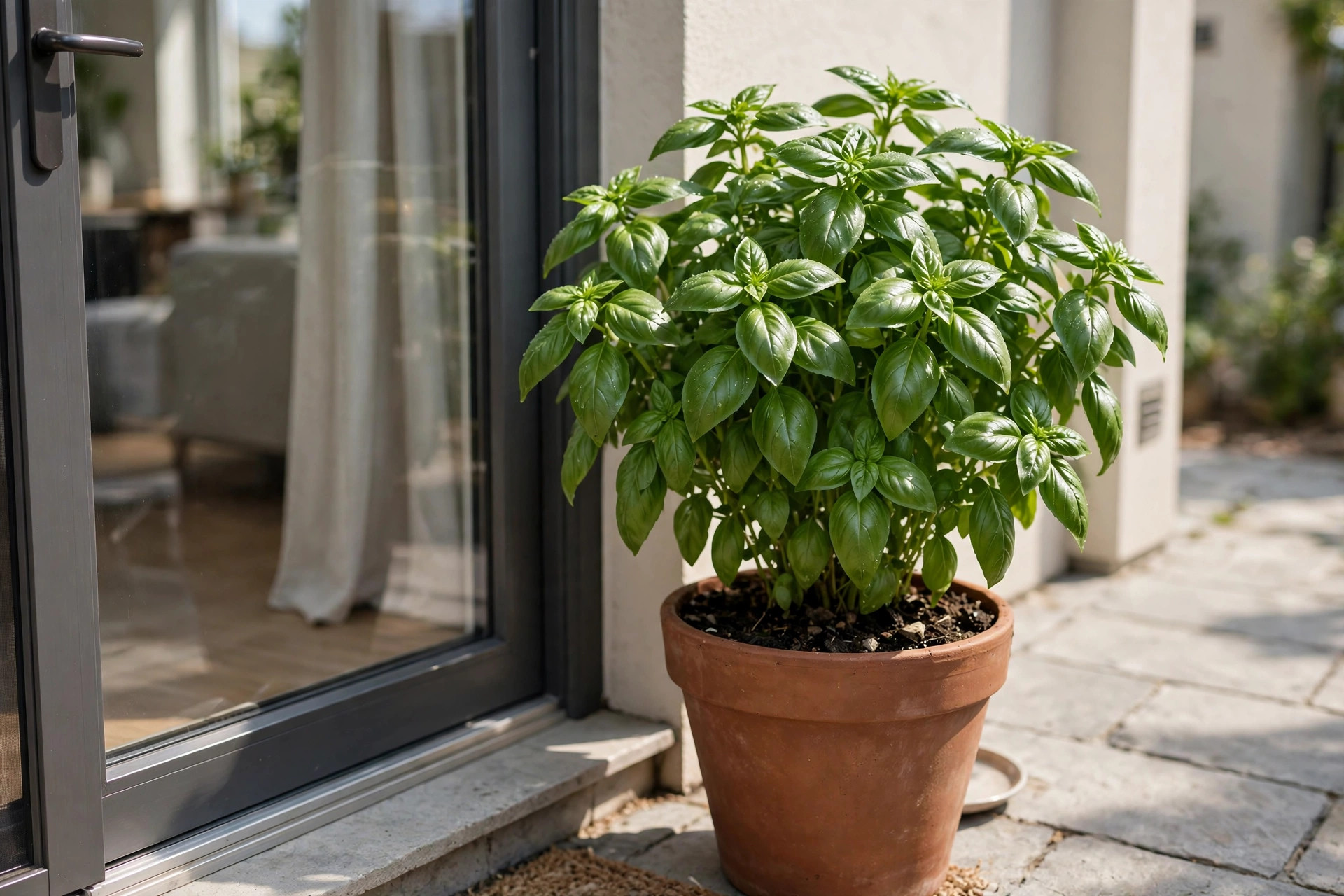
Basil sulks in cold soil, and that is the mistake most beginners make. They plant it out in early spring, watch it stall, and blame their thumbs.
Wait until nights stay warm, then set two or three small plants in a 10 to 12 inch (25 to 30 cm) pot by the door. You will brush past it daily, which reminds you to pinch and water.
Pinch the top pair of leaves off each stem every few days. The plant answers with two new stems, and the pot stays bushy instead of tall and bare.
Basil hates wet leaves in the evening, so water the soil, not the plant. For more ways to style the pots you eat from, see these balcony herb garden ideas for apartments.
5. A Compact Pepper in the Warmest, Most Sheltered Spot
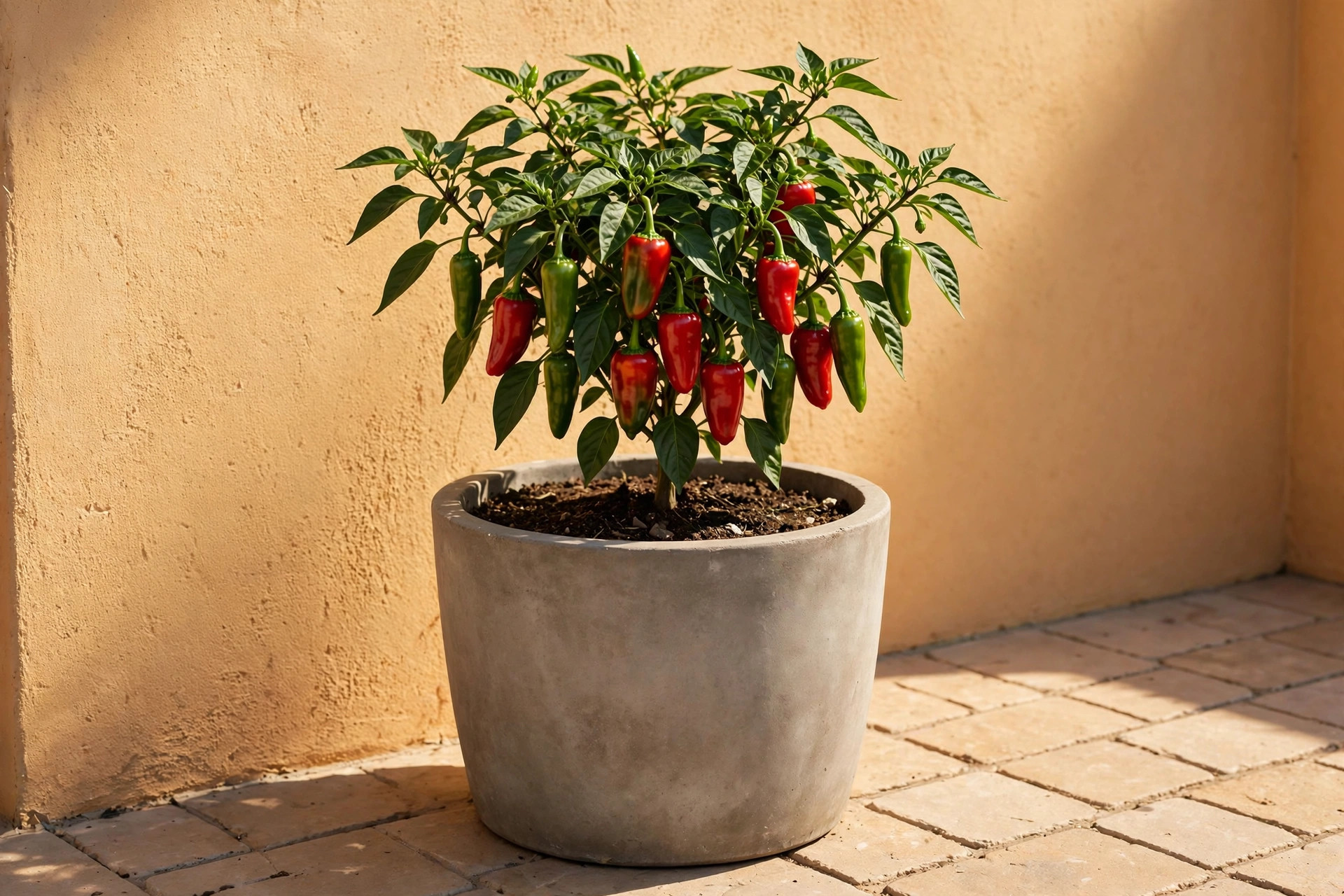
Peppers want heat more than space. Put one compact plant in a 5-gallon (19 litre) pot against the wall that holds the afternoon sun, where wind cannot rock it.
Fill the pot to within 2 inches (5 cm) of the rim with bought potting mix. Plant the pepper at the same depth it sat in its starter pot, no deeper.
Water deeply when the top inch (2.5 cm) of mix feels dry. Peppers in small pots swing fast between soggy and parched, so a steady rhythm matters more than a heavy hand.
Push a short cane in early and tie the stem once fruit starts to weigh. A loaded pepper plant on a windy step can snap at the base in one gust.
6. ‘Astia’ Zucchini in One Big Pot, Front and Center
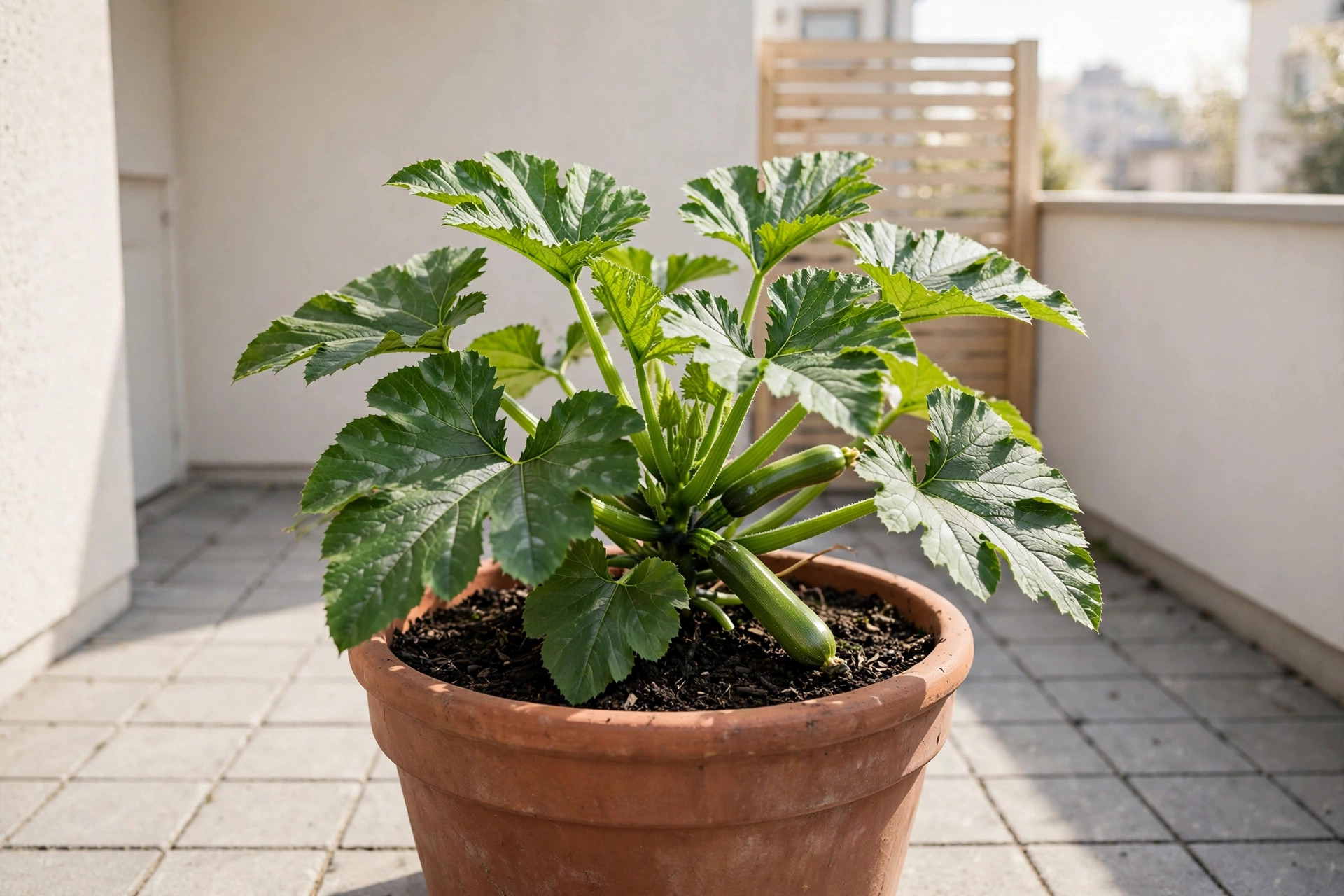
People say zucchini (courgette) needs a whole garden bed. That was true of the old sprawling types, but compact varieties were bred for exactly this problem.
‘Astia’ stays in a tidy mound instead of sending vines across the paving. Give it the biggest pot you own, at least 5 gallons (19 litres) and 14 inches (35 cm) wide, and it will carry a plant all season.
One plant is plenty on a tiny patio. It needs 6 to 8 hours of sun and water at the base most days in hot weather, because those big leaves lose moisture fast.
Pick the fruit young, at 6 inches (15 cm) or so. Small zucchini taste better, and steady picking tells the plant to keep making more instead of swelling one giant.
7. ‘Spacemaster’ Cucumber Up a Small Trellis
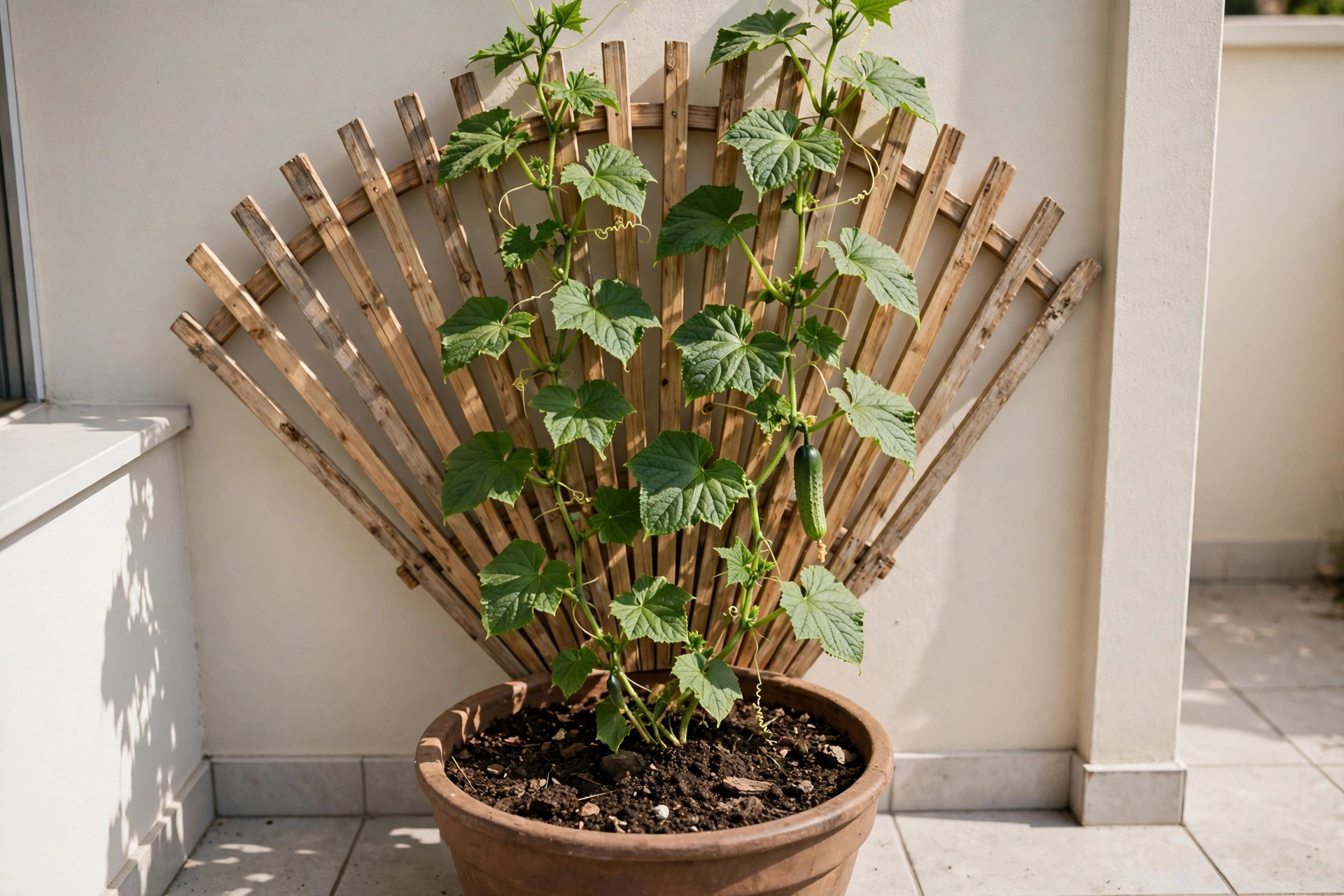
A cucumber vine in full leaf is a green curtain, and on a tiny patio that curtain should climb, not sprawl. ‘Spacemaster’ was bred short, with vines that stay near 3 feet (90 cm).
Set the pot at the base of a small trellis or a few canes tied in a fan. Weave the young stems through the supports once a week, gently, before they grab the wrong thing.
Cucumbers drink like tomatoes, so never let the pot dry right out. Dry spells make the fruit bitter, while steady water keeps it mild and crisp.
If your patio edge is a railing rather than a wall, this step-by-step guide to a container vegetable garden on a railing shows how to fix planters and climbers to the rail safely.
8. Pole Beans on a Teepee for Harvests Above Your Head
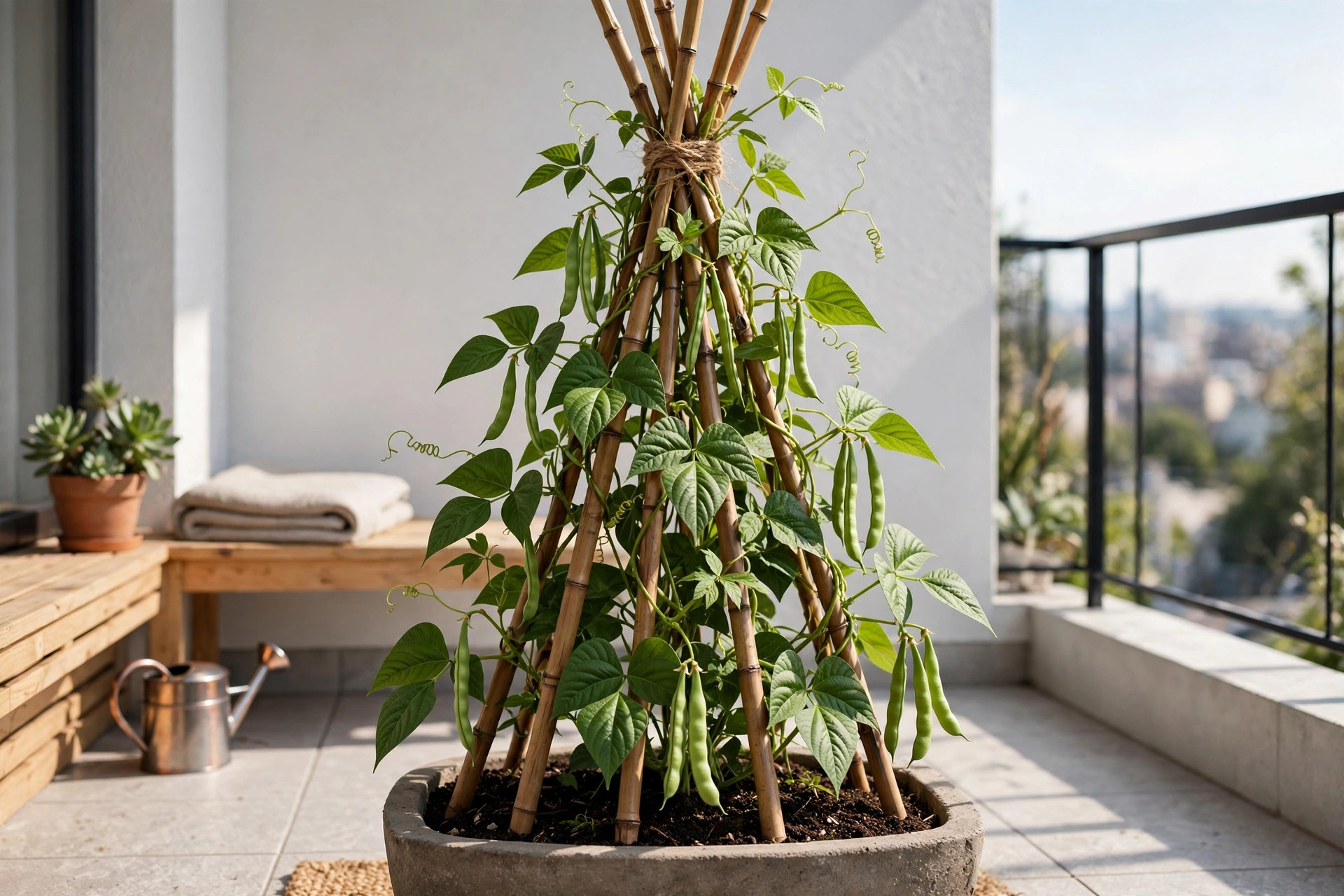
Bush beans and pole beans grow the same crop two ways. Bush types take ground space for a short season, while pole types climb and keep cropping for weeks from one pot.
Push four or five canes into a wide pot, tie the tops together like a teepee, and sow two seeds at the base of each cane. Thin to the strongest seedling per cane.
Beans fix their own nitrogen, so they ask little from you beyond water. A pot 12 inches (30 cm) deep gives the roots room, and a mulch of straw keeps the mix cool.
Pick every two or three days once pods start. For more ways to use height, these small balcony vertical garden wall ideas show what a blank wall can hold.
9. ‘Lacinato’ Kale in a Deep Pot for the Cool Months
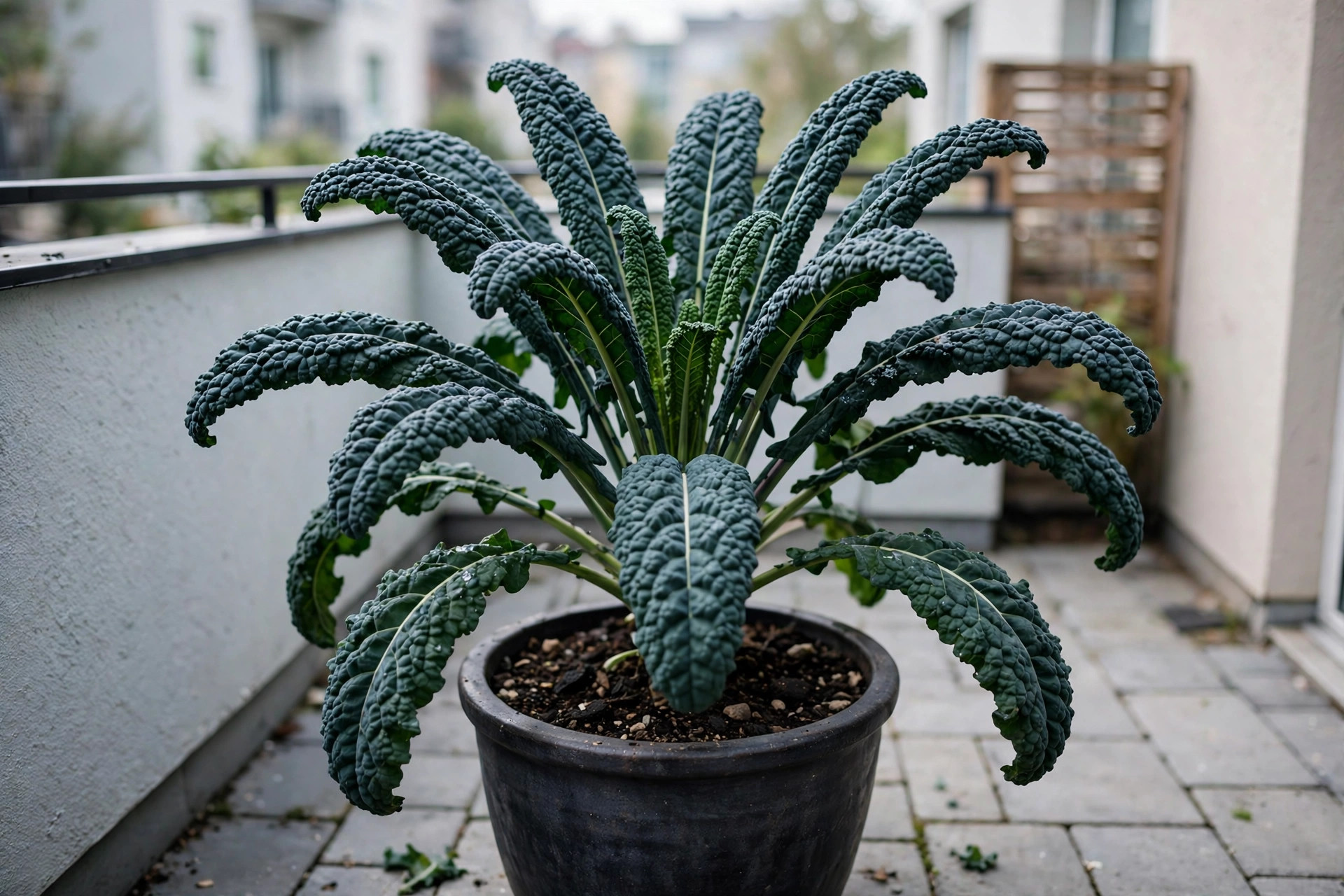
Kale is the plant I point to when someone says their patio gets no sun. ‘Lacinato’, the dark Tuscan type, grows happily on 3 to 4 hours of light a day.
It still wants depth, so use a pot at least 12 inches (30 cm) deep and give one plant the whole pot. Crowded kale stays small and draws aphids to its stressed leaves.
Sow in late summer for a crop that sweetens after the first cold nights. Kale shrugs off light frost that would finish off tomatoes and basil.
Pick the outer leaves and let the center keep growing. A single plant, picked this way, can feed salads and soups from fall into early spring in mild areas.
10. Scallions in a Slim Trough Along the Edge
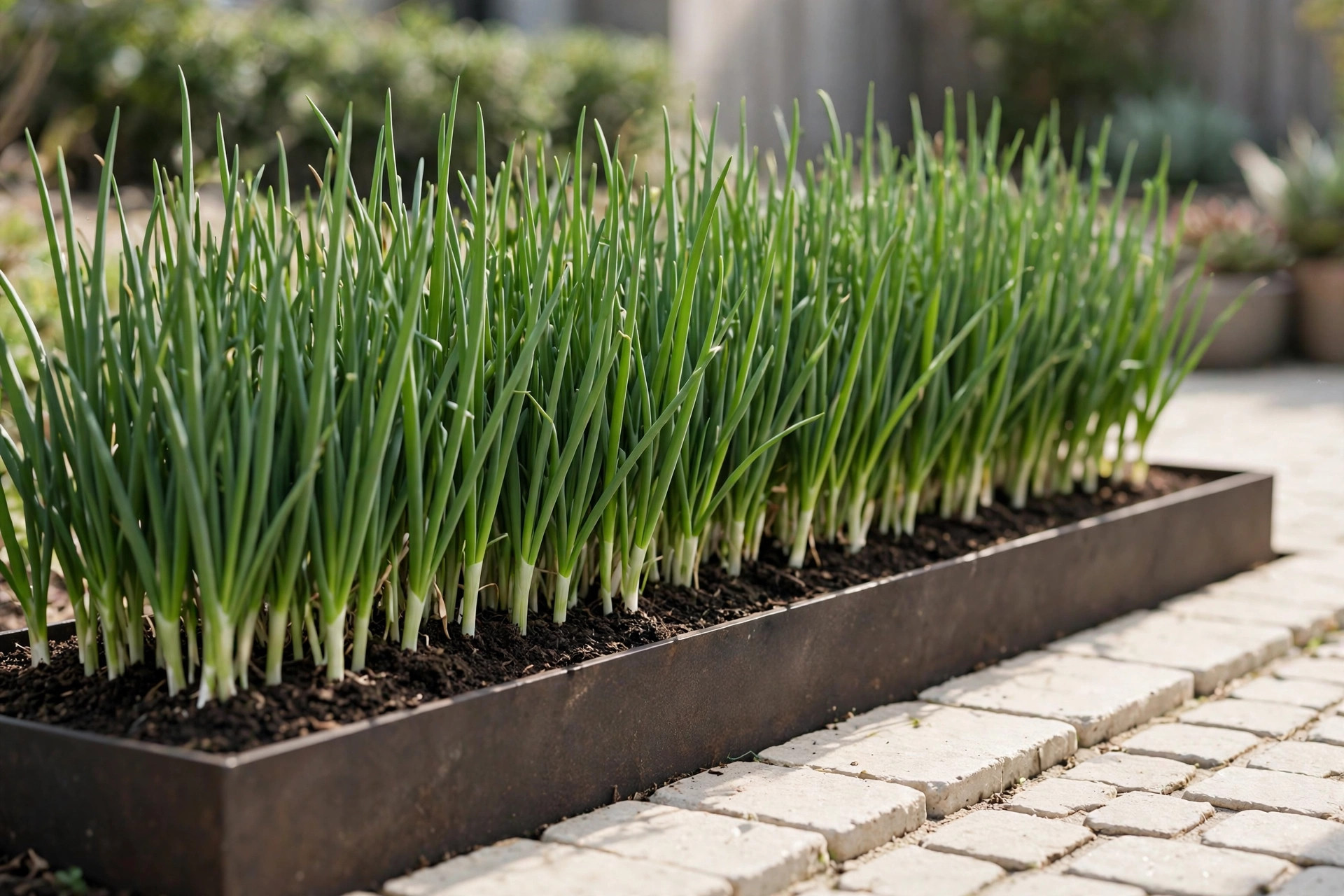
The common scallion mistake is kindness: a deep pot, rich mix, and far too much room. Scallions then grow fat, fall over, and crowd each other out.
They actually want a slim trough and close company. Sow seed thickly in a trough 6 inches (15 cm) deep, thin to about 1 inch (2.5 cm) apart, and let them stand shoulder to shoulder.
A trough fits where round pots cannot: along the patio edge, on a wide step, or on the rail. It turns dead border space into a crop you will use weekly.
Snip what you need with scissors and the rest keeps growing. A second sowing six weeks later keeps the supply steady through the season.
11. Short Carrots in a Deep Pot of Loose Mix
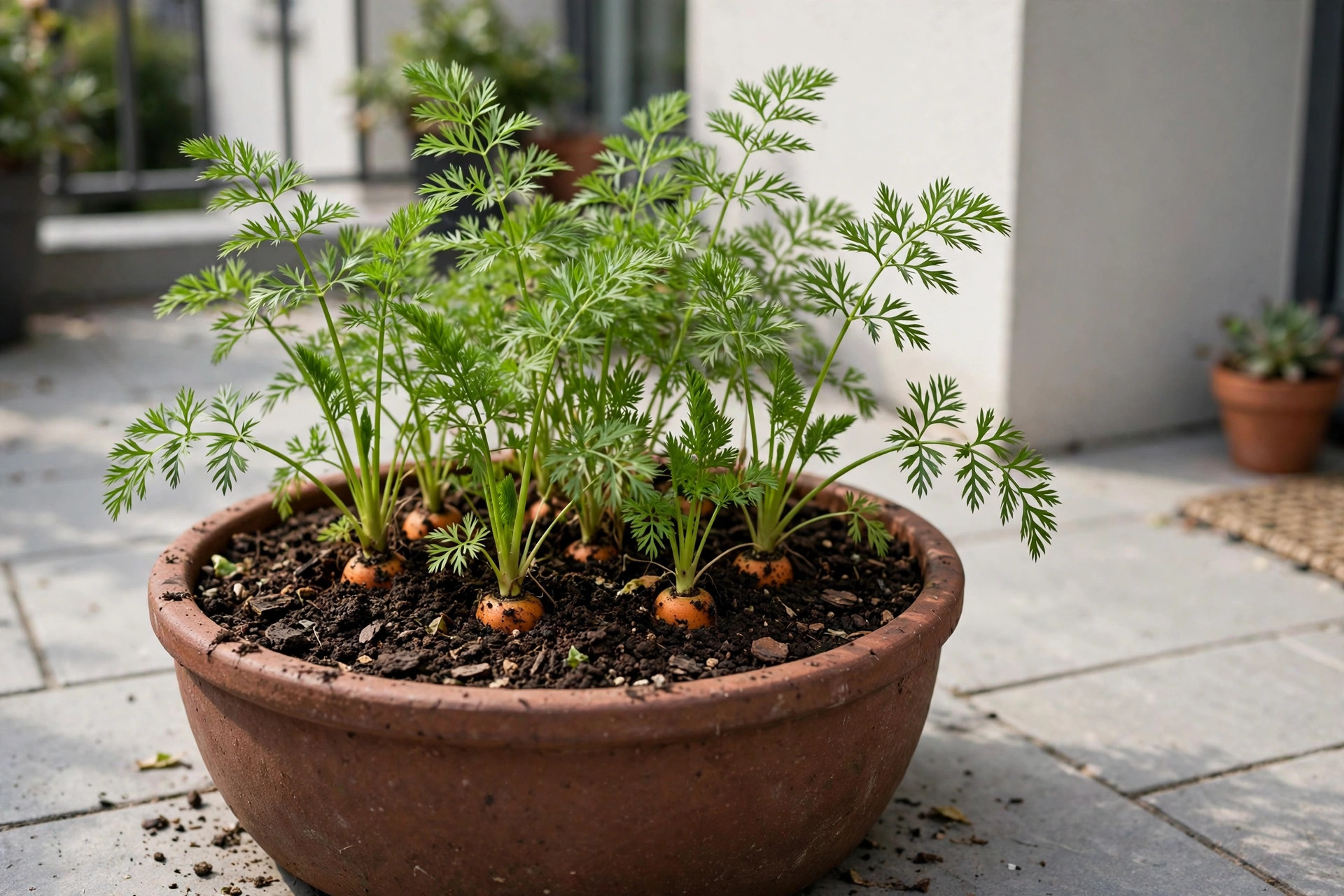
Carrots fork and stunt in stony ground, which is why so many first rows disappoint. A pot solves the problem before it starts, because you control every inch of the mix.
Choose a short, round type such as ‘Parisian Market’, which makes golf-ball roots in shallow soil. Fill a pot 10 to 12 inches (25 to 30 cm) deep with loose, stone-free mix.
Sow thinly, cover with 1/2 inch (1 cm) of mix, and keep the surface damp. Carrots are slow to sprout, often 2 to 3 weeks, and most failures are just dry seed.
Thin seedlings to 2 inches (5 cm) apart once they stand an inch tall. It feels wasteful, but crowded carrots stay pencil thin no matter how long you wait.
12. Sugar Snap Peas Sown Early on a Short Fence of Twigs
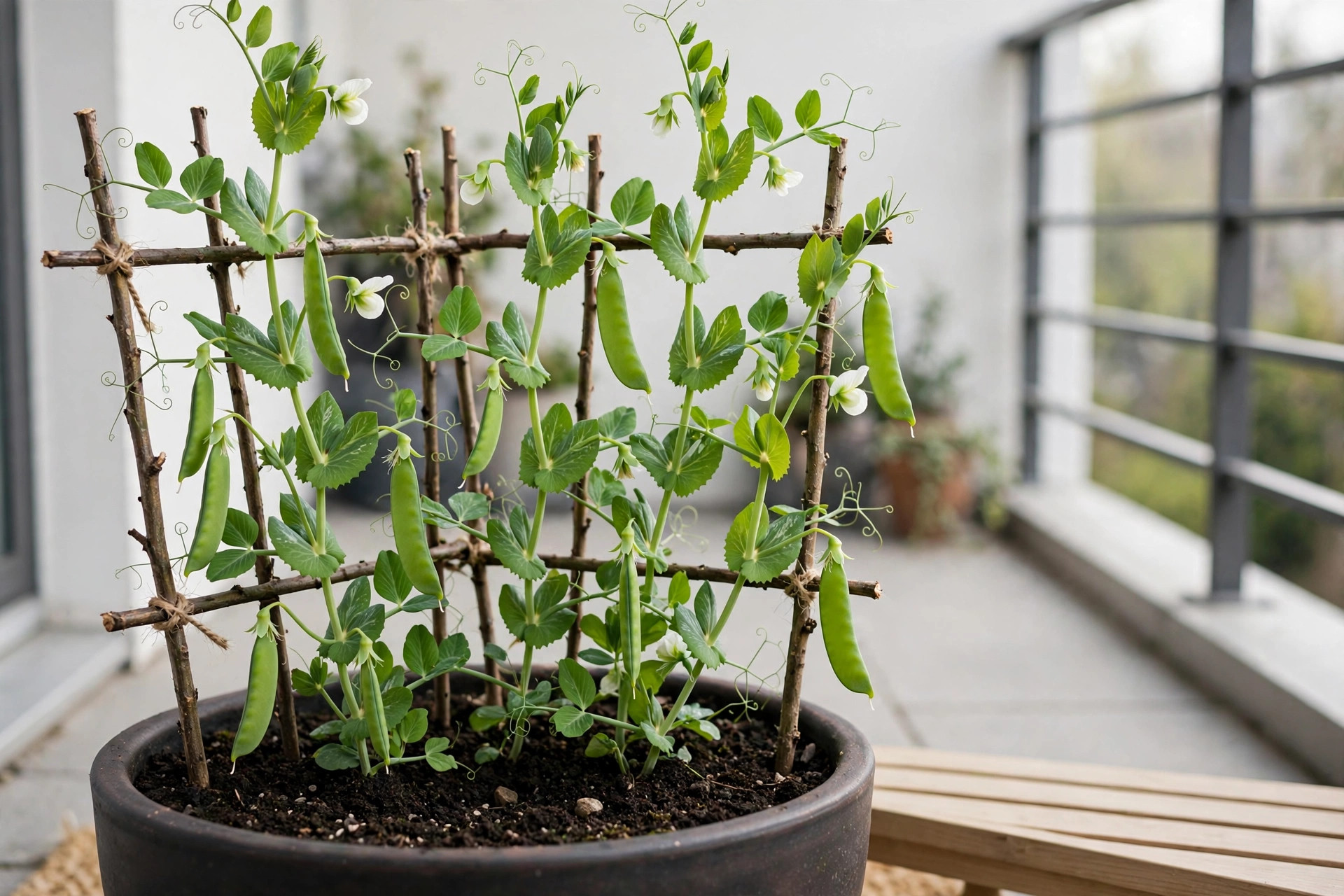
Sugar snap peas and shelling peas both climb, but snaps earn their place on a tiny patio. You eat the whole pod, so one short row gives more meals per plant.
Sow in early spring, as soon as the mix can be worked, in a pot at least 10 inches (25 cm) deep. Push in twiggy sticks or a short net for the tendrils to hold.
Peas like cool roots and bright tops. A layer of straw on the surface, plus a spot that gets morning sun, keeps them cropping longer into warm weather.
Pick pods while they are still glossy and rounded. Once the season ends, the same pot and sticks can host a late row of beans with no extra kit.
13. ‘Bright Lights’ Chard for Color You Can Eat
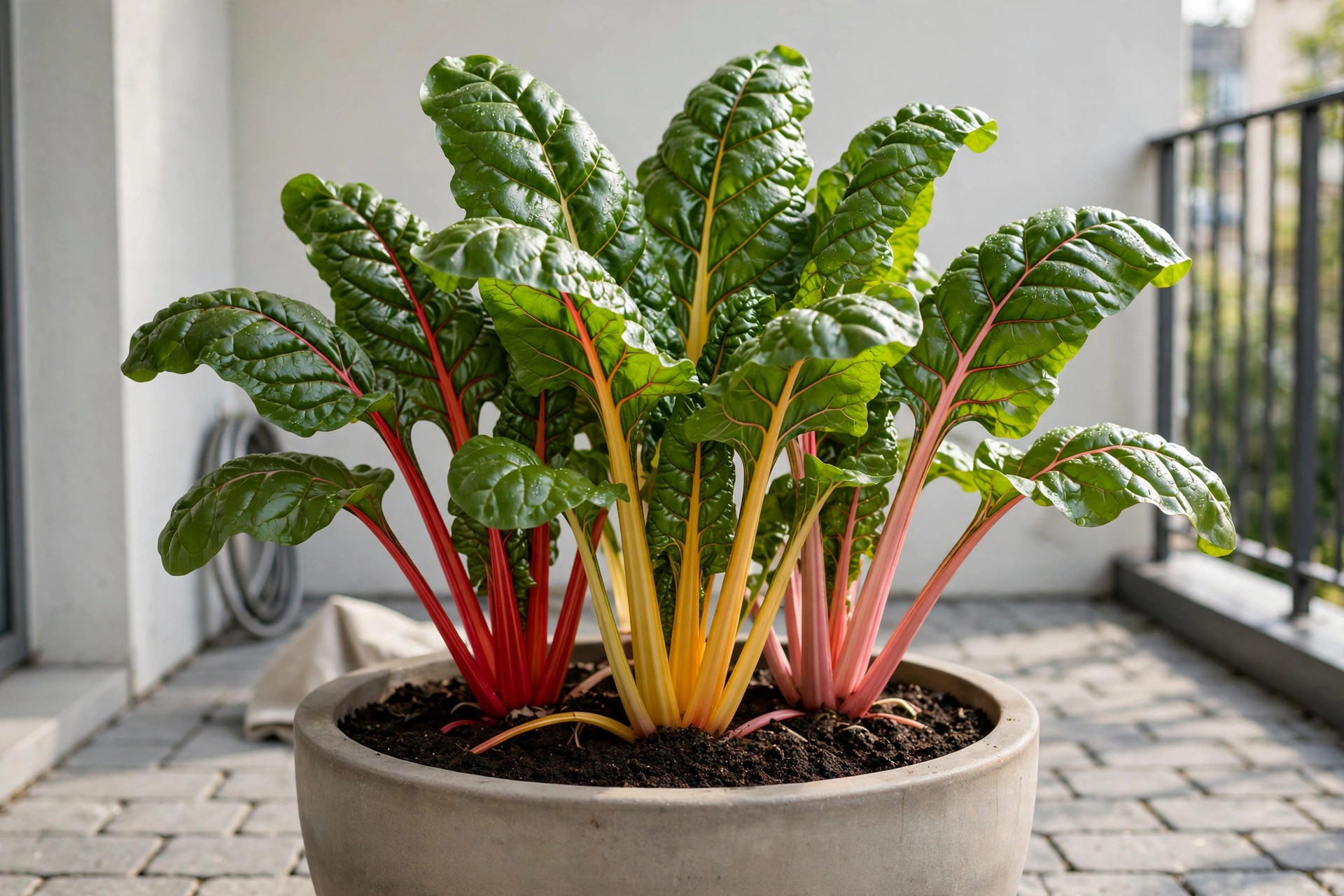
Chard is the hardest worker on this list. One sowing of ‘Bright Lights’ gives stems in red, gold, and pink, and the plant keeps replacing what you pick for months.
Give each plant a pot 10 to 12 inches (25 to 30 cm) wide, or fit two in a wide trough. Chard roots run deep for a leafy crop, so depth matters more than width.
Cut the outer stems at the base and leave the heart alone. Within a week the plant pushes new leaves, a rhythm that suits small households with no freezer space.
Heat makes chard tough but rarely kills it. Shade the pot on the hottest afternoons, water at the base, and it will carry on into fall without complaint.
14. Spinach in a Shallow Pot for Spring and Fall
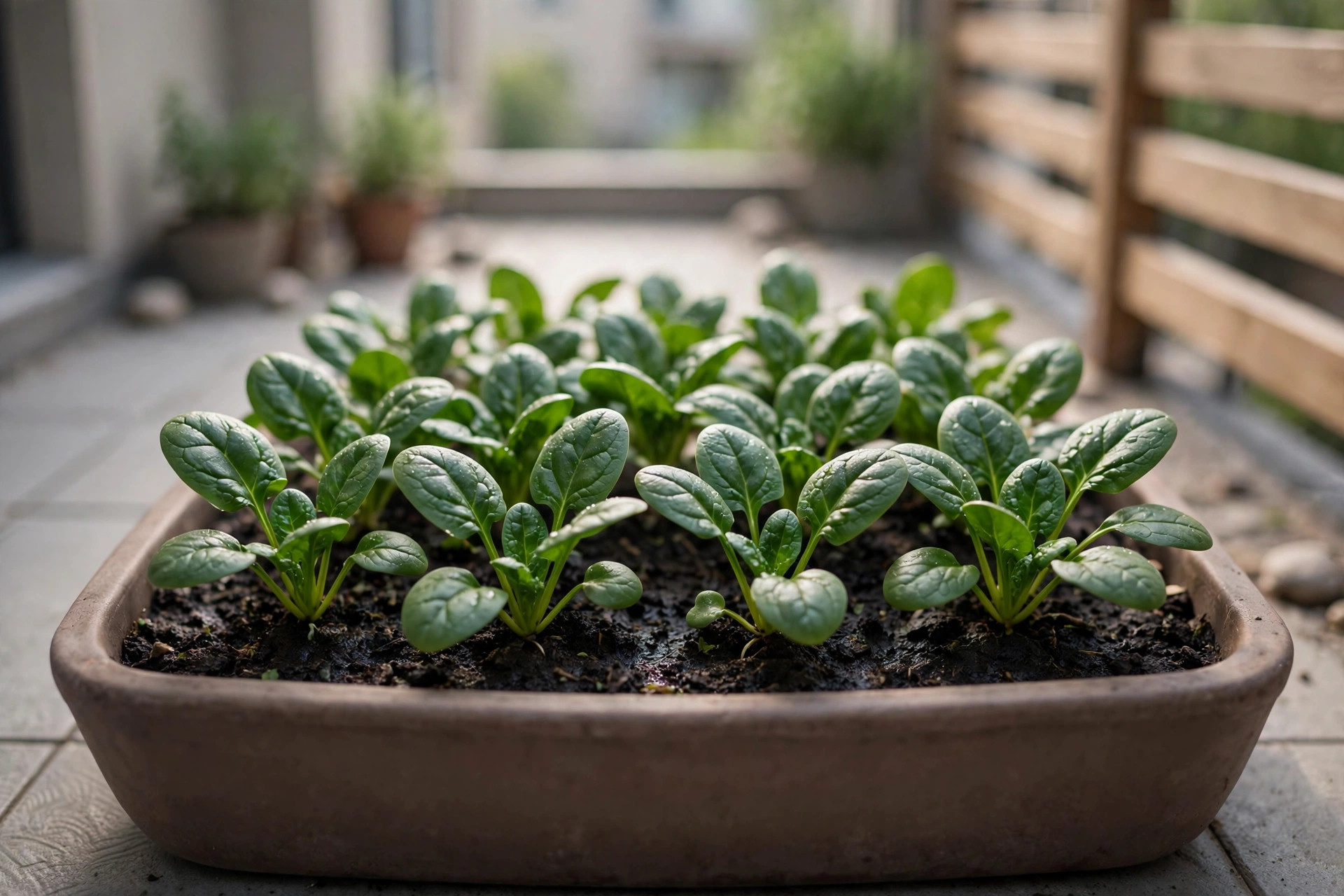
Spinach is a cool-weather crop, and the method is simple: sow it in spring and again in late summer, and skip the hot middle of the year entirely.
Use a wide pot 8 inches (20 cm) deep and sow in short rows 4 inches (10 cm) apart. Thin to 3 inches (8 cm) so each plant can spread its leaves.
Spinach bolts fast in heat and long days, which means it rushes to seed and turns bitter. A spot with morning sun and afternoon shade buys you extra weeks of picking.
Small spaces reward this kind of timing. These small balcony garden ideas show other crops and layouts that work when the footprint stays tiny.
15. ‘Patio Baby’ Eggplant in a Black Pot for Extra Heat
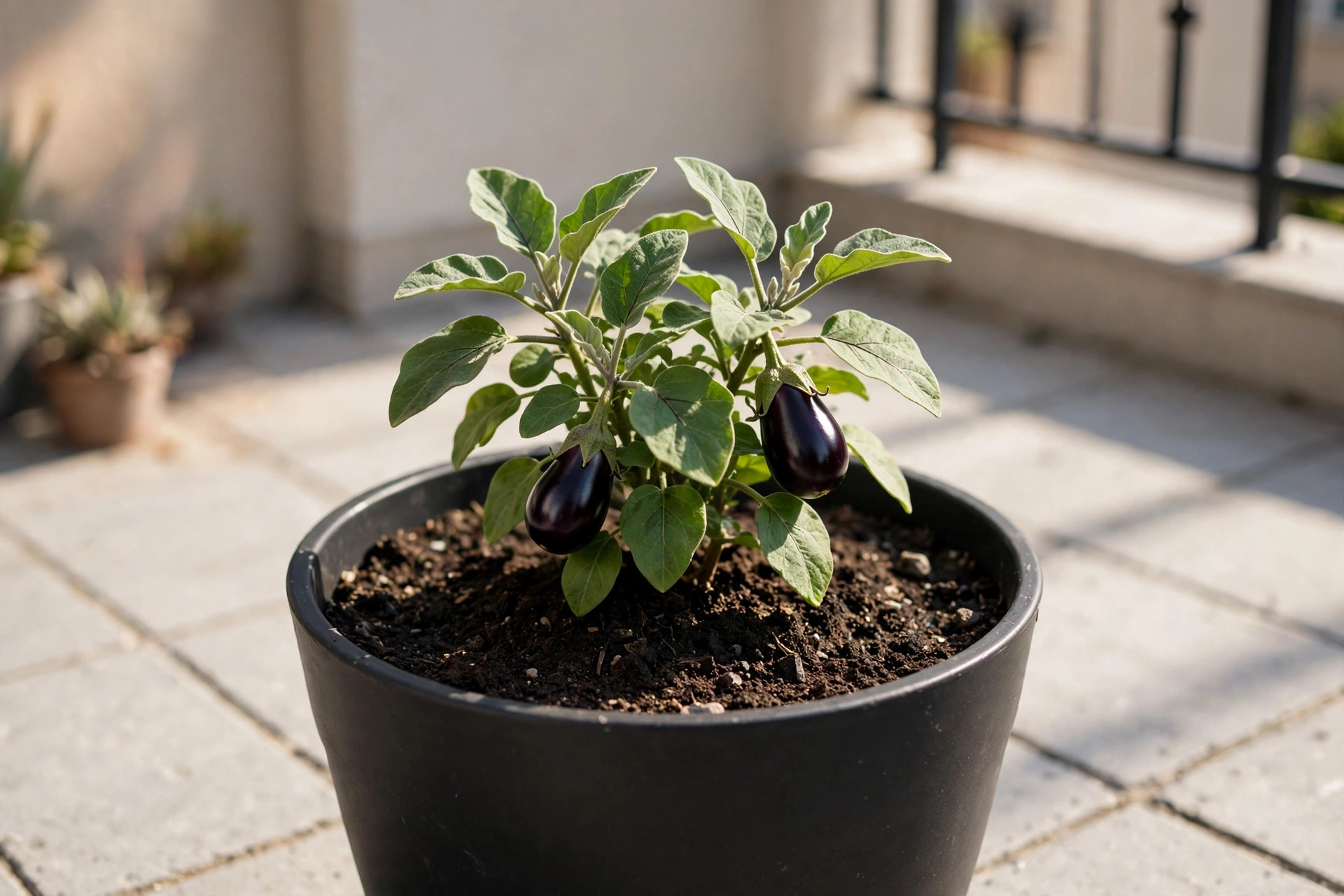
Eggplants fail on tiny patios for one plain reason: they get cold at night in thin pots. The fix costs nothing, because pot color does the work.
‘Patio Baby’ was bred to fruit small and early on a compact plant. Set one in a black 5-gallon (19 litre) pot, which soaks up sun and holds warmth around the roots.
Start it late, once nights are reliably warm, and keep the mix evenly moist. Dry, stressed plants drop their flowers, and a patio crop has no flowers to spare.
Pick the fruit while the skin is still glossy. Dull skin means the seeds inside have hardened, and that first small harvest is the one that hooks most new growers.
By now the patio holds a tomato in the sun, quick roots and leaves in the shade, and climbers using the height you already own. That is a container vegetable garden for a tiny patio step by step, built one pot at a time.
Keep the rhythm simple: water in the morning, pick little and often, and sow one small row whenever a pot empties. Save this list to your container garden board for later, and start with whichever pot you already own.


