

15 Container Vegetable Garden Layouts for a Small Space
A small balcony can hold plenty of food, but only if tall crops stop shading the short ones. The fix is layout, not more pots crammed onto the same floor.
A good container vegetable garden layout for a small space puts sun order first. Tall plants go at the back, short plants come forward, and every pot stays within reach for watering and picking. Leave air between pots as well.
Most fruiting crops need 6 to 8 hours of direct sun each day. Leafy greens manage on 3 to 4 hours, so they can use the cooler, shadier edge without wasting the best spot. Note the shade at noon before you choose.
The fifteen layouts below use real pot sizes, real spacing, and real crops. Pick the one that fits your rail, wall, and sun, then test each spot empty before you plant anything. That test saves a season of regret.
This post contains affiliate links. If you buy through them, we may earn a small commission at no extra cost to you. See our Affiliate Disclosure.
1. Back Row Tall, Front Row Short for Full Sun
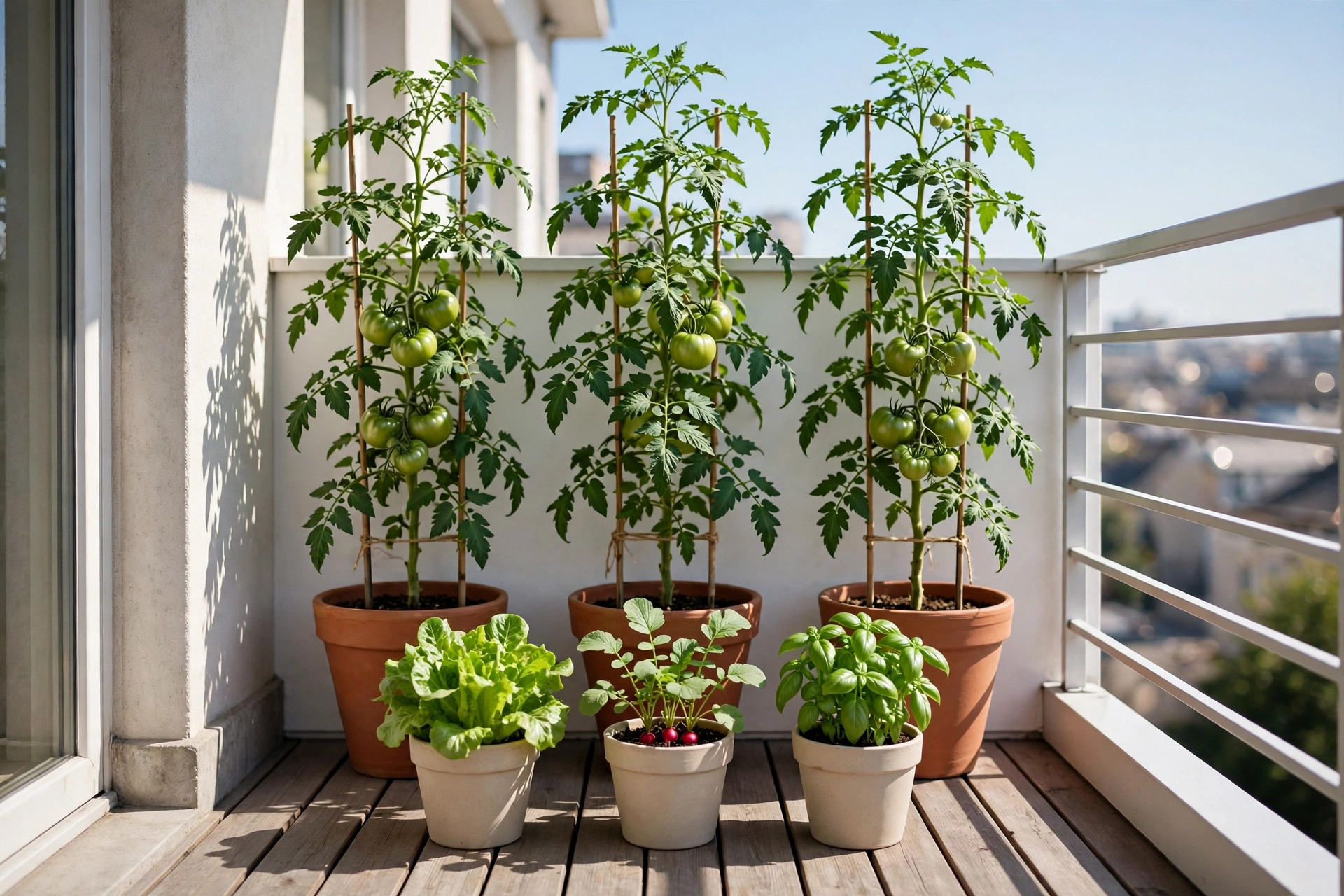
Put the tallest crops at the back, on the north side where they cast the least shade. Tomatoes on stakes, pole beans on a trellis, and tall peppers belong in this back row.
Set the front row 18 to 24 inches (45 to 60 cm) ahead of the back row. Short crops such as lettuce, radishes, and basil get full sun there instead of living in shadow.
Use 5-gallon (19 litre) pots for the back row and 10 to 12 inch (25 to 30 cm) pots in front. That height gap helps air move and cuts mildew risk in warm weeks.
Check the shade line at noon on a sunny day. If the front pots sit in shadow before midday, slide them forward or drop one plant.
2. Single Line Against the Wall for a Narrow Balcony

A single line along the wall suits balconies too narrow for rows. Stand pots shoulder to shoulder, tallest in the middle or at the far end, shortest near the door for easy picking.
Leave 2 to 3 inches (5 to 8 cm) between pots so air can pass and saucers do not touch. Crowded pots dry unevenly and are hard to lift for a deep soak.
Wall heat helps peppers and zucchini (courgette) in spring. In high summer, pull the line 6 inches (15 cm) off a hot south wall so roots in dark pots do not overheat.
This line works well with a plan for a container vegetable garden for a tiny patio, where floor space is tight. Keep the walking strip fully clear.
3. U Shape Around the Edge With the Middle Kept Open
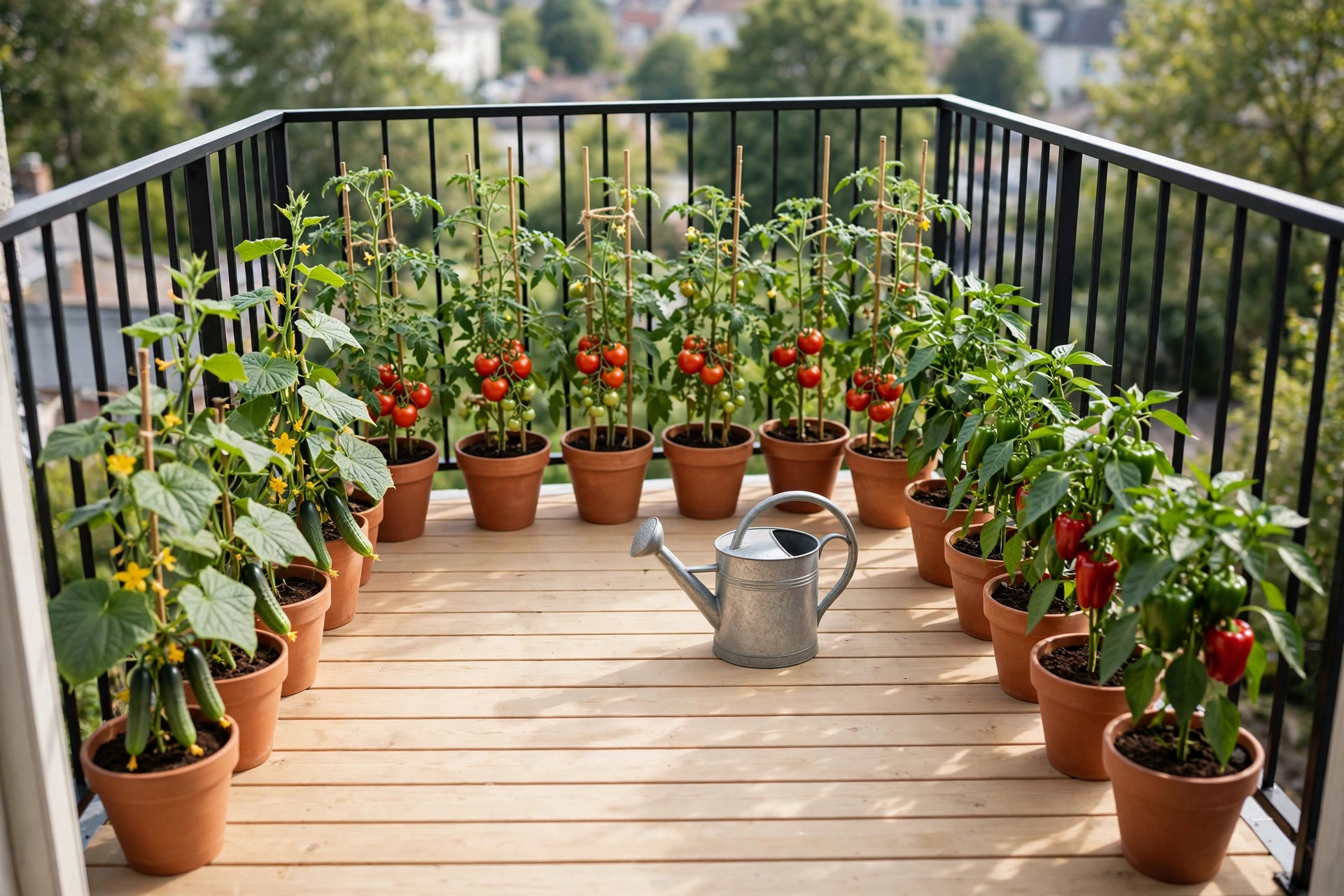
Run pots around three edges and leave the middle open for your feet, a stool, and a watering can. You can reach every plant with one step in, which matters on busy mornings.
Place tall crops along the back arm of the U. Put thirsty crops such as cucumbers and zucchini (courgette) on the arm nearest the door, so the full can reaches them first.
Keep the two side arms one pot deep, about 12 to 14 inches (30 to 36 cm). Two pots deep on the sides blocks access and hides small seedlings behind larger leaves.
For more edge planning for tight floors, these small balcony garden ideas show how other growers use the border. Keep your centre gap at least 18 inches (45 cm) wide.
4. Corner Cluster That Turns a Dead Corner Into a Growing Spot
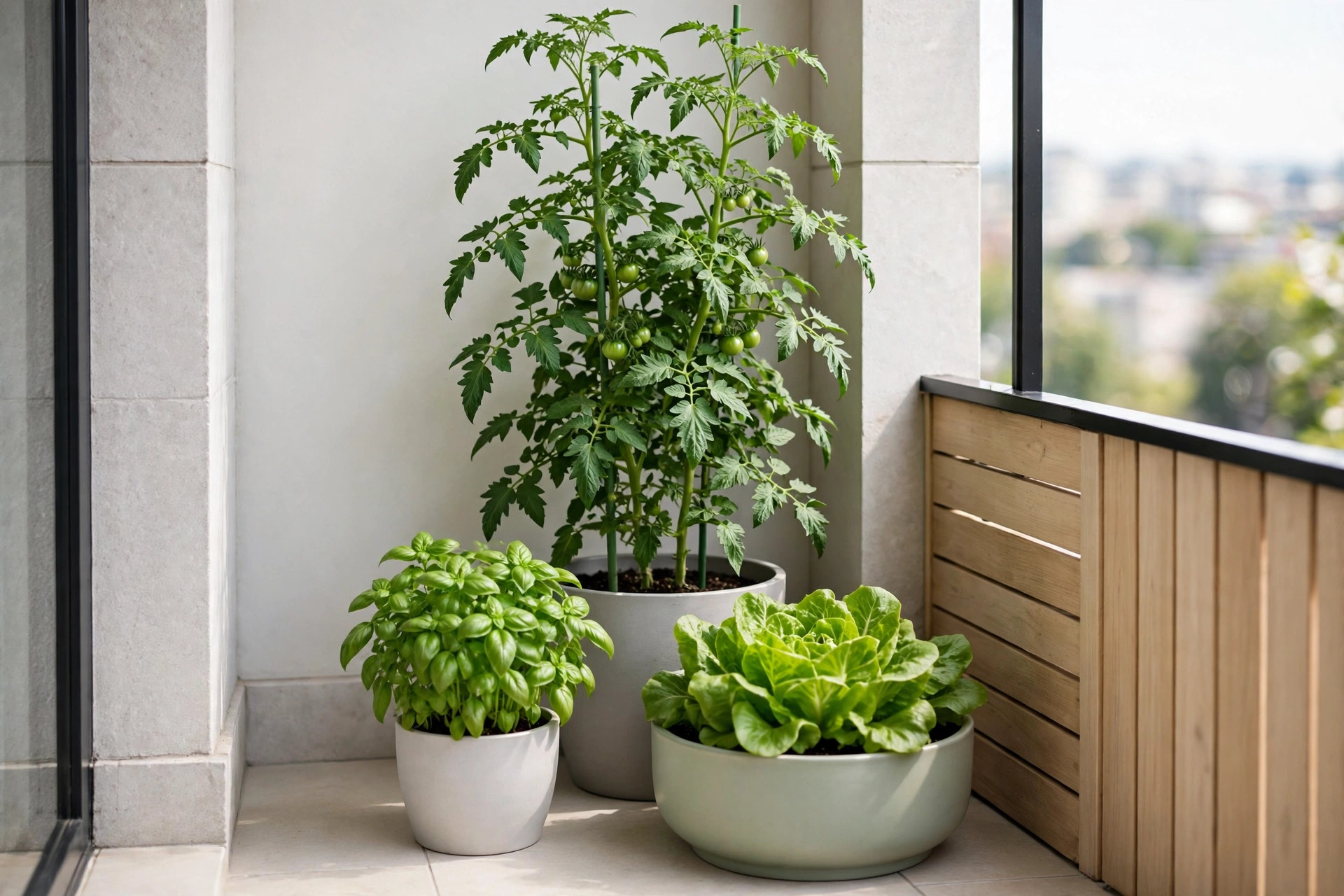
One corner can hold three crops if you stack heights, not pots. Set one tall pot in the corner point, then place two shorter pots in front of it in a loose triangle.
A corner tomato in a 5-gallon (19 litre) pot works as the anchor. Basil in a 10 inch (25 cm) pot and loose-leaf lettuce in a wide shallow pot fill the front without crowding roots.
Leave 4 inches (10 cm) between the corner pot and each wall. Trapped damp air in a tight corner raises the risk of leaf spots after rain or heavy watering.
Turn the front pots a quarter turn every few days. Leaves lean toward the light fast in a corner, and a small turn keeps growth even and the pots easier to water.
5. Stepped Shelf Layout That Lifts Short Crops Into the Light
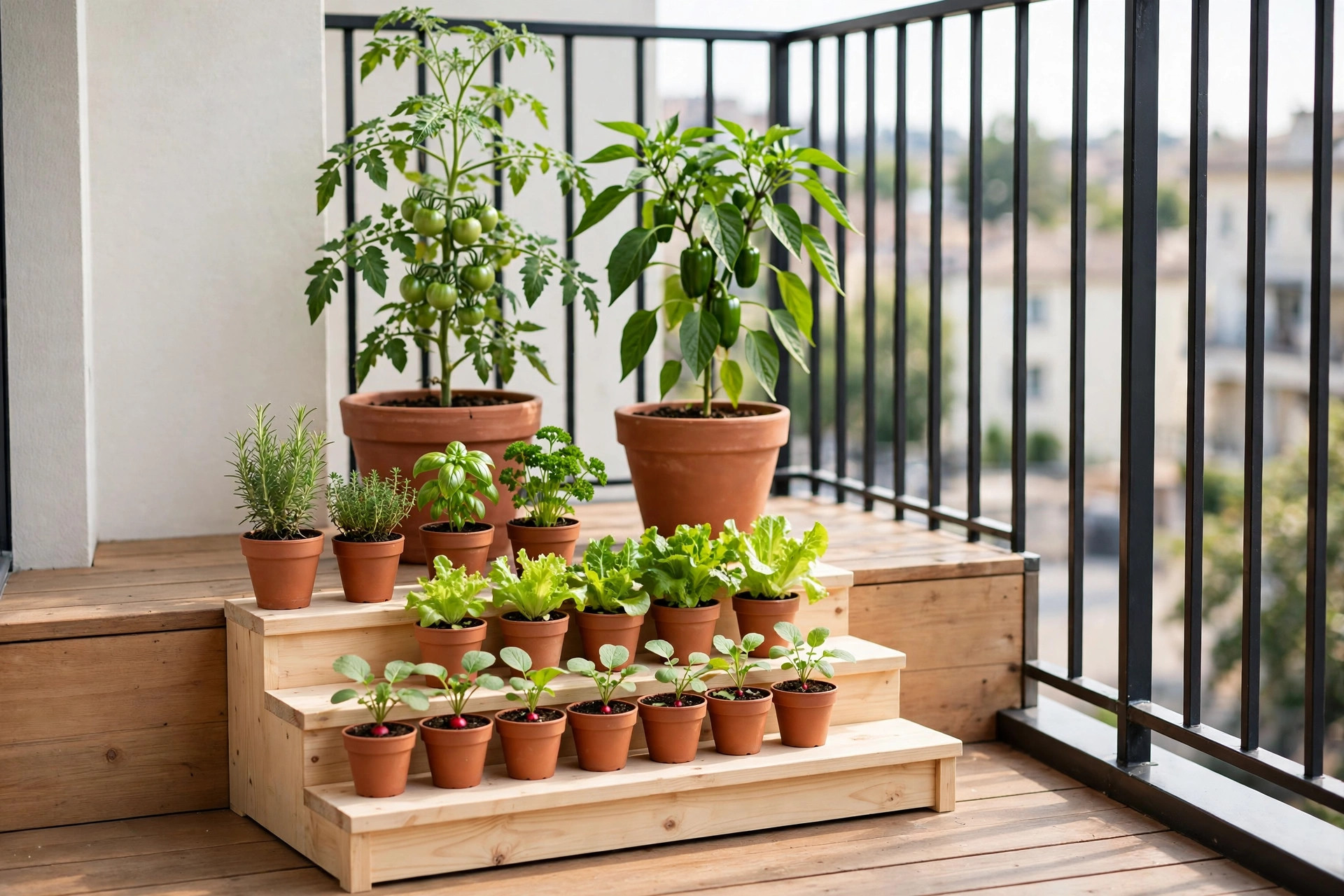
A low step or sturdy shelf lifts short crops above the shadow of larger pots. Put herbs, radishes, and lettuce on the step, and keep tomatoes and peppers on the floor behind them.
Each step should rise 8 to 10 inches (20 to 25 cm). That lift is enough to clear the rim of a floor pot without making the shelf top-heavy or hard to water.
Use small pots on the shelf only, 8 to 10 inches (20 to 25 cm) wide. Large wet pots are heavy, and a shelf rated for light loads should never hold a 5-gallon tomato pot.
For shelf and wall options beyond the floor, this guide to a small balcony vertical garden wall covers fixed setups. Freestanding steps suit renters better, since nothing needs drilling.
6. Floor Pots Below, Railing Pots Above for Two Levels
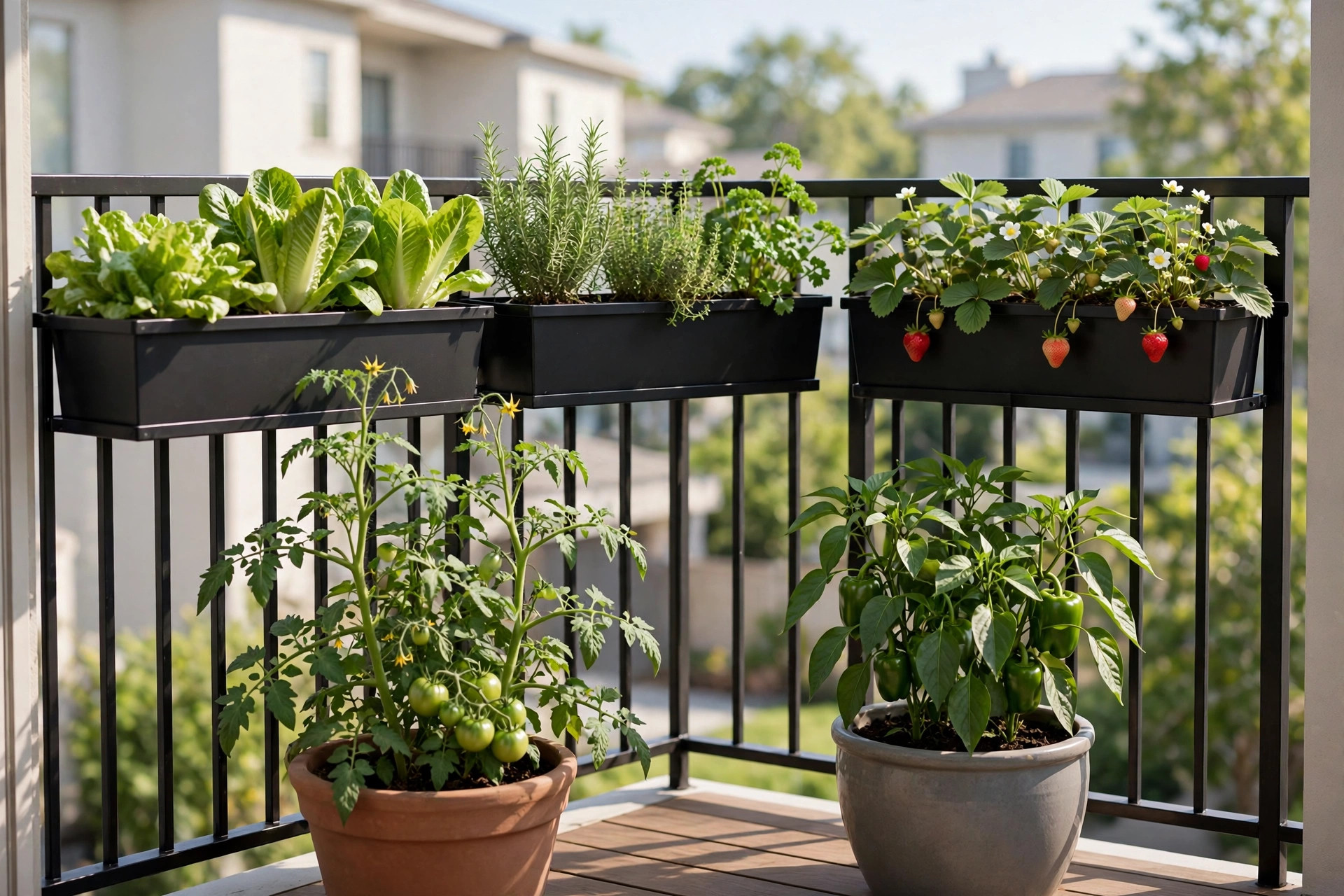
Two levels double your growing edge without using more floor. Floor pots hold the heavy, tall crops, while railing planters hold light, trailing, or quick crops that you pick often.
Keep railing pots small and light, with herbs, lettuce, strawberries, or dwarf peas. A good rule is one crop per railing box, spaced 6 to 8 inches (15 to 20 cm) apart.
Check that water from the railing level does not drip straight into the pots below all day. Offset the floor pots a few inches so runoff falls to the floor, not onto leaves.
This two-level plan pairs with a container vegetable garden on a railing for crop picks and planter sizes. Always follow your building rules for rail fixings and weight.
7. Water Groups Side by Side So Thirsty Crops Stay Together

Group pots by thirst, not by looks. Cucumbers, zucchini (courgette), tomatoes, and celery need steady water, while rosemary, thyme, and Mediterranean herbs prefer the mix to dry more between waterings.
Put the thirsty group nearest the door or tap, in the largest pots you have. Big pots, 5 gallons (19 litres) or more, hold moisture longer and smooth out a missed morning round.
Put the dry group at the far end, in smaller terracotta pots that dry faster. A clear split stops the common error of watering every pot the same amount on the same day.
Saucers help here too. Thirsty pots can sit in saucers you top up on hot days, while the dry group sits without saucers so excess water drains fully away after rain.
8. One Pot Per Week Layout for Succession Sowing
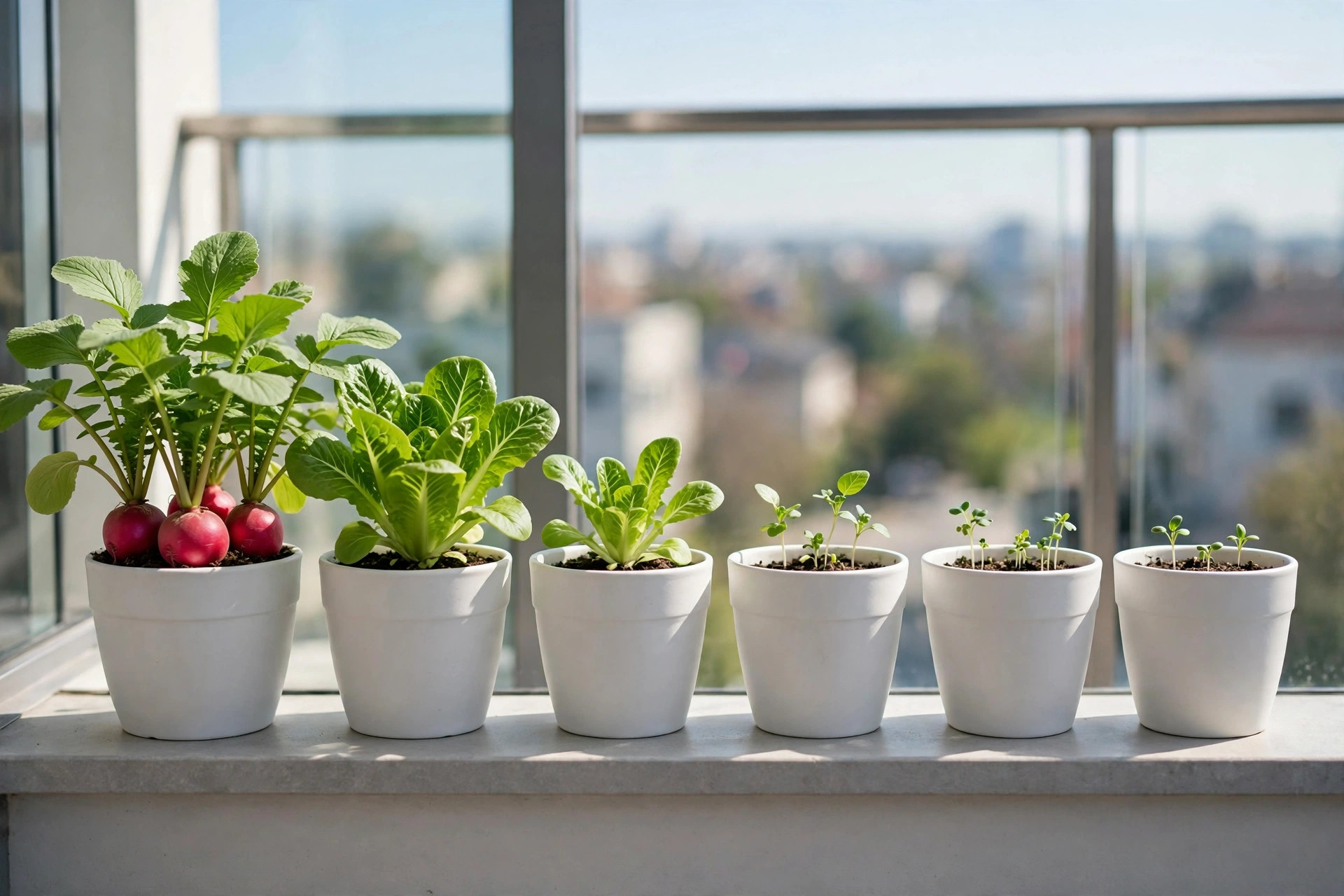
Succession sowing stops the feast-or-nothing pattern with fast crops. Line up four to six small pots in a row, and sow one pot each week with radishes, lettuce, or spring onions.
Sow radish seed 1/2 inch (1 cm) deep and thin seedlings to 1 to 2 inches (3 to 5 cm) apart. The first pot is ready to pick as the last pot shows its first true leaves.
Label each pot with the sowing date in pencil. Without dates, the row blurs together, and old lettuce left too long turns bitter while newer pots get picked out of order.
Keep the row on the sunniest short edge, where you pass it daily. A row you see gets watered, thinned, and picked on time.
9. Long Trough Salad Row Along the Sunniest Edge
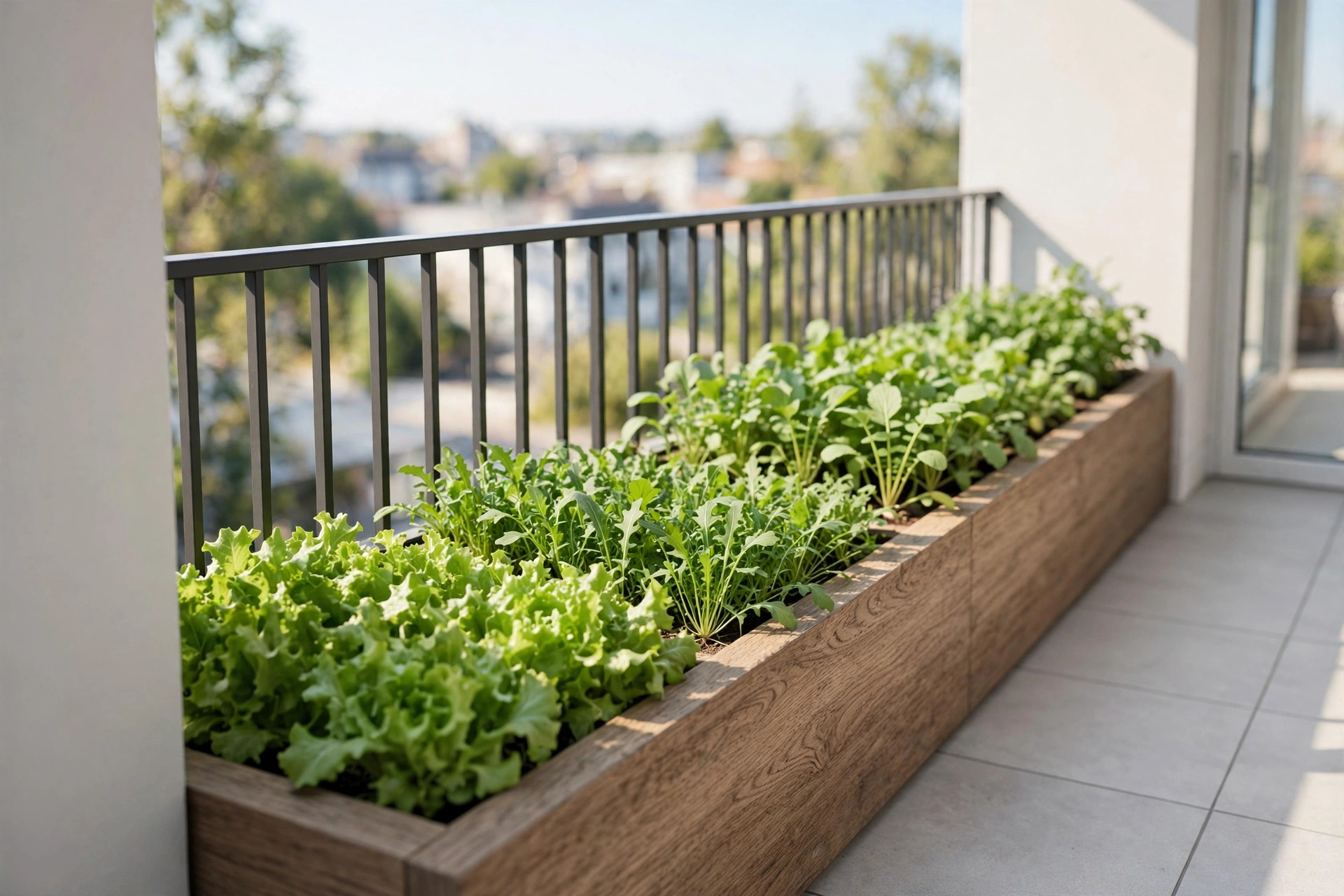
A long trough uses a narrow edge better than round pots do. One trough 24 to 36 inches (60 to 90 cm) long and 8 inches (20 cm) deep can hold a mixed salad row.
Sow loose-leaf lettuce, rocket, and radishes in short rows across the trough. Thin lettuce to 6 inches (15 cm) apart and radishes to 2 inches (5 cm) apart as they grow.
Salad leaves need steady moisture and light feed every week. Set the trough where it gets morning sun and some afternoon shade in hot areas, so leaves stay tender for longer.
Pick outer leaves a few at a time and leave the centre to grow. That cut-and-come-again habit keeps one trough producing for weeks without needing a fresh sowing each time.
10. Tomato Anchors in the Corners, Quick Crops in the Middle
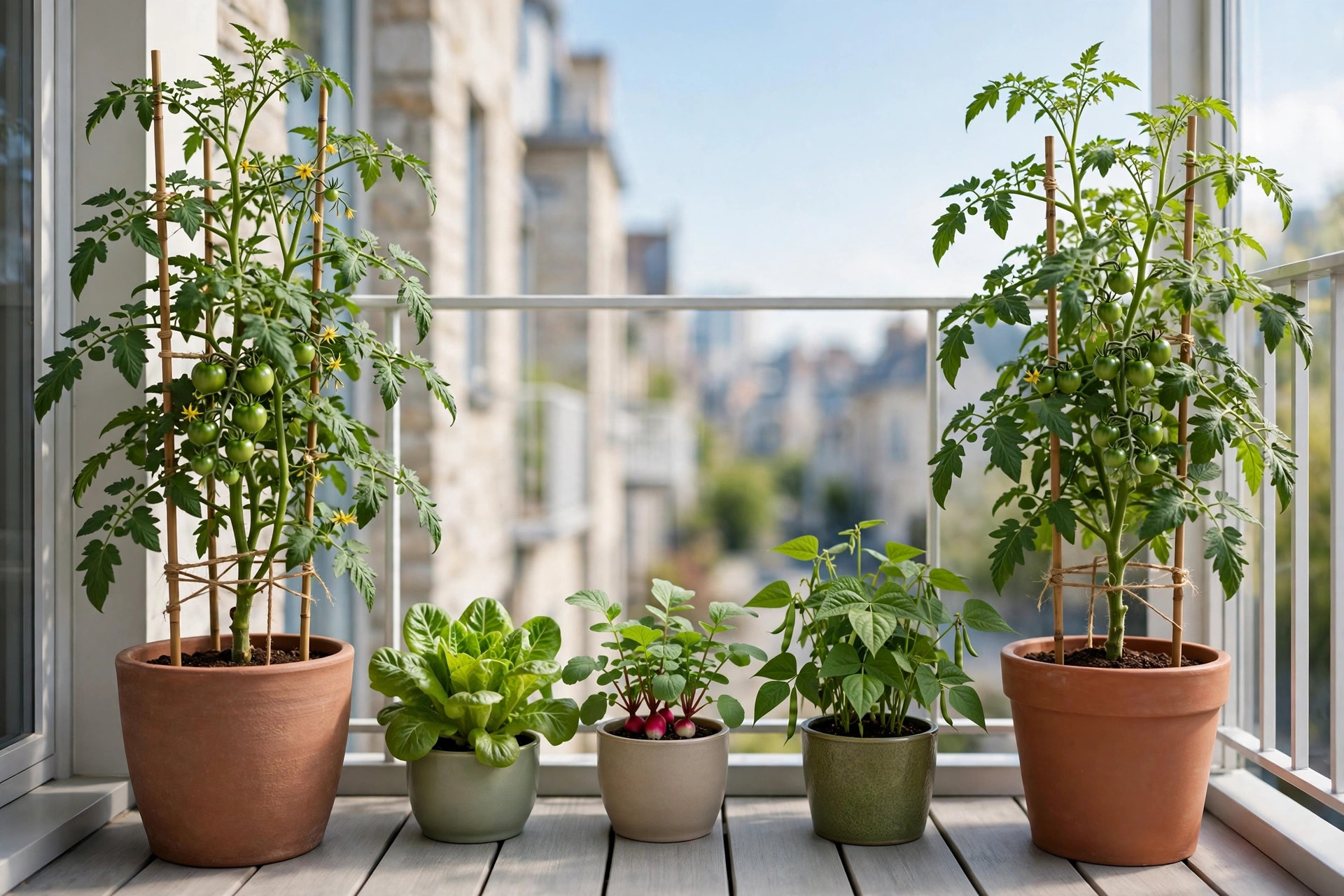
Two tomato pots can frame a whole small layout. Set one in each far corner in 5-gallon (19 litre) pots, with stakes in place from day one so roots are never disturbed later.
Fill the middle ground with quick, low crops that finish before the tomatoes fill out. Radishes, lettuce, and bush beans use that middle space well and come out as tomato shade grows.
Choose compact tomato types for pots, such as ‘Tiny Tim’ or ‘Patio Choice’. Indeterminate types can pass 5 feet (150 cm) tall and will swamp a small space by late summer.
Leave a hand-width gap between the tomato pots and the middle pots. Air flow around ripening fruit cuts disease risk, and you need room to tie stems as they thicken.
11. Tight Grid With a Clear Step-In Gap for Care
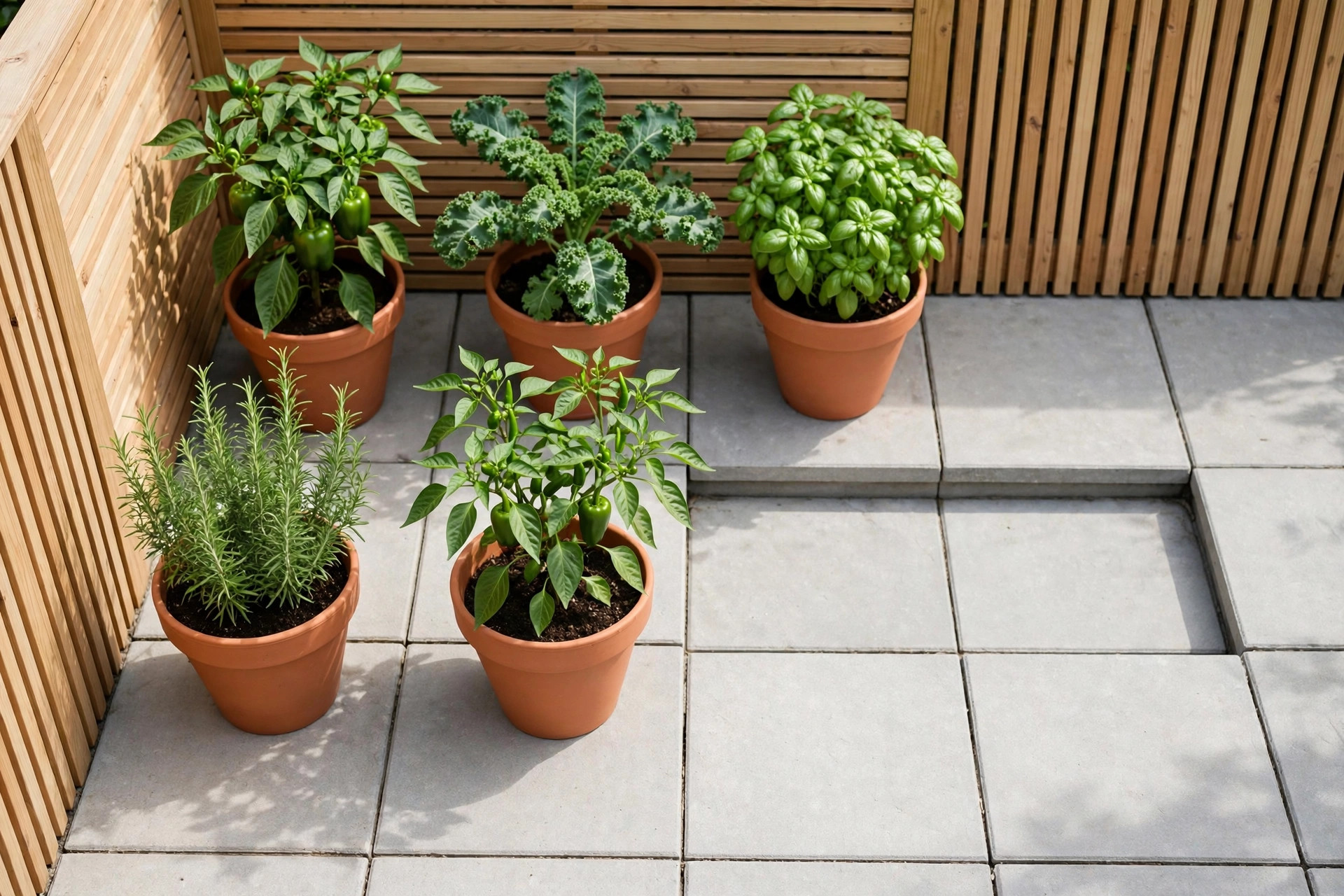
A neat grid suits a square patio corner. Set pots in two rows of three, with pots 14 to 16 inches (36 to 40 cm) apart from centre to centre in each direction.
Leave one grid space empty as a step-in gap. That single empty square lets you reach the back row for tying, feeding, and picking without leaning over leaves and snapping stems.
Put the tallest crop in the back middle grid spot. Peppers suit the back side spots, while kale, chard, and herbs fill the front row where you can pick them daily.
Measure the grid before you fill the pots. A tape measure on the floor takes one minute.
12. Paired Pots for Crops That Grow Well Together
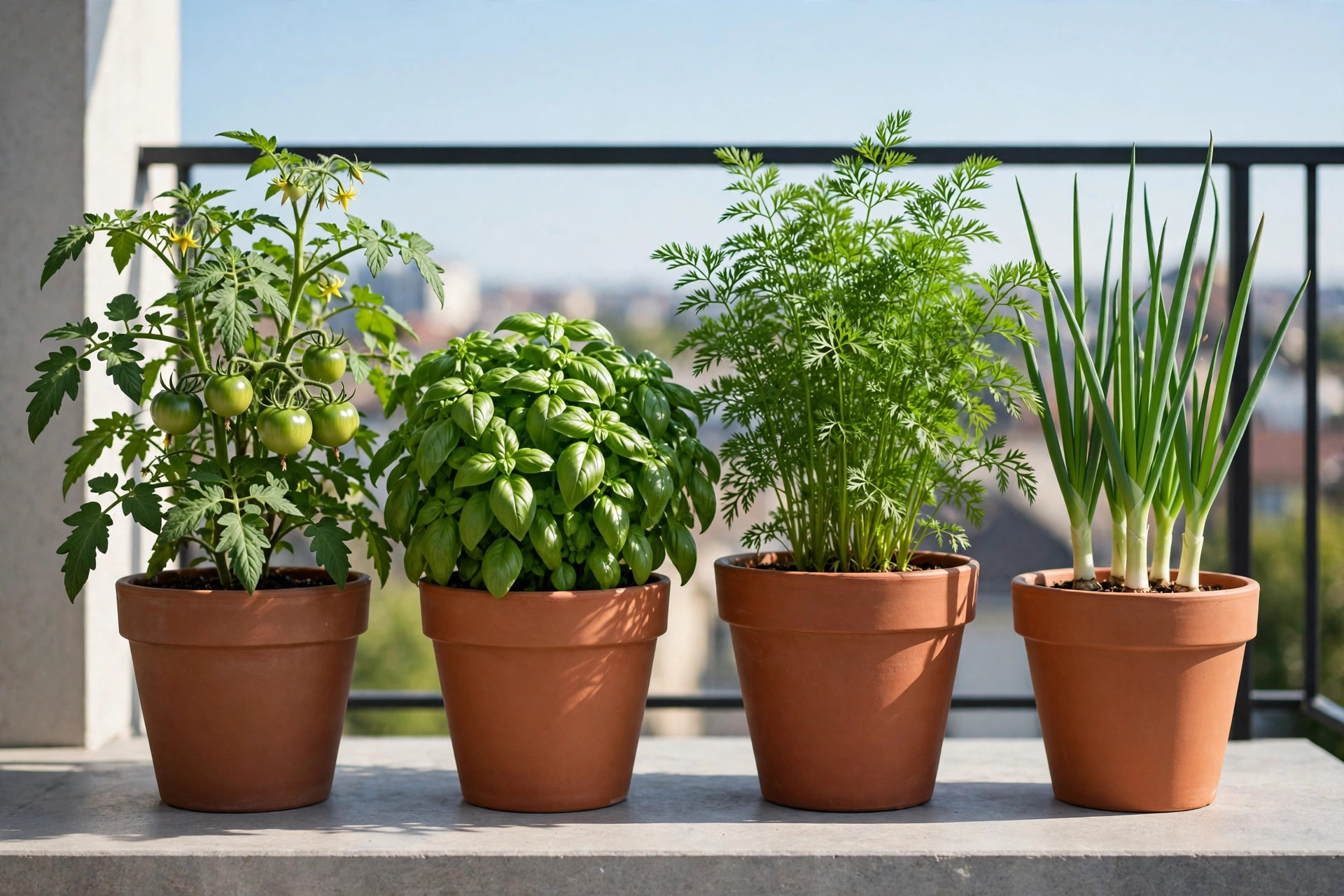
Some crops help each other when their pots sit side by side. Basil next to tomato is the classic pair, since basil stays low, needs the same sun, and gets watered on the same round.
Pair carrots in a deep pot with spring onions in the next pot. Both stay narrow, need 12 inches (30 cm) of depth for best roots, and come out in small handfuls for meals.
Keep heavy feeders apart from light feeders in your pairs. Peppers and lettuce both feed lightly to moderately, while tomatoes and zucchini (courgette) feed heavily and should not share a small pot.
Pairs also simplify feeding day. Two pots with the same needs get the same can, at the same strength, which cuts mix-ups when you feed at the sink before work.
13. Pots on a Rolling Base You Can Turn Toward the Sun
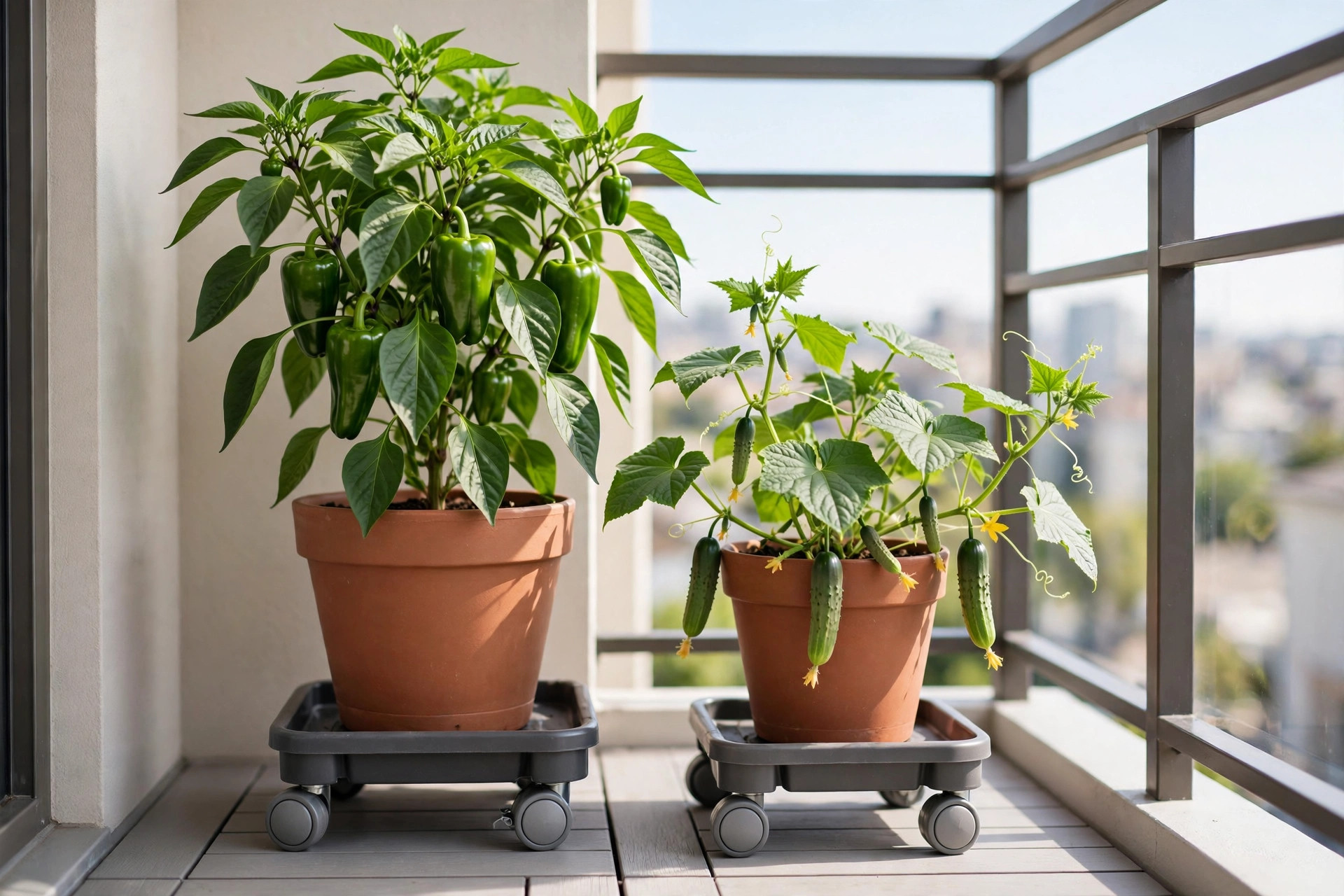
A rolling base helps where sun moves across the balcony during the day. Set one or two key pots on a wheeled plant caddy, and turn or shift them to follow the best light.
This move suits peppers and a dwarf cucumber such as ‘Spacemaster’, which fruit best with 6 or more hours of sun. A quarter turn each morning evens out leaning growth.
Pick a caddy rated well above the wet weight of the pot. A filled 5-gallon pot can weigh 40 pounds (18 kg) or more after watering, so cheap thin caddies crack fast.
Lock or chock the wheels on windy balconies. The third-floor rail catches gusts, and a rolling pot that shifts in a storm can snap stems or tip onto smaller pots below it.
14. Daily Harvest Crops at the Front, Slow Crops at the Back

Order pots by how often you touch them. Herbs, salad leaves, radishes, and chillies you pick daily belong at the front, within one step of the door and easy to snip.
Slow crops belong at the back, where you check them twice a week. Potatoes in grow bags, kale such as ‘Lacinato’, and winter squash in mild areas ask for less daily handling.
This order cuts trampled leaves and missed picks. A ripe chilli hidden at the back goes soft unseen, while the same plant at the front gets picked the day it colours fully.
For more front-edge picks that suit daily use, these small balcony plant ideas help fill gaps. Keep the front row low so it never shades the row behind it.
15. Swap-In Layout That Changes With the Season
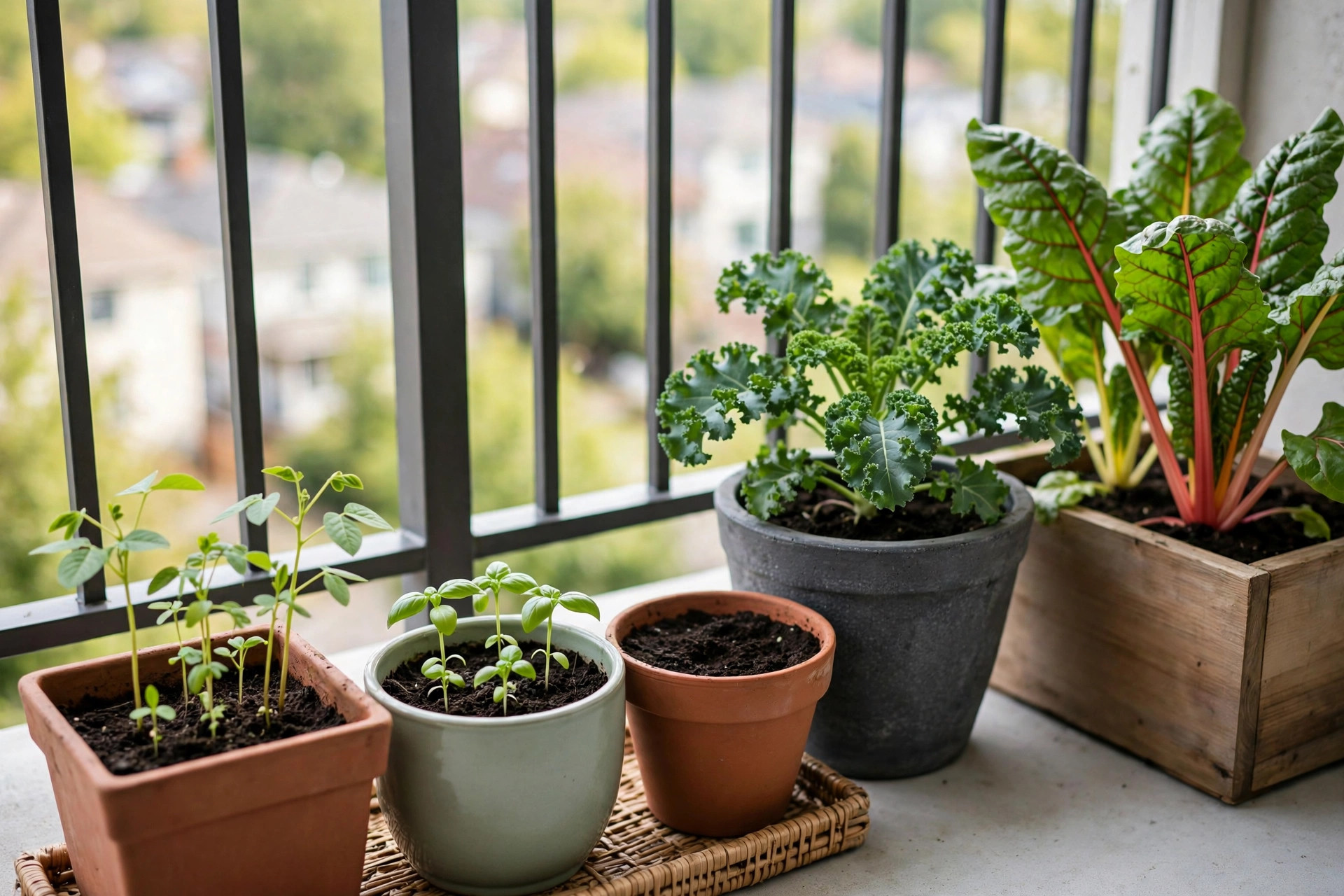
The most useful layout leaves room to swap. Keep the pot positions fixed for the season, but plan which pot changes crop when spring greens finish and summer heat arrives in full.
Cool-season pots of peas, lettuce, and radishes come out after your last frost passes and heat builds. Reuse those same pots for bush beans, basil, and a zucchini (courgette) such as ‘Astia’.
Refresh the top 2 inches (5 cm) of mix at each swap and add liquid feed the next week. Old roots left in the mix slow new plants, so fork out the old root ball.
In mild-winter areas, roughly USDA zones 8 to 10, swap back in autumn (fall) to kale, chard, and lettuce. That second swap is where a fixed layout earns its keep across the year.
Start with sun order, then sort by water and harvest access. That order solves most small-space problems before you buy a single extra pot or shelf for the balcony.
Pick one layout above, measure your space, and set the pots empty first to test reach and shade. Move one pot at a time and note what improves in light, reach, and daily picking.
Sketched and tested in place, a container vegetable garden layout for a small space will carry a full season of picking. Save this guide to your container garden board for later.


