

15 Container Vegetable Garden Ideas for Renters Who Cannot Dig or Drill
A lease can ban a lot of things: nails in the wall, paint on the door, and any hole dug in the ground.
It cannot ban a tomato plant in a bag by the balcony door.
A container vegetable garden for renters who cannot dig or drill needs no garden bed, no screws, and no permission slips from a landlord.
Everything in this list stands on its own feet, hooks over a rail, or sits inside a tray.
You do not need a garden bed, a spade, or a landlord who loves plants.
You need containers that hold enough mix, a spot that catches real sun, and a way to water without flooding the balcony below.
It all waters from a can filled at the kitchen sink, and it all lifts out clean on moving day.
Start with two or three pots, learn where your sun lands, and add more as the season builds.
This post contains affiliate links. If you buy through them, we may earn a small commission at no extra cost to you. See our Affiliate Disclosure.
Start With Grow Bags on a Shallow Tray
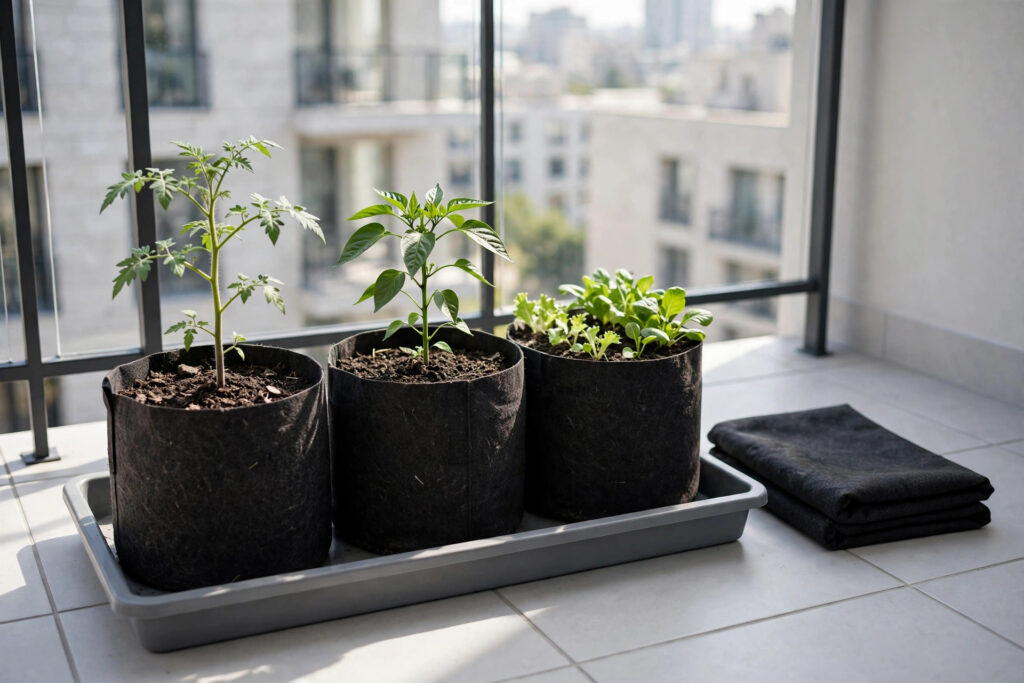
Grow bags are the easiest first step for a renter. They arrive flat, fold into a drawer, and need no building at all.
Set a 5-gallon (about 19 liter) bag on a shallow tray, fill it with bought potting mix, and it is ready to plant in ten minutes.
The fabric sides let air reach the roots, so roots grow fewer circling loops than in a solid pot.
One bag holds one tomato or pepper plant, or a row of salad leaves sown along the top.
If you want the shopping list first, this guide to what a container vegetable garden starter kit actually needs keeps it short and honest.
When the lease ends, tip the mix into a refuse sack, rinse the bag, and fold it flat. Nothing stays behind.
Hook Railing Planters Over the Rail, No Screws
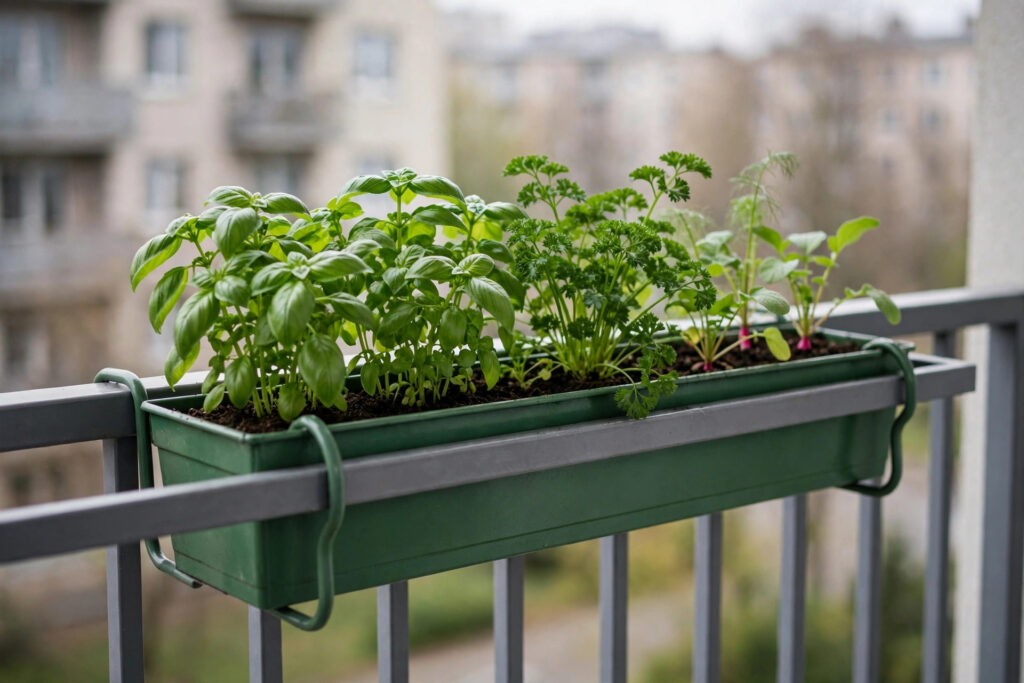
Railing planters with deep hooks drop over the rail and hold on by shape alone. No brackets, no screws, and no marks on the paintwork.
Pick a planter at least 8 inches (20 cm) deep, so the mix holds water through a warm day.
Herbs, radishes, and cut-and-come-again lettuce all grow well in that depth. Sow radish seed about half an inch (1 cm) deep.
Check the hook width against your rail before you buy, because rails vary a lot between buildings.
A windy third-floor rail also needs a strap or bungee cord around the planter on storm days.
When you move out, the planters lift off in seconds and the rail looks exactly as it did.
Put One Big Tomato Pot on Wheels
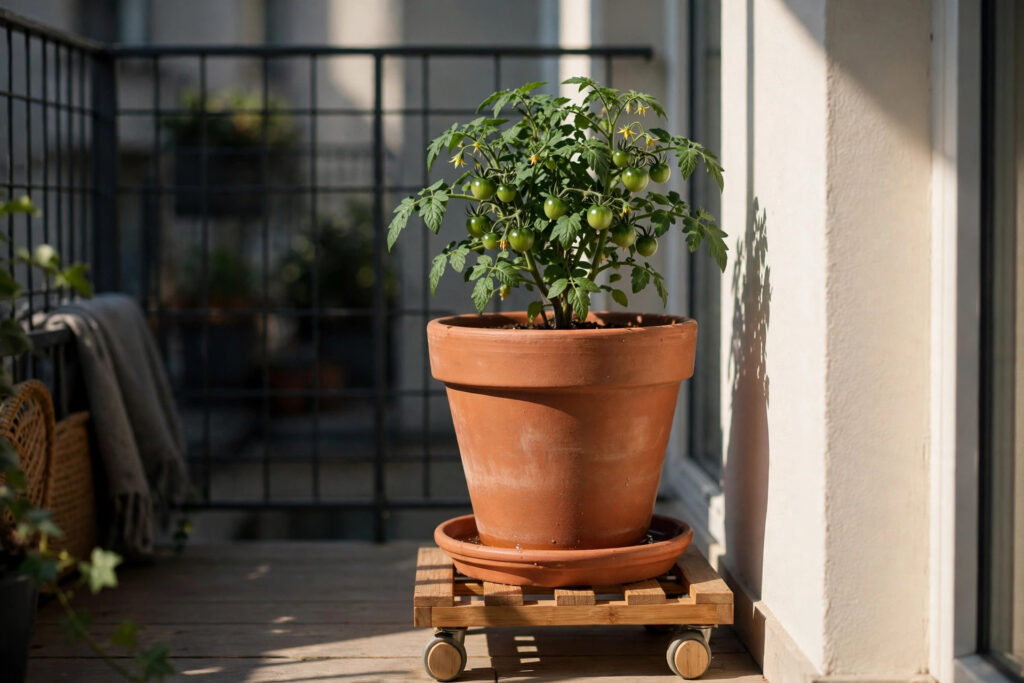
On a small rental balcony, the sunny patch often lands in one corner at nine and slides off by lunch.
A 5-gallon (about 19 liter) pot on a wheeled plant caddy follows that light across the tiles.
Plant one dwarf tomato per pot, such as ‘Tiny Tim’ or ‘Patio Choice’. Plain pots suit a rental fine, and these apartment balcony pot ideas cover the styling side.
Tomatoes need 6 to 8 hours of direct sun, so a pot that moves earns its keep on part-shaded balconies.
Water at the base until it runs from the drainage holes, then let the saucer dry out before the next round.
A pot you can roll is also a pot you can roll under cover before a storm hits.
Use Self-Watering Pots for Work Trips and Busy Weeks
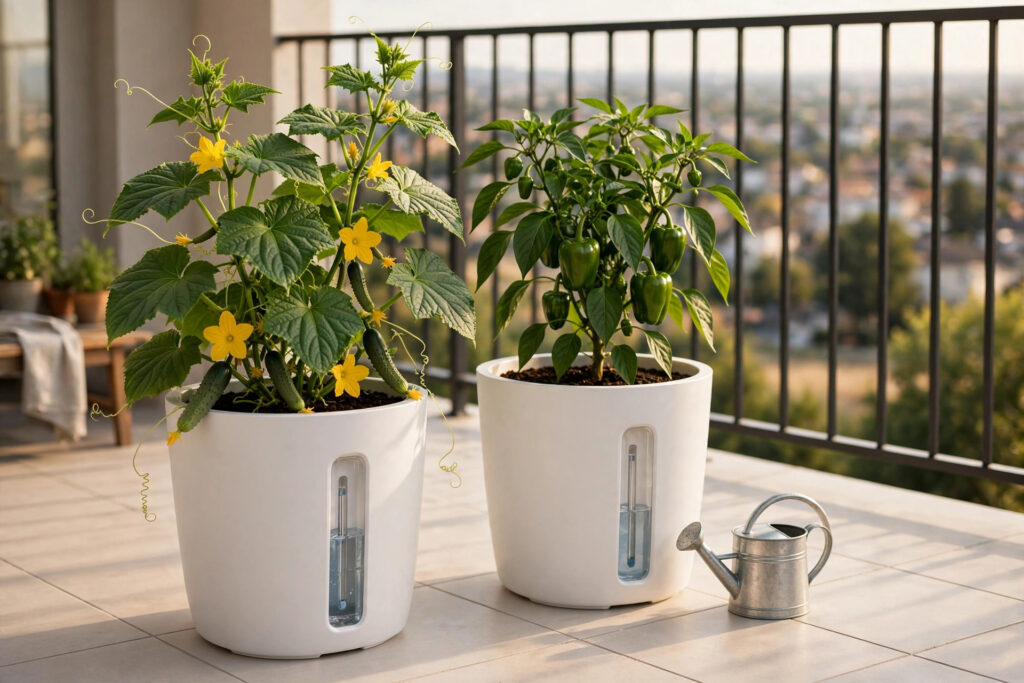
The biggest killer of rental gardens is a dry weekend. You go away for three days, the pots bake, and the plants never fully recover.
A self-watering pot holds a reservoir of water under the soil and feeds it up as the mix dries.
Fill the reservoir before a trip and most crops coast through several days without you.
Tomatoes, peppers, and cucumbers gain the most from that steady water supply, because all three hate drying out mid-season.
Herbs such as rosemary and thyme prefer a drier root run, so keep those in plain pots with drainage holes instead.
Top the reservoir up once a week in hot spells, and check the gauge before you assume it is empty.
Grow Salad Greens in a Wide, Shallow Box
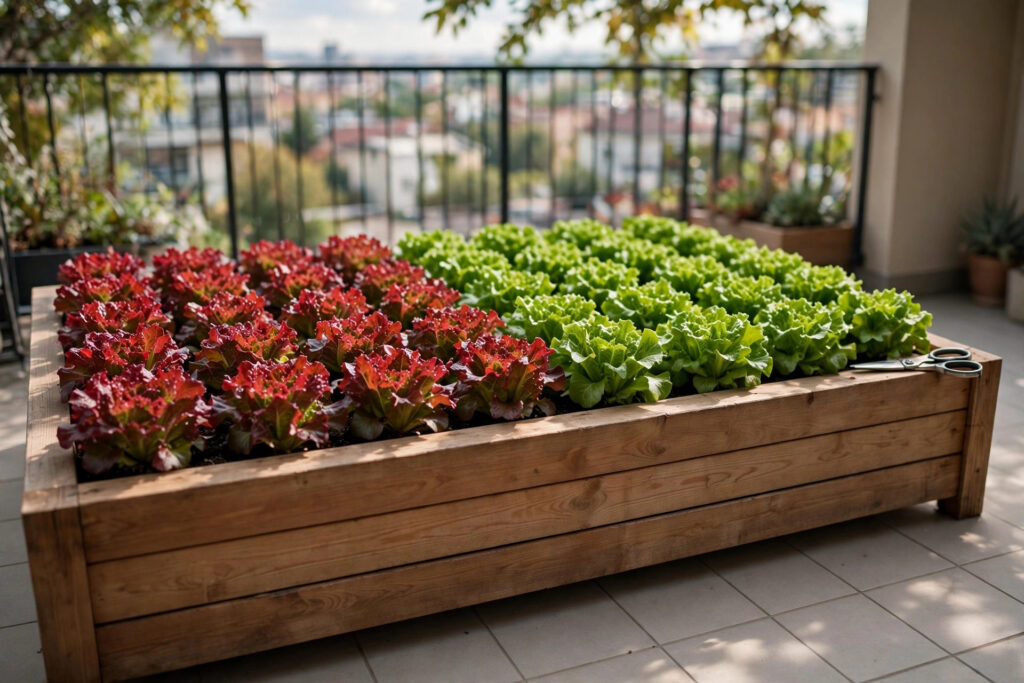
A wide box of lettuce looks like a green tabletop within a few weeks of sowing.
Rows of red and green leaves sit at knee height on the balcony floor, ready to cut with kitchen scissors.
Greens are shallow-rooted, so a box 6 to 8 inches (15 to 20 cm) deep is plenty for them.
Sow a short row every two weeks and the box never sits empty for long. Cut outer leaves first and the hearts keep growing.
Leafy greens manage on 3 to 4 hours of sun, which suits balconies shaded by the building next door.
Keep the mix damp, because dry spells make lettuce turn bitter fast.
Stand a Trellis in the Pot Instead of Fixing One to the Wall
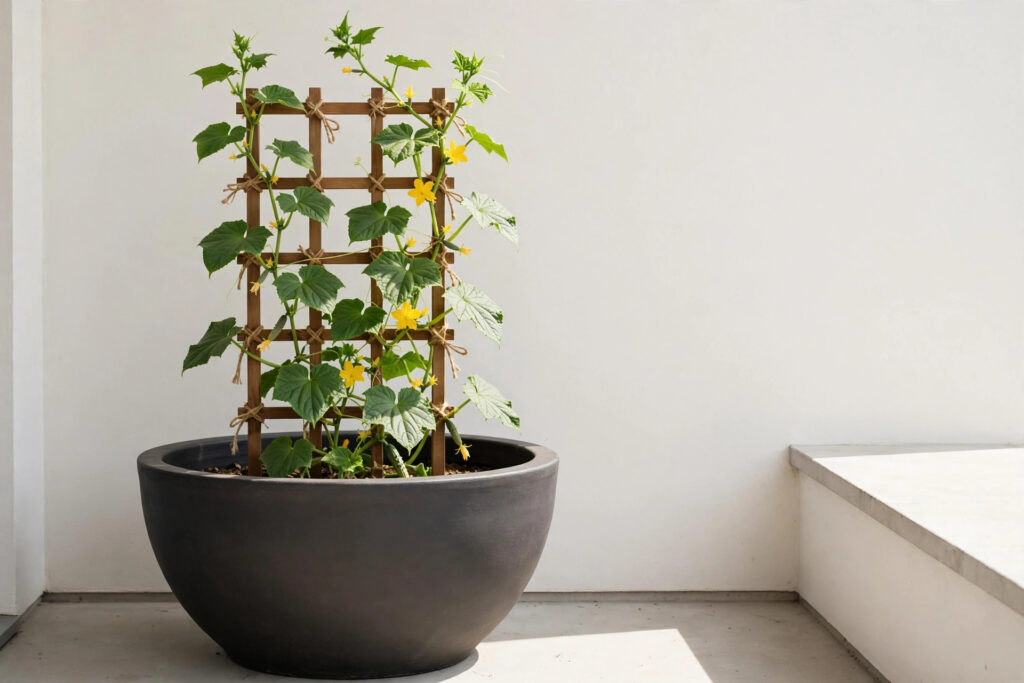
Many renters assume climbing crops are off the table without wall fixings. They are not.
A short trellis pushed deep into a large pot stands on its own and holds real weight through the season.
Use a pot at least 16 inches (40 cm) wide, so the base stays steady when the plants get tall.
‘Spacemaster’ cucumber and dwarf peas both climb happily on a frame about 4 feet (120 cm) high.
Tie stems loosely with soft twine as they grow, and check the ties after windy nights.
At move-out, the whole frame lifts out of the pot, and the wall behind it stays untouched.
Keep Herbs in Small Pots by the Kitchen Door
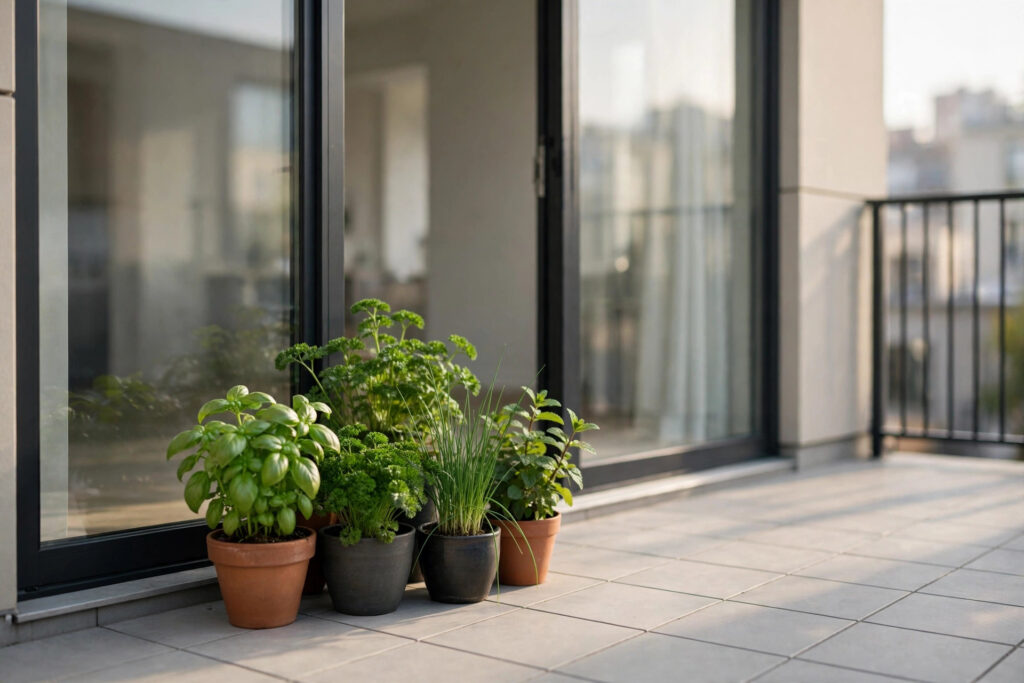
The pots that get watered most are the ones you walk past every day.
A cluster of herbs by the door catches a splash from the washing-up water most mornings without any special trip outside.
Basil, parsley, and chives each fit a pot 10 to 12 inches (25 to 30 cm) wide.
Mint always gets a pot of its own, because its roots spread fast and take over any shared space.
Herbs forgive small pots and the odd missed watering better than fruiting crops do.
Start here in your first season, then add the bigger pots once the watering habit sticks.
Follow the One-Plant Rule for Peppers
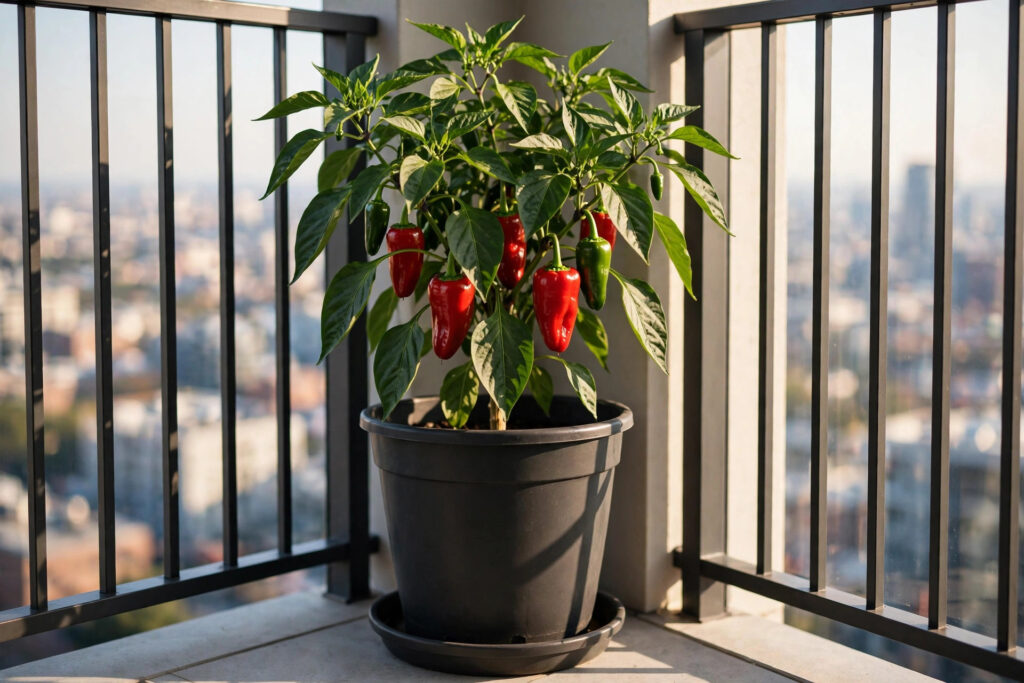
One rule saves more pepper plants than any bottle of feed: one plant per 5-gallon (about 19 liter) pot.
Two plants in one pot share water and food, roots crowd, and both plants crop less by late summer.
Peppers want the sunniest spot you have, with 6 to 8 hours of direct light a day.
A south or west facing rail on a high floor is prime space, so save it for the fruiting crops.
Water deeply, then let the top inch (2 to 3 cm) of mix dry out before you water again.
Peppers sulk in cold, wet mix, so wait until nights stay mild before you plant them out.
Grow Potatoes in a Bag You Tip Out at Harvest
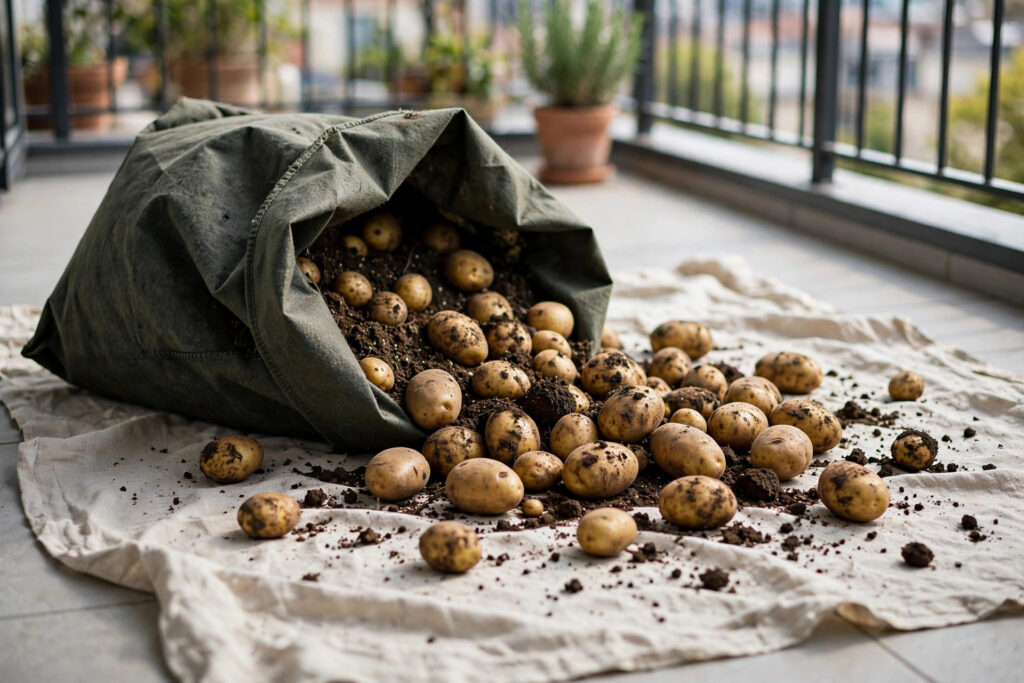
Potatoes feel like a digging crop, but a deep grow bag does the same job on plain concrete.
Fill the bag one third full, set in three or four seed potatoes, and cover them with mix.
As the stems grow, add more mix around them every few weeks. The bag walls keep light off the tubers forming below.
That covering is the part digging normally does in a garden bed, and the bag handles it without a spade.
At harvest, tip the bag onto an old sheet, pick out the potatoes, and shake the mix loose.
The sheet catches the mess, so the balcony floor stays clean for the final inspection.
Never Skip the Saucer Under Every Pot
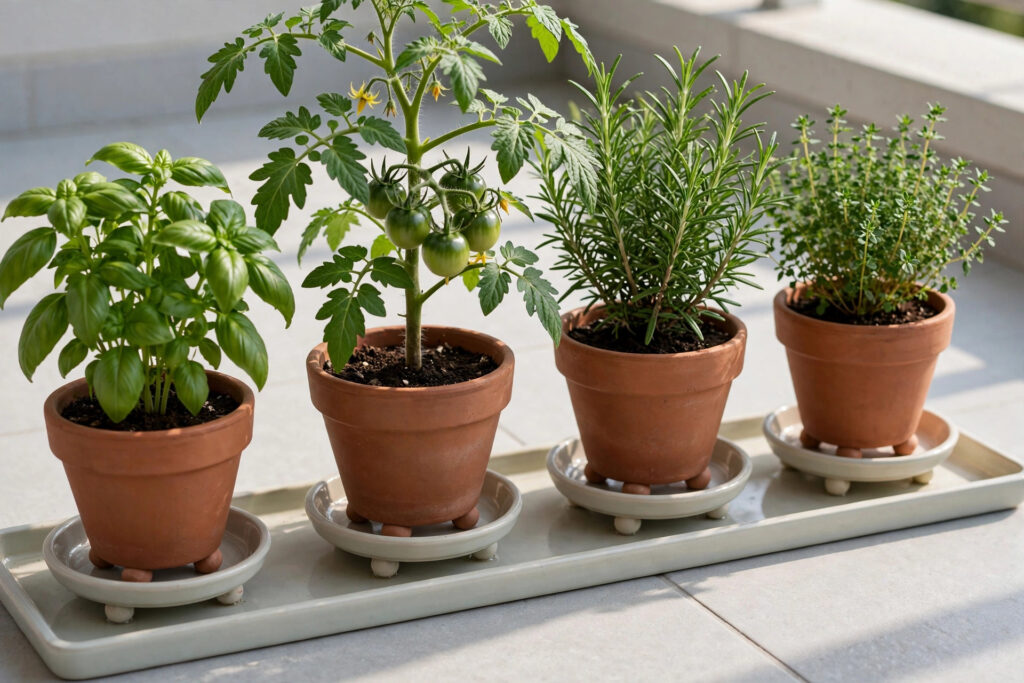
The fastest way to annoy a landlord is a brown water ring stained into the balcony floor.
It takes one hot week of careless watering to leave a mark like that behind.
Put a saucer or a shallow tray under every pot and grow bag, no exceptions. A tidy setup also looks better, and these renter-friendly balcony decor ideas keep the whole space landlord-safe.
Pot feet lift the base a little, so air flows underneath and the floor dries between waterings.
Empty standing water after heavy rain, because full saucers breed mosquitoes in warm weather.
They also tell the neighbours below that your pots are dripping onto their rail, which no renter needs.
Spread the Weight and Keep Heavy Pots Near the Wall
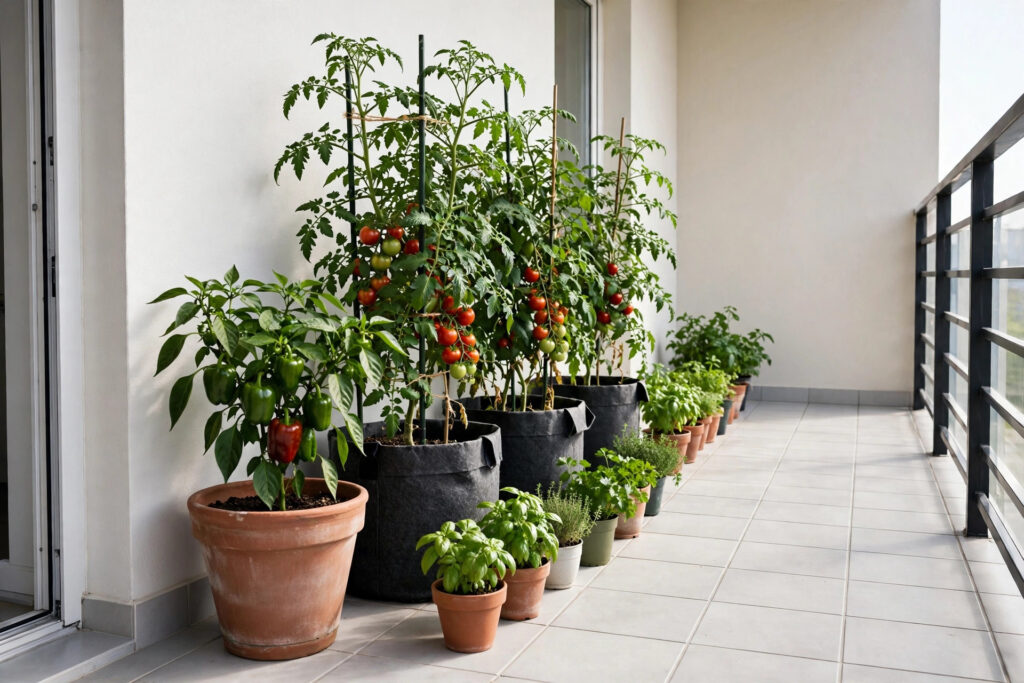
Wet potting mix is heavy, and one big pot can weigh as much as a full suitcase after watering.
Spread pots along the balcony instead of stacking the whole load in one corner.
The floor is strongest near the building wall, so the biggest pots and bags live there.
Light bags of greens and the small herb pots can sit further out without any worry.
Bought potting mix also weighs far less than garden soil when wet, and it drains freely, which pots need.
Never fill pots with soil dug from a park or a verge, especially for crops you plan to eat.
Anchor Tall Plants for Windy High Floors
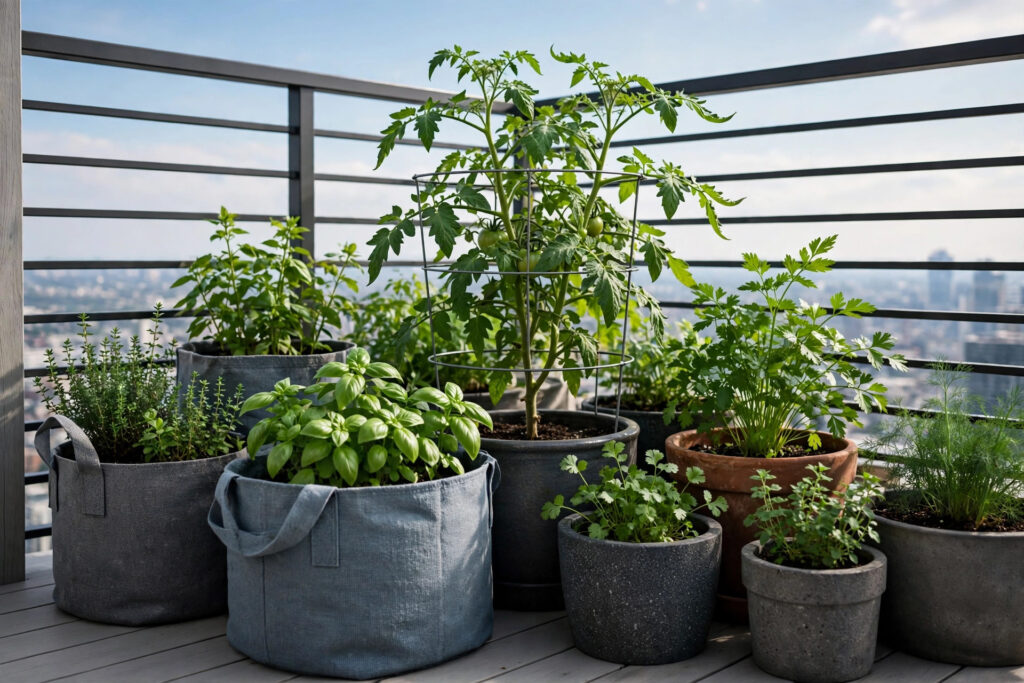
High floors catch wind that ground floor gardens never feel.
A tall tomato in a light plastic pot can go over in one gust, pot, plant, and all.
Group pots close together so they shelter each other, and pick low, heavy pots for the tallest crops.
A cage pushed into the pot gives stems support without a single wall fixing.
Grow bags sit low and wide, so they ride out gusts better than tall narrow pots do.
On storm days, move the most top-heavy pots against the wall. Ten minutes of moving beats a season of regrowth.
Choose Hanging Baskets That Hang From a Stand, Not the Ceiling
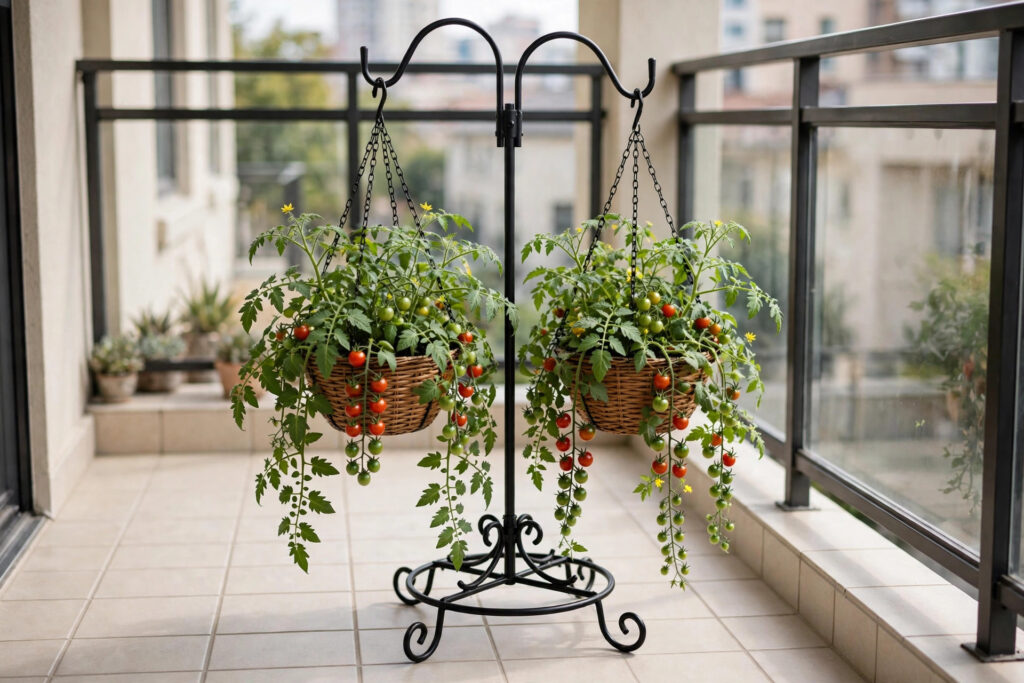
Drilled ceiling hooks are out for renters, but a freestanding hanging stand does the same job from the floor up.
The stand holds one or two baskets at head height and folds away flat at the end of the season.
Tumbling cherry tomatoes such as ‘Tiny Tim’ trail well from a basket and crop over a long stretch.
Baskets dry out faster than pots on the floor, so expect to water them daily in warm spells.
A basket with a built-in water reservoir slows the drying and saves trips with the watering can.
Hang the stand where drips land on tiles, not on the neighbour’s washing below.
Plan One Sunny Corner Like a Tiny Allotment
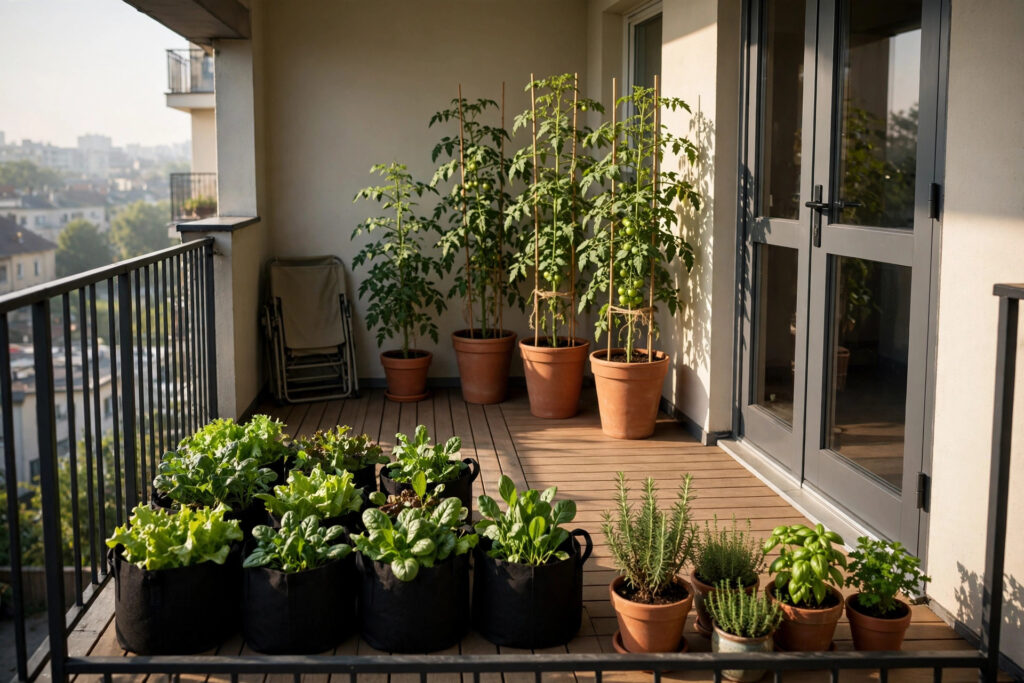
Pick the corner that gets the most sun and treat it as the whole garden.
Tall pots go at the back, greens and herbs at the front, and a clear path stays open to the door.
For layout inspiration beyond the crops, these small balcony garden ideas cover the styling side of tiny spaces.
If you have just moved in, this first-season plan for a container vegetable garden in a new apartment maps out the year.
Leave the shady corner for storage and a chair instead of forcing crops to grow there.
A small garden that fits the light you have beats a big garden planted in the wrong light.
Build a Garden That Moves House With You
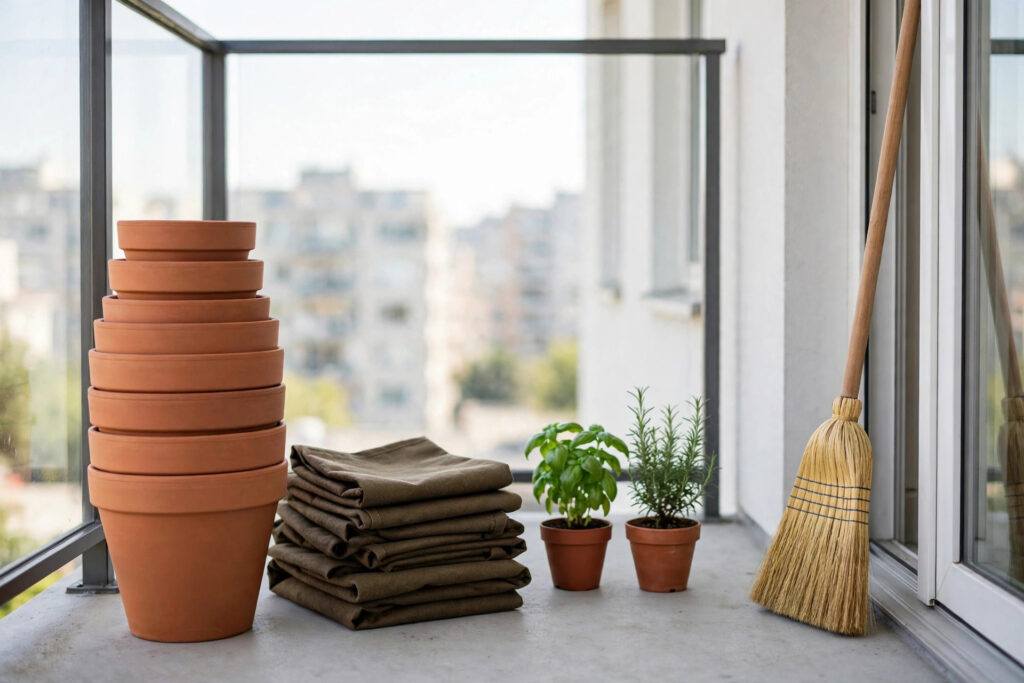
Rentals end, and a renter’s garden should pack like the rest of the home.
Bags fold down, pots stack inside each other, and a whole balcony garden fits into two car trips.
Keep your biggest pots at a size you can carry down the stairs when they are full of wet mix.
Anything you cannot lift alone tends to get left behind or given away in a rush.
Before you hand back the keys, sweep under every tray and rinse the floor down.
A clean balcony and a bag of home-grown tomatoes is a good way to leave a place.
No digging and no drilling rules out very little in the end.
Bags, hooks, trays, wheels, and one sunny corner cover almost every crop a beginner wants to grow.
Start your container vegetable garden for renters who cannot dig or drill with one tomato, one box of greens, and a few herbs by the door.
Renting stops being a reason to skip the garden once every plant lives in something you can carry out the door.
Add pots as your confidence grows, and save this list to your container garden board for later.


