

15 Small Living Room Makeover Ideas Under $500
Your living room feels tired, but your wallet says no to a full redo. That gap is exactly where a small room has an edge. You need less paint, less fabric, and fewer pieces to change the whole feel.
A small room rewards order. Paint first, swaps second, and thrift finds third, because each step builds on the last. Big furniture stays put while color, light, and texture do the heavy lifting.
These 15 small living room makeover ideas under 500 dollars follow that order. Each one fits a compact room, keeps the budget in check, and leaves a clear walkway.
If you want the wider list first, see our living room makeovers under $500 for the general version.
Start at the top and stop when the room feels done. You do not need all 15 ideas to see a real change. Work in daylight when you can, so paint and fabric colors read true.
This post contains affiliate links. If you buy through them, we may earn a small commission at no extra cost to you. See our Affiliate Disclosure.
1. Paint One Wall a Light, Warm Color
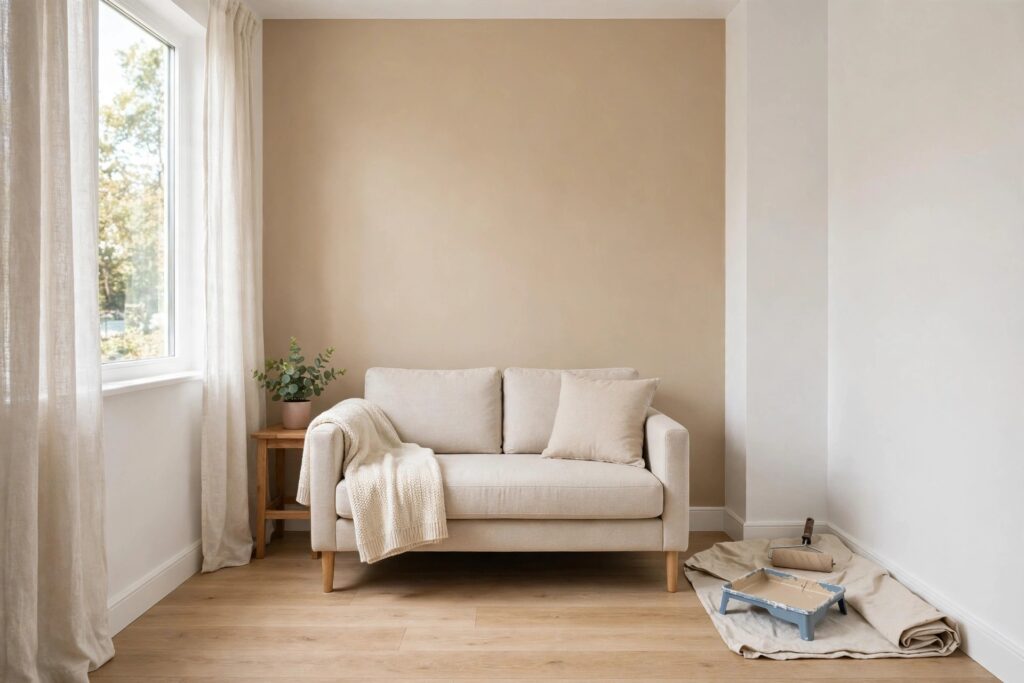
One wall in a soft warm white or pale beige changes the light in the whole room. It gives the eye a calm backdrop, and it costs far less than painting all four walls. Cost: low.
Pick the wall you see first when you walk in, usually the sofa wall. Test two paint chips on that wall and check them in morning and evening light before you buy a can.
Keep the other walls light and plain so the room stays open. A single bold wall can work too, and our small living room ideas with bold color on one wall show how to keep that look calm in a small space.
Roll the edges with care, let the first coat dry fully, and add a second coat only where the old color still shows.
2. Float the Sofa and Open a Clear Walkway
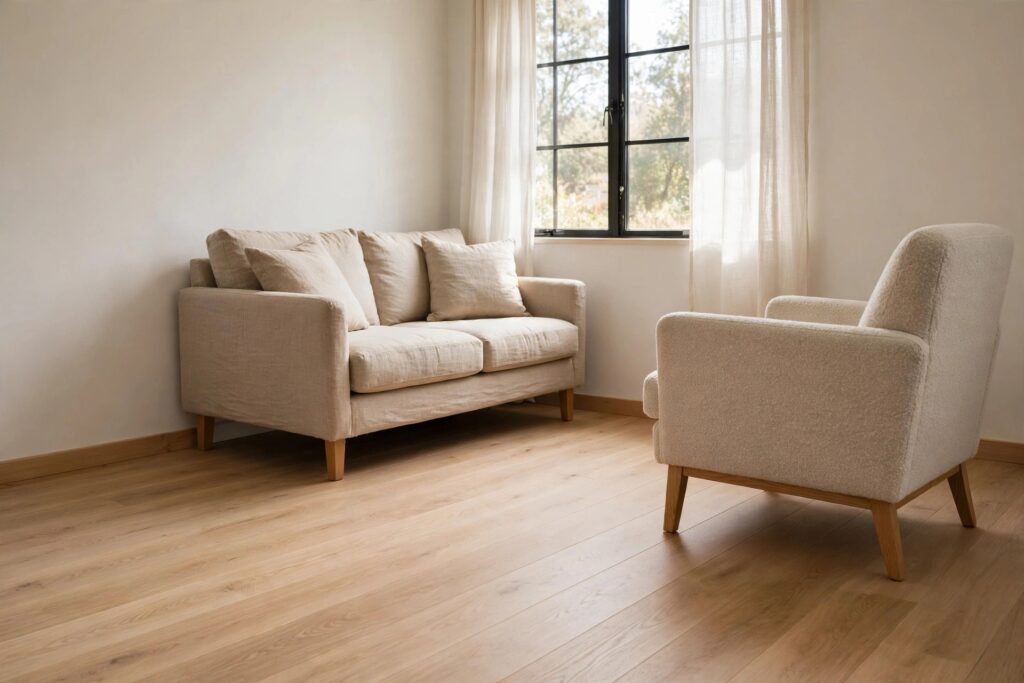
Pull the sofa a few inches off the wall and angle one chair toward it. That small shift creates a seating group instead of a row of furniture pushed flat against the walls. Cost: none.
Walk the path you use most, from the door to the sofa and then to the window. Move any table or basket that forces you to sidestep. A clear path makes a small room feel larger at once.
Measure the walkway with your feet, not your eyes. You want room to pass without turning sideways, even when someone else sits down. Our narrow living room layout ideas can help if your room is long and tight.
Try the new layout for one full evening before you move anything back. Sit, read, and watch TV in it. If the path still feels tight, slide the coffee table closer to the sofa.
3. Swap Pillow Covers and One Throw
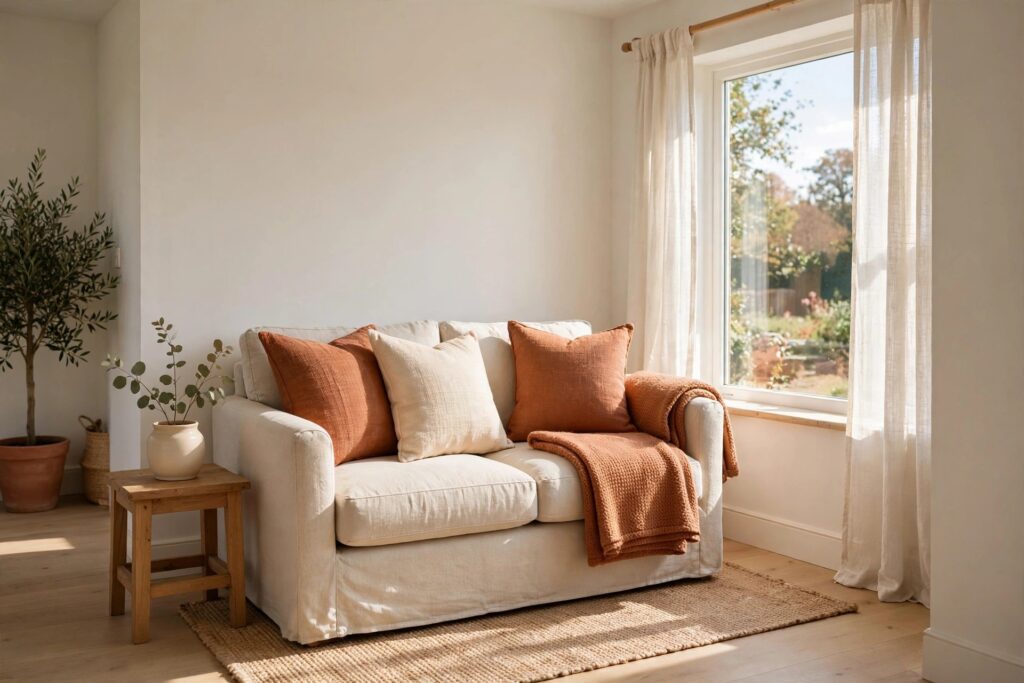
New pillow covers give you a new color story for the price of a takeout meal. Keep two solid colors and one simple pattern, all in the same warm family, so the sofa looks planned rather than patched together.
Start with the covers you already own. Pull out the ones that clash with your wall color and set them aside for another room. Then add covers in cream, rust, or soft green to warm up a plain sofa.
A single throw folded over one arm finishes the look. It also hides a worn armrest and gives you something warm on cool nights. A beige base keeps the mix calm, as in our beige living room ideas.
Fluff pillows and refold the throw daily to keep the swap looking fresh. Cost: low.
4. Thrift One Solid Wood Side Table
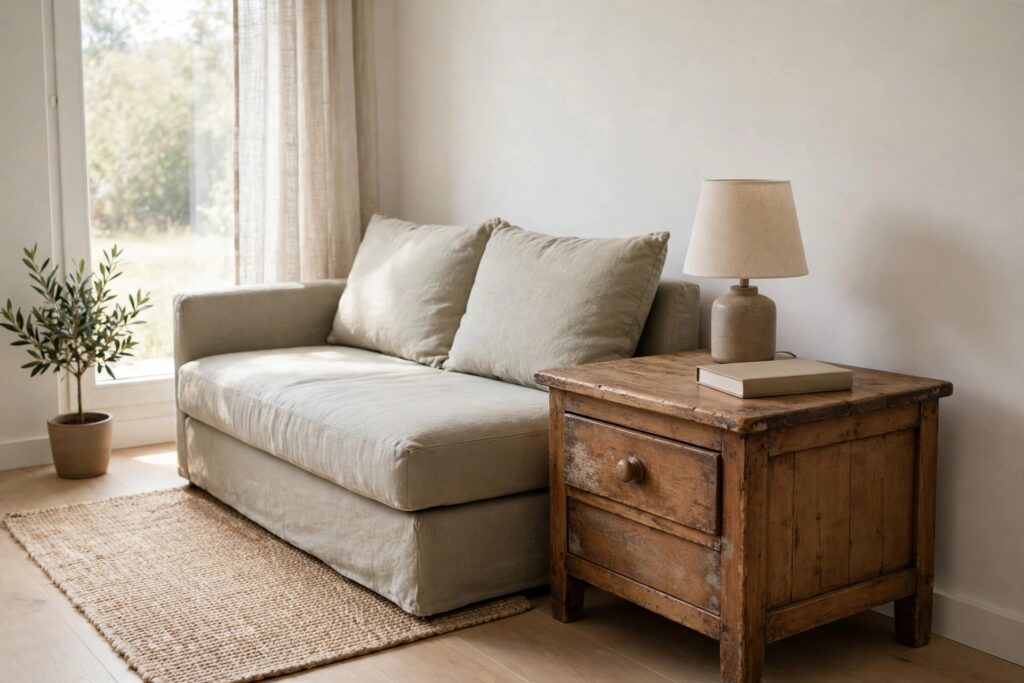
At a thrift shop last spring, I found a small oak side table with a wobbly leg and a scratched top. The frame was solid, the size fit beside my sofa, and a short fix made it the best piece in the room.
Shop with your tape measure in hand. Check that the table height sits close to your sofa arm, so a mug or book rests within easy reach. Skip pieces with cracked joints or a strong smell you cannot air out.
Clean the wood, tighten the screws, and sand only the rough spots. A side table like this holds a lamp, a book, and a drink without crowding the floor. Cost: low.
Place it on the side you use most. A makeover should serve daily life first.
5. Hang Curtains High and Wide
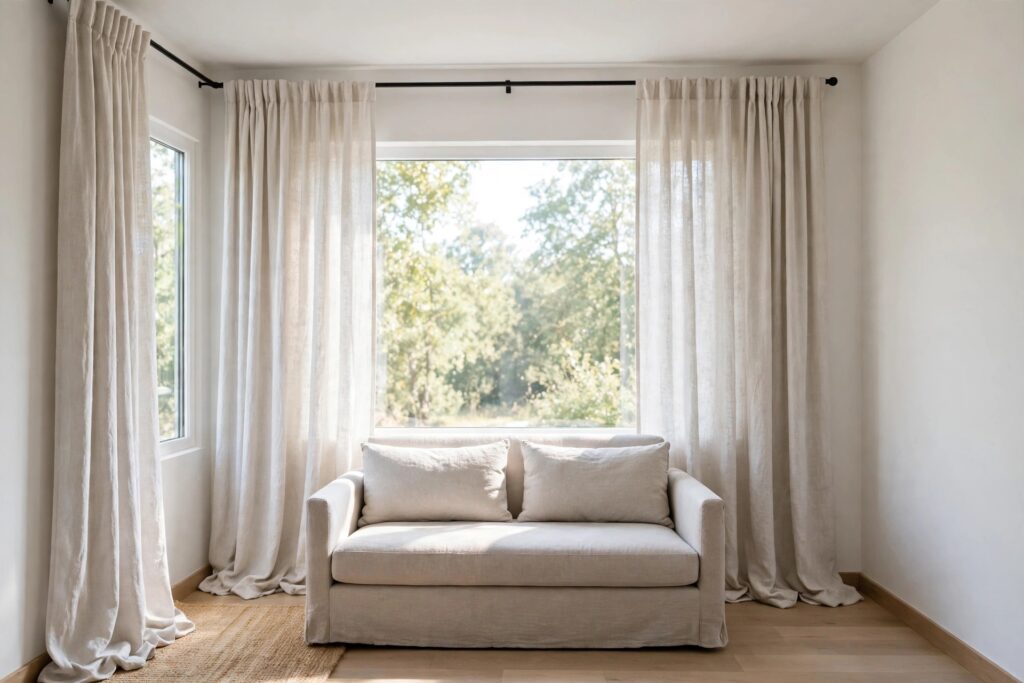
Here is a tiny rule that pays off fast: hang the curtain rod close to the ceiling and wider than the window. The window then looks taller, and the wall looks less boxed in.
Use light linen or cotton panels that let daylight through. Heavy dark curtains can close a small room in, even when they are tied back. Two panels, one on each side, frame the window without blocking it.
Let the panels just brush the floor. Curtains that puddle will collect dust and trip feet in a tight room, while panels that stop short can look unfinished. Measure twice before you drill.
If you rent, use strong adhesive hooks rated for the rod weight, or ask your landlord about two small screw holes. Cost: low. Best for: renters.
6. Slipcover a Tired Sofa in a Washable Neutral
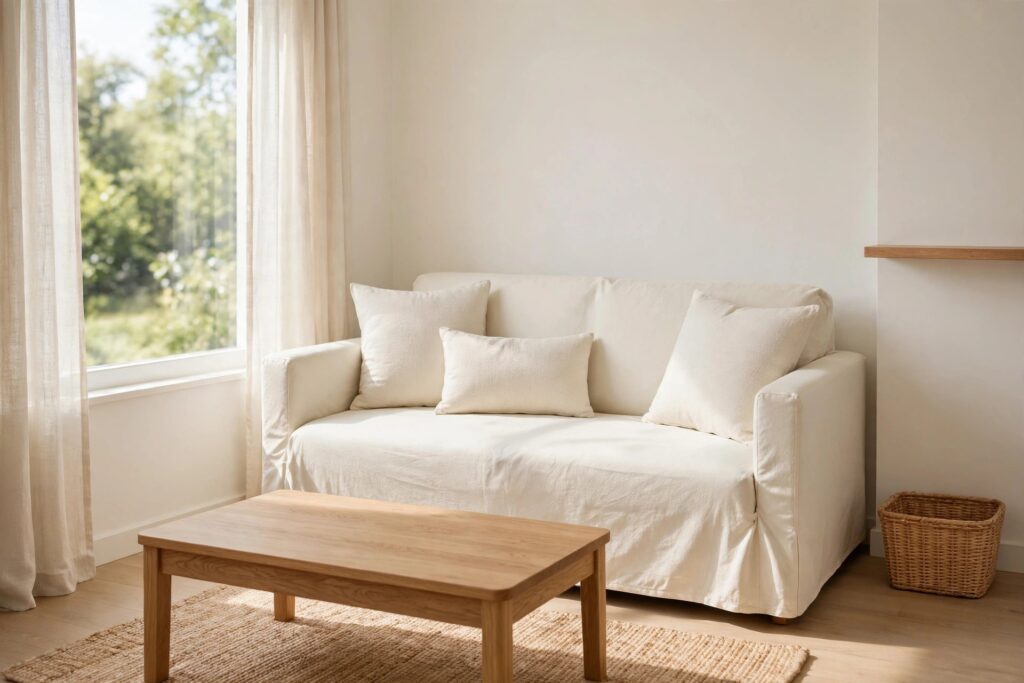
Some people think a worn sofa must be replaced. In a small room, a washable slipcover often solves the real problem, which is color and surface, not the frame underneath.
Check the frame first. Sit in each corner and listen for cracks. If the frame feels firm and the cushions still hold shape, a cover is a sound choice. If the frame sags badly, save your budget for a later swap.
Pick a light neutral you can wash at home, such as cream or soft gray. Tuck the fabric into cushion gaps so it stays neat.
Wash the cover on a cool cycle and air dry it before you put it back. A clean cover keeps pet hair and spills easy to handle. Cost: low to mid.
7. Swap in Warm Bulbs and a Second Lamp
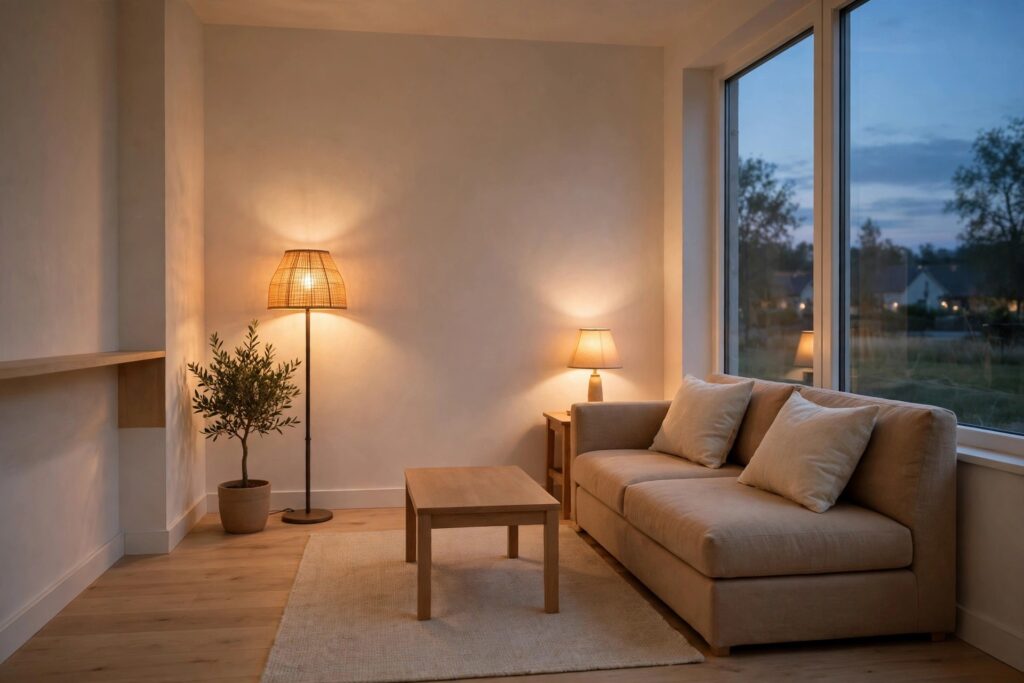
A single harsh ceiling light flattens a small room. Two or three warm lights at different heights do far more than one bright fixture, and they cost less than most people expect.
Start by swapping cool white bulbs for warm white ones in the lamps you own. Then add one floor lamp in a dark corner and one small table lamp near your reading chair. The room will feel layered, not dim.
Place lamps where you actually sit, not just where they look neat. A lamp behind a chair lights your book, while a lamp across the room lights the wall and softens shadows.
For more lamp placement ideas, read our cozy small living room ideas with layered lighting. Keep cords flat against the wall so no one trips. Cost: low.
8. Lay One Large Rug Under the Front Legs
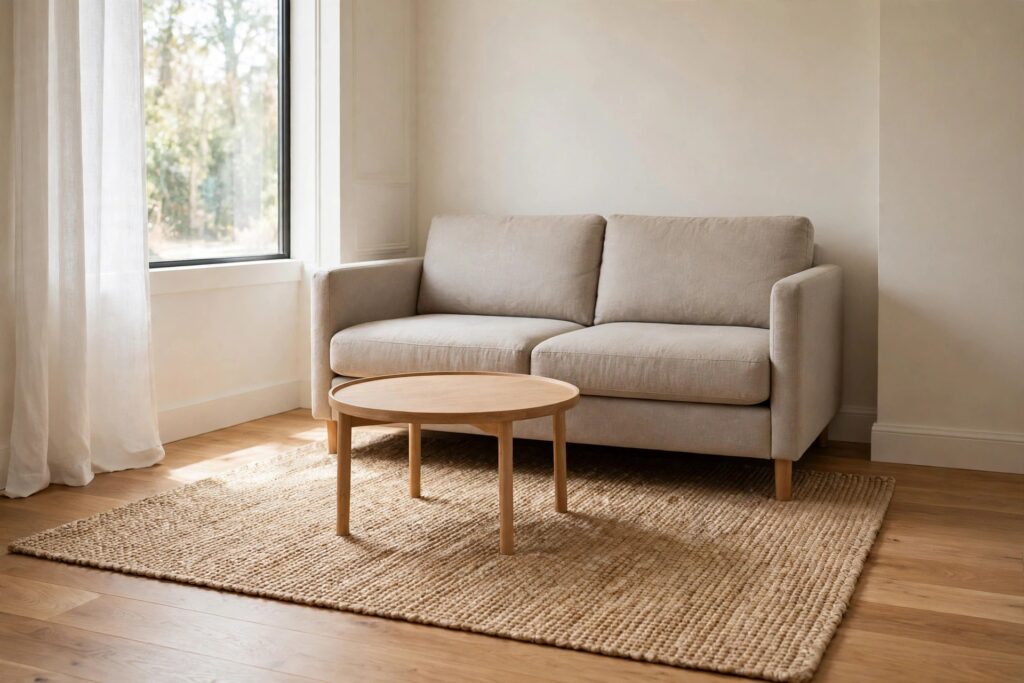
The most common small room mistake is a rug that is too small. It floats in the middle of the floor like an island, and it chops the seating group into separate bits.
Measure your seating group first, not the empty floor. The rug should sit under the front legs of the sofa and chairs, with enough width to join them into one zone. That single change grounds the whole room.
Pick a flat weave or low pile rug in a light, plain color. Thick pile can catch door swings and chair legs in a tight space, while a flat rug stays put and cleans with ease.
Add a thin rug pad to stop sliding on wood floors. Vacuum the edges each week so dust does not build up. Cost: mid.
9. Build a Gallery Wall From Thrift Frames
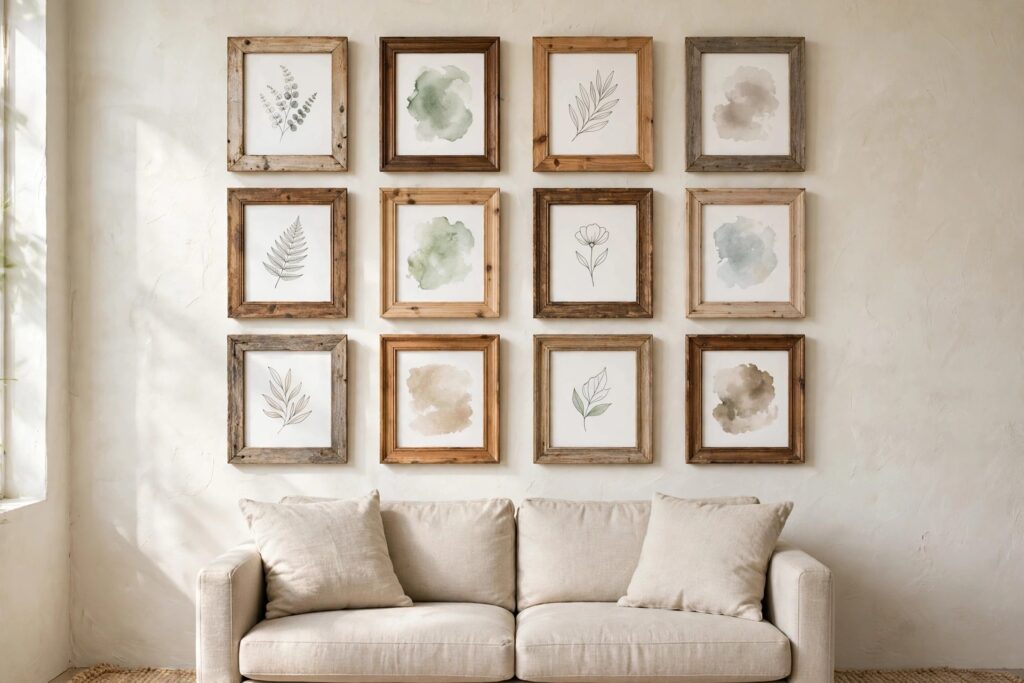
A quick mistake is buying ten matching frames at once. The wall then looks like a store display, and the budget is gone before you pick a single print.
Collect thrift frames over two or three visits instead. Keep to one finish, such as natural wood or black, so mixed sizes still look calm together. Fill them with family photos, free museum prints, or pages from old calendars.
Lay the frames on the floor first and shape a rectangle or a loose grid. Leave even gaps of two or three inches between frames, and keep the whole group at eye level above the sofa.
Hang the largest frame first, then work outward from it. Step back after each frame and check the balance. Cost: low. Best for: renters who can use small nails or strips.
10. Paint the Old Coffee Table or Bookshelf
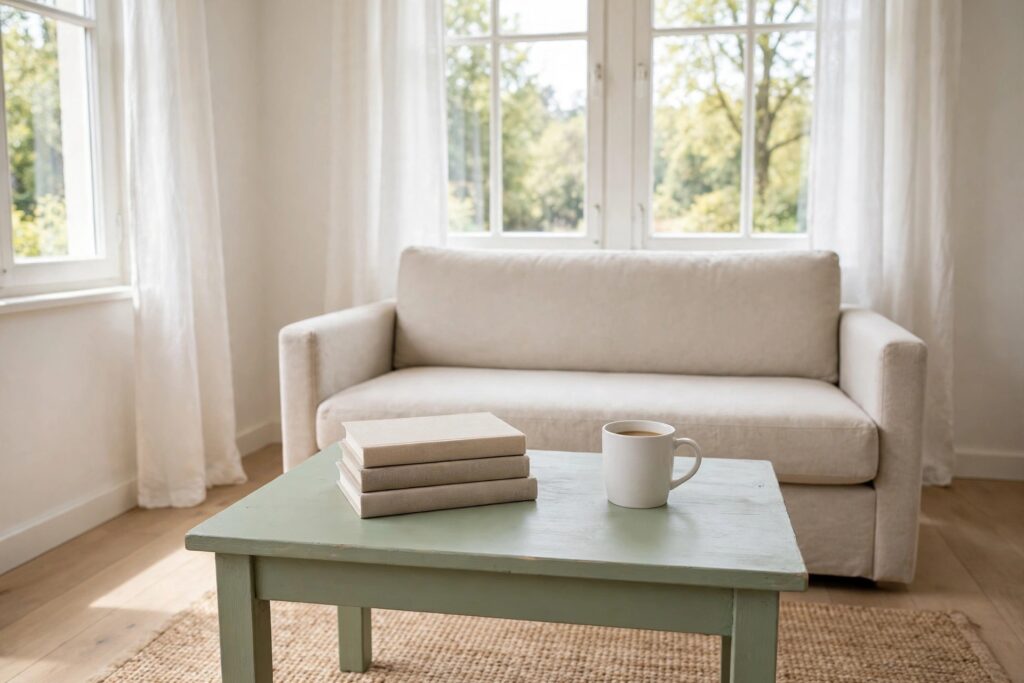
I kept my first coffee table for years because it fit the room, even though the finish had gone dull and dark. One weekend of sanding and paint gave it a second life, and it still anchors my sofa today.
Start with a piece that fits well but looks dated. Clean it, sand glossy spots lightly, and wipe off dust before you paint. Two thin coats beat one thick coat.
Pick a soft sage, cream, or warm gray that ties to your wall color. Paint the inside of a bookshelf the same color as the wall behind it if you want books to stand out.
Let the piece cure for a day before you load it with books or mugs. Fresh paint chips fast when heavy items slide across it too soon. Cost: low.
11. Refresh Knobs, Handles, and Outlet Covers
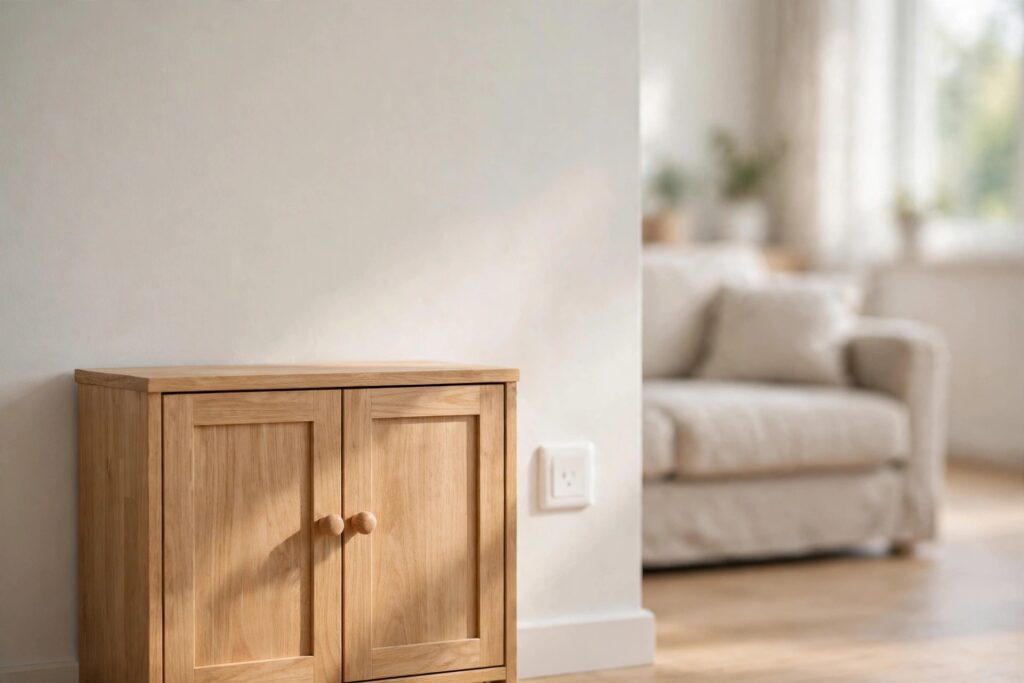
Small hardware draws the eye more than you might think. Yellowed outlet covers and loose cabinet knobs make a fresh room look unfinished, even after new paint.
Walk the room with a screwdriver and a short list. Note each loose knob, each cracked cover, and each handle that sticks. Most swaps take five minutes and need no special skill.
Match the new knobs to each other, not to every metal finish in the room. Simple round knobs in brushed brass or matte black suit most small rooms and most wood tones.
Turn off the power at the switch before you change an outlet cover, and keep the old screws in a small bag. Label the bag so the next fix is easy. Cost: low.
12. Add Two Plants in Thrift Pots
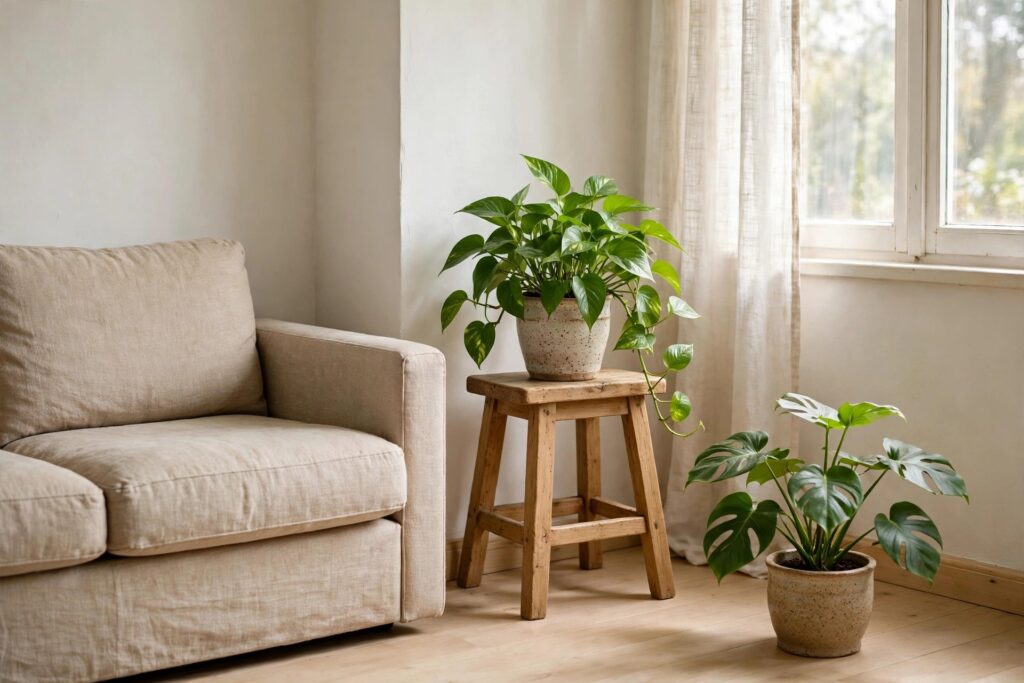
Two healthy plants bring more life to a small room than a shelf full of small ornaments. They add height, color, and a soft shape that breaks up straight sofa and table lines.
Pick easy plants that suit your light, such as a snake plant for a bright corner and a pothos for a shelf. Check the light in each spot for a day before you buy, so you match plant to place.
Set one large plant on the floor near the window and one smaller plant on a stool or shelf. Thrift ceramic pots in plain colors, and add a saucer under each pot to protect the floor.
Water only when the top soil feels dry to your finger. Overwatering kills more houseplants than low light does, and soggy pots can stain wood floors. Cost: low.
13. Hang a Large Mirror Across From the Window
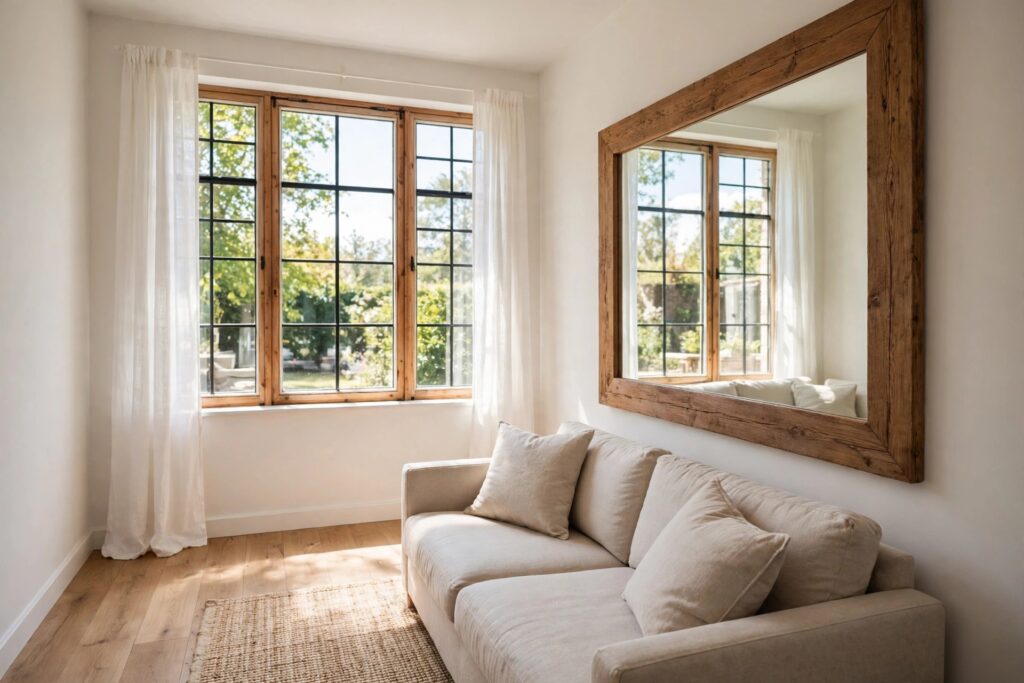
On a gray afternoon, my living room once felt half its size. A large mirror across from the window changed that in an hour, because it doubled the daylight and the view of the street trees.
Hang the mirror on the wall opposite the window, not beside it. That placement bounces light deep into the room and shows the window view from the sofa.
Keep the frame simple and the glass clean. A busy frame fights with the reflection, while a plain wood or black frame lets the light do the work. Check that the mirror hangs level before you step back.
Fix the mirror to a wall stud or use wall anchors rated for its weight. A large mirror is heavy, and a small hook will not hold it safe on plaster or drywall. Cost: low to mid.
14. Hide Cords and Give Clutter a Basket
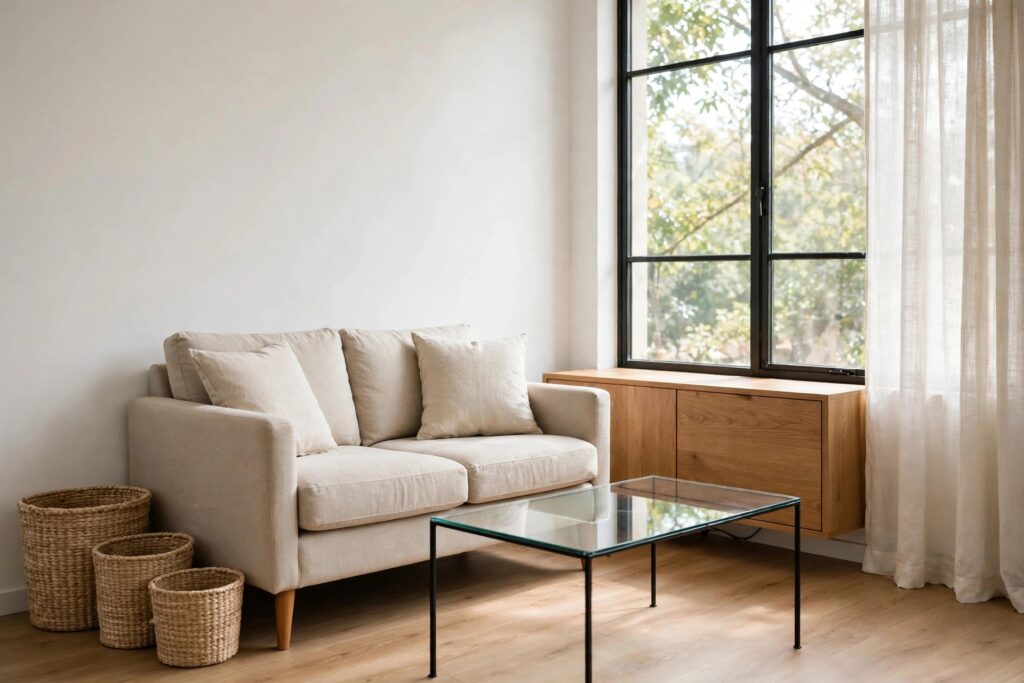
Start with the cords behind the TV console. Gather them with reusable ties, run them along the back of the furniture, and clip the bundle flat so it does not snake across the floor.
Next, give every loose item a home. One woven basket by the sofa holds throws, chargers, and remotes. A second basket near the door holds mail and keys that used to pile on the coffee table.
Clear the coffee table down to three items: a book, a candle, or a small plant. A clear surface makes the room read as calm, even on busy days.
Do a five minute reset each night. Return remotes to the basket, fold the throw, and coil any loose cord. Small resets beat big cleanups, and they keep a makeover looking new. Cost: low.
15. Choose One Thrift Statement Chair and Edit the Rest

Some rooms fail not from too little style, but from too many small pieces competing for attention. One strong chair can end that noise and give the room a clear focal point.
Look for a rattan, wood, or fabric chair with a shape you love and a frame that feels firm. A cream cushion keeps it calm, while the chair shape itself adds the interest. Measure the door and the corner before you buy.
Place the chair at an angle near the window or beside the sofa, where it invites sitting. Then remove one small item for each new item you add, so the room gains focus without gaining clutter.
Live with the chair for a week before you add more decor. If the room still feels busy, move one side table out. Cost: low to mid.
Pick three ideas from this list and do them in order: paint, swap, then thrift. That small-room order keeps costs low and stops you from buying decor before the big changes are done.
Start this weekend with the free move, floating your sofa and clearing the walkway. Then add color and light, one step at a time, until the room feels like yours again.
Save this to your small living room board for later, and note which idea made the biggest change in your room. A good small living room makeover ideas under 500 dollars plan is one you can finish, live with, and enjoy.


