

15 Small Kitchen Ideas With Vertical Spice Storage Walls
Your spice jars live in three places at once, and you still cannot find the cumin.
That is the usual small kitchen problem. Jars hide behind oil bottles, fall over in a deep cabinet, and take up counter space you need for chopping.
Good small kitchen ideas with vertical spice storage walls fix this by moving the whole collection onto the wall. One jar deep, at eye level, in plain sight.
The ideas below stay on walls and upright surfaces only. You will find ledges, rails, door runs, and slim columns that hold a full set without stealing a single drawer.
A wall system also ends the duplicate problem. When every jar is visible, you stop buying a second paprika while the first one sits hidden at the back.
Measure your free wall first, then count your jars. Those two numbers tell you which of these fifteen setups fits your kitchen and your cooking habits best.
This post contains affiliate links. If you buy through them, we may earn a small commission at no extra cost to you. See our Affiliate Disclosure.
1. Single Row Ledges Beside the Cooker
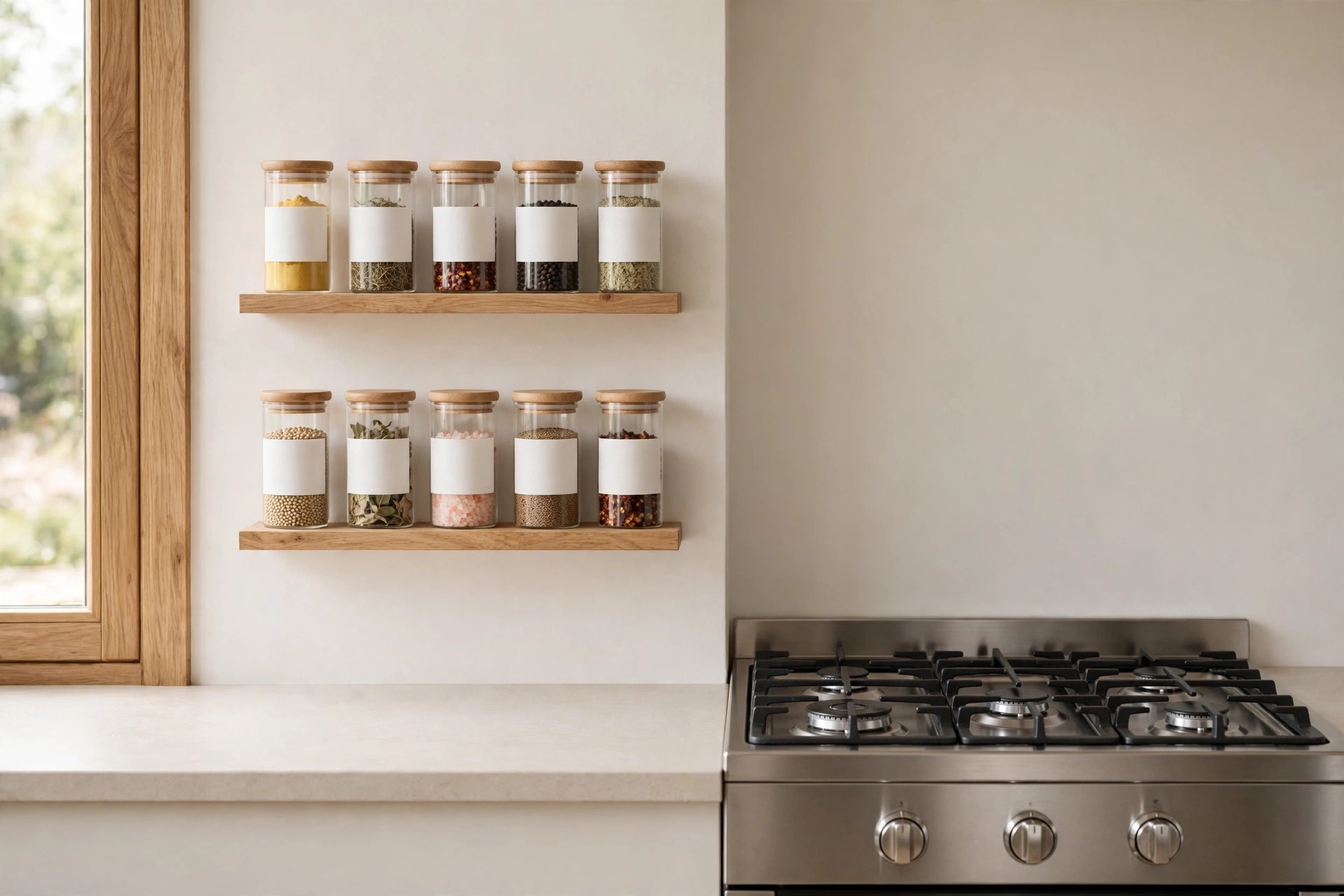
Fit two or three narrow ledges on the wall beside the cooker, each holding one row of jars.
Keep the ledges shallow, about as deep as a jar is wide. Nothing can hide behind anything else, so you read the whole row in one glance.
Put the jars you reach for daily on the lowest ledge. Paprika, garlic powder, and chili flakes belong there, right where your hand already goes.
Leave a small gap between the top ledge and the cabinet above. That gap stops the wall feeling packed and gives tall jars room to lift out.
2. A Rail With Hanging Spice Jars

A short wall rail with hooks holds small jars or tins in a neat hanging line.
Mount the rail above the counter, clear of steam from the kettle. Slide the jars along the rail when your cooking routine changes, no new holes needed.
This suits cooks who season in stages. Salt and pepper sit at one end, finishing spices at the other, in the order you use them.
Keep the rail to one row only. A second crowded row turns a clear system back into a hunt, which is what you are trying to end.
3. Inside Door Rows That Use Dead Space

The inside face of a cabinet door or pantry door is flat, vertical, and usually empty.
Slim racks or clip strips on that face hold a full row of jars in a space that stores nothing now. The door closes, and the jars vanish from view.
Check the clearance first. Close the door slowly and make sure jars clear the shelves inside before you fix anything in place for good.
Light jars work best here. Save heavy bulk jars for a fixed wall, and give the door run the small jars you grab most often.
On a pantry door, run the rows down the middle of the door only. Rows near the hinges feel heavier to swing and can knock against the frame.
4. A Magnetic Panel as a Spice Wall

A flat magnetic panel on the wall turns small metal tins into a tidy grid you can rearrange in seconds.
Press each tin on, lift it off to cook, and press it back. No lids to line up on a shelf, no jars sliding behind each other.
Keep the panel beside the prep area, not above the hob. Heat and steam are hard on ground spices, and a cooler wall keeps flavors stronger for longer.
Start with a small panel and twelve tins. You can add a second panel later if the collection grows, and the wall still looks planned.
5. A Tiered Wall Rack, One Jar Deep

A tiered rack steps each row up behind the one below it, so every jar stays visible.
The key rule is depth. Choose a rack that holds one jar per row, not two. The moment jars sit two deep, the back row disappears from daily use.
Sort the tiers by how often you cook with each spice. Daily jars at hand height, weekly jars one step up, rare jars on the top tier.
This is a strong fix for the cabinet where jars always hide behind the oil bottle. On the wall, there is no behind.
6. The Side of the Fridge as a Spice Column

The exposed side of a fridge is a tall, flat surface that most small kitchens waste.
Magnetic tins or a slim magnetic rack turn that side into a vertical spice column. It sits outside the work zone, so it never crowds your prep space.
Run the column in short groups with small gaps between them. Your eye finds each group faster than one long, unbroken line of jars.
If your fridge side faces a walkway, keep the tins low and flat. A shallow profile means shoulders and shopping bags pass without knocking jars loose.
Wipe the fridge side before you start. Magnets grip clean metal far better, and tins stay put when the door swings shut during a busy cooking session.
7. Matching Jars for a Wall That Looks Calm

Decant spices into one set of matching jars, and the same wall suddenly looks twice as tidy.
Mixed packets and odd jars fight each other on an open wall. Matching jars with plain lids read as one calm block of color and shape instead.
Use blank labels or plain lids and sort by color of the spice itself. Reds together, greens together, warm browns together. The color becomes the label.
Keep the empty packets in a box elsewhere for dates and details. The wall holds the working set, neat and easy to scan while a pan is on.
8. Group the Wall by Cooking Job

Sort the wall by cooking job, not by the alphabet. Your hands remember jobs, not spelling.
Give weeknight cooking one ledge, baking one short run, and blends or rubs a third spot. When you start a dish, you go to one place only.
This helps keen bakers most, since cinnamon, nutmeg, and vanilla sugar stop drifting into the dinner spices. Our guide to small kitchen ideas for bakers builds a full baking zone around the same habit.
Review the groups twice a year. If a jar has not moved in months, it can leave the wall and free a spot for one you use.
9. A Tall Thin Column in a Dead Corner

Most small kitchens have one narrow wall strip that fits nothing. That strip fits a spice column.
Stack short ledges from counter height up to cabinet height in that single strip. One jar per ledge end keeps the column light and easy to read.
Corners near the sink work well for this, even the stretch you can only reach on tiptoe. Put rarely used jars at the top of the column.
The same corner thinking drives our open corner shelf styling ideas, which turn the turn of the corner into storage instead of dead space.
10. A Shallow Backsplash Ledge Shelf

A shallow ledge along the backsplash puts a single row of jars right behind your prep space.
Keep it to the stretch away from direct hob steam. A ledge beside the chopping board, rather than behind the burners, is the sweet spot.
One row is the whole point here. Salt, pepper, and three or four daily jars are plenty, and the counter below stays clear for boards and bowls.
Wipe this ledge when you wipe the backsplash. A quick pass keeps the row looking fresh, and the jars stay easy to grip with dry hands.
Choose a ledge with a tiny raised edge if your jars slide on tile. The edge stops a jar rolling off when you brush past with a hot pan.
11. Two Short Runs Instead of One Long One

One very long spice wall can feel busy and hard to scan. Two short runs feel calmer and work faster.
Put the daily run near the cooker and a second, smaller run near the counter where you mix and bake. Each run holds only its own job.
This split also suits kitchens with broken up wall space. A short wall by the door and a short wall by the window each take a run.
Homes that move need the same split thinking. Our tiny home on wheels kitchen ideas use short, secure runs so nothing travels far if it shifts.
12. Eye Level for Daily Jars, High Rows for the Rest
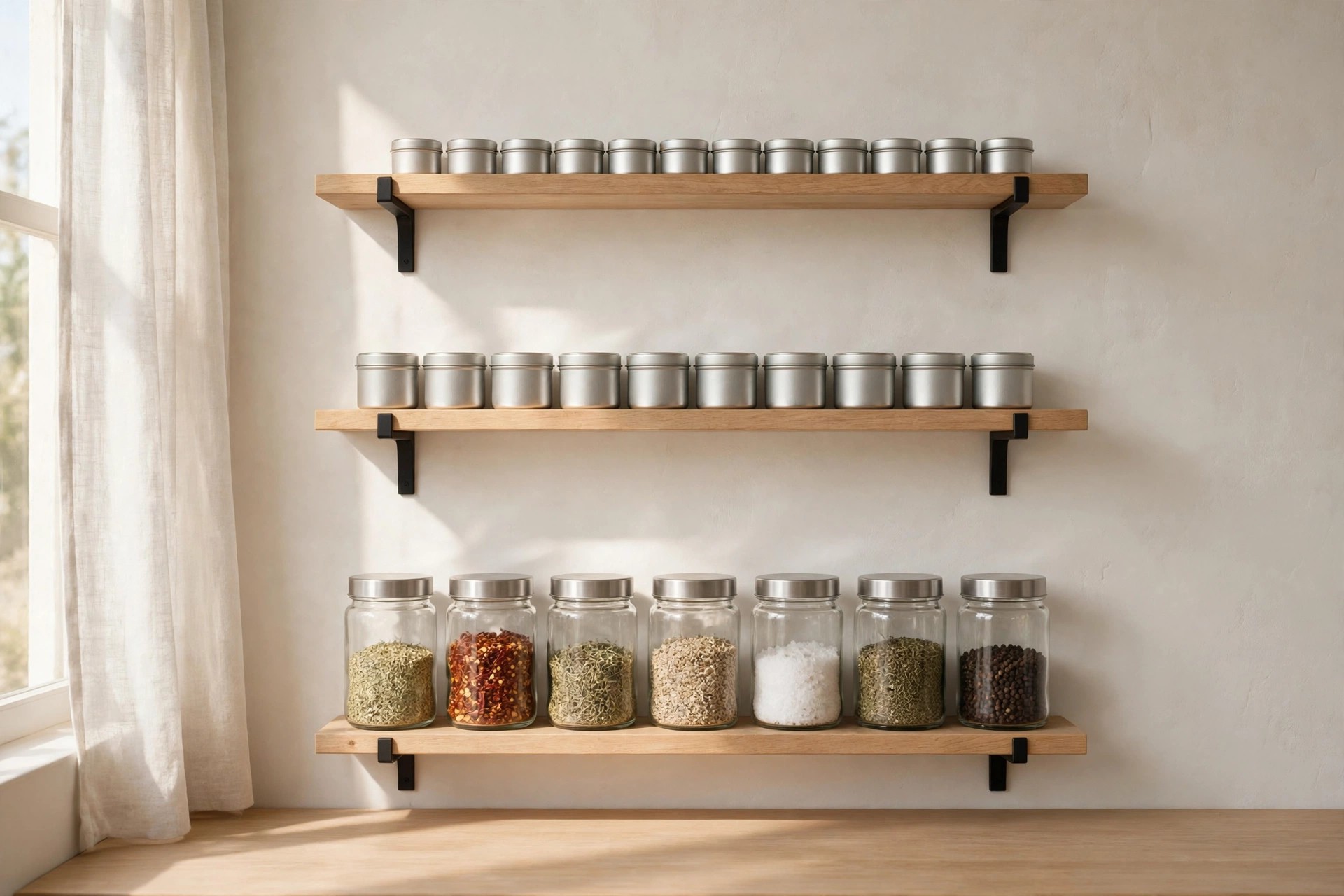
Height is a sorting tool. The row at eye level should hold only what you use most days.
Rows above eye level hold baking spices, whole spices, and refills. You reach for them less, so the stretch is worth it once a week, not daily.
Keep the lowest row clear of very small jars that tip easily. Sturdier jars sit low, light tins sit high, and the wall feels balanced.
If you share the kitchen, agree on the eye level row together. That one shared row stops two systems forming on the same wall.
13. A Wire Grid Panel With Clip On Pots

A flat wire grid fixed to the wall holds small clip on pots and hooks for spice jars.
The grid spreads the weight across the wall and lets you move each pot without tools. Add a pot when a new spice joins, lift one off when it goes.
Keep pots in a loose grid pattern with space around each one. Crowded grids are hard to clean and harder to read at a glance.
Leave one empty pot on the grid at all times. It becomes the landing spot for a new spice, so the grid grows in an orderly way.
This style suits renters with one good wall and no spare cabinets. It also pairs well with the wider storage thinking in kitchen storage ideas for apartments with no pantry.
14. The End Panel of a Cabinet Run
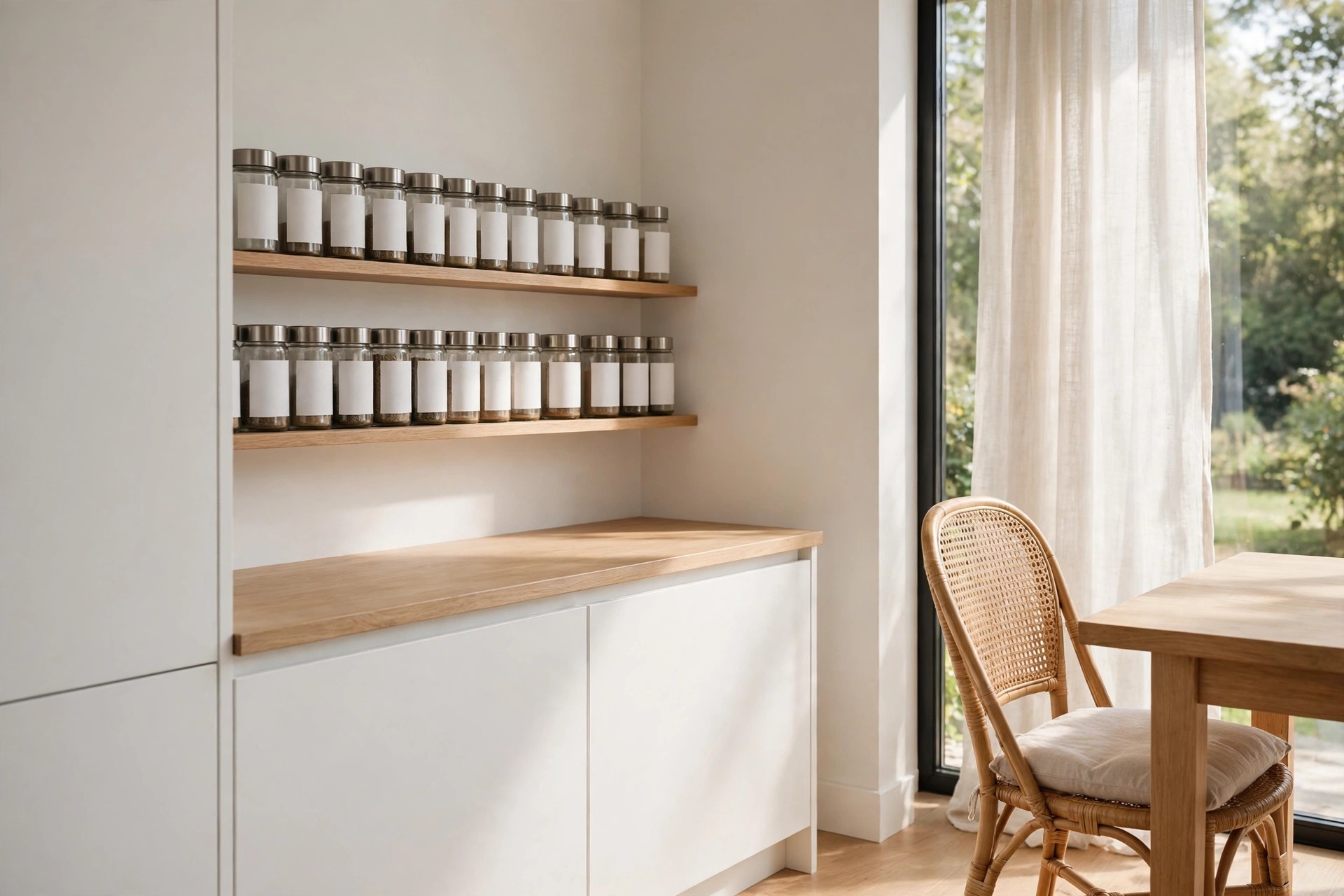
The flat end panel of a cabinet run is a ready made vertical surface, often facing the door or dining side.
Slim ledges or a shallow rack on that panel hold a full spice set outside the cooking zone. Guests see a neat display, cooks get a clear counter.
Because this panel sits away from heat, it suits ground spices that fade fast near the hob. Cooler and darker keeps them tasting as they should.
Match the ledge finish to the cabinet color. The run then looks built in, not added on, even in a very small room. For more ways to mix wall storage with closed cabinets, see small kitchen ideas with open shelves.
15. Shallow Picture Ledges Stacked High

Shallow picture ledges, the kind with a small front lip, make fine spice shelves when stacked up a wall.
The lip stops jars sliding forward, and the slim profile keeps the wall feeling light. Three or four ledges hold a large collection in a small footprint.
Leave the top ledge for jars with secure lids only, since you will lift them down from above. Everyday jars stay on the middle ledges.
Paint the ledges the wall color for a quiet look, or use warm wood for contrast. Either way, the jars become the pattern on the wall.
Start with one wall and one row. That is the heart of small kitchen ideas with vertical spice storage walls: the daily set on display, the rest held high or behind a door.
Pick the surface you already have: a door face, a fridge side, a dead corner, or the stretch beside the cooker. Add jars in matching sets, group them by job, and keep every row one jar deep.
Save this to your small kitchen ideas board for later, and measure your wall before you buy a single ledge.


