

15 Apartment Living Room Ideas for a Bright Corner Unit
Two walls of windows sound like a dream until noon hits. The glare lands on every screen, the corner seat bakes, and half the room is too bright to sit in by early afternoon. By dinner, everyone crowds into the one dim corner left.
Good apartment living room ideas for a bright corner unit start with that honest problem. The light is the best feature of the home, and it still needs shade, placement, and pale surfaces to behave. The goal is comfort at noon and at night alike.
You do not need heavy drapes closed all day or furniture pushed into the dark middle. Small choices on each window wall keep the room bright, cool, and easy to use at every hour. The fixes are mostly placement, fabric, and height.
The 15 ideas below work one corner at a time. Take the ones that fit your windows first, and let the sun stay the main event in the room for the right reasons. Most cost nothing but an hour of moving things.
This post contains affiliate links. If you buy through them, we may earn a small commission at no extra cost to you. See our Affiliate Disclosure.
1. Float the Sofa Off Both Window Walls
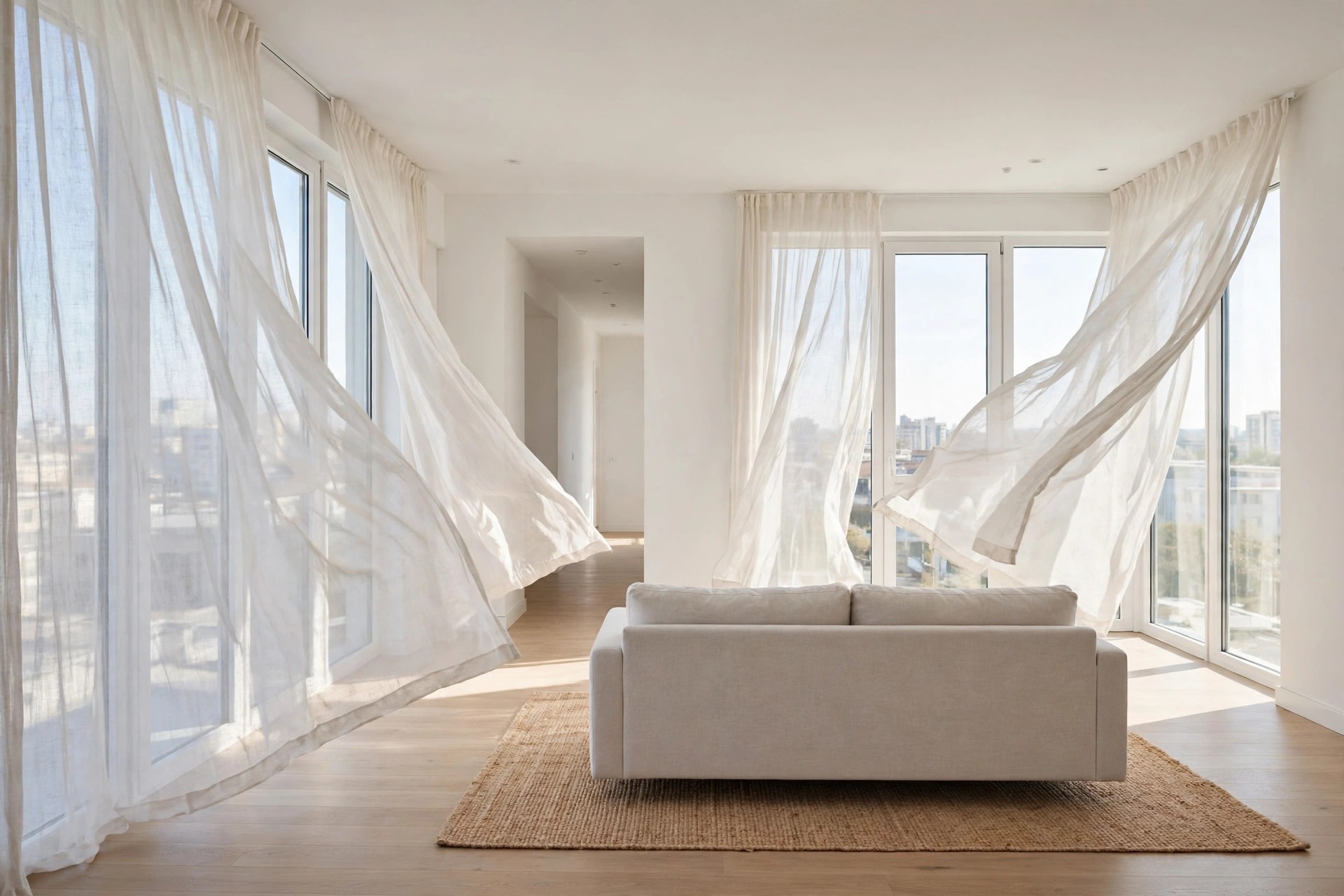
Pull the sofa into the room instead of backing it onto either window wall. A floated sofa keeps light moving past it, protects the glass from scuffs, and leaves a slim path for cleaning and curtains. Light keeps moving, and the room keeps breathing.
Anchor the floated group with a rug so it reads as a placed island, not furniture lost at sea. The rug edge gives the eye a border, and the chairs and table can gather around it with purpose.
Leave enough space behind the sofa to walk without turning sideways. That back path is also where curtain panels need to move, and a squeezed gap is how hems get torn and rods get bent over time. That back gap also keeps curtains moving freely.
2. Run Sheers on Both Walls for Soft, Even Light
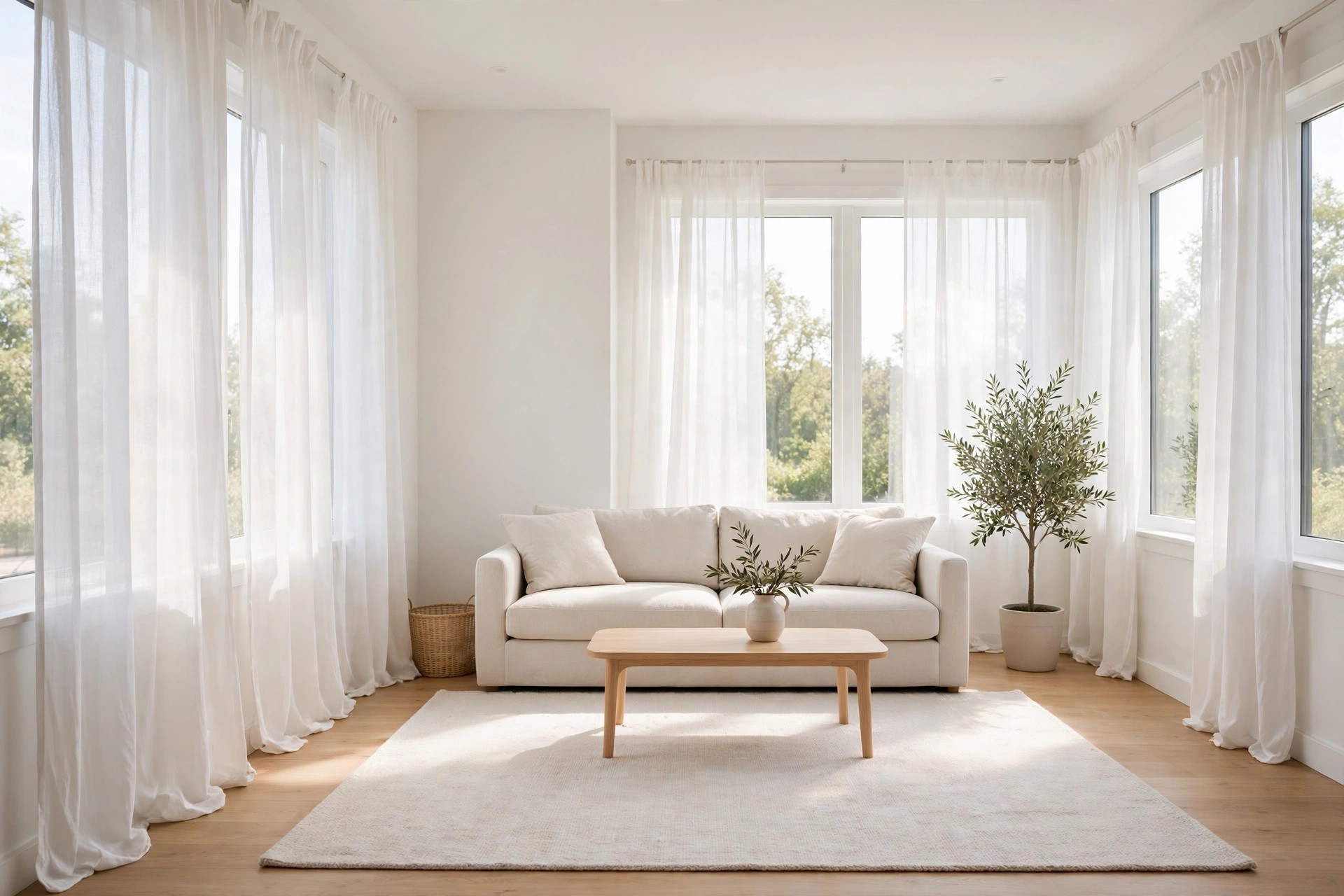
Sheers are the base layer a bright corner needs. Hung on both window walls, they cut the hard edge off midday sun while the room stays light enough to read, work, and live in all afternoon.
Choose one sheer fabric for both walls so the corner reads as one calm surface. Mixed panels on each wall chop the corner into pieces, and the eye lands on the curtains instead of the view beyond them. One fabric keeps the corner feeling whole.
Let the sheers run wide and full, gathered softly rather than stretched flat. Gentle folds diffuse light better than a tight panel, and they move a little in the breeze, which keeps a bright room feeling alive. Sheers do more work than any other layer.
3. Add a Lined Curtain Layer for Heat and Evening Privacy
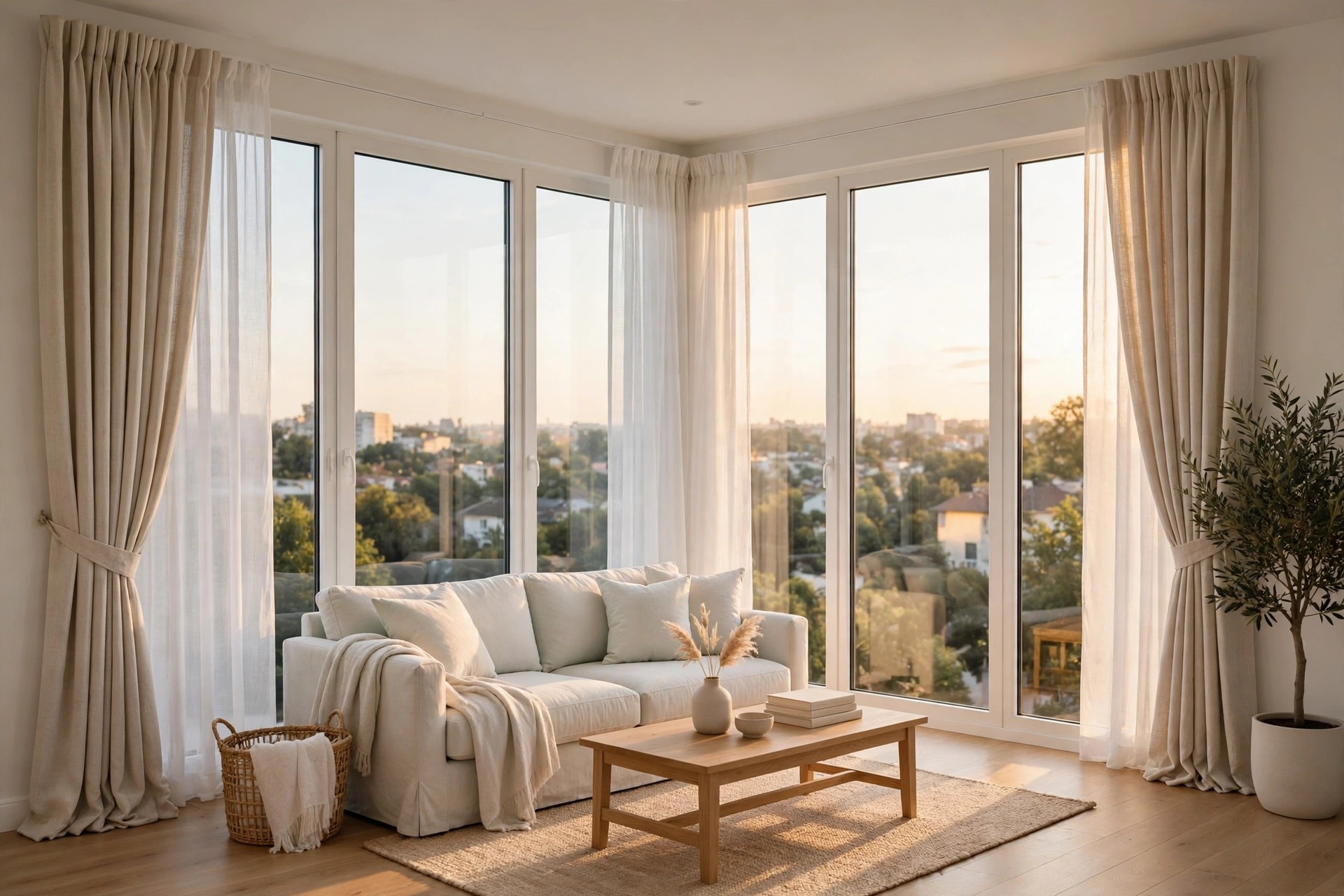
Sheers alone will not save a west facing corner at six in the evening. A lined outer panel on each wall closes for the hot hours and for privacy at night, then stacks back out of the way.
Hang the lined panels wide so they clear the glass when open. A panel that covers a third of the window all day steals the very light you chose this apartment for in the first place.
For fabric that works on both jobs, look at thermal curtains that block heat and cold before you buy.
In a rental, hang from a tension rod or a rod the lease allows, and keep the method fully reversible from day one. Reversible now beats perfect later in any rental.
4. Keep Furniture Below the Sill Line Along the Glass
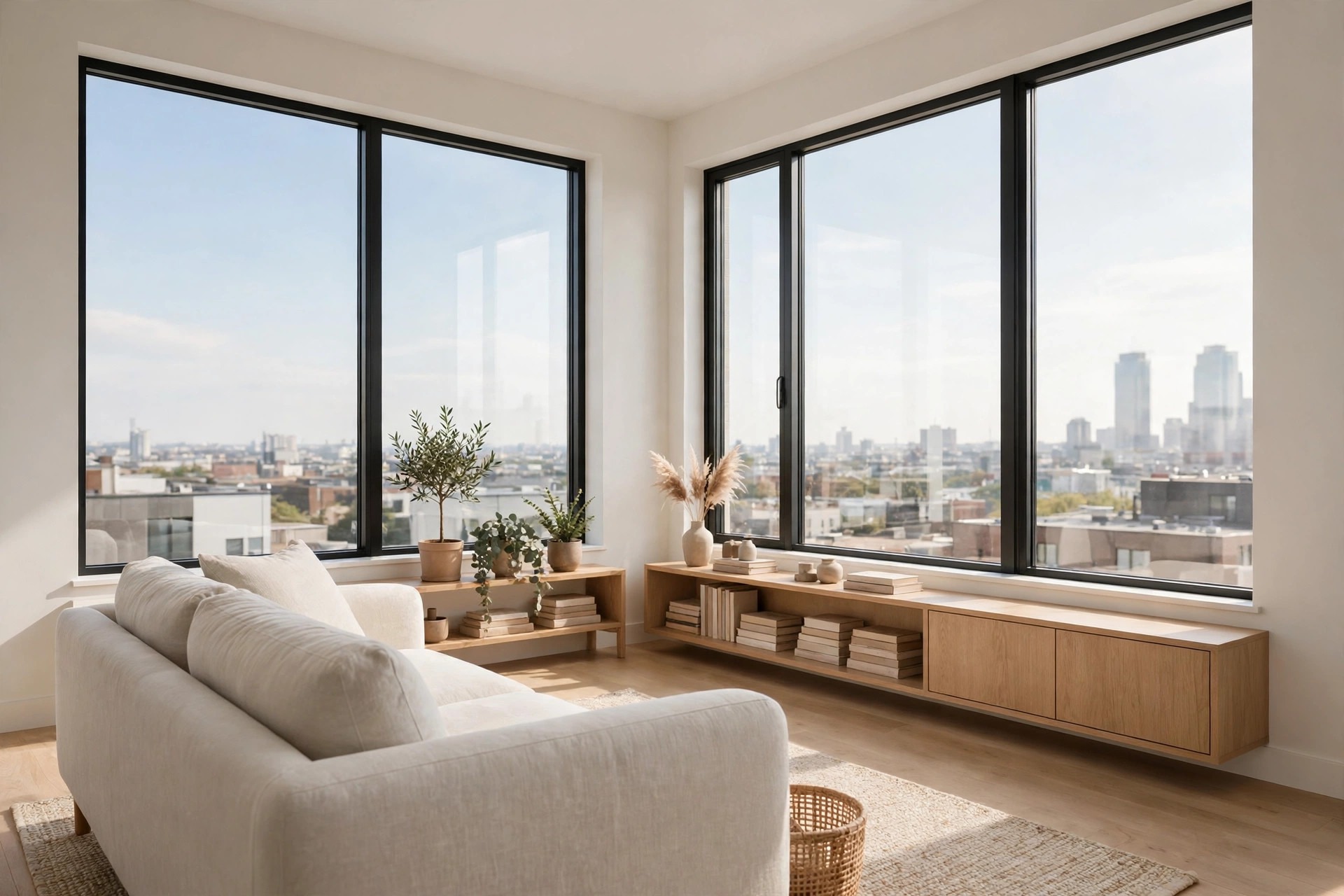
Tall pieces against the glass block light and cast long shadows across the room. Along both window walls, keep every piece low: a short console, a low bookcase, a plant stand that stays under the sill.
The low line also protects your view while seated. From the sofa, you should see sky and street over the furniture, not the back of a tall cabinet filling half the window you sit down to enjoy. Low pieces also keep the room feeling wide.
Move anything tall to the solid walls instead. A bright corner unit usually has two walls without glass, and those are the right home for shelves, art, and the tallest storage the room needs. Tall storage earns more on a wall without glass.
5. Place a Reading Chair in the Brightest Corner
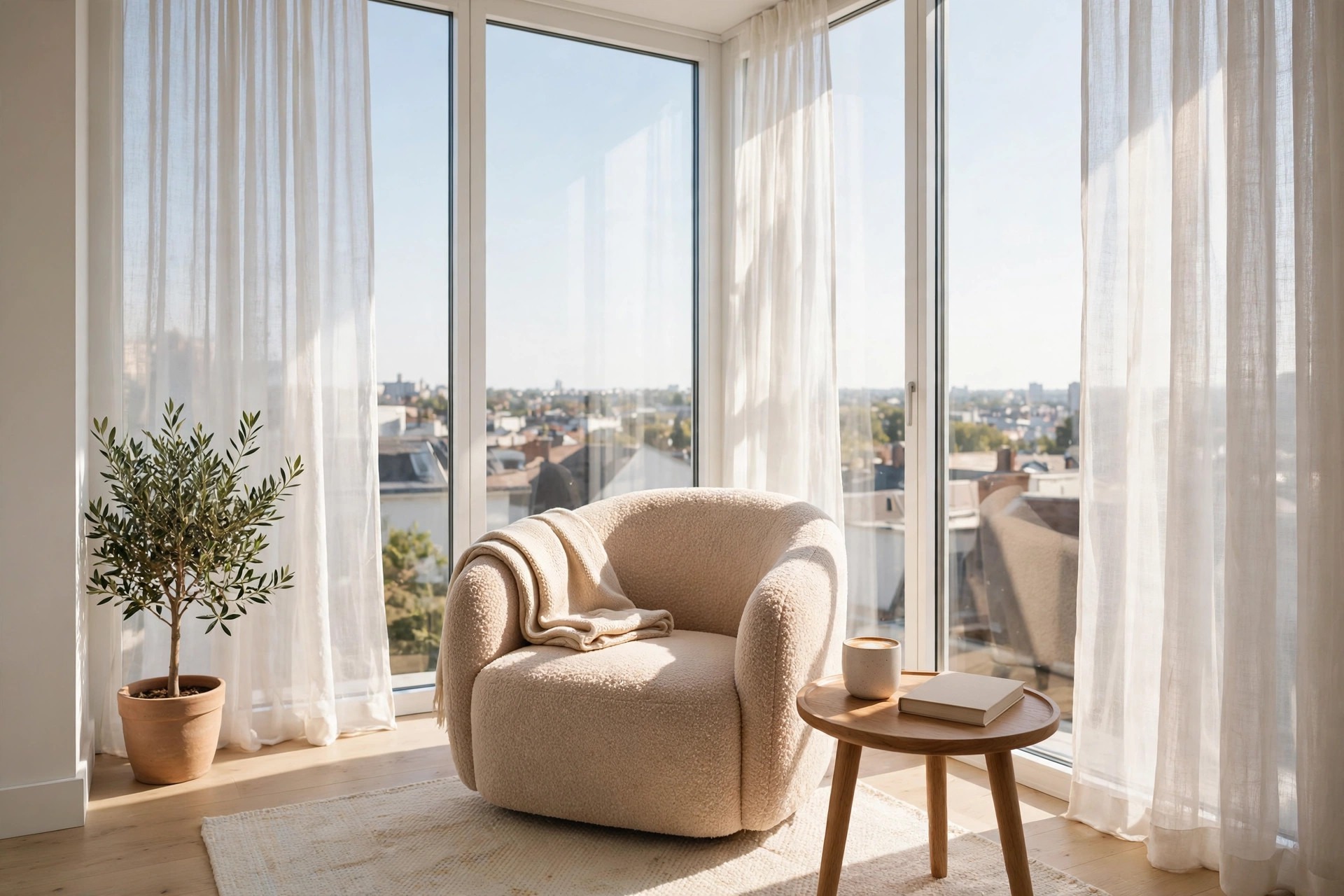
The corner where the two window walls meet is the best reading light in the home. Put one good chair there at a slight angle, with a small table for a cup and a book within easy reach.
Angle the chair so light falls over your shoulder, not straight into your eyes. Morning readers may face one wall, evening readers the other, and a light chair turns in seconds as the sun moves around.
For a longer stretch with your feet up, a chaise lounge chair suits this corner well.
Keep a folded throw on the arm for winter mornings, when glass corners run cooler than the rest of the room does. A chair that turns with the sun gets used daily.
6. Use a Pale Rug to Bounce Light Without Glare
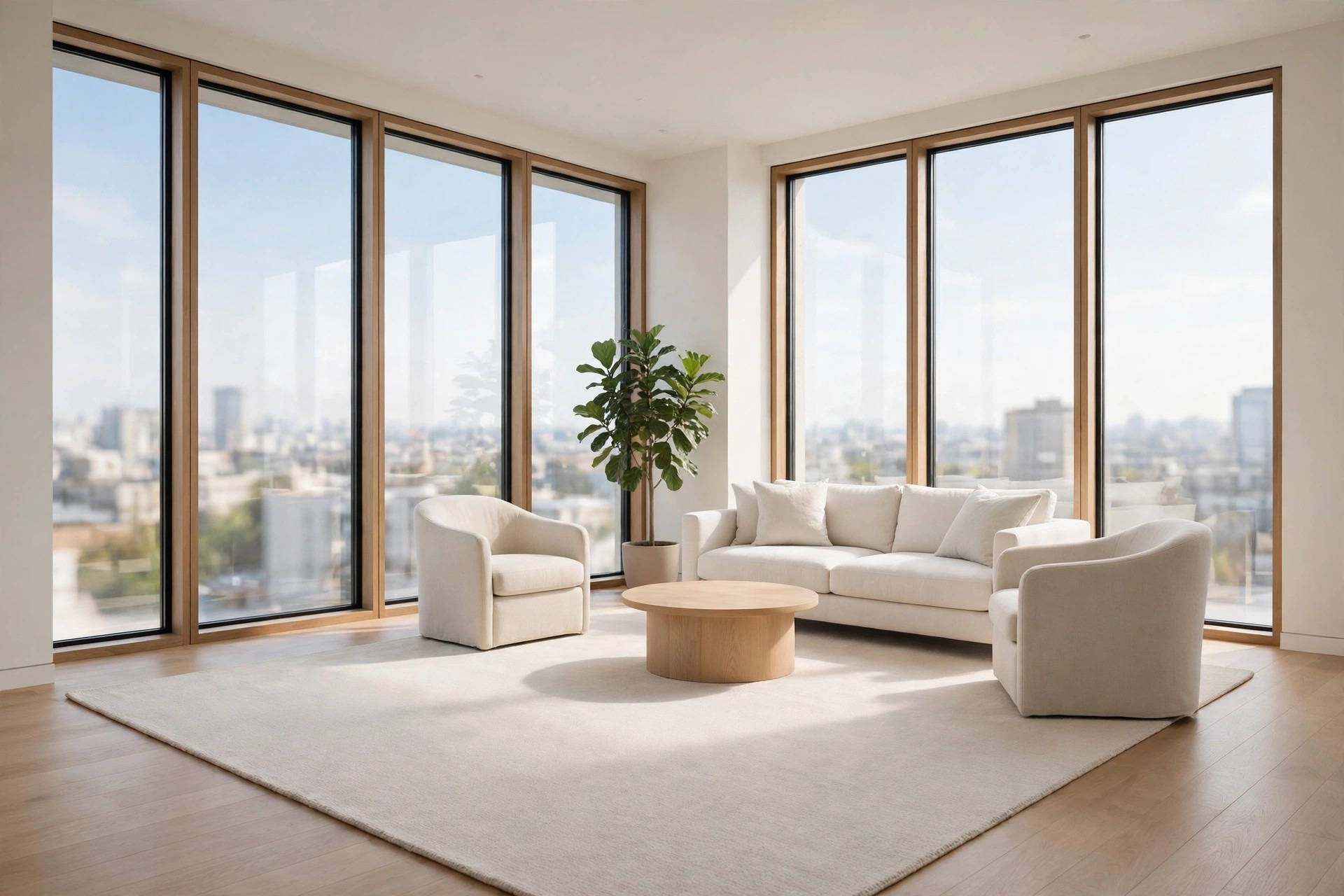
A pale rug lifts a bright room in a way dark flooring cannot. It reflects soft light upward onto faces and walls, and it defines the seating zone without adding visual weight to a sun filled floor.
Pick a flat, low pile weave in a warm off white or pale stone tone. Shiny fibers glare at noon, and deep pile traps dust that bright sun shows at once, so matte and flat is the kind choice.
Leave a border of bare floor between rug and glass. Sun on wood or tile at the edge of the room is part of the charm of a corner unit, and the rug should frame it, not hide it. Bare edges keep the brightness honest.
7. Choose Glass and Open Frame Tables That Let Light Pass
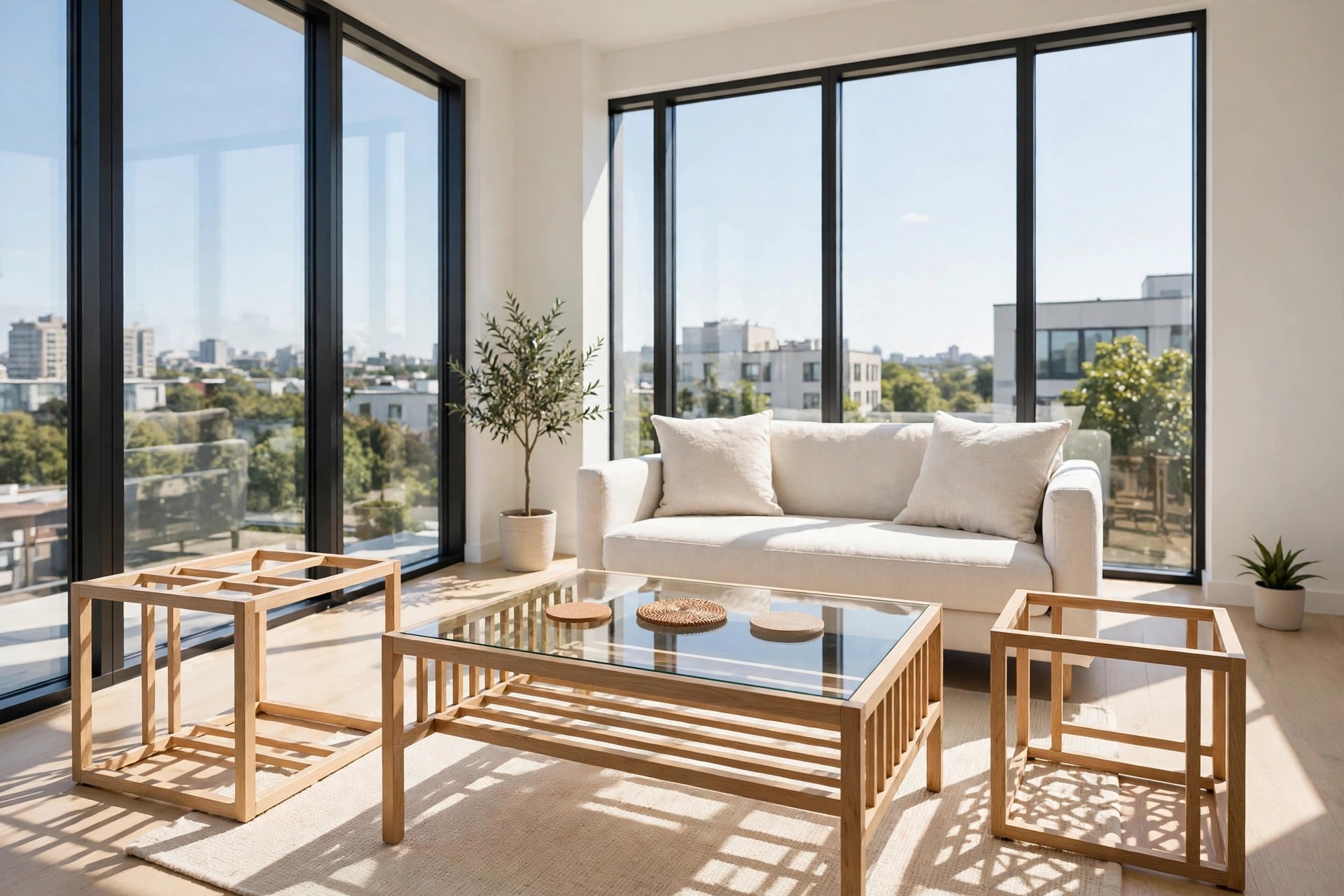
Solid, dark tables stop light dead in a bright room. A glass top coffee table and open frame side tables let sun pass through them, so the floor stays lit and the room keeps its airy feel at noon.
Keep the frames slim and pale: light wood, white metal, or a soft brass tone. Chunky black frames draw hard lines in bright light and pull focus from the windows, which should stay the main view. The windows stay the main event that way.
Glass needs one honest habit: a quick wipe often. Bright sun shows every ring and fingerprint, so keep coasters on the table and a soft cloth in the drawer, and the tables will earn their place. See through pieces suit rooms washed in sun.
8. Turn Swivel Chairs Toward the View or the Room
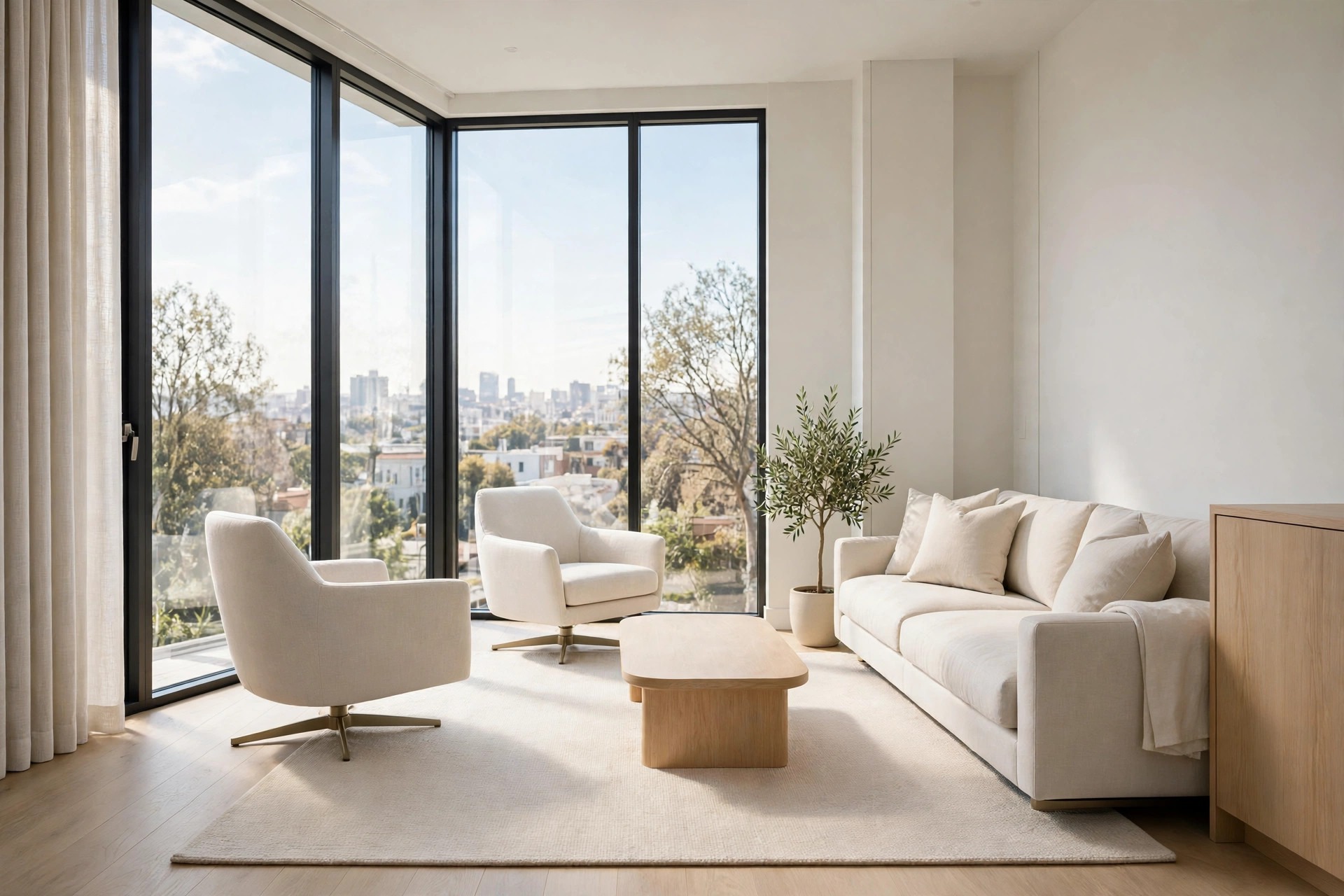
A corner unit gives you two views and one room, and fixed chairs can only face one of them. Swivel chairs solve the split: turn out for morning coffee and the view, turn in for guests and conversation.
Place a pair where the seating group meets the corner, angled between sofa and glass. Guests settle faster when a chair can meet them halfway, and nobody drags furniture across the floor to join the talk.
That turning trick is the heart of small living room ideas with swivel chairs for conversation.
Pick chairs with a low back so the turn never blocks the window behind them, and test the full spin before you settle the rug position. A good swivel feels smooth, never loose or stiff.
9. Set a Low Bookcase Under One Window
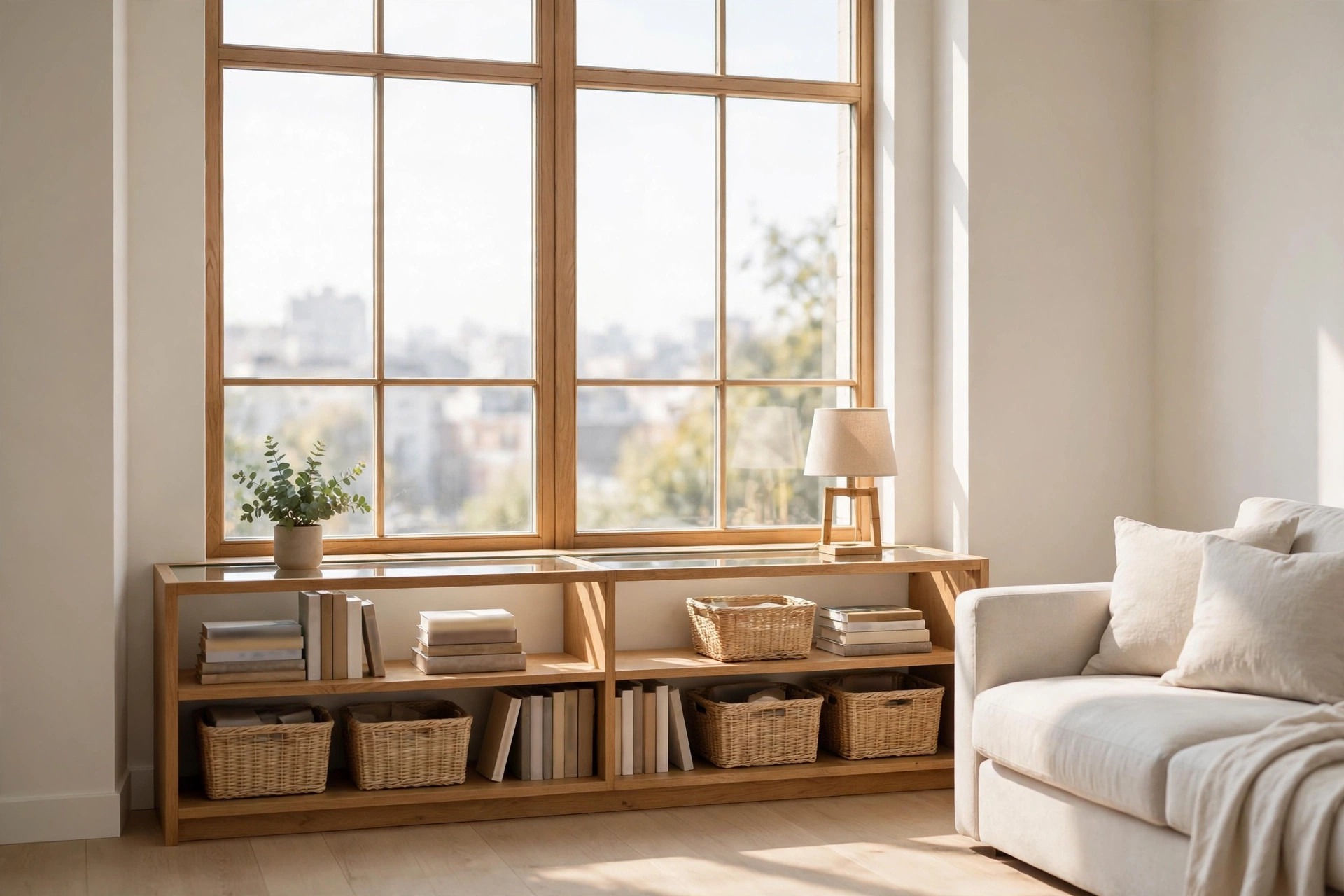
The wall under a window is often wasted in a bright unit. A low bookcase fits that strip well, holds books and baskets at hand height, and keeps its top free for a plant or a small lamp.
Keep the top surface mostly clear so light spills over it into the room. A crowded top shelf edge casts clutter shadows, and in strong sun every small object throws a long, busy line across the floor.
a narrow bookcase for a small living room fits this spot when floor width is tight.
Face book spines in a calm mix and leave gaps, because bright light makes a packed, dark shelf read heavier than it does in a dim room. Calm shelves suit bright light far better.
10. Reserve the Solid Wall for Art and the Screen
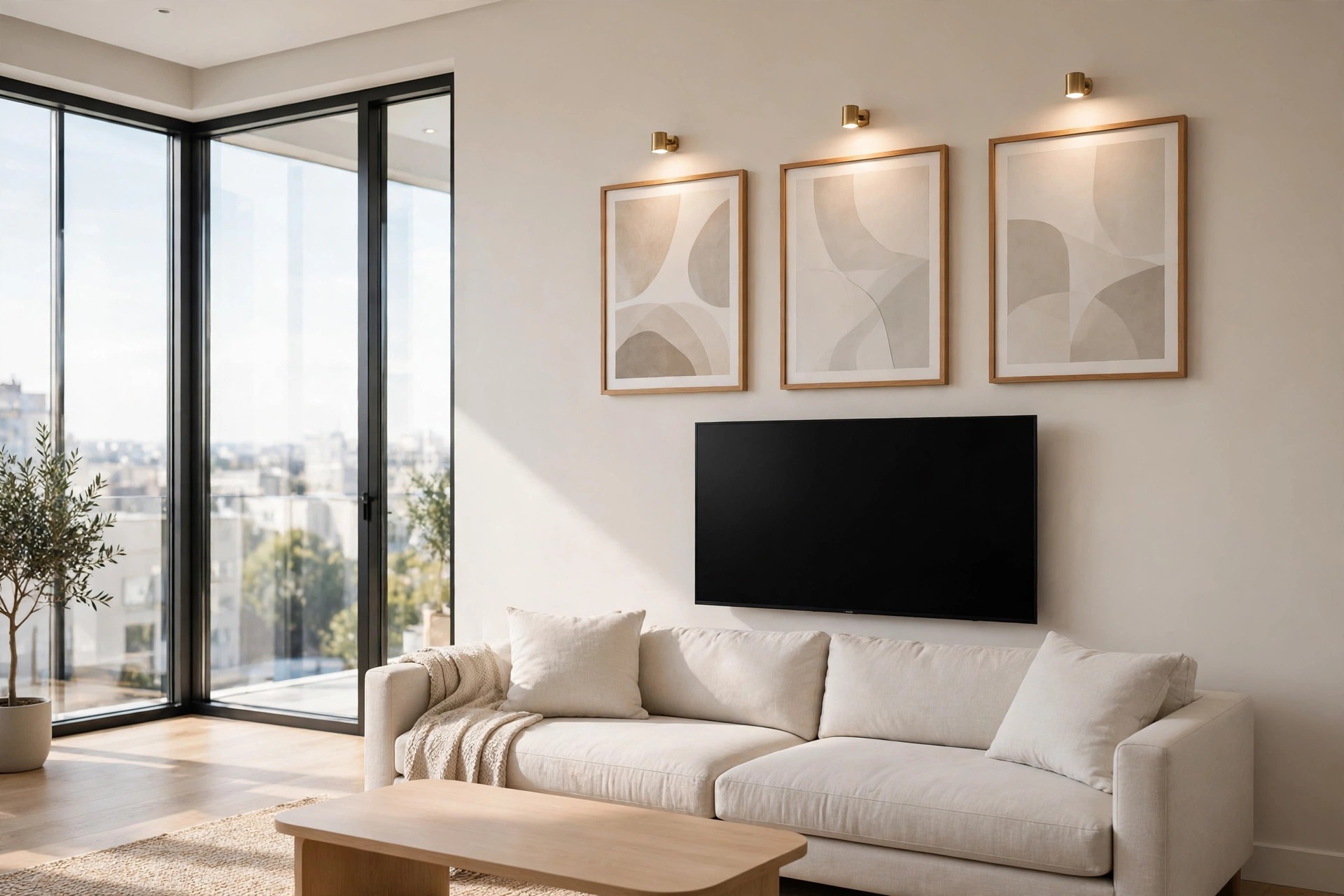
Every bright corner unit has at least one wall with no glass, and that wall should do the heavy visual work. Hang the art grouping and place the screen there, where glare never reaches them directly. Glare free walls are rare in corner units.
Art under glass fades and reflects on a window wall. On the solid wall it gets soft, indirect light all day, the kind that shows color honestly without the shine that makes you squint from the sofa.
Balance the solid wall with the bright corner across from it. One calm, furnished wall and one open, glassy corner give the room a clear rhythm, and the eye moves between them without getting tired. Rhythm keeps a bright room from feeling scattered.
11. Add Tall Plants Only Where They Will Not Block the Glass
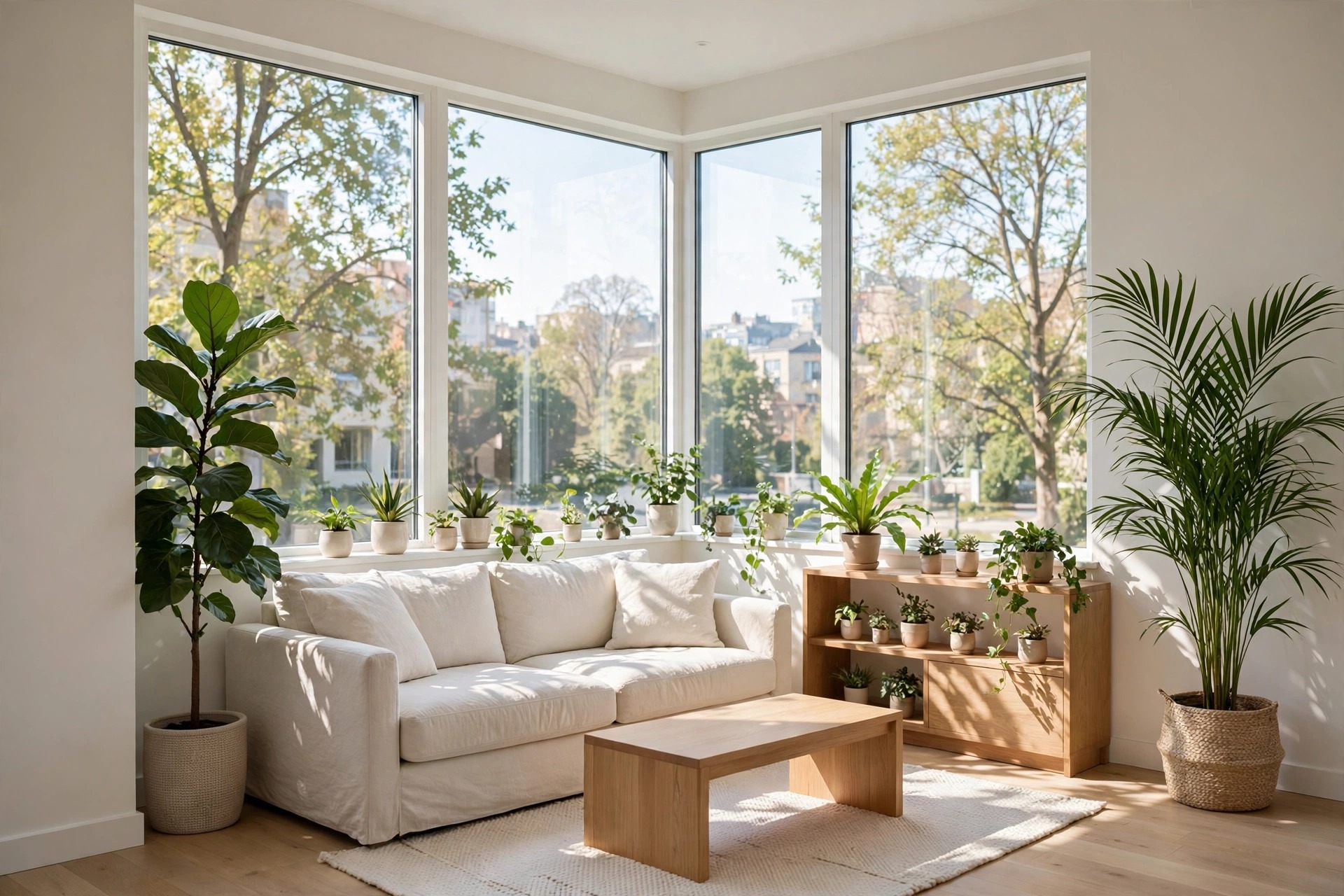
Plants love a bright corner, and a tall plant in the wrong spot eats the window. Place tall plants against the solid wall ends or beside the glass, never centered in front of the pane you look through most.
Smaller plants can live on the sill or the low bookcase, where their leaves filter a little light and throw soft shadows. Trailing plants on a high solid wall shelf soften the hard corner where wall meets ceiling.
Watch the sun path for a week before you settle pots. A spot that is gentle at nine can be harsh at two, and leaves will tell you with pale patches if a plant is getting more than it wants. Watch first, then settle pots.
12. Pick Light Upholstery and Rotate Cushions Against Fading
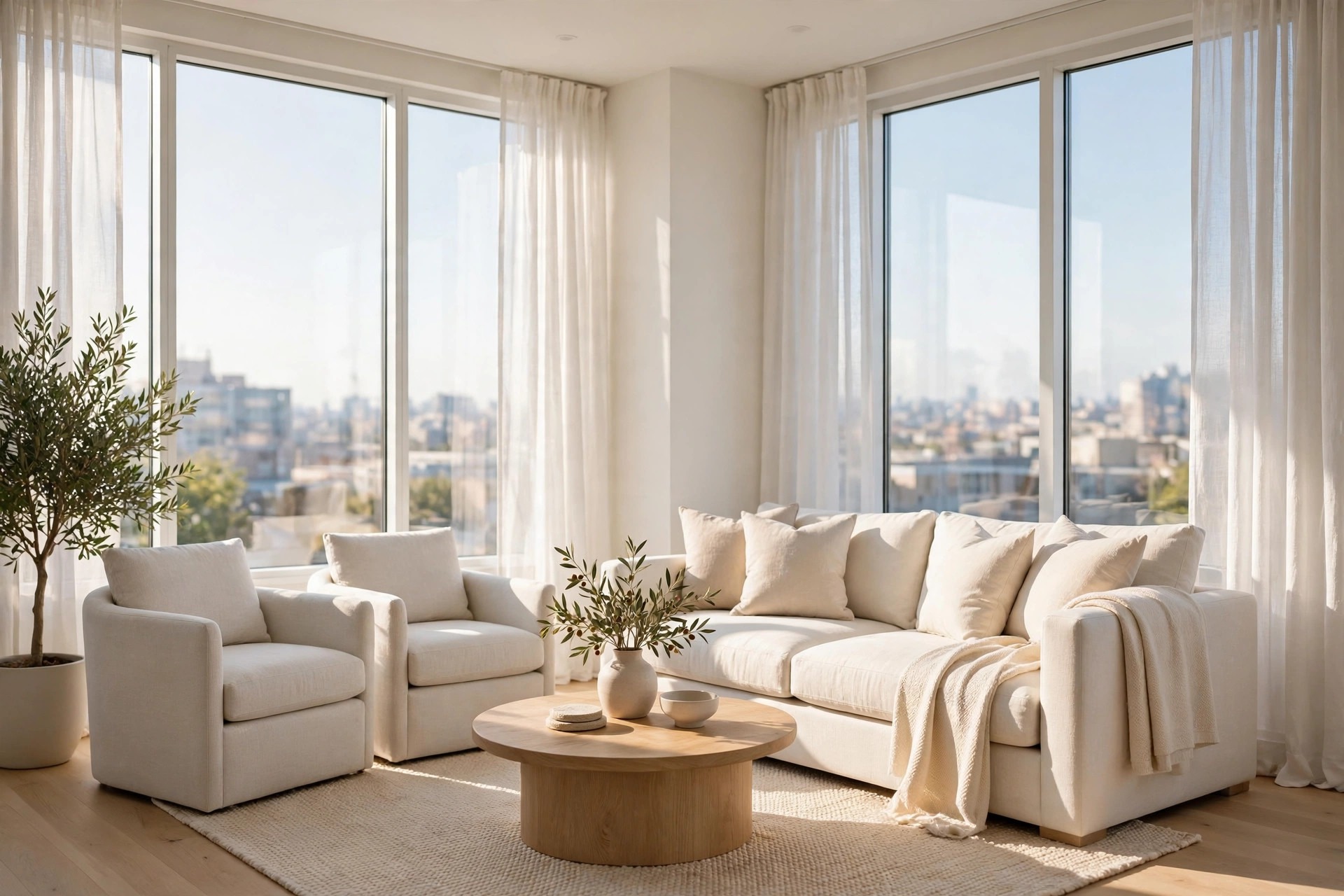
Strong sun fades fabric, and it fades the side facing the glass first. Light upholstery hides that shift far better than deep colors, where one pale arm can make a whole sofa look tired within a year.
Choose washable, removable covers where you can, and rotate loose cushions on a set day each month. Turning cushions spreads the light across all faces, so wear and color stay even across the whole piece. Even color is the quiet goal of this habit.
Throws earn their keep here too. A folded throw over the sun facing arm shields the fabric during the harshest hours, and it moves to your lap the moment the evening turns cool by the glass. Sun armor can still look soft and pretty.
13. Layer a Slim Console Behind the Sofa for Lamps and Books
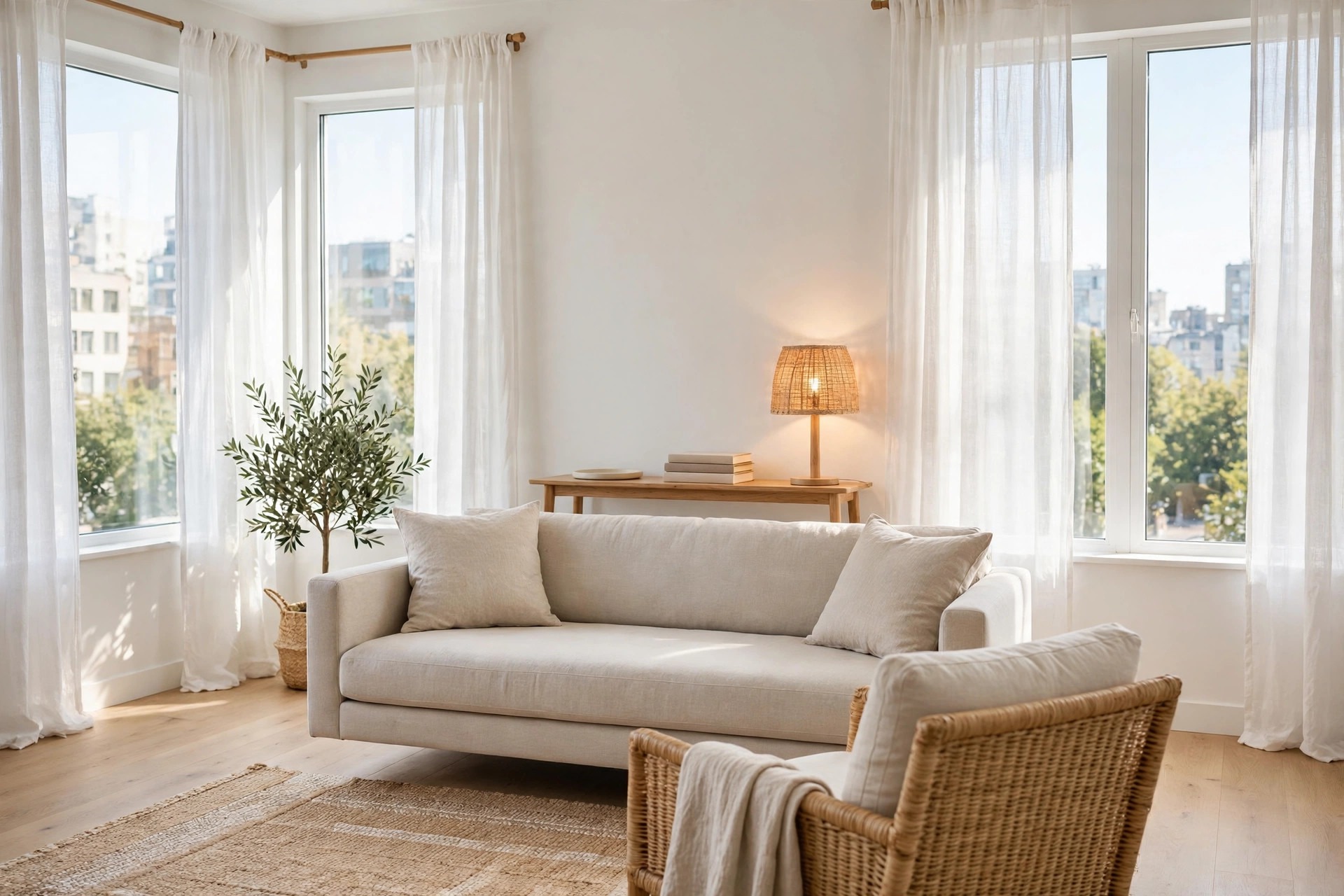
A floated sofa leaves a useful strip behind it. A slim console in that strip holds a lamp, a stack of books, and a tray for keys, and it keeps those daily items off the coffee table for good.
The lamp behind the sofa is the evening fix for a bright room. After sunset, glass walls go dark and cold feeling, and one warm lamp at shoulder height makes the seating feel held and close again.
nesting side tables can tuck under or beside that console when floor space runs short. The rule is simple: the strip behind the sofa should serve the seats in front of it, not store random overflow. One serving strip beats three cluttered side spots.
14. Hang Mirrors on the Interior Wall, Never Facing the Glass
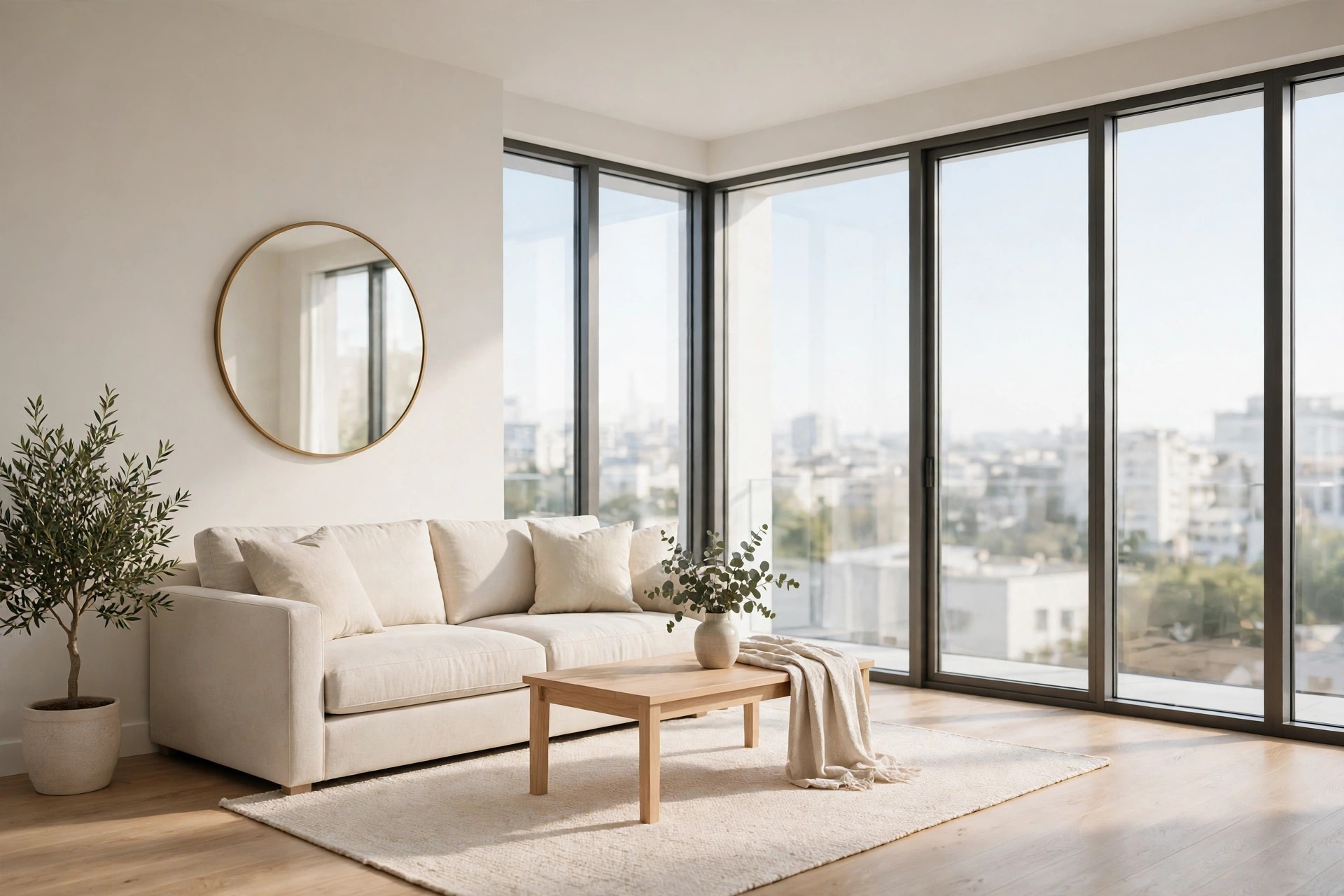
A mirror opposite a bright window is a glare machine. It throws sun into eyes, onto screens, and across the ceiling at angles that change all day, and no curtain setting fully tames it at noon. Noon is when a bad mirror shows itself.
Hang mirrors on the interior wall beside the window instead. There they catch soft side light and bounce it into the darker half of the room, which is the job a mirror should do in a corner unit.
One medium mirror beats three small ones here. A single calm reflection reads as depth, while a cluster of small mirrors in bright light breaks the view into busy flashes every time you cross the room. Depth without glare is the win to aim for.
15. Keep the Corner Itself Clear So Light Reaches the Whole Room
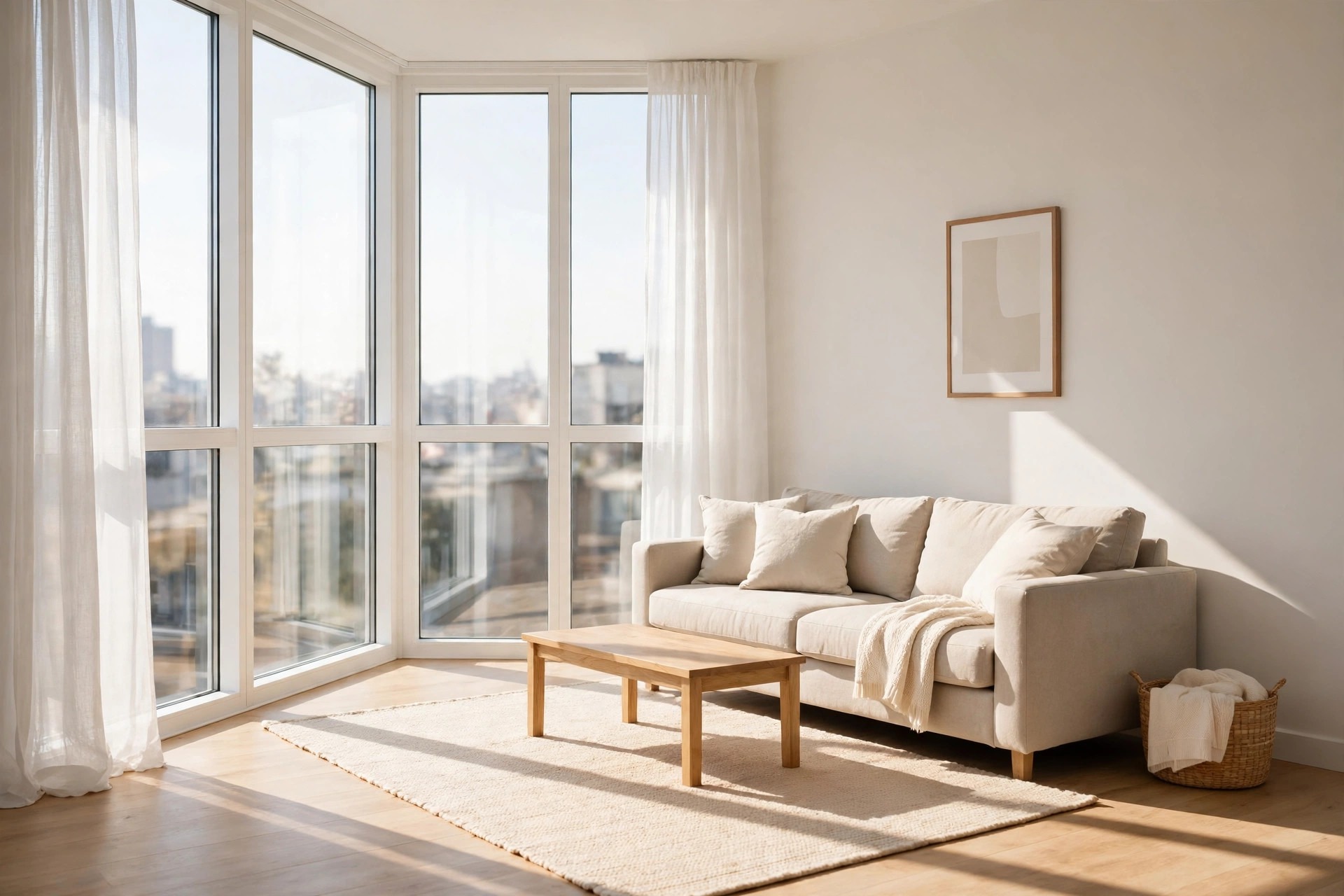
The last rule is the simplest: store nothing in the corner where the window walls meet. No boxes, no spare chair, no tall lamp parked there. That open corner is the engine of the whole room’s light.
From a clear corner, sun reaches the sofa, the rug, and the solid wall in one sweep. Block it, and the room splits into a bright strip by the glass and a dim middle that lamps must rescue daily. A clear corner helps everything else.
If you crave one thing in the corner, make it the reading chair from idea five, set at an angle with air around it. A used corner stays clear in spirit, as long as light can still move past it.
A bright corner unit does not need taming so much as steering. Sheers for the hard hours, low pieces along the glass, and seating that can turn will carry most days without a single curtain drawn shut.
Work through the ideas in the order your sun bothers you most. For many rooms that means the curtain layers first, then the floated sofa, then the small pieces that let light pass instead of stopping it.
Save your favorites to our Apartment Living Room Decor Ideas board, and enjoy the apartment living room ideas for a bright corner unit that fit your windows. The light was always the point of this home.


