

How to Set Up a Guest Bedroom Guests Actually Sleep Well In: 15 Setup Checks
Your guest will say the room was lovely, even if the mattress dipped, the curtain glowed at dawn, and the only outlet sat behind the dresser.
Polite guests rarely report the small faults that kept them awake, so a good host checks the room like a stranger before anyone arrives.
Learning how to set up a guest bedroom means working through fifteen plain checks in order: the bed, the light, the surfaces, the storage, and the small comforts within reach.
The order matters because each check builds on the last one. Bedding choices come before the luggage spot, and the night time walk comes last, when the room is finished.
None of the checks calls for new furniture or a full clear out. Most take a few minutes each, and the whole run fits into one quiet hour before a visit.
Work through them with a notebook if it helps, ticking each one off as you go, so nothing depends on memory when your guest arrives.
If the room also earns its keep on ordinary days, our guide to multi-purpose guest bedroom ideas shows how to keep both jobs in one space without crowding either one.
This post contains affiliate links. If you buy through them, we may earn a small commission at no extra cost to you. See our Affiliate Disclosure.
1. Lie on the Bed Yourself for Ten Full Minutes
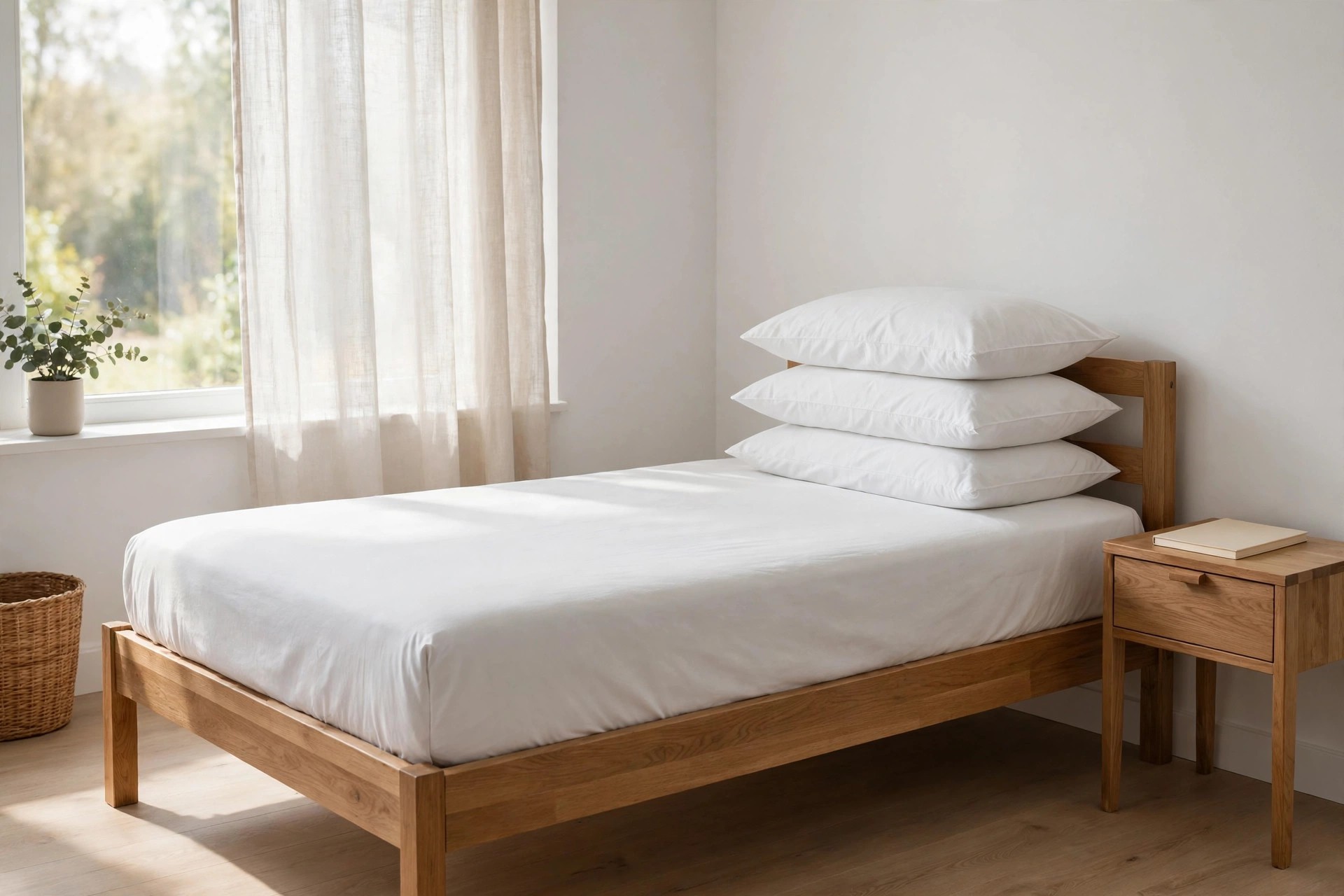
The first check costs nothing and tells you more than any shopping list. Lie on the guest bed for ten full minutes, on your back and on your side.
Notice the dip in the middle, the bar or button you can feel through the sheet, and whether the frame shifts or clicks when you turn over.
Tighten loose frame bolts, add felt pads where the headboard meets the wall, and level a wobbling leg before you make the bed up for anyone else.
If the base itself is worn out, compare your choices first in our guide to guest bed options compared before you spend anything on bedding for a bed that cannot carry it.
2. Make the Bed in Layers a Guest Can Adjust

One thick cover suits almost nobody, because one guest runs warm and the next feels every draft from the window. Build the bed in three clear layers instead.
Start with a smooth fitted sheet, add a light blanket that covers the full width, then fold a heavier cover across the foot where it is easy to pull up.
A guest who gets warm can push the top layer down without stripping the bed, and a cold guest can pull both up without hunting through a closet at midnight.
Keep the colors plain and pale, like the soft schemes in our beige guest bedroom ideas, so the layers look calm rather than patched together from spare linen.
3. Give Two Pillows Per Guest, One Firm and One Soft

A single flat pillow forces a guest to fold it, bunch it, or sleep without one, and none of those choices leads to a settled night in a strange bed.
Set two sleeping pillows per person on the bed: one firm enough to sit up and read against, and one softer one that gives under the head.
Put the firm pillow at the back and the soft one in front, so the order is clear at a glance and nobody has to test both in the dark.
Keep spare pillowcases in the top drawer, folded flat. A guest who spills water or simply likes a fresh case can swap it without asking and waking the house.
4. Close the Gap Where Morning Light Gets In
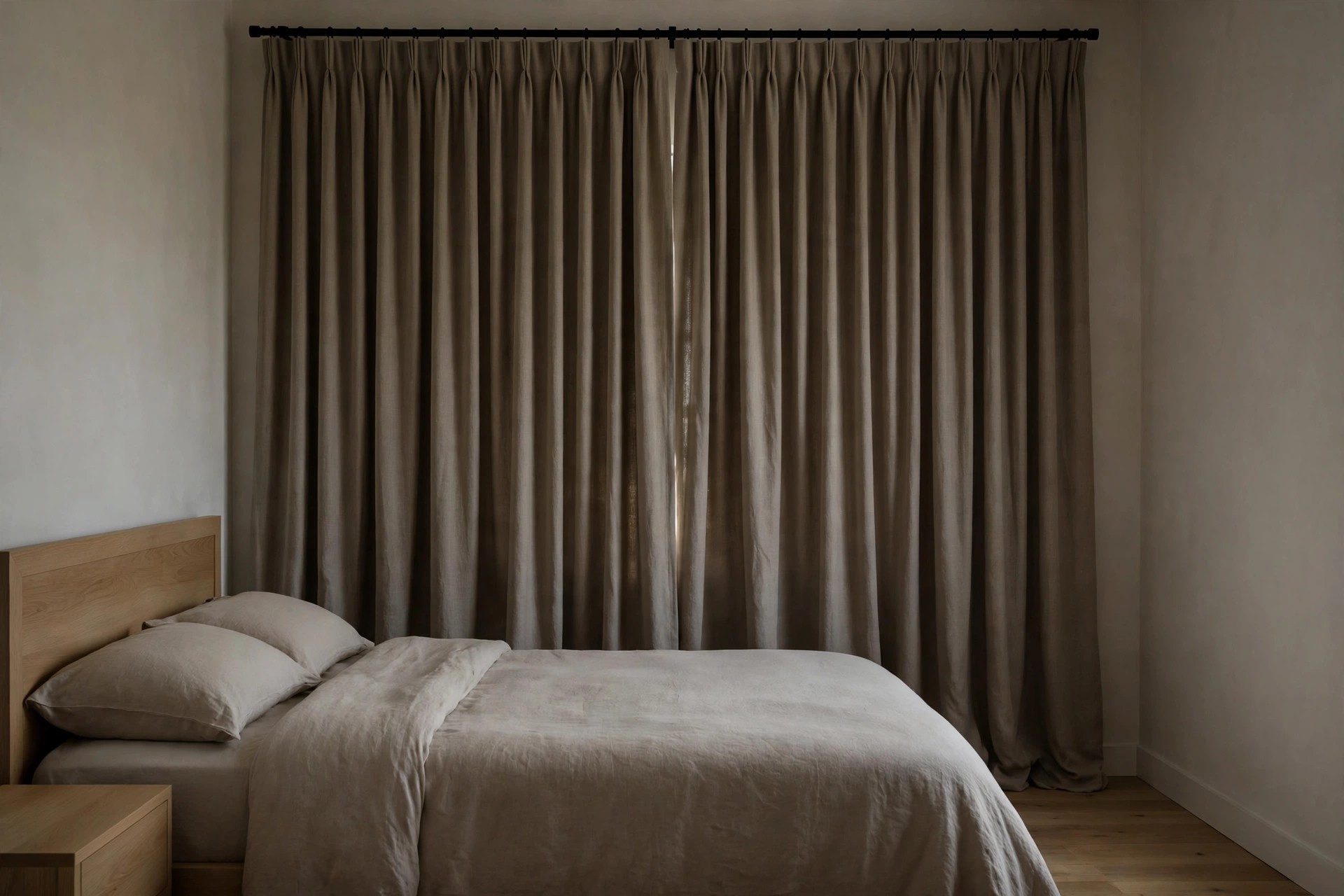
Stand at the pillow at breakfast time and look at the window. Most guest rooms leak light at the center overlap and along the outer edges of the curtain.
Choose lined curtains that cross over each other in the middle by a hand width, and hang them wider than the frame so the sides sit against the wall.
If new curtains are not an option, add a simple roller blind behind the panels you already own, fitted close to the glass where it blocks the early light best.
Test the result from the bed with the door closed. A guest who can choose their own wake up time rests far better than one woken by a bright stripe.
5. Put a Lamp Within Reach of the Pillow

A guest should never cross an unknown room in the dark to switch off a ceiling light. Place a lamp on the nightstand, close enough to reach from the pillow.
Check the switch yourself from lying down. If you have to sit up fully or lean off the bed edge, move the lamp nearer or choose one with a switch on its cord.
Use a warm, shaded bulb that lights a book without lighting the whole room, and keep the shade level with the sleeper’s shoulder when they sit up to read.
Leave the lamp on when your guest arrives in the evening. A soft pool of light at the bedside says the room is ready more clearly than any welcome note.
6. Empty One Drawer and One Short Rail Completely
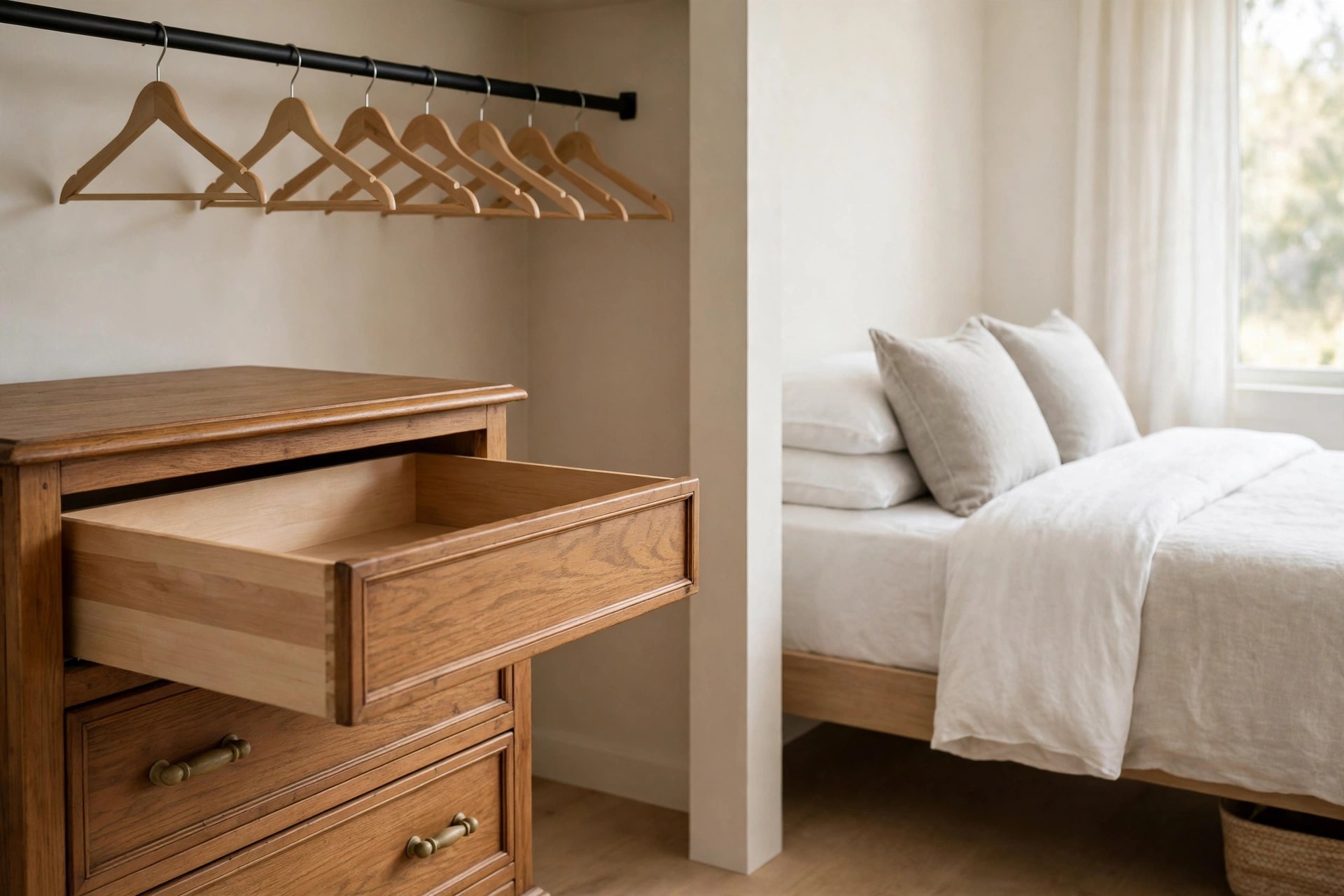
Guests settle faster when their clothes leave the suitcase, so give them storage that is fully theirs: one empty drawer and one short section of hanging rail.
Move your own stored items out rather than pushing them to one side. A drawer half full of your wrapping paper tells a guest to live out of their bag.
Add five or six empty hangers on the rail, spaced apart so a shirt or dress can go straight from the case onto a hanger without a shuffle.
Leave the drawer slightly open on arrival day. That small signal shows the space is meant for them, and it saves the awkward question about where things should go.
7. Give the Suitcase a Spot That Is Not the Bed

A case on the bed forces a guest to move it at night and lift it back each morning. Mark out a luggage spot on the floor plan before you finish the room.
A folding luggage rack suits most rooms, but a low bench, a sturdy ottoman, or a clear corner of floor with a washable mat all do the same job well.
Place the spot near the drawer and rail, so unpacking runs in one short line: case open, clothes across, case closed and standing upright against the wall.
Check the door swing once the case is in place. A guest should still close the door fully, and nobody should have to step over a bag to reach the bed.
8. Set Water and a Glass on the Nightstand

A guest who wakes thirsty in a new house faces a dark kitchen, unfamiliar taps, and the worry of waking you. A filled water jug on the nightstand removes all three.
Use a jug or bottle with a lid, plus a clean glass placed upside down over the top or beside it, so the water stays fresh through the night.
Set it on the side of the nightstand away from the lamp cord, on a coaster or small tray that catches drips and keeps the surface dry until morning.
Refill it each evening of the stay without being asked. That quiet routine, more than any decoration, is what guests remember when they talk about being looked after.
9. Leave a Charger and a Free Outlet by the Bed
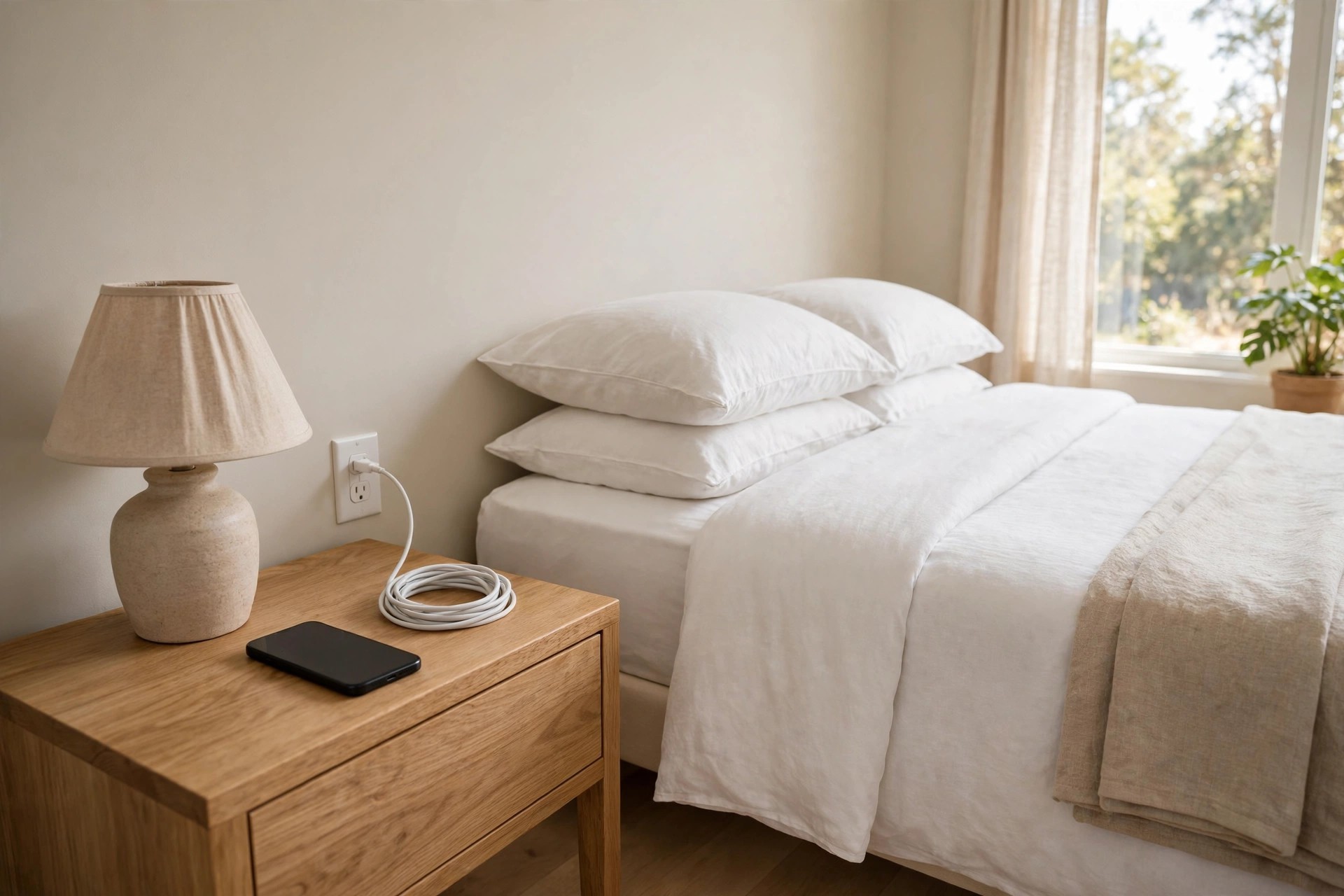
Phones are alarm clocks, maps, and bedtime reading for most guests, so the outlet beside the bed has to be free, reachable, and working on the night they arrive.
Clear the bedside outlet of your own spare lamps and chargers, then plug in one plain charging cable and leave it coiled neatly on the nightstand for your guest.
Test the outlet with the lamp and the cable together. If the socket sits behind the bed frame, add a short extension lead with the end fixed beside the pillow.
Many of the faults in our roundup of guest bedroom mistakes start at this one socket, because hosts use it daily and stop seeing that guests cannot reach it.
10. Lay the Towels Where Guests See Them First

Do not make a guest open cupboards to find a towel. Fold one bath towel and one hand towel per guest and lay them across the foot of the made bed.
Visible towels settle two questions at once: which towels are theirs, and whether they may use them freely without choosing the wrong set from a shared shelf.
Add a folded washcloth on top of each stack if you keep them, and place a spare towel on the luggage bench for a longer stay or a second shower.
While you lay them out, stock the basics at the other end too, using our guest bathroom decor ideas to check soap, spare paper, and a clean hand towel by the sink.
11. Add a Small Bin With a Liner by the Door
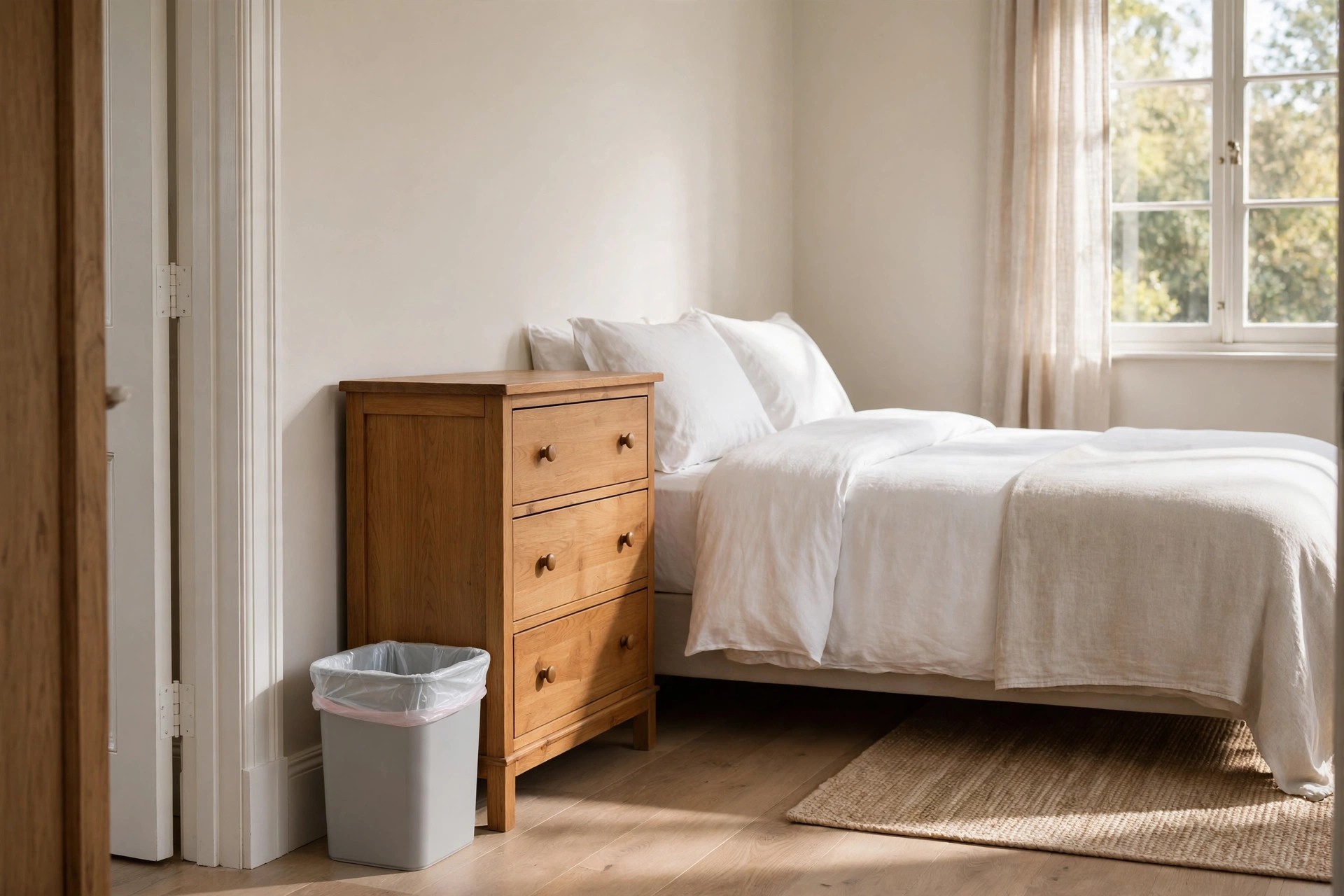
A guest room without a bin leaves visitors carrying tissues, tags, and wrappers to the kitchen in their hands, which feels untidy for them and for you.
Choose a small bin with a liner, placed beside the dresser or just inside the door, where it is easy to spot but clear of the path to the bed.
A liner matters more than the bin itself. It keeps the container clean between guests, and it lets you empty the room in seconds when the stay ends.
Empty it before every arrival, even if it looks unused. A fresh liner is one of those silent signals that the room was prepared for this guest, not left over.
12. Check That the Door Closes, Latches, and Feels Private
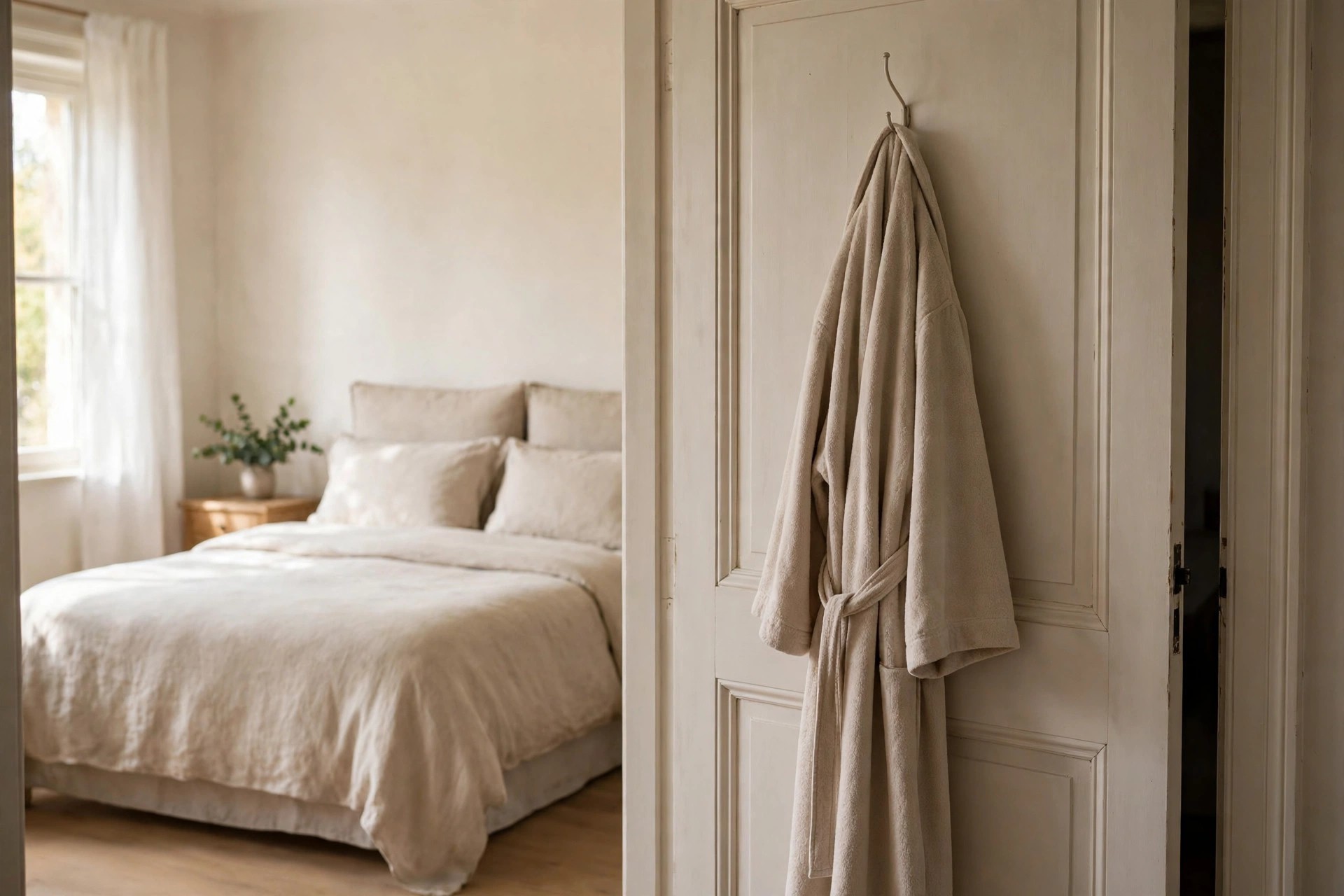
Close the guest room door from inside and test it like a guest would at bedtime. It should shut fully, latch with a soft click, and stay shut all night.
If the door drifts open, check the latch alignment and the hinges before you blame the door. A small adjustment or a felt pad often ends the rattle and the gap.
Add a simple hook or a sliding bolt on the inside if your guest room door has no lock, and show your guest how it works when you show them the room.
Hang a plain robe hook on the back of the door too. It gives nightclothes and a towel a home, and it keeps damp fabric off the bedding and chairs.
13. Offer a Warm and a Cool Choice in the Room
Every house has one room that runs warmer or cooler than the rest, and it is usually the spare room. Give your guest a way to adjust without calling out.
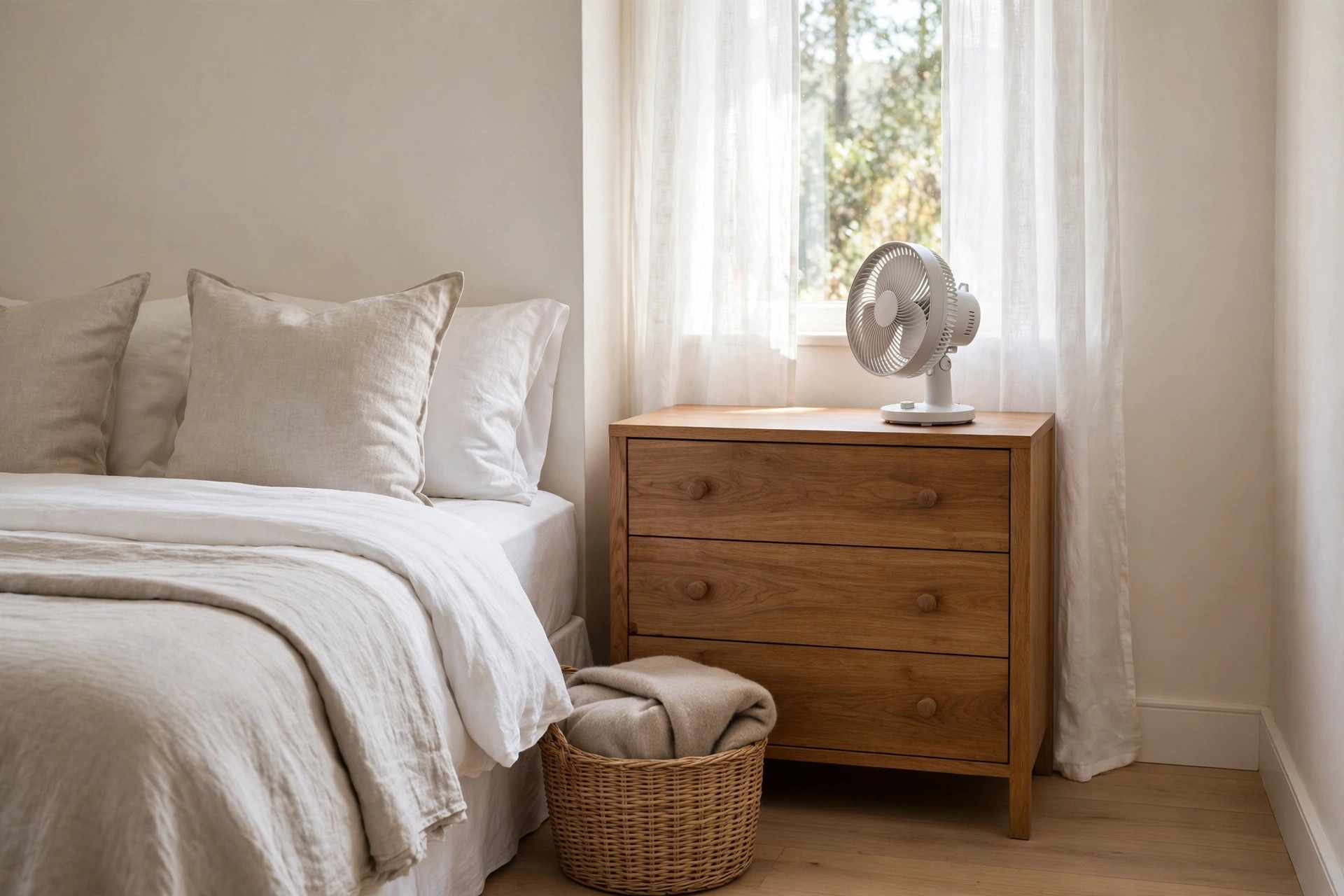
Fold one extra blanket across the foot of the bed or in a basket beside it, light enough to carry and heavy enough to make a real difference at night.
Set a small fan on the dresser, angled toward the bed, with its cord tucked safely along the wall. A guest who runs warm can switch it on in seconds.
Open the window once before arrival and air the room for an hour. Fresh air clears the closed up smell that builds in a room nobody sleeps in each week.
14. Write the Wi-Fi and House Notes on One Card

A guest should not have to ask three small questions before breakfast. Write the answers on one plain card and stand it on the nightstand against the lamp base.
Include the Wi-Fi name and password in large, clear letters, plus the few house notes that matter: where the bathroom is, and when breakfast usually happens.
Add anything unusual about the room itself, such as a stiff window latch or a light switch hidden behind the door, written kindly and in a single short line each.
Keep the card free of long welcome messages and rules. Short, useful notes get read and used, while a full page of instructions tends to stay folded in a drawer.
15. Walk the Room Once at Night Before They Arrive
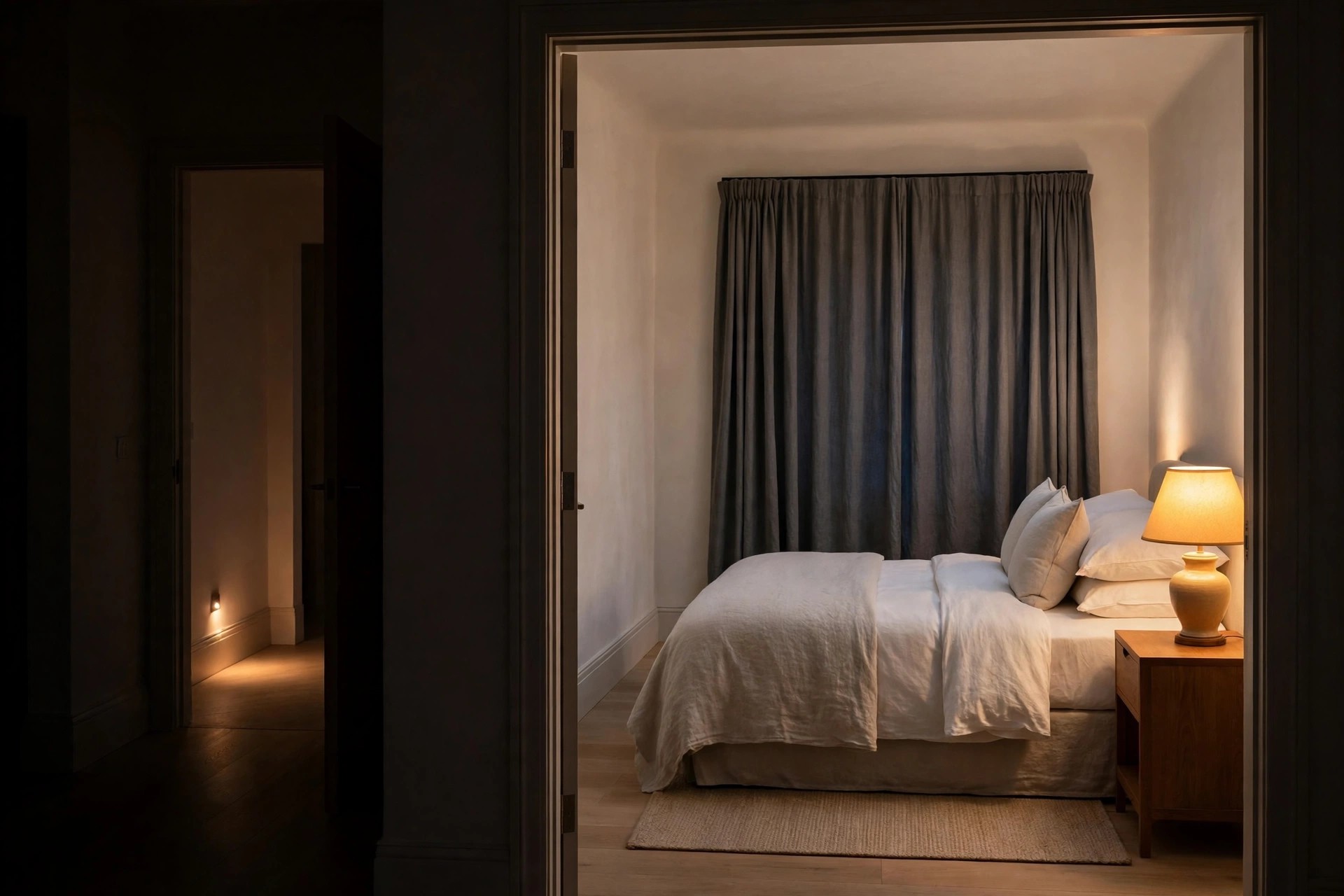
The last check happens after dark, because that is when your guest will judge the room. Walk in, close the door, and stand where the suitcase will stand tomorrow.
Look for the faults daylight hides: a standby light glowing at eye level, a curtain gap over the pillow, a charger cable that falls short, a path to the door with a chair leg in it.
Then walk the route to the bathroom in the dark and place one low night light along it, so a half awake guest can find the way without a phone torch.
Fix what you find that same evening, however small it seems. This final walk catches the faults most hosts never notice, simply because they only ever see the room in full daylight.
Work through the fifteen checks once, in order, and the room stops being a spare bed and starts being a place a guest can settle in properly.
A made bed in layers, light that stays out until morning, a charger that reaches, and towels in plain sight do most of the work for you.
Save this list to your Guest Bedroom Ideas board before your next visitor, and run the night time walk again on the day they arrive, just to be sure.


