

15 Beige Furniture Living Room Ideas That Feel Warm, Timeless, and Anything But Boring
There’s a reason beige has outlasted every neutral trend that tried to replace it. Long dismissed as the “safe” choice, beige furniture has quietly become the foundation of some of the most sophisticated living rooms being designed today — not the flat, one-note beige of decades past, but a rich spectrum of sand, oat, camel, linen, and greige that shifts with the light and layers beautifully with texture.
Done right, a beige living room doesn’t read as boring; it reads as considered. It’s the kind of space that absorbs sunlight rather than reflects it, that feels lived-in rather than staged, and that never fights for attention with the people actually living in it.
The key, as any designer will tell you, is contrast and texture. A beige sofa on its own can feel flat — but pair it with a chunky knit throw, a black coffee table, a terracotta cushion, or a fiddle leaf fig, and suddenly the room feels expensive and pulled together. Below are 15 beige furniture living room ideas that show exactly how to do it, from cozy sectionals to sculptural armchairs, each one a different way to make warm neutrals the star of the room.
1. The Oat Linen Sectional Anchor
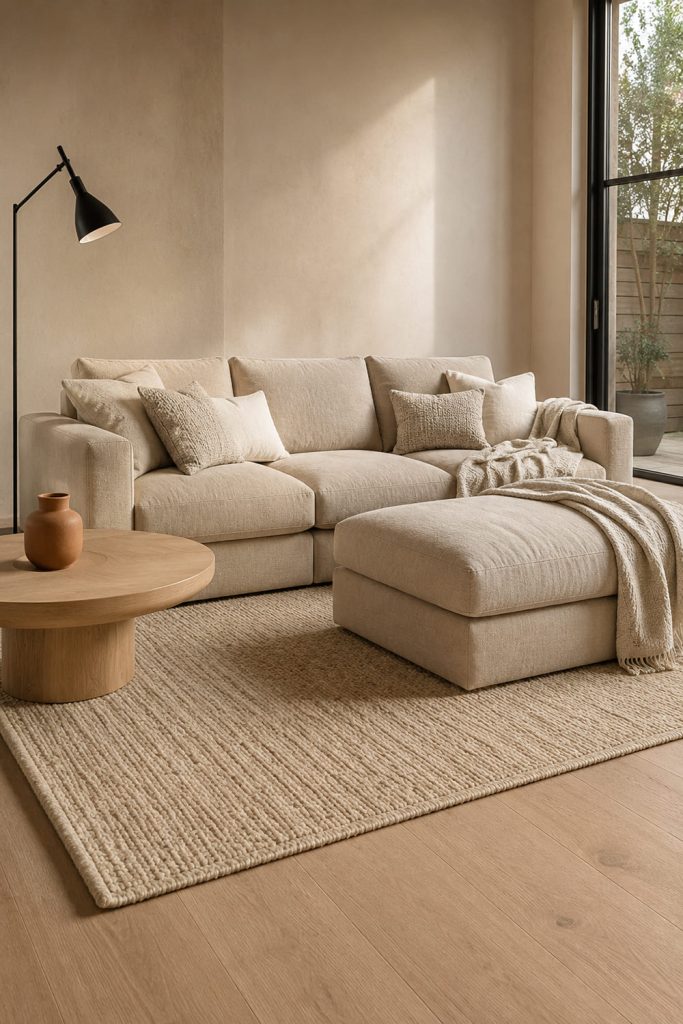
A low-profile sectional in oat linen is the easiest way to make beige feel current rather than dated. The relaxed, slightly slouchy silhouette that’s trending right now softens the formality neutrals can sometimes carry, while the linen weave catches light differently throughout the day. Anchor it with a plush jute or wool rug in a slightly darker tone so the sofa doesn’t disappear into the floor. Layer in bouclé and linen cushions in the same tonal family, then break the palette with one contrasting object — a black floor lamp or a terracotta vase — to keep the eye moving and the space from feeling flat.
2. Camel Leather Accent Chair
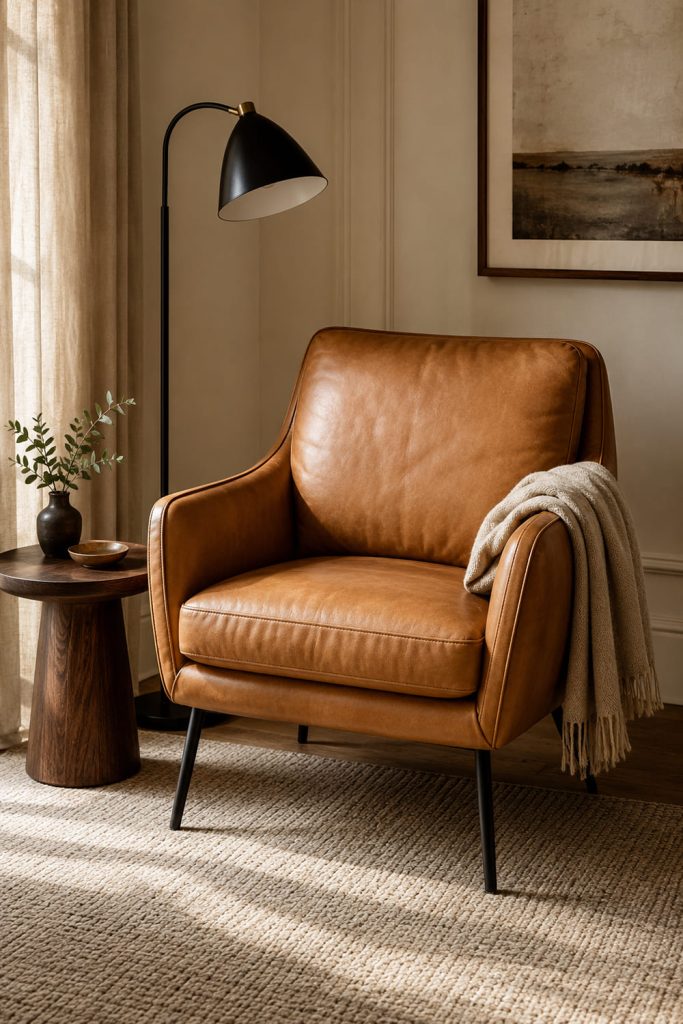
Camel or toffee-toned leather brings a deeper, richer version of beige into the room without introducing a new color family. It’s more dramatic than pale sand tones but still neutral enough to anchor a space without competing with anything around it. A single camel leather armchair works beautifully against white or cream walls, especially paired with black metal legs for contrast. Use it as a reading nook piece beside a floor lamp and a small side table, or pull two chairs together to flank a fireplace—the leather patinas over time, which only deepens the warmth of the tone.
3. Greige Sofa With Black Accents

Greige — the grey-beige hybrid — is the most versatile neutral in the warm palette, cool enough to feel modern and warm enough to still feel cozy. Pairing a greige sofa with black accents (a sculptural coffee table, matte black lamps, picture frames, even curtain rods) is one of the most effective ways to keep an all-neutral room from feeling flat. The trick is texture: a chunky knit throw, a textured rug, and matte ceramics do the heavy lifting. Keep walls and secondary furniture light so the black accents read as intentional punctuation rather than clutter.
4. Curved Beige Sectional

The curved sectional has become one of the defining furniture silhouettes of the decade, and beige is its most natural colorway. The soft, rounded lines echo the softness of the tone itself, creating a room that feels enveloping rather than boxy. A curved sectional works especially well in open-concept spaces, where its shape can define a seating zone without walls. Pair it with a round coffee table to continue the curve language throughout the room, and keep the rug simple — a solid or subtly striped natural fiber weave lets the furniture’s shape stay the focal point.
5. Beige and Terracotta Pairing
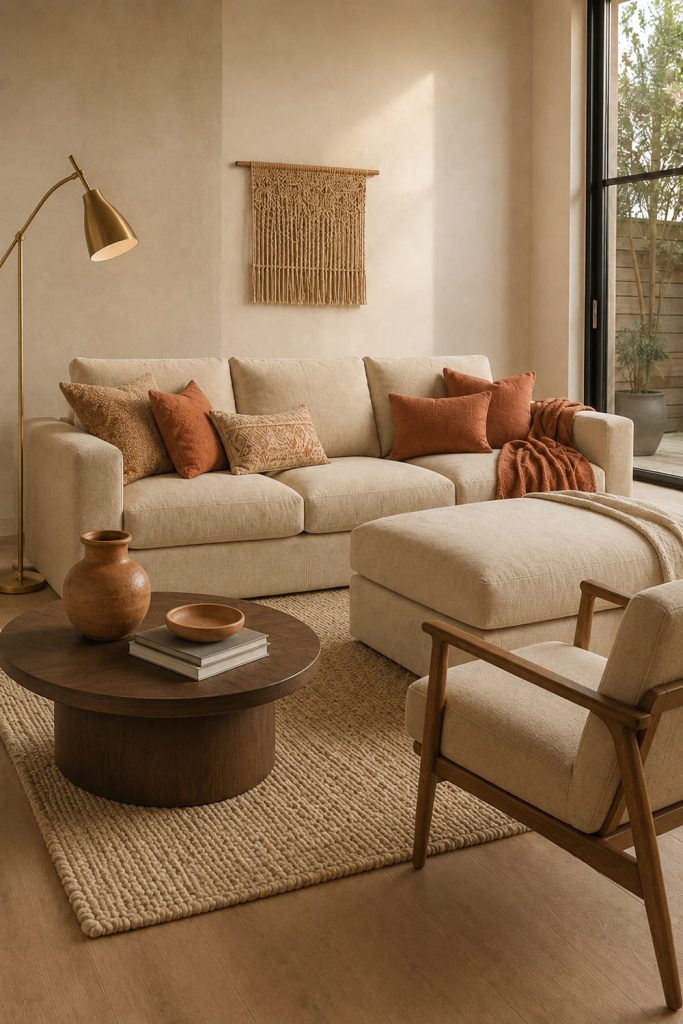
Beige and terracotta is one of the strongest color combinations in interior design right now, and for good reason — it’s warm, earthy, and sophisticated without trying too hard. The beige sofa or armchair grounds the room, while terracotta appears in smaller doses: a cushion, a ceramic vase, a lamp base, or a woven wall hanging. This pairing works particularly well in rooms with limited natural light, since both tones read as warm even under artificial lighting. Add brass or wood accents to bridge the two colors, and avoid introducing a third bold hue so the pairing stays balanced.
6. Boucle Armchair Duo

Two bouclé armchairs in a soft beige or oatmeal tone instantly upgrade a living room’s texture profile. The nubby, tactile fabric catches light in a way flat upholstery can’t, giving even a simple chair real visual interest. Position the pair facing each other or angled toward a shared coffee table to create a secondary conversation area away from the main sofa. Bouclé pairs especially well with warm wood frames and brass legs, which keep the look from feeling too soft or feminine. This combination has become a shorthand for quiet luxury done with warmth rather than sterility.
7. Sand-Toned Sofa With Wood Frame

A sand-colored sofa with an exposed wood frame — walnut, oak, or teak — brings organic warmth into a beige palette without adding another color. The wood grounds the softness of the upholstery and gives the piece more visual weight in the room. This combination leans Scandinavian and Japandi, styles built around natural materials and restraint. Keep the rest of the room simple: a low wood coffee table, linen curtains, and a handful of ceramic or ratan accessories. The result is a living room that feels calm, organic, and intentionally uncluttered rather than sparse.
8. Layered Beige Tonal Palette

Rather than one beige, use several — sand walls, oat sofa, cream cushions, camel throw — to create depth through tonal variation instead of contrasting colors. This layered-neutral approach is what separates a sophisticated beige room from a flat one; the eye still has plenty to read, it’s just reading warmth instead of contrast. Vary the textures as much as the tones: linen, bouclé, wool, and leather all reflect light differently even within the same color family. A single darker anchor piece, like a walnut console table, keeps the layered palette from floating.
9. Beige Sofa With Statement Coffee Table
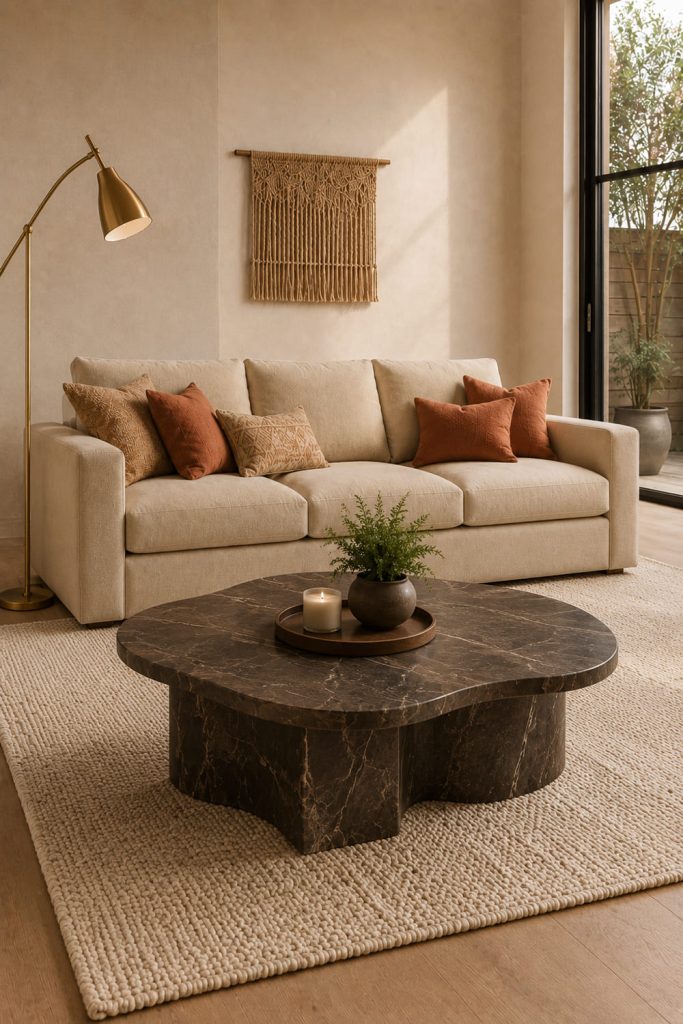
When the sofa and walls are both neutral, the coffee table becomes the room’s opportunity for personality. A sculptural, irregular-shaped table in stone, dark wood, or fluted glass gives an otherwise calm beige room a focal point without disrupting the palette. This idea works particularly well in smaller living rooms, where a bold sofa color might feel overwhelming but a striking table reads as curated. Keep the rest of the surfaces simple — one tray, one candle, one small plant — so the table’s shape does the talking.
10. Linen Slipcovered Sofa
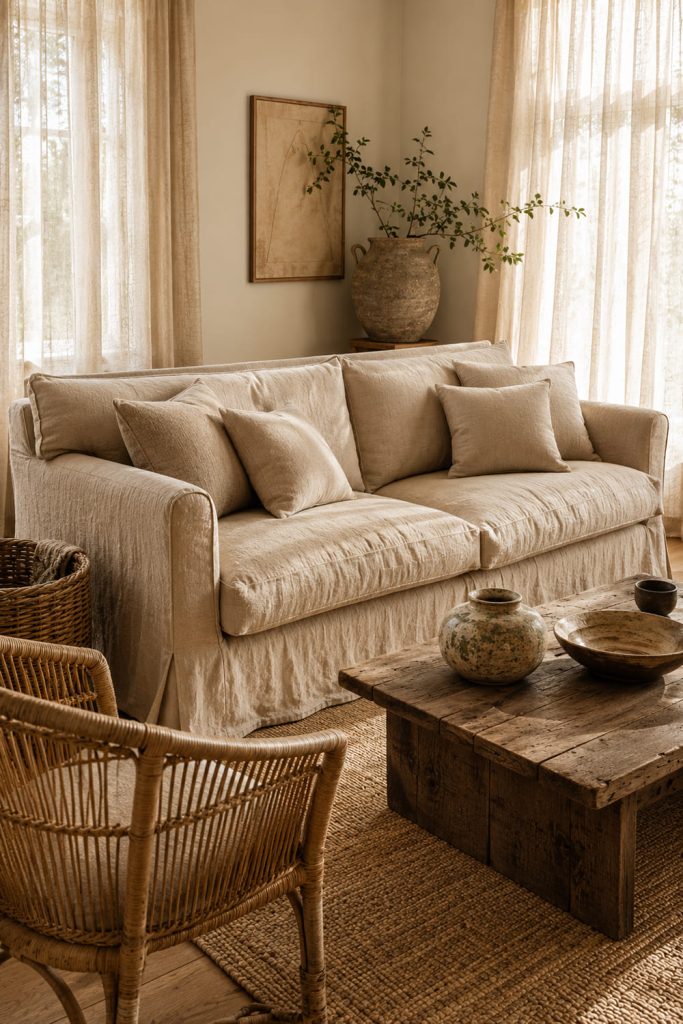
A slipcovered linen sofa in natural or oatmeal beige brings an easy, collected-over-time quality that upholstered pieces can’t match. The relaxed drape of linen softens the formality that can come with beige furniture, and slipcovers are practical for households with kids or pets since most are washable. This look pairs naturally with rattan, wicker, and other woven textures, leaning into a coastal or Japandi sensibility. Add a vintage wood coffee table and a few well-worn accessories to keep the room from feeling too new or showroom-perfect.
11. Beige and Olive Green Contrast

Pairing beige furniture with olive green accents is one of the ways designers are moving warm neutrals away from the ultra-minimal, tone-on-tone look that’s starting to feel dated. The olive can show up in a velvet accent chair, cushions, or even a painted accent wall, while the beige sofa and rug stay as the calm base. This combination feels grounded and a little more expressive than pure neutrals, echoing the shift toward richer, more lived-in palettes. Add brass hardware or lighting to warm the greens further and tie the whole scheme together.
12. Rounded Beige Ottoman as Coffee Table

Swapping a hard-edged coffee table for a large, upholstered beige ottoman softens the whole room and adds flexible seating for guests. Choose a bouclé, corduroy, or textured linen cover to keep it visually interesting rather than flat, and pick a shape — round or kidney — that echoes the curves increasingly common in beige sofas and sectionals. A tray on top restores some function for drinks or books. This idea works especially well in family living rooms, where the softer edges and extra seating get used constantly.
13. Beige Wingback or Barrel Chair

A single statement chair in a barrel or wingback silhouette gives a beige living room an anchor piece with real presence, without introducing color. The rounded barrel shape is especially popular right now for its softness and sculptural quality; the wingback brings a more classic, tailored feel. Upholster it in a nubby bouclé or soft velvet for texture, and pair it with a slim brass or black floor lamp for contrast. Positioned near a window or beside a fireplace, this chair becomes the room’s most photographed spot.
14. Beige and Black Layered Living Room

For a beige room with more edge, layer black in through the furniture itself rather than just accessories — a black-framed accent chair, a black metal-legged console, or black-piped cushions on a cream sectional. This approach keeps the base of the room warm and neutral while giving it graphic definition that pure tone-on-tone schemes lack. It’s a favorite for households wanting a beige room that still feels bold and current rather than safe. Balance the ratio carefully: beige should still make up roughly 70–80% of the visual weight, with black used as accent, not competition.
15. Embroidered or Textured Beige Upholstery
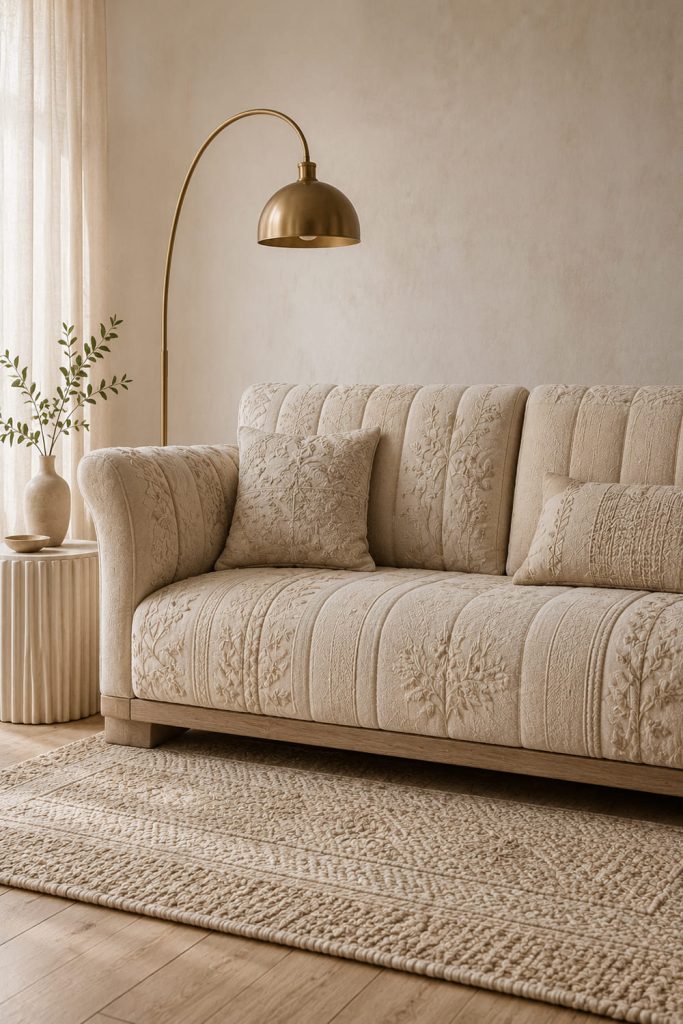
Textural detail — embroidery, quilting, channel-tufting, or woven jacquard — is how beige furniture avoids reading as flat or forgettable. A sofa or armchair with subtle embroidered detailing, or channel-tufted cushions, catches light and shadow in a way a plain beige surface never will. This idea is especially effective in smaller or minimally accessorized rooms, where the furniture itself needs to carry visual interest. Pair textured beige upholstery with equally tactile materials elsewhere — a woven rug, ribbed ceramics, unlacquered brass — so the whole room shares the same handmade, layered quality.
Buying Guide: How to Choose Beige Furniture for Your Living Room
Know your undertone. Beige isn’t one color — it ranges from cool, grey-based greige to warm, golden sand and deep camel. Hold fabric swatches up against your walls and existing flooring before buying; a beige with the wrong undertone can clash rather than complement.
Prioritize texture over pattern. Since beige furniture relies on tactile interest rather than color to stand out, choose upholstery with visible weave, nap, or weight — bouclé, linen, corduroy, and textured wool all outperform flat, smooth fabrics in a neutral room.
Plan your contrast pieces first. Decide where black, wood, or a single accent color will live in the room (lighting, a table, cushions) before choosing your beige furniture’s exact shade, so the two elements are chosen to work together rather than as an afterthought.
Test in natural and artificial light. Beige shifts more dramatically under different lighting than most colors. View fabric samples in your room at different times of day, since a sofa that looks warm and inviting at noon can look flat or grey under evening lamplight.
Mix at least two beige tones. A room built from a single beige, top to bottom, tends to look flat. Combine two or three tones — for example, a sand sofa, oat rug, and camel throw — to create the layered depth that makes neutral rooms feel intentional rather than default.
Invest in one anchor piece. Whether it’s a curved sectional, a sculptural coffee table, or a statement chair, choose one furniture piece to be the room’s focal point, and let everything else in the beige palette support it rather than compete with it.
Final Thoughts
Beige furniture has earned its comeback. What separates a beige living room that feels flat from one that feels expensive isn’t the color itself — it’s texture, tonal layering, and the confidence to add one or two contrasting elements rather than defaulting to safety.
Whether you lean into a curved oat sectional, a camel leather chair, or a bold beige-and-black pairing, the ideas above prove that neutral doesn’t have to mean forgettable. Choose the combination that fits how you actually use the room, and let the warmth of beige do what it does best: make the space feel calm, collected, and unmistakably yours.


