
15 Orange Wood Cabinet Kitchen Designs Full of Warmth and Character
Wood cabinetry never really went away, but the tones homeowners are reaching for have changed. Instead of the honey oak of decades past, today’s orange wood cabinets come from richer, more intentional sources — cherry, walnut, cognac-stained oak, and reclaimed timber — with cleaner door profiles and matte finishes that feel current rather than dated.
What makes this trend so appealing is its built-in warmth: orange-toned wood brings a natural glow to a kitchen without needing paint, and it pairs effortlessly with stone, brass, black, and even bold accent colors. Whether you want a full room of rich wood cabinetry or just a warm accent against white, these fifteen designs show how versatile orange wood tones can be in a modern kitchen.
1. Cherry Wood Shaker Cabinets
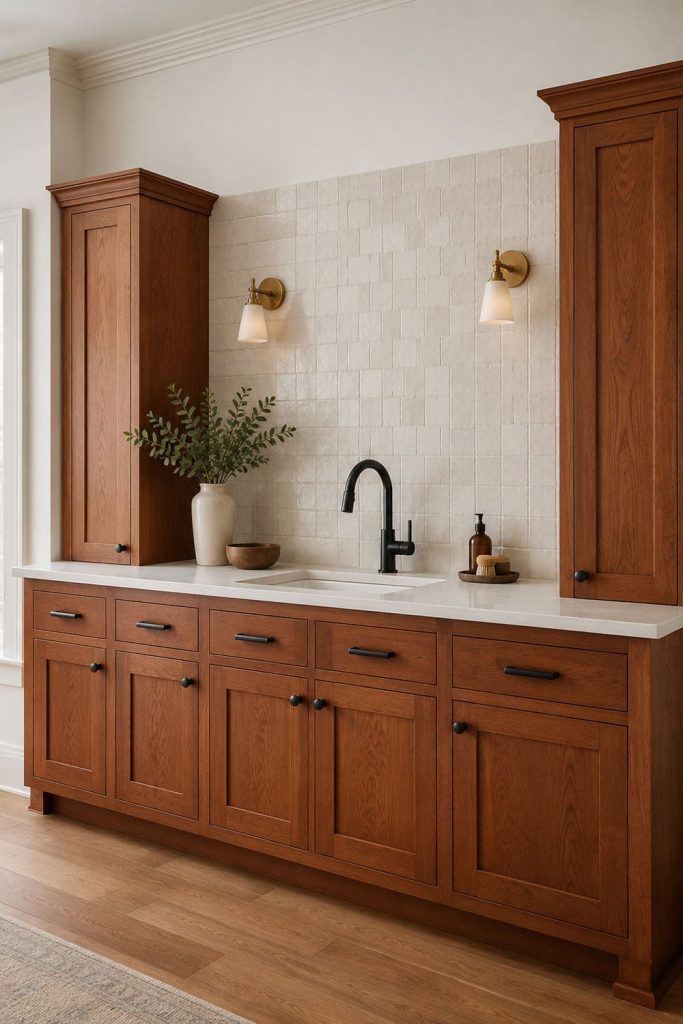
Cherry wood’s naturally reddish-orange grain deepens beautifully with age, making it one of the most timeless choices for a warm, wood-forward kitchen. Shaker-style doors keep the look clean and current, avoiding the ornate, dated feel that wood cabinetry sometimes carries. Pair cherry cabinets with white quartz countertops and matte black hardware for contrast, or lean fully into the warmth with a cream backsplash and brass fixtures. Cherry works especially well in traditional and transitional kitchens, where its rich tone adds depth without requiring any additional color. Over time, the wood only grows more lustrous.
2. Walnut Cabinets with Cognac Undertones

Walnut has become one of the most requested wood species in kitchen design, and cognac-toned walnut in particular delivers a refined orange-brown warmth that reads as quiet luxury. Its grain is often scanned directly from real veneer for an authentic, high-end look. Flat-panel or slab-front doors let the wood grain take center stage, making this a favorite for modern and mid-century-inspired kitchens. Pair with black steel accents, unlacquered brass, or a stone island in a cool gray to balance the warmth. Cognac walnut suits statement islands as beautifully as full cabinetry runs.
3. Reclaimed Wood Cabinets with Rustic Orange Tones

Reclaimed barnwood and salvaged timber carry natural orange and amber undertones that no factory stain can fully replicate, along with visible grain, knots, and slight imperfections that add character. This option suits farmhouse, industrial, and cottage-style kitchens especially well. Pair reclaimed wood cabinetry with open shelving, black iron hardware, and a butcher block or soapstone countertop for an authentic, lived-in feel. Because every board is unique, no two reclaimed wood kitchens look exactly alike, giving homeowners a genuinely one-of-a-kind result that also happens to be an environmentally conscious choice.
4. Two-Tone Kitchen with Orange Wood Lower Cabinets
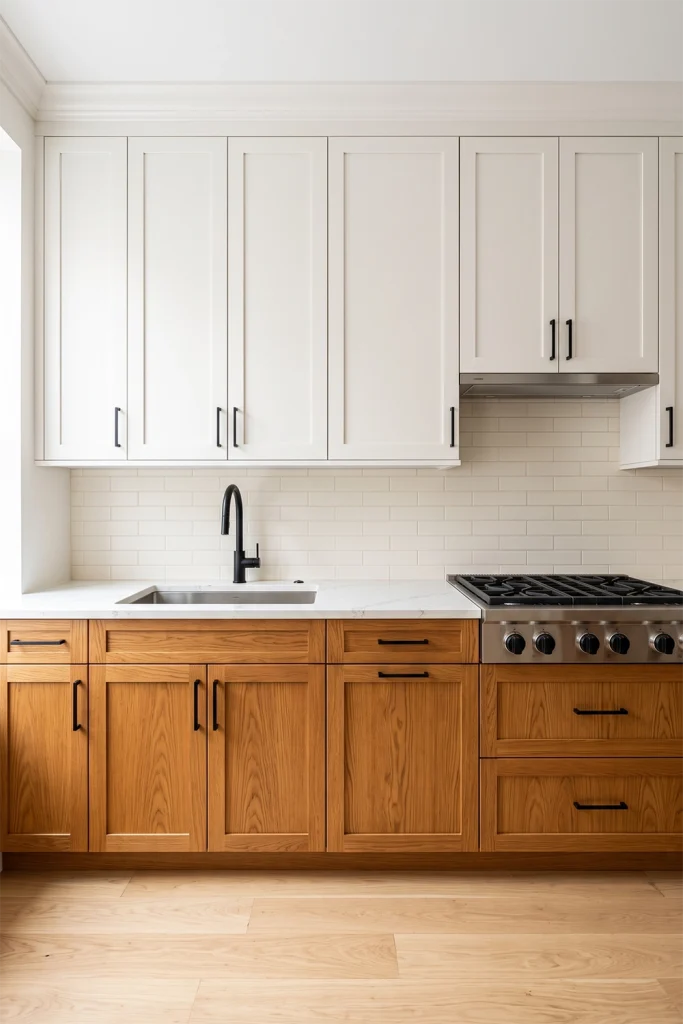
Pair warm orange-toned wood lower cabinets with crisp white or off-white upper cabinets for a two-tone kitchen that feels grounded without becoming heavy. Keeping the wood low in the room draws the eye downward and makes the space feel more spacious, since the lighter uppers visually recede. A white stone countertop bridges the two tones cleanly. This layout is one of the most popular two-tone configurations for 2026, offering the warmth of wood with the brightness of white, and it works equally well in small galley kitchens and large open-plan layouts.
5. Rift-Sawn White Oak with a Warm Orange Stain

Rift-sawn white oak has become the most specified wood species among design professionals, prized for its straight, consistent grain lines. When finished with a warm orange-leaning stain rather than a cool gray wash, it delivers a refined, contemporary warmth that avoids the dated look of 1990s honey oak. Flat slab or slim shaker doors keep the aesthetic modern. This option suits minimalist and Scandinavian-inspired kitchens that still want the coziness of wood. Pair with matte black or brushed nickel hardware and a light stone countertop for balance.
6. Mid-Century Modern Kitchen with Teak Cabinetry

Teak’s warm, orange-amber tone and straight grain make it a natural fit for mid-century modern kitchens, echoing the era’s love of exposed wood and clean lines. Slab-front cabinet doors with recessed or minimal hardware keep the look authentic to the period. Pair teak cabinetry with mustard yellow, olive green, or burnt orange accents for a palette straight out of the 1960s, or keep the rest of the kitchen neutral and let the wood do the work. Brass fixtures and a terrazzo or butcher block countertop complete the retro-modern feel.
7. Full Wood Kitchen in Rich Mahogany

Mahogany’s deep reddish-orange tone brings drama and richness to a kitchen, especially when used across the entire cabinetry run rather than as an accent. This is a bold, full-commitment choice best suited to larger kitchens with ample natural light, since the depth of the wood can feel heavy in smaller or darker spaces. Balance the richness with white marble countertops, a light-colored backsplash, and plenty of brass or gold hardware. Mahogany cabinetry suits formal, traditional, and old-world-inspired kitchens that want a sense of heritage and permanence.
8. Orange Wood Island with Painted Perimeter Cabinets
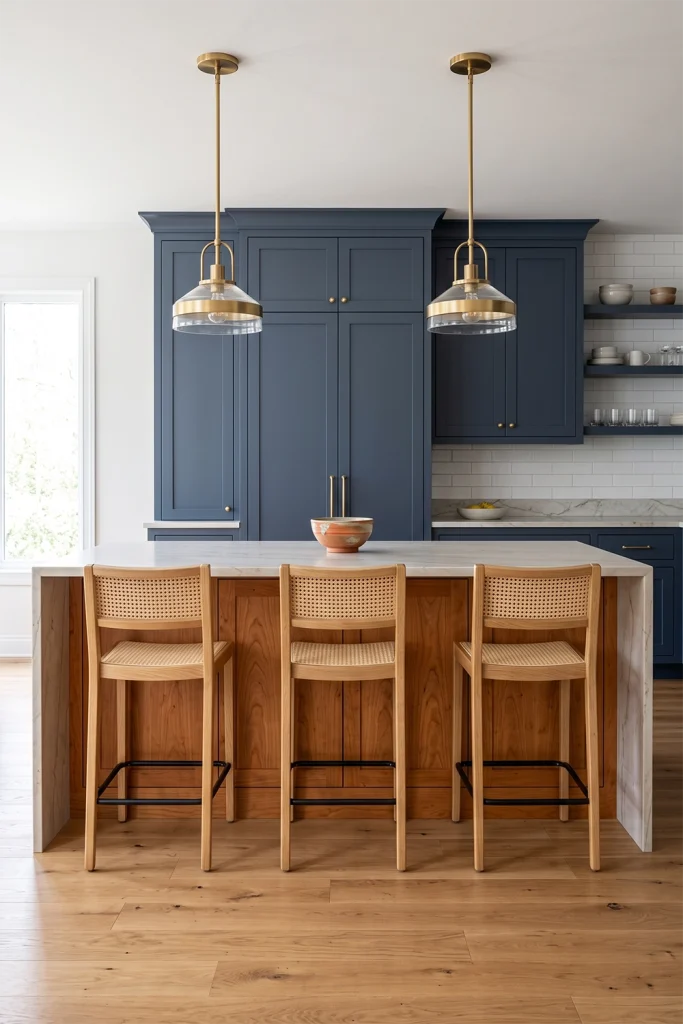
Make a warm wood island the centerpiece of the kitchen by pairing it with painted perimeter cabinets in white, sage, or navy. The contrast highlights the wood’s natural orange tones while keeping the rest of the kitchen calm and cohesive. A waterfall countertop edge in stone adds a sleek, modern finish to the island, while pendant lighting overhead draws additional attention to the wood grain below. This approach is especially popular in open-concept kitchens, where the island functions as a natural gathering point and design focal point at once.
9. Knotty Pine Cabinets for a Cozy Cabin Feel

Knotty pine’s pale orange tone and visible knots bring an unmistakably cozy, cabin-inspired warmth to a kitchen. While it fell out of favor for a period, pine is seeing renewed interest among homeowners chasing an authentic, unpretentious wood look, especially in mountain homes and rustic farmhouses. Pair with black hardware and a dark countertop for contrast, or keep everything wood-toned with a butcher block surface for a fully immersive, cabin-like effect. Open shelving and woven textiles round out the relaxed, welcoming mood this cabinetry naturally creates.
10. Orange Wood Grain Cabinets with Black Hardware

Any orange-toned wood cabinetry — walnut, cherry, or a warm oak stain — gets an instant modern edge from matte black hardware, faucets, and light fixtures. The dark contrast keeps the warm wood from feeling too traditional, making it a great option for homeowners who love the coziness of wood but want a more contemporary overall look. Slab-front or slim shaker doors reinforce the modern feel. Pair with white or light gray countertops to let both the wood grain and the black accents stand out clearly against a clean backdrop.
11. Warm Wood Cabinets with a Terracotta Backsplash

Double down on warmth by pairing orange-toned wood cabinetry with a terracotta or clay tile backsplash. Because both elements share a similar color family, the kitchen feels cohesive and intentional rather than mismatched. This combination suits Mediterranean, Spanish colonial, and bohemian-inspired kitchens particularly well. Balance the warmth with a white or cream countertop and simple, unfussy hardware so the space doesn’t feel overly saturated. Potted herbs, woven baskets, and natural linen textiles complete the earthy, sun-washed atmosphere this pairing naturally evokes.
12. Floating Wood Shelves in Orange-Toned Wood

Skip upper cabinets entirely in favor of open, floating shelves crafted from warm orange-toned wood like walnut or cherry. This approach keeps the kitchen feeling light and airy while still introducing the warmth of natural wood grain. It’s an especially good option for smaller kitchens, where full upper cabinetry can feel visually heavy. Style the shelves with ceramics, glassware, and a few plants for a curated, collected look. Pair with painted lower cabinets in white or a soft neutral to keep the overall palette balanced and uncluttered.
13. Orange Wood Cabinets with Black and White Checkerboard Floor

Ground a warm wood kitchen with a graphic black-and-white checkerboard floor for a look that feels both retro and current. The high-contrast flooring keeps the orange wood tones from feeling too soft or one-note, adding energy and visual structure to the room. This pairing works particularly well in kitchens with a playful, eclectic sensibility. Keep countertops simple in white stone or butcher block, and add brass or chrome hardware depending on whether you want a warmer or cooler finishing touch across the fixtures and lighting.
14. Wood Cabinets with Brass Hardware and Warm Stone

Lean fully into warmth by pairing orange-toned wood cabinetry with brass or unlacquered brass hardware and a warm-veined stone countertop in cream, gold, or soft beige tones. Every element in this combination shares the same warm undertone, creating a cohesive, glowing kitchen that feels inviting at any time of day. This approach suits transitional and quiet-luxury kitchens that want richness without bold color. A few black accents — a faucet, light fixture, or barstool — keep the palette from feeling one-dimensional.
15. Sustainable Orange Wood Cabinets from Reclaimed or FSC Timber

For homeowners prioritizing sustainability, orange-toned cabinetry made from reclaimed timber or FSC-certified wood offers the same natural warmth with a smaller environmental footprint. Reclaimed wood often carries a richer, more varied orange-brown patina than new-cut lumber, giving the kitchen extra character. Pair with recycled glass countertops or natural stone for a fully eco-conscious material palette. This approach suits modern farmhouse and eco-forward kitchens, proving that a warm, wood-centered design doesn’t have to come at the expense of sourcing responsibly.
How to Choose Orange Wood Cabinets: A Buying Guide
Pick your wood species based on the depth of orange you want. Cherry and mahogany lean deep and reddish, walnut and cognac-stained oak sit in the middle with a warm brown-orange balance, and pine and light oak stay pale and golden. Decide how bold you want the warmth to feel before choosing a species, since refinishing later is possible but costly.
Match the door style to your kitchen’s overall aesthetic. Flat slab and simple shaker profiles read as modern and current, while raised panel doors can tip a wood kitchen toward a more dated, traditional look. If you love a classic feel, choose a shaker profile as a middle ground that works with almost any style.
Balance warmth with cooler elements. A kitchen that’s all orange-toned wood can start to feel heavy, especially in rooms with limited natural light. Introduce white, cream, or light gray countertops, backsplash tile, or wall paint to give the eye a place to rest, and consider black or cool-toned hardware to add contrast.
Consider natural light before committing. Rich, dark wood tones like mahogany and walnut can make a dim kitchen feel smaller, while pale woods like oak and pine tolerate low light much better. If your kitchen doesn’t get much natural sun, lean toward lighter orange wood tones or limit richer woods to an island or accent area.
Decide between real wood and wood-look alternatives. Solid wood and quality veneers can be refinished over time, offering long-term flexibility that painted MDF cannot match. However, high-quality laminates and wood-look finishes have improved significantly and offer a more budget-friendly and low-maintenance option for homeowners who still want the orange wood look.
Choose hardware and lighting to set the final mood. Brass and unlacquered brass intensify the wood’s natural warmth for a rich, glowing effect, while matte black and brushed nickel add contrast and a more modern edge. Warm-toned lighting will enhance the orange in the wood grain, while cooler LED lighting will mute it slightly.
Conclusion
Orange wood cabinets prove that warmth doesn’t have to come from paint or tile — sometimes the most inviting kitchens are built from the natural richness of the material itself. From the deep reddish glow of cherry and mahogany to the refined cognac tones of walnut and the pale coziness of pine, there’s an orange wood tone suited to nearly every kitchen style, from mid-century modern to farmhouse to quiet luxury. With the right balance of neutrals, hardware, and lighting, a wood-forward kitchen can feel just as fresh and current in 2026 as it does timeless for years to come.


