

15 Small Kitchen Ideas With a Plate Rack Wall Display
Your plates take up a full cabinet shelf, yet you use the same six every single day. The rest sit in a stack you lift and shuffle each time you set the table.
A wall rack fixes that trade. These small kitchen ideas with a plate rack wall display move daily plates onto the wall, where they store flat, dry fast, and read as decor.
The wall above the sink or beside the stove often holds nothing at all. That blank strip can carry a whole set of plates with room to spare.
You see the whole set at a glance each morning. Chips, cracks, and the plate that never gets picked all show up fast, so the set stays honest and easy to edit.
If you already like open storage, our guide to small kitchen ideas with open shelves covers the wider room. This list stays on one rack and the plates on it.
This post contains affiliate links. If you buy through them, we may earn a small commission at no extra cost to you. See our Affiliate Disclosure.
1. Put Daily Plates on the Rack and Free a Whole Cabinet Shelf

Start with the plates you reach for at every meal. Move that daily set onto the rack and leave the rest of your dishes in the cabinet for guests and big dinners.
The freed shelf is the real gain. Bowls, mixing gear, or the blender base can move up from the counter, and the counter stays clear for cooking.
Keep the daily set small and honest. Six to eight plates suit most homes, and a rack that holds only what you use never looks crowded or dusty.
The shelf you free can also end the pile of bowls on top of the fridge. Everything lands at a height you can reach without a stool or a stretch.
2. Hang the Rack Above the Sink So Plates Drip Into the Basin

The wall above the sink is the hardest working spot for a rack. Washed plates go straight up, and drips fall into the basin instead of pooling on the counter.
There is no drainer taking up space beside the faucet. The short counter run stays free for a chopping board, a soap bottle, and little else.
If your sink sits in a corner, pair this with our small kitchen ideas for a corner sink layout so the rack and the corner work as one run.
Set the lowest shelf high enough that tall bottles and the faucet swing stay clear. A quick test with your largest plate shows the right height fast.
3. Group Plates by Color for a Calm and Ordered Wall

A rack reads as decor when the plates share a color story. Whites and creams in one stretch, soft blues in another, and the wall looks planned rather than stored.
Odd plates break the calm fast. Move the single bright souvenir plate to a cabinet and keep the rack to two or three tones that sit well together.
Our roundup of small kitchen color ideas helps you pick tones that suit your cabinets. Match the rack grouping to that palette and the wall ties in.
Sort within each color from large to small as well. The steady size run keeps the color blocks tidy and makes gaps easy to spot after washing up.
4. Let Patterned Plates Do the Job of Kitchen Art
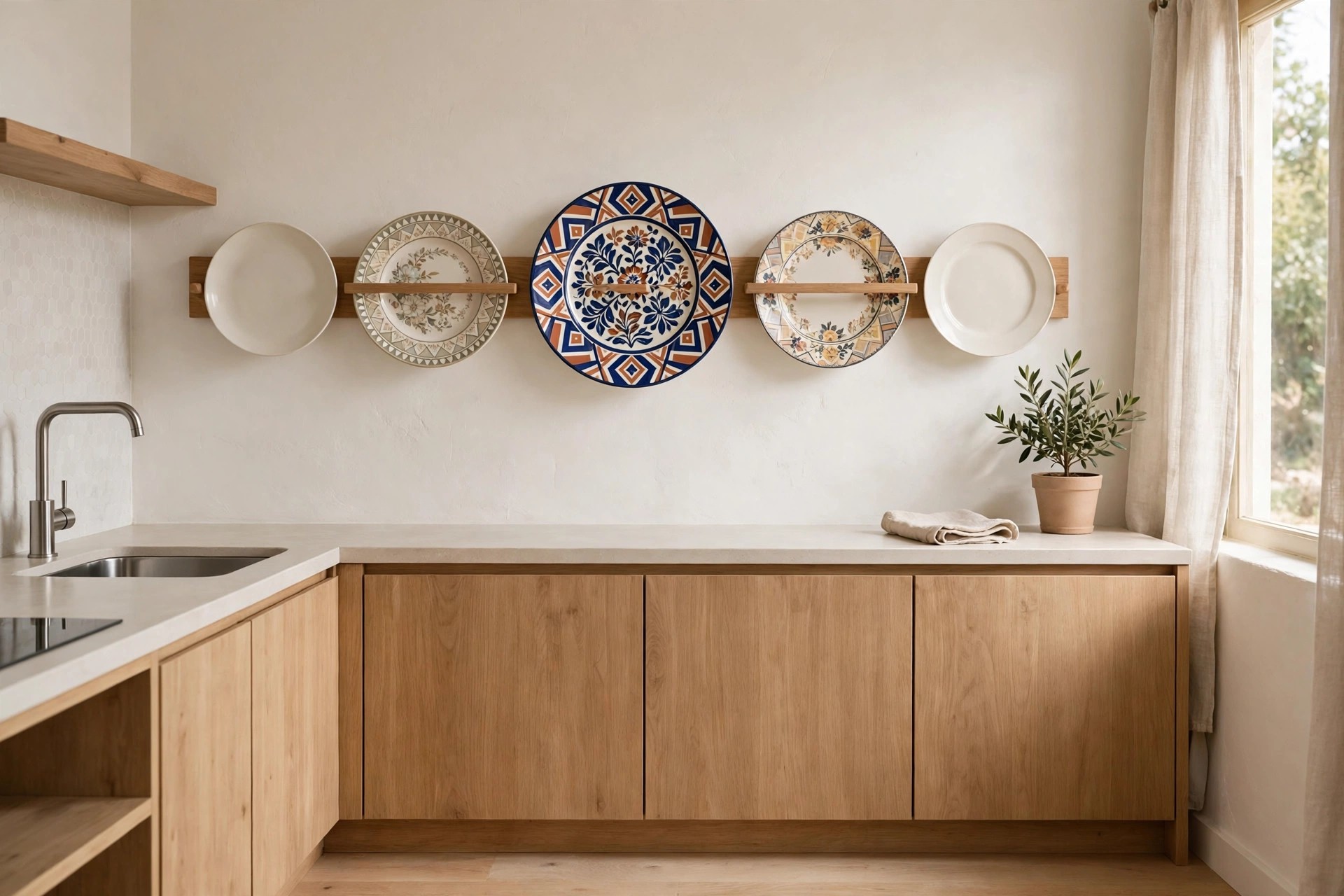
Small kitchens rarely have wall room for framed prints. A row of patterned plates gives the same lift, and every piece still earns its place at the table.
Put the boldest pattern at eye level in the middle of the rack. Plainer plates on each side keep the row balanced and stop it feeling busy.
Repeat one color from the pattern somewhere low in the room. A towel, a jug, or a fruit bowl in that tone makes the display feel linked, not random.
One patterned set is plenty for a small room. Two competing patterns on one rack fight each other, and the wall starts to feel like a shop shelf.
5. Mix Plates With Platters and Wooden Boards in One Row

A rack of round plates alone can look flat. Slot a large oval platter in the middle and lean a wooden board at one end, and the row gains shape.
Boards and platters are the pieces that never fit cabinets well. On the wall they store flat, stay easy to grab, and fill the tall slots plates leave short.
Keep the mix to three kinds of pieces at most. Plates, one platter shape, and boards in one wood tone read as a set, even if they came from different shops.
Stand boards with the grain running up and down. The straight lines echo the plates beside them and keep the row from looking tipped or messy.
6. Pick a Shallow Rack With a Lip Deep Enough to Hold Plates Safe

Depth matters more than width on a small kitchen wall. A shallow rack that holds plates close to the wall leaves the walkway and the counter edge clear.
Look at the front lip and the groove in each shelf. Plates should sit down into the groove, held by the lip, not balanced on a flat edge.
Leave a small gap between each plate as you load it. Plates that knock together chip faster, and a finger of space makes each one easy to lift out.
Check the fixings as part of the choice, at a general level. A loaded rack is heavy, so it should feel firm on the wall with no sway at all.
7. Match the Rack Finish to Your Handles and Faucet

A rack looks built in when its finish repeats a finish already in the room. Black rack with black handles, warm wood with a wood counter, brushed metal with the faucet.
One repeated finish is enough. Matching every small thing in sight makes a tiny kitchen feel stiff, and the plates should stay the main event on the wall.
Test the pairing at arm’s length before you fix anything. Hold the rack near the handles in daylight, since warm evening light can hide a clash in tone.
If the handles are mixed already, match the rack to the faucet instead. The sink zone and the rack sit side by side, so that pairing reads first.
8. Leave One Slot Empty So the Rack Never Looks Jammed

A rack filled edge to edge reads as storage under pressure. One empty slot in the row gives the plates air and makes the whole wall look lighter.
The spare slot earns its keep on wash days too. Clean plates can go straight into the gap while the rest of the set is still in use at the table.
Resist filling the gap with a spare mug or a jar. The empty space is the styling choice, and it keeps the display calm in a room with little spare room.
The empty slot also helps plates dry. Air moves between the pieces instead of trapping steam, and rims come out dry rather than spotted.
9. Sort by Size With Dinner Plates Low and Side Plates High

Heavy dinner plates belong on the lowest shelf of the rack. You lift them the shortest distance, and the rack feels steady with the weight held low.
Side plates and saucers sit well on the top shelf. They are light, used less often, and their smaller circles look neat against the top rail.
Keep one size per shelf where you can. A shelf of mixed sizes looks untidy fast, and finding the right plate turns into a small hunt at busy meals.
Order by use, not looks alone. The plates you grab with wet hands at the dinner rush should sit where a short, safe reach finds them first.
10. Add a Short Lower Rail for Bowls Beneath the Plates

Some racks carry a short rail or a shallow shelf under the plate rows. That strip suits the bowls you use for soup, cereal, and morning oats.
Bowls under plates keep a full place setting in one reach. Setting the table becomes one trip to the wall instead of two trips to two cabinets.
Limit the lower rail to one row of bowls in one color. A deep stack down low makes the rack look bottom heavy and blocks light from the counter.
Keep heavy stoneware bowls to a low count here. Four to six bowls cover most meals, and the rail stays light enough to load with one hand.
11. Fill the Narrow Wall Strip Beside the Fridge
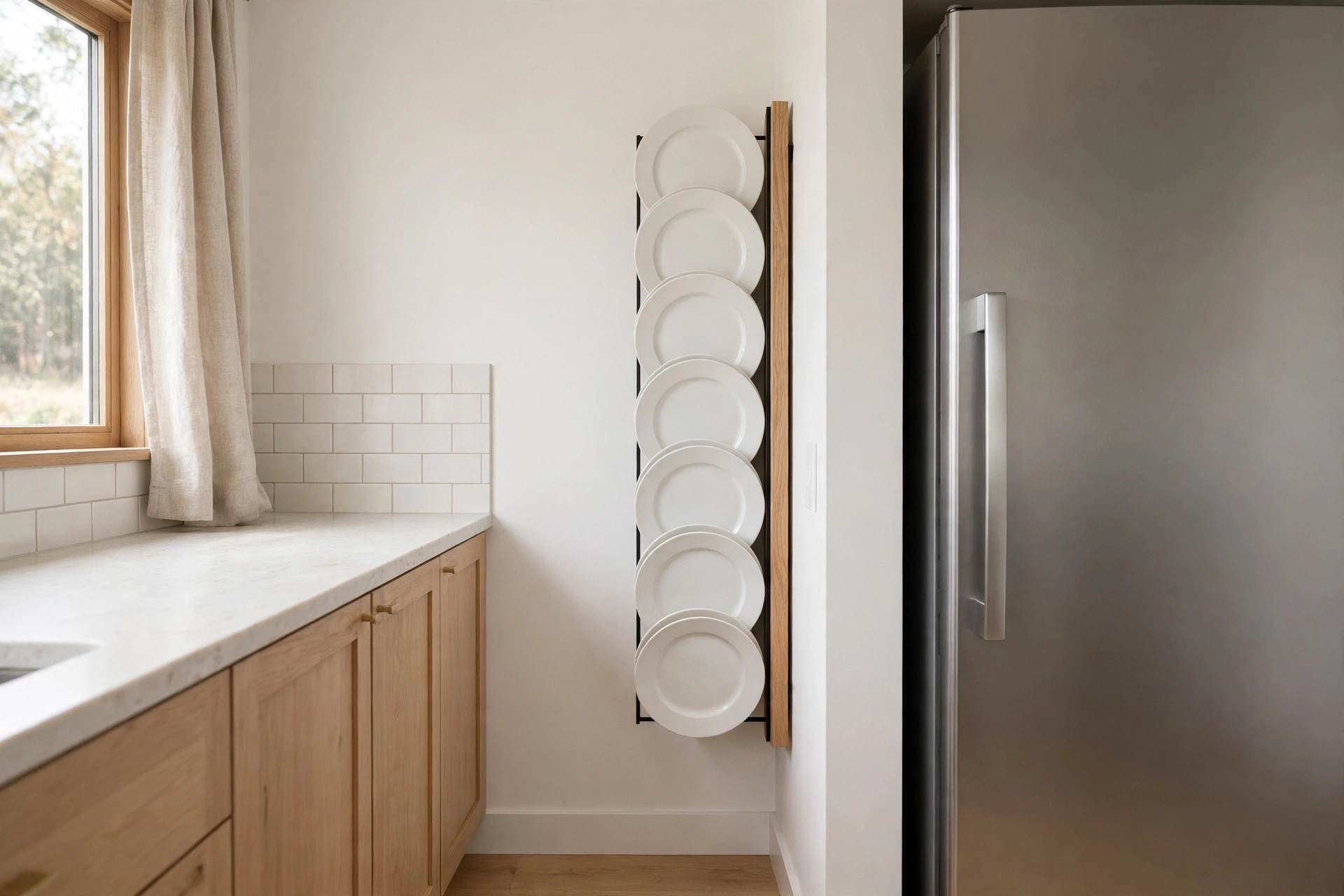
Many small kitchens have a slim strip of wall beside the fridge that fits nothing. A narrow rack turns that dead strip into the plate store for the whole room.
Measure the strip before you shop the rack. Leave clear space on the fridge side so the door swing and the handle never clip the plate edges.
For more storage squeezed into slim footprints, see our small kitchen ideas with tall skinny storage towers. A narrow rack and a slim tower pair well on one wall.
Plates on this strip face the room like a small gallery. Keep the colors calm here, since the rack sits close to eye level by the fridge door.
12. Swap the Plates With the Seasons for a Fresh Wall

The rack makes seasonal change simple. Pale plates with a soft rim for spring, deeper tones for winter, and the kitchen feels updated without paint or new cabinets.
Store the off season set in the cabinet space the daily plates freed up. The swap takes ten minutes, and both sets stay clean and ready.
Change one thing at a time. New plates on the rack with the same towels and counter pieces shows you fast if the swap works in your light.
Holiday plates can join the rack for a few weeks only. A short run keeps them special, and the daily set returns before the look wears thin.
13. Use Plain White Plates to Keep a Busy Room Quiet

If your kitchen already has patterned tile, colored cabinets, and a lot going on, plain white plates calm the wall down. The rack adds order without adding one more pattern.
White plates also show dust and water marks fast, which sounds like a flaw. In practice it keeps the rack honest, since a quick rinse is part of daily use.
Our guide to small white kitchen ideas shows how white pieces layer without feeling cold. White plates on a wood rack add the warmth that guide calls for.
Vary the rim shapes if plain white feels too flat. A mix of round, squared, and fluted rims adds interest while the color stays quiet.
14. Skip One Upper Cabinet and Give the Wall to the Rack

A run of upper cabinets can close in a small kitchen. Trading one cabinet for an open rack opens the wall, and the room feels wider at eye level.
Pick the cabinet nearest the table or the sink to give up. Plates travel the shortest path, and the open section lands where the light hits it best.
Keep the cabinets on each side closed and plain. The contrast between closed doors and the open rack is what makes the wall read as a feature, not a gap.
Plates in the open section need a quick wipe more often. Daily use handles most of it, since each plate cycles through the sink every few days.
15. Keep the Rack for Plates You Love and Use Every Week

The best racks hold a tight, loved set. Plates you use each week stay in rotation, stay washed, and never sit long enough to gather a film of dust.
Be strict at the start. If a plate has not been used in a month, it belongs in a cabinet or in the donate box by the door, not on the wall.
End slots suit serving pieces you reach for on Fridays or Sundays. A weekly platter earns its wall spot, while the once a year dish can live up high elsewhere.
Review the rack each season with fresh eyes. Plates drift back in over time, and a five minute edit keeps the display tight and easy to use.
A plate rack earns its wall space twice, once as storage and once as the decor a small kitchen has no other room for. Start above the sink, keep the set small, and group by color.
These small kitchen ideas with a plate rack wall display work one shelf at a time. Load the daily plates first, live with the rack a week, then tune the mix.
Save this to your small kitchen ideas board for later, and check the rack width against your emptiest wall before you buy a thing.


