

15 First Apartment Living Room Ideas for Young Renters
Your first apartment living room has to do everything at once. It is where you unwind after work, stream a film on a Friday night, eat dinner when the kitchen feels too small, and welcome friends into a home that is finally your own.
The good news is that it does not need to be finished in a weekend, or filled with expensive pieces, to feel warm and genuinely yours.
The secret is order and scale. Start with the few pieces that decide how the room works, choose sizes that suit a smaller footprint, and let everything else arrive gradually as you learn how you actually live in the space.
A loveseat that fits, a rug that defines the seating area, lighting that softens bare rental walls, and storage that hides everyday clutter will do more than a room full of impulse buys.
For more deposit-safe foundations, see our guide to renter-friendly living room ideas alongside this list.
Below are 15 first apartment living room ideas made for young renters: starter budgets, small rooms, open-plan corners and leases that say no to drilling and painting.
Follow them in order for a complete room, or start with the two or three that solve your biggest frustration today.
This post contains affiliate links. If you buy through them, we may earn a small commission at no extra cost to you. See our Affiliate Disclosure.
How to Furnish Your First Apartment Living Room, Step by Step
Before you buy anything, measure the room and write the numbers down: full length and width, plus the position of doors, windows, radiators and sockets. Check the narrowest point anything large must pass through on delivery day, including hallways, stairwells and the front door itself.
Leave clear walking routes, keep seating close enough for conversation, and if the living area shares space with dining, think of it as two small zones rather than one big one.
Our ideas for a living room dining room combo in small apartments show how a rug and careful placement can separate the zones without any divider.
Next, buy in a deliberate order: seating first, then the rug, then everyday surfaces and storage, then lighting, and only then decorative extras. Seating decides the layout, the rug anchors it, and everything else should earn its place by solving a real need.
Choose a small, cohesive palette early, ideally two main colours plus one accent, and repeat it across cushions, curtains and art so pieces bought months apart still look intentional.
Favour lightweight shapes you can carry up stairs and out again when your lease ends, and live in the room for a week between purchases when you can: a short pause shows you what is genuinely missing.
1. Start With a Right-Sized Loveseat
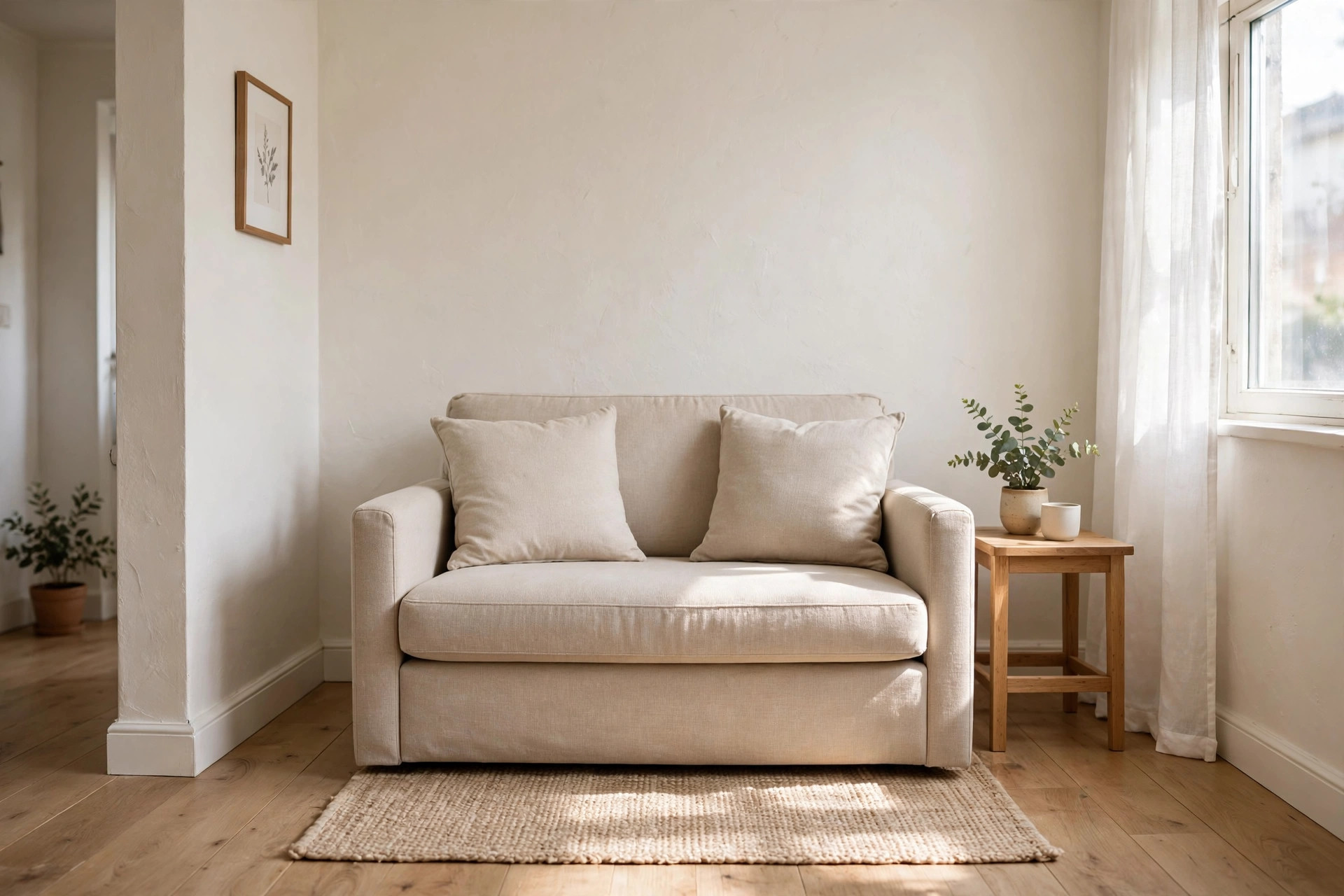
Your sofa is the largest purchase and the piece that sets every other decision, so get its size right before you fall in love with a colour.
In most first apartments a compact two-seater or loveseat is the sweet spot: generous enough for two people to lounge, small enough to leave breathing room for a coffee table, shelving and a clear path through the room.
Measure the wall it will sit against, allow a little space at each end, and check seat depth as well as width, because a shallower seat often suits a small room better.
Choose slim arms and legs that lift the base off the floor, since visible floor underneath makes a small room feel lighter.
A neutral fabric in warm grey, oatmeal or soft sage will survive changing tastes and pair happily with any accent colour you add later. Prioritise removable, washable covers if you can, a genuine lifesaver for renters worried about marks and deposits.
2. Choose a Sleeper Sofa for Overnight Guests
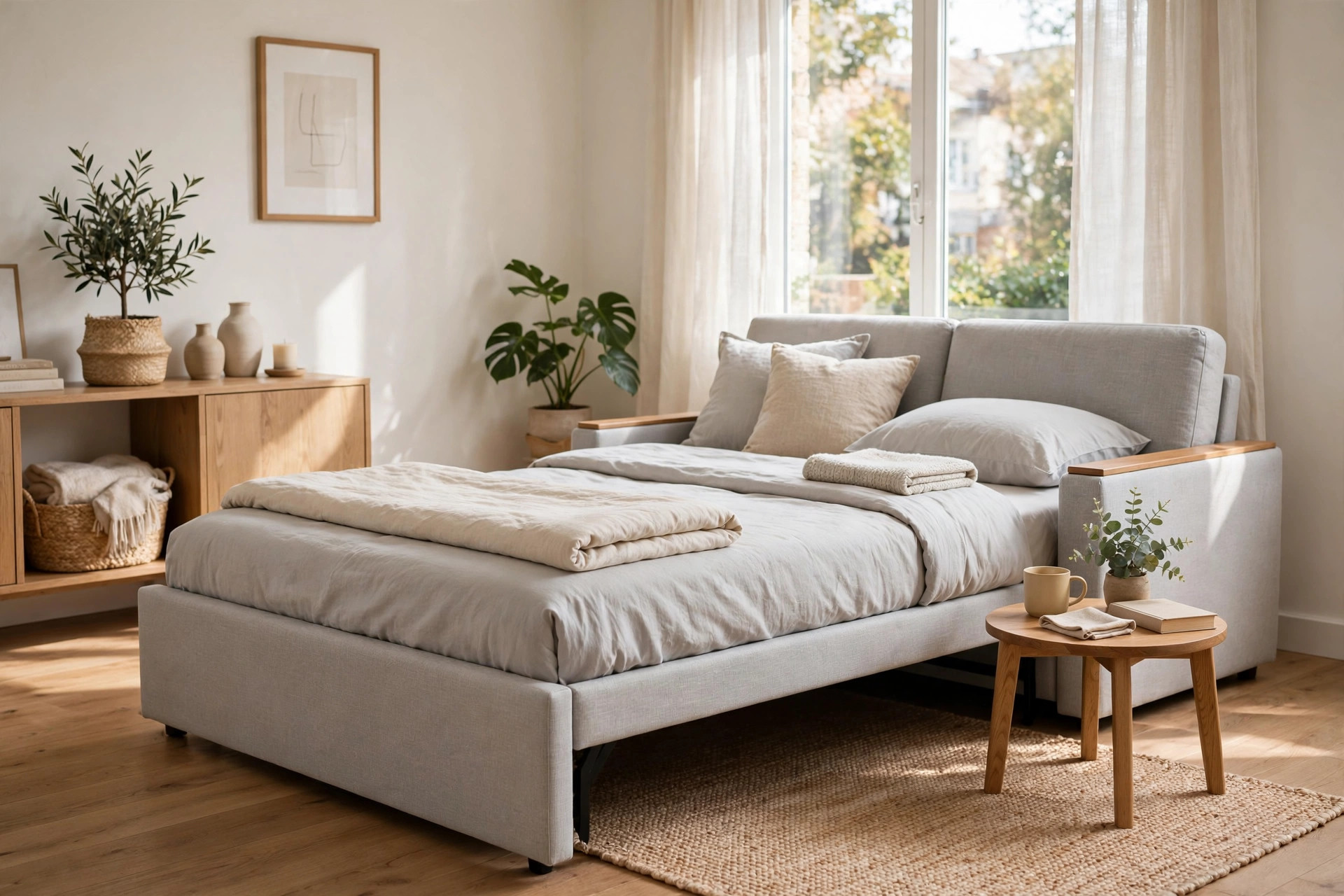
Few first apartments come with a spare bedroom, yet friends and family will still visit, and a sleeper sofa quietly solves that problem. By day it is your everyday seat for reading, working and watching films.
By night it folds out into a proper bed, far more welcoming than an air mattress on the floor. If hosting matters to you even occasionally, it can be worth more than a standard sofa of the same size.
Before you commit, measure the sofa fully opened as well as closed, and make sure you can still walk around it with the bed out. Keep guest bedding stored nearby in a basket or ottoman so changeover takes minutes.
For layouts and styling help, see our guide to sofa bed living room ideas for guests. Styled with your everyday cushions and throw, a sleeper sofa never looks like a compromise: it simply works twice as hard as any other seat in the room.
3. Define the Space With a Small-Space Rug
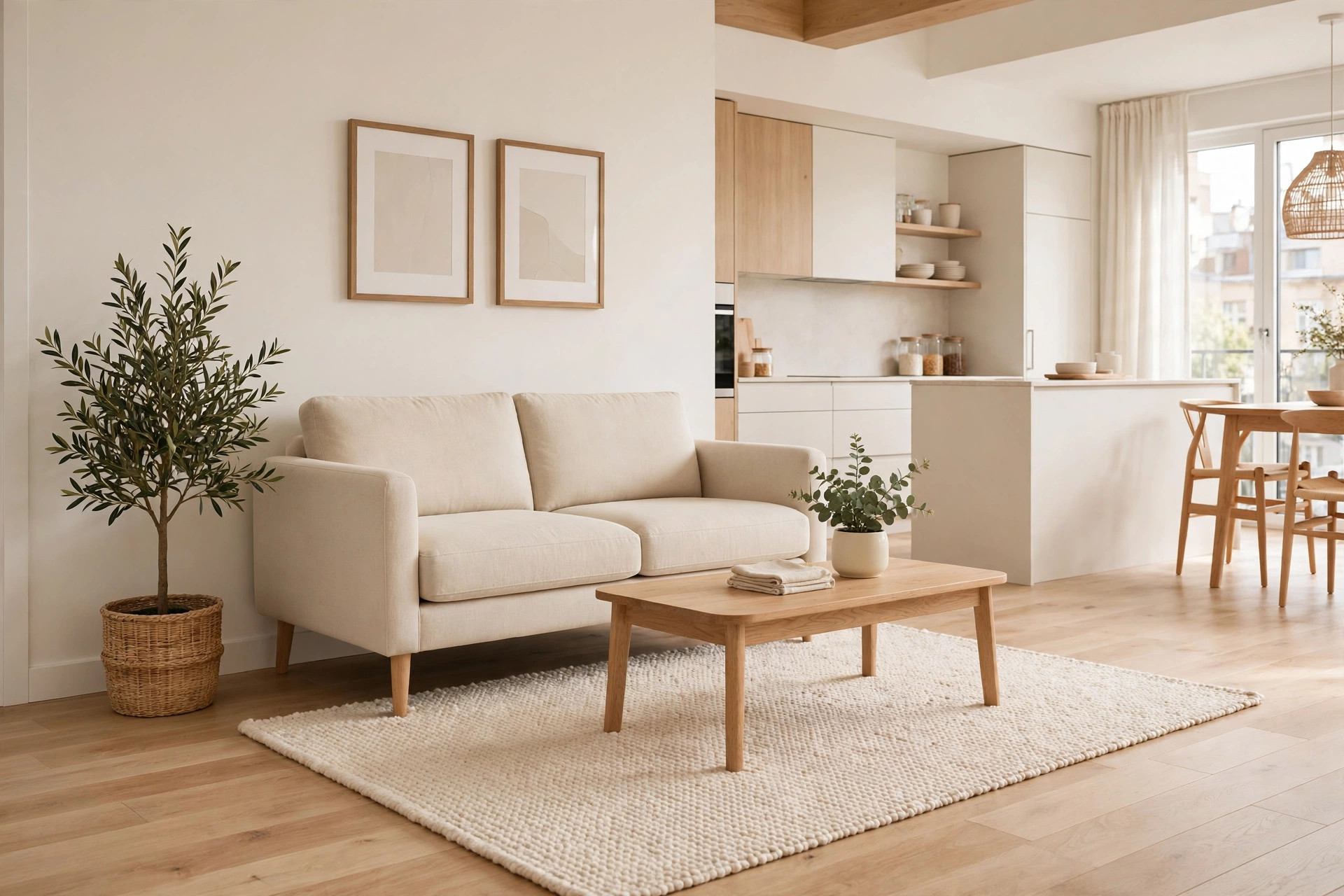
In an open-plan or boxy rental, a rug is what turns a collection of furniture into a room.
It marks out the living zone, softens hard rental flooring, adds warmth underfoot, and quietly protects the floor beneath your seating, which you will appreciate at move-out inspection.
Place the rug so at least the front legs of the sofa sit on it, with the coffee table centred on top. That one placement rule makes the arrangement look deliberate rather than parked around the edges.
Scale matters more than pattern. A rug that is too small makes even good furniture look lost, so choose the largest size your seating area can hold while leaving a border of floor visible around it.
Flatweave and low-pile styles are the easiest first-apartment choice: they sit happily under doors, vacuum quickly, and cope well with everyday life. Keep the colour light to mid-toned with subtle texture, which hides everyday marks between cleans while keeping the room bright.
4. Pick a Lightweight Coffee Table You Can Move
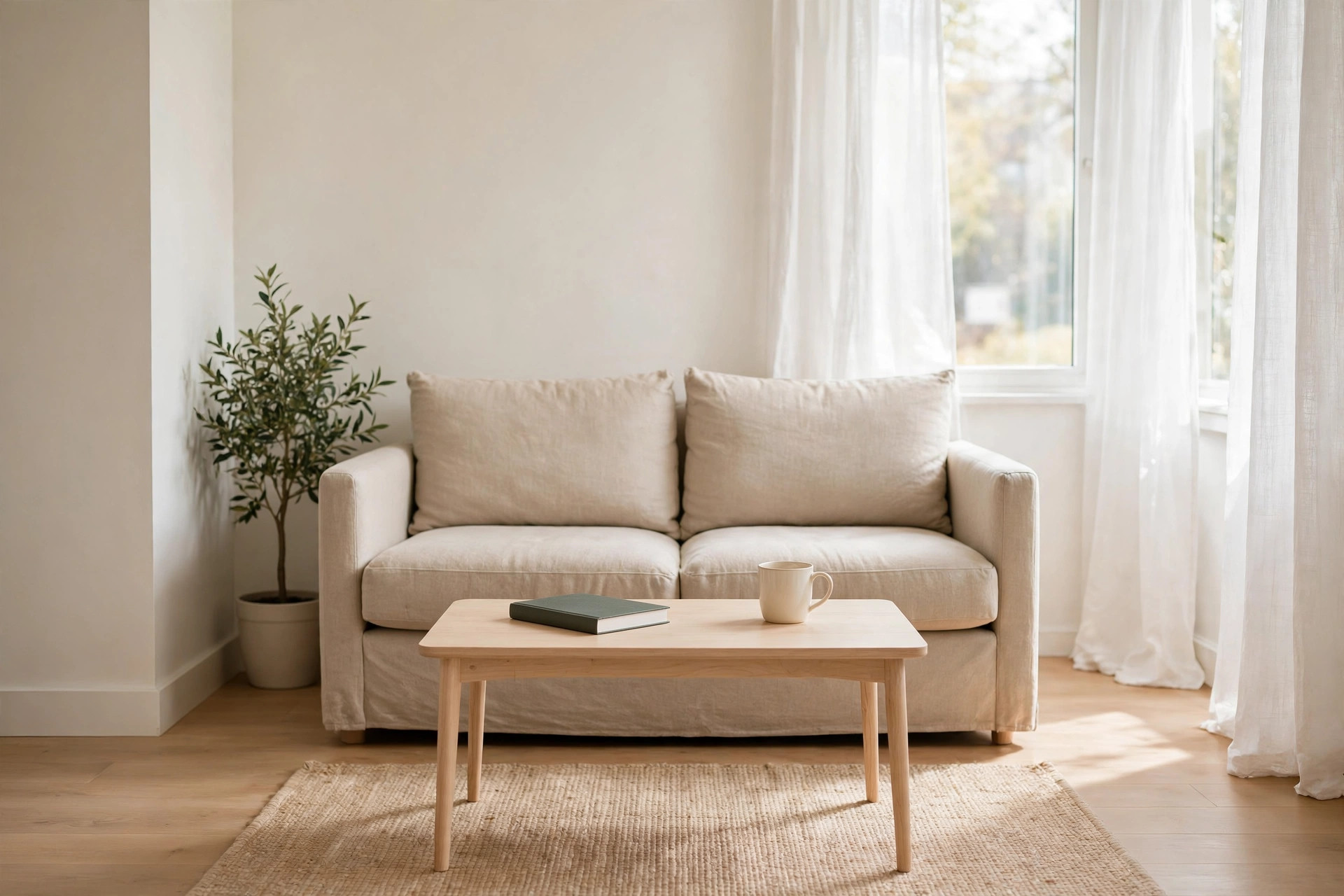
Your coffee table will be a desk, dining table, footrest, games surface and display shelf, sometimes all in the same week, so choose one light enough to move without thinking twice.
A slim-legged wooden table keeps sightlines open, leaves space for legs and baskets underneath, and can be pushed aside in seconds when you want floor space for exercise or an extra chair. Flexibility is worth more than bulk in a first living room.
Leave a comfortable gap between sofa and table so you can walk past without turning sideways, and keep its length roughly in proportion to your sofa.
Style it lightly: one book, one small plant, and a tray for remotes and coasters, then leave real empty space for laptops and mugs. Simple, movable and uncluttered beats large and fixed every time.
5. Use Tall, Narrow Shelving to Gain Storage

When floor space is limited, height is your storage, but renters need it without a wall of fixings. A tall, narrow bookcase or ladder shelf gives generous vertical room for books, baskets, plants and essentials while taking up barely more floor than a side chair.
Place it on the emptiest stretch of wall, ideally near the sofa so books, chargers and blankets live exactly where you use them. A freestanding piece also travels well to a hallway, bedroom or office corner in your next home.
Style shelves with a mix of useful and decorative, and use matching baskets or boxes on a couple of shelves to hide cables, paperwork and odds and ends.
Leave a little empty space on each shelf rather than filling every centimetre, because breathing room separates calm shelving from cluttered storage. Secure tall furniture safely following the maker’s guidance. One tall unit can replace a bulky sideboard and several piles on the floor.
6. Layer Lighting Without Hiring an Electrician
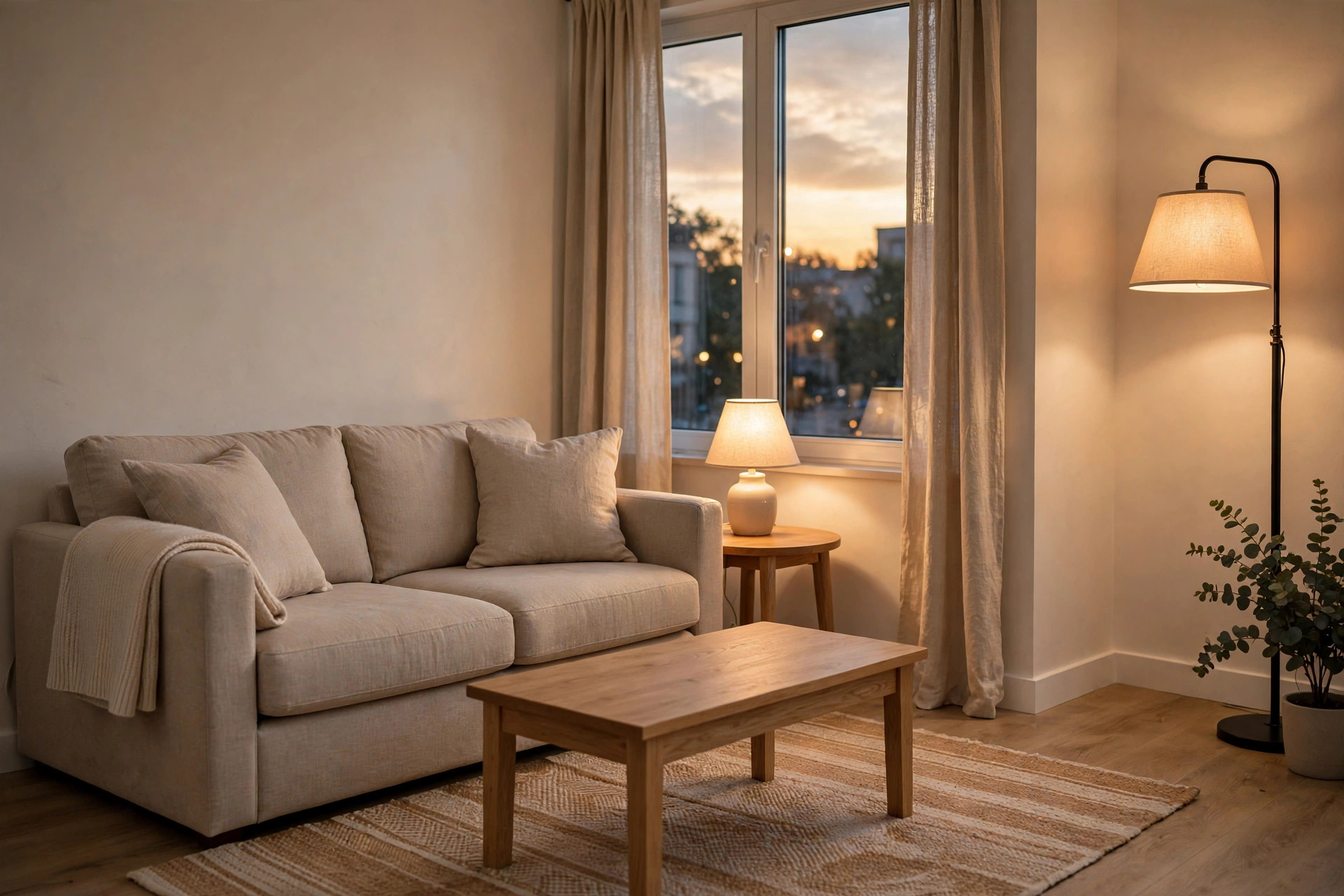
Most rentals rely on a single ceiling light that flattens everything and makes even a nicely furnished room feel stark in the evening. Layered lighting fixes that without any wiring or landlord negotiation.
Aim for three gentle sources at different heights: a floor lamp beside the sofa for reading, a table lamp on a side table or shelf for a warm pool of light, and the ceiling light only when you truly need brightness.
The difference at night is immediate and surprisingly luxurious.
Plug-in lamps are a renter’s best friend because they move from room to room and home to home with you. Choose warm-toned bulbs for living areas, keep shades light-coloured so they diffuse the glow, and run cables neatly along skirting boards.
Once lighting is layered, live with it for a few evenings before buying anything else: good light alone makes inexpensive furniture look considered.
7. Hang Curtains High With No-Drill Hardware
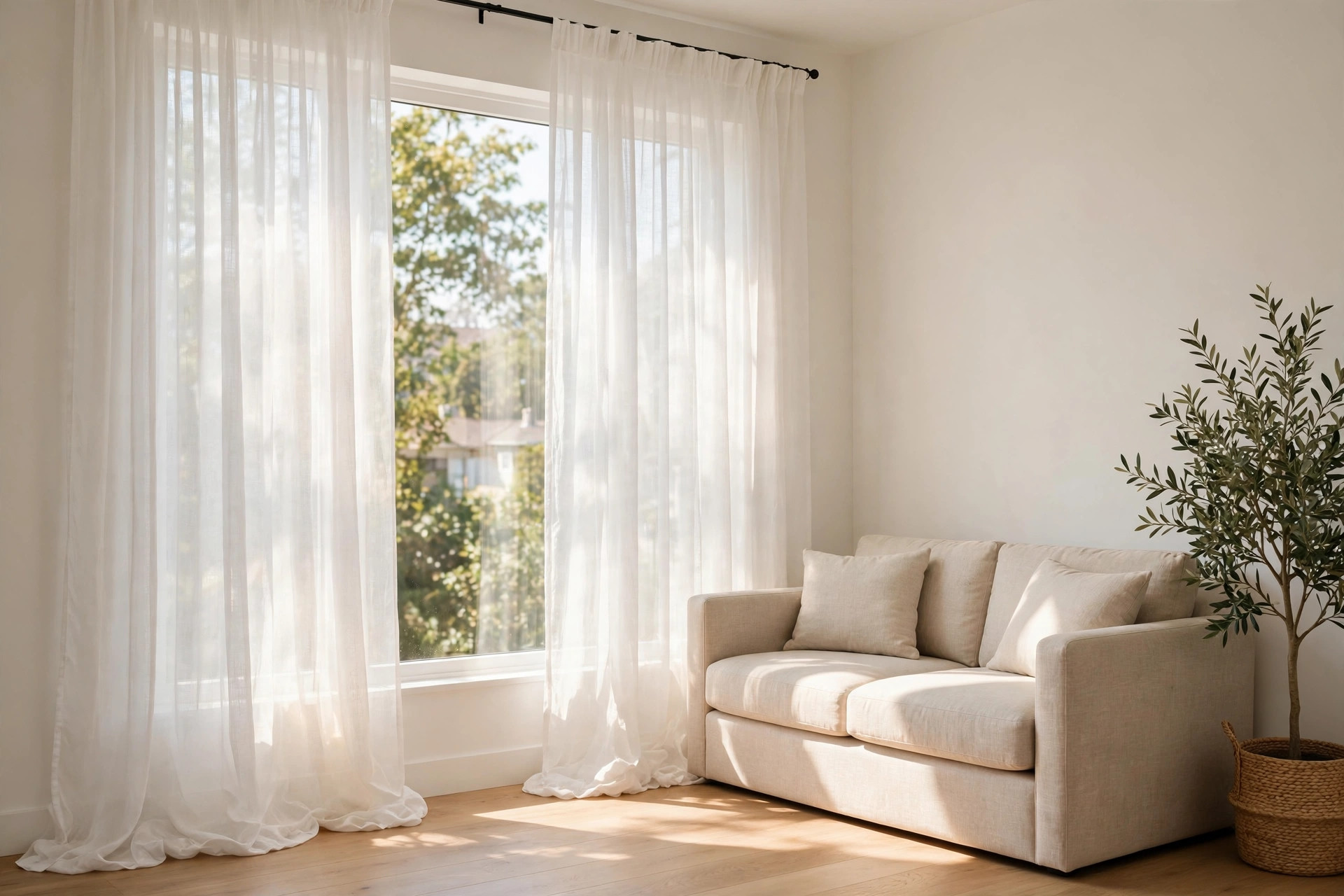
Curtains do more quiet work than almost any decorative purchase. They soften plain rental walls, add privacy, improve how a room feels in the evening, and, hung well, make ceilings appear higher and windows larger.
The trick is placement: mount the rod or tension system as high above the window frame as your setup allows, and wide enough that curtains stack mostly over the wall rather than covering the glass.
You keep every bit of daylight while gaining the full drop of fabric to the floor.
Where drilling is not allowed, look at tension rods inside the recess, clamp-style brackets, or sturdy adhesive systems designed for curtains, and always check what your lease permits first.
Lightweight linen-look or sheer curtains are the easiest starter option: they filter harsh light, look fresh against almost any wall colour, and are simple to wash before you move. Choose a length that just kisses the floor.
It is a weekend project with a whole-room payoff.
8. Build a Gallery Wall That Feels Personal
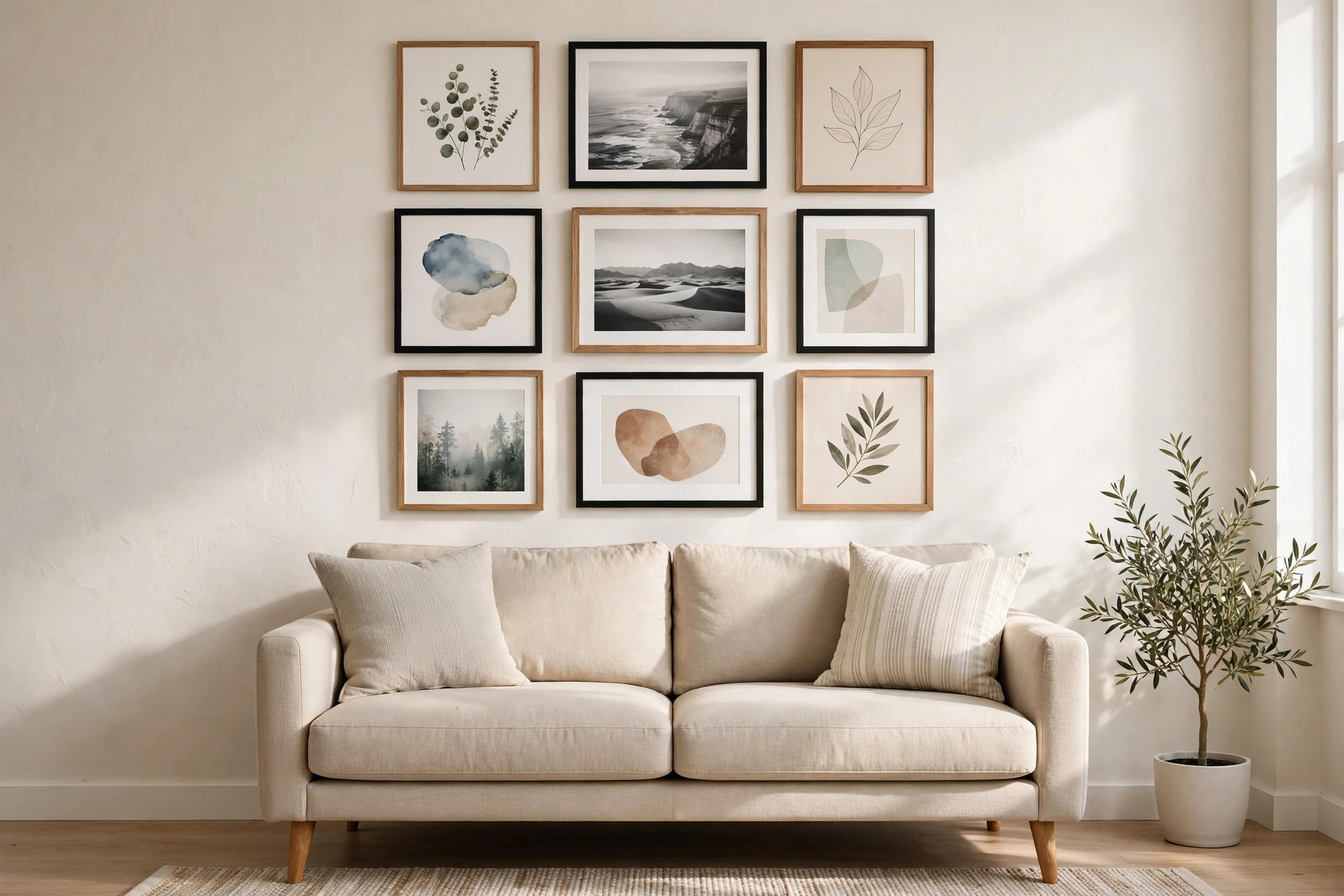
Bare walls are the fastest giveaway of a temporary home, and a gallery wall is the most personal way to fix them.
Gather framed prints, photographs, postcards and small artworks that actually mean something to you, keep frames within two or three finishes so the collection looks cohesive, and lay the whole arrangement out on the floor first.
Start with the largest piece slightly off-centre above the sofa and build outward with even gaps.
For renters, removable strips and hooks made for picture hanging let you enjoy the finished wall without filling holes later, as long as you follow the weight guidance and test delicate paint first.
A gallery wall also grows gracefully on a starter budget: begin with three or four frames and add one at a time.
If you love the look in a hallway too, our ideas for a staircase gallery wall show how to carry the same frames and spacing up a flight of steps. Personal always beats perfect here.
9. Add an Ottoman That Doubles as Storage
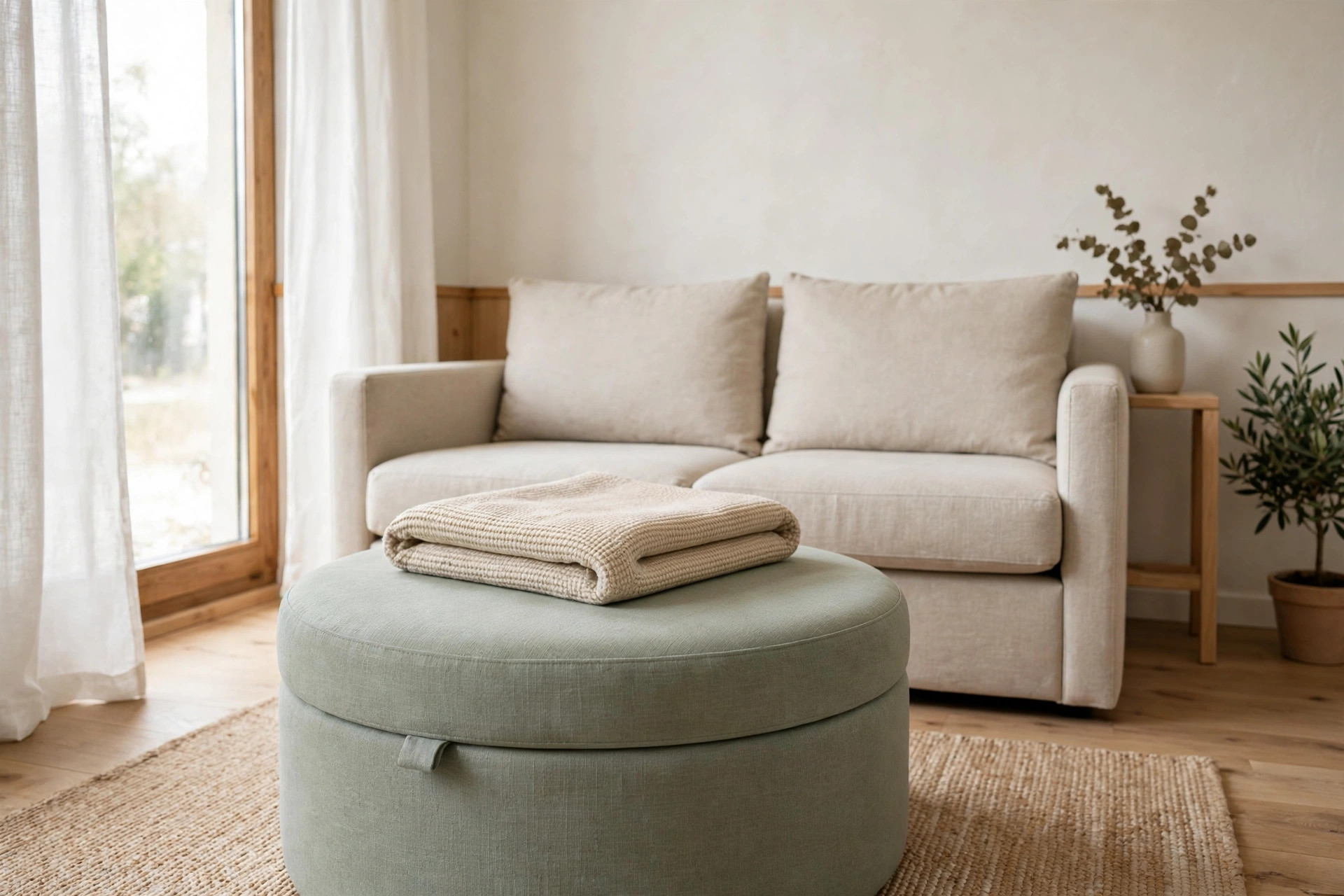
If one small piece earns its keep daily in a first apartment, it is a storage ottoman.
It is a footrest on film night, extra seating when friends squeeze in, a side table with a tray on top, and a hiding place for blankets, games, chargers and clutter that otherwise colonise the sofa and floor.
In a room where every piece should do two jobs, the ottoman does four without taking up much visual space, especially in a soft round shape that is kind to passing shins.
Place it where a traditional coffee table feels too rigid, or pair a smaller ottoman with a slim table if you have room for both.
Choose upholstery that relates to your rug or cushions rather than matching the sofa exactly, because gentle contrast looks styled rather than bought as a set. Keep the inside organised with just two or three categories, such as throws and guest bedding.
10. Slide a Slim Console Behind the Sofa
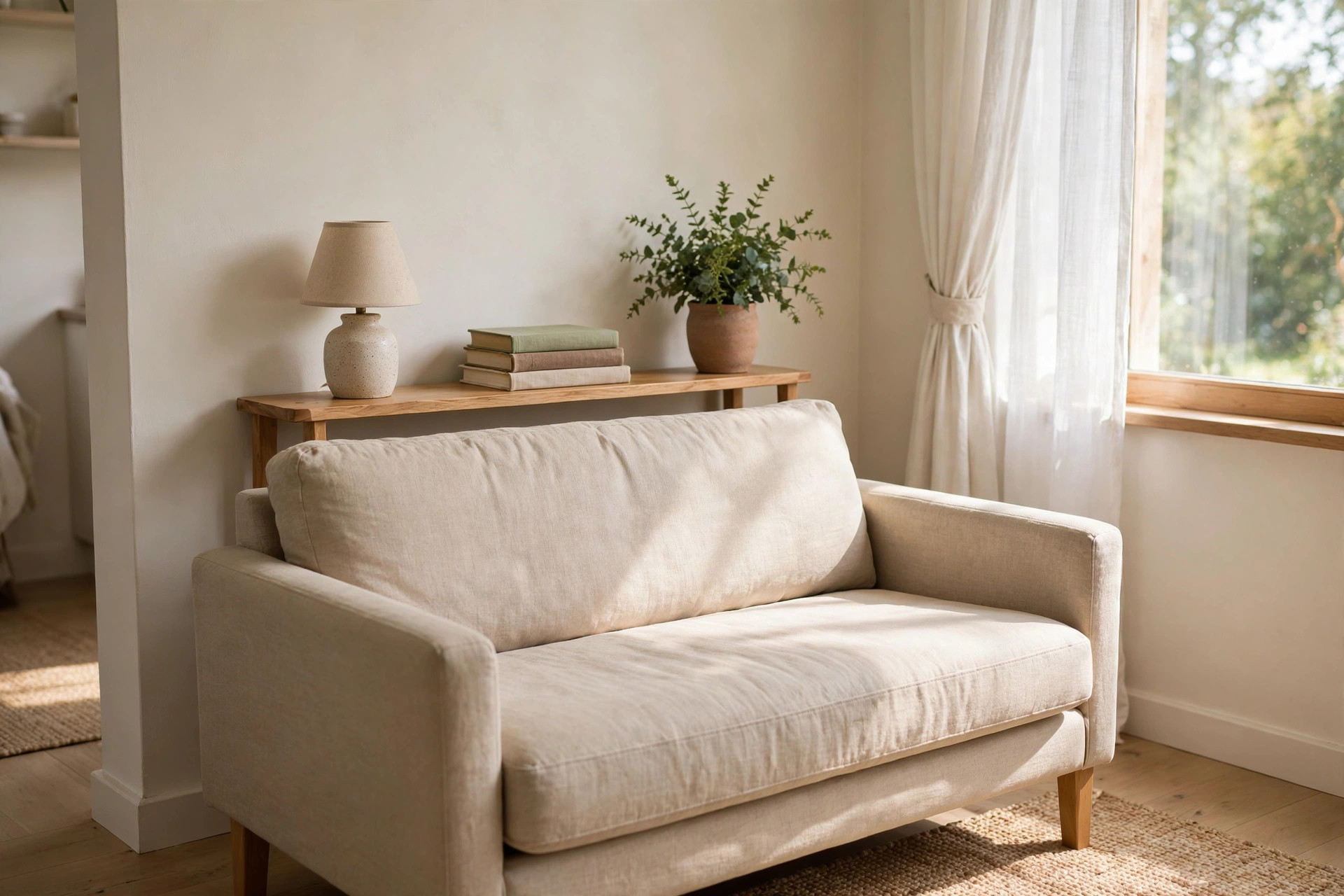
If your sofa floats in the middle of an open-plan room, the space behind it is prime renter real estate.
A slim console table the length of the sofa gives you a finished view from the kitchen or entry, a home for a lamp and a stack of books, and a subtle boundary that shows where the living zone ends.
It also solves a practical problem: somewhere to put a drink, your keys or a charging phone when the coffee table feels a step too far.
Choose a narrow depth so walkways stay generous, and style the top in low, simple groupings: a lamp at one end, books or a plant at the other, and clear space in the middle.
If your sofa sits against a wall, the same slim table often works along the emptiest wall instead. Either way, it makes a first living room look planned.
11. Try Peel-and-Stick Details for Instant Character
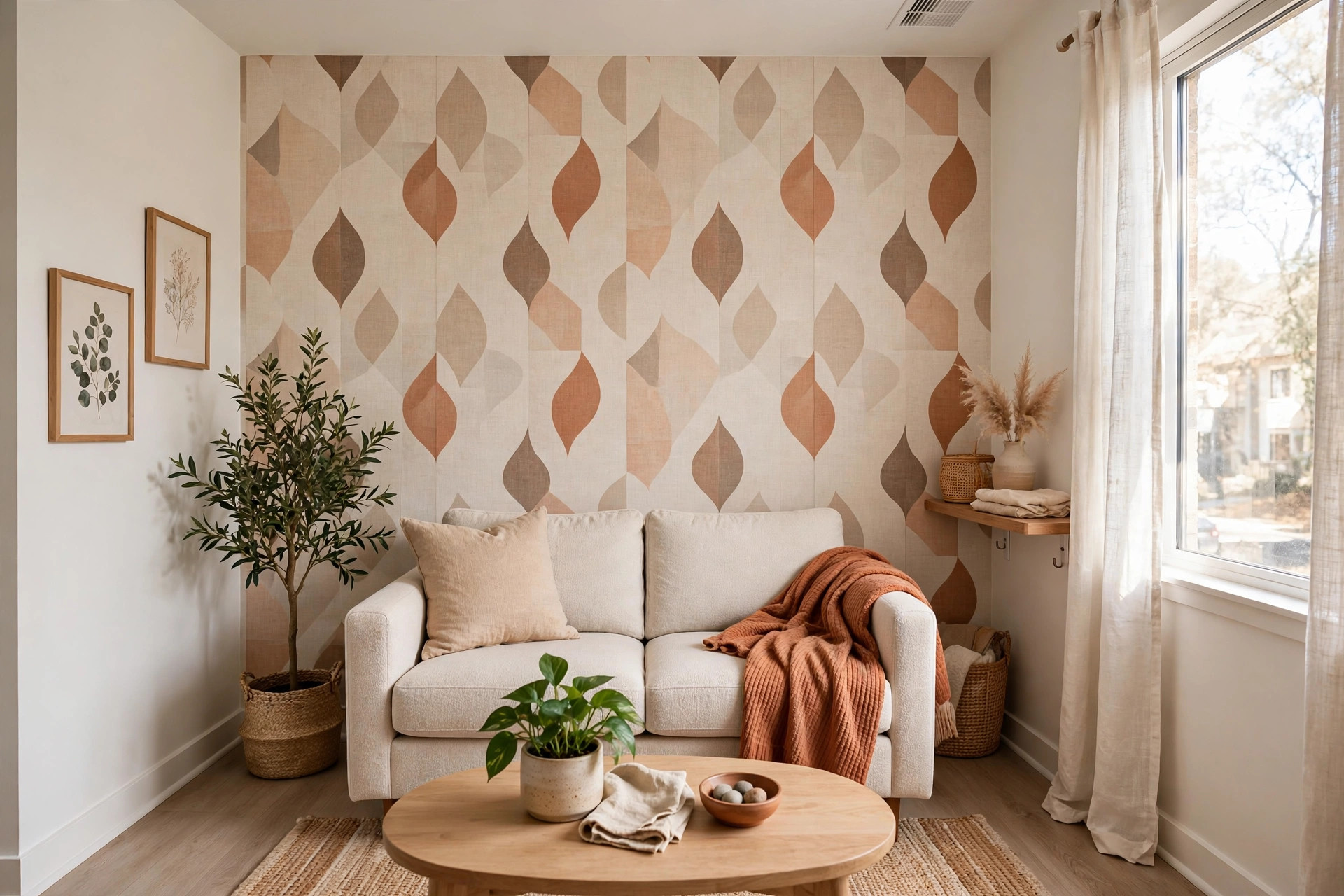
Plain white or magnolia walls are the rental default, and while you may not be able to paint, removable peel-and-stick wallpaper, decals and tile-style stickers can add pattern and colour that come away cleanly at the end of a tenancy when used carefully.
Start small and reversible: one accent wall behind the sofa, the back of a bookcase, or a panel effect behind the television. A contained area gives the full character boost with far less cost, effort and commitment than covering every wall.
Always read your lease first, patch-test a hidden corner, and keep the removal guidance for moving day so the process stays deposit-friendly. Soft geometrics, gentle botanicals and warm neutral textures suit a first apartment living room well because they add interest without overwhelming small proportions.
Pair a patterned backdrop with plainer curtains and cushions. The best renter updates are ones you can enjoy fully now and undo completely later.
12. Use a Rolling Cart as a Flexible Side Table
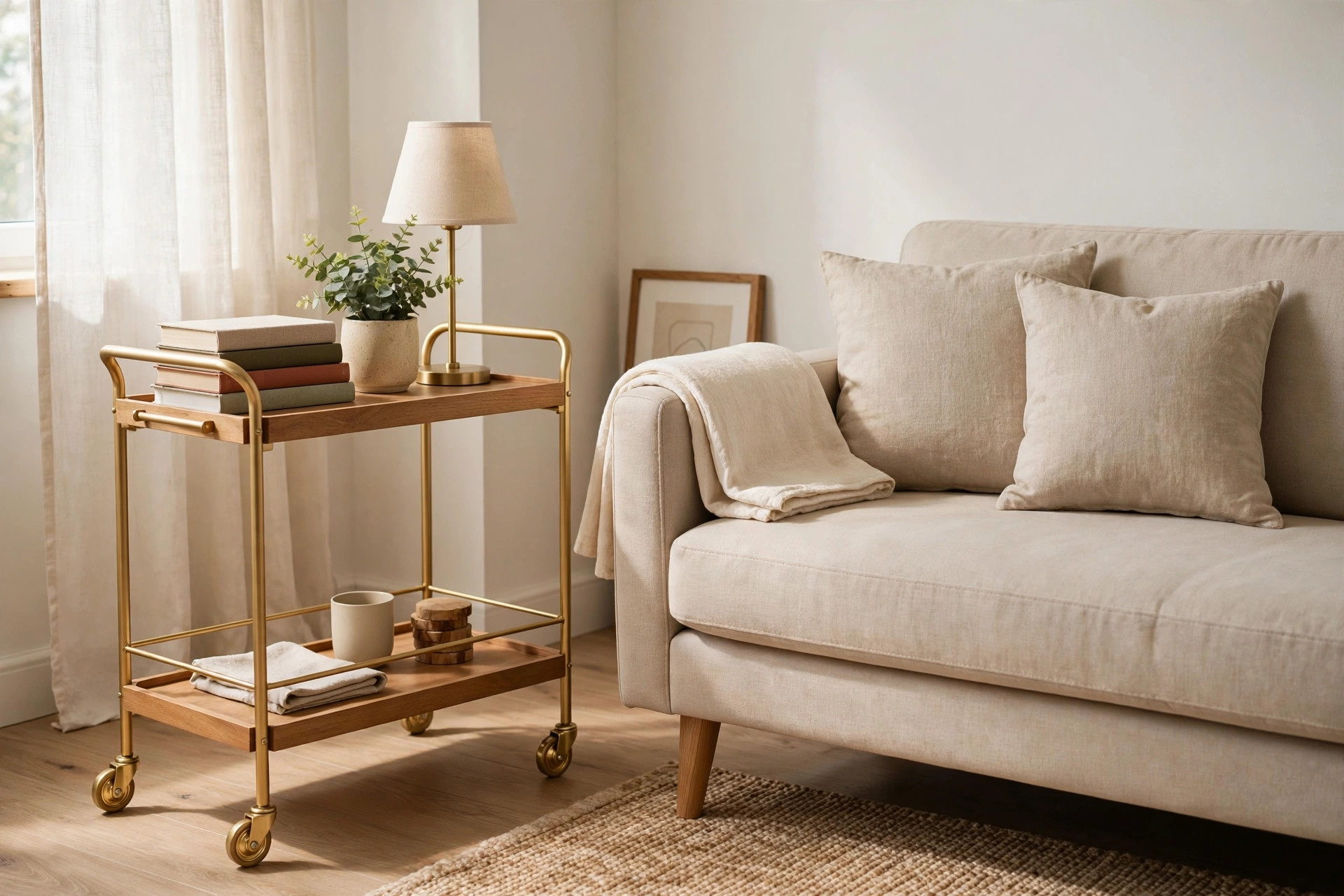
A small rolling cart is the unsung hero of first-apartment living. Parked beside the sofa it is a side table for drinks, books and a lamp. Wheeled to the middle of the room it becomes serving space when friends bring snacks.
No other piece adapts this quickly to a room that changes roles between work, relaxing and hosting.
Choose sturdy shelves and a finish that works with your other wood or metal tones, then assign each tier a job so the cart stays useful rather than becoming a mobile pile.
Keep the top tier almost clear for daily use, with lower tiers holding baskets, books or extras. Because it moves on wheels, cleaning and rearranging are genuinely easy, and the same cart will find work in a kitchen or hallway in your next home.
13. Keep Spare Seating That Folds Away
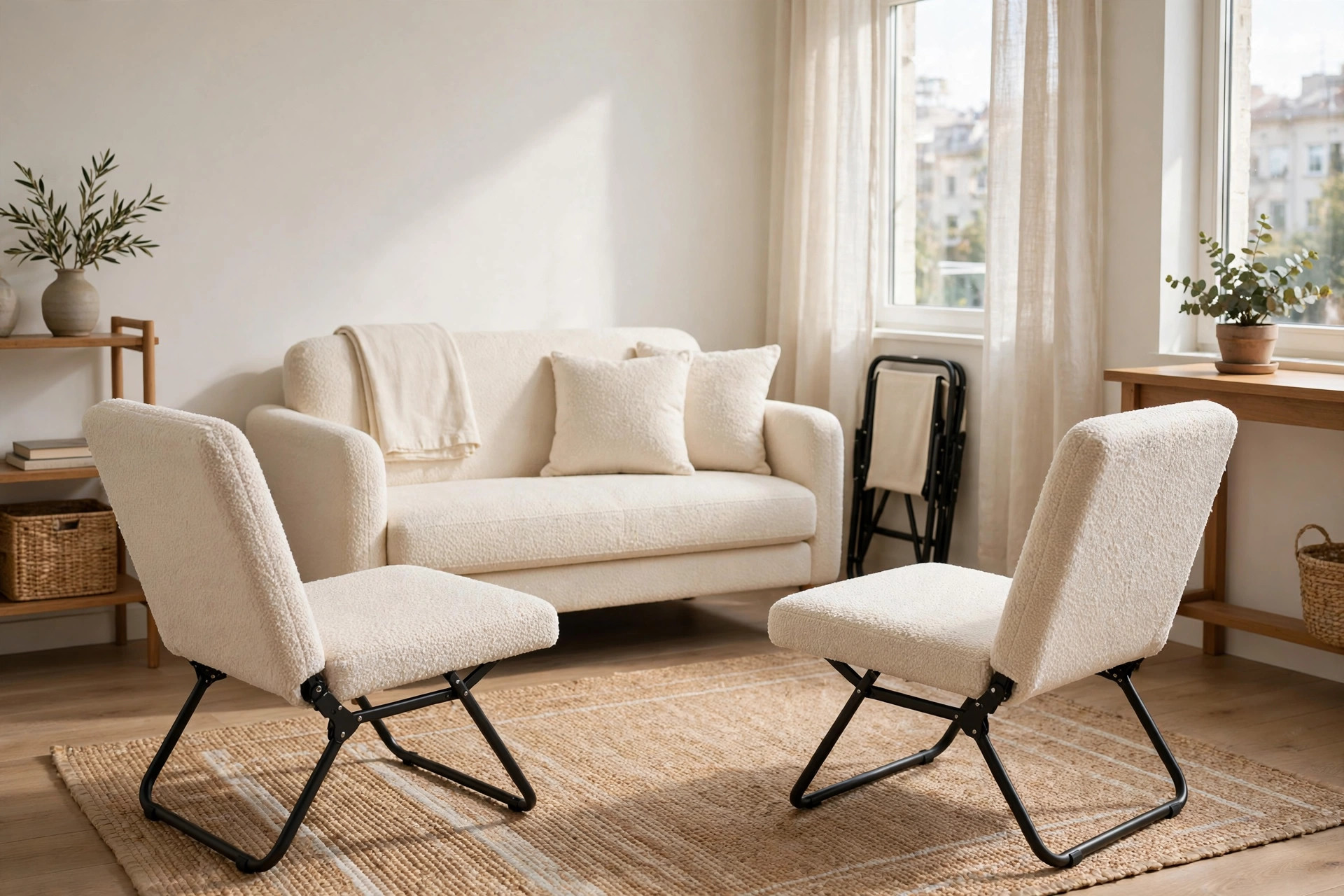
Two seats are plenty for everyday life and not nearly enough the first time four friends come for dinner or a film.
Foldable accent chairs bridge that gap gracefully: comfortable and good-looking enough to sit out when guests arrive, slim enough to store behind a door, beside the bookcase or under the bed when they leave.
Modern folding chairs in upholstered or boucle-style finishes look nothing like emergency seating, so guests feel hosted rather than accommodated, and your everyday room keeps its calm layout.
Keep folded chairs somewhere you can actually reach without moving furniture, or you will never bother using them. When choosing, sit in the chair if you can, because comfort decides whether spare seating gets used.
Flexible seating is a small investment that changes how often you invite people over.
14. Stick to a Light, Cohesive Colour Palette
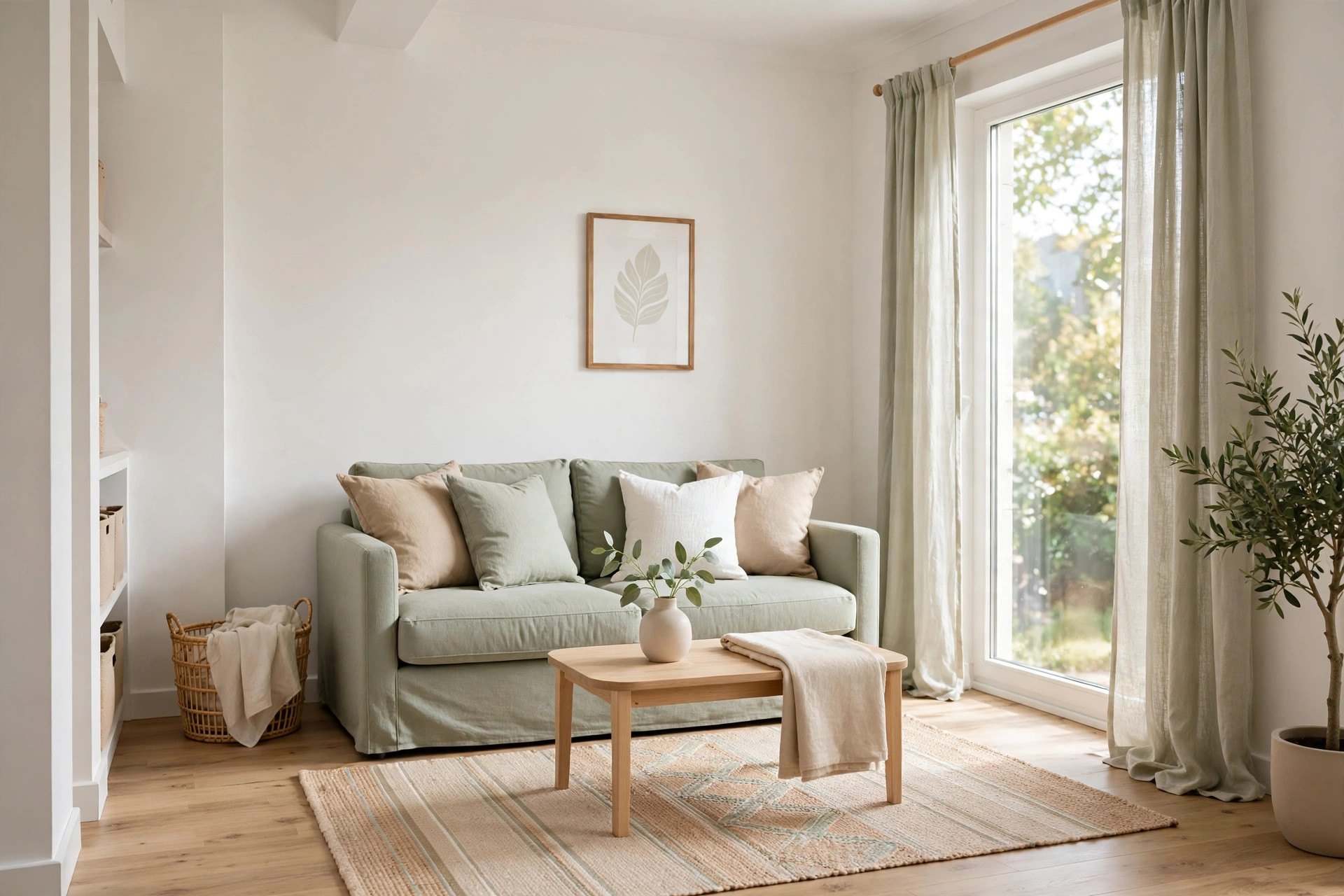
Colour is free, but in a small first living room it needs discipline.
A light, cohesive palette built from warm whites, soft neutrals and one or two calm accent colours makes the room feel larger, brighter and far more pulled-together than unrelated strong shades competing for attention.
Start from what you cannot change: wall colour, flooring tone and sofa fabric. Then choose accents that sit happily with all three, and repeat those accents at least three times across cushions, a throw, art, curtains or a plant pot.
Repetition is the whole trick. When the same sage, terracotta, dusty blue or warm ochre appears in several places, the eye reads the room as designed, even when each piece was bought separately and inexpensively.
If you are drawn to a moodier look, our roundup of vibey apartment living room ideas shows how to add atmosphere with lighting and texture while keeping the base palette calm.
15. Finish With Plants and Soft, Washable Textiles
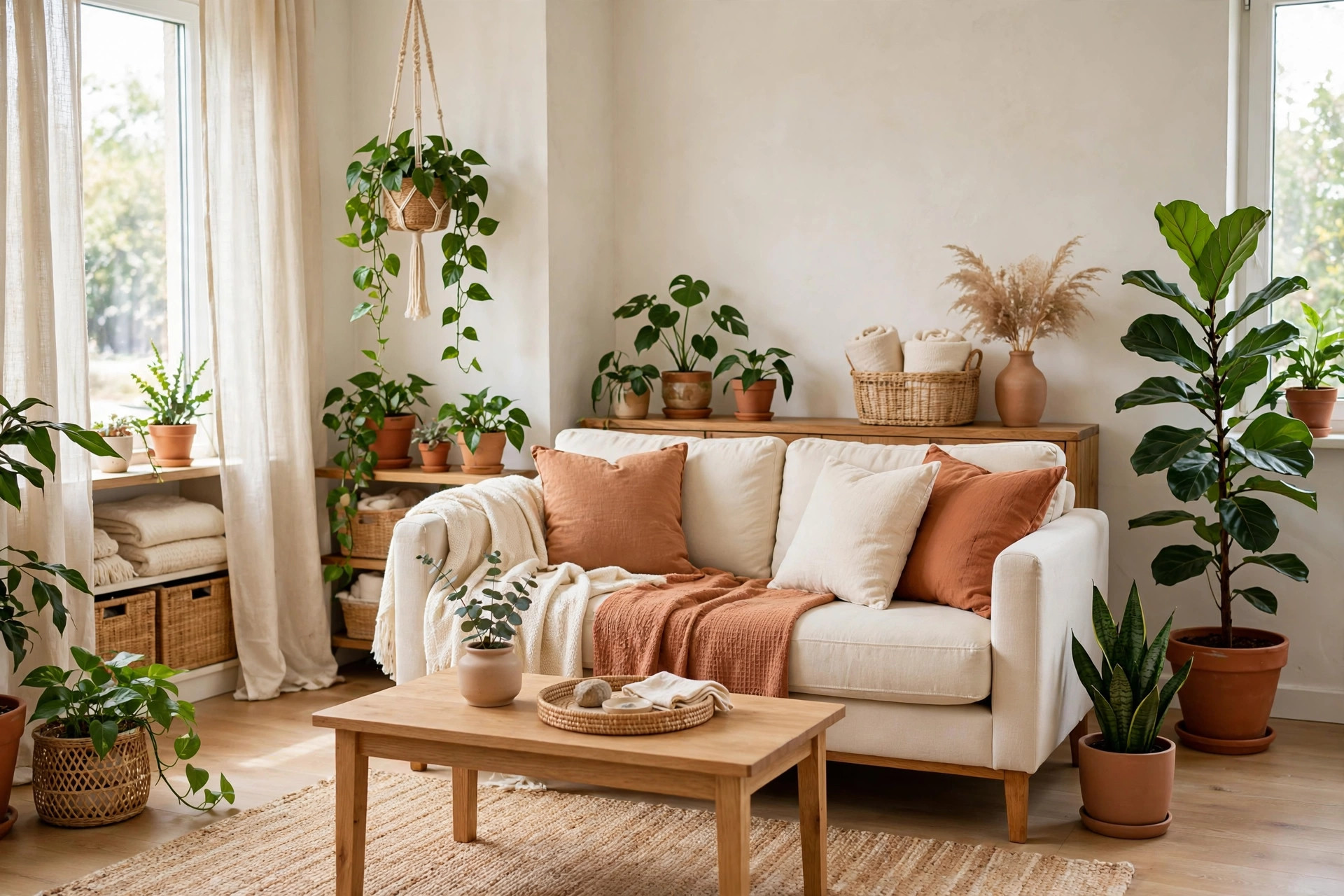
The final layer turns a furnished room into a comfortable one, and it is happily the least expensive layer to get right.
Add plants at different heights, one trailing from a shelf, one medium pot beside the sofa and one small pot on the coffee table or console, choosing forgiving varieties that tolerate a forgotten watering.
Greenery adds life and colour without a single hole in a wall and softens the straight lines of starter furniture.
Pair the plants with soft textiles chosen for real life: cushion covers you can unzip and wash, a throw large enough to actually share, and a rug with enough texture to feel cosy without showing every crumb.
Washable everything means spills and movie-night snacks stop being deposit worries. Finish by editing once: remove one item that adds nothing, step back, and enjoy the moment your first apartment living room stops feeling temporary and starts feeling like yours.
Common Mistakes to Avoid
Mistake 1: Buying everything at once, in the wrong order. Filling the room in a single weekend almost guarantees scale errors, clashing colours and a drained budget before you know what you truly need.
Buy seating, rug and essentials first, live in the room, then add pieces one need at a time.
Mistake 2: Ignoring scale and delivery access. An oversized sofa or bulky storage unit can overwhelm a small room and may not even fit through the door, hallway or stairwell. Measure the room, the furniture and the full delivery route before paying for anything large.
Mistake 3: Breaking rental rules for a quick makeover. Drilling, painting or fixing heavy items without permission risks your deposit and a stressful move-out repair job. Choose freestanding, removable and no-drill solutions first, and get written permission before doing anything permanent.
Frequently Asked Questions
What should I buy first for a first apartment living room? Start with the sofa or loveseat, because it decides the layout, then the rug that anchors the seating area, then a coffee table and one good storage piece.
Add lighting next, and leave decorative extras until you have lived in the room and know what is genuinely missing.
How can I make a small rental living room feel bigger? Keep the palette light and cohesive, choose furniture with slim profiles and visible legs, hang curtains high, and use a rug large enough to unite the seating.
Layered lighting, uncluttered surfaces and clear walking routes make the biggest everyday difference.
How do I decorate without drilling or painting? Lean on freestanding furniture, tension and clamp curtain hardware, removable picture strips, peel-and-stick products used with a patch test, and tall shelving that needs no wall of fixings.
Always check your lease first, and favour updates you can reverse completely before you move.
How many seats do I really need in a first apartment? Your everyday sofa plus one flexible option covers almost everything: a storage ottoman or folding accent chairs for guests. Everyday comfort for one or two, plus a calm plan for four, works best.
Final Thoughts
A first apartment living room does not need to impress anyone on moving day.
It needs to welcome you home every day after: a seat that fits, light that flatters the evening, storage that swallows clutter, and a few personal touches that could belong to no one else.
Built in the right order, with renter-friendly choices and a calm palette, even the smallest starter room can do all of that without straining a first budget or risking a deposit. Let the room grow with you, one useful, well-chosen piece at a time.
Start this week with the single idea that removes your biggest daily annoyance. Small, finished corners create momentum, and everything you choose now, chosen well, can come with you to the home that comes next.


