

15 Senior-Friendly Bedroom Ideas for Elderly Parents
Setting up a bedroom for an elderly parent looks simple from the doorway, then quietly gets complicated.
The bed that suited them for years may now sit too low, the walk to the bathroom crosses a dark stretch of floor, and small things — a lamp switch, a drawer pull — can feel harder than they should.
The room just needs to catch up with how they live now.
The best senior bedroom ideas for elderly parents are rarely dramatic: a clearer path, a steadier chair, light where it is needed, storage that never asks anyone to stretch, climb or bend too far.
Done well, the room still feels like their bedroom — warm and personal — not somewhere arranged around them.
Below are fifteen practical ways to make a bedroom safer, calmer and easier every day. Work at your parent’s pace and involve them in every choice.
Anything touching mobility, balance or health is a starting point for a conversation with a qualified professional who knows your parent — not a substitute for that advice. For calmer layouts, these dream bedroom ideas for empty nesters are a lovely companion read.
This post contains affiliate links. If you buy through them, we may earn a small commission at no extra cost to you. See our Affiliate Disclosure.
How to Set Up a Safe, Comfortable Bedroom for an Elderly Parent, Step by Step
Start by watching how the room is used, across a day and one ordinary night. Where does your parent hesitate? Which drawer do they avoid?
Sit on the bed together, open every drawer, switch every lamp on and off, and walk their main routes: bed to bathroom, wardrobe and door. That tour reveals the real room.
Then work in order: floor and lighting first, then bed and seating, then storage and switches, then finishing touches. Keep changes gradual, and keep your parent in charge of decisions. A room they helped shape is one they will relax in.
1. Set the Bed at an Easy Sit-to-Stand Height

Bed height quietly decides how the day begins and ends. Too low means an awkward push from a deep seat; too high means dangling feet and an unsteady slide down.
A useful test: sitting on the edge, feet should rest flat with knees comfortably bent, so standing feels like rising from a good chair.
A firmer topper or sturdy risers can lift a low bed; a lower-profile base settles a tall one.
Judge it over a few mornings — and if bed transfers are a real difficulty, ask an occupational therapist to assess the setup, because the right height is personal.
2. Light the Path From Bed to Bathroom
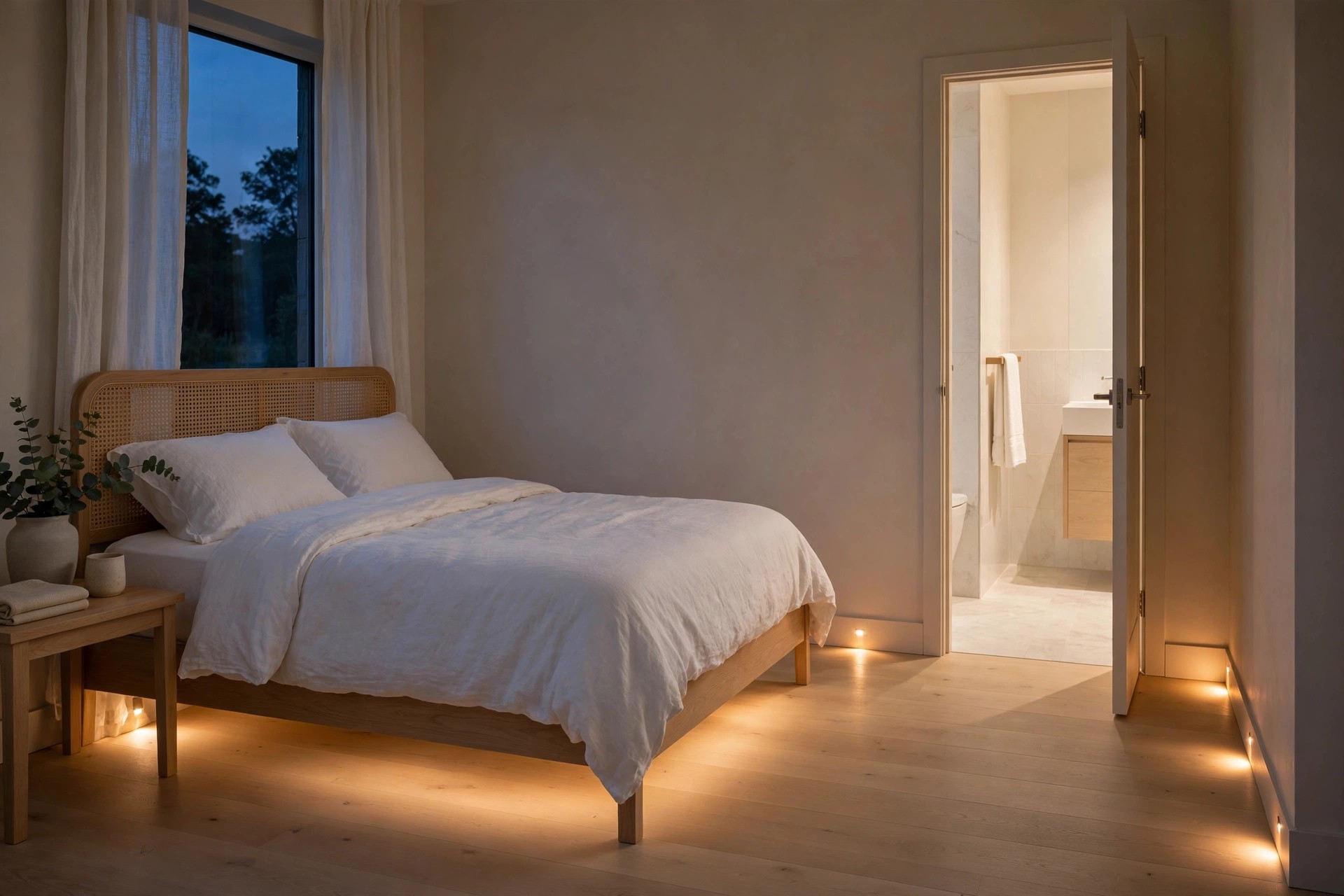
Most bedrooms are lit for getting dressed, not for a half-asleep walk at two in the morning. A gentle, continuous trail of light from bed to bathroom door means your parent never crosses a dark room or fumbles for a switch when least steady.
Low lights near skirting height pool light on the floor without glaring into sleepy eyes.
Warm, motion-activated lights ask for no switches at all — test positions for a few nights first. Keep light even, with no gap at a doorway, and leave a torch on the nightstand as backup.
Tidy small closet organisation ideas for couples help too, keeping the wardrobe floor as clear as the rest of the route.
3. Keep Walkways Completely Clear

Look with fresh eyes: the laundry basket by the door, books beside the bed, shoes kicked off anywhere, a trailing fan flex. Each is a small obstacle by day and a big one at night.
Clearing generous, straight routes — bed to door, bathroom and wardrobe — is the cheapest improvement on this list.
Give everything a home instead: a lidded laundry basket in the wardrobe, a tray for books, a shoe rack where shoes come off. If your parent uses a walking aid, allow extra width and test the route with it in hand, turning included.
The room will feel calmer, not emptier.
4. Anchor Rugs or Skip Them Entirely

A soft rug feels kind to bare feet, but a loose rug with curled corners or a slippery backing can shift underfoot at the wrong moment.
If your parent loves theirs, keep it — but make it earn its place: low pile, flat, secured with non-slip underlay or rug tape, corners checked weekly.
If a rug still wrinkles or slides, lifting it altogether is kinder. Warm the floor another way, with firm non-slip slippers beside the bed.
Predictable flooring beats a beautiful rug that moves — and avoid small mats in doorways, where the change in level is hardest to judge.
5. Add a Supportive Chair With Arms
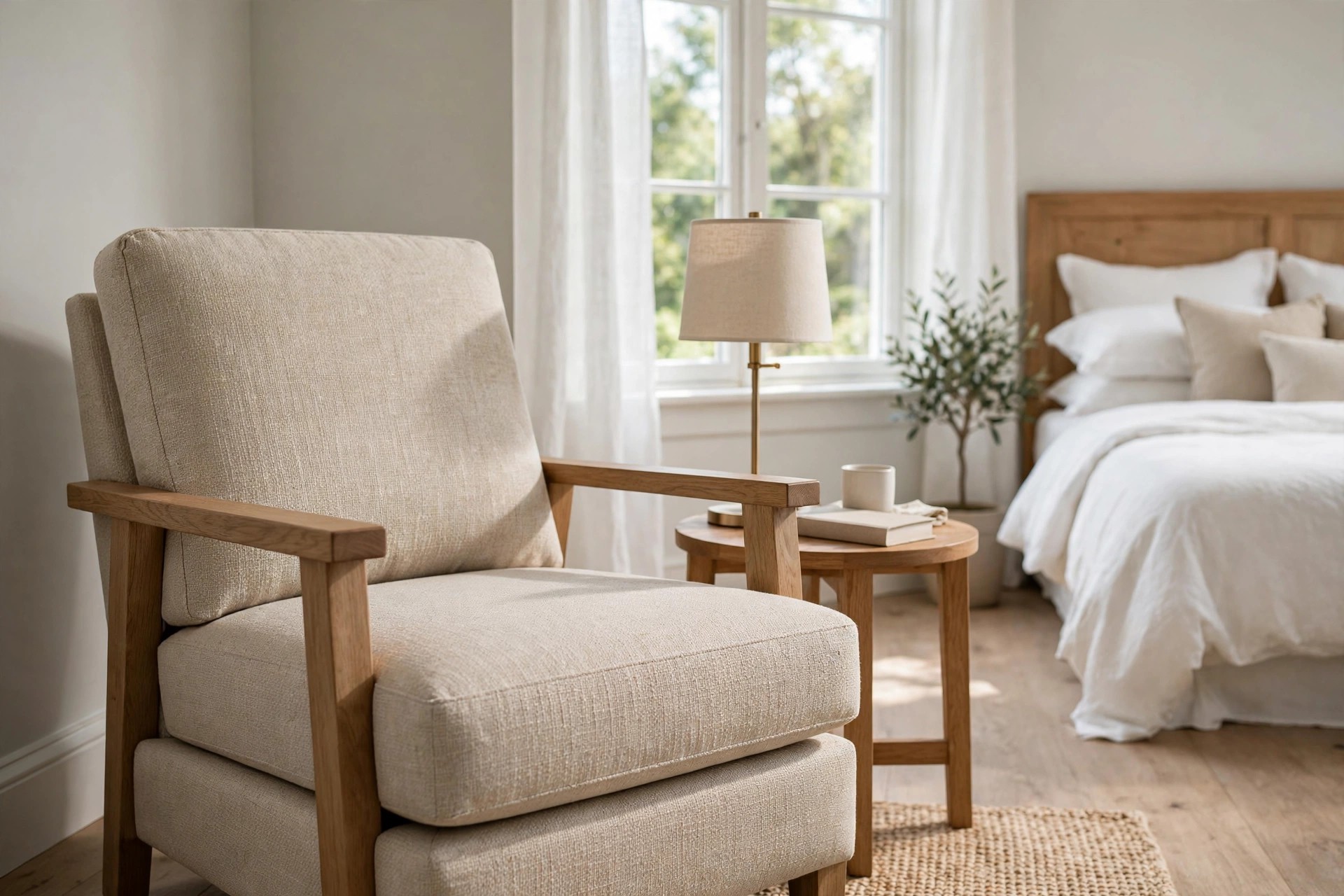
Every senior-friendly bedroom benefits from one really good chair: firm, with arms to hold when standing, and a seat height that lets feet rest flat.
It becomes the place for shoes, resting midway through dressing, reading, or sitting with a visitor — no more perching on the edge of the bed for all of it.
Choose a supportive back, firm cushion and wipe-clean upholstery, where light is good and floor space clear. A firm cushion can lift a favourite low chair. These reading nook ideas show how one well-chosen chair can anchor a whole corner beautifully.
6. Make the Nightstand Truly Within Reach
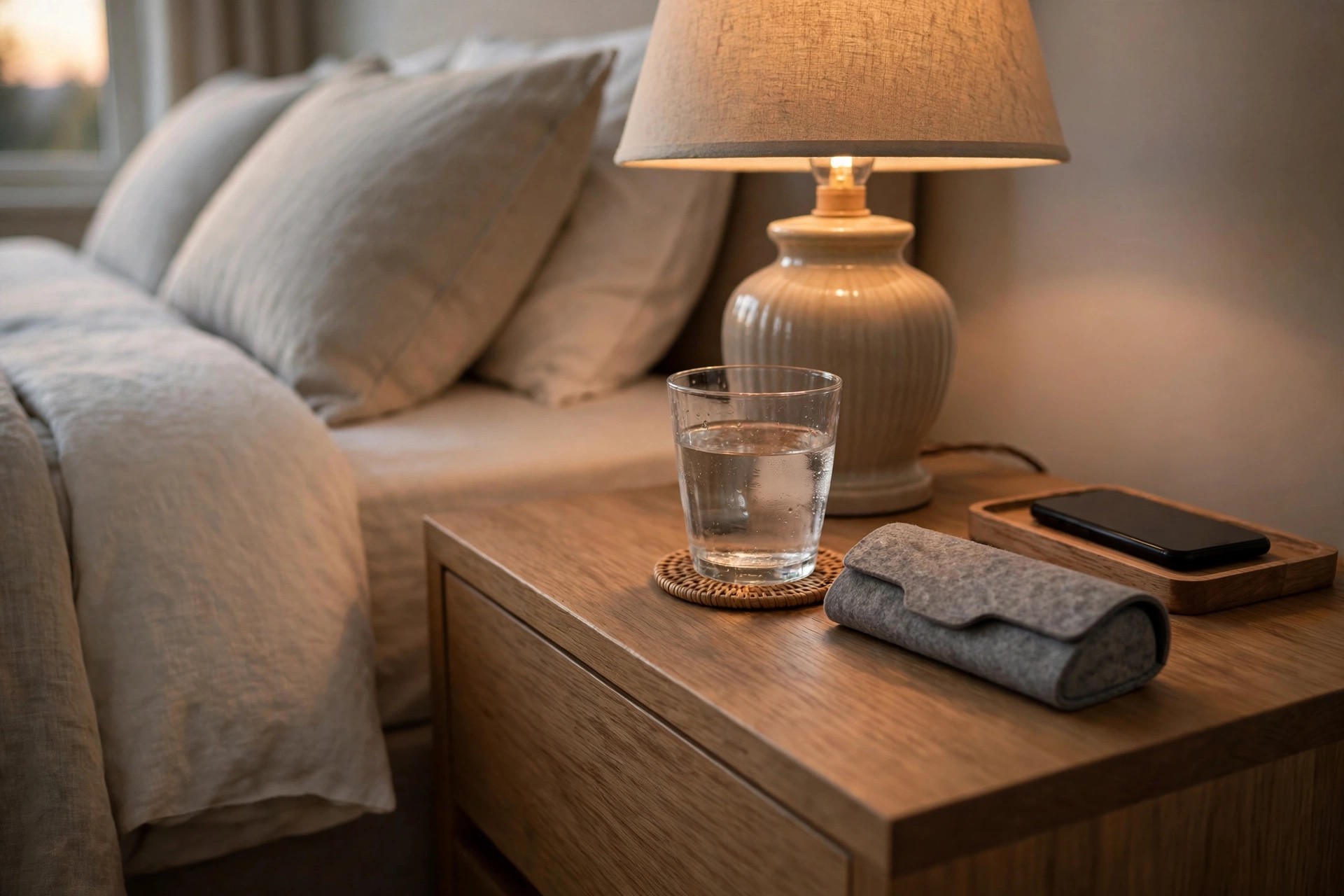
The nightstand should work like a small, well-run station: everything needed at night, nothing else. An easy lamp, water on a coaster, glasses in a case that always lives in the same spot, and the phone.
Level with the top of the mattress, it keeps reaching gentle — no stretching in the dark — and a tray stops small items sliding off.
Keep it uncluttered: one drawer for tissues, lip balm and a book is plenty. For medication, follow its packaging guidance and their pharmacist’s or clinician’s storage advice. The test: everything findable half-asleep, in dim light, without sitting up fully.
7. Swap in Easy-Touch Switches and Levers
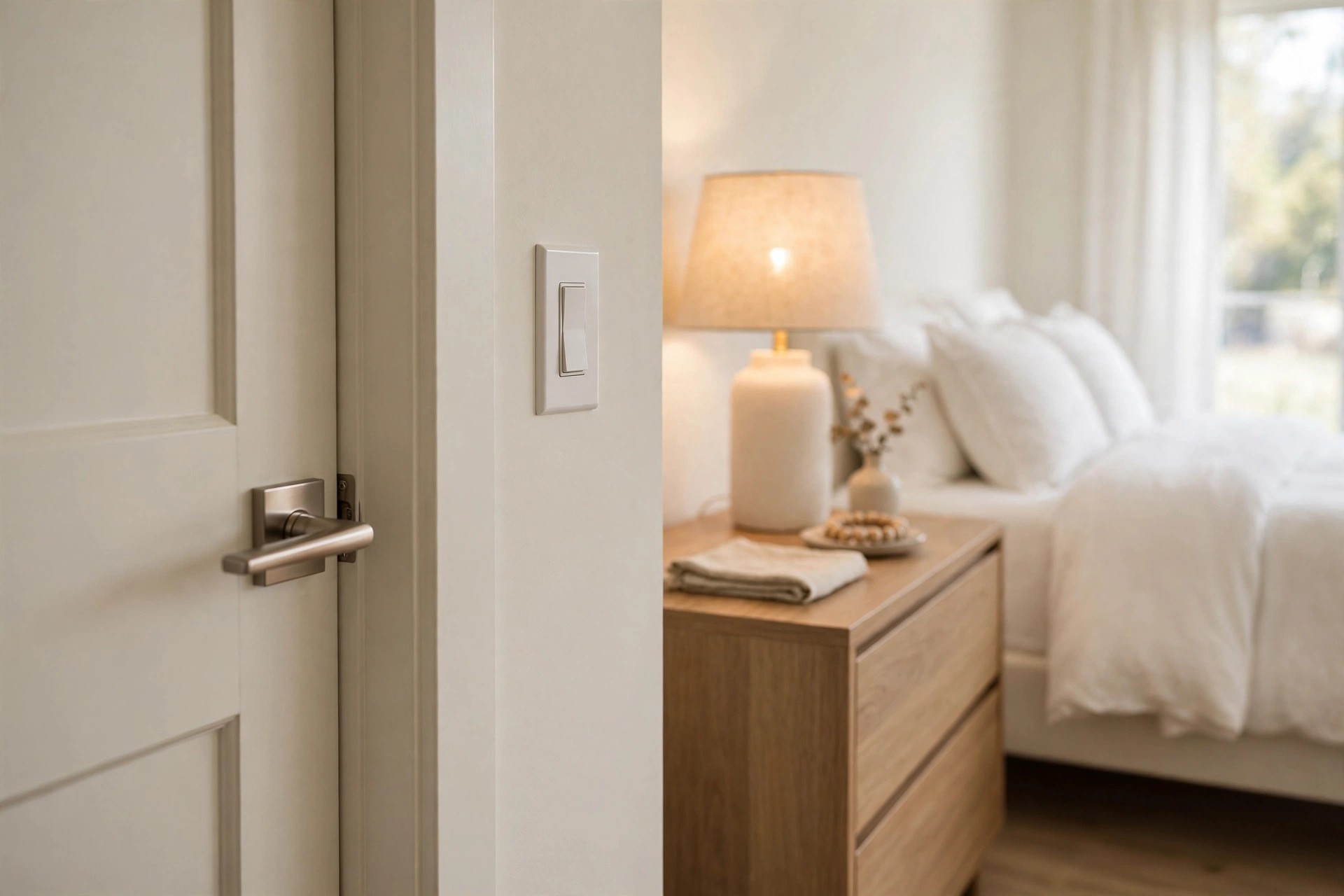
Tiny lamp switches, stiff toggles and small round knobs all ask for grip and pinch strength many hands find uncomfortable. Kinder alternatives make an outsized difference: rocker switches that respond to a flat palm, touch-base lamps, and lever handles that open with a gentle push.
Two-way switching — main light off from the bed — removes a nightly walk across a darkening room.
Fixed wiring belongs to a qualified electrician — ask them to check switch positions too, since reachable switches make the room easier. Keep switches consistent room to room, so reaching for a light becomes habit, not a puzzle.
8. Choose Grab-Friendly Drawers and Open Storage
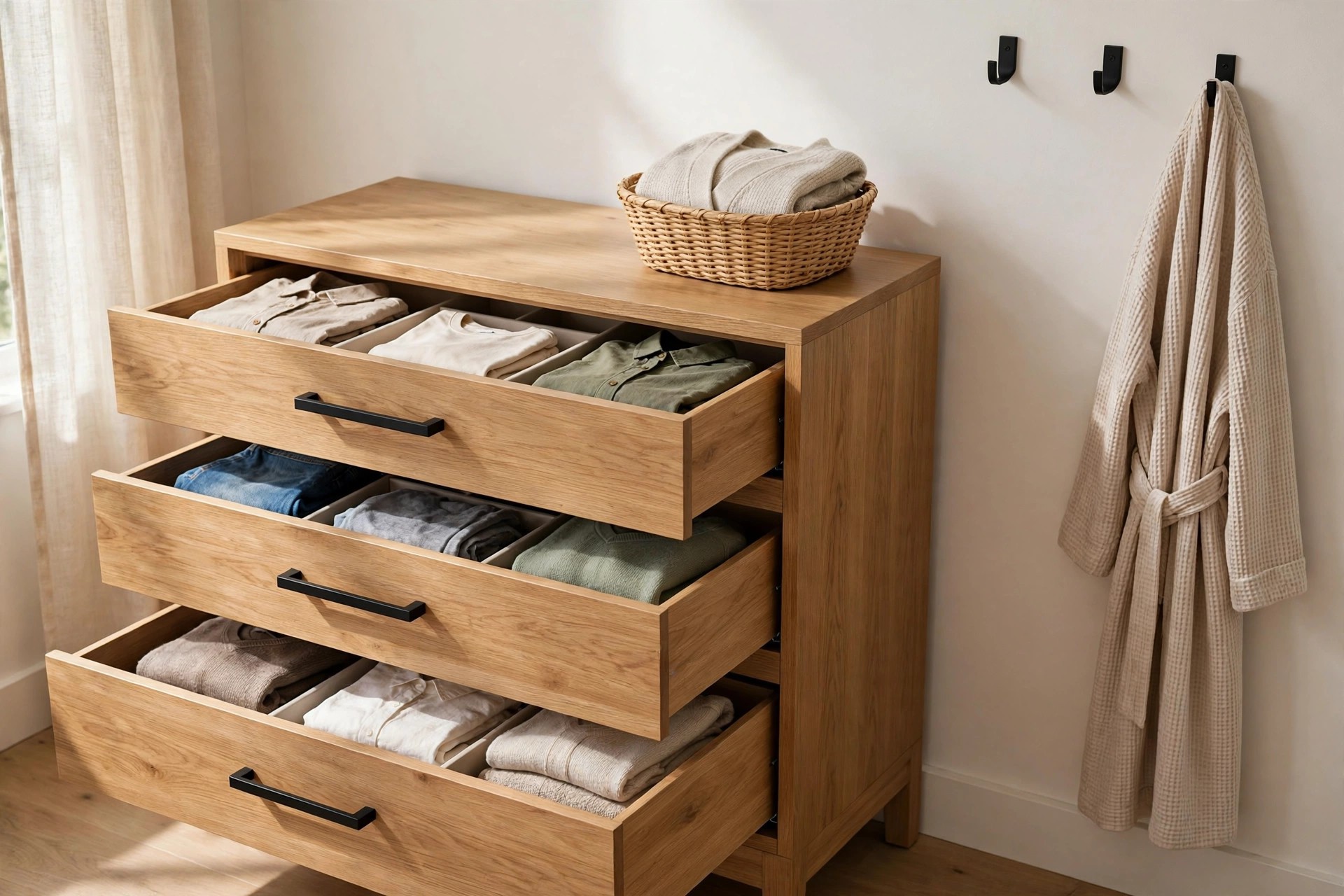
Storage should meet your parent halfway. Drawers gliding on smooth runners, with wide bar handles a whole hand can hold, are far kinder than small knobs or stiff drawers needing a tug.
Keep everyday clothes in the middle drawers — no bending low or stretching high — and move rarely used items out. Dividers keep everything findable.
Open storage earns its place too: a basket for the daily cardigan, hooks at comfortable height for a dressing gown, a shelf for books. Nothing essential should hide behind a heavy door.
These bedroom storage ideas for rooms without a closet adapt beautifully — and a compact fold-down desk for a small bedroom holds letters and glasses without taking floor space.
9. Layer Lighting That Is Gentle on the Eyes

The whole room benefits from layered light: a soft overall glow, a focused reading lamp, and gentle wardrobe light so clothes can be chosen without squinting. Bare bulbs and harsh downlights create glare and shadows; fabric or frosted shades and warm bulbs soften the effect.
Make every light effortless from where it is used — the reading lamp from the chair, the bedside lamp without leaning across the bed. Aim for no dim corners and no dazzle at eye level, at any hour.
10. Use Contrast to Make Edges Easy to See

When everything is a similar shade, edges disappear: a pale duvet on a pale frame, a light switch on a cream wall, the side of a chair seat.
Gentle contrast puts them back — a deeper bedspread than the base, a cushion marking the chair seat’s edge, switch plates standing out softly from the wall. Nothing looks bold or institutional, but the room reads at a glance.
A dark tray on a light nightstand keeps a water glass visible, too. For vision difficulties, an optician or low-vision specialist can advise on contrast and lighting — treat these touches as a base, and let professional guidance shape anything more specific.
11. Create a Sit-Down Dressing Spot

Dressing standing up — balancing into trousers, bending for shoes — is one of the day’s wobblier moments, and one of the easiest to improve. A stable bench or the supportive chair beside the wardrobe turns dressing into a seated, unhurried routine.
Add a long-handled shoehorn if shoes are a stretch, lay out tomorrow’s clothes tonight, and make sure the light there is good.
Position it where your parent can hold something solid when standing — chair arms, a sturdy dresser — with the bed-to-door route kept clear. It protects independence daily: dressing stays something they do themselves.
12. Tame Cords, Chargers and Clutter
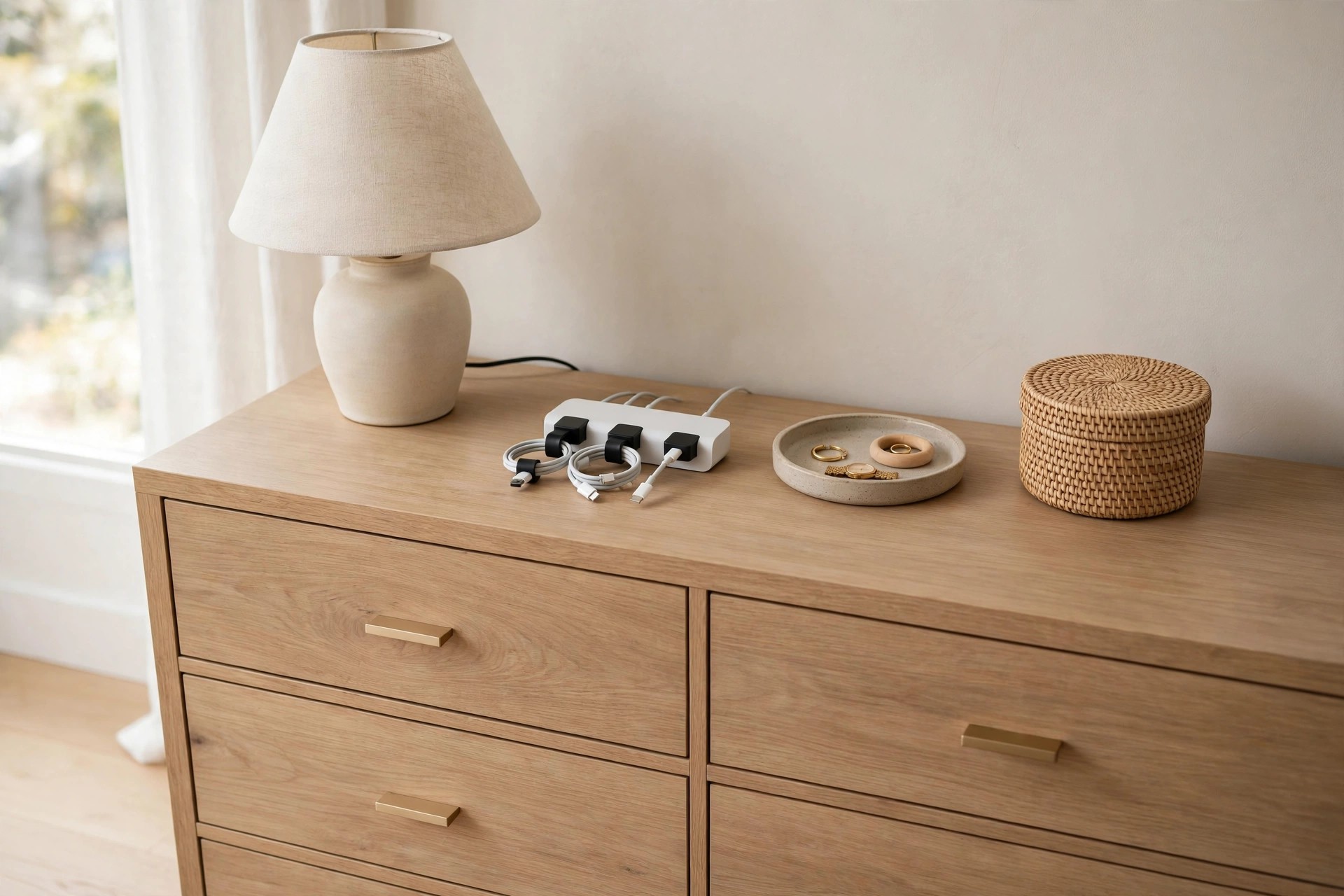
Bedrooms quietly collect cables: chargers, lamp flexes, a fan, a tablet. Left loose, they trail across walkways and tangle around chair legs. Gather them deliberately — cords behind furniture, secured flat; one charging spot with short cables; clips anywhere a flex crosses open floor.
Clutter deserves the same discipline: a tray for things that migrate, one lidded basket for things leaving, a weekly five-minute reset. The goal is predictable floors and surfaces, so moving half-asleep never needs a second thought.
13. Make Bedding Light, Layered and Easy to Manage

Heavy bedding looks luxurious and behaves badly: a thick duvet is hard to lift and tiring to tuck in. Lighter layers are kinder — a light duvet plus washable throws, so warmth adjusts without wrestling and changing the bed stops being a two-person job.
Well-fitting sheets help too.
Keep pillows light, with cases that come off without a fight, and store spares off the bed. Bedding one person can change alone keeps bed-making a small routine, not a weekly ordeal.
14. Keep Familiar Comforts Close
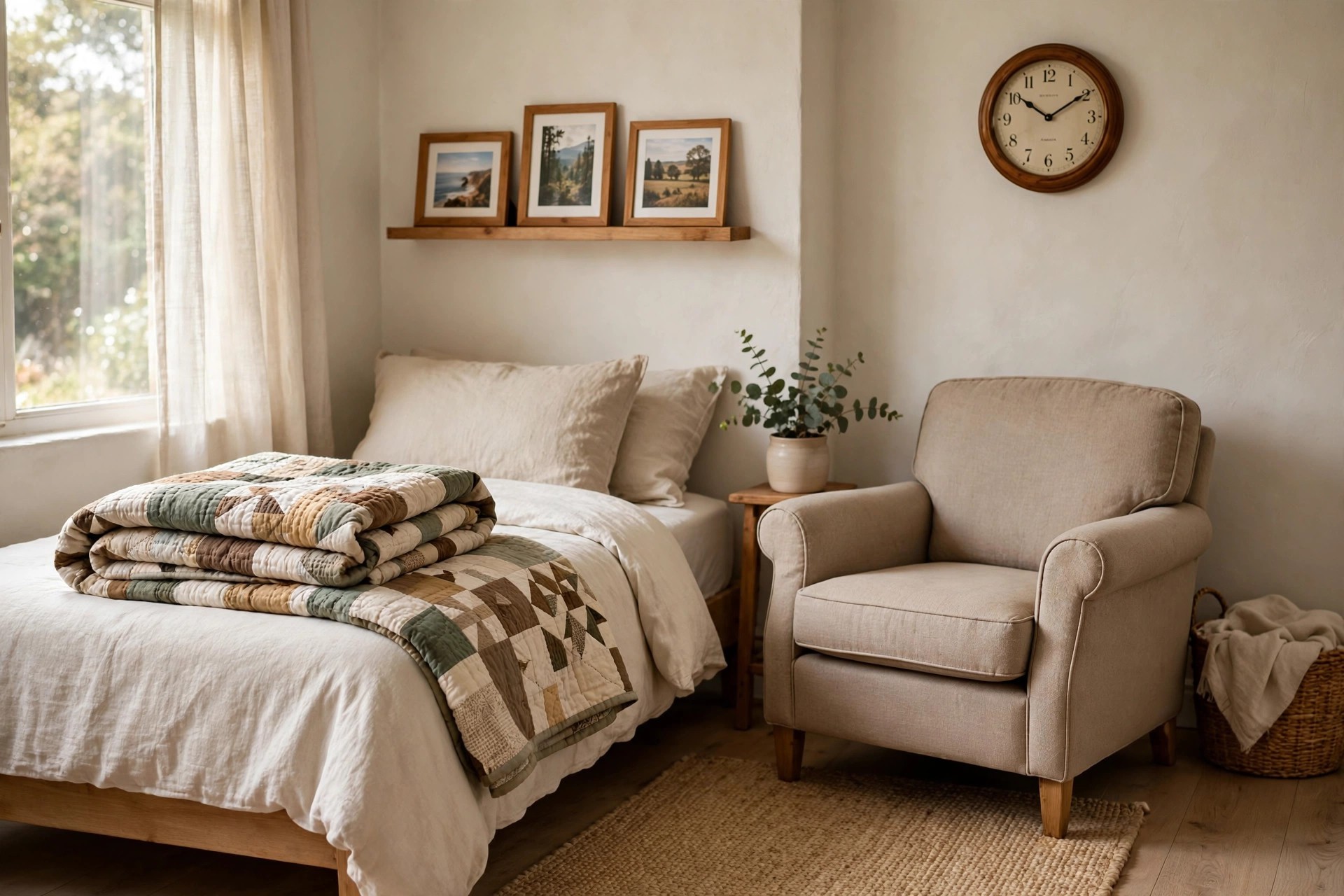
A safer room should still be unmistakably their room. Photographs, the familiar quilt, the clock they have always kept — these are not clutter to be optimised away; they are why the room feels restful.
Rearranging for safety, keep landmarks where memory expects them: favourite things within sight and reach, artwork where it has always been enjoyed.
It matters practically, too: a familiar layout is easier to navigate in the dark, because your parent knows it by heart. Involve them in what stays prominent — treasured objects near the chair, family photos seen first thing.
15. Keep Help Within Reach at Night

Finally, plan for the night your parent needs help or reassurance. A phone living on the nightstand — charged, always in the same place, key numbers saved and easy to find — is the simplest version.
Some families add a call bell, intercom or wearable alert device; what suits you depends on your home and your parent’s wishes, so discuss options together and, where relevant, with professionals involved in their care.
Keep a torch in the nightstand drawer for power cuts, and a light reachable without getting up. Practise the plan once, kindly, in daylight — how they would call, who would come, where the torch is. Knowing it exists is often comfort enough.
Common Mistakes to Avoid
Mistake 1: Making every change at once. Replacing the bed, moving furniture and reorganising every drawer in one weekend can disorient your parent in their most familiar room. Introduce changes one or two at a time.
Mistake 2: Choosing style over steadiness. A beautiful low bed, a sliding rug, a dainty chair with no arms — each can work against its user. Test every piece in real use, at night and first thing, not by daylight looks.
Mistake 3: Deciding everything without your parent. Improvements made around someone, rather than with them, can feel like their room — and independence — being taken over. Ask, listen, and let their preferences lead where safety allows.
Frequently Asked Questions
What is the best bed height for an elderly parent? No single number suits everyone. Generally, sitting on the edge, feet should rest flat with knees comfortably bent, so standing feels steady. If transfers are difficult, an occupational therapist can assess what works best.
Do we need to remove all rugs from a senior’s bedroom? Not necessarily. A low-pile rug lying flat and firmly secured with non-slip underlay can stay. If it slides, curls or bunches anyway, removing it and choosing non-slip slippers is usually kinder.
What lighting helps most at night? Gentle, continuous low-level light along the bed-to-bathroom route — warm, motion-activated lights, for example — shows the floor without glare or switch-hunting. Keep it even and keep a torch as backup.
How can we make a bedroom safer without making it look clinical? Use warm colours, familiar furniture and personal touches, plus discreet practical items: lamps with easy switches, a handsome chair with arms, tidy baskets instead of clutter.
Safety in your parent’s style still feels like home.
Final Thoughts
A senior-friendly bedroom is not finished in a weekend; it keeps adjusting gently as needs change. Start with floor and light, make bed and chair easy, bring everything important within reach, and protect the familiar details that make the room theirs.
Small changes, made with your parent rather than for them, add up to real rest and confident days.
Revisit the room every few months — sit on the bed, walk the night-time route, open the drawers — and adjust whatever has drifted. That quiet habit, more than any product, keeps the bedroom safe and welcoming.


