

15 Best Slim Trash Cans for Narrow Kitchen Spaces
The trash can is the one thing in a narrow kitchen that blocks the drawer, crowds the walkway and still somehow ends up too small for a pizza box night.
A slim can fixes the shape of the problem. It trades width for height and depth, sits flush to a wall or cabinet end, and holds a real kitchen bag without owning the floor.
These best slim trash cans for narrow kitchen spaces are sorted by the gap they fit and the job they do, so you can measure once and stop moving the bin around the room.
Bring three measurements to this list: the width of your gap, the depth from wall to walkway, and the clear height above the spot where the lid will open.
The fifteen picks below run from flush D shapes and tall pedal cans to cabinet mounted cans that use no floor at all, so one of them fits your gap.
This post contains affiliate links. If you buy through them, we may earn a small commission at no extra cost to you. See our Affiliate Disclosure.
1. A D Shaped Can That Sits Flush to the Wall

Shape does the first space saving. A D shaped can puts its flat back against the wall and its curved front to the room, so no floor is lost to the gap a round can leaves.
Tuck it at the end of a cabinet run, where the flat back meets the cabinet side. The walkway stays full width, and the can reads as part of the run, not an obstacle.
Vacuum the wall gap behind it weekly. Flush placement hides crumbs well, and a quick pass with the nozzle keeps the hidden strip as clean as the visible floor.
Sweep the flush strip monthly even if it looks clean. The hidden line behind a D shaped can collects the finest crumbs in the kitchen.
2. A Step Pedal Can for Hands Full Moments

A pedal earns its place at the busiest second of cooking, when both hands hold a hot tray or a pile of peelings. One foot press opens the lid, and the scraps drop straight in.
Place the can where your foot reaches without a shuffle. The usual spot is beside the main prep counter, close enough that peelings travel inches, not across the kitchen floor.
Pedals need floor room in front, so measure the swing of your own stance. A can wedged too tight under a counter lip can open fine and still be hard to use.
Oil a squeaky pedal hinge with one drop, then wipe the excess. A silent pedal keeps the whole can feeling new long after the first year.
3. A Tall Slim Can That Holds a Full Kitchen Bag

Height is how a slim can keeps real capacity. Pint Kitchen lists the simplehuman Slim Step Can at 40L with a slim profile, proof that narrow does not have to mean tiny.
A tall can takes a standard tall kitchen bag pulled snug over the rim. Bags that fit properly stay up, and a bag that stays up keeps the inside of the can clean.
Check the open lid height before you place it under anything. Tall cans under low counters or shelves can strike the underside every time the pedal goes down.
Stand the tall can on a thin mat if your floor slopes. Old floors lean, and a mat stops a tall can drifting against the wall.
4. A Soft Close Lid That Stays Quiet at Night

A lid that slams teaches everyone to dread the trash run. A soft close lid lowers itself in silence, which matters in small homes where the kitchen sits beside bedrooms.
Soft close also keeps smells contained sooner. The lid settles fully shut instead of bouncing ajar, and a shut lid is the whole odor plan for most small kitchens.
Test the close with the bag fitted. Thick bag folds over the rim can stop a gentle lid from sealing, so tuck the bag edge flat before you judge the mechanism.
Keep a spare roll of bags inside the can bottom. The next bag waits under the current one, and changes take seconds, not a cupboard hunt.
5. A Can With a Liner Rim That Hides the Bag

A liner rim grips the bag edge and hides it from view. The can looks clean from the dining side, and the bag stops sliding down into the trash halfway through the week.
Rim systems also speed up bag changes. Lift the rim, pull the full bag out by its ties, drop a fresh bag in and press the rim down, all in under a minute.
This tidy edge thinking suits the counters in our no pantry kitchen storage ideas. Small kitchens look calm when the working edges stay clean and simple.
Rinse the liner rim when you change bags weekly. The rim grips the bag all week and collects more grime than the lid ever does.
6. A Small Slim Can for a Two Person Kitchen

One or two people make less trash, and a smaller slim can suits that truth. It empties more often, which sounds like a flaw until you notice the kitchen never smells of old trash.
Frequent emptying also keeps bags light on the stairs. In a walk up flat, a small bag carried often beats a huge bag wrestled down once a week at arm’s length.
Park a small can in the sink cabinet gap or beside the fridge, like the spots used by under shelf baskets for extra cabinet storage, where narrow gaps already do storage work.
Take the small can out with the evening routine, not a special trip. A light bag added to a daily walk out never becomes a chore.
7. A Dual Compartment Can for Trash and Recycling

Two slim compartments in one body solve the second bin problem. Recycling beside trash, in one narrow footprint, stops the bag of cans collecting by the back door.
Label each side at the rim, not the lid top. Hands full of recycling read the rim label at the moment of choice, and the sorting stays right on busy nights.
Give the larger side to whichever stream your home makes more of. Many small households fill recycling faster than trash, and the bigger bay should follow the real habit.
Sort one handful at a time at the rim. Dual cans fail when armfuls get tossed fast, so slow hands at the top keep streams clean.
8. A Can That Slides Into the Fridge Gap
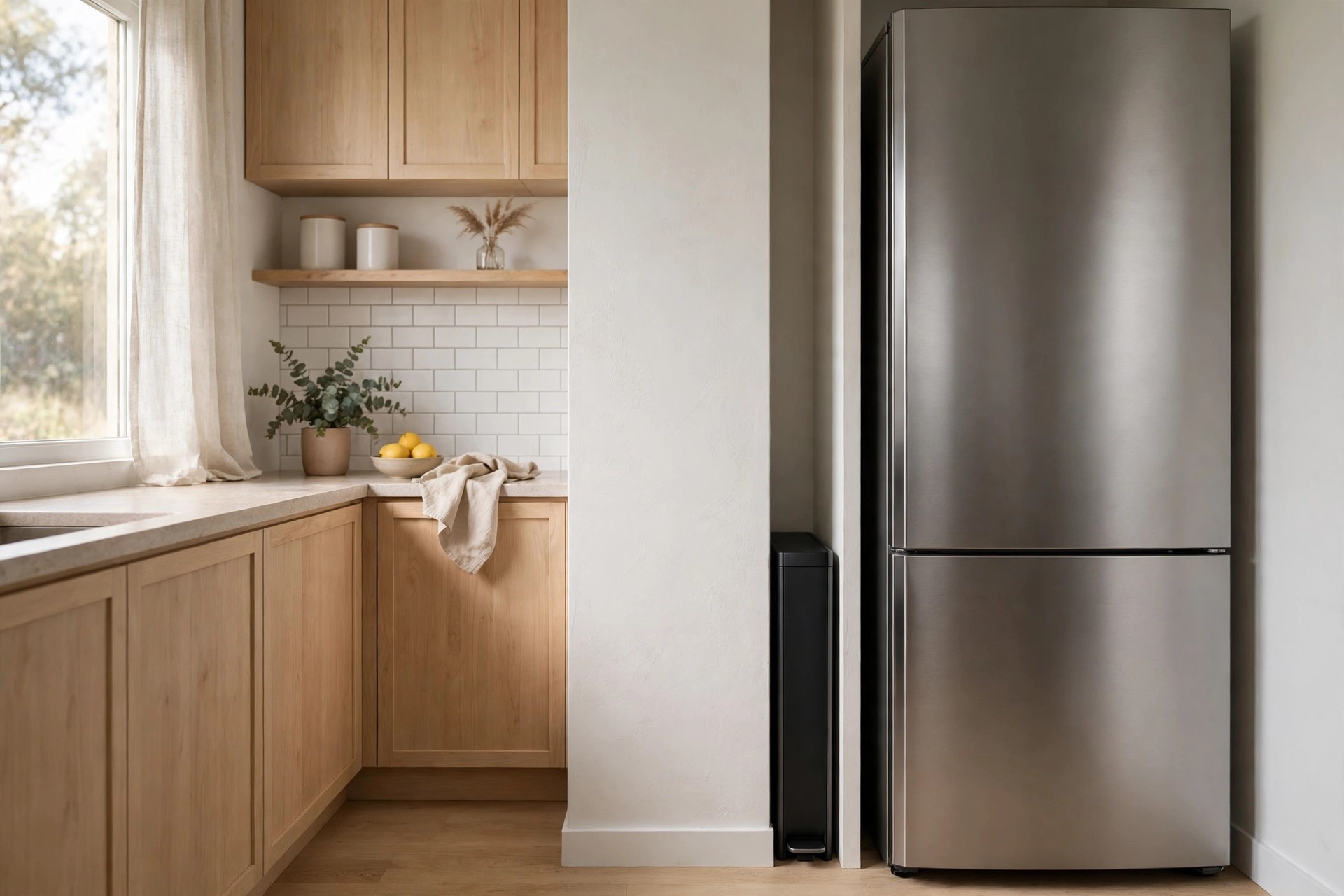
The gap between fridge and wall is measured in single inches, and the slimmest cans are built for exactly that slot. Measure yours before shopping, because the slot decides the can.
Leave a finger of clearance on each side. A can wedged tight scrapes both surfaces on every bag change, and the fridge door swing needs its own room too.
Pull this can out fully on cleaning day. The fridge gap collects dust and drips from both appliances, and a monthly clear out keeps the hidden slot from becoming a problem.
Mark the fridge gap width on the can’s paperwork and keep it. The next can you buy years later will need that same odd measurement.
9. A Fingerprint Proof Finish for a Visible Spot

Some slim cans cannot hide, so the finish has to behave in public. A fingerprint proof coating keeps a steel can looking clean where guests see it from the table.
Matte finishes forgive the most in bright light. A glossy can beside a window shows every touch by noon, while a soft finish reads clean through a whole dinner party.
Wipe the pedal and rim weekly, whatever the finish. Those two touch points collect the real grime, and a coated body cannot make up for a dirty pedal.
Buff the finish with a dry cloth, not a wet one. Dry buffing lifts fingerprints off coated steel without leaving streaks behind them.
10. A Locking Lid Can for Homes With Dogs

A curious dog turns a trash can into a vending machine. A locking lid, with a slide or latch that holds under paw pressure, ends the midnight raid and the mess after it.
Locking lids also help with toddlers at the grab everything stage. The lock needs to be easy for adult hands and boring for small ones, a balance worth testing in the shop.
Keep the lock habit simple: locked whenever the kitchen is empty. A lock that stays open all day is just a lid, and the dog will learn the schedule faster than you will.
Practice the lock with gloves on in winter. A lock that defeats cold, gloved hands will get left open exactly when it matters most.
11. A Sensor Lid Can for a Tight Corner
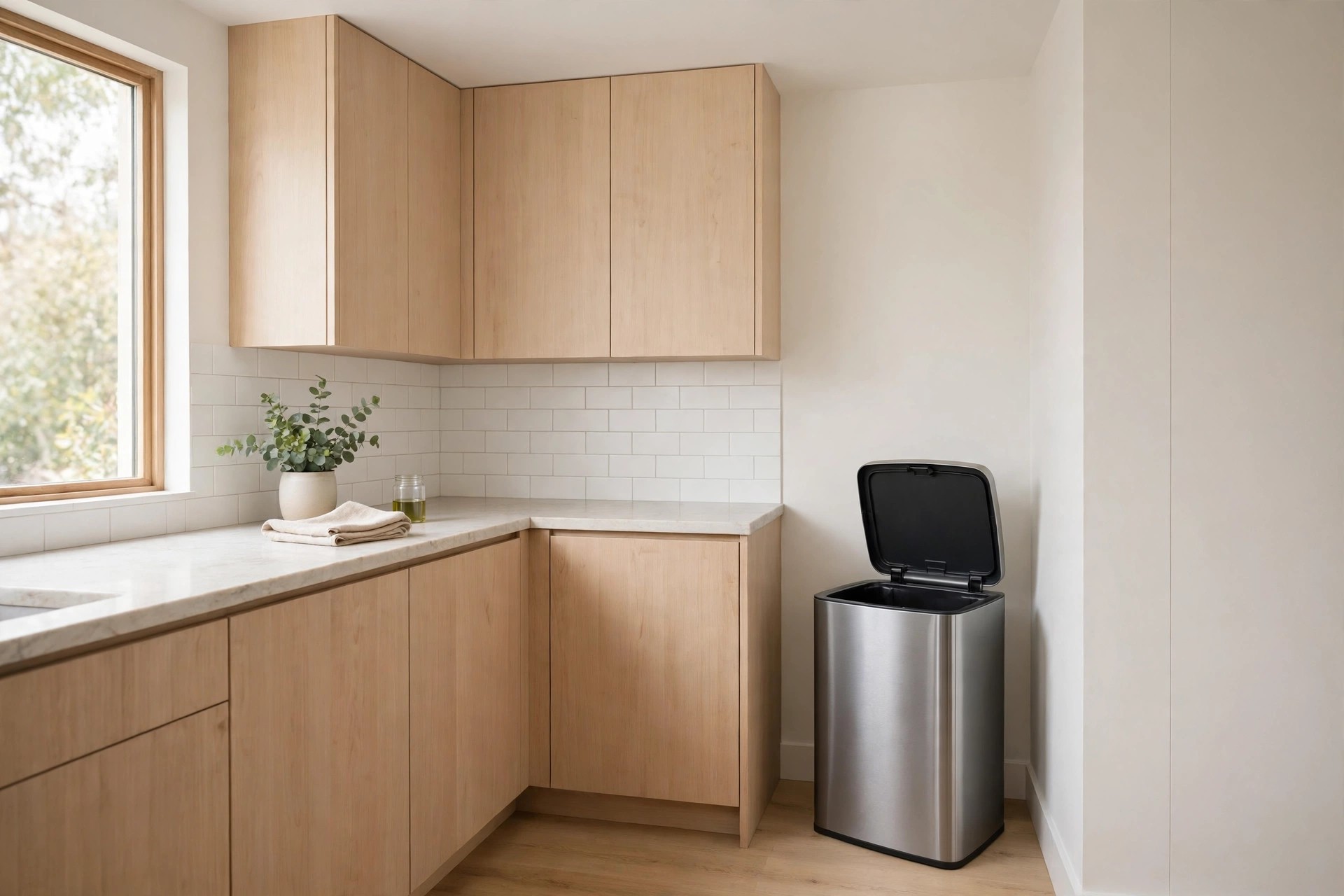
A sensor lid opens without a pedal, which helps where floor space in front is too tight for a foot press. Wave a hand, the lid lifts, and the scraps go in.
Sensor lids need clear air above the can. A corner under a low shelf can fool the sensor or block the lid, so give this style a spot with open headroom.
Keep spare batteries with the spare bags. A sensor can with flat batteries at a dinner party becomes a manual lid at the worst moment, so the battery check belongs in the bag change routine.
Point the sensor away from a sunny window. Strong direct light can confuse some sensors, and a shaded corner keeps the lid honest.
12. A Removable Bucket That Makes Bag Changes Easy

An inner bucket that lifts out turns bag changes into a one trip job. Carry the bucket to the outside bin, tip the bag in, and rinse the bucket if anything leaked.
Buckets also protect the outer can. Leaks and spills land in the washable bucket, so the slim outer body that fits your exact gap never takes the damage.
This is the same hidden order logic as our guide to compact bread boxes for small kitchen counters. The visible piece stays neat because the working piece inside does the dirty job.
Lift the bucket by both handles when it is full. One handed lifts twist thin buckets, and a twisted bucket stops seating properly over time.
13. A Can on Wheels for Cleaning Day

Small wheels under a slim can change cleaning day. Roll the can out, sweep the strip it hides, mop under it, and roll it home without dragging steel across the floor.
Wheels help heavy cans too. A tall can full of a week of trash moves to the door on its casters instead of being hugged and carried through the kitchen.
Check that the wheels lock or sit in small cups. A can that rolls a little every time the pedal is pressed will wander across tile and end up blocking a drawer by Friday.
Roll the can across the doorway once before buying. Thresholds and rugs decide whether wheels help or snag in your particular kitchen.
14. An In Cabinet Can That Clears the Floor

The slimmest can of all takes no floor. A can mounted inside the sink cabinet, on the door or a pull out frame, hides trash fully and frees the walkway for good.
Cabinet cans suit low trash households best, since cabinet space caps the size. Pair one with a small recycling box elsewhere, and the floor stays clear on both counts.
Renters should choose door hung frames that lift off without screws. Our small kitchen ideas for renters apply the same no damage rule to every cabinet in the kitchen.
Air the cabinet after emptying an in cabinet can. A closed cabinet holds odor, and five open minutes keeps the whole unit fresh.
15. A Measure First Rule for Any Narrow Gap

Every pick on this list starts with three numbers: gap width, depth to the wall, and the height a lid needs to open. Write them on your phone before you look at a single can.
Measure with the nearest drawer and cabinet door open. A can that fits the closed kitchen can still block a drawer by an inch, and that inch will annoy you daily.
Our small kitchen ideas for a first apartment start from the same tape measure habit. In narrow rooms, the measured choice is the one that still fits in month six.
Tape your three gap numbers inside a cabinet door. Measurements kept where the can lives never get lost between shopping trips.
Start with the gap, not the catalog, when choosing the best slim trash cans for narrow kitchen spaces. Width, depth and open lid height will cut this list to two or three cans, and your household size picks between small and tall from there.
Choose the shape that sits flush, keep the pedal or sensor clear, and give the can one fixed home. Save this list to the Small Kitchen Gadget Ideas board so your gap measurements travel with the shortlist.


