

15 Companion Plants for Tomatoes in the Same Pot
A crowded tomato pot often fails for a simple reason: the second plant wants the same water, food and root space at the same time.
Good companion plants for tomatoes in the same pot avoid that fight. They stay low, root shallowly, or finish fast before the tomato grows large.
Start with a pot of at least 10 gallons, about 38 litres, for any real sharing. A 5 gallon pot, about 19 litres, suits one tomato on its own.
If you are new to the main plant, read how to grow tomatoes in a pot first. Then pick two or three companions below, not all fifteen.
The honest rule is simple. One tomato stays the main plant, and every companion earns its place by staying small, shallow or short lived.
All fifteen picks below follow that rule, with the pot size each one truly needs. A few, like carrots and thyme, need care with depth or watering, and that is stated plainly.
1. Genovese Basil at the Base of the Stem
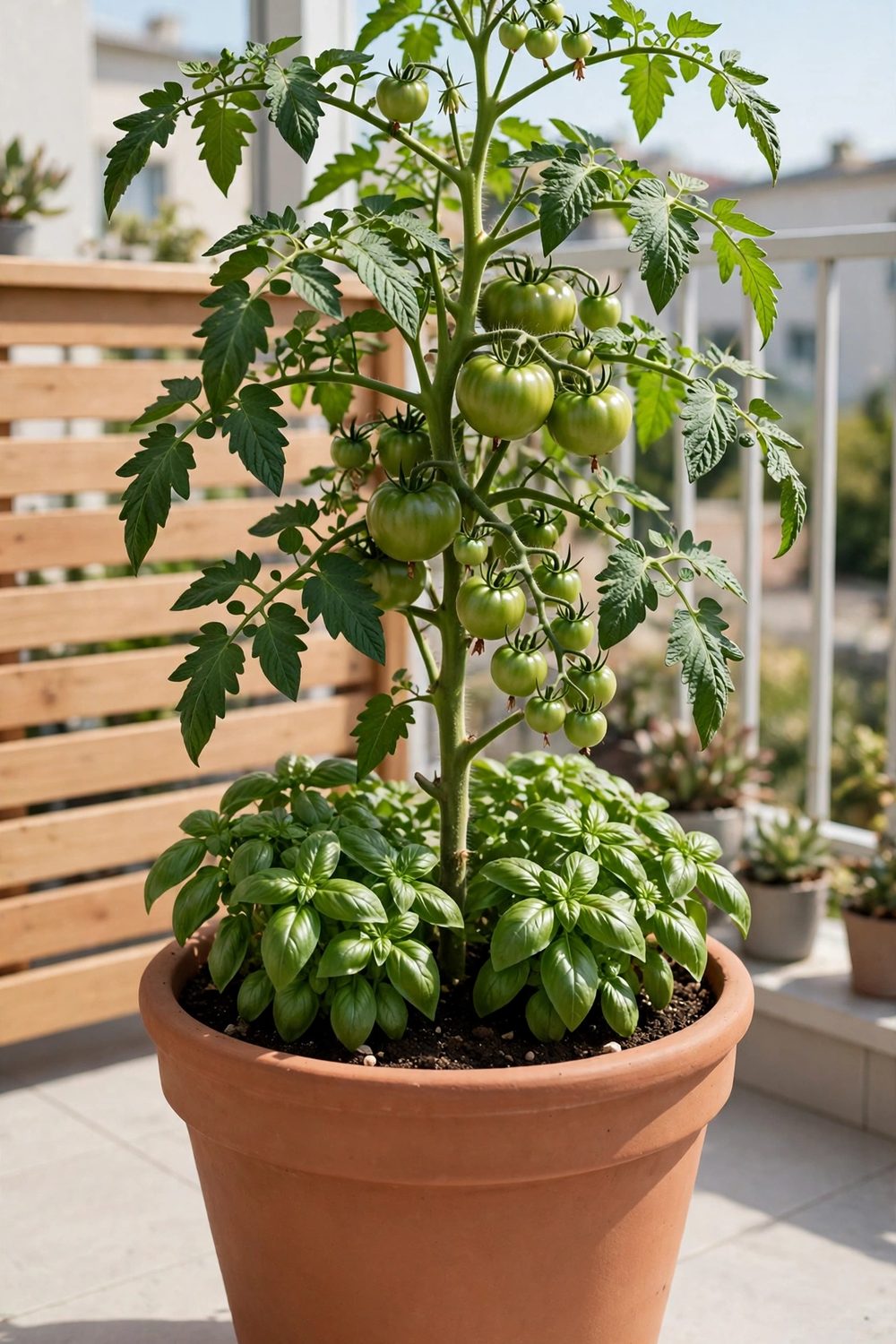
Basil is the classic partner because it stays compact and likes the same sun and steady watering as tomatoes.
Plant one basil plant about 6 inches, 15 cm, from the stem in a 10 gallon pot. Keep it on the sunny side so the tomato leaves do not shade it out.
Pinch the tips often so it grows bushy instead of tall and woody. On a small balcony, one basil plant is plenty. Two will crowd the roots and compete for feed by midsummer.
Feed both plants with the same tomato feed once flowers appear, at label strength. Basil picks up flavour when it is not forced with extra nitrogen, so do not add a second feed just for the herb.
2. French Marigold at the Sunny Edge
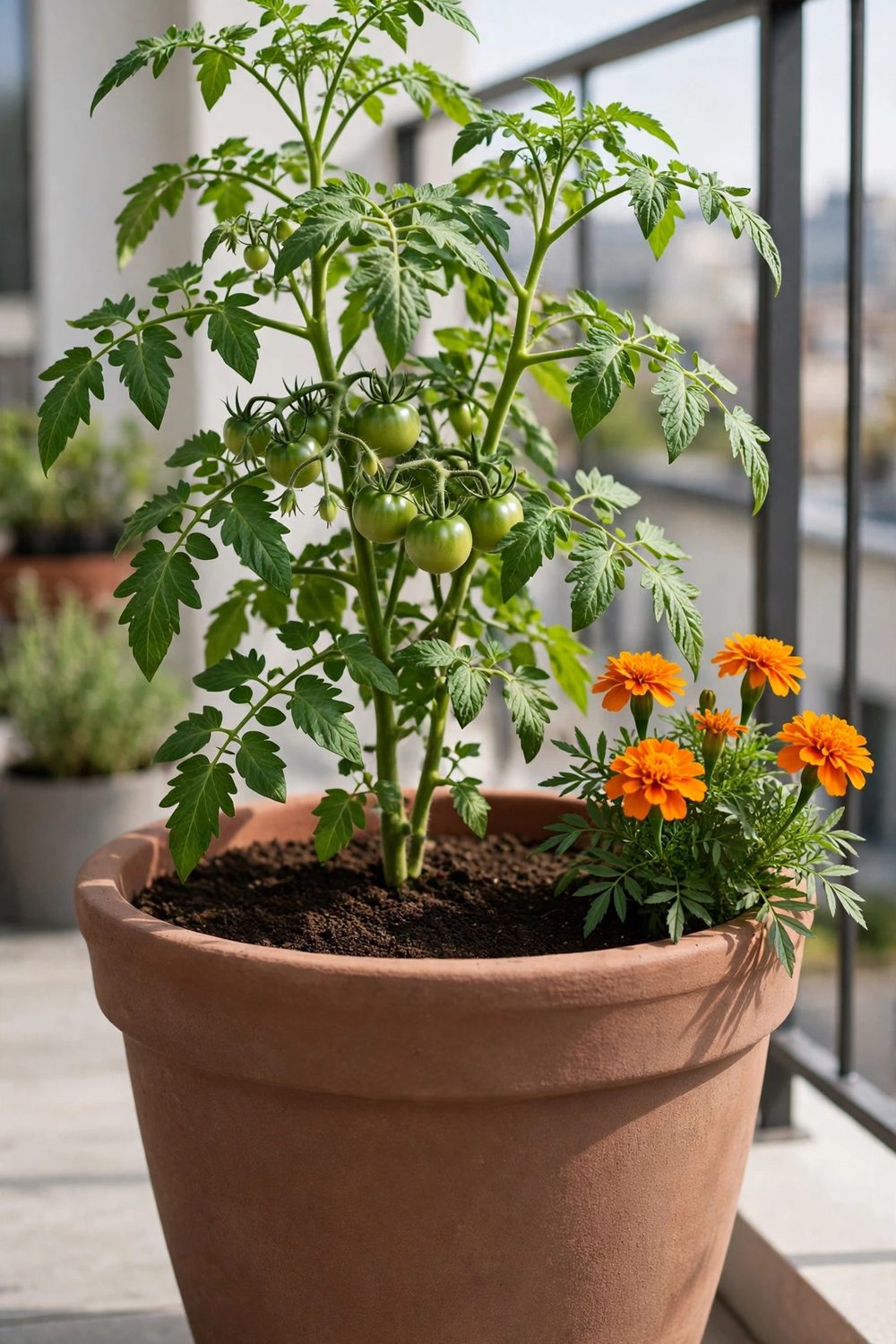
French marigolds stay short, flower for months, and bring bees to the balcony. Their roots are shallow, so they take little space from the tomato.
Set one dwarf plant near the rim of a 10 gallon pot, where it gets full sun. Deadhead spent flowers once a week to keep new buds coming.
Be honest about pest claims. Marigolds can help with some soil nematodes over a season, but they will not stop aphids or caterpillars on their own. Check leaves by hand as well.
Water at the base in the morning and keep the flowers off wet soil. On a windy third floor rail, the low plant also acts as a small windbreak for fallen petals and loose mulch.
3. Chives in a Small Clump by the Rim
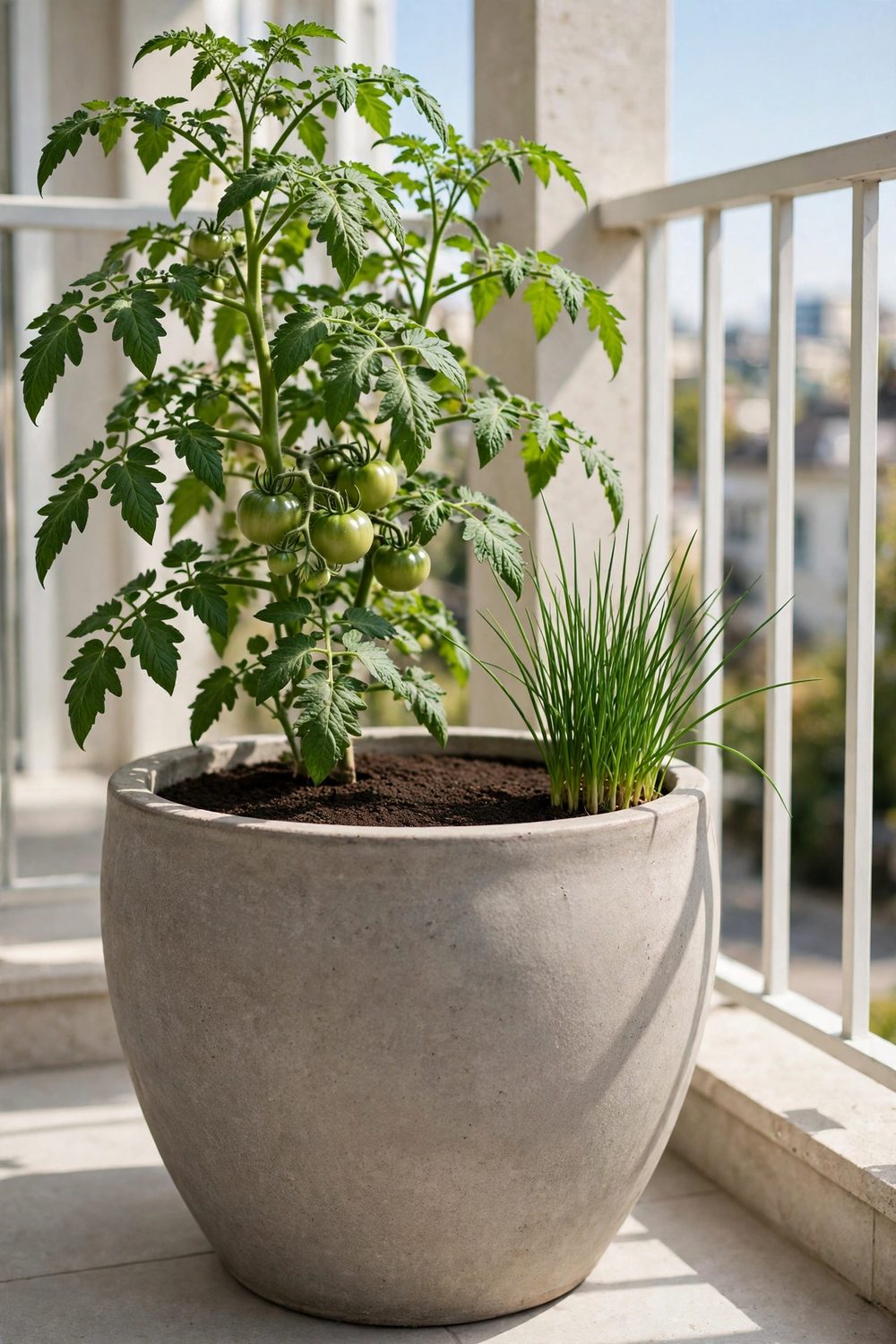
Chives grow in a neat upright clump, so they use vertical space instead of spreading across the soil surface.
Plant a small clump near the edge, away from the tomato stem. Snip leaves from the outside of the clump and leave the centre to keep growing.
The purple flowers draw pollinators in late spring. If you want leaves all summer, cut the flower heads off early. One clump is enough, since chives widen slowly each year.
Chives forgive a missed watering better than most herbs in the pot. Still, the tomato sets the schedule, so the clump gets watered when the tomato does, which suits it well in most weeks.
4. Leaf Lettuce in the Shaded Gap
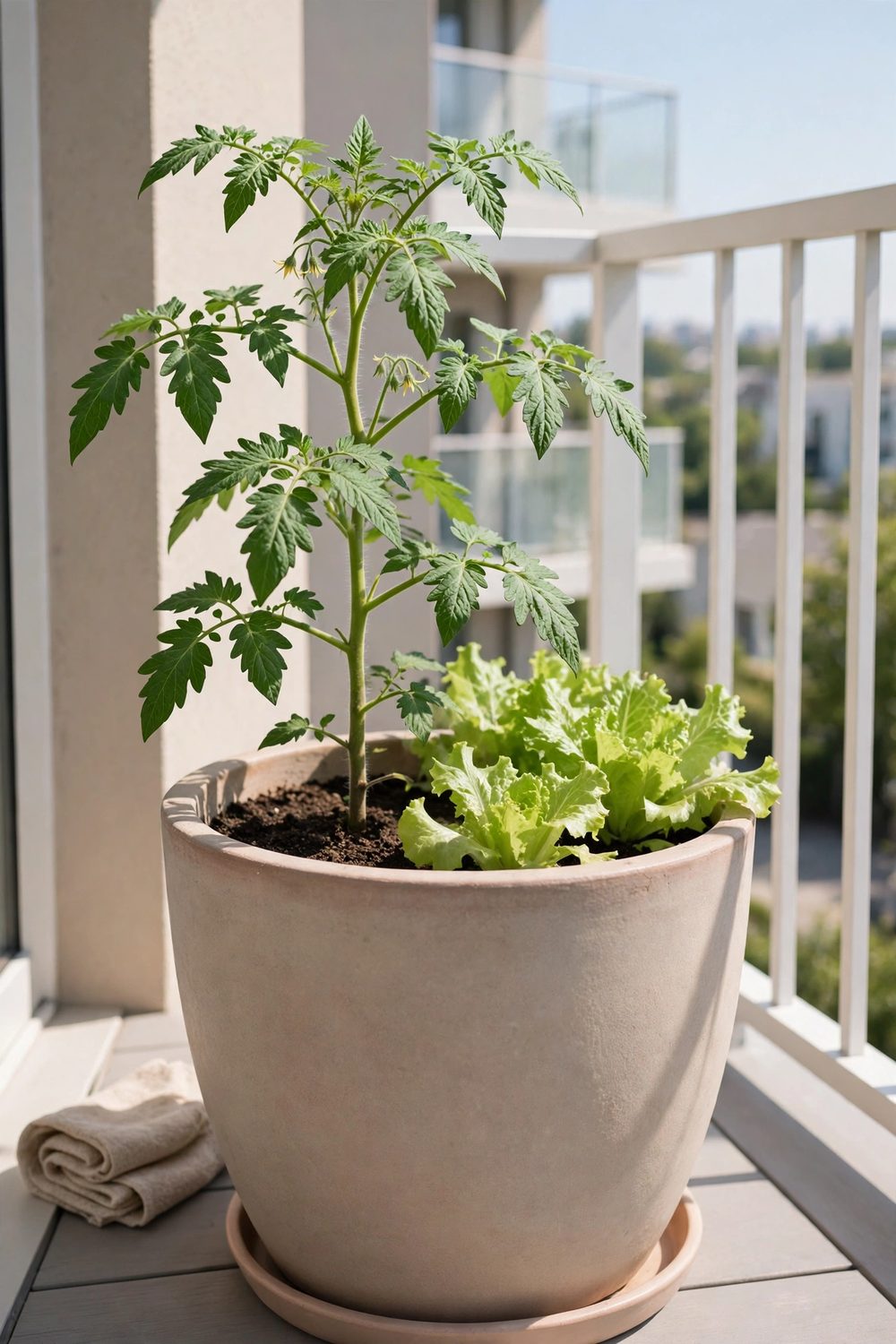
Lettuce roots stay shallow and the plant is harvested young, so it shares well in spring and again in early autumn.
Sow a short row or tuck three small plants on the side where tomato leaves cast light shade at midday. That shade slows bolting in warm weather.
Cut outer leaves little and often instead of waiting for a full head. Once the tomato fills the pot in summer heat, lettuce struggles. Treat it as an early and late season guest.
Harvest in the morning when leaves are crisp. A kitchen sink watering can works well here, since a gentle pour avoids splashing soil up onto the low leaves you are about to eat.
5. Radishes for a Fast First Harvest
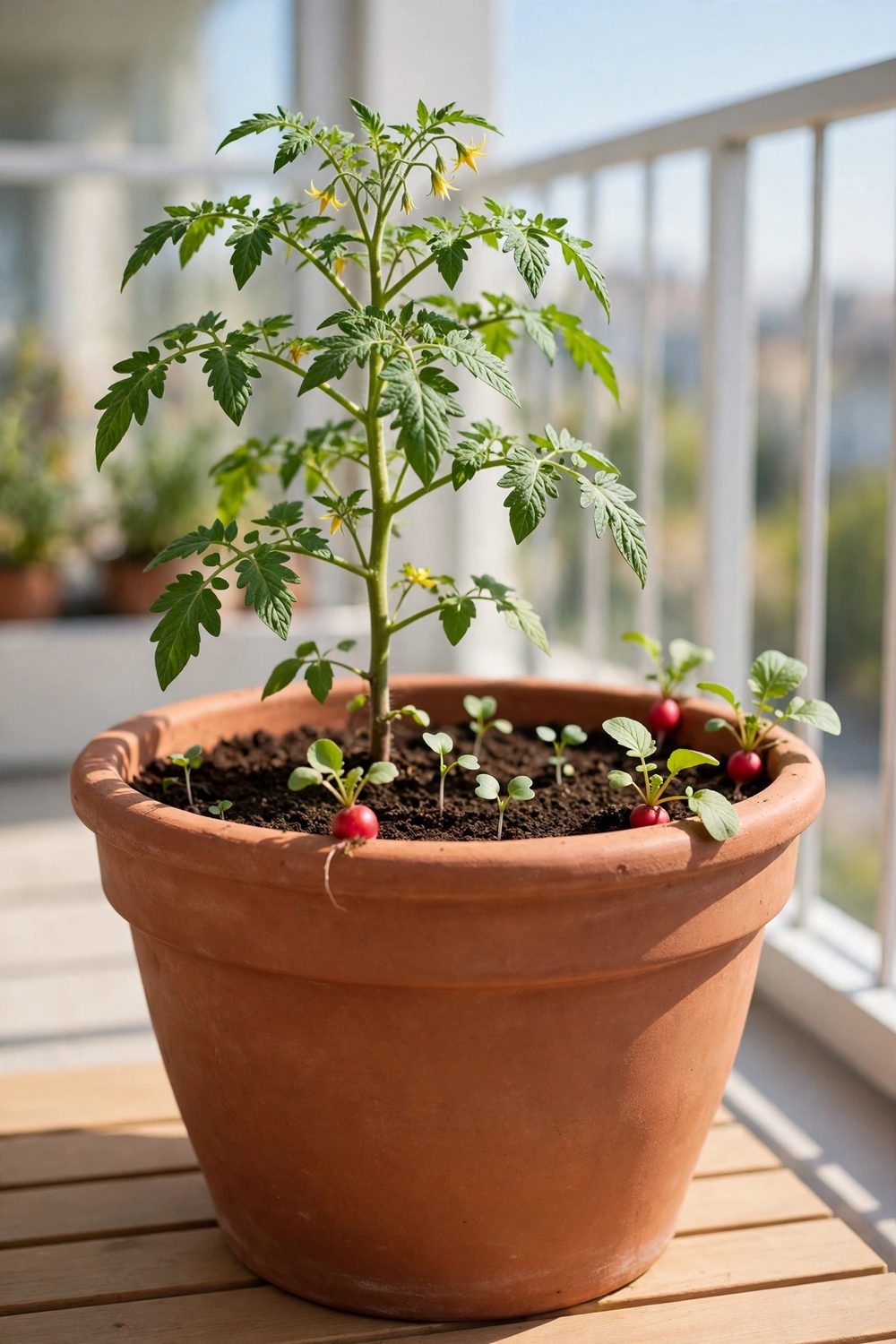
Radishes are the fastest guest in the pot. Many small types are ready in about four to five weeks, long before the tomato needs the full space.
Sow seeds about 1 inch, 2.5 cm, apart near the rim and thin them once. Keep the soil evenly moist so roots stay mild and do not split.
Pull each radish as soon as it sizes up. Leaving them in makes woody roots and invites them to flower. Their empty gaps then give the tomato roots room to spread.
If a sowing fails to come up, sow again a week later rather than digging around. The seeds are cheap, quick, and shallow, and a second small sowing often catches better weather.
6. Nasturtium Trailing Over the Side
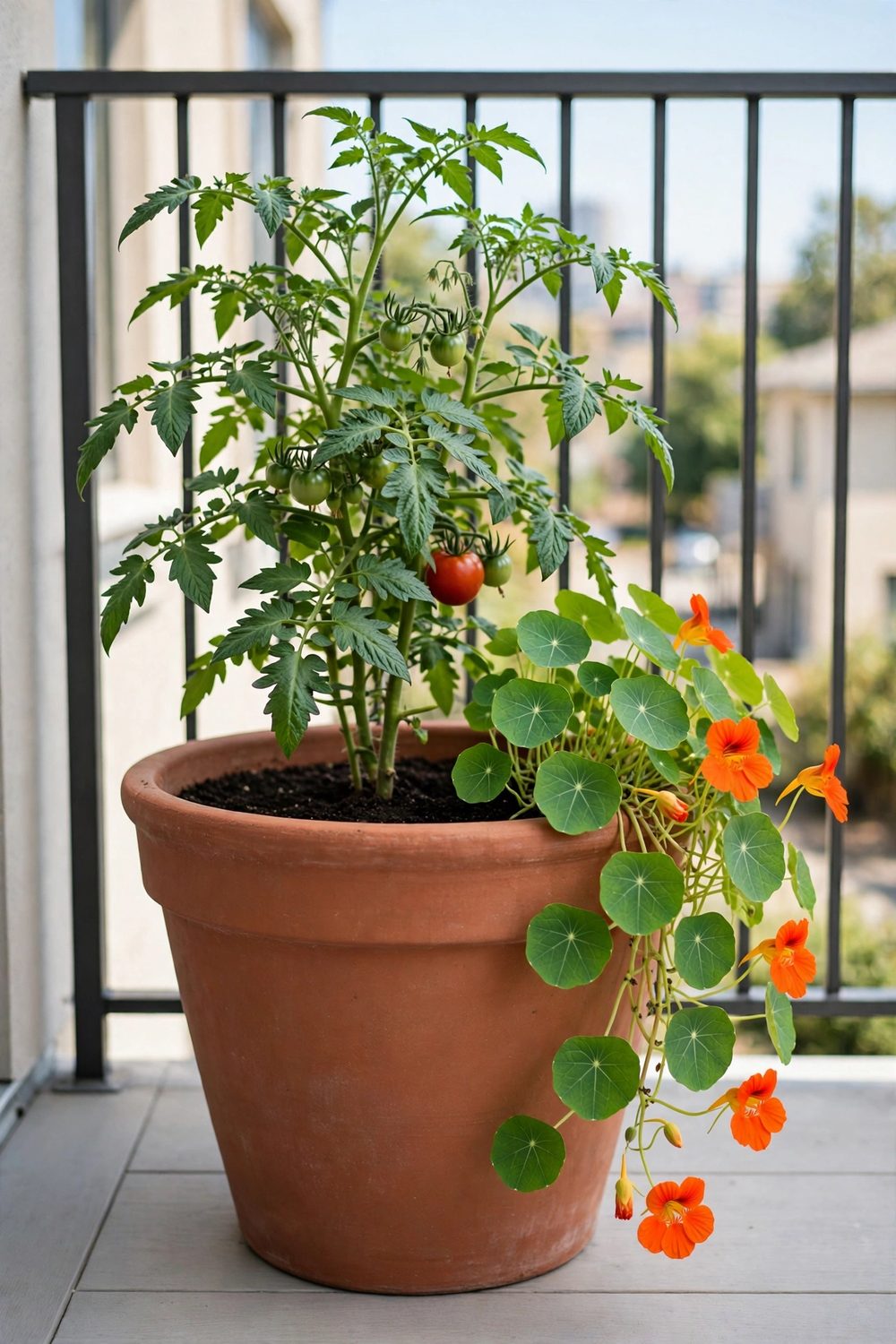
Nasturtiums trail instead of climbing, so one plant can spill over the pot edge and free up soil space for the tomato.
Plant it at the rim of a large pot and guide the stems outward, not up through the tomato. Poor to average soil gives more flowers and fewer huge leaves.
Aphids often gather on nasturtium leaves. That can draw them away from the tomato, but it is not a cure. Pinch off badly covered leaves and drop them in the bin.
Keep the trailing stems off the balcony floor, where they stay damp and mark the boards. A short cane laid across the rim gives the stems a dry path outward over the edge.
7. Flat-Leaf Parsley in Light Shade
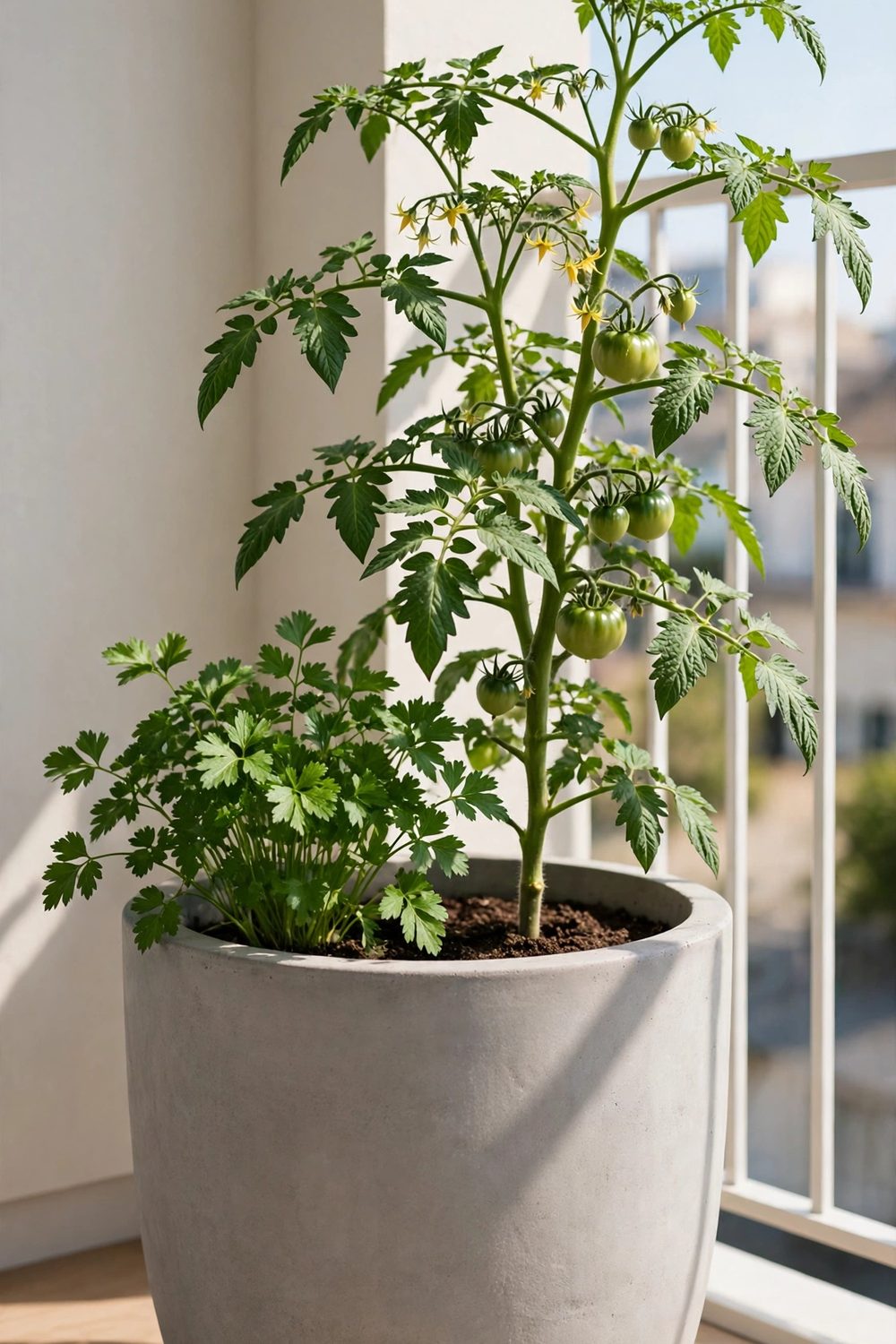
Parsley is slow to start, deep in flavour, and happy with the regular watering a tomato pot already gets.
Use one plant only, set on the cooler side of a 10 gallon pot. It tolerates light shade from the tomato canopy and keeps picking for months.
Start from a small bought plant if you want a quick result, since seed can take weeks to sprout. Ideas for pairing it with other herbs are in these balcony herb garden ideas for apartments.
Parsley in its second year flowers and then fades, so treat the pot plant as a one season herb. Replace it each spring and the flavour stays sweet instead of turning bitter.
8. Carrots Only in a Deep Shared Pot
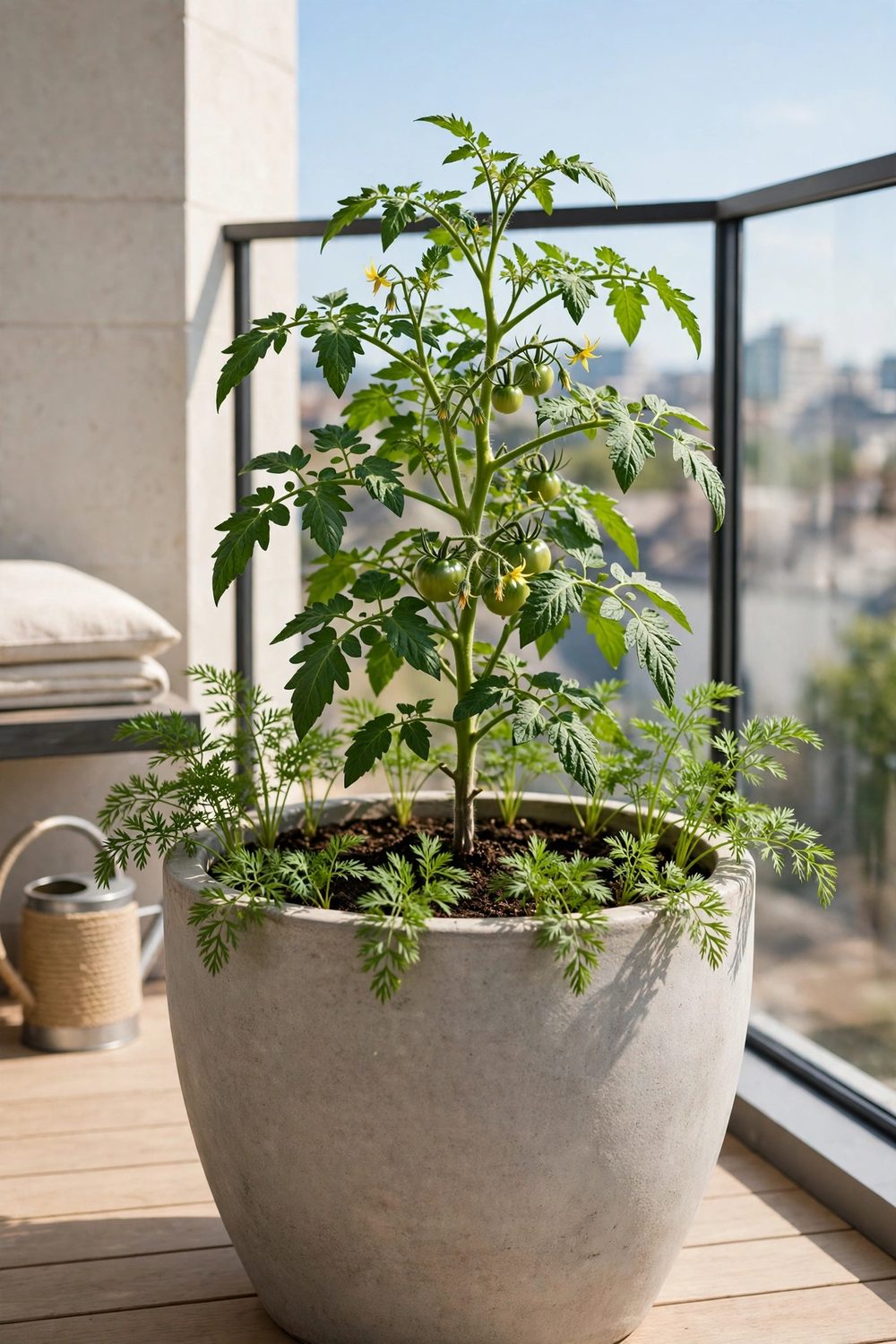
Carrots can share, but only honestly: they need depth. Use a pot at least 14 inches, 36 cm, deep and 15 gallons or more, with short or round types.
Sow thinly in a ring away from the tomato stem, in loose mix with no stones. Deep pots are covered when you weigh up how many vegetable plants per pot for your space.
Thin seedlings twice so roots have room to swell. Water swings cause split roots and can also harm the tomato, so keep moisture steady for both crops.
Round types such as Parisian market carrots suit shared pots best, since they need less depth. Long, thin types belong in deep beds, not in a pot already holding a hungry tomato.
9. Sweet Alyssum as a Low Living Mulch
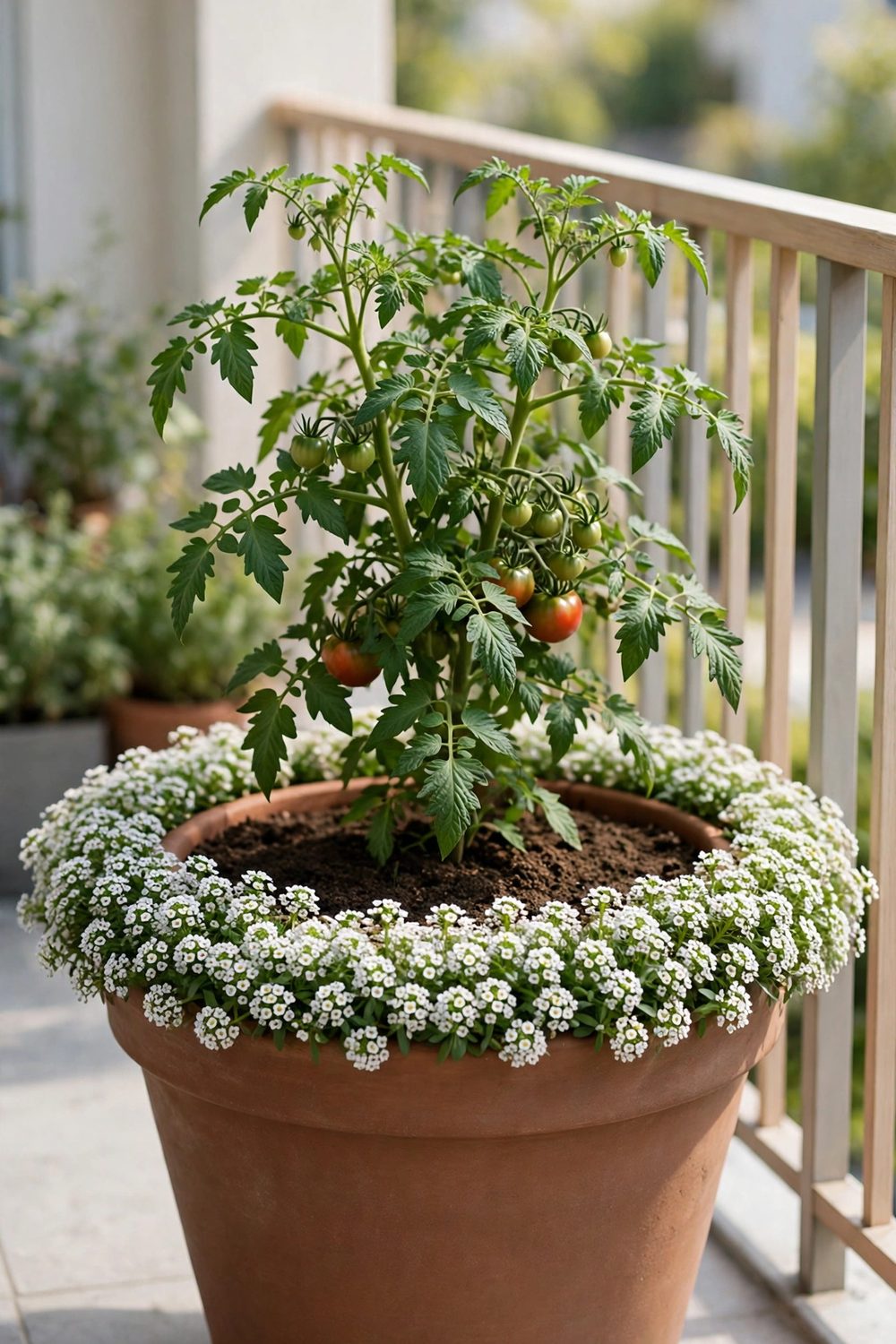
Sweet alyssum forms a low mat of tiny white flowers that shades the soil surface and helps slow water loss on hot days.
Sow a pinch of seed around the rim or add two small plugs to a large pot. It stays only a few inches tall and does not fight the tomato for light.
The flowers feed small hoverflies and other helpful insects. Trim the mat back if it climbs over the watering space. You still need to water at the base, under the leaves.
Alyssum may pause flowering in a heatwave. A light trim and a good soak usually bring it back, and the tomato beside it benefits from the same steady watering routine.
10. Spinach for the Cool First Weeks
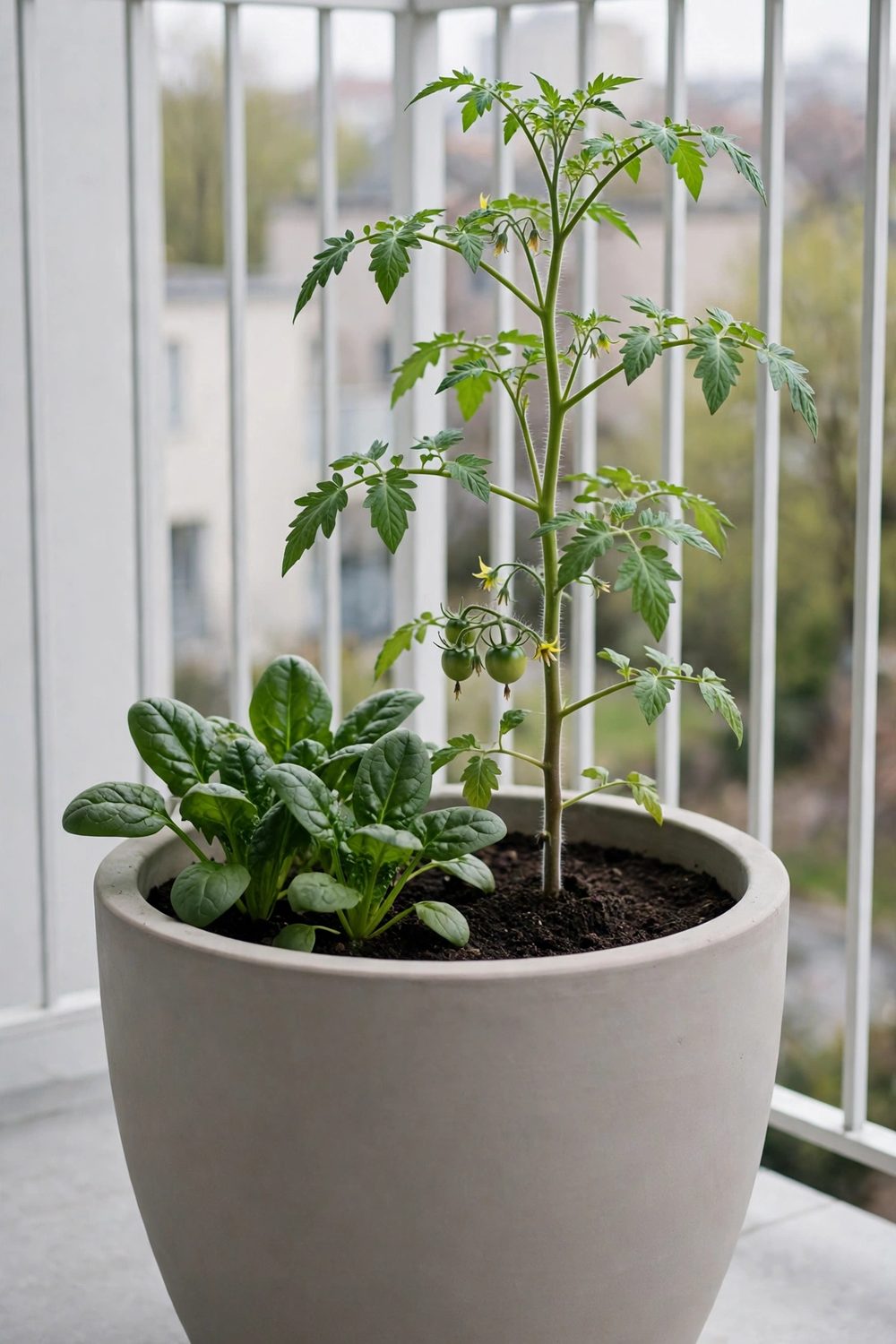
Spinach likes cool weather and steady moisture, so it fits the first weeks after you plant a tomato out after your last frost.
Add three or four plants on the shadier side of the pot. Pick whole small plants as the tomato grows, which frees space week by week.
Once days turn hot, spinach bolts and turns bitter. Pull it out at that point and add mulch in its place. It is a short visit, and that is why it works.
Cover a new spinach sowing with a light mesh if birds peck at seedlings on your balcony. The cover comes off once leaves size up, well before the tomato needs that space.
11. Green Onions Slotted Into the Gaps
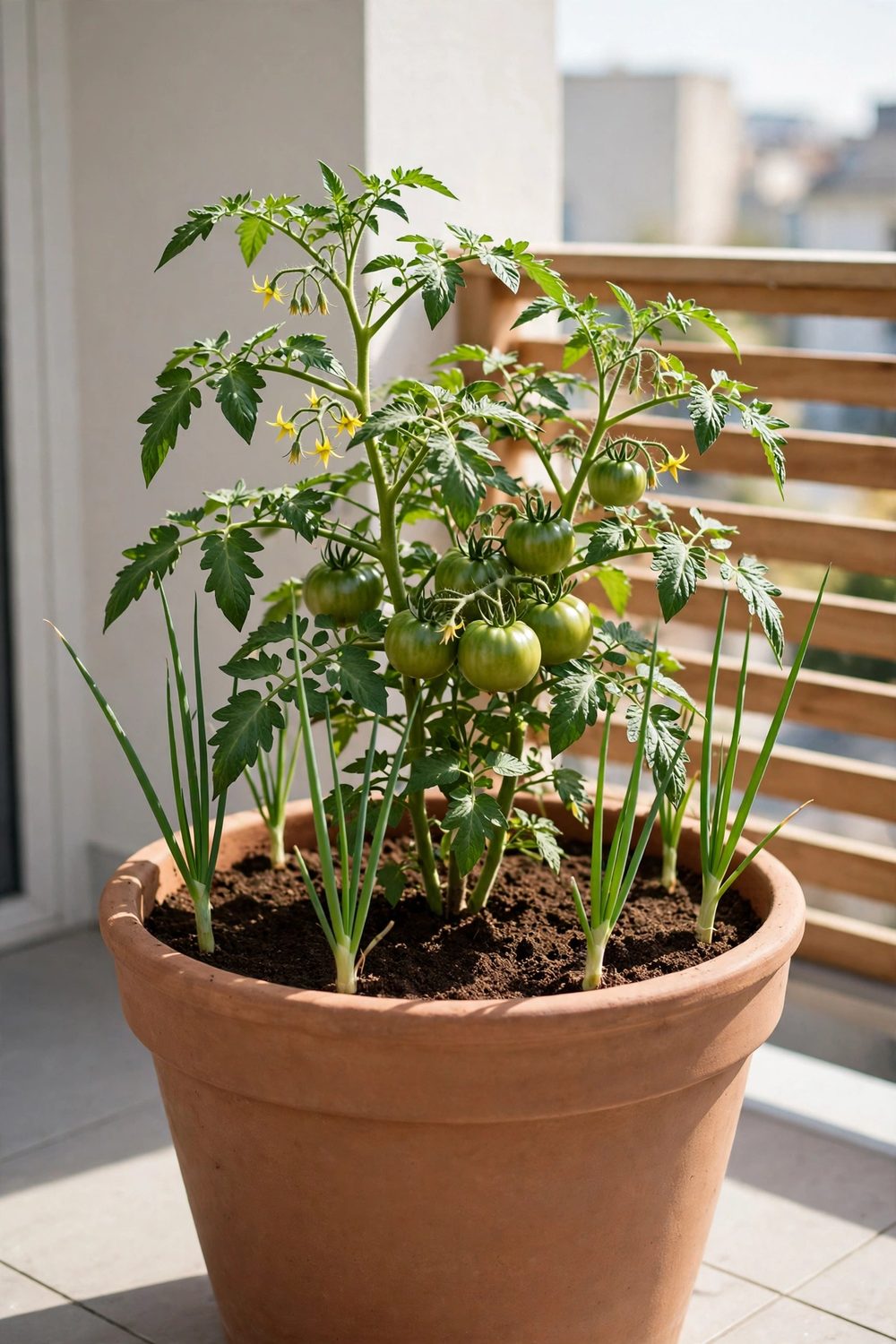
Green onions, also called spring onions or scallions, take almost no room. Their roots are thin and their leaves stand upright.
Push a small bunch into any gap near the rim, about 2 inches, 5 cm, apart. You can start them from seed or from the rooted bases of bought onions.
Harvest by pulling whole stems as you need them. Each gap you clear gives air a path through the pot, which helps leaves dry faster after watering or rain.
Green onions also regrow after cutting if you leave an inch of stem. For a shared pot, pulling whole stems is tidier, since regrowth clumps can turn crowded and hard to water evenly.
12. Calendula Beside the Tomato Stem
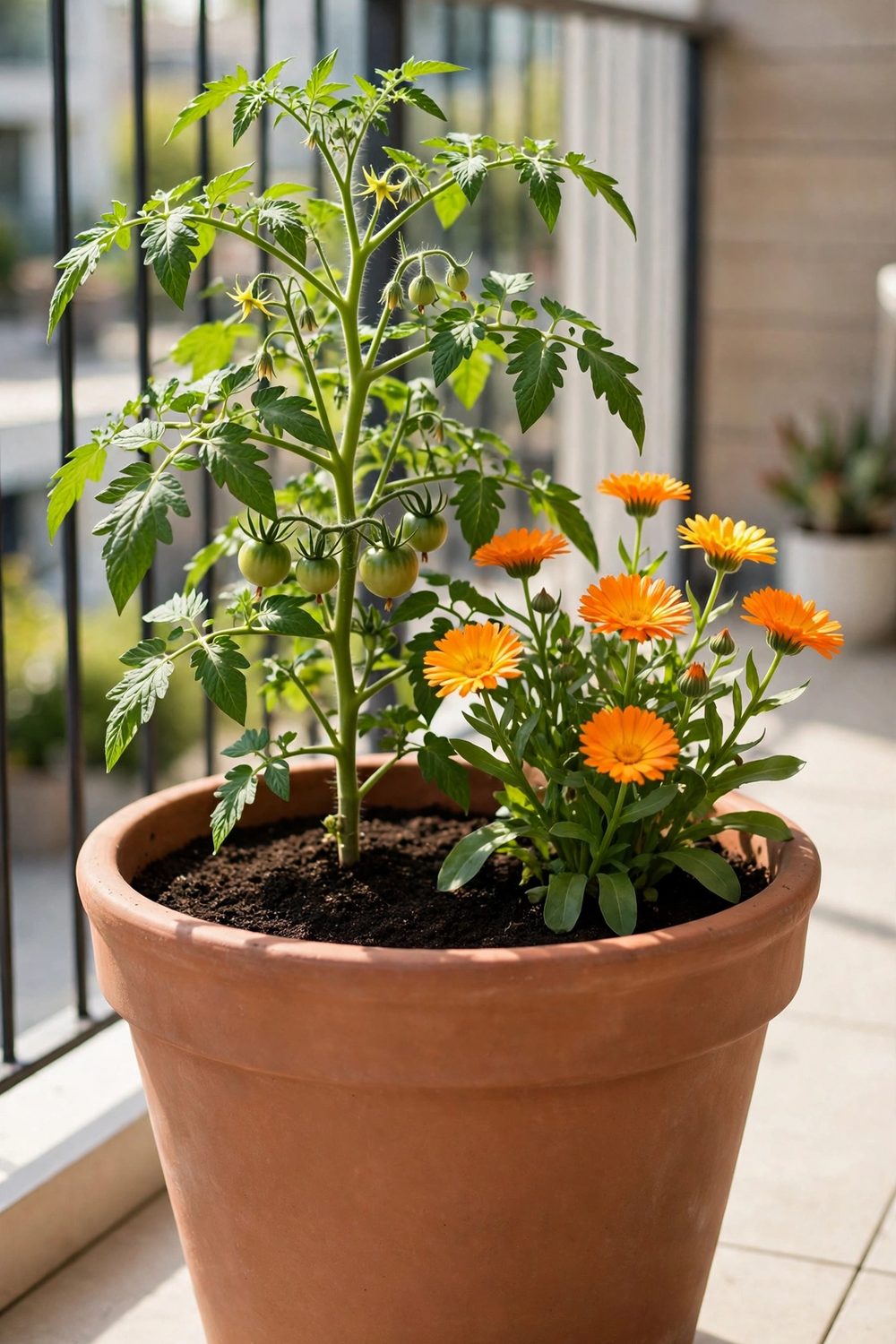
Calendula brings orange and yellow flowers on a plant of modest size, and it copes well with life in a large pot.
Keep one plant per pot, on the sunny side, about 8 inches, 20 cm, from the stem. Deadhead often unless you want it to self seed for next year.
Its petals are edible and the flowers draw pollinators, but do not crowd it in. Poor airflow around a shared pot raises leaf problems, the kind covered in tomato problems in pots.
Calendula seeds are large and easy for beginners to handle. Sow two seeds direct in the pot after your last frost and remove the weaker seedling once both are growing strongly.
13. Thyme at the Dry Front Edge
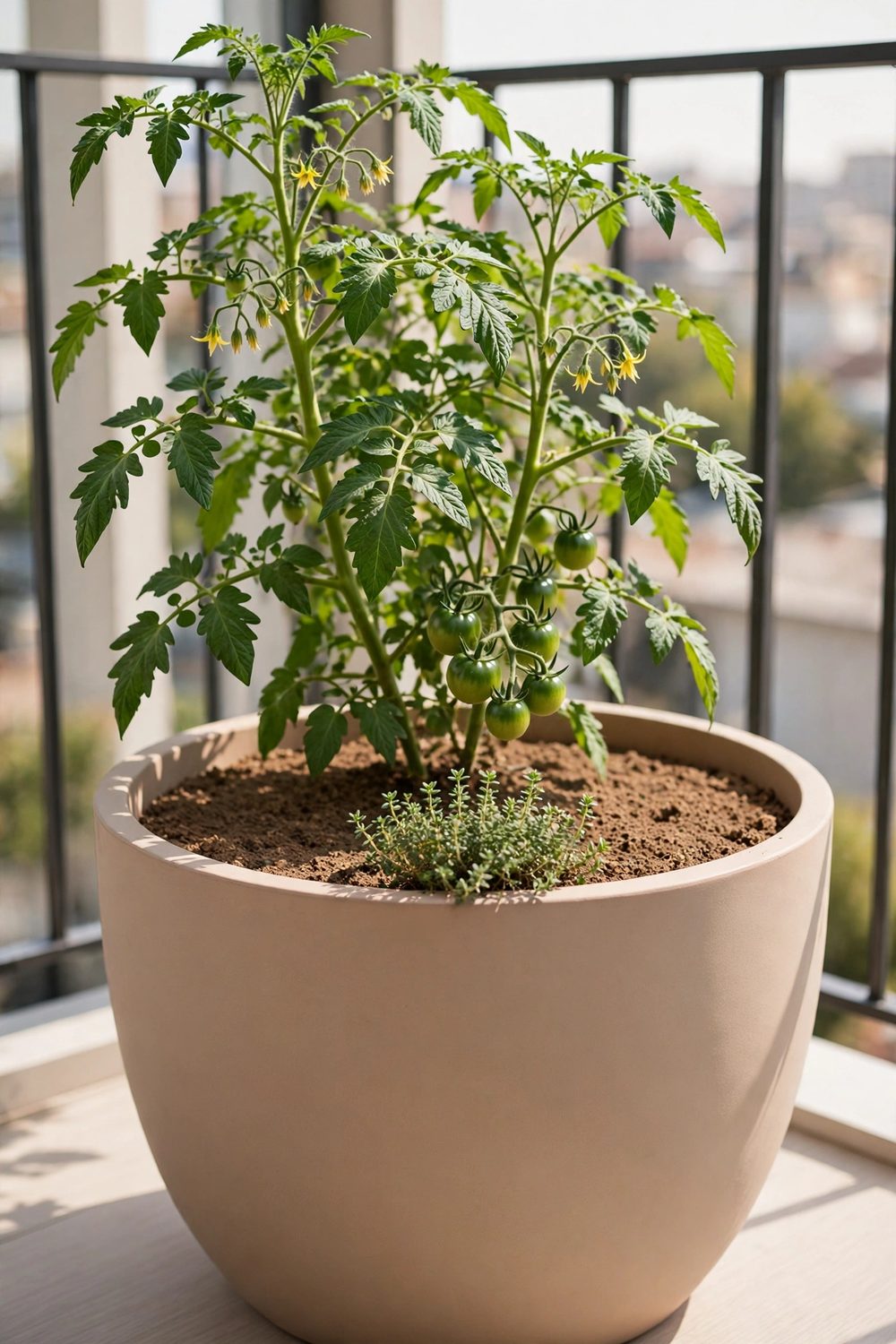
Thyme is the one herb here that wants less water than the tomato, so placement matters more than the pairing itself.
Set it at the front rim, the driest and sunniest spot, ideally in a slight mound of gritty mix. That raised pocket drains faster after each watering.
Use a compact type and trim it after flowering. In a small 5 gallon pot, skip thyme and grow it in its own small pot beside the tomato instead.
Thyme also dislikes rich, wet feed. Give the tomato its liquid feed at the base of its own stem, away from the thyme mound, so the herb is not soaked in feed each week.
14. Cilantro Before Summer Heat Arrives
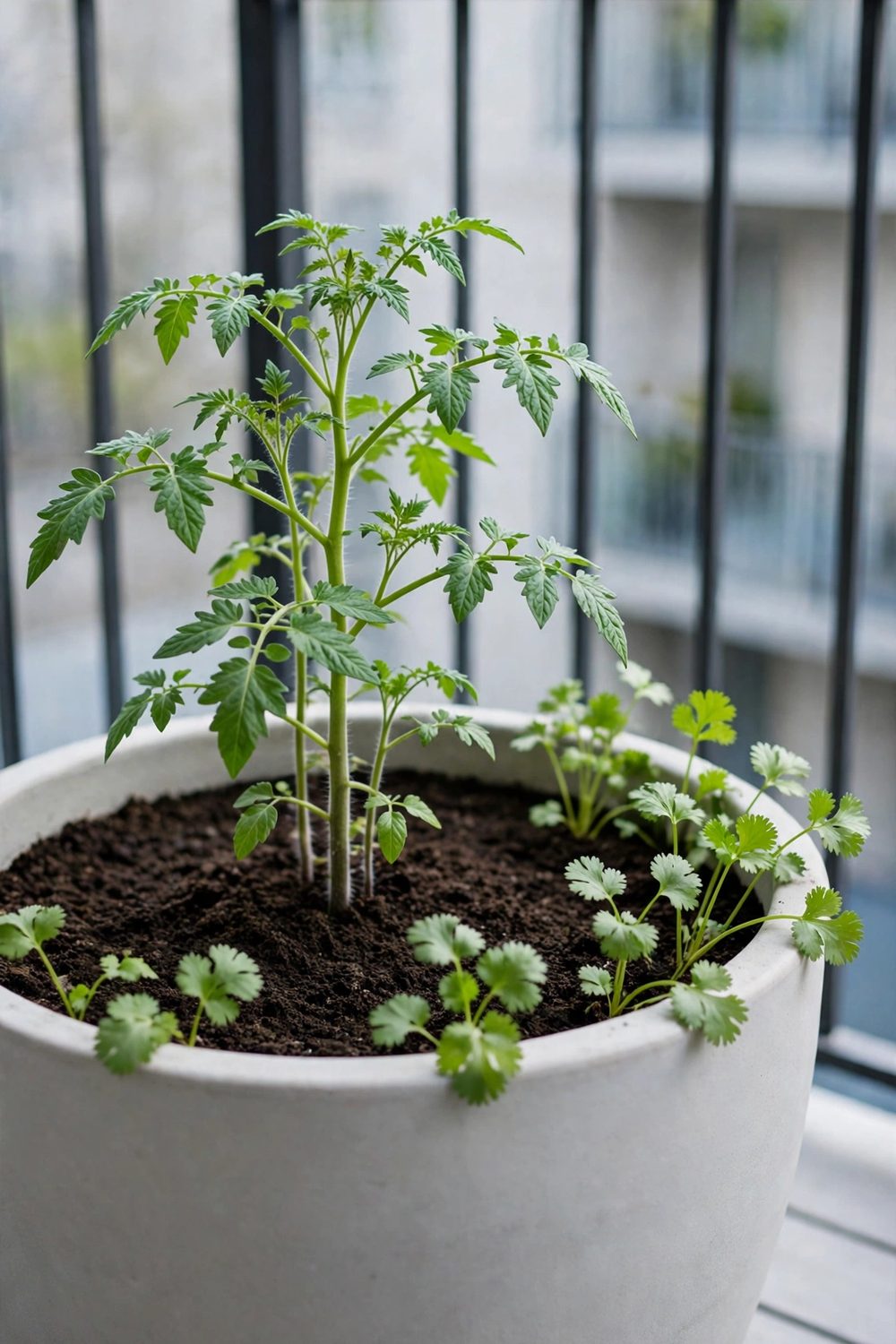
Cilantro, also called coriander leaf, grows fast in cool spring weather and shares the pot well for a short season.
Sow a small patch near the rim after your last frost and pick leaves from about six weeks. It likes the same even moisture as a young tomato plant.
When heat makes it bolt, let one stem flower if you want coriander seed, or pull it out. Do not leave a tall, flowering thicket to shade the tomato in midsummer.
A second small sowing two weeks after the first stretches the picking window. Sowings made in high summer rarely pay, since the plants rush to flower before they make many leaves.
15. Alpine Strawberries at the Pot Edge
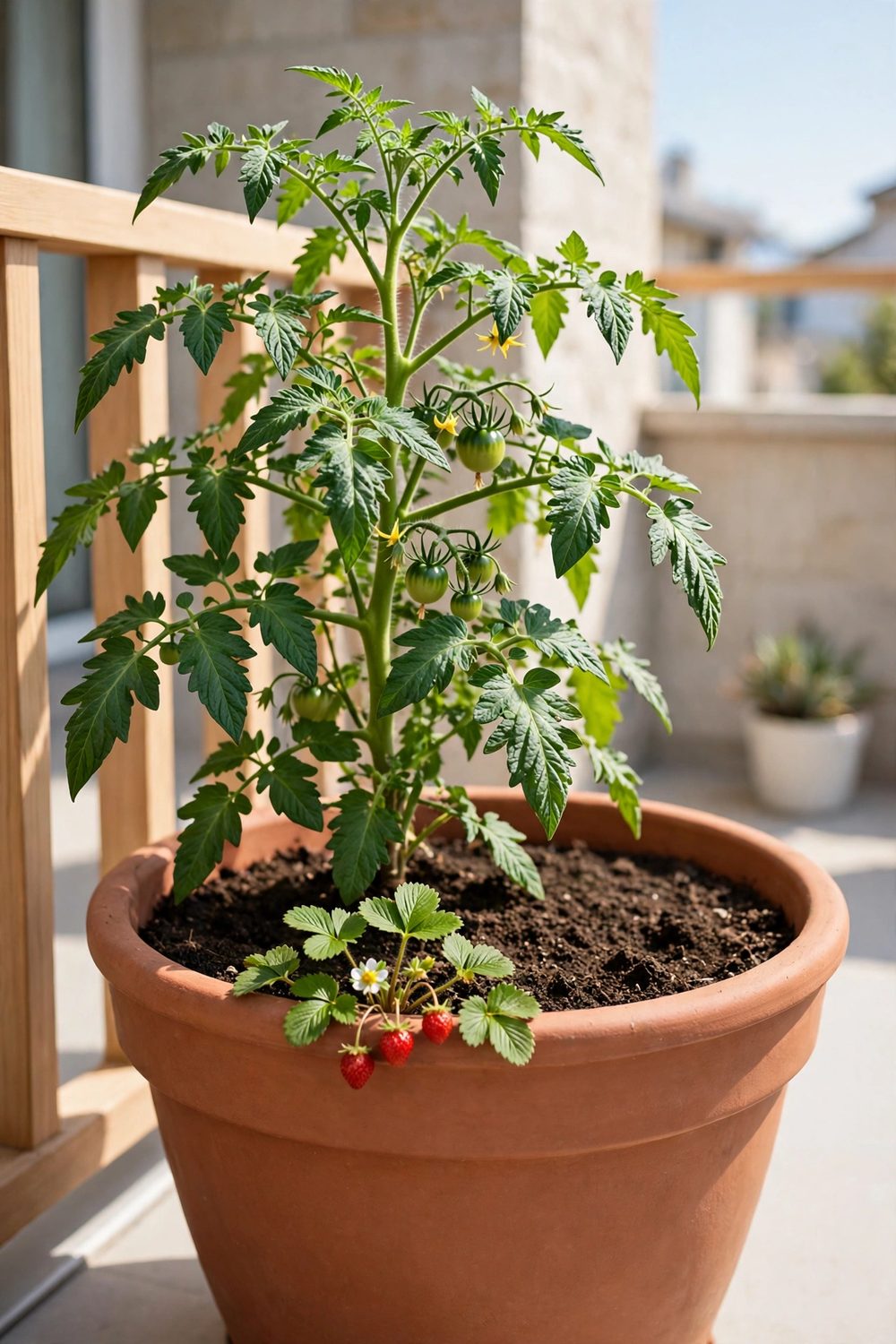
Alpine strawberries are small plants with shallow roots and tiny, sweet fruit. One plant can sit happily at the edge of a 10 gallon or larger pot.
Keep the crown at soil level and the fruit clear of wet mix where you can. Pick fruit as soon as it colours, since birds on a balcony find it fast.
Choose your pot with sharing in mind from the start. The sizes in this guide to the best pots for growing vegetables on a balcony help you judge the space honestly.
Feed the shared pot for the tomato first, since it is the hungrier plant. The strawberry will fruit on that routine, but soft, leafy growth with no fruit means the feed is too strong.
Pick companions by root depth, size and season, not by long lists of promised benefits. Basil, marigold and one fast crop like radish or lettuce cover most balcony pots well.
Give the tomato first claim on water and feed, keep airflow open, and pull short season guests out on time.
Start with one shared pot this season. Learn its watering rhythm well before you set up a second shared pot.
Save this guide to your tomato board for later.
Recheck your companion plants for tomatoes in the same pot each time you plant up a new pot.


