

Two Tomato Plants in One Big Pot: Does It Work?
Two seedlings sit on the table, one big pot sits on the balcony, and the question feels fair.
Can two tomato plants in one big pot does it work as a real setup, or does one plant always win?
The honest answer is yes, sometimes, and the test takes about fifteen minutes.
Volume, variety type, spacing, and one shared watering plan decide the result long before fruit appears.
Work through the five checks below in order, and you will know your verdict before you fill the pot.
The checks suit a small balcony, a patio corner, or any spot with 6 to 8 hours of direct sun.
Plenty of gardeners skip the checks, plant both seedlings, and watch one plant fade by midsummer.
The pot was rarely the real problem in those cases, and the pairing choice usually was.
Time: about 15 minutes to run the checks, plus 20 minutes to plant a pairing that passes · Difficulty: Easy
What You Need
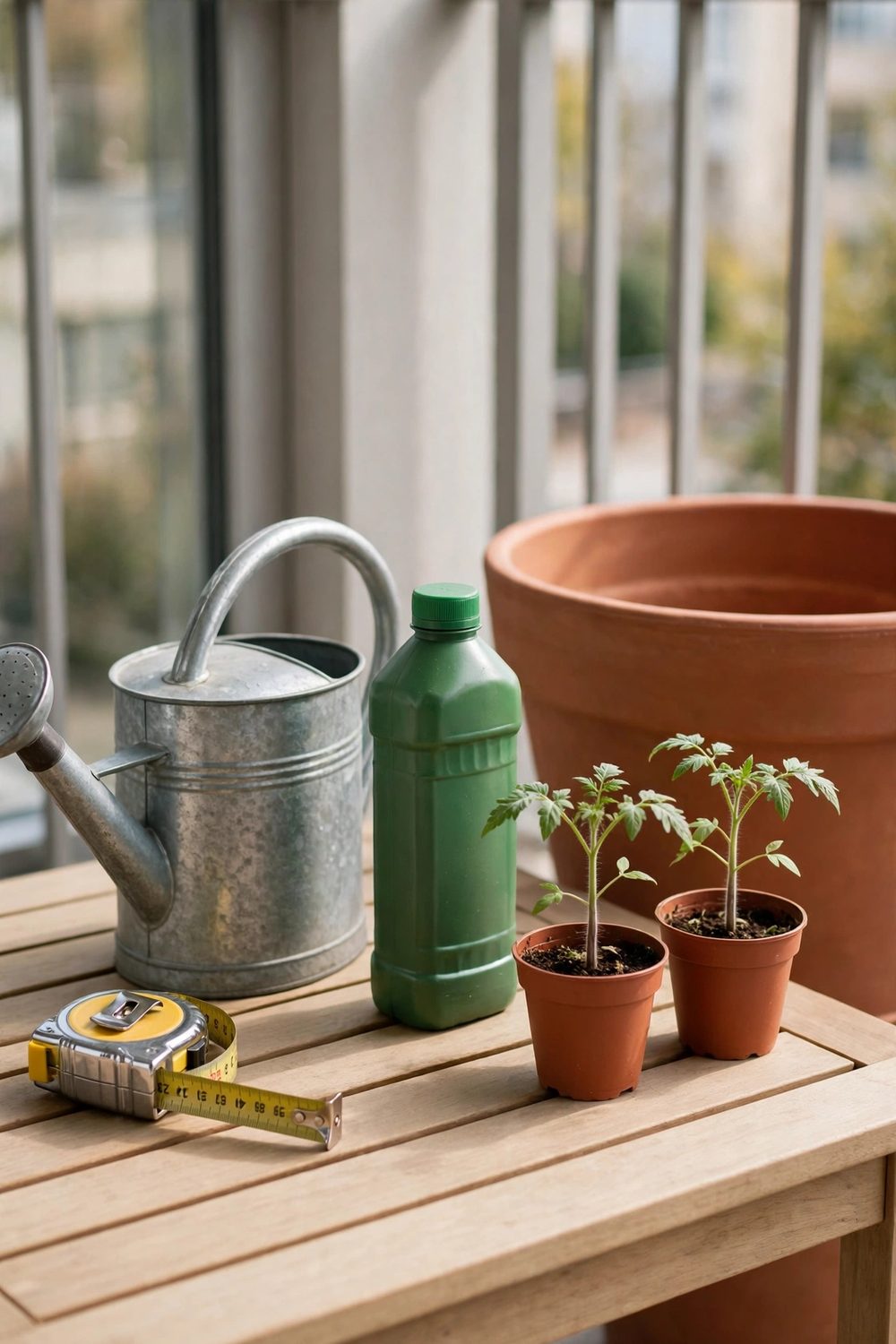
- A measuring tape: pot labels often list width only, and width alone hides the true volume. A tape gives you width and depth in inches and centimetres.
- The big pot itself: aim for 10 gallons (about 38 litres) or more for any pairing. Drainage holes are not optional for tomatoes.
- Both seed packets or plant labels: the type word matters more than the variety name. Look for dwarf, determinate, or indeterminate on each label.
- Potting mix, not garden soil: two root systems fill a pot fast, and loose mix drains freely. Garden soil packs down and holds too much water.
- A tomato feed: a shared pot empties its food supply sooner than a single pot. A tomato formula feed keeps both plants fed on one schedule.
- Two short stakes or one cage per plant: each plant needs its own support from day one. Shared supports tangle stems and block airflow.
- Mulch for the surface: a 2 inch (5 cm) layer slows drying between the two plants. Straw, shredded bark, or plain wood chips all work.
- A watering can filled at the sink: a paired pot drinks far more than a single pot in summer. Know your refill routine before you plant.
For a wider view on plant counts per container, this guide on how many vegetable plants per pot covers the same logic for other crops.
Keep the two seedlings in their nursery pots until every check below has a clear answer.
That pause costs nothing, and it saves the hard job of separating settled roots later.
Measure the Pot’s True Volume
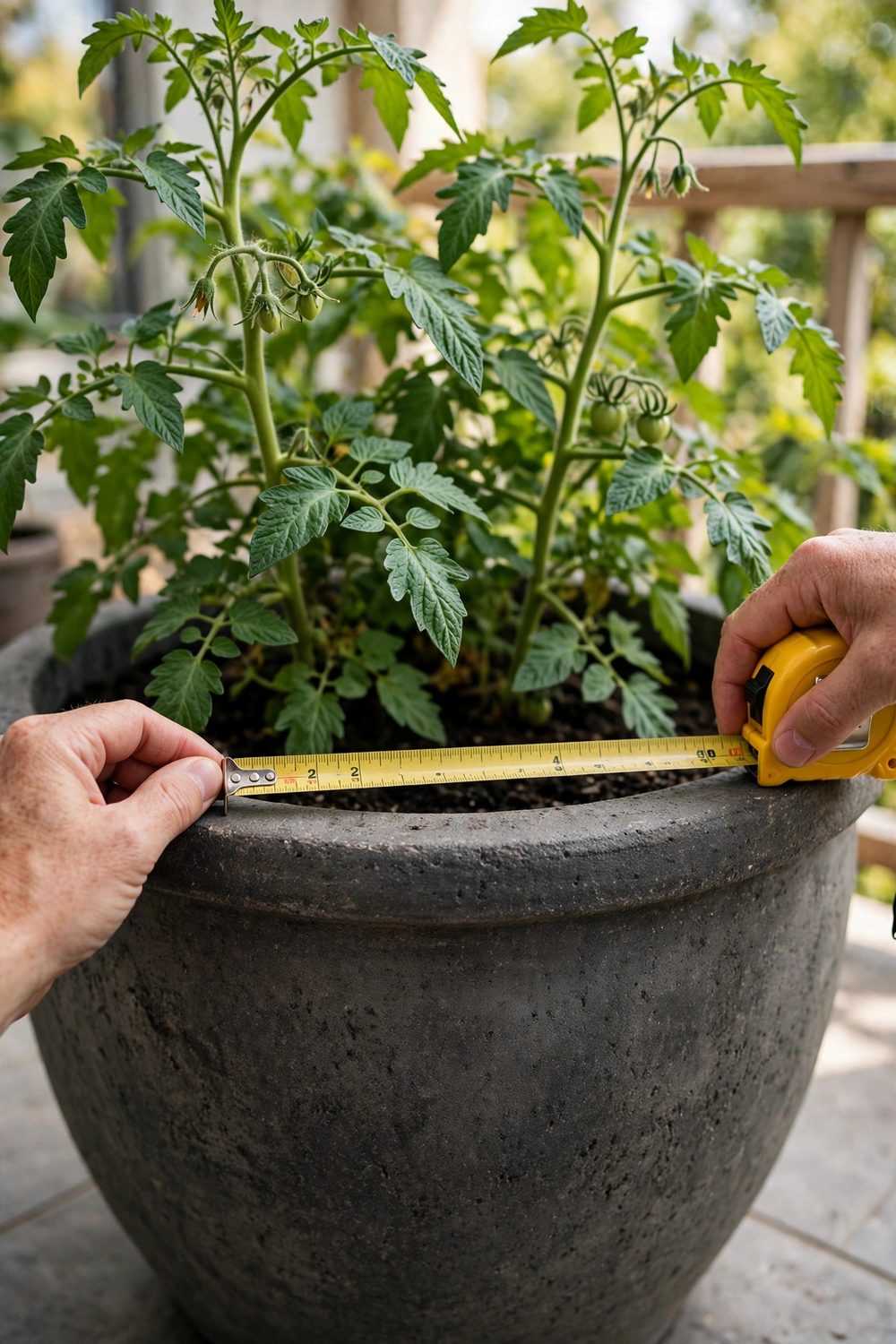
Measure across the top rim, then measure the depth from rim to base, and write both numbers down.
A pot near 20 inches (51 cm) wide and 16 inches (41 cm) deep holds roughly 15 gallons (57 litres).
Labels can mislead here, because a tall narrow pot and a wide shallow pot share the same rim width.
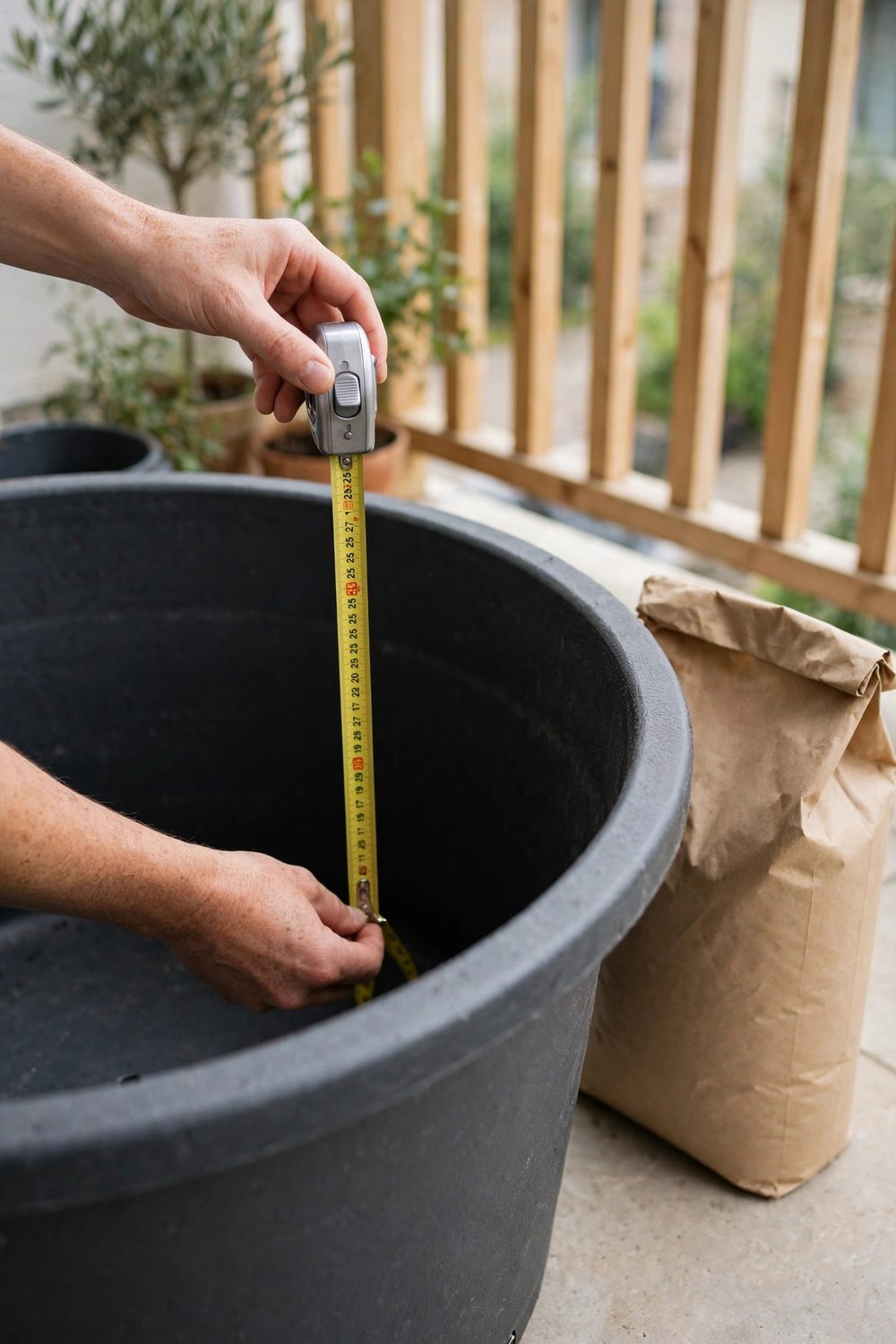
Depth matters as much as width, since tomato roots run deep and wide at the same time.
Anything under 10 gallons (38 litres) fails the pairing test at this first step, whatever the plants are.
Our full sizing guide to the best pot size for tomatoes shows the volume each plant type needs on its own.
Check Both Varieties Before You Pair Them
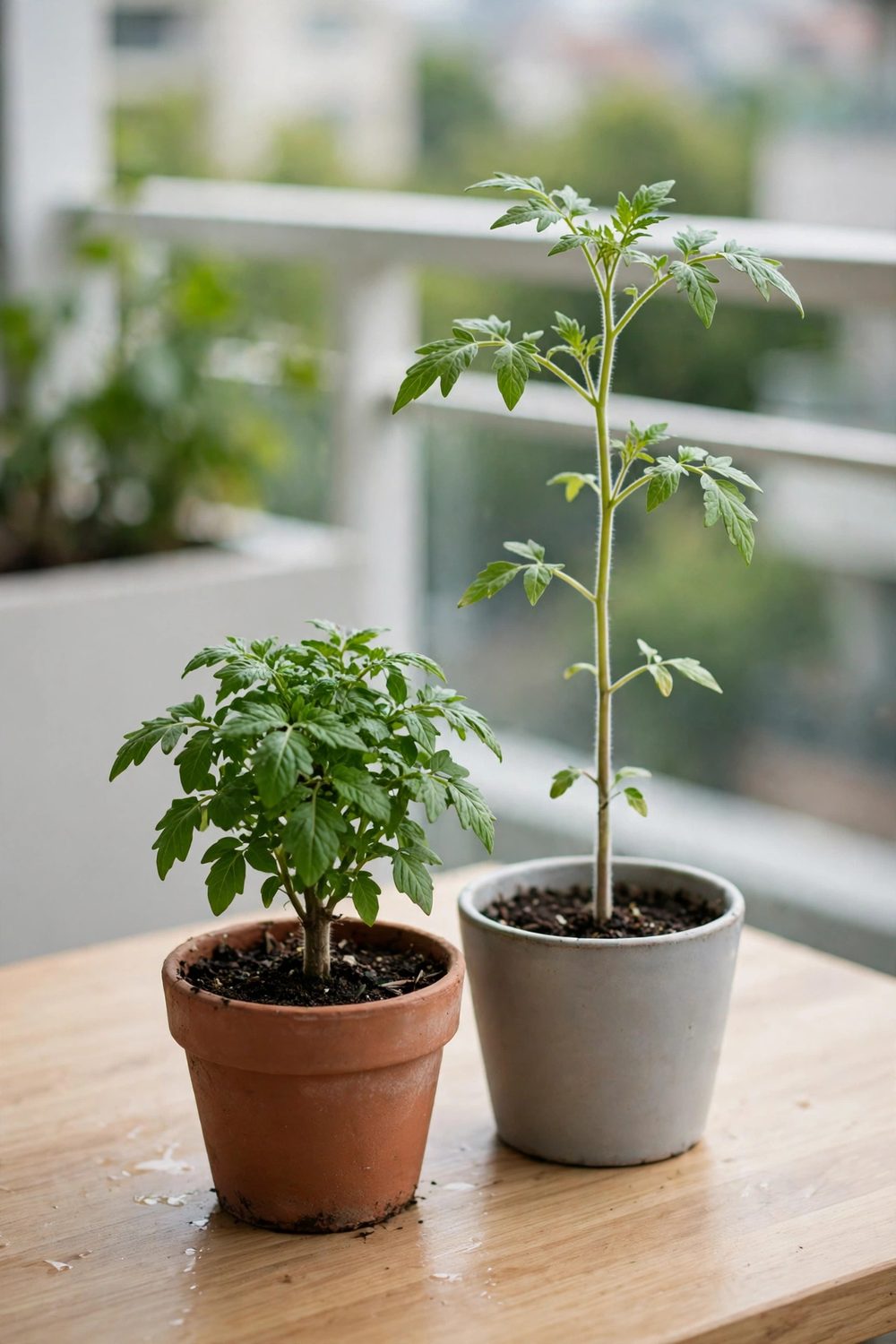
Read both labels and sort each plant into dwarf, determinate, or indeterminate before anything goes into the pot.
Dwarf types such as ‘Tiny Tim’ and ‘Red Robin’ stop near 12 to 18 inches (30 to 46 cm) tall.
Determinate types grow to a set height, flower in one main flush, and then slow down for the season.
Indeterminate types keep climbing past 5 feet (1.5 m) and keep setting fruit until frost stops them.
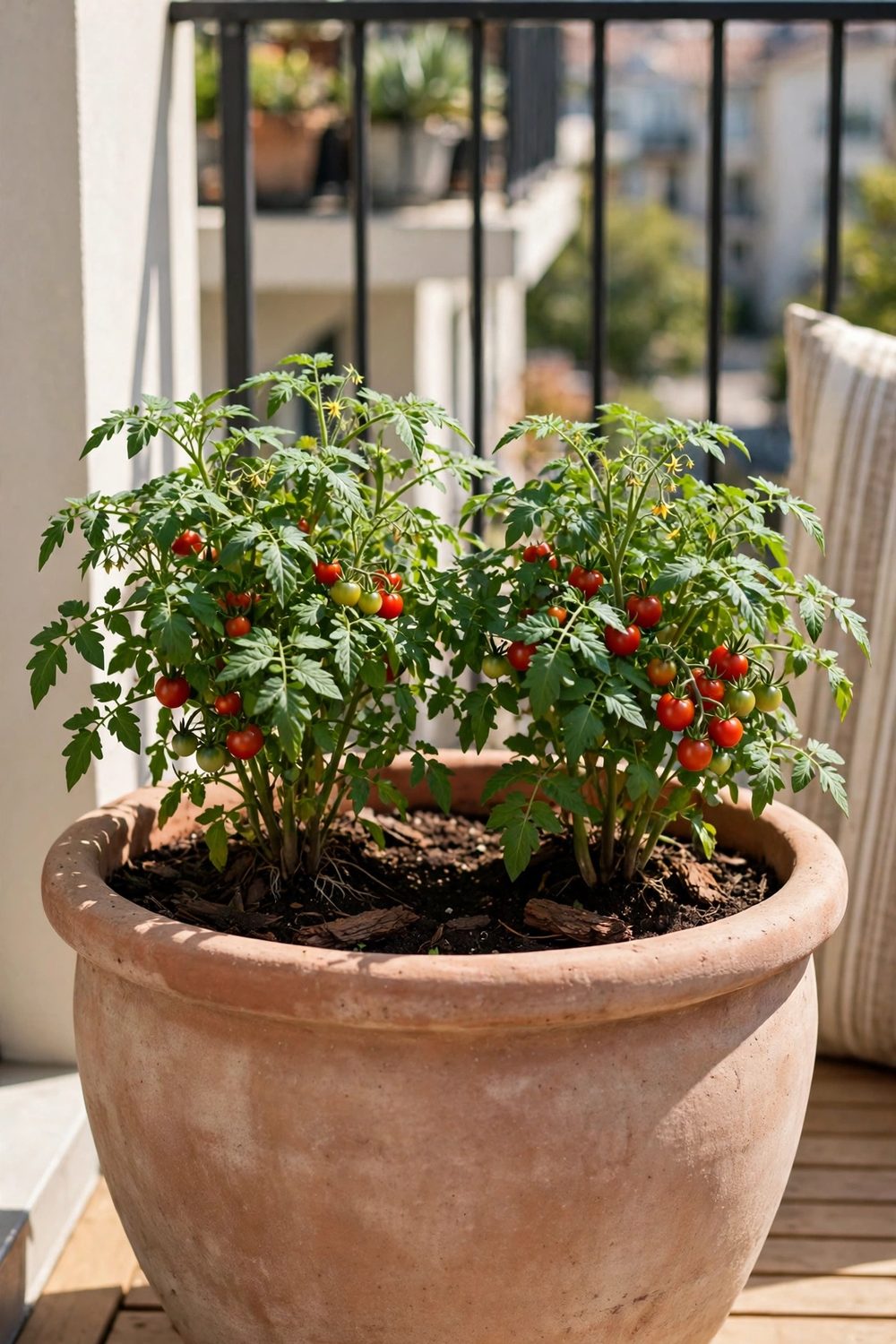
Two dwarfs share happily, because neither one races the other for light, water, or root room.
One indeterminate in the mix changes everything, since its roots and shade soon cover the whole pot.
Pair plants with the same growth habit and a similar size at maturity, and the pairing stays fair.
Test Spacing and Airflow Honestly
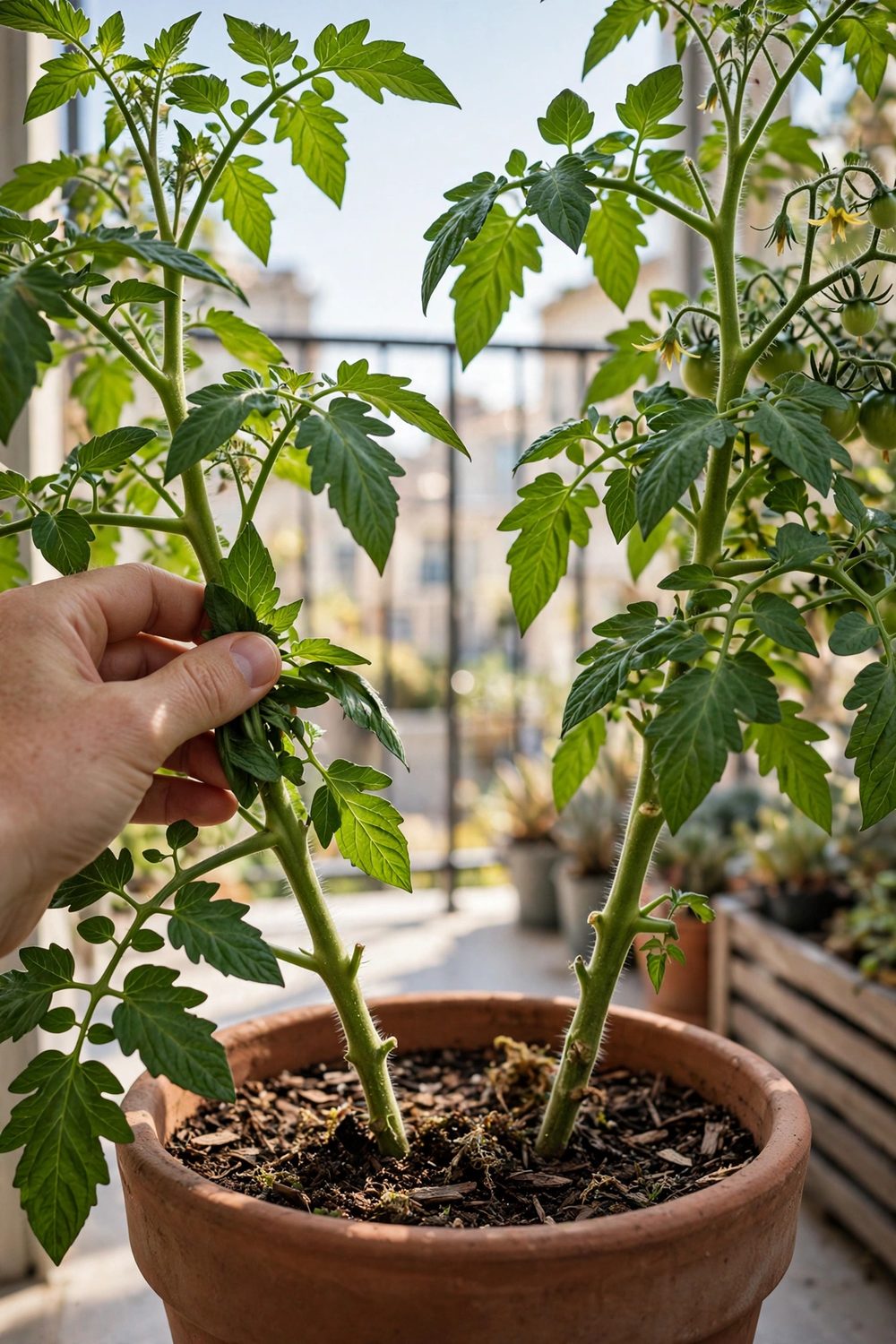
Set both plants in the empty pot, still in their nursery pots, and look at the gap between stems.
You want at least 8 inches (20 cm) between the two stems at planting, measured centre to centre.
Leaves from the two plants should barely touch at this stage, because they will meet soon enough.
Air needs a clear path through the middle of the pairing, from the rim up through the foliage.
Still air around wet leaves invites the fungal problems that spread fast in a shared pot.
Train each plant toward its own side from the first week, using its own stake and soft ties.
A weekly turn of the pot keeps both sides in the sun and stops one plant shading the other.
Pro Tip: hold your hand between the two stems on a still day. Moving air on your skin means the gap is wide enough.
Plan for Shared Watering and Feeding
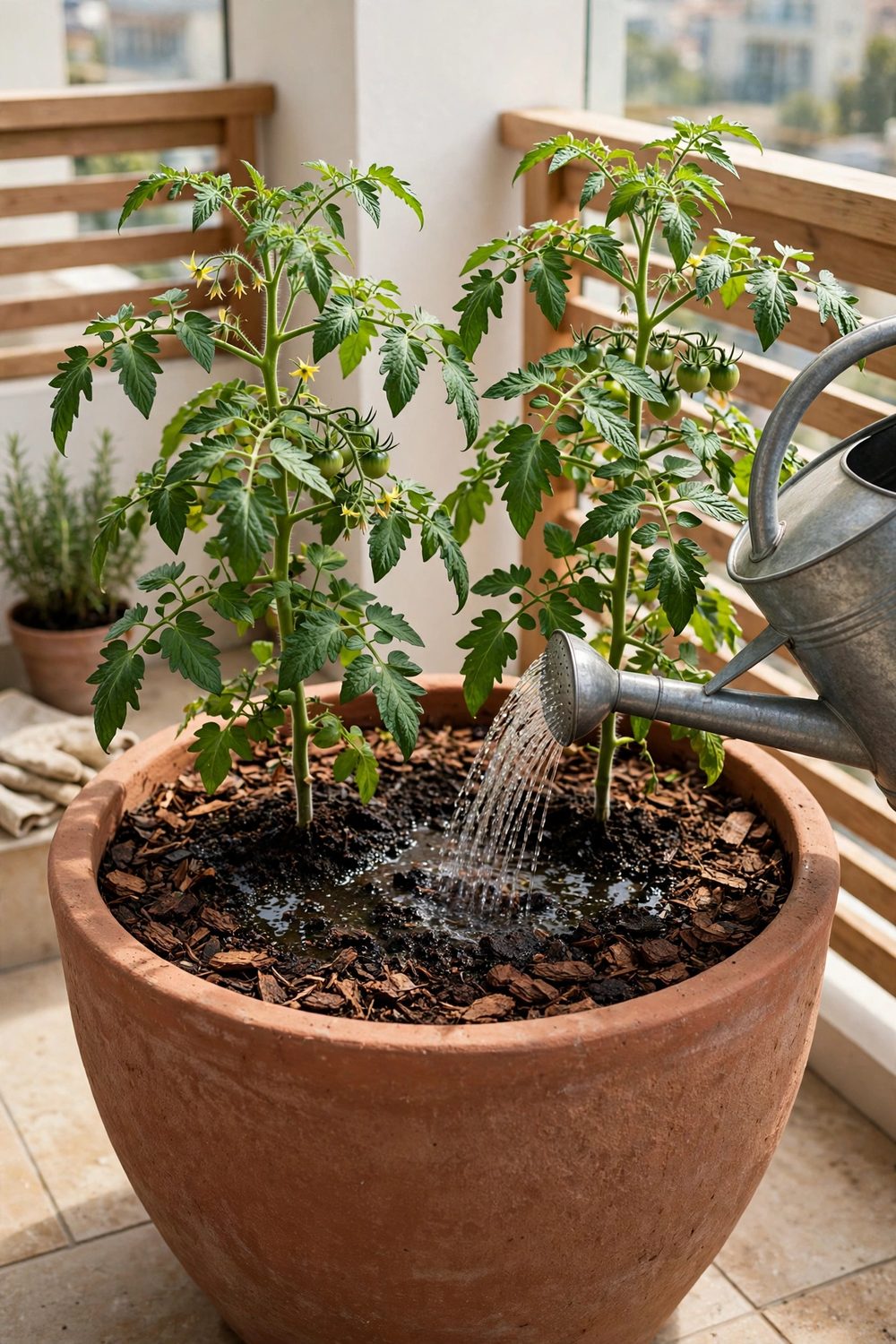
Two plants drink from one soil volume, so the pot dries far faster than a single plant pot.
Check moisture with a finger pushed 2 inches (5 cm) down, and water when that depth feels dry.
Water at the base in the morning, slowly, until a little runs from the drainage holes.
Uneven watering swings the roots between dry and soaked, and that swing drives blossom end rot.
The rot shows as a dark, sunken patch on the bottom of the fruit, far from the stem.
Steady moisture, plus mulch, prevents most cases, because the roots can take up calcium without interruption.
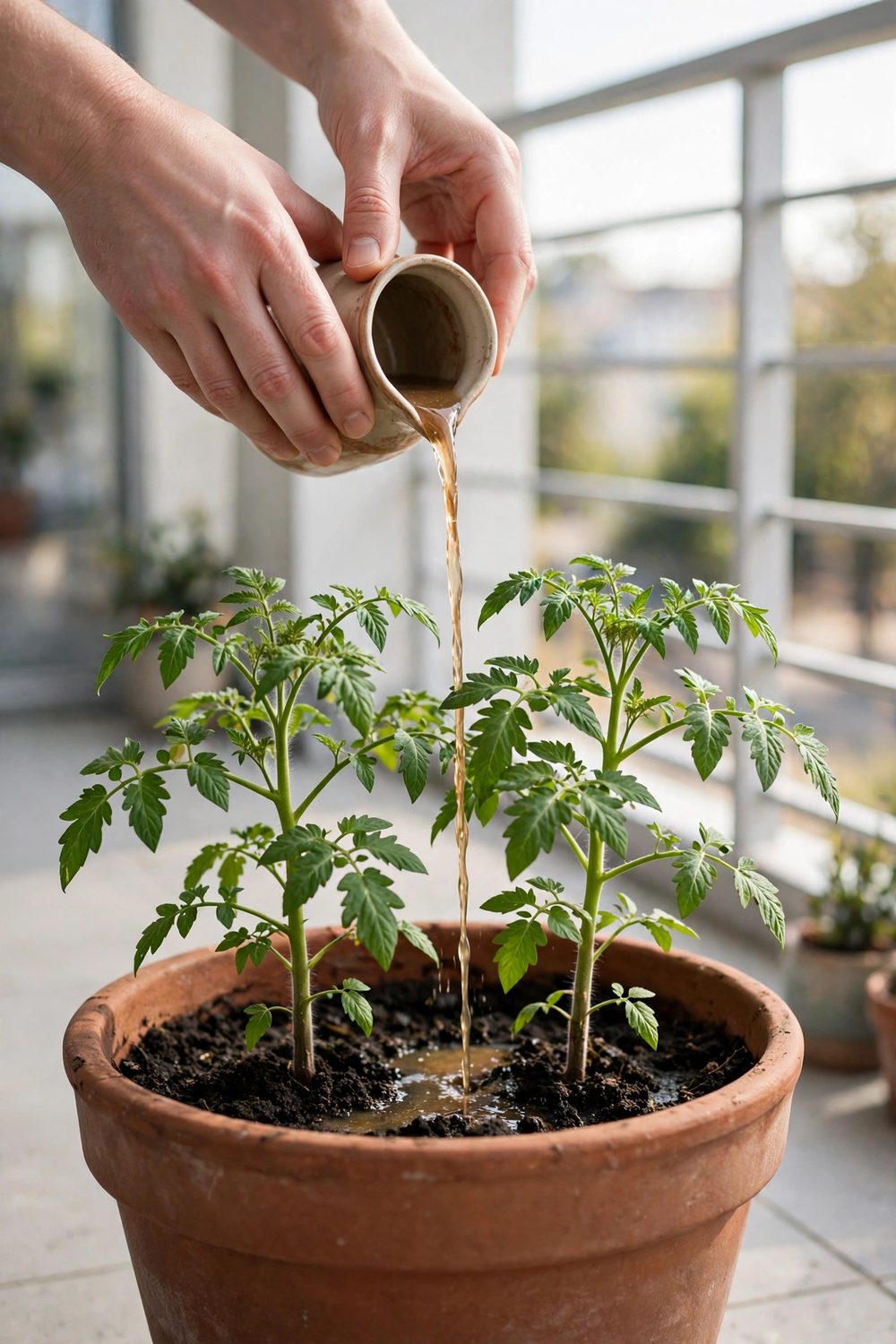
Feed both plants as one unit, at label strength, once the first flowers open.
A weekly liquid tomato feed suits a shared pot, since two root systems drain the mix quickly.
Never double the strength to make up for sharing, because excess feed burns roots and pushes leaf growth.
Pale leaves across both plants usually mean the shared supply ran out, not that one plant failed.
Heads Up: a paired pot on a hot, windy balcony can need water twice a day at peak summer. Plan the refill routine around your busiest days.
Apply the Verdict Rules and Decide
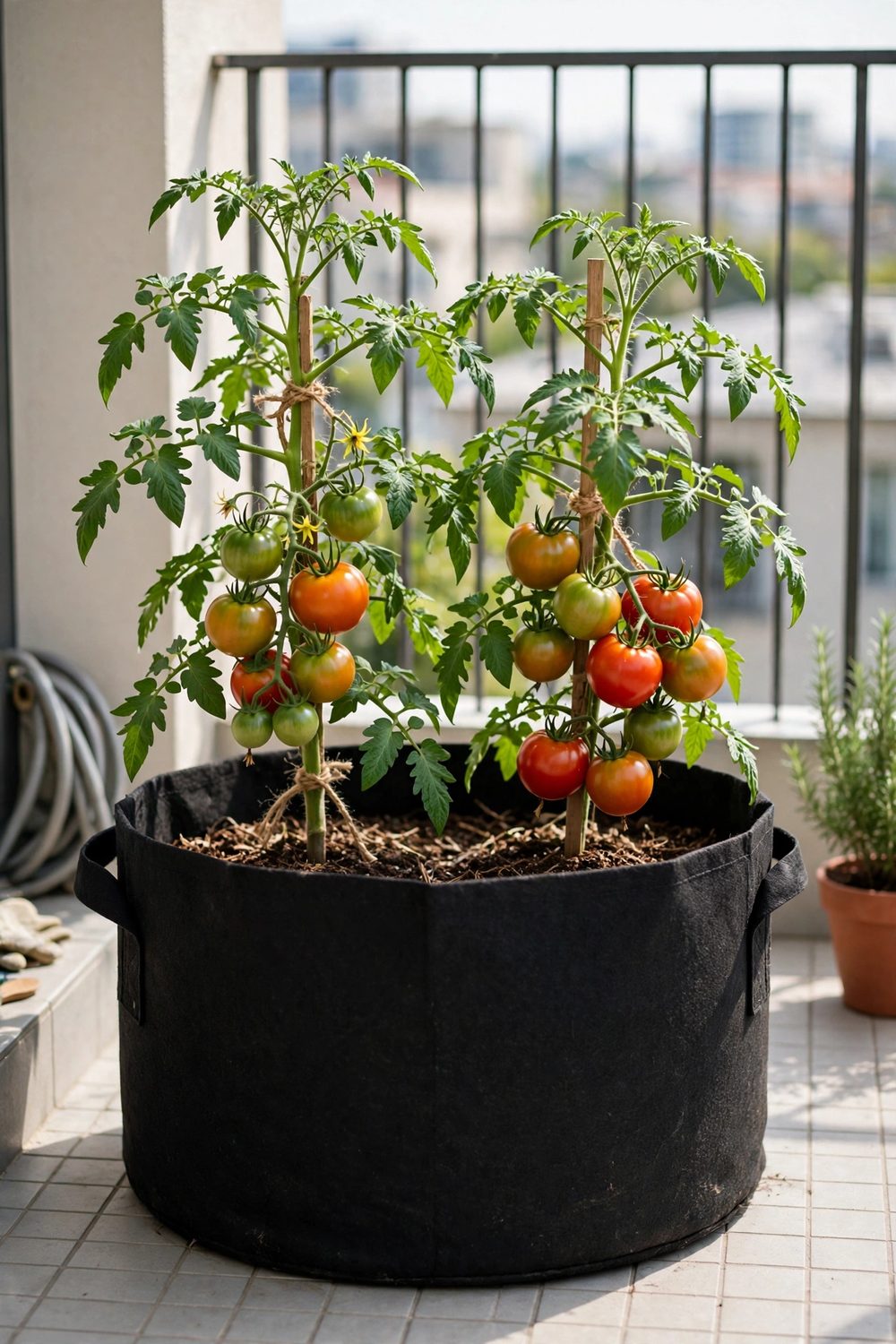
Your four checks now give a clear verdict, and the rules below settle most balcony cases.
Two dwarf plants in 10 gallons (38 litres) or more pass, with room for roots and airflow.
One dwarf tomato plus basil or another compact herb in 10 gallons also passes with ease.
Two determinate plants pass only in 15 to 20 gallons (57 to 76 litres), with firm staking.
Two indeterminate plants in 5 gallons (19 litres) fail, and no feeding plan rescues that pairing.
One indeterminate plant always does better alone, with the whole pot feeding one root system.
Fabric grow bags count here too, and our guide to growing tomatoes in grow bags on a balcony covers the bag sizes.
This comparison of grow bags vs pots for vegetables helps if you are choosing the container itself.
Common Mistakes
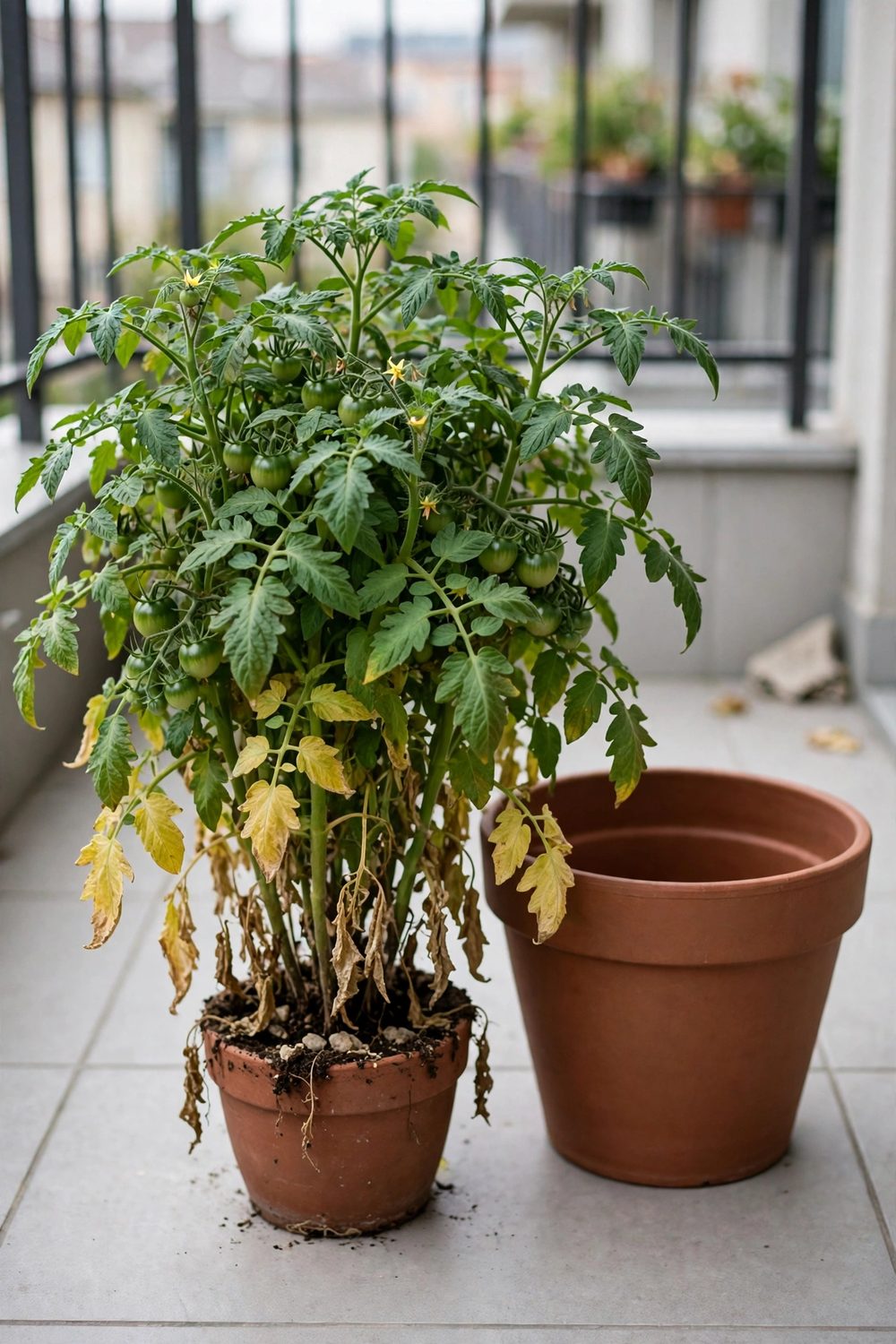
Trusting the rim width on the label.
A wide, shallow pot can hold half the soil of a narrower, deeper one.
Measure depth as well as width, every time, before the pairing decision gets made.
Pairing a dwarf with an indeterminate.
The tall plant shades the small one within weeks, and its roots take the larger share of water.
The dwarf survives, but it fruits poorly and stays pale beside its vigorous neighbour.
Watering on a fixed calendar.
A shared pot dries at a different speed after every weather change, hot spell, and growth spurt.
The finger test takes ten seconds and tells the truth that a calendar cannot.
Feeding at double strength.
Two plants share one soil, but they also share one set of roots per plant, not two.
Label strength, given weekly, feeds both plants without burning either root system.
Skipping the second stake.
One central cage pulls both plants into the middle, where leaves crowd and air stalls.
Give each plant its own support and train the stems outward from the start.
Planting first and checking later.
Separating two settled root systems mid season damages both plants and rarely ends well.
Run the four checks while the seedlings still sit in their nursery pots.
Judging the pairing by the first month.
Young plants look small and harmless together, even in a pot that will fail them later.
The crowding shows at flowering, when roots fill the mix and leaves close over the centre.
Judge the pairing by the mature size of both plants, not the seedlings on the table today.
Frequently Asked Questions
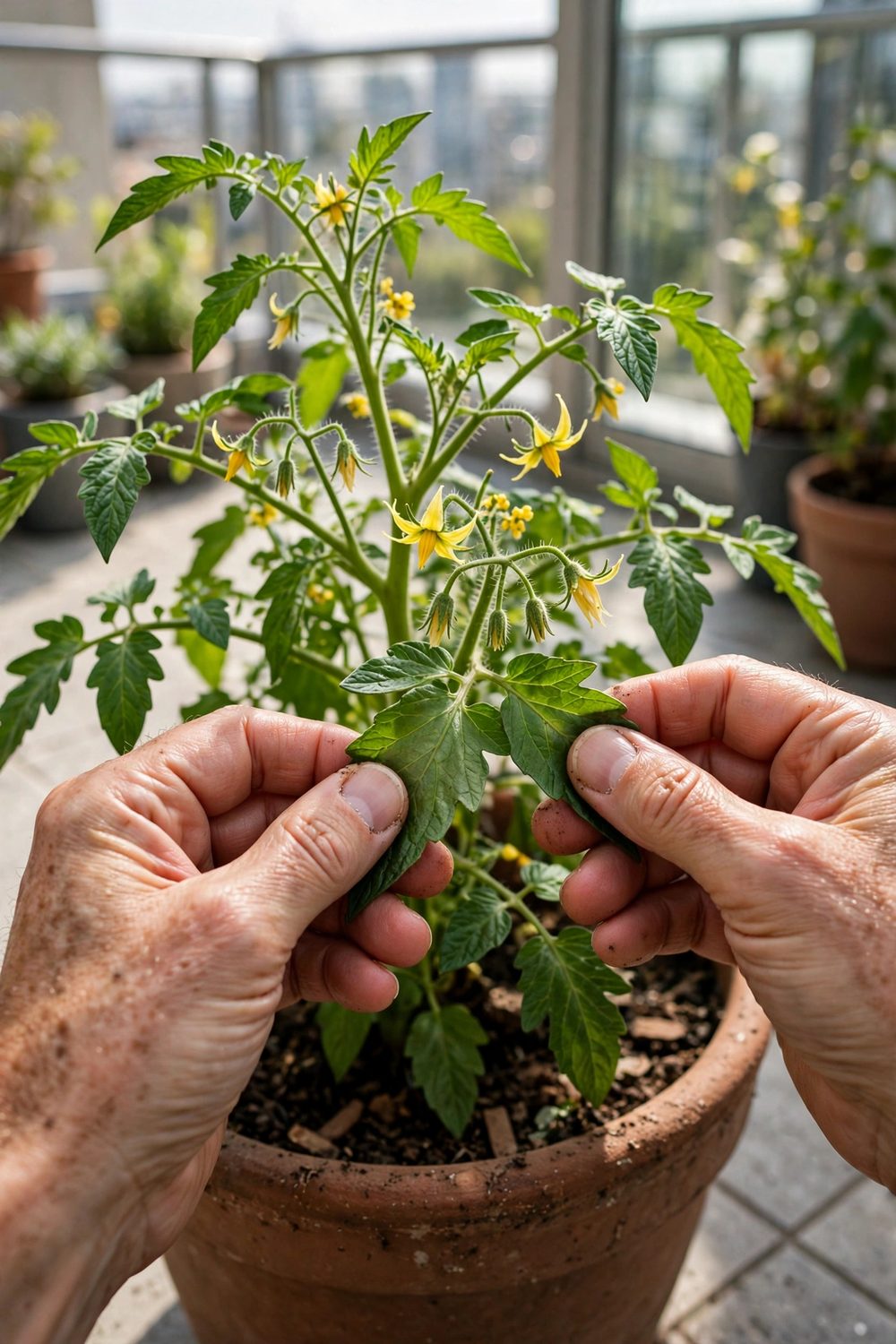
Can two cherry tomato plants share one pot?
Yes, when both plants are compact cherry types and the pot holds 10 gallons (38 litres) or more.
Dwarf cherry varieties such as ‘Tiny Tim’ stay small enough to share without a fight.
A tall indeterminate cherry type is a different case, and it earns a large pot of its own.
Stake each plant separately and keep the centre open, so air moves between the two stems.
What size pot do two tomato plants need?
Plan on 10 gallons (38 litres) as the floor for two dwarf or patio plants.
Two determinate plants need 15 to 20 gallons (57 to 76 litres) to fruit well.
Depth counts alongside volume, so look for at least 14 inches (36 cm) of soil depth.
Anything smaller suits one plant, and that one plant will usually outcrop a crowded pair.
Will two plants in one pot give double the harvest?
No, and expecting double sets the pairing up to feel like a failure.
Two dwarfs in one large pot give a good harvest from one footprint, spread across two varieties.
Each plant yields a little less than it would alone, because roots and light are shared.
The real gain is variety and space saved, not a doubled crop from the same soil.
Can I plant a tomato and peppers together in one big pot?
Yes, this pairing often works better than two tomatoes, since peppers stay smaller and drink less.
Use a pot of 10 gallons (38 litres) or more, and give the tomato the sunnier side.
Both crops like the same sun, warmth, and steady watering, so one routine serves the pair.
Keep the pepper clear of the tomato foliage, because shade cuts pepper fruiting fast.
How far apart should two tomato plants be in one pot?
Set the stems at least 8 inches (20 cm) apart, centre to centre, at planting time.
In a 15 to 20 gallon pot, 10 to 12 inches (25 to 30 cm) apart works better.
Plant toward opposite edges rather than side by side in the middle of the pot.
That edge spacing gives each root system its own half of the soil from day one.
One plant is outgrowing the other. What should I do?
Act early, while both plants are still small enough to move without tearing many roots.
Lift the weaker plant with a wide ball of mix and settle it into its own pot.
Water both pots well after the move and shade the moved plant for two days.
Left alone, the stronger plant takes more light and water each week, and the gap widens.
Quick Reference
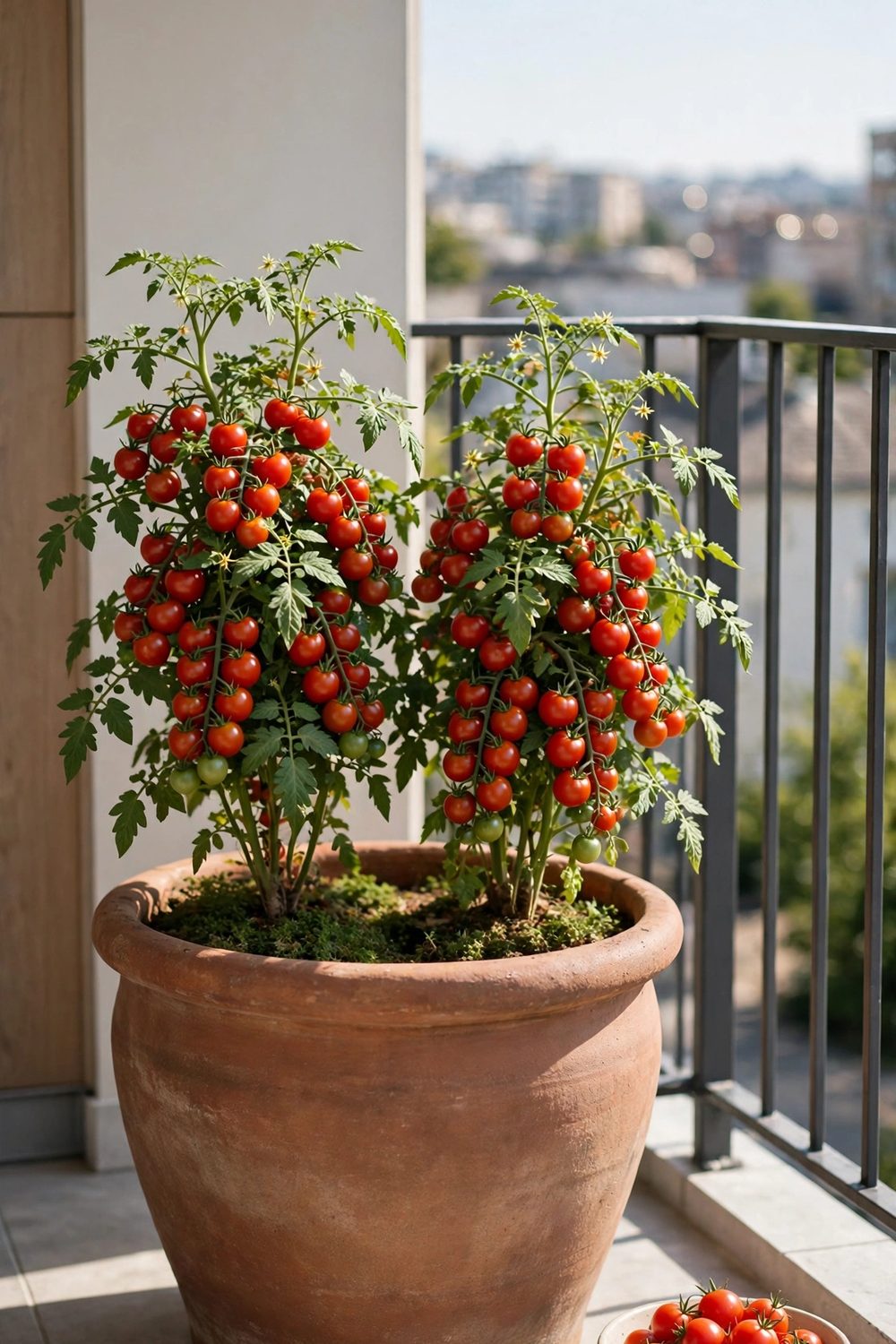
- Works: two dwarf plants in 10 gallons (38 litres) or more.
- Works: one dwarf tomato plus compact herbs in 10 gallons or more.
- Works, with care: two determinate plants in 15 to 20 gallons (57 to 76 litres).
- Fails: two indeterminate plants in 5 gallons (19 litres).
- Fails: any pairing under 10 gallons, whatever the varieties.
- Spacing: stems at least 8 inches (20 cm) apart, one stake per plant.
- Water: finger test at 2 inches (5 cm), water at the base, mulch the surface.
- Feed: tomato feed at label strength, weekly, from first flowers.
So, two tomato plants in one big pot does it work? Yes, when the pot truly holds 10 gallons or more and both plants stay compact.
Run the volume, variety, spacing, and watering checks before you plant, and the verdict takes care of itself.
Start with two dwarfs such as ‘Tiny Tim’ and ‘Red Robin’ for the easiest first pairing.
Save this to your tomato board for later, and check the pot with a tape before the next seedling run.


