

How to Keep a Balcony Garden Tidy So Neighbours Do Not Complain
A balcony garden can crop well and still draw complaints if soil spills, water drips, and dead leaves pile up. Learning how to keep a balcony garden tidy so neighbours do not complain solves that problem at the source.
The fix is a small system, not a big clean up once a season. You contain mess at potting time, catch every drip, tie plants before they flop, and sweep on a weekly rhythm.
Each step here takes minutes and uses gear you may own already. By the end, the balcony reads as a cared for space from the street and from the floor below.
A tidy garden also grows better. Clear floors let air move, caught drips protect roots and floors, and regular checks catch pests while numbers stay small enough to pick off by hand.
This post contains affiliate links. If you buy through them, we may earn a small commission at no extra cost to you. See our Affiliate Disclosure.
Time: About 10 minutes a week once the system runs, plus 1 hour to set it up · Difficulty: Beginner
What You Need
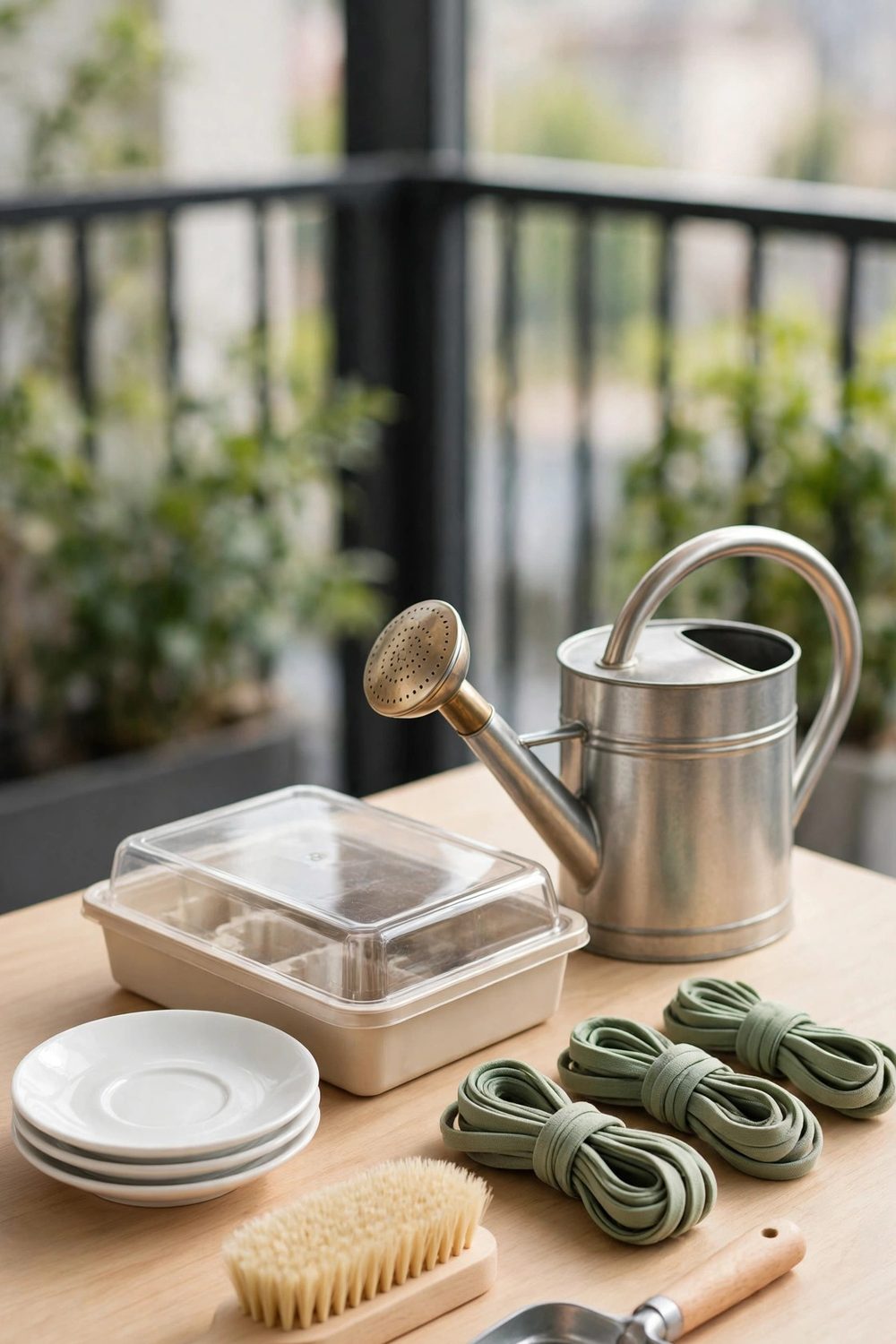
The tidy system rests on a short kit. Most items cost little, last for years, and earn their space by stopping mess before it starts.
- Deep saucers or trays: one under every pot, wide enough to hold a full watering and any rain overflow without spilling past the rim.
- A lidded potting tray: a shallow tray with raised sides for potting, sowing, and mixing, so loose mix lands on plastic rather than tiles.
- A watering can with a rose head: the rose softens the flow, so water soaks in instead of splashing mix and muddy water over the floor.
- Soft plant ties and a small trellis: twine or soft ties that hold stems to a support without cutting into them as they thicken.
- A hand brush and dustpan: kept on the balcony for dry soil, fallen leaves, and spilled mix, swept up the day they fall.
- A lidded storage box: one weatherproof box for feed, ties, labels, gloves, and the trowel, so tools never scatter across the floor.
- A small bucket or caddy: for carrying dead leaves, spent plants, and prunings indoors to the bin in one trip, with no trail behind you.
- An outdoor mat for the potting spot: a washable mat under the area where you pot up, catching the soil that always escapes a bag.
Contain Soil at Potting Time
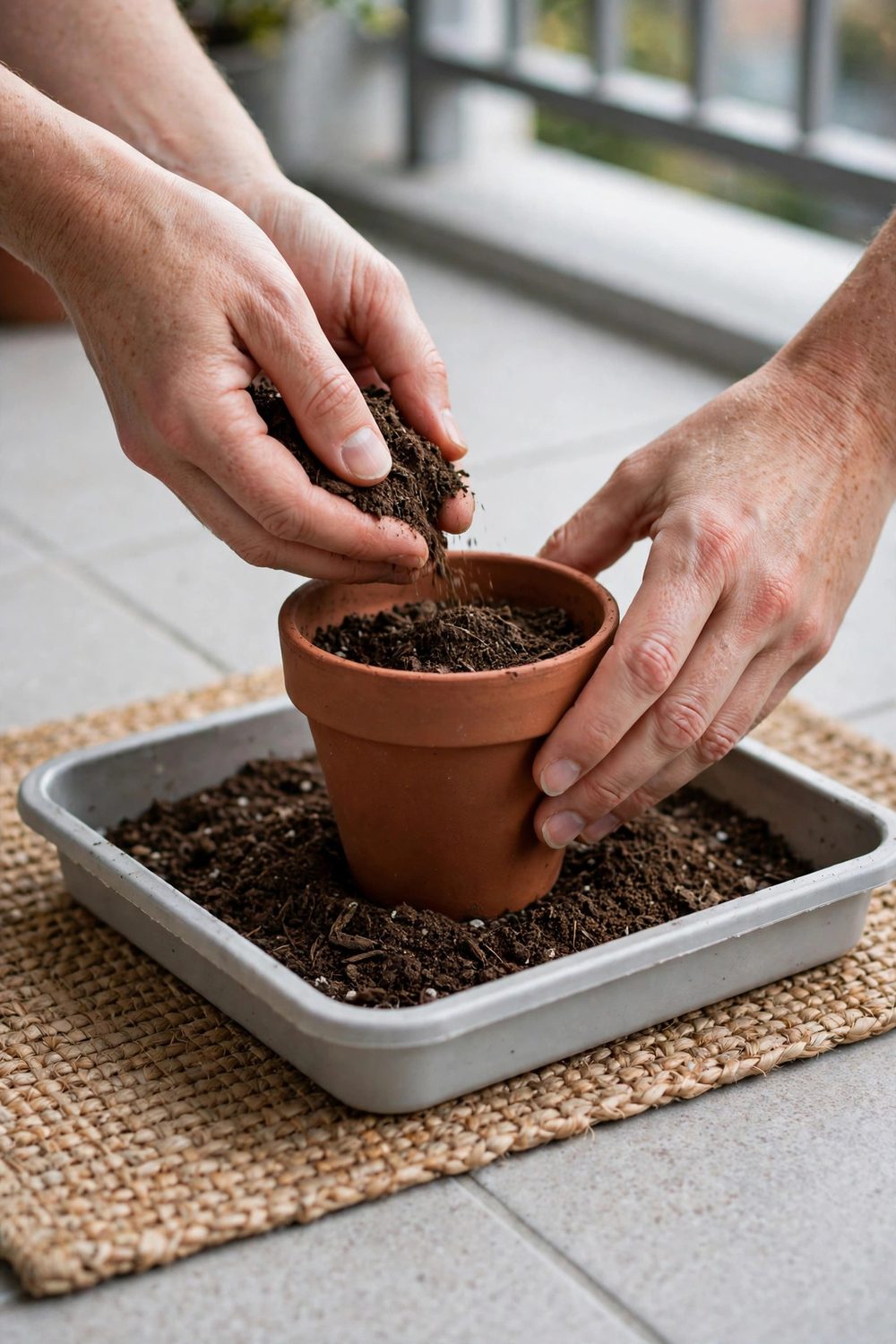
Do every potting job inside the lidded tray, on the mat, never straight over the tiles. Scoop mix from the bag into the tray, fill pots there, and brush the tray clean.
Soil spilled on tiles washes into grout lines and drains with the next watering. That muddy water is the streak neighbors see on walls and on the balcony floor below.
Fold the mix bag closed and store it in the lidded box after each job. An open bag slumps, spills, and draws flies in warm weather within days.
Set Saucers or Trays Under Everything
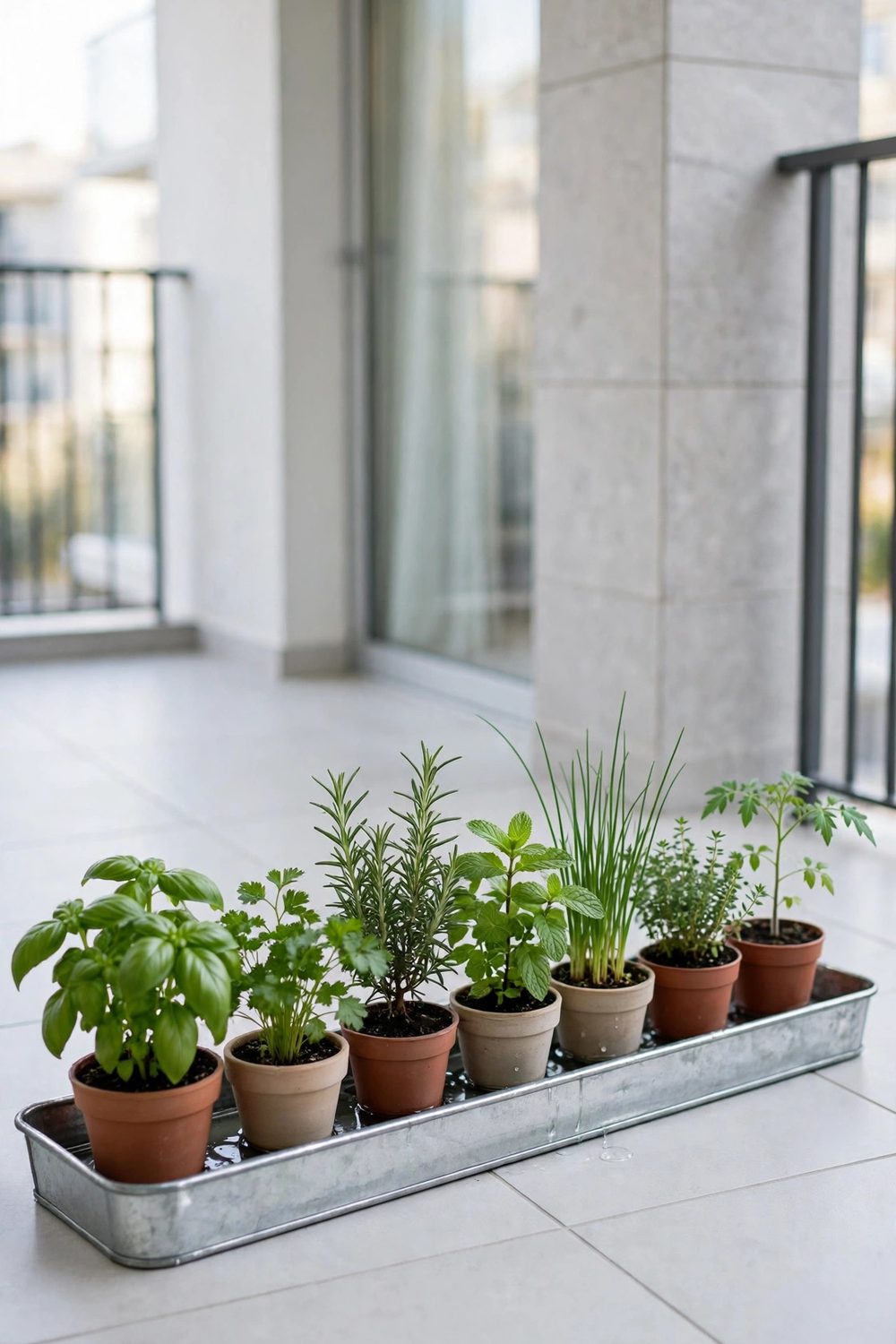
Place a saucer under every pot before the season starts, sized wider than the pot base. A saucer that only matches the base overflows at the first heavy watering.
Empty standing water from saucers about 30 minutes after watering on dry days. In a wet week, tip saucers out after rain so no pot sits in a pool.
For a row of small pots, one long tray beats five small saucers. It catches every drip in one line and lifts out for a rinse in seconds.
Tie Plants to a Trellis Before They Flop
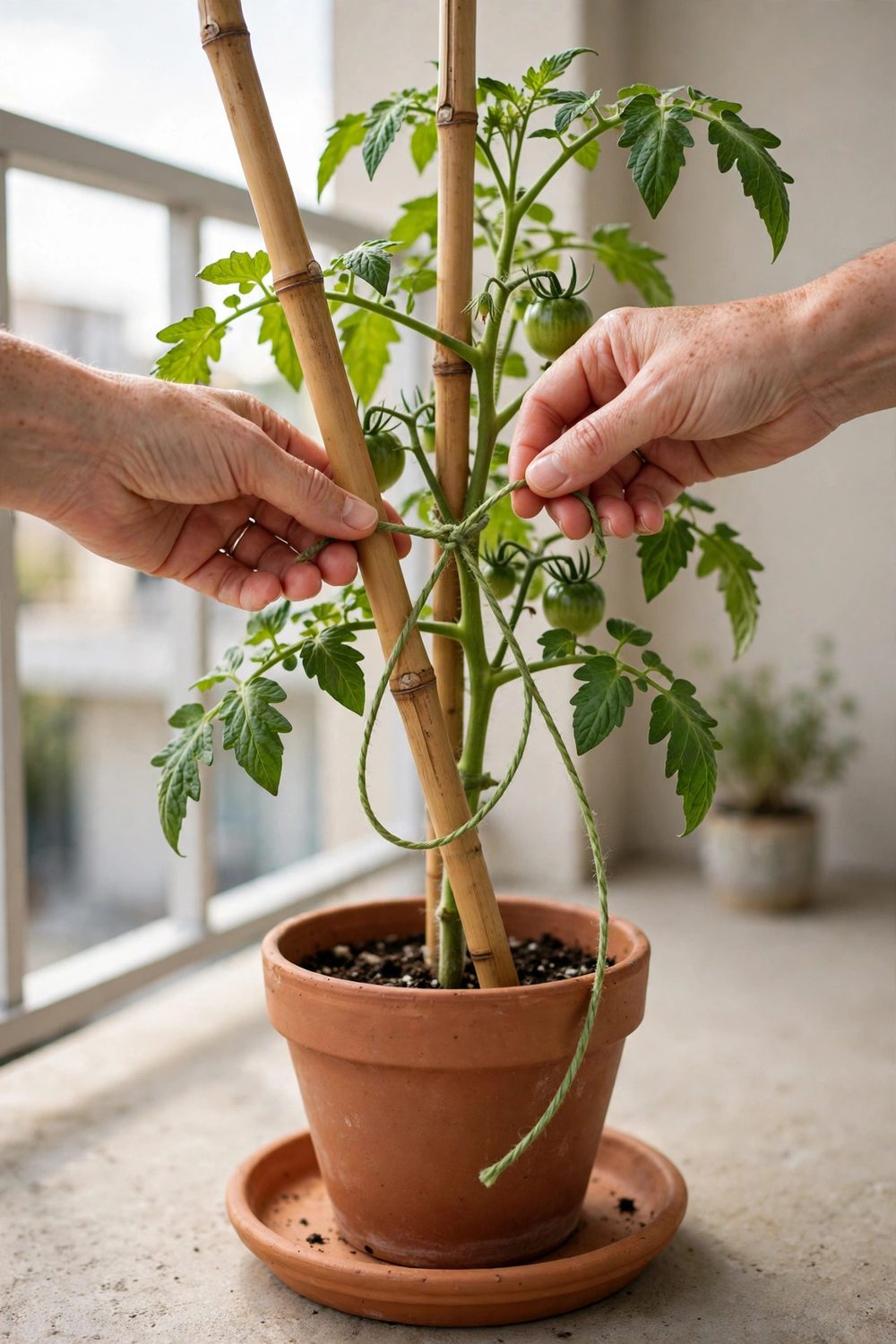
Put the trellis or support in place at planting time, while roots are small. Push a cane or small trellis into the mix before stems lean and leaves spill over the rail.
Tie stems loosely with soft ties in a figure of eight, so the tie holds the stem without rubbing it. Check ties every two weeks and loosen any that bite in.
Upright plants drip less, shade the floor less, and keep paths clear. A flopped tomato drags leaves across tiles, where they rot and stain the surface under them.
Run a Weekly Ten Minute Sweep
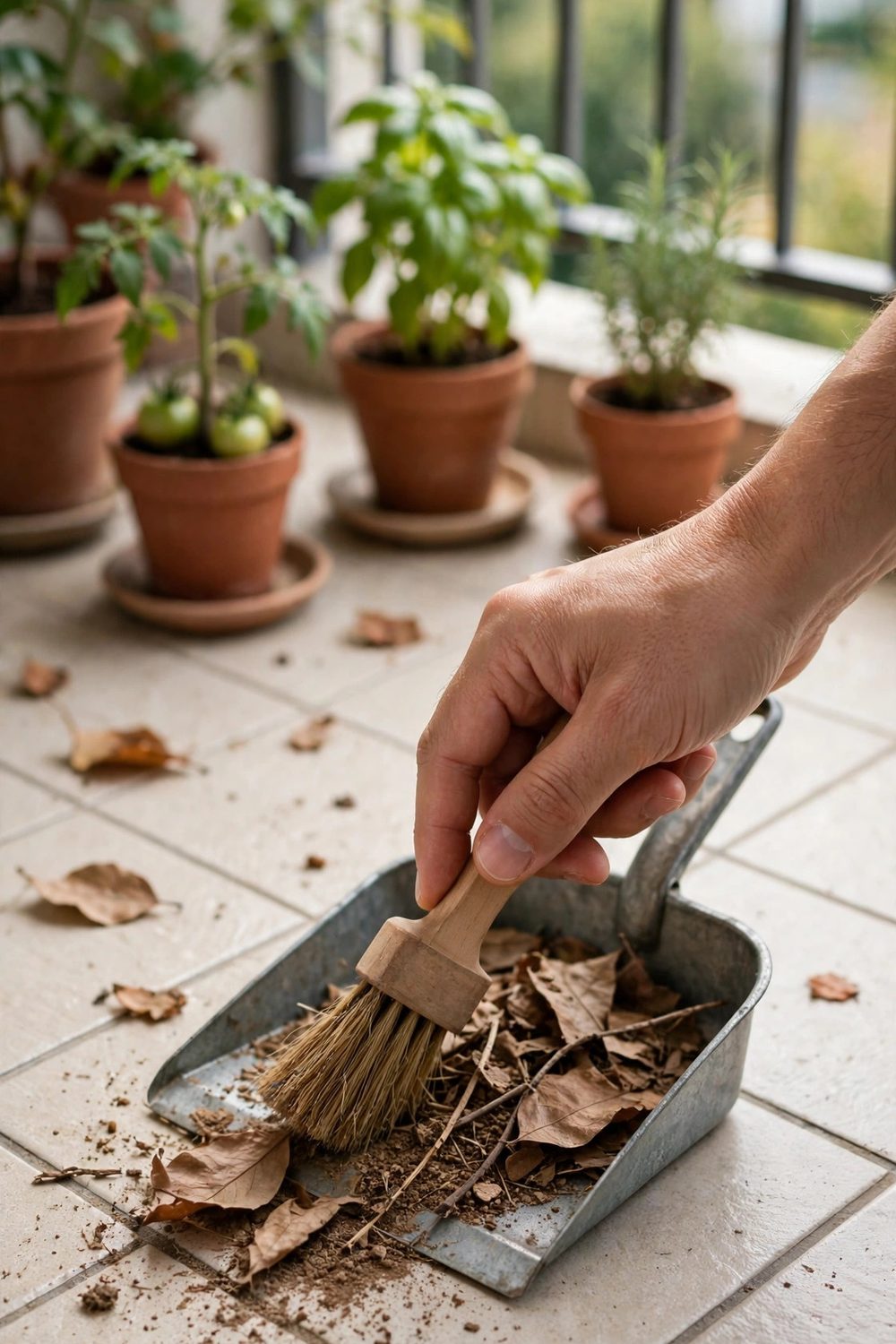
Pick one fixed slot each week and give the balcony ten minutes with the brush and caddy. Pick off dead leaves, lift fallen petals, and sweep dry soil back to the tray.
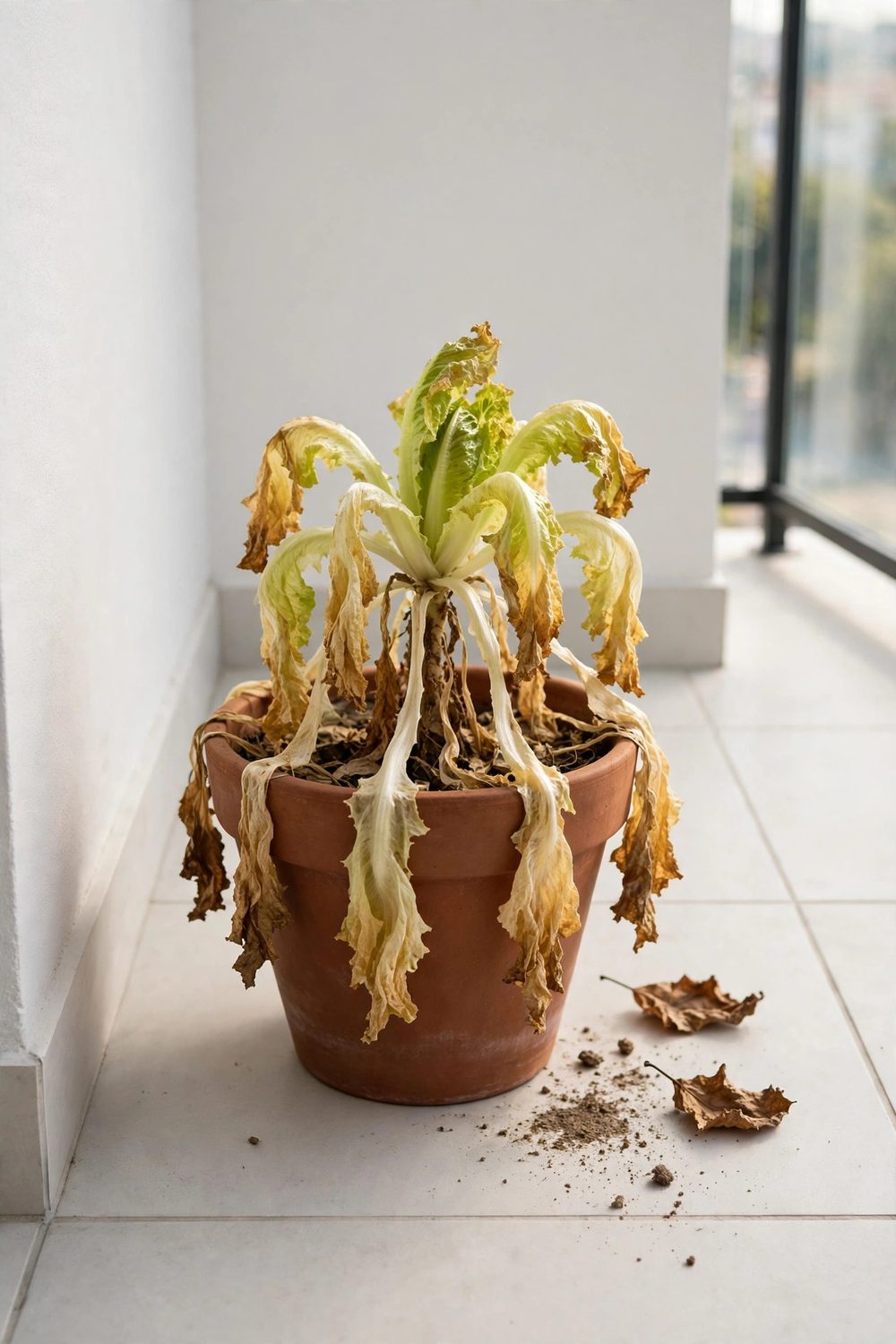
Pull spent plants as soon as they finish cropping, rather than leaving them to slump. A finished lettuce or bean plant turns to mush and draws flies within a week.
Wipe the rail top and the outside of pots with a damp cloth during the same round. Dust and splash marks build up slowly, and a weekly wipe keeps them faint.
Check under each saucer while you sweep, since grit and old leaves gather there unseen. A damp ring left for weeks can mark tiles, so lift, wipe, and reset each saucer flat.
Water With a Can, Not a Splash
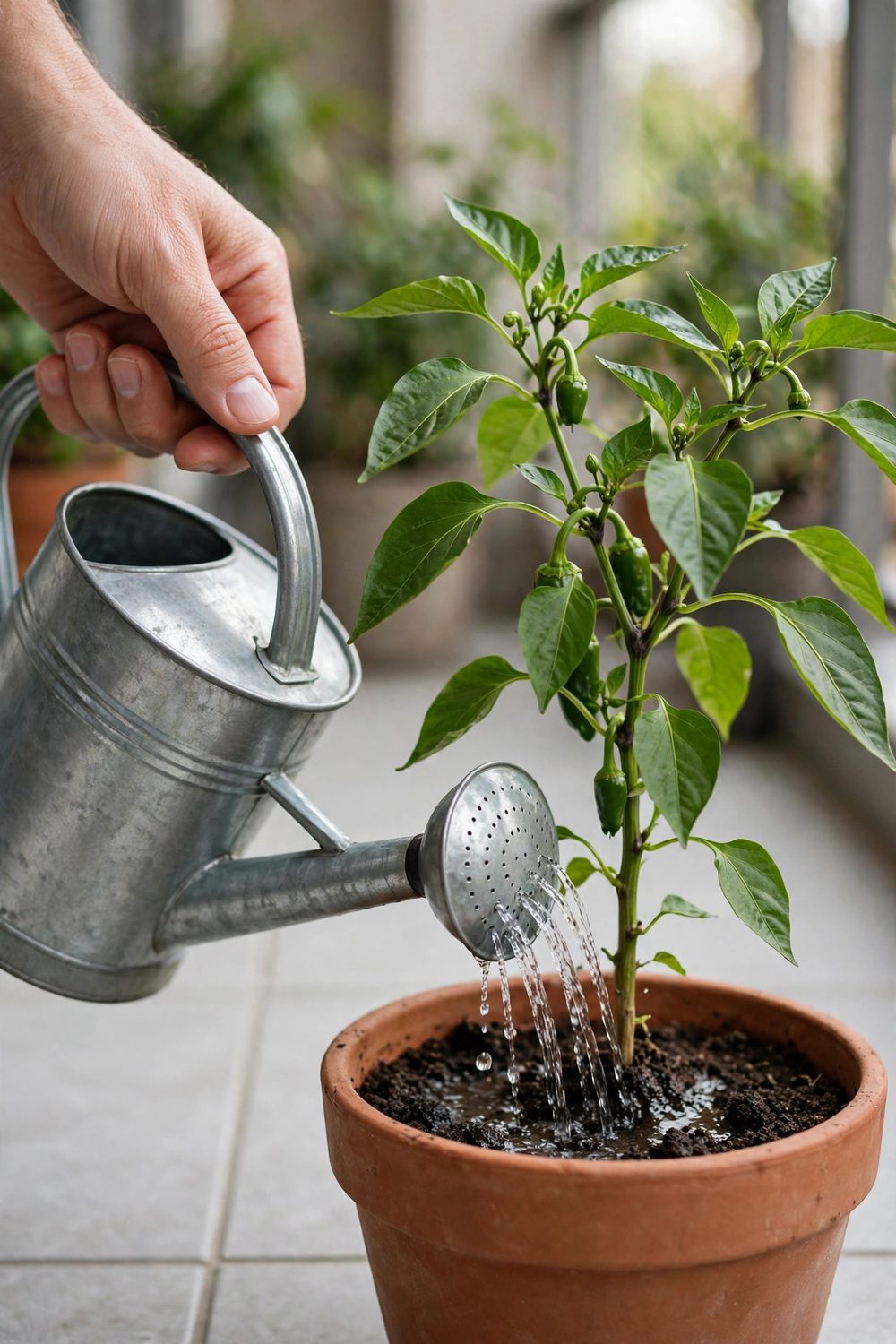
Water at the base of each plant with the rose head held low over the mix. A low, gentle flow soaks in where it lands instead of bouncing soil out of the pot.
Water in two short rounds on hot days. The first round wets the surface, and the second soaks deep, so far less water escapes through the drainage holes into the saucer.
Stop as soon as water reaches the saucer, and note which pots drink fastest. Overflow is the main source of drips, stains, and complaints about balcony gardens.
Harvest Little and Often
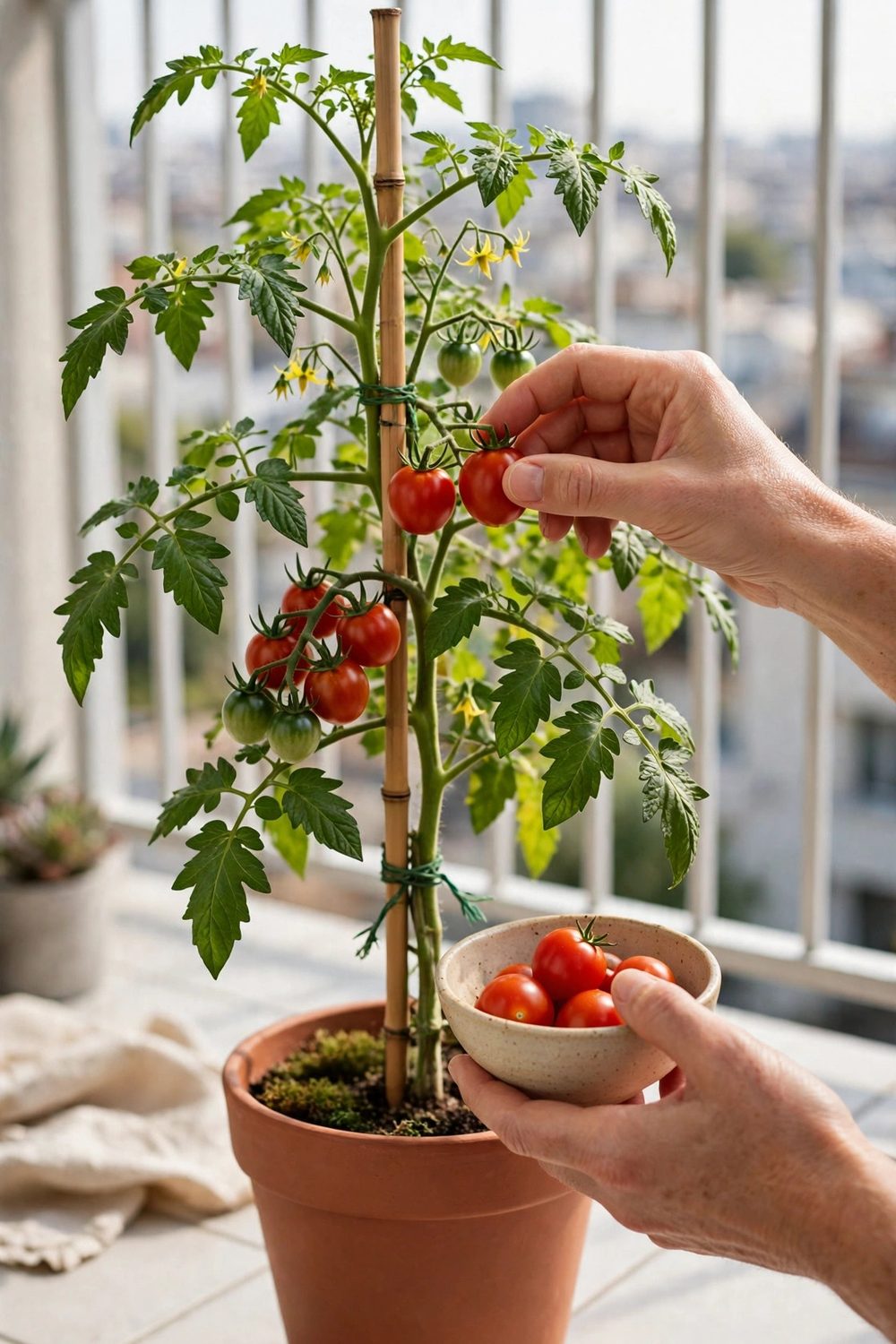
Pick leaves, beans, and fruit as soon as they reach a usable size. Crops left hanging turn soft, drop, and rot on the floor or in the pot below them.
A small bowl on each visit keeps picking quick. Lettuce leaves, kale, herbs, and cherry tomatoes all crop better when picked often, since the plant replaces what you take.
Carry trimmings and dropped fruit indoors in the caddy the same day. Fruit left on tiles ferments in heat, stains the surface, and draws wasps by the next afternoon.
Store Tools and Feed in One Lidded Box
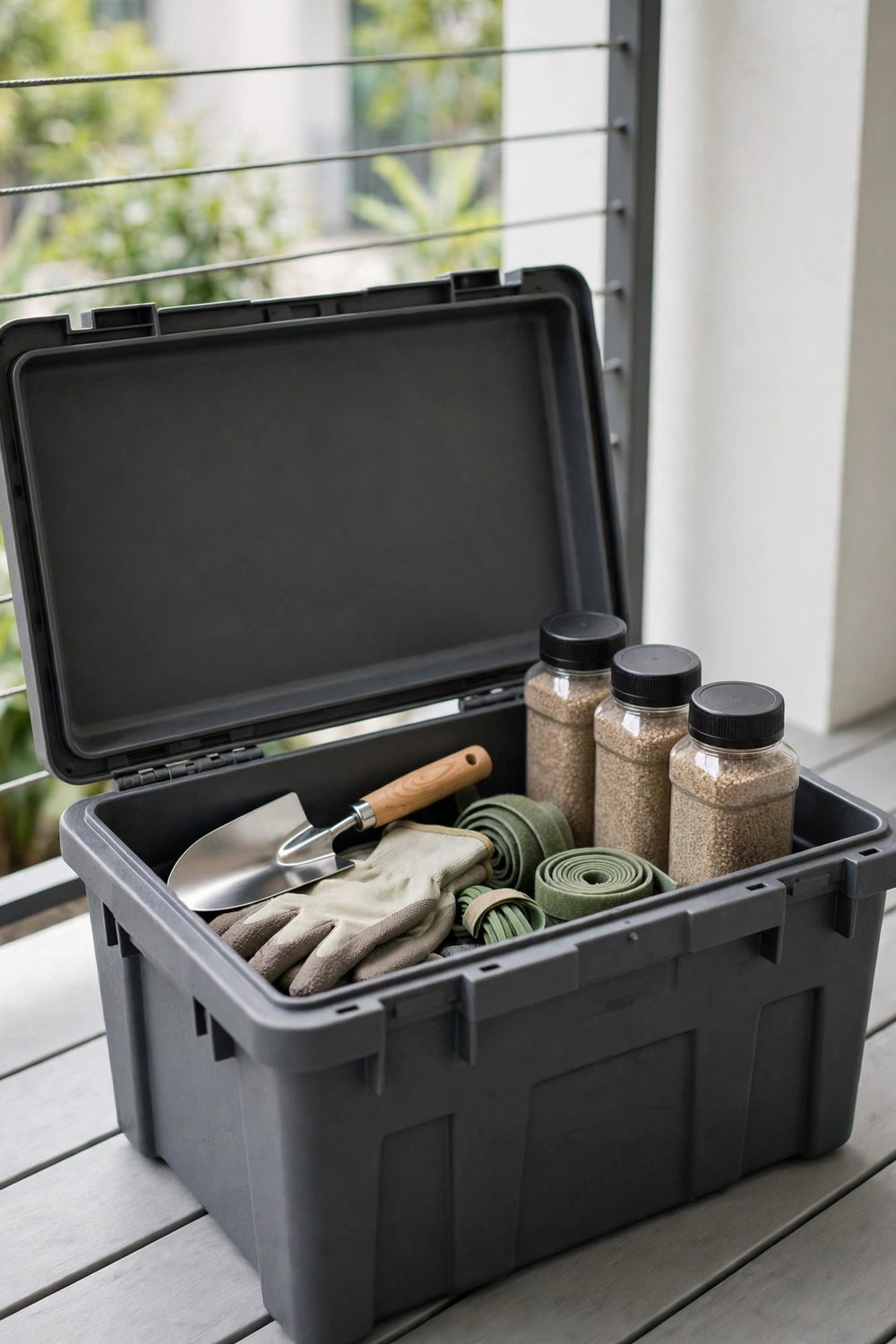
Give every tool, tie, label, and feed bottle one home in a single lidded box. A closed lid keeps rain off feed, keeps bags upright, and hides the clutter in one move.
Put tools back the moment a job ends, rather than leaving them out overnight. A trowel left on tiles rusts, trips feet, and leaves a rust mark that scrubs off hard.
Stand liquid feed bottles upright inside the box, lids tight. A tipped bottle leaks through a floor gap and can mark the ceiling or balcony of the home below.
Run a Neighbor Facing Check Last
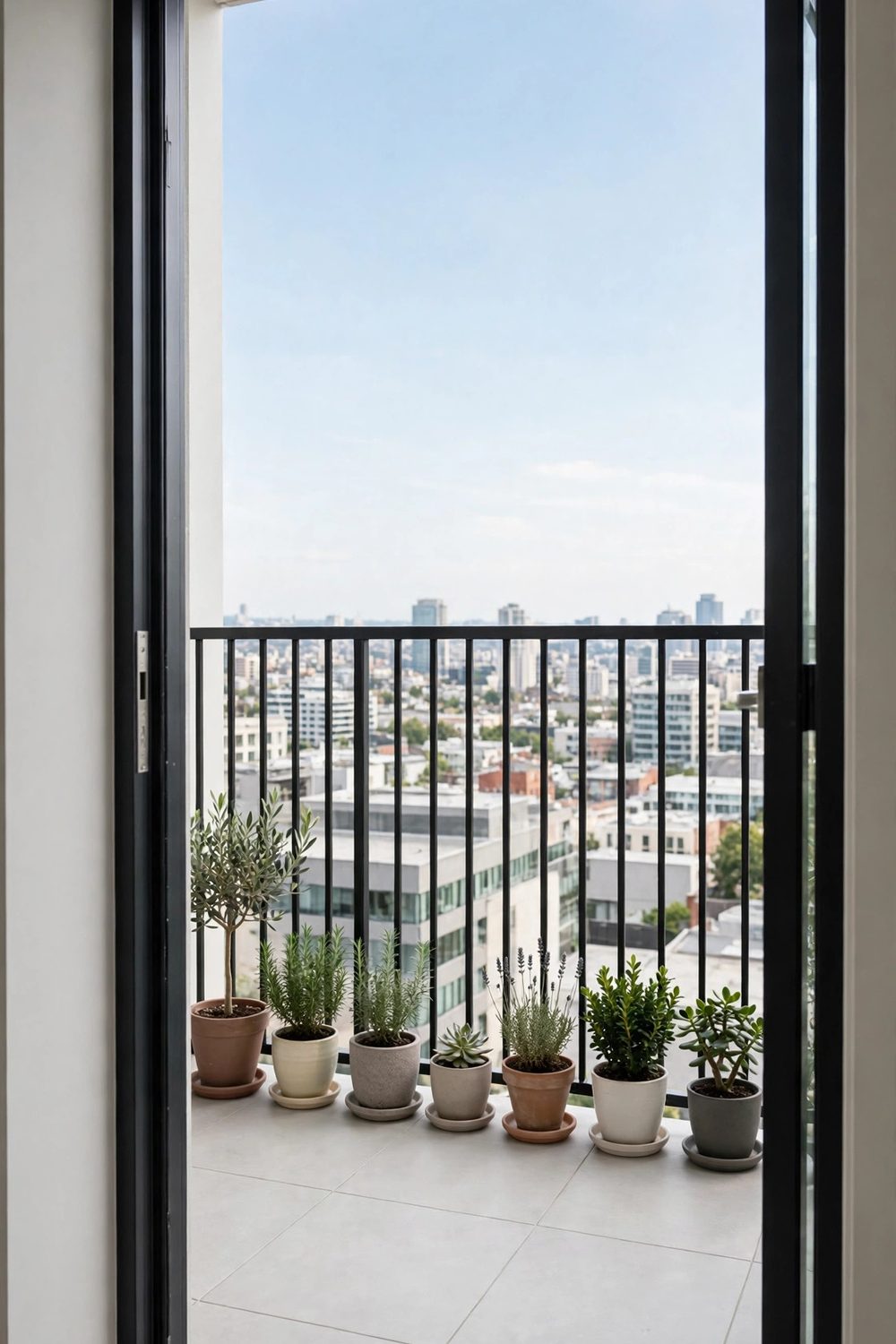
End each weekly round by viewing the balcony as a neighbor sees it. Step back to the door and check for drips, overhang, fallen leaves, and anything resting on the rail.
Nothing should hang past the outer rail line or rest where wind can push it over. Move loose pots, labels, and light trays back from the edge after every storm.
Renters with strict leases face extra rules on rails and drips. Our guide to a balcony garden for renters with strict landlord rules sets those terms out in full.
Common Mistakes
Most complaints trace back to a handful of habits. Each one is easy to swap once you can name it.
Watering from a height with a jug. A hard stream from above splashes mix out of pots and muddy water across tiles. Use a can with a rose head, held low, at the base of the plant.
Skipping saucers to save money. Bare pots drain straight onto the slab, and every watering leaves a ring or a drip. Our guide to balcony garden drainage mistakes that stain the floor below covers each failure and its fix.
Leaving dead plants in place for weeks. Spent plants slump, rot, and smell in warm weather. Pull them at the end of their crop, shake mix off the roots, and bin the tops the same day.
Potting up on open tiles. Mix always escapes a bag during potting. Work inside a lidded tray on a mat, and brush the area clean before you carry pots to their spots.
More habit traps sit in our roundup of container gardening mistakes that kill beginner vegetables, and most of them leave a mess behind as well.
Frequently Asked Questions
How often should I sweep the balcony?
Once a week for ten minutes covers most of the season. That round clears dead leaves, fallen fruit, and dry soil before any of them wash into stains or blow over the rail.
In autumn, or under a tree that drops leaves and seeds, add a second short sweep. Fallen leaves hold water against tiles and leave dark marks if left for weeks.
What do I do about water dripping below?
Start with saucers under every pot and water at the base in two short rounds. Most drips come from overflow, and a saucer plus a slower round stops nearly all of them.
If drips persist, check for cracked saucers and pots sitting out of level. Our drainage guide linked above walks through the full set of causes in the order they occur.
Can I compost on a small balcony?
A small sealed caddy or worm bin with a tight lid can work on a balcony. Keep it shaded, in the storage box corner, and never add cooked food or meat scraps.
If space or rules rule compost out, bag green waste and use your building or council green bin. A caddy indoors for one day beats a smelly heap in a corner.
How do I stop smells from feed and mix?
Store feed bottles upright with lids tight inside the lidded box. Rinse empty bottles before recycling them, and never leave a half open bag of mix out in the rain.
Most smells come from waterlogged mix and rotting leaves, not from feed. Clear dead leaves weekly and let saucers dry between waterings, and the air stays clean.
What if a neighbor complains anyway?
Listen first, then check the exact point raised, since a drip or an overhang often has a quick fix. Move the pot, add a tray, or trim the plant the same day.
A short, friendly note with the fix you made settles most cases. For design ideas that keep a small space calm, see these small balcony garden ideas.
Are herb pots easier to keep tidy?
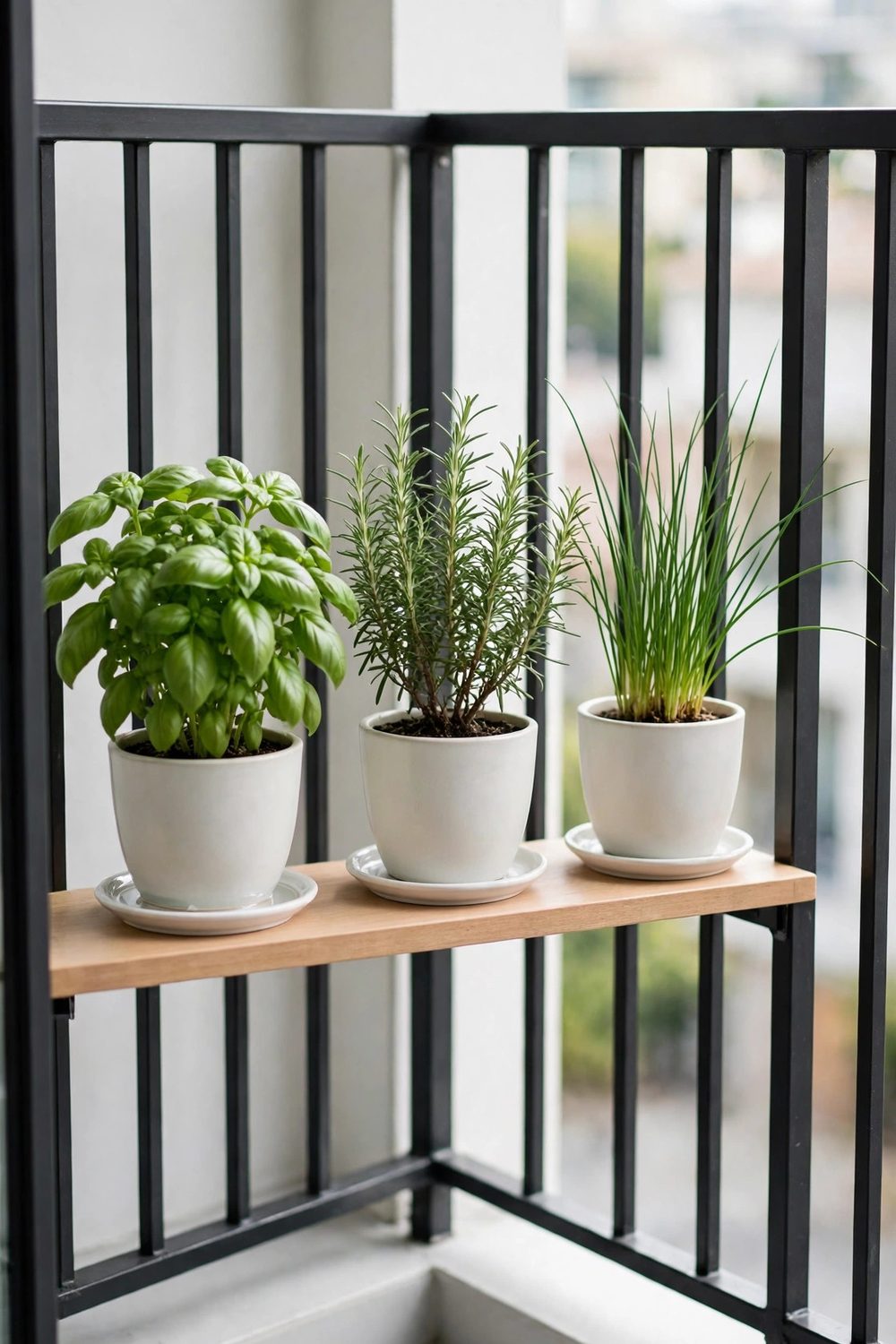
Herbs in pots stay compact, drop few leaves, and need light watering, so they suit a strict building well. These balcony herb garden ideas for apartments show neat rail and shelf setups.
Woody herbs such as rosemary and thyme ask for the least water of all. Bushy basil needs pinching often, so add it to the weekly round rather than leaving it to sprawl.
Quick Reference
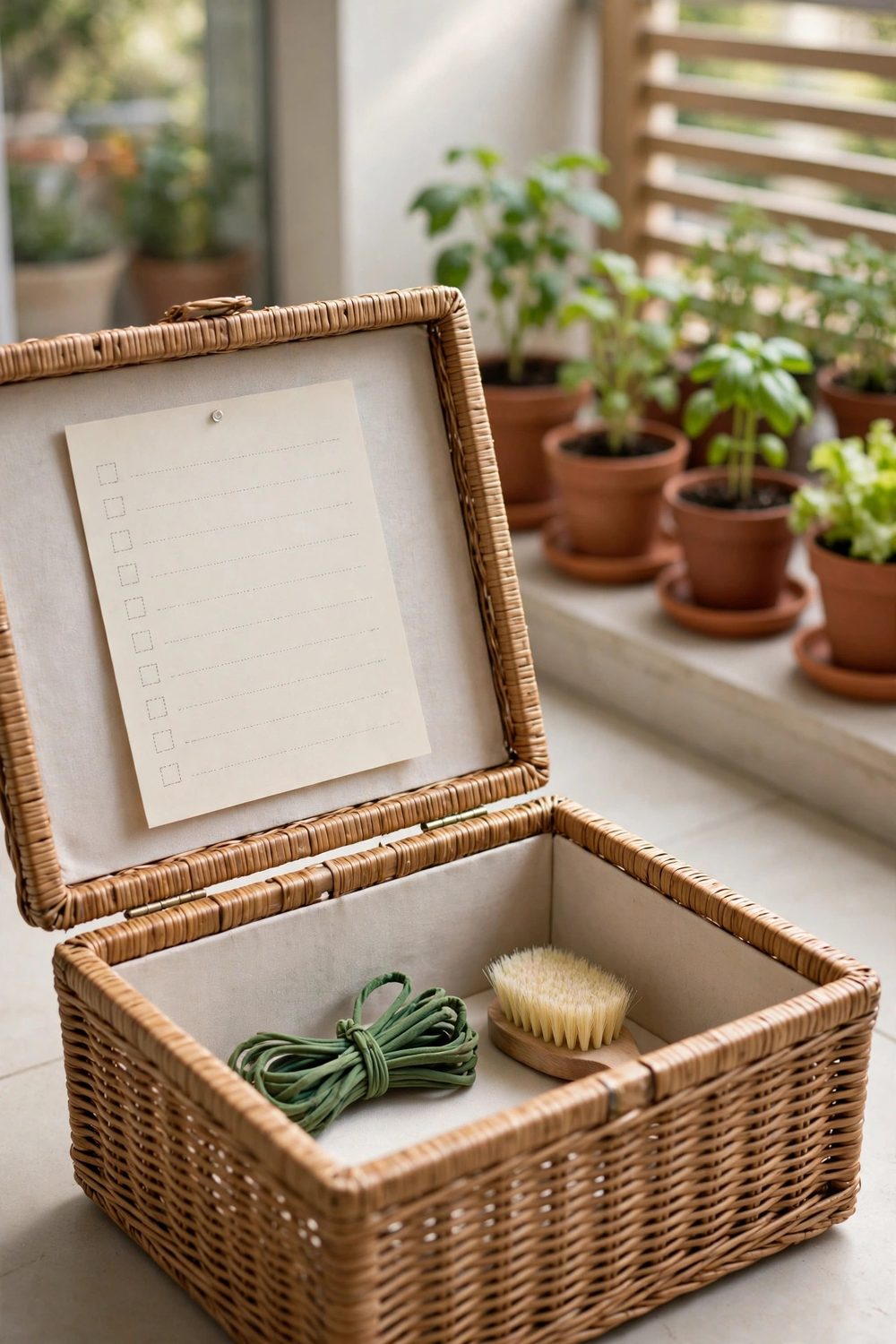
Post this weekly tidy checklist inside the storage box lid. One pass through the list keeps the whole system running.
- Pot: work inside the lidded tray, on the mat, bag folded shut after.
- Catch: saucer or tray under every pot; empty standing water after 30 minutes.
- Tie: supports in at planting; soft ties checked every two weeks.
- Sweep: ten minutes weekly for dead leaves, spent plants, and dry soil.
- Water: can with a rose head, low at the base, in two short rounds.
- Pick: harvest little and often; carry waste indoors the same day.
- Store: tools and feed in one lidded box, bottles upright, lids tight.
- Check: view from the door last; nothing dripping, nothing past the rail.
A tidy balcony garden rests on small habits done weekly: contained soil, caught drips, tied stems, picked crops, and stored tools. None of them takes long on its own.
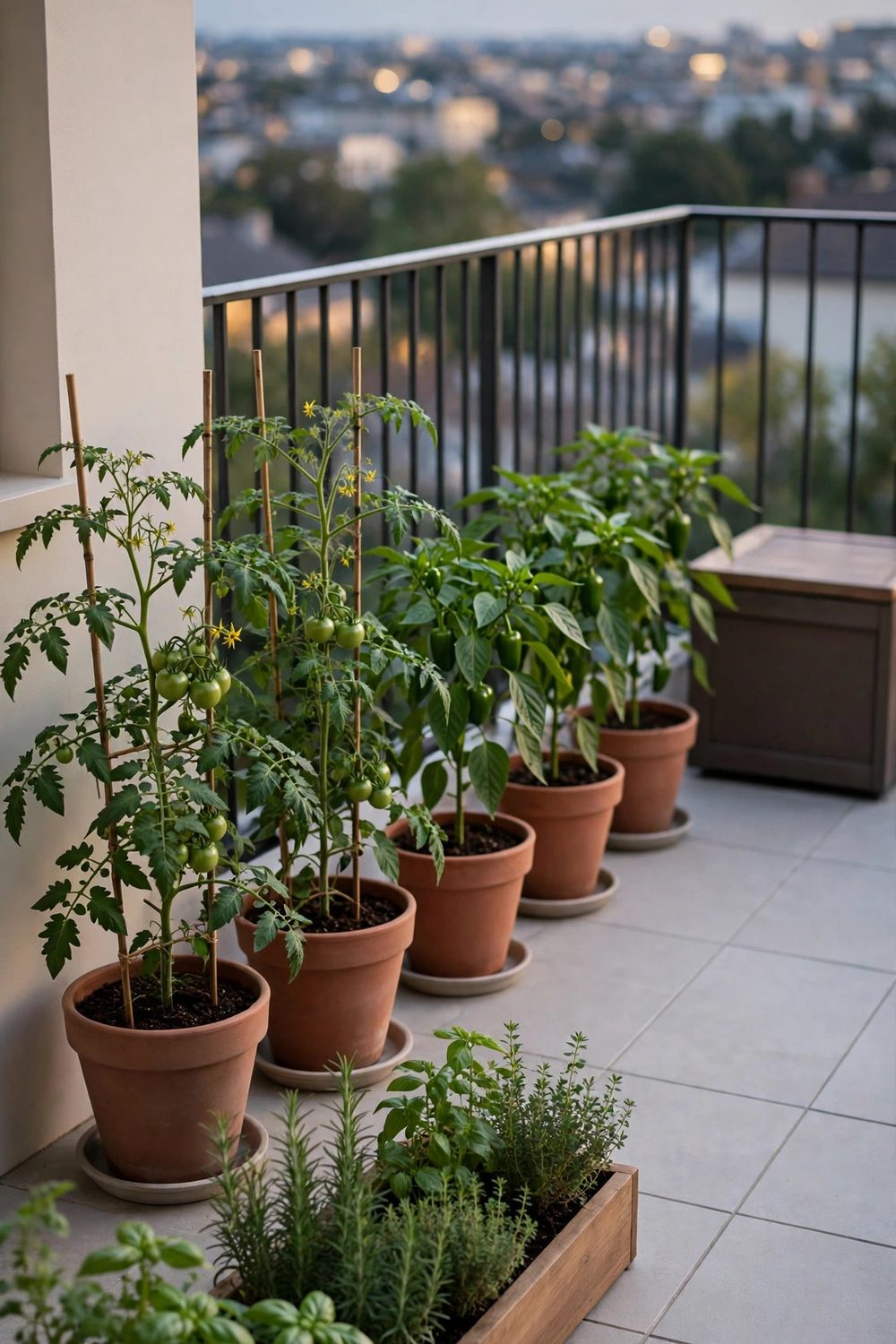
Set the system up this weekend, then hold the ten minute weekly round without fail. Your neighbors get a clean view, and your plants get better air, light, and care.
Save this checklist to your container garden board for later. Start with the saucers and the lidded box, since those two items stop most mess before it can start.


